There is a moment I have come to treasure before a drawing ever begins to resemble a face. If you look closely at one of my sketches, you won’t just see the final contours that define a cheekbone or the confident arc of a brow. You’ll see faint ghost lines stretching beyond the finished form. You’ll notice charcoal smudged by the side of my hand, softened passages where an eraser has lifted away uncertainty, and subtle indentations pressed into the paper from marks that no longer exist. Every adjustment leaves behind a quiet record of what came before.
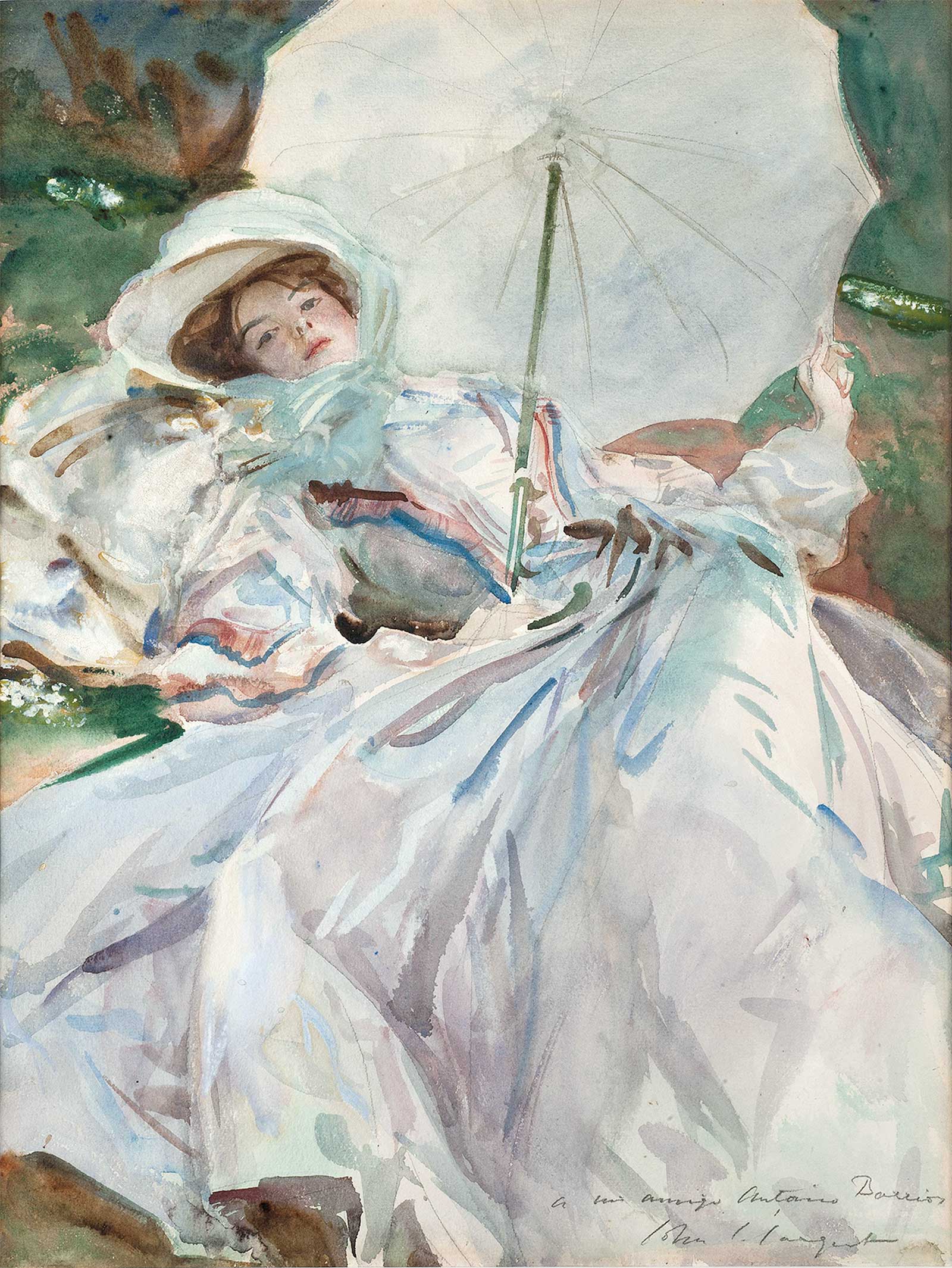
John Singer Sargent, The Lady with the Umbrella, watercolor and pencil on paper, 25½ x 211⁄3” (64 x 54 cm)
For many artists, those remnants are simply evidence of the process. But I have come to believe they are something much more important. They are the story.
When people visit a gallery, they often stand before a finished portrait and imagine that the artist somehow knew exactly where every line belonged from the very beginning. The completed work appears inevitable, almost effortless. Yet those of us who spend our lives drawing know that certainty is rarely the starting point. Every successful portrait is built upon dozens, sometimes hundreds, of decisions, revisions, discoveries, and small acts of courage.
The most compelling drawing isn’t one that hides its journey. It’s one that allows us to sense it. Melinda Whitmore beautifully captured this truth when she said during her recent Wednesday Webinar, “Drawing is an act of revision.” Those few words contain an entire philosophy of both art and life.
Every line asks a question. Every correction answers it. Then another question appears.
Revision is not failure. It is observation refined. It is the willingness to look again, to admit that our first impression might not yet reveal the whole truth, and to keep searching until something deeper begins to emerge.
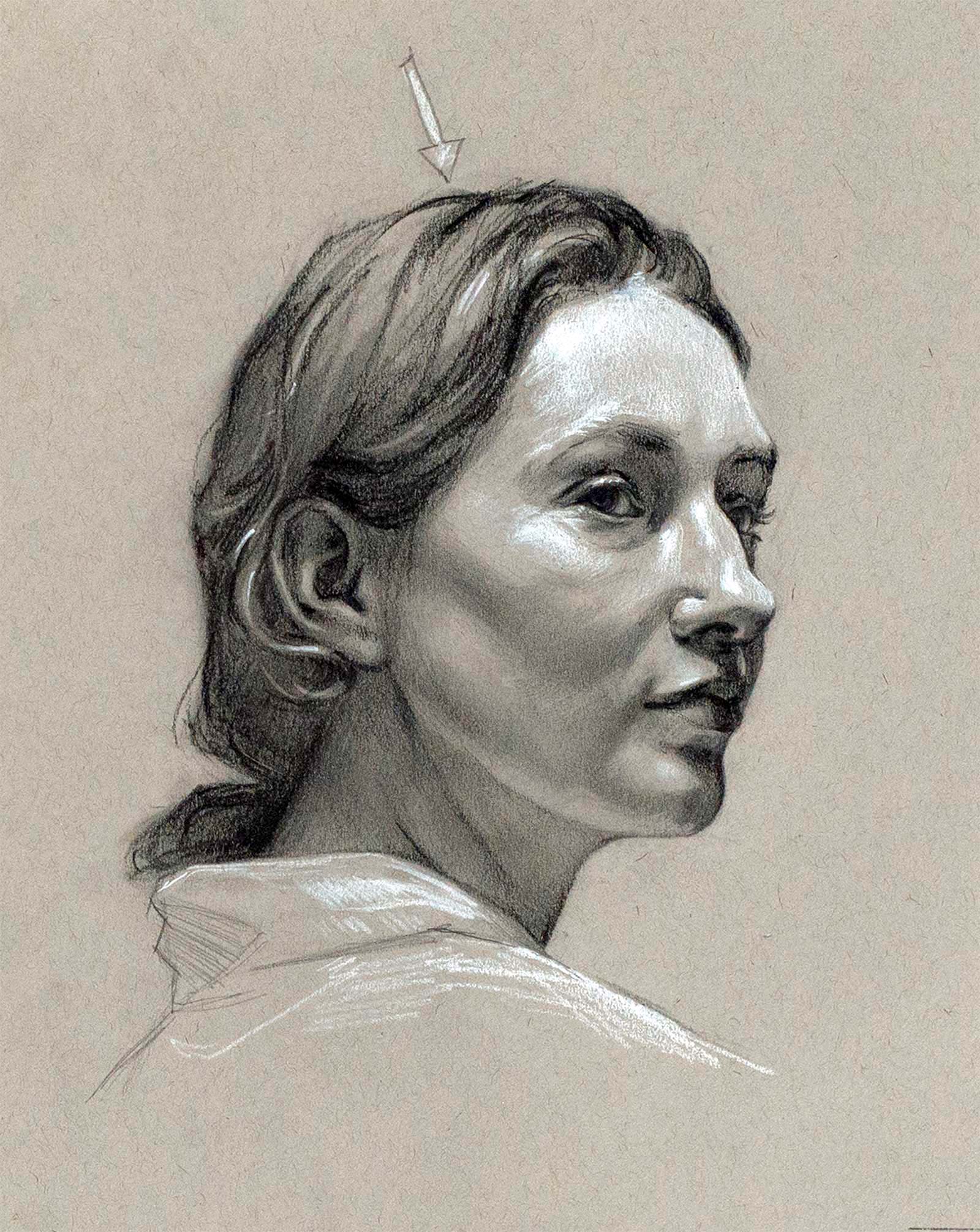
Melinda Whitmore, Harper, graphite and white chalk, 11 x 10” (27 x 25 cm)
Portraiture demands that kind of humility. We are constantly adjusting relationships, refining proportions, strengthening values, softening edges, and reconsidering what we thought we understood only moments before. The drawing teaches us as we draw. Life has a way of doing the very same thing. None of us arrive fully formed. We move through our days making decisions, changing direction, learning difficult lessons, and discovering perspectives we couldn’t have imagined years earlier. If our lives were laid out on paper, they too would reveal ghost lines, erased intentions, overlapping ideas, and countless revisions that brought us closer to who we are today.
Those earlier versions of ourselves aren’t mistakes to be hidden. They are evidence that we kept growing. I think that’s one reason unfinished drawings possess such extraordinary power. As my mentor, Everett Raymond Kinstler, often said to me, “There is honesty revealed in the search.” The visible struggle reminds us that beauty is rarely born in a single perfect gesture. It emerges through persistence.
As artists, we often become our own harshest critics. We stare at the imperfect stage of a painting or drawing and worry that we’re losing our way. Yet when I look back through old sketchbooks, those uncertain passages have become some of my favorite memories. They remind me that every confident mark I make today rests upon thousands of uncertain ones that came before.
Growth leaves evidence.
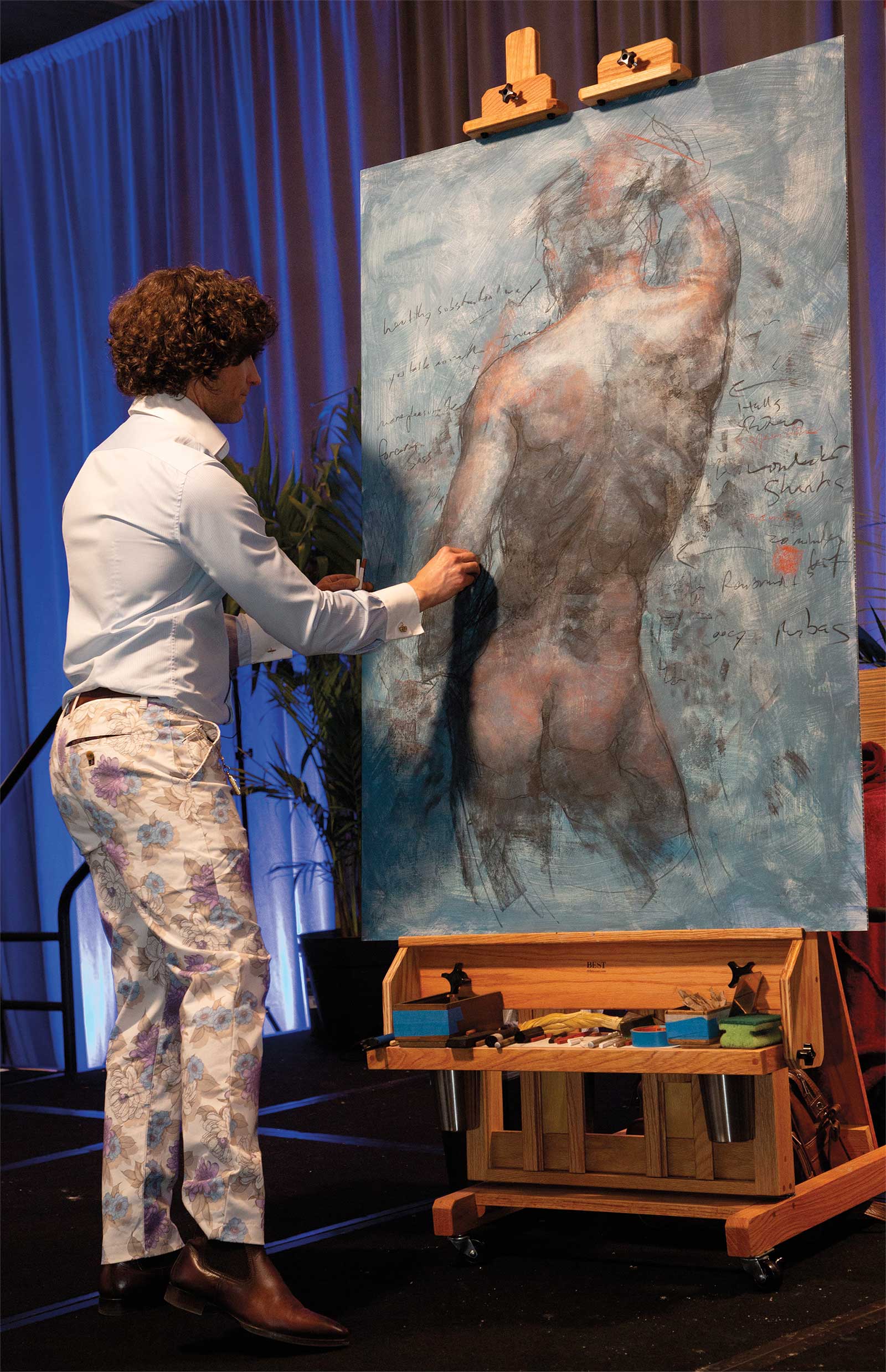
During his live figure painting demonstration, Shane Wolf shared the timeless tradition of painting from the nude, teaching conference attendees how form, light and emotion come together to create a compelling work of art.
The Portrait Society of America exists because we believe that education is, at its heart, an ongoing act of revision. Every workshop, critique, demonstration, webinar, and conversation with another artist offers us a new opportunity to see differently. We don’t gather simply to admire finished masterpieces. We gather to learn from the process that created them.
That willingness to remain teachable is one of the greatest strengths of our community. I’ve watched artists with decades of professional experience eagerly fill sketchbooks during demonstrations, experimenting with unfamiliar approaches alongside students picking up charcoal for the very first time. In those moments, experience doesn’t eliminate revision, but it embraces it. The best artists never stop questioning. They never stop refining. They never stop searching for a truer way to see.
Perhaps that’s why I find myself drawn to sketches more than ever before. They remind me that excellence isn’t a destination we finally reach. It is a practice of continual observation, adjustment and renewal.
So, the next time you begin a drawing, resist the temptation to erase every trace of uncertainty. Let a few ghost lines remain. Let the paper remember where you’ve been. Those marks are not distractions from the work; they are part of its heartbeat. In the end, the beauty of a portrait isn’t found only in its final line. It’s found in every line that made the final one possible.
Sincerely,
Michael Shane Neal
Chairman