As an artist, I have learned to recognize in myself a sense of heightened awareness, awe and excitement toward a scene or subject. That’s what clues me in to the possibility of a meaningful painting. My goal is to capture that feeling and communicate it to the viewer.
My reference photos are from either my travels into new and strange-to-me places, or from the natural landscape of my Northwoods, Wisconsin, home. I am a studio painter. Once I have identified my reason for wanting to paint a subject, what I call my “big idea,” I use Photoshop with one or several of my reference photos to work out the best composition, values and colors to support my big idea.
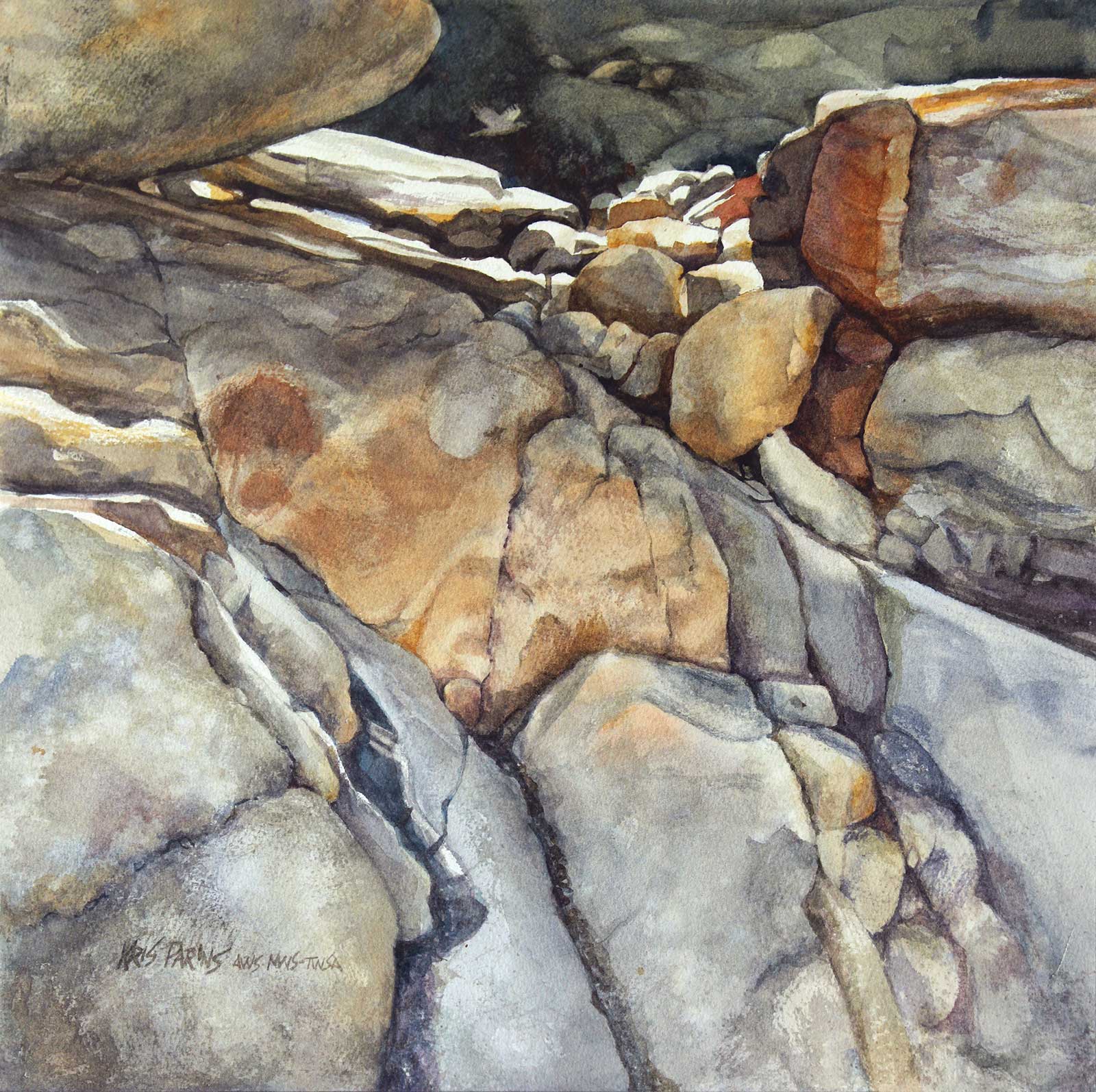
Canyon Spirit, watercolor, 14 x 14" (35 x 35 cm)
My style is impressionistic realism. When the flow, transparency and controlled chaos of watercolor is coupled with careful planning, the medium is perfect for creating the random textures of nature. Using big brushes, I begin the first layer of a watercolor wet-into-wet, allowing spontaneous drips and spatters to occur. I complete the work on the dried background with smaller brushes, resisting the urge to fiddle with unnecessary detail.
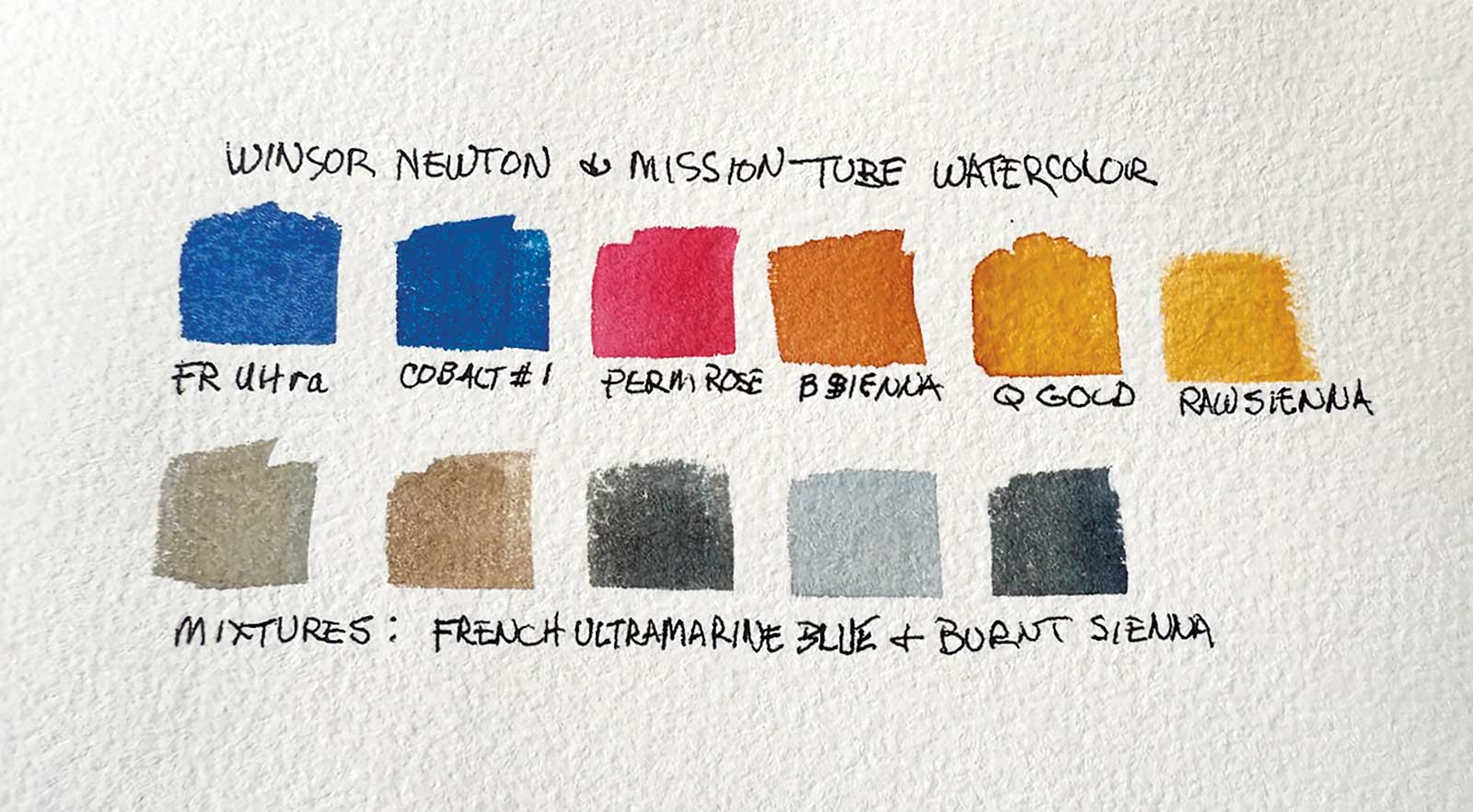
My palette does not include secondary colors as I want the variations I achieve by mixing my own greens and violets. Burnt sienna often serves as the red in my basic color trio, combined with French ultramarine for a wide range of values and temperatures.
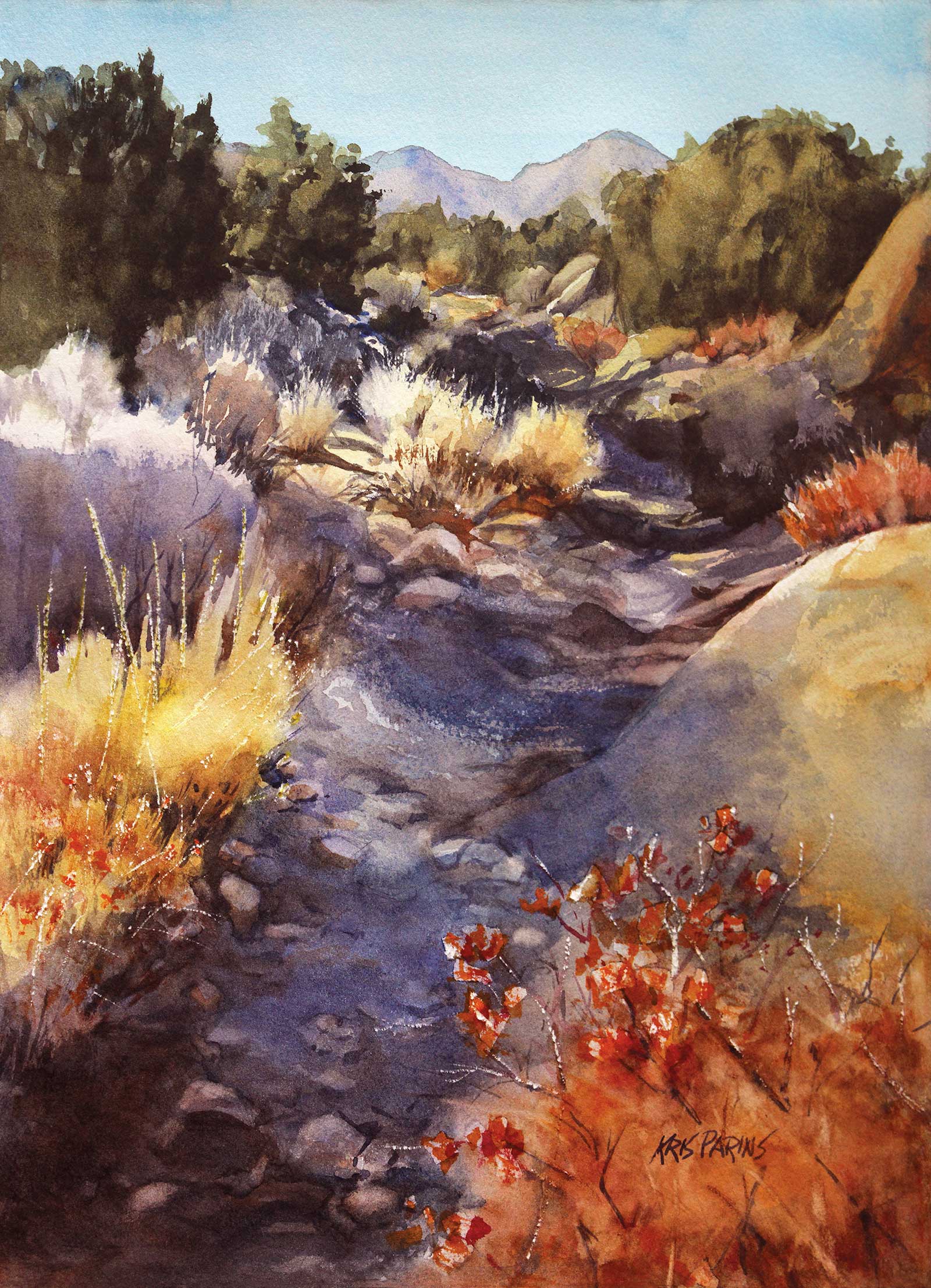
High Desert Hike, watercolor, 14¾ x 10¾" (37 x 27 cm)
In the depths of the pandemic, I spent nearly two months in the Mojave Desert of Southern California, which was a totally new environment to me. The drastically different climate (different from my usual haunts of Wisconsin and Florida) had an impact on my art vocabulary. After writing daily journal entries and taking hundreds of photos, I knew that I had to express the experience in my artwork. When I returned to my home studio, I immediately dove into painting rocks and desert images.
The painting Traces is from my Canyon Series, inspired by a late afternoon hike in an isolated canyon near Joshua Tree National Park.
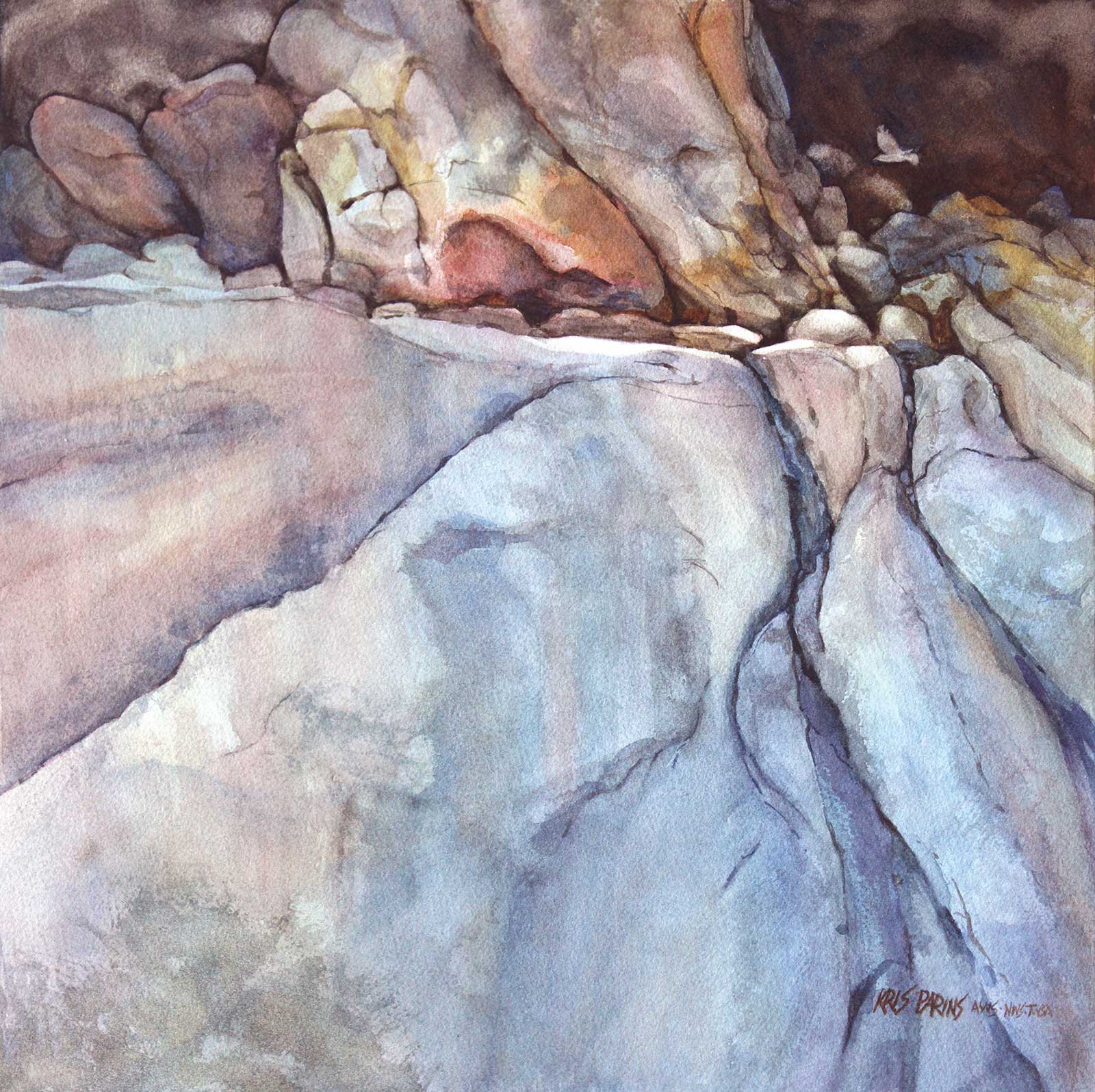
Canyon Solitude, watercolor, 14 x 14" (35 x 35 cm)
The late-day hike into the desert canyon was an immersion in a timeless landscape. It was unnaturally quiet, punctuated by the occasional rasp of a curious crow. The bizarre rock formations told a story of subterranean lava flows, revealed and eroded by eons of wind and water. Underfoot, the rippled patterns in the sand held clues of spring floods. Near the dead end of the canyon, where lore told us that coyotes come to find water in the rock depressions, was a large, abandoned raptor nest. It was easy to imagine a pair of golden eagles swooping in over the canyon crest, talons clutching prey for their waiting eaglets. The nearby shaded ledges showed evidence of large birds having rested there.
I chose the title Traces to communicate the idea that there was a story to be discovered in the signs left by nature and the previous inhabitants of the canyon. The subtle petroglyphs are meant to be a surprise for the careful observer. Even the nest blends in with the textured background of the towering rocks.
My inspiration to create the painting was a sense of awe for the immensity of geologic time and reverence for the few wild areas on Earth that have escaped the ravages of man.
My Art in the Making Traces
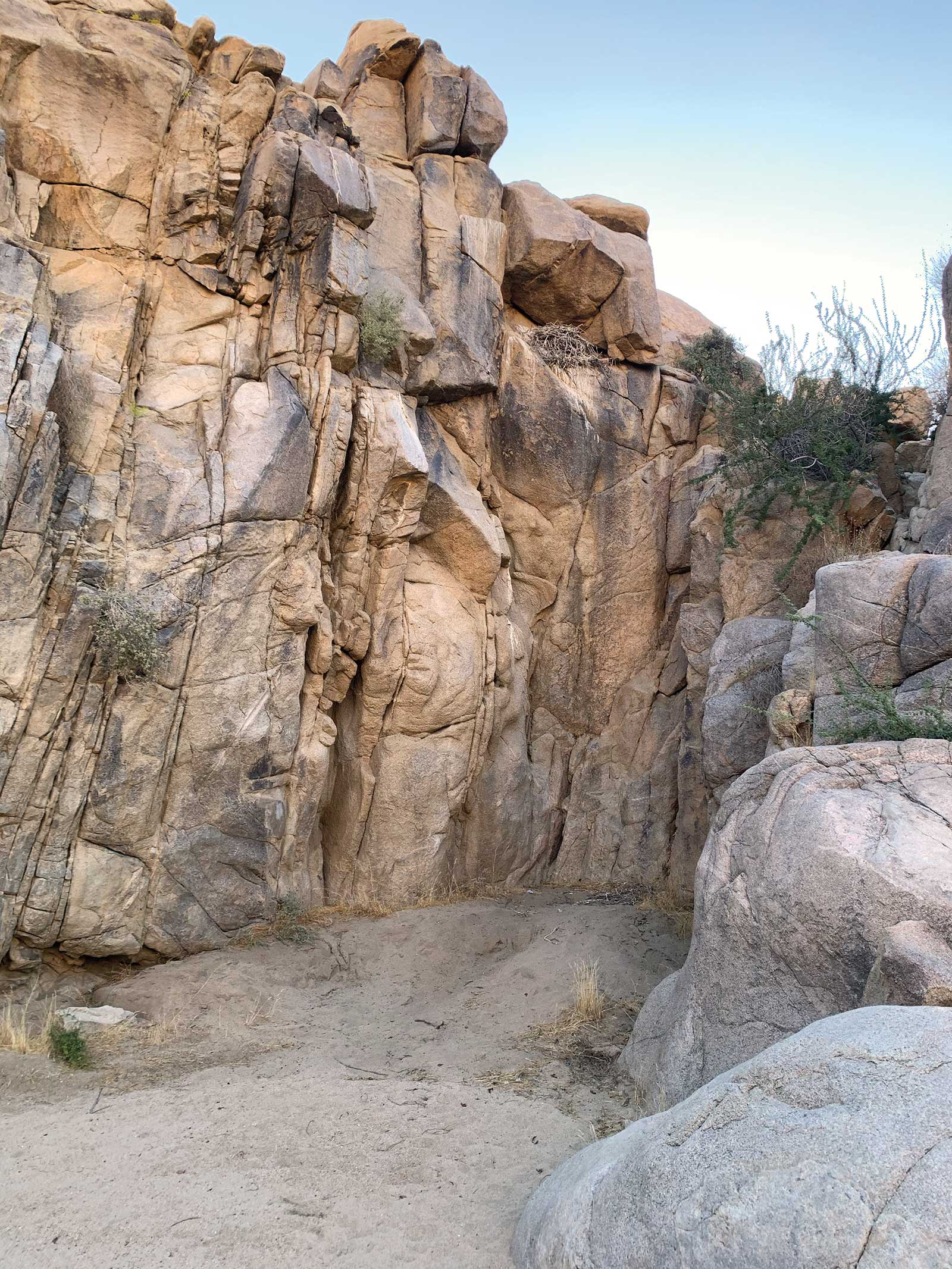
Reference Photo
This image was shot on a late afternoon hike in an isolated canyon near Joshua Tree National Park in California.
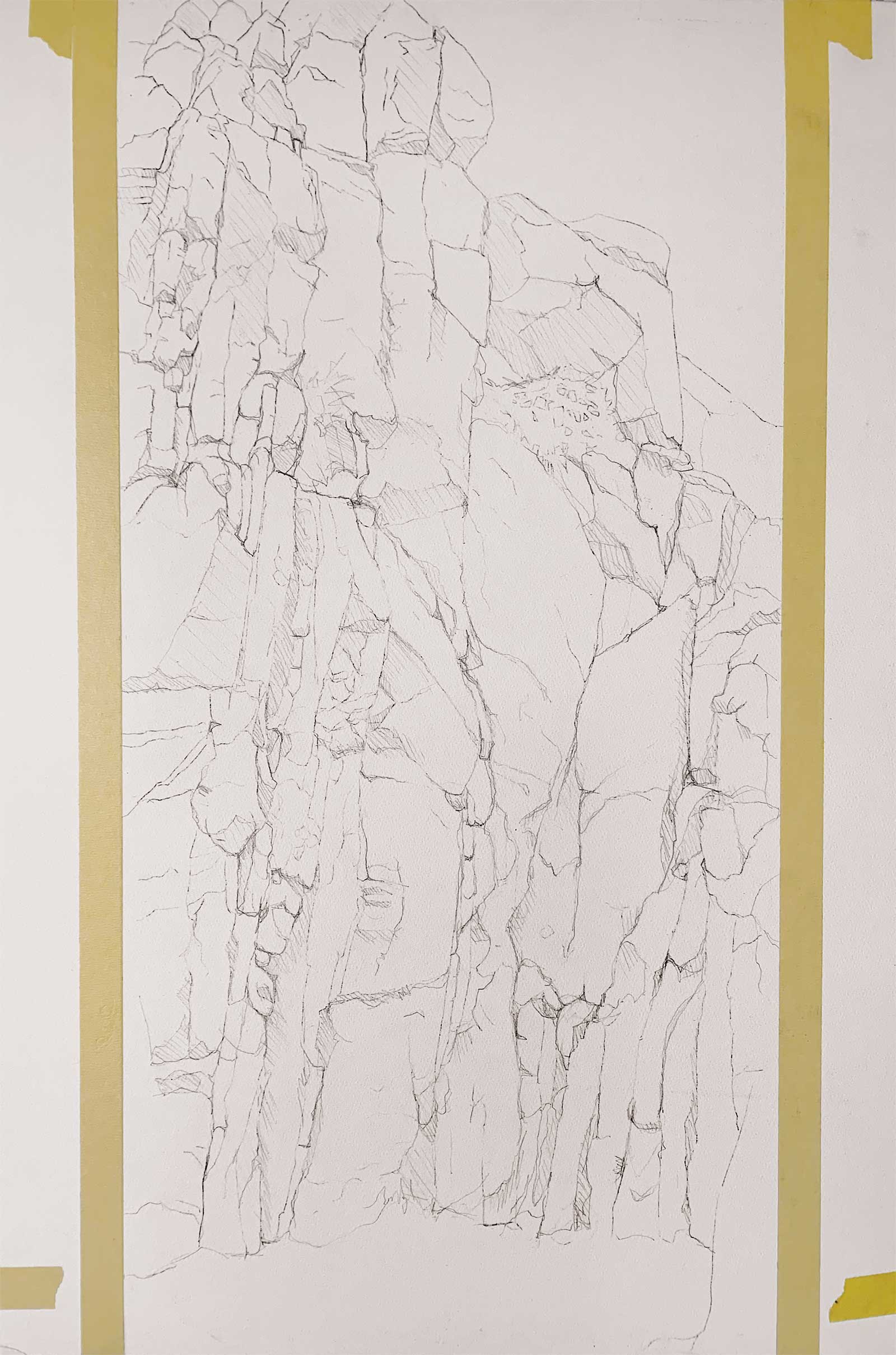 stage 1
Stage 1 Planning the Composition
In planning my painting, I decided on an exaggerated vertical format to emphasize the height of the canyon walls. Using my photos as reference, I made a pencil drawing on my paper board.
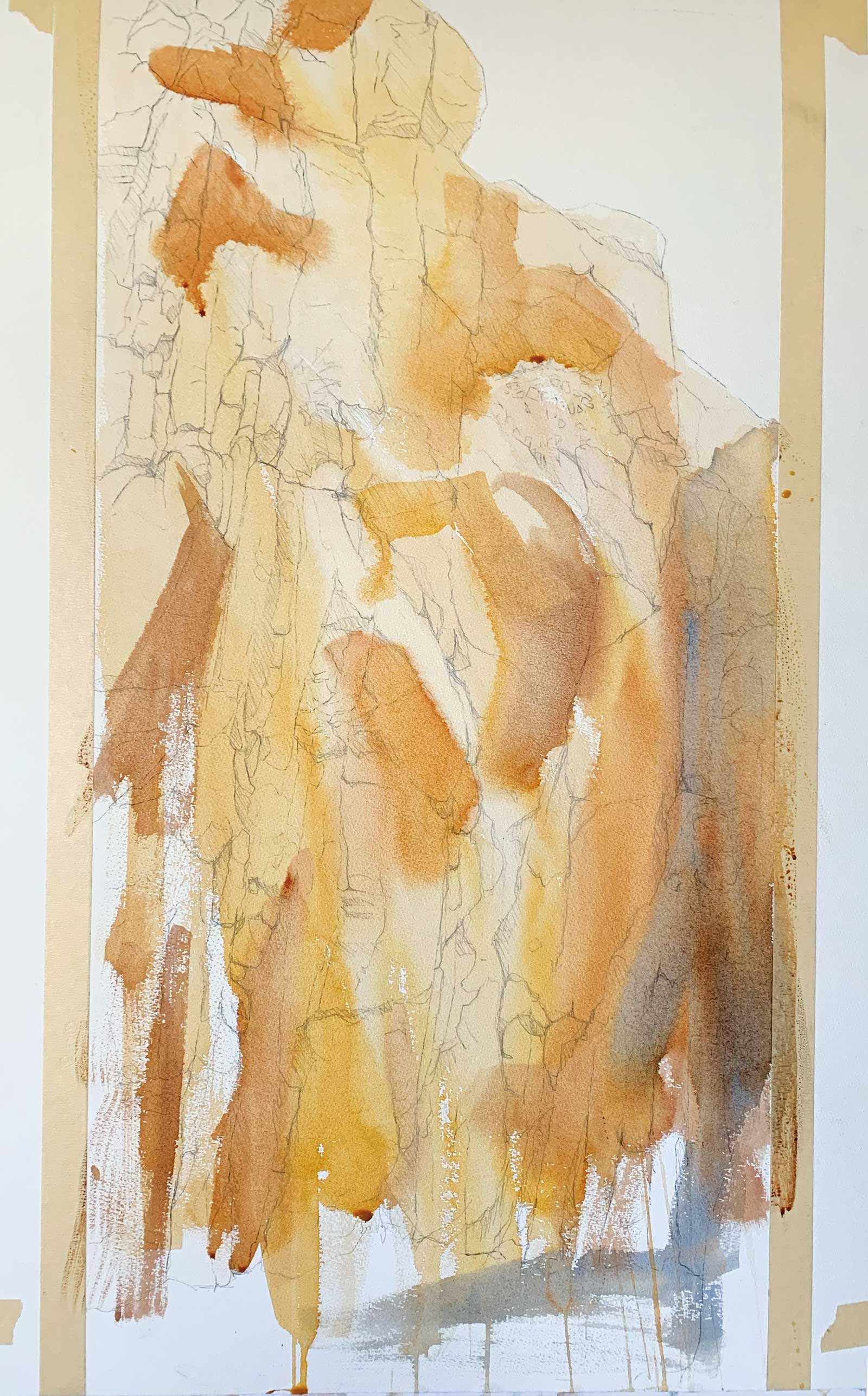 stage 2
Stage 2 Establishing Values
To get started, I began loosely indicating some juicy values with a 1" flat brush. Although watercolor is usually worked on a nearly flat surface, I started this piece on an upright easel.
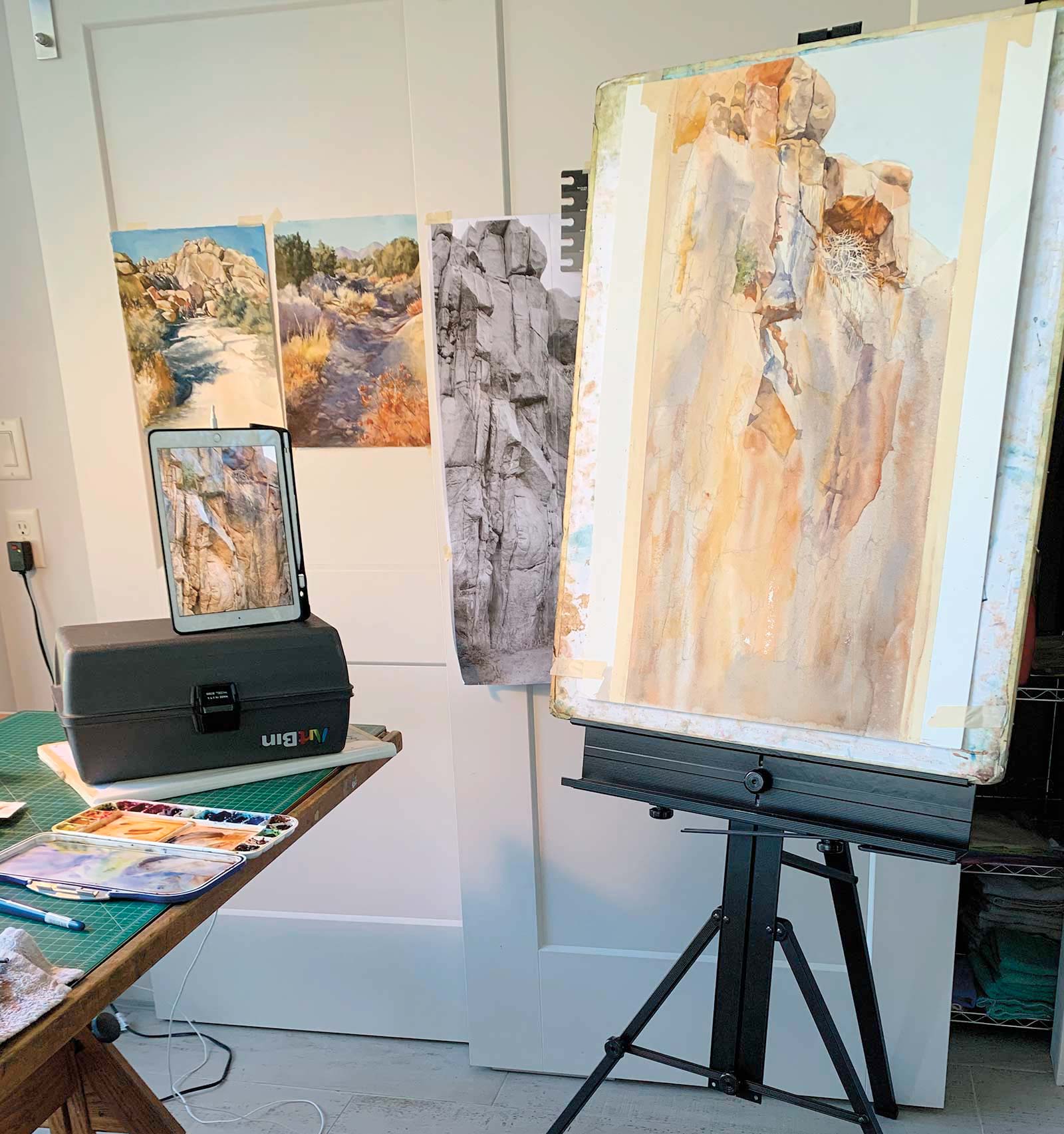 stage 3
Stage 3 Positioning on Easel
In my work area, I started this very vertical subject in an upright position on my easel. The full-size reference photo is printed in black and white with a value scale on top. On my left are my painting tools, since I’m left-handed. My iPad provides local color and detail information. Since I only use a few pigments in each painting, I only require a small palette.
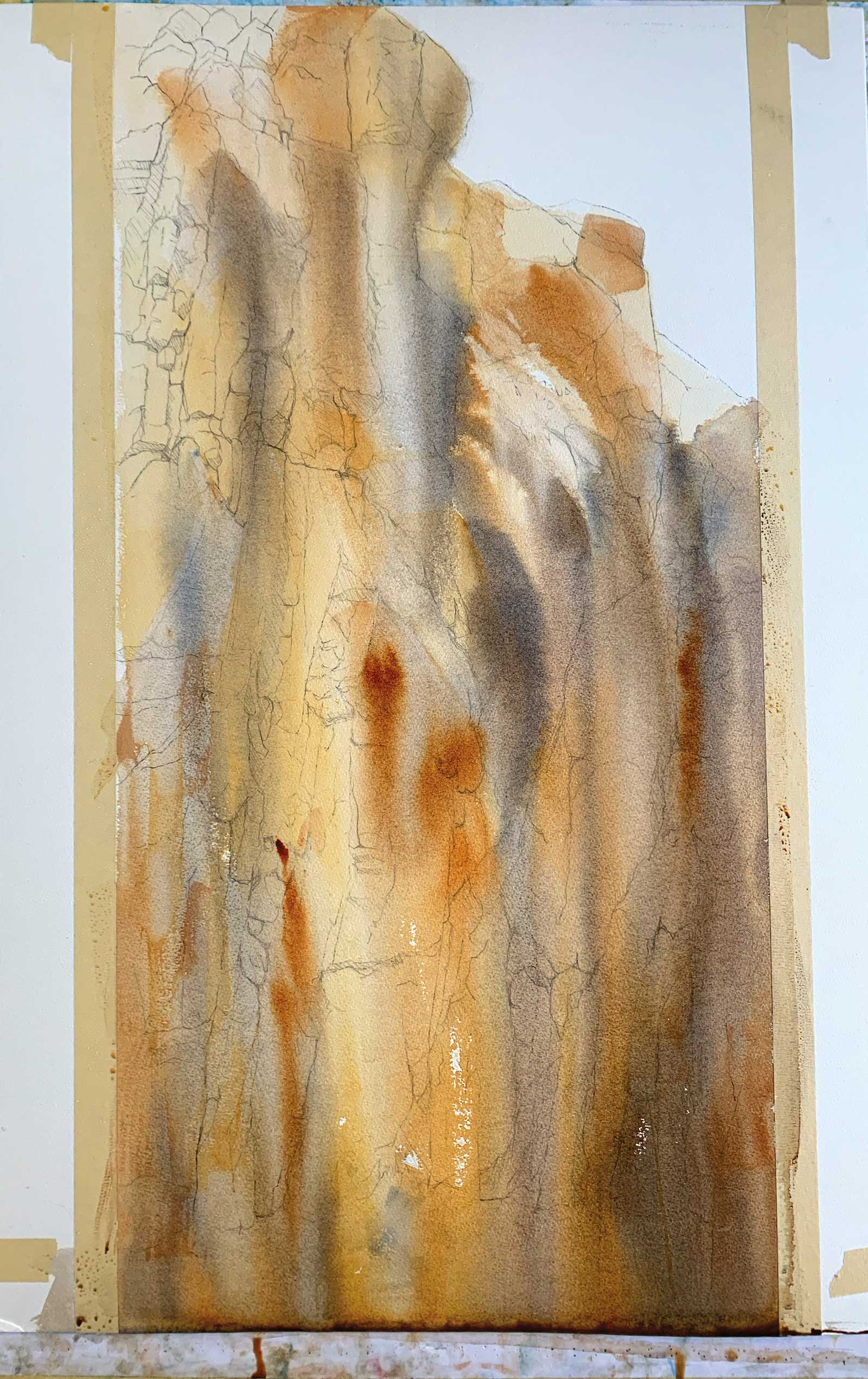 stage 4
Stage 4 Letting the Paint Flow
I allowed gravity to cause the wet-into-wet application of paint to streak downward, mixing on the paper, just as minerals, deposits and bird droppings had dripped down the actual rocks over time. As it dried, I spattered lightly with water and pigment, using an old toothbrush and a spray bottle.
Color Swatches
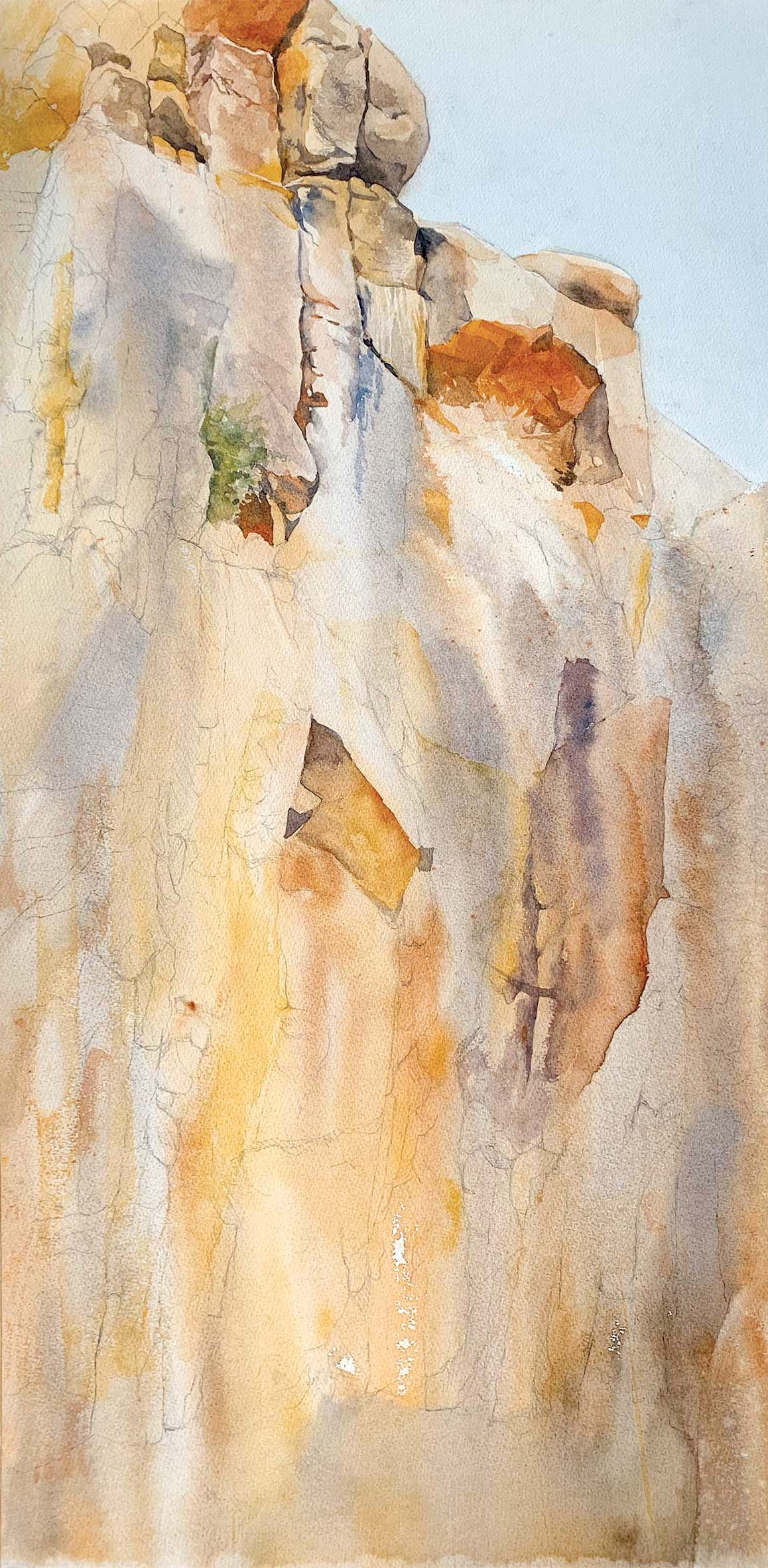 stage 5
Stage 5 Defining the Center
Once the underpainting had dried, I began establishing some definition in the center of the composition. I applied layers of drybrush to mimic the texture of the volcanic rocks and created sharp contrasts in the nest area.
 stage 6
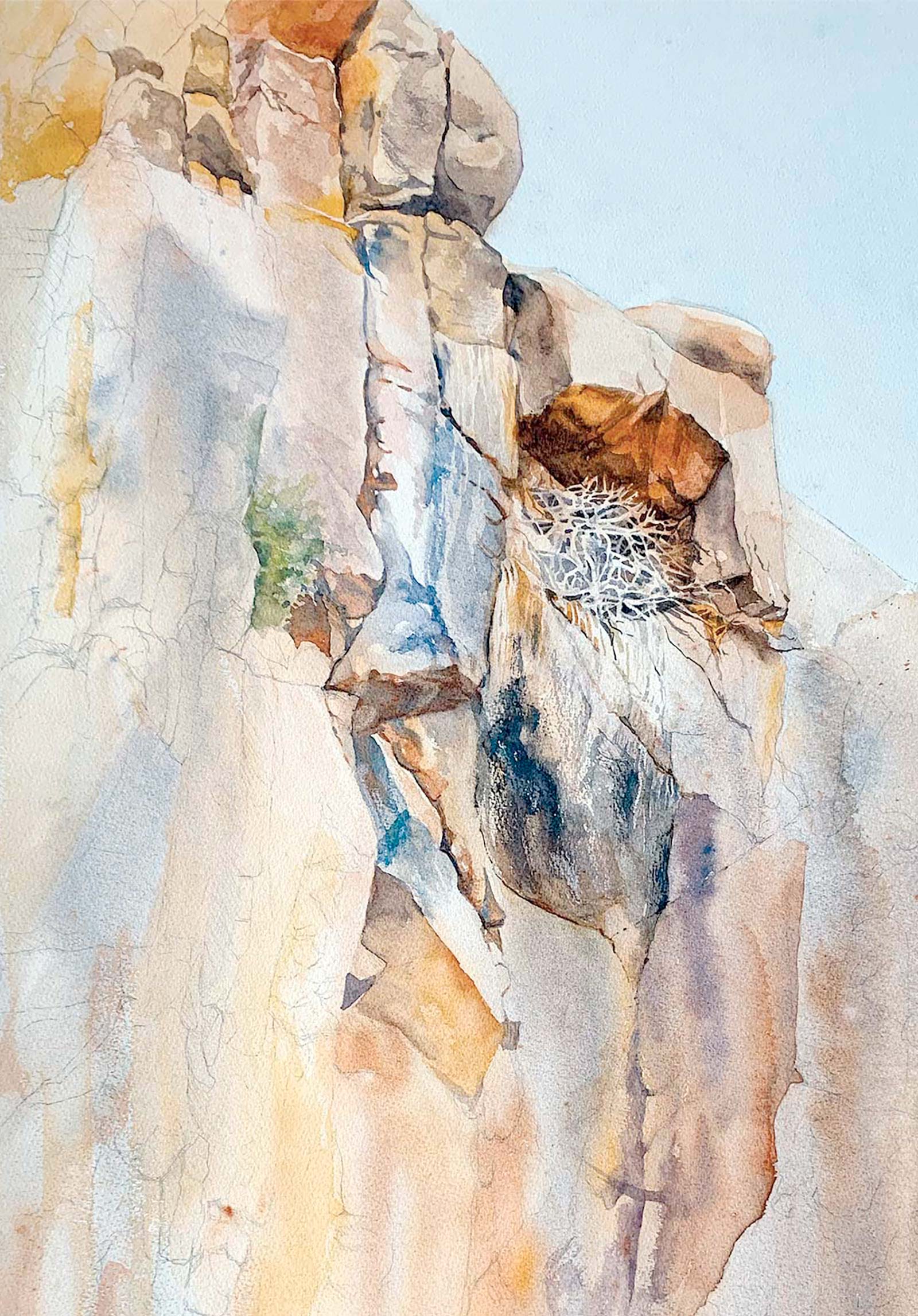
Stage 6 Darkest Darks
To establish the darkest darks at the focal area, I did some negative painting, which defined the nest. Burnt sienna creates the reflected glow on the overhanging rock.
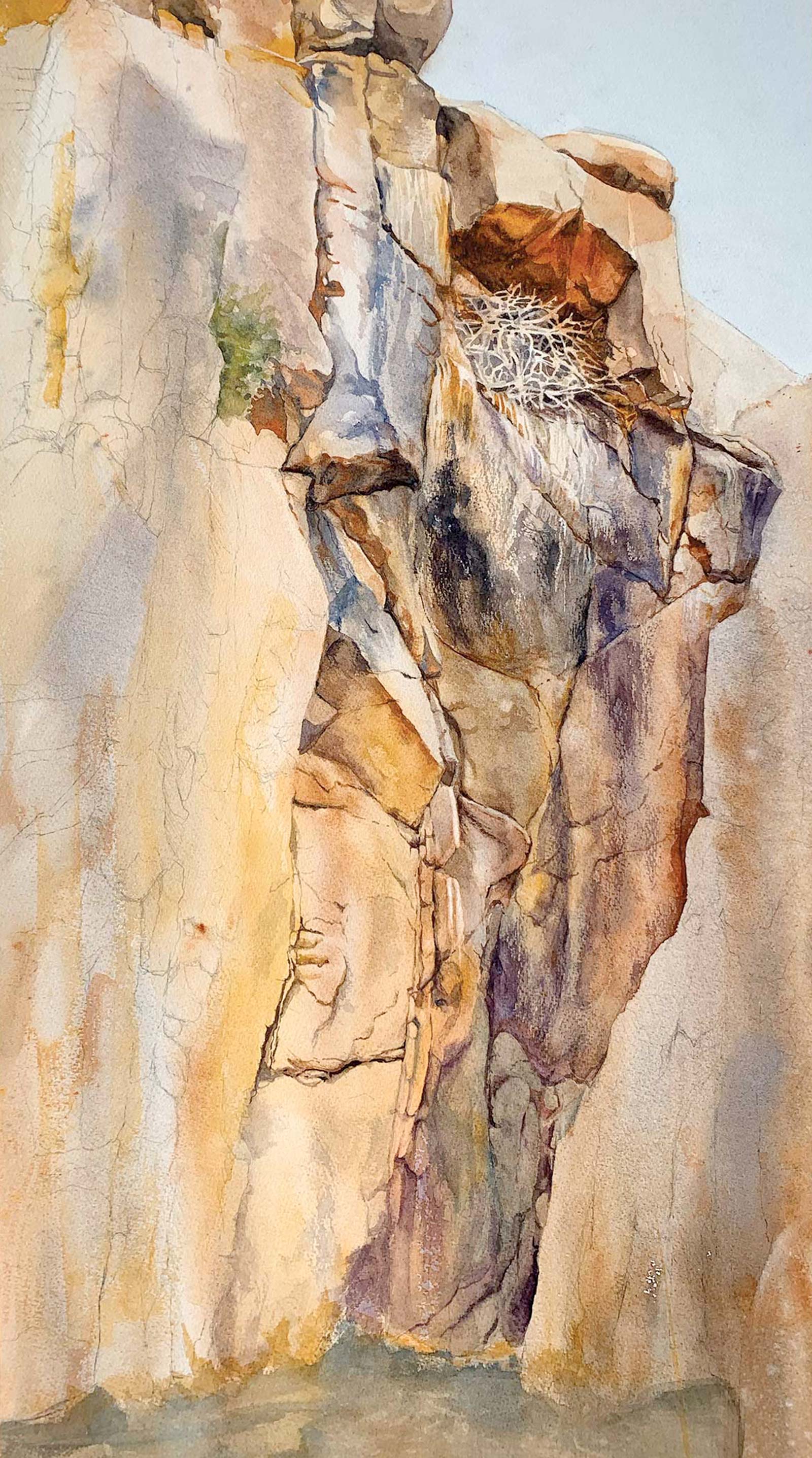 stage 7
Stage 7 Building Depth
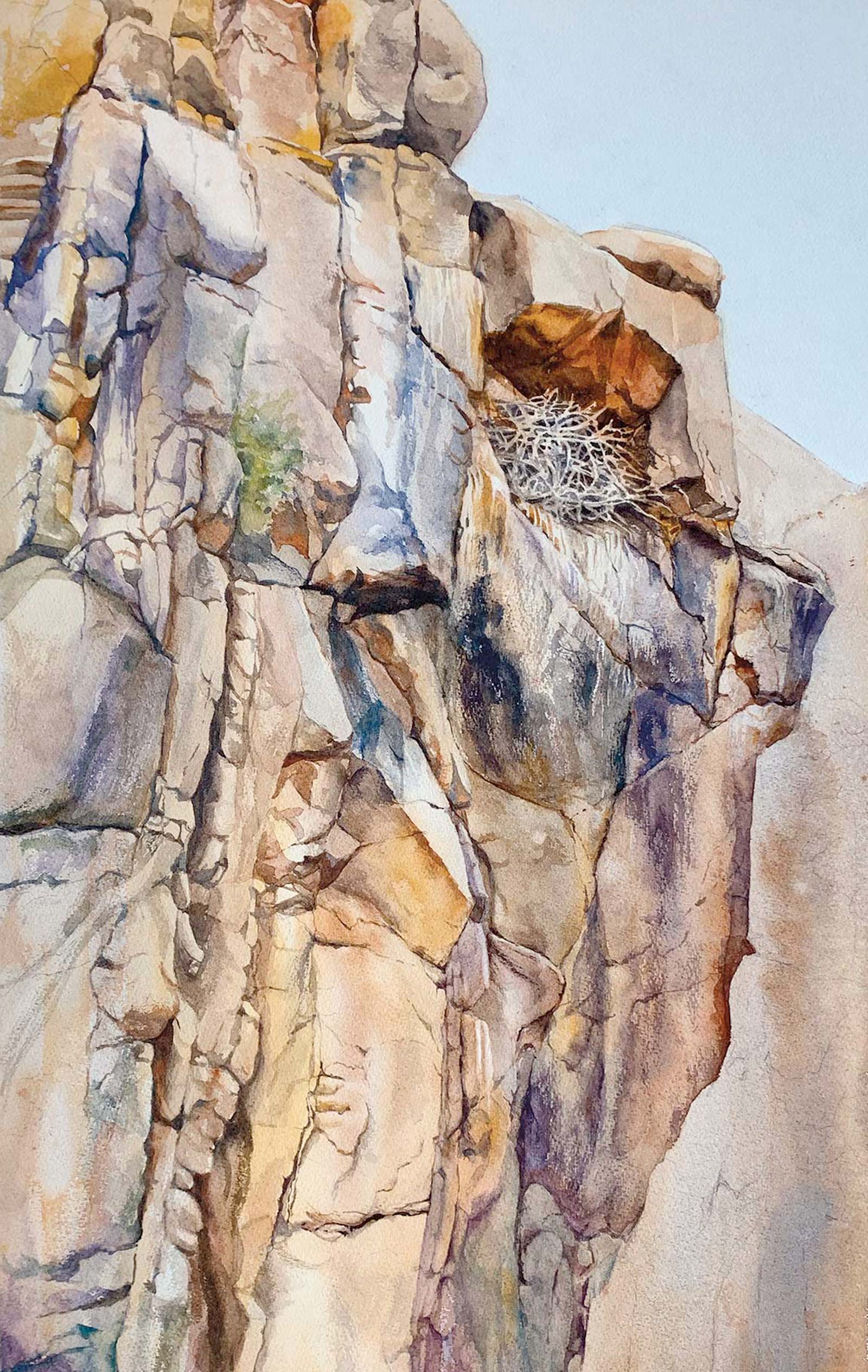
With the lightest and darkest values established, I continued to create dimension in the center of the wall, using smaller round brushes as needed. Instead of using masking fluid I painted around the light areas.
 stage 8
Stage 8 Surface of Rock Wall
While paying attention to the temperature of the light as it struck the angles of the rock, I continued to define the rock wall surface. Final touches were added to the nest. A rigger brush added a natural effect when painting some of the cracks in the rocks.
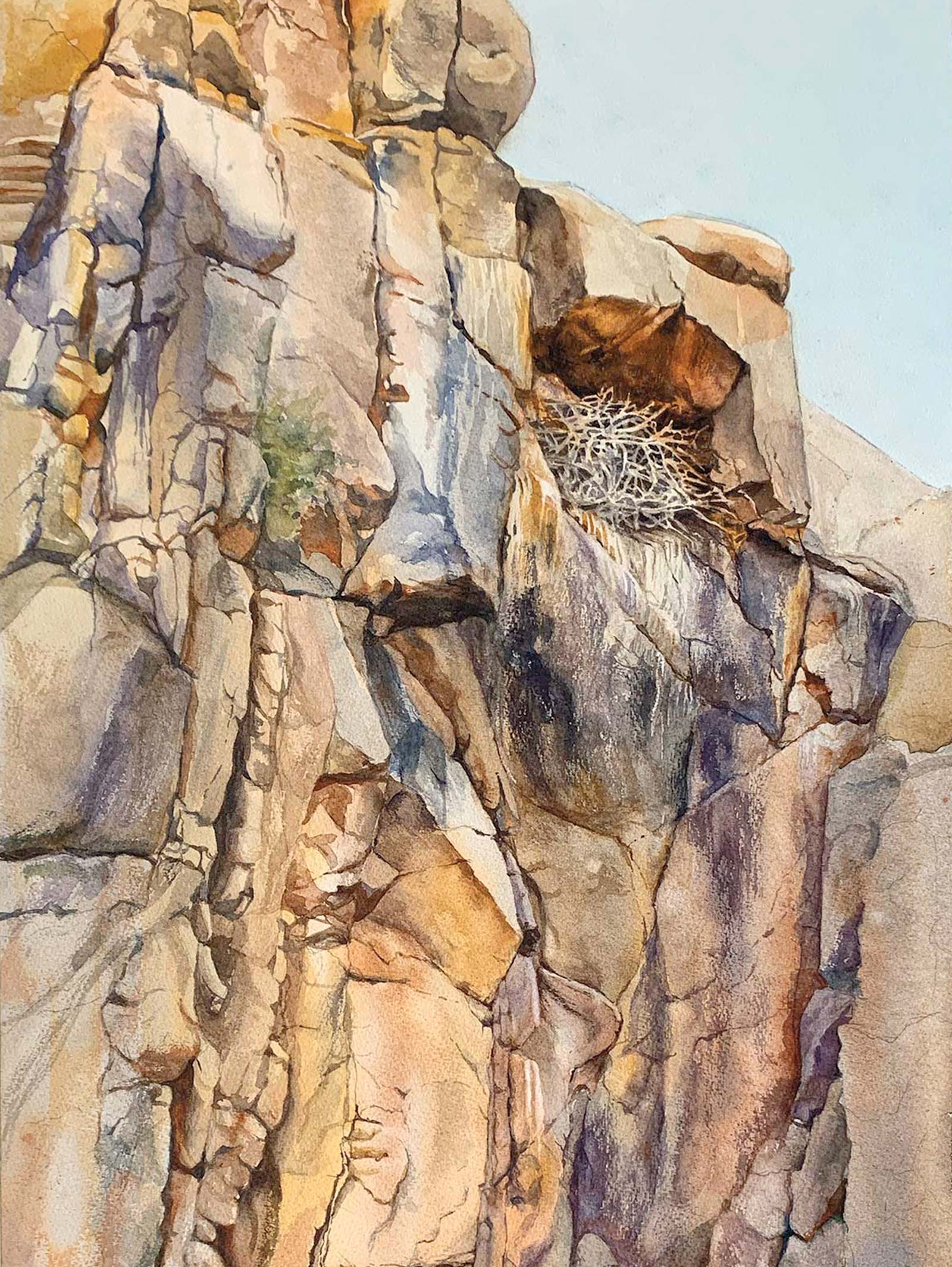 stage 9
Stage 9 Bank of Rocks
The bank of rocks on the right is left in soft focus to mimic our natural eyesight and keep the attention on the more distant rock wall.
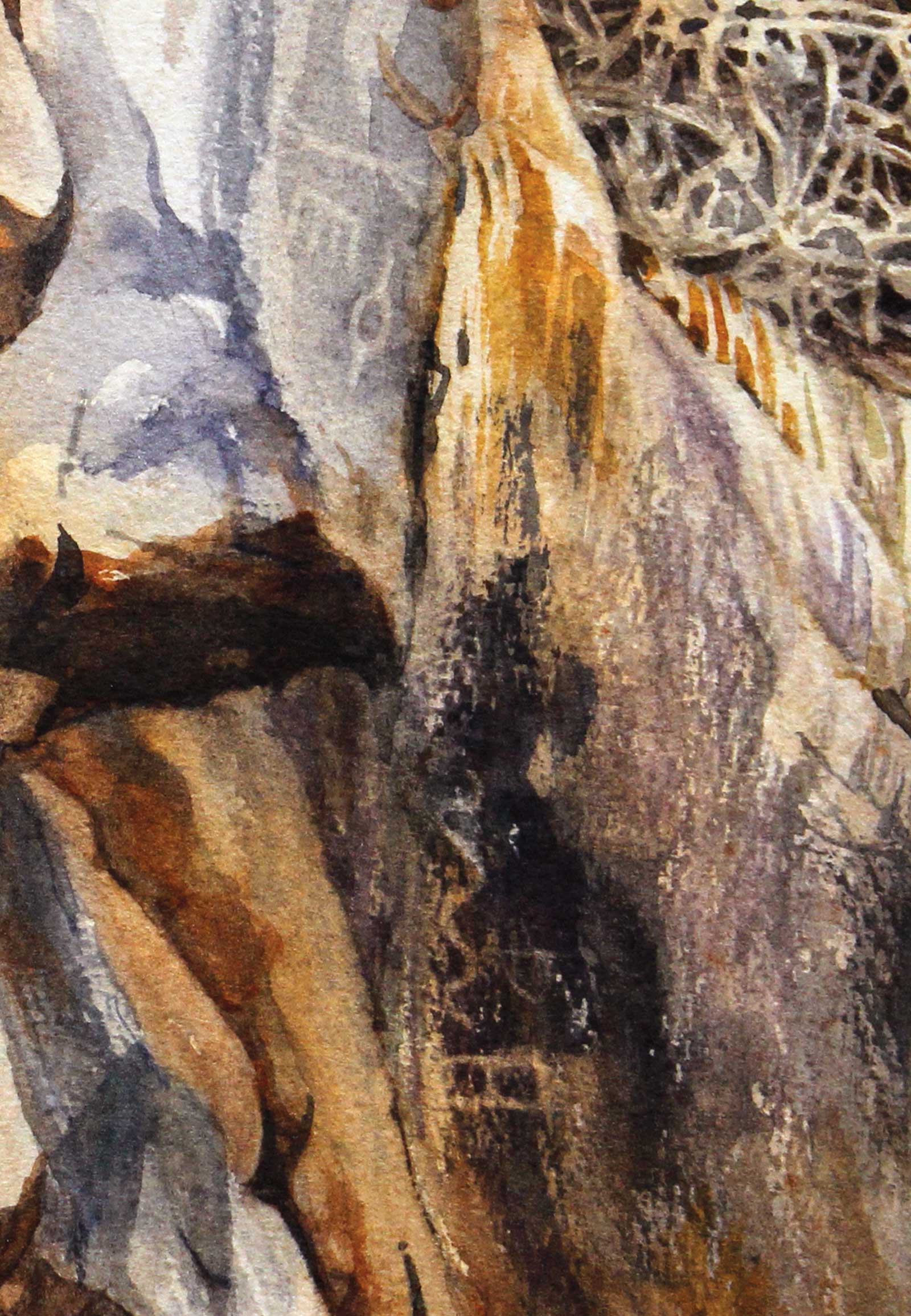 stage 10
Stage 10 Subtle Petroglyphs
With a small damp brush, I lifted a few subtle petroglyph marks in the dark central area.
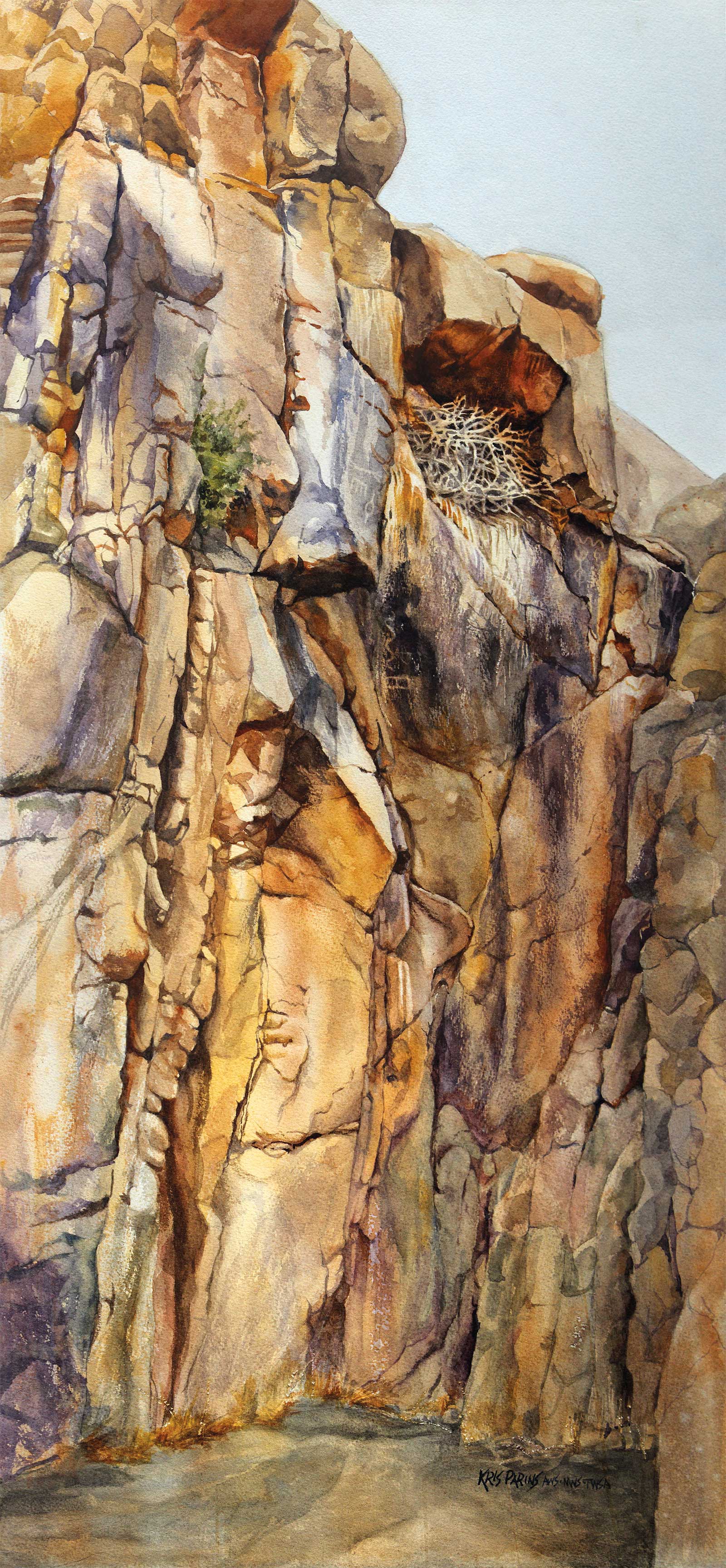 stage 11
Stage 11 Finished Artwork
Traces, watercolor, 30 x 20" (76 x 50 cm)
With some added definition on the right, detail in the bit of greenery, and dried leaves and shadows in the foreground, I considered Traces to be complete.
About the artist
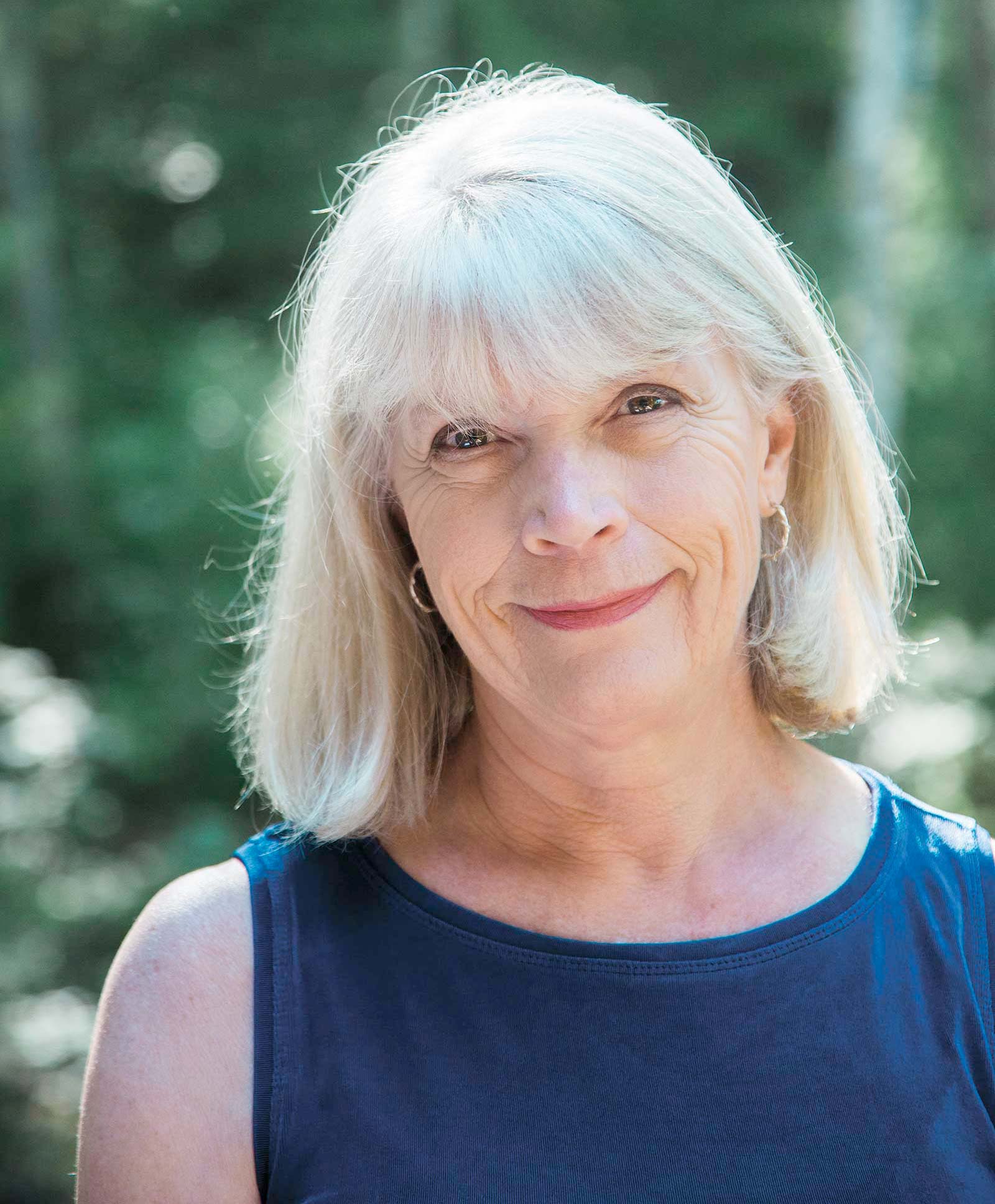 Kris Parins
Delight in nature and an interest in art were instilled in Kris Parins as a child, spent at the edge of a lake in northern Wisconsin. That same small lake now provides the view and inspiration from the windows of her home studio. From 2003 until recently, she and her husband Dick enjoyed living half the year in Florida, where the tropical birds and landscape had an influence on her work.
After earning her degree from the University of Wisconsin-Madison, Parins pursued a career in the graphic design field. As an art director and account executive, she created illustrations for her clients’ product graphics. Since 1999, she has devoted her creative energy toward fine art in watercolor. In 2014, her first submission to the international Birds in Art exhibition was accepted, and her work has been included six times since. Four of her bird paintings were acquired by the Leigh Yawkey Woodson Art Museum for its permanent collection.
Parins’ paintings and articles have appeared in the pages and covers of numerous art magazines, as well as nine editions of Splash: The Best of Watercolor. She has earned Signature Status in the American Watercolor Society, the National Watercolor Society, the Transparent Watercolor Society of America and several others. She serves as a juror in local and national art competitions.
Her award-winning artwork is sold through exhibitions and on her website at krisparins.com.
Contact at
krisparins.com