Intermezzo is one of a series of ballerinas I painted a few months after the conclusion of my first solo exhibition. That exhibition consisted of 38 works, many with elaborate backgrounds and complex designs. Afterward, I found myself craving a return to simplicity, with the figure as my central subject.
I’ve always loved painting the figure, and when that figure happens to be both athletic and objectively beautiful, even better. Ballet is a subject I’ve returned to again and again over the years, and this time, after a long season of constant challenge and growth, I wanted to surrender to what I already knew about painting. My goal was simply to enjoy the process from start to finish without the intense mental demands of my previous body of work. If I happened to discover something new along the way, that would simply be the icing on the cake.
 Stage 1
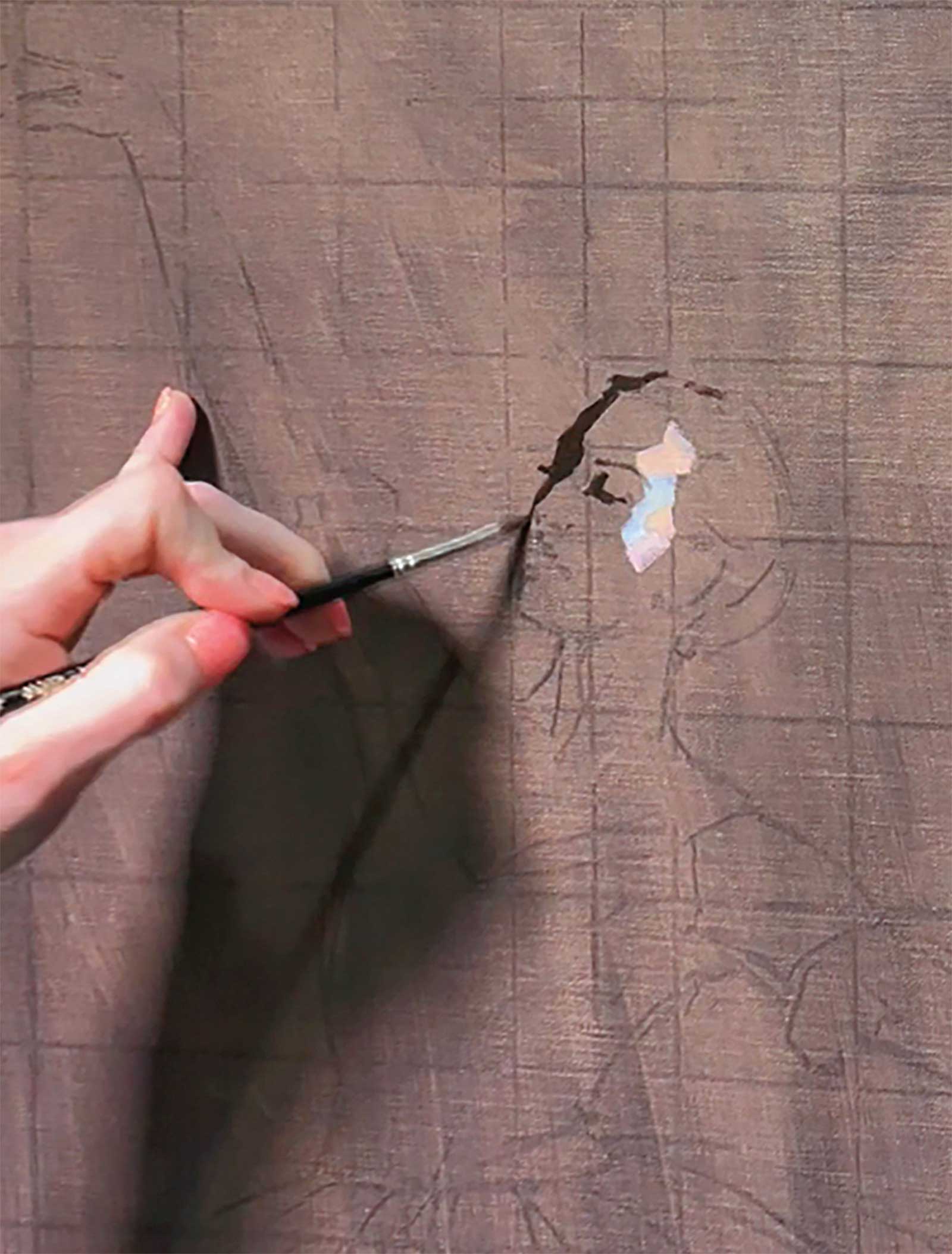
Stage 1 The Block-in and Face
I began by toning my linen panel with a mixture of transparent oxide brown and ivory black, allowing it several days to dry. I then drew the figure using a 2” grid and vine charcoal to ensure she was placed exactly where I wanted her. I prefer vine charcoal because it wipes away easily, allowing me to adjust the drawing without feeling committed too soon.
From there, I began with the face. Whenever I’m painting a portrait, I find I can’t move on until I’m happy with the head. I blocked the face in quickly using shapes of color with subtle shifts in temperature rather than value. This allowed me to create form within the light side of the face while using a narrow value range, sculpting the planes almost entirely through color. The shadow side was developed simultaneously with a thin layer of transparent oxide brown, keeping the shadow shape simple and free of unnecessary detail. The strongest color notes were reserved for the transition where the light and shadow met.
 Stage 2
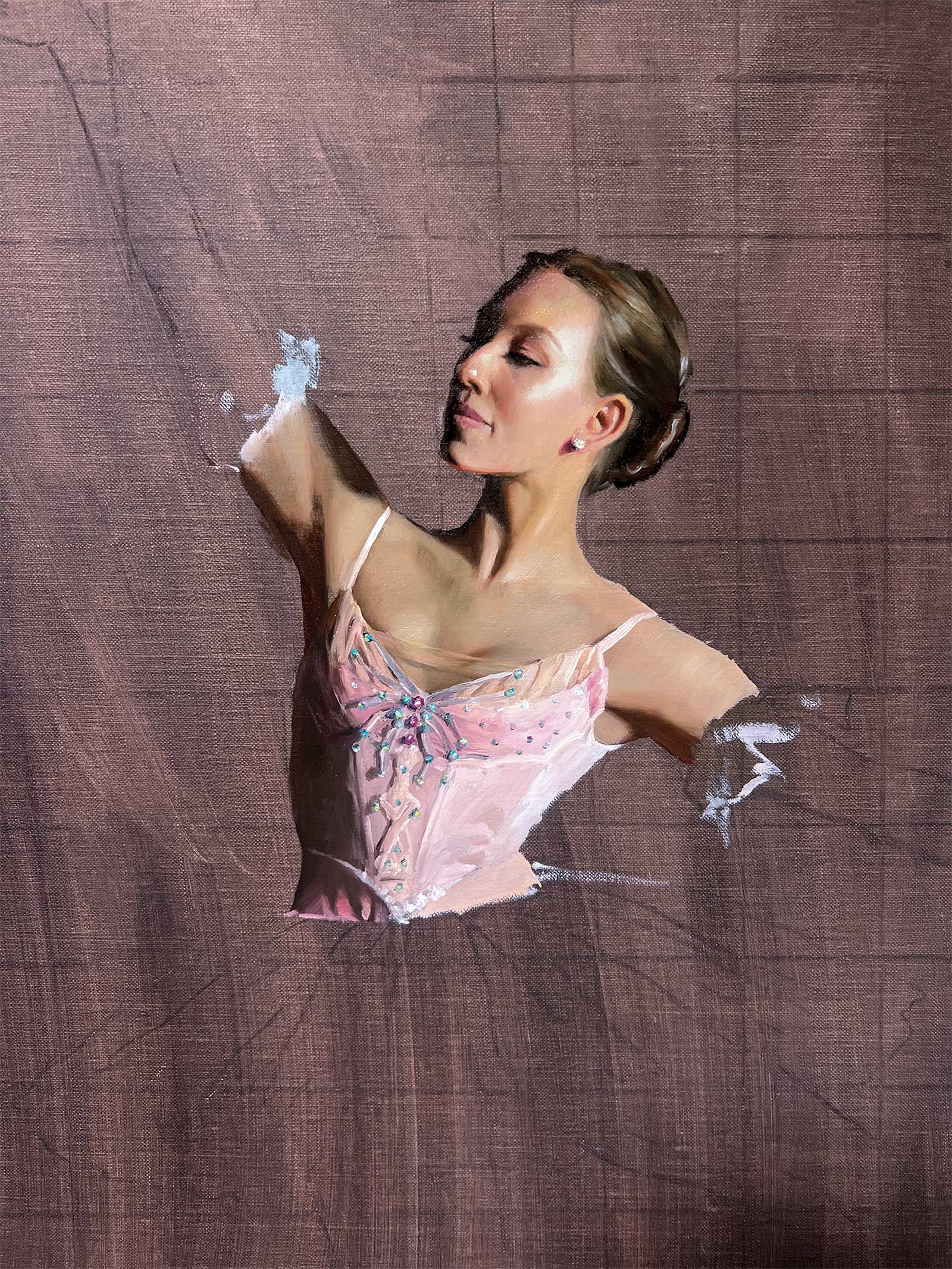
Stage 2 Moving Downward
Once I was satisfied with the face, I worked my way into the neck and torso, using color mixtures I’d already established. Knowing the ballerina’s tutu would contain subtle pinks and cool grays, I intentionally kept the skin tones warmer and more golden while avoiding excessive chroma. My goal was to create a sense of luminosity with restraint.
 Stage 3
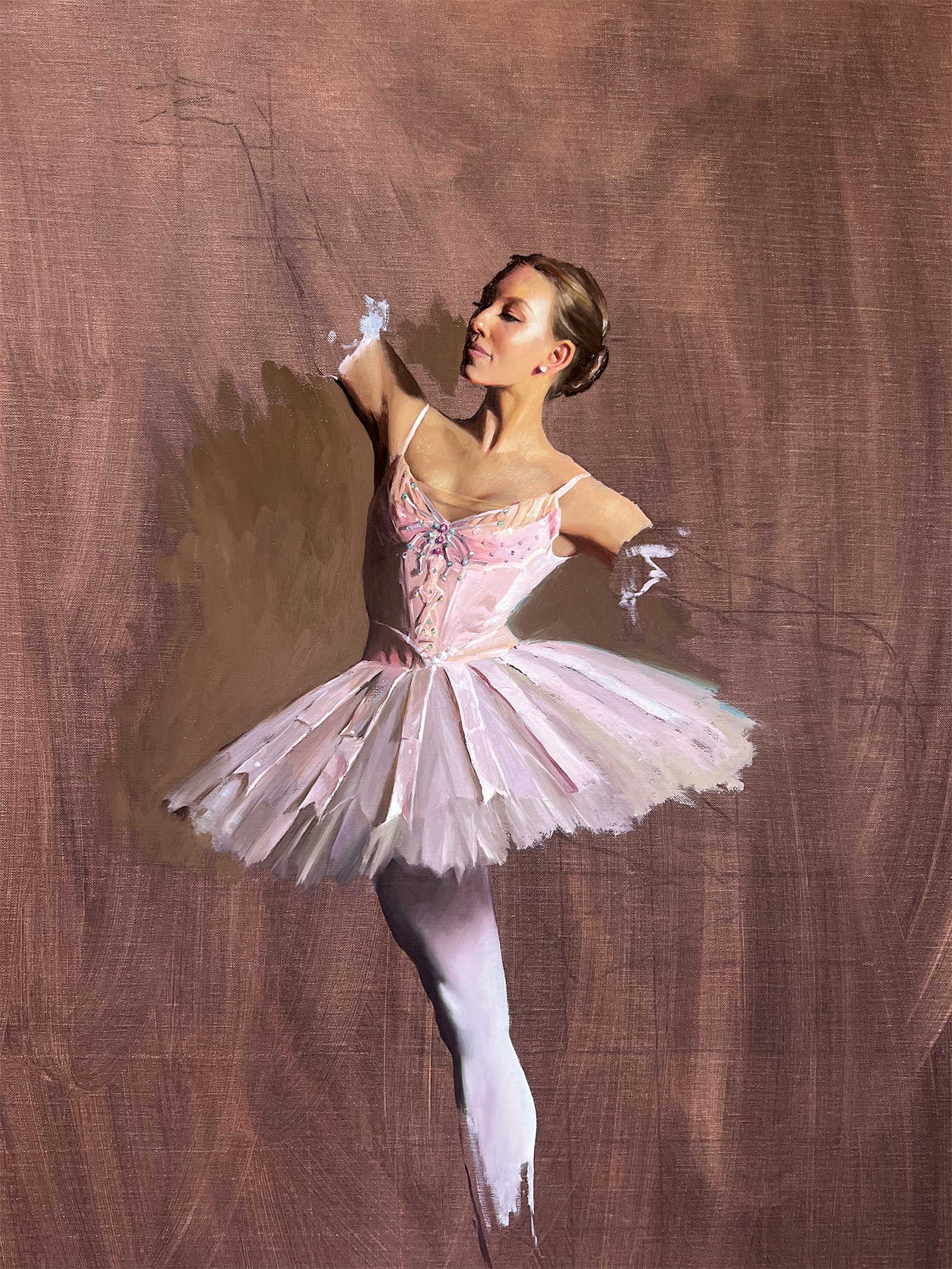
Stage 3 The Tutu
I continued working down the figure, painting wet into wet for as long as possible during each session to preserve fresh, painterly edges. Although we think of the tutu as “pink,” many of the colors I actually observed were muted violets, grays, and warm neutrals. I had to ignore what my brain insisted the dress should be and instead paint what I truly saw. As I developed the tutu, I also began experimenting with the background, eventually settling on a warm brown with subtle hints of green that complemented the dress. Much of the background was painted into the still-wet edges of the figure, creating soft transitions.
 Stage 4
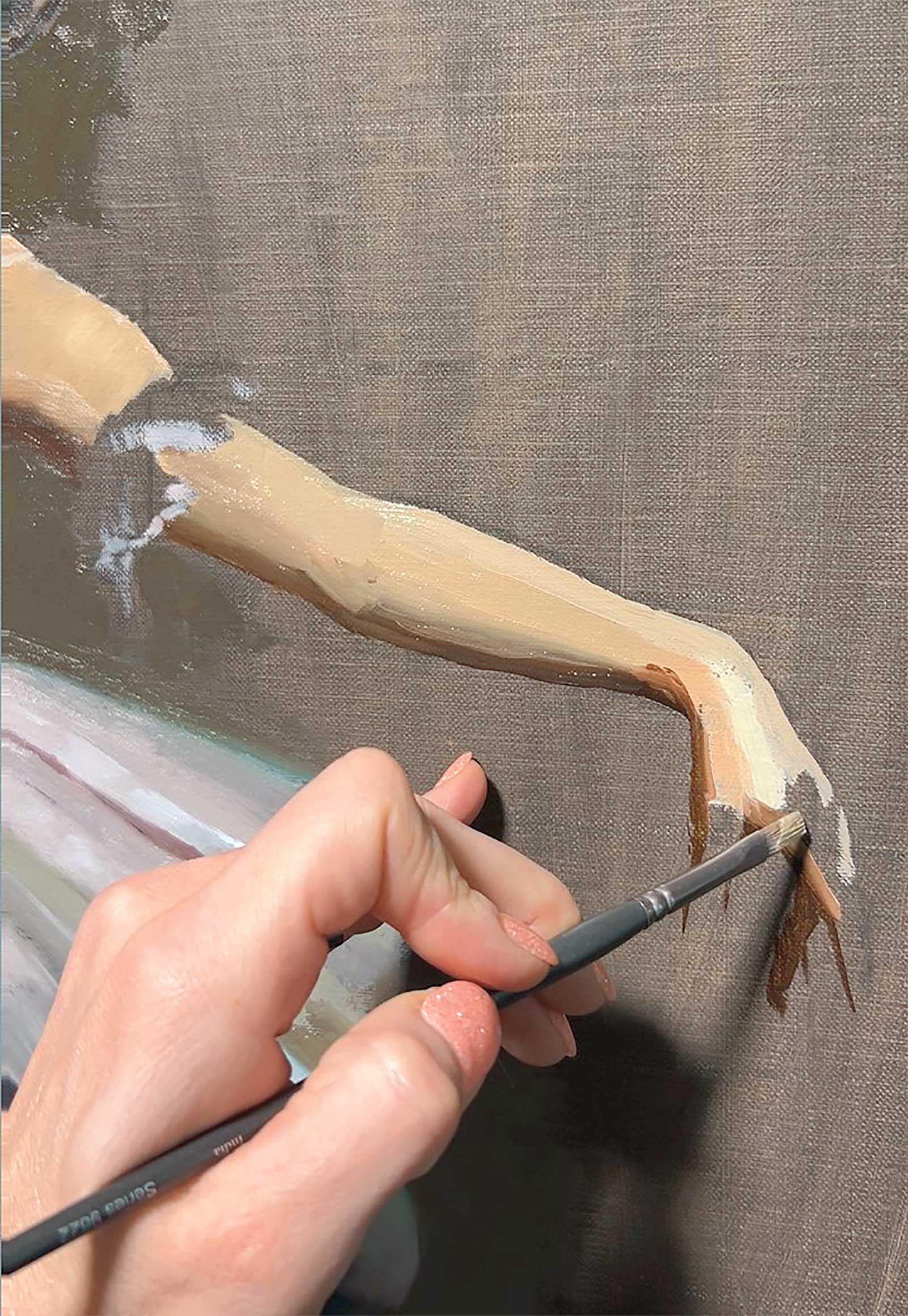
Stage 4 Painting the Arms and Legs
I approached the graceful arms and legs much as I had the head, first establishing the planes with carefully observed color notes before allowing the lights and shadows to meet through subtle transitions. I paid particular attention to preserving the core shadows, as the shift from light into shadow is often where drawing errors become apparent. I took the same deliberate approach with the hands, making sure the anatomy not only reads accurately but also conveys the grace and poise essential to a dancer.
 Stage 5
Stage 5 The Background
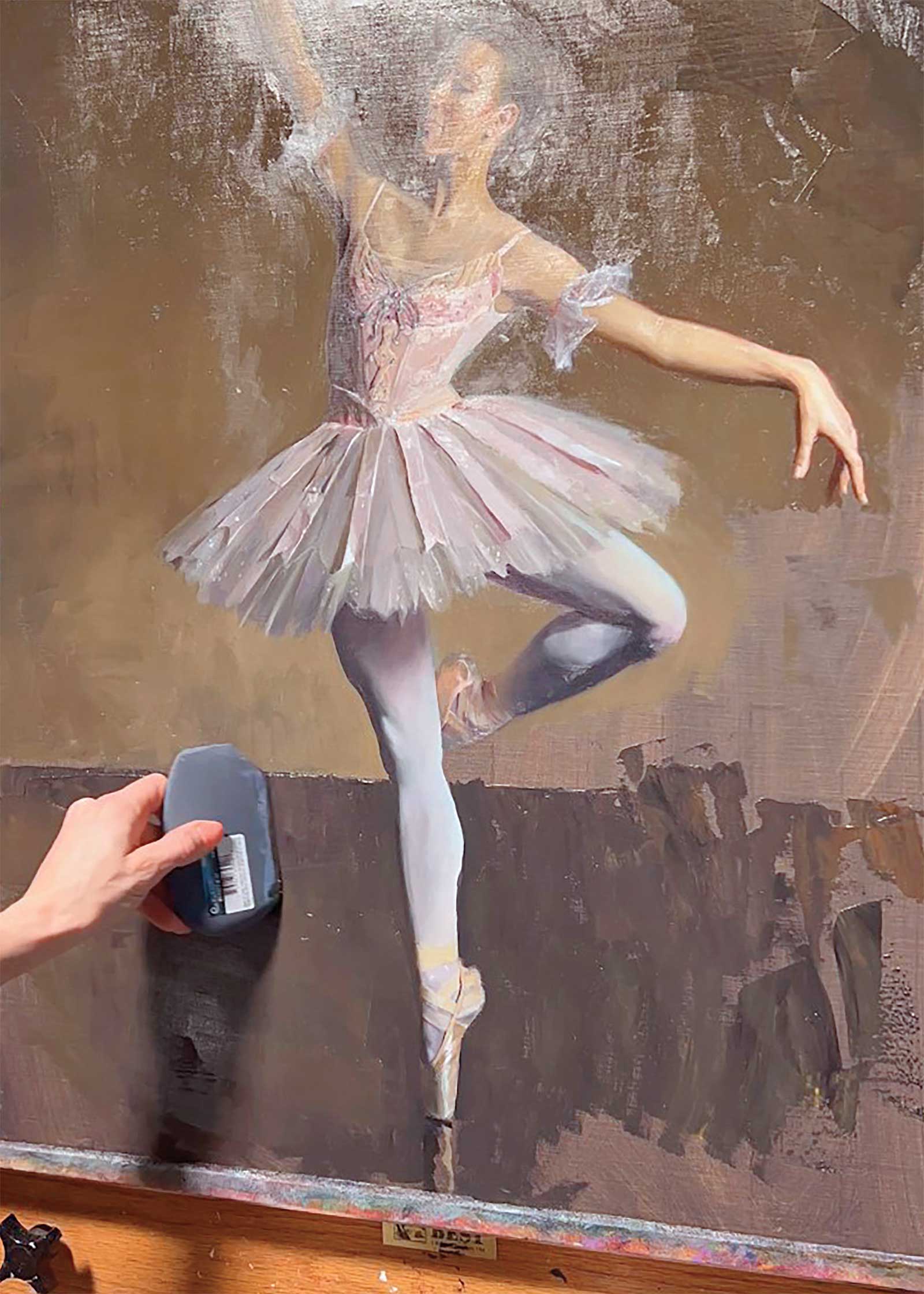
Although much of the background was painted alongside the figure, I spent several additional days refining its texture and value structure. I experimented by applying paint generously with a palette knife before softening and redistributing it with a Princeton silicone wedge. The resulting texture added just enough visual interest without competing with the figure, allowing the ballerina to remain the undeniable focal point of the painting.
 Stage 6
Stage 6 Finished Artwork
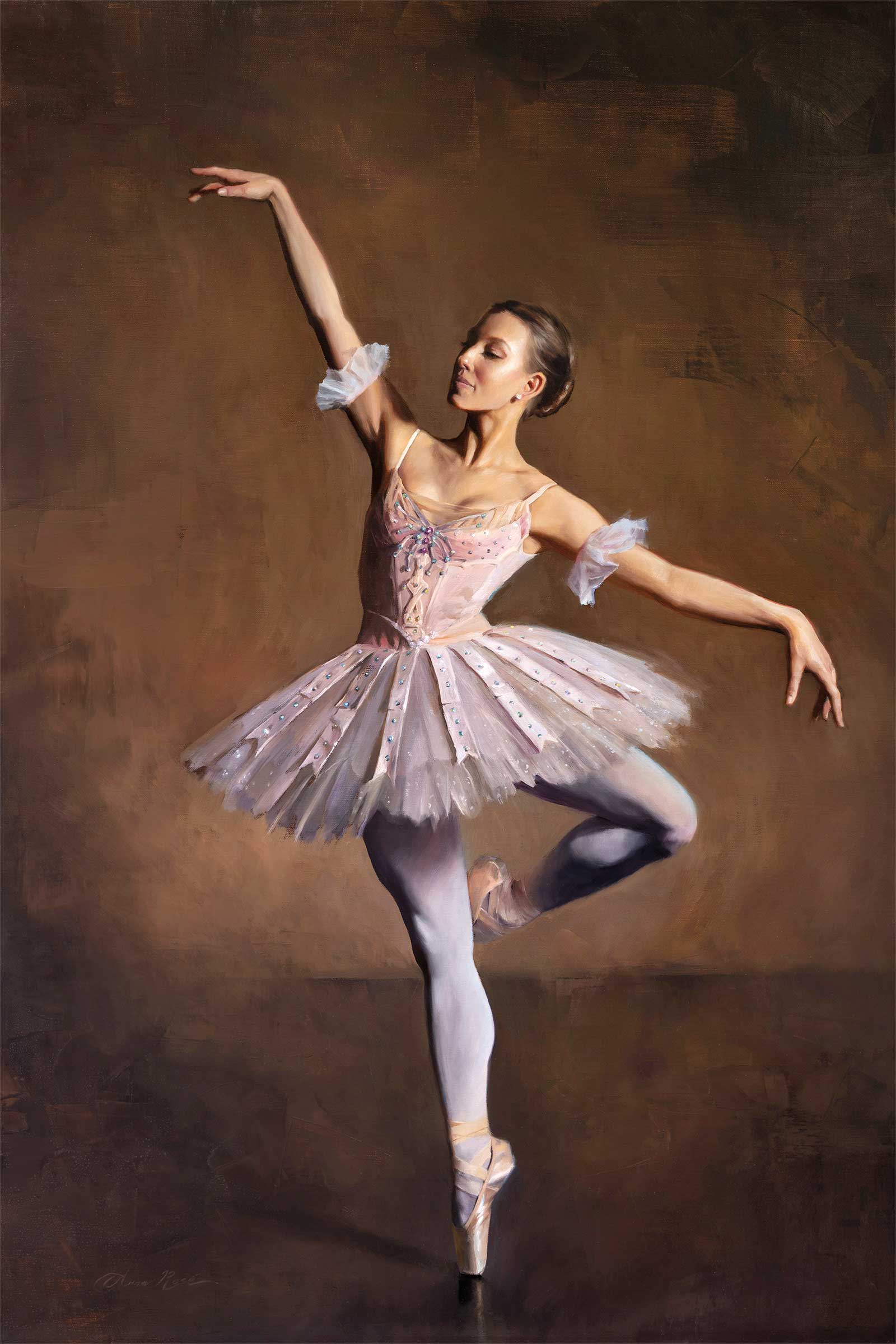
Intermezzo, oil on linen panel, 36 x 24” (91 x 60 cm)
Anna Rose Bain is an internationally recognized figurative artist whose work explores light, emotion and human connection. An award-winning artist and educator, she has taught students around the world through workshops, online courses and demonstrations. Her paintings have been exhibited in national and international exhibitions.