Every light source can be described by four qualities: direction, intensity, softness and color. The word DISC expresses them in order. I published a version of this list in these pages a few years ago. Since then, I have tightened the list and gave it a memorable name (think of the DISC of the sun).
Direction
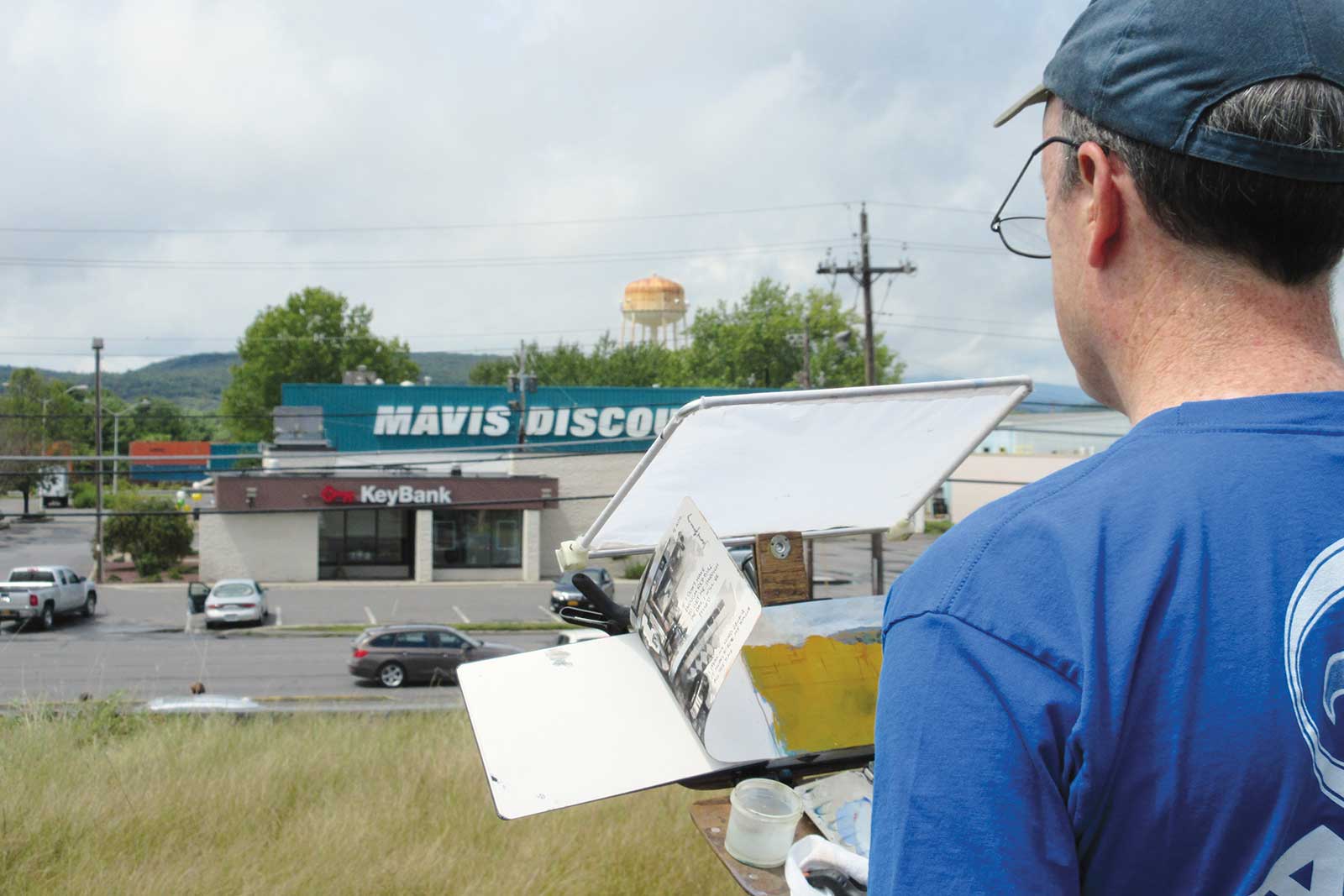
The weird light in this painting of a tire shop drops down from above left, offscreen. There must be something big floating overhead, maybe a spaceship or a giant helicopter. The light splashes across the front of the building and onto the ground beside the cars. Naturally, I’m dreaming up the lighting, but I have to make some choices. I like to establish the D of DISC first: direction. Every other decision follows after that one.
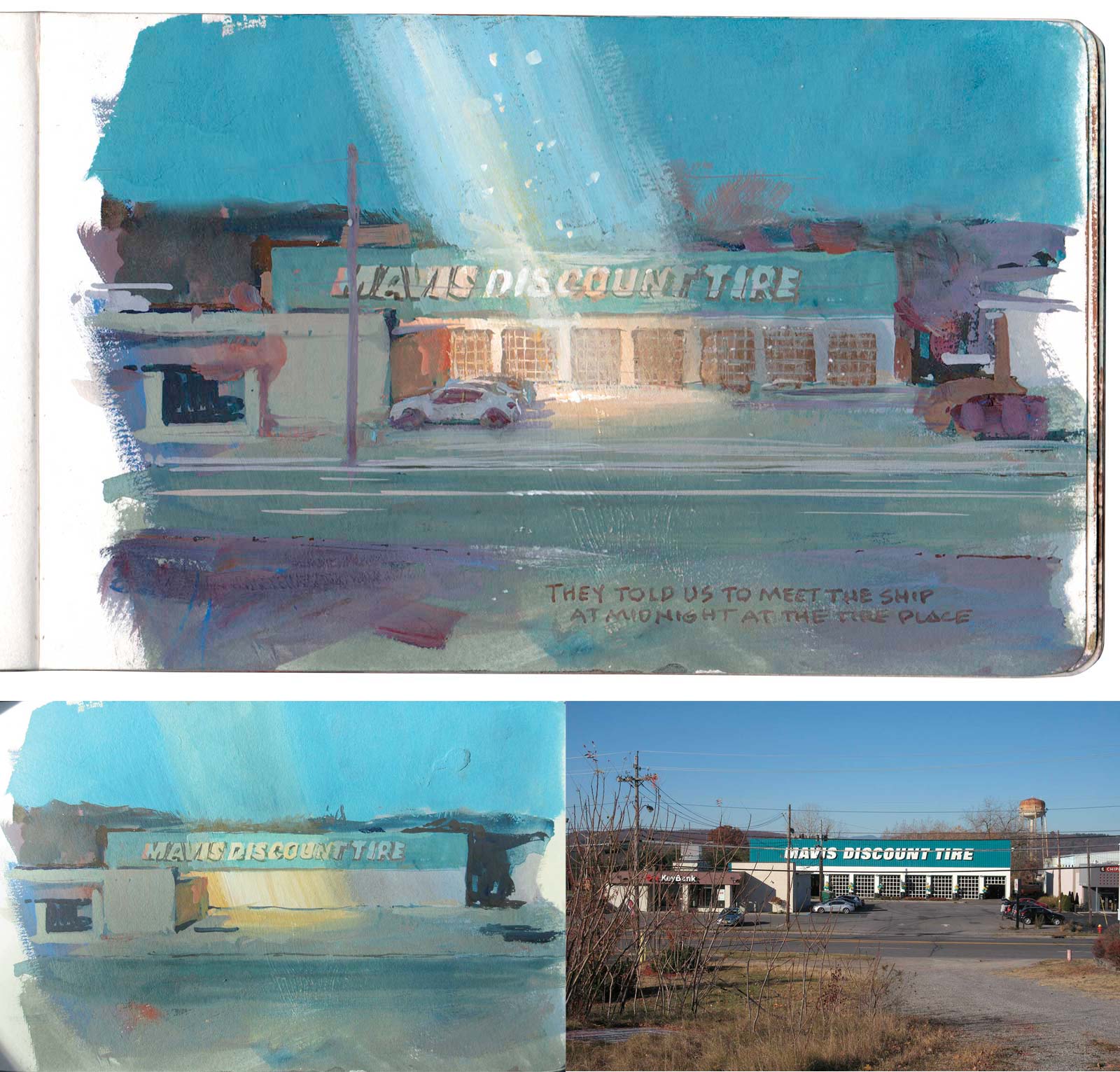
Mavis Tire, casein. An intense warm light shines down sharply from the upper left. Of course it’s invented.
Intensity
Intensity is the relative power of the source. A firefly and the noonday sun sit at opposite ends of the scale. Here the beam is strong enough to bleach the sign. Relative is an important word here, because our eyes adjust. You hardly know a single light bulb is turned on in the late afternoon, but as night settles, that same light can be the brightest thing in the scene.
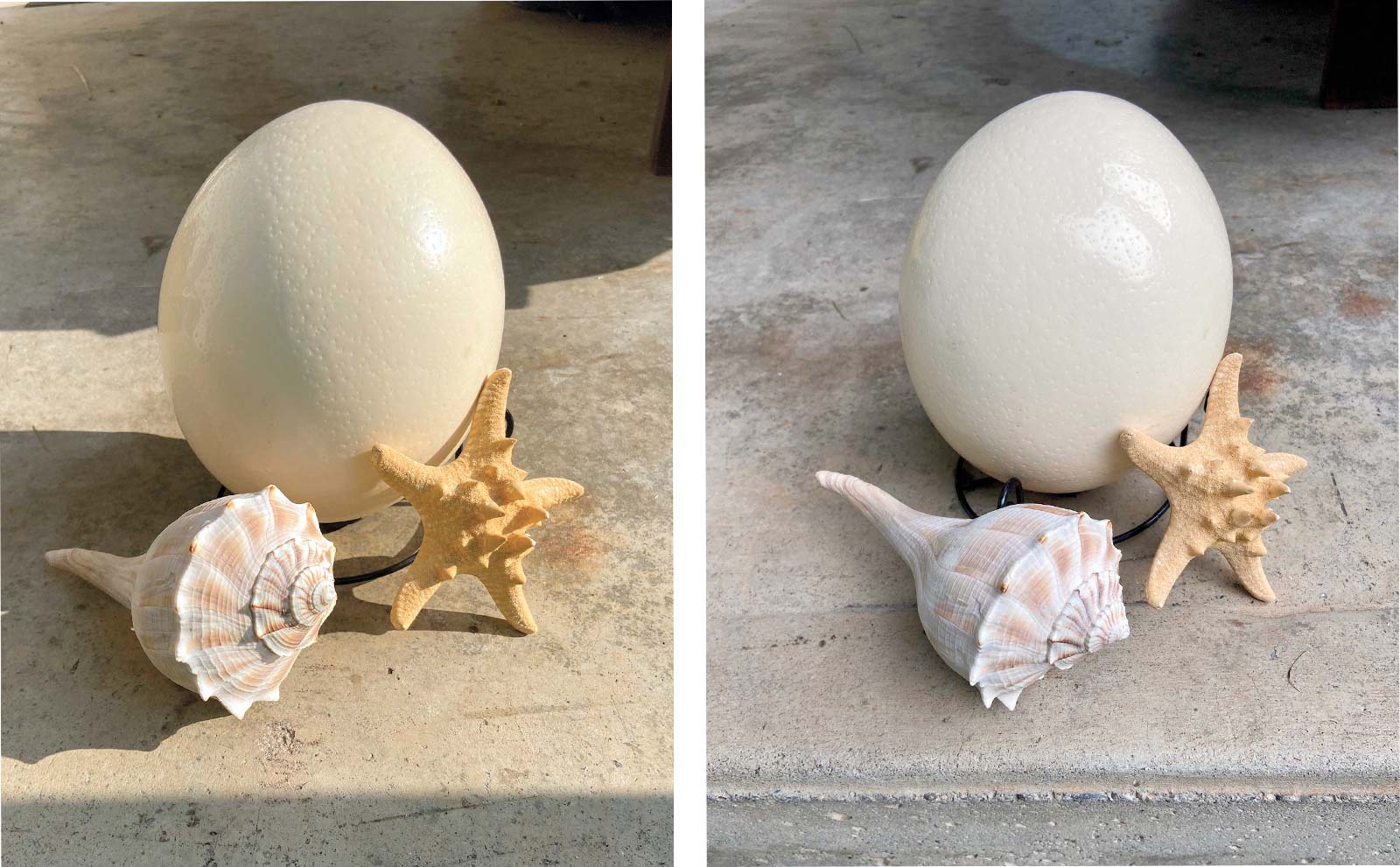
Left: Hard light; Right: Soft light
Softness
Softness depends on how large the source appears from the subject’s point of view. Hold your thumb up at arm’s length. If the source would hide behind it, the light is hard. The sun is an enormous object, but its disc is small in the sky, so it behaves like a hard source. A soft source is broad: an overcast sky, a north window, a diffuser panel.
Under hard light the division between lit and shadowed planes is abrupt, the cast shadow lands with a crisp edge, and hollows drop into deep shadow. A hard light brings out surface texture and casts a hard-edged shadow.
Under soft light the shadows lose their boundaries. The darkest tones are the downward-facing planes. Surfaces grow lighter as they turn up toward the broad source overhead. Soft light hides wrinkles and simplifies form, which is why it has always been the preferred light for portraits.
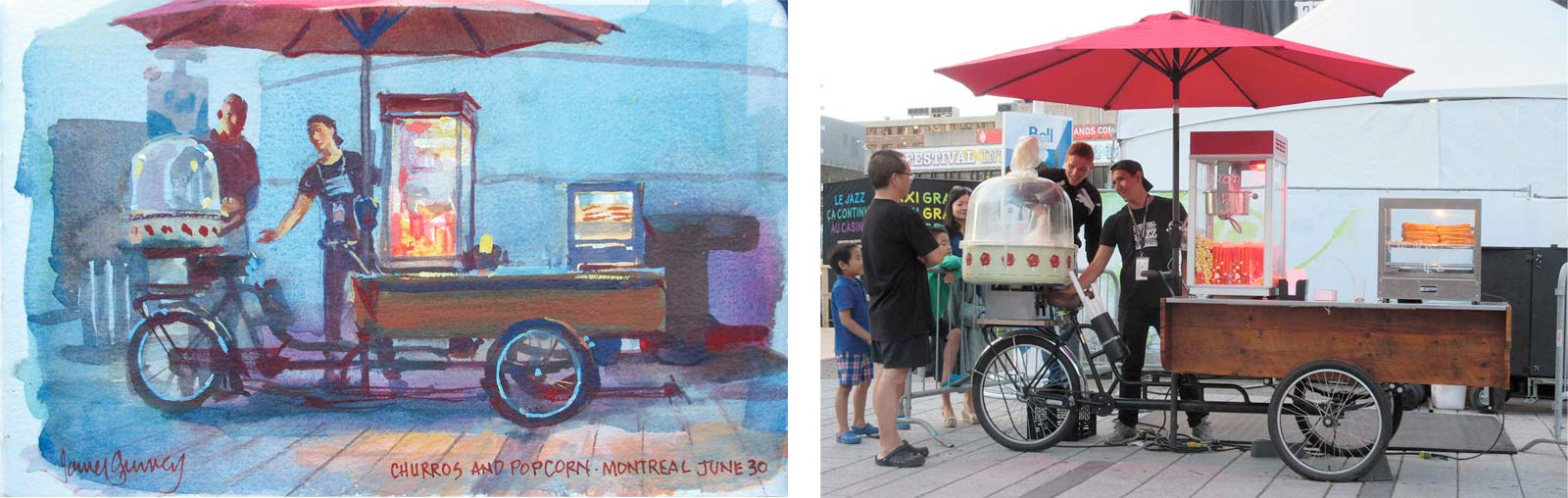
Churros and Popcorn, Montréal, gouache. When I started, I anticipated this light: soft blue twilight surrounds the warm vendor lights. As I finished, the scene resembled the painting.
Color
No light is truly white. Usually it tends toward golden or cool, which means adding in a bit of yellow-orange or blue to the white in the highlights. In the tire shop and the churro stand paintings, the brightest lights are warm. I contrast that sharp, warm light with the blue ambient light filling the rest of the scene. Ambient light is generally cooler, dimmer and exists all around.
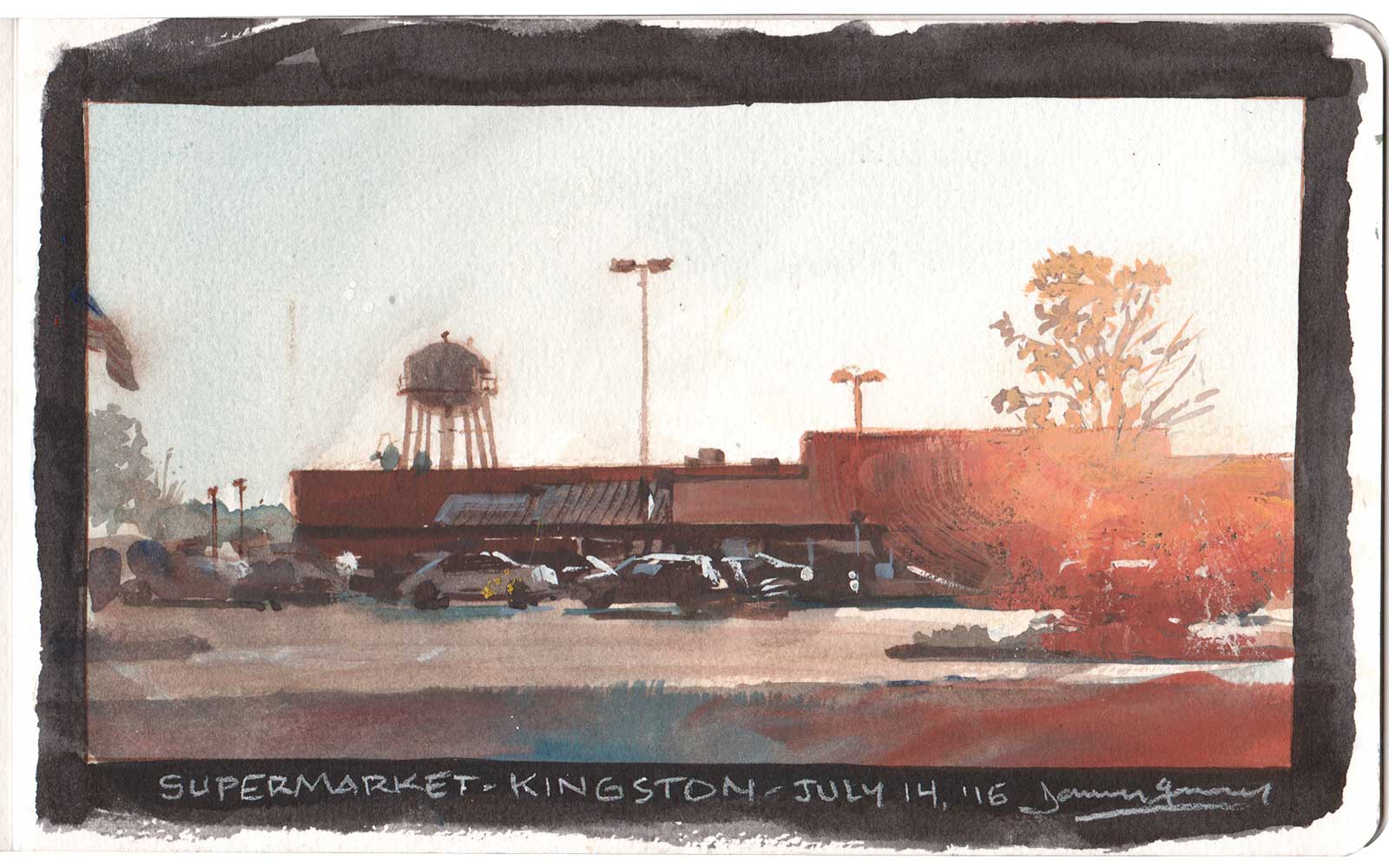
Supermarket, Kingston, gouache. I tried to paint this scene to make you squint.
A Few More Takeaways
A few more factors of light affect the outdoor painter. The first is change. Studio light holds steady. Outdoor light is alive and dynamic. As the sun arcs across the sky in the afternoon, cast shadows will lengthen, or a cloud crosses and the whole scene goes soft for a minute. An important goal early on is deciding which moment of illumination to capture, and not be distracted by changing effects that might bedazzle you later.
The second factor that often comes into play is a shadow-casting element, such as a trellis or a branch with leaves. Light becomes interesting when something stands between the source and the subject, scattering complex moving shadows across the forms.
That brings up motivation, the story behind a light. Take a look at the painting Supermarket, Kingston: Where is this beam coming from, and why does it fall here at this hour? A motivated light source is often visible in the picture, such as a lamp on a table as someone reads a letter. In the fantastical painting that begins this article, the inscription suggests an answer. “They told us to meet the ship at midnight at the tire place.” It’s the collision of the ordinary with the supernatural.
About the Artist
 James Gurney
James Gurney has a dinosaur named after him, Torvosaurus gurneyi, a large predator that lived in what is now Europe. The name came from his illustrated book series Dinotopia. Many artists know him as the author of Color and Light, Imaginative Realism and The Artist’s Guide to Sketching. He posts twice a week on Substack and shares his painting adventures on YouTube and Instagram.