Scottsdale Artists’ School: How has Scottsdale Artists’ School changed the way you paint? Does teaching change the way you paint or do you keep those two things separate?
Paul Steele: I’ve taken many workshops at Scottsdale Artists’ School, and that is really where I learned about oil paint. SAS has fundamentally changed the way I paint, considering I really didn’t know what I was doing before I found SAS. Teaching has made my own work better. I’m not sure it’s changed the way I paint, but it keeps me thinking about the basics. What we call the basics or the fundamentals is pretty much the same for everybody, and as I tell my students, “It’s a whole lot easier to get a good finished painting if you learn a solid method that works for you.”
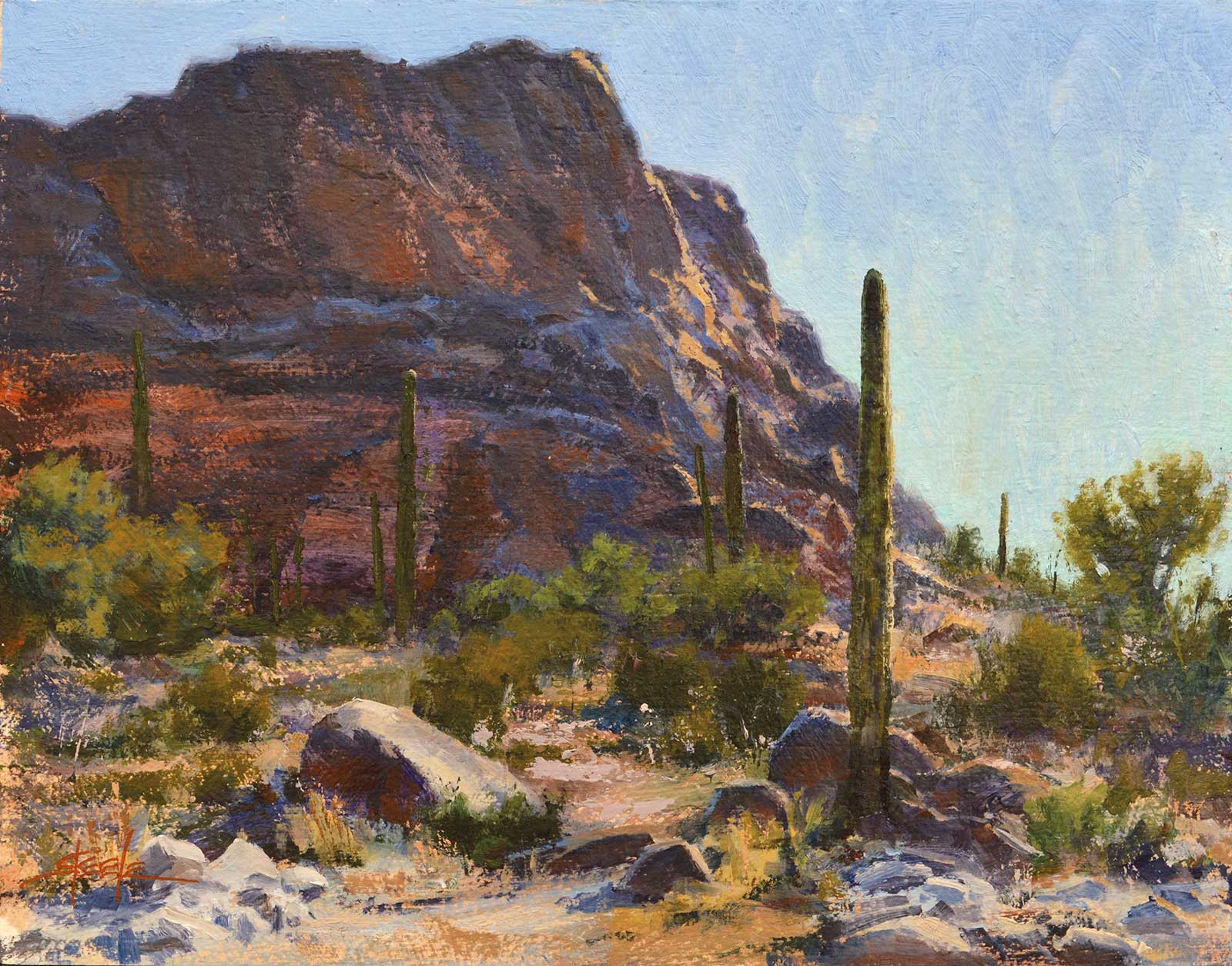
In the Supers, oil, 11 x 14” (27 x 35 cm)
SAS: Have you always wanted to become an artist?
PS: I don’t remember ever wanting to become an “artist,” but I also don’t remember a time when I didn’t draw or paint. As a child, people called me an artist before I even knew what it meant. As a matter of fact, I still describe myself as a painter. I’ll let the viewer decide if I’m an artist because everybody seems to have their own definition of the word.
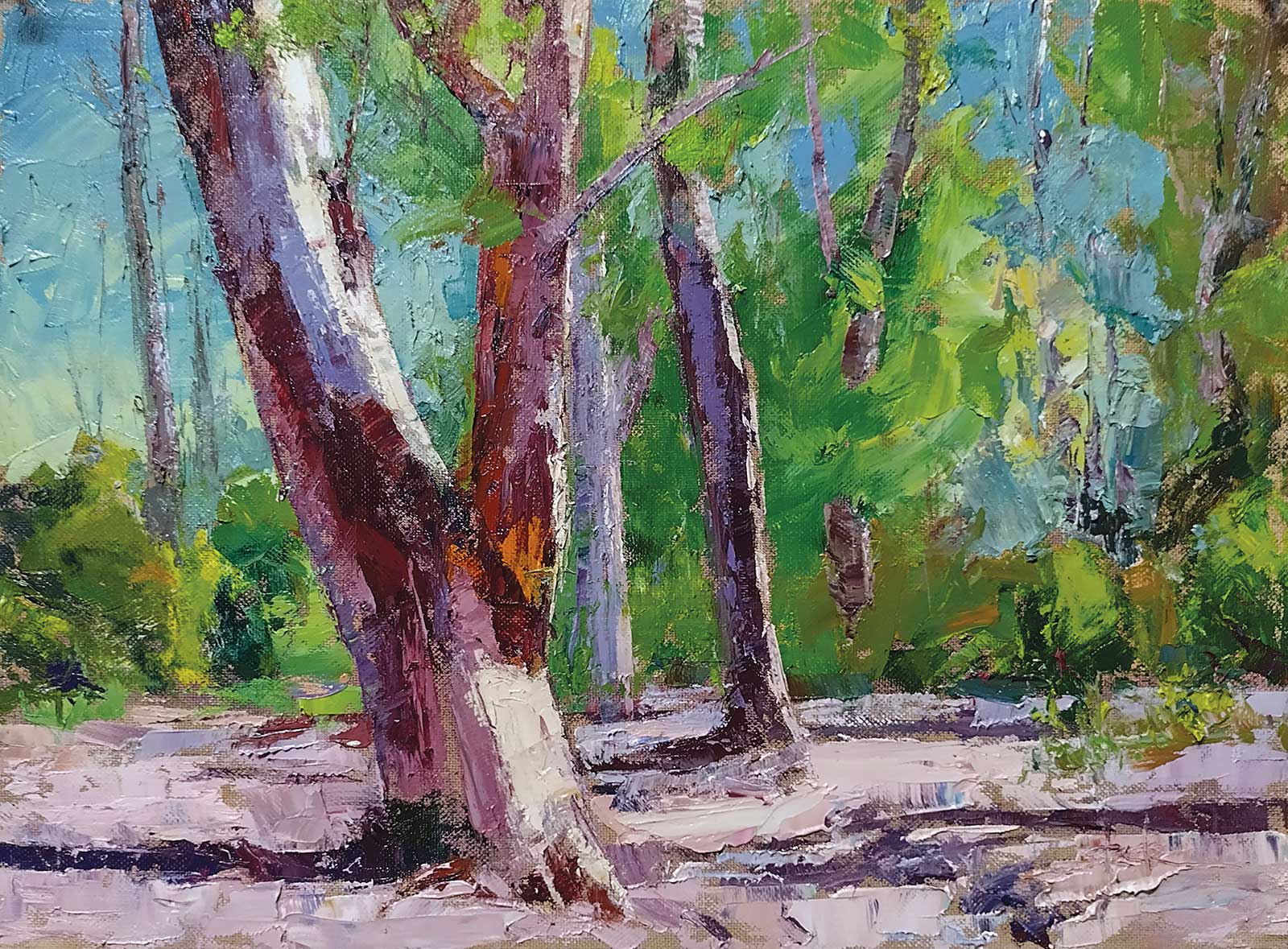
Gumtrees, oil, 12 x 16” (30 x 40 cm)
SAS: Is there a time of day you love painting most? Golden hour, early morning, etc.?
PS: In the studio I like to paint in the morning when I’m fresh and motivated. Out on location, I love to paint in the evening; I just wish the “golden hour” lasted three hours. The light is so fleeting, it’s a real challenge to capture it on the spot.
SAS: You’ve been teaching landscape painting for more than a decade now. What’s the most common thing beginners get wrong that has nothing to do with technique?
PS: As beginners we are timid, we have a tendency to not put enough paint on the palette, and we want brushes that are too small. I think it’s very brave to enroll in a workshop with people you don’t know and a box full of art supplies you are not familiar with.
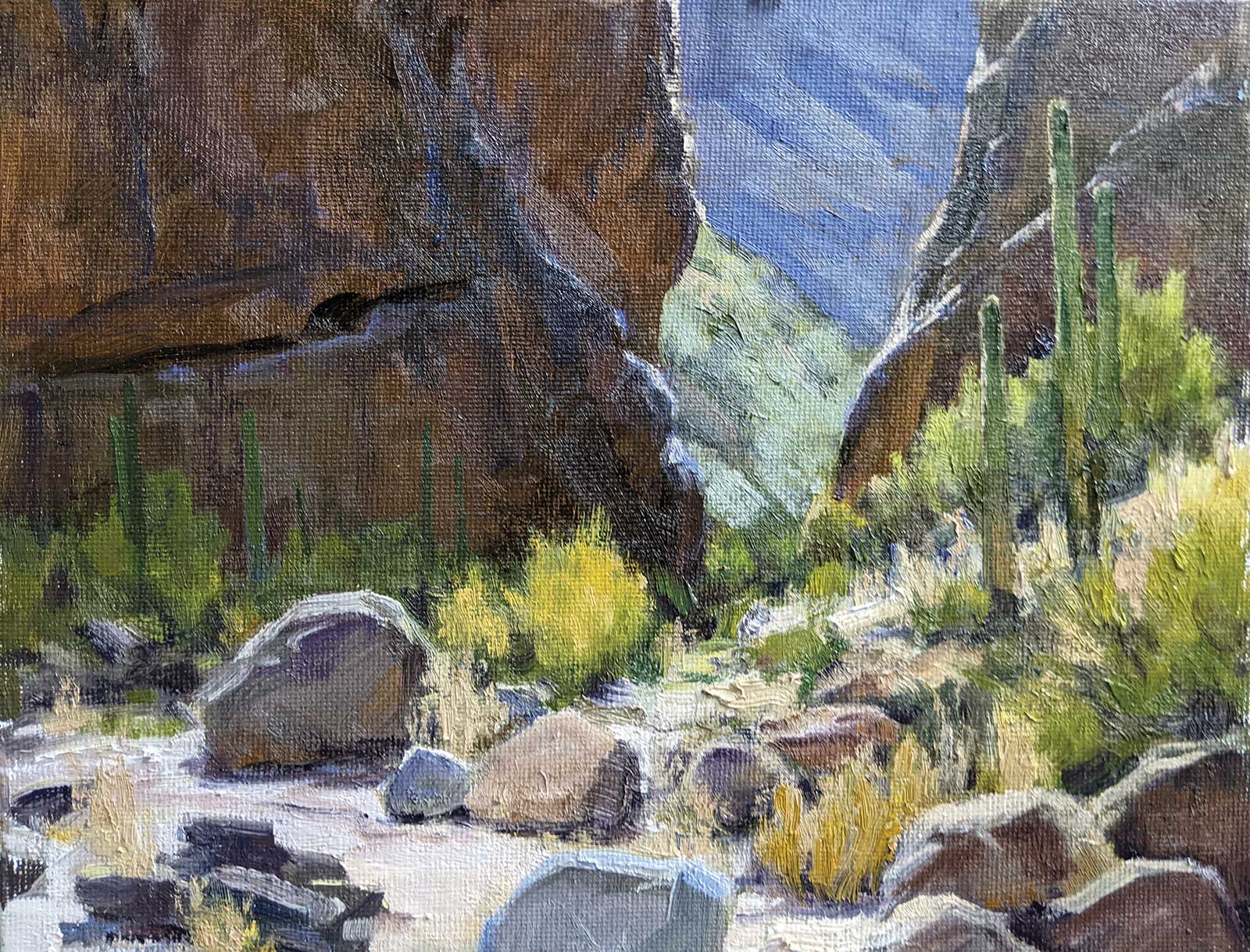
Blue Rock, oil, 8 x 10” (20 x 25 cm).
SAS: If someone only ever saw one of your paintings, what would you want them to understand about the American West from it?
PS: That’s an easy question to answer: the American West is as lovely as it is dangerous. I hope to portray the contrast of the beauty and the ruggedness of the landscape, the plants and animals. When someone looks at one of my desert landscapes, I want them to think “I’d like to go there, but I better wear good boots.”
SAS: Tell us about your upcoming workshop at Scottsdale Artists’ School. What can students expect, and what makes this class unique?
PS: I title my workshops “Fundamentals of Landscape Painting.” My goal is to help beginners with everything from gaining a working knowledge of the materials to developing a solid process for creating a painting from start to finish. Be prepared to work and learn. We cover a lot of information, from mixing colors to designing a composition to actual paint application.
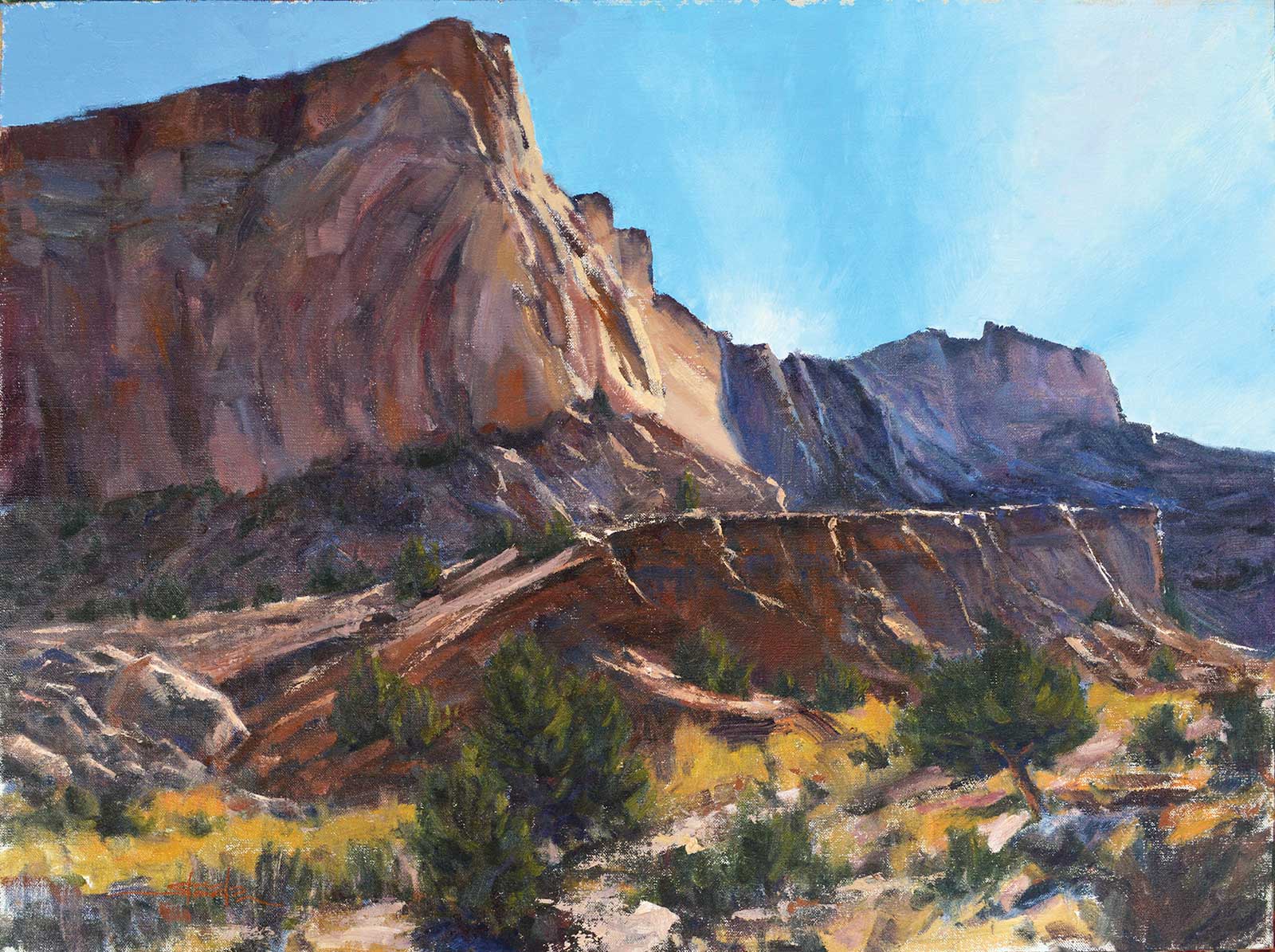
Desert Light, 18 x 24” (45 x 60 cm).
SAS: What’s the most important takeaway you hope students leave with after your workshop?
PS: Experiment! Have fun, cover lots of canvas. Don’t expect masterpieces, expect experience. Painting is a lifelong learning experience; you will never stop learning. If you put in the effort, you will see results. —
Visit scottsdaleartschool.org for more information on the school and its upcoming workshops.