My mentor, Everett Raymond Kinstler, lived to be 921⁄2 years old. Up until three weeks before he died, he was still working as an artist accepting commissions and filling his easels with numerous works well underway. At that advanced age, he completed a portrait of the first woman president of Harvard University! One thing is for certain: Kinstler enjoyed challenging himself with new ideas, new approaches and new problems to solve daily while still staying true to himself. He once said to me, “When you get to be my age, you will understand how fortunate we are to wake up every day so stimulated by our work!” Is this the closest thing to a fountain of youth?
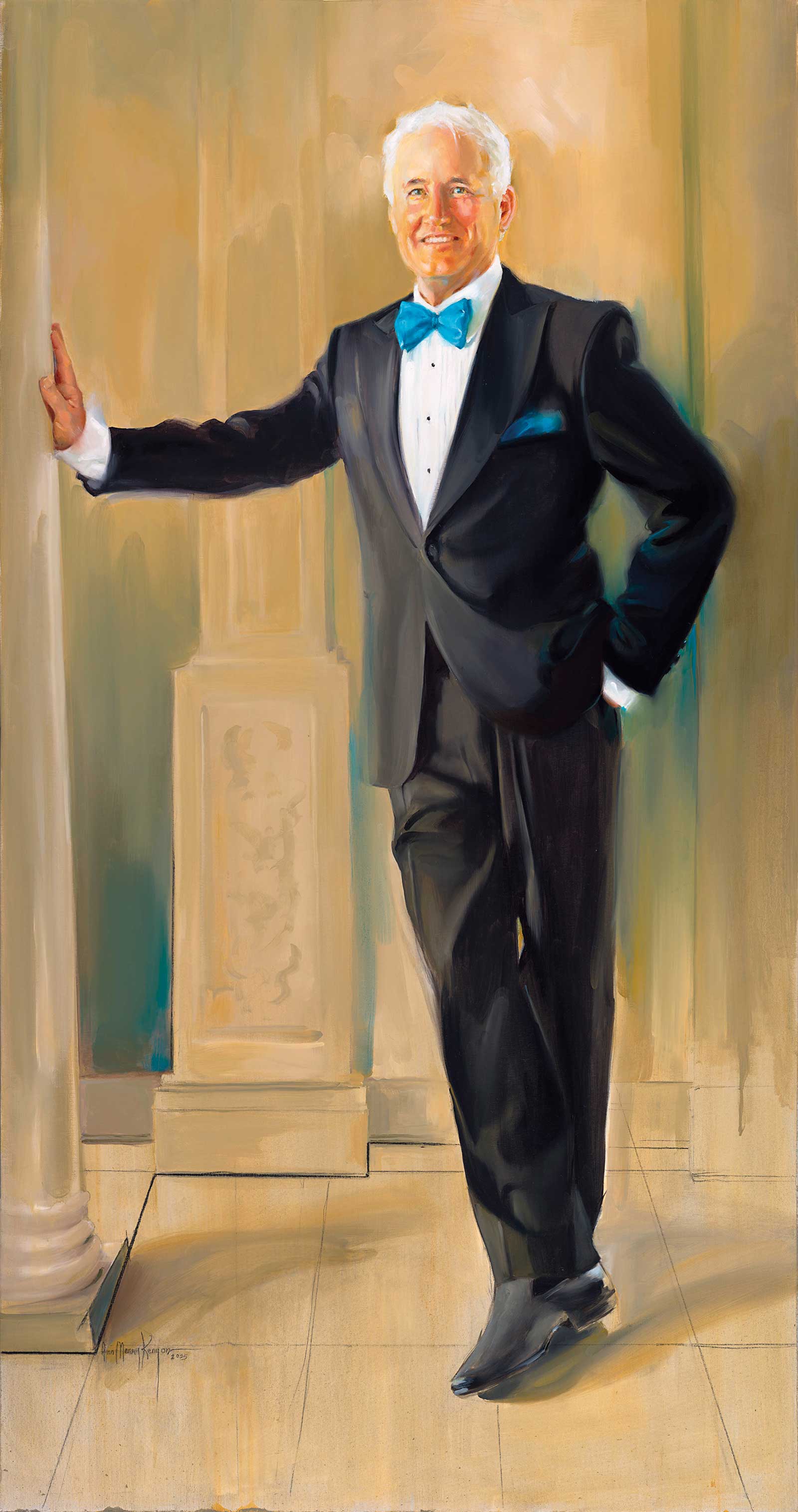
Ann Manry Kenyon, Come Fly with Me, oil on canvas, 72 x 42” (182 x 106 cm)
We understand that longevity as a portrait artist isn’t just about talent. It comes from endurance, adaptability, discipline and above all, passion. Portraiture is one of the oldest and most demanding artistic traditions because it constantly asks the artist to return to the same challenge: how to capture a living person truthfully, psychologically and beautifully. Many painters shine intensely for a short time, then fade as trends shift or careers stall, but others continue producing meaningful work for decades, showing that longevity in portrait art depends less on novelty and more on persistence and conviction. The careers of Max Ginsburg, Burton Silverman and Ann Manry Kenyon illustrate how portrait artists sustain long practices not only through technical skill, but also through a steady process of reinvention within tradition.
From my perspective, longevity in portrait painting almost always starts with discipline. Max Ginsburg is a clear example of this. Born in 1931, he developed his career through a deep commitment to classical draftsmanship and observational realism, even during periods when those values were not particularly in favor. Still, Ginsburg stayed with portraiture and believed in the lasting importance of representing people directly and honestly. In fact, in 2015, when he was in his 80s, Max was awarded the Grand Prize award in the Portrait Society’s The International portrait competition.
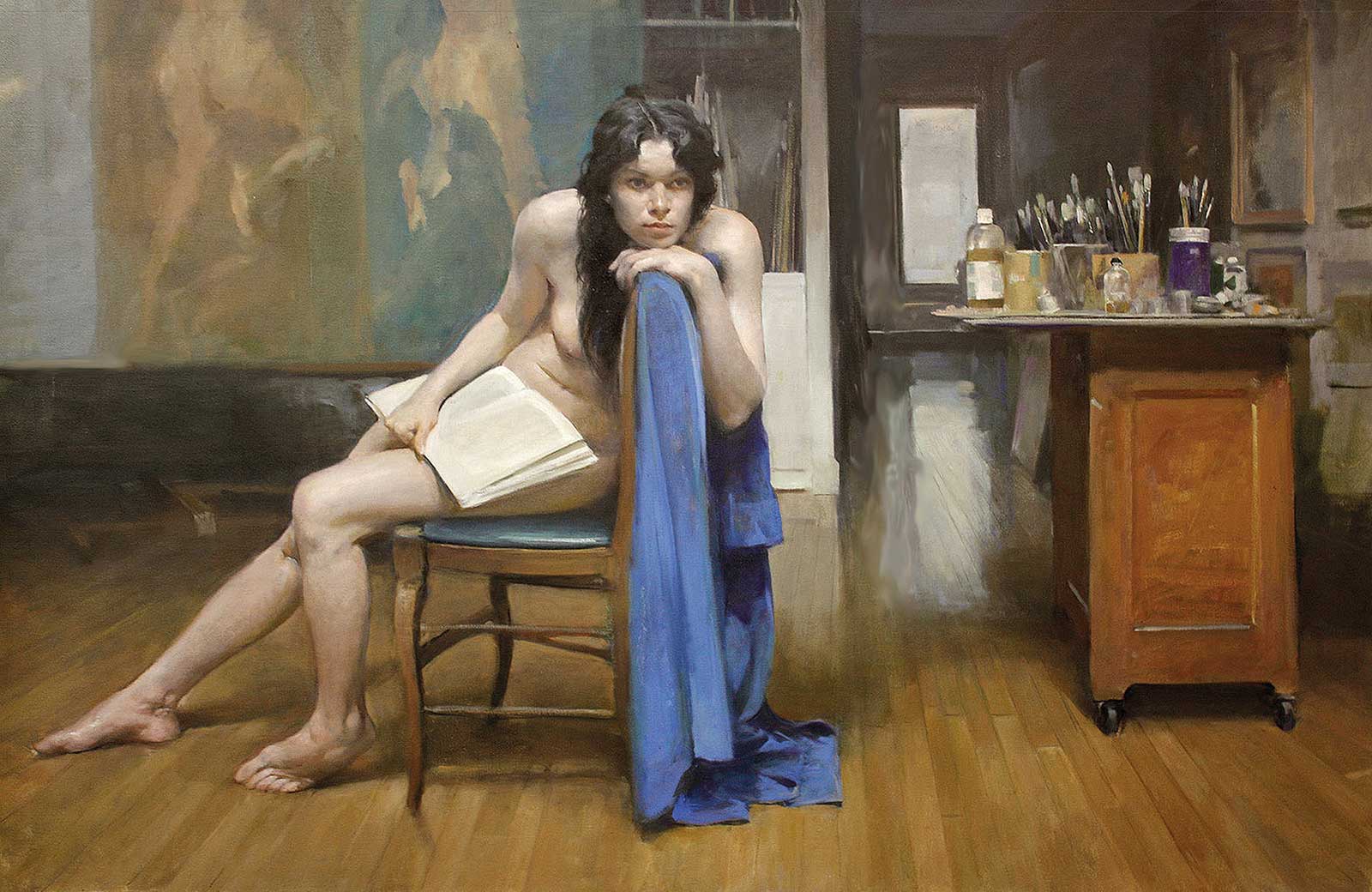
Burton Silverman, Triptych, oil on linen, 36 x 54” (91 x 137 cm)
What has always stood out to me in Ginsburg’s work is that his portraits go beyond likeness. They carry emotional and social weight. He consistently turns his attention to workers, families, and everyday individuals, portraying them with a level of dignity that is often reserved for more traditionally “important” subjects.
Burton Silverman, to me, represents a different but equally compelling model of longevity, one grounded in remarkable technical versatility and a deep psychological sensitivity. I still remember him once referring to himself, at a Portrait Society annual conference, simply as “a survivor,” and that description has always felt apt.
Born in 1928, Silverman built a reputation for portraits that sit comfortably between disciplined realism and a more painterly, expressive approach. Rather than producing work that feels static or overly polished, he consistently avoids photographic stiffness, favoring gesture, atmosphere, and a strong sense of presence. In watching his work over time, what becomes clear is that he isn’t just recording how someone looks—he’s trying to get at who they are.
What I find most instructive about Silverman’s long career is how clearly it demonstrates that endurance in art depends on evolution without abandoning one’s core values. He has remained firmly committed to representational painting, yet he has never stopped refining his approach. Silverman received a standing ovation in 2004 when the Portrait Society presented him with our highest award, the Gold Medal. Since that time, I’ve seen his brushwork loosen and become even more open and expressive. What also strikes me about Silverman is his willingness to move comfortably across different working contexts and how much that has contributed to his staying power. He hasn’t limited himself to commissioned portraiture alone; instead, he has continued to take on a range of work that keeps him both active and engaged. That kind of flexibility, I think, is part of what has allowed him to stay relevant without becoming boxed into a single category or expectation.
Ann Manry Kenyon’s career spans more than six decades. She taught at our first Portrait Society conference 28 years ago. To me, her career highlights another essential dimension of longevity: the role of sustained, intimate human connection. Looking at her portrait career, it becomes clear that continuing to paint people meaningfully over time requires more than technical consistency; it requires an ongoing commitment to relationships.
Portraiture, more than many other genres, is built on this exchange. Unlike landscape painters who can work in relative isolation, portrait artists are constantly engaging with individual personalities, histories and emotional worlds. That kind of work carries its own form of labor. It asks for empathy, patience and attentiveness just as much as it asks for skill with paint.
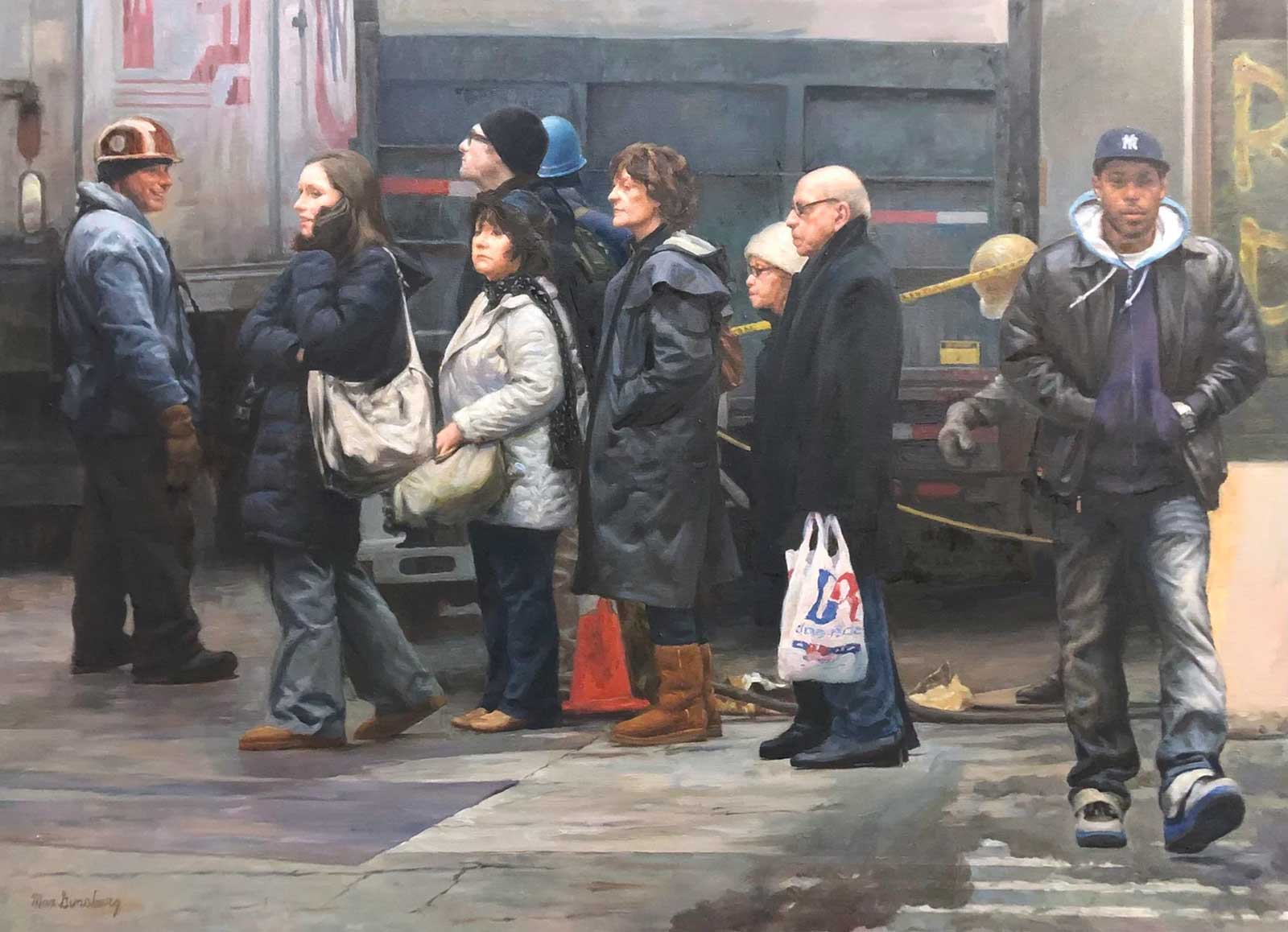
Max Ginsburg, Street Crossing, oil on canvas, 32 x 44” (81 x 111 cm)
What I take from Kenyon’s work is her clear understanding that a portrait is never a one-sided act. It is a collaboration between artist and sitter, shaped by trust on both sides.
Over time, those relationships become more than part of practice, they become its foundation. Kenyon’s sustained recognition speaks to that balance of craftsmanship and connection, and how, together, they can support a lasting and meaningful career in portraiture.
The careers of these artists collectively suggest that longevity in portrait art rests on several interconnected qualities. First is technical excellence. Portraiture leaves little room for carelessness because viewers instinctively recognize when a face feels false. Rigorous attention to drawing, structure, and observation is a necessity. Second is resilience. Each of these artists continued pursuing representational painting despite shifts in artistic fashion that might have discouraged less committed artists. Third is growth. Longevity does not mean repeating the same painting endlessly, it means continually deepening one’s understanding of people and the medium. Lastly, without a doubt, it takes passion. Loving what you do and doing what you love is a formula for success in and of itself. Without passion, there is no sustaining the drive to keep working.
In an age increasingly dominated by photography, digital images and artificial intelligence, portrait painting might appear endangered. Yet these long careers suggest otherwise. Portraiture endures because people continue to desire more than visual accuracy; they seek an inner likeness as well. The artist who remains fascinated by faces, stories and individuality may continue finding meaning in portraiture for a lifetime.
Sincerely,
Michael Shane Neal
Chairman