My work often begins with an interest in how light transforms the ordinary. In this demonstration painting, I was drawn to a quiet moment on an urban street where the late‑day sun cast long, angular shadows across the pavement. The scene itself is simple—buildings, power lines, a stretch of road—but the shifting light created a sense of stillness and emotional weight that I wanted to explore. Much of my practice centers on these understated transitions, where atmosphere becomes the true subject and the familiar edges of the city soften into something more contemplative.
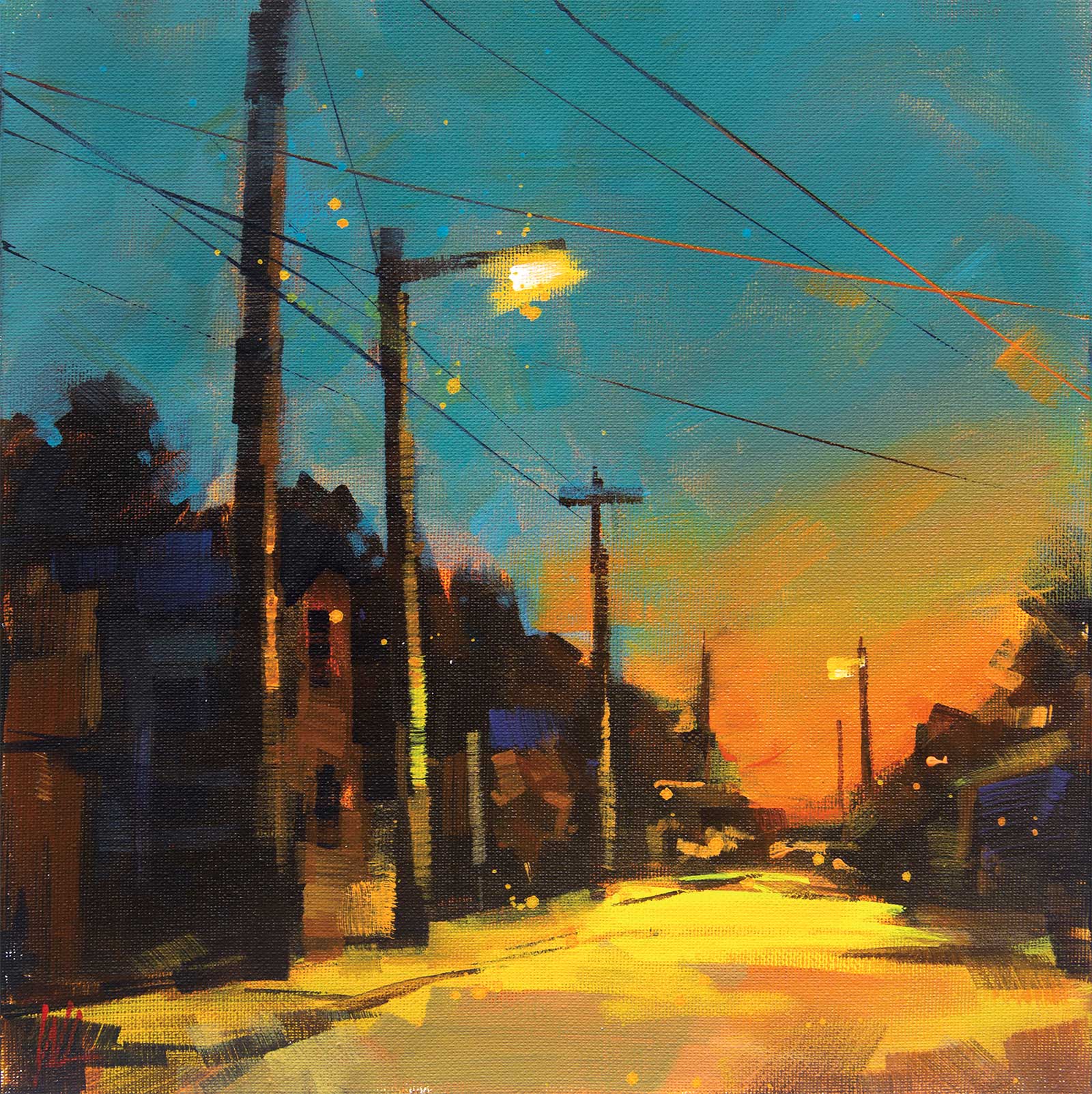
Before the City Wakes, acrylic on canvas, 12 x 12” (30 x 30 cm)
I start the painting with a transparent block‑in, using warm and cool tones to establish the major shapes and the overall value structure. Keeping the early stage loose allows me to respond intuitively to the developing light. From there, I gradually build the image through layers of color temperature, letting the warm glow of the sun interact with the cooler shadows that define the street. The power lines and vertical poles serve as quiet anchors, giving the composition a sense of rhythm and architectural clarity.
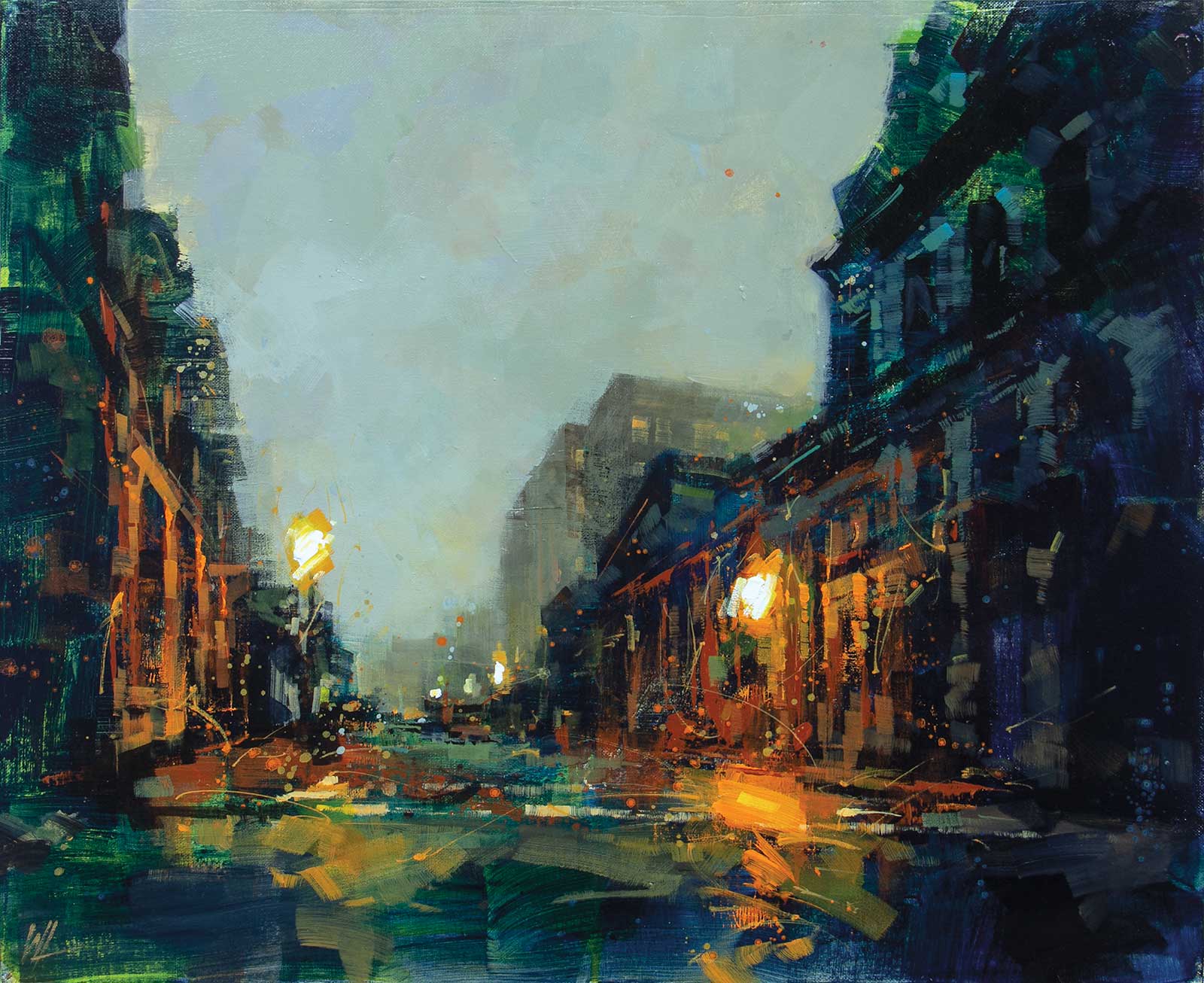
City of Saint John #6, acrylic on canvas, 16 x 20" (40 x 50 cm)
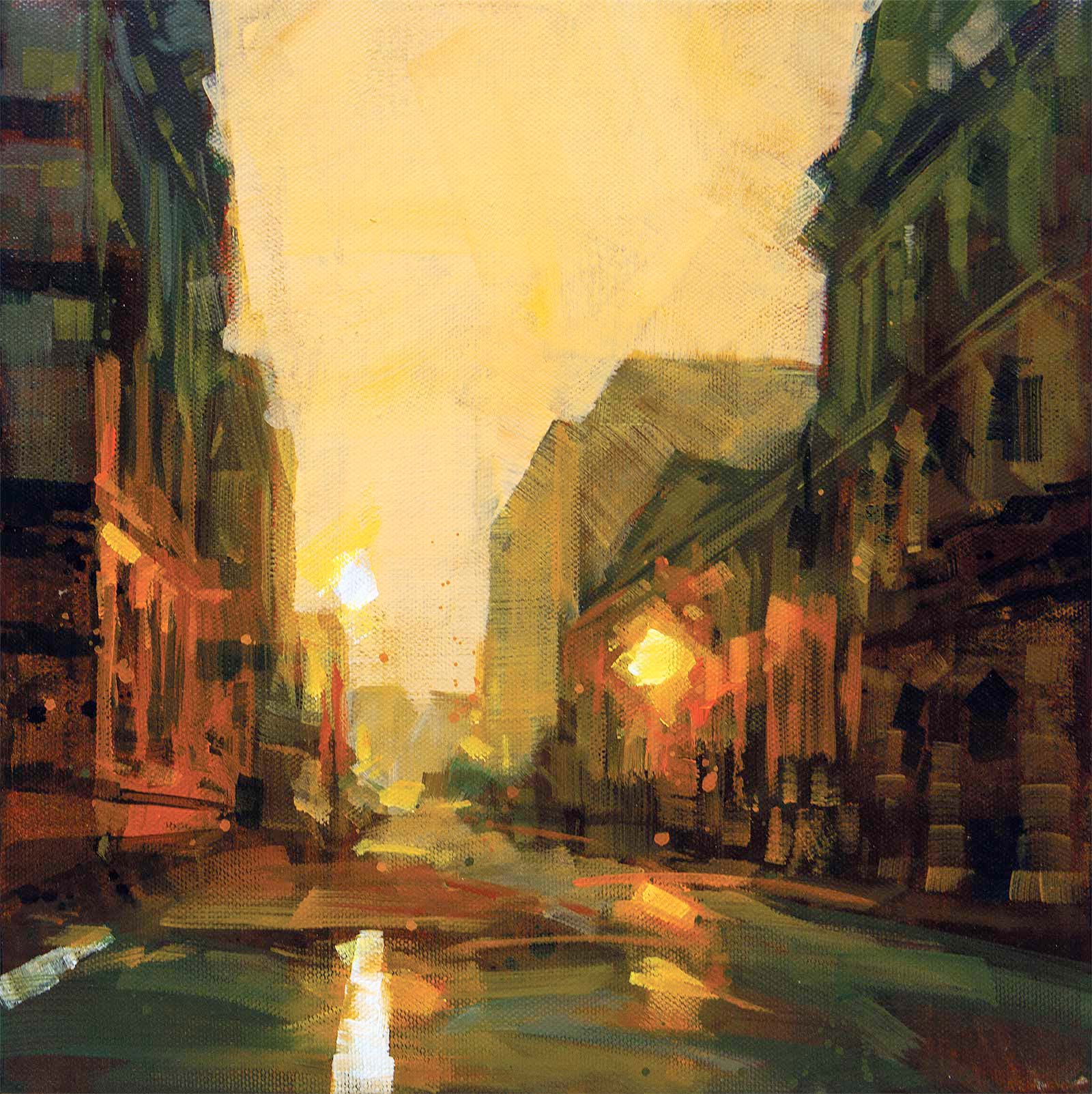
Golden Morning, acrylic on canvas, 12 x 12” (30 x 30 cm)
Throughout the process, I focus on balancing representation with abstraction. I am not interested in describing every detail of the street, instead, I aim to capture the sensation of standing in that moment—the warmth of the light, the stillness of the air, the way the scene briefly feels suspended in time. Selective edges, restrained brushwork and a limited palette help maintain this sense of calm while allowing the painting to breathe.
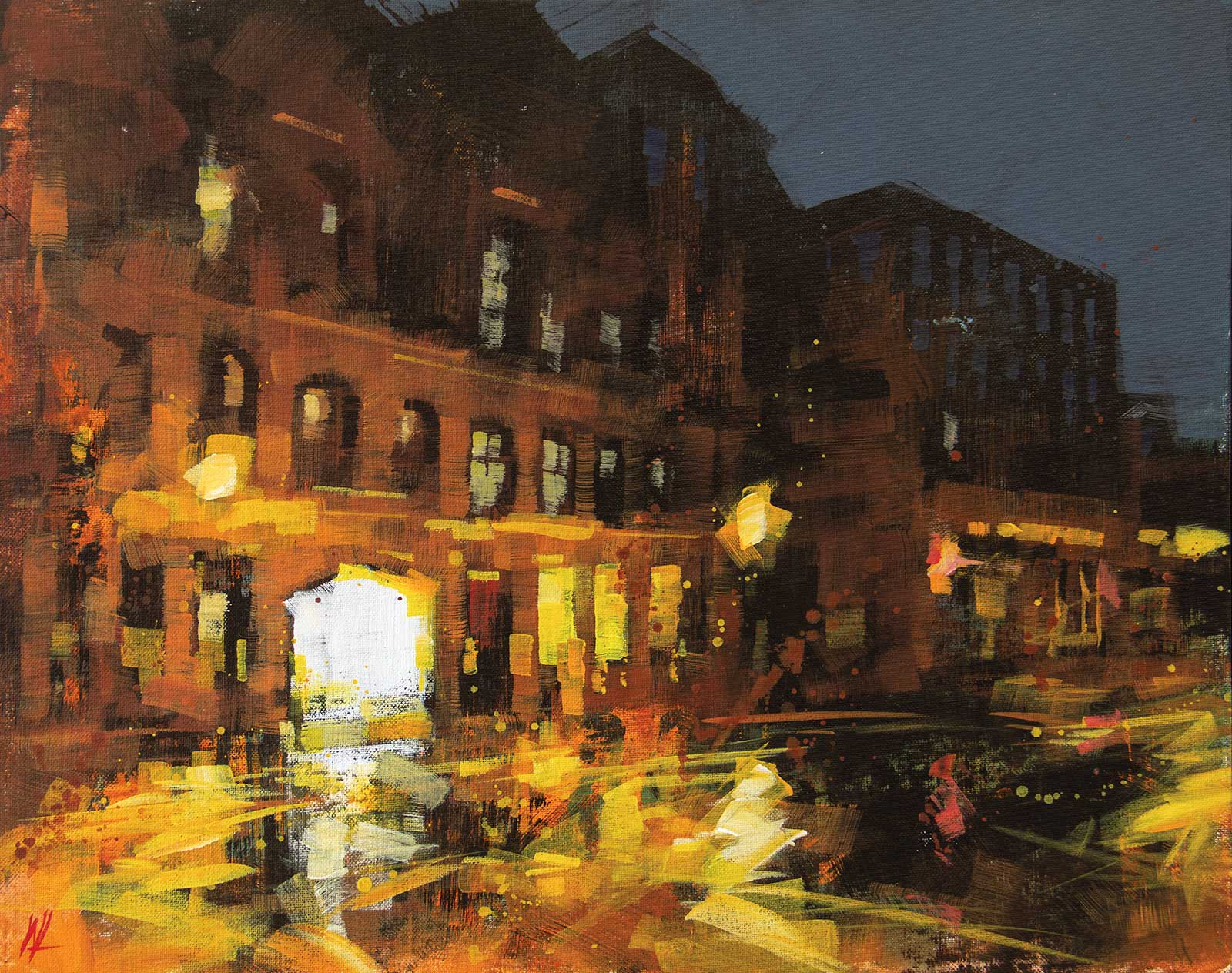
Uptown Reflection on a Rainy Night, acrylic on canvas, 16 x 20" (40 x 50 cm)
As the piece develops, I refine only what is necessary, allowing large areas of soft transitions to carry the emotional tone. My hope is that the finished painting offers a quiet pause within the pace of contemporary life, inviting viewers to step into the light and shadow of an otherwise ordinary street and experience its quiet poetry.
My Art in the Making Blue Hour
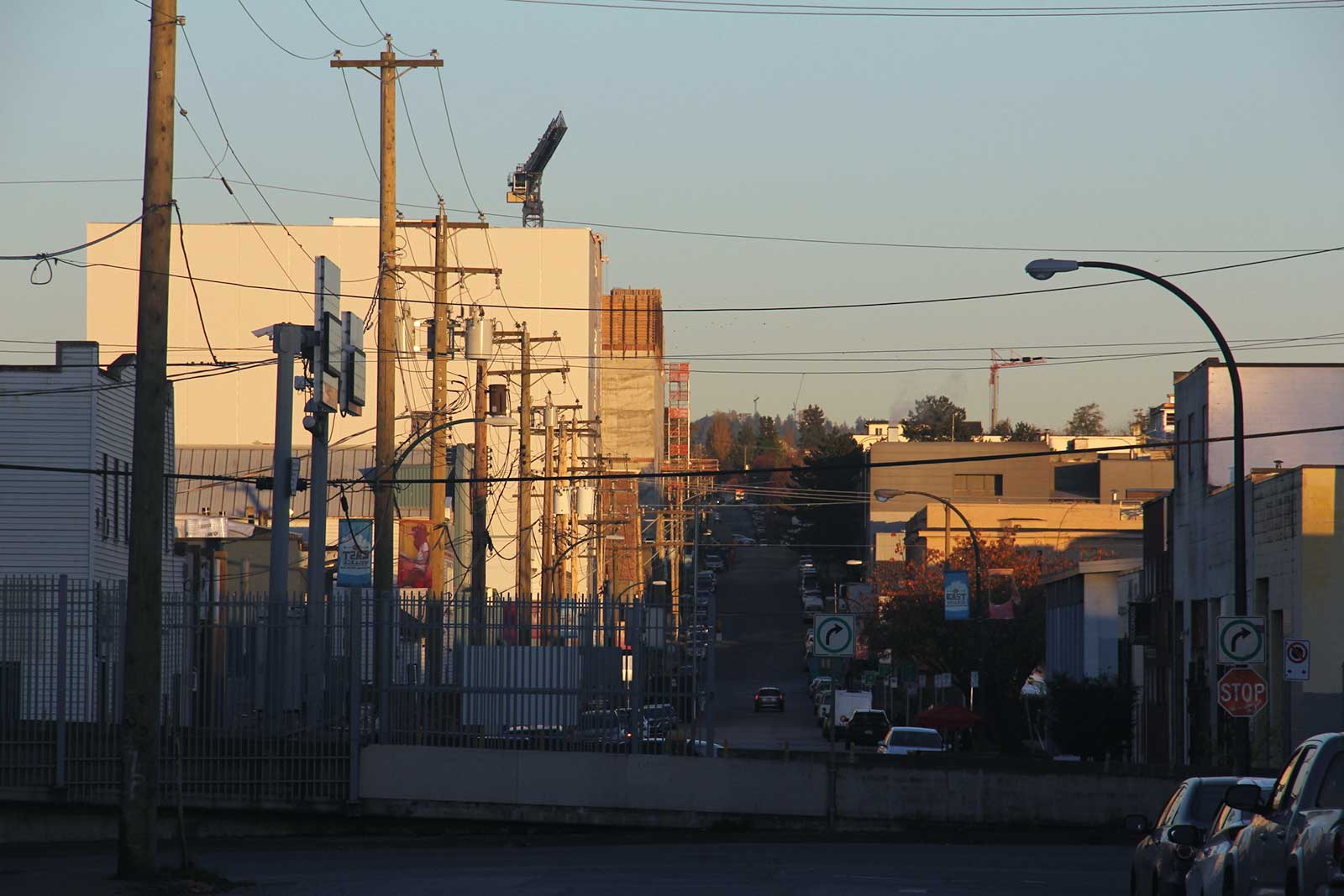
Reference Photo
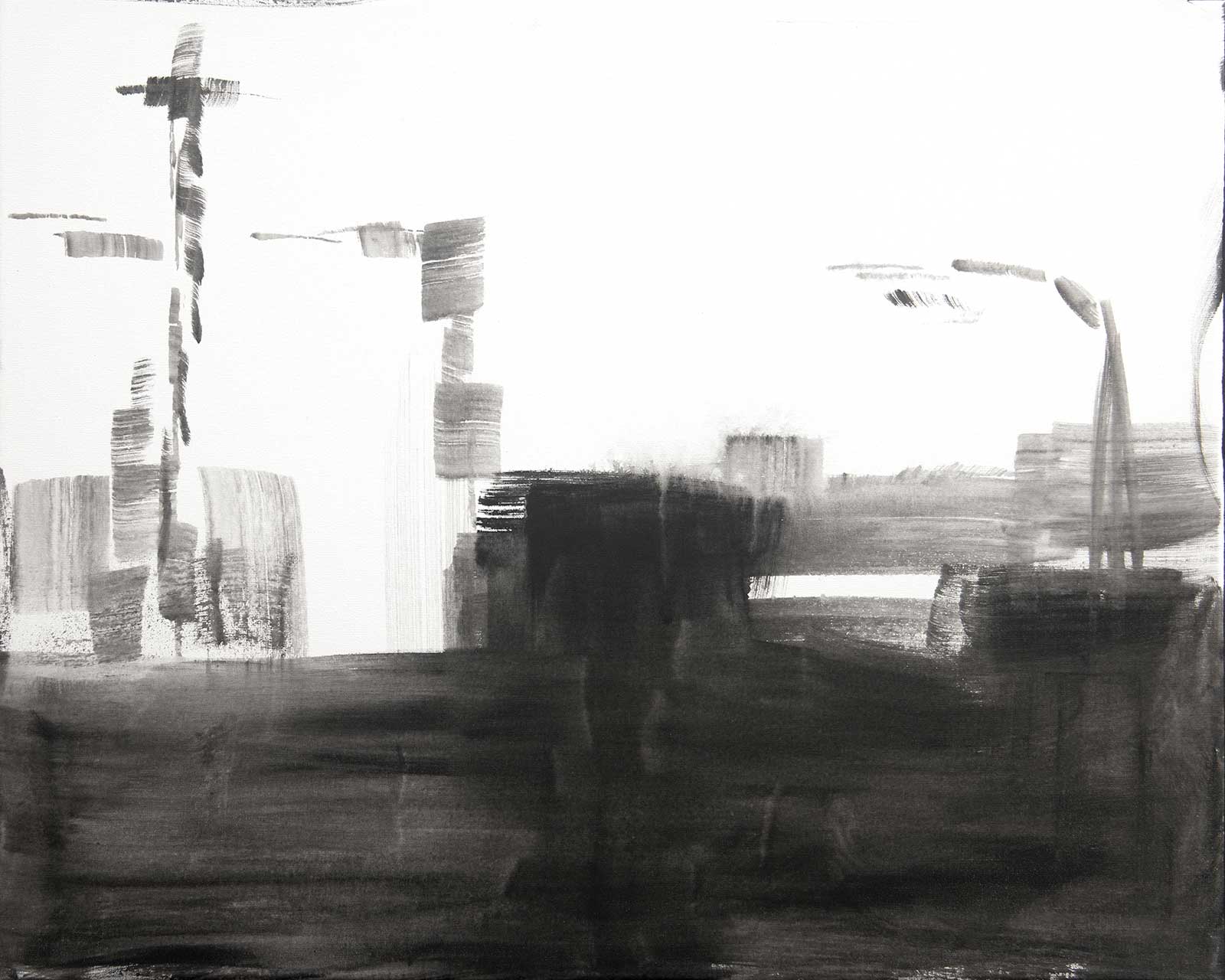
Stage 1 Establishing the Skeleton
In the beginning, there was no rush to introduce color. Using diluted black gesso, I quickly sketched onto the blank canvas to define the geometric center of gravity for the utility poles and buildings. Though gestural, these initial marks established the movement of the piece: a street depth captured from a slight bird’s-eye view.
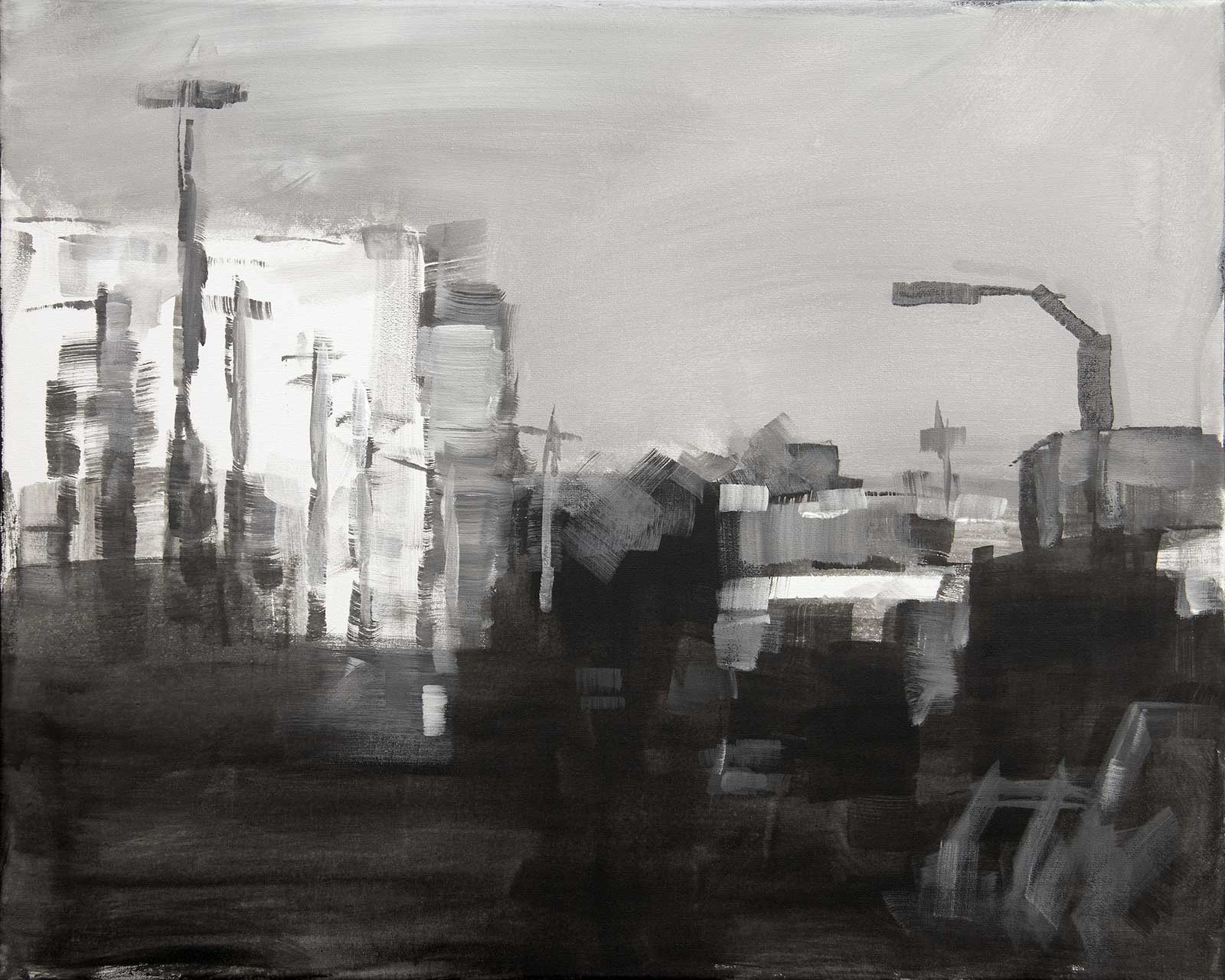
Stage 2 The Play of Values
Moving into the monochrome phase, I temporarily set aside any notions of “color” to focus entirely on value distribution. Using a broad brush to blend white and black gesso, I mapped out the highlights and shadows. This ensures that even if the color were stripped away, the composition remains structurally sound.
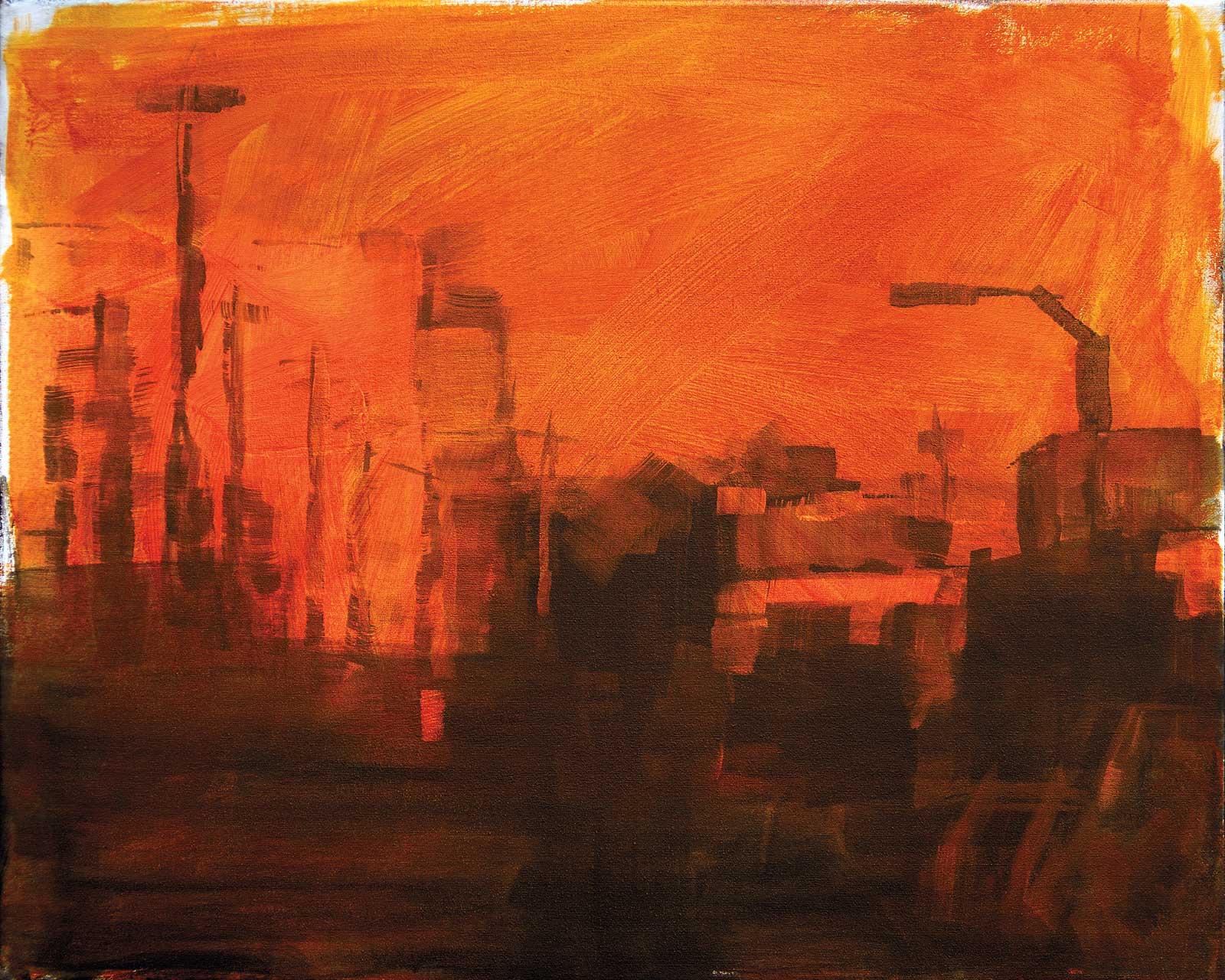
Stage 3 Warm Underpainting
This is where I implanted the “heart” of the painting. I washed the entire canvas in a rich transparent red iron oxide. This warm underpainting breathes through every subsequent layer of color, ensuring the shadows are never a lifeless black, but rather deep tones infused with warmth.
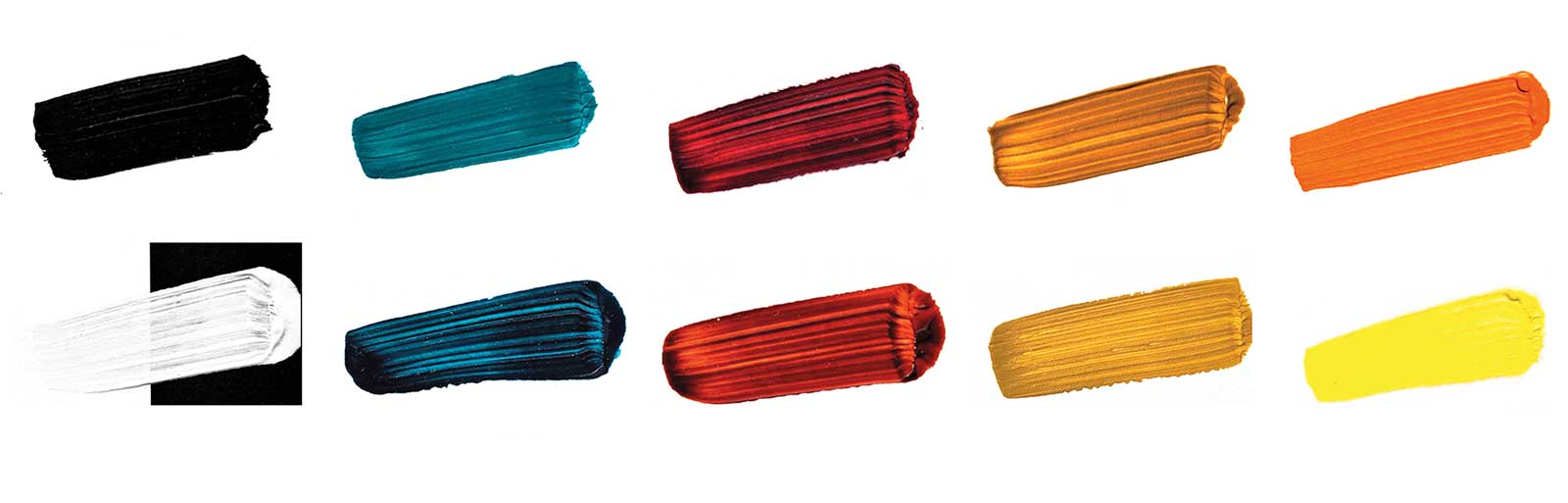
WHAT THE ARTIST USED
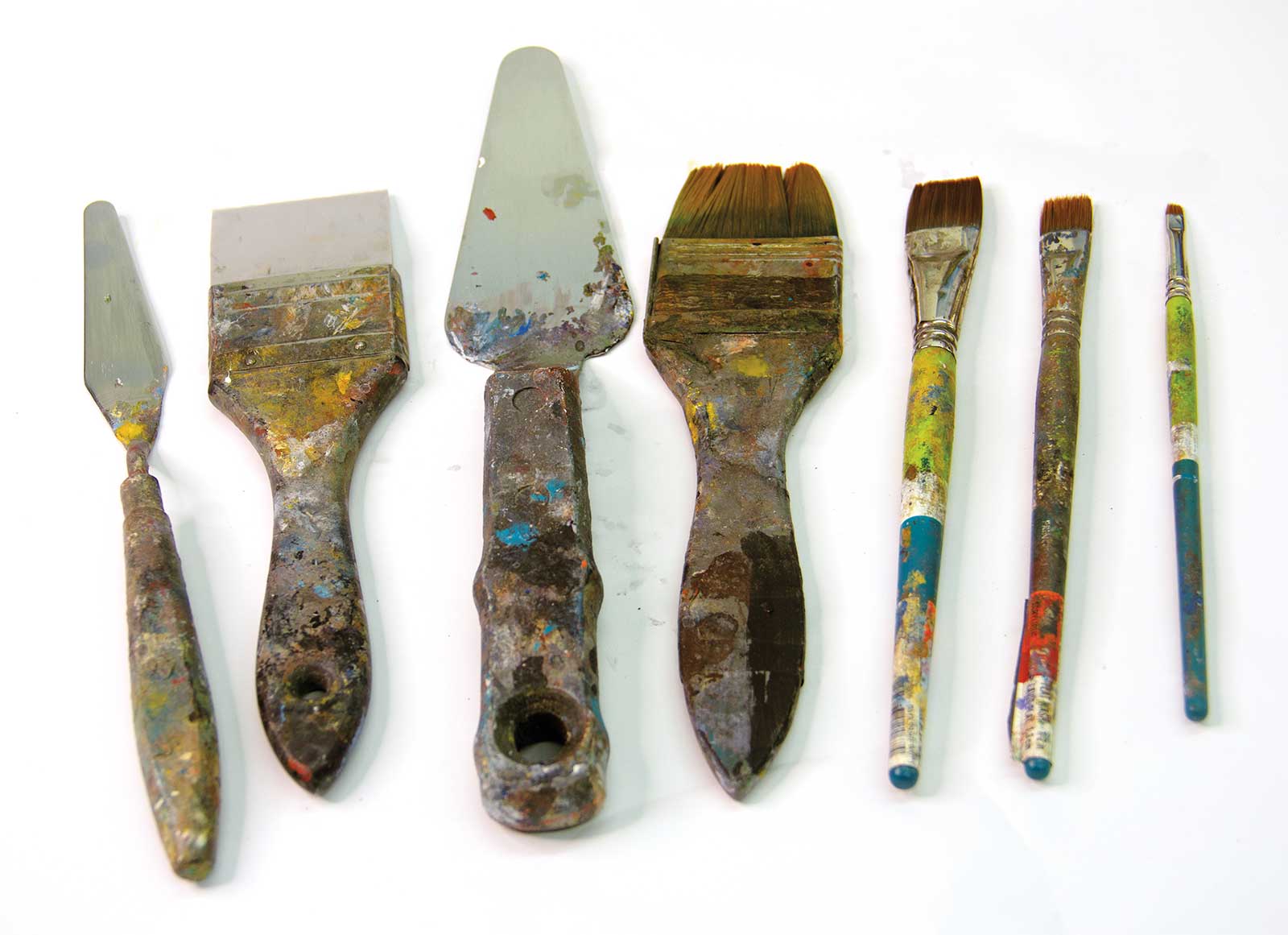
Acrylics
Mars black, Titanium white, Cobalt turquoise, Turquoise (phthalo), Quinacridone crimson, Transparent red iron oxide, Raw sienna, Yellow ochre, Cadmium orange, Cadmium yellow light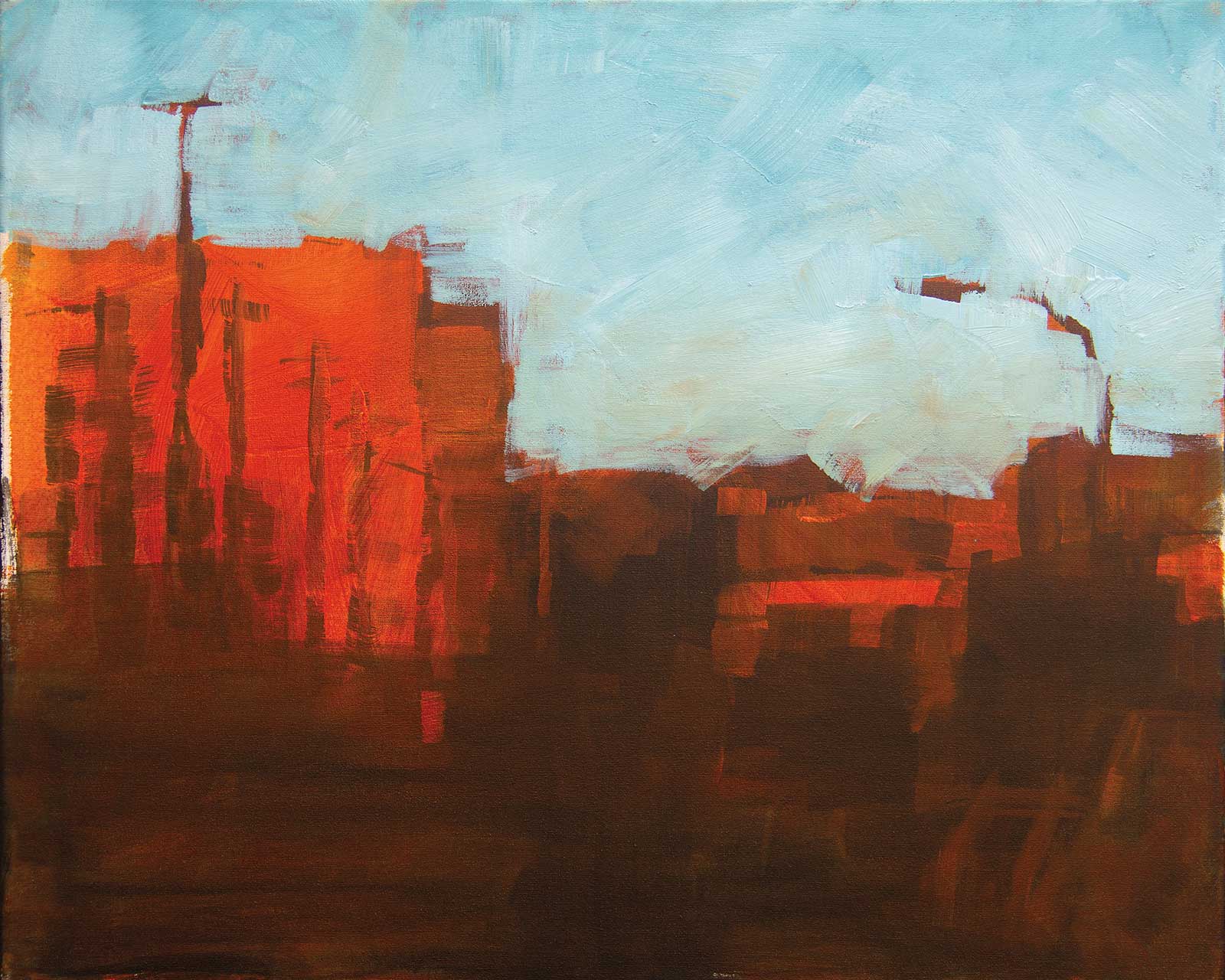
Stage 4 Complementary Colors
The blue of the sky and the orange of the architecture finally meet. This high saturation complementary contrast is intentional; I wanted a powerful visual impact. The sky is not a flat wash; it retains the red glow of the base layer, as if the air still holds the residual warmth of the day.
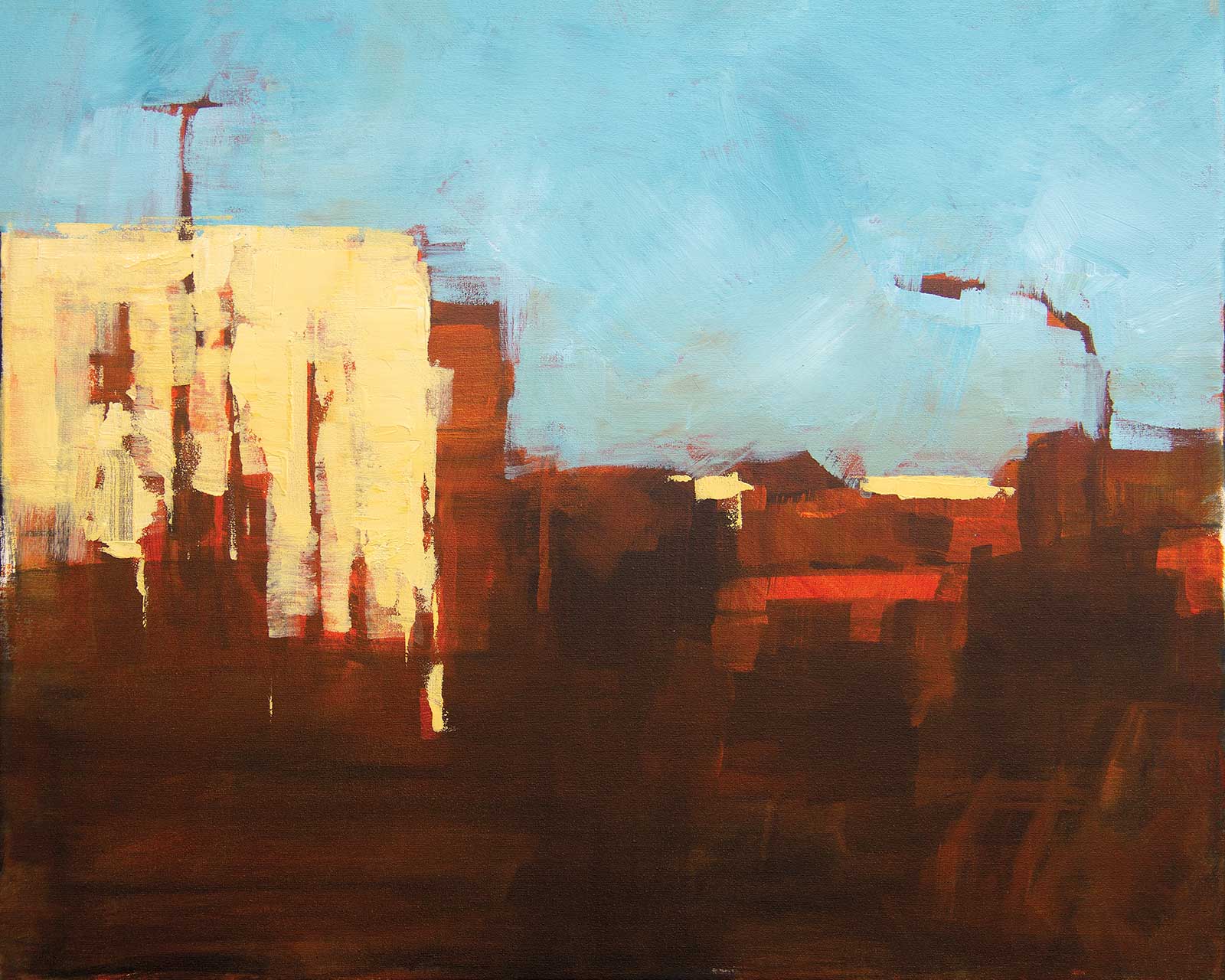
Stage 5 Occupying the Blocks
Time to “flesh out” the forms. I applied generous amounts of yellow and white to the left-side building using an impasto technique. These thick layers simulate the searing sensation of evening light striking concrete walls.
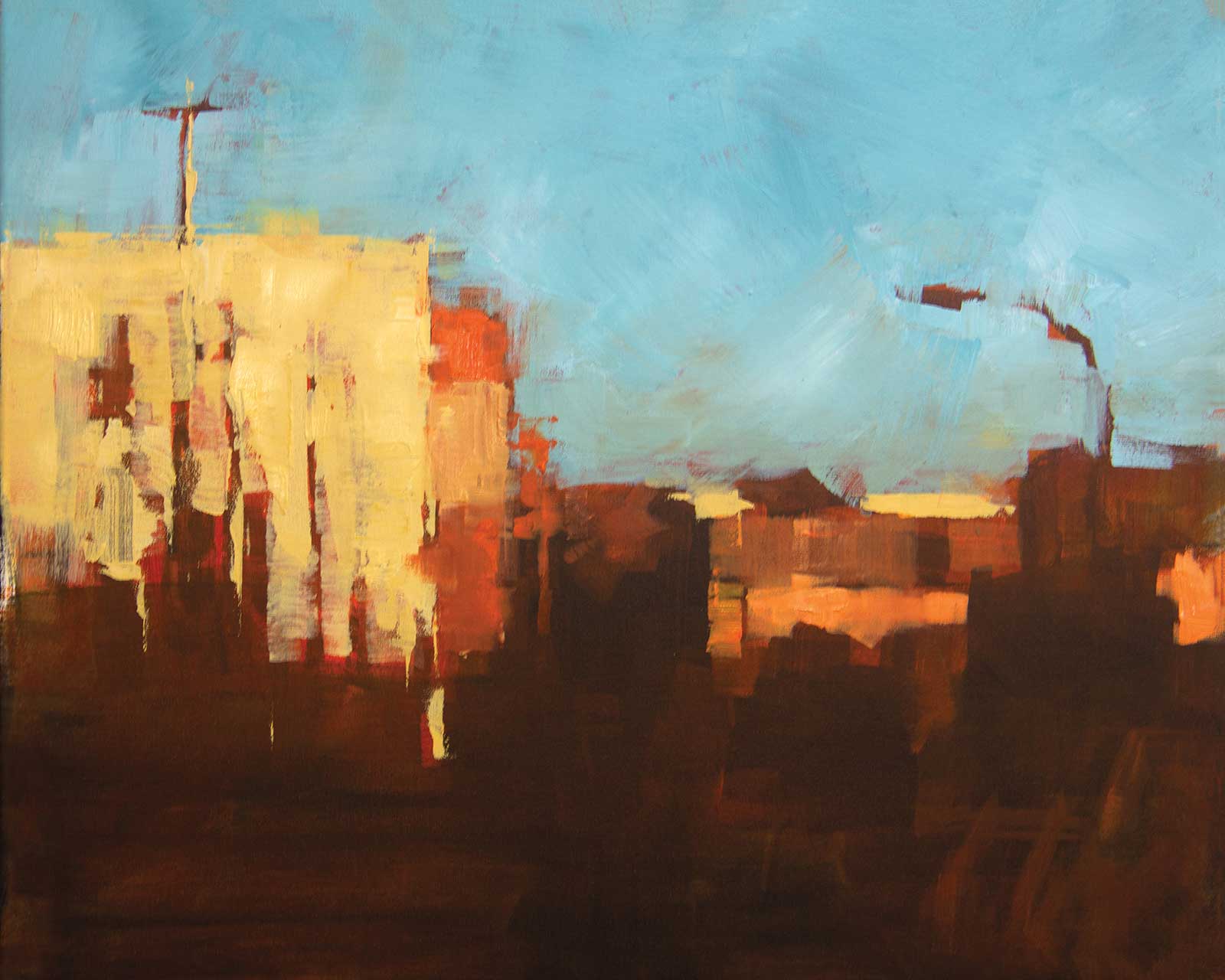
Stage 6 Integrating Forms
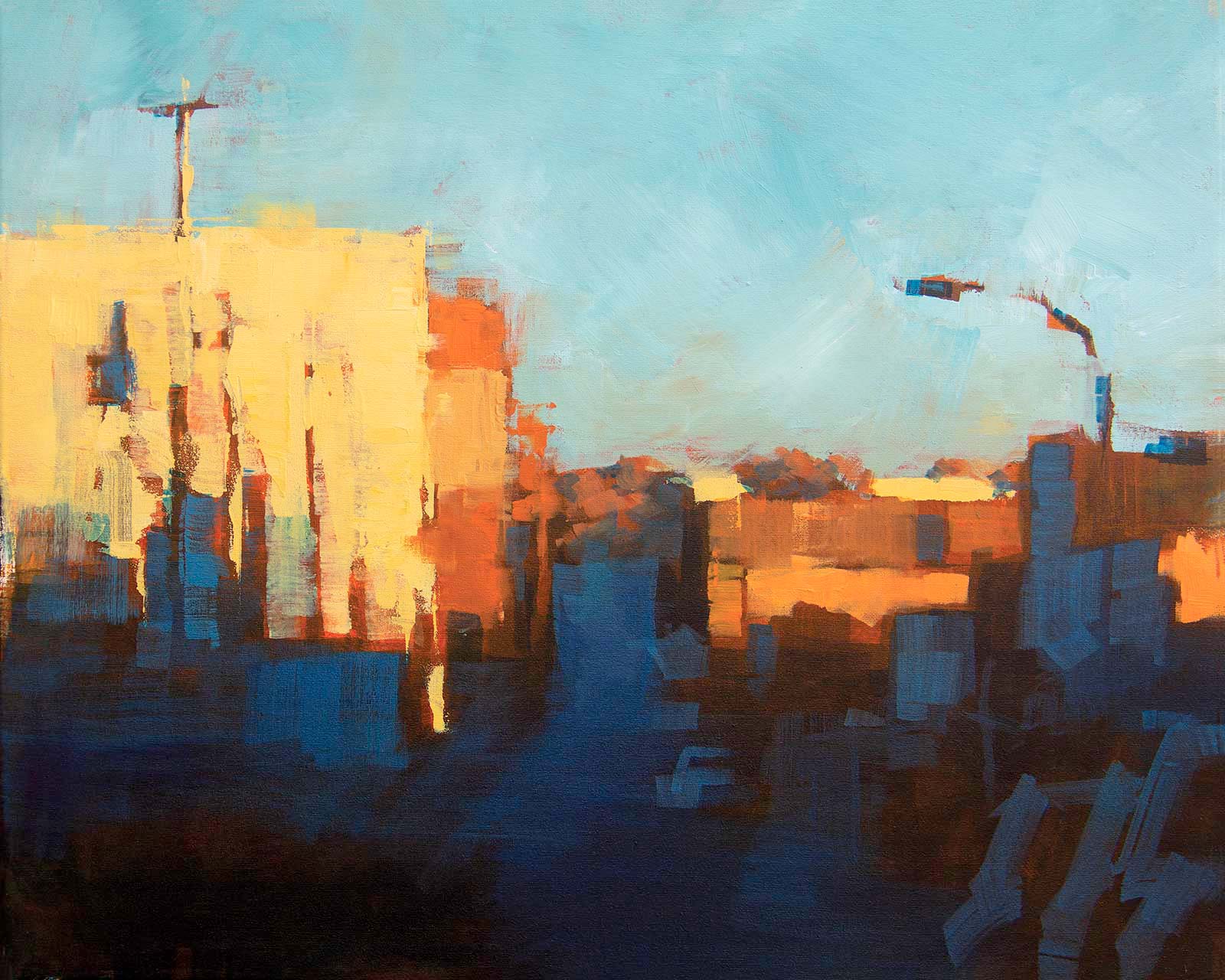
While details have yet to take the stage, the focus remains on the sense of wholeness. The distant buildings are simplified into rectangular planes of varying depths. At this stage, I constantly evaluate the relationship between edges, the “soft” and the “hard,” to ensure the viewer’s eye is drawn naturally down the center of the street.
Color Swatches
Stage 7 Tug-of-War With Warm and Cool
This is the most captivating moment. I worked heavy amounts of Payne’s gray and cerulean blue into the dark shadows. These cool tones create a dramatic tension against the bright yellows of the highlights.
I am no longer merely depicting objects, I am creating space through the temperature variance of the colors.
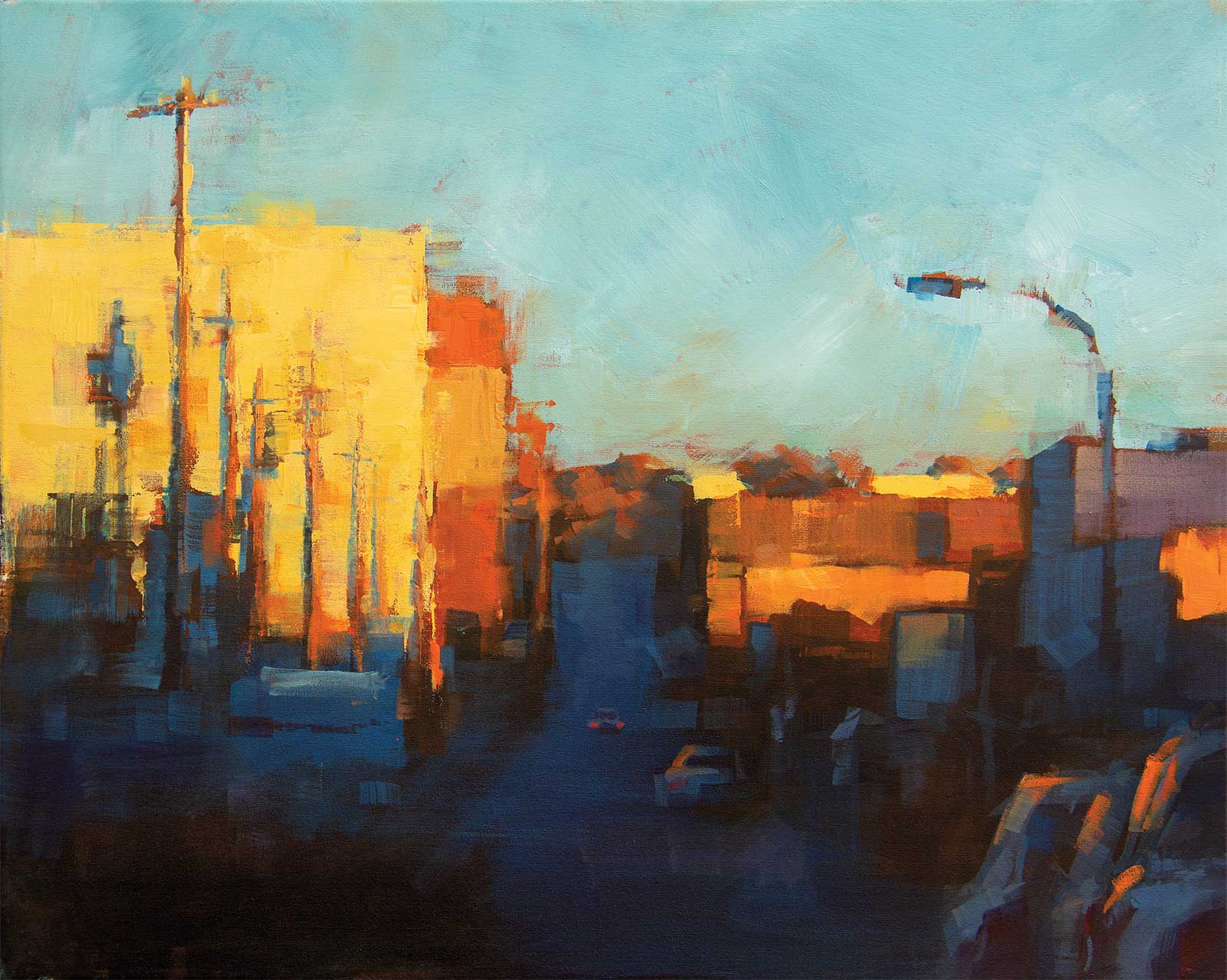
Stage 8 Accents of the Urban Pulse
The painting begins to breathe. I added a few tiny flecks of red deep within the street: the tail lights of cars fading into the distance. These small pops of high-saturation color vastly enhance the sense of life, making the static image feel fluid and moving.
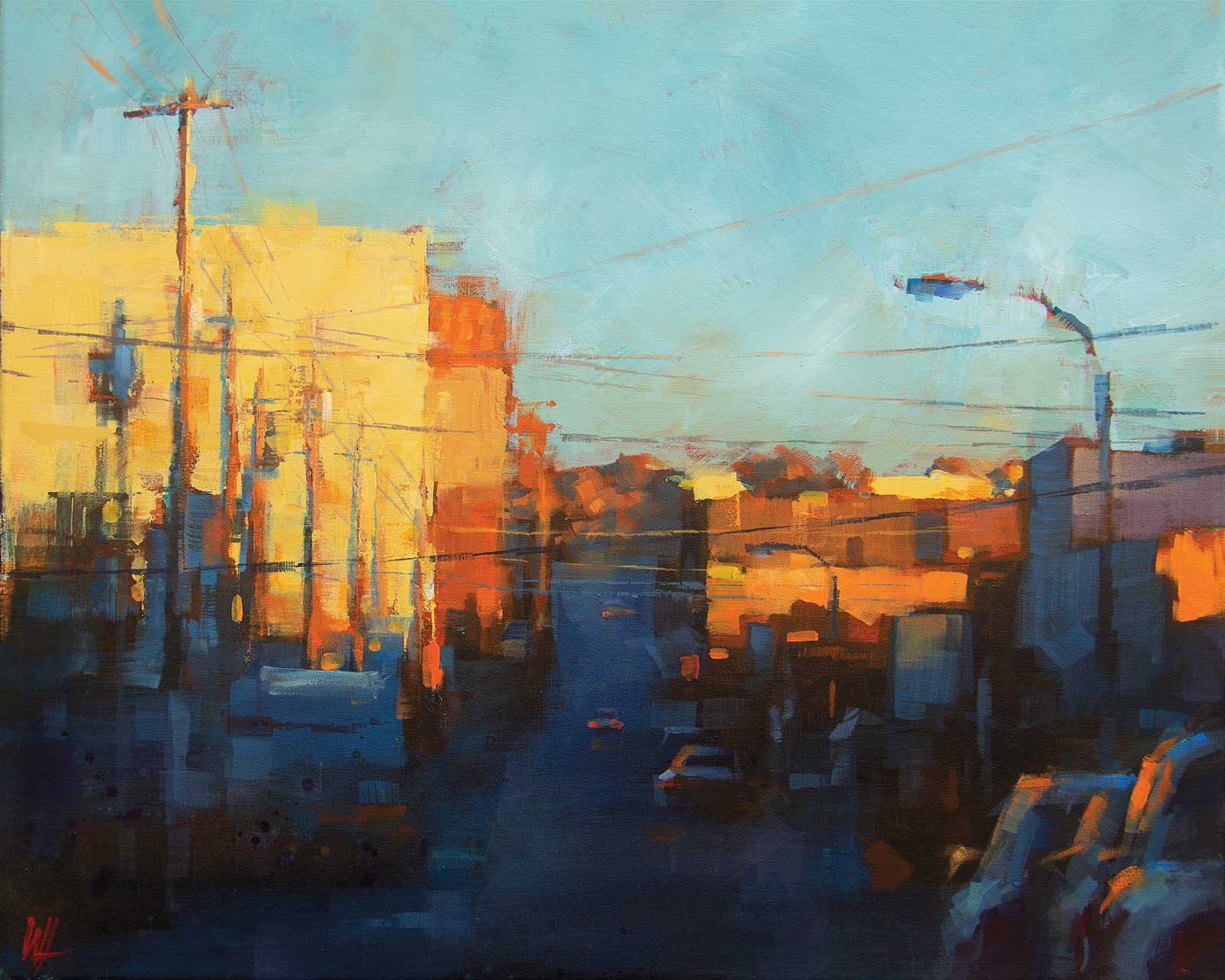
Stage 9 Finished Artwork
Blue Hour, acrylic, 16 x 20" (40 x 50 cm)
The closing work requires extreme restraint and conviction. Using the edge of a flat brush, I struck a few lines across the sky for the utility wires, as these slender strokes break the silence of the large color blocks and add a layer of industrial complexity. After final adjustments to the lights and darks—preserving the textures left by the palette knife and broad brushes—the piece achieves an expressionistic tension. The red signature in the lower left corner marks the formal completion of the work.
About the artist
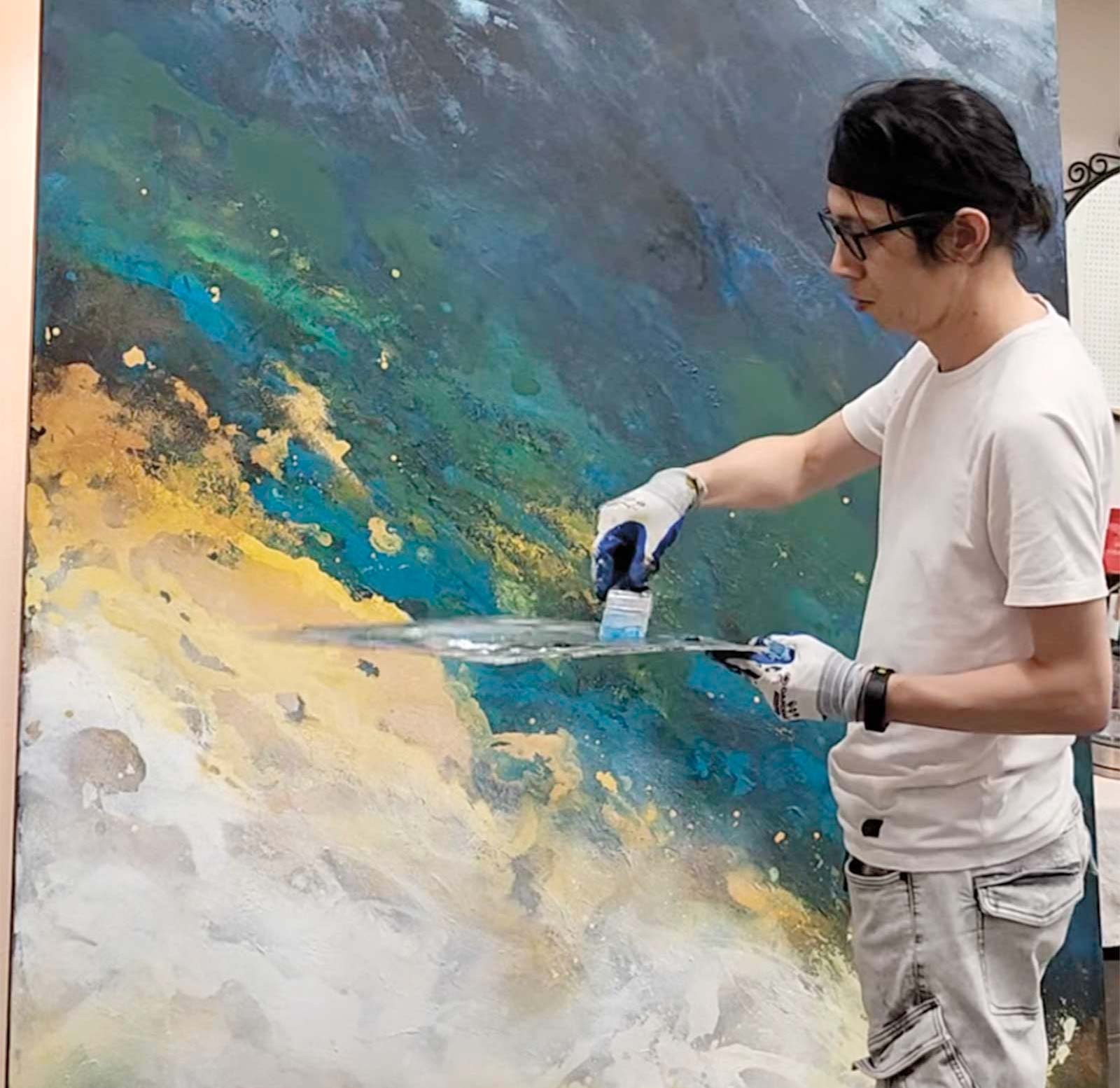 William Liao
William Liao is a Vancouver-based painter and signature member of the Federation of Canadian Artists. Collected internationally and recognized in numerous juried exhibitions, his work explores the interplay of light, space and emotional resonance. He balances abstraction and representation, creating paintings that feel both grounded and dreamlike.
Working primarily in acrylic, Liao focuses on quiet urban and natural transitions, such as shifts in weather and the interplay of shadow and light. His art invites viewers into a slowed, reflective perspective where the familiar is reimagined through tonal shifts and architectural composition.
His background in computer-based graphic design significantly influences his artistic style. This experience is reflected in his deliberate compositions, measured color harmonies and disciplined approach to rhythm and restraint. Liao’s structural clarity allows his paintings to breathe with openness while maintaining a sense of serenity and spatial tension.
Beyond gallery exhibitions, Liao accepts commissions and collaborates with collectors. He approaches each piece as an inquiry into perception, exploring how light shapes memory and how images can provide a quiet space to rest the eye within the velocity of modern life.
Liao is represented by Avenue Gallery, White Rock Gallery, Adele Campbell Fine Art, Effusion Art Gallery and Trinity Galleries in Canada; and Cole Gallery in Washington, USA.
Contact at
williamliaofineart.com