
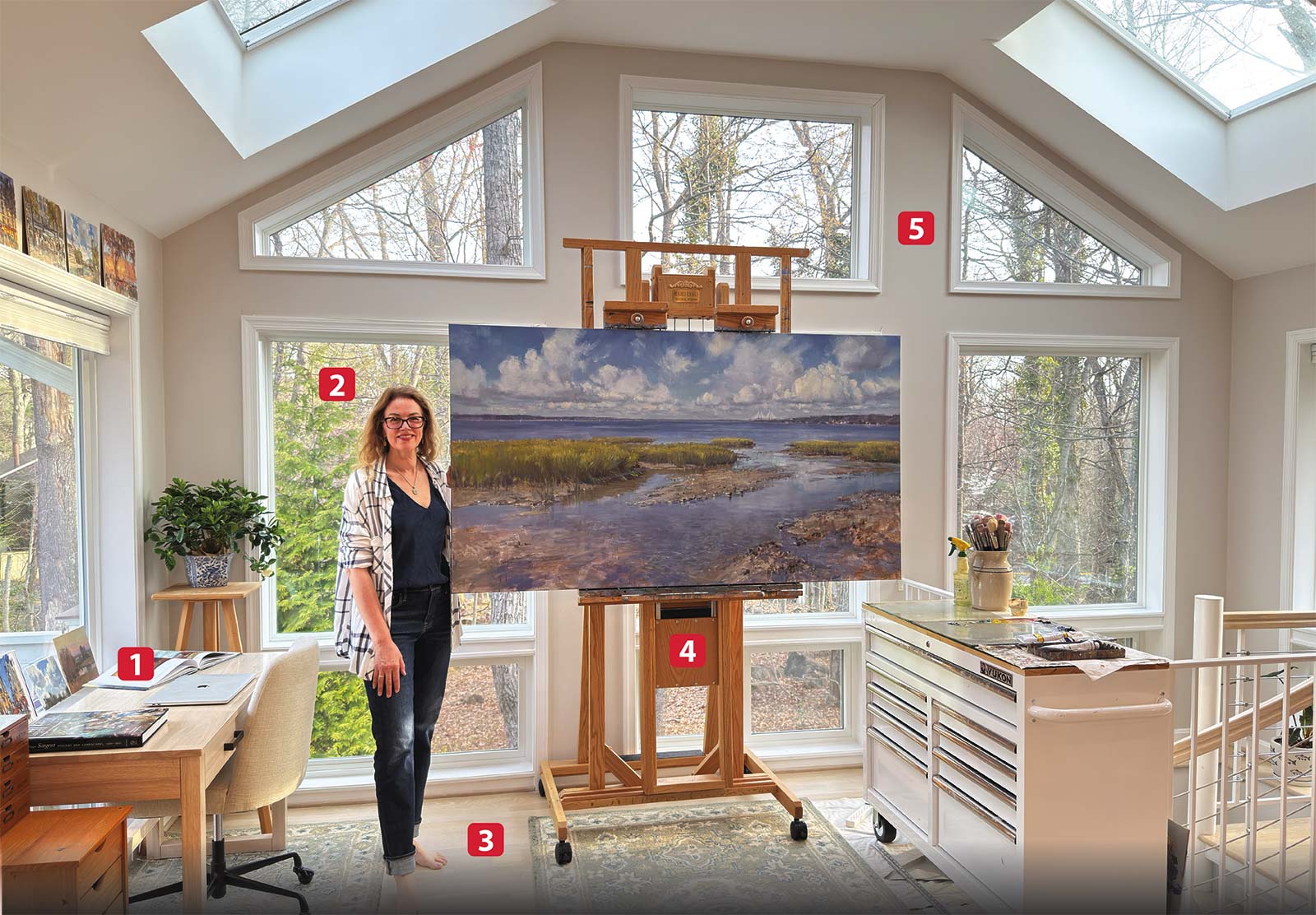
- Reference material. I work from a wide range of references: sketches, studies, photos, video, art books and sometimes unexpected objects like a glass vase, fabric swatches or even a dish of wet rocks. Small paintings rest above the window as inspiration for larger works, and that shelf doubles as a convenient drying rack.
- Imagination. I often work from memory and imagination, something that’s newer for me and deeply rewarding. At times, I put all reference away and create intuitively on the canvas. It feels authentic, like it’s just me and the painting, without the “copy” mindset that can come from working directly from a source like a photo. About one-third of each painting develops this way.
- No chemicals. I paint solvent-free, without toxic chemicals such as mediums or mineral spirits. Maintaining a healthy environment is important to me, so I choose natural materials for the studio whenever possible: wool rugs, bamboo flooring in the lower studio and solid wood for the upper floors and furniture.
- My easel. I use a Hughes 3000 custom oak easel with two masts. It allows me to work on both small and large pieces or even have two paintings up at once. The easel glides side to side and up and down with just a slight touch, balanced by counterweights for precision. It’s incredibly responsive and a joy to paint on.
- Natural light. I built my studio to capture an abundance of natural light. The main wall faces north, and I added windows and skylights. When planning the space with my builder, I worried there might be too many windows, but I have no regrets. Not only is the studio filled with light, it feels as if I’m painting outdoors. I designed the studio almost like a giant hatchback—open, bright and connected to the outside. —
See more from the artist: christinelashley.com