Since first learning to paint with oils as a teenager, I’ve always searched for new ways to use my medium, and most of my work still has this experimental, iterative quality to it. I enjoy using a broad spectrum of colors and prefer to use lots of paint, allowing me to incorporate texture as a means to convey certain qualities of a landscape.
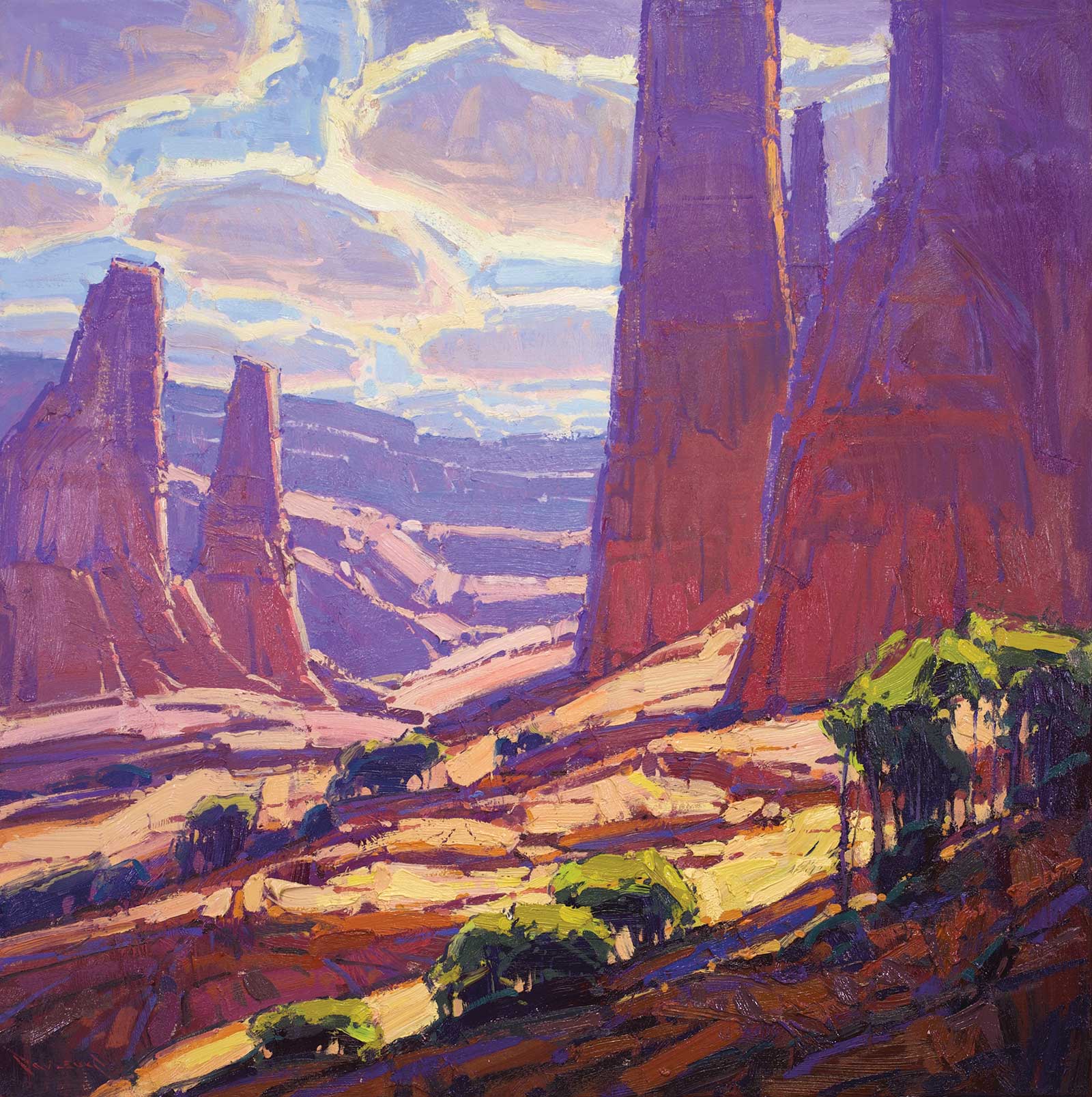
Desert Castles, oil, 48 x 48” (121 x 121 cm)
These days, my time is split between painting outdoors, on location and in the studio. I’ll often use existing plein air studies as inspiration for new studio work, making modifications along the way to explore more compelling compositions, colors and textures than I convey in the original painting. This evolution happens even in the original plein air work where direct observation leads to a pencil sketch, which leads to an oil study, with room for emotional expression and imagination along the way.
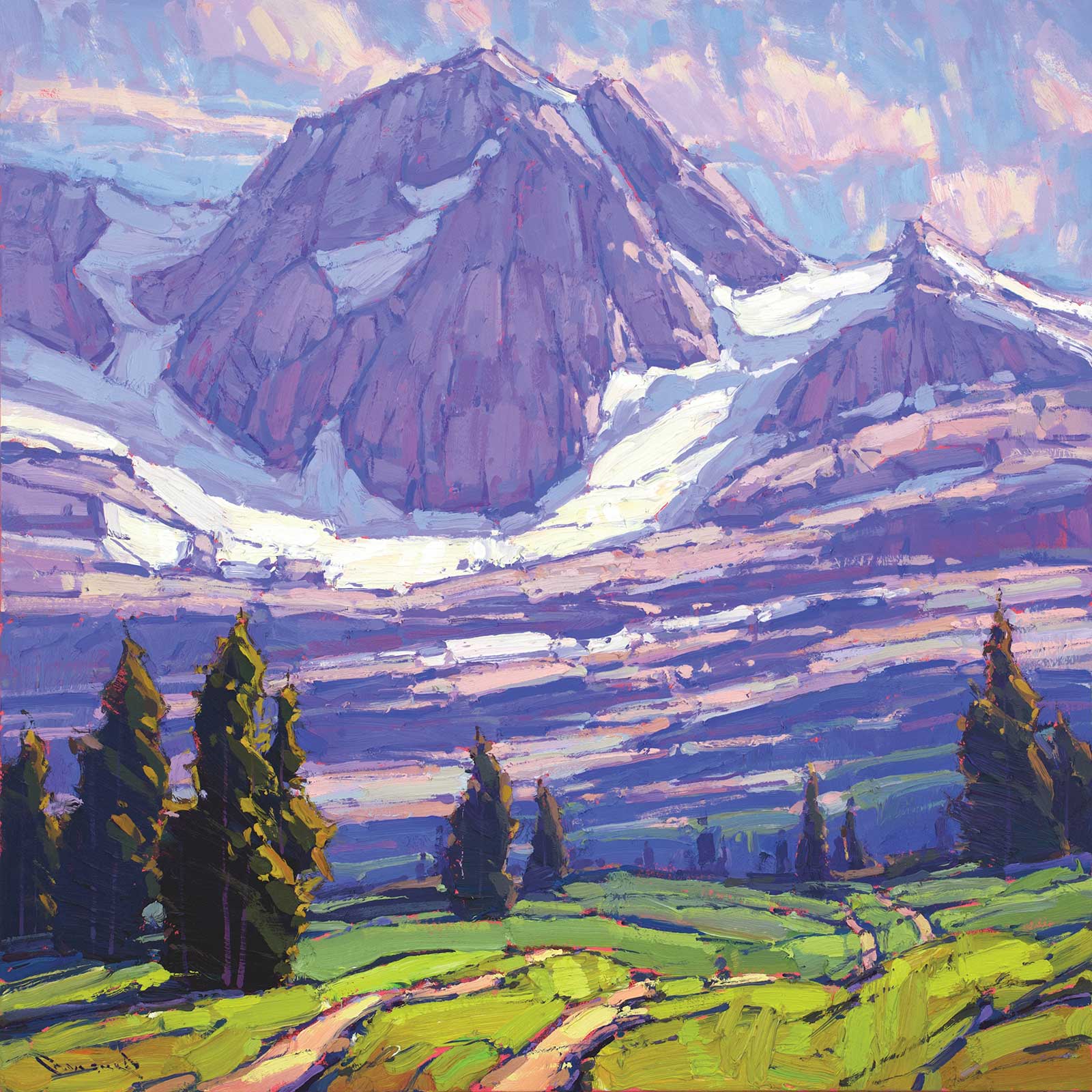
In Search of Altitude, oil, 36 x 36” (91 x 91 cm)
Paul Gauguin said to “seek art and abstraction in nature by dreaming in the presence of it,” and this illustrates how I view my act of creation. I prefer not to have a roadmap to guide me through the painting process, instead relying on personal intuition and imagination to capture and express the impression of a painting I hold in my mind. The scenes of nature I reference are only inspiration, and not the actual subjects I try to emulate and accurately depict. I liken painting to writing fiction versus taking a photograph, where the finished work is based on, and often resembles reality, but is strongly influenced by the artist’s imagination.
My Art in the Making Creekside Colors
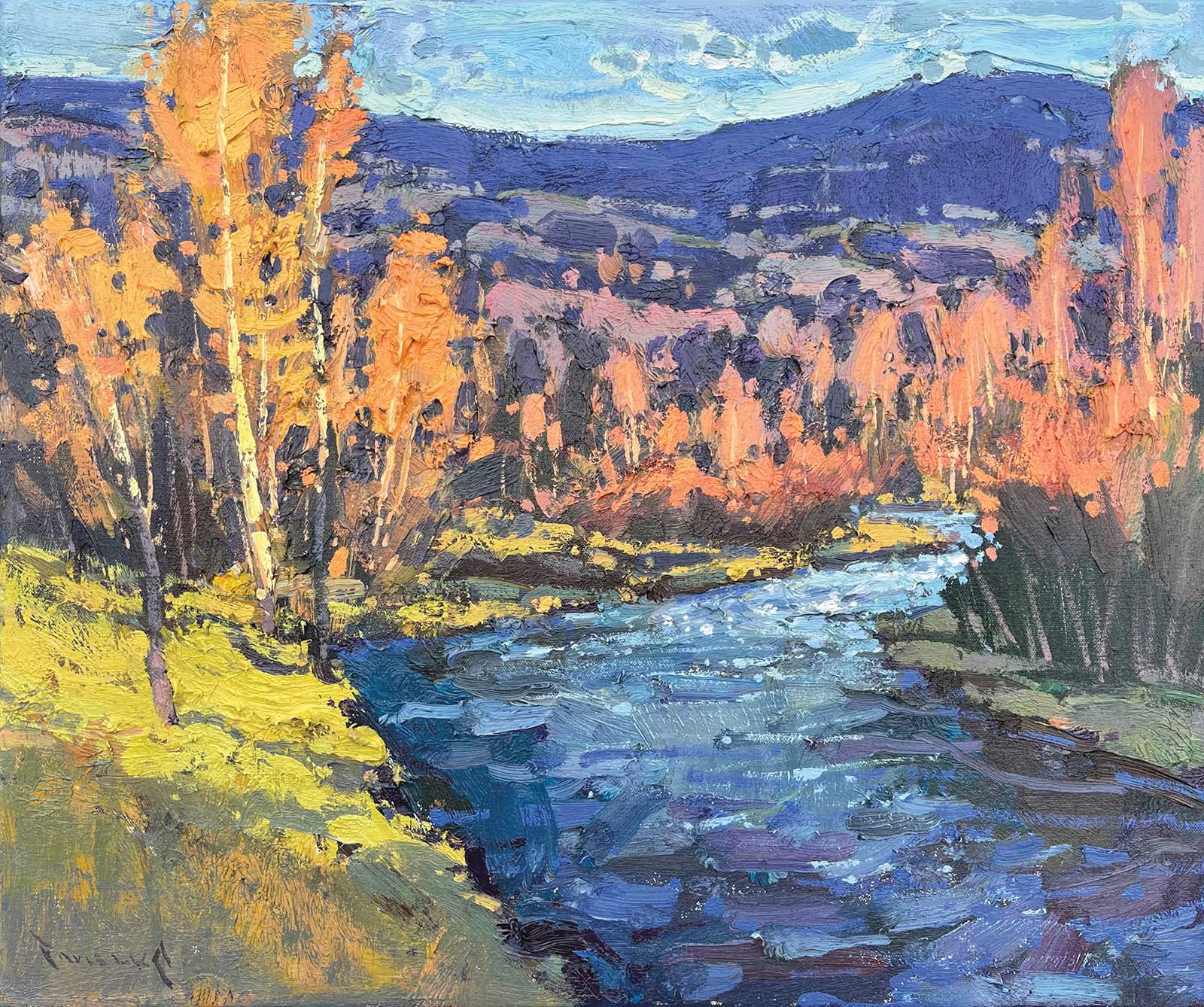
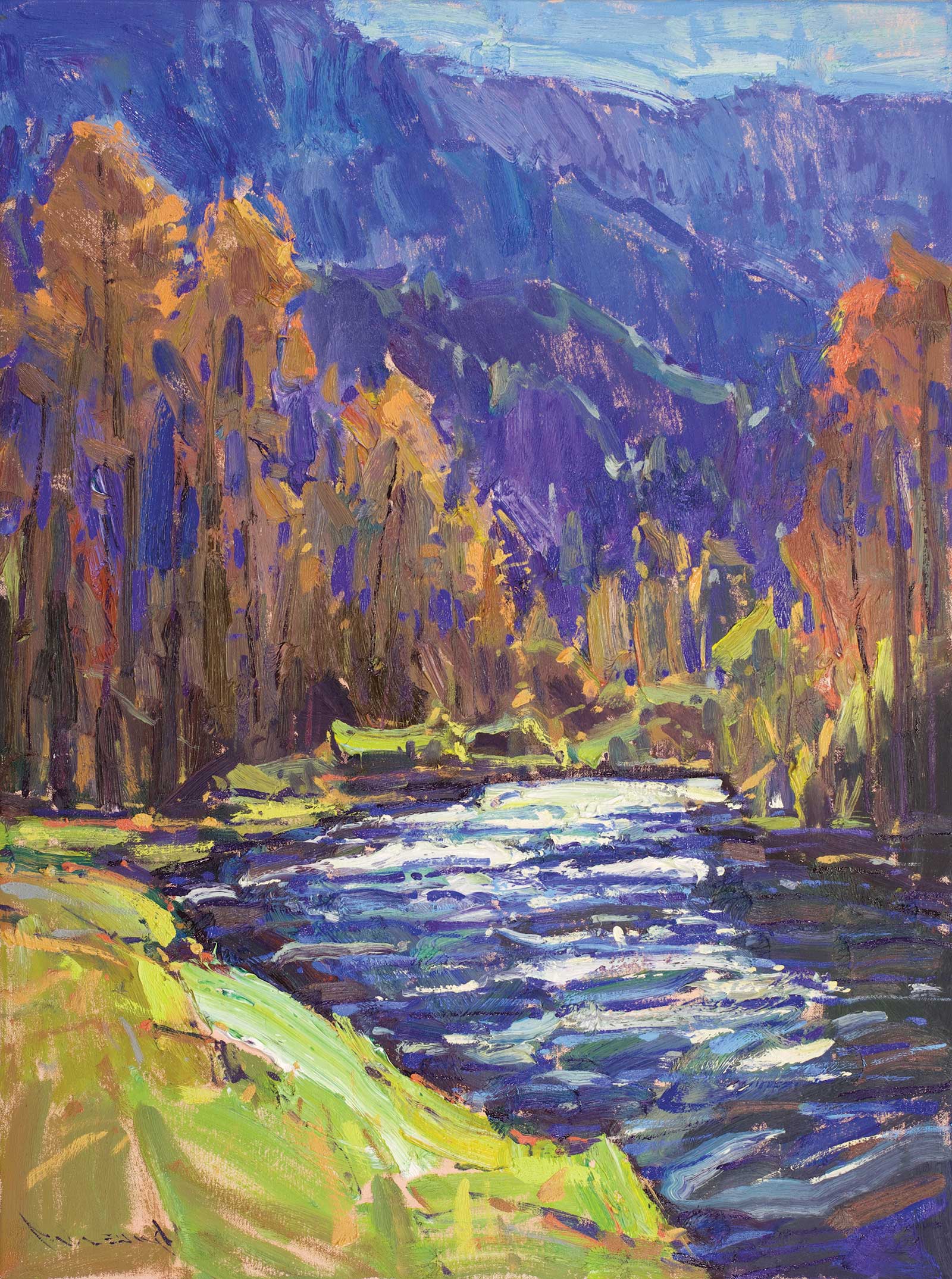
This demonstration painting, titled Creekside Colors, is loosely inspired by a few previous plein air works I painted over the years in the Columbia River Gorge in my home state of Oregon. After stretching my own canvas, I like to start by toning the white gessoed surface with a light-valued and warm acrylic wash. This provides a unified color to work on, eliminates any bright white specks peeking through the final brushstrokes, and gives me the confidence to paint more expediently and boldly from the start.
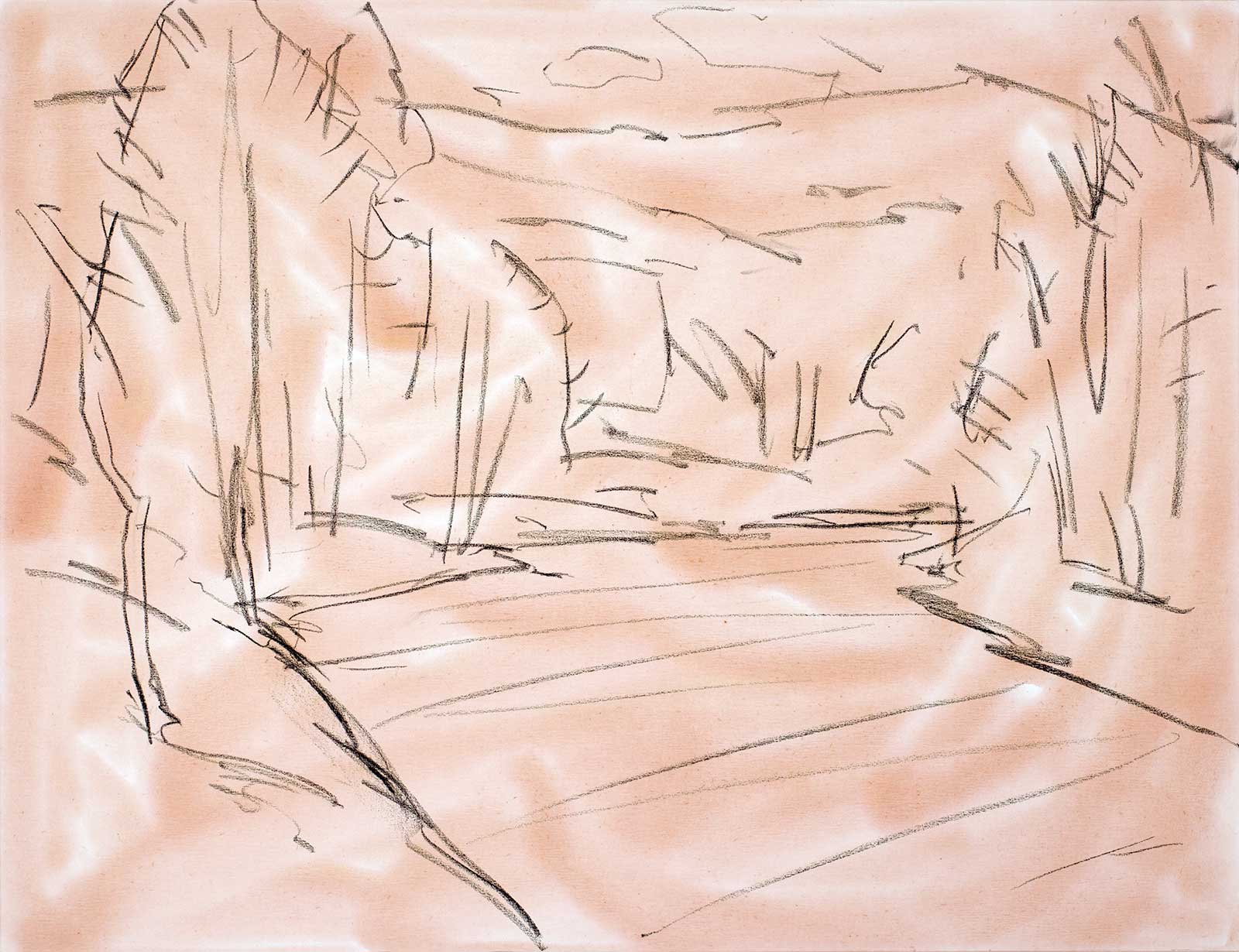
Stage 1 Loose Charcoal Sketch
Once the tone wash is dry, I use charcoal to loosely lay in the main lines and framework of the scene directly onto the canvas. These lines will serve as my initial guides.
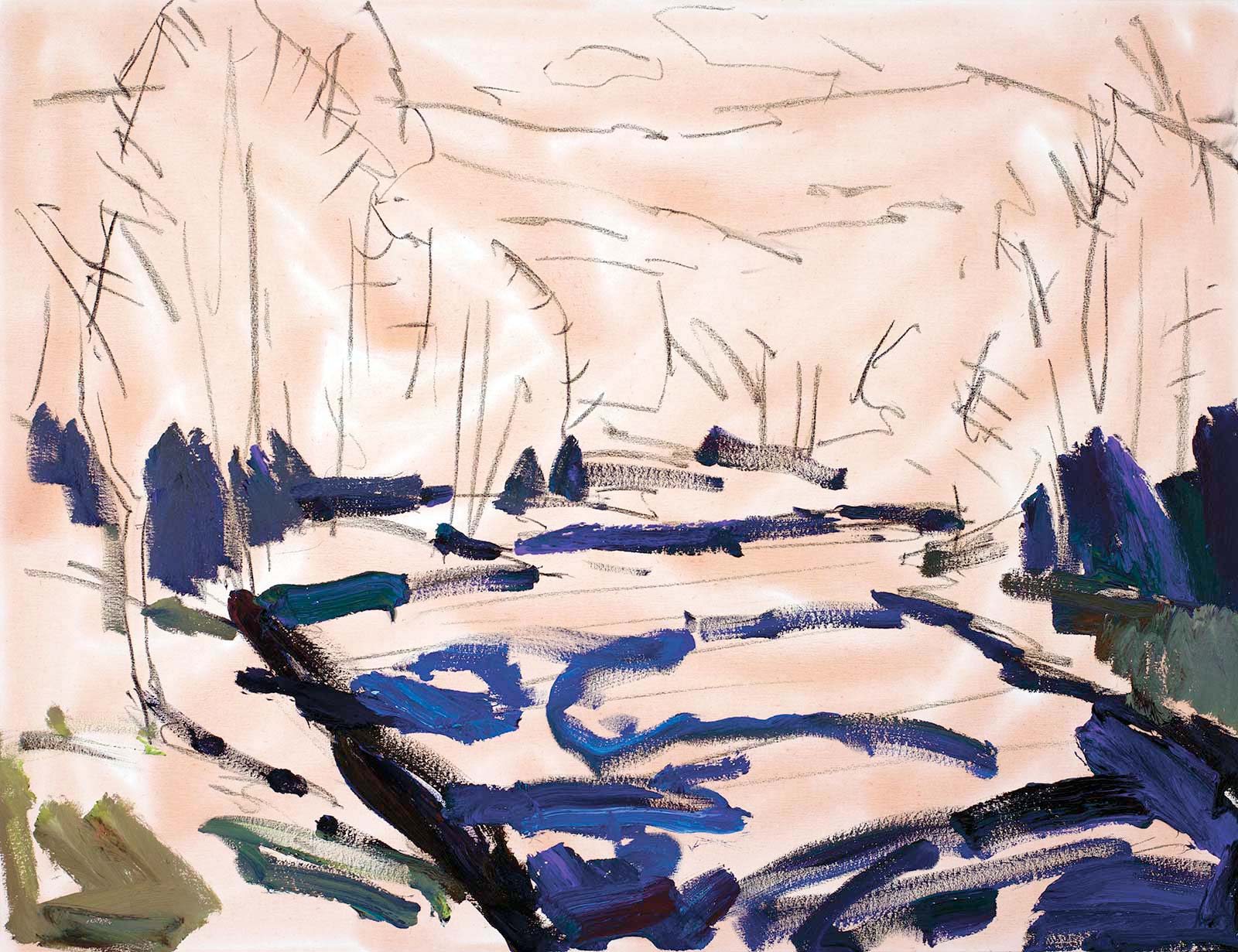
Stage 2 Foreground Water and Shadows
Typically working from dark to light, I use my largest hog bristle brush to quickly paint in the first starting marks in the foreground water and shadows, just to get the painting going.
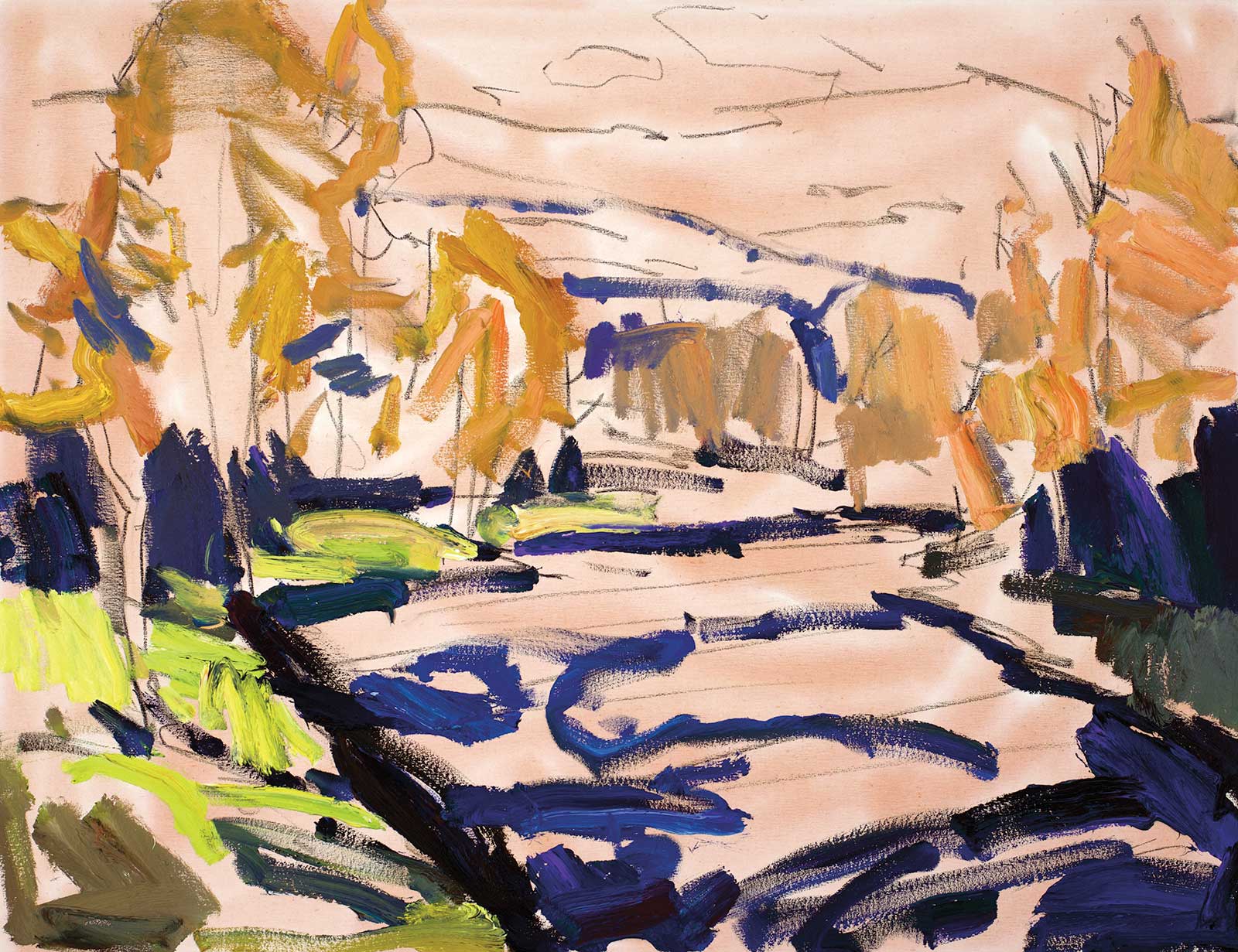
Stage 3 Laying in Colors
Working at a fairly fast pace, I continue laying out areas of color in the foreground, midground and background, which begins to establish an overall color harmony. None of these marks are permanent this early and only serve as self-referencing patches of color.
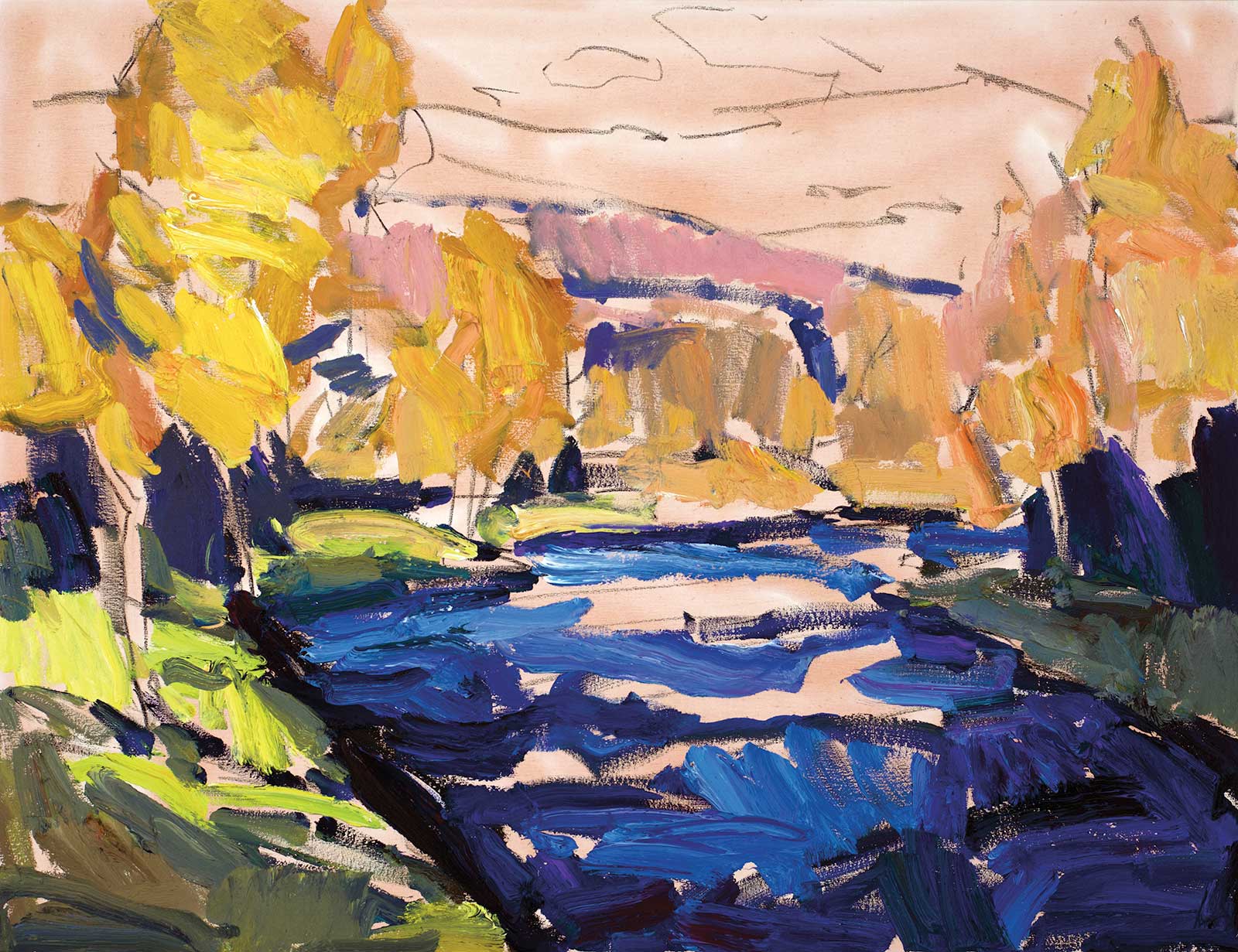
Stage 4 Continuing to Block In
Still using my large brushes helps keep the painting very loose and open to change. Like patching a quilt together, I continue to block in my major forms and areas and am not concerned about accuracy or details at this point. It’s all simply to evoke and establish a general sense of how I feel internally about the scene.
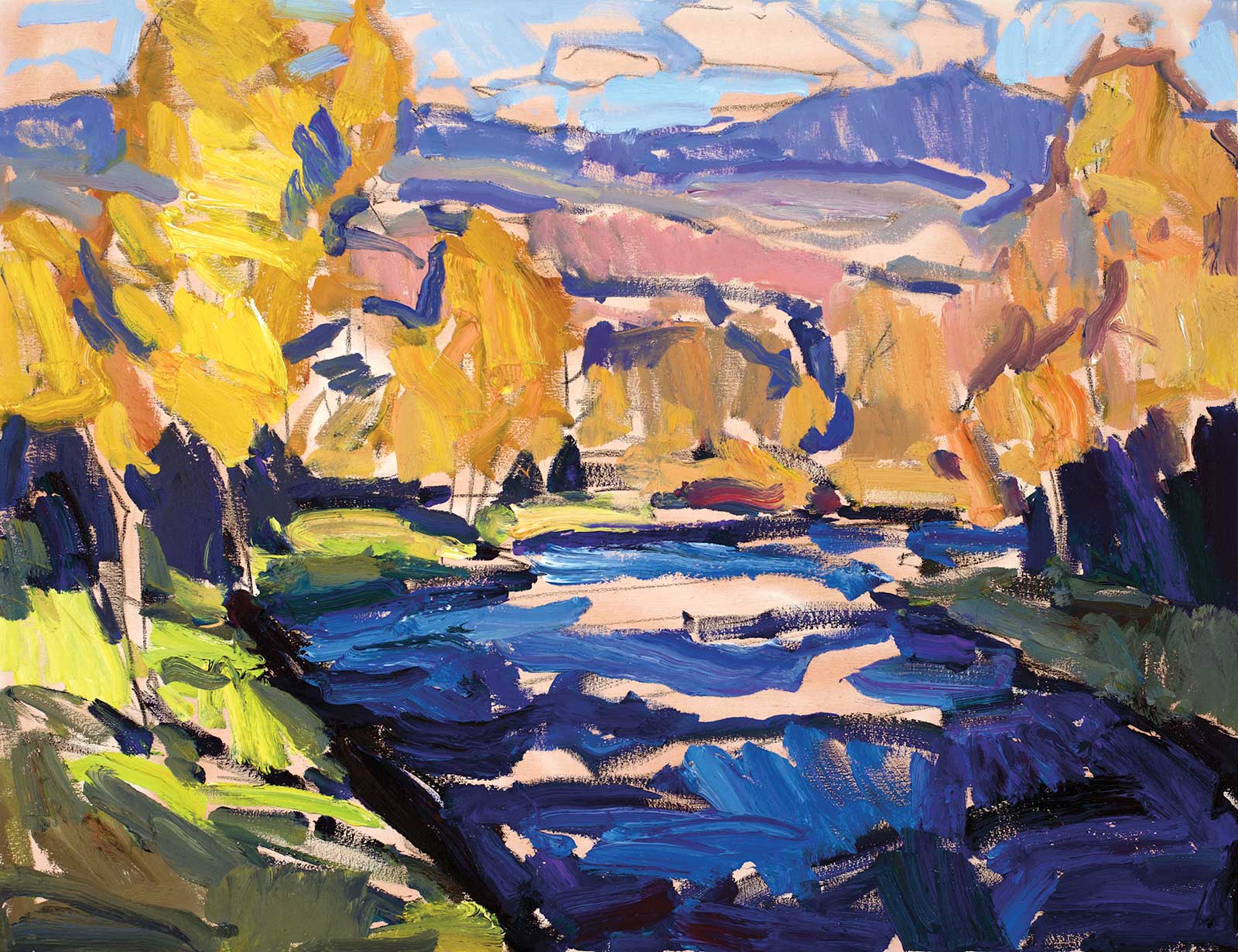
Stage 5 Distant Hills and Sky
I’m liking the decisions on how strong the contrast feels so far and switch to medium-sized brushes to paint the distant hills and shadows in a cool, violet color. This will help accentuate the vibrancy of the orange and yellow fall foliage in the midground. I also begin to address the sky at this stage.
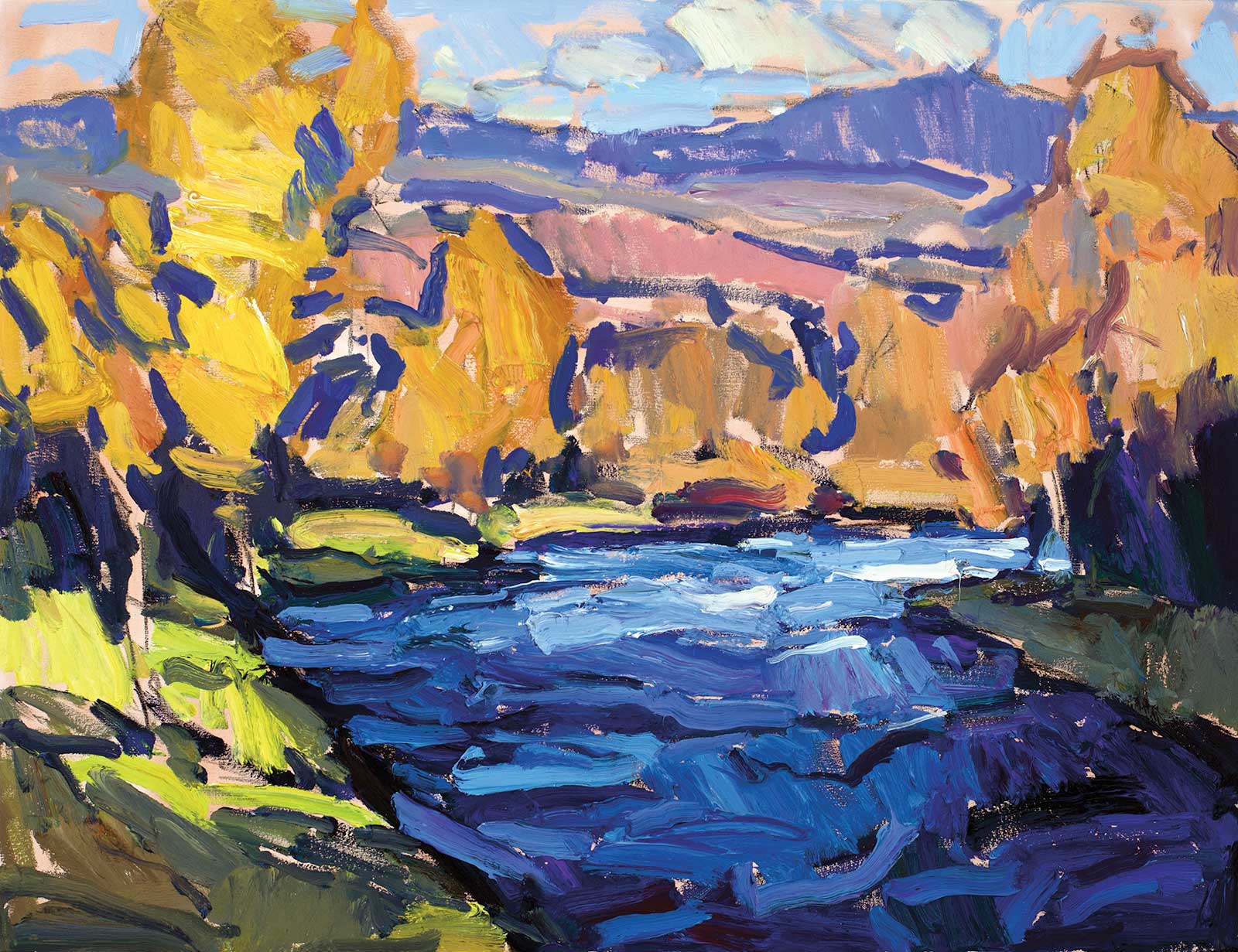
Stage 6 Blocking In Clouds
Continuing to cover the bare canvas, I block in the cloud shapes, add some lighter blue in the water to reflect the sky and take a step back and analyze how the overall picture is looking.
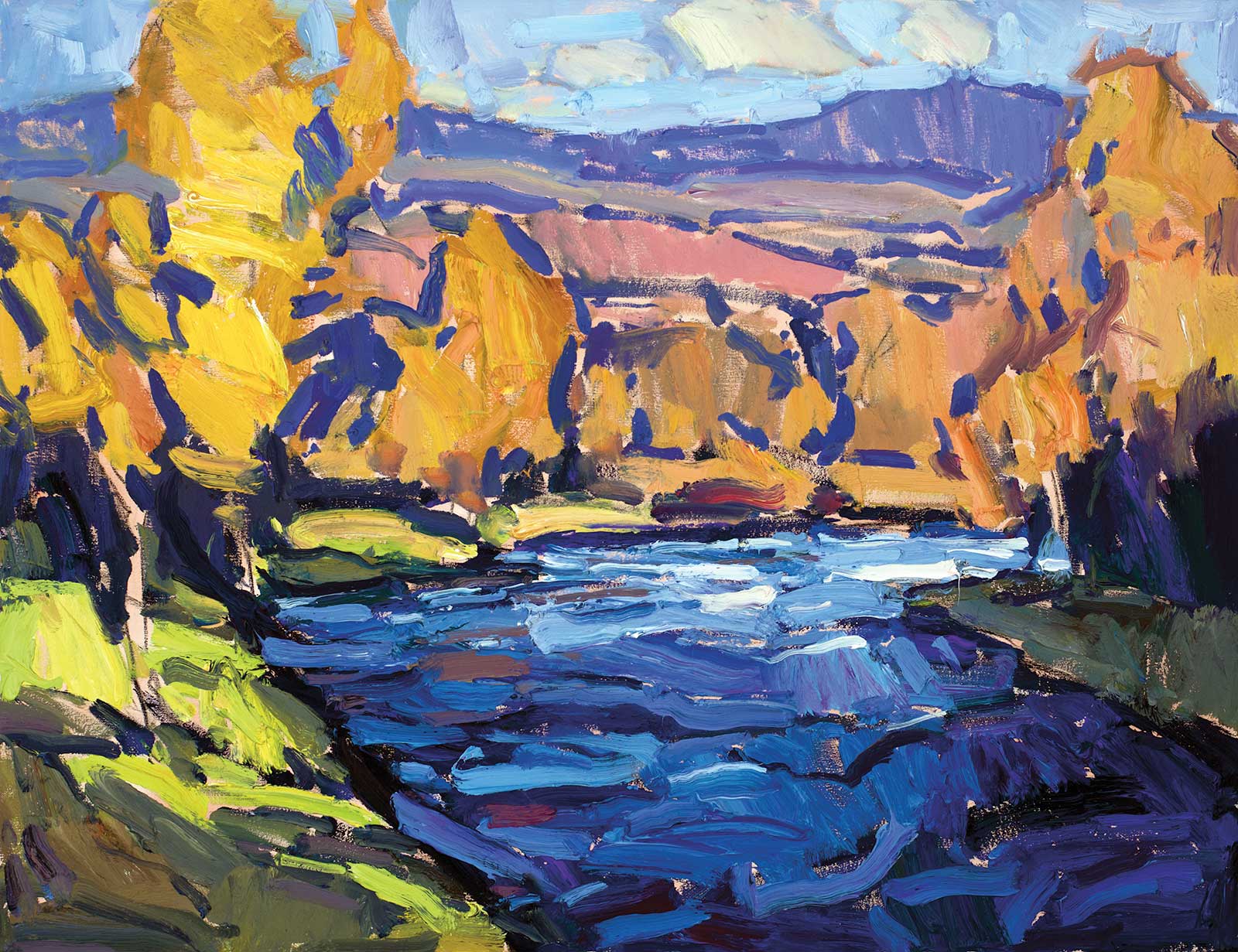
Stage 7 Balancing Tones and Contrasts
Here I start reining in all the chaos and searching for balance by adding some warm reflections in the water and modeling the midground trees with negative shadow shapes.
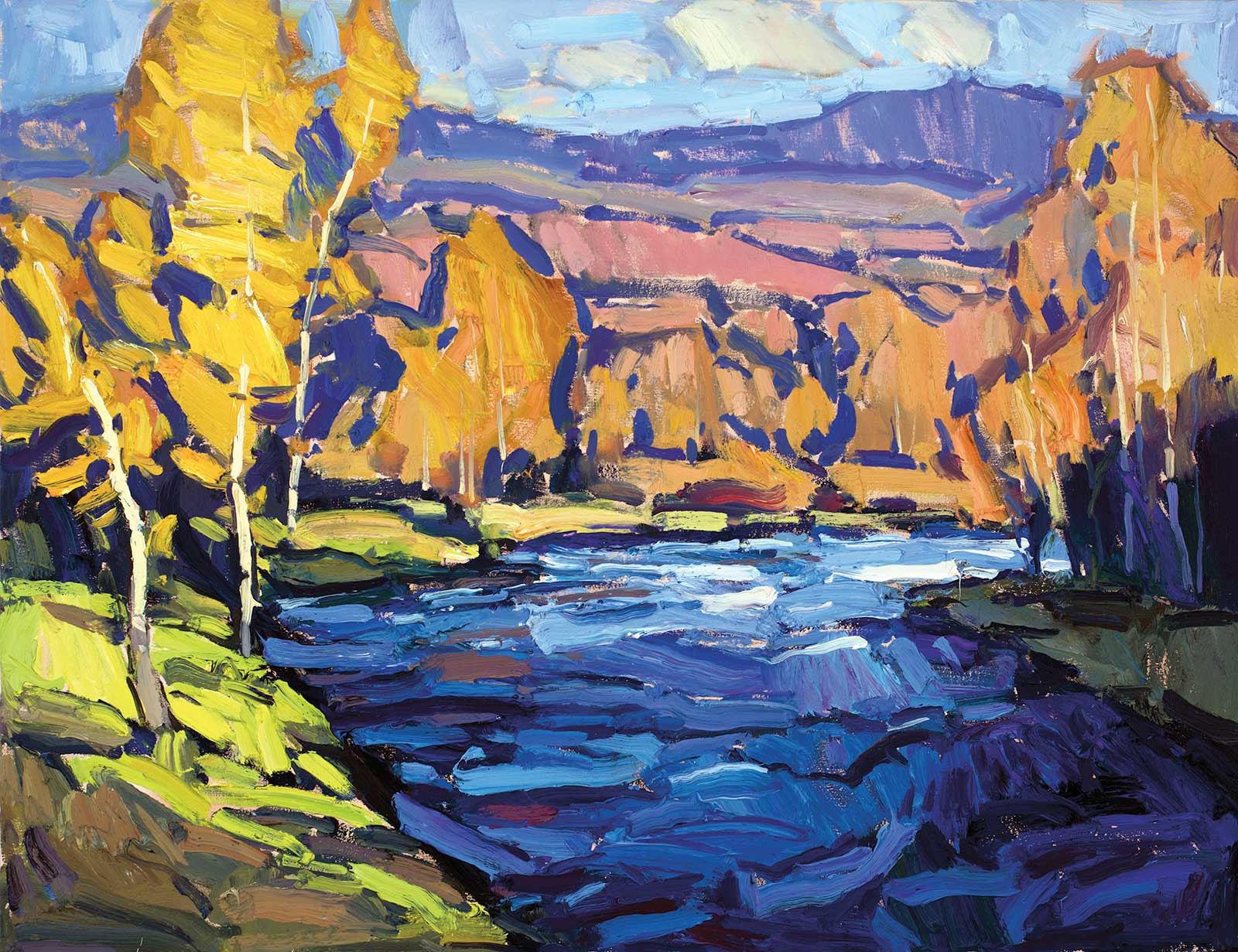
Stage 8 Highlights
This is the exciting stage that most painters patiently wait for: the highlights. I pass over all my major areas with thick and saturated paint, trying to feel the sunlight and movement of the trees and water.
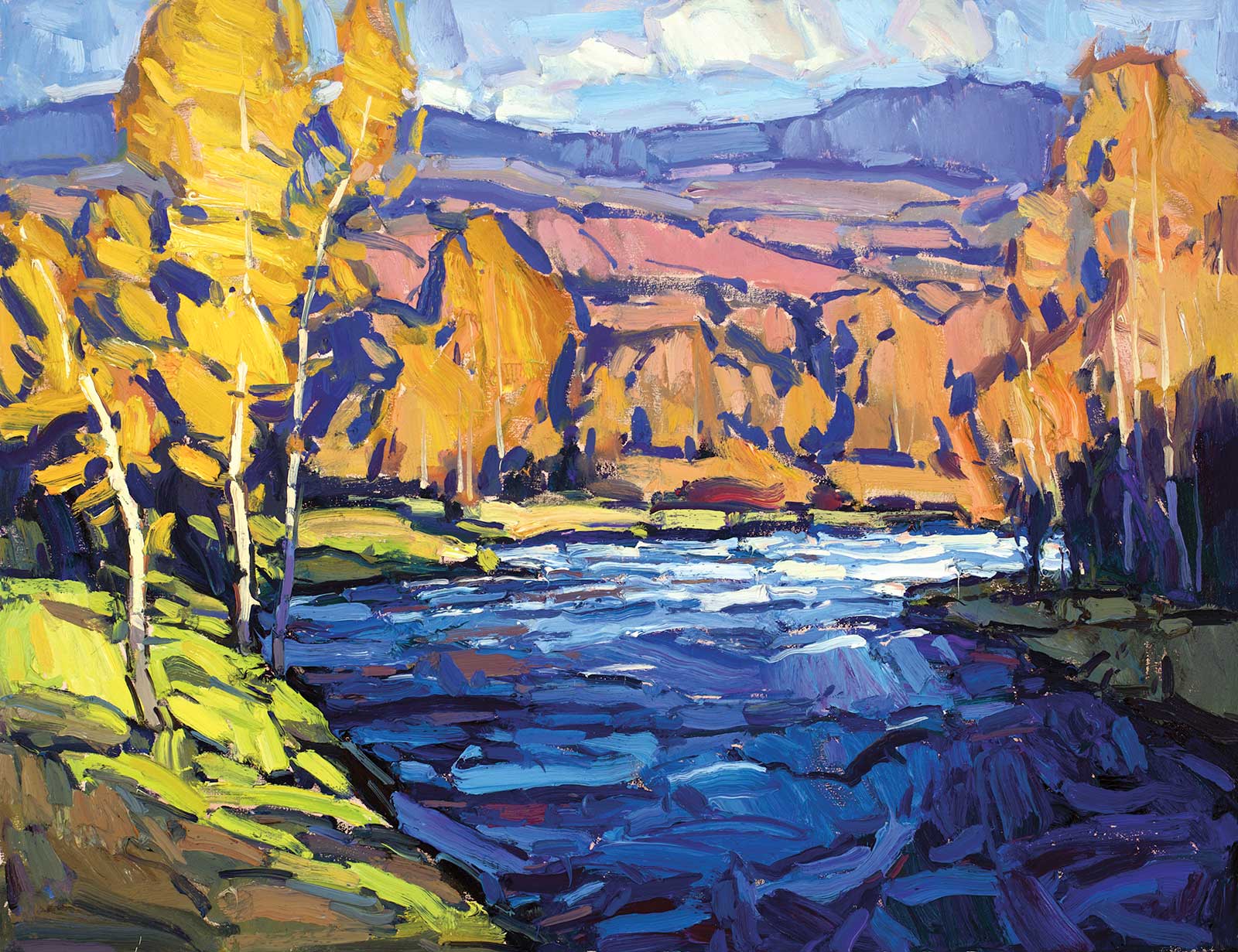
Stage 9 Continuing Further Refinements
Finally slowing down and taking breaks to analyze, I try to refrain from the use of excessive highlights and avoid overworking the initial expressive brushwork. I also introduce a bit more atmosphere into the painting by lightening the value of the distant hills and clouds.
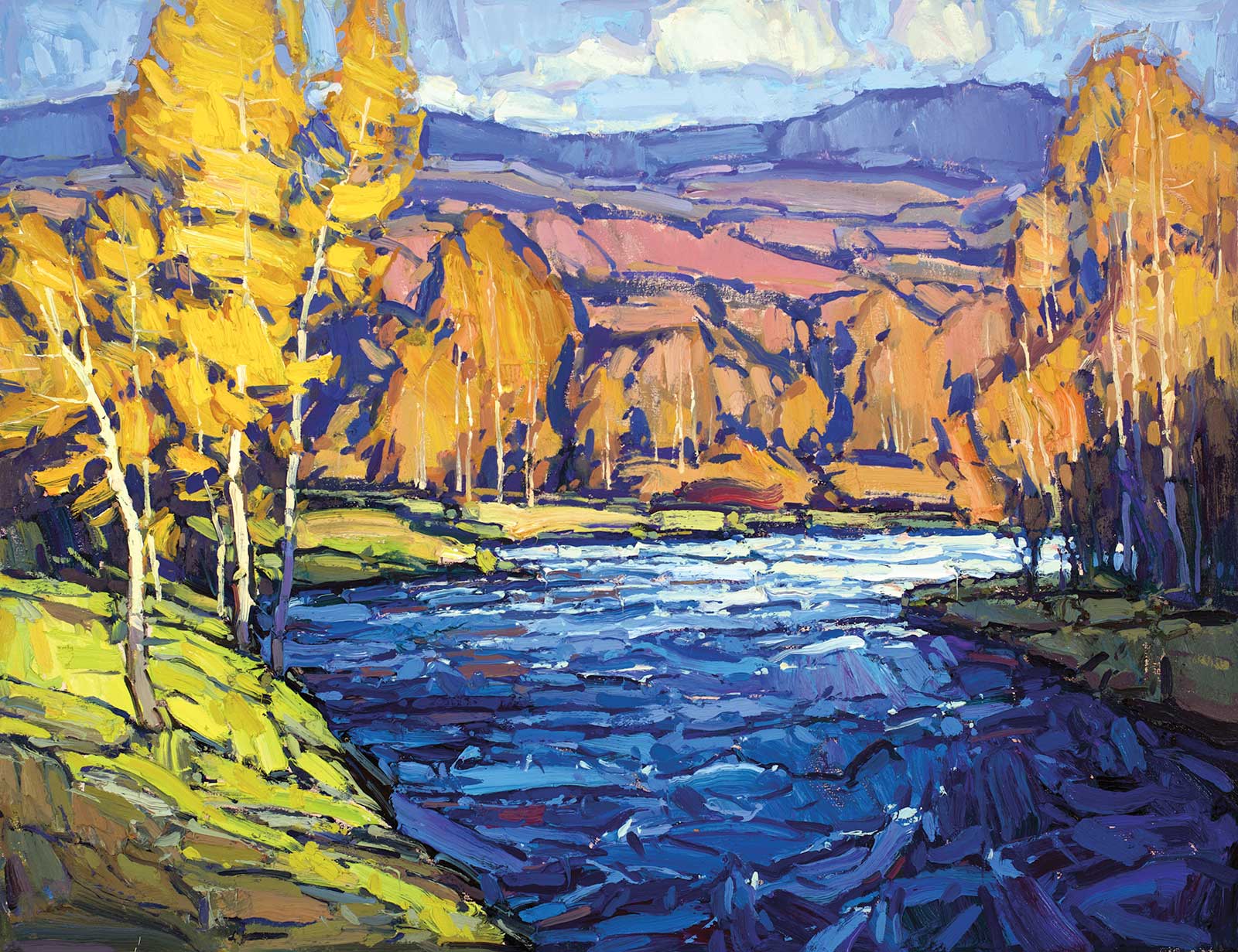
Stage 10 Final Details
Nearing completion, I switch to medium-sized brushes and focus on detail to the foreground and midground trees and water. Since my initial layers of paint are starting to dry, I add small amounts of linseed oil to observe the fat-over-lean technique.
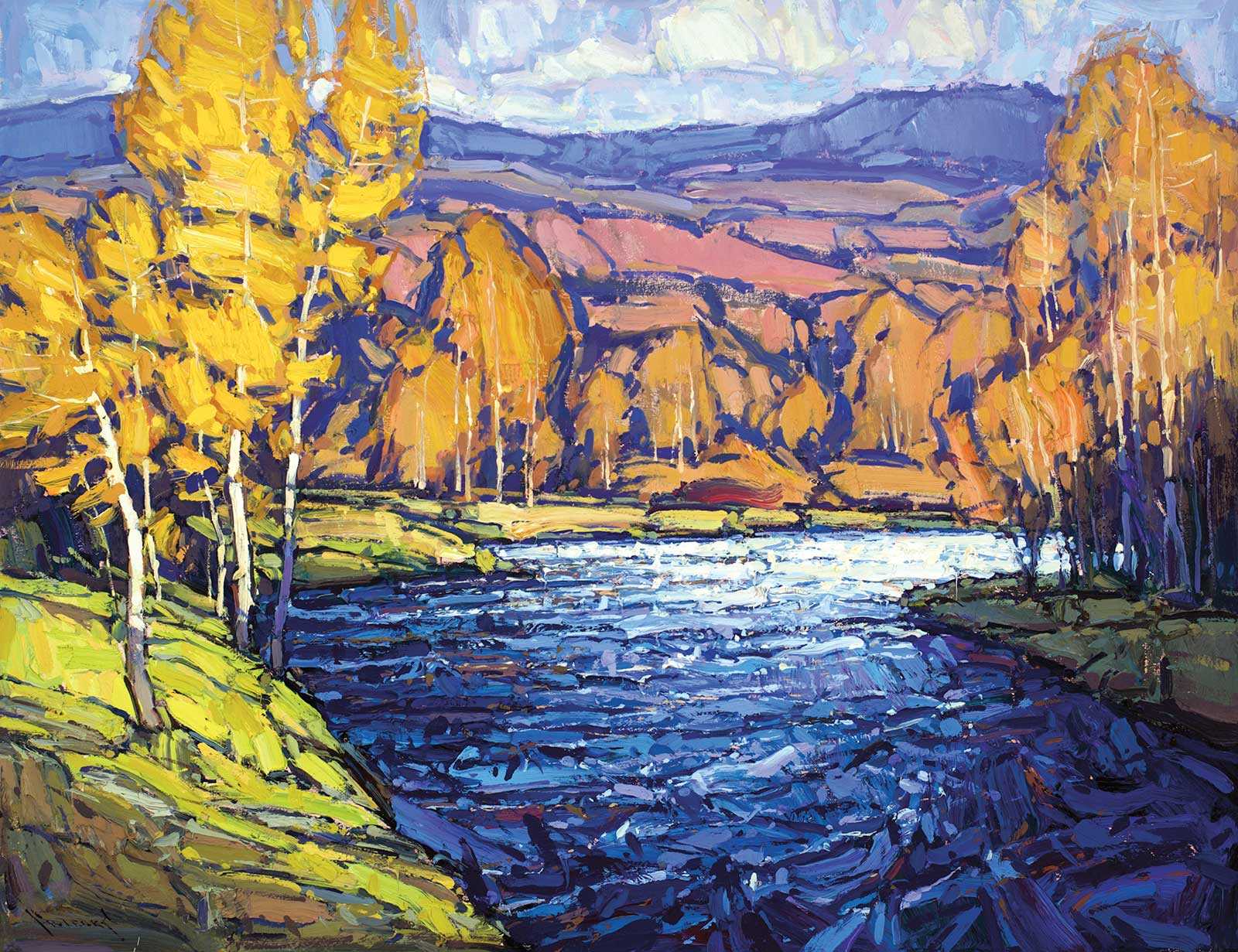
Stage 11 Finished Artwork
Creekside Colors, oil on canvas, 40 x 52” (101 x 132 cm)
In my final stage, I’m mostly concerned about a total harmony of color. I rework the sky by adding a bit of pink in the clouds and scale back the intensity of the blue in the water. I’m pleased with the shimmering quality of the light and various textures of the painting.
About the artist
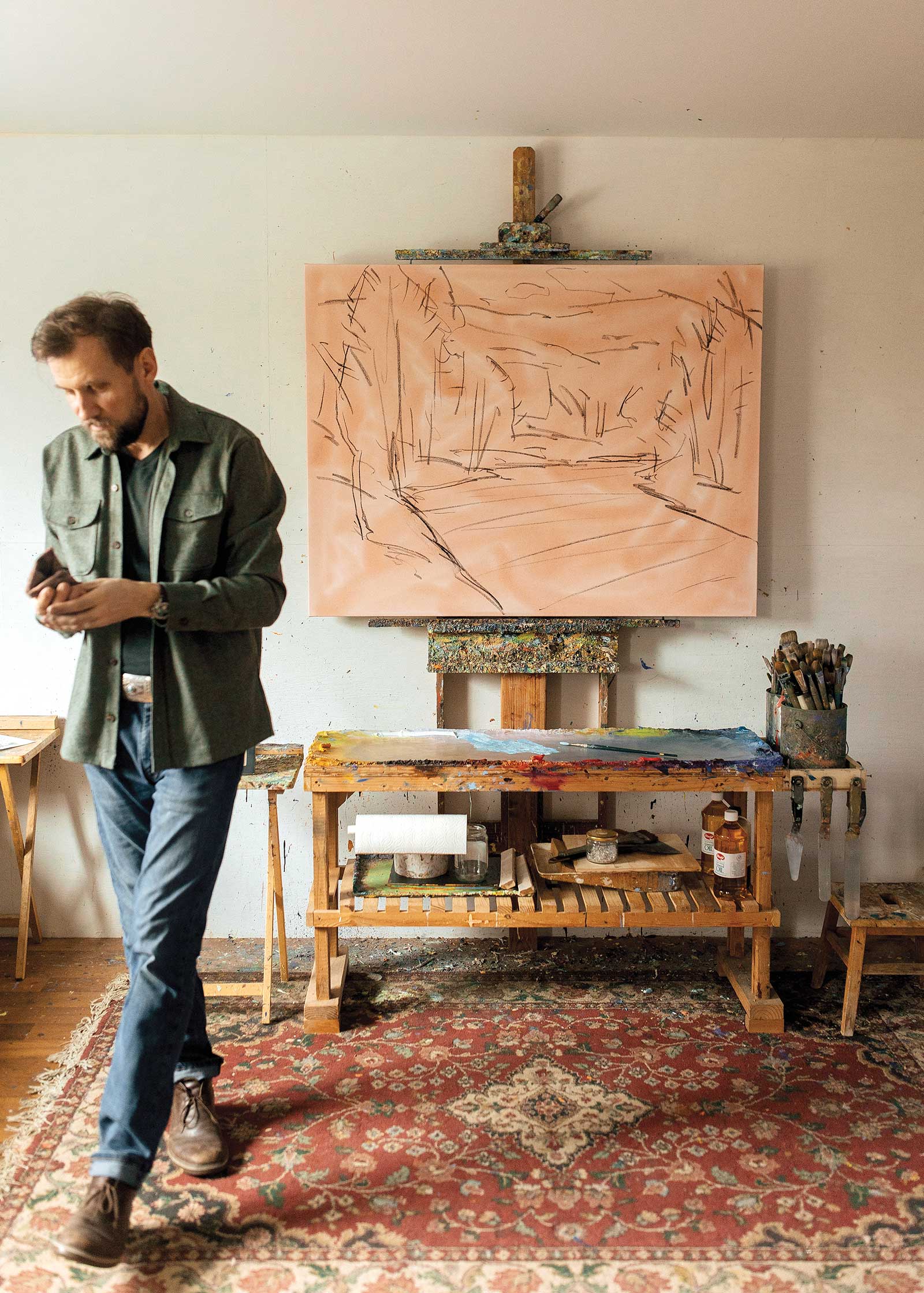 Anton Pavlenko
Anton Pavlenko is a self-taught landscape painter whose work explores themes of identity, memory and place. Born in Ukraine, he immigrated to the United States with his family in 1990, where he began to discover his artistic voice. As an immigrant navigating a new homeland, Pavlenko found a deep and unexpected connection to the vast, untamed landscapes of the American West.
His paintings are rooted in a search for belonging, drawing on the dramatic contrasts and quiet solitude of the terrain to reflect his own personal journey. His bold use of color, form and texture showcases a visceral connection between the artist and his materials. Initially learning to experience and paint the landscape from direct observation, in plein air, his practice has evolved to encompass more introspective and contemplative expressions, focusing on intimate interpretations of his vision of and relationship to the natural world around him.
Since starting his professional career in 2009, Pavlenko’s work has appeared in numerous magazines and publications along with a feature story on television. His internationally collected work has won numerous top awards in prestigious exhibitions, galleries and museums across the country.
He is represented by Paul Scott Gallery in Arizona; and Peterson Contemporary Art, Dragonfire Gallery, Lawrence Gallery and Rental Sales Gallery (Portland Art Museum) in Oregon.
Contact at
antonpavlenko.com