Deeply inspired by the rugged coastline of California’s Point Lobos State Natural Reserve, I pack my painting gear and head out several times a year to paint from life, gathering reference material through studies, sketches and photography. As a plein air painter, my goal is to document the values and colors that the fleeting light conditions of the moment reveal. I will often create several studies from one location, observing how the shifting light transforms the landscape.
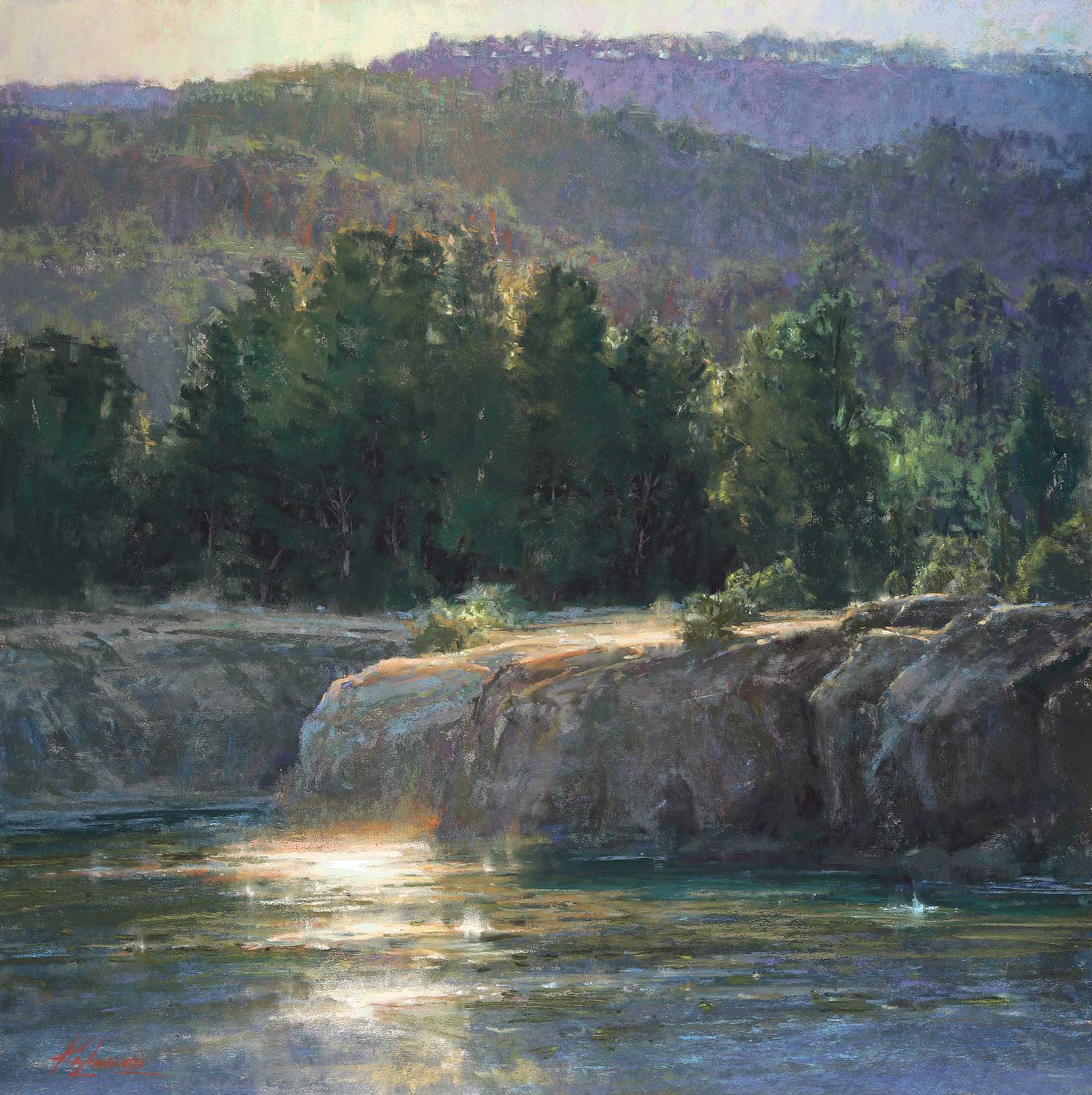 Sanctuary of Light, pastel on archival board, 20 x 20” (50 x 50 cm)
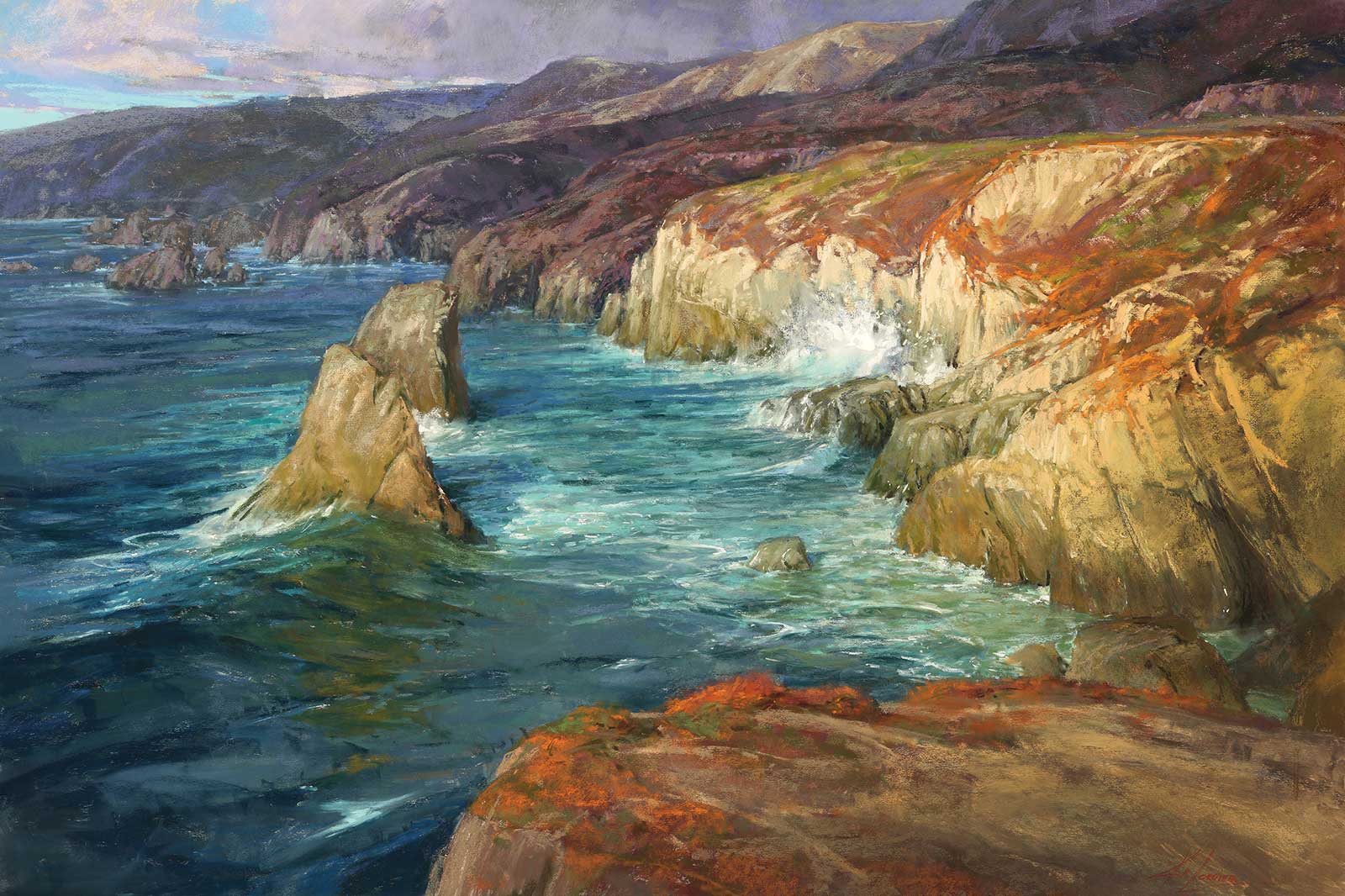 Edge of an Ancient Tide, pastel on archival board, 27 x 40" (68 x 101 cm
The diversity of color along the rocky shores of Point Lobos is awe-inspiring—from the ochres and rusts of the sandstone walls and coastal flora, to the deep greens of the cypress and pines, to the luminous blues and greens that glow from the ocean below. I am drawn to the vibrating interplay of warm and cool color that energizes the scene. The pastel medium is ideal for capturing this environment, with its immediacy and pure pigment. In the following pages, I will detail my approach to depicting the nature in pastel.
My Art in the Making: Intricately Interwoven
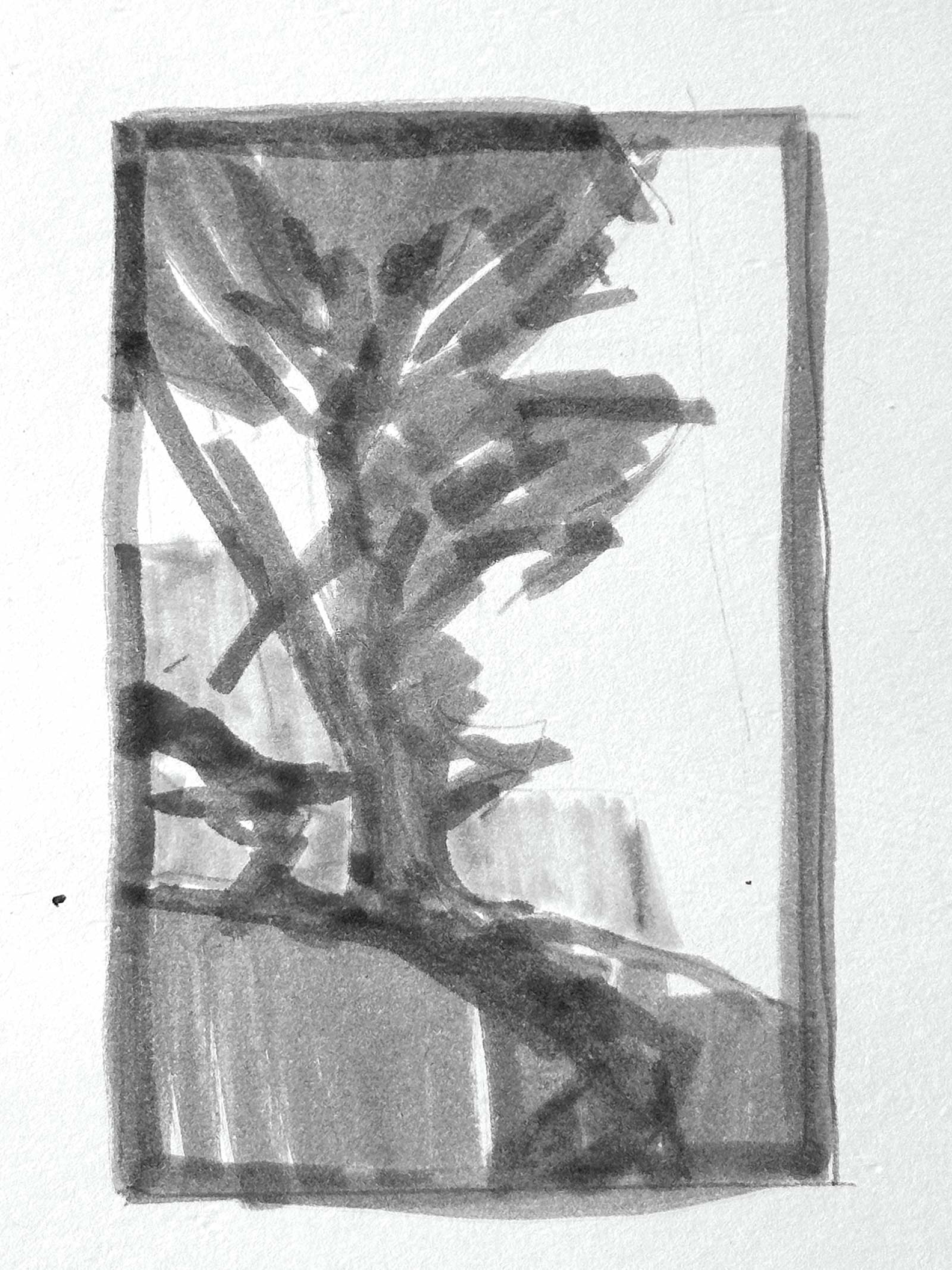
Stage 1: Notan
I use Tombow brush pens in light, medium and dark gray to create a notan. This process helps me design shapes and values while leaving detail and color for the painting. I know quickly whether the composition will work.
WHAT THE ARTIST USED
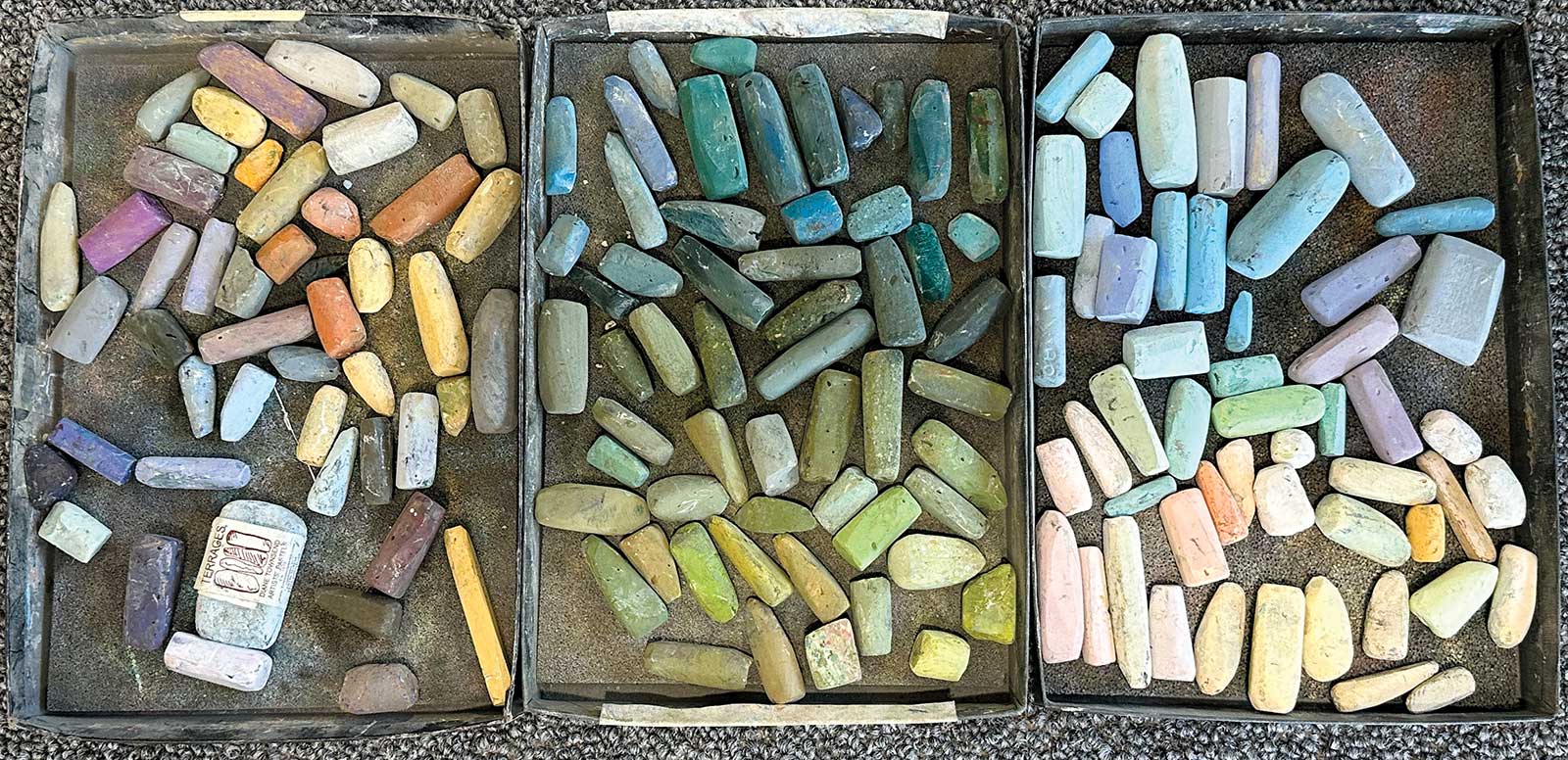
Pastels
A mix of Terry Ludwig, Unison, NuPastel, Diane Townsend, Sennelier, Roche and homemade pastelsAdditional Materials
Tombow gray value pens for sketchbook notan, UART 320-grit sanded paper, dry-mounted to acid-free foam core, Odorless Turpenoid (for underpainting), Robert Simmons hog bristle brush, size 10 (for underpainting)
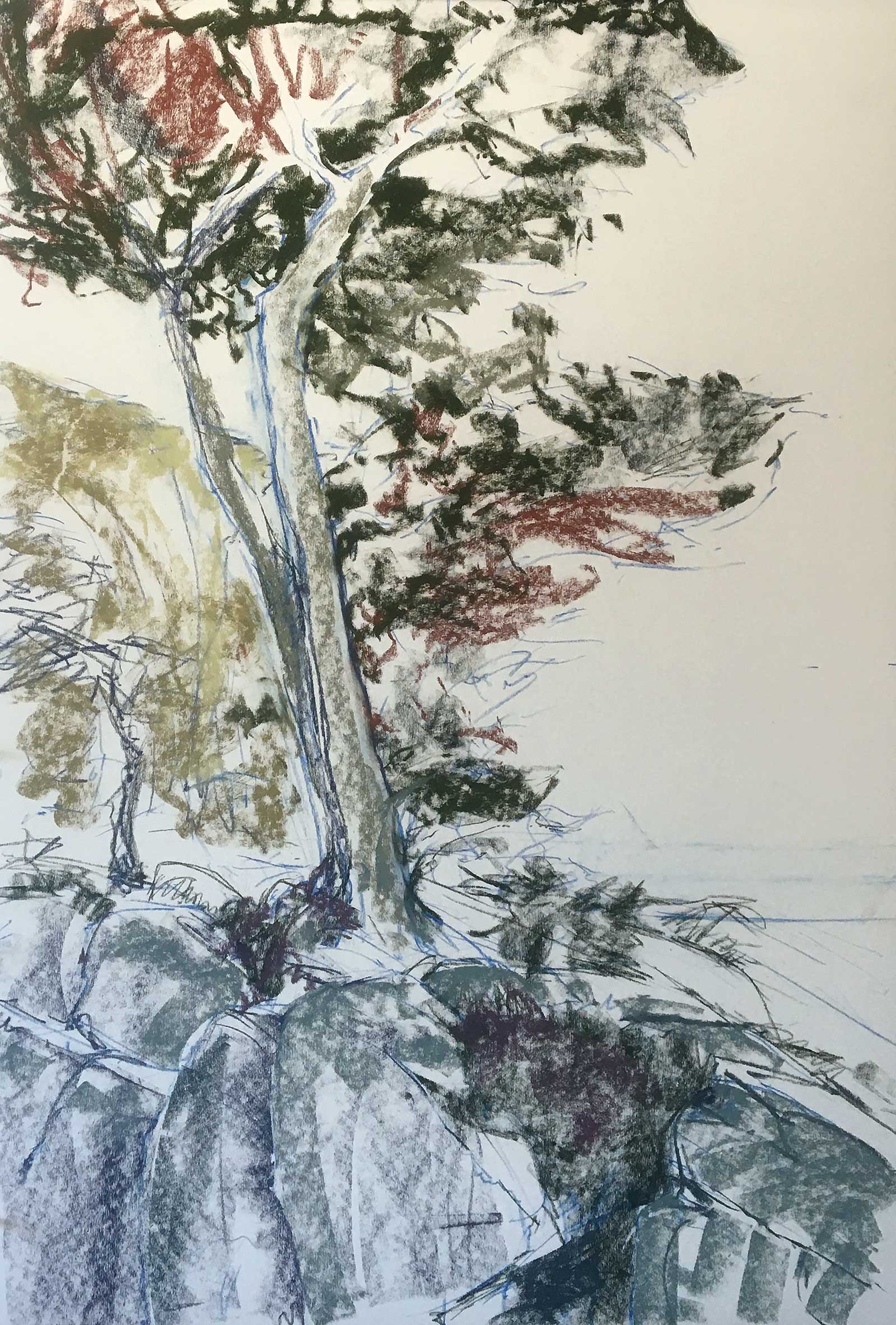
Stage 2: Initial Design
On a pre-cut 36 x 24" mounted piece of UART paper, I lay in my initial design with a NuPastel #295, a lovely, clean Prussian blue color. Then I whisper a very light coat of the average color and value of the large shapes in order to prepare for the underpainting. There is no color laid in the sky or the triangular shape of the sea. These will be added later in the process. It is important to note that I do not fill the entire shape up with pastel. I need there to be enough color to spread around but not enough to fill the tooth of the sanded paper.
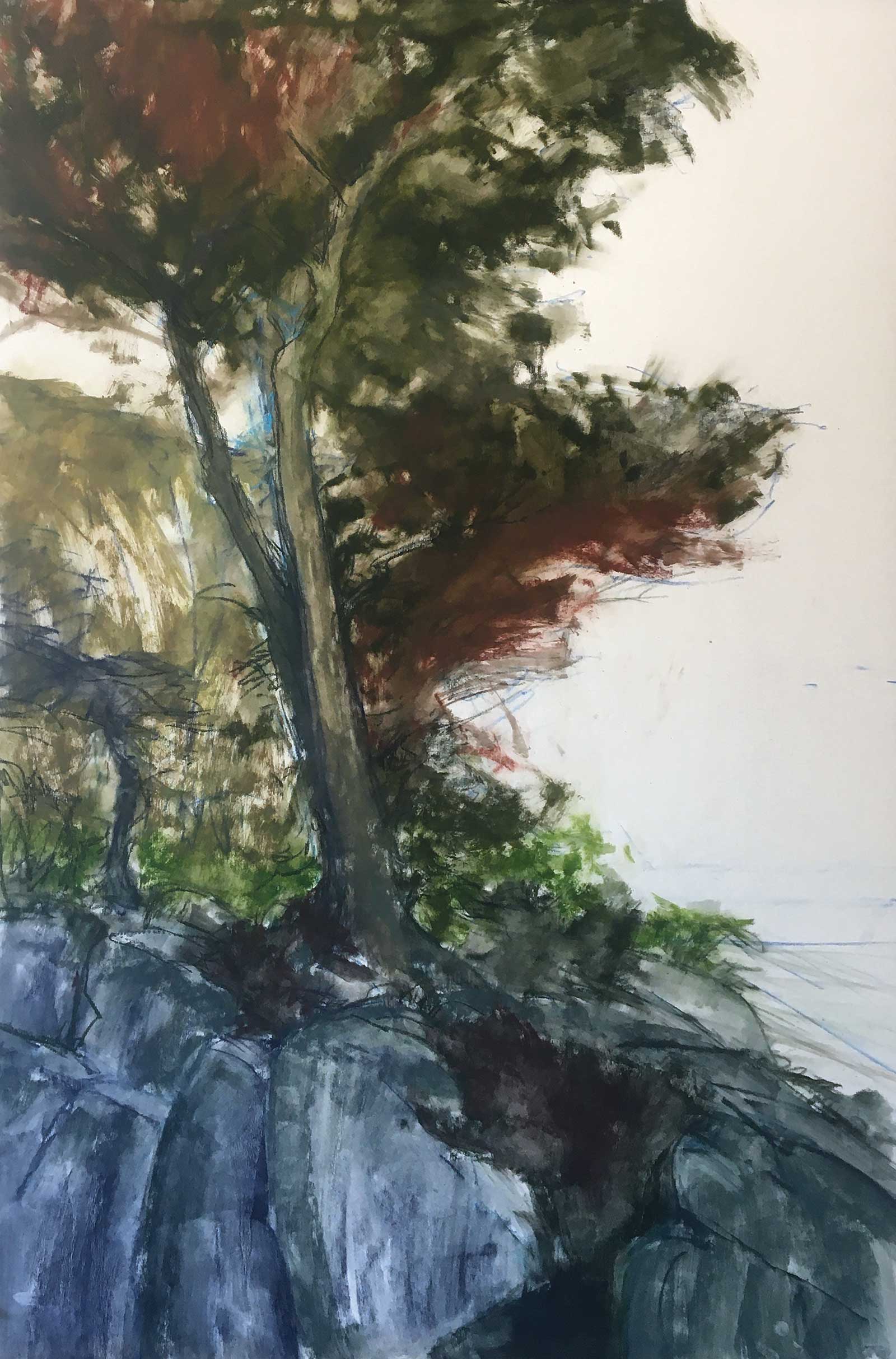
Stage 3: Preparations
I take the large hog bristle brush and dip it into a jar of Turpenoid. (You can use denatured alcohol, water, watercolor or gouache to create an underpainting.) Squeezing out the excess on the inside of the jar, I then wet the pastel in each shape, creating a brush-like effect with my marks. I’m not interested in details at this time, I just want to fill in the shapes with their values so I have a solid roadmap for the next several layers of pigment.
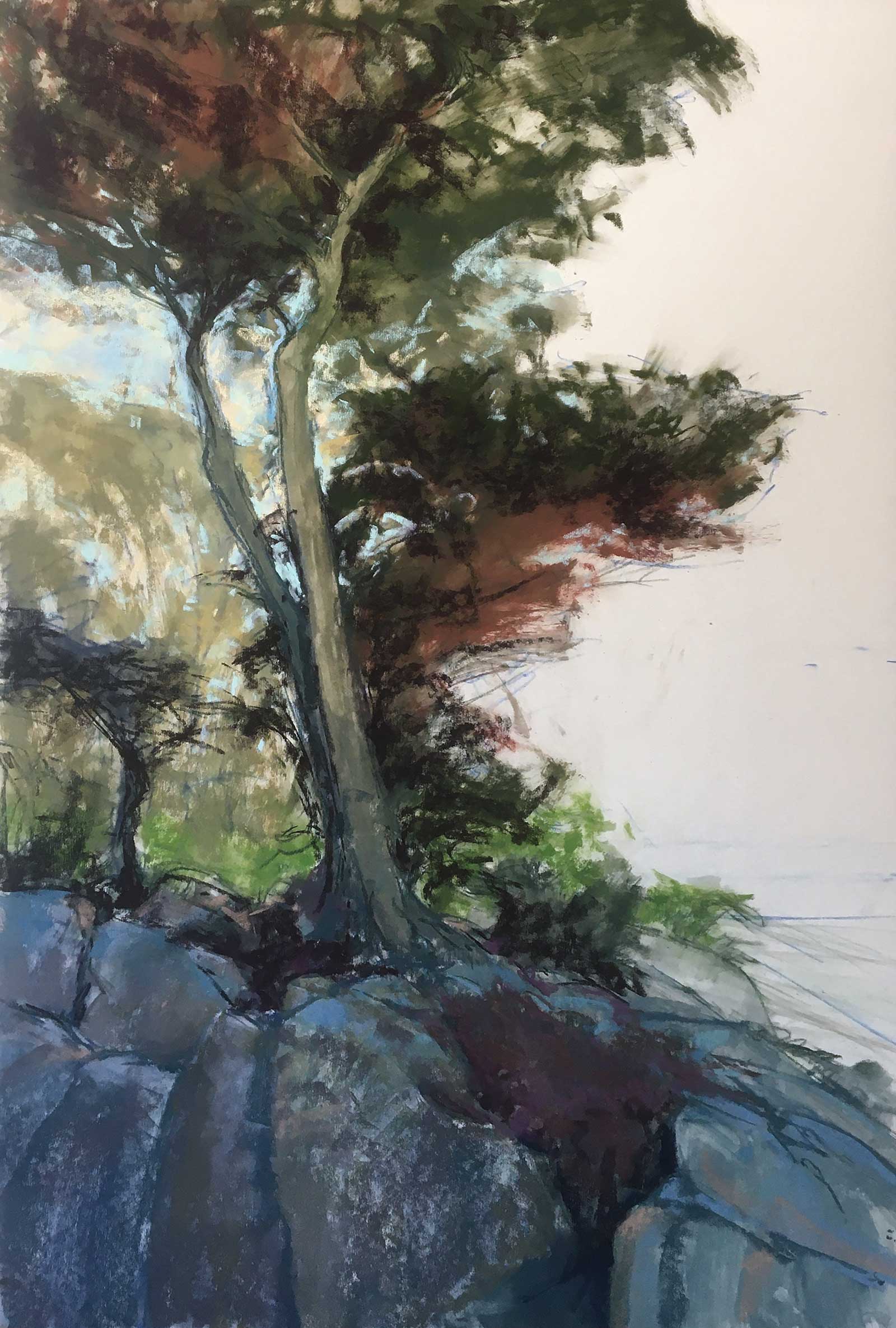
Stage 4: The Broader Strokes
With the underpainting completely dried, I start to layer in color and detail. My mark-making begins to mimic the gesture of the cypress, still thinking about large shapes and not details just yet. I find my darkest dark and lay that down near the deepest part of the shapes in shadow. Then I start to find the subtle warm and cool grays that will make up the large rocks.
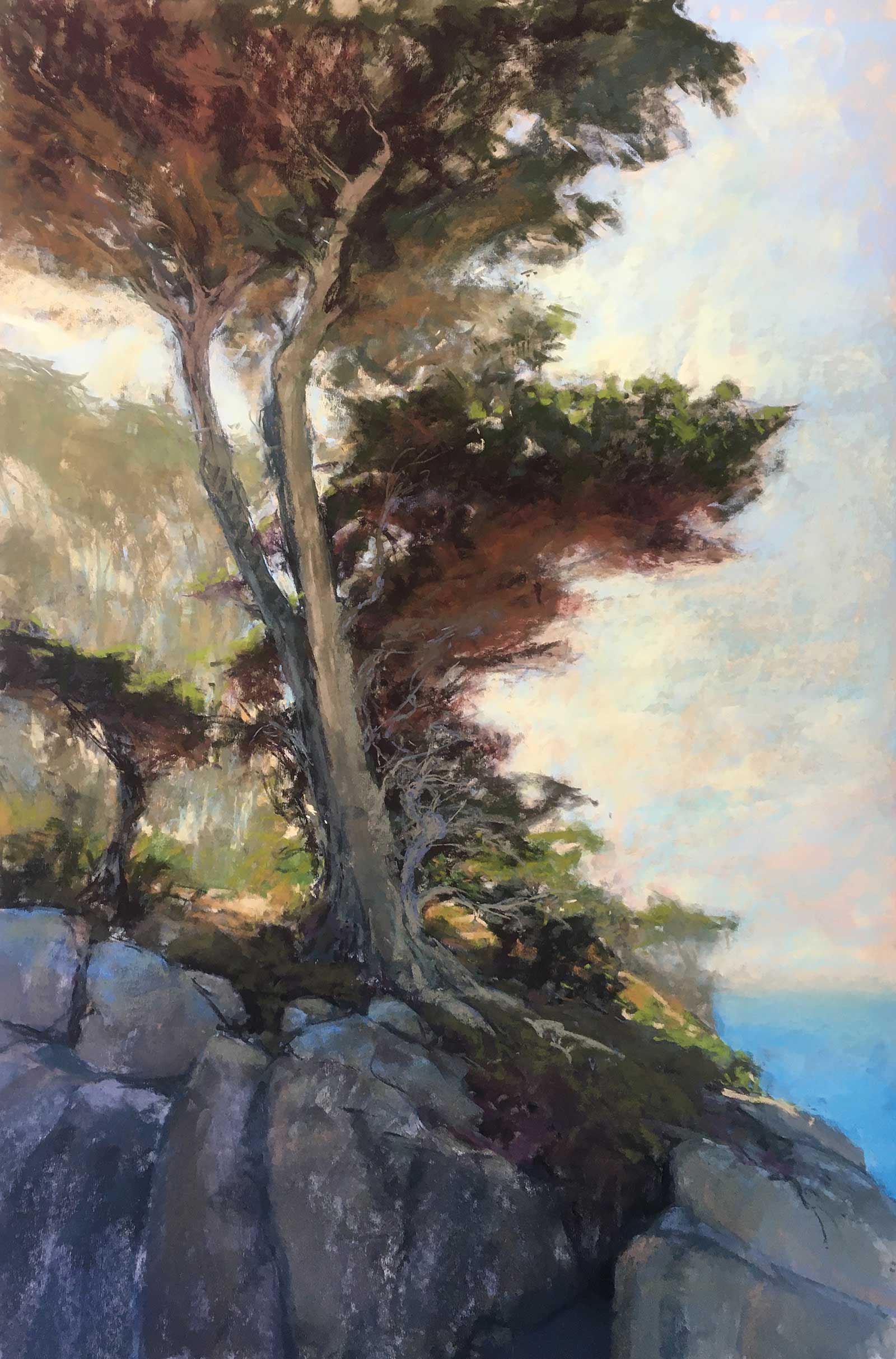
Stage 5: Adding More Color
I start to vibrate peach, pink, blue and violet in the sky shape, making sure my values stay close so I can keep the sky colors clean. I also introduce the beautiful blue note of the ocean in the background. I make sure to keep its value lighter than anything in shadow. At this time I also start to draw some of the gnarly and twisted little branches within the cypress. Now, I am careful to delineate between shadow and light, working to create the feeling of backlight behind the large tree and rock shape.
Plein Air Studies
These two plein air studies, along with photographs taken on location, were brought back to the studio to inform the larger studio painting, Intricately Interwoven. Back in the studio, the work shifts from observation to interpretation. The plein air studies preserve the fleeting light and color of the day, while the studio offers the time to reflect on what truly moved me about the scene. Using my studies and photographs as guides, I begin searching for the essential shapes and patterns that hold the composition together. Rather than recreating the exact view, I allow the elements to rearrange themselves into a stronger visual rhythm—one that reflects the intricate weaving of branches, light, and shoreline that first captured my attention.
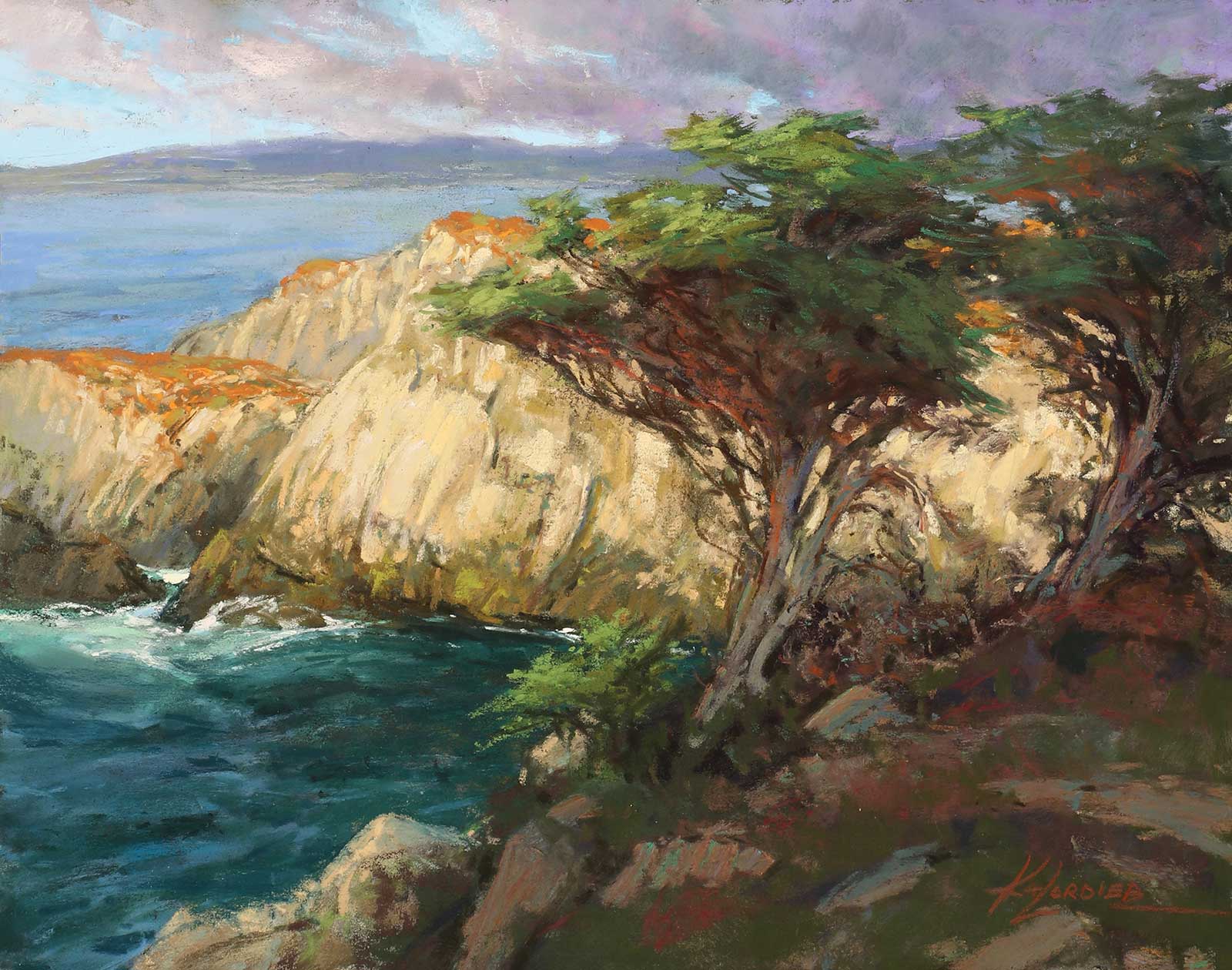 Cypress Cove Colors, pastel, 11 x 14" (27 x 35 cm)
Cypress Cove Colors was painted on location. The rust-colored, velvety growth that you see on the underside of the cypress canopy is actually a vibrant, filamentous green algae. While it does not harm the tree, it creates a striking visual counterpoint to the greens and golds of the surrounding landscape.
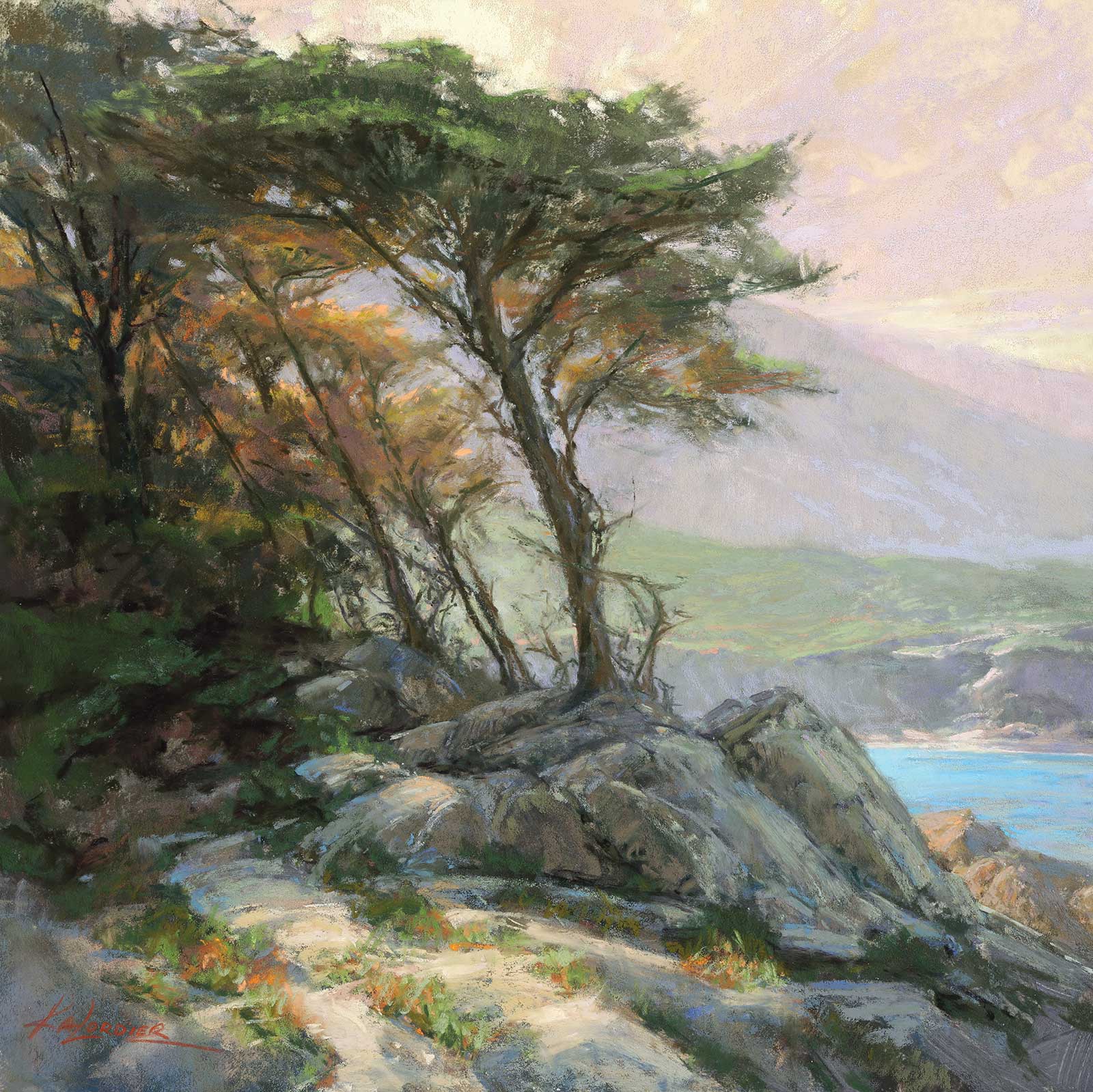 Joyful Morning, Pt. Lobos, pastel, 16 x 16" (40 x 40 cm)
Another plein air piece, Joyful Morning, Pt. Lobos was painted just around the corner from the Cypress Cove Colors painting. The early morning light, with its dramatic interplay of shadow and illumination, compelled me to set up my easel.
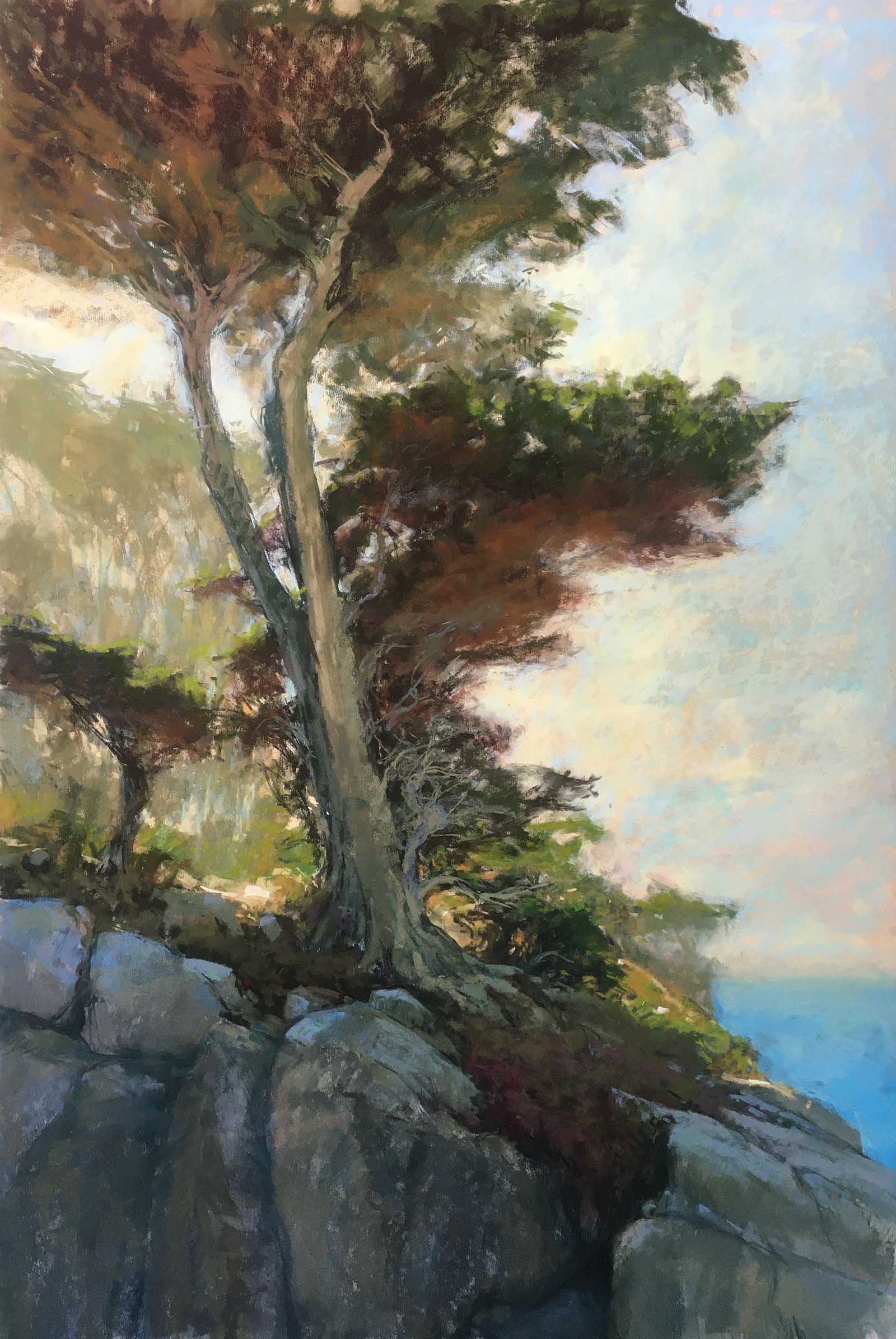
Stage 6: Subtle Temperature Shifts
I’m beginning to refine the shapes and introduce more subtle color temperature shifts with the masses. Notice the cool blue notes on the top plane of the rocks. This is where they are receiving the cool blue influence of the sky, and notice how the grays warm up as they move away from the sky.
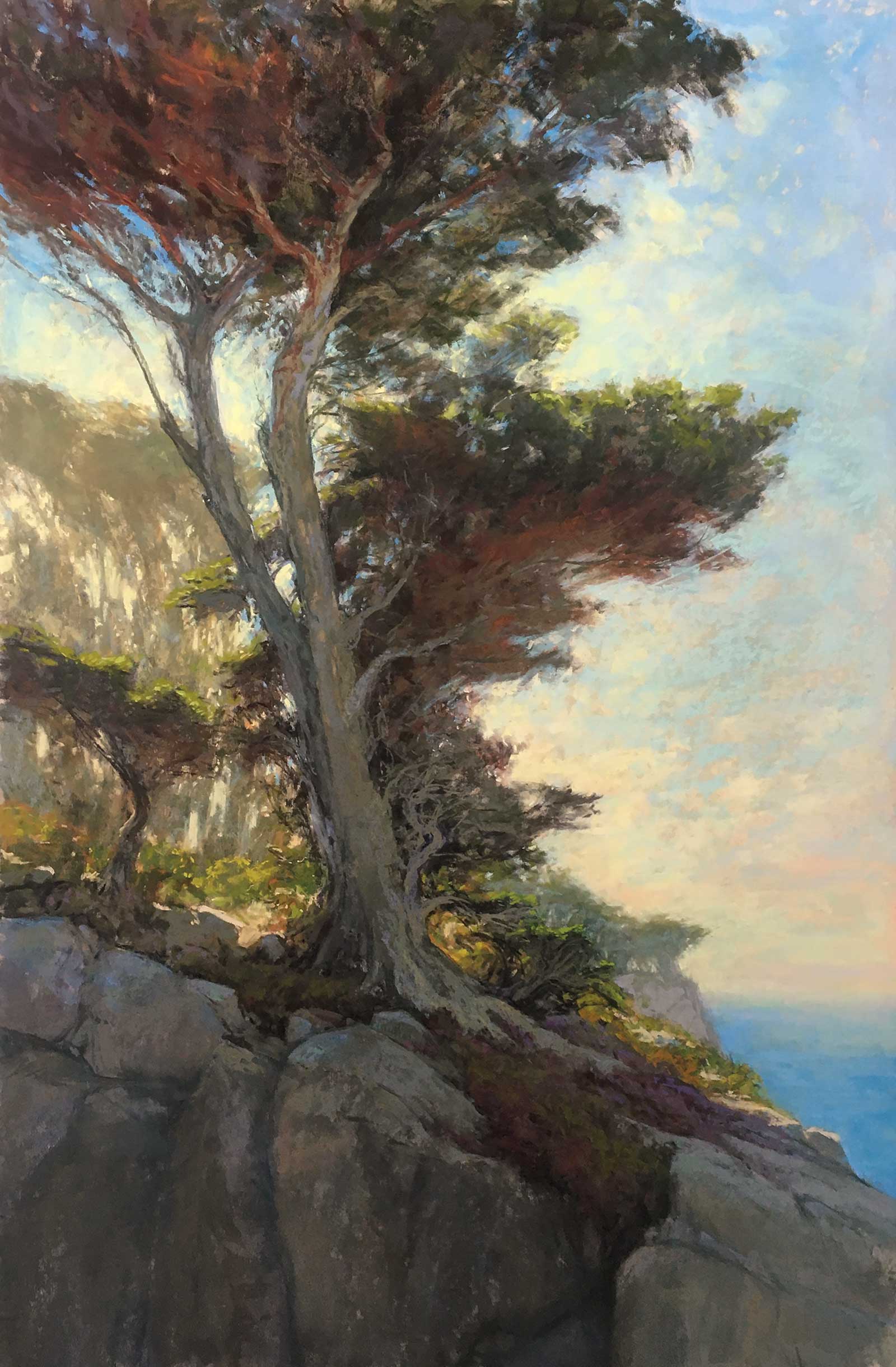
Stage 7: Further Refinements
Refinement of shapes and edges happen here. I start to put bits of pure color in order to heighten our awareness of the temperature shifts within the shapes. Much subtler shifts happen at this time, more looking and evaluating, even getting set onto a shelf for contemplation while starting something else.
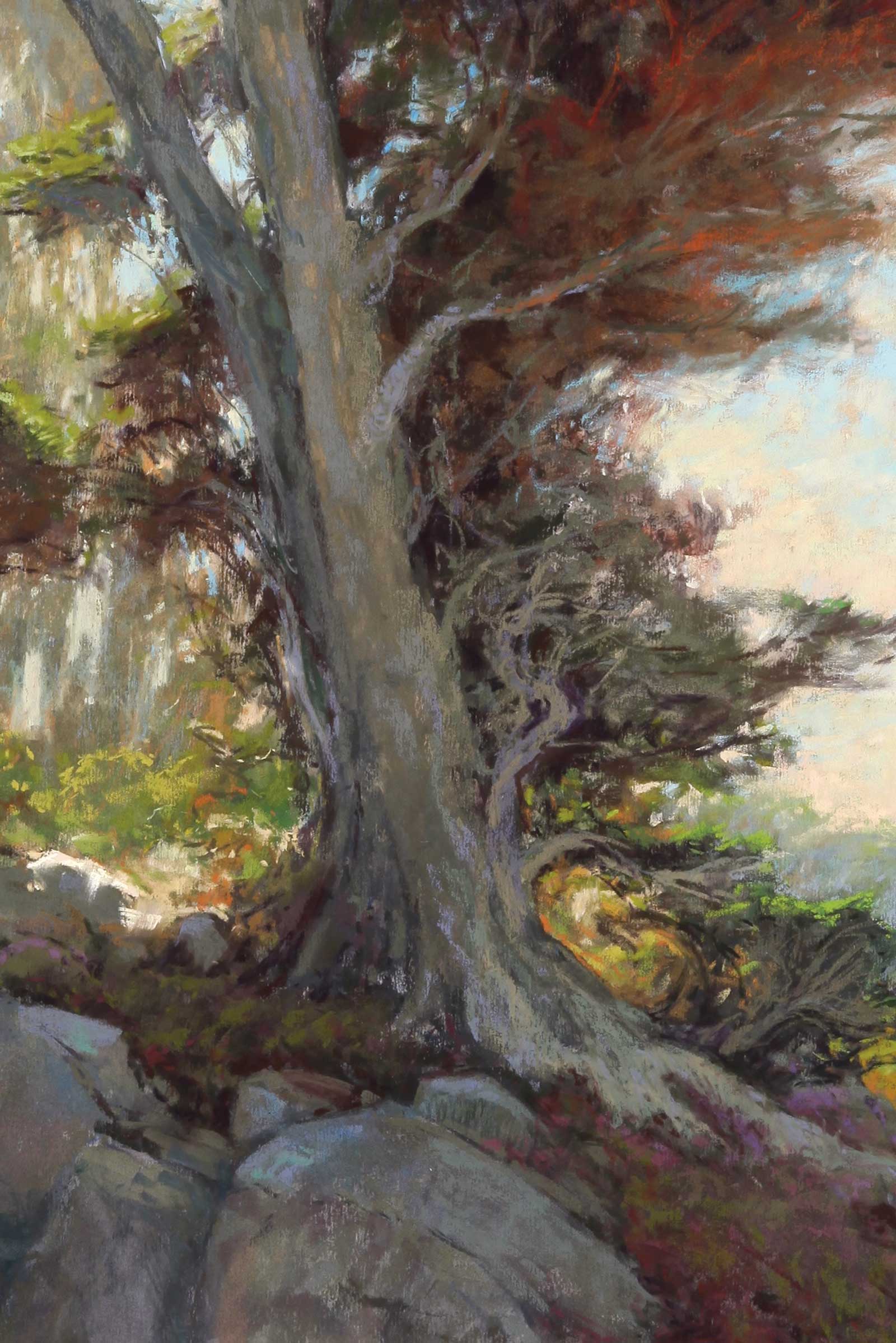
Stage 8: Subtle Pops of Color
Notice the pops of pure color like orange-red and yellow-green. I use these color notes to help lead the viewer’s eye around the painting and to liven the color up without getting garish.
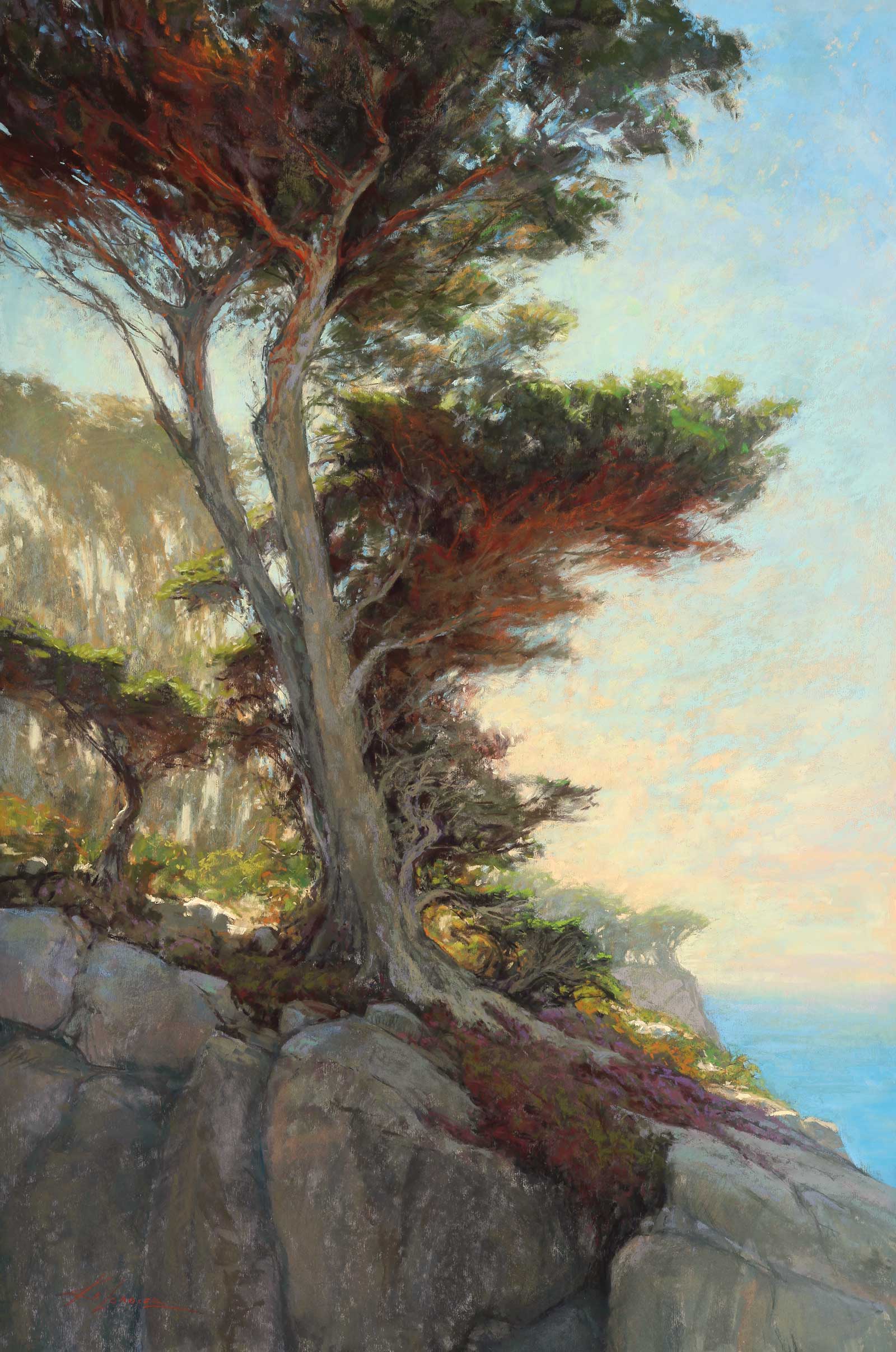 Intricately Interwoven, pastel on archival board, 36 x 24" (91 x 60 cm)
Stage 9: Finished Artwork
Rooted in granite, swept by fierce winds. Dusted in rust, an algae that harms none. A tangled chaos woven into lace, forming a rich tapestry measured in time and place. You will find this beautiful cypress hugging the granite at the apex of the Cypress Grove Trail in Point Lobos. She overlooks the ocean with power and grace.
About the artist
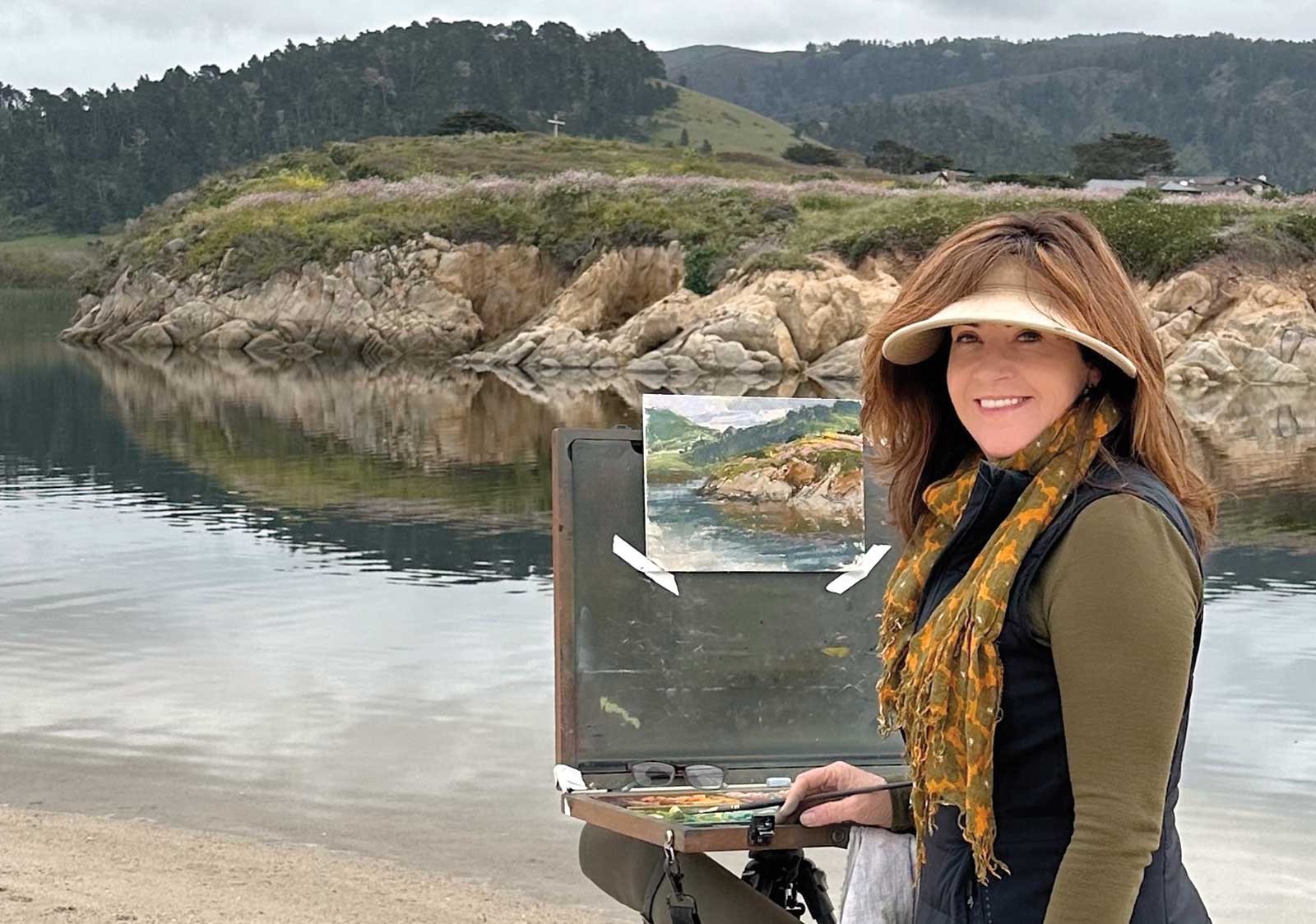
Kim Lordier received a BFA in illustration at the Academy of Art University, San Francisco in 1989. Her work has been showcased in numerous art magazines and has been acknowledged by jurors and peers. She has received recognition for her landscapes at major plein air events, international magazine competitions, national pastel society shows and museum exhibitions.
Lordier is a Signature Member of the California Art Club, the Pastel Society of America and Laguna Plein Air Painters Association; a Pastel Laureate of the Pastel Society of the West Coast; and a Master Circle honoree with the International Association of Pastel Societies. A coveted workshop instructor, Lordier leads workshops across the country. She is represented by Carmel Fine Art, Huse Skelly Gallery and Holton Studio Gallery in California; Ballard’s Fine Art in Wyoming; Illume Gallery West in Montana; and Thunderbird Foundation for the Arts in Utah.
Contact at
kimfancherlordier.com