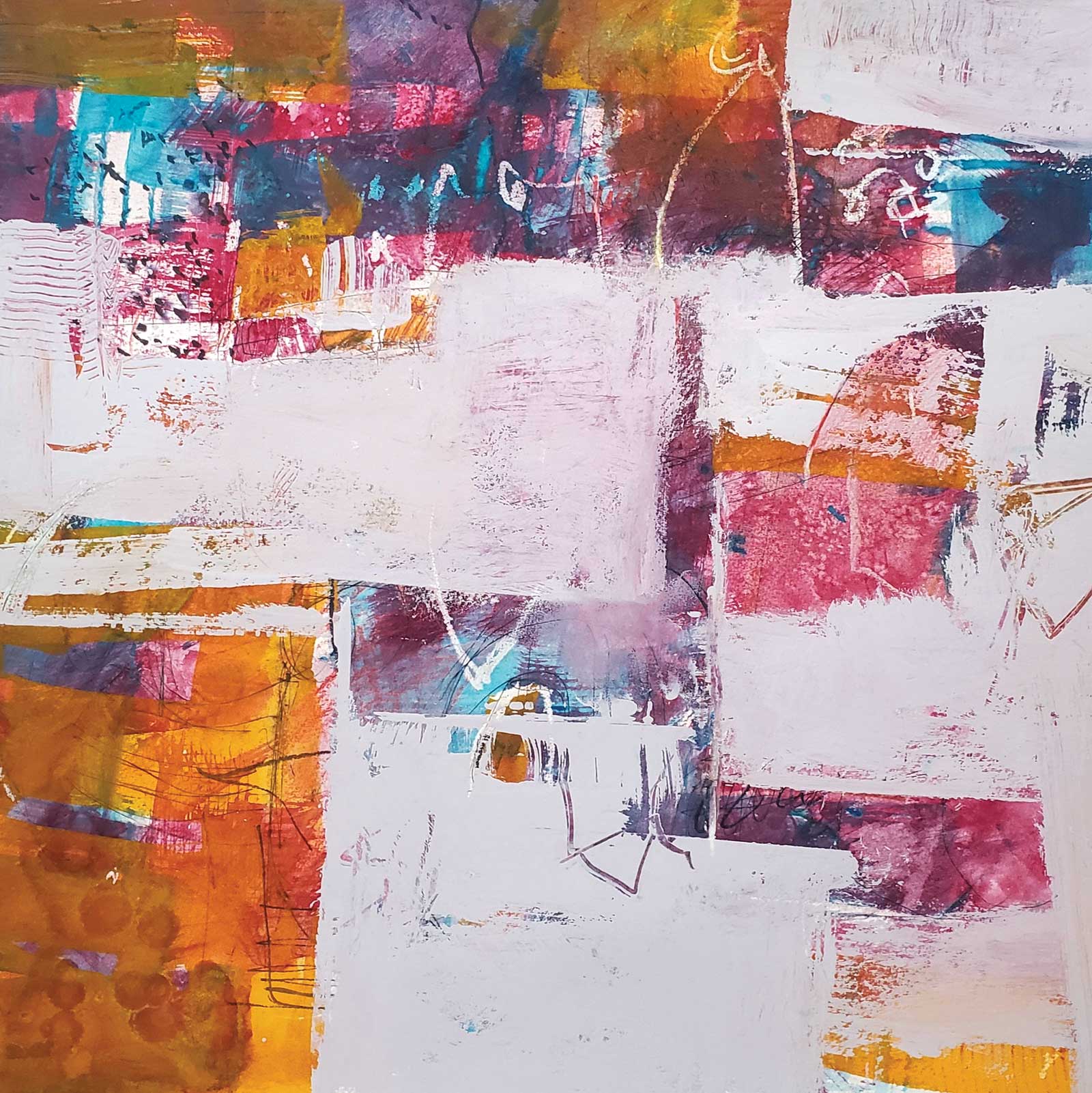
Windowpane No.117, watercolor and gouache on paper, 15 x 15" (38 x 38 cm)
Scottsdale Artists’ School: What excites you most about returning to teach at Scottsdale Artists’ School?
Stan Kurth: I think it would be having the experience once again of seeing students “get it.” This seems to happen most often during critique sessions. I also like the idea that teaching is reciprocal. Just walking around the studio or engaging in digressional discourse, I glean a thing or two. I enjoy visiting the other classes as well and seeing what is on the walls in the halls and lobby.
SAS: When did you first realize that art would play a significant role in your life?
SK: I was 4 years old when I knew I would be an artist, specifically a painter. My mother and her sister were very close and always lived in close proximity to one another. That meant I was at my aunt, uncle and cousin’s house often. My aunt was a painter. I loved how her house smelled of turpentine, damar varnish and linseed oil. Being in her studio as a child, I knew I was going to be an artist. I was amazed at what she was creating on those canvases. Picasso said, “Every child is an artist. The problem is how to remain an artist once we grow up.” I guess you could say my life story is one of remaining an artist. I painted my first oil painting in 1954 when I was 4 years old. I still have that painting.
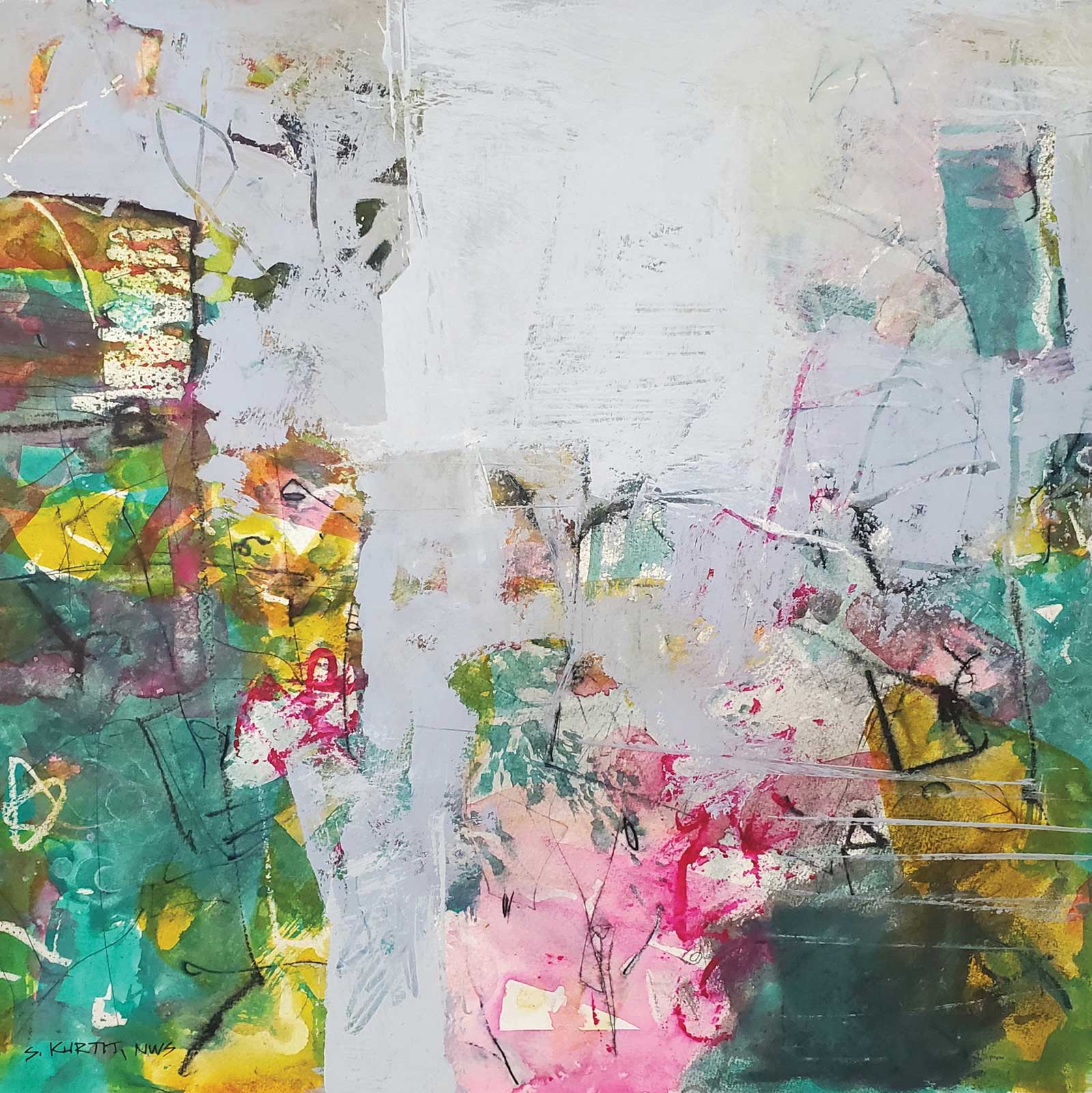
Coastal Anxiety No.45, watercolor and gouache on paper, 15 x 15" (38 x 38 cm)
SAS: Your work is known for its abstract qualities. Have you always been drawn to abstraction, or did your artistic journey begin in a more traditional direction?
SK: Every child draws and paints what they believe is real when, in fact, it is an abstraction. For me, the pursuit of realism continued through grade school, high school and college. I painted my last oil painting five years after I graduated from college, when my family could no longer tolerate the medium. The painting was a pair of white high-top Chuck Taylor tennis shoes on a floor adorned with freshly removed tube socks. Next to the shoes was a chair with a sweatshirt and a can of beer on it. I switched from oil to acrylic and other water-based mediums. That was 1976.
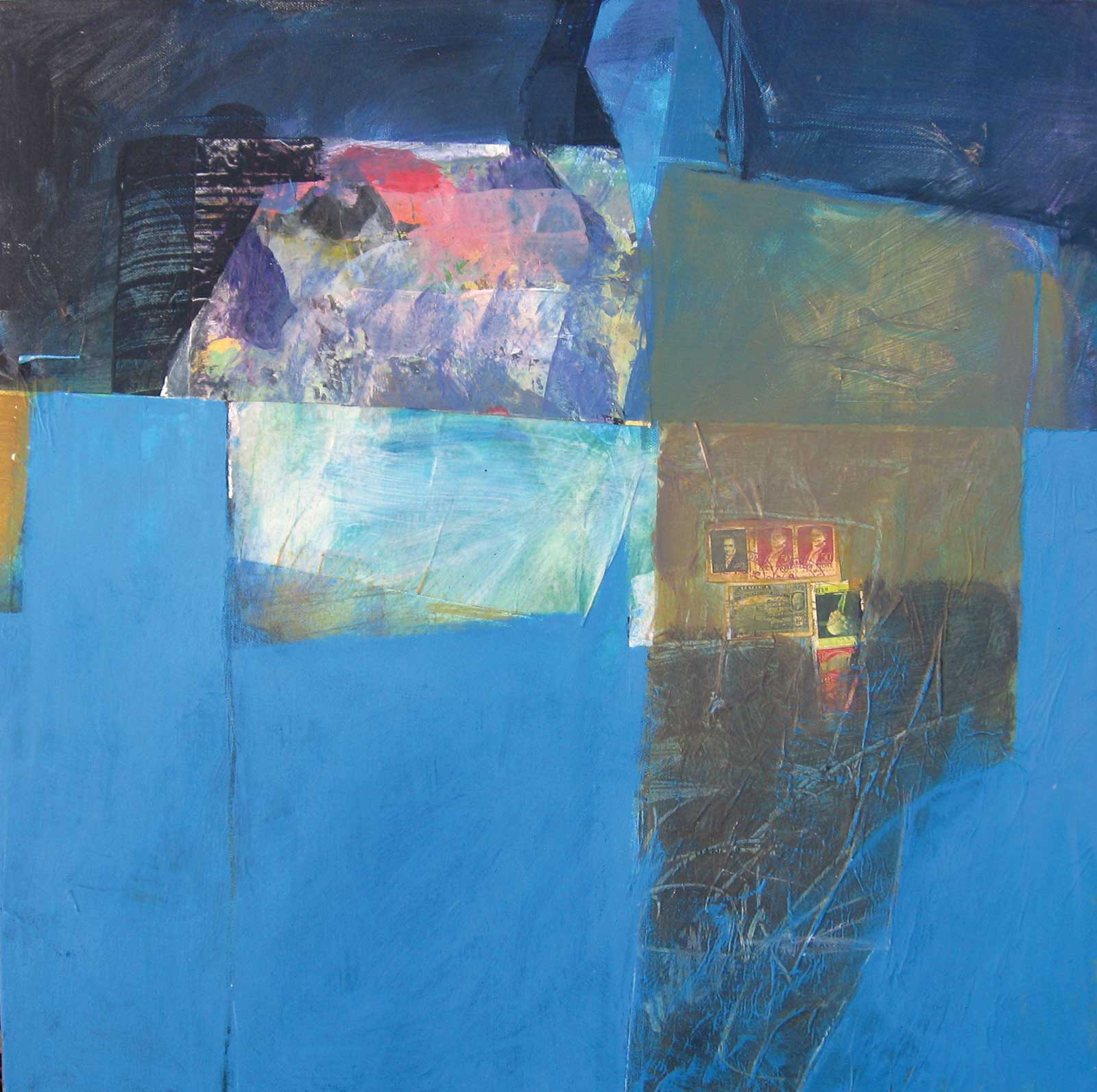
Windowpane No.41, acrylic and collage on canvas, 24 x 24" (60 x 60 cm)
SAS: Where do you find inspiration, and how do ideas evolve into finished paintings?
SK: Chuck Close has been quoted as saying, “Inspiration is for amateurs. The rest of us just show up and get to work.” I tend to agree with that. Although I spend a lot of time looking at art in museums, galleries, openings, books, magazines and online, I find getting into the studio and using the tools, mediums, substrates and pigments much more inspiring than any of the aforementioned sources. Ideas evolve through the act of painting. My definition of intuitive painting is not knowing what it will be in the end and using no reference except what is in my head.
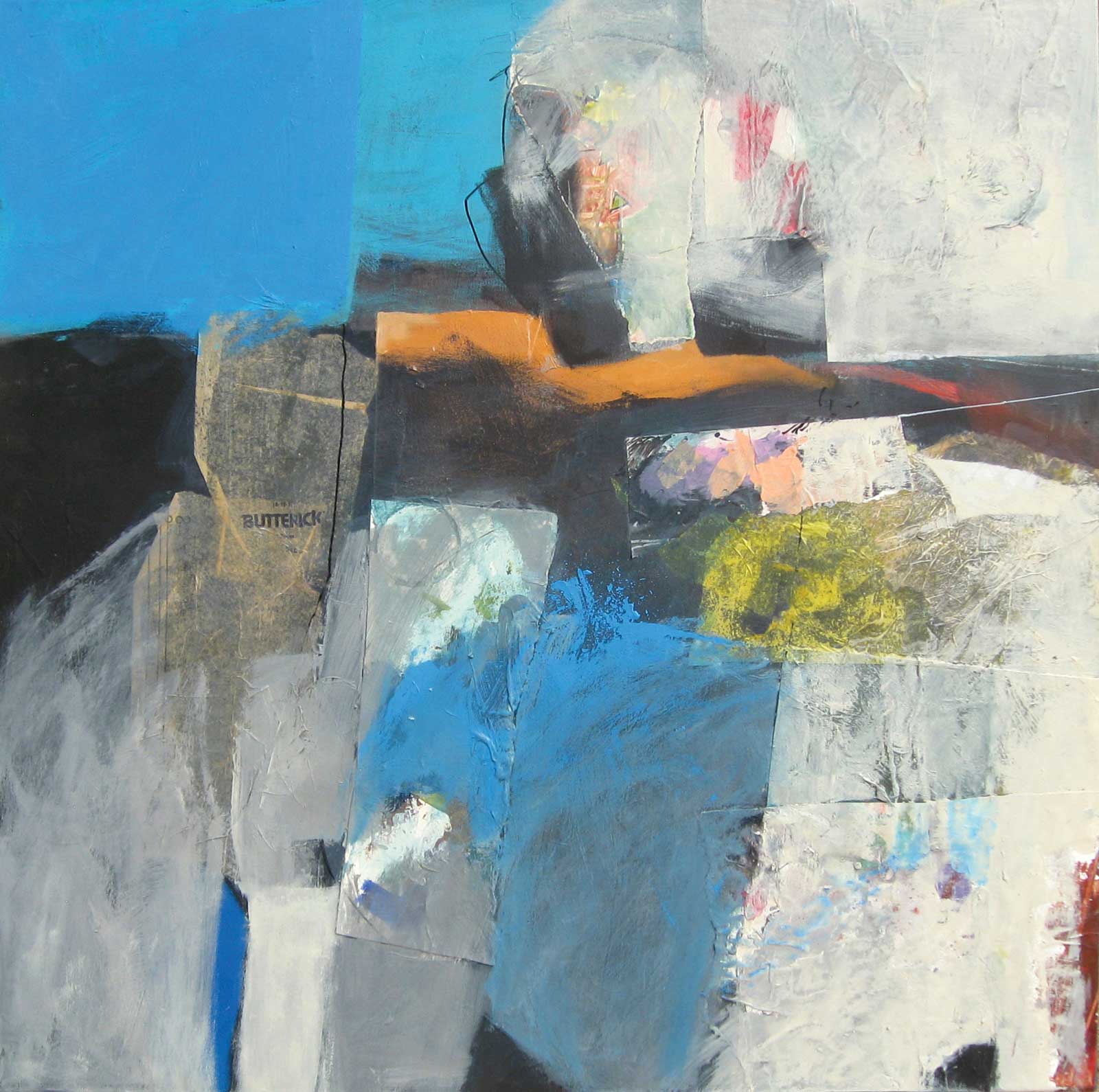
Butterick, acrylic and collage on canvas, 36 x 36" (91 x 91 cm)
SAS: How has your artistic vision or approach changed over the years?
SK: My artistic vision has changed many times. The most important change came when I realized I could not paint like my aunt, Salvador Dalí, Johannes Vermeer, Caravaggio, Andrew Wyeth, Richard Diebenkorn and many others. These were artists whose work I admired at various times in my life, and I even tried to paint like some of them. Yes, they and others were tremendous influences, but trying to paint in their style was foolish. Try as I might, I could not assimilate. It was their vision, not mine. Decades ago, I made a decision to experiment with the mediums I used. The result of that experimentation was the development of my own voice. I discovered I could apply it to either representational or nonobjective content without using any reference other than what was already in my head. The aesthetic I am pursuing is still somewhat vague, but with each new work it becomes clearer.
SAS: Tell us about your upcoming workshop. What inspired the curriculum, and what can students expect to explore?
SK: Contrary to what some believe, intuitive painting is not without rules. I believe paintings, whether abstract or realistic, should be compositionally sound. The elements and principles of design have the same cause and effect in the abstract realm as they do in the realistic. Each day of the workshop will begin with a demonstration related to that day’s lesson. The students will then paint, followed by a critique session. Each painting will be discussed by the artist, myself and the class.
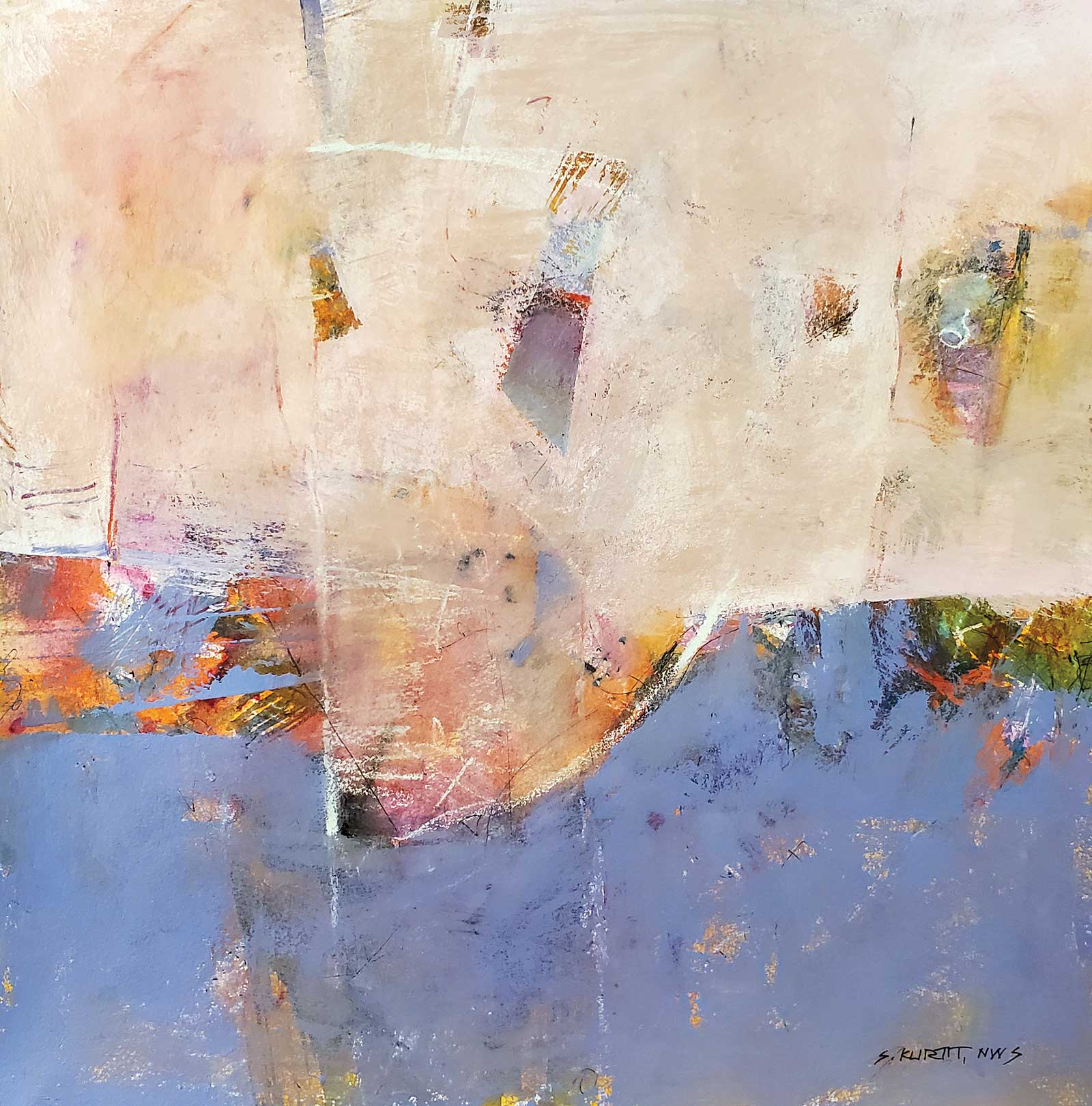
Coastal Anxiety No.43, watercolor and gouache on paper, 15 x 15" (38 x 38 cm)
SAS: What advice would you give to artists who are still searching for their own visual voice?
SK: The best advice I can give is to immerse yourself in it. Go to museums and openings. Look at art all the time. Study other artists, even those whose work you do not think has merit. If there are artists you particularly admire, study them as much as you can. What makes them tick? Above all, draw and paint as much as possible. Be relentless in your endeavor. —
Visit scottsdaleartschool.org for more information on the school and its upcoming workshops.