Watercolor has always appealed to me as a medium that balances control and unpredictability. In my figurative work, I am particularly interested in how the fluid nature of watercolor can convey both the physical presence and inner spirit of the people I paint. This demonstration, Lam, reflects my ongoing exploration of combining wet and dry watercolor techniques to achieve realism while preserving a sense of atmosphere and vitality.
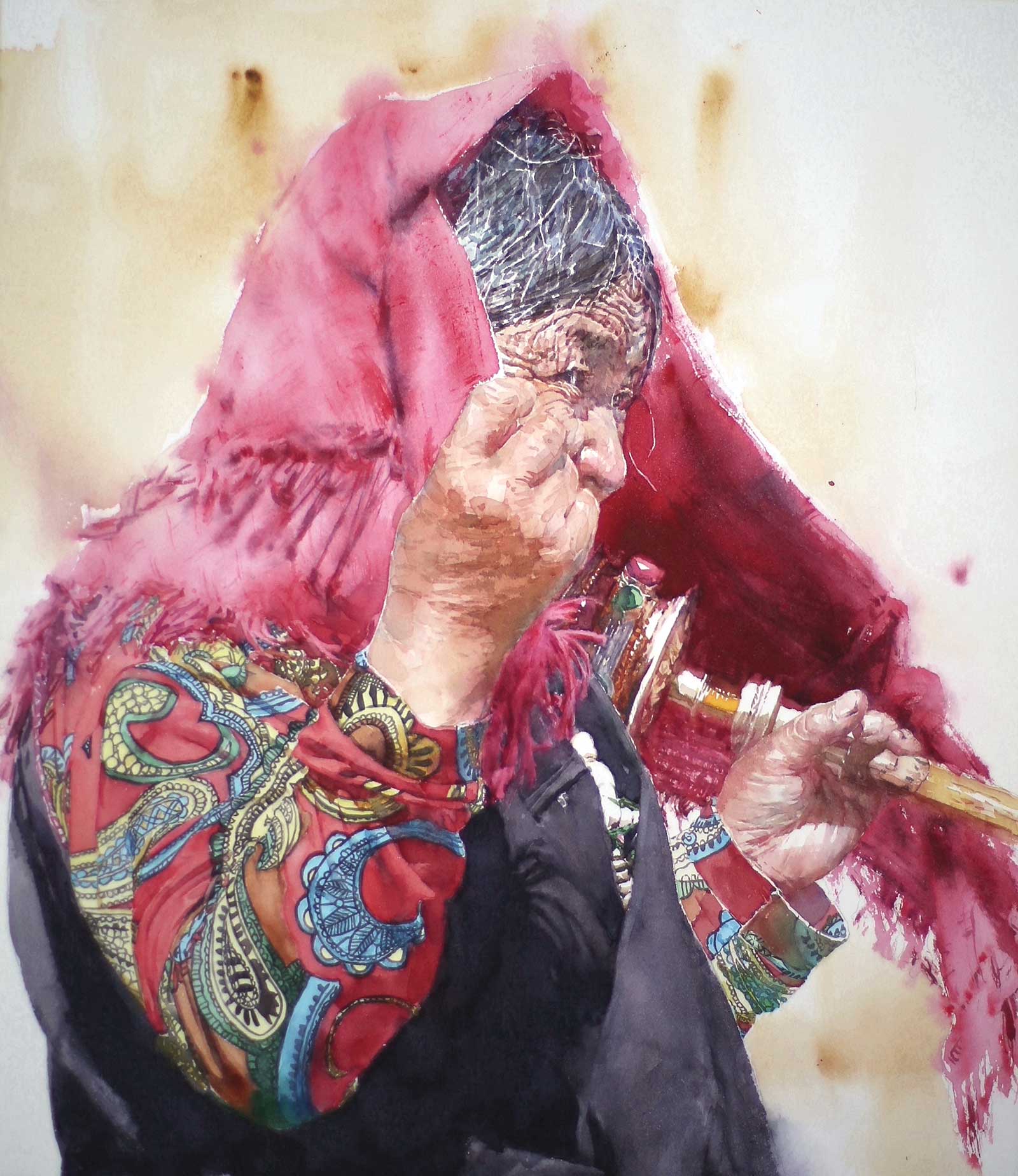
Sangji Zhuoma, watercolor on paper, 16 x 13¾” (41 x 35 cm)
I usually begin a portrait with a very light pencil drawing, keeping the structure simple and flexible. In the early stages, I work almost entirely with wet-in-wet washes. These first layers establish the overall tonal harmony and mood of the painting. For the background, I prefer soft, diffused washes that are allowed to flow freely, creating a quiet space that supports the figure without distracting from it. At this stage, I avoid details and focus only on large value relationships.
As the painting develops, I gradually introduce more controlled, wet-on-dry applications. The facial features are built slowly through multiple transparent layers, allowing the underlying washes to remain visible. I pay close attention to transitions between light and shadow, especially on the cheeks and around the eyes, where subtle color shifts help convey warmth and life. Rather than relying on strong outlines, I let changes in value and temperature define the form.
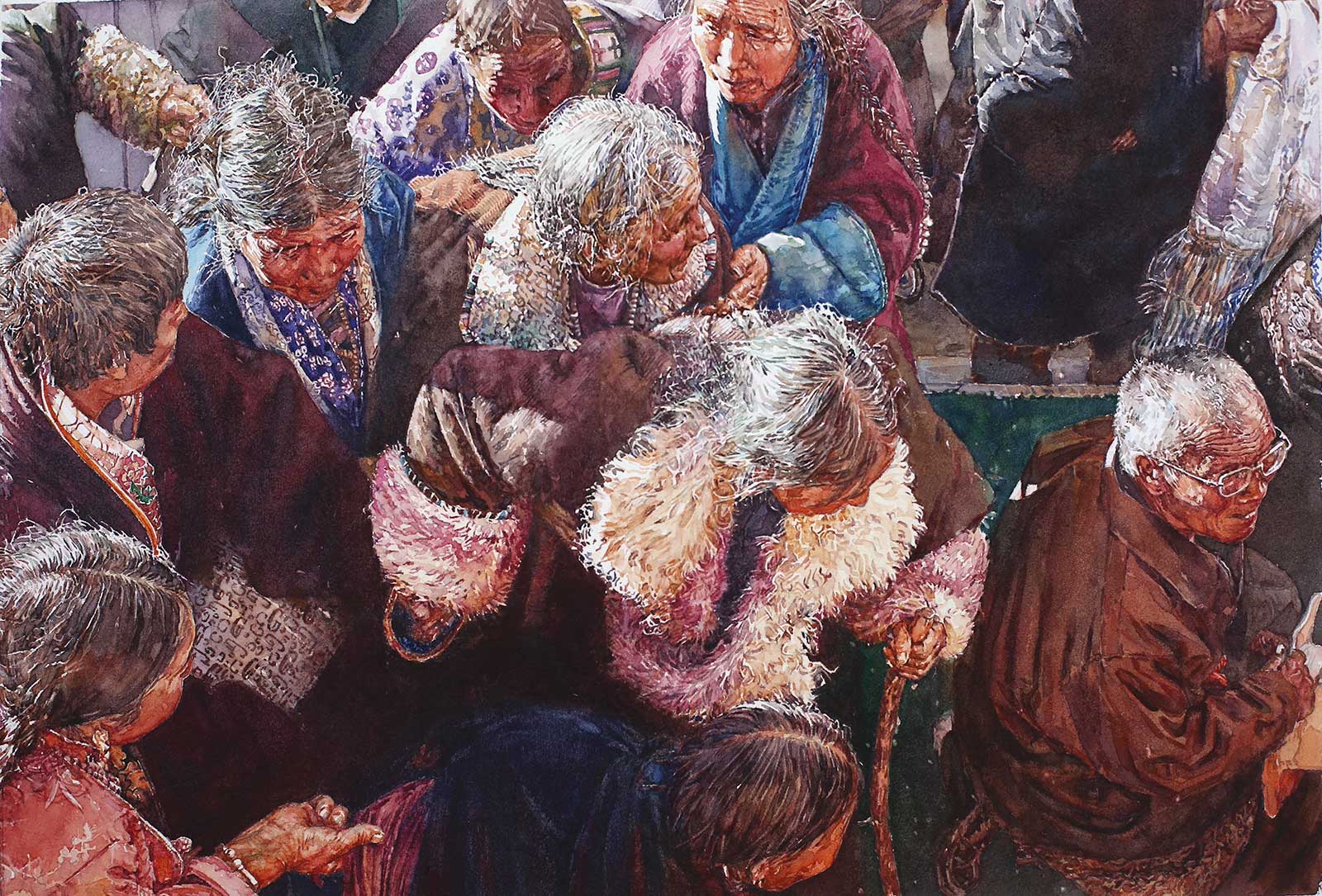
Xueyu Qiyuan, watercolor on paper, 22 x 30” (56 x 76 cm)
The clothing and ornaments are treated differently. While the initial colors are laid in broadly, many of the textures, particularly in the beads, fabric patterns and hair, are achieved using dry brushwork. This contrast between soft, flowing washes and crisp, dry marks is essential to my approach. It allows me to suggest intricate detail without sacrificing the freshness of the watercolor.
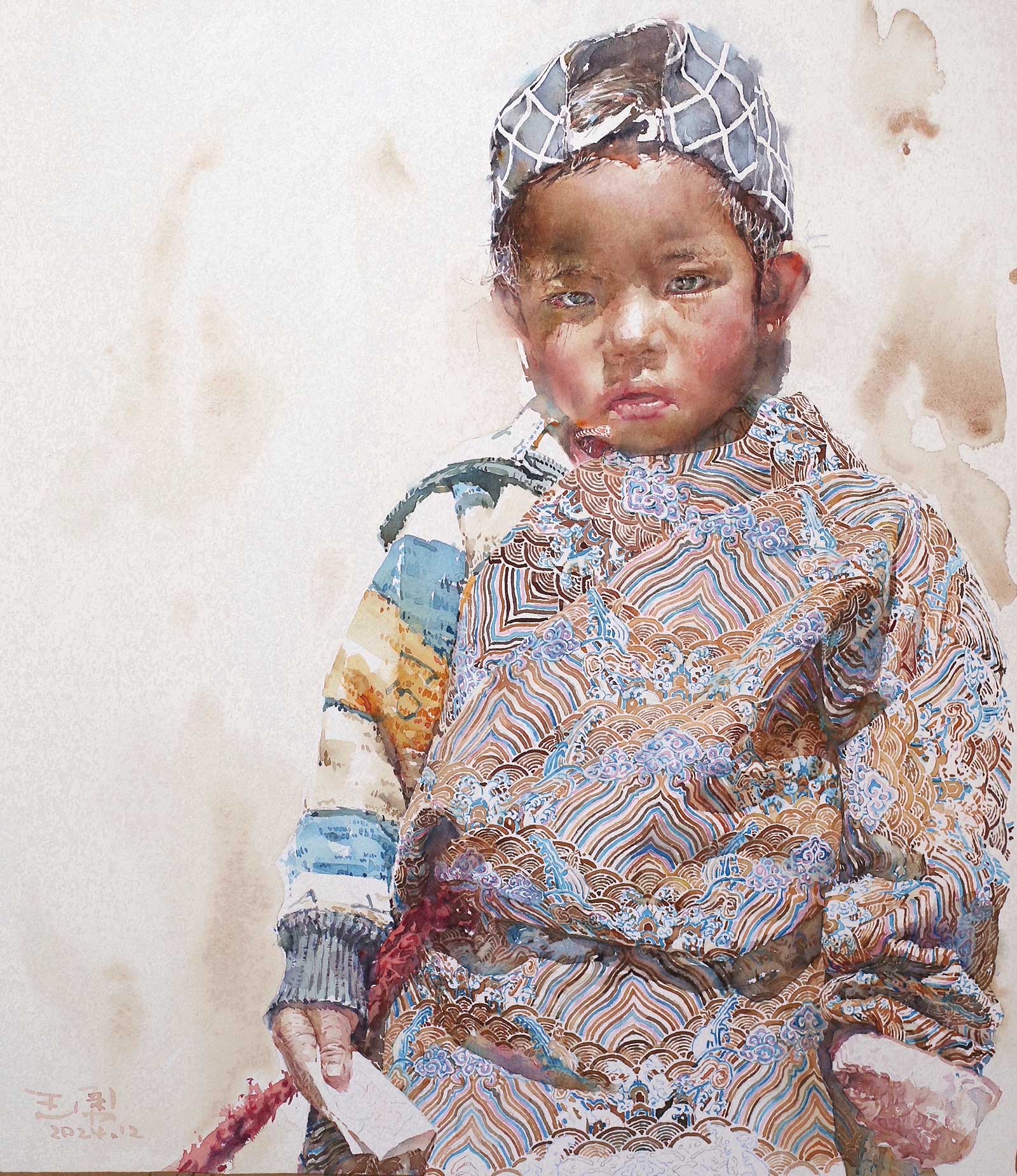
Olo·Sangjie Ciren, watercolor on paper, 16 x 14” (41 x 36 cm)
In the final stage, I step back to evaluate the painting as a whole. Small adjustments are made to unify the colors and strengthen the focal point, ensuring that the viewer’s attention returns naturally to the face. For me, watercolor is not about complete control, but about guiding the medium just enough to let it speak. Through this balance, I hope to capture not only a likeness but also a quiet sense of dignity and humanity.
My Art in the Making Lam
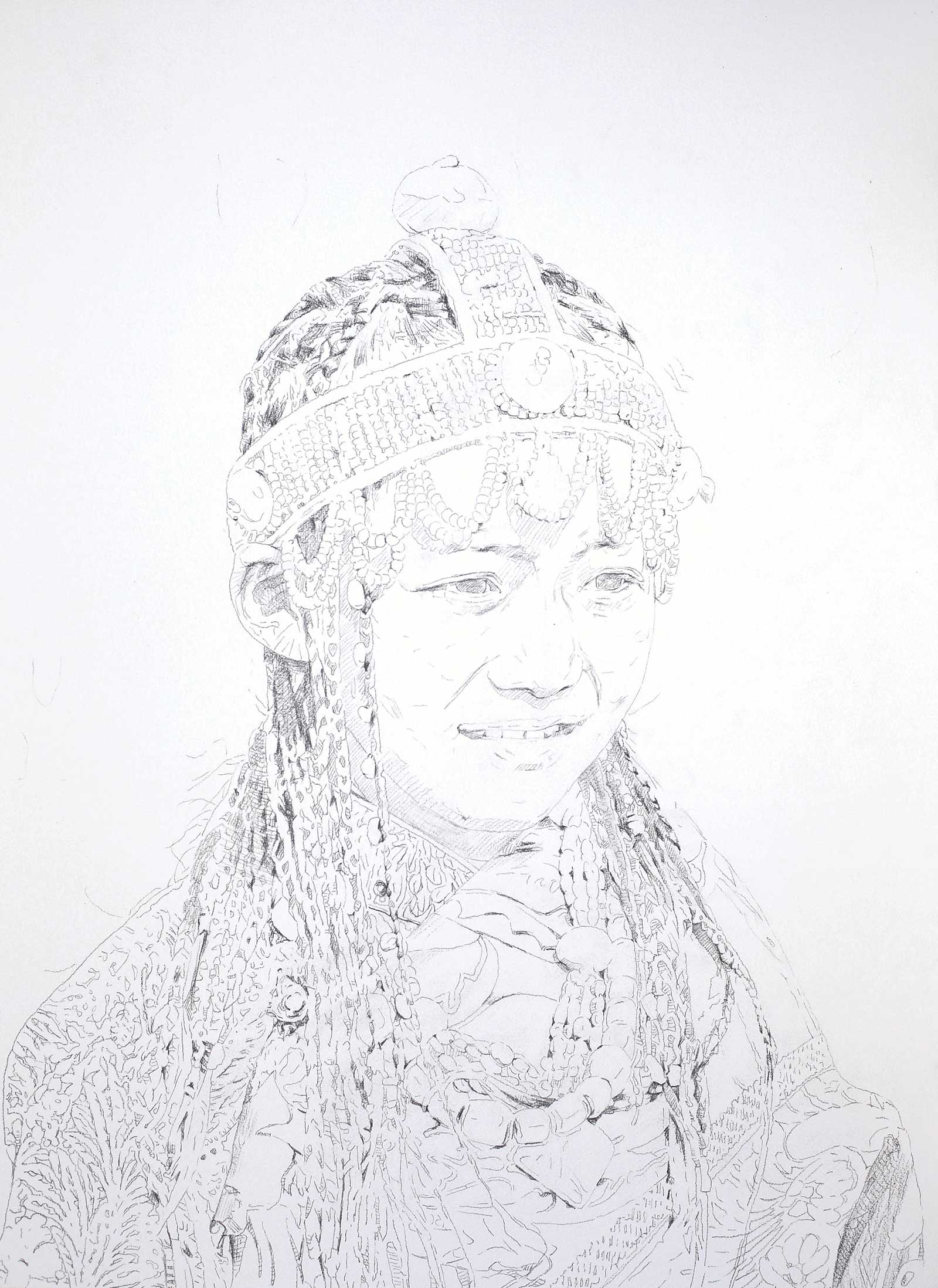
Stage 1 Initial Drawing
I begin with a light pencil drawing, establishing the overall composition and proportions of the figure. At this stage, I also indicate the major areas of light and shadow. This early value planning helps guide the subsequent washes and provides a clear structural foundation for the painting.
WHAT THE ARTIST USED
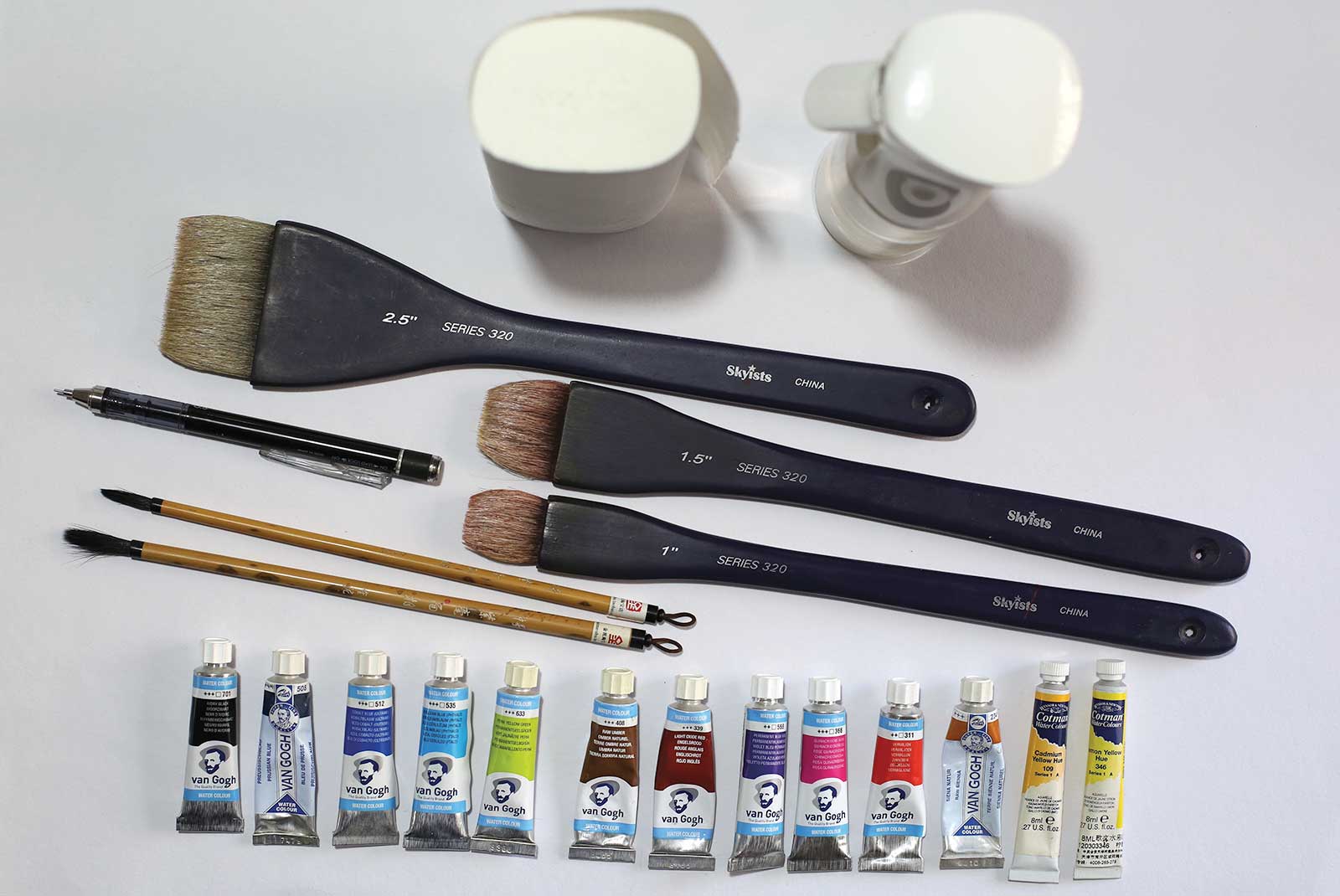
Watercolors
Van Gogh Watercolors, Winsor & Newton Cotman Watercolors
Brushes
2½” goat hair wash brush, 1½” goat hair wash brush, 1” flat brush (for background washes and soft transitions), Medium and small Chinese brushes (for figure, clothing, and decorative details)
Additional Materials
Arches Aquarelle watercolor paper, 300 gsm, cold-pressed (natural white), Graphite pencil, Palette, Paper towels
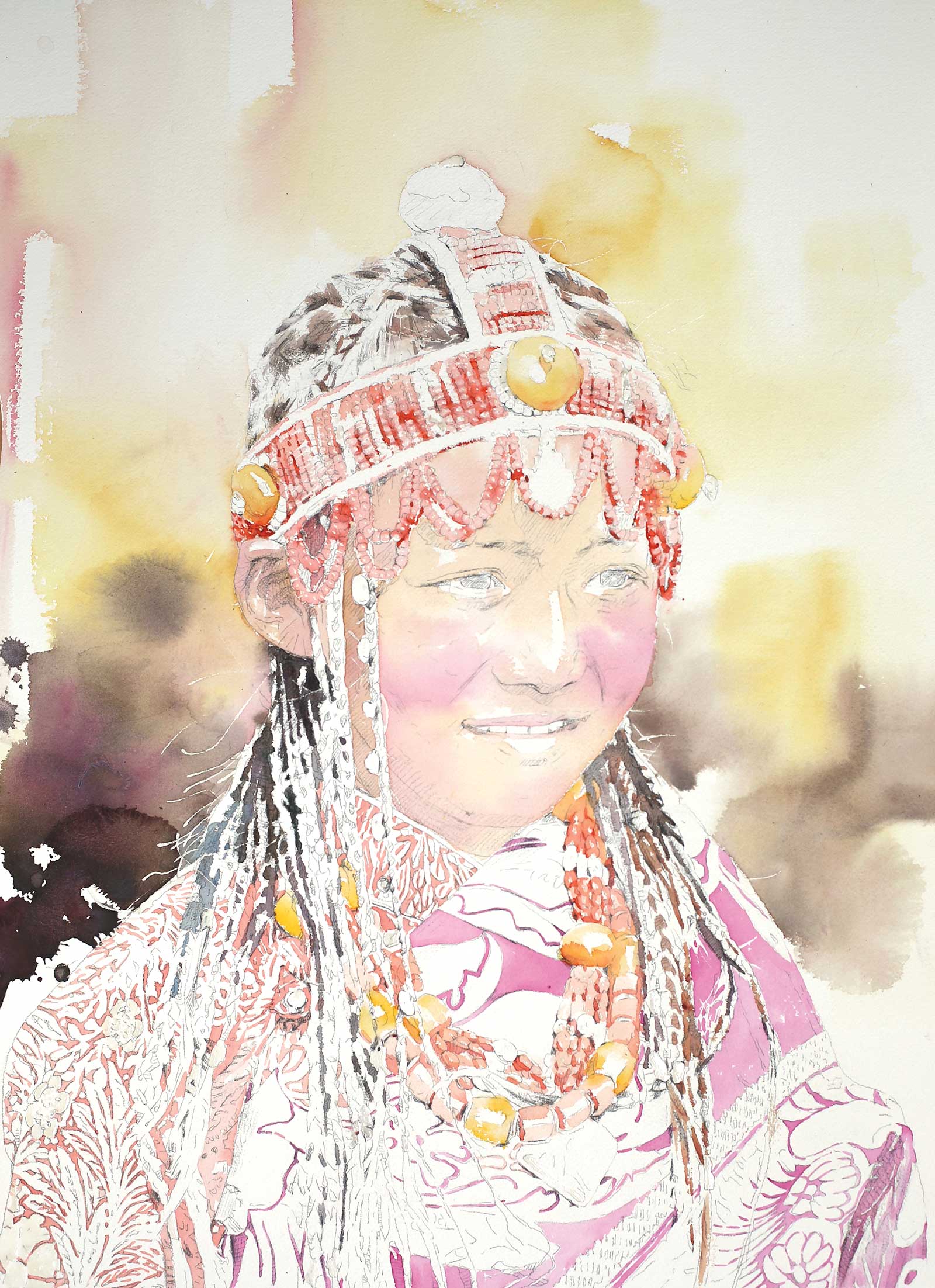
Stage 2 First Washes
Using a 21/2" goat hair brush, I wet the paper and apply the first broad washes. Warm yellow tones dominate the background to set an overall harmony. With a 11/2" goat hair brush, I introduce the basic colors of Lam’s face and clothing, focusing on general color relationships rather than details.
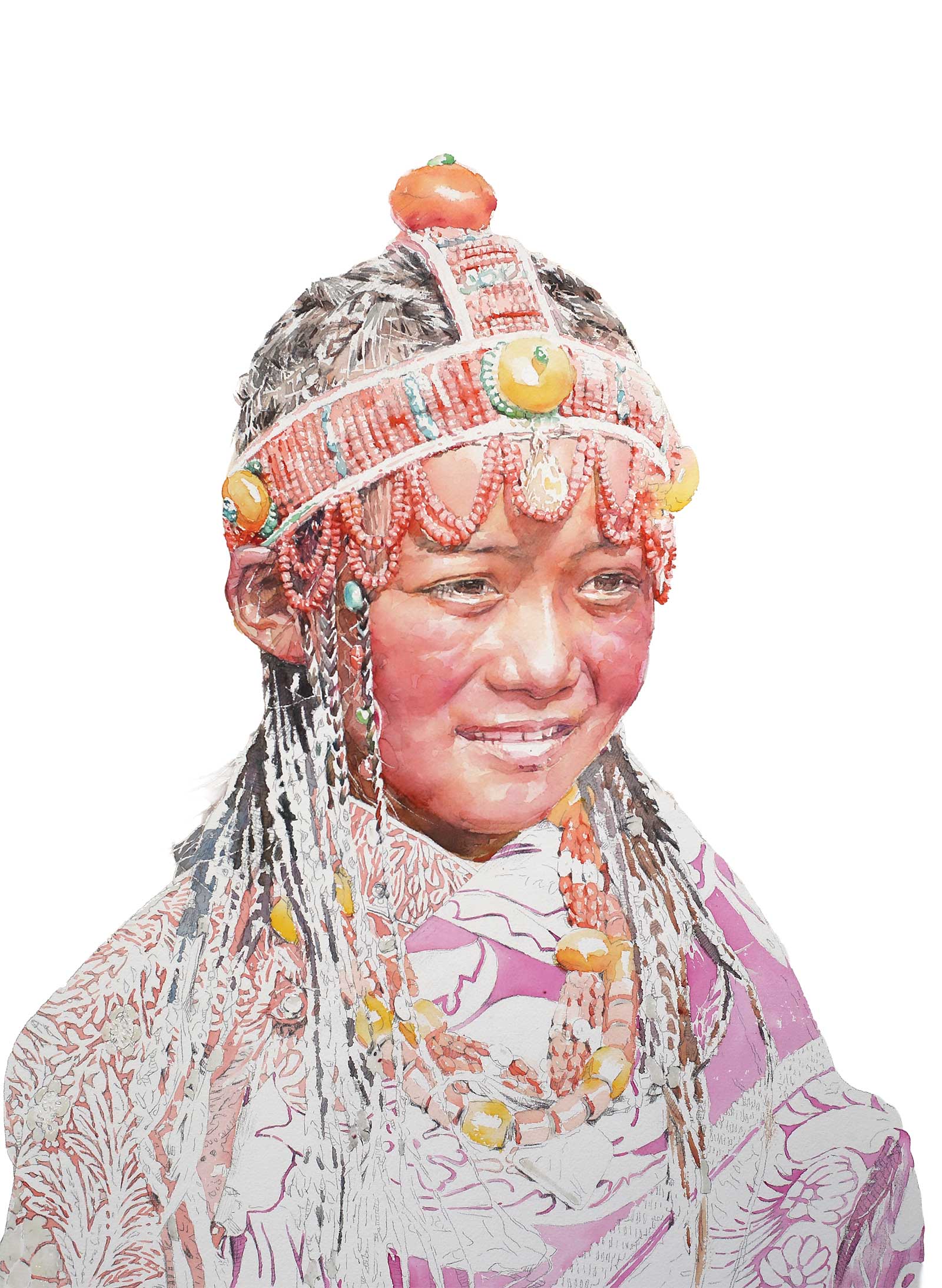
Stage 3 Face and Head
I begin refining the facial features, head ornaments, and hair. At this stage, I concentrate on form, light and shadow, carefully adjusting skin tones while keeping the washes transparent. The goal is to establish the character’s expression and spiritual presence without overworking the surface.
In Process
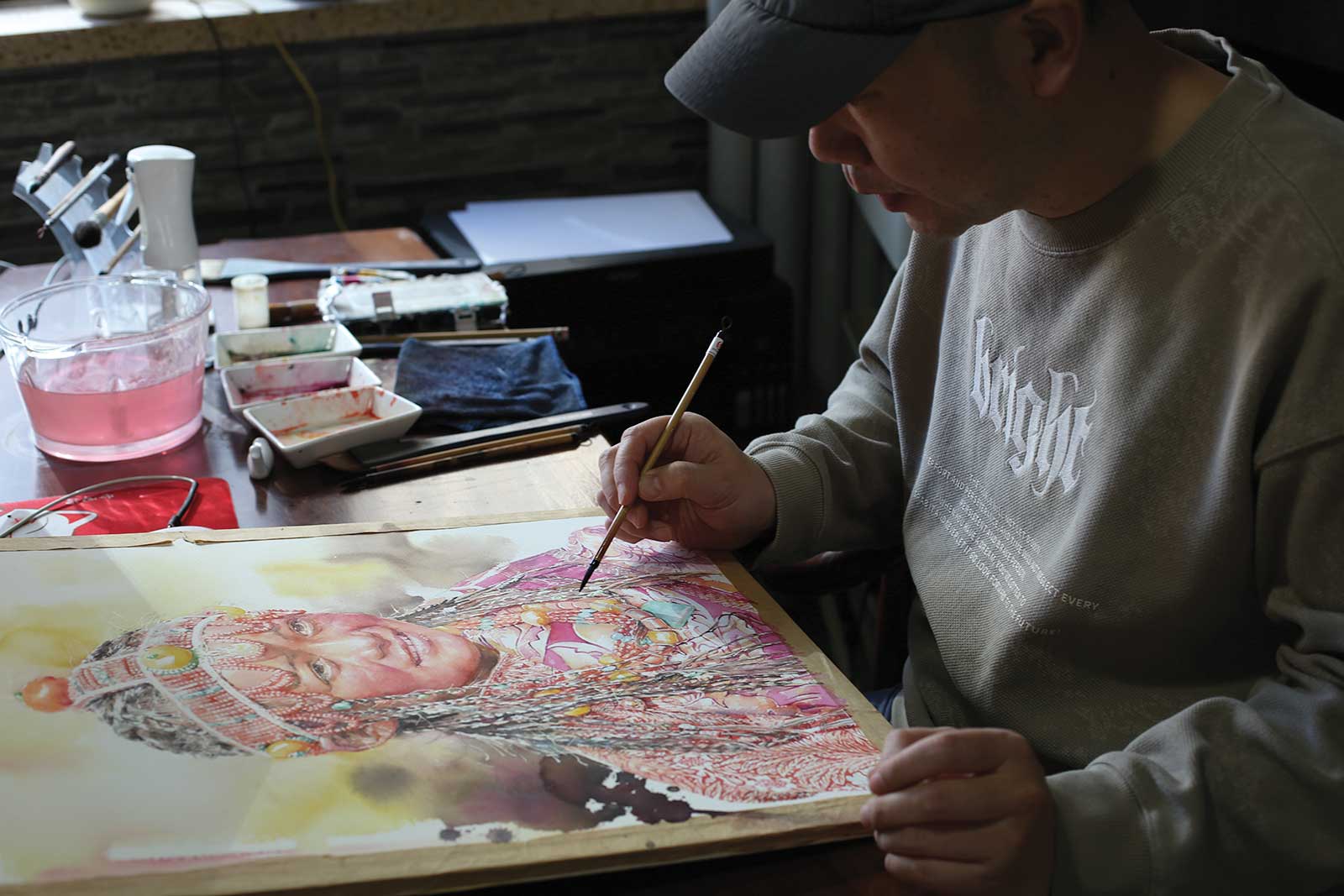
Here, I am refining the details of the figure using a small round brush. Although the work appears highly detailed, the painting process relies on a careful balance between wet and dry techniques. Larger areas of color were first established using wet brushwork to maintain unity and atmosphere, while the current stage focuses on selective dry brush passages to enhance facial features, ornaments and textile patterns. Rather than rendering every element separately, I emphasize overall harmony, allowing some areas to remain soft or partially abstract so the painting retains a sense of breath and cohesion.
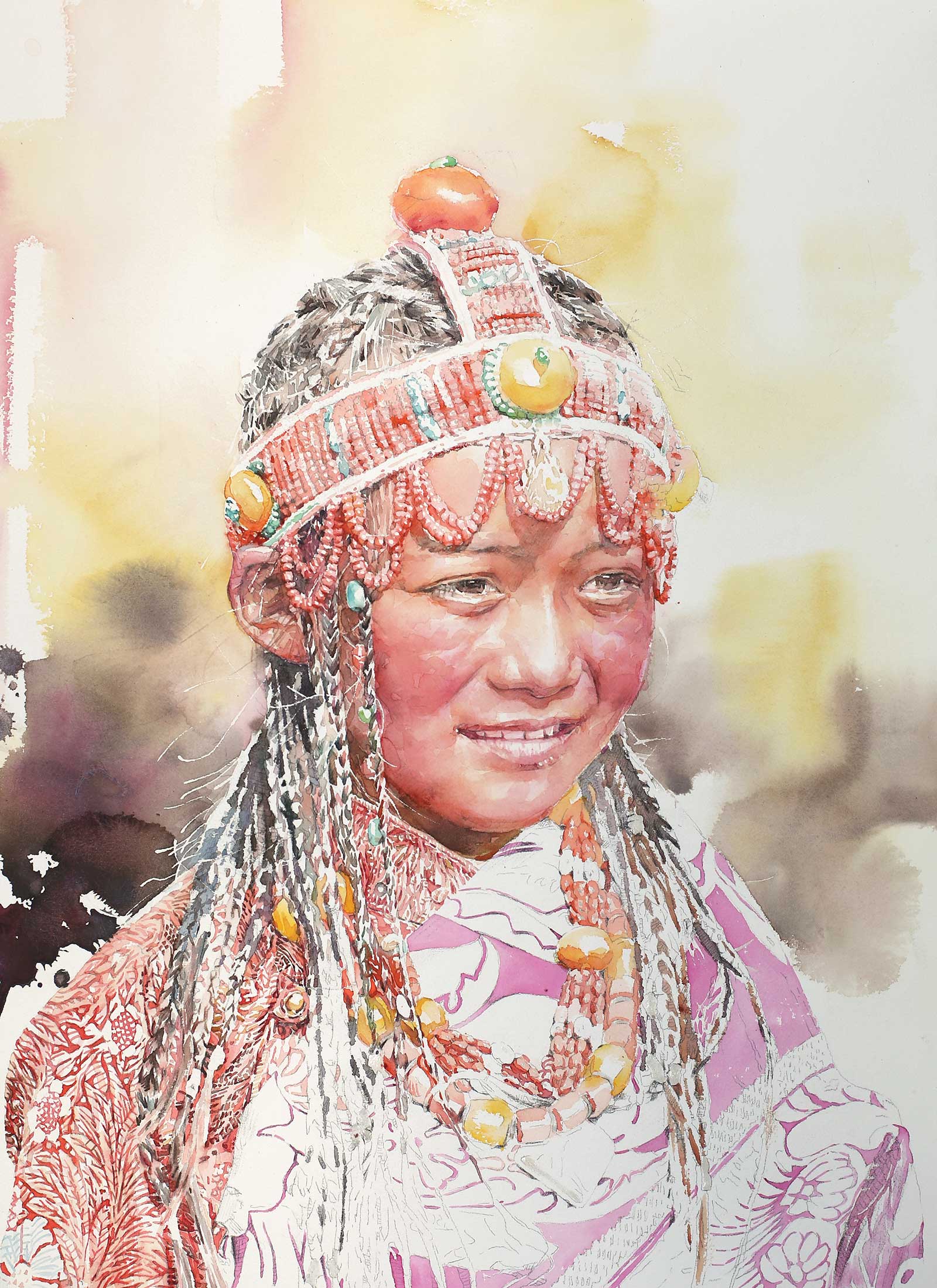
Stage 4 Red Clothes
Using a medium-sized brush, I deepen the red areas of the clothing. Layer by layer, I build texture and volume, paying special attention to the folds and structure of the fabric. Traditional Chinese decorative patterns are suggested through controlled brushwork and subtle tonal variations.
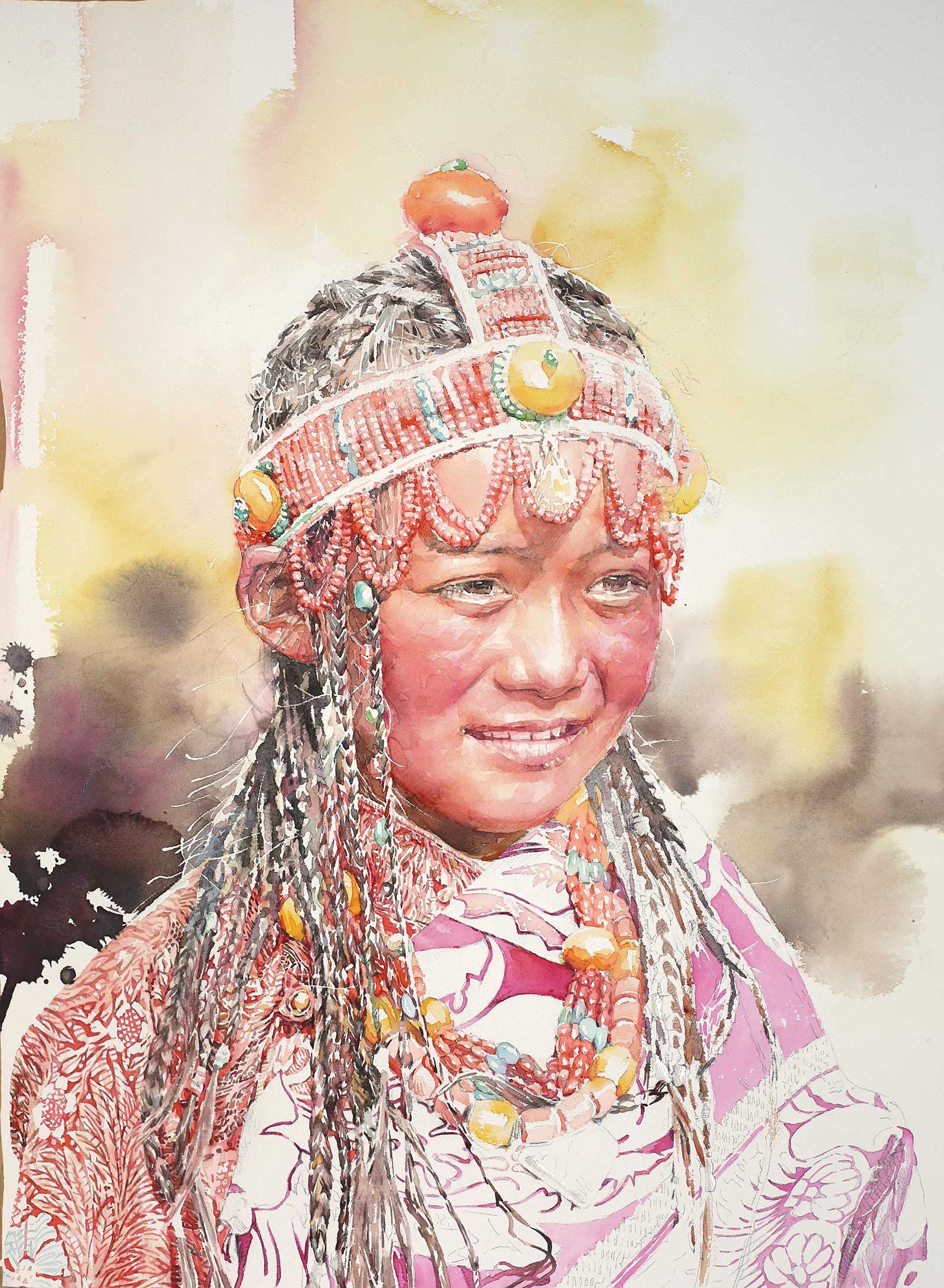
Stage 5 Hair and Red Garments
I further refine the red garment while integrating the braided hair that falls across the shoulder. This step focuses on unifying color and form between the clothing and hair, as well as strengthening the decorative elements on the chest.
Combining Wet and Dry Techniques
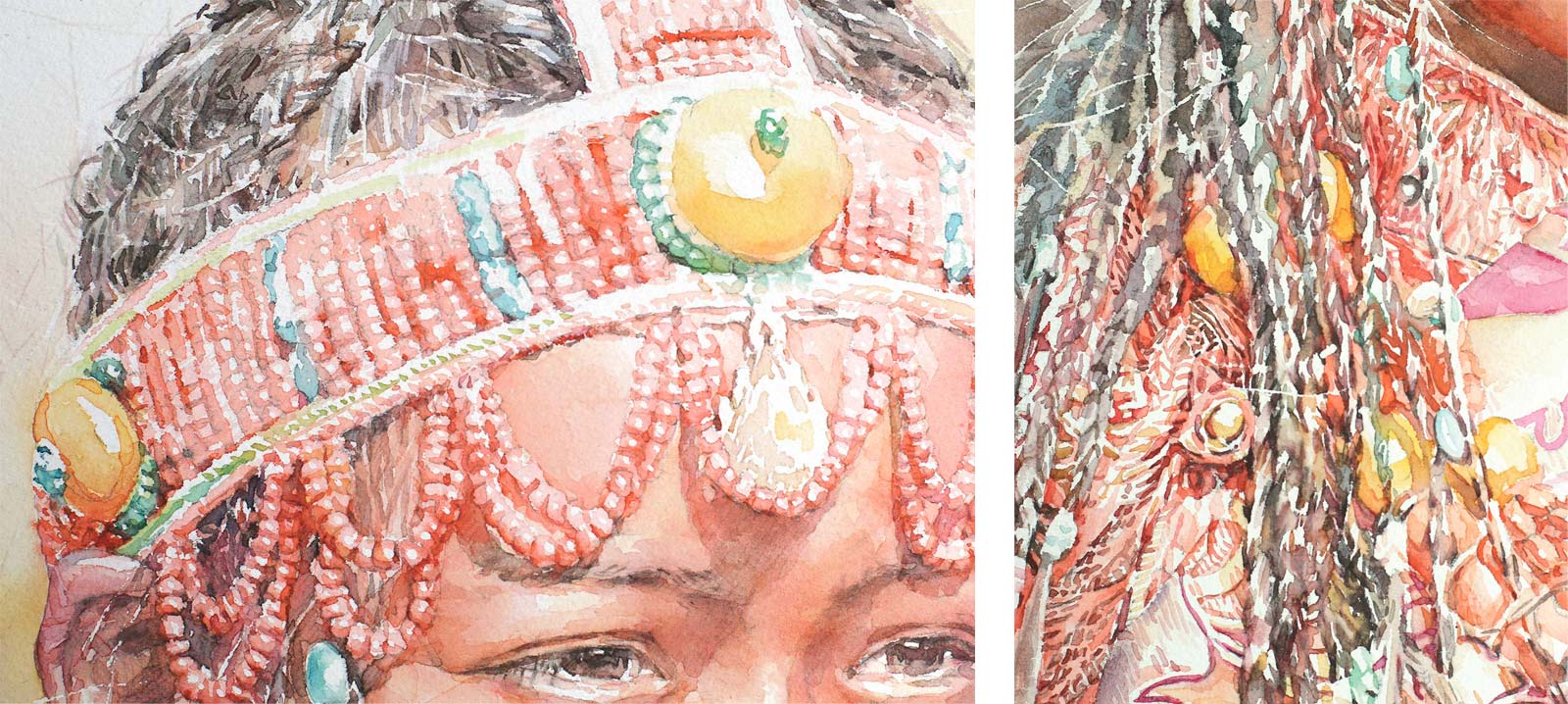
The painting is built through a deliberate combination of wet and dry watercolor techniques. At the early stage of color blocking, areas such as the head and face already contain subtle skin tones laid in through a wet-and-dry approach. This allows the color to remain soft and breathable while providing a foundation for later refinement.
For the head ornaments, I use a 2½” flat brush, alternating between wet and dry applications. Some passages are painted with a dry brush, while others are applied wet, allowing the two methods to merge naturally. In certain areas, I intentionally preserve the white of the paper, which later becomes the final highlights. Wet brushwork is especially important in suggesting the beads: instead of painting each bead individually, I rely on broader, wetter strokes to maintain unity, moisture and a sense of overall form.
Hair is primarily developed using a dry technique, but small areas of wet brushwork are introduced to avoid stiffness and to keep the structure visually connected. This subtle mixing of methods helps maintain cohesion across the head and shoulders.
The same principle applies to the clothing. The red garment, although refined with smaller brushes, still contains areas of wet painting to preserve a sense of generalization and rhythm. The purple garment is treated similarly, balancing controlled dry details with softer wet passages. Whenever deeper expression is required—such as the facial features, selected beads on the forehead, chest ornaments or traditional decorative patterns on the clothing—I shift to smaller brushes and dry techniques for precision and clarity. By moving continuously between wet and dry methods, the painting retains both structural accuracy and the fluid, expressive qualities unique to watercolor.
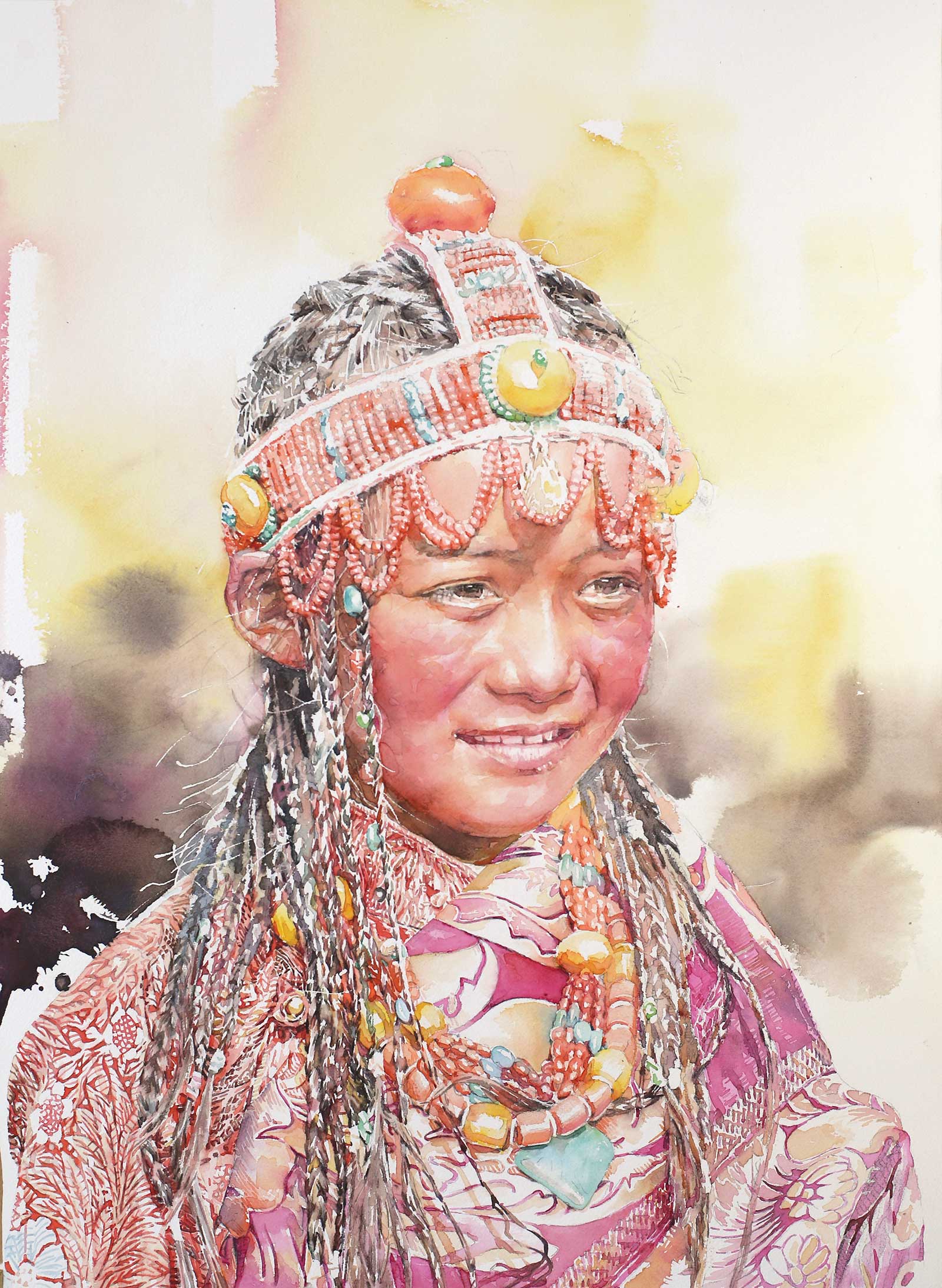
Stage 6 Purple Garments and Ornaments
I shift my focus to the purple areas of the clothing, carefully balancing their color against the red garment. Traditional patterns and chest ornaments are developed, using controlled edges and layered washes to enhance depth and richness.
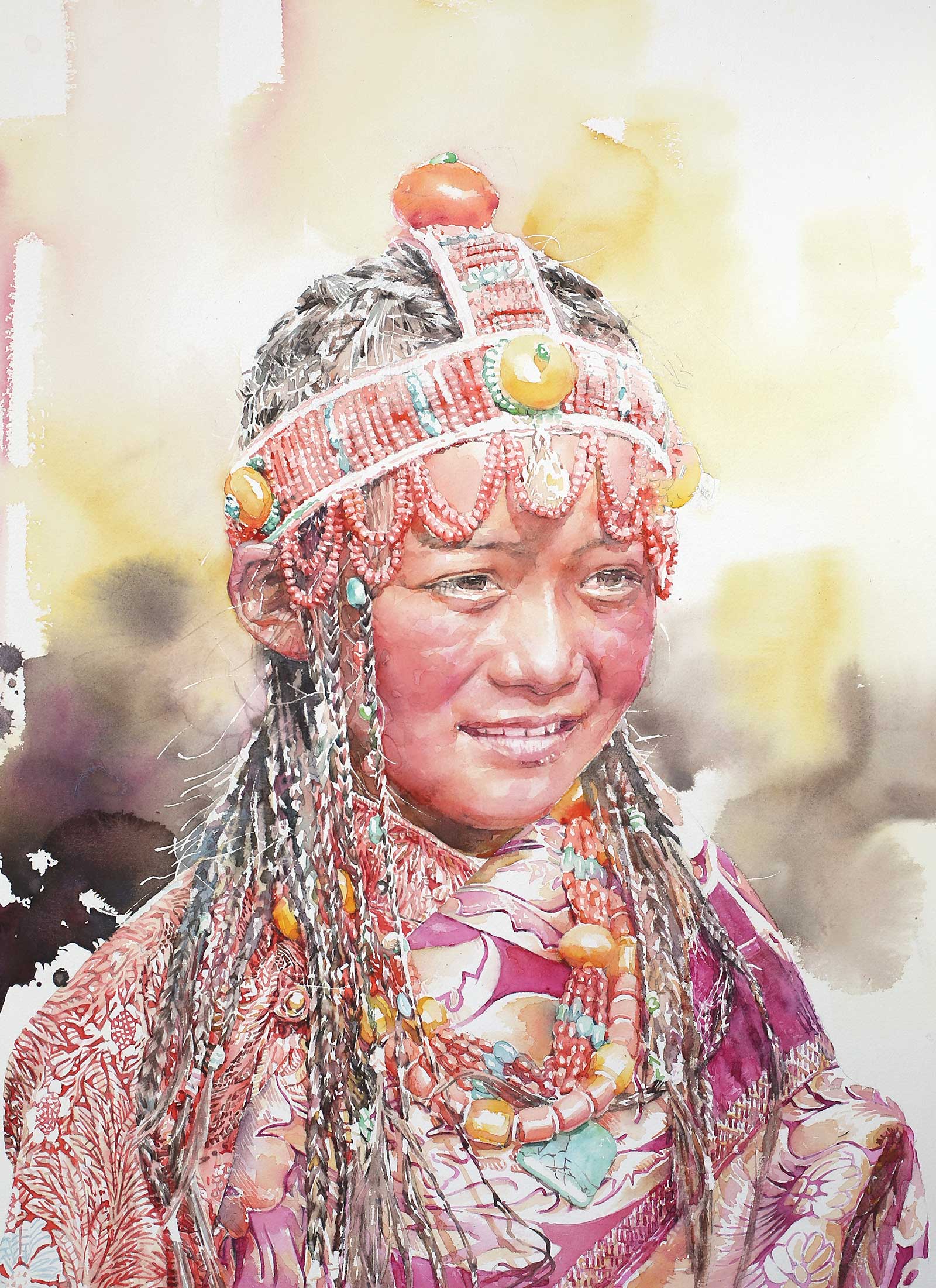
Stage 7 Overall Refinements
I continue refining the clothing, braids and decorative elements, adjusting values and edges to improve harmony across the painting. This stage is about balance, ensuring that no single area overwhelms the rest and that the figure reads clearly as a whole.
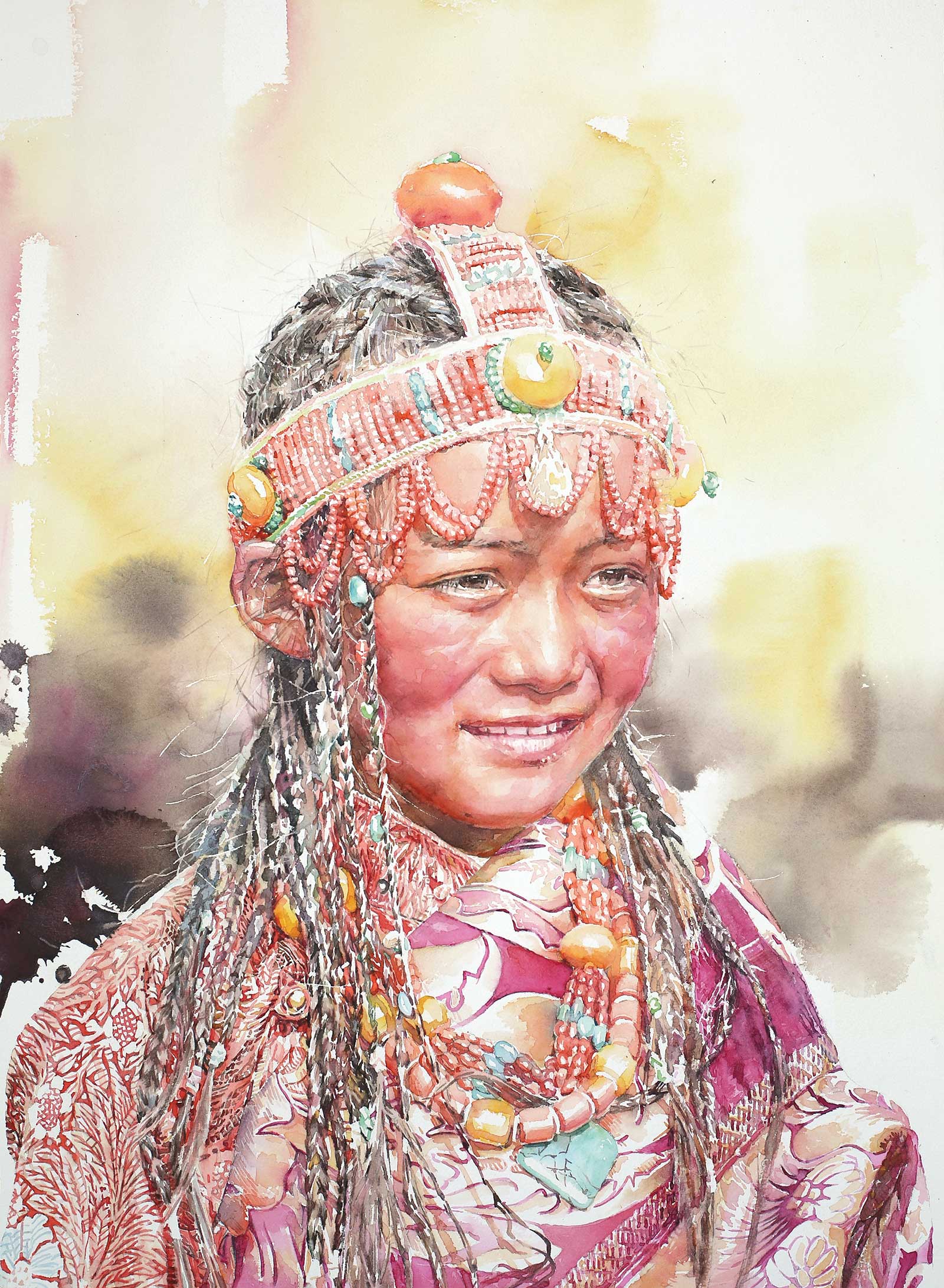
Stage 8 Final Adjustments
Lam, watercolor, 21¼ x 151⁄3" (54 x 39 cm)
In the final stage, I make subtle adjustments to the hair, facial features and background. Softening transitions and refining details help strengthen the relationship between the figure and the surrounding space. Once the overall harmony is achieved, the painting is complete.
About the artist
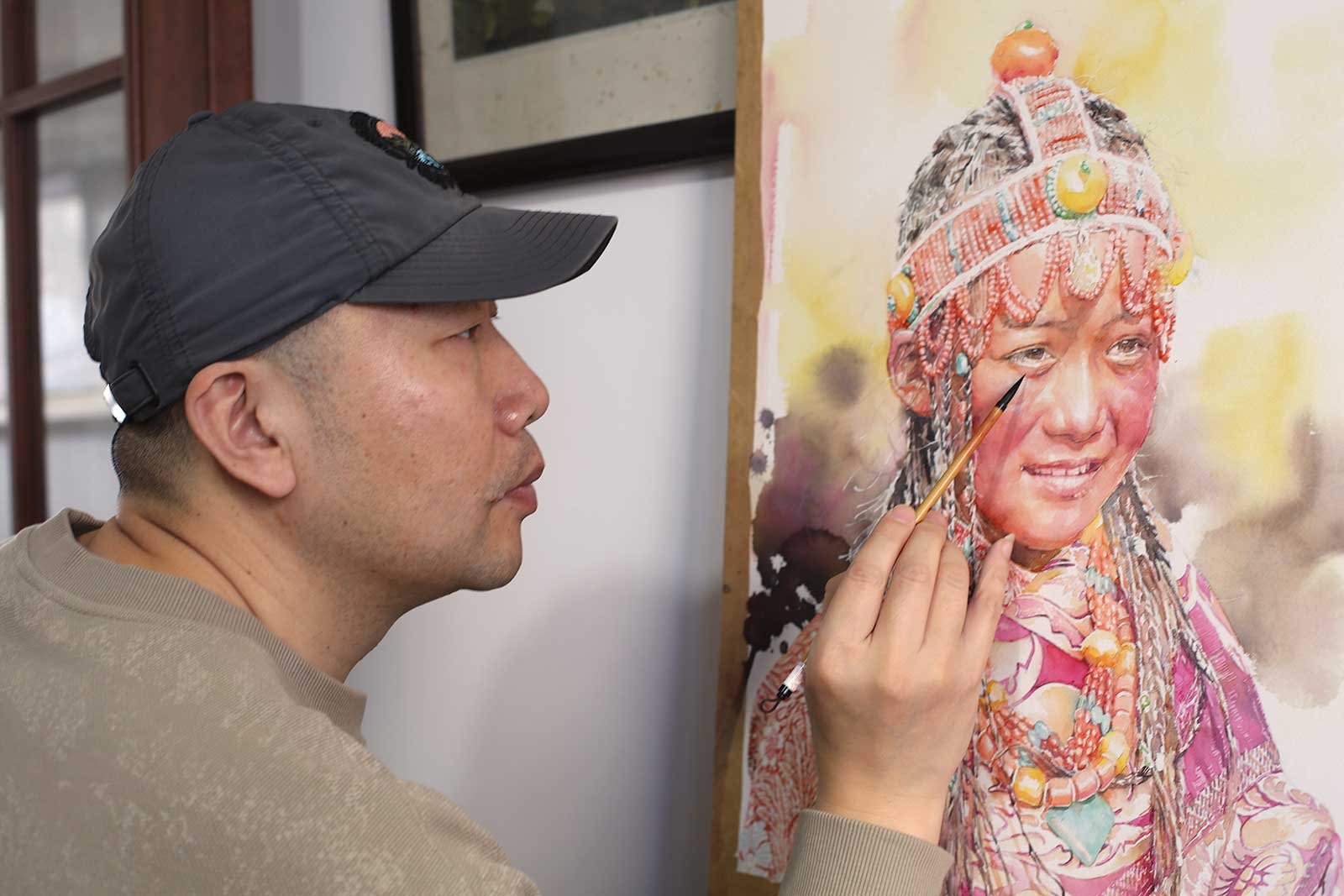 Yong Wang
Yong Wang is a Chinese watercolor artist whose work focuses on realistic figurative painting, with a particular emphasis on Tibetan people and themes of faith, devotion and everyday life. His artistic practice is rooted in direct observation and lived experience, shaped by extensive travel and long-term engagement with his subjects.
Working primarily in watercolor, Wang combines highly controlled realism with expressive wet-and-dry techniques. He focuses on facial expression, hands, hair and traditional ornaments, using light, texture and restrained color to convey both material presence and spiritual atmosphere.
Wang has received significant recognition in international exhibitions. His work has been selected multiple times for the American Watercolor Society Annual International Exhibition and the Royal Institute of Painters in Water Colours (UK), with works collected and sold through these exhibitions. He was awarded the Grand Prize at the Shanghai Zhujiajiao International Watercolor Biennial, and his works have appeared in international publications and collections.
Contact at
yongwangart.com