My paintings are a celebration of nature, emotion and the intuitive process of creating. Working primarily in acrylic, I explore the relationship between color, texture and atmosphere, translating the quiet rhythms of the Australian landscape into expressive, layered compositions. I don’t begin with a rigid plan; instead, each piece evolves naturally through intuition, memory and imagination.
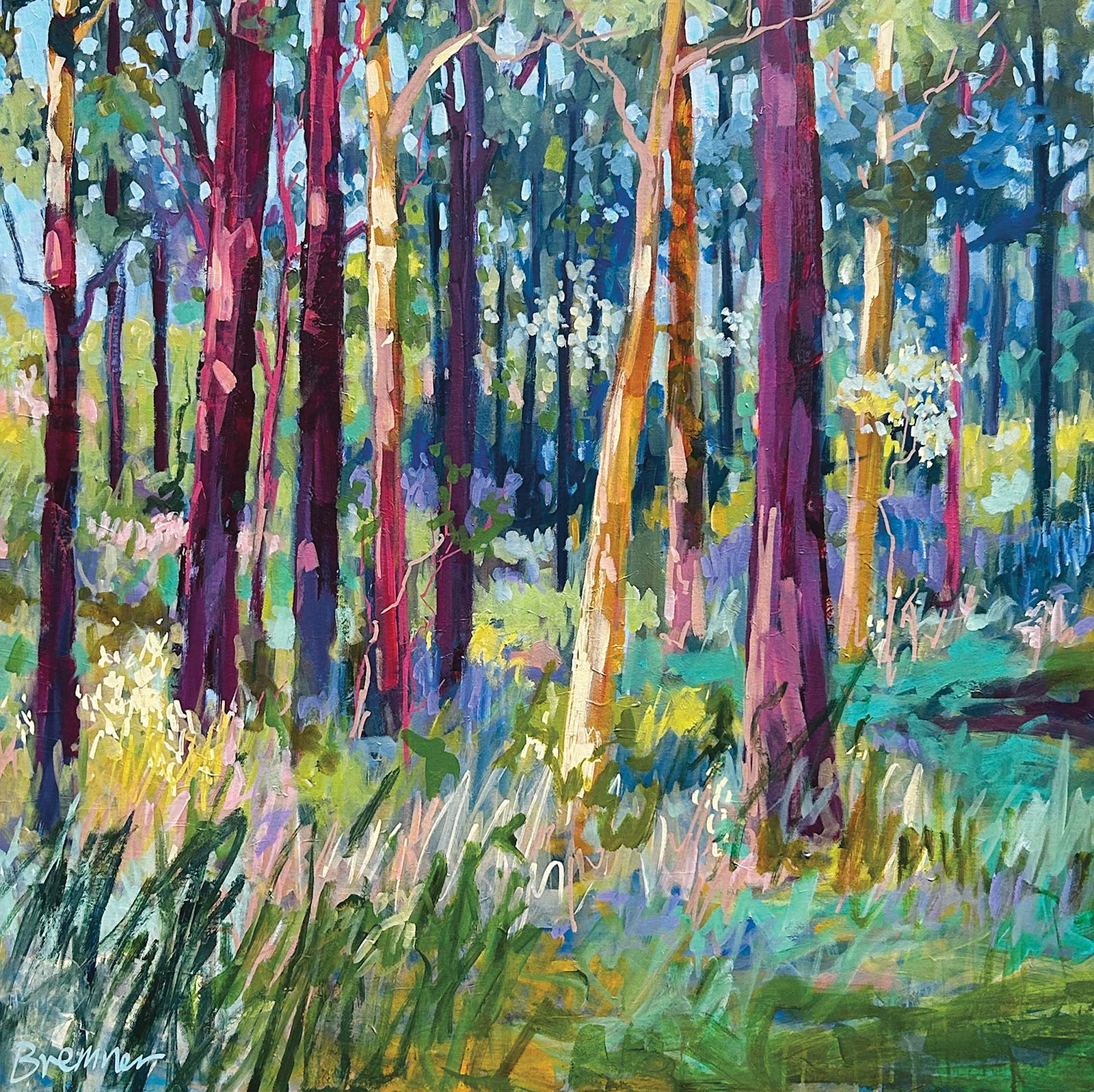
In the Company of Trees, acrylic, 36¼ x 36¼” (92 x 92 cm)
I live and work in Warburton, a small town east of Melbourne, Australia, surrounded by forest, rivers and mountain ranges. The ever-changing landscape feeds directly into my art. Rather than painting specific places, I’m drawn to the feeling of being immersed in nature, the hush of eucalyptus groves, the filtered light through gum leaves and the stillness that settles in the valley at dusk.
Although my process is intuitive, it’s grounded in observation. I often begin with quick sketches or small mixed media studies—impressions of shapes, shadows or movement. Back in the studio, these sketches act as loose anchors while the painting takes on a life of its own. For me, painting is a dialogue between intention and spontaneity, where a brushstroke or drip of color might lead somewhere unexpected.
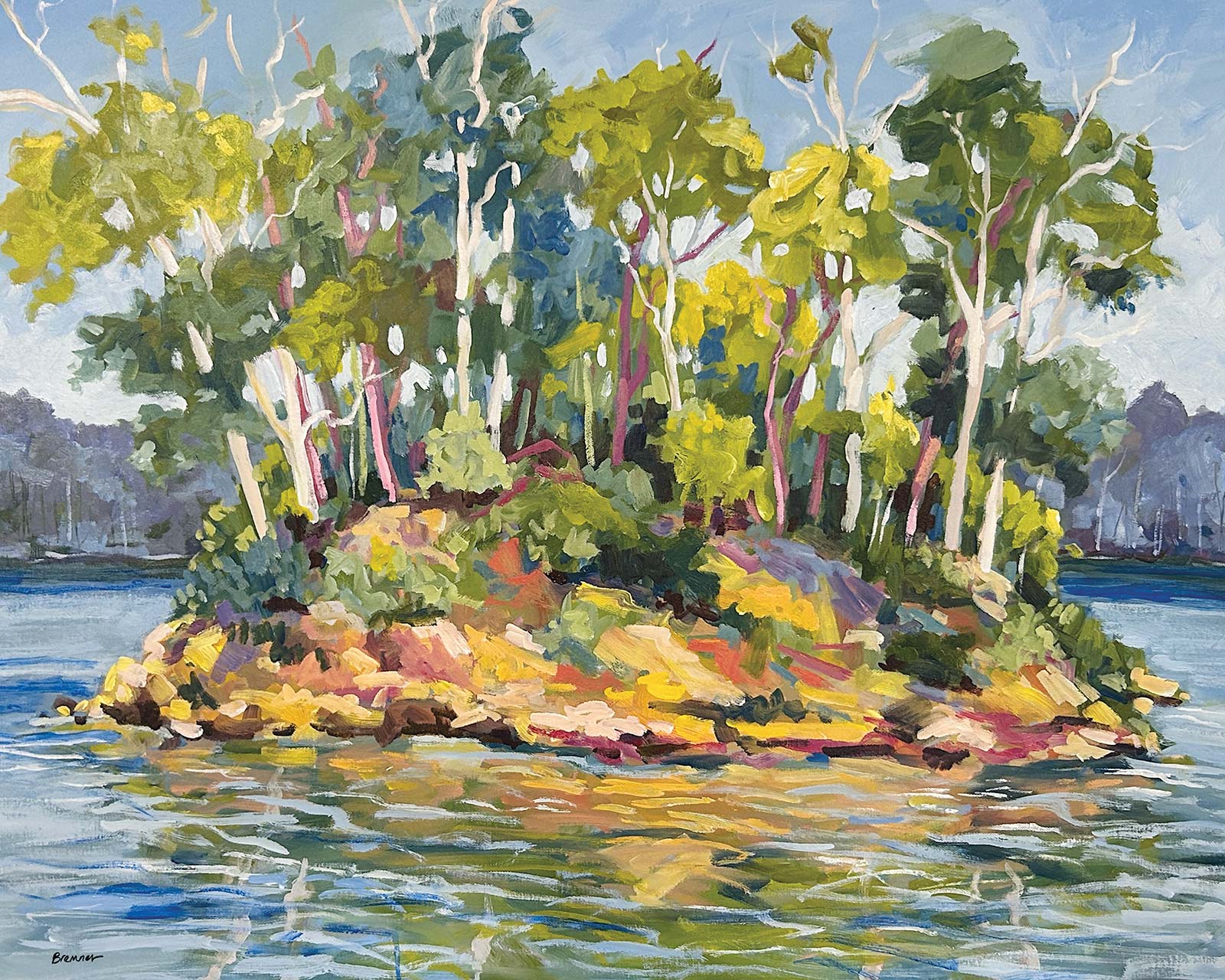
Lake Tyres From Memory, acrylic, 35½ x 47¼” (90 x 120 cm)
Acrylics suit my temperament: they dry quickly, allowing me to build and rework layers freely. I use brushes, palette knives and sometimes my fingers, focusing on the energy of each mark rather than precision. I build translucent washes, then add gestural, opaque colors, sometimes scraping back to reveal earlier traces. Color is my language. It conveys emotion more than representation.
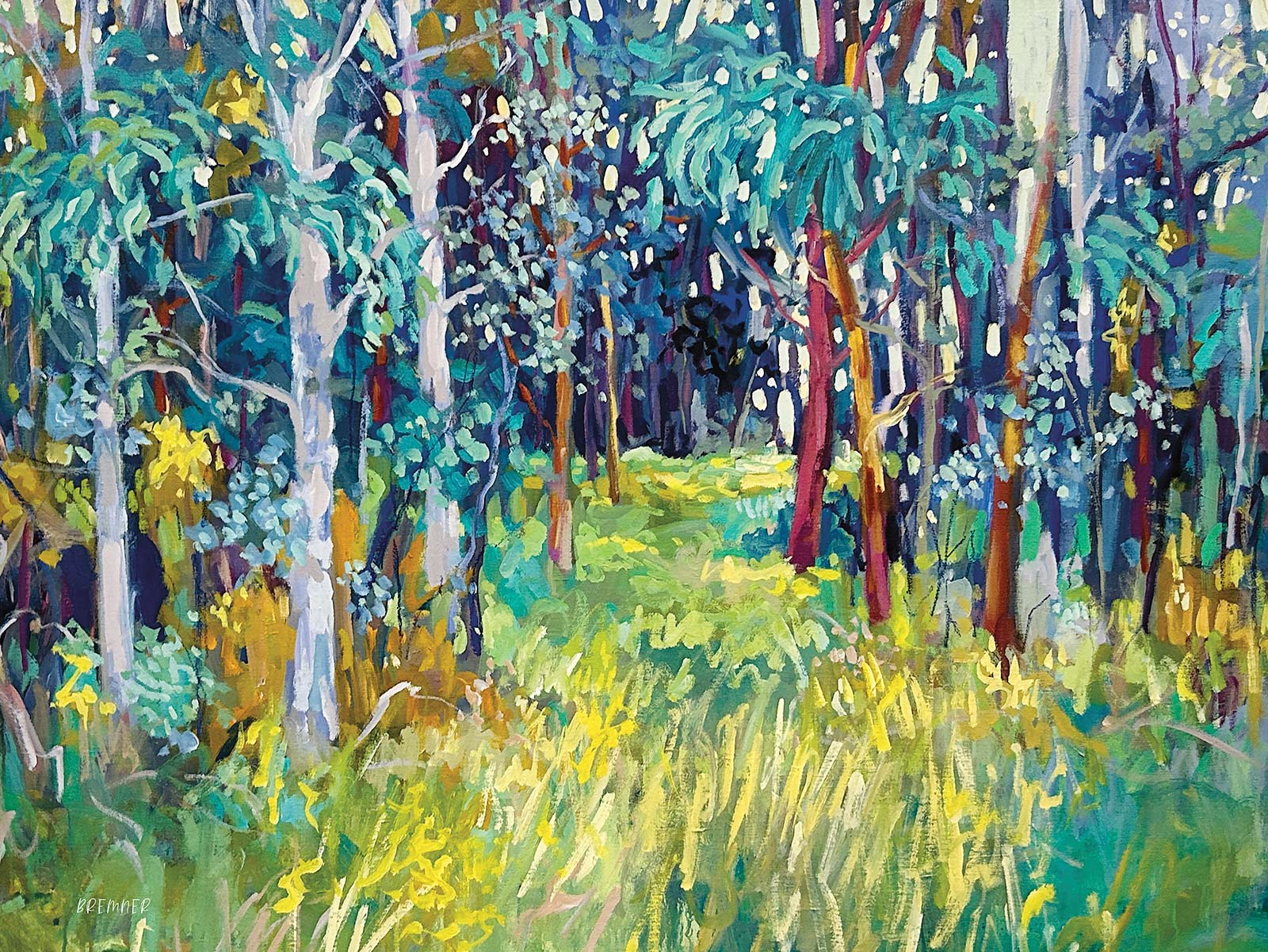
The Path Between, 35½ x 47¼” (90 x 120 cm)
Working intuitively means trusting the process. My best work happens when I stop trying to control it and let the painting guide me. Impressionists like Matisse, Bonnard and Sorolla have all influenced me in different ways, not necessarily in style, but in their ability to distill the essence of nature into something personal and poetic. At its heart, painting is an act of connection to nature, memory and self. Each brushstroke records a moment of awareness and invites others to pause, breathe and rediscover their own quiet connection to the natural world.
My Art in the Making Between Stillness and Sound
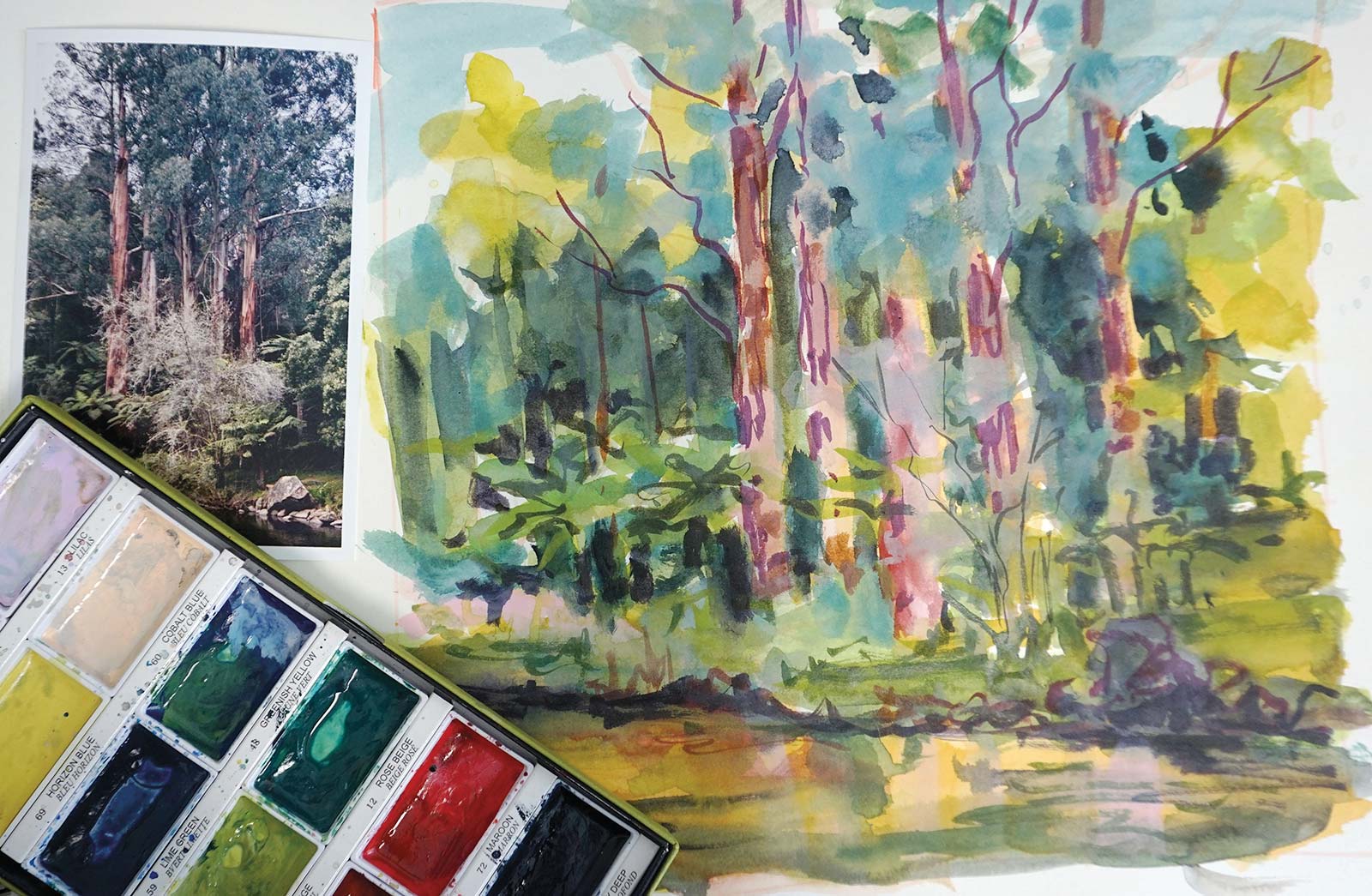
Stage 1 Sketch
Although my paintings are quite intuitive, they’re grounded in observation. I often begin by sketching from photos or directly outdoors on location, creating simple watercolor studies or mixed media explorations in my sketchbook. These sketches aren’t meant to be literal studies; they’re a way of collecting impressions and ideas.
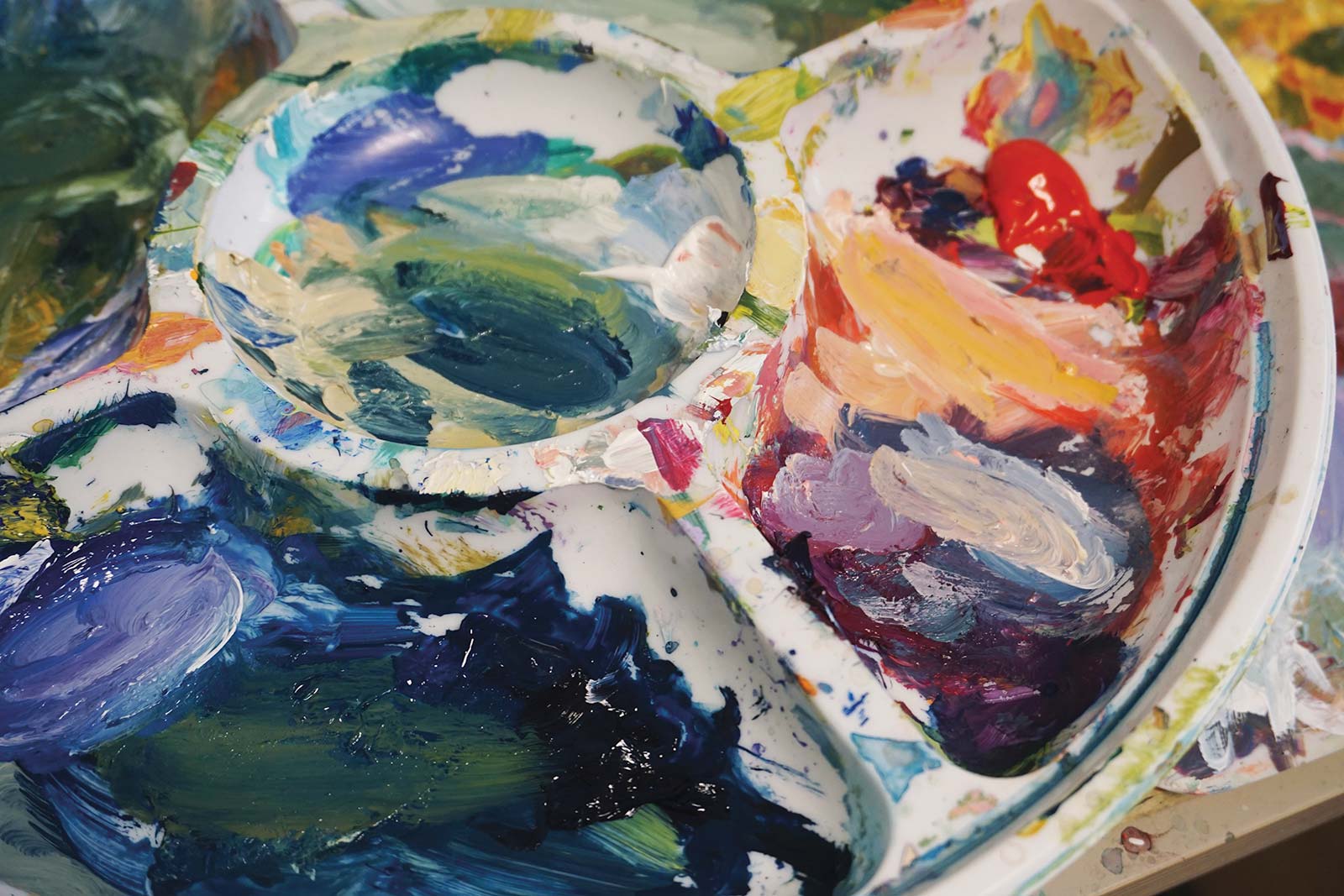
WHAT THE ARTIST USED
Acrylics
Prussian blue, Ultramarine blue, Yellow ochre, Cadmium yellow medium, Napthol scarlet, Titanium white
Stage 2 Underpainting
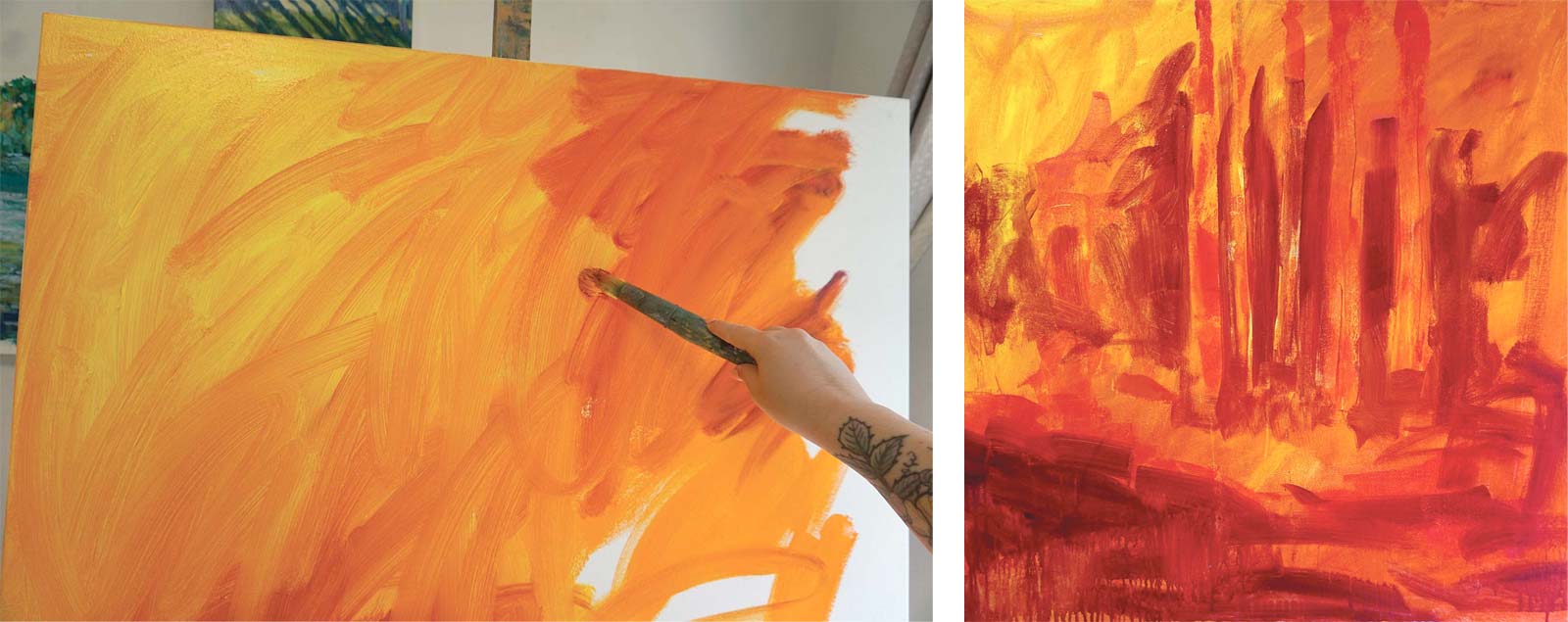
The first part of my process always involves covering the canvas with a bold base color and blocking in the main composition and visual elements. I like to get the scale and general idea of the painting down first and then build from there.
Stage 3 Blocking in Dark Values
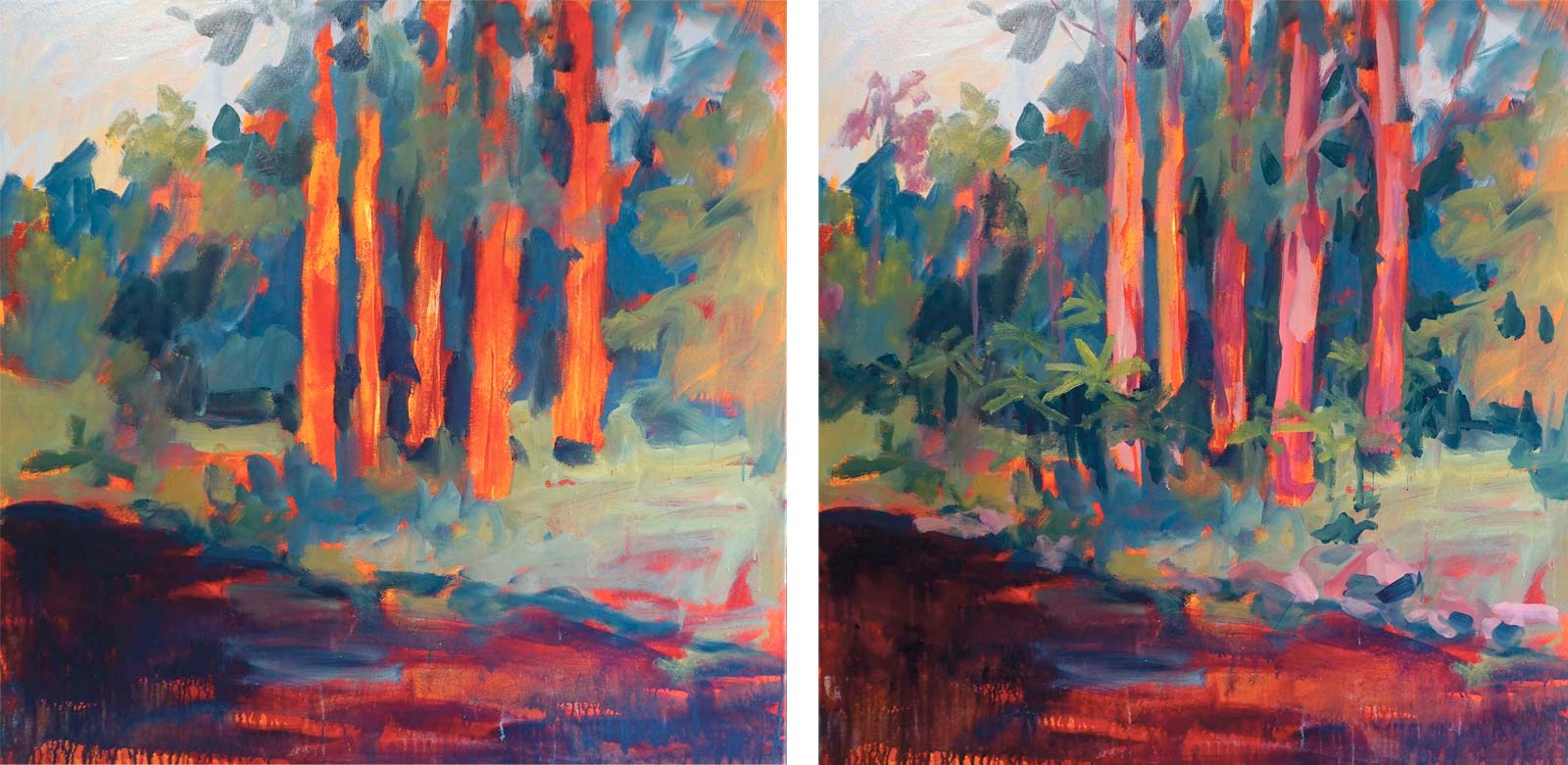
For me, painting is a dialogue between intention and spontaneity. I might begin with a composition in mind, but as soon as I start applying paint, I respond to what’s happening on the surface. I generally start by blocking in the dark values loosely and with energy. Now is not the time for detail.
Stage 4 Adding Mid-tone Values
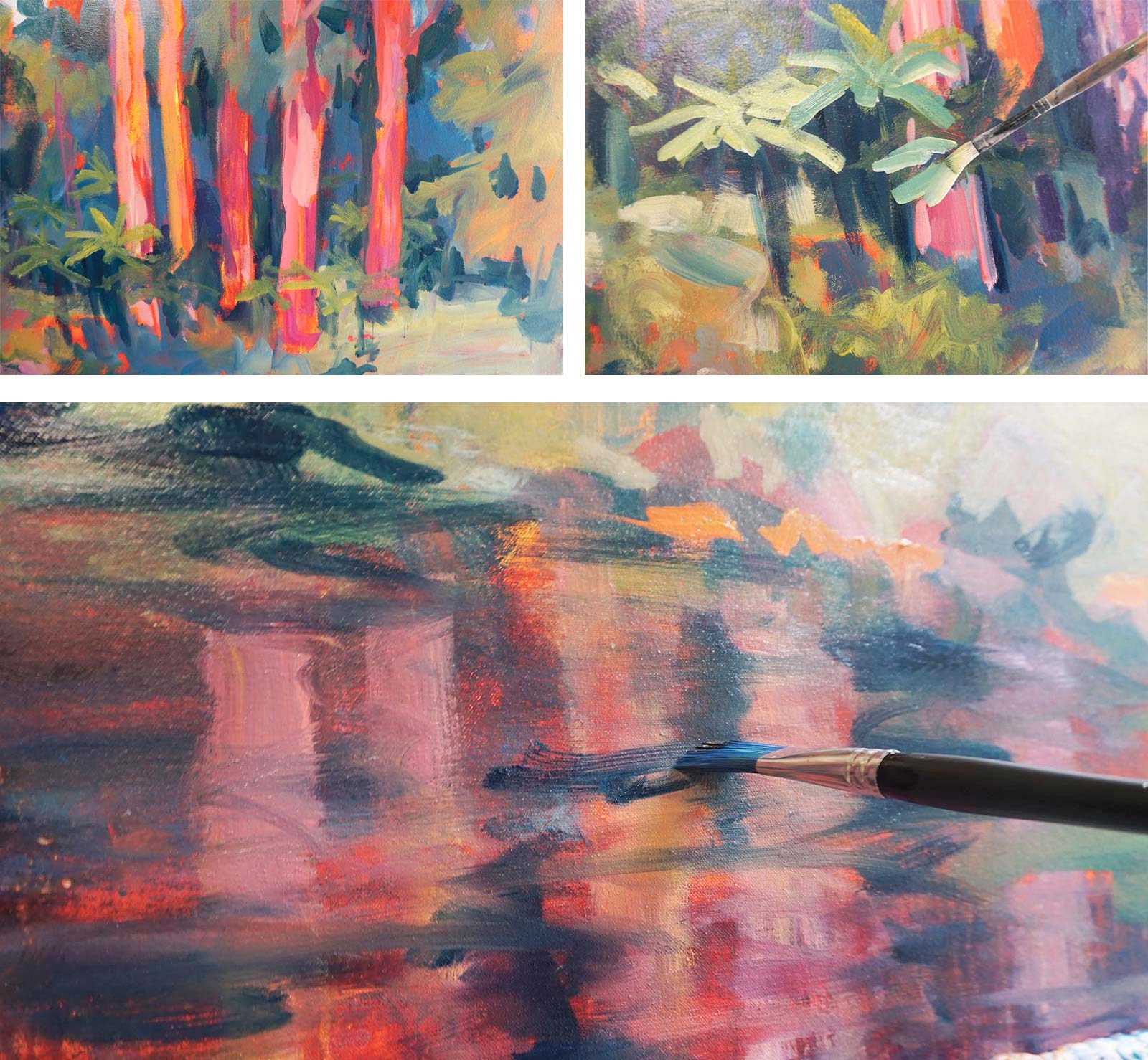
After establishing the darks, I begin layering in the mid-tone values. Using a limited palette, I mix my colors directly on the palette and adjust their values and hues as I go. By working with only a few carefully chosen colors, I can ensure the painting remains cohesive and harmonious. Each new color and brushstroke is built gradually on top of the last, keeping the marks loose and expressive as I use the brush to suggest the forms of foliage. I create the illusion of water in much the same way, by layering transparent and opaque washes to build depth and subtle movement across the surface.
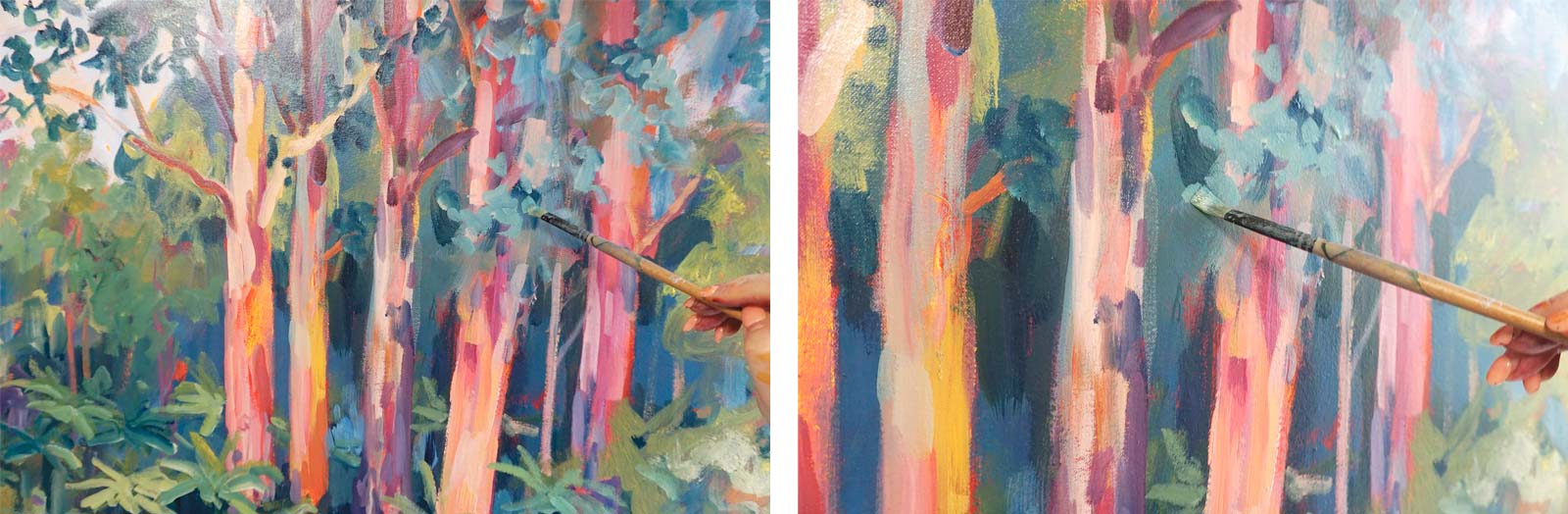
Stage 5 Lighter Values
Next, I move on to the lighter values and begin to consider the focal point of the painting. I use more saturated, vibrant colors in these key areas to naturally draw the viewer’s eye and create a sense of emphasis within the composition.
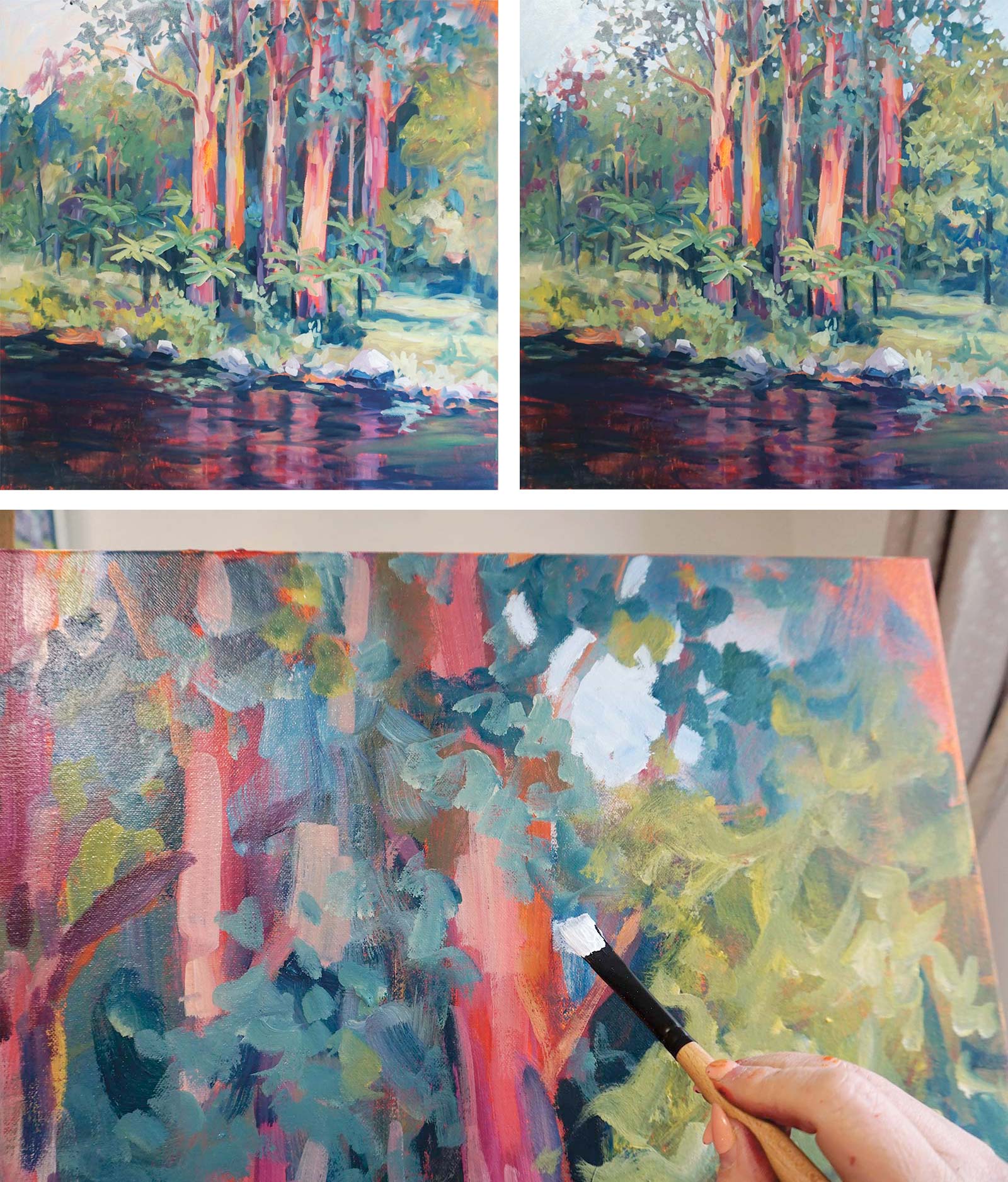
Stage 6 MidWay Point
By the halfway point, I usually have a good sense of where the painting is heading. From this stage onward, my focus shifts to refining the contrast and balancing the colors. I begin layering more texture and detail, paying close attention to the relationship between light and dark areas. I also start to introduce negative space, particularly in the sky, to suggest light filtering through the trees and shimmering reflections on the water.
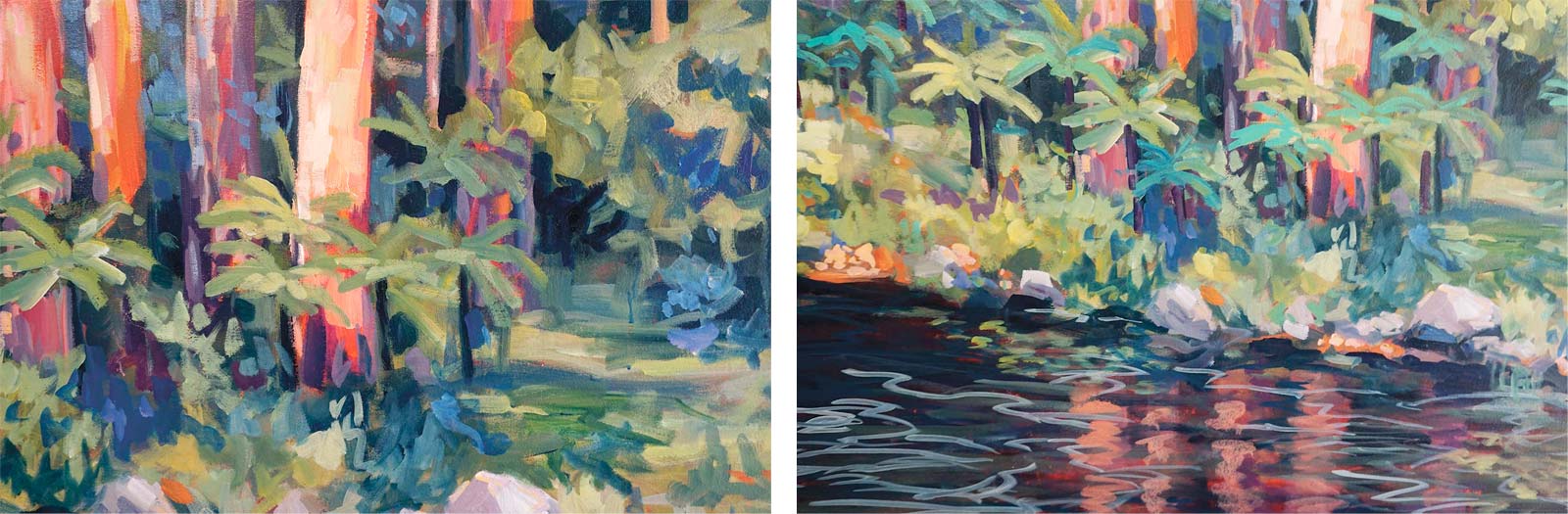
Stage 7 Refinements and Detail
The final stage of a painting is about refining and adding detail where I want more definition to emerge. I aim for a richness of visual texture: layers of color built up gradually to create depth and atmosphere. Often, these final touches are added over several days, allowing the paint to dry and settle between sessions. One of the main challenges of working with acrylics is how the values shift as the paint dries, so it can take a few adjustments to find the right balance and confidently decide when a piece is finished.
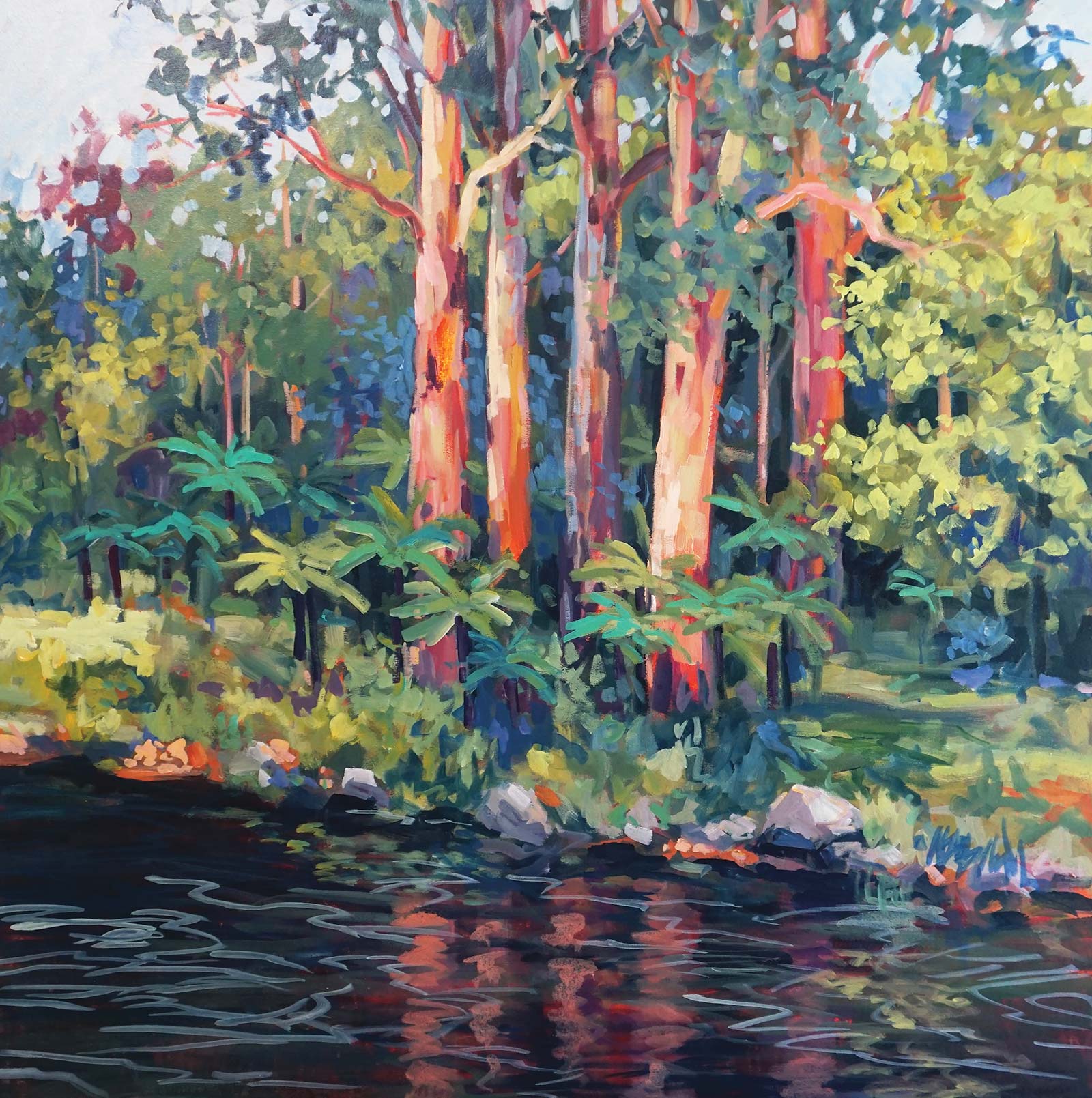
Stage 8 Finished Artwork
Between Stillness and Sound, acrylic, 36¼ x 36¼” (92 x 92 cm)
About the artist
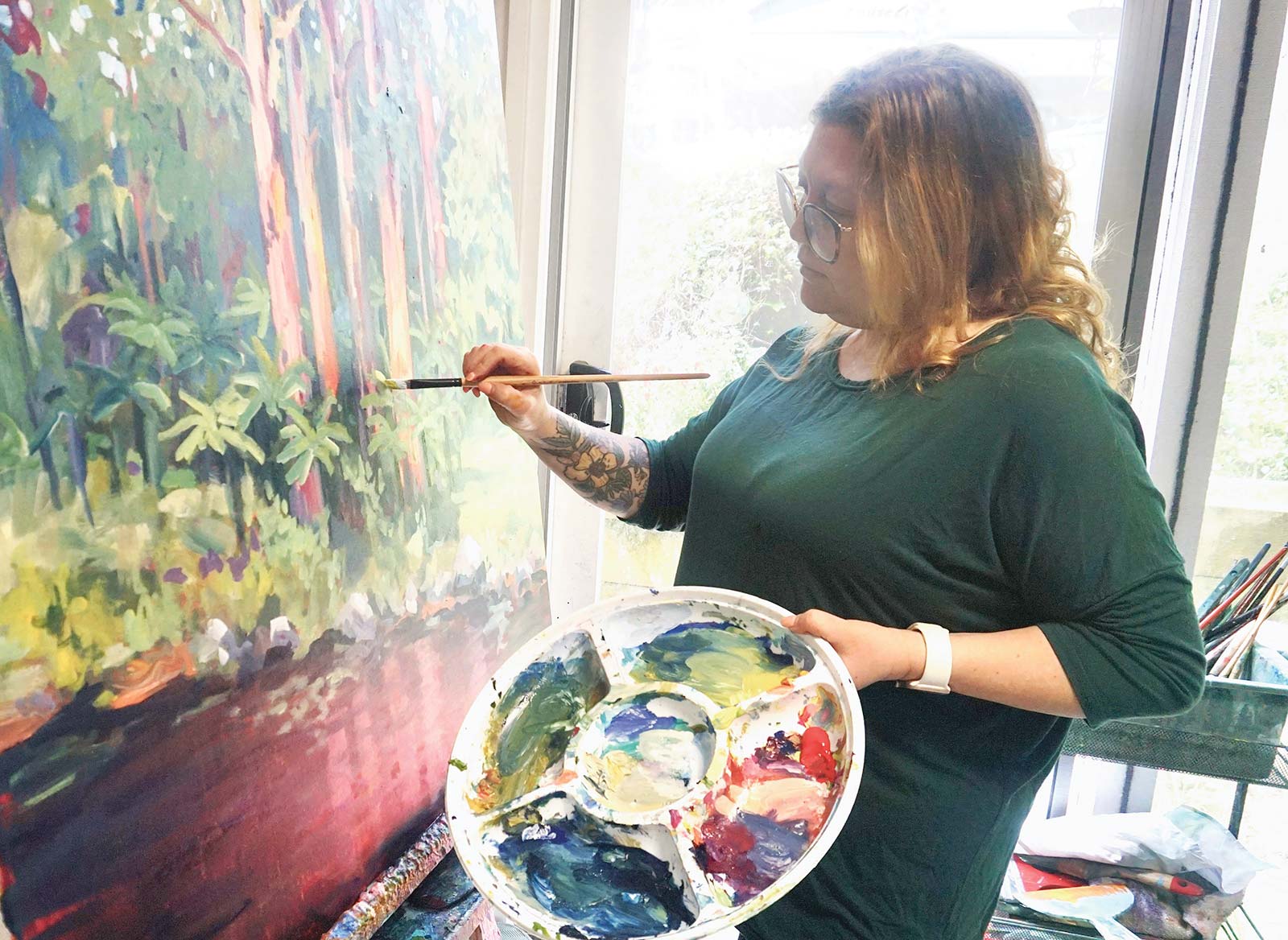 Clair Bremner
Born in Melbourne, Australia, Clair Bremner’s artwork reflects her admiration for the natural world. With each stroke of her brush, she tries to capture the essence of a landscape and stylize it in a way that is uniquely her own. Her work celebrates color and expressive detail, sitting at the intersection of contemporary landscape art and modern maximalism. She is intentional in her use of color palettes, seeking to reflect the natural harmony found in the world around us while also exploring more unconventional combinations. Bremner’s process is intuitive and spontaneous, allowing each painting to develop organically as she builds each layer of paint.
By creating art that is both reflective of her surroundings and an escape into an imaginary world, she aims to inspire others to recognize and appreciate the beauty of nature. Bremner’s art has been exhibited in galleries and exhibitions throughout Australia.
Contact at
clairbremnerart.com