Painting is a precious thing for me. It begins quite simply with an idea. The idea percolates in my head for a long time until, finally, I think about nothing else. The time has come to paint! During the past few years, I’ve been working on a series of magnificent urban buildings. I spent two years painting versions of Reagan National Airport’s light filled atrium in Washington, D.C. This year, Summit One Vanderbilt in New York City is my muse.
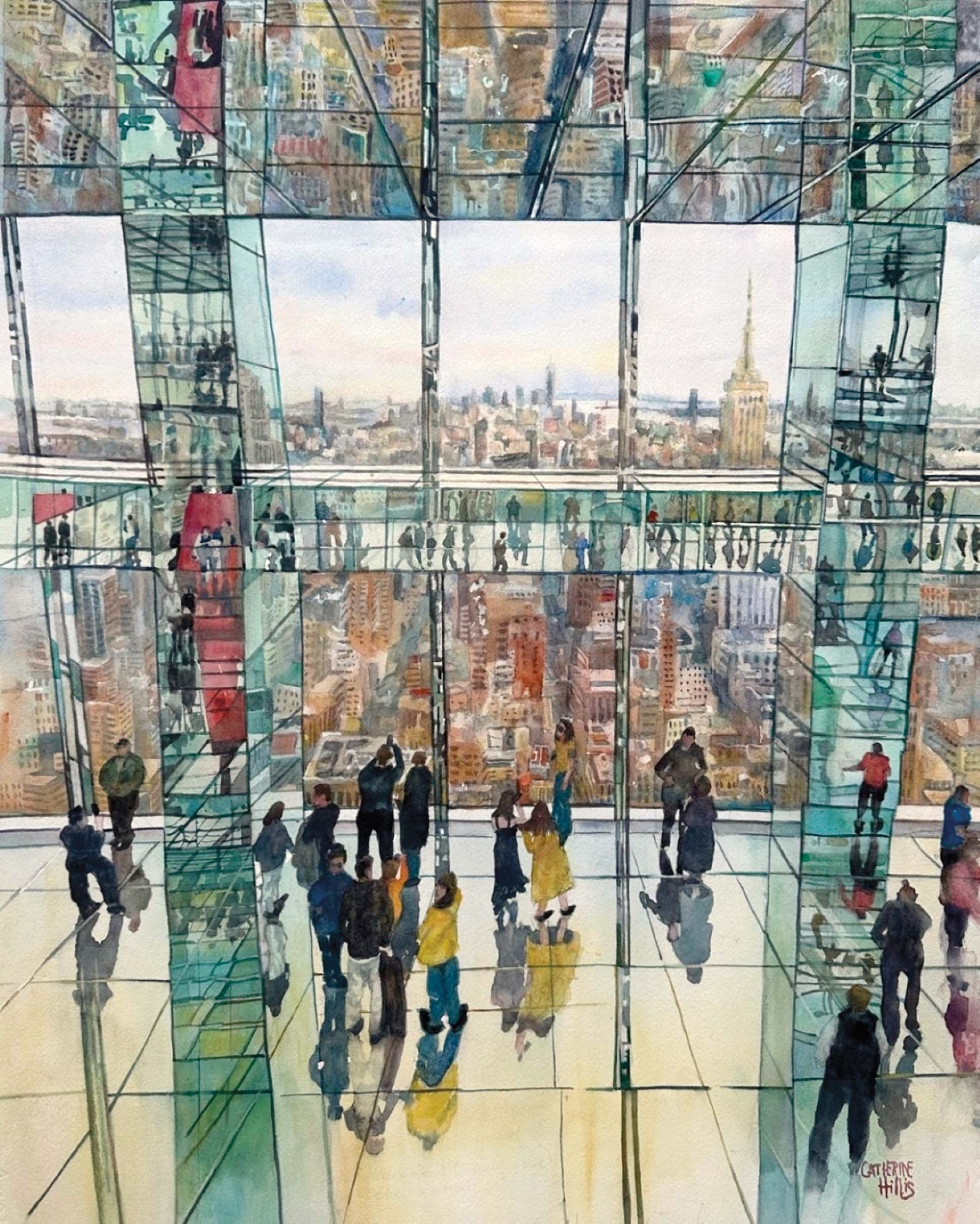
Wonder Of It All, watercolor, 25 x 21" (63 x 53 cm)
Every artist is attracted to certain elements of design, and I find myself drawn to line, shape and color. I adore repetition with variety. No matter what the topic is, those elements will be in my work. Summit One is a perfect example of this.
I’ve been to Summit One Vanderbilt twice during the past few years, taking many photographs. I have so much fun visiting this building. It amazes me with the reflections, colors and the delicious view of NYC. Tourists tell the story of contemporary society, and I chuckle as I watch them. Some figures stand in awe like myself, others are taking pictures and still others are posing and interacting with one another.
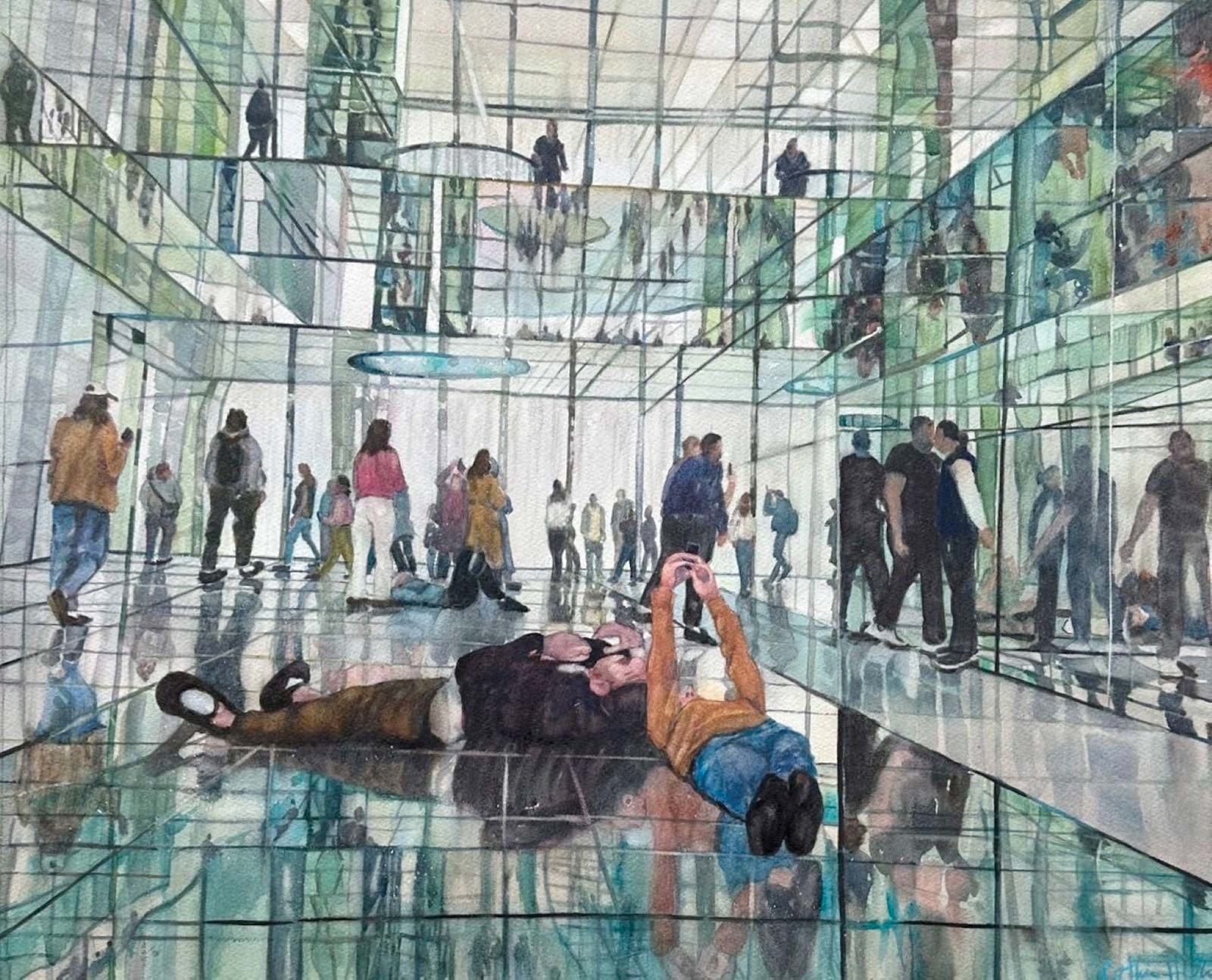
More Daydreaming, Please, watercolor, 20 x 23” (50 x 58 cm)
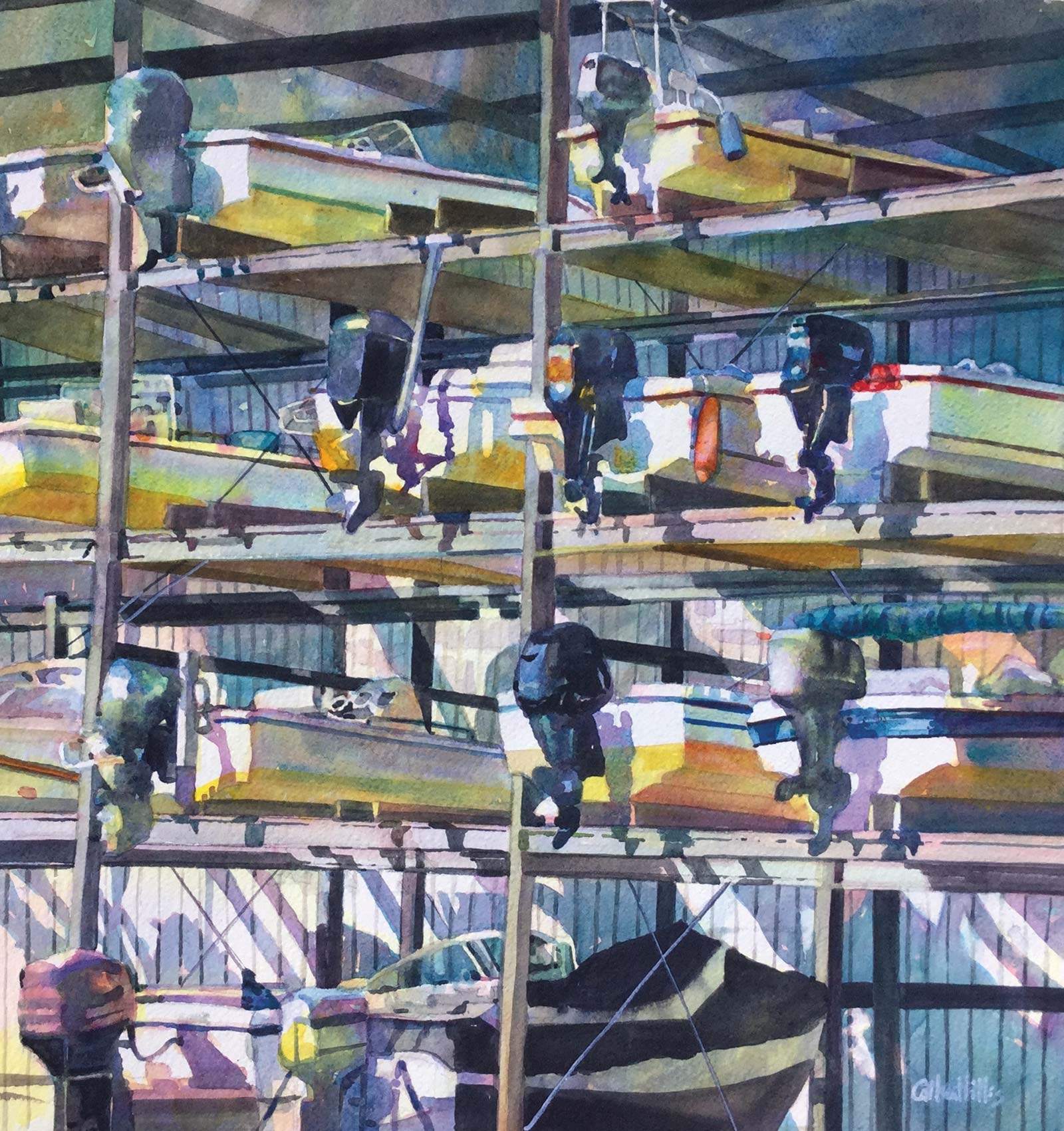
Bottoms Up, watercolor, 18½ x 17½" (47 x 44 cm)
The scene is chaotic. Lines, colors, reflections, planes and figures are scattered everywhere. I want to bring that cacophony into order, another recurrent theme of my work. I manipulate shapes, planes, figures and design elements and unify them by limiting my color palette and glazing repeatedly.
The decision-making process of what to paint often takes me more time than the painting process. A drawing like this on a full sheet of paper takes weeks to perfect, and I take my time, enjoying the process. Art should be fun. Once I’m finished, I review photographs of the drawing on my large computer screen to self-critique and refine.
My Art in the Making S’Wonderful, S’Marvelous
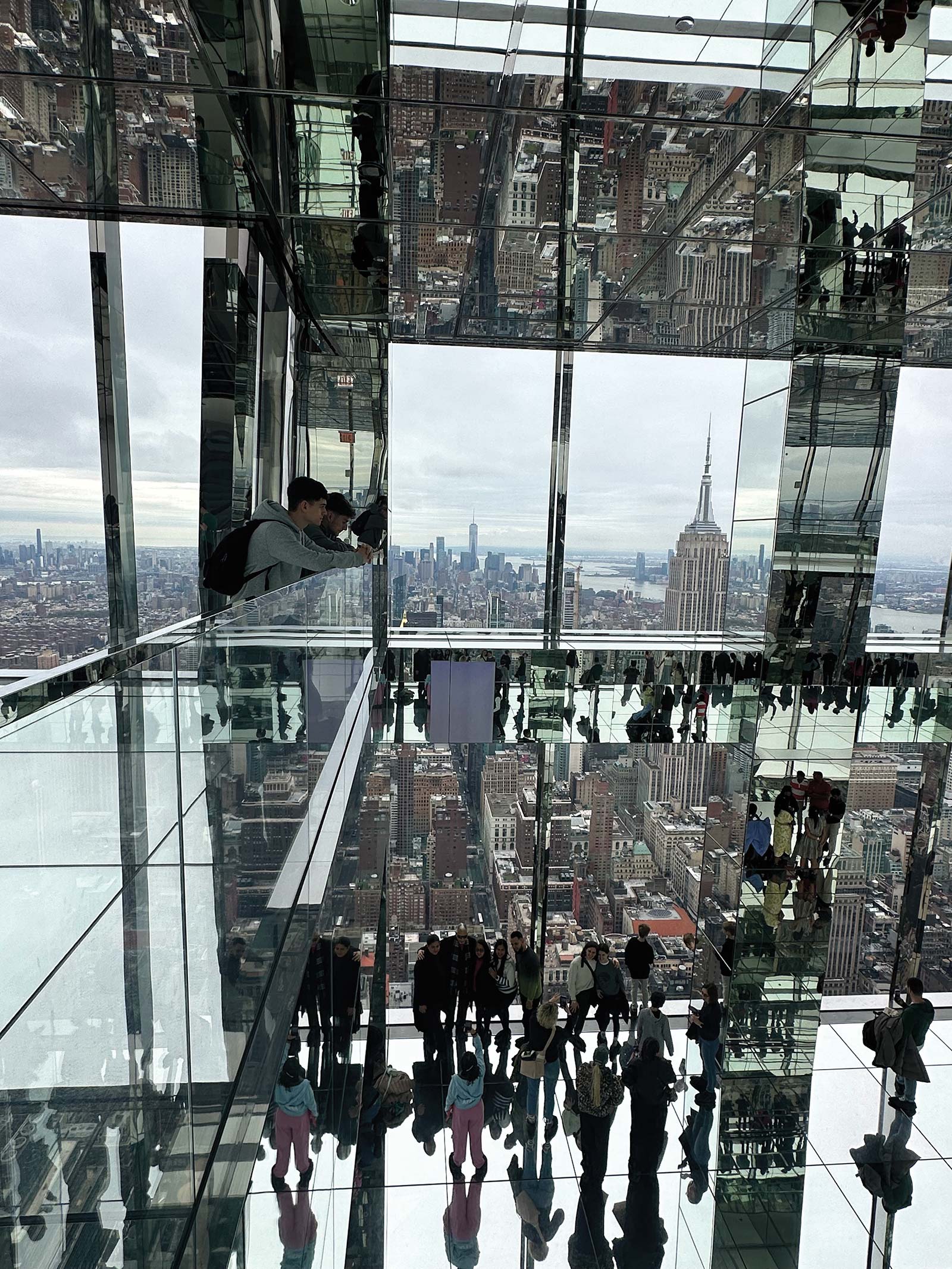
Reference Photo
The photo is merely a guide and colors can change dramatically from the original scene. My main goal is to tell a story.
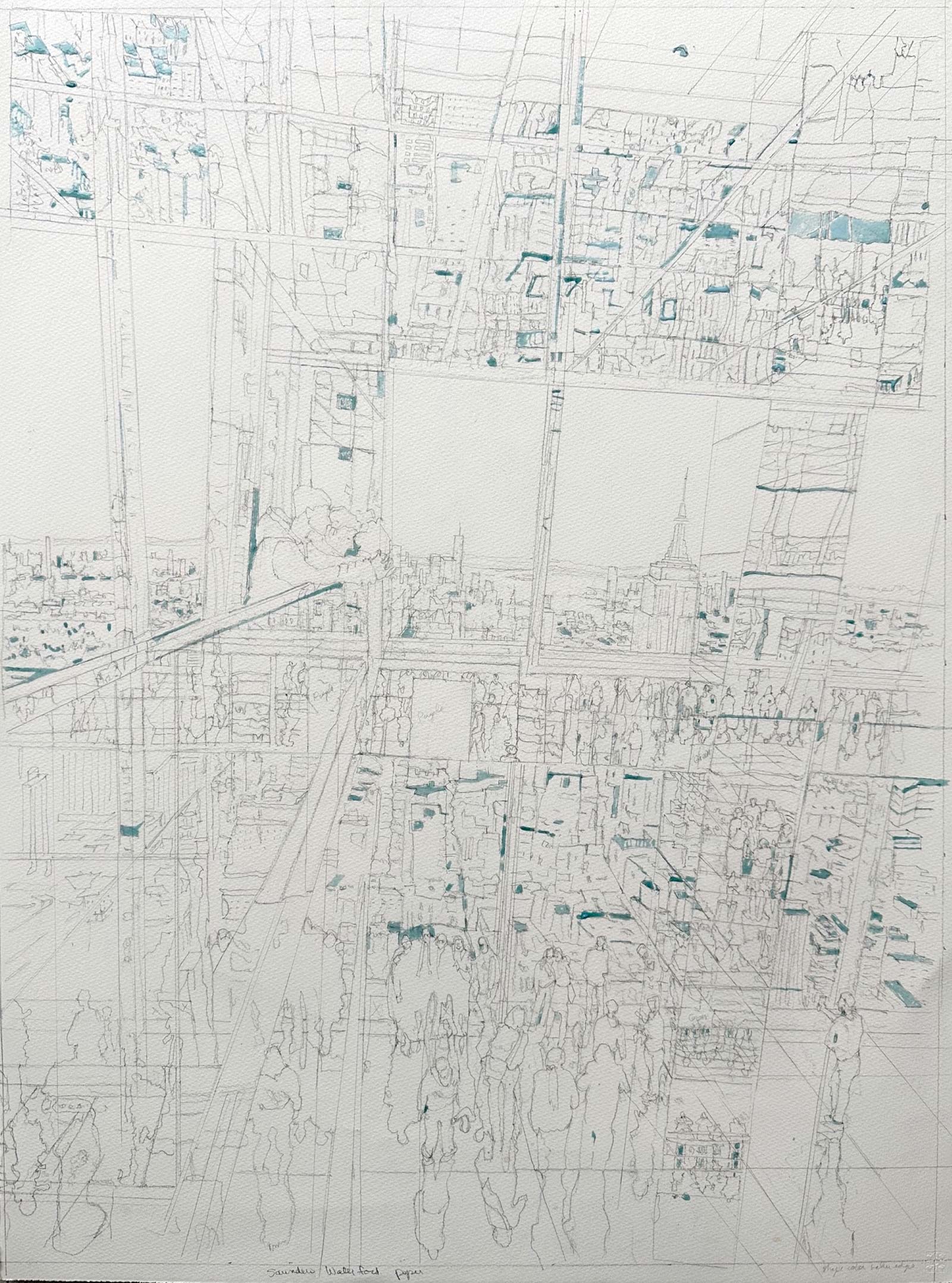
Stage 1 Drawing with Masking Fluid
Drawing is one of my favorite parts about the process of making art. In this painting, I envision the two figures as myself, looking down on the scene with wonder. These “shapes” will be my focal point. Once I’m satisfied with my drawing, I paint masking fluid on areas that must remain white or near white. There is nothing whiter than the unpainted areas of watercolor paper, and these areas are critical to the success of the work and will perform as musical notes of white throughout the piece.
WHAT THE ARTIST USED
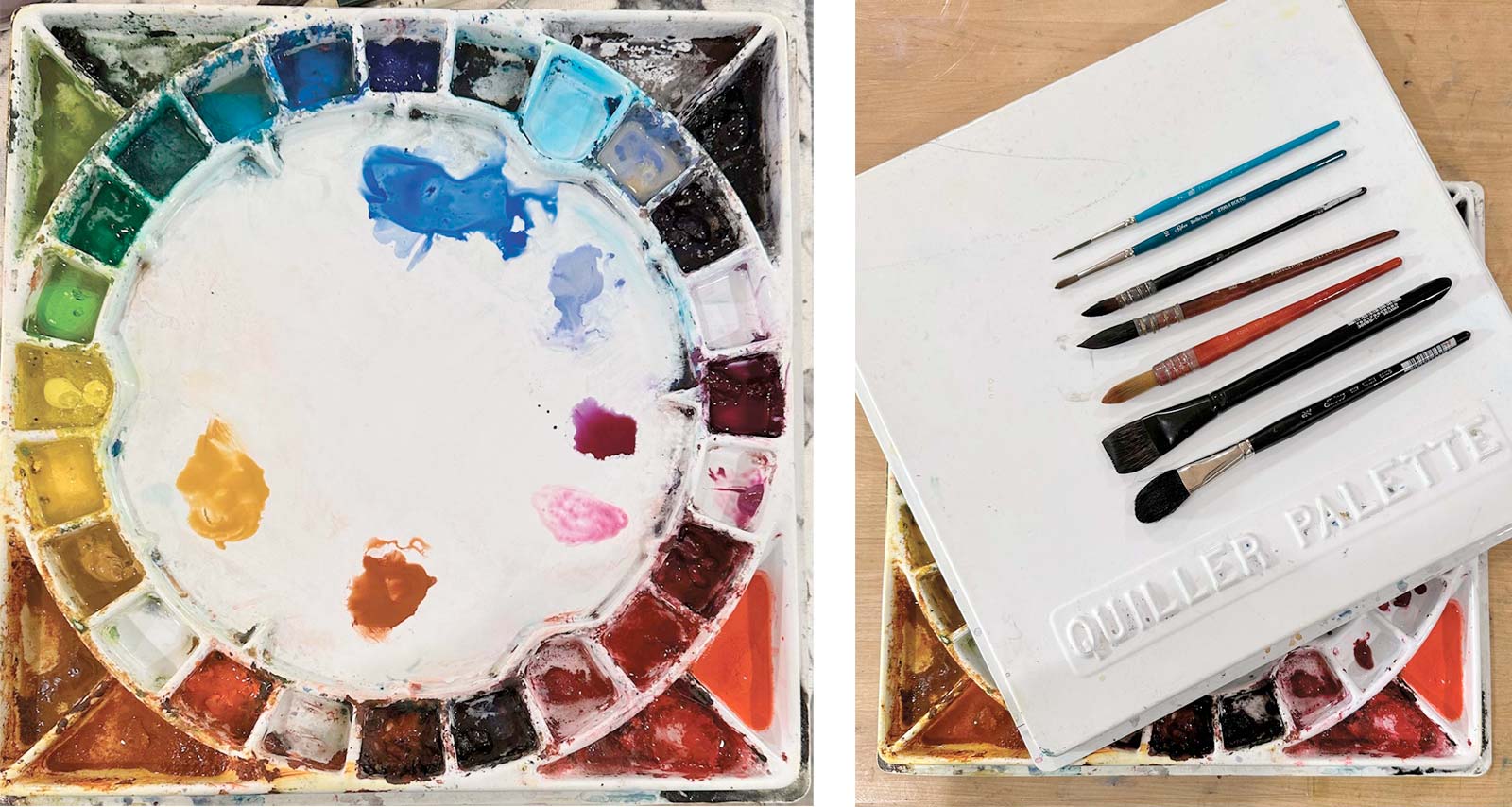
Daniel Smith Watercolors
Ultramarine blue, Cerulean blue, Phthalo turquoise, Bloodstone genuine, Quinacridone purple, Cobalt violet, Lavender, Yellow ochre, Burnt sienna, Permanent green
Additional Colors
Red hot momma, Bumblebee yellow, Skip’s green
Brushes
Silver sky wash, 3/4", Black velvet flat, 1", Silver Atelier Golden Taklon quill, size 80, Princeton Neptune, size 4, Silver Belle Aqua 2700 S round, Princeton select script, size 2
Additional Materials
Saunders Waterford 140lb cold-pressed paper, Quiller round palette, Schmincke masking fluid, Mr. Clean Magic Eraser
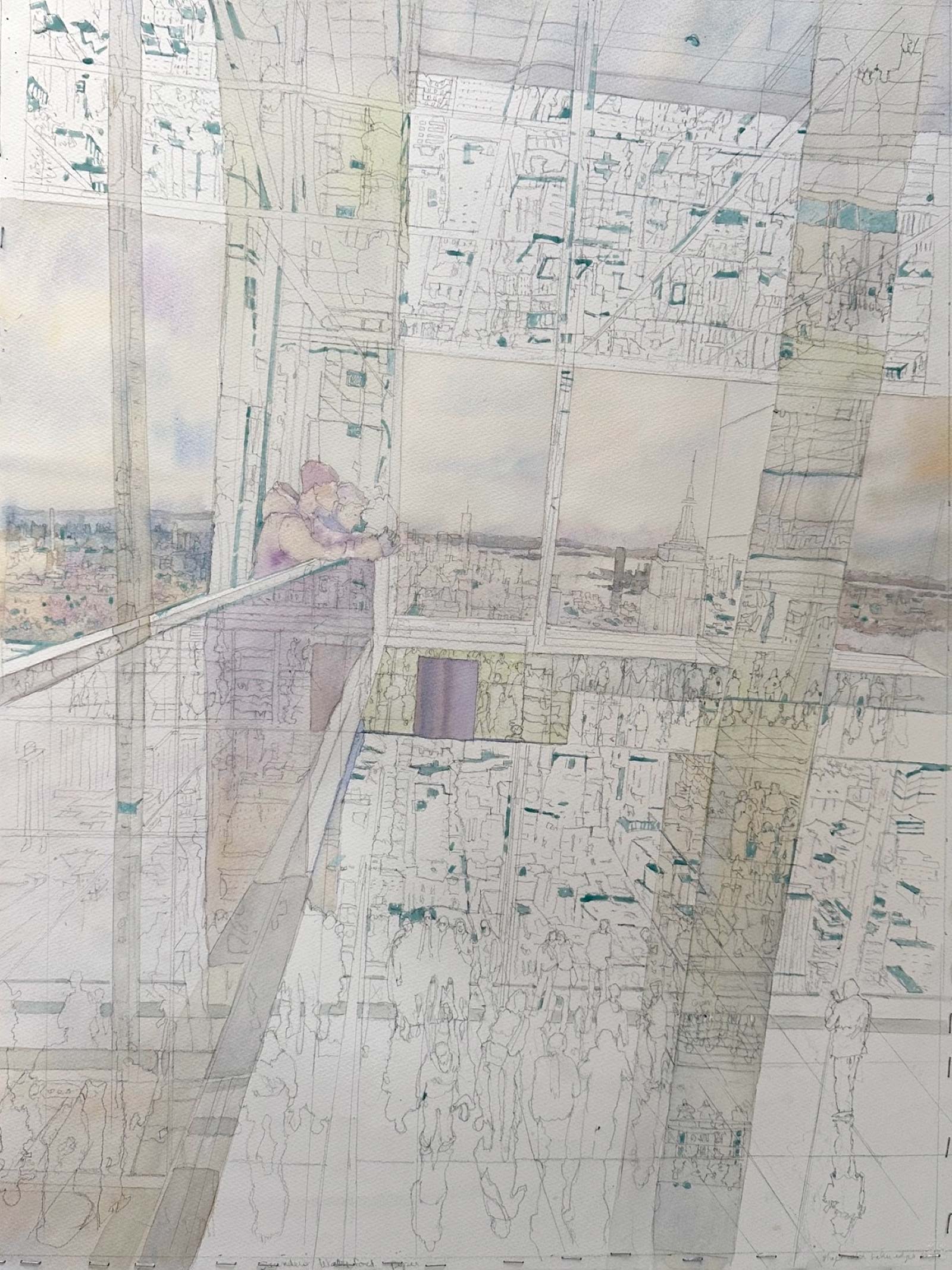
Stage 2 First Glaze
A lot happens here. I begin with a light wet on wet glaze on the figures, the angled plane and the lovely lavender square. I use only large rounds and flats, making as few strokes as possible. I try to retain as much “white” as possible near the figures so I can build the most contrast between dark and light. Then I mix a lovely light gray mixing lavender/ultramarine blue/yellow ochre/burnt sienna to carve out some of the muted gray areas using the lightest value possible, and the city scene begins in the back on damp paper.
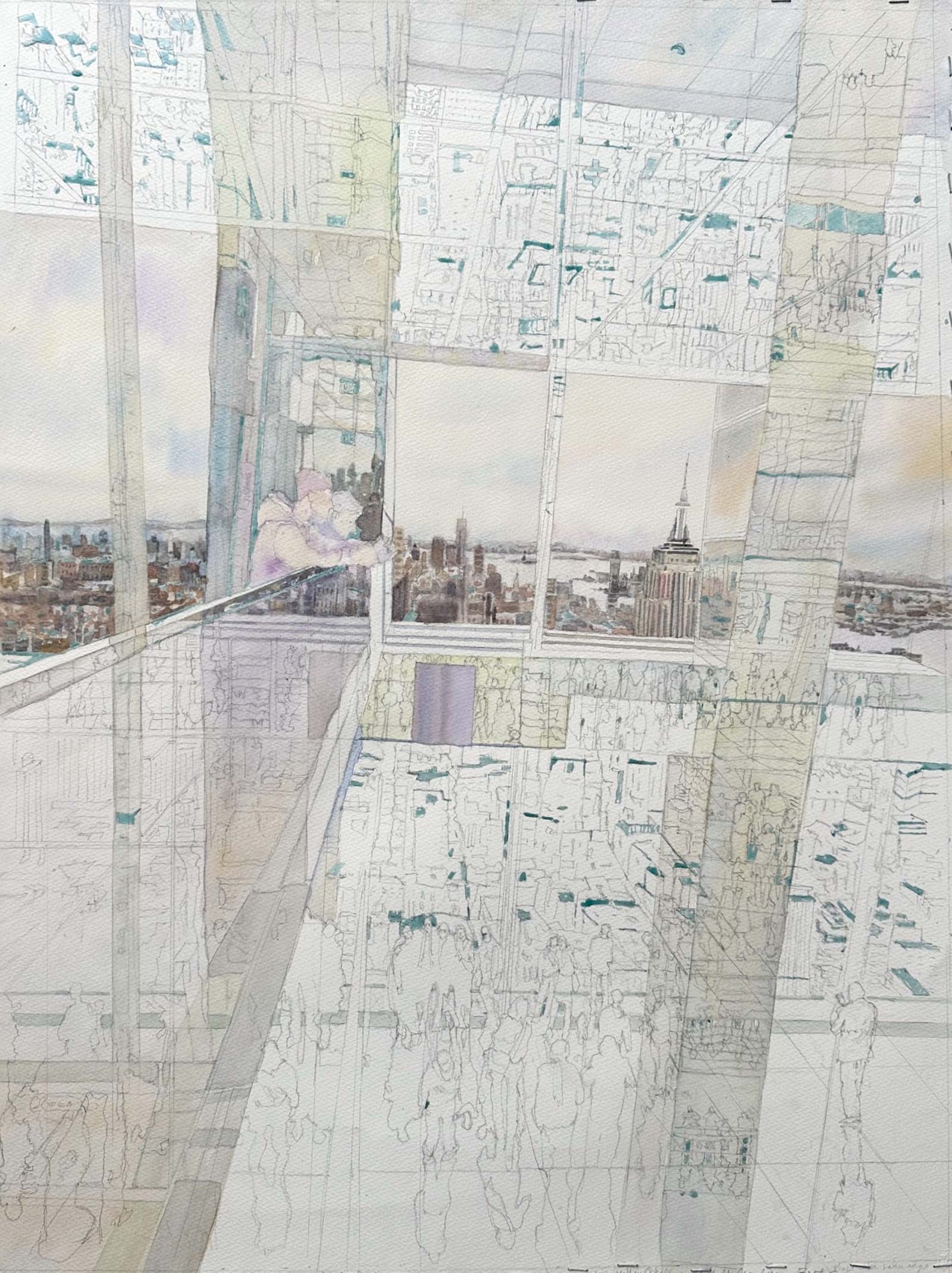
Stage 3 Geometric Structure
I continue to build the geometry of the structure and darken some portions of the city scene in the background. I still want to keep this area soft. I continue to glaze areas, wet on wet, with cooler colors in the background and foreground areas warmer. I constantly work on building the feeling of depth while unifying colors. It’s important to keep this area low value, using large brushes. As the paper dries, I glaze layer over layer, crisscrossing over sections. It’s a labor of love. I’m really focused on keeping colors unified so that order is brought to the chaos of shapes. Once these areas are dry, I work slowly and methodically, pushing geometric planes back with cool tones and bringing other areas forward with warm tones.
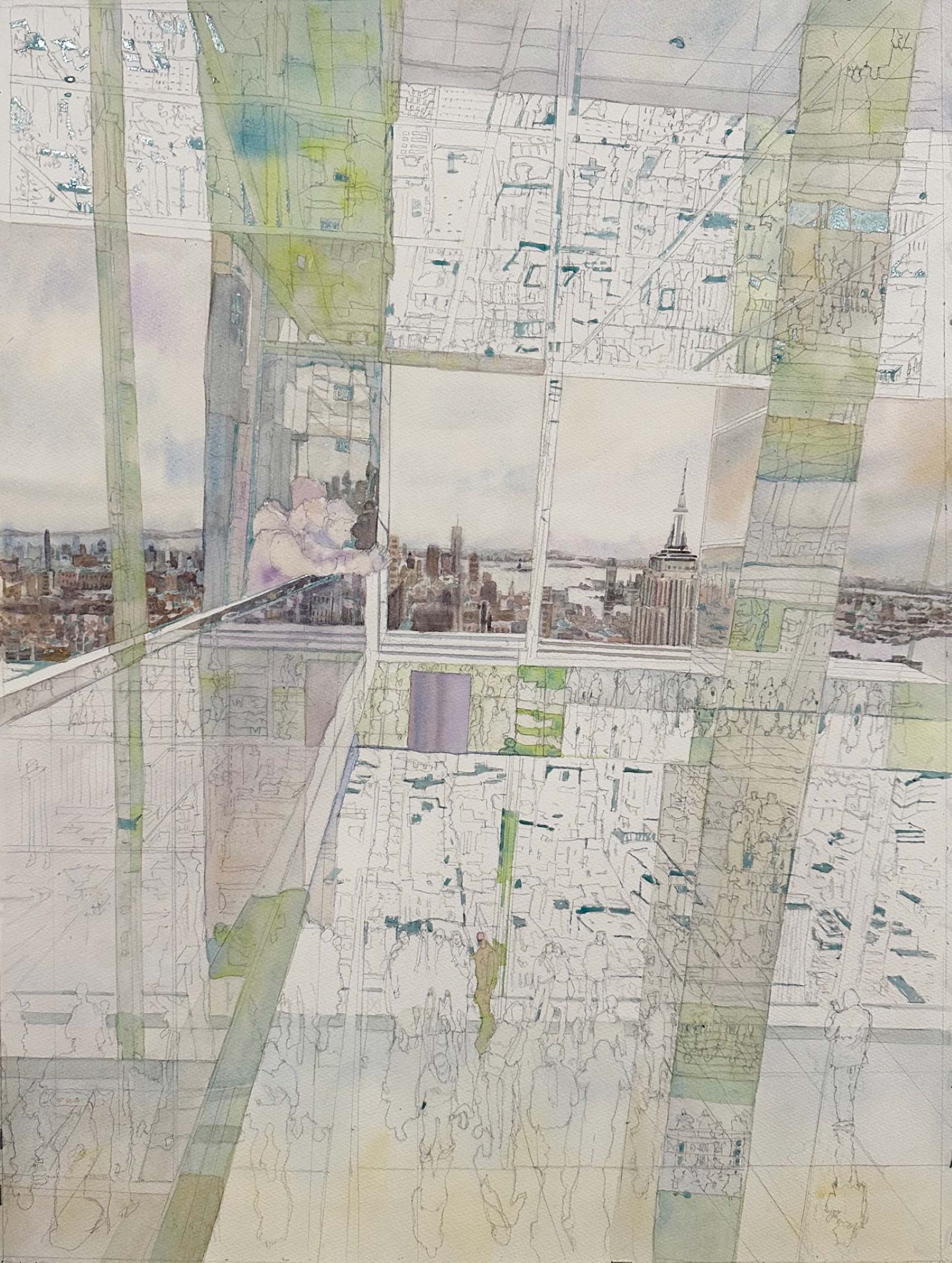
Stage 4 Establishing Greens
The glass appears to have a greenish cast, and I must stray from my original triad. I use permanent green and Skip’s green, and then continue glazing the big geometric shapes, crisscrossing and working glaze after glaze before moving on to the smaller shapes. Again, these glazes of limited colors unify the piece.
Color Swatches
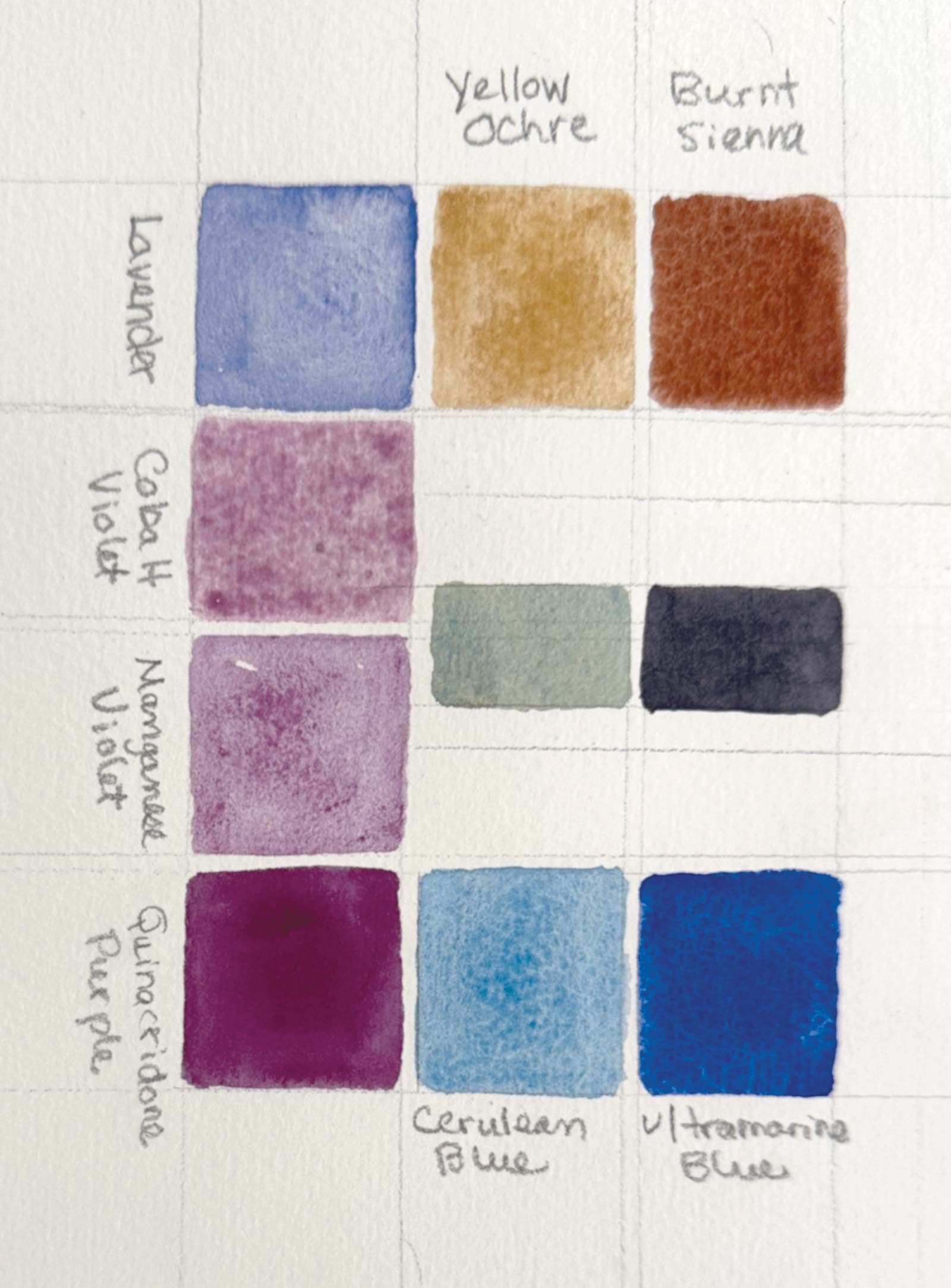
Before painting can begin, I think a long time about color. My choice is important and it differs with every painting. Do I want a warm painting or a cool painting? Do I want to use complementary colors in my initial triad? For this painting, I decide to go with an unusual combination: yellow ochre and burnt sienna for my warm yellows. And then cerulean, ultramarine blue and all of my purples (quinacridone purple, cobalt violet, manganese violet and lavender) will serve as my “reds” and “blues.” The complementary scheme is yellow/lavender, unusual for me, selected because of the beautiful lavender rectangle that is reflected near my focal point. I test combinations to be sure I can create beautiful grays and dark blacks, and I certainly can. I plan to include sepia and bloodstone genuine later to create my darkest values. I know I’ll be adding tube greens later and that those pigments will be intermixed with some of my initial triad.
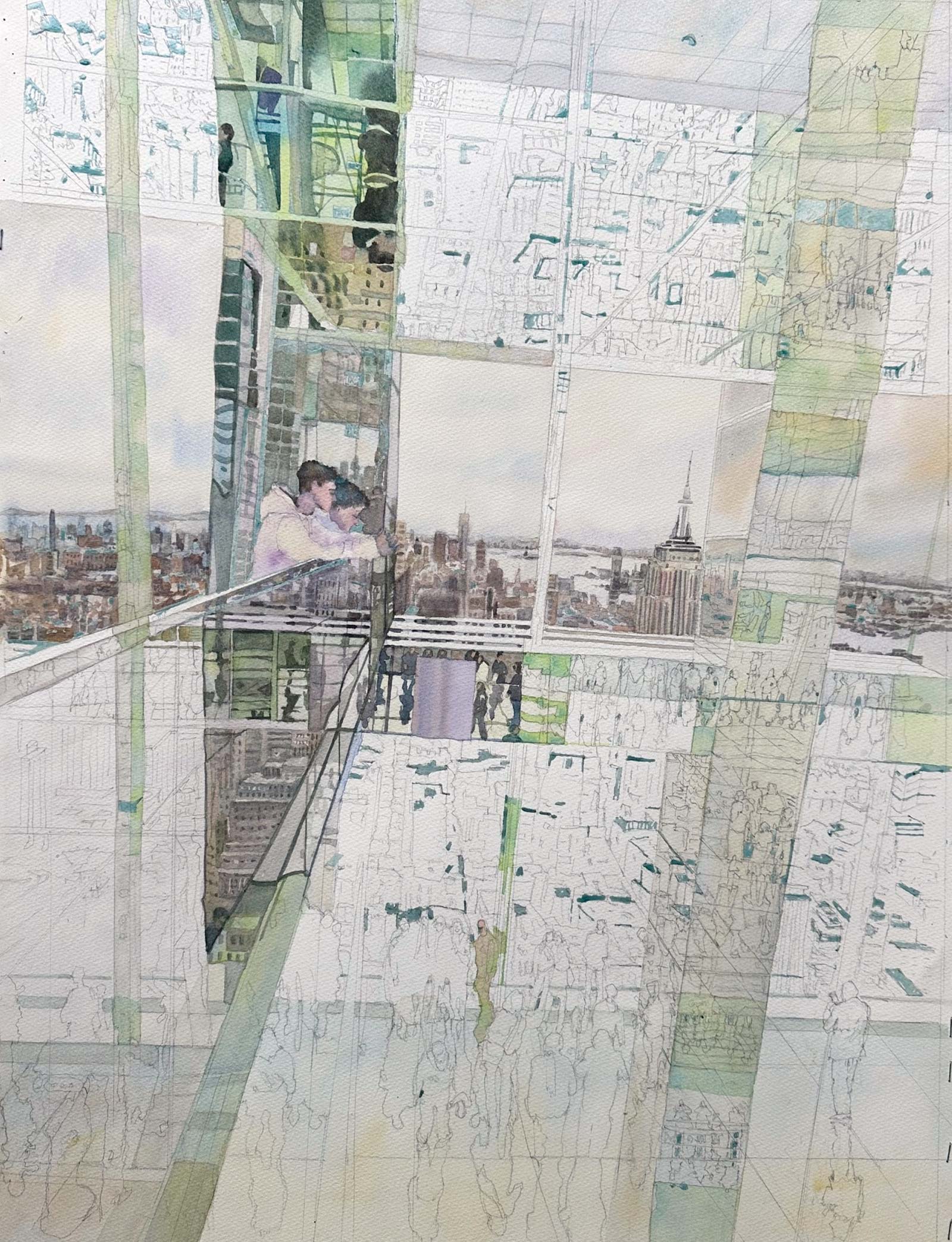
Stage 5 Geometry Continued
I continue to focus on creating a sense of depth with warm and cool tones. Now that much of the basic geometry has been established, I can start painting middle values and a few details. I build radiating lines from the focal area to help lead the viewer’s eye there. Smaller brushes are in use now.
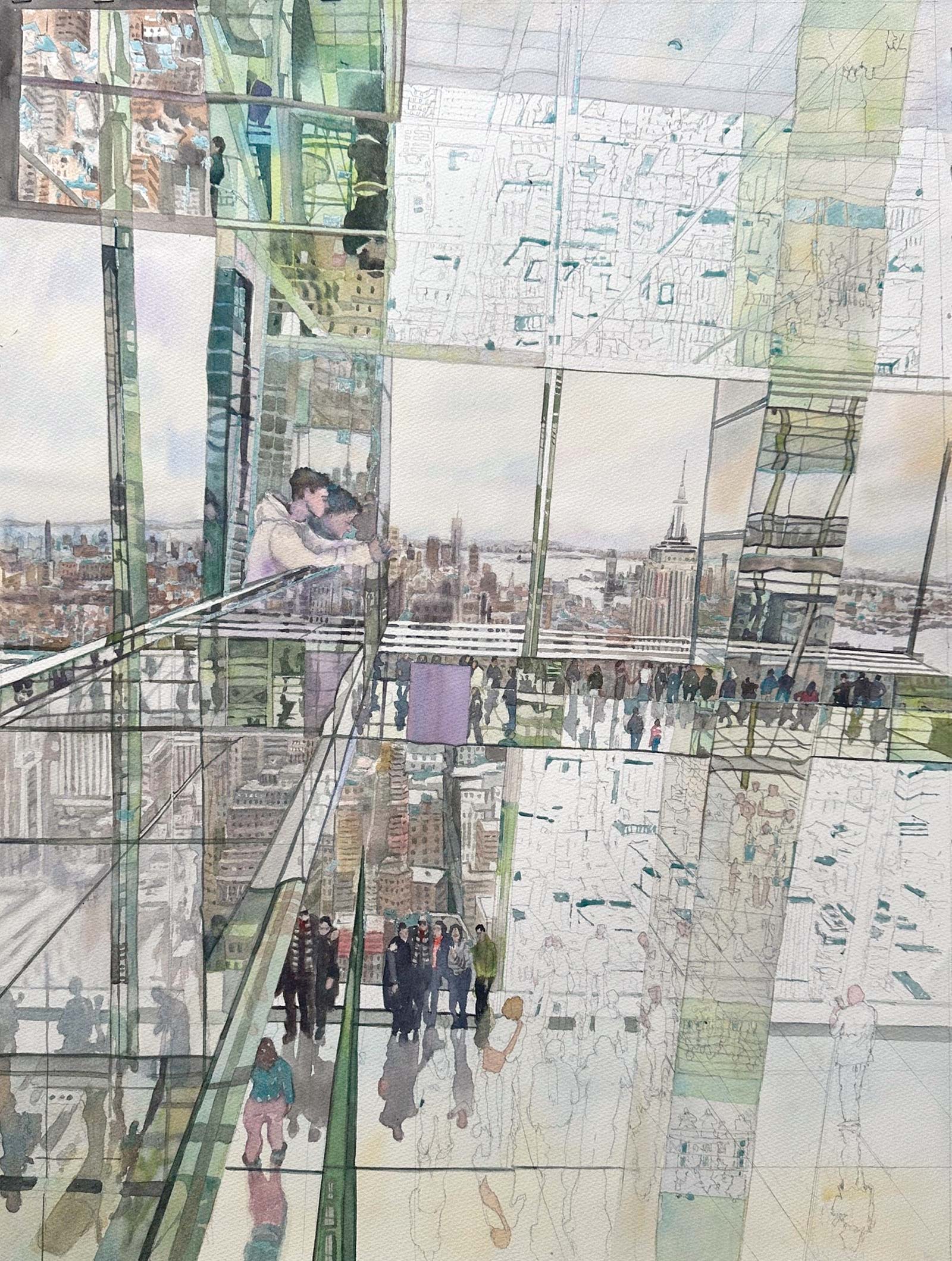
Stage 6 Dark Values
It’s taken many hours of work to get to this point. I’m moving now from middle values to dark values. I still use the wet-on-wet technique whenever possible, but most of the work is painted wet on dry with smaller brushes. I finish the figures to bring the narrative to life. I have so much fun painting the stories within the painting.
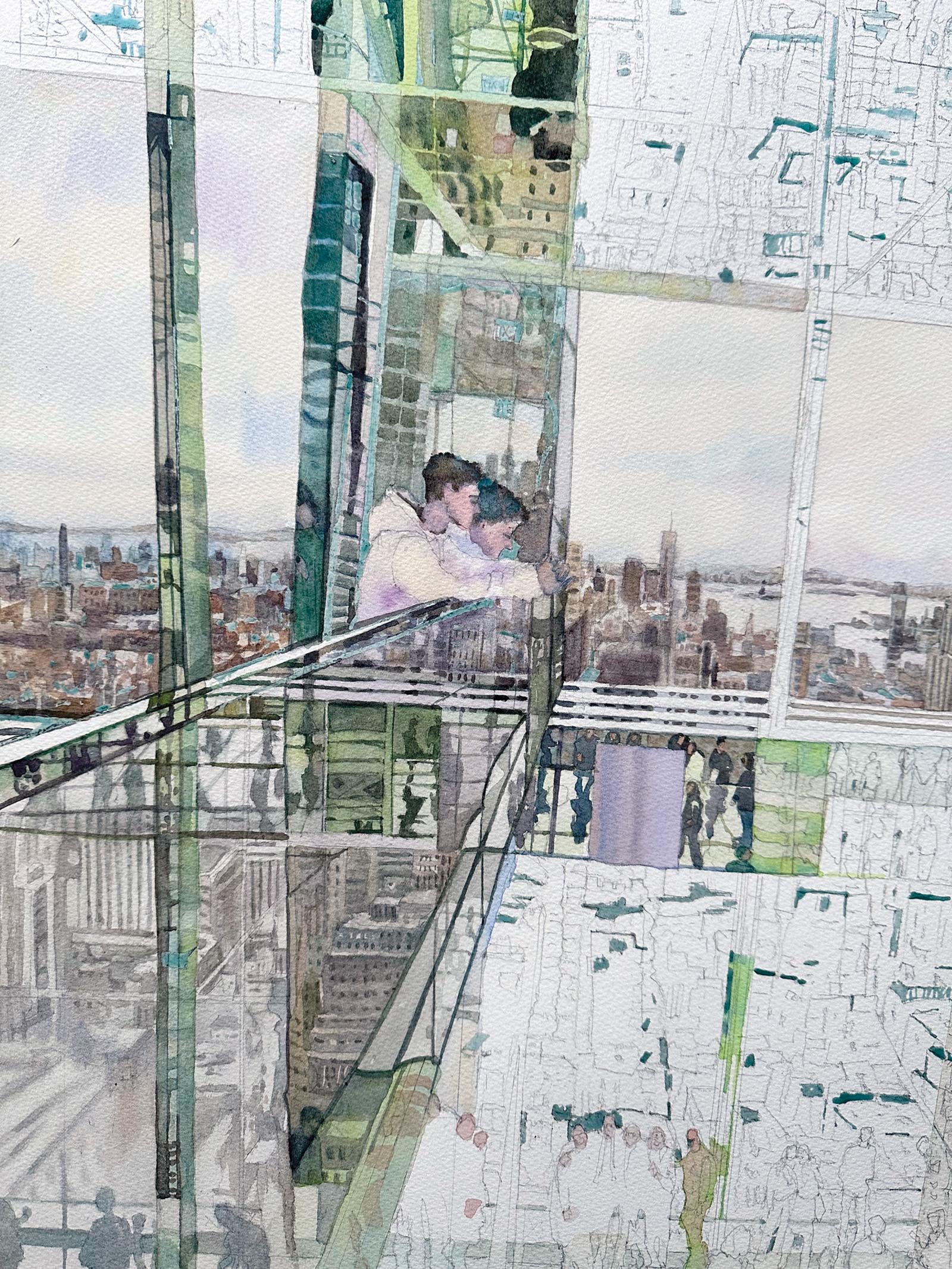
Stage 7 Refinements and Details
Here I continue to work on “hand-sized” sections using smaller brushes.
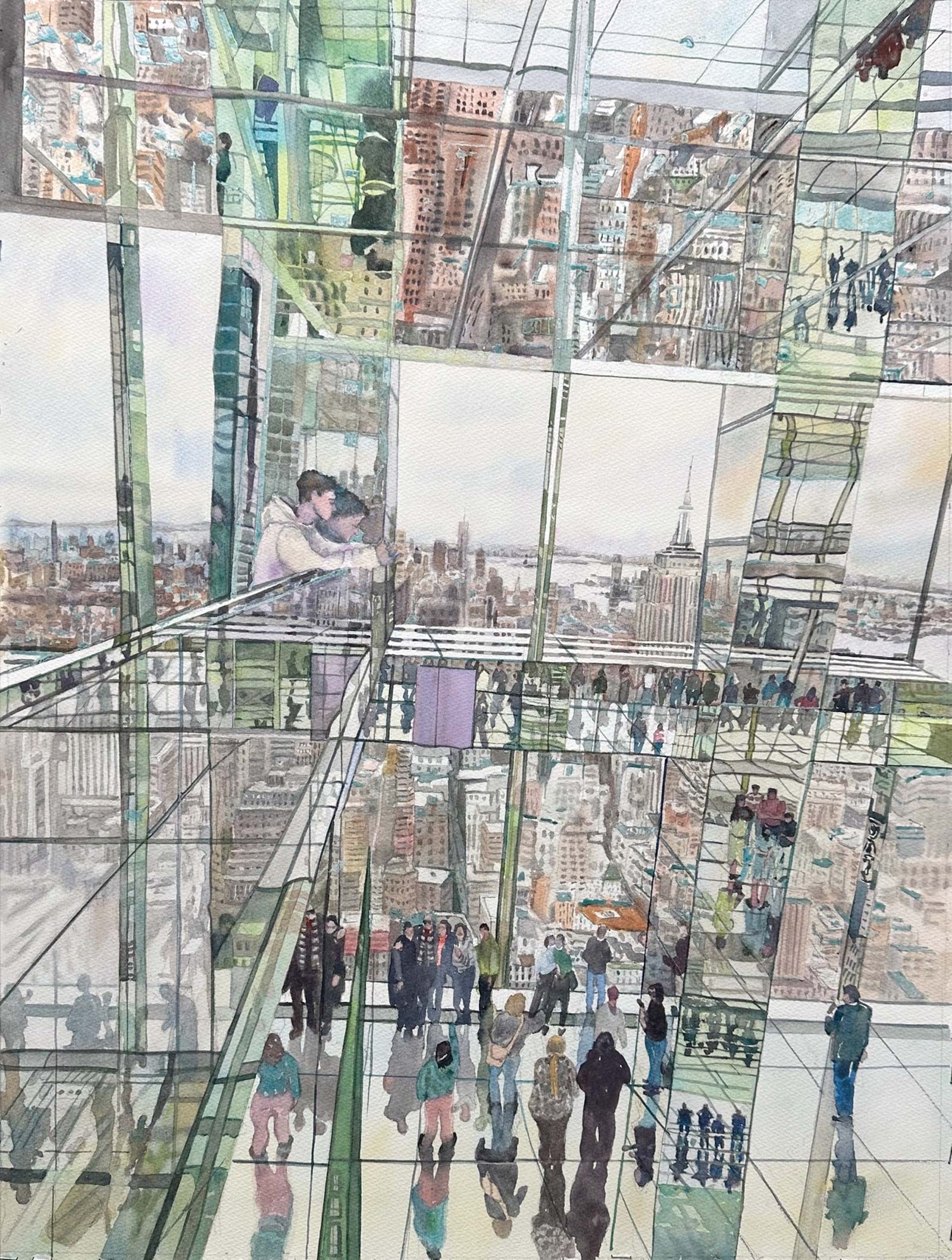
Stage 8 Most of Space Filled In
The masking fluid is still on the paper, and I’m excited to remove it. The whites are going to make a big difference. I begin taking photographs and critiquing the image on my computer screen. What areas can be soft? Are shapes interconnected? Is there unity in this painting? What areas need to recede or come forward? What shapes should be darker? Is my focal point making sense and working overall? This is the “tweaking” stage, and it can last for weeks. A painting may sit on my easel for a long time before I declare it finished. Time is the best teacher for the final critique session.
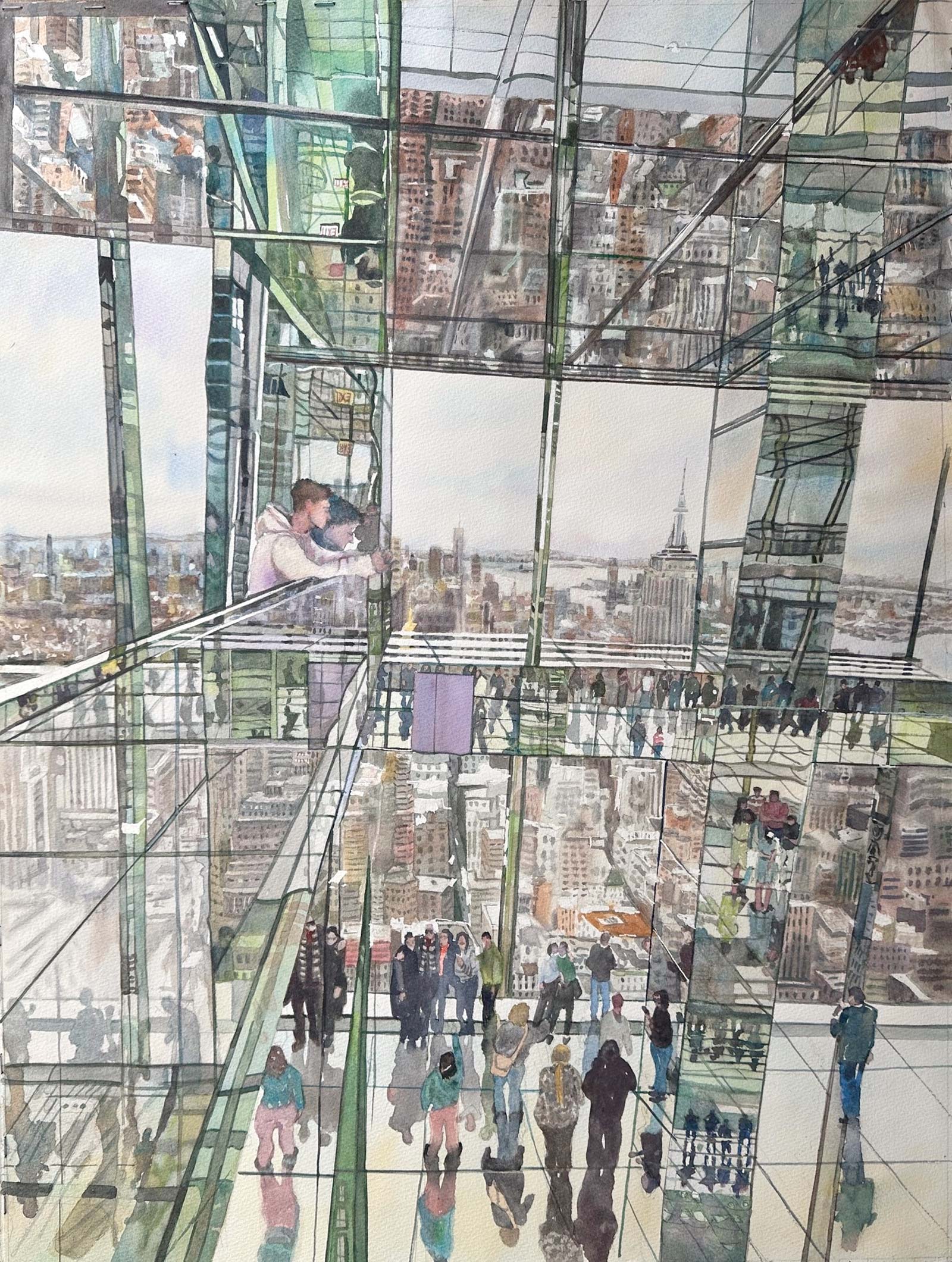
Stage 9 Removing Masking Fluid
The masking is off and the whites twinkle throughout the piece like musical notes.
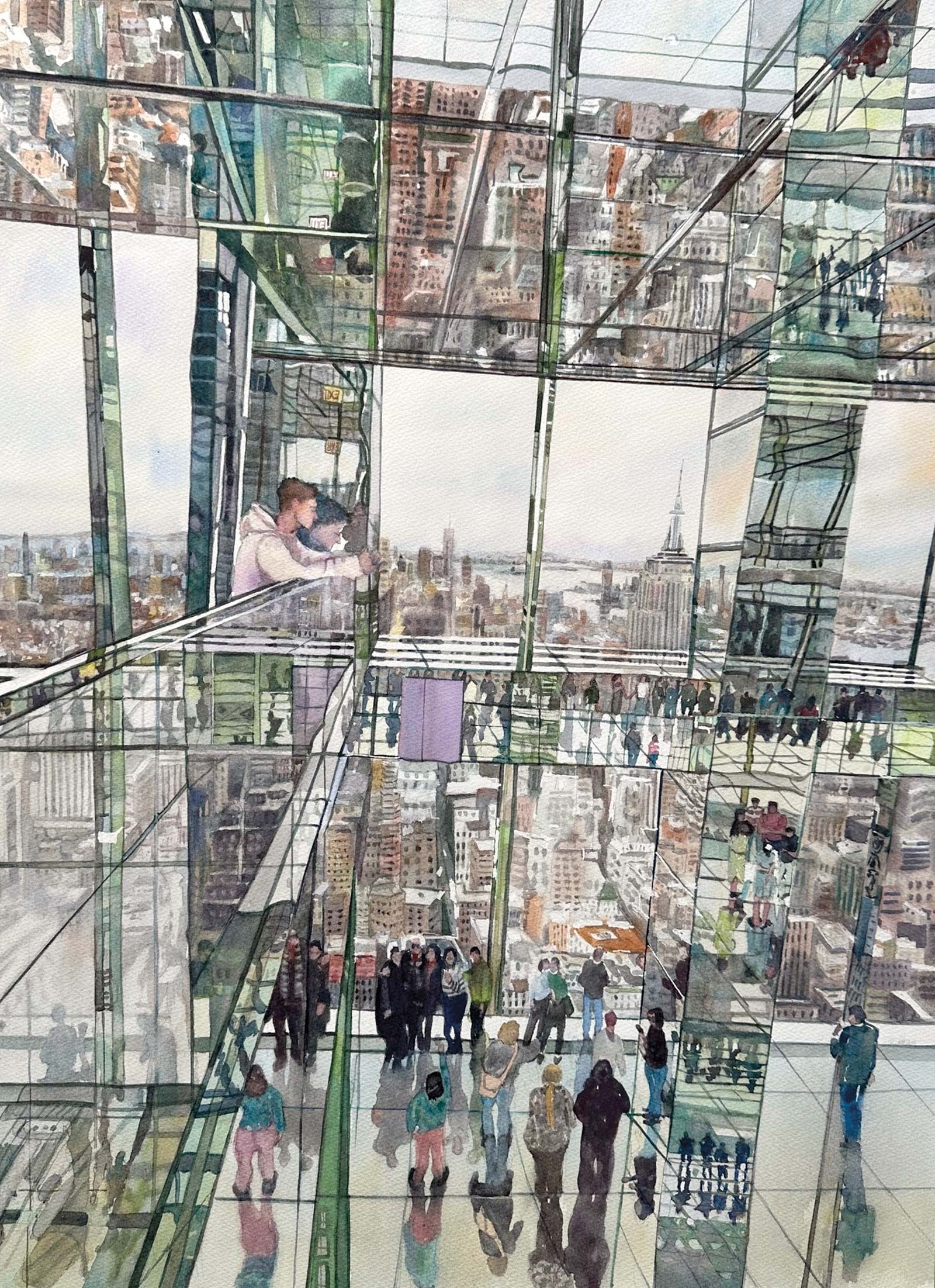
Stage 10 Further Refinements
I’m nearly finished and spend time darkening values and refining.
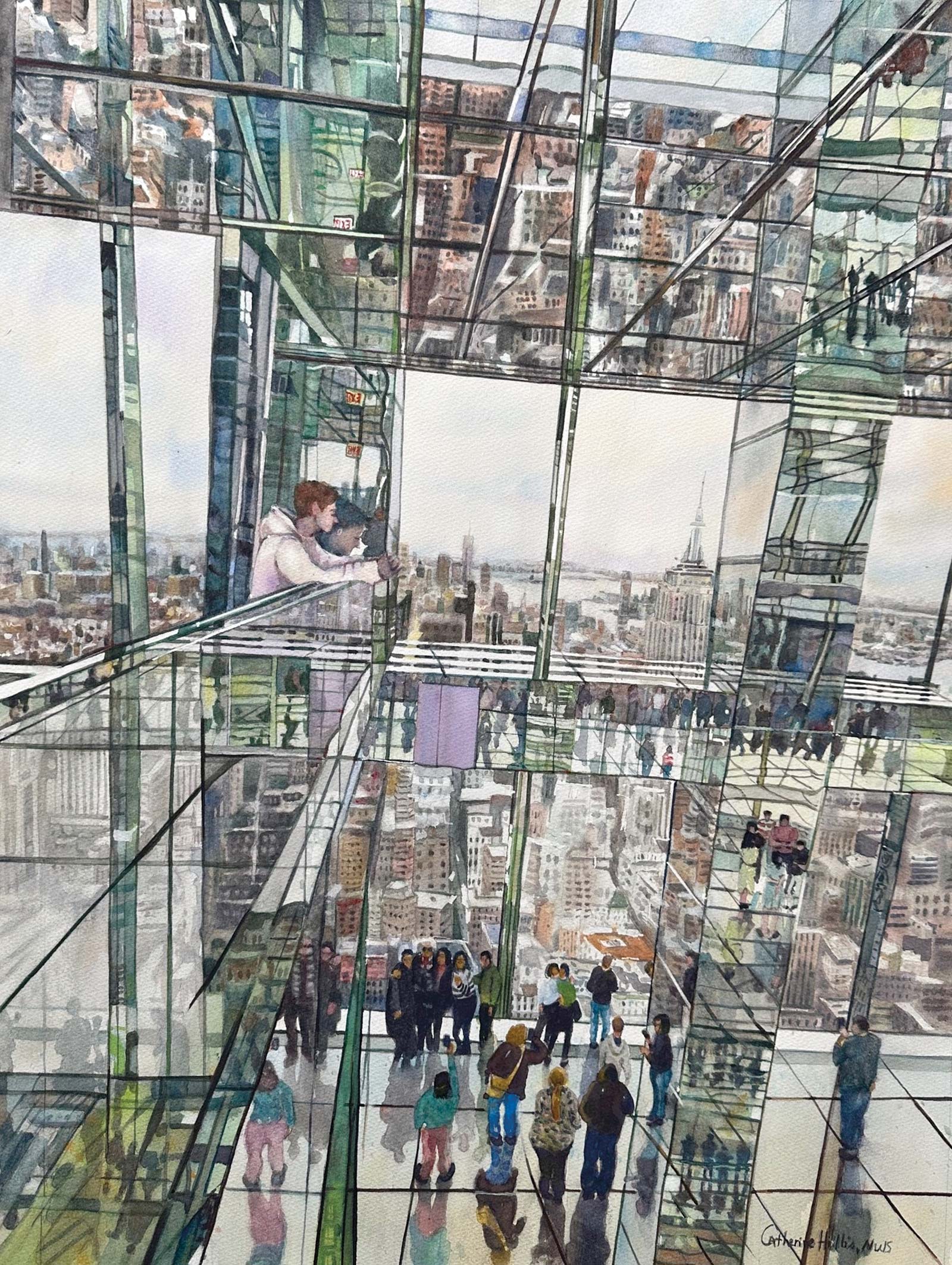
Stage 11 Finished Artwork
S’Marvelous, S’Wonderful, watercolor, 28 x 21" (71 x 53 cm)
It’s time to sign my painting. I’ve had such a good time revisiting the scene and reliving a day spent admiring an architectural wonder through watercolor paint.
About the artist
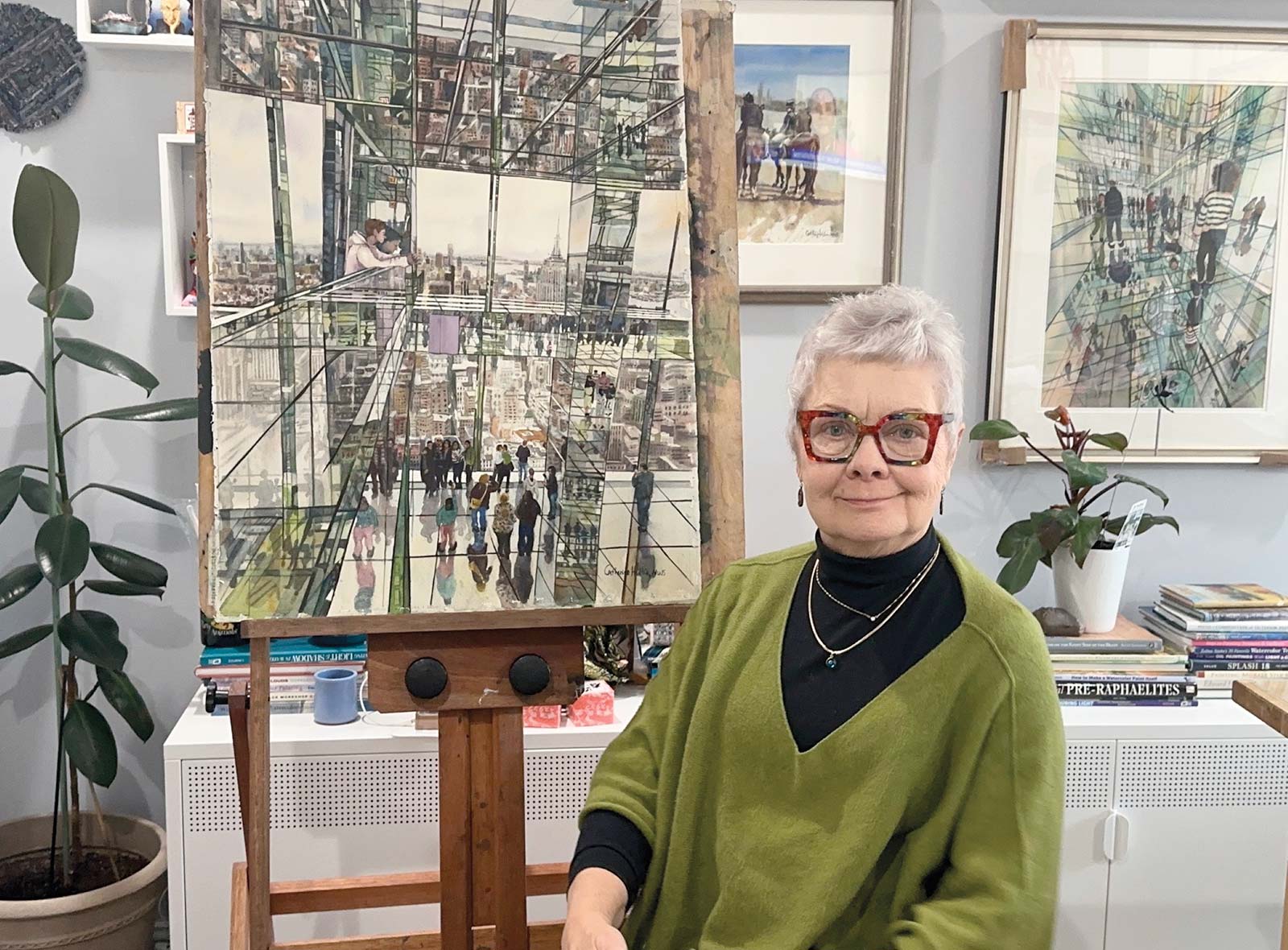 Catherine Hillis
Catherine Hillis has always had her hand in the arts, enjoying music, art and theatre. Garnering a BFA in theatre, she later served as resident actress and costume designer in Tulsa, Oklahoma. She returned to the visual arts in her 30s while living in the Washington, D.C. area and taking workshops from talented instructors around the United States. Watercolors are her primary medium. The artist has won hundreds of awards and has earned 10 signature memberships. She teaches workshops in the USA and abroad.
Represented by
Anderson Fine Art Gallery, Georgia, USA, andersonfineartgallery.com
RH Ballard Gallery, Virginia, USA, rhballard.com
Sophia Street Studios, Virginia, USA, sophiastreetstudios.com