



When I was hired in 1983 as an illustrator for a major newspaper in Southern California, I had no idea the opportunities it would give me to meet or speak with so many interesting and often famous people.
I spoke with individuals who shaped world history through heroism or policy. Others entertained millions through film, music, literature or sports. Because of my work, I met men who were at Pearl Harbor on December 7, 1941, soldiers who charged Omaha Beach on D-Day and crew members of the Enola Gay, which dropped the atomic bomb. One illustration led to an invitation to the Medal of Honor Convention in 1987, where I shook hands with many seemingly ordinary men who showed extraordinary courage under the worst circumstances.
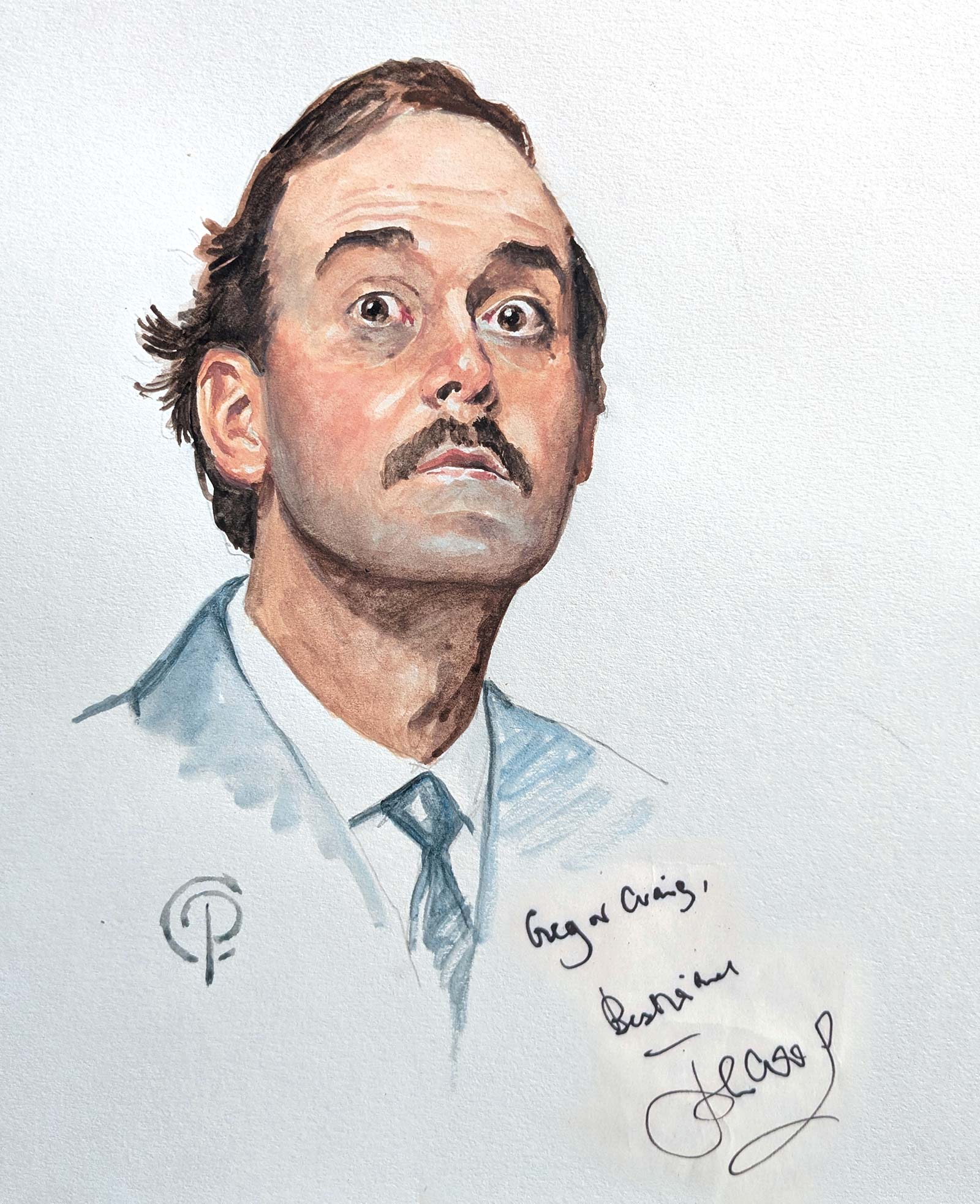
John Cleese
The newspaper had access to nearly everyone’s phone number. All I had to do was ask and it would appear on my desk. Through that system, I spoke with famed aviator Jimmie Doolittle, leader of the 1942 air raid on Japan that still bears his name. I later spoke with Neil Armstrong, a notoriously difficult man to reach.
What began as a desire to collect autographs on my illustrations of World War II pilots eventually expanded to baseball legends. By around 1992 I had obtained at least one signature from every living Baseball Hall of Famer. During the 1990s, baseball card shows were common. Great players from the past and present signed autographs for fans, so I stood in line with canvases to meet legends like Joe DiMaggio, Ted Williams and Mickey Mantle.
My interest later expanded to actors from the Golden Age of cinema. Through the mail I received signatures on my artwork from performers ranging from a silent film actress to George Burns, Gene Kelly and Kirk Douglas. I also added musicians and writers I admired. My favorite author, Pulitzer Prize winner David McCullough, signed a painting I had done of him-he even called me afterward. Nearly all of these individuals have since passed away, leaving behind a remarkable signed record of some of the most notable figures of the 20th century.
Shortly after leaving the newspaper in 2006, I joined the Portrait Society of America, an invaluable connection that introduced me to many of my favorite living artists. Some of those great painters have since passed away, including Daniel Greene and Nelson Shanks, but I still collect signatures from artists I admire at society events. Somewhere along the way the collection shifted. Many of the people I meet now are younger than I am. The collection now includes more than 480 signed works and continues to grow. My book Brushed with Greatness, featuring many of the best pieces, is available through blurb.com.
John Cleese
John Cleese is best known for his work with Monty Python’s Flying Circus comedy troupe. There he created memorable characters including the official from the Ministry of Silly Walks and the architect pitching an apartment complex that secretly functions as a slaughterhouse. (“The tenants arrive at the entrance port here and are carried along the corridor on a conveyor belt in extreme comfort past murals depicting Mediterranean scenes towards the rotating knives.”)
In 1975 he co-wrote and starred in one of the greatest sitcoms ever made, Fawlty Towers. A decade later, Cleese toured the United States presenting seminars on running effective meetings. The programs mixed humor with practical advice about efficiency and brevity.
During one visit he came to the newspaper where I worked to meet with the editors. They gathered in a glass-enclosed conference room where the next day’s paper was planned each morning. Naturally the goof-offs in the art department considered staging our own parade of “Silly Walks” past the glass wall. Eventually we decided he had probably seen enough of that and abandoned the idea. But I still wanted an autograph. I ran to the research library, copied a photo from Fawlty Towers and waited in the hallway until I “accidentally” ran into him.
He happily signed it and asked my name. When he wrote “Greg” I corrected him, and he added the proper spelling. At 6-foot-5 I rarely meet someone my height, but we were eye to eye.
“I had no idea you were so tall!” I said.
He replied, “I had no idea you were so tall.”
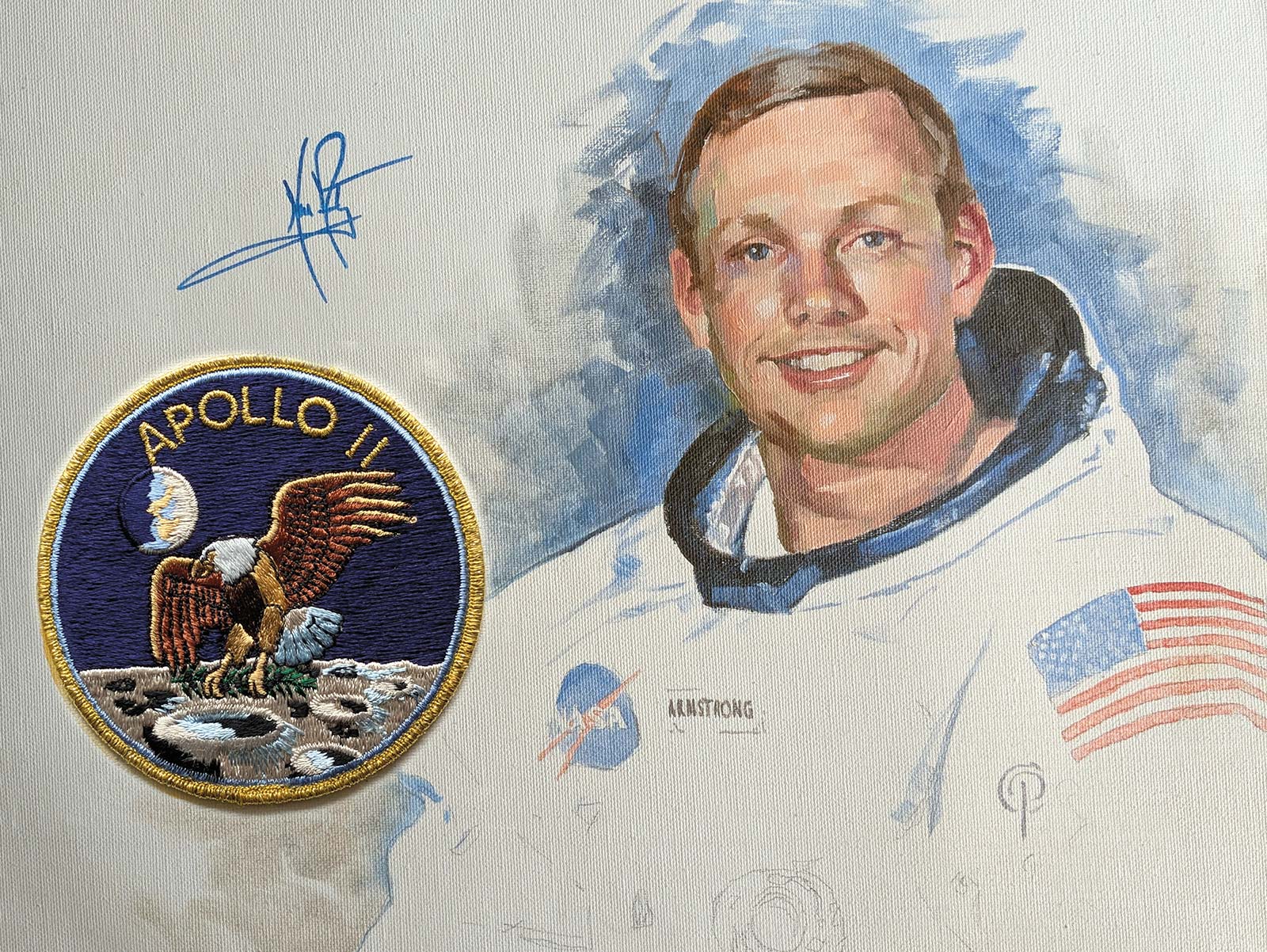 Neil Armstrong
Neil Armstrong
I sent many large envelopes requesting signatures, and one went to Neil Armstrong, the first man to walk on the moon. When a reply arrived, it wasn’t the package I had originally mailed. Instead there was a simple envelope with “One Giant Leap” and an Ohio return address.
Inside was a letter saying Armstrong was working on a book about the early astronauts. After seeing my drawing he wanted to meet me in Los Angeles in three weeks to discuss illustrating it. I am usually very composed, but when I read that letter I jumped up and touched the ceiling before reading it aloud to the rest of the art department. During lunch I drove to show it to my new wife at her office.
I had only celebrated like that once before. It happened in the same room not long earlier when the woman I had been pursuing finally called and agreed to meet for lunch. Now I was showing her this incredible letter. When I returned to the office, everyone looked grim. After a long pause someone said, “It’s not real, Craig.”
“What do you mean?” I asked.
“It’s not real. The letter. It’s fake.”
I insisted it couldn’t be. In my mind I held on, feeling certain. I thought they were joking now because I had seen that Ohio cancellation stamp.
The letter, indeed, turned out to be an elaborate prank. While I had been off work they saw the returned package and created a fake reply. They even asked a woman from the newsroom traveling to Ohio to mail the envelope from there. But when they had seen my reaction, they all felt terrible knowing it had gone too far. I felt completely deflated and needed to go next door to the storage room where I could sort it all out in solitude. I had pulled pranks on many people in the art department in the past, so I couldn’t feel angry at them. And I really had to respect the lengths they went to make it work.
After a few minutes, I went back and sheepishly congratulated them. But the whole thing kind of lit a fire under me. Now I was determined to get his signature. I asked a news researcher to please get his phone number for me and soon I had it. I thought this still might be a tough job as I would have to go through two or three office screeners who would likely tell me he was in a meeting or otherwise unavailable. So I was shocked when I asked if I could speak to Mr. Armstrong to hear, “This is he.”
I briefly fumbled for words before telling him that the paper was planning a retrospective on the Apollo 11 mission and would he mind signing and returning my drawing on canvas.
After a pause, he said, “I’ll sign.”
The retrospective story never ended up coming out, and I had this drawing in storage for nearly 40 years before actually painting it and adding an actual Apollo 11 patch.
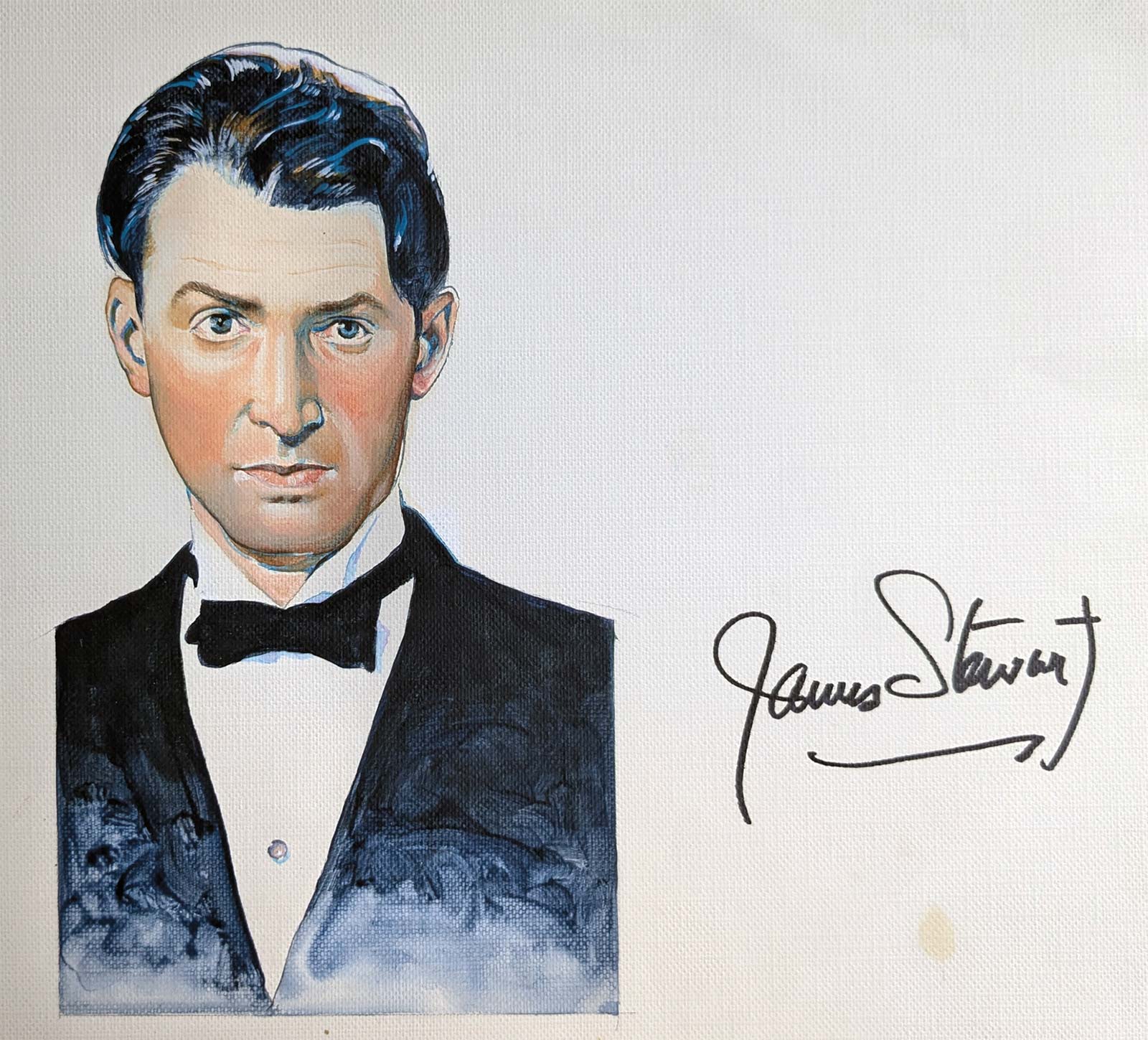 Jimmy Stewart
Jimmy Stewart
Jimmy Stewart has always been my favorite actor. For many years It’s A Wonderful Life was my favorite film. The characters he portrayed were the kind of men I hoped to become, and by all accounts, he was the same person in real life. I was thrilled when my painting came back in the mail bearing his bold signature.
Michael Shane Neal
I met Shane in 2010 and was immediately impressed by both his talent and his generous nature. I attended a workshop at his studio in 2013 and learned so much that I consider him my primary mentor.
His mentor and father figure was the great Everett Raymond Kinstler. Both men contributed quotes to an article I wrote for International Artist titled “The Mentoring Chain,” tracing artistic influences back to Sargent and Sorolla. When I teach students I like to remind them they are now part of that chain.
Shane has painted several members of Congress, a Supreme Court justice and serves as chairman of the Portrait Society of America. He was also commissioned to paint the official White House portrait of President Biden. I am proud to count him among my friends.
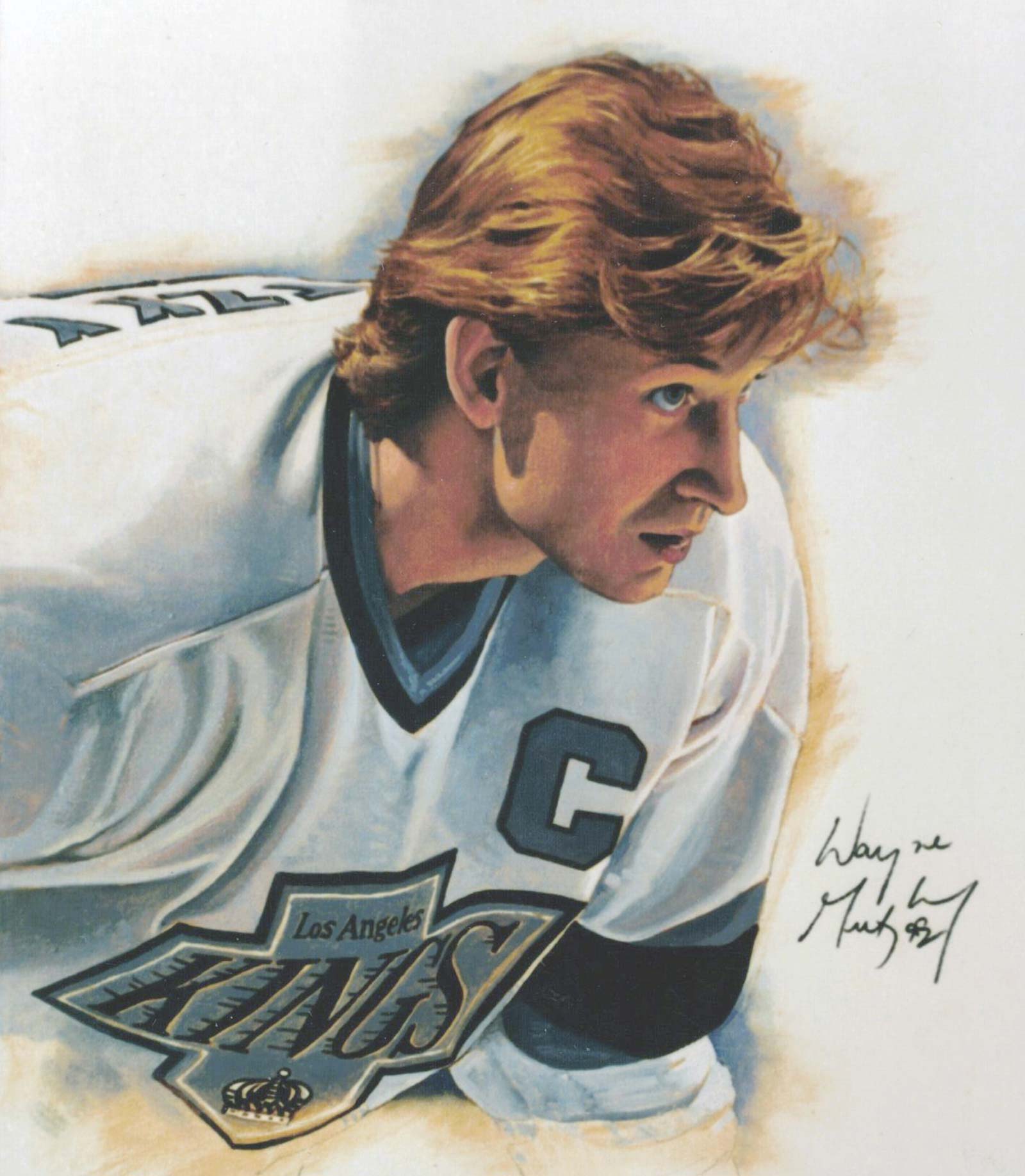
Wayne Gretzky
Wayne Gretzky
In many sports there is endless debate about the greatest player of all time. In hockey, the answer is clear. Wayne Gretzky held 61 NHL records and remains the only player to score more than 200 points in a season, something he accomplished four times.
I unexpectedly saw him at a banquet the night before an Old-Timers baseball game. I handed my camera to a friend and asked him to photograph us shaking hands. When I greeted Gretzky I waited for the camera shutter, but it never came. I kept talking and shaking his hand longer and longer while trying to stay polite. My friend finally took the picture, grinning the entire time. He had intentionally delayed the shot to see how long the awkward handshake would last.
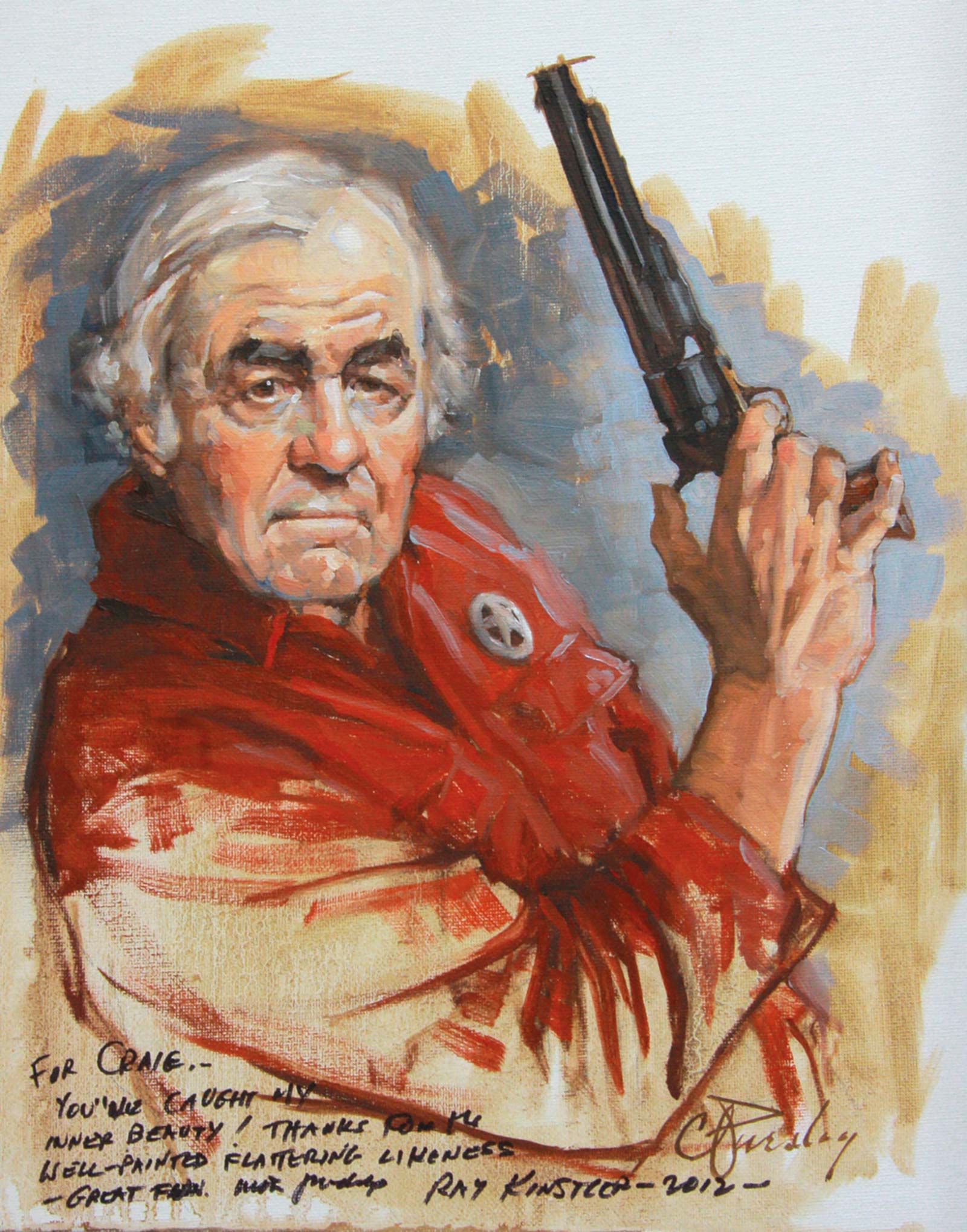 Everett Raymond Kinstler
Everett Raymond Kinstler
Everett Raymond Kinstler left school to become a comic book illustrator and later painted covers for Western and detective pulp novels. He eventually went on to paint many famous figures, including seven United States presidents. He trained under artists such as James Montgomery Flagg, creator of the famous “I Want You” Uncle Sam poster from World War I, and Gordon Stevenson, who had studied with Joaquin Sorolla and John Singer Sargent, two of my artistic heroes.
I met him at my first Portrait Society of America conference in 2010. I stood in line nervously, remembering the intimidating portrait of him I had seen in an old art school advertisement. Instead, he was warm and welcoming. At our second meeting he asked me to call him Ray, something I never managed to do out of respect. He possessed an extraordinary knowledge of art history and shared it generously.
When I painted him I wanted to reference his early days illustrating pulp Westerns. I had a photograph of his face but posed for the rest of the figure myself. True to form, he signed the painting with humor: “You’ve captured my inner beauty! Thanks for the well-painted flattering likeness. Great fun.”
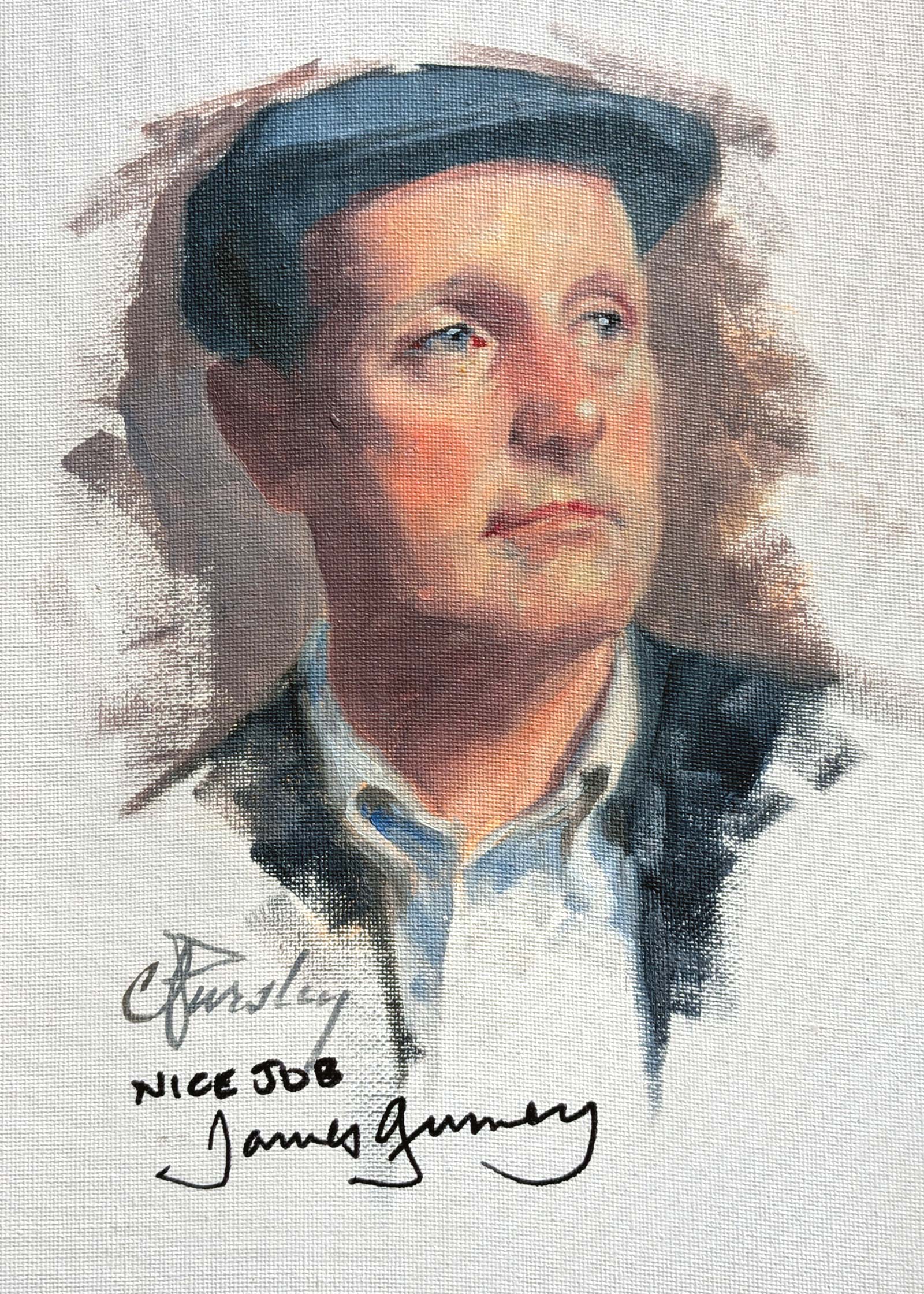 James Gurney
James Gurney
I first encountered James Gurney’s work in 1992 when I saw his book Dinotopia in a bookstore. The imaginative world where humans and dinosaurs coexist was beautifully illustrated, and his name has stayed in my memory since then. A few years later I found another of his books, Color and Light, and bought it immediately. To this day it remains the clearest and most useful book on painting I have ever read, especially his explanations on color theory. When I finally met him at a Portrait Society event, I discovered he was not only talented but also kind and very funny. —
About the Artist
 Craig Pursley
Craig Pursley began creating art at an early age, receiving professional commissions at 14. At age 17 he was named Nebraska’s Outstanding Young Artist, and the following year, completed a large mural that still hangs in his high school. While in college he worked as a composite artist for several law enforcement agencies including the FBI. He continued this work while teaching art in Colorado.
In 1983, Pursley moved to California and became an illustrator for a major newspaper. During that time he also gained recognition as a sports artist working with the California Angels, Topps Baseball Card Company and Upper Deck. In 2002 he moved to New Hampshire, where he now paints the landscapes of New England and operates the American Heritage Gallery of Art in the village of Bath. He is a member of the Portrait Society of America and Oil Painters of America.
His work appears in the National Baseball Hall of Fame, the Saint-Gaudens National Historic Site and the Ronald Reagan Presidential Library and Museum. His paintings are also held in private collections across the United States and Europe. He has won numerous national awards including two Best of Show honors in 2015 and has two portraits permanently displayed in the New Hampshire State House in Concord.
See more from the artist
pursleyart.com
View his new book here