In the last issue, we shared words of wisdom from six of our new and returning faculty artists for the Portrait Society’s 2026 The Art of the Portrait Conference. In this issue, we’re sharing more insights from our faculty artists on the mentoring process, choosing the right education path and overcoming obstacles in the studio. This year’s conference will take place in Atlanta, Georgia from April 9 to 12 and features favorite events such as the opening night Face-Off demonstration, Portfolio Critique sessions, Open Drawing Studios and the 6x9 Mystery Art Sale. Throughout the weekend, the top 20 finalists of The International—the world’s premier portrait competition—will showcase their exceptional works in pursuit of the Draper Grand Prize and a $50,000 cash award. For this issue, I had the pleasure of speaking with six more faculty artists: Frances Bell, Louis Carr, Ali Cavanaugh, Jeff Hein, Michael Shane Neal and Mary Whyte.
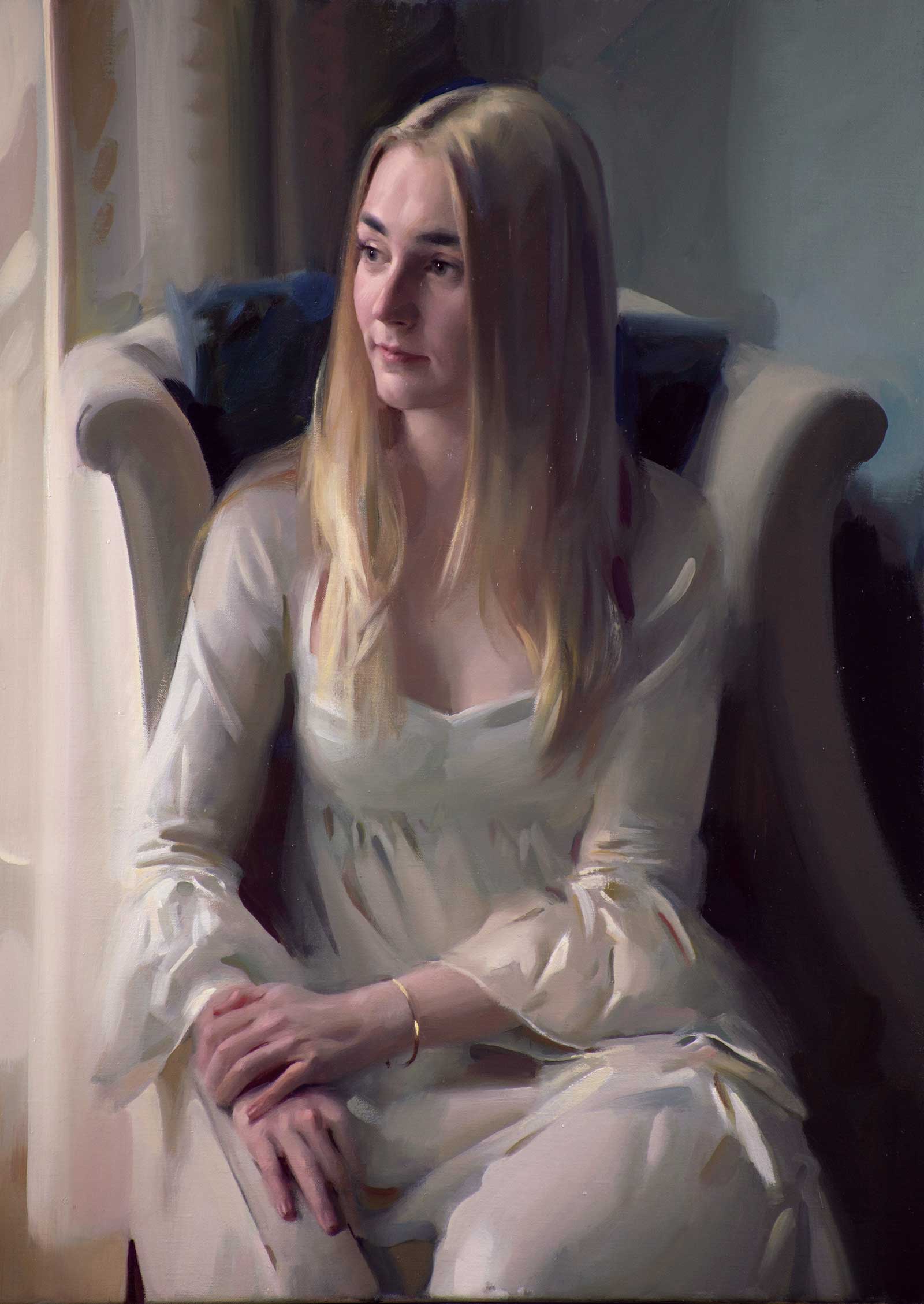
Frances Bell, Flora, oil on canvas, 35½ x 19½" (90 x 50 cm)
For Louis Carr, mentorship is the process of helping artists push past the invisible limits they’ve drawn around themselves, revealing that the boundaries they fear have no real hold on them. He explains, “There’s an old experiment in which a spider becomes trapped inside a circle drawn in ink. Each time the circle is redrawn smaller, the spider retreats towards the center until, by chance, one of its legs steps over the line. From that moment on, its understanding of the line has been changed. Once it crosses over the spider can no longer be confined by the drawn circle again.
“In my experience, many young professionals carry invisible circles within their own thinking —boundaries drawn by the stories they tell themselves,” he says. “Stories of failure, of being unqualified or undeserving, or of fearing rejection and embarrassment. These self-imposed lines can feel unbreakable until someone helps you see through them. That’s what mentorship does. A mentor doesn’t remove the barriers for you. They simply reveal that the walls were never real. Once you step across that mental line of disbelief, you can never be confined by it again.”
Louis Carr, Jeff, oil on panel, 36 x 24" (91 x 60 cm)
In his own career, Carr has made mentorship a central part of his life. Through East Oaks Studio, which he founded to foster both great artists and great art, they run an ongoing artist-in-residency program that supports up to five artists at a time. “We help them refine their skills, develop their voice, and prepare for the professional world,” Carr says. “I also mentor artists individually, both online and in person, helping them navigate the next step in their creative journey.”
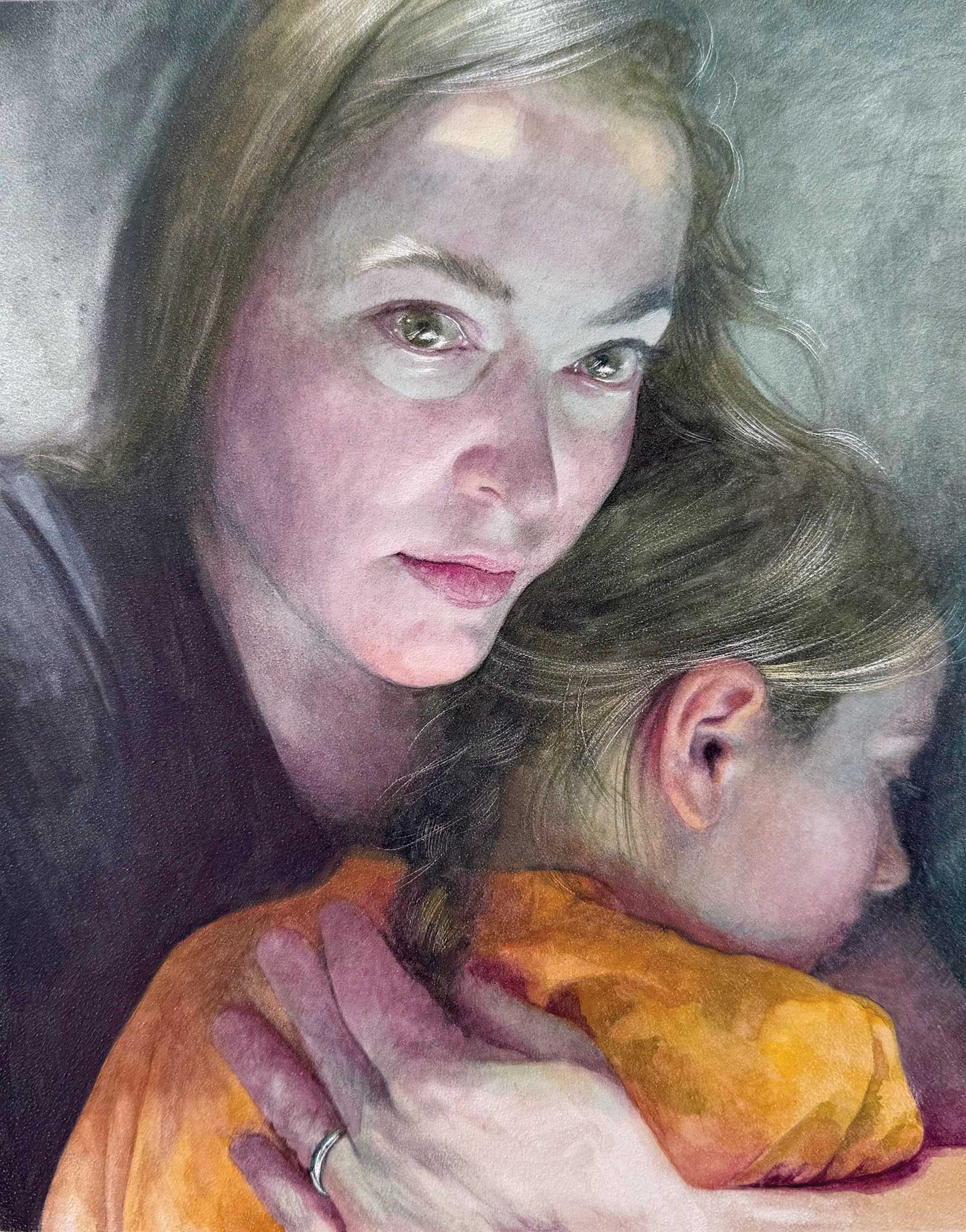
Mary Whyte recognizes that guidance from a mentor can be profoundly valuable at any point in an artist’s career. “I have had mentors both in painting technique, as well as in career management,” she explains. “Both mentors were instrumental in my development and growth as an artist. Finding the right professional who can commit the time and come alongside you is not always easy. The best way to engage a mentor is to just ask. If you don’t ask, opportunities won’t happen.”
Ali Cavanaugh, Close to my Heart, watercolor on panel, 10 x 8" (25 x 20 cm)
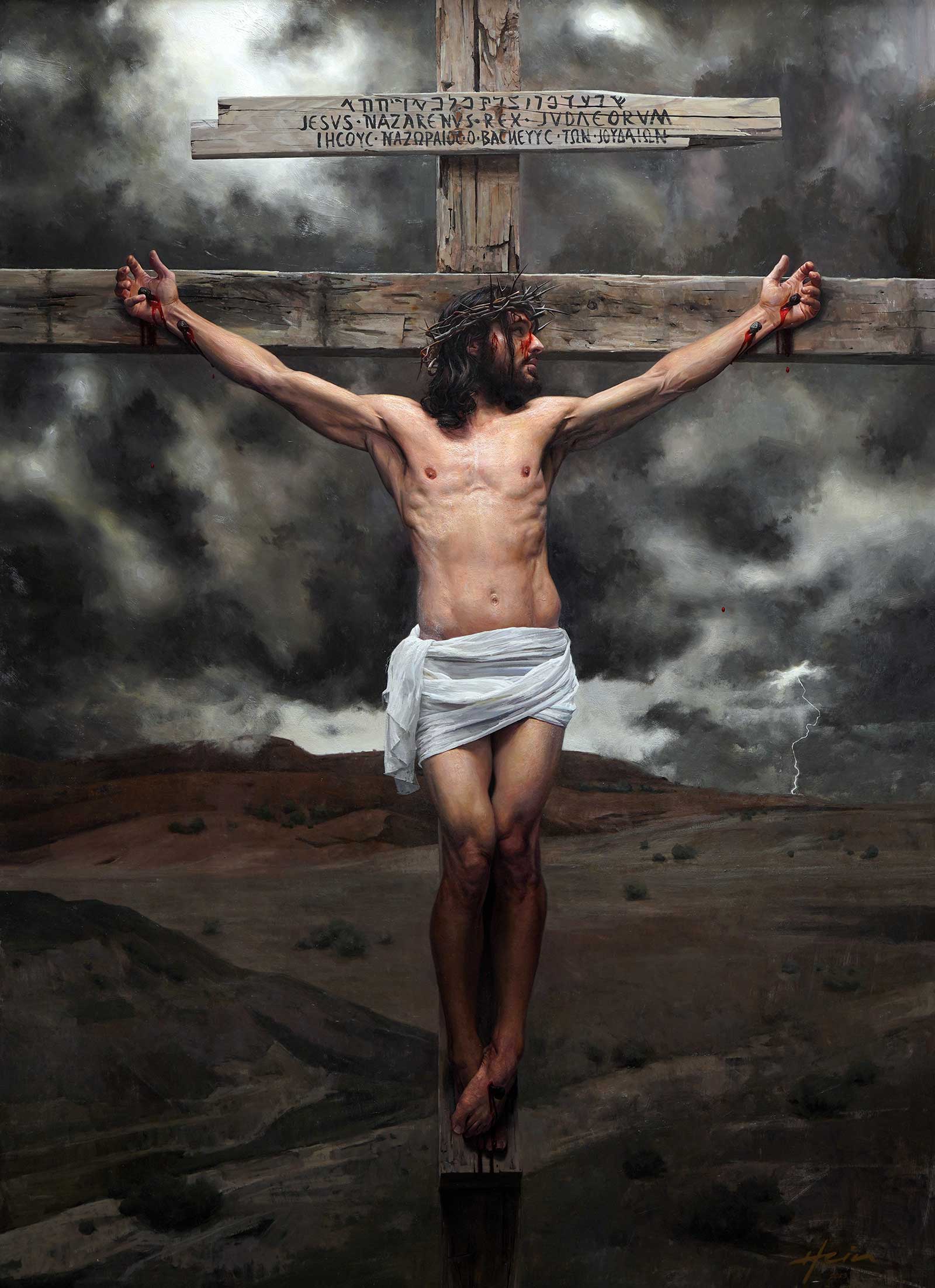
Jeff Hein, The Crucifixion, oil on canvas, 120 x 96" (304 x 243 cm)
She also learned the secret to painting from a mentor. “Many years ago, I had an older artist take a look at my work to offer constructive criticism,” she recalls. “The best advice he gave me was when I asked him how I could improve my understanding of color. I asked ‘should I make color charts? Should I get books from the library on color theory? Should I study the great masters?’ His reply was short and simple. He answered, ‘Ah honey, just paint.’ His point about putting in the time and getting in the trenches was one of the best pieces of advice I ever received. The secret to painting is painting.”
Ali Cavanaugh admits when aspiring artists ask whether they should go to art school, she always tells them it depends. “I’ve mentored hundreds of artists, and no two journeys are the same,” she explains. “Some thrive in structured programs; others grow faster by building their own curriculum through workshops and self-study. Art school can be a great start, but it’s expensive and doesn’t always teach the business or emotional resilience that a career in the arts requires. Being an artist isn’t like choosing any other profession. It’s a calling that demands both sensitivity and strength. For me, coming from a small rural town with parents who knew nothing about the art world, art school was essential. But today, with the wealth of information online, it can be easier to design a rich, affordable education outside of that structure.”
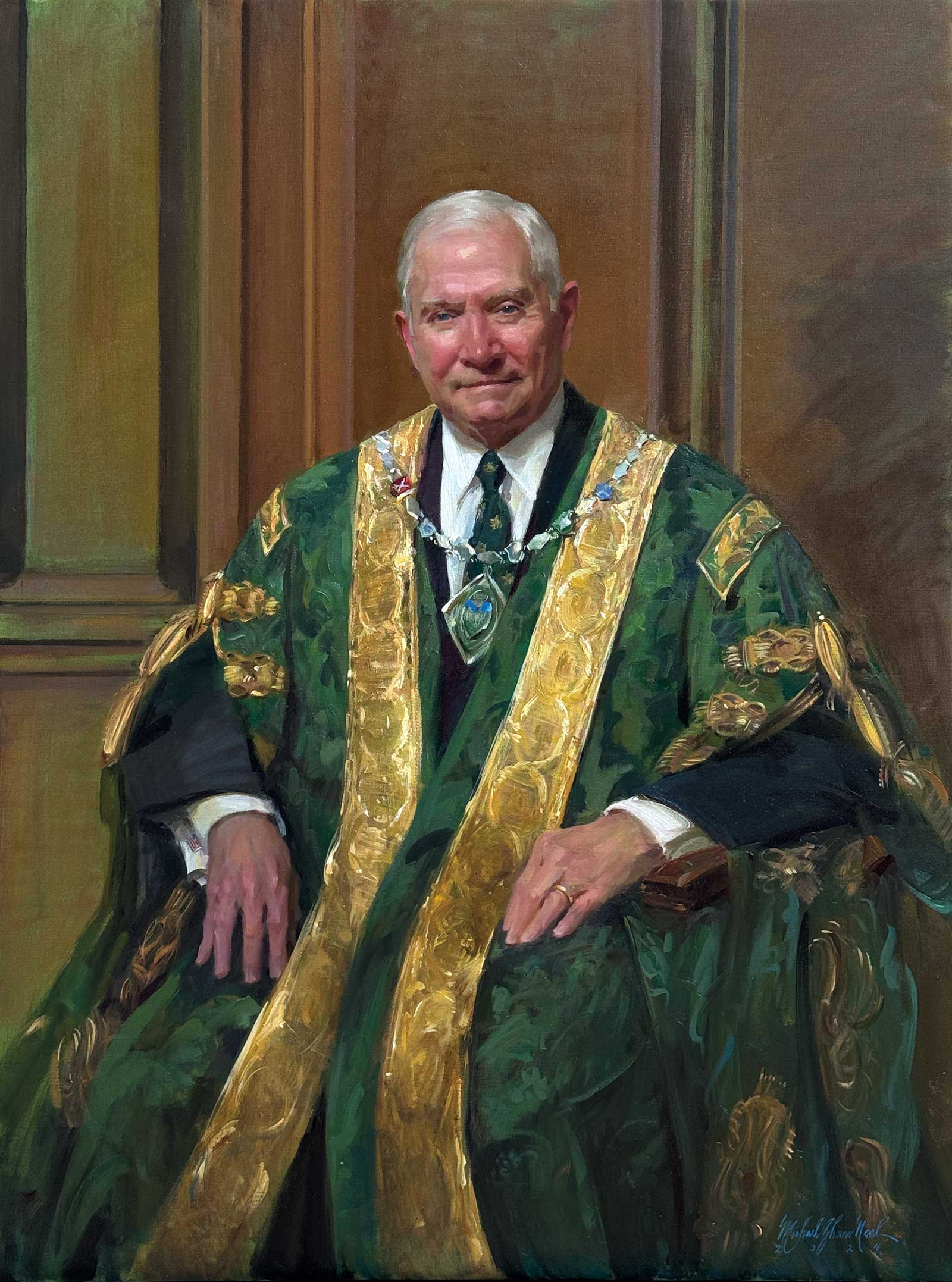
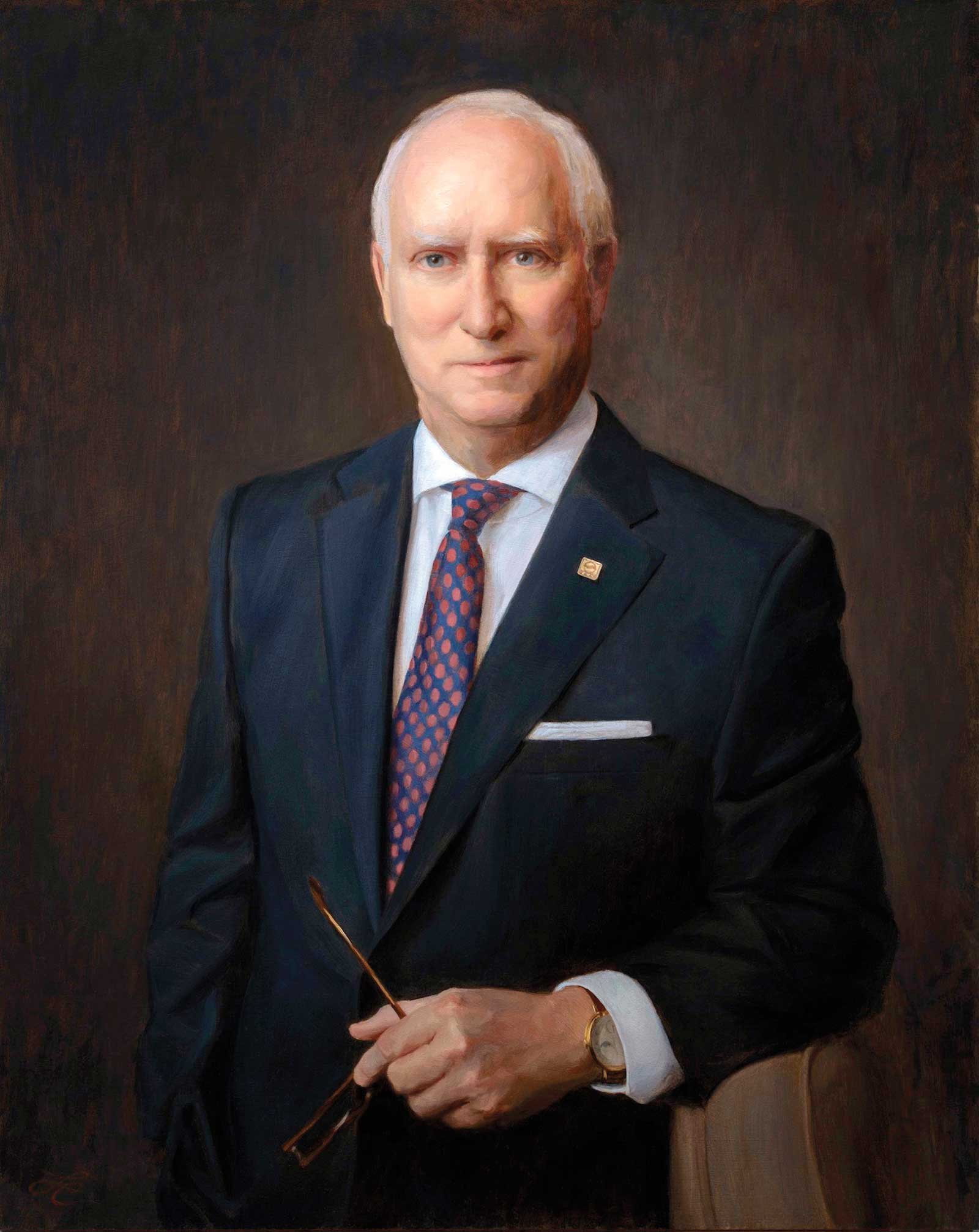
Michael Shane Neal, Chancellor Robert Gates, William & Mary, oil on canvas, 48 x 36" (121 x 91 cm)
Jeff Hein believes that alternative educational paths can far outweigh traditional art programs. “I recommend that a student not concern himself with degrees but rather find a mentor, or mentors, that have mastered the thing that one wants to learn,” he says. “While not likely, this mentor might teach at a formal university, but you will more likely find him or her at a small private institution, atelier or simply in a private studio. There are some prodigies out there that can learn this stuff quickly with self-directed study, but even they would benefit greatly from a mentor. Most, on the other hand, will spend decades struggling to master this craft without proper help.”
Learning how to overcome obstacles is a foundational part of any artist’s journey, and for commissioned works, the obstacles can get even trickier. “There are always unexpected twists and turns in any portrait commission since, unlike in other projects which are your own, in the commission sphere you are in collaboration with another person—in fact perhaps with many people,” says Frances Bell. “This can often feel like standing in a crowded room with everyone speaking to you at once. I find it’s important to consider the collaboration as an interesting artistic endeavor in its own right. You are no less creative when folding in the views of others than when painting entirely from your own perspective. It just requires a focus to sort out the strands of information that will push the painting forward. This is an acquired skill, and one that comes with experience. I find that the best ways to achieve this are to include your client from the start so they can see as much of your thoughts/process as possible, that way their comments are more cohesive to your aims.”
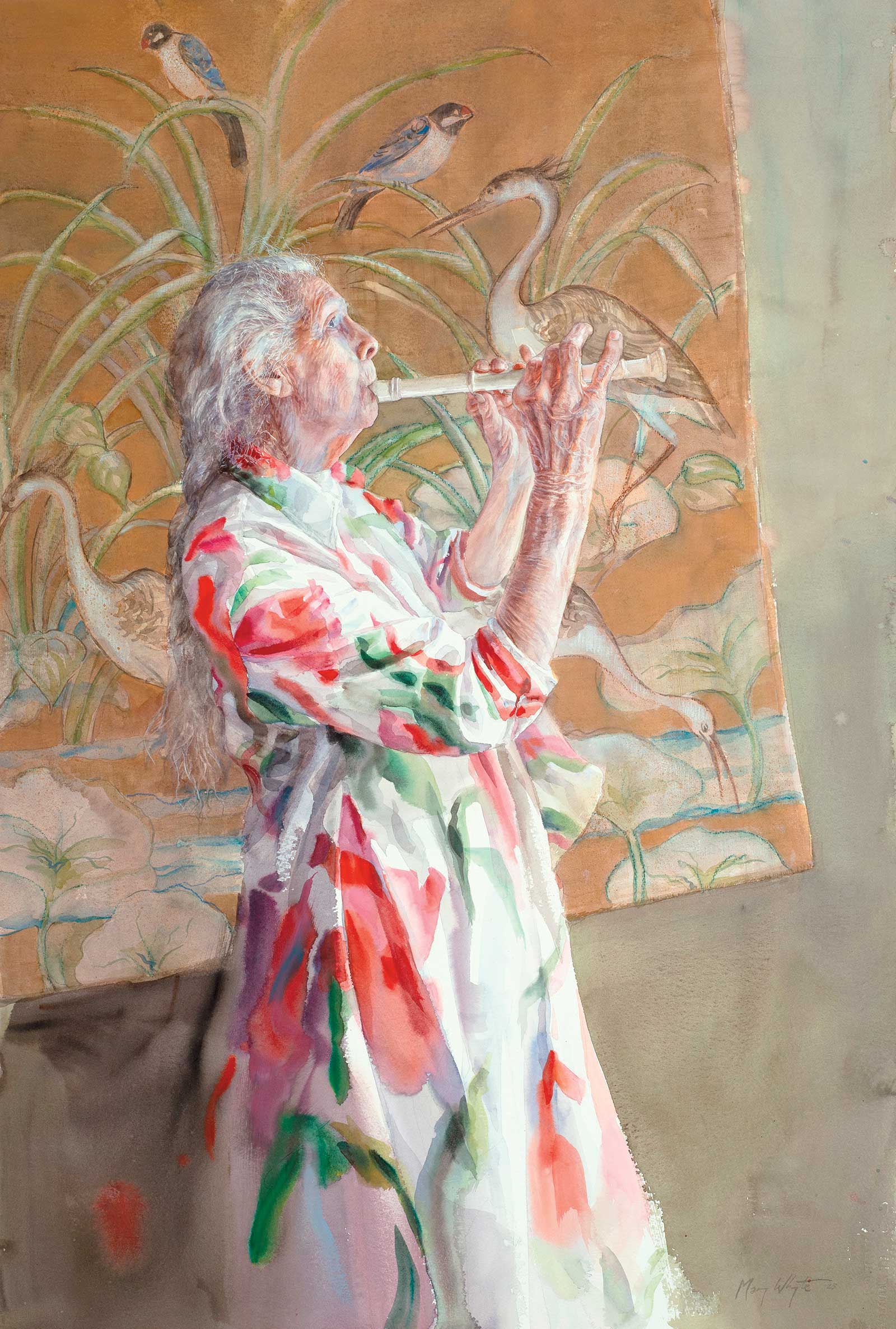
Mary Whyte, Coming to Camelot, watercolor on paper, 36 x 24" (91 x 60 cm)
For Michael Shane Neal, the biggest challenges arise when grappling with the psychological aspect of portraits, as well as carving out time to paint in a busy schedule. “Although I remain challenged by all the technical aspects of painting, I increasingly find the psychological aspect of painting portraits the most challenging,” he explains. “What a sitter expresses to me through their character and personality requires great sensitivity and observation on my part as the artist. What they ‘see’ in the work I’ve created can be very influenced by what they feel and can sometimes fluctuate based on circumstances in their own lives. I heard a famous custom tailor of men’s clothing say recently that his work was ‘90 percent psychological and 10 percent tailoring.’ While I am not quite ready to go to that percentage breakdown, I do know that psychology plays a bigger role in painting people than I thought when I began painting portraits.”
Neal continues, “The biggest obstacle I face is not carving out enough time to paint for myself. Painting portraits is so demanding in every way, from the technical aspects to the emotional ones. Taking time to get out of your studio to paint plein air or even to take on personal work in the studio feeds your creativity, refreshes your mind, and gives you the underpinning necessary to both tackle portraiture and excel in the genre.”
We hope you’ll join us in Atlanta, Georgia, April 9 to 12, to hear more words of wisdom from our 2026 faculty artists. For information on registering for the conference, visit portraitsociety.org. —