This portrait began as a demonstration piece for my students at Vitruvian Studio. The reference was derived from a photoshoot with our model, Liz. She’s fun to draw, with sharply defined features and perhaps the most expressive hands of any model I’ve worked with. Wrapped in a pashmina, hands drawn up to her chest, she presented both an elegant pose and a genuine challenge. The moment she fell into this pose, I knew I wanted to draw her.
My approach to portrait drawing unfolds in two stages. The first is largely linear, where I establish placement and proportions using flat shapes, without committing to full light and shade. In the second, I pivot to a more three-dimensional way of thinking to describe the effect of light as it flows over the form. Throughout, I worked on toned paper with various pencils, graphite powder and white chalk.
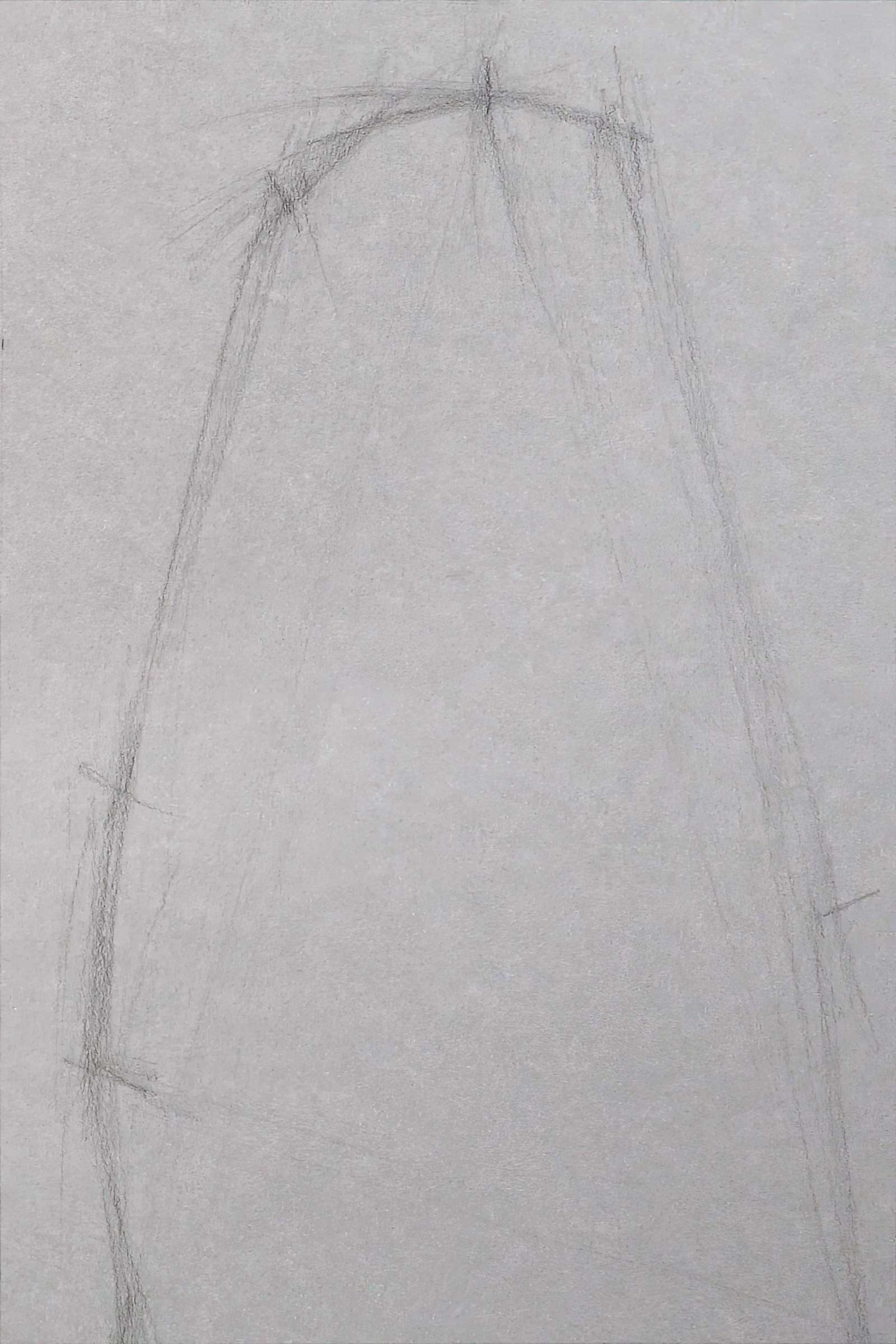
Stage 1 The Envelope Every drawing begins with the biggest, broadest shapes possible—not the individual “parts” of the figure, but a large containing shape for the whole silhouette. Artists call this an “envelope.” Imagine her as a sculpture we’re about to move; wrapped in moving blankets, we’d end up with a Liz-shaped lump conveying her general proportions. I draw this shape using straight lines. The corners between segments serve as landmarks I can check against one another.
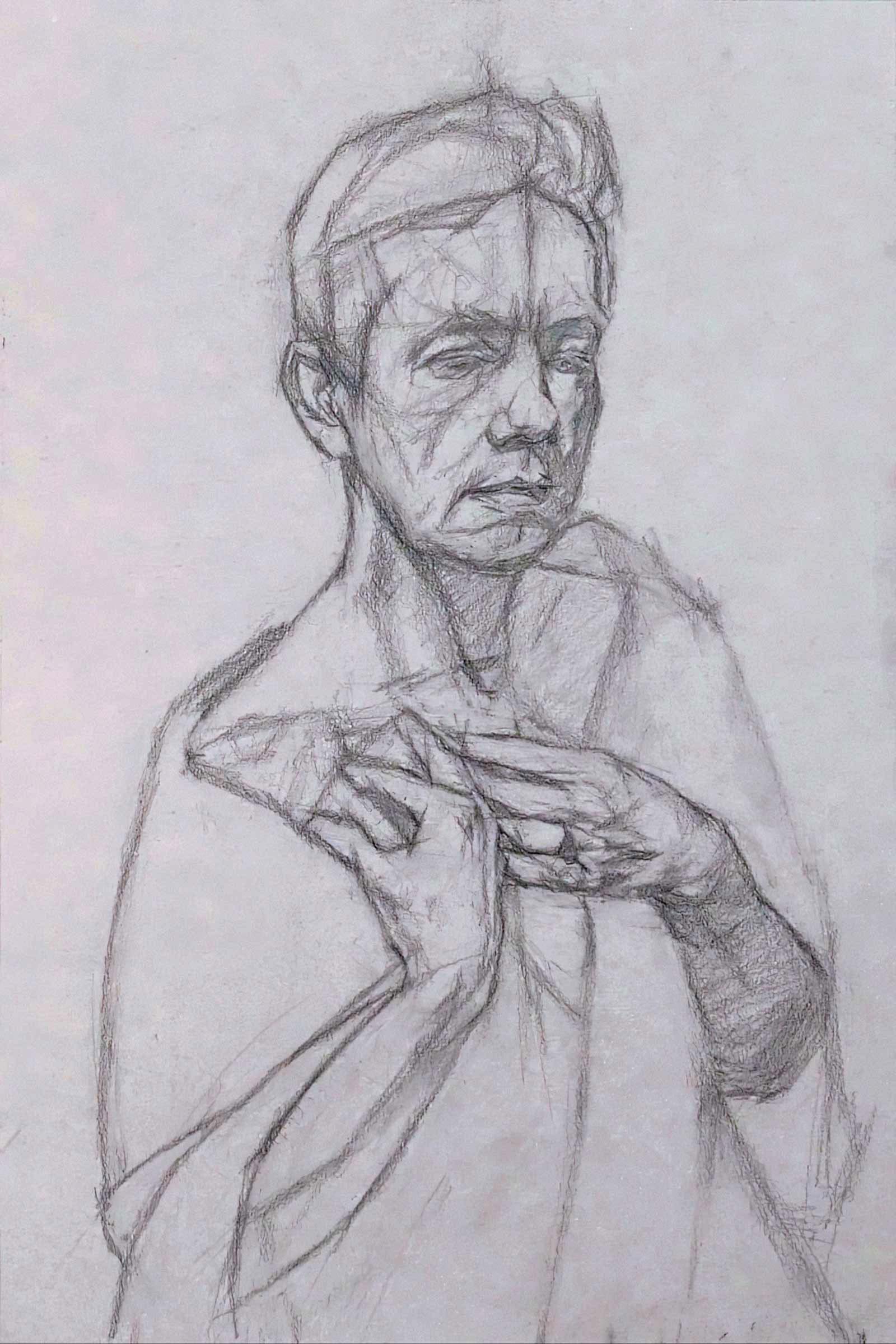
Stage 2 The Block In From here, I cut into that envelope shape, carving out the head, shoulders, arms and facial features. It’s a process of breaking large shapes into subdivisions, treating the figure as a two-dimensional jigsaw puzzle. A hand is nothing but a weird shape within a hierarchy of others. I hold the pencil far back, drawing with the shoulder of the lead to keep lines soft and easily erased.
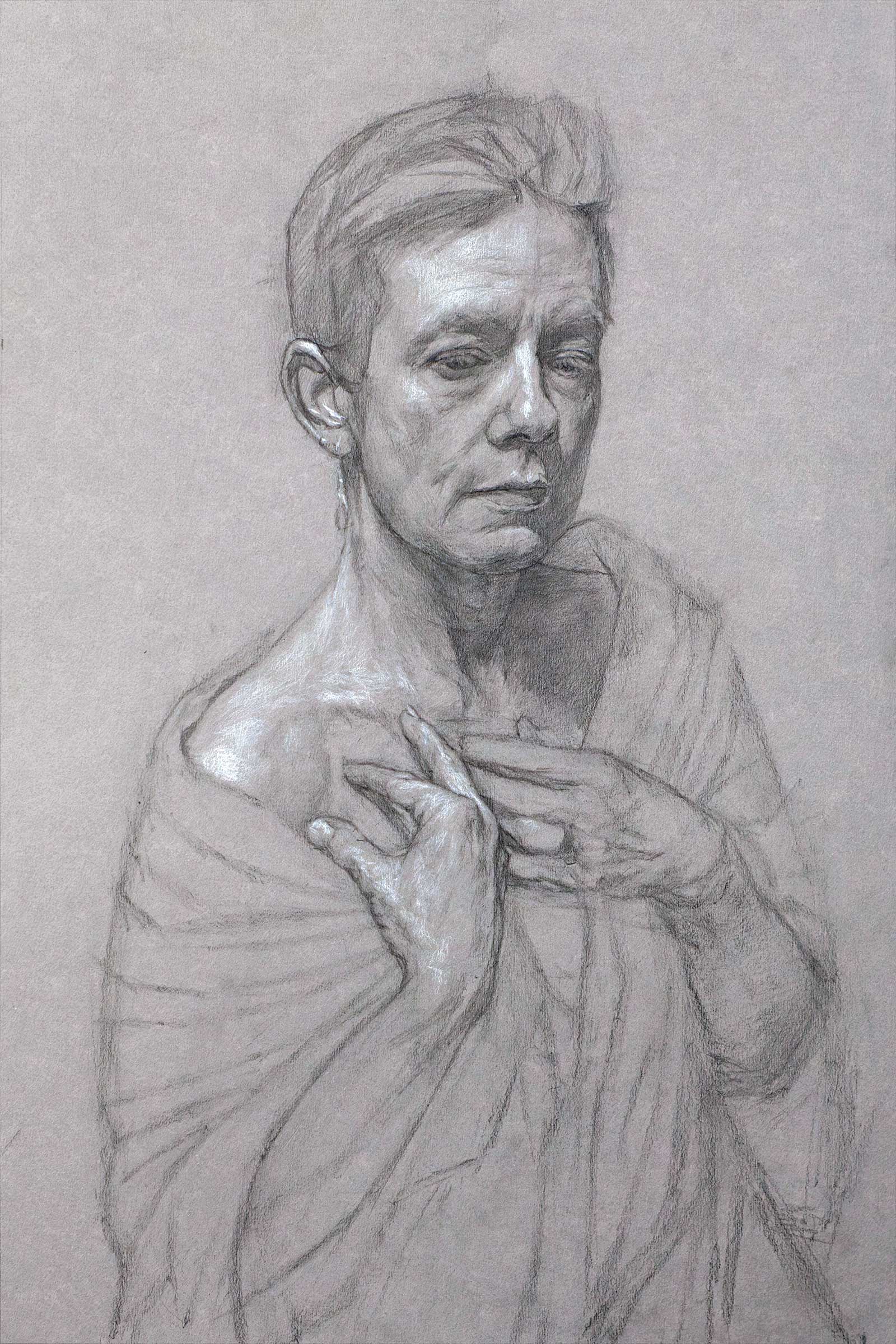
Stage 3 Getting More Specific After completing the block-in, I refine the drawing with more specific line work, increasing the “resolution” by adding information to each contour, paying attention to ever smaller forms. This is where I consider things like facial expression, or how the segments of each finger relate. I incorporate limited hatching here, not for light and shade, but to consolidate shadow shapes and mark the position of highlights.
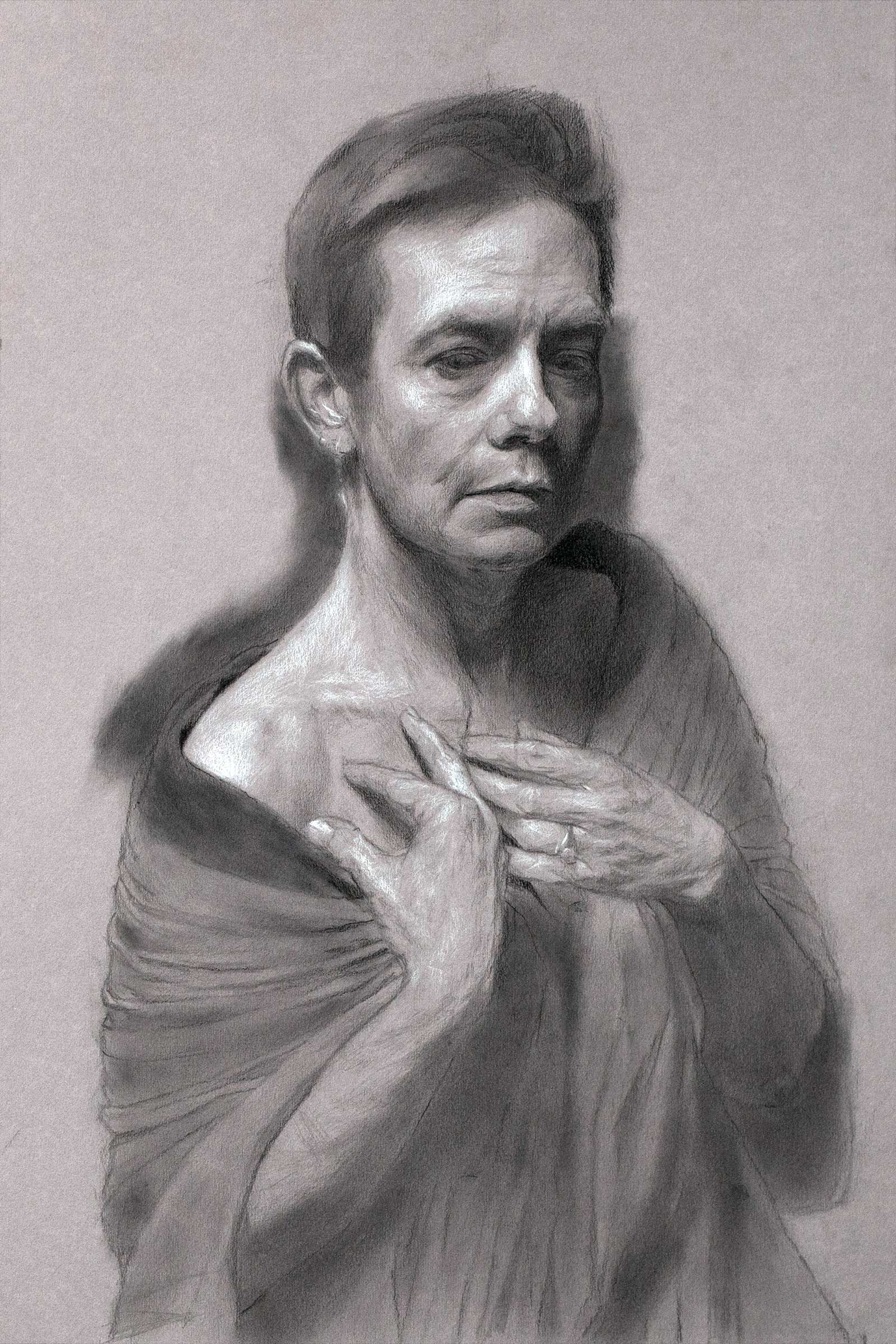
Stage 4 Setting the Value Range With the line drawing complete, it’s time for light and shade. I establish the total value range by identifying candidates for the darkest dark and lightest light: the shadow under the fabric next to her chin, and the highlights on her face and shoulder. I push opaque material into these areas as reference points, then apply graphite powder with a brush to the large dark masses, an efficient way to knock them down quickly.
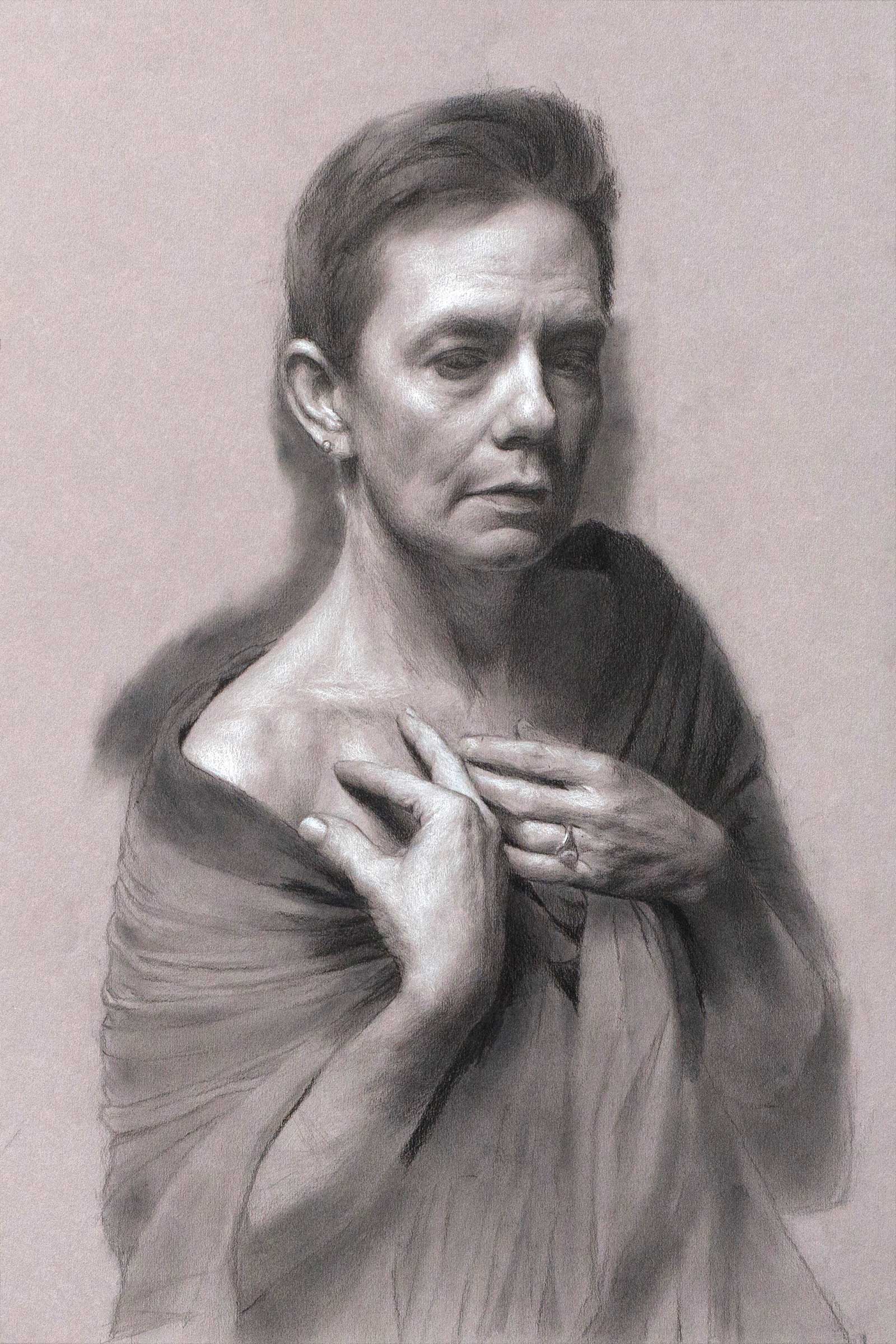
Stage 5 Pushing the Darks I push shadows further with my darkest pencils. The sense of light is driven by contrast; as shadows deepen, a broader range of values becomes available in the light side, allowing for rounder forms that appear more fully illuminated. I also tend to the hands here, ensuring the topography of bones and tendons is organized before committing to full value.
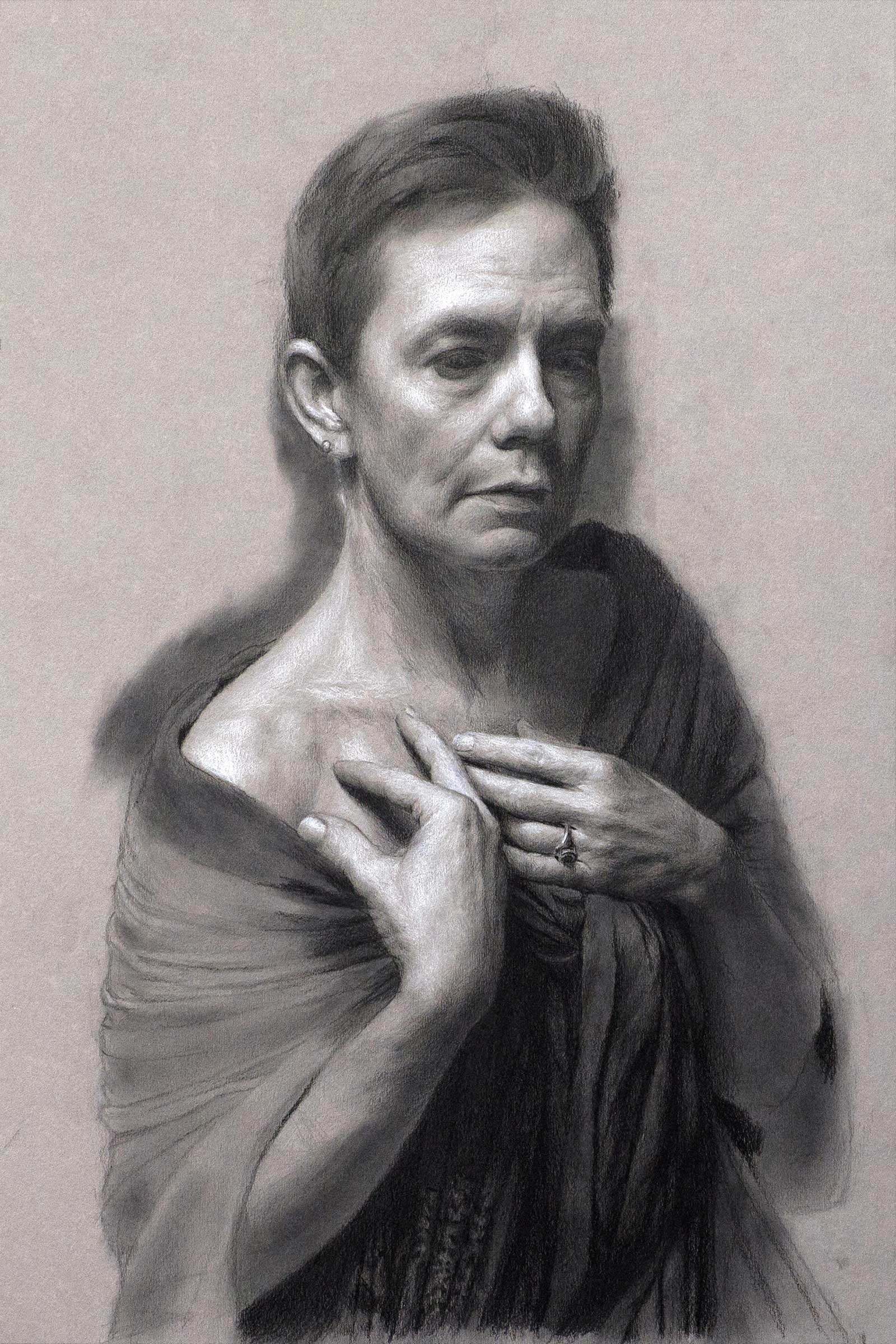
Stage 6 Continue Value Development The lower pashmina holds the darkest values in this image. Pushing those areas deeper allows for further description in the murkier parts of the arms and hands. Her left hand isn’t brightly lit, but the depth of value behind it allows those dim surfaces to read as part of the overall light flow. As I resolve these relationships, I extend the tonal development image-wide.
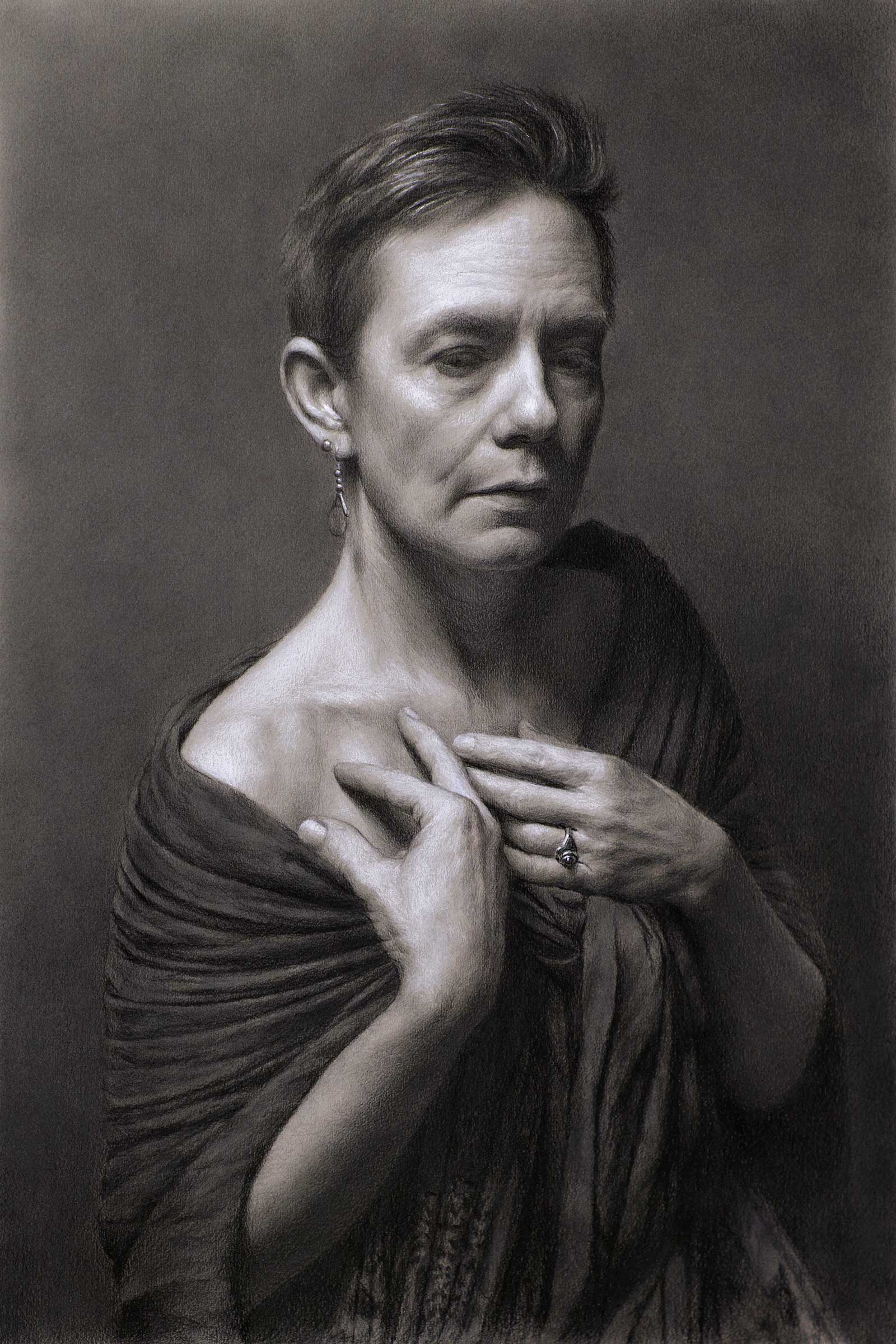
Stage 7 Finished Artwork As the drawing nears completion, I resolve “discords,” i.e., moments that pop out of place. These might be stark contrasts, sharp edges, wayward strokes or smudges. A few minutes cleaning up minor errors with an eraser and sharp pencil can elevate a portrait’s sense of polish remarkably. Once the most noticeable discords are fixed, the portrait is complete. —
David Jamieson is a Canadian-born fine artist, with a focus on figure, portrait and still life imagery. He is co-founder and principal instructor at Vitruvian Fine Art Studio, where he has taught drawing, painting and anatomy since 2006. He lives with his wife, fellow artist and teacher Melinda Whitmore, in Oak Park, Illinois.