Drawing is how every idea travels from the imagination into life. Every building, shampoo bottle, pair of shoes or piece of furniture begins this way—a line on a page, a thought taking shape. Before there’s color, texture or light, there’s a mark made by someone trying to understand what they see and how to show it to the world.
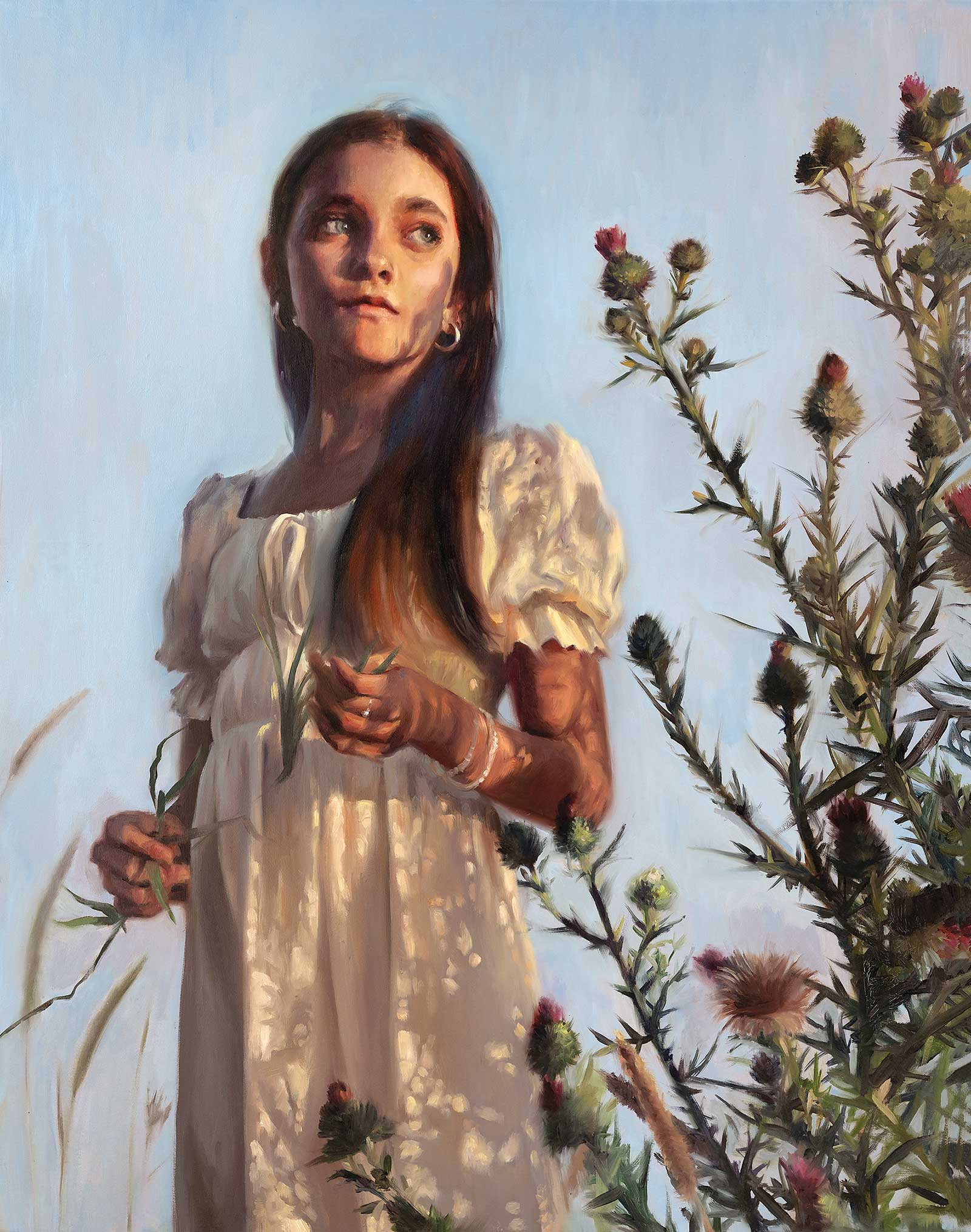
A Rose, oil on canvas, 24 x 30" (61 x 76 cm)
As a practicing artist and teacher, I’ve noticed a real shift in the past several years in how people create. When students skip observing and translating through drawing, they lose the understanding that guides them once the painting begins, and it shows in how their work feels.
Drawing gives us the information we need to make creative choices: what to sharpen, what to soften, where to let color speak and where to hold back. Without strong drawing skills, we lose flexibility and the ability to correct as we go. We also lose our creative voice because we start copying what we see rather than interpreting it with understanding. It’s like traveling somewhere new without learning the route. You might get there with Google Maps, but if it’s not working, you’ll have no idea how to find your way back.
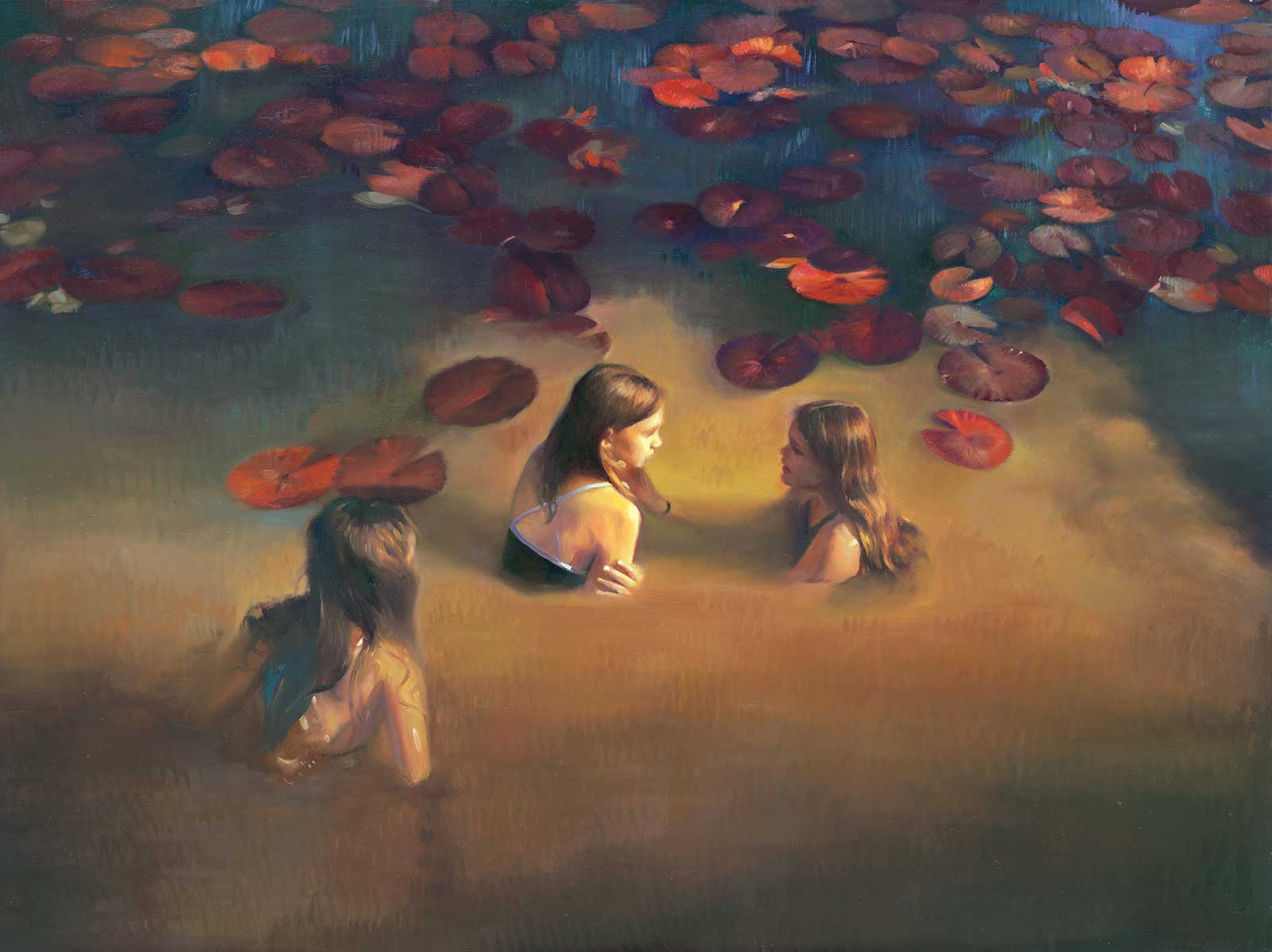
Summer’s Last Light, oil on canvas, 30 x 39¾" (76 x 101 cm)
In our digital age, fewer people draw from scratch because ready-made images and tools for tracing or projection have replaced the need to look and think for ourselves. Drawing from observation demands attention, patience and problem-solving. This used to be how people made sense of the world, but now that we can copy or photograph anything instantly, that skill is fading. The slow process of drawing gives our minds time to form better ideas. If we are always rushing that process, we lose the practice of true observation, and with it, something essential to the artist’s way of thinking.
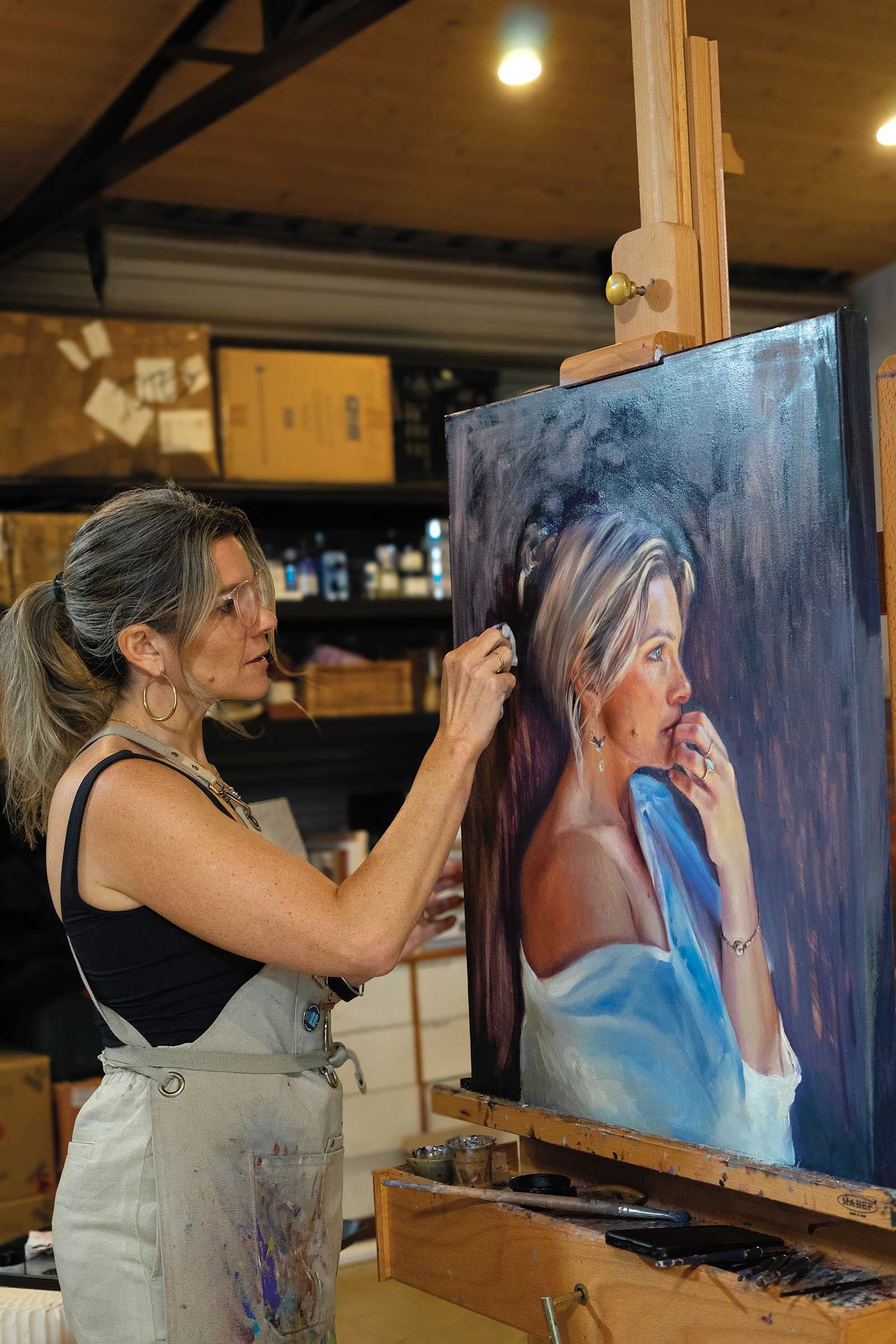
Jessica Le Clerc works on her demo painting in the studio.
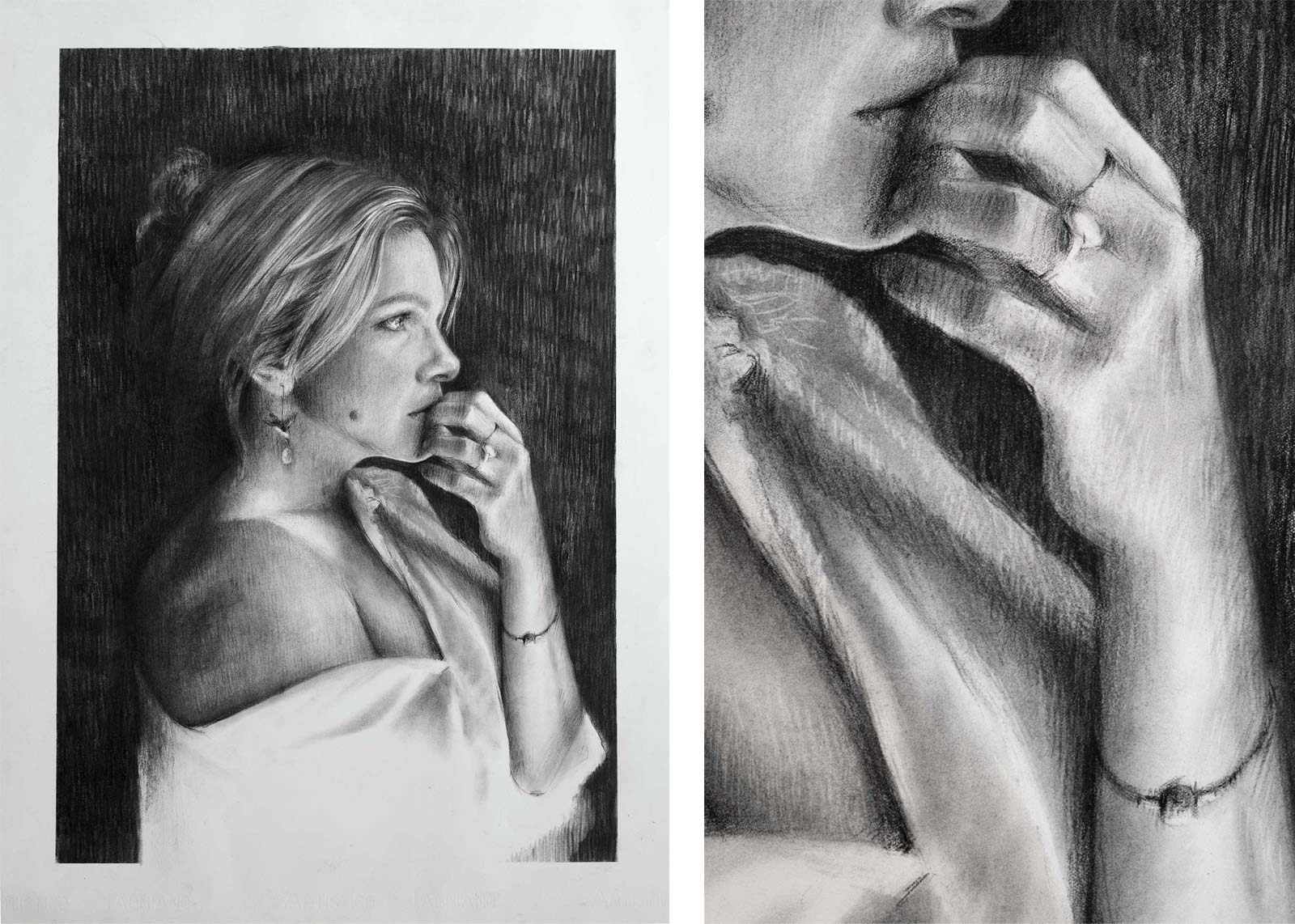
Because this portrait is of myself, it felt even more important to study properly by drawing first. Without that discipline, it’s easy to slip into memory drawing, where familiarity takes over and you paint what you think you see instead of what’s actually there. This could mean I’d paint myself either too beautiful or too terrifying, depending on how I see myself. I’ve done both in the past. I began with charcoal, a thinking medium that moves easily, blocking in big shapes to find proportion and rhythm before refining structure and tone. Working in monochrome kept my focus on value and form. Every correction taught me something new and built a stronger foundation for the painting.
My Art in the Making 2025 Self Portrait
Stage 1 The Idea
I started this artwork by designing a reference image. I prefer portraits that feel like observations, where the viewer is quietly observing the subject rather than the subject performing for the camera. For this self-portrait, that moment came right at the end of the shoot when we were all about ten seconds away from me getting tired of having a camera pointed at me and calling it a day. I’d stopped thinking about it and was simply sitting there, looking a bit disarmed and lost in thought. You can always tell when a sitter stops posing; that’s usually when the best shot happens. Some artists who capture this beautifully and continue to influence my work are John Singer Sargent, Tom Roberts, Richard Schmid, Jeremy Lipking, Nick Alm and Ruth Fitton.
Stage 2 Studies and Reference
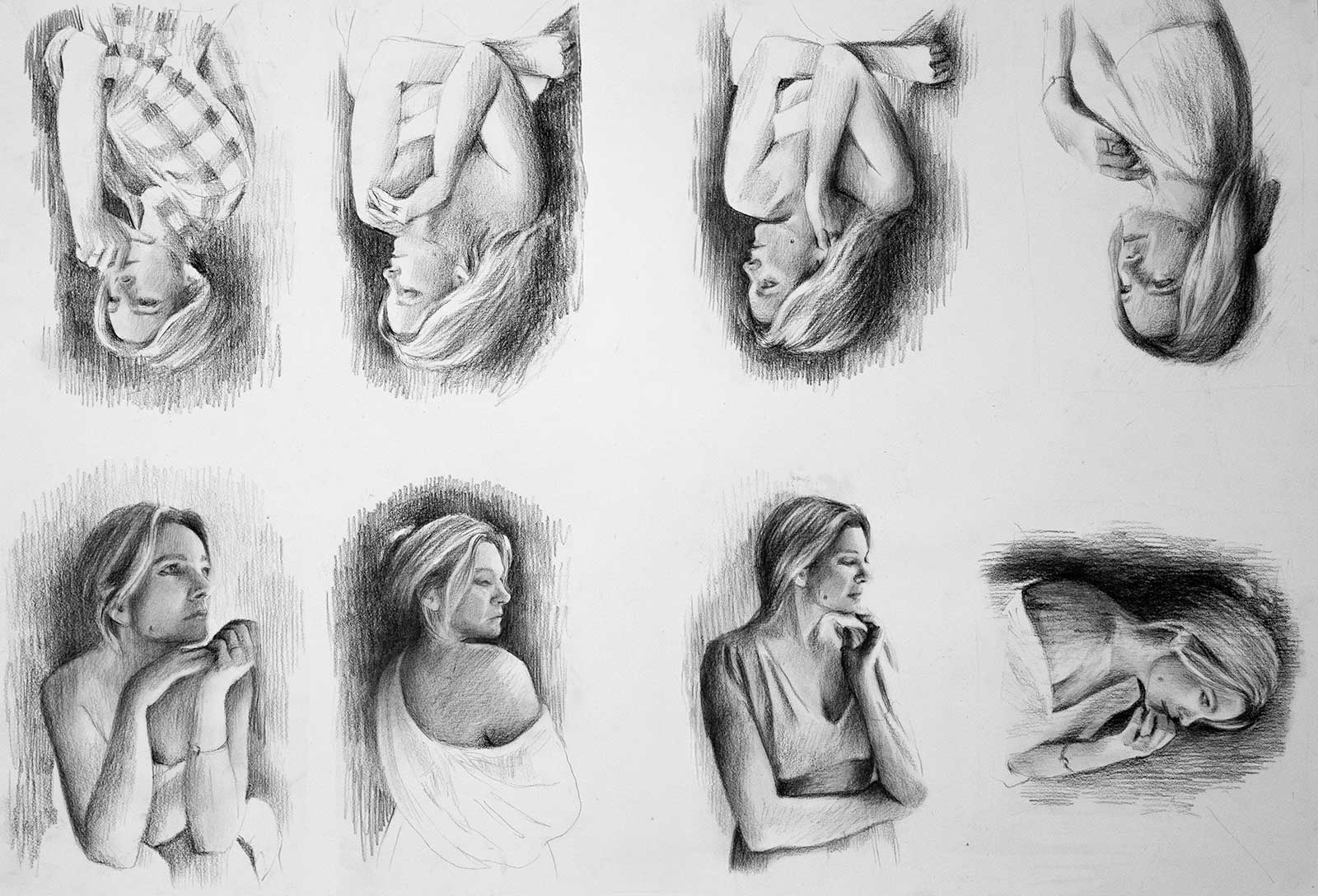
I created a series of small black-and-white sketches to test rhythm, flow and composition. I like to joke that this process is my version of Dinosaur Photoshop. It strips away the distraction of color and helps me see which image has the strongest composition, value and movement. The photo I chose to paint wasn’t the one I thought I looked prettiest in, but it had stronger composition and optical flow. The direction of light and shadow guided the eye, the posture felt unposed and thoughtful, and the connection between the gaze, hand and shoulder created a strong visual narrative.
Color Swatches
Stage 3 Drawing for Design (Longer Charcoal Study)
I call charcoal the thinking medium. It gives me time to slow down and make decisions before committing to paint. In the study I can adjust proportions, experiment with marks and lost edges, and make sure the design holds together. It’s where I work out structure and value relationships, so when I begin painting, I can relax into color and texture knowing those foundations are sound. Charcoal also helps when I get too detailed and lose the magic. It lets me pull back, loosen up my marks and find expression again.
Energetic Vertical Marks

In almost all of my paintings, these vertical marks seem to find their way in. They’re a reminder that nothing we see is ever truly still. The optical nerve is always in motion, sending us information that’s alive and shifting. These marks cut through the subject just enough to make me feel that movement, the pulse of reality underneath everything. They help me keep the energy of the world in the work so the painting feels like it’s breathing rather than sitting still on the surface.
Stage 4 Ébauche
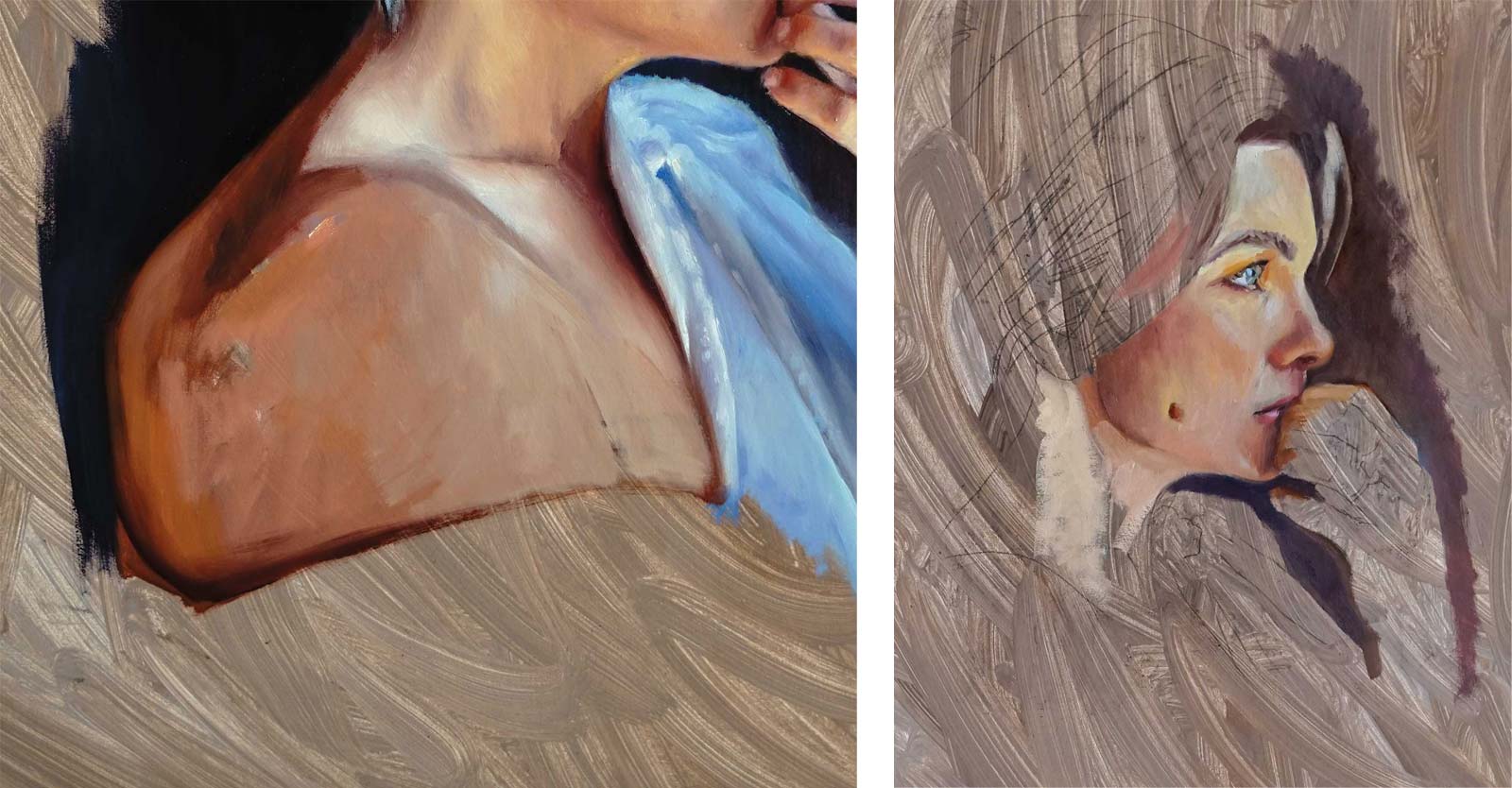
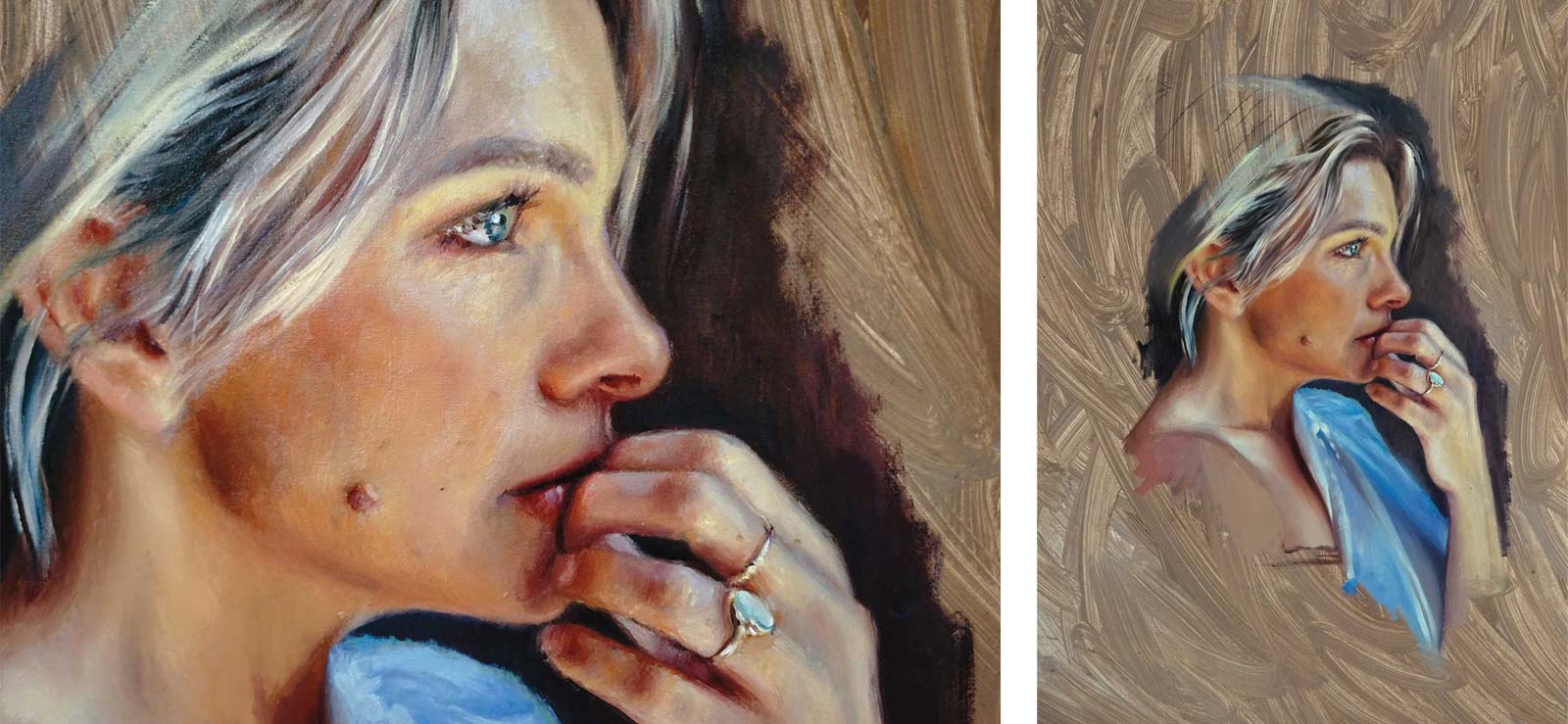
I always start applying paint by laying down an ébauche, the French term for a thin first draft or underpainting that blocks in the tone, composition and main colors in the piece. This stage acts as a map for me to build a more refined layer on top of. Working from a simple first layer helps the flow of the details that come next. My job at this point is to stay above the details, thinking about the portrait as a whole and getting a clear sense of where I want to go with color and tone.
Stage 5 Building Up the Focal Area
Once that first layer is down and I feel confident about the painting’s direction, I slow down and begin building a more detailed layer. Knowing I’ve worked hard in the drawing phase and ébauche to develop the best possible design gives me confidence to shift gears, to move through small sections at a time and get lost in the intricacies and hard work of making it the best painting I can. Those early steps quiet the natural painter’s doubts that ask, “Is this composition a good idea? Is the story interesting enough? Do I have enough tonal range?” All that has been solved. Now I just lose myself in the tiniest shifts of color and detail. It’s like compartmentalizing the mental load of a painting.
Stage 6 The Hand
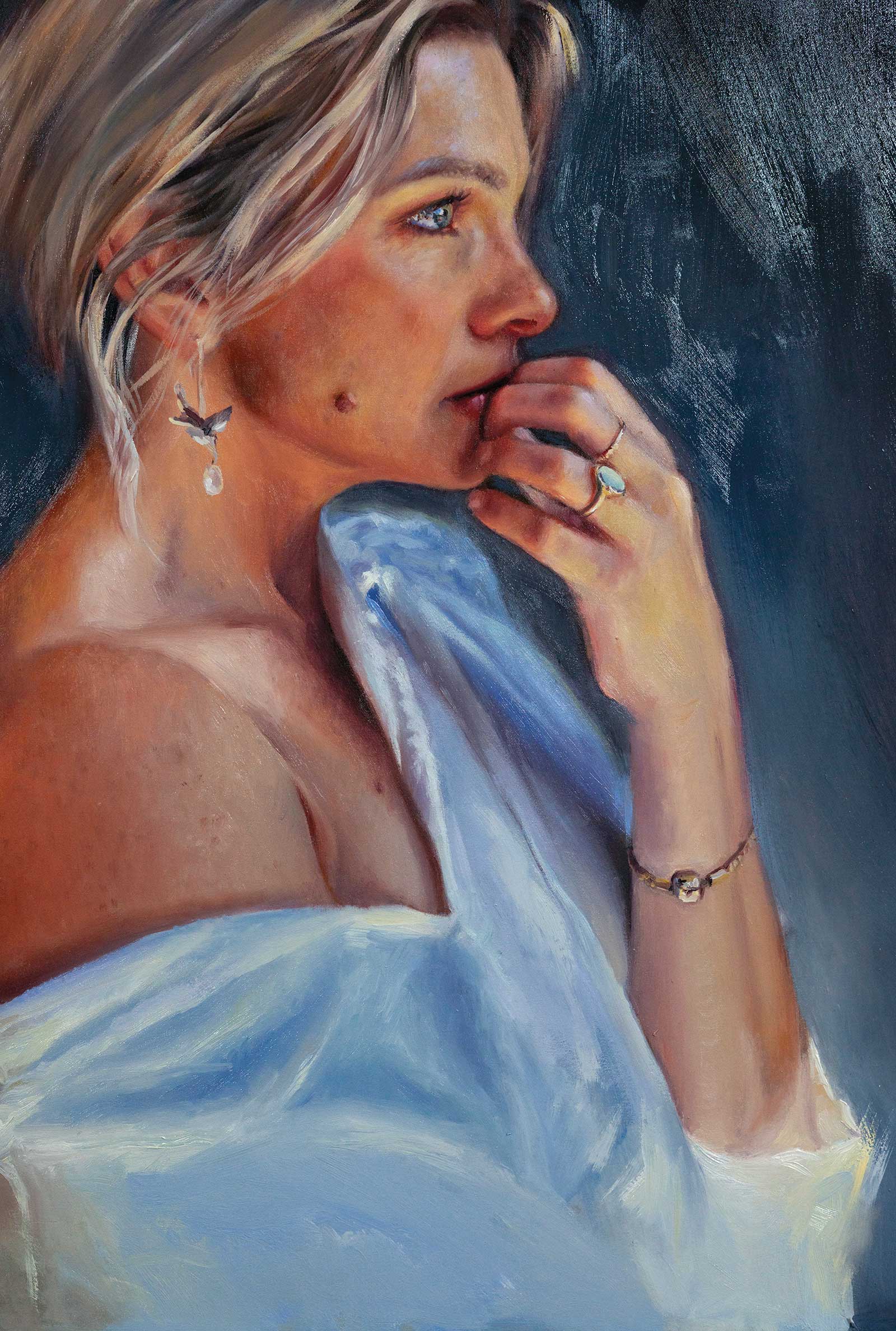
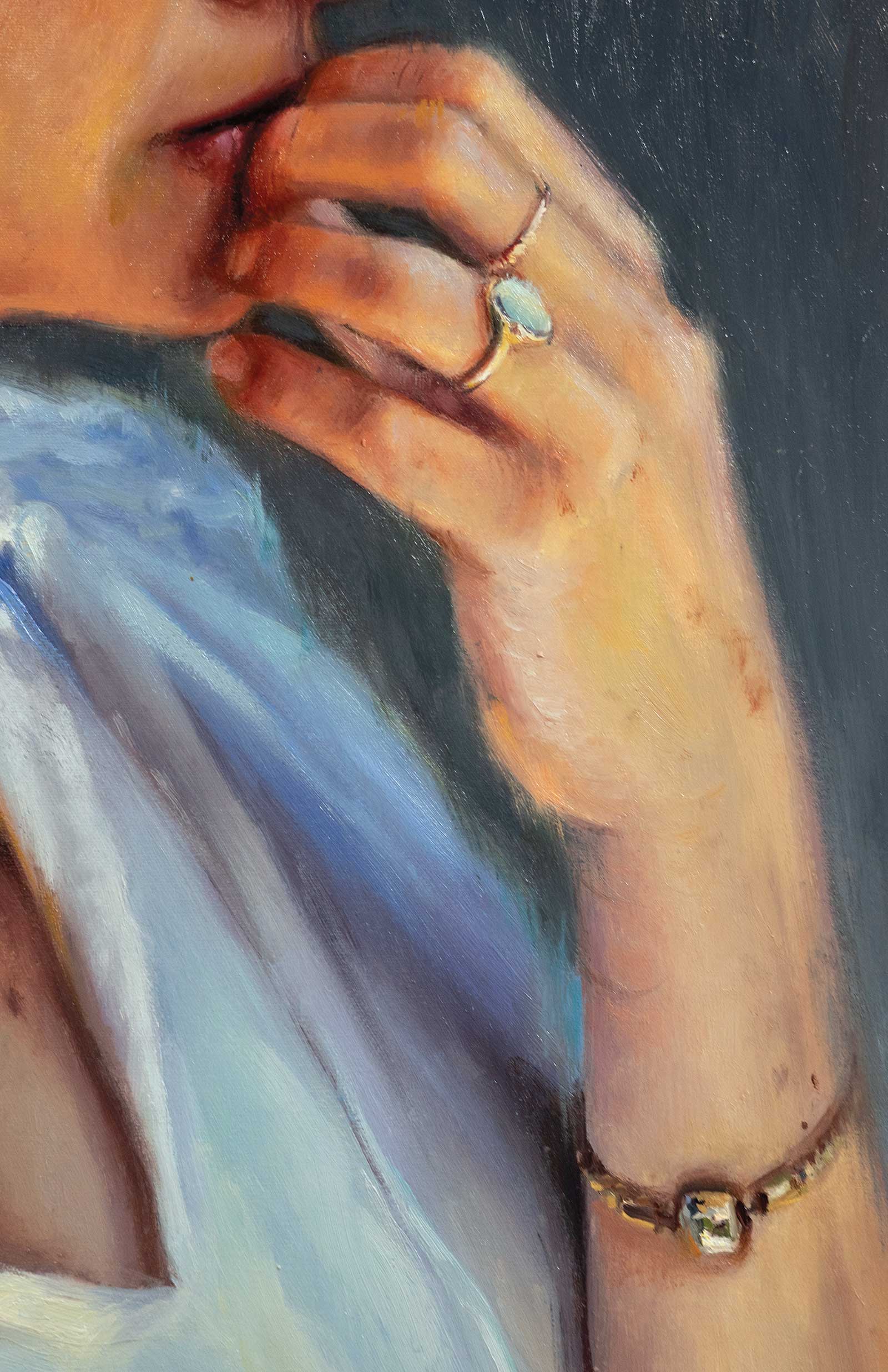
The hand in this painting was almost as important as the face itself. I’ve always loved the storytelling power of hands. I am a dairy farmer’s daughter, and hands are the portrait of the farmer, the most useful tool we have. The simple motion of bringing mine to my mouth suggests thought and reflection. I draw much of my inspiration from John Singer Sargent, who was a master at painting hands in motion. Because the hand is always moving; he never painted it with a full, hard outline. There is always a lost edge that gives a sense of motion and creates the feeling that the subject hasn’t been painted in a posed setting. It lets the viewer feel as though they’re catching a glimpse of a real moment and naturally wonder what the person was thinking. I used the same approach here, losing as many edges as I could while keeping the structure intact to create a sense of movement.
Stage 7 Painting Dysmorphia
Around the 70 percent mark, I hit what I call painting dysmorphia. It’s that stage where I start questioning whether I can actually paint. Every artist I know hits this wall, the point where all those hours of staring at the same painting start to blur together and everything suddenly looks like a problem with no clear resolution. The cure, I’ve found, is to name that voice in your head and treat it like an annoying friend. Funnily enough, mine’s called Jessica (I usually go by Jesse). She shows up like clockwork at this point in most paintings. Naming her helps me separate the doubt from the work itself. I usually give her space. I’ll leave the studio for an hour or so, make a cup of tea, and let Jessica tire herself out. When I come back later or the next day with fresh eyes, I usually feel less foggy and more clear-headed. If there’s still something that needs adjusting, I can see it clearly and make those changes as needed.
Stage 8 Choosing the Background
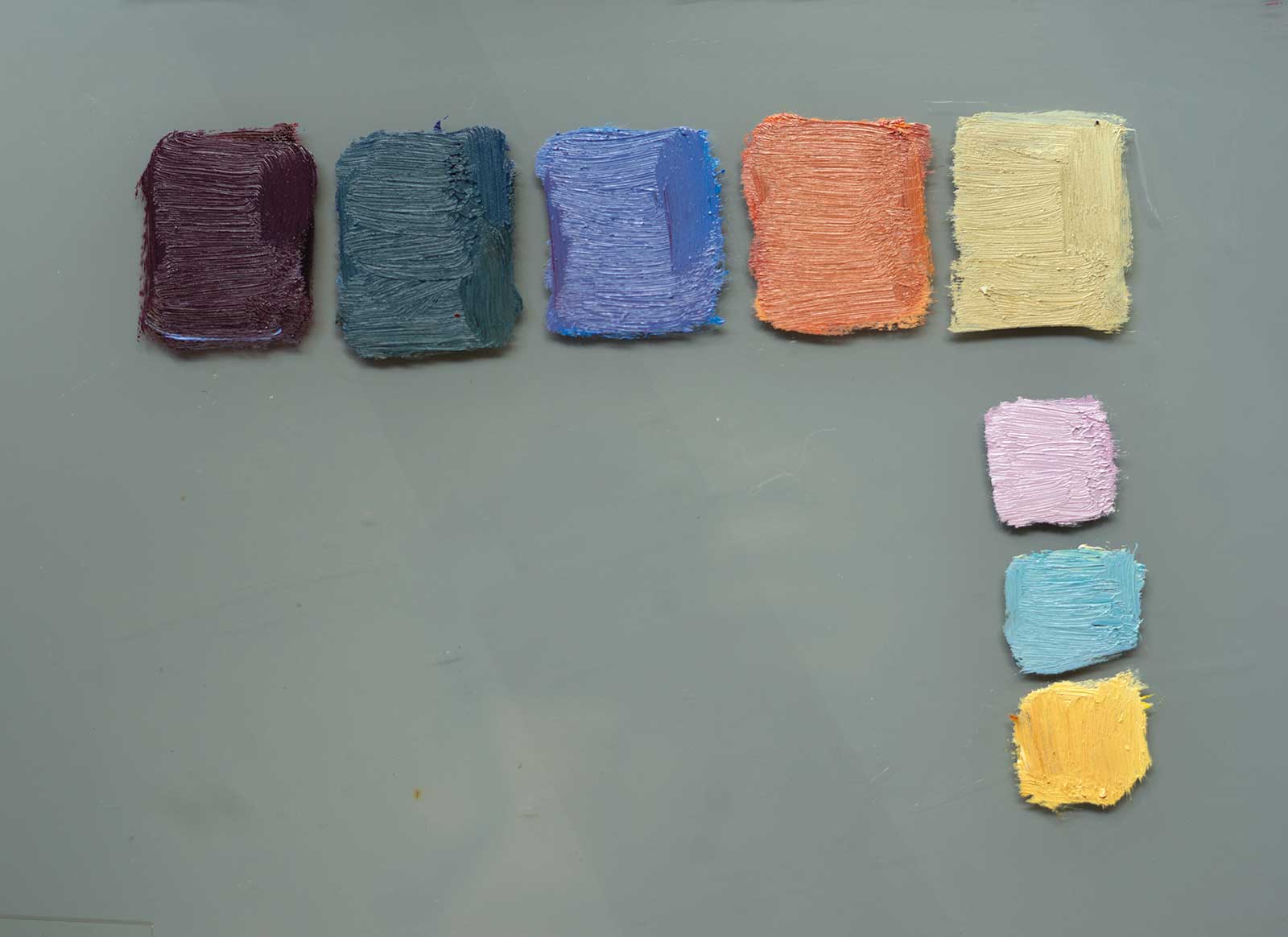
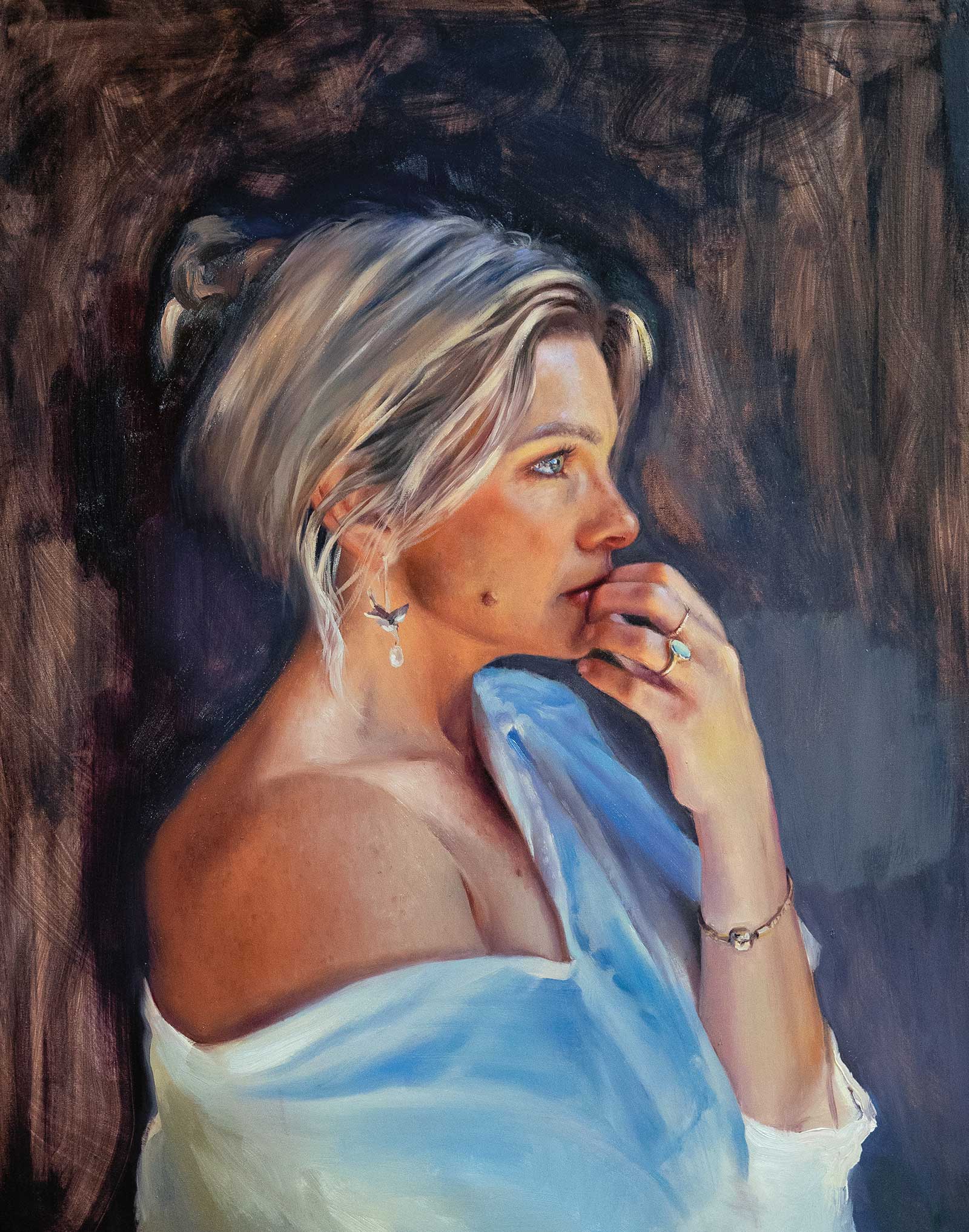
I paint the background alongside the subject so that the values and colors develop together and stay connected. The tone is usually set during the drawing stage, then I adjust the color temperature once I’ve landed on the final palette for the portrait. I swatch colors directly onto the canvas to test how they sit beside the figure and find the most harmonious temperature. I keep the edges active, letting strokes move in and out of the form to make sure the foreground and the background are interacting nicely.
Stage 9 Final Edits and Lost Edges
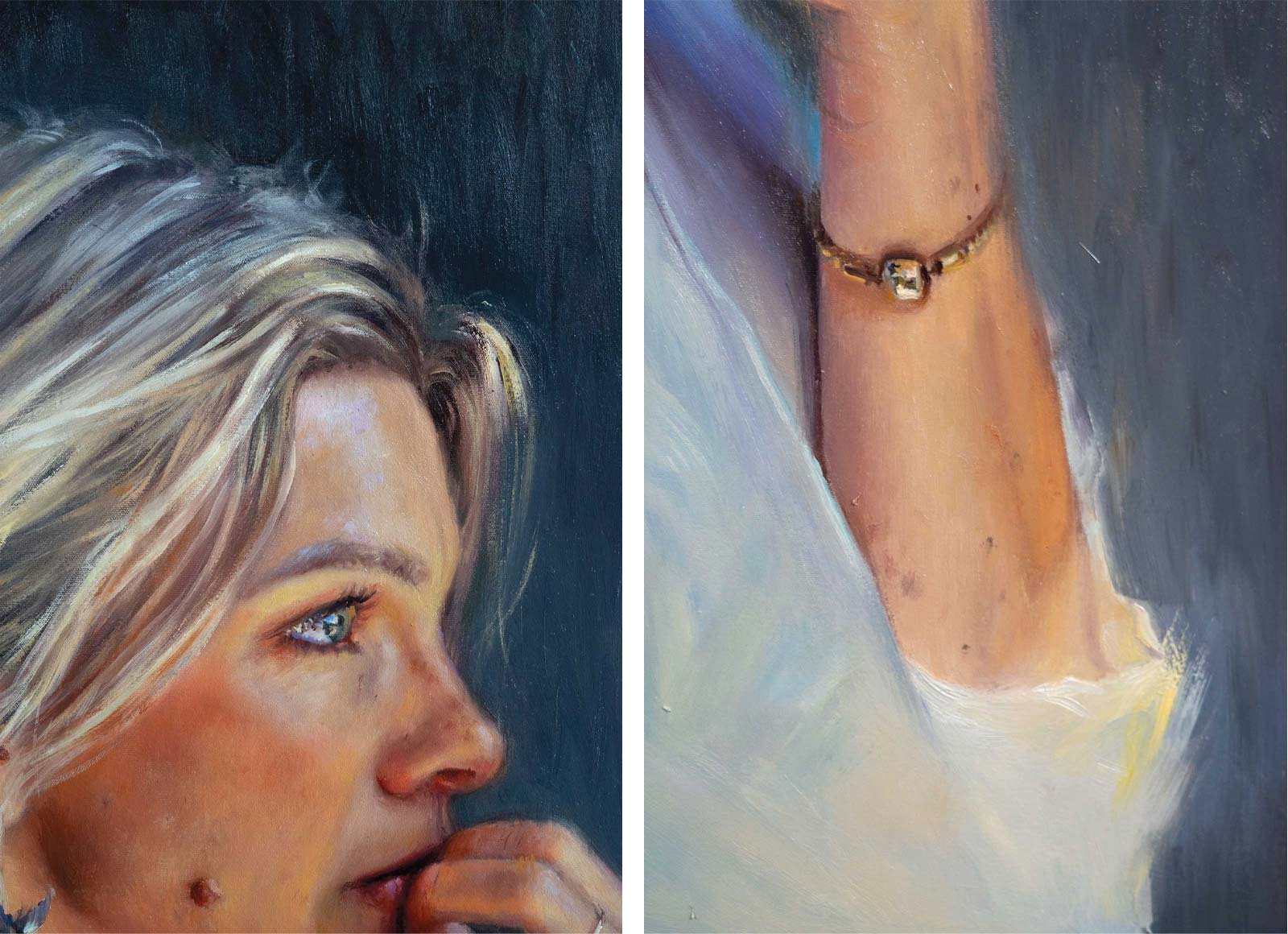
This is one of my favorite parts of the painting process, the stage where I start to lose my edges and look for places to build more interesting texture and marks. Once the realism and likeness are in place, I can step back and decide where to soften or break lines, like through the base of the fingers. Before I do this, I sit quietly and write a focused checklist of the areas I want to work on so that when I’m painting, I don’t get stuck. Then I move through that list one by one until the painting feels complete.
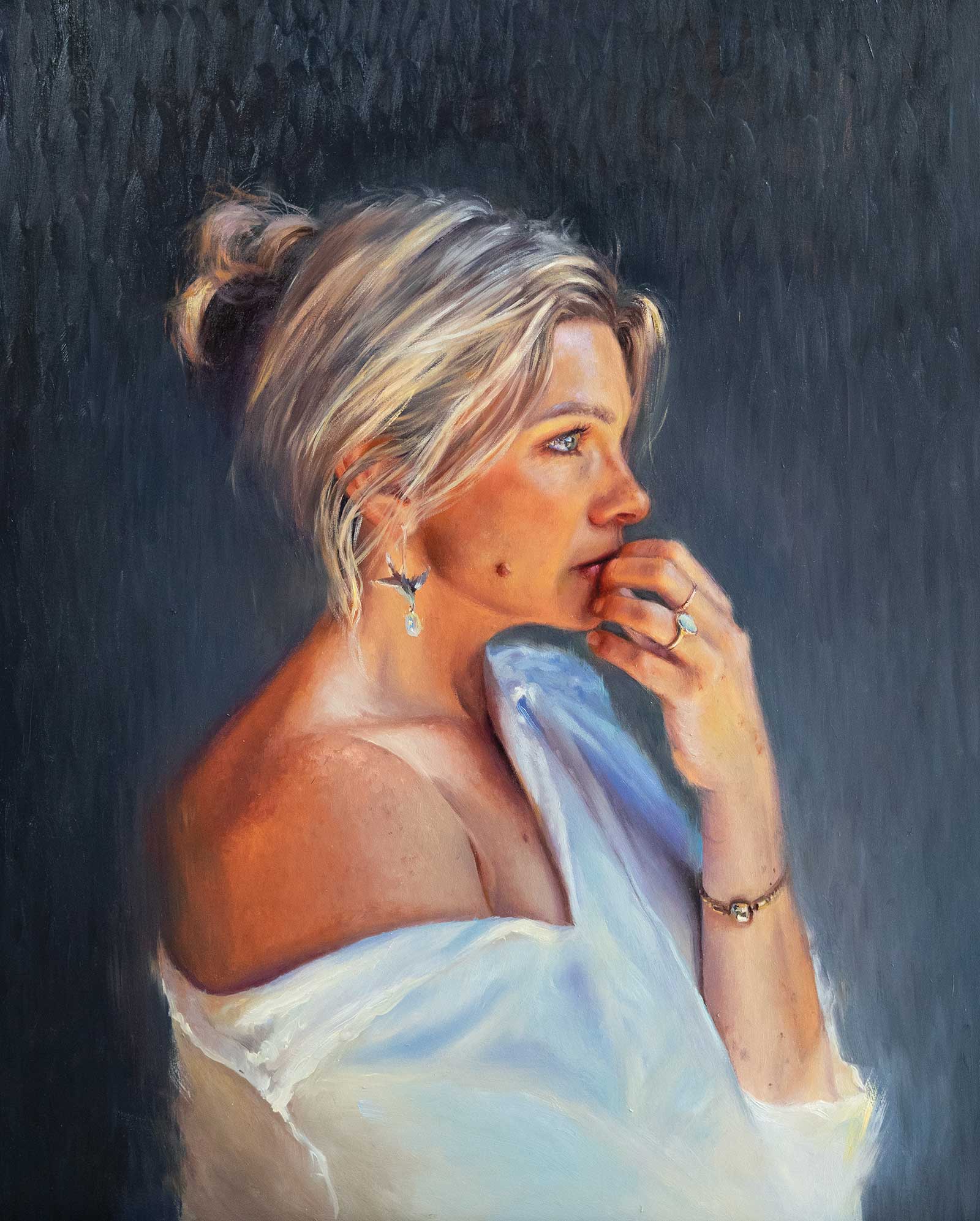
Stage 10 Finished Artwork
2025 Self Portrait, oil
About the artist
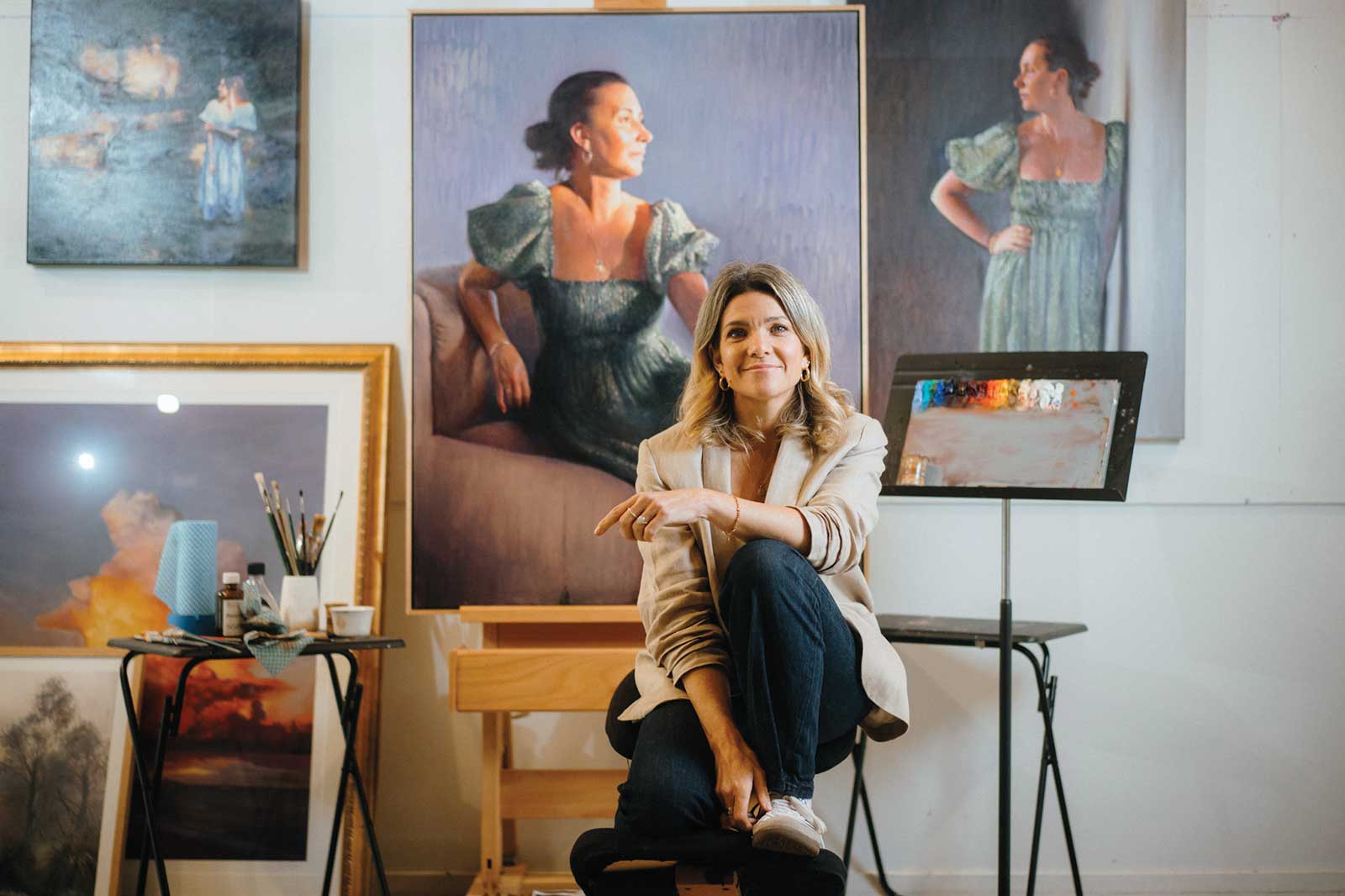 Jessica Le Clerc
Australian painter Jessica Le Clerc is celebrated for her sensitive and expressive approach to portrait and landscape painting. Working primarily in oil, her art explores the connection between people and nature. Based on the Sunshine Coast in Queensland, Le Clerc has been a full-time artist and educator for more than two decades. She is the founder of The Art School Co., where she teaches drawing and painting to artists of all levels, and regularly leads national masterclasses in portraiture and landscape. Le Clerc has been recognized internationally as an ARC Living Master by the Art Renewal Center, acknowledging her contribution to classical realism and traditional painting techniques. She has been a finalist in major Australian and international awards including the Archibald Prize, Brisbane Portrait Prize, Percival Portrait Prize, Portia Geach Memorial Award, Lethbridge 20000 Art Award and the International ARC Salon Competition.
Her first major solo exhibition in 2025, Natura, was a sell-out show in Brisbane that combined painting, poetry and music to create an immersive reflection on the importance of the human relationship with the natural world. Le Clerc shares more about her process, upcoming workshops and what’s happening in the studio through her mailing list and website.
Contact at
jess.art