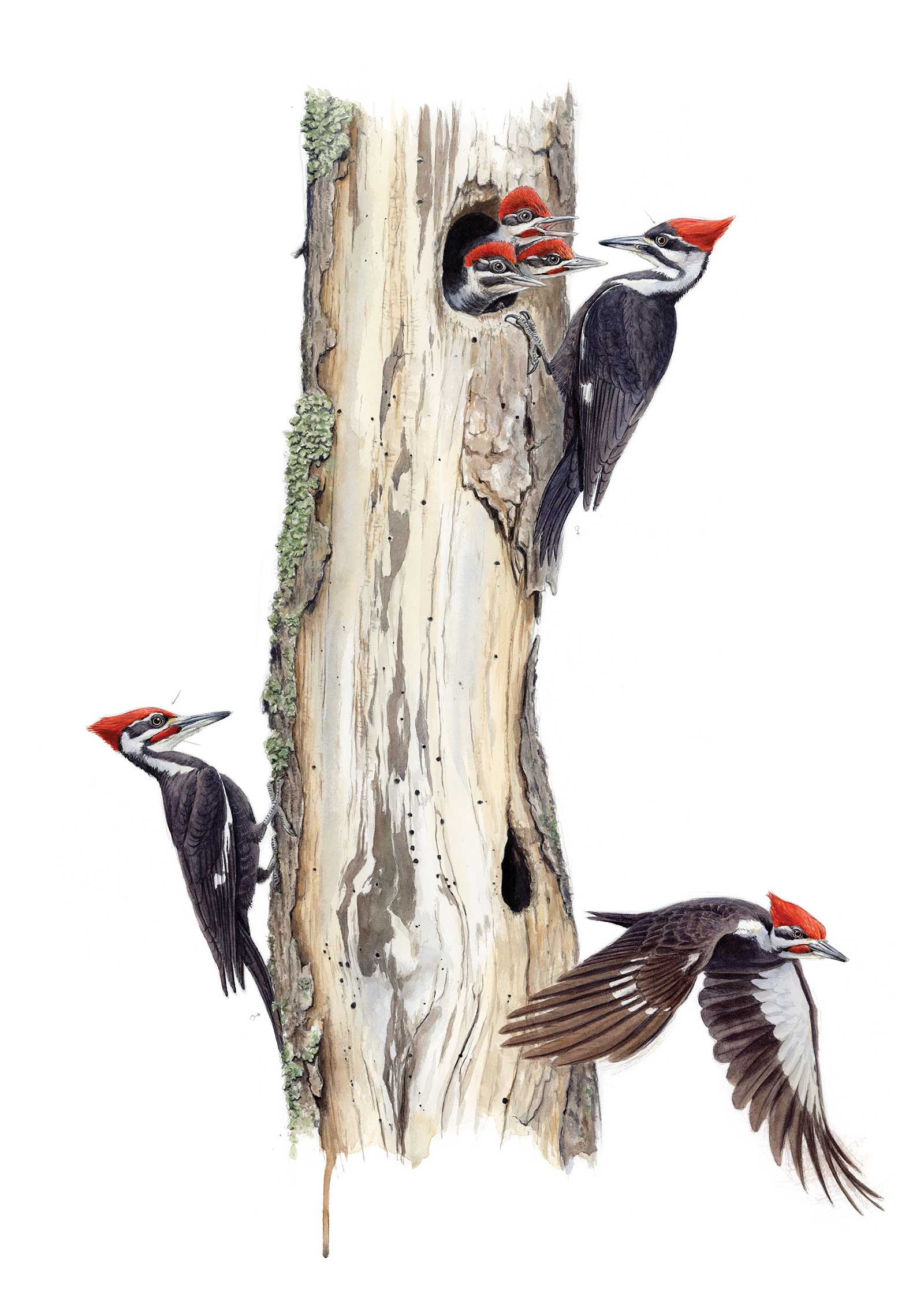
The pileated woodpecker is one of North America’s most striking birds, and also one of its most determined builders. For my newly published book Bird, Nest & Egg (Rizzoli/Unipress), I set out to illustrate 40 bird species, each with its nest and eggs, as well as a combination of field sketches and more defined studio pieces. This large watercolor of a pileated woodpecker was one of the most challenging plates to create. Translating field experiences into a single illustrated plate is always a process of exploration, especially with more secretive species.
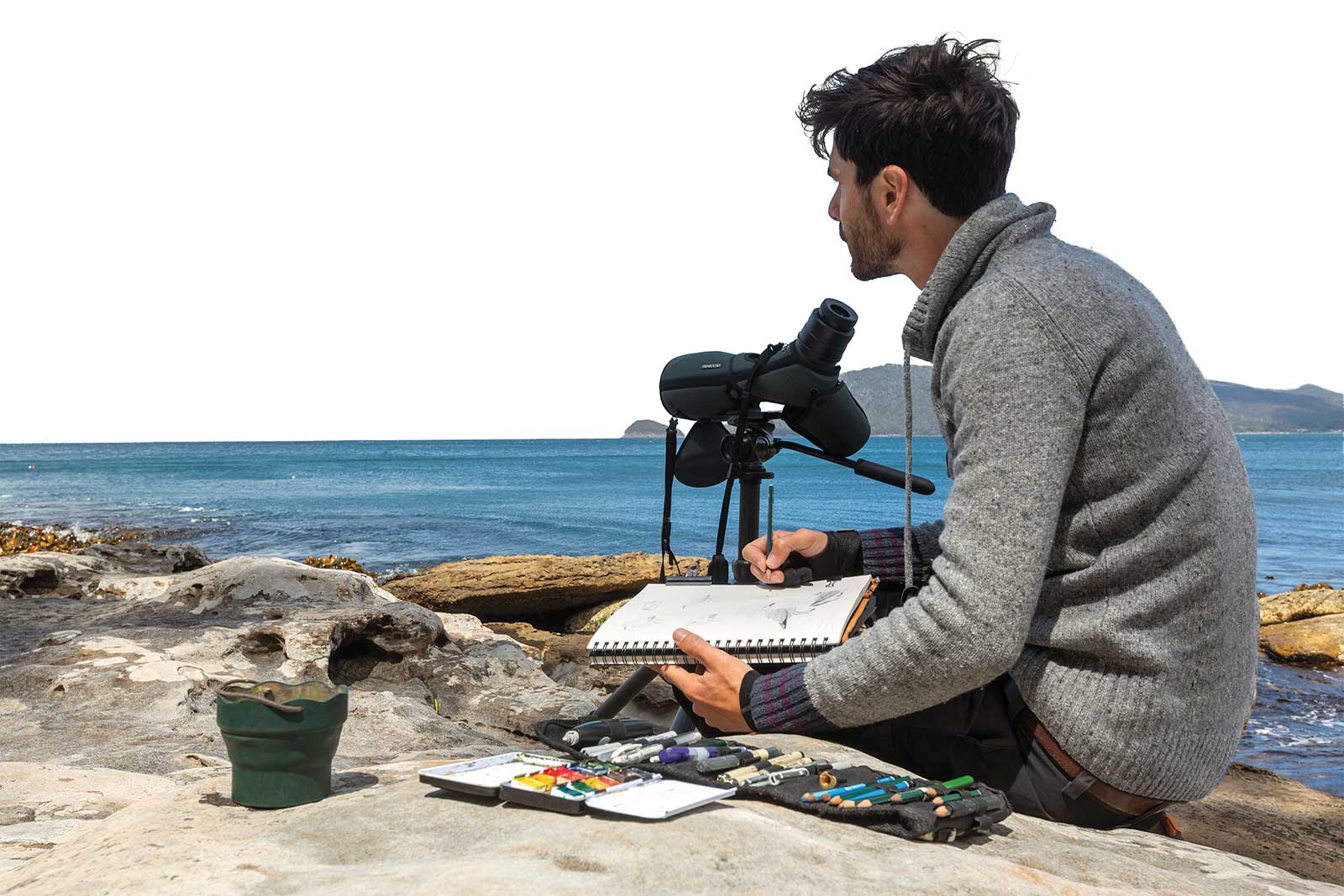
I spent long hours in the field, sketchbook in hand, watching these birds at work in mature forests of Oregon, Wisconsin and British Columbia. Their rhythmic drumming carries through the trees, and observing them chiseling deep cavities gave me a true sense of both their strength and precision. Quick watercolor sketches and graphite studies allowed me to train my eye, to note posture and subtle characteristics, and to build the mental picture needed to make the final piece feel true to the species. Field sketching is more than practice: it is a way of fixing movement, behavior and atmosphere in memory, so that even in the studio the essence of the bird remains alive.
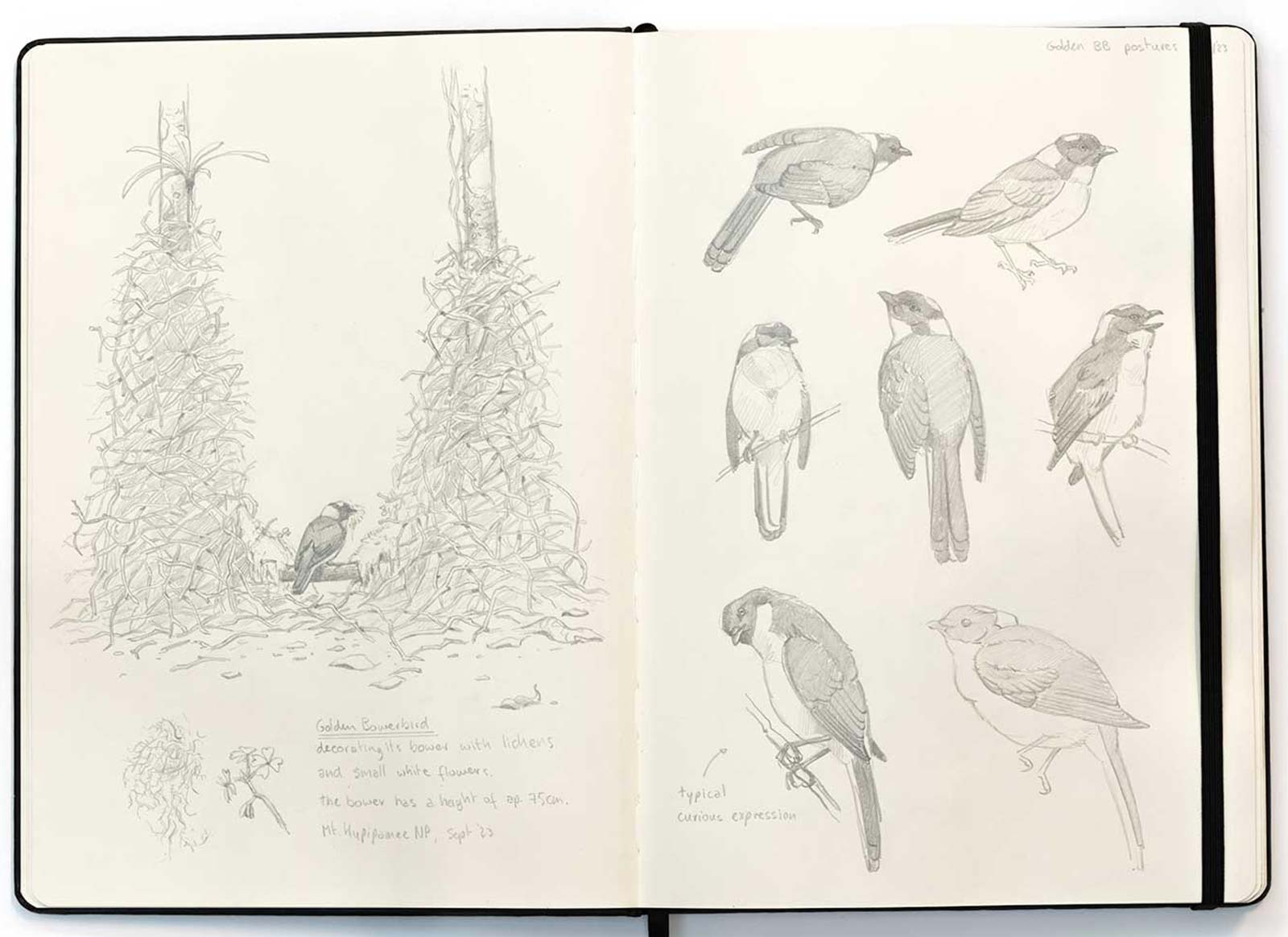
Joris De Raedt’s fieldwork sketchbook.
Back at the drawing table, I worked from these accumulated impressions and studies to create the finished plate. The challenge was to capture a posture that felt typical for the species—the way the adults cling to the trunk, the proportions of their powerful bodies and the attentive presence of the chicks at the nest cavity. By distilling these elements, I aimed for a composition that is both scientifically faithful and artistically engaging.
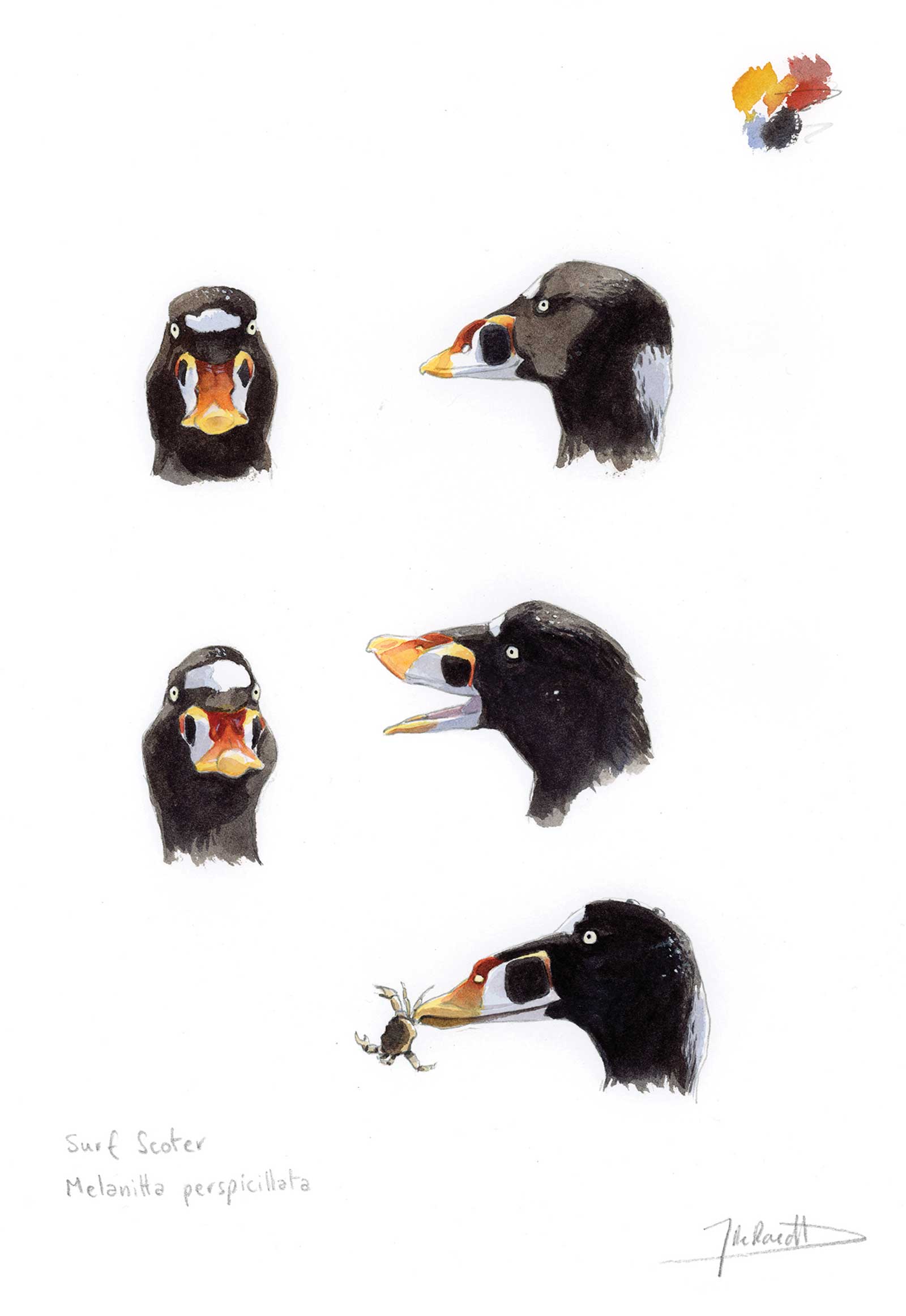
Surf scoter studies done on location.
This painting represents what I hope to achieve throughout Bird, Nest & Egg: a balance of scientific accuracy and artistic storytelling. Each plate is not only a record of a species and its nest but also an invitation to look more closely at the ingenuity of birds and the fragile environments that sustain them.
My Art in the Making Pileated Woodpecker
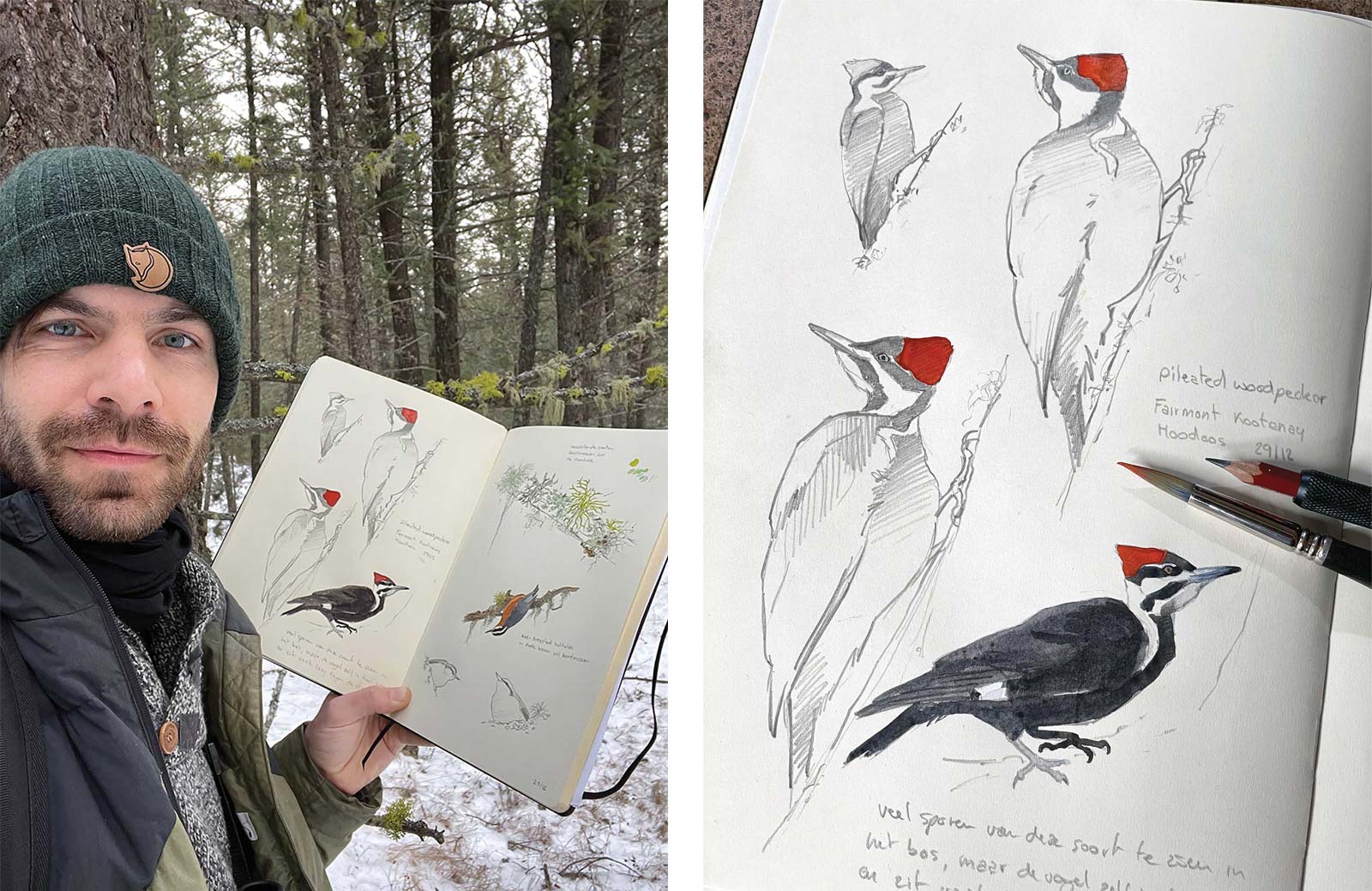
Stage 1 Fieldwork and Sketching
Before beginning a studio piece, I spend extensive time in the field with my spotting scope, binoculars and sketchbooks. It’s all about getting to know your subject, not producing perfect sketches. By drawing the birds from life, you gain a solid understanding of their characteristic shapes, posture, proportions and subtle behaviors. Quick graphite and watercolor sketches train my visual memory and help me create a mental picture of the species’ typical presence. These studies form the foundation of the painting, ensuring the finished work feels alive and true to the bird. Having a good understanding of bird anatomy, especially feather groups, is a major advantage when sketching from life. Woodpeckers are definitely not the easiest subjects for beginners. Birds that sit still for longer periods, like owls, or colonies where you can switch between individuals to complete poses, are easier starting points. I also often digiscope during fieldwork, recording videos through my spotting scope with a phone to capture behaviors or to use as reference later in the studio.
WHAT THE ARTIST USED
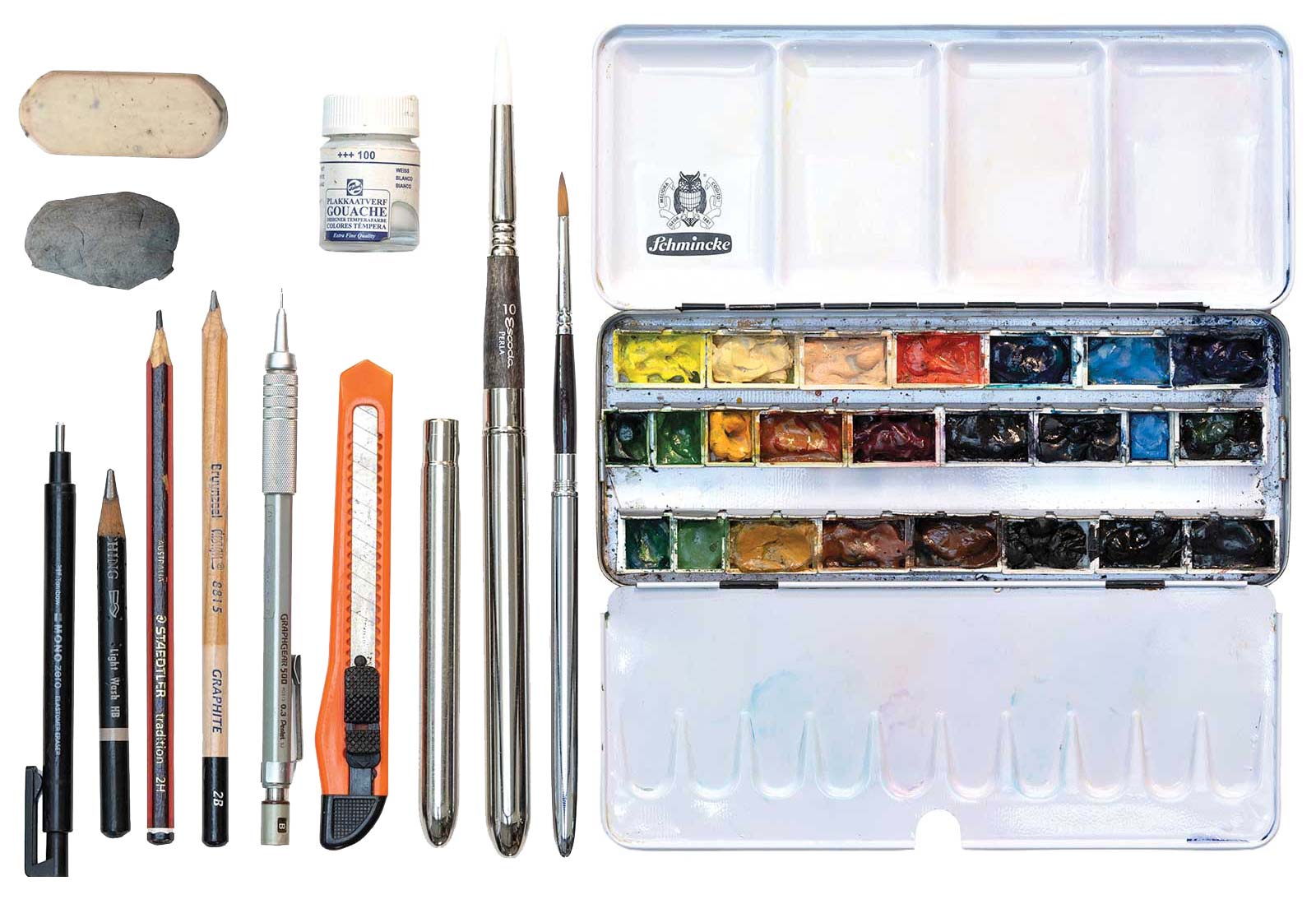
Watercolors
Primary Colors, Cadmium yellow light hue, Cadmium yellow deep, Cadmium red light, Alizarin crimson, Ultramarine blue, Cerulean blue
Earth Tones
Brilliant yellow dark, Naples yellow, Transparent orange, Yellow ochre, Burnt sienna, Burnt umber
Extra Colors
White gouache, Winsor violet, Winsor blue, Sap green, Chromium oxide green, Sepia, Neutral tint, Payne’s gray, Ivory black
Additional Materials in the Field
Kneaded eraser, 2H pencil, Travel brushes, Fine eraser, HB pencil, Mechanical pencil, 2B pencil, Box cutter, Foldable water jar, Spotting scope with tripod, Swarovski VPA 2 variable phone adapter set, Binoculars, Foldable chair, Camera (optional), Smooth medium weight paper for graphite sketches, Cold-pressed 300gsm watercolor paper, Pointed round brushes
Stage 2 Line Drawing
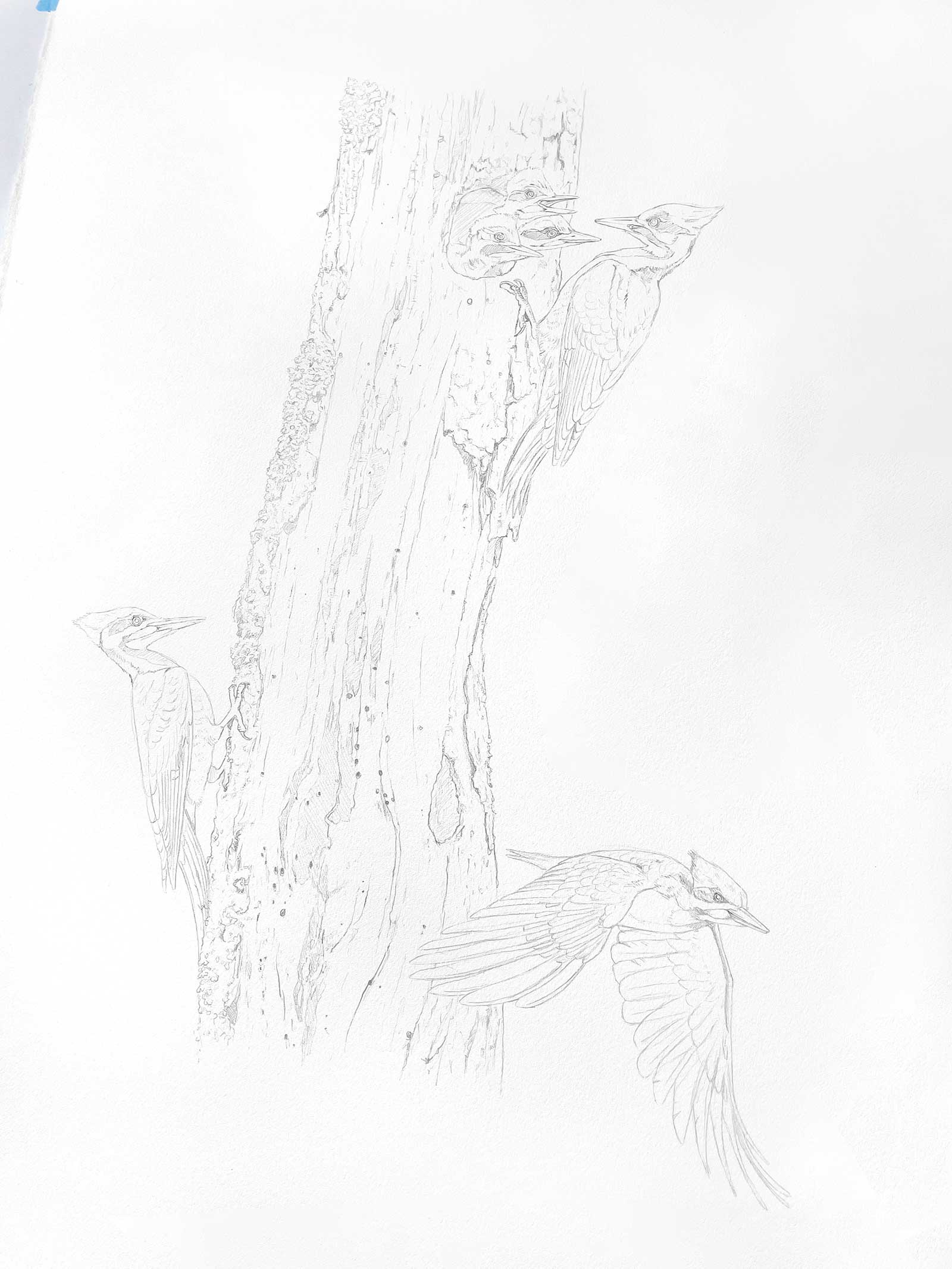
Back in the studio, I review all my field material. Often, I’ve already made a small thumbnail sketch to roughly plan the composition. Once I’m happy with the rough sketch, I transfer the line drawing onto large watercolor paper using tracing paper. I usually work on Arches 300gsm cold-pressed paper. I try to avoid excessive graphite and erasing directly on the watercolor paper, as it can interfere with the washes later.
Stage 3 Color Testing
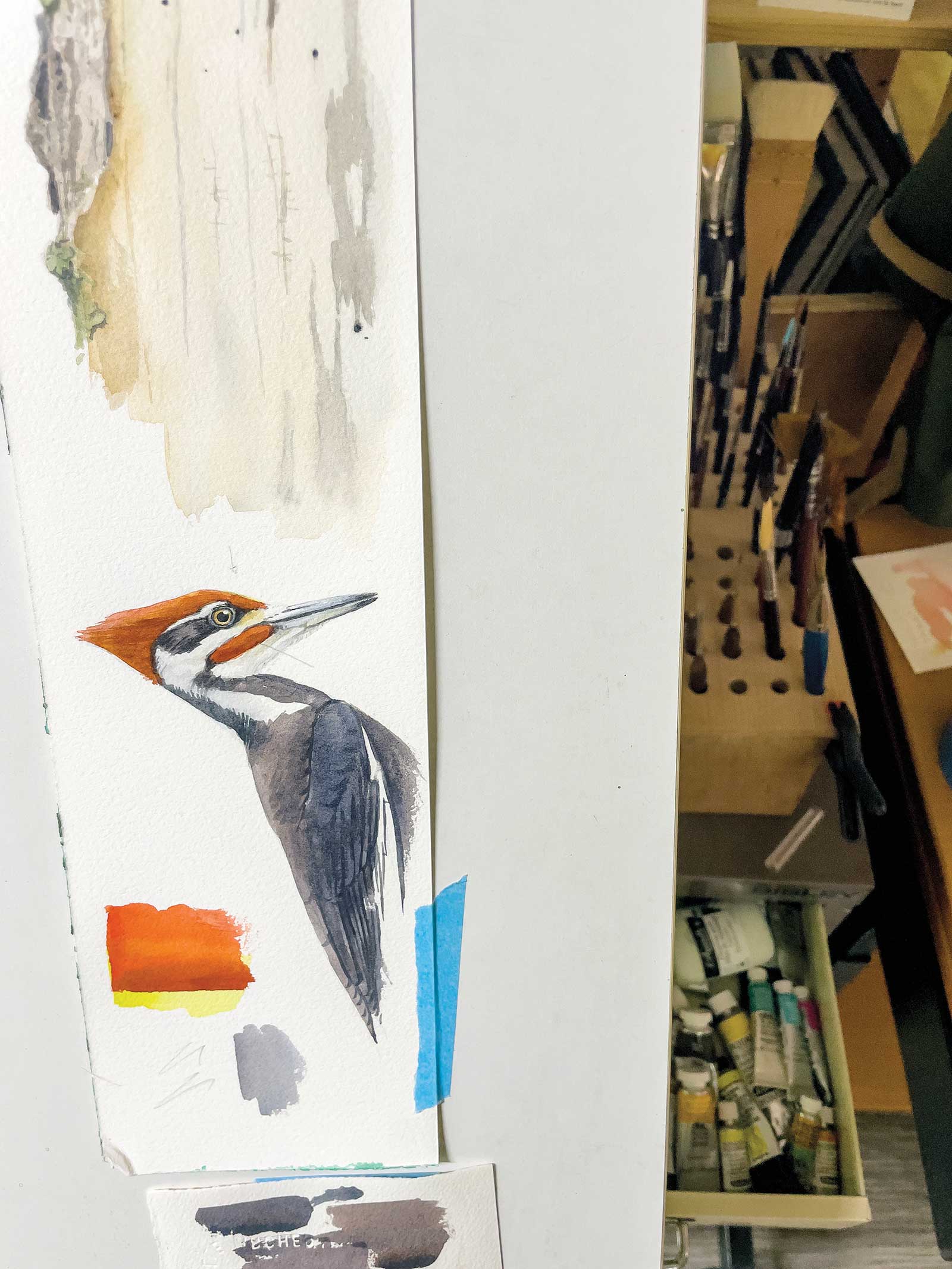
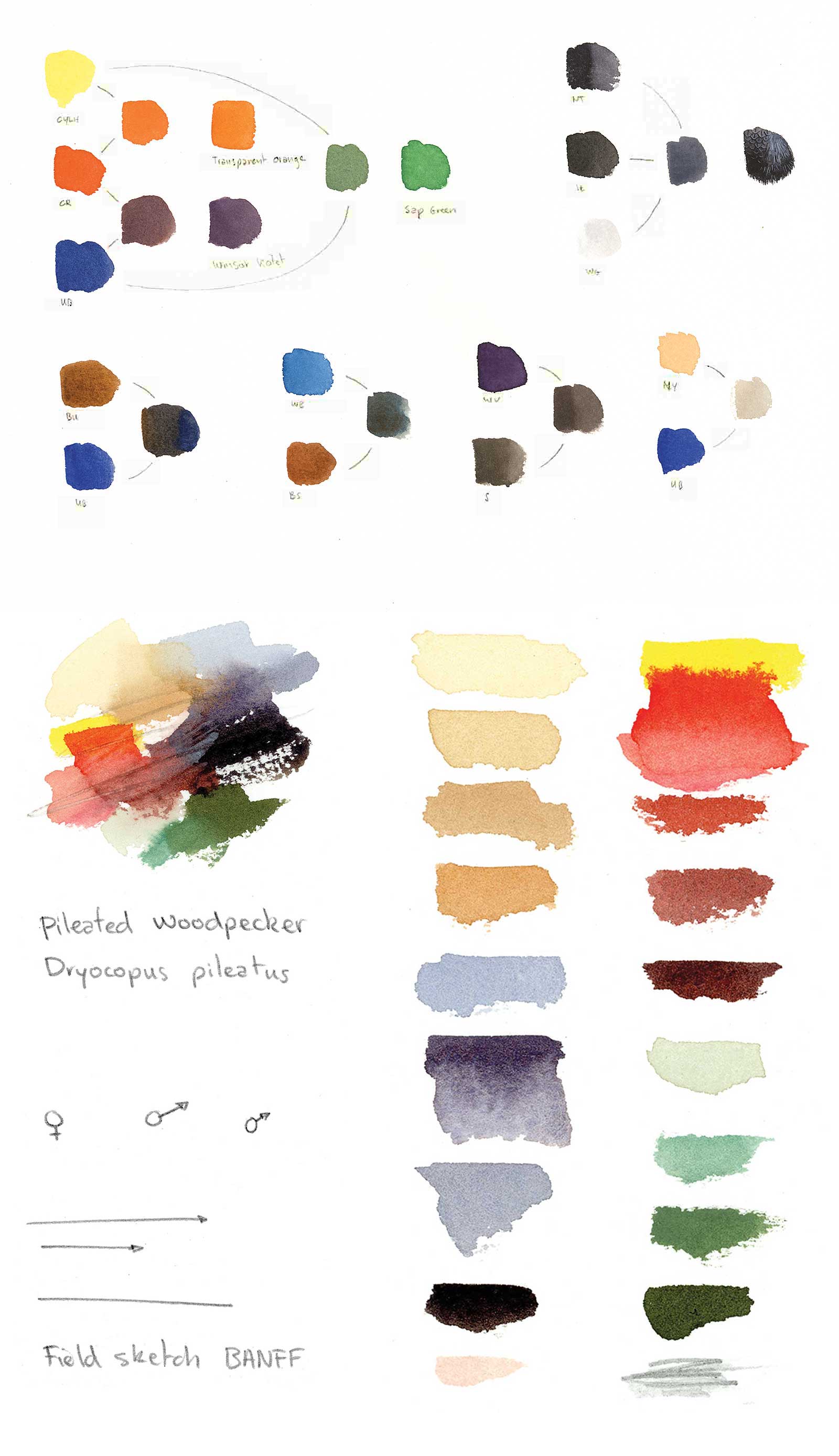
Before starting on the final sheet, I like to test colors and do small try-outs on leftover watercolor paper. This makes it easier to work on the actual painting with confidence. For the pileated woodpecker, I first tested the big wash of the central trunk and later experimented with techniques to make the reds of the woodpeckers brighter. Testing colors and washes on a leftover piece of the same watercolor paper.
Color Swatches
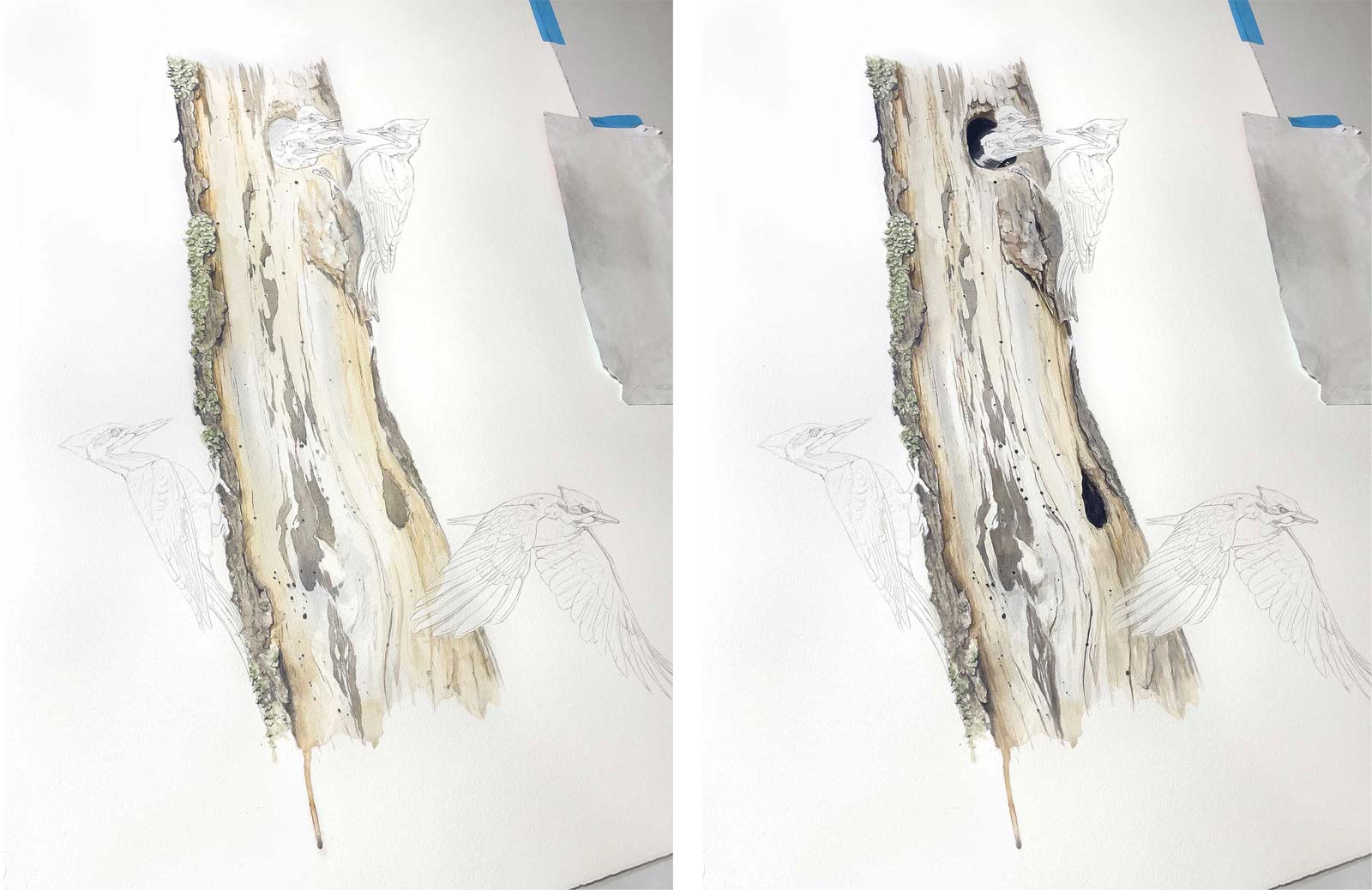
Stage 4 The Big Wash
I like to start with the largest wash in the painting. I begin by wetting the entire area of the tree trunk with clean water (I always keep several jars of fresh water nearby). For the lightest areas, I used brilliant yellow dark, yellow ochre and a mix of Naples yellow with ultramarine blue. The bark was painted with burnt umber mixed with ultramarine blue, which is also my preferred way to create black—rarely using black paint tubes. For lichens on the bark, I used cadmium yellow light hue, ultramarine blue, white gouache and a touch of Winsor blue.
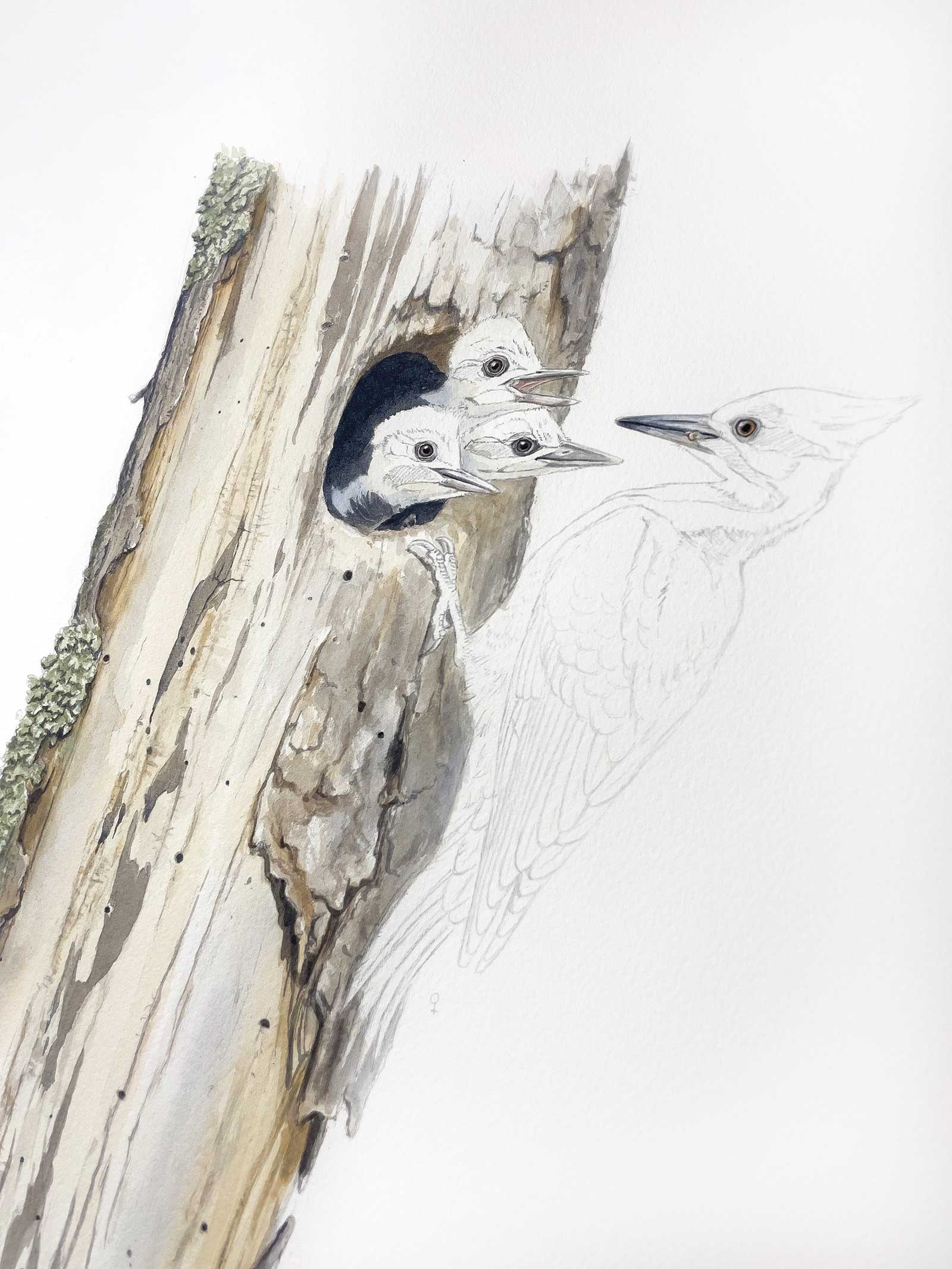
Stage 5 Eyes and Bills
Next, I paint the eyes and bills, which immediately bring the birds to life. I try to keep the color palette simple, using the same colors throughout the painting to maintain a cohesive composition.
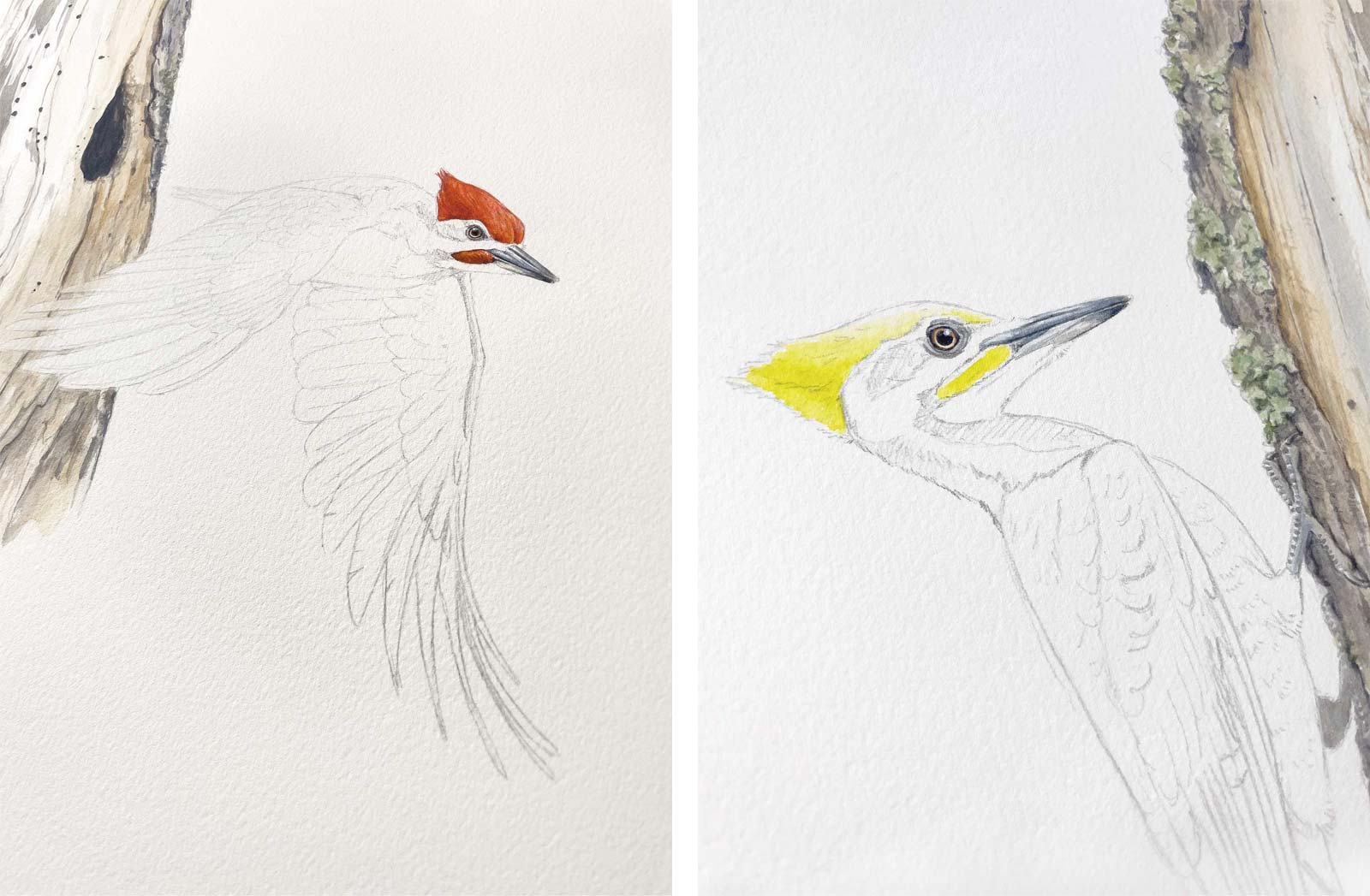
Stage 6 The Red Parts
Adding a base layer of cadmium yellow light hue helps the reds pop. I applied this layer to all red areas of the woodpeckers, avoiding the lightest zones where sunlight hits the feathers. Once dry, I layered cadmium red light, adding a little of my black mixture (burnt umber and ultramarine blue) for the darkest areas and a touch of white gouache for the brightest highlights.
Stage 7 Emphasizing the White
The brightest highlights in the white plumage must remain untouched by paint, but even white areas contain subtle light and shadow. For shading, I mainly use Naples yellow and ultramarine blue, with brilliant yellow dark for warmer tones, applied in very light washes. In this plate, I kept shading minimal, as it also serves partly as an identification plate. In other works, especially during field studies, white areas may be pushed much darker or bluer depending on light conditions. Careful planning is essential: overcast days are ideal for studying true colors for scientific accuracy, while sunny conditions allow more dramatic use of light and shadow for artistic effect.
Birds in Art
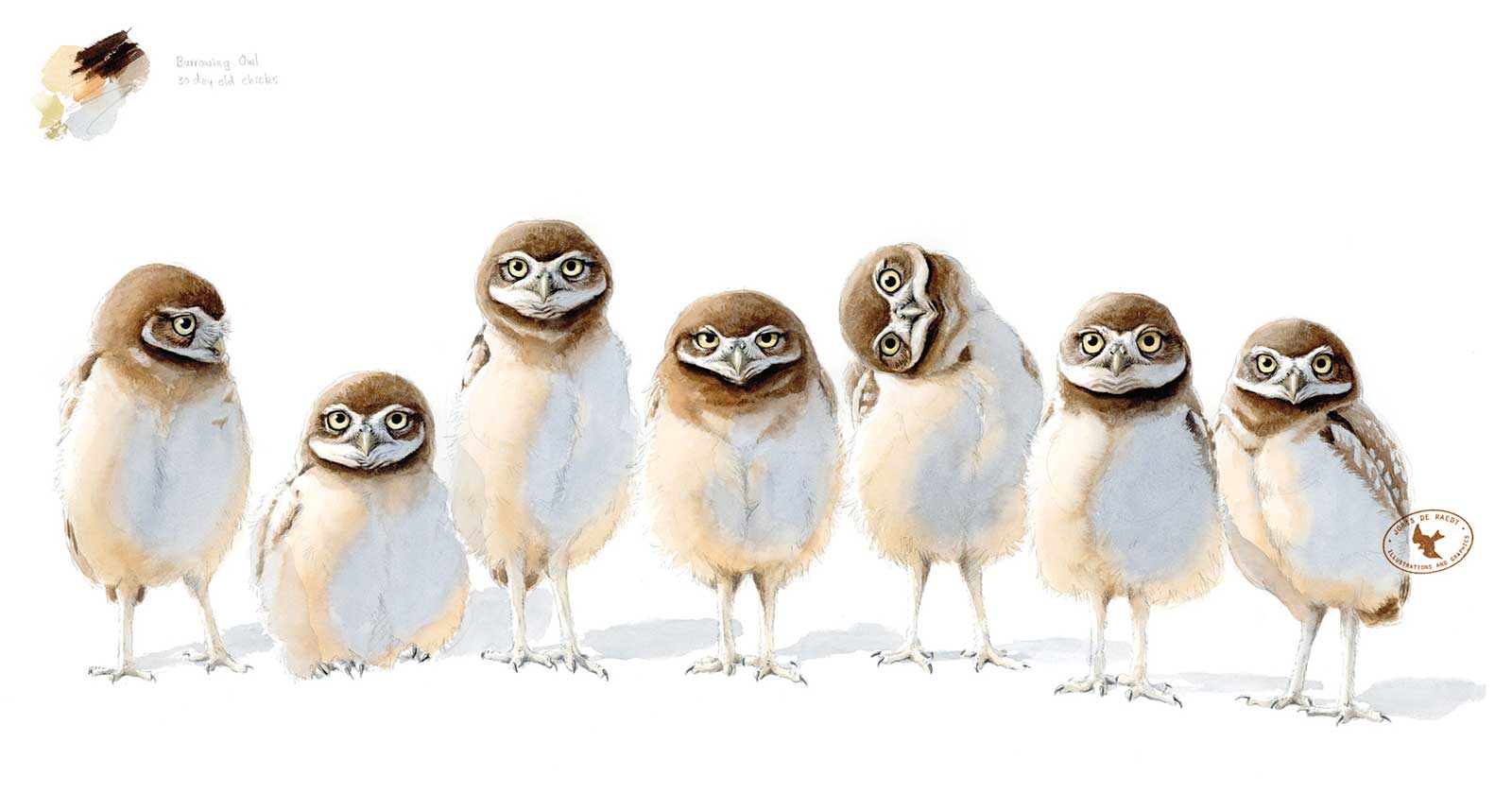
Birds in Art
This painting of 30-day-old burrowing owls was selected for the 50th annual Birds in Art exhibition at the Leigh Yawkey Woodson Art Museum in Wausau, Wisconsin. I was especially pleased with this recognition, as the piece grew directly out of a month of fieldwork in Oregon, where I spent long days in the grasslands, hidden in a blind beside an artificial burrow, while also assisting the Global Owl Project with their conservation work.
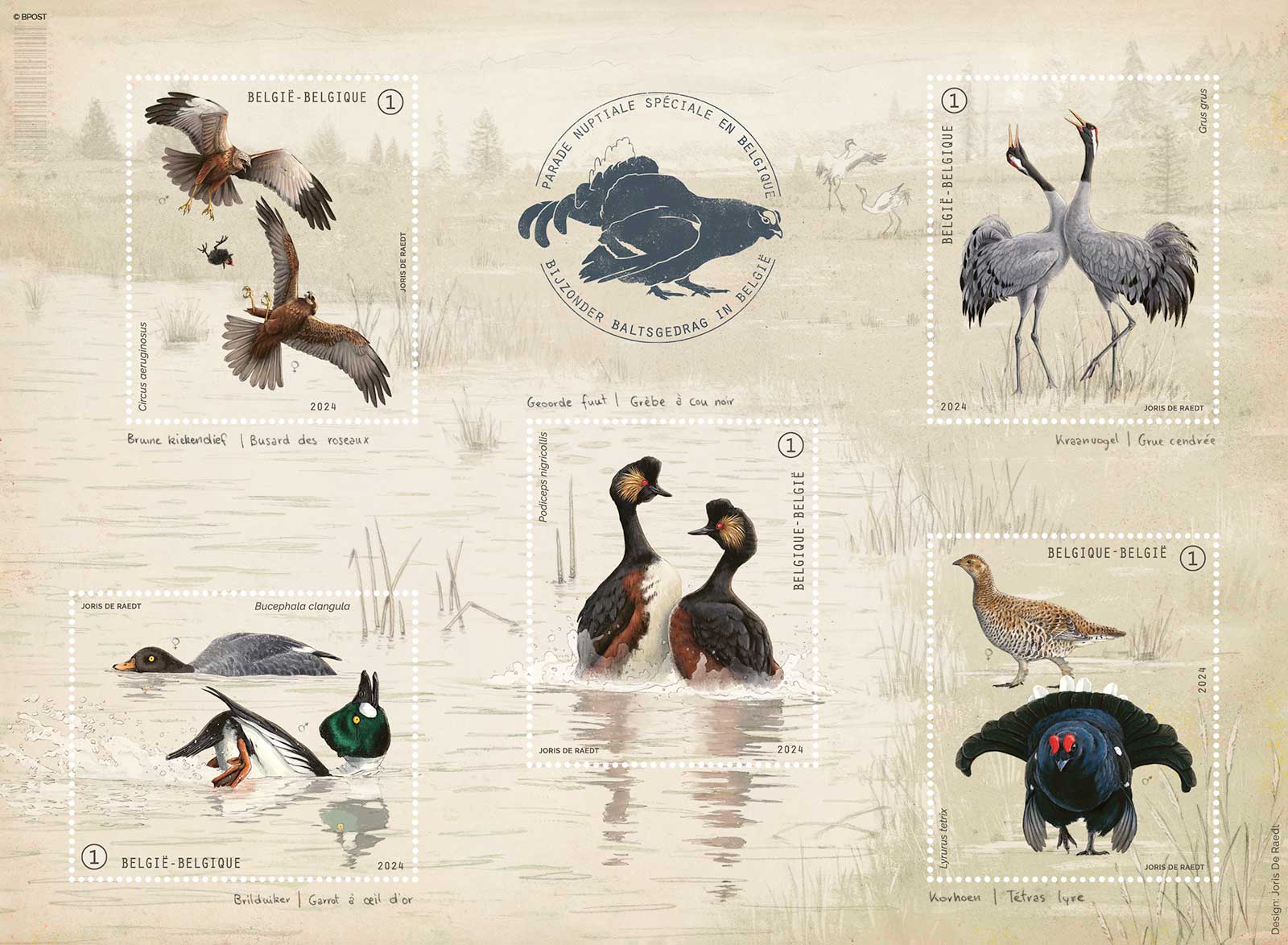
Belgian Postal Service Stamps
I love having full control over the final product. With a master’s degree in graphic design, I enjoy being closely involved in both the design and printing process. Over the years, I have created several stamp sheets for the Belgian Postal Service, from the first rough sketches all the way to press-ready files. Shown here is a sheet illustrating display behavior that is rarely seen in Belgium.
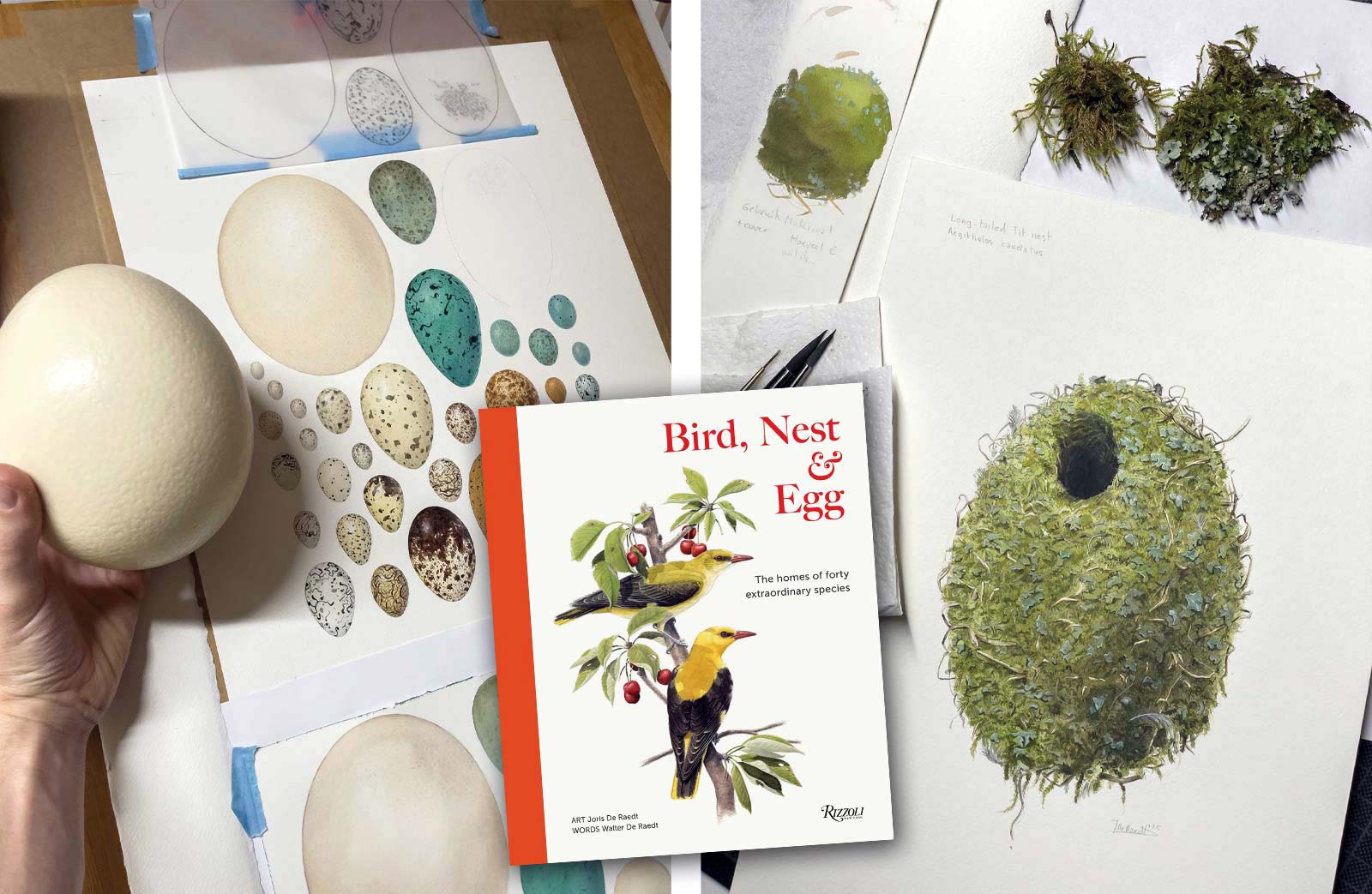
Bird, Nest & Egg
Along with the birds themselves, each plate in my new book also includes the nest and eggs. This large-format portfolio showcases 40 bird species, with overview plates combining graphite and watercolor to highlight not only the birds but also their building techniques, choice of materials, egg characteristics and parenting behaviors. Together, the works celebrate the ingenuity of avian architecture. Shown here are a few behind-the-scenes shots from the project in progress.
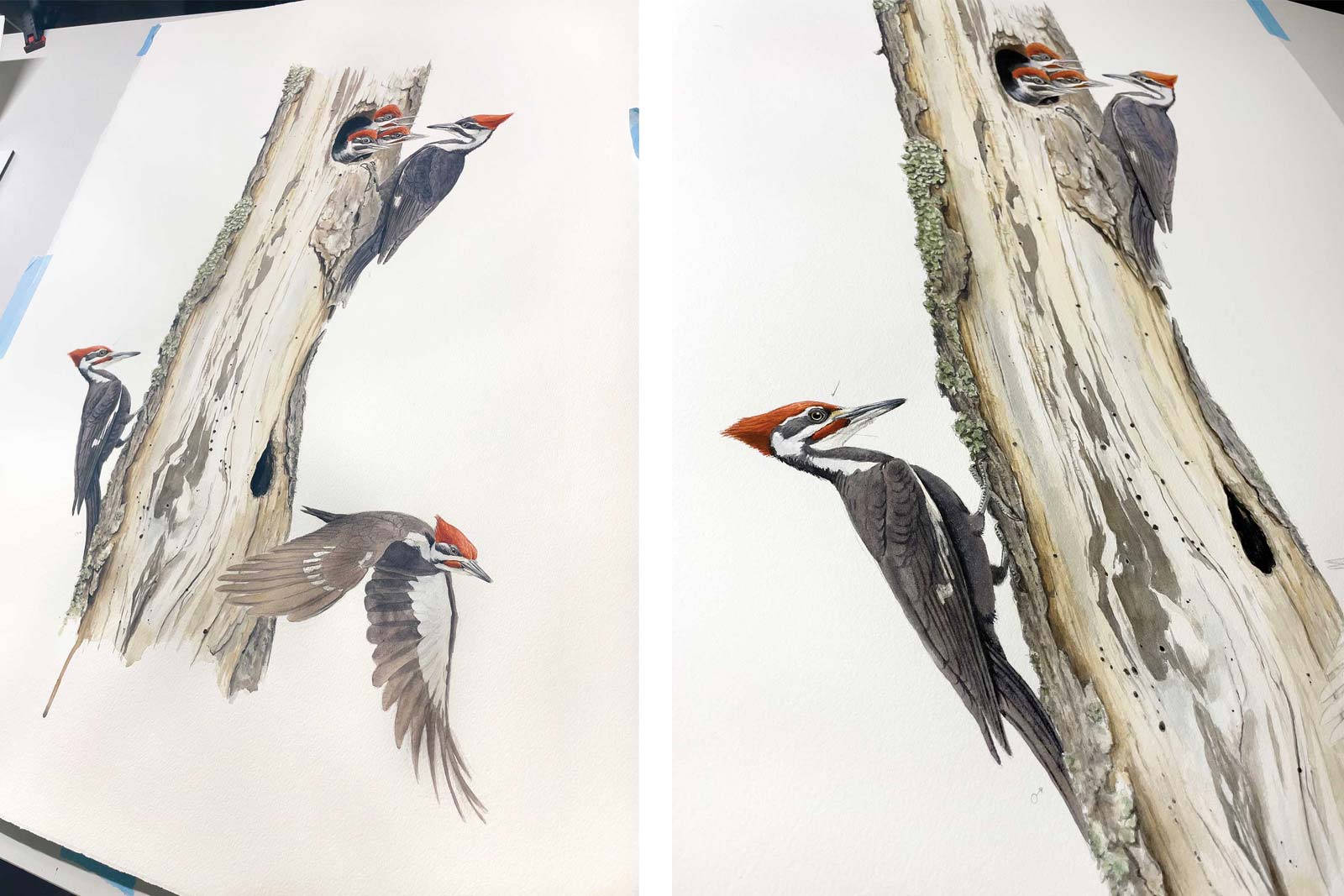
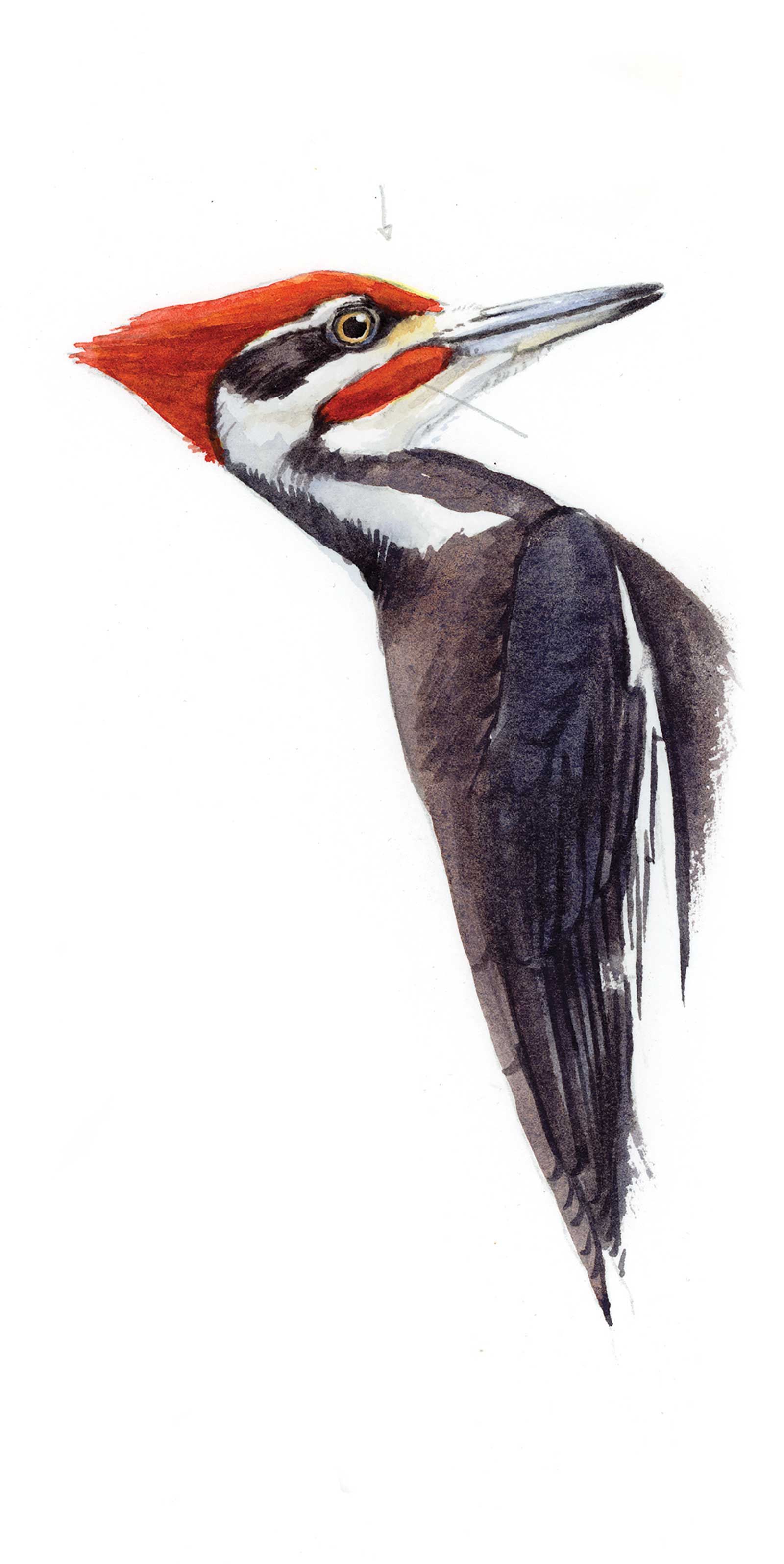
Stage 8 Dark Parts of the Woodpeckers
Like the light areas, the dark parts are rarely pure black. Adding more burnt umber or a touch of Transparent Orange warms the blacks, while more ultramarine blue produces cooler tones. This is clear in the first wash on the male taking flight, where the primaries appear lighter and warmer due to light passing through them. Additional layers deepen the darks and complete the piece.
Stage 9 Finished Artwork
Pileated Woodpecker, watercolor on 300gsm cold-pressed paper
About the artist
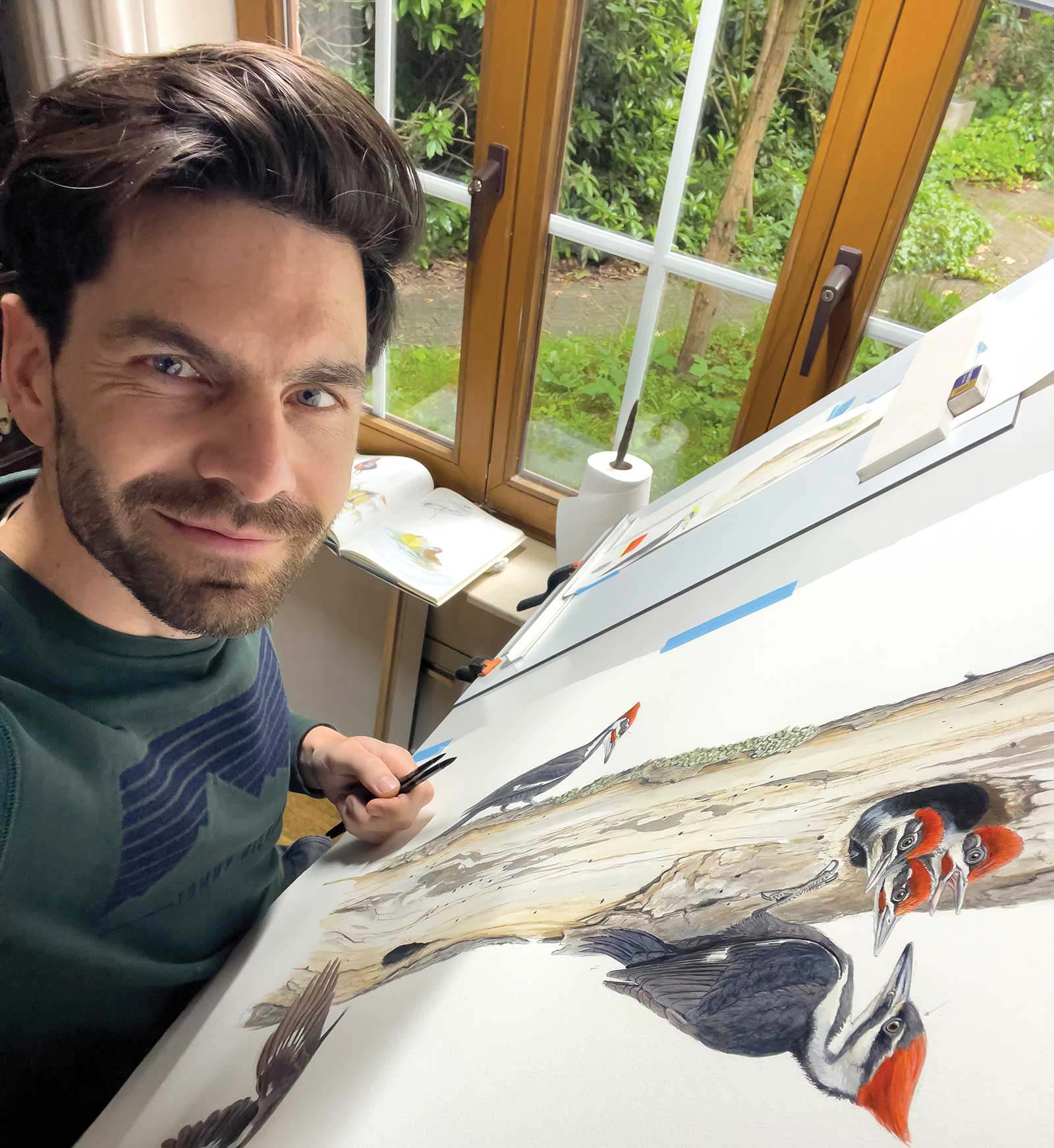 Joris De Raedt
Joris De Raedt is a Belgian wildlife artist, scientific illustrator and graphic designer whose paintings are deeply rooted in field observation and conservation. He believes that to capture the life of a bird, one must first spend time in its world, watching, sketching and listening. This approach has taken him from the Oregon grasslands to coastlines and wetlands across Europe, tropical rainforests in Australia and Icelandic sea cliffs filled with seabird colonies. His work has been exhibited internationally, including Birds in Art at the Leigh Yawkey Woodson Art Museum, one of the most prestigious exhibitions in wildlife art. He has illustrated multiple stamps for the Belgian Postal Service, contributed to numerous books, written columns for major magazines such as National Geographic, provided illustrations for bird hides and visitor centers, and collaborated with leading conservation groups to raise awareness through art.
In the studio, De Raedt translates quick field sketches and notes into finished watercolors, balancing scientific accuracy with an artistic sense of light, texture and atmosphere. His goal is not only to record but also to inspire, connecting viewers with the beauty and fragility of the natural world. To stay updated on new books, prints and projects, subscribe to his newsletter via his website. De Raedt is also an associate member of the Society of Wildlife Artists.
Contact at
info@jorisderaedt.com
jorisderaedt.com