There’s a hidden beauty within Old World stonework—an interplay of nature and architecture, texture and time. Each surface reveals something new about light, structure and endurance. In the weathered walls of Italy, the sunlit hilltop villages of France, or along the canals of Brugges, stonework holds memories of everyone who has passed through. These walls aren’t simply structures, they’re stories waiting to be interpreted in watercolor.
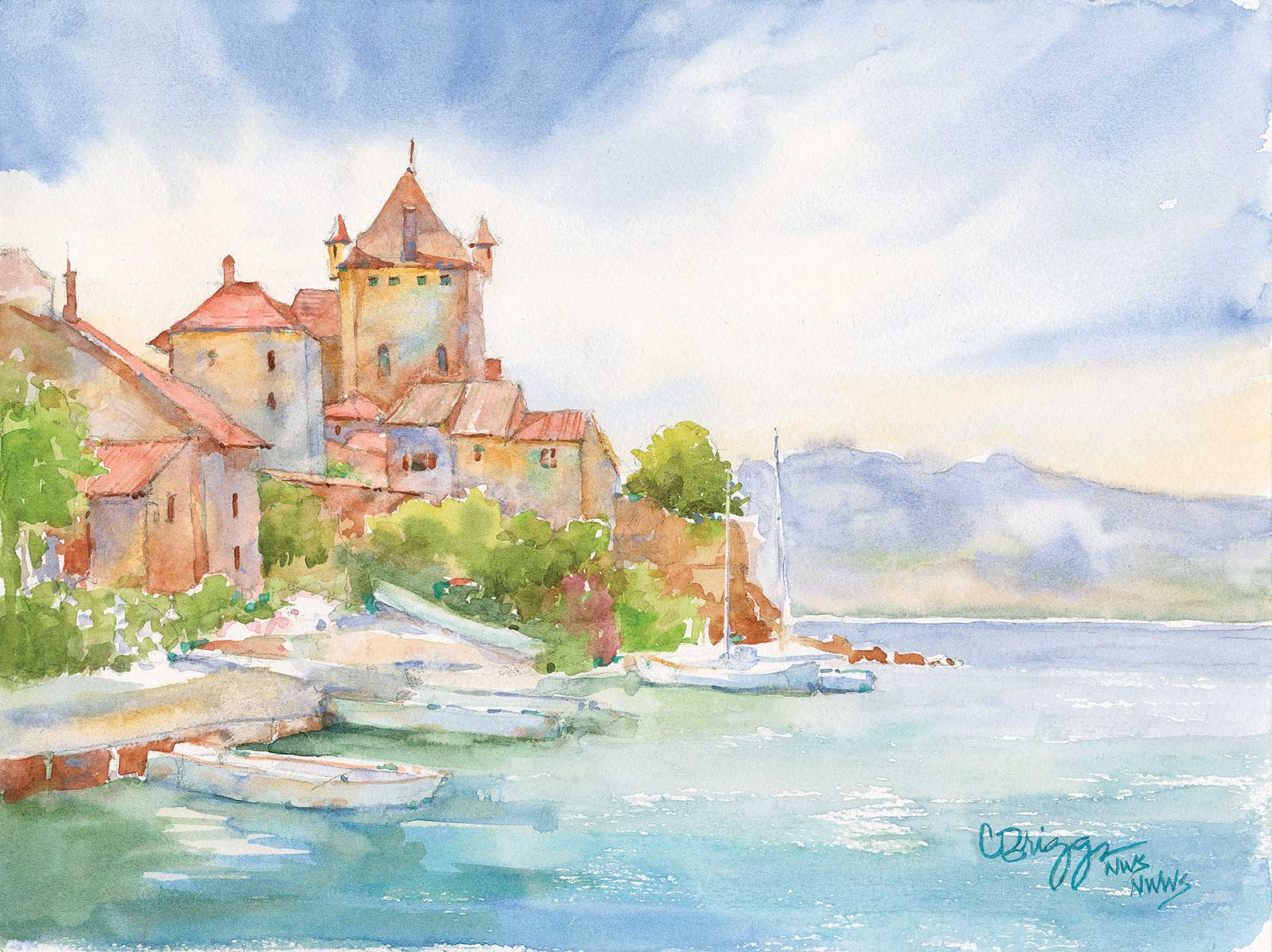 Yvoire Chateau on Lake Geneva, watercolor
My connection to medieval stonework began 25 years ago in Provence with a simple question. One of my students pointed toward the entryway of Lacoste and asked, “Can you show me how you’d draw that?” With only ten minutes before our transfer, I opened my journal and drew a quick sketch, using a continuous contour line method to capture just enough of the passage to communicate its essence. In that moment, I discovered the joy of watercolor journaling on location: responding to the experience rather than getting involved in every detail. That sketch changed the way I approached both teaching and travel. It opened the door to finding poetry in painting.
It’s natural to try to depict every stone we see—or rely on what we think should be there—and the result can look a bit like awkward dental work. Stonework has its own random rhythms and unexpected character, revealing itself through shape relationships, patterns of light and shadow. A select few connected stones can describe an entire wall. In a recent Brugges, Belgium, canal demonstration, I depicted the character of the walls without even defining a single stone or brick. So with each subject you can decide what you may choose to include to make your own statement.
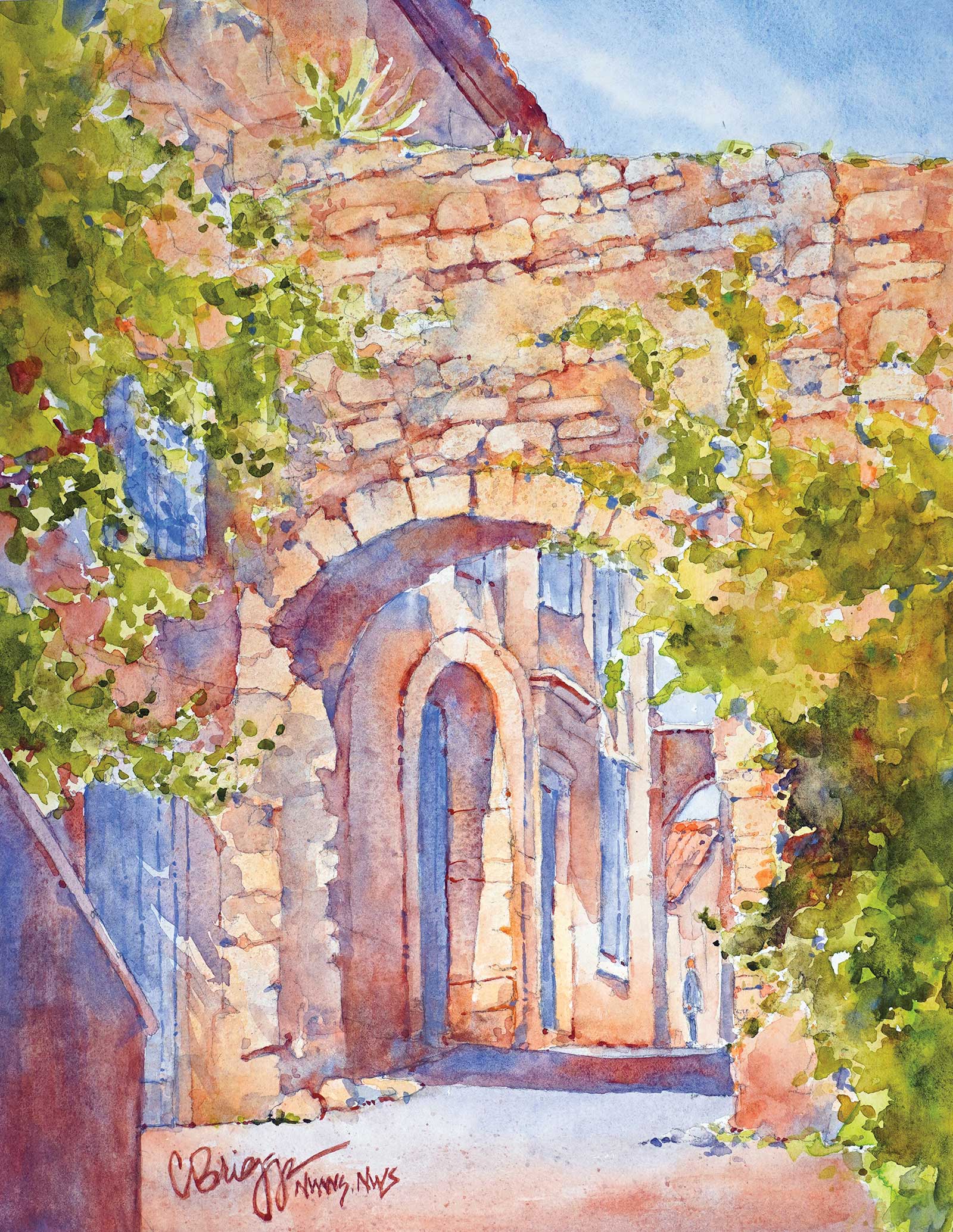
Lacoste, France Passageway, watercolor, 14 x 11" (35 x 27 cm)
For decades I’ve returned to Europe to paint and teach, recently returning from Belgium, the French Alps and Sicily, which have inspired some of the paintings in this article. I continue to share the magic of painting on location and helping students discover their own inspired point of view. For example, when teaching architectural stonework, I often invite everyone to really observe, then begin with continuous line drawings (i.e., a quick sketch) in ink and add just a touch of spot color. Without the pressure of full color, they are more focused on shape relationships, rhythm and design. It’s a refreshing warm-up that often leads to more expressive designs.
Stonework, like watercolor, is built in layers. The first wash sets the tone, mingling pigments establish major shapes, and calligraphic linework, blending and layers of texture bring out the character. Painting stone isn’t about replicating each rock or brick, it’s about interpreting the experience. The relationships between shapes, the interplay of warm and cool colors, and the patterns of light all contribute to the story of place.
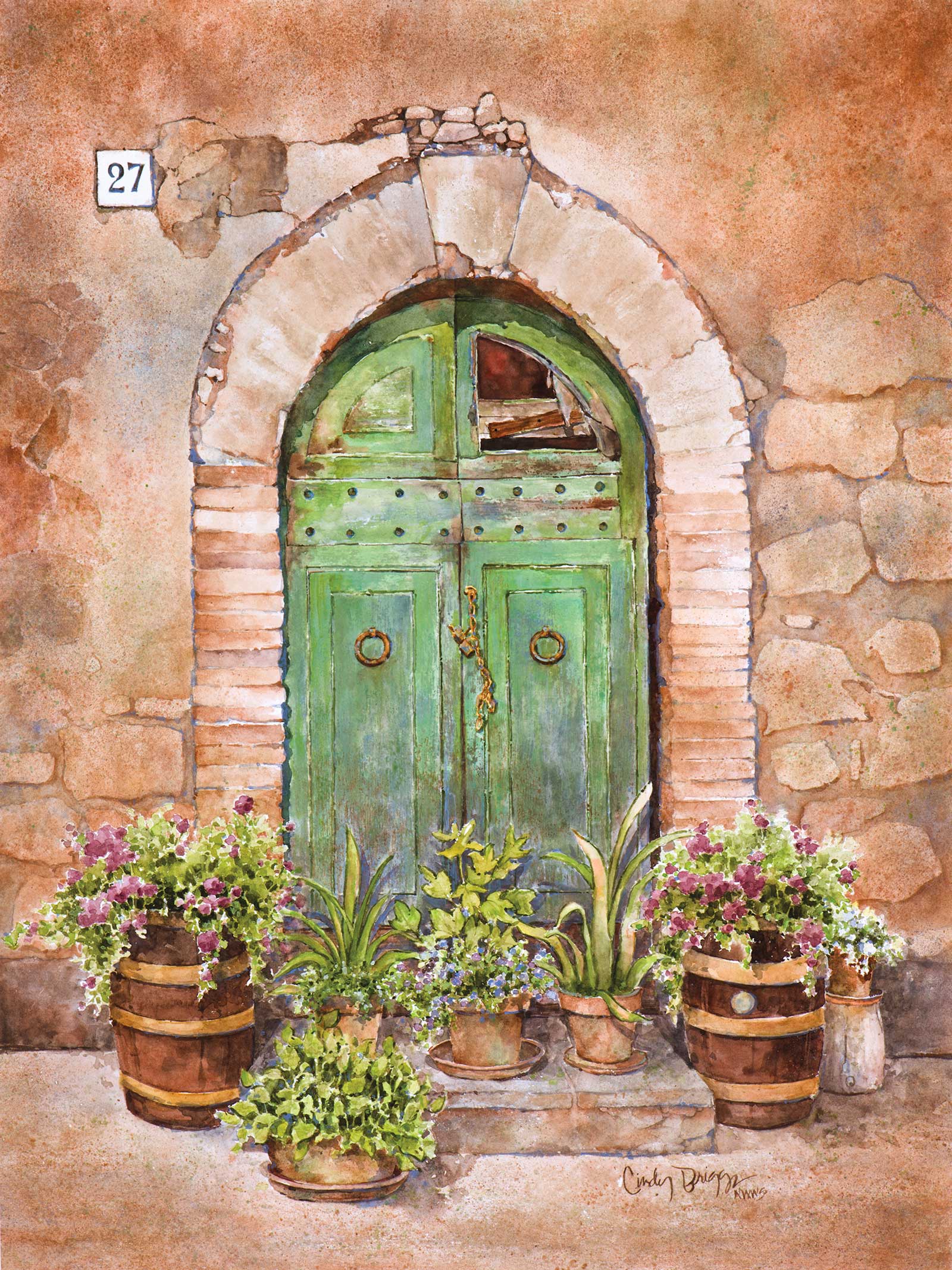
Benvenuti in Toscana, watercolor
My fascination with stonework runs deeper than travel. Growing up near Red Rocks Park in Colorado and now living in Utah, I’m immersed in landscapes built of stone. In Zion, Moab and Canyonlands, the cliffs feel like ancient stonework—strata of sculpted forms and luminous color shaped slowly by the elements. Whether carved by nature or constructed by human hands, these organic forms hold a quiet truth that continues to inspire me.
I found my way into watercolor while painting with my aunt, artist Ellie Weakly, whose mentorship has been a constant thread in my creative life. My degree in communication arts, with a minor in art history, along with 15 years as an advertising art director further strengthened my understanding of design: how to direct the eye, the importance of color harmony and the power of directional light. These foundations continue to guide both my teaching and my painting.
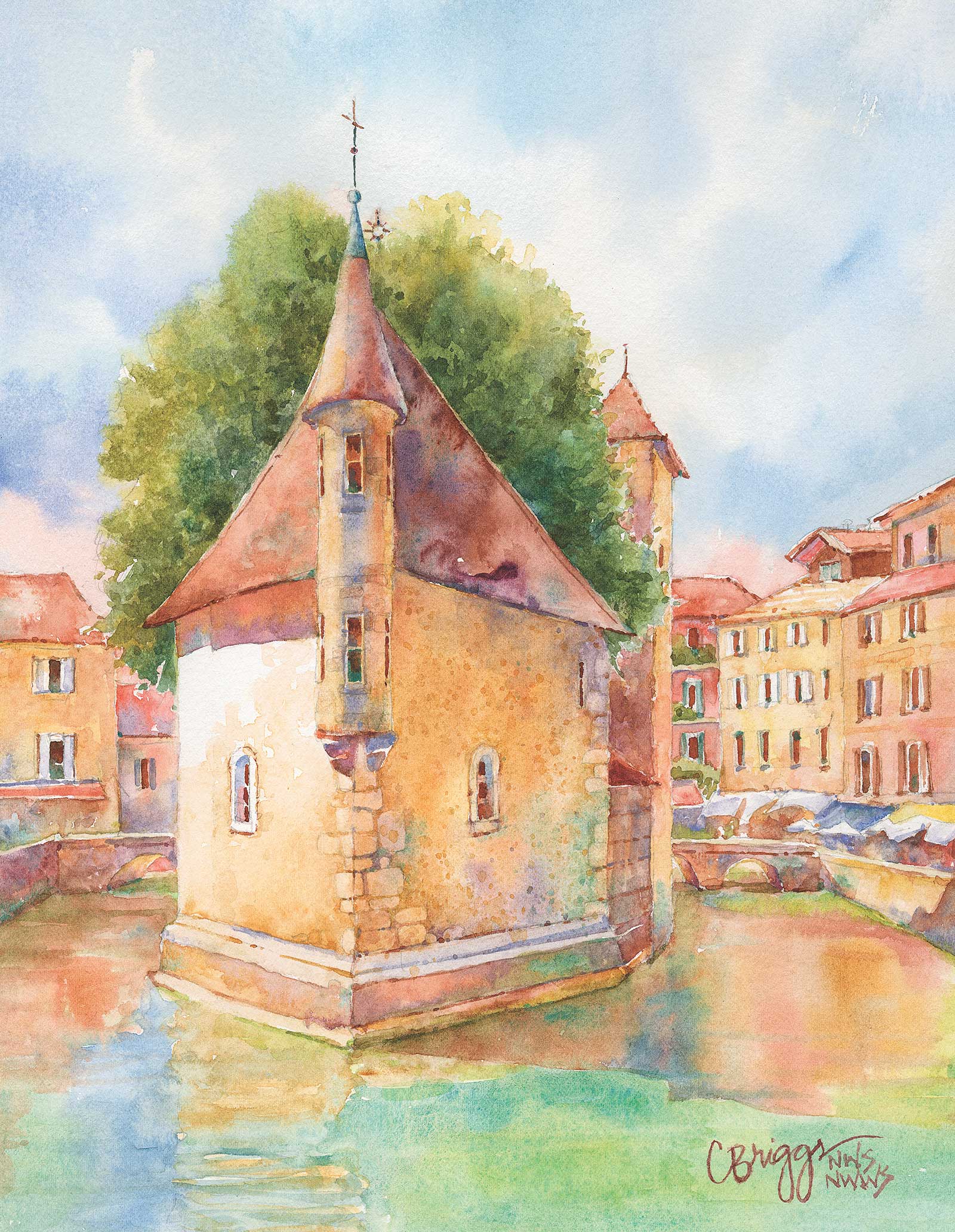
Palais de l’Isle - Annecy, France, watercolor, 12 x 9" (30 x 22 cm)
Decades of painting in plein air, often with my students beside me, have created some of the most meaningful chapters of my life. My journals and paintings form a living record of those journeys. I prefer beginning with small value and color studies on location to plan my design, which frees me to relax into the drawing itself. This often starts with the largest, simplest shapes, followed by a continuous contour line to establish structure and flow. All of this happens before I ever pick up a brush.
Stone walls naturally invite warm tones, yet they also reflect the shifting colors of the sky and cast cool, luminous shadows. When pigments mingle and flow on the paper, rather than being pushed into submission, watercolor becomes alive and connected. It is up to the artist to allow its magic to happen.
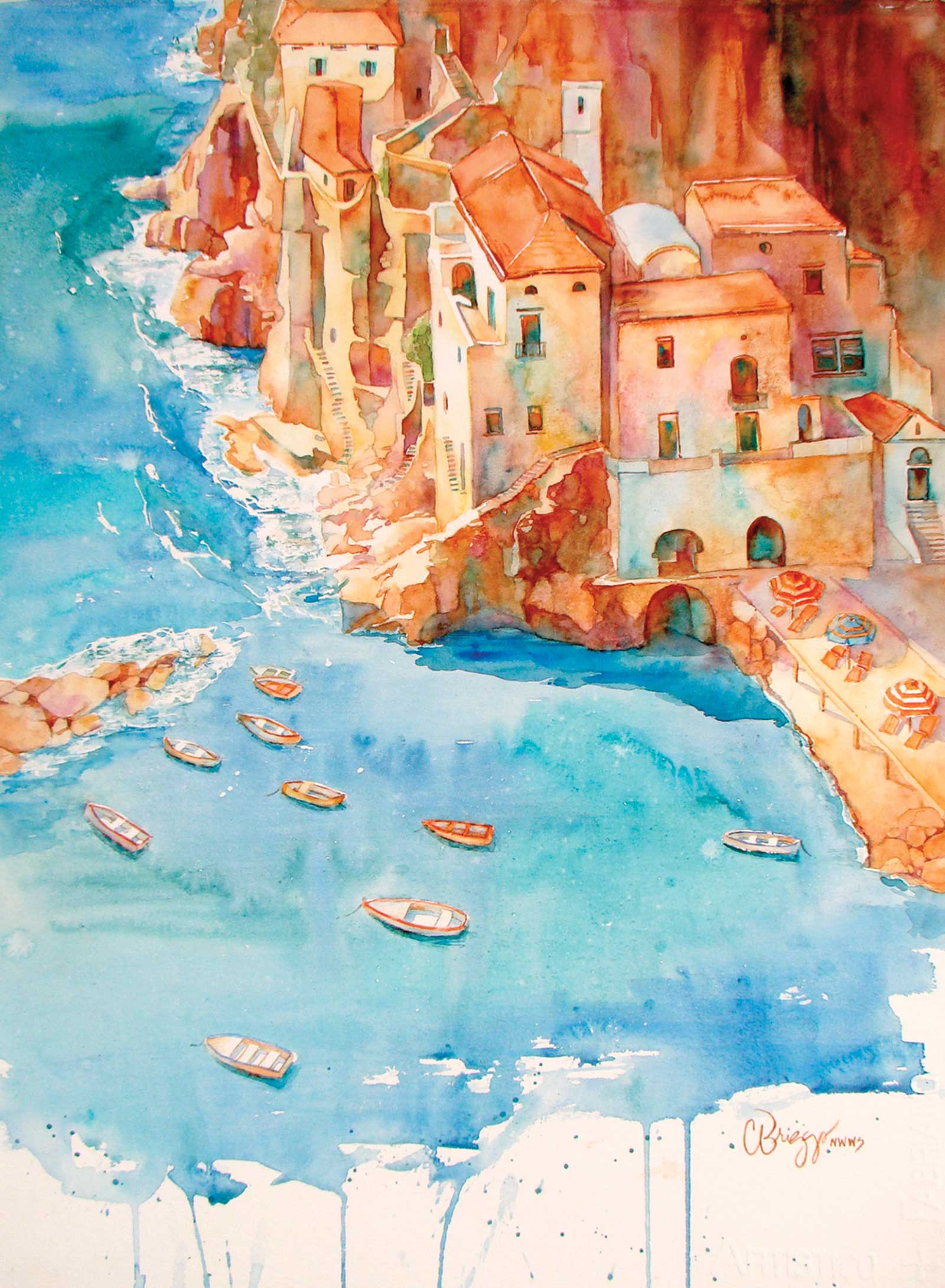
Conca Dei Marini, Amalfi Coast, Italy, watercolor
Whatever your subject, focus on what inspires you. Instead of chasing every detail, paint the experience. Pay attention to the relationships of shapes, the direction of light and the dialogue between warm and cool colors. Each painting is your own experiment. What may seem like a mistake often can become the magic within the painting. When you’re challenged, you’re on the edge of discovery, and that’s when something new and genuine can emerge.
Less is always more with watercolor, whether painting architecture, flowers, figures or landscapes. It’s like writing a poem, not a novel. I invite you to experience the calm, discovery and connection that comes from painting what inspires you, and to record your own layered journey in luminous colors.
Step by Step Stonework & Vines
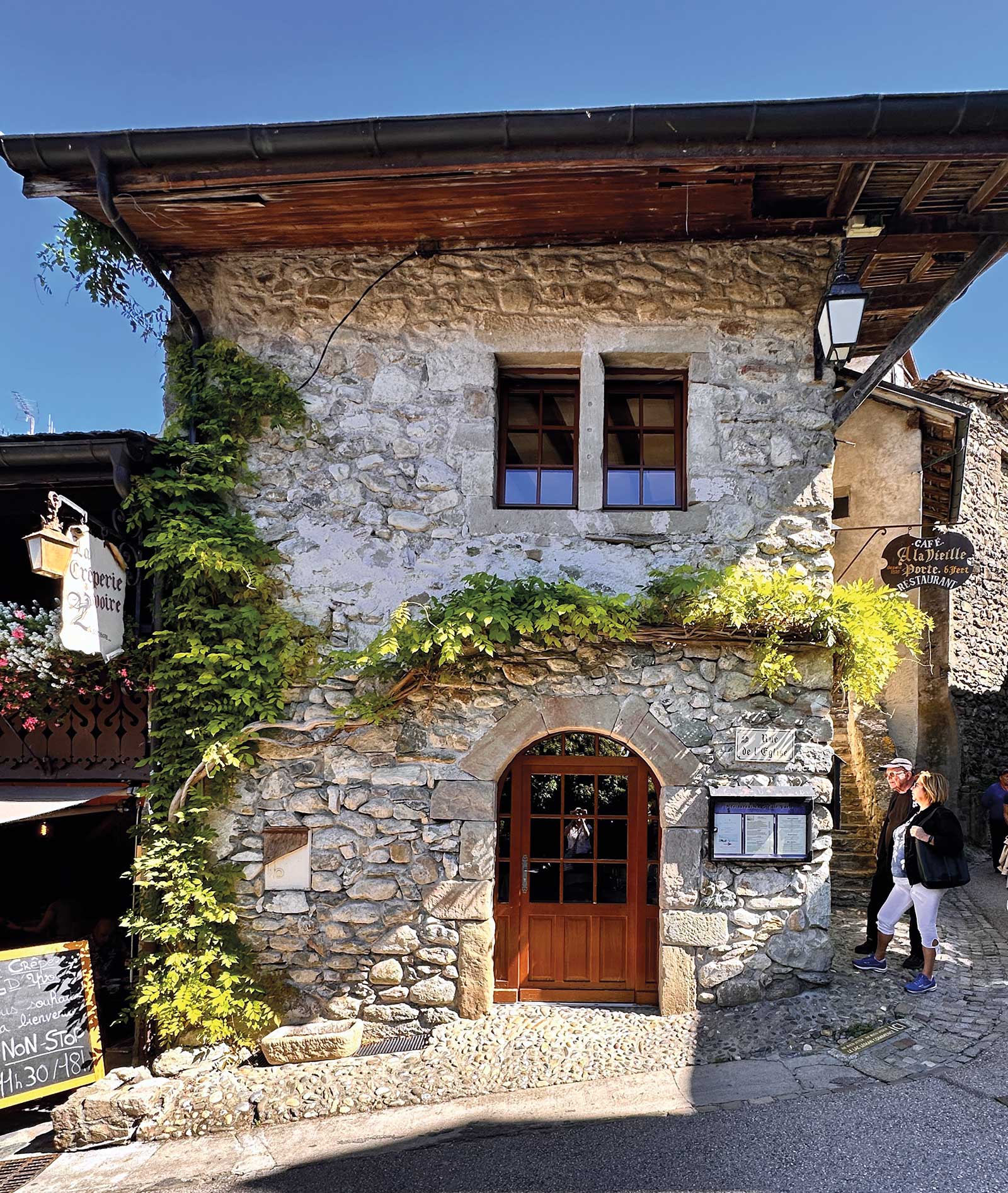
Reference Photo
Here’s the photo that sparked this painting. This 14th-century cottage in Yvoire, France, with its warm stone walls and climbing vines, feels like a doorway into my own watercolor journey.
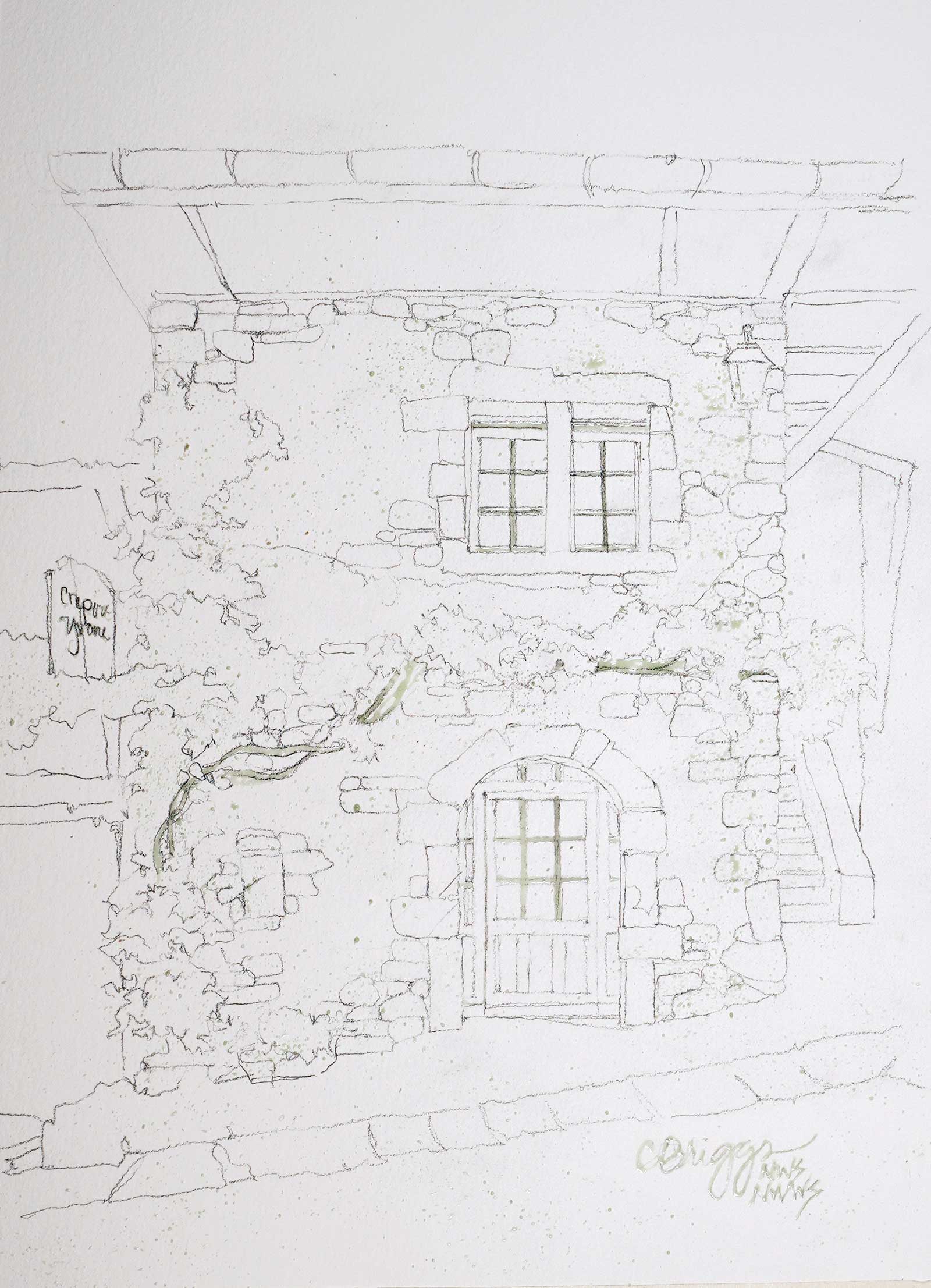
Stage 1 Drawing
I draw with flowing lines, choosing which stones and details to include. Then I add masking fluid to the windowpanes and vines, and splatter it for texture using an old comb.
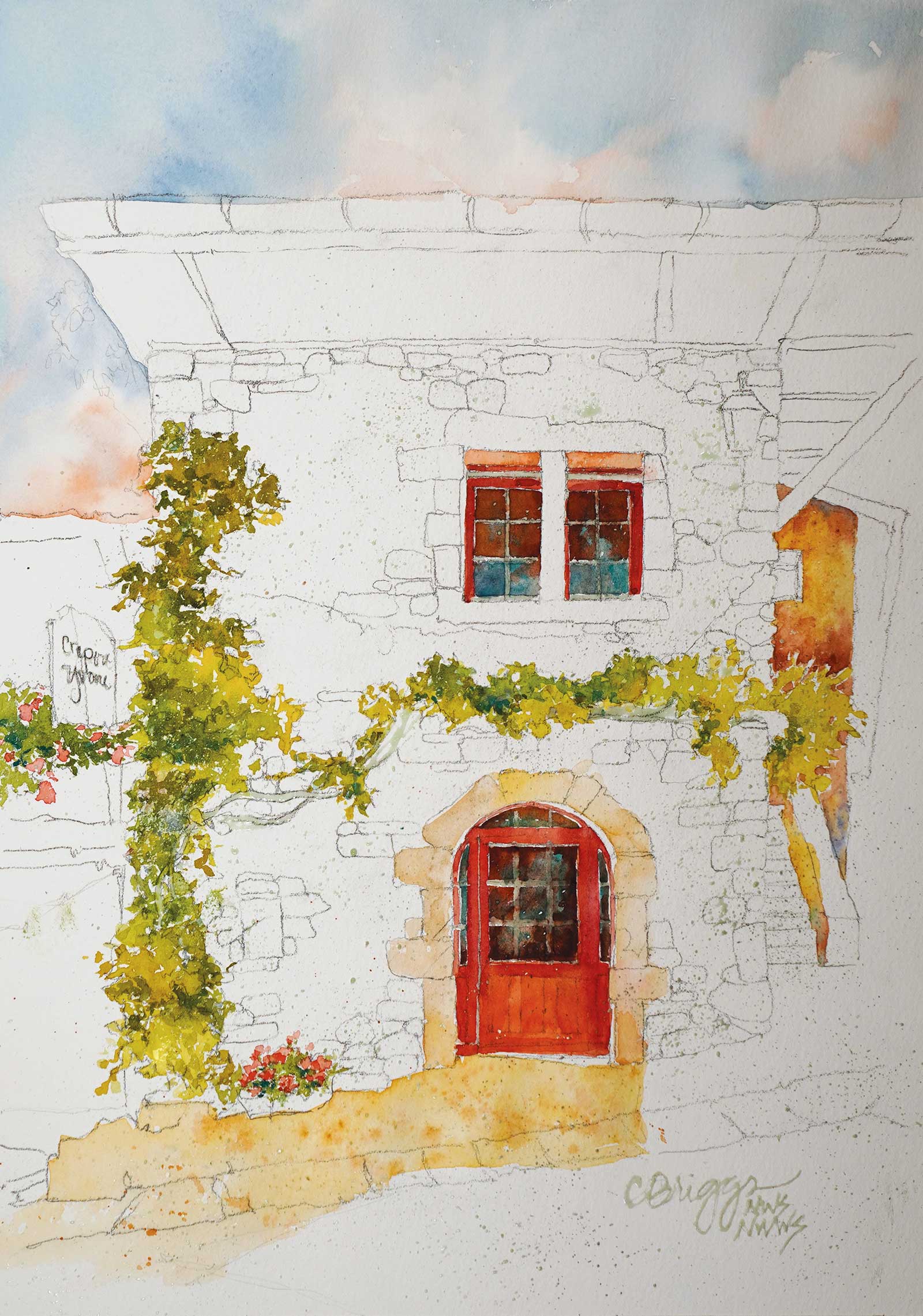
Stage 2 Foliage and Light
A wet-in-wet sky sets the warm/cool dialogue, followed by flowers and early foliage so the whites stay bright. Then I test my color for the sunlit wall, paint the windows with a hint of reflected light above, and finish with a vibrant door for a range of color notes.
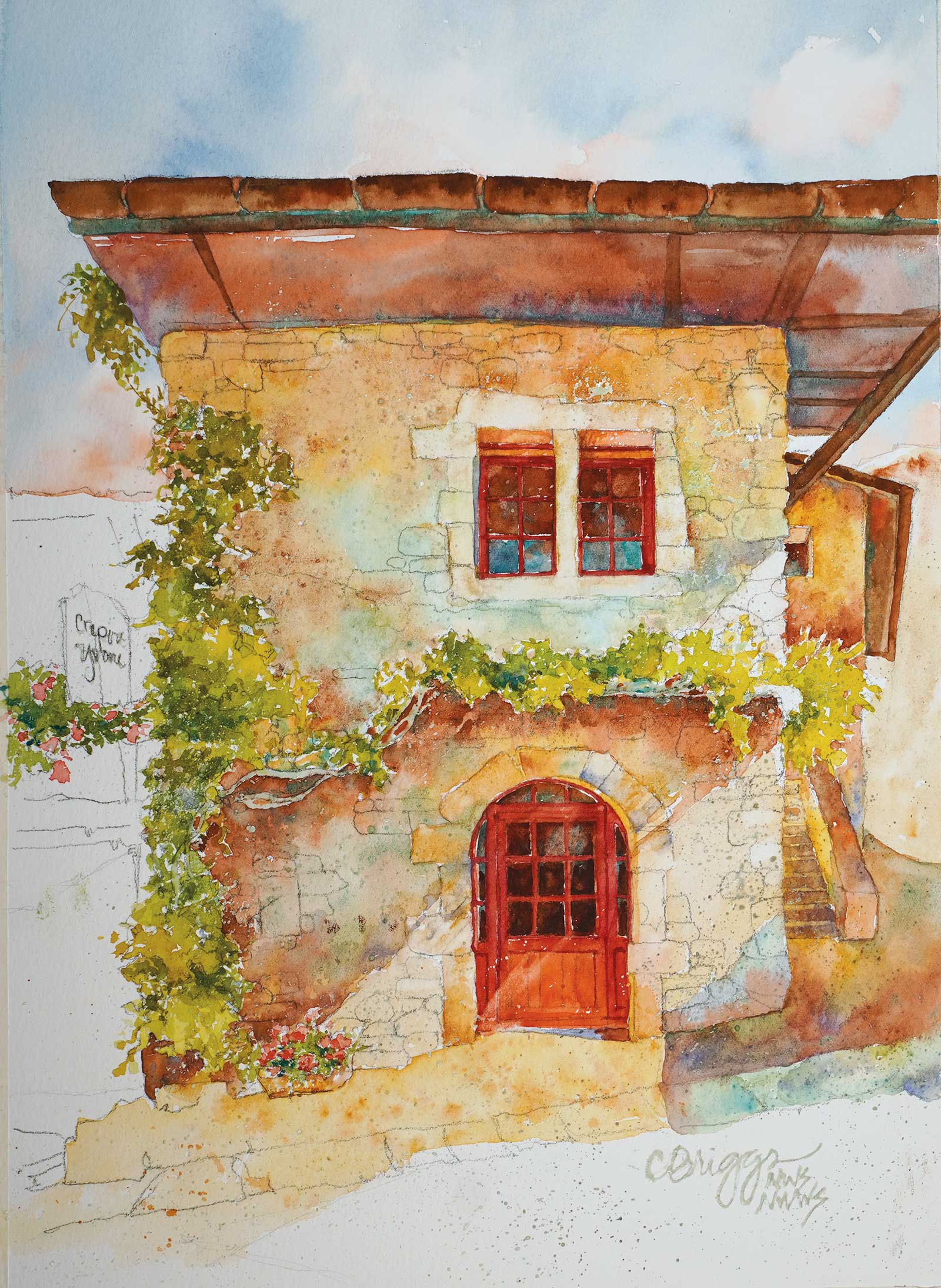
Stage 3 Wall Layer
I paint the walls wet-in-wet with warm mingling tones, leaving it lighter in the sunlit areas and deeper with cool touches in shadow. The roof stays warm but cooled slightly to show it’s in the shade. Notice how the shifting shadow values beneath the vines add dimension.
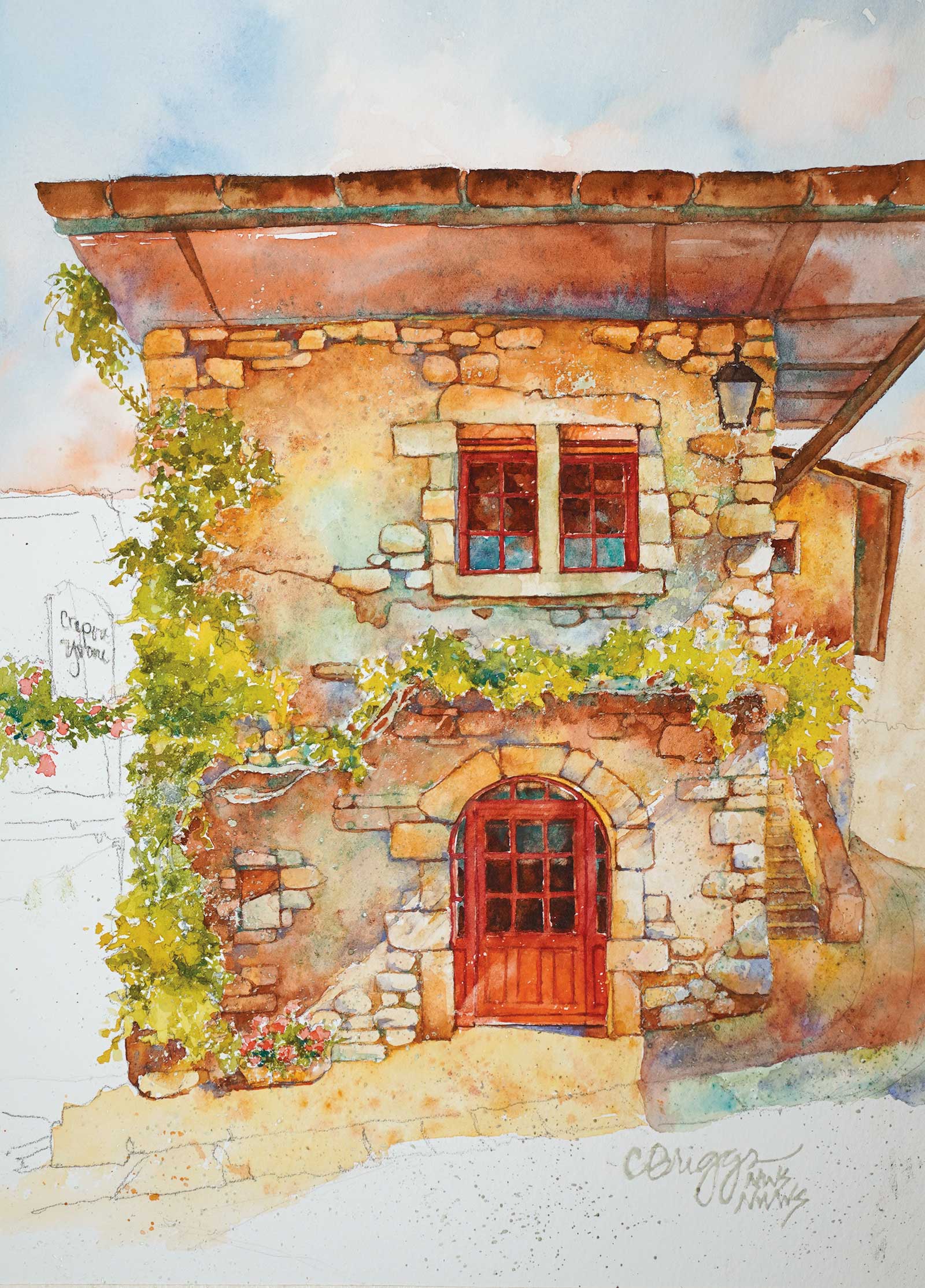
Stage 4 Details Around the Stone
I then outline some of the rocks with lost and found lines, changing colors and blending outward for varying edges.
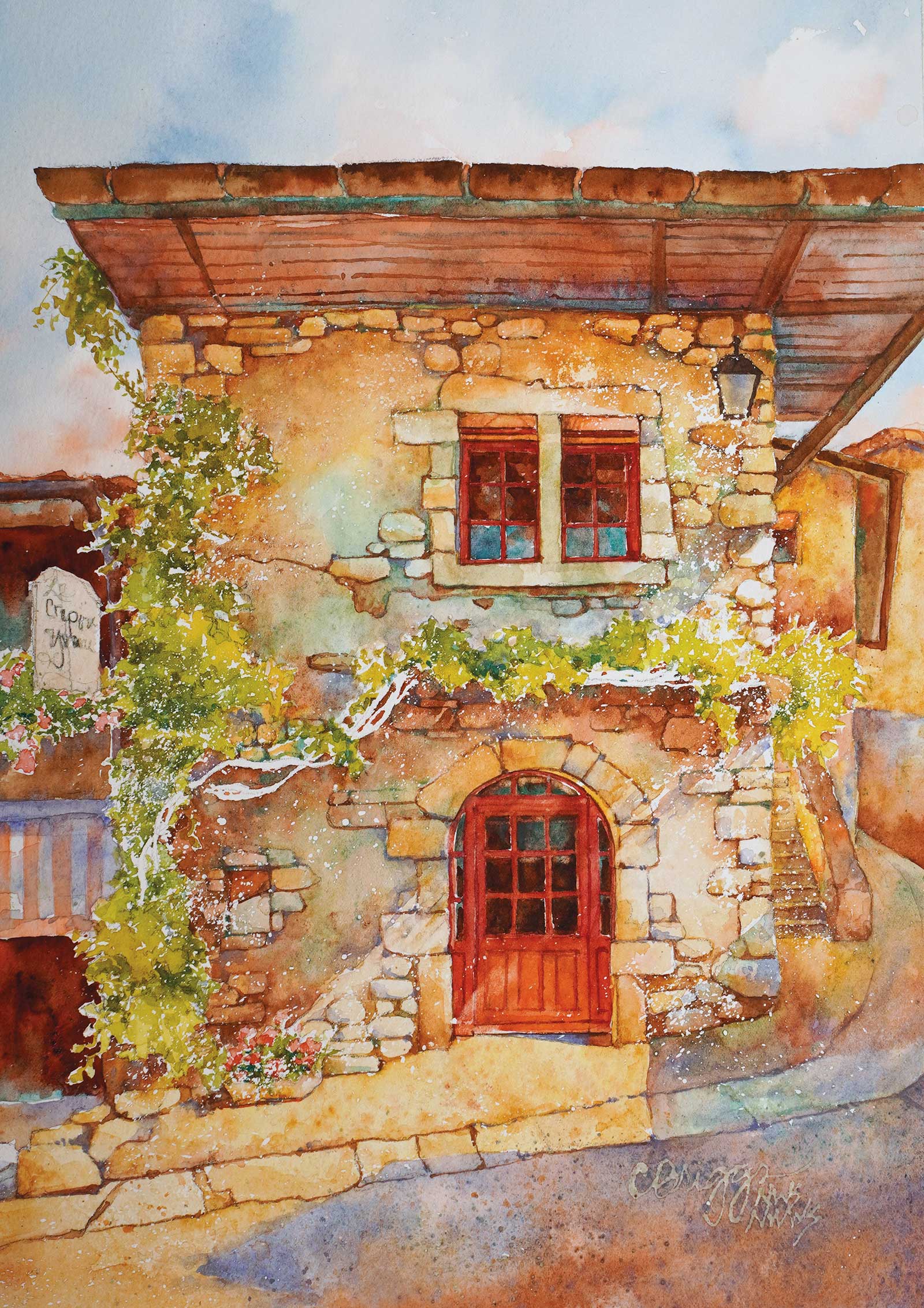
Stage 5 Lifting the Masking Fluid
After lifting off the masking fluid to reveal the vines and splattered textures on the walls I complete what is to the sides of the cottage to tie it all together.
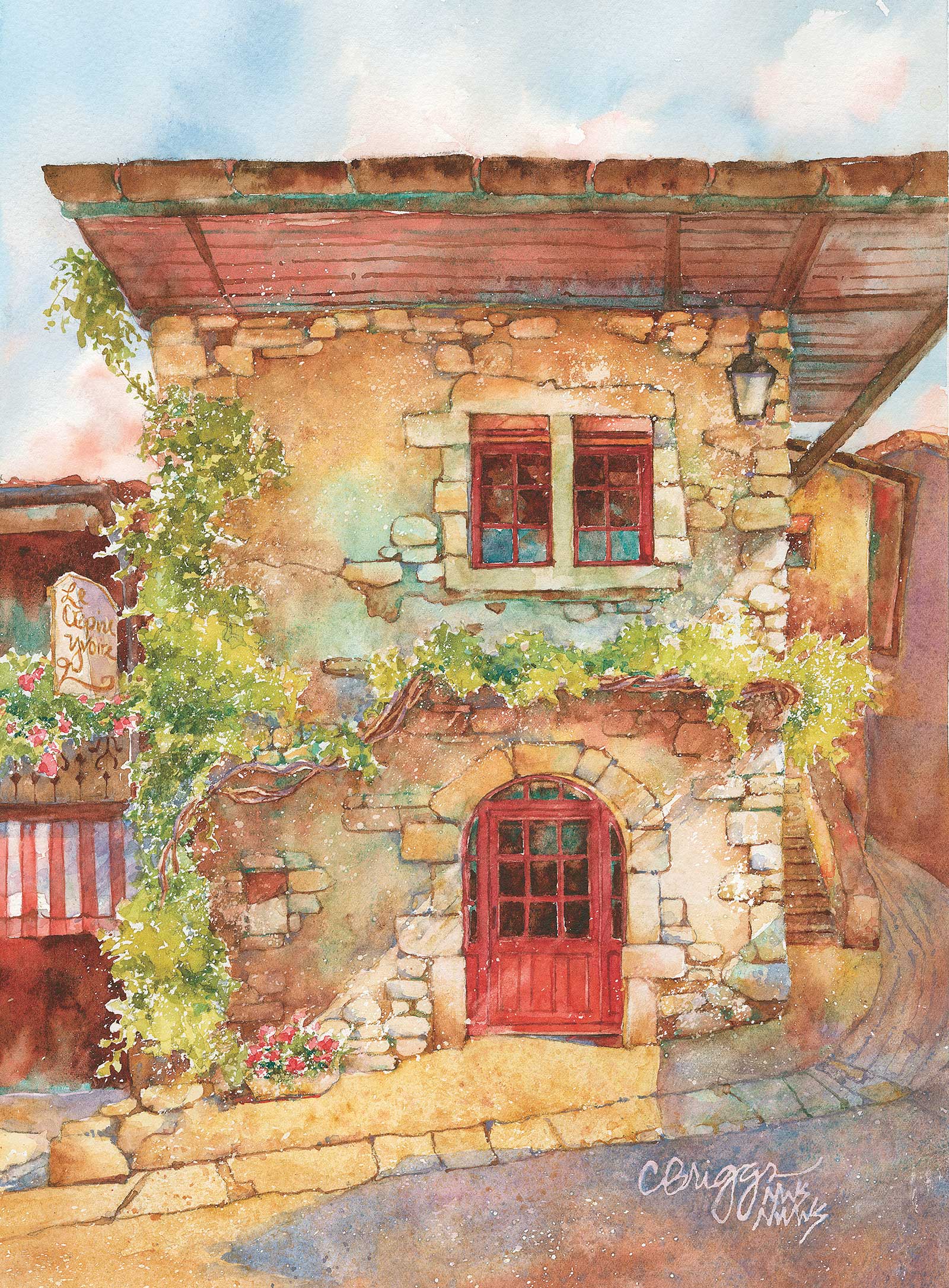
Stage 6 Finished Artwork
Stonework & Vines, Yvoire, France, watercolor, 12 x 9" (30 x 22 cm)
To fine tune and finish, I’ve splattered some texture with a toothbrush and painted in the vines and woodwork.
About the Artist
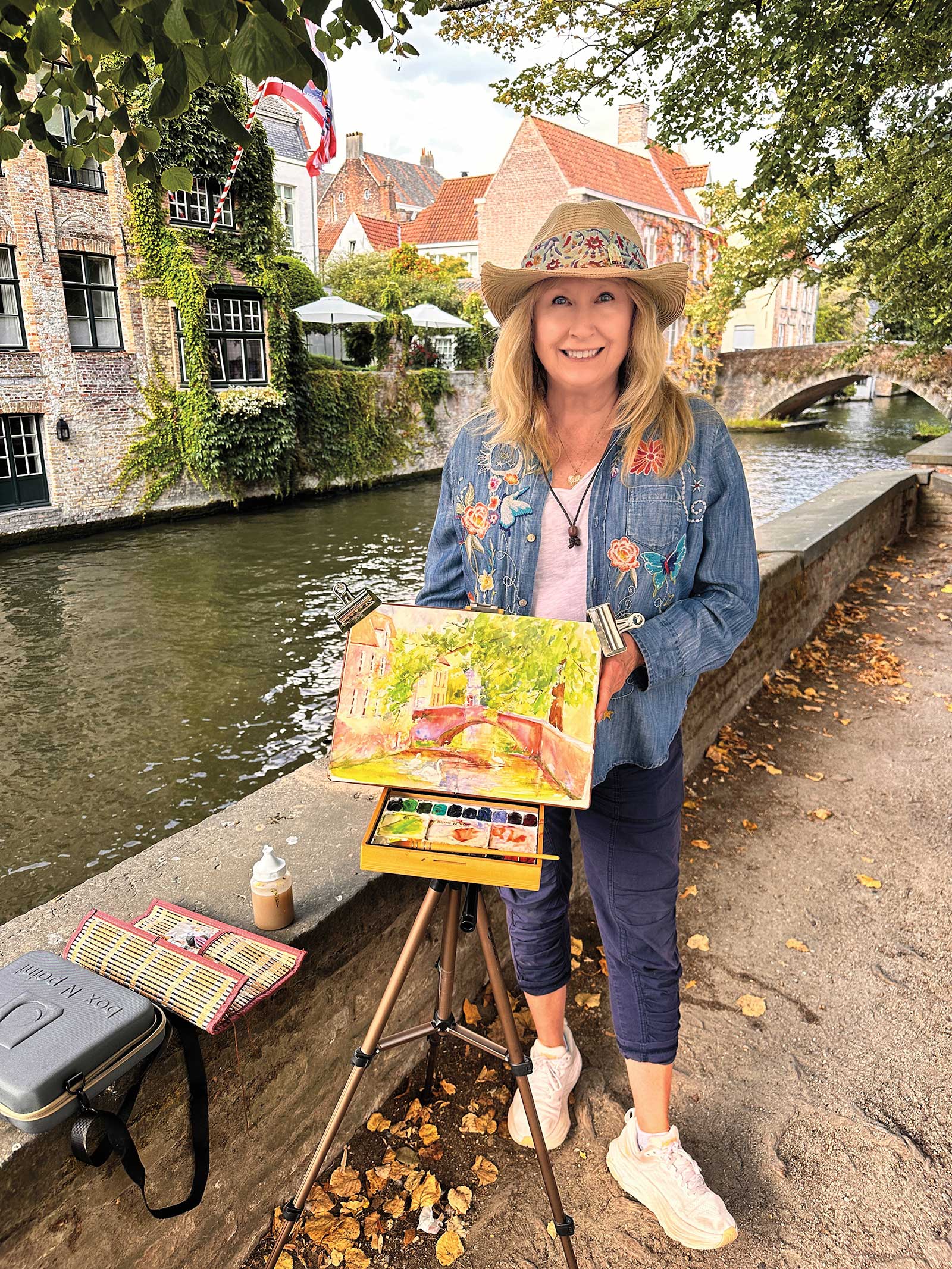 Cindy Briggs
Cindy Briggs is a watercolor artist based in northern Utah. Leading international painting retreats for over 25 years, she guides artists of all levels of experience through painting scenic locations across Europe and North America. She also shares her passion for watercolor through online and studio workshops and seven of her own select online programs. Recognized for her mastery of the medium, she is a featured instructor for Smithsonian Art Studios, French Escapade, the University of Utah, Terracotta, Palette Exchange and a variety of watercolor societies. She has juried national and regional exhibitions and participates in select invitationals.
A Signature Member of the National and Northwest Watercolor Societies, Briggs is also a Daniel Smith Brand Ambassador. Her work has been published in numerous magazines, and she co-authored Make Every Day a Painting and Lemonade Lists.
A sought-after demonstrator and instructor, you’ll find her conducting watercolor workshops in Scotland, France, Italy, Switzerland, Portugal, California, Maine, Utah and Florida, along with River Cruises on the Rhine, many with artist Theresa Goesling. Briggs inspires artists to connect to their experience, compose captivating designs, draw with flowing lines and paint their journey with luminescent watercolors.
Contact at
cindybriggs.com