I am fascinated by the forms of nature and fleeting moments of light. Painting outdoors is important to me. Being immersed in nature, away from concrete city structures and without relying on static mechanical photographs, is essential in gathering experiences from which we develop an intuitive sense of vitality and fluidity. I turn to watercolor when I seek the lightness and portability of tools and materials, and a quick expression of inspiration. Since the medium does not allow for endless corrections, I find watercolor useful as it helps me take complex forms and turn them into swift, concise shapes and tonal relationships. It forces me to approach each irreversible brushstroke with confidence and understanding.
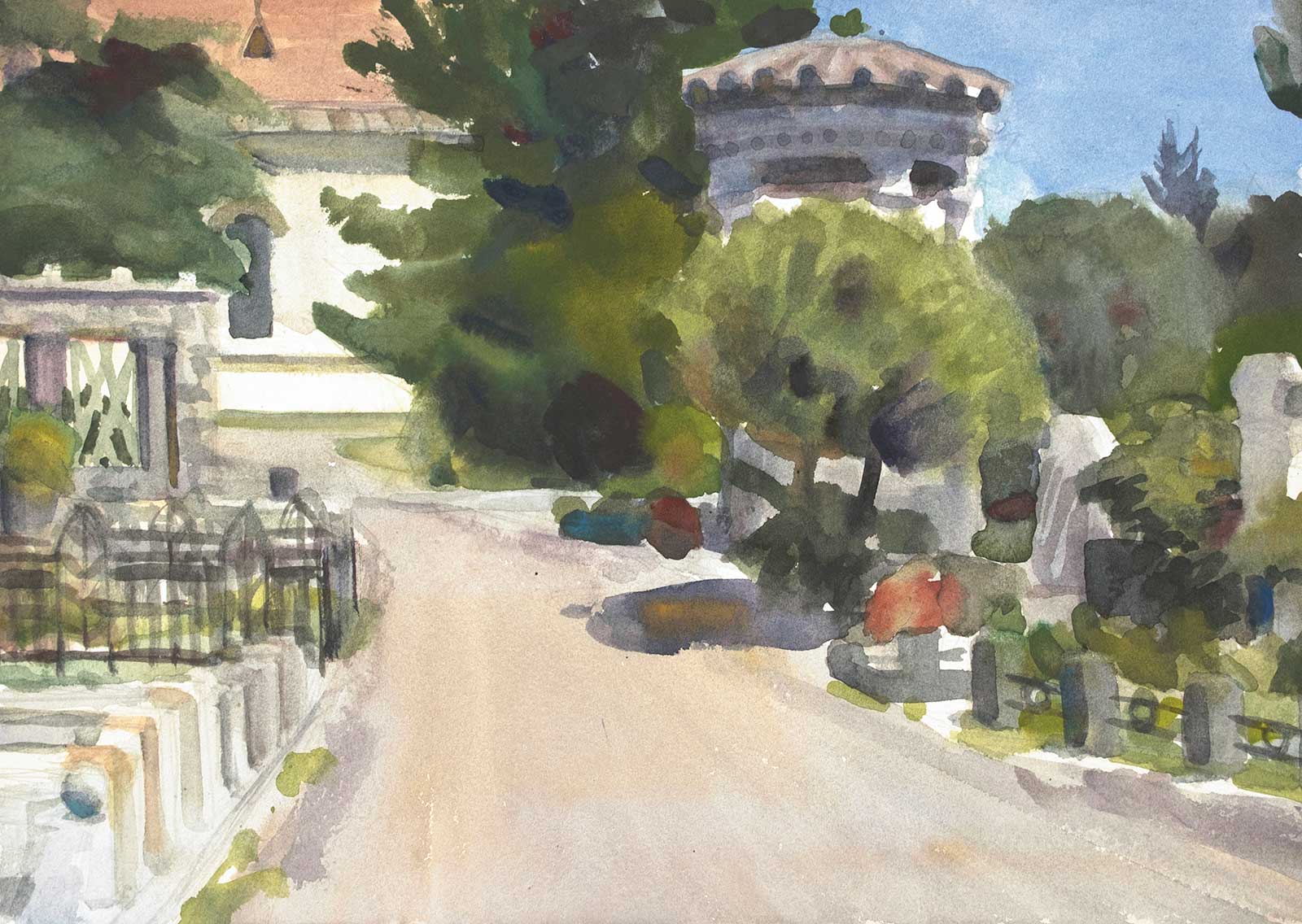
Entrance to the Žale Cemetery, watercolor, 9 x 13" (22 x 33 cm)
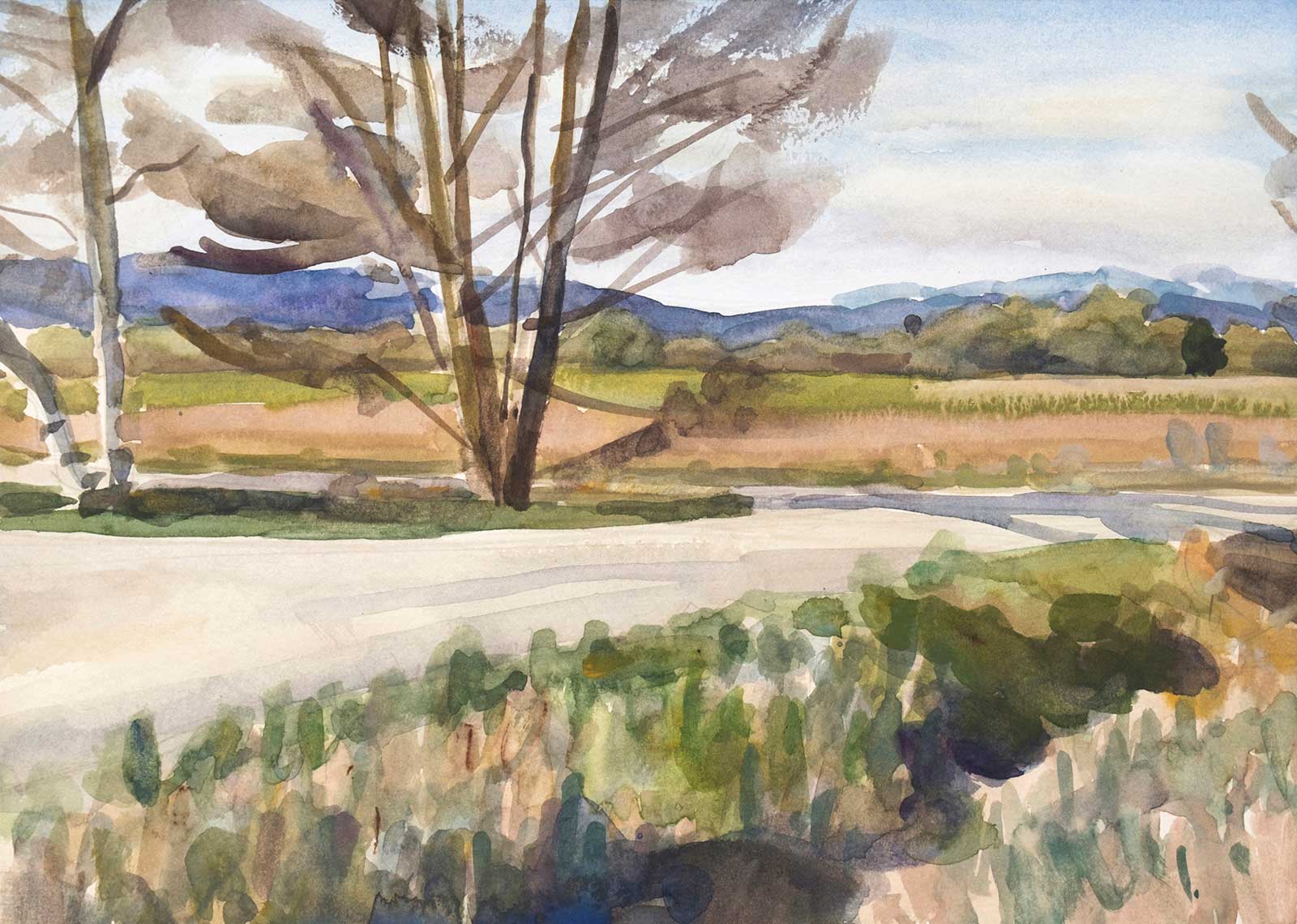
Road at the Ljubljana Marshes, watercolor, 8 x 11" (20 x 27 cm)
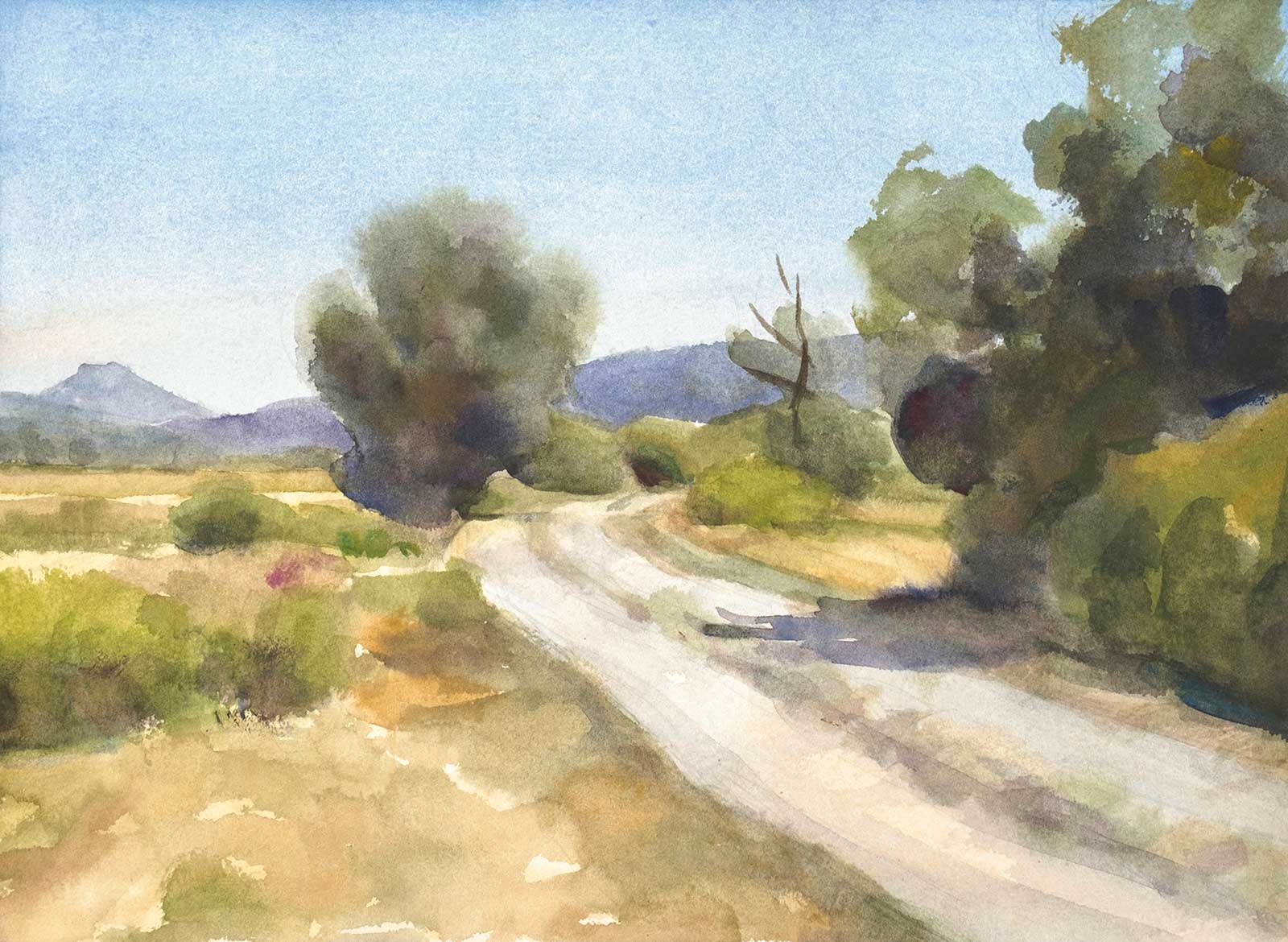
Sunny Day at the Ljubljana Marshes, watercolor, 8 x 11" (20 x 27 cm)
The nature of transparent, fast-drying watercolor means that each application of pigment is time-sensitive and final—a medium that, in the struggle to control its chaos, teaches humility and patience. When you learn to dance with it, not against it, watercolor reveals all its charms. Regardless of the painting medium we choose, it remains true that painting is not a challenge to render every detail in sight, and that we should not view looseness as some sort of frivolous departure from control. And yet, simply fiddling around on the paper will not lead to a meaningful work of art. Our creation must be grounded in aesthetic understanding.
My Art in the Making Sunlit Road on the Ljubljana Marshes
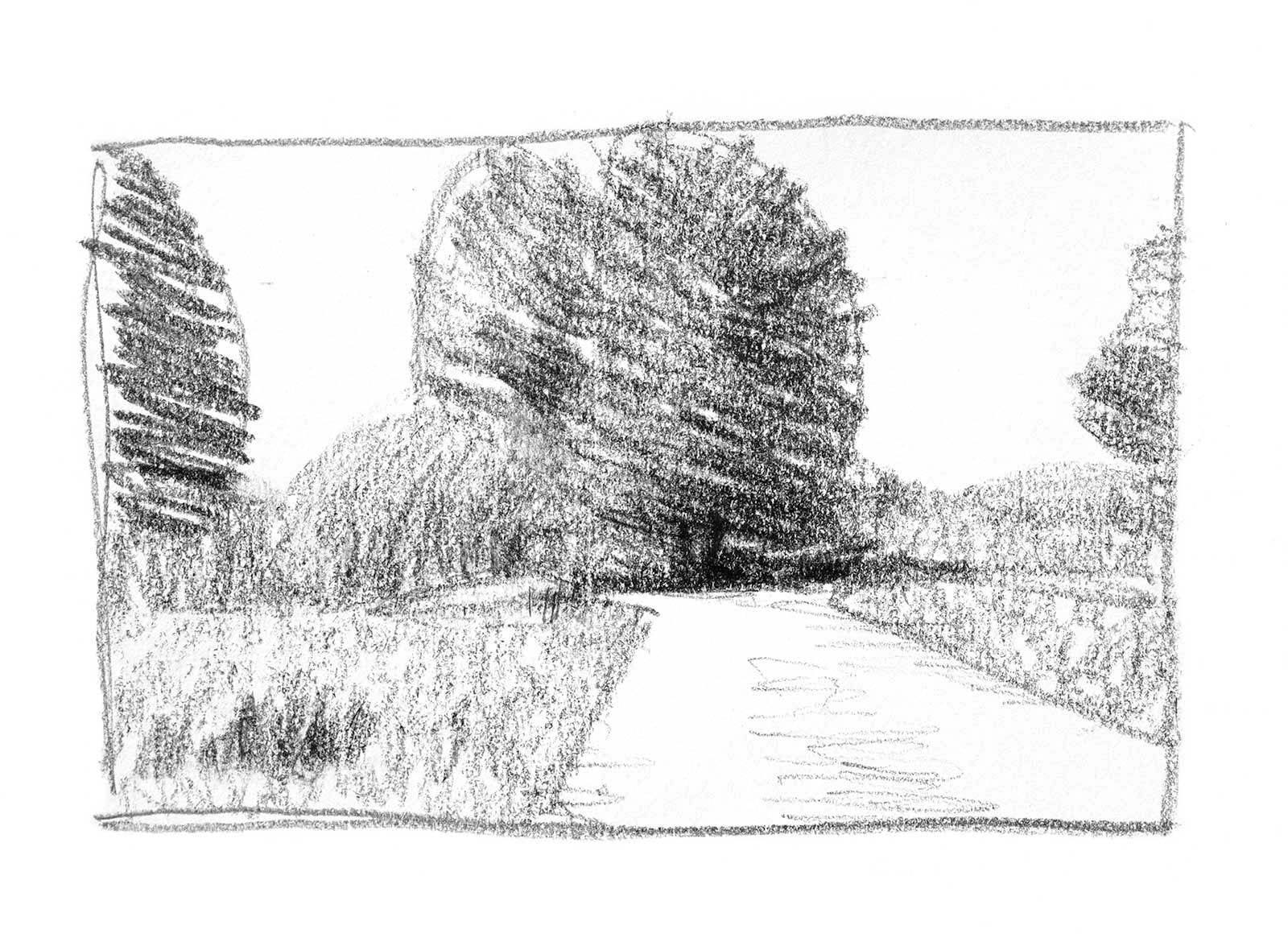
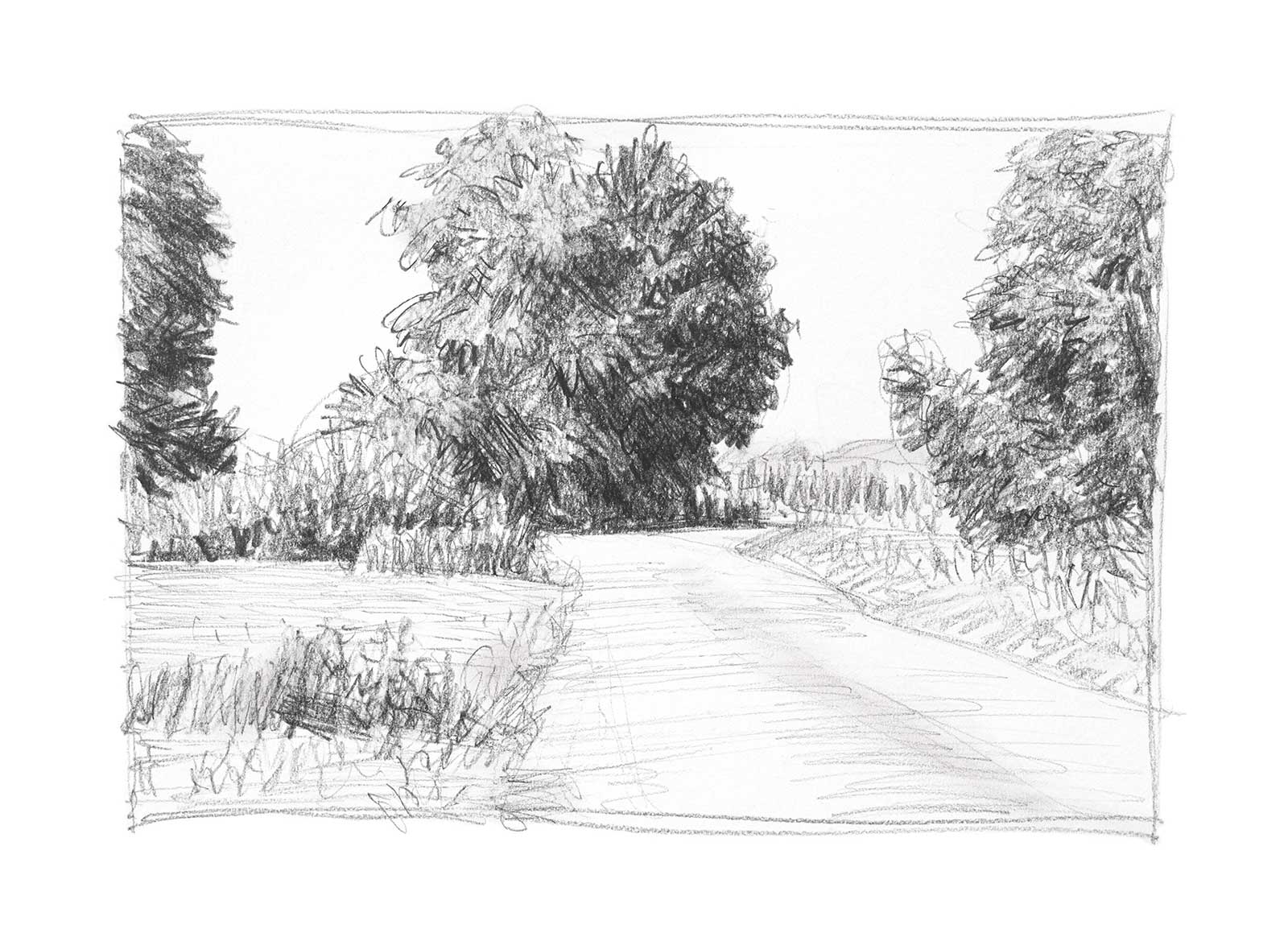
Stage 1 Notan
A notan sketch is a Japanese design concept that represents the harmony between light and dark. In visual art, it refers to a simple black-and-white composition without details. Drawing these quick sketches anywhere is a valuable exercise, even if they never lead to a finished full-scale painting, as they sharpen your ability to selectively choose only those elements necessary to express your idea.
Stage 2 Pencil Drawing
I’ve noticed that the first works I create tend to feel stiffer than those made later in the day, so I like to start with pencil drawing as a mental warm-up, which leads to a less overworked visual structure in later watercolors. Drawings can also be a more affordable option for buyers.
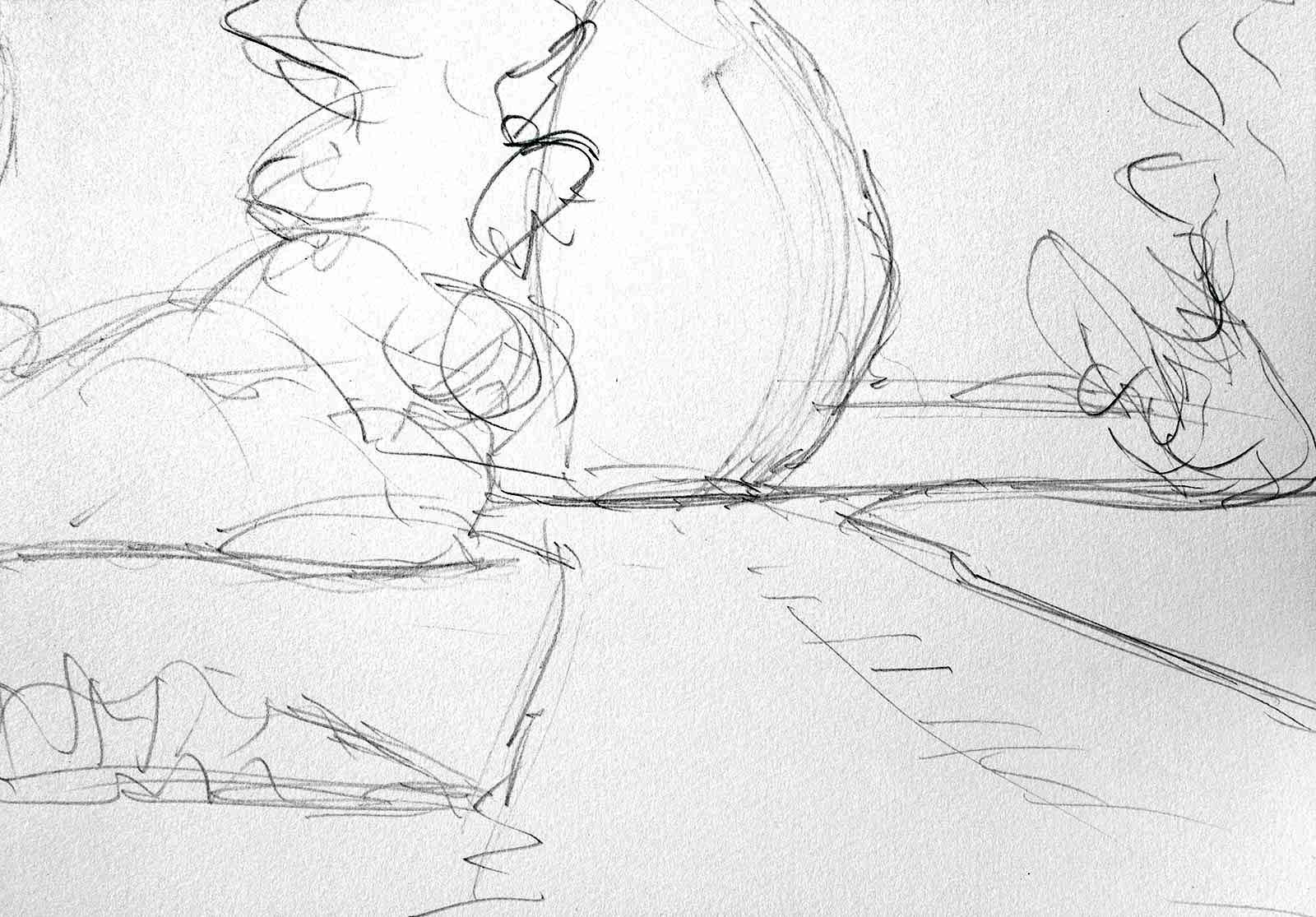
Stage 3 Basic Forms
I start a watercolor painting with light pencil lines that loosely suggest the basic forms. I never make a precise drawing because when it comes time to paint, it would result in a less fluid and more rigid visual structure.
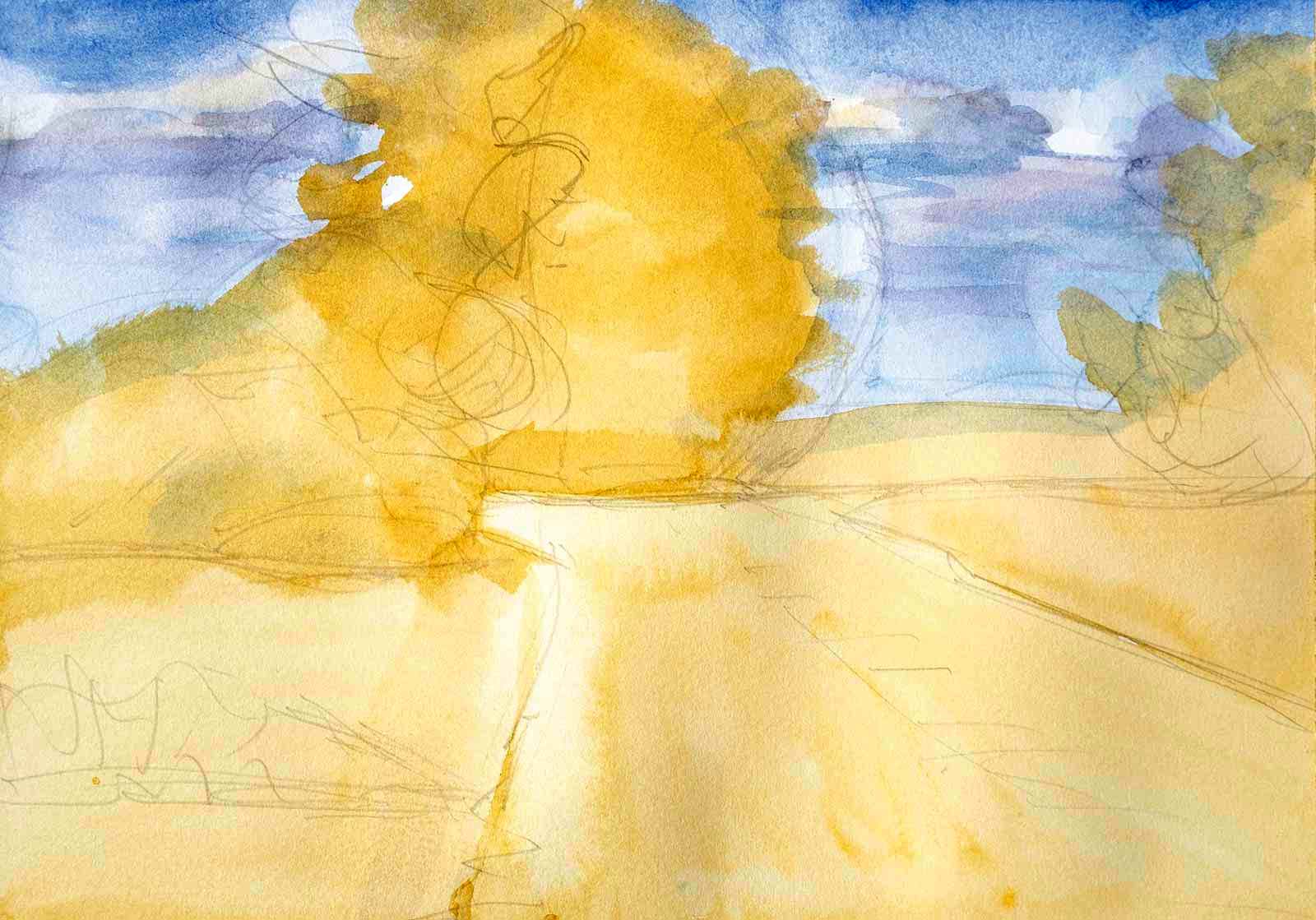
Stage 4 The Sky
I always begin by painting the sky in the background since all later objects will be in the foreground. I imagine a pleasant pattern of fluffy clouds, while in reality there is only a blue sky. I used yellow ochre as a base tone for the entire landscape, as it helps establish a unifying color and conveys the feeling of warm sunlight.
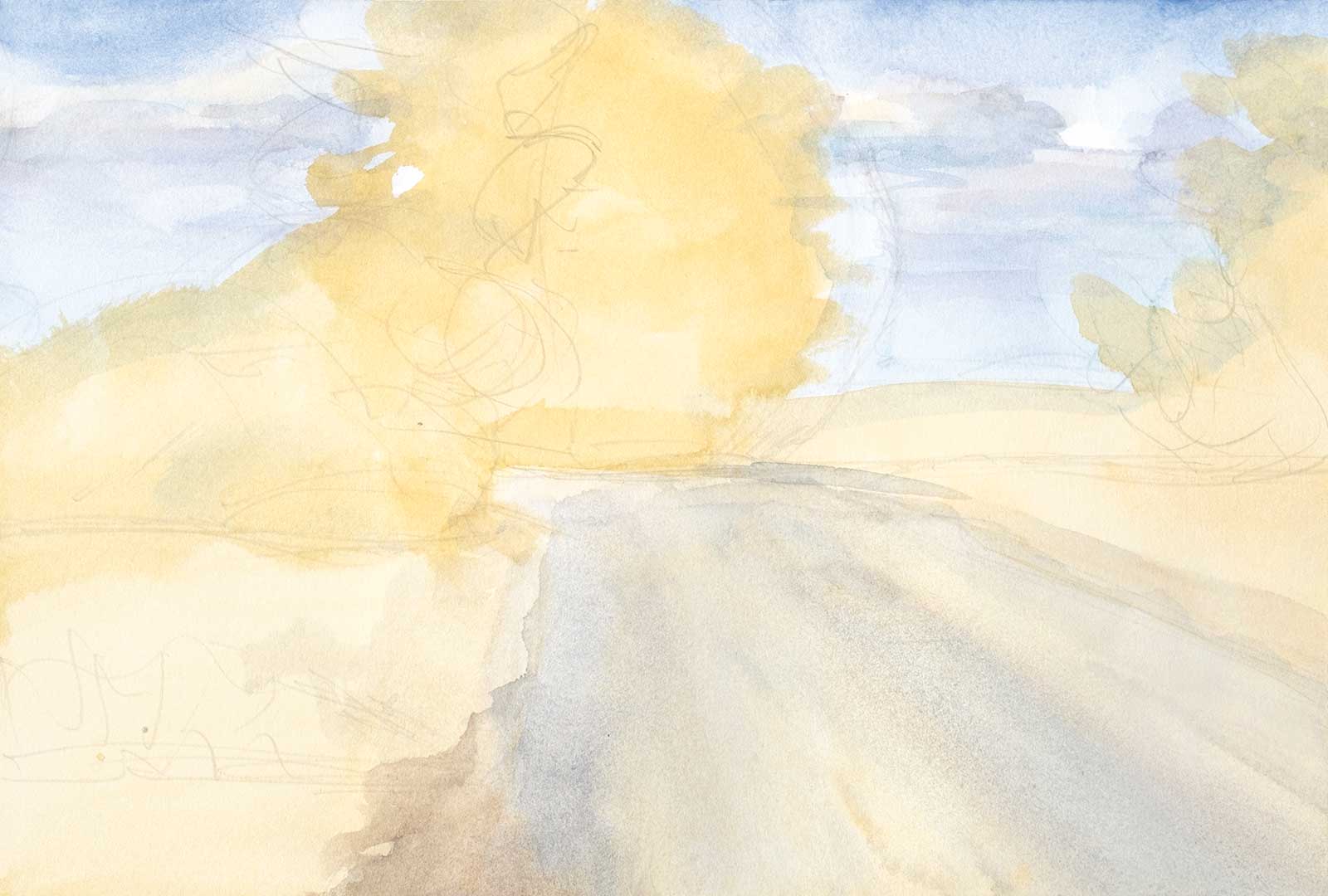
Stage 5 The Road
Because watercolor is painted from lighter to darker values, I next move on to the sandy road. When painting outdoors, if water is limited, it’s best to paint the light areas first, as later the rinse water becomes too greenish to clean the brushes properly. Since I don’t want the viewer’s attention to be drawn to the road, it is depicted without sharp edges.
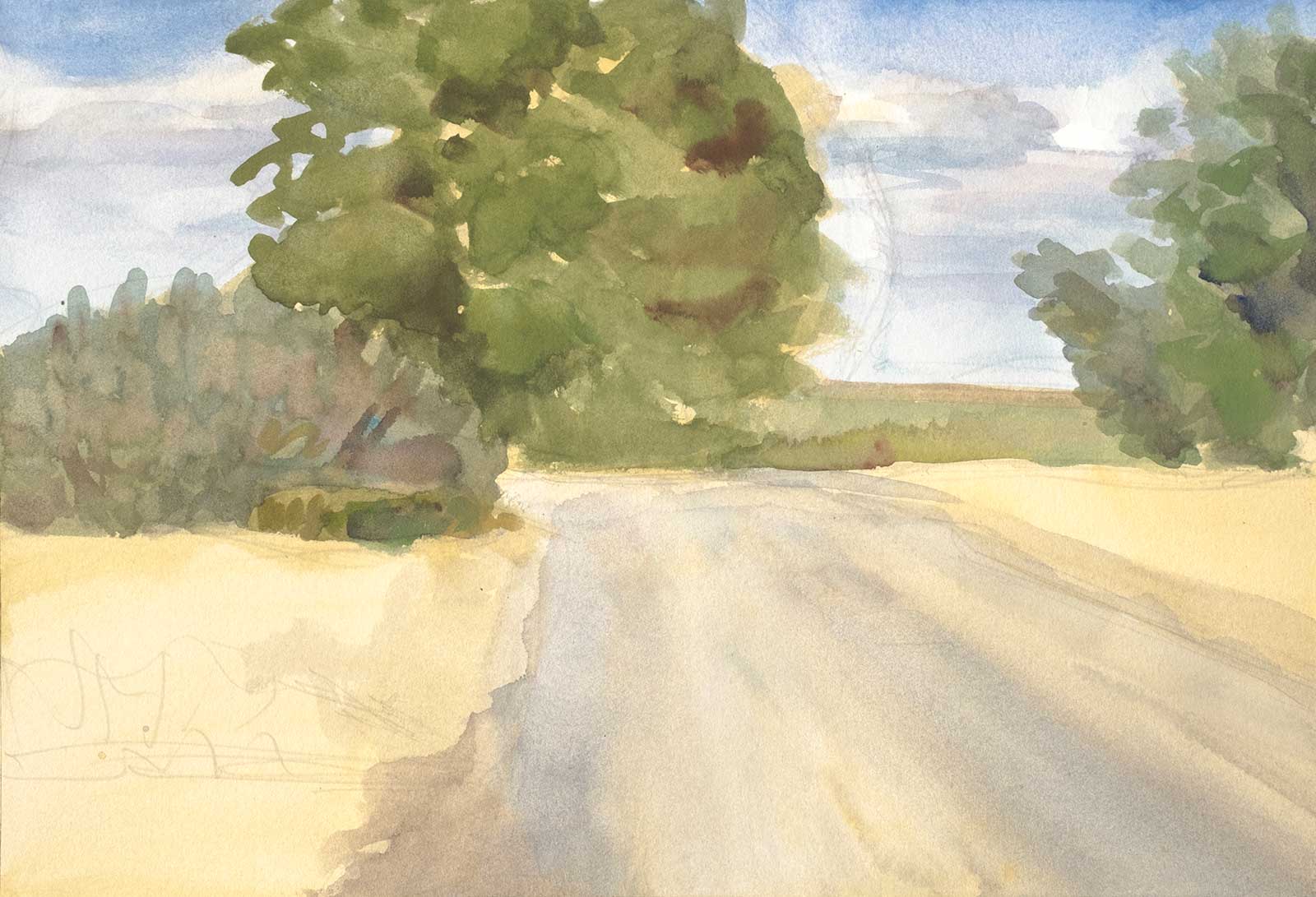
Stage 6 Adding Greens
Here I apply a variation of the green tones characteristic of each plant. I never try to finish any object at once, but instead work alternately on several areas of the painting, as using the current mixture of colors for other similar shades helps achieve overall chromatic harmony. While the outer edges of the plant shapes are defined, inside I use a looser, wet-on-wet approach.
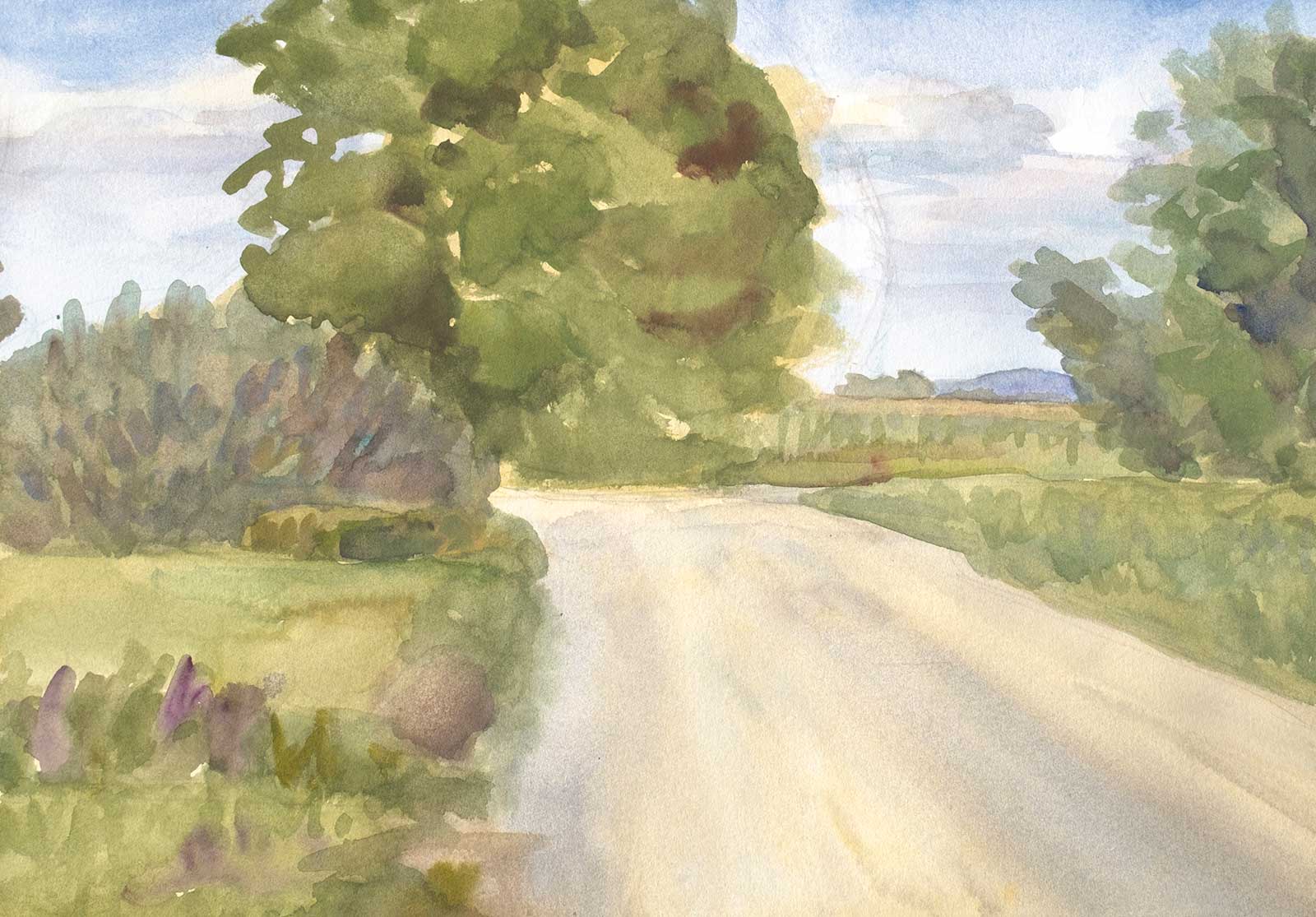
Stage 7 Continuing the Meadow
I continue with the meadow. At first glance, meadows may appear as a uniform area of color, but in reality they contain many subtle variations. With sensitivity to the organicity of natural structures, you can freely add patterns of grassy plants that compositionally serve the expression of your idea. Purple wasn’t present in the actual scene, but I used it for decorative reasons.
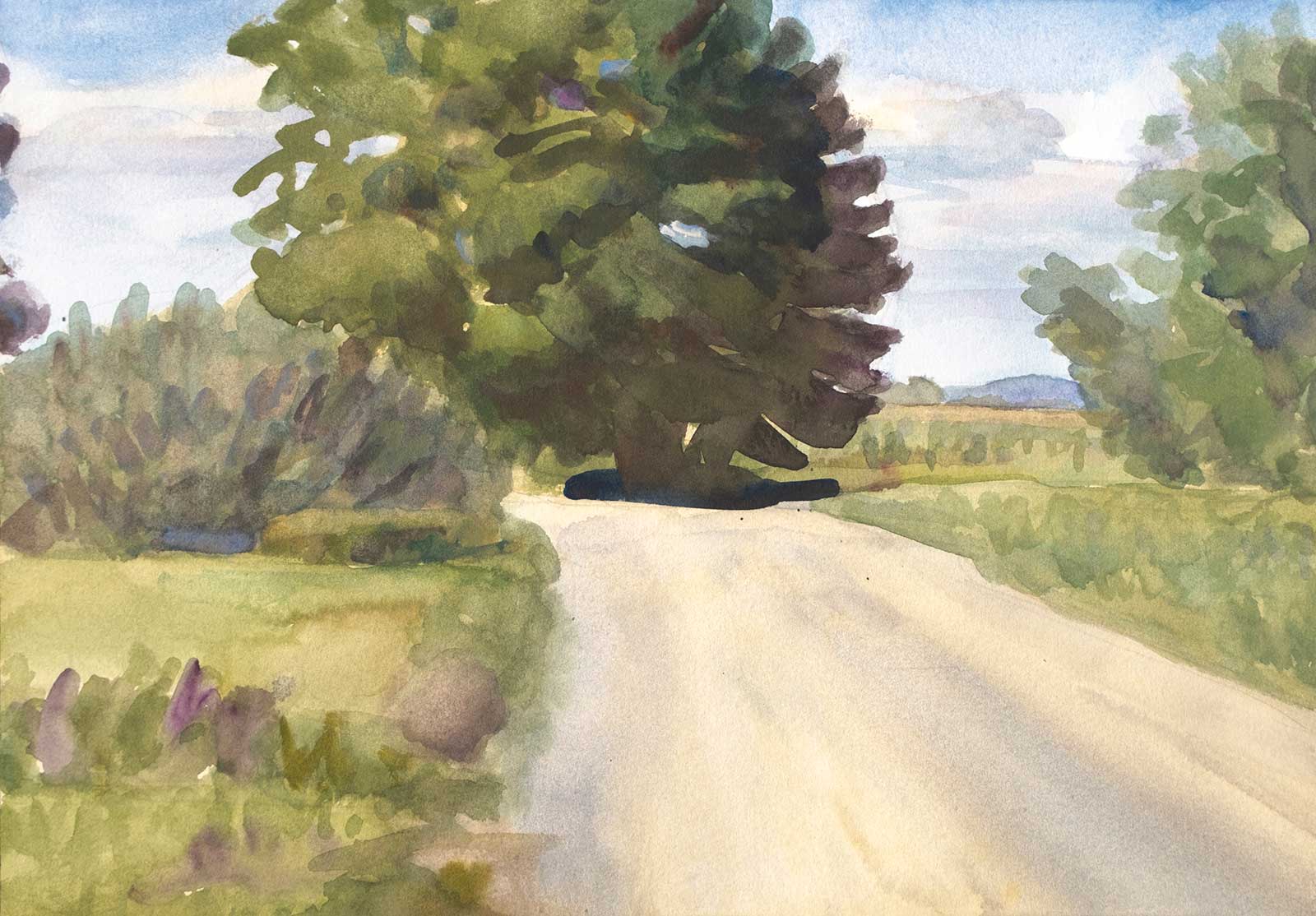
Stage 8 Shadows & Darkest Tones
I then add darker tones and shadows, which finally establish contrast and the volumetric solidity of the forms. Because my approach to watercolor is quite painterly—meaning that in later layers I don’t use as much water and the brush gestures remain visible—I try to keep my attention on the rhythmic harmony of the brushstrokes and the shapes, which build up through interconnection.
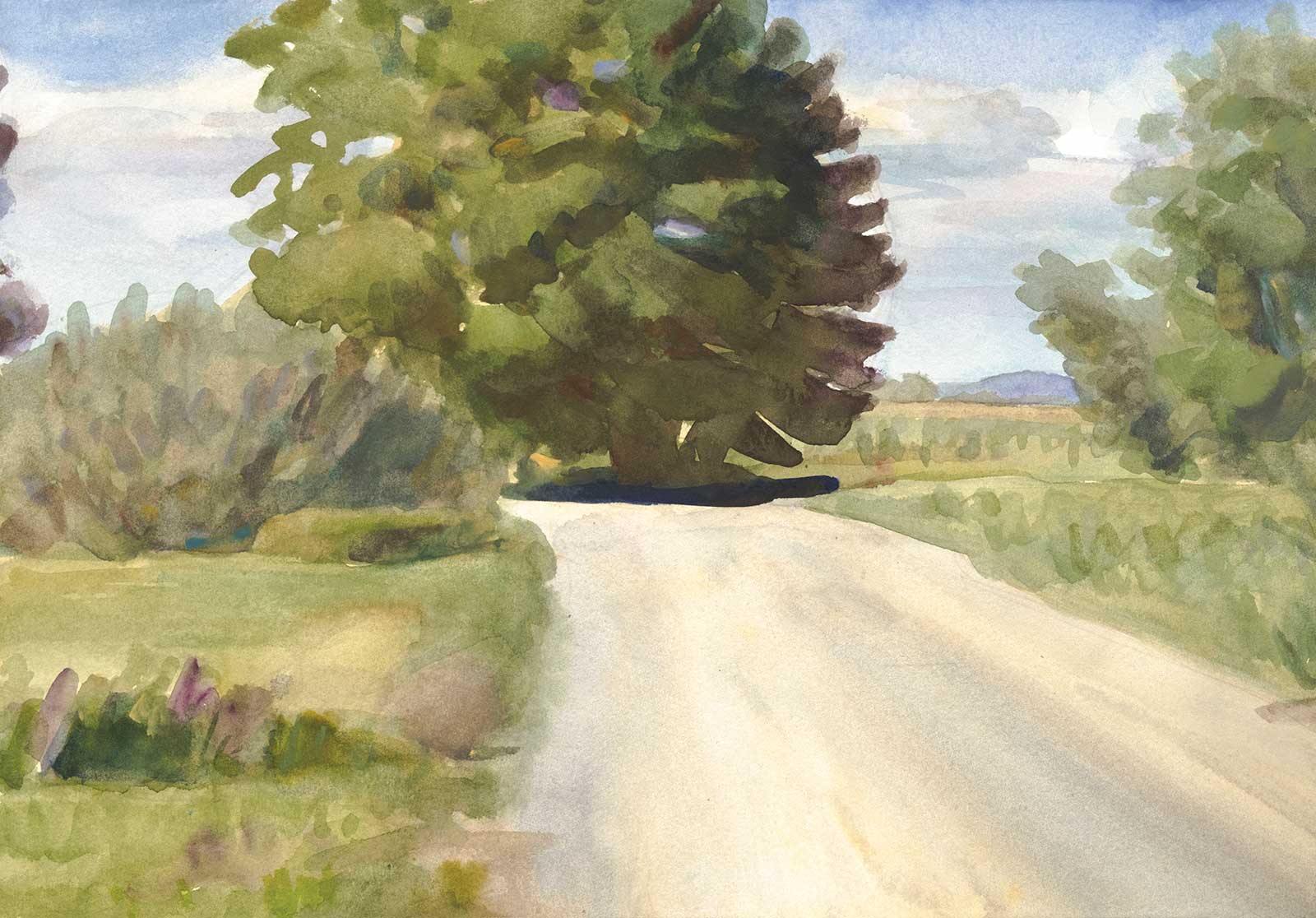
Stage 9 Finished Artwork
Sunlit Road on the Ljubljana Marshes, watercolor on paper, 9 x 13” (22 x 33 cm)
The final details often follow a few days after the painting is finished, when I can better spot flaws and areas where a few brushstrokes could tighten up the design. Not being a watercolor purist, I have no problem using opaque white paint or a knife to correct shapes. Only the result matters.
About the artist
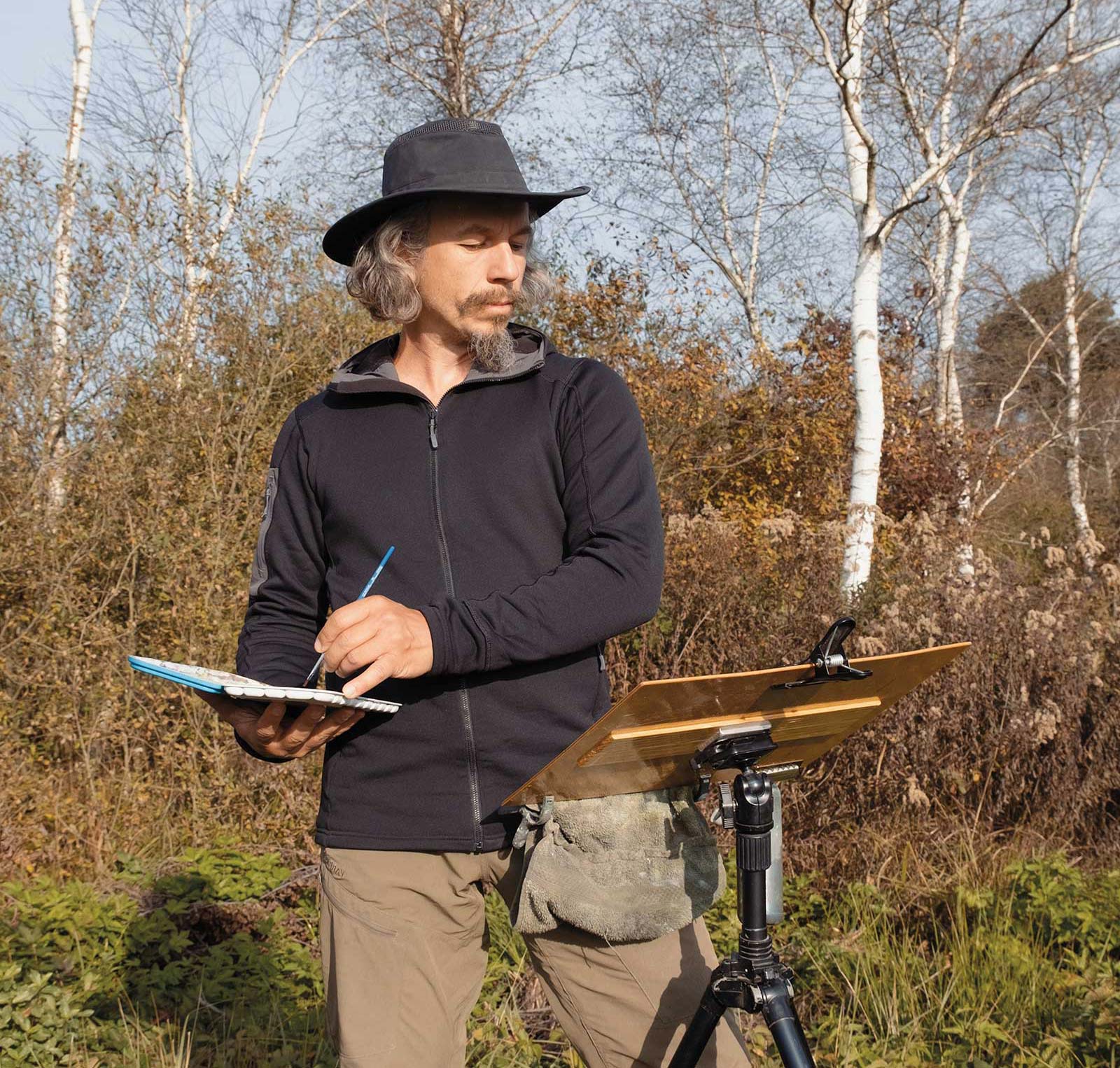 Aleš Stepan
Aleš Stepan is a painter from Slovenia who works primarily in and around the capital, Ljubljana. Like many artists, his interest in art began in childhood, and he has pursued his painting path as a self-taught artist. Initially, he found work in the field of illustration, but watercolor painting has become his passion in recent years. He enjoys working in plein air, where being immersed in the scene and moved by the power of light allows him to respond more freely to inspiration. He is not interested in postcard-like views, but rather in the imaginative translation of everyday scenes, where the resulting poetic interpretation invites meaningful contemplation.
Contact at
alesstepan.com