



Should you paint exactly what’s in front of you, or consciously alter it to match your mental image or tell a story? The answer depends on what you want to accomplish. Both extremes—objectivity and imagination—teach valuable lessons, and in this article I’ll demonstrate the full range of approaches.
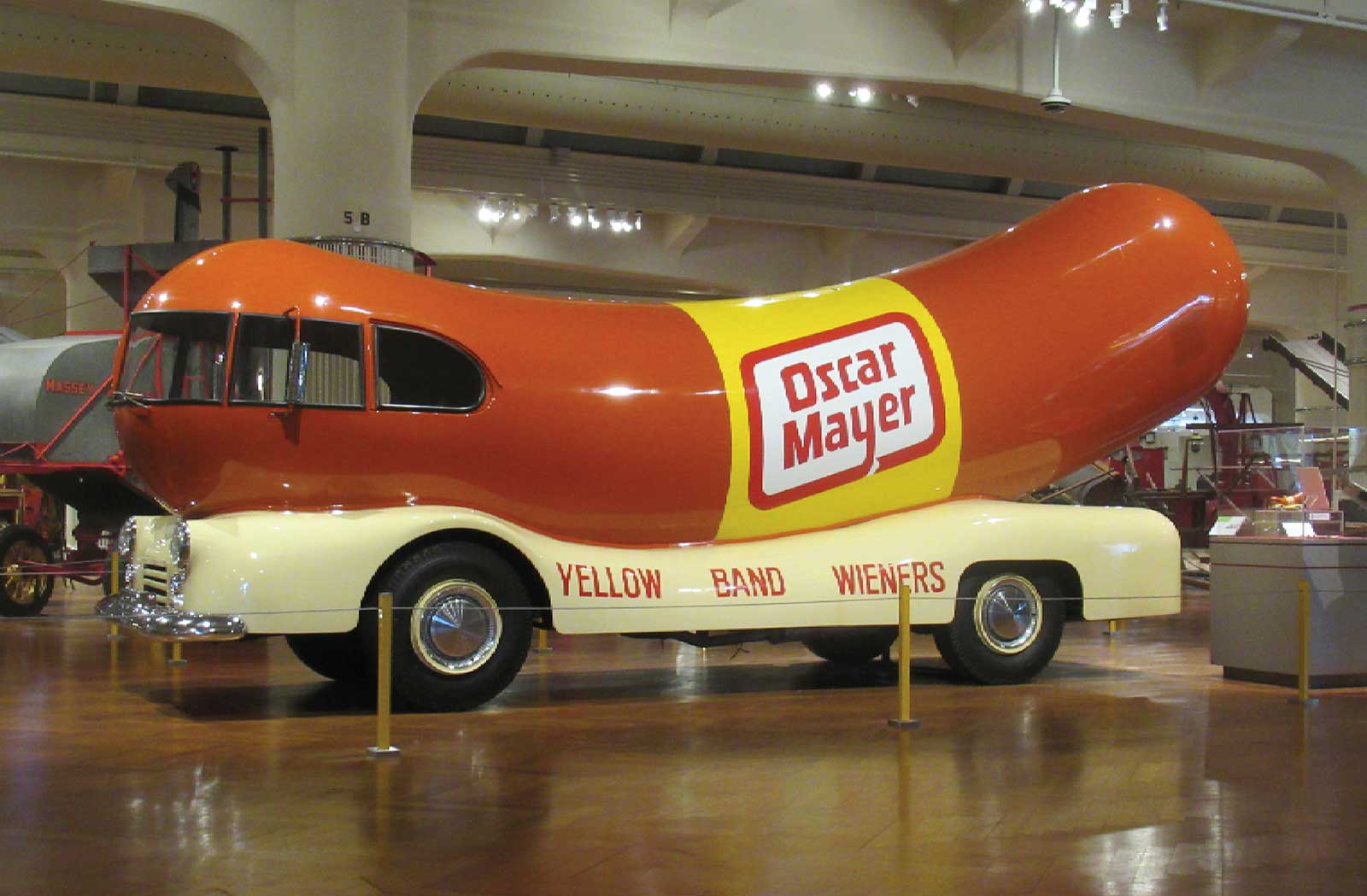
Wienermobile at the Henry Ford Museum in Dearborn, Michigan
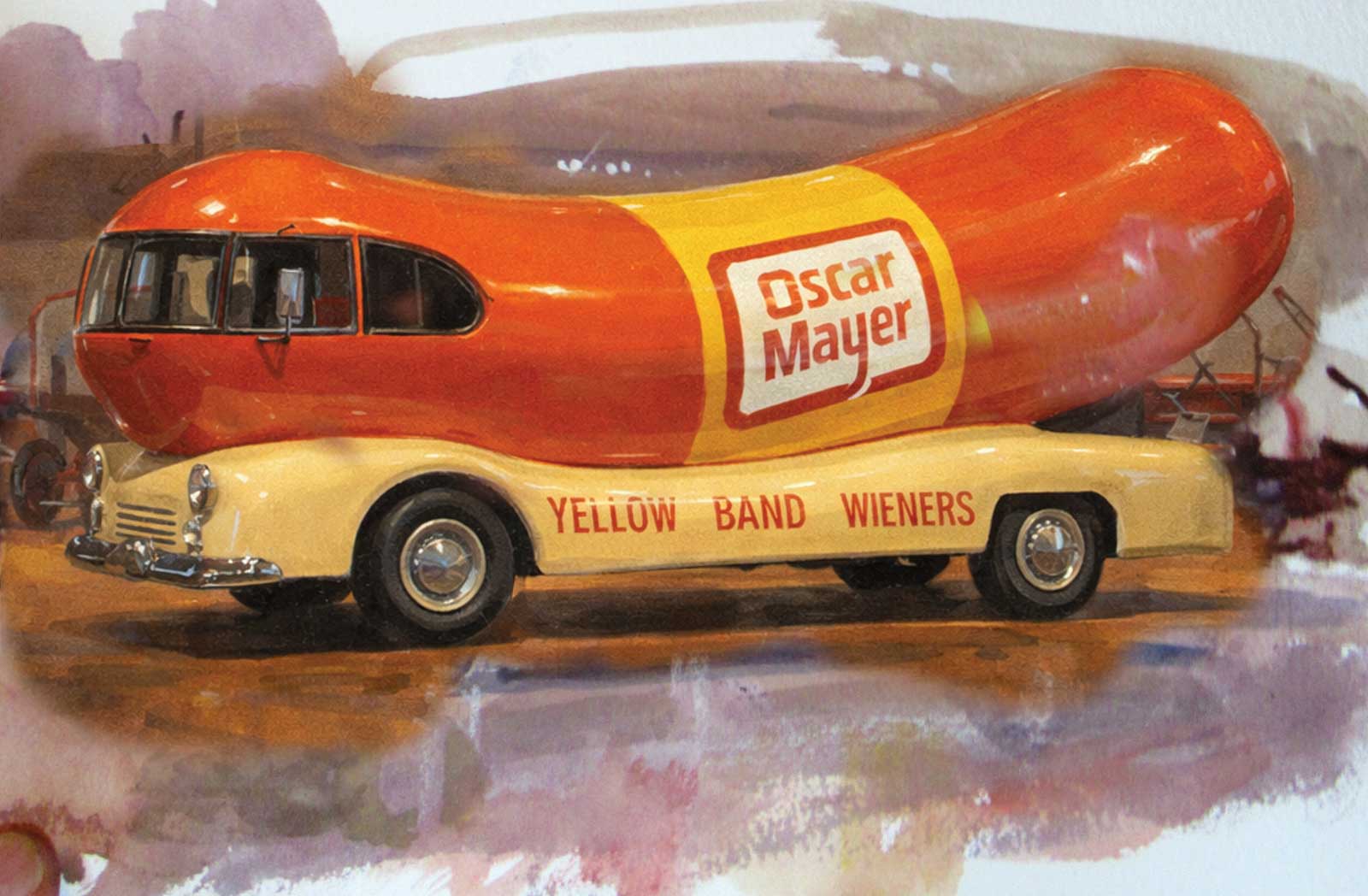
Wienermobile, gouache
With a Weird Subject, I Go for Objectivity
When I sit down to paint the 1952 Oscar Mayer Wienermobile at the Henry Ford Museum, I want to be a neutral recorder. I don’t want to “improve” it. The subject is already surreal enough. I use my pencil as a measuring stick to nail the slopes of the vehicle and the perspective of the wood floor. I lay in the broad tones first—the rich red-brown of the body against the cooler gray of the ceiling.
Because I am using gouache, I have the luxury of painting the light yellow band right over the top once the base is dry, a move that wouldn’t be possible in transparent watercolor. I use a white gel pen for the sharpest specular highlights and even add some diffraction spikes—those star-shaped lines that pop out from a bright source—to suggest the glare of the museum’s spotlights as they hit my eyelashes.
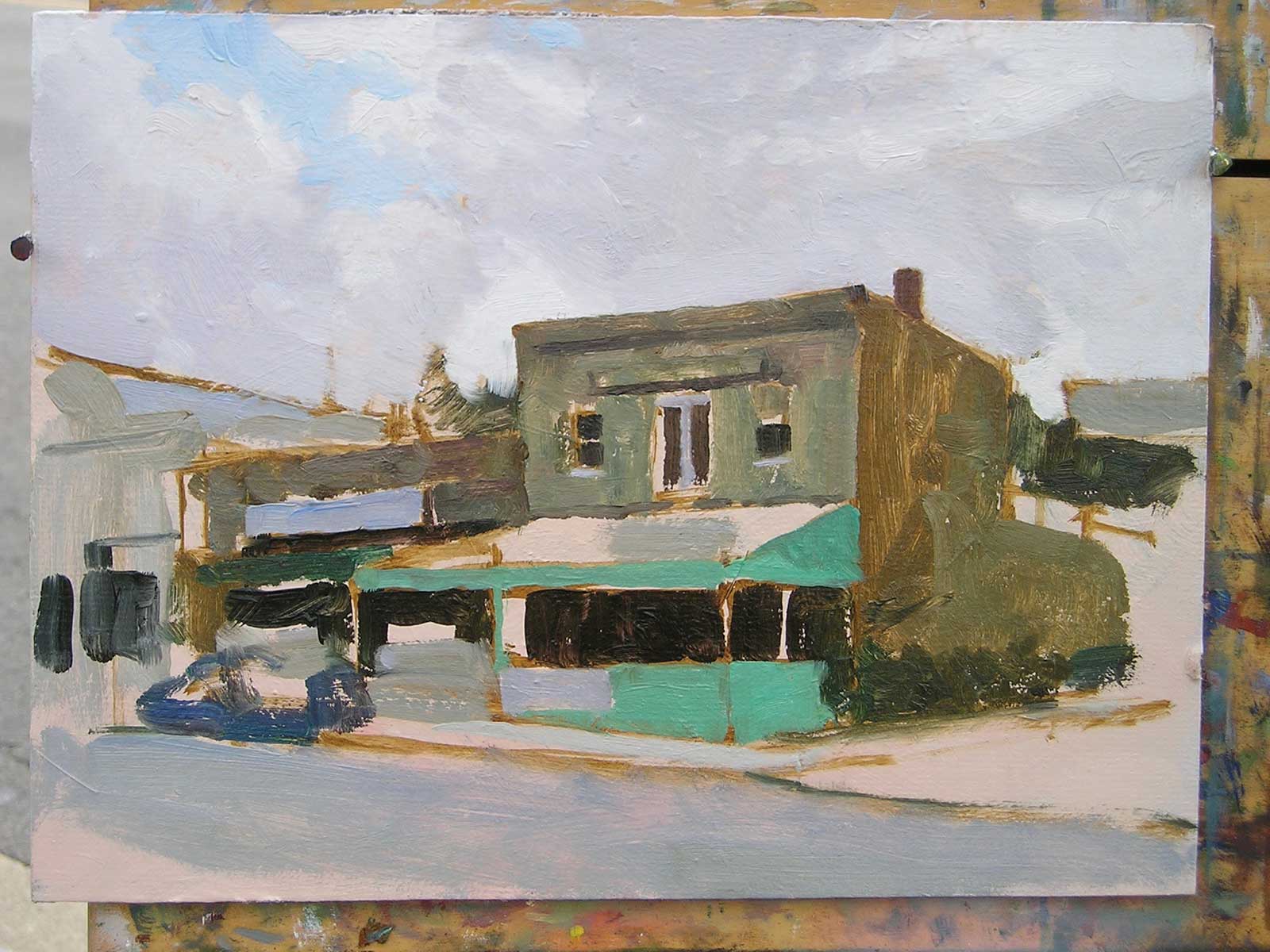
Chinese Restaurant, Washington, D.C. (in progress), oil on panel, 9 x 12" (22 x 30 cm). A woman with a shiny purse says, “Why are you painting that place? It is the ugliest building around here.” Then she looked at my picture. “But you made it look beautiful.” I told her that I tried to paint it just the way it was without changing anything.
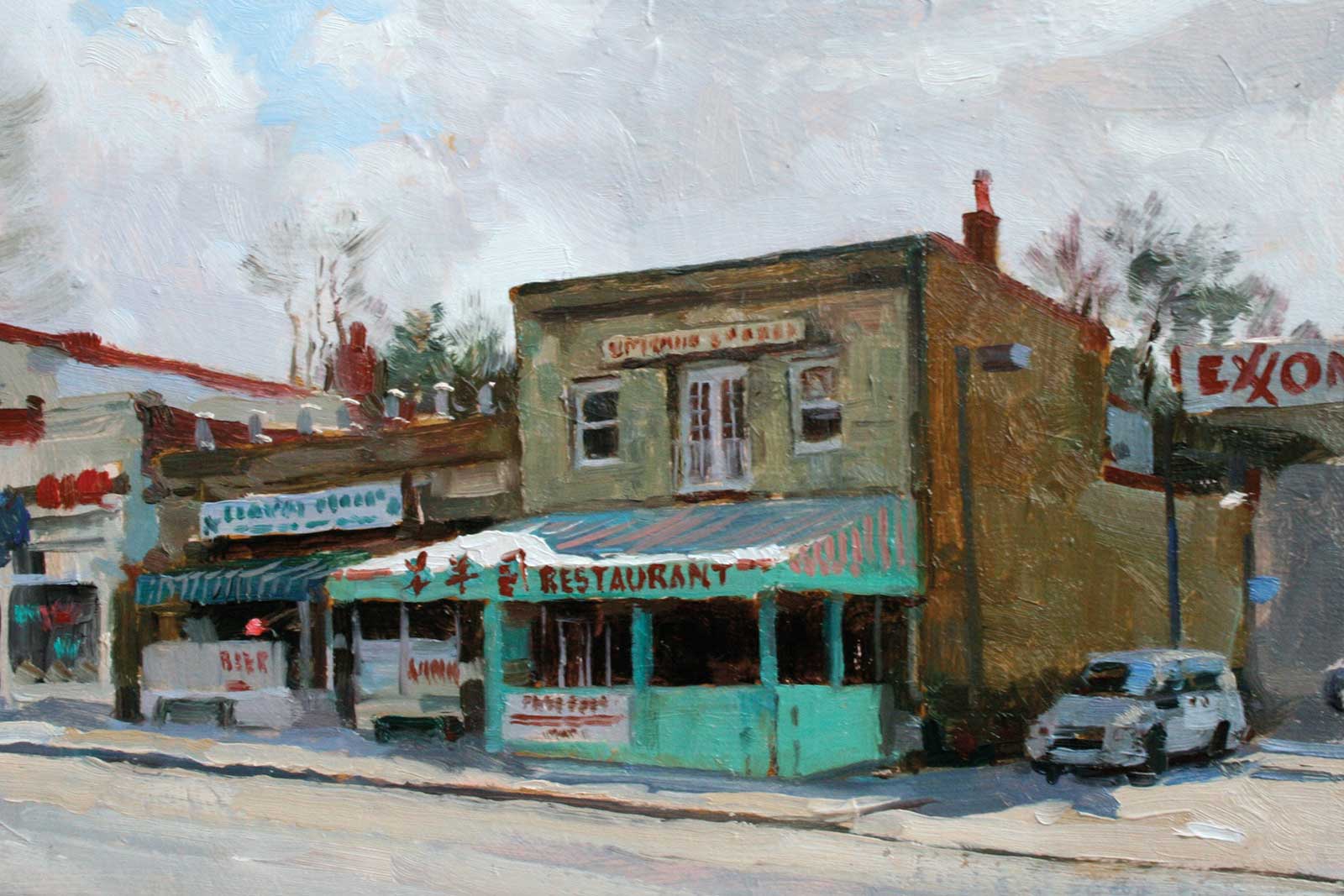
Chinese Restaurant, Washington, D.C., oil on panel, 9 x 12" (22 x 30 cm).
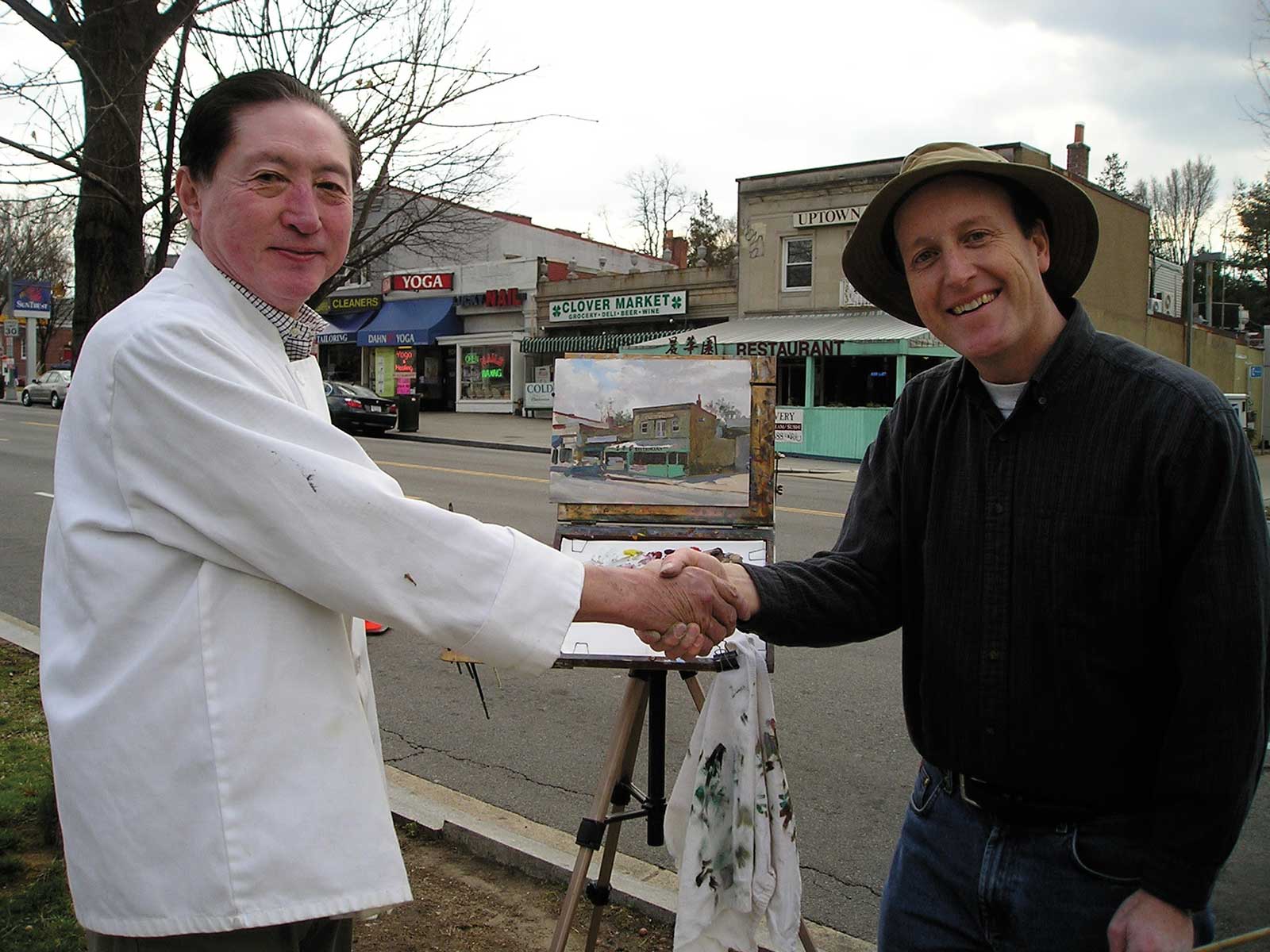
One by one the chefs came out of the restaurant, and the owner shook my hand. Photo by Patrick O’Brien.
Russian landscape master Ivan Shishkin exemplified the objective approach, saying that a picture from life should be “without imagination,” relying instead on a botanist’s love for the concrete facts of reality. British artist and critic John Ruskin urged his followers to: “Go to Nature in all singleness of heart, and walk with her laboriously and trustingly, rejecting nothing, selecting nothing, and scorning nothing.” By refusing to “improve” a scene, we avoid the trap of conventionalism—falling back on tired artistic clichés. Making the effort to paint something objectively requires that we leave our egos at the door. How else could we appreciate the “ugly beauties” of life that surround us?
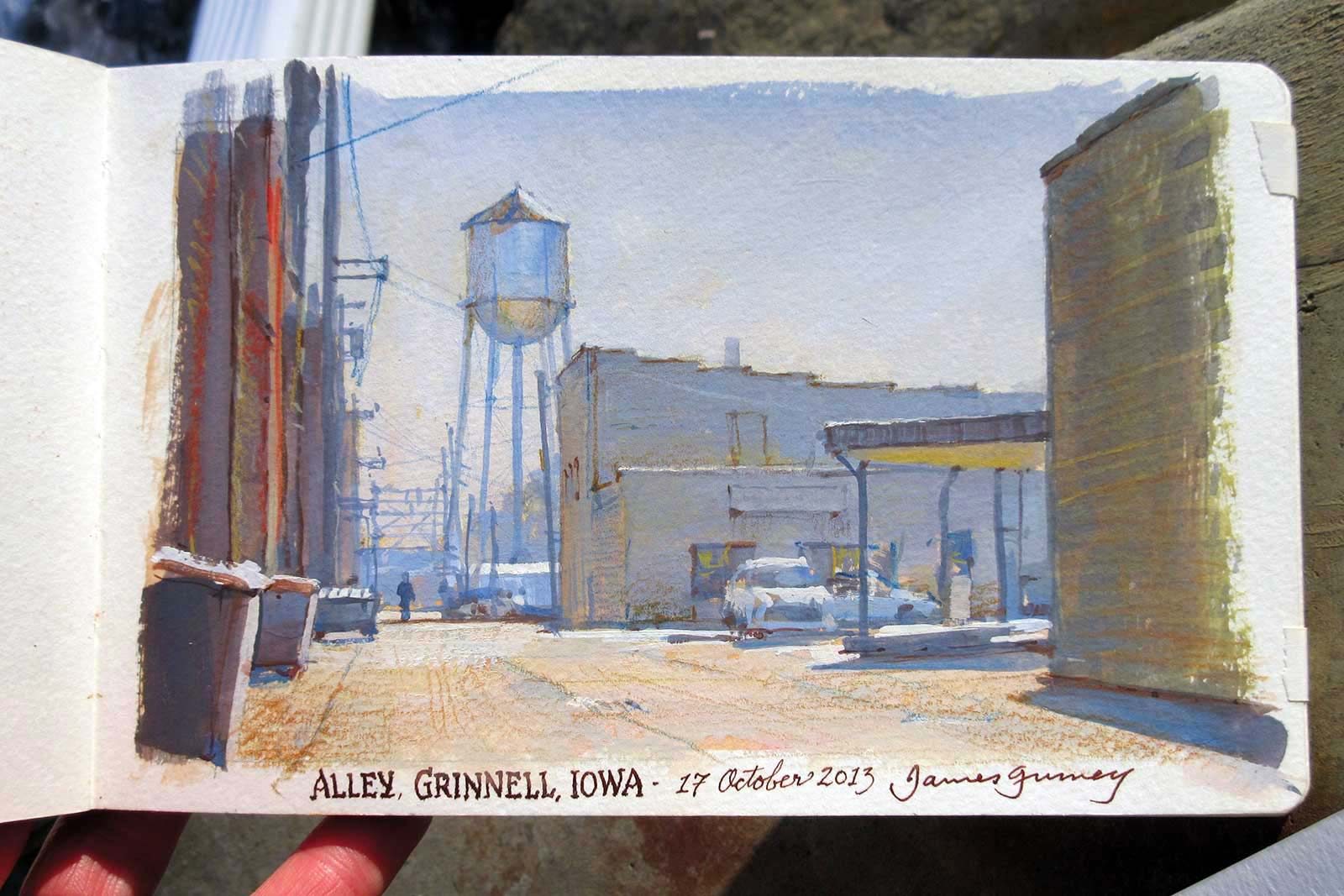
Alley, Grinnell, Iowa, gouache. For this cityscape, I deviate a little from what I see by enhancing the reflected light and limiting the colors to a narrow, warm-and-cool complementary gamut.
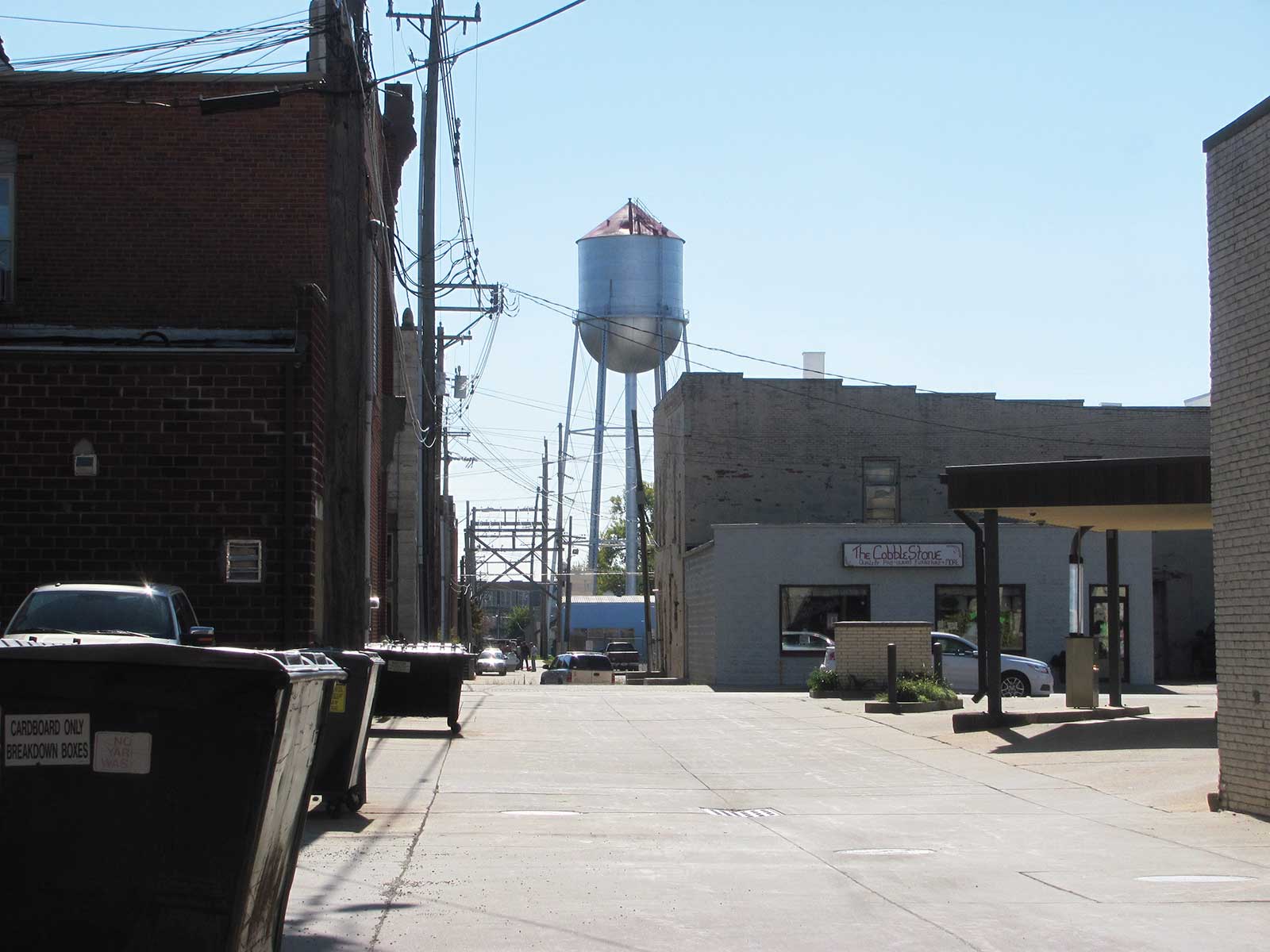
Reference photo of Alley, Grinnell, Iowa.
The Argument for Alteration
There are times I want to enhance what I see with a specific goal in mind. I might want to exaggerate the clutter of a kitchen or push a scene into a specific color range. In that case, I regard the scene as a source of raw material rather than a list of facts.
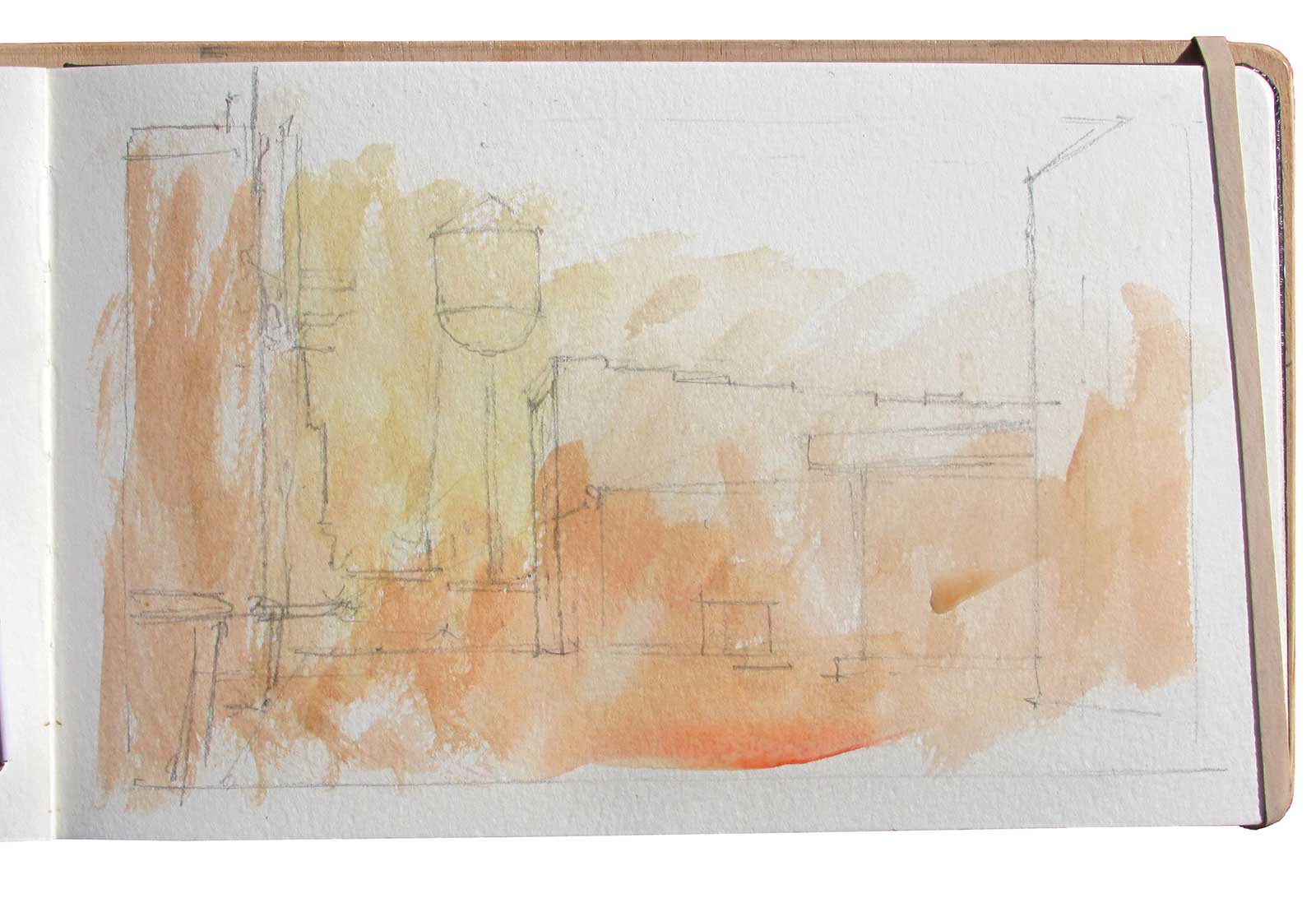
For the stage-by-stage process on a sketch of an alley in Grinnell, Iowa, I start with a light pencil map and then scrub in a warm ochre wash to kill the white of the paper. I’m not interested in being a literal camera. I mute any colors outside the narrow blue-orange gamut, and I lighten the values and increase the chroma of the shadow colors. By the third stage, I block in the sky and buildings with opaques, finding the final drawing in the paint.
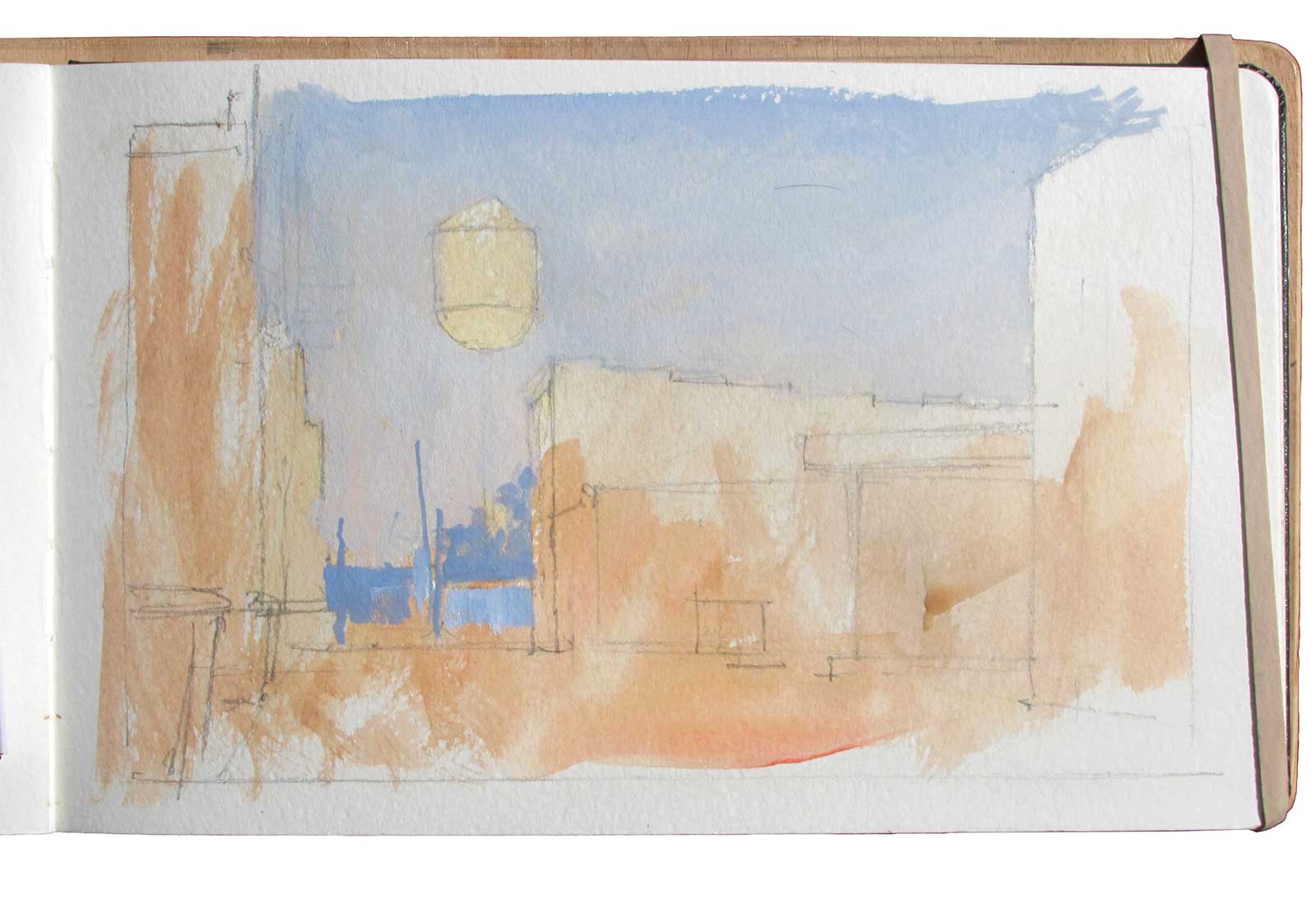
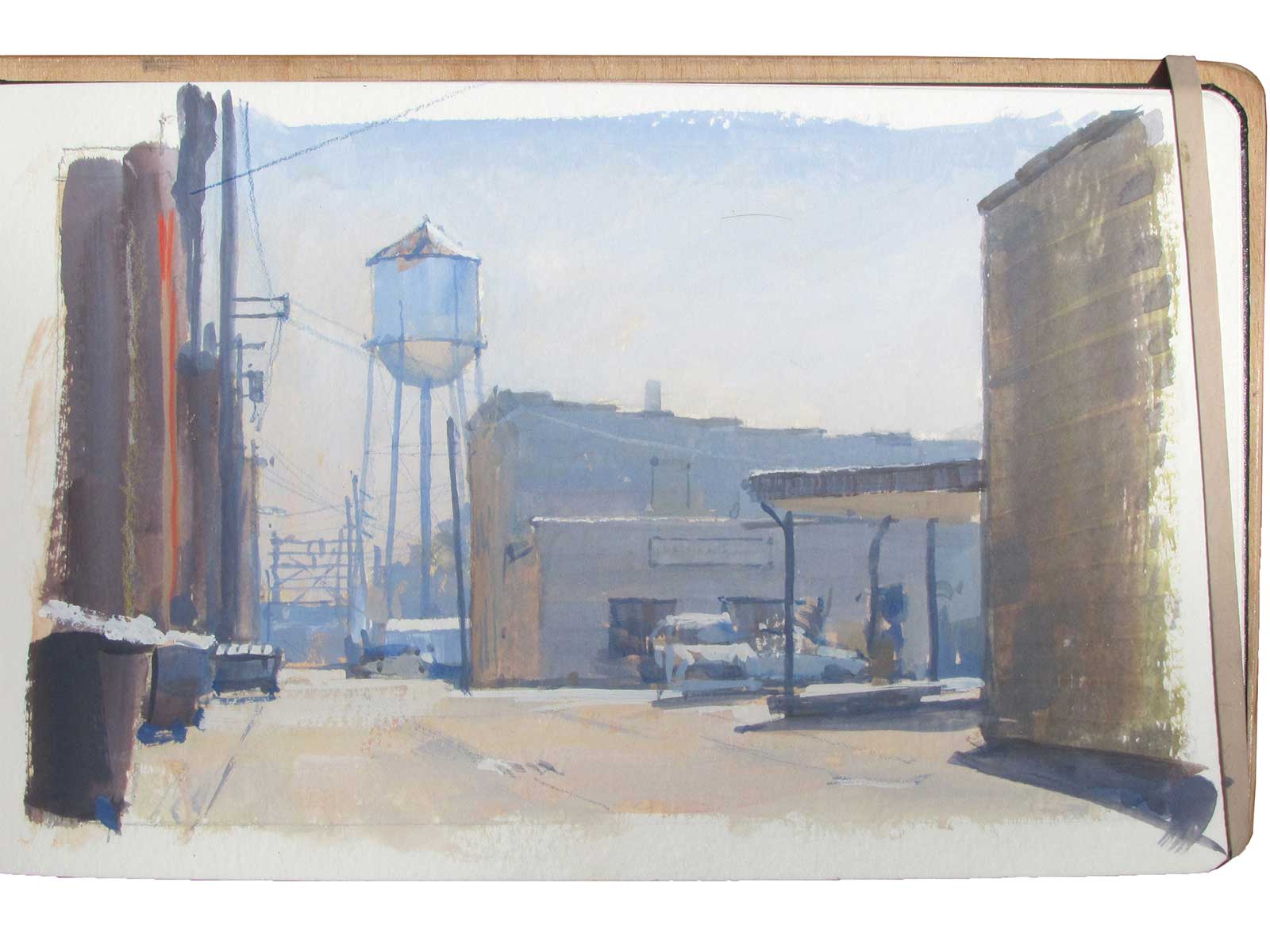
Ultimately, I regard a scene as raw material rather than a list of facts. While I often strive for objectivity, I feel free to paint what I wish I was seeing to suit my aesthetic or narrative impulses.
If art is, as Émile Zola argued, “a corner of nature seen through a temperament,” then each of us should look at things through the lens of our individual personality, with its instinctive hunger for narrative and its sense of order. If the goal is to tell a story or evoke a specific mood, we must be free to move elements around or exaggerate what attracted us in the first place. For more examples of this, see High Peak in the Catskills on the following page.
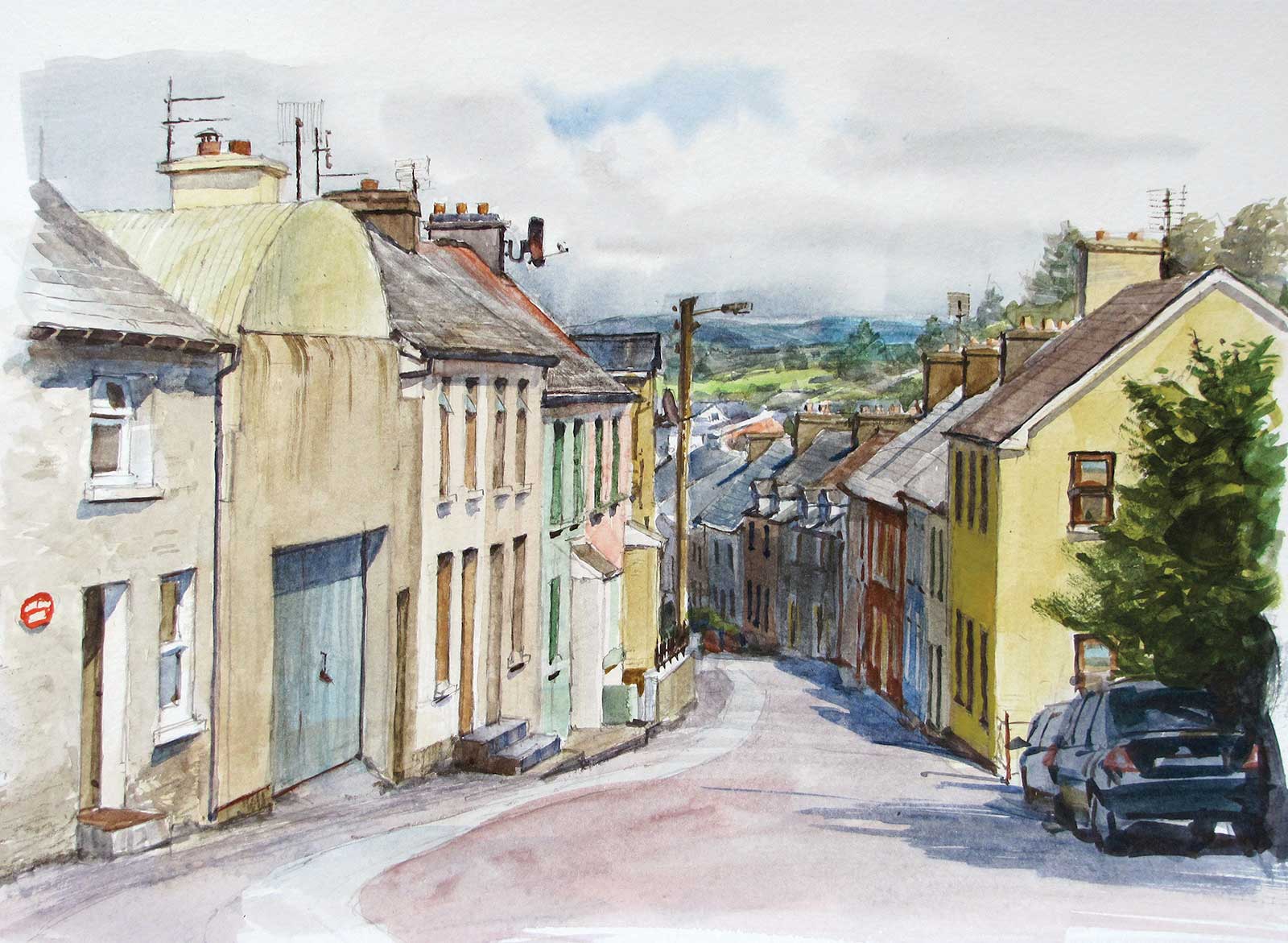
Bantry, watercolor, 11 x 14" (27 x 35 cm). When painting a street scene in Bantry, Ireland, I made conscious modifications such as eliminating power lines and raising the tonal value of an illuminated roof on a building in the middle distance.

Reference photo of Bantry, Ireland.
Using Nature as a Departure Point
In my paintings When Seafood Fights Back and Sea Monster (see next page), my goal is to paint a sci-fi story idea using observed facts as a point of departure. I remember reading accounts of sailors at sea who saw the curving backs of fin whales or blue whales and thought they were part of a giant snake. What would such a giant sea serpent look like when it was trashing a harbor?
I try staging the mayhem in front of a seafood restaurant, with smashed piers and sinking yachts, but I realize that seeing the full body, from nose to tail, is too obvious. In the larger version, I bring the action across the foreground, disorienting the viewer and making it hard to tell how big the monster really is. The tradeoff with both of these compositions is that while we are closer to the beast, we are farther from the actual destruction in the distance.
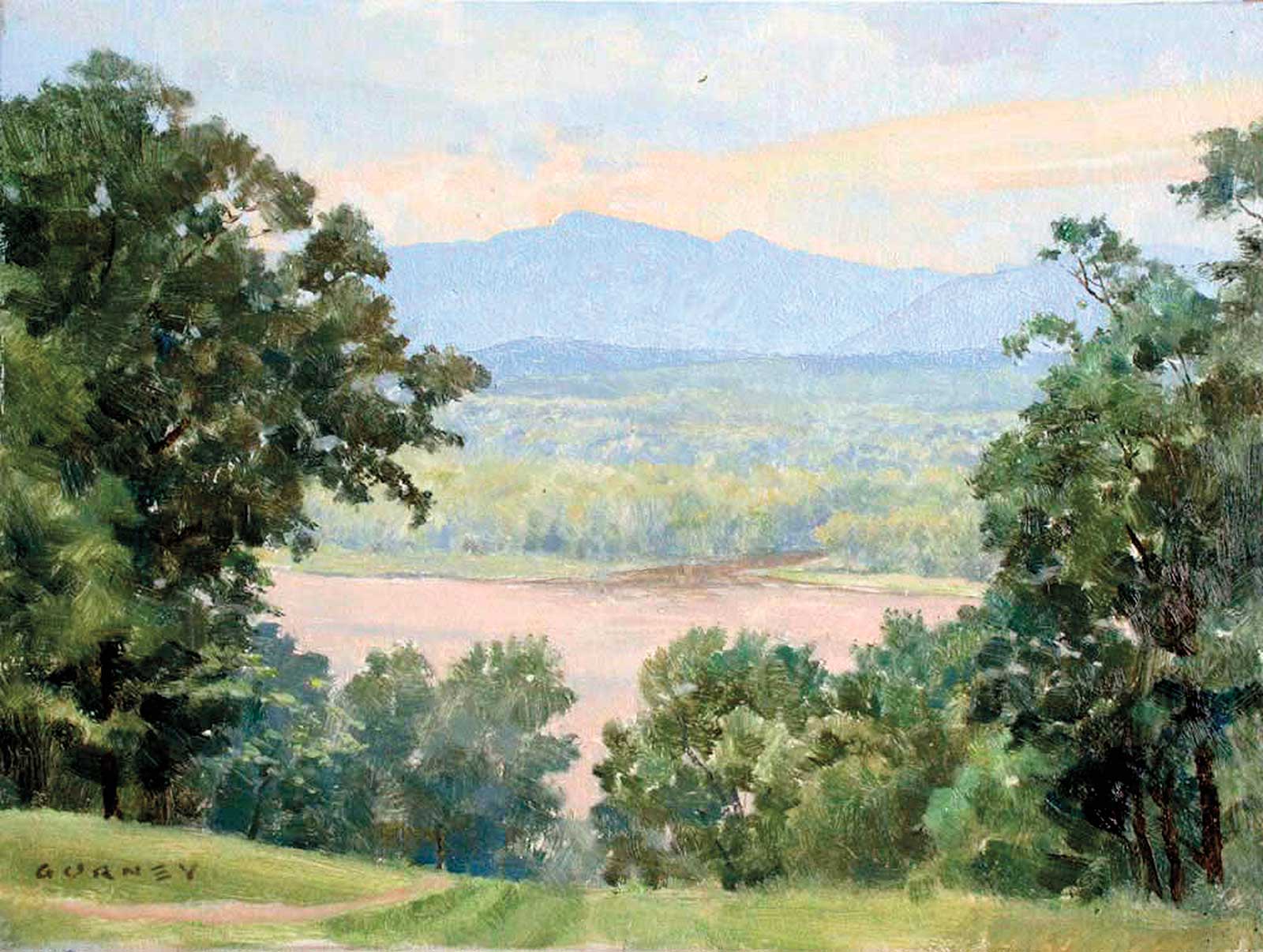
While painting High Peak in the Catskills, I consciously enlarged the relative size of the mountains compared to the trees and cut a slot in the trees leading down to the river to enhance the vista.
High Peak, oil, 9 x 12" (22 x 30 cm)
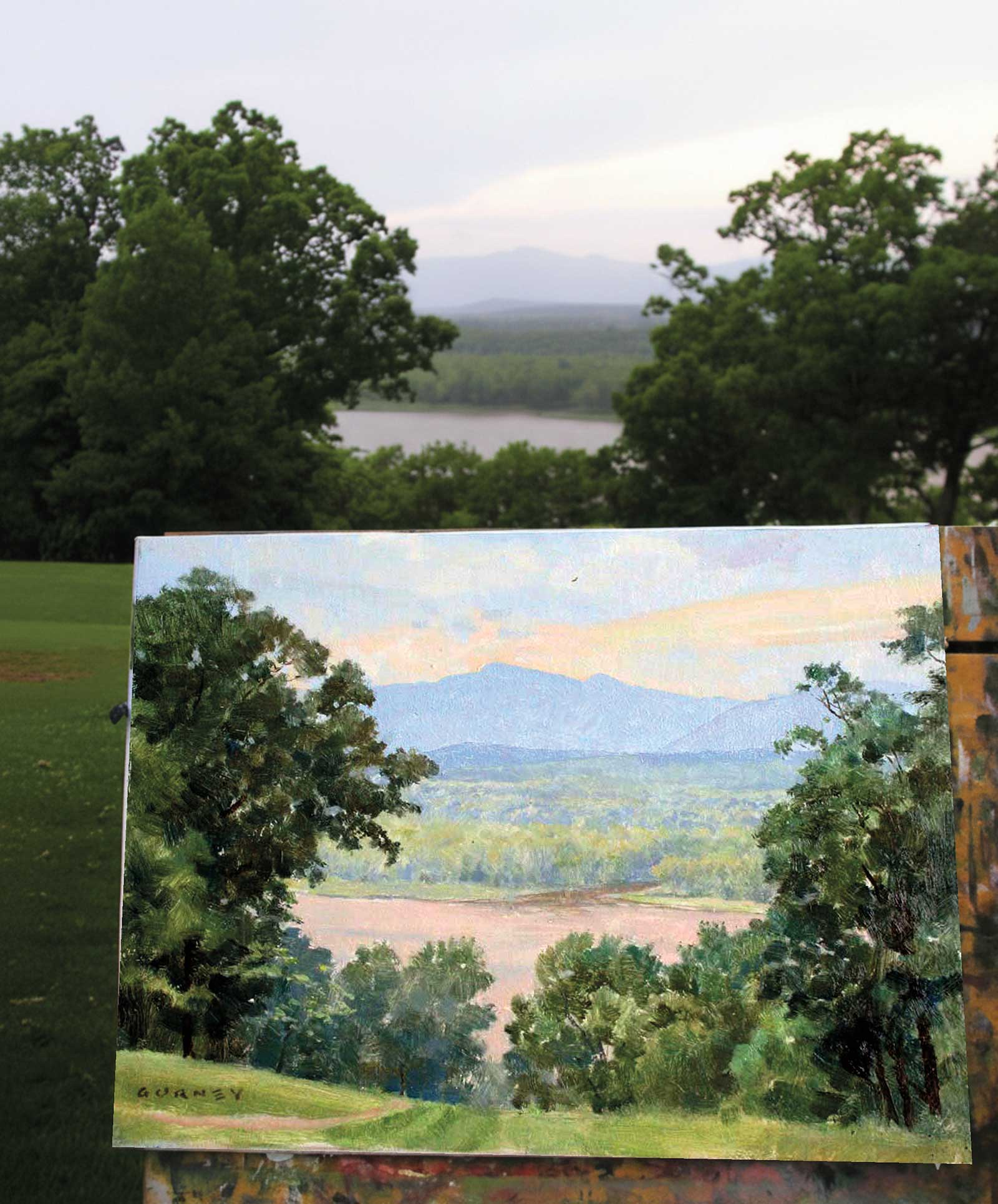
While painting High Peak in the Catskills, I consciously enlarged the relative size of the mountains compared to the trees and cut a slot in the trees leading down to the river to enhance the vista.
Where Do You Fall on this Spectrum?
Where does your work land on the continuum between objectivism and imagination? Try to be clear in your mind about what feeling or idea attracted you to a subject in the first place. Think about what you could leave out and how that would affect the result. Focus on conveying that emotion as you paint, as much as possible without consciously altering what you see any more than you have to. Emile Chartier is reported as saying of Balzac: “His genius consists in taking the commonplace as his subject and making it sublime without changing it.” The objectivist approach teaches you to see and builds your visual library with specific facts; the imaginative approach teaches you to trust your instincts and make your art more personal.
Getting your thinking straight before you start is at least as important as your paint and brushes. —
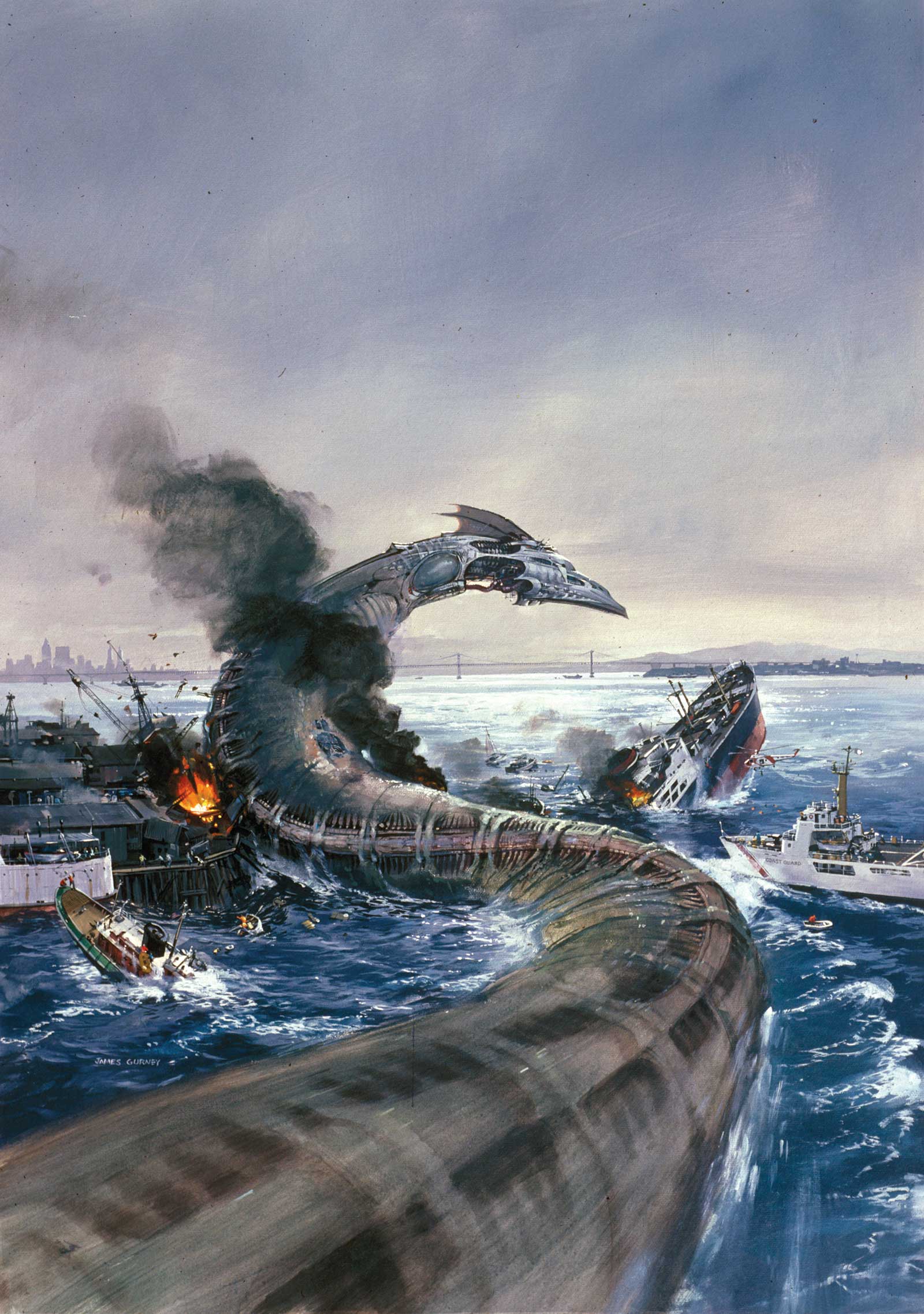
Sea Monster, gouache and acrylic on board, 40 x 30" (101 x 76 cm)
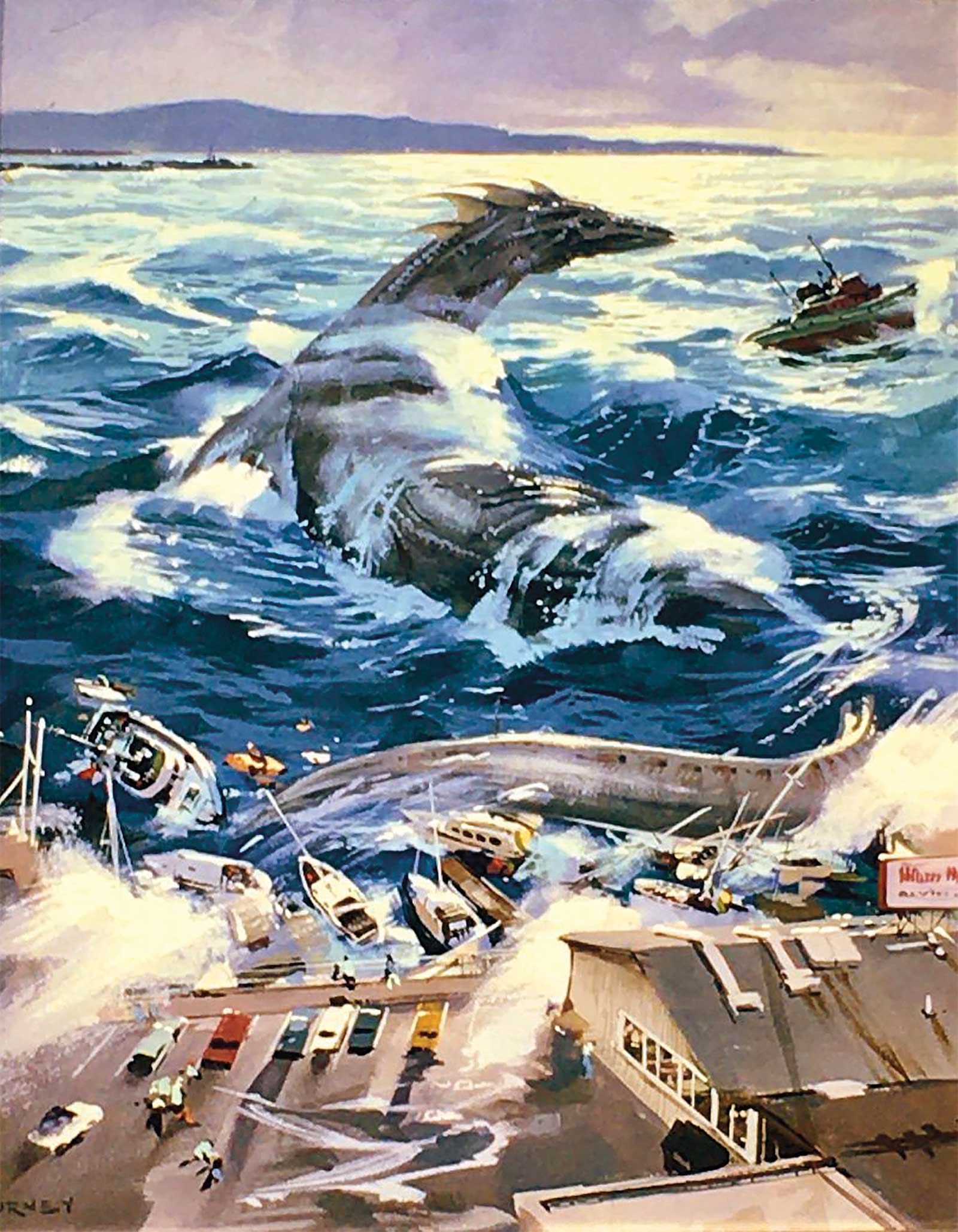
When Seafood Fights Back, gouache
About the Artist
James Gurney splits his time between writing and painting. He wrote and illustrated the New York Times bestselling Dinotopia books, as well as the beloved classics Imaginative Realism and Color and Light, which are used as textbooks in many art schools. He rarely gets recognized in public, but when he does, it’s usually because of his YouTube channel, which has over 560,000 subscribers. You can pick up a signed book at his website, jamesgurney.com, or join for free on Substack to get his articles emailed to you.