Alongside my preference for contemporary painting sits a deep love of traditional rendering. Bold marks full of wild abandon and intimate brushstrokes that give life and humanity are equally satisfying to me. After decades of struggling with these seemingly incongruous quests, I now allow myself to use them together, allowing each approach to strengthen the other. In all of my work, I juxtapose passages of traditional rendering with passages of abstraction and/or “negative” space. I find it is the tension between the resolved and the unresolved that creates the most compelling images, and is for me, the truest representation of the life experience.
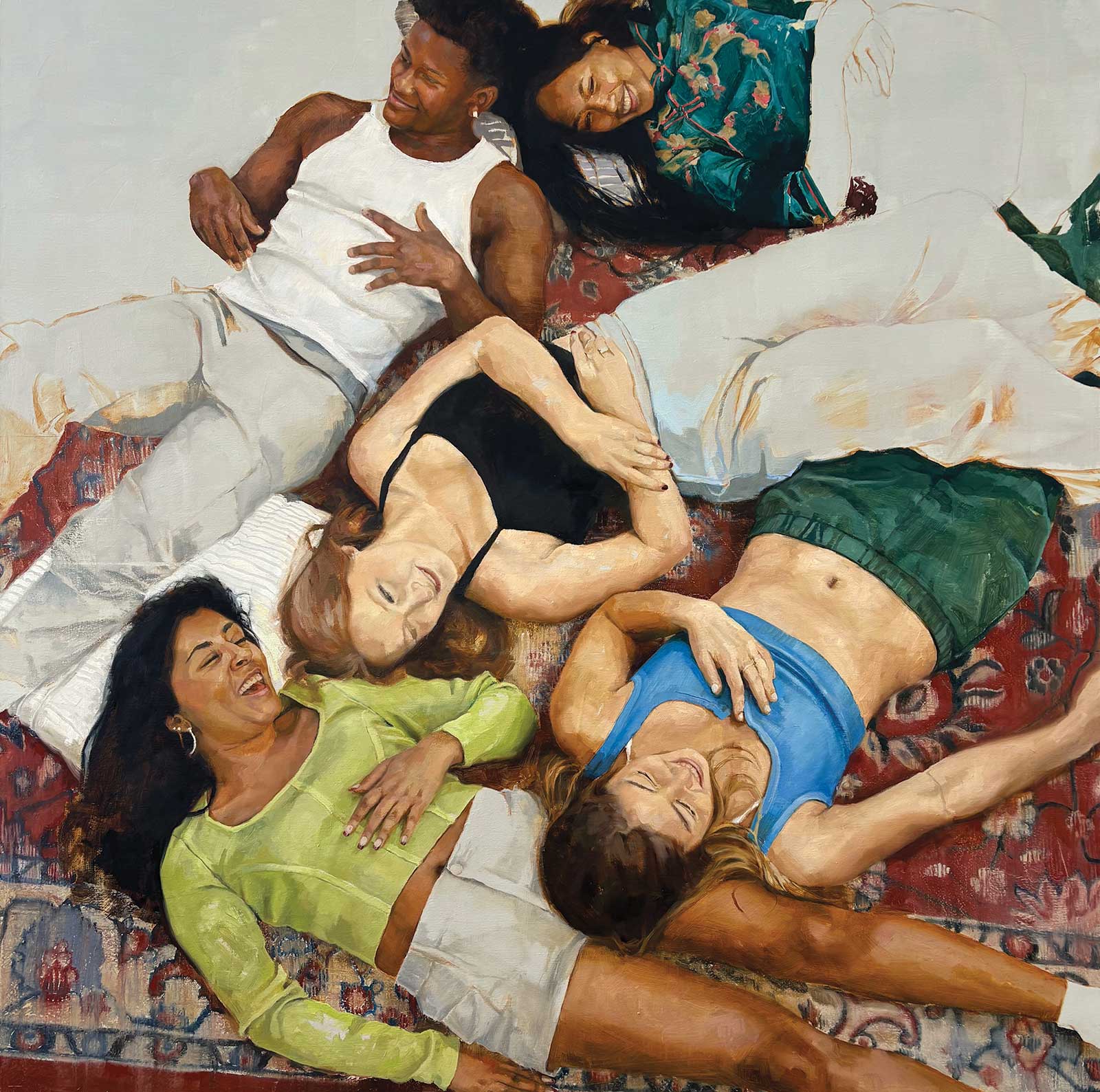
Soothsayers, oil on canvas, 50 x 50" (127 x 127 cm)
My paintings are inspired by the natural world around me and informed by my own life’s experiences. My process—building up and breaking down, adding and taking away—communicates the complexity and struggle that is inherent in life. Regardless of subject, I strive to elevate the beauty of a moment and communicate the transient nature that surrounds it.
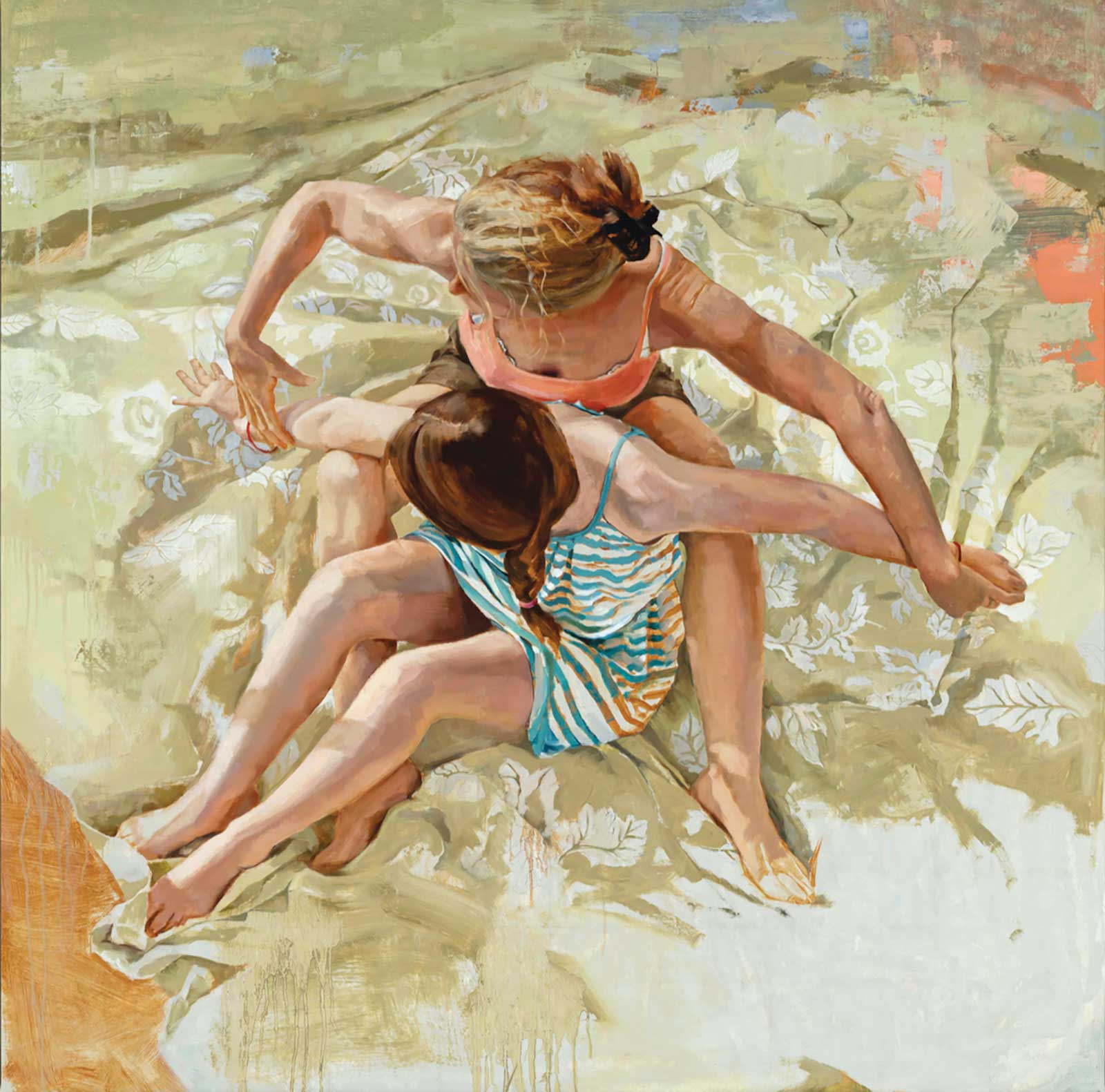
Infinite, oil on canvas, 60 x 60" (152 x 152 cm)
I begin each of my paintings in the same way. Working from my own photos, I draw in paint directly on the canvas with no preliminary sketches. The drawing is always executed in a warm mid-tone such as raw sienna. Once I feel I have understood the critical shapes and masses (the shadows and lines that best describe form, gesture and movement), I begin to add color. The final image is always composition driven. I move from top to bottom, side to side, directing the viewer around the entirety of the surface. I am more concerned with the success of the entire painting than I am with likeness to any subject. In the case of Fiesta, it was clear to me that the majority of information contained in the reference photo was extraneous. All that mattered were the elements that spoke to the unlikely yet willing partnership between man and beast, and colors that exuded the heat and exuberance of a summer parade. For this piece, I decided less was far more.
My Art in the Making Fiesta
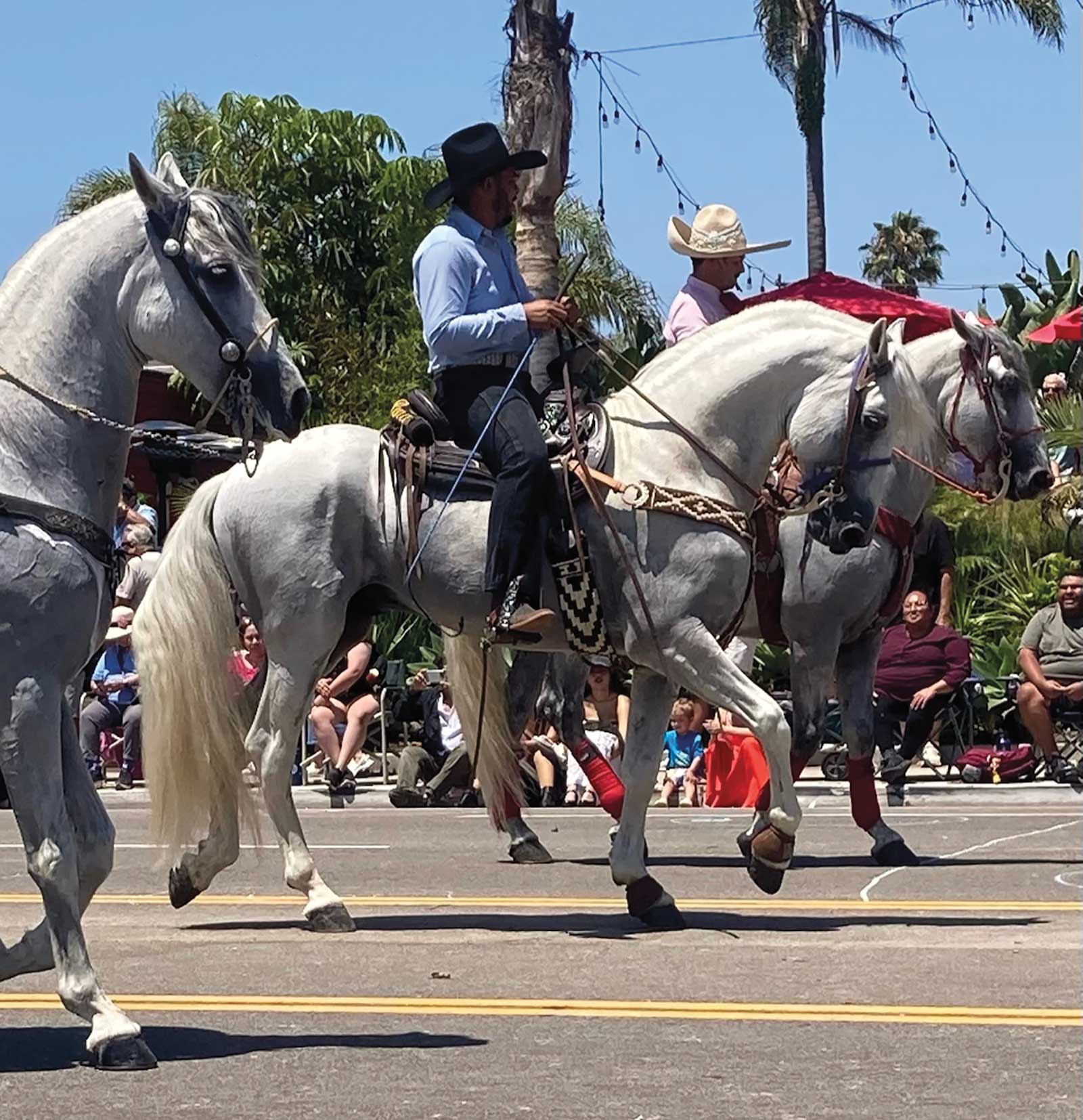 Reference Photo
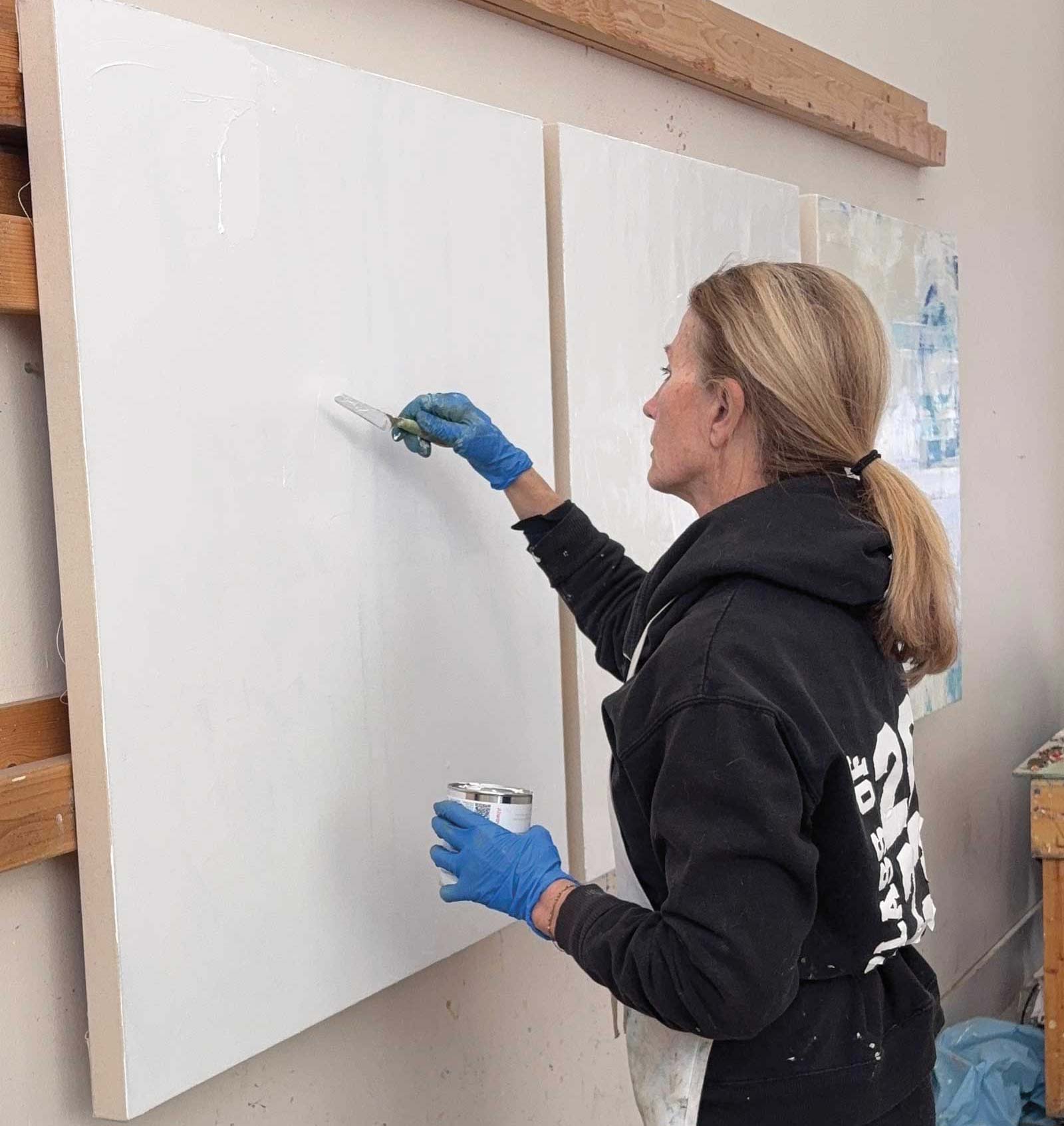
Stage 1 Canvas Preparation
I prepare all my canvases by sealing them first with Liquitex matte medium. When that is dry I use a palette knife to apply two fairly thick layers of Gamblin oil painting ground, a gorgeous non-toxic alternative to lead white that produces a strong, brilliant, non-absorbent foundation for oil painting.
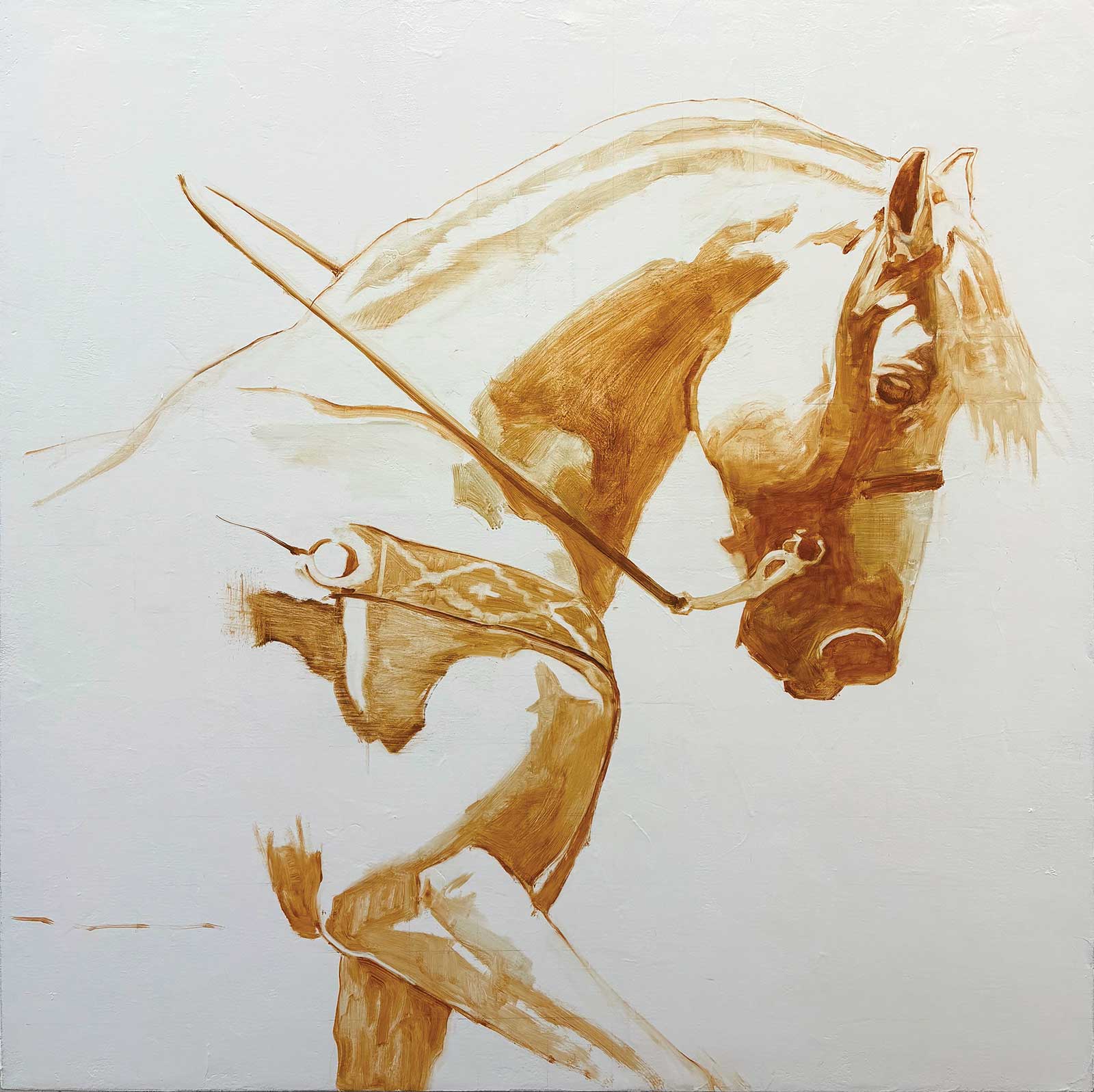
Stage 2 Initial Drawing
I crop my reference photo to the size/composition I want and begin my drawing in raw sienna paint directly on the canvas.
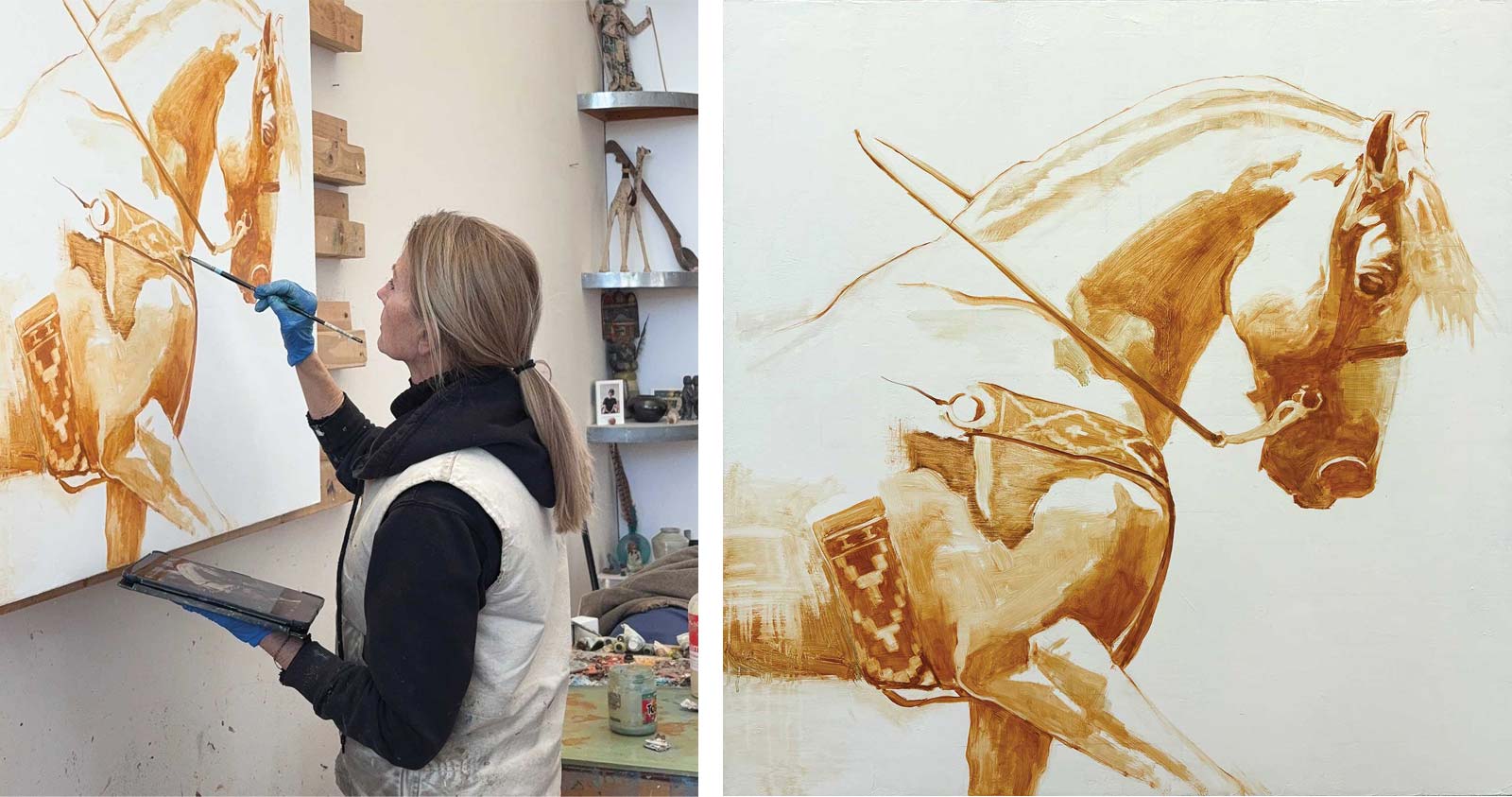
Stage 3 Refining the Drawing
At this stage I am choosing the shadows and details that I feel will best serve both the form and the composition.
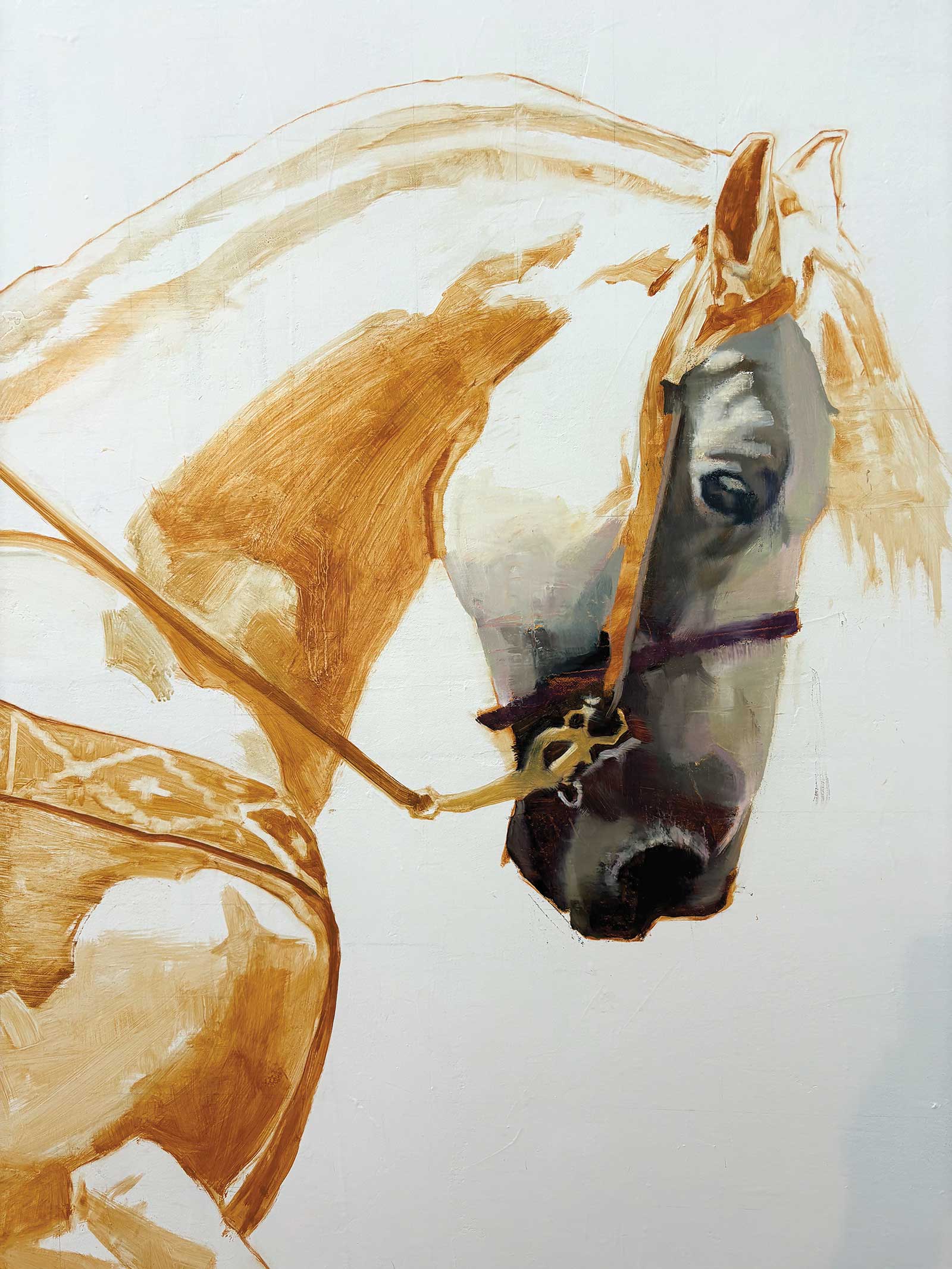
Stage 4 Adding Color
I begin with a first pass of color on the face. In this painting, the willing expression in the eye is of critical importance to the story, so I want to get an immediate feel for it.
Negative Space
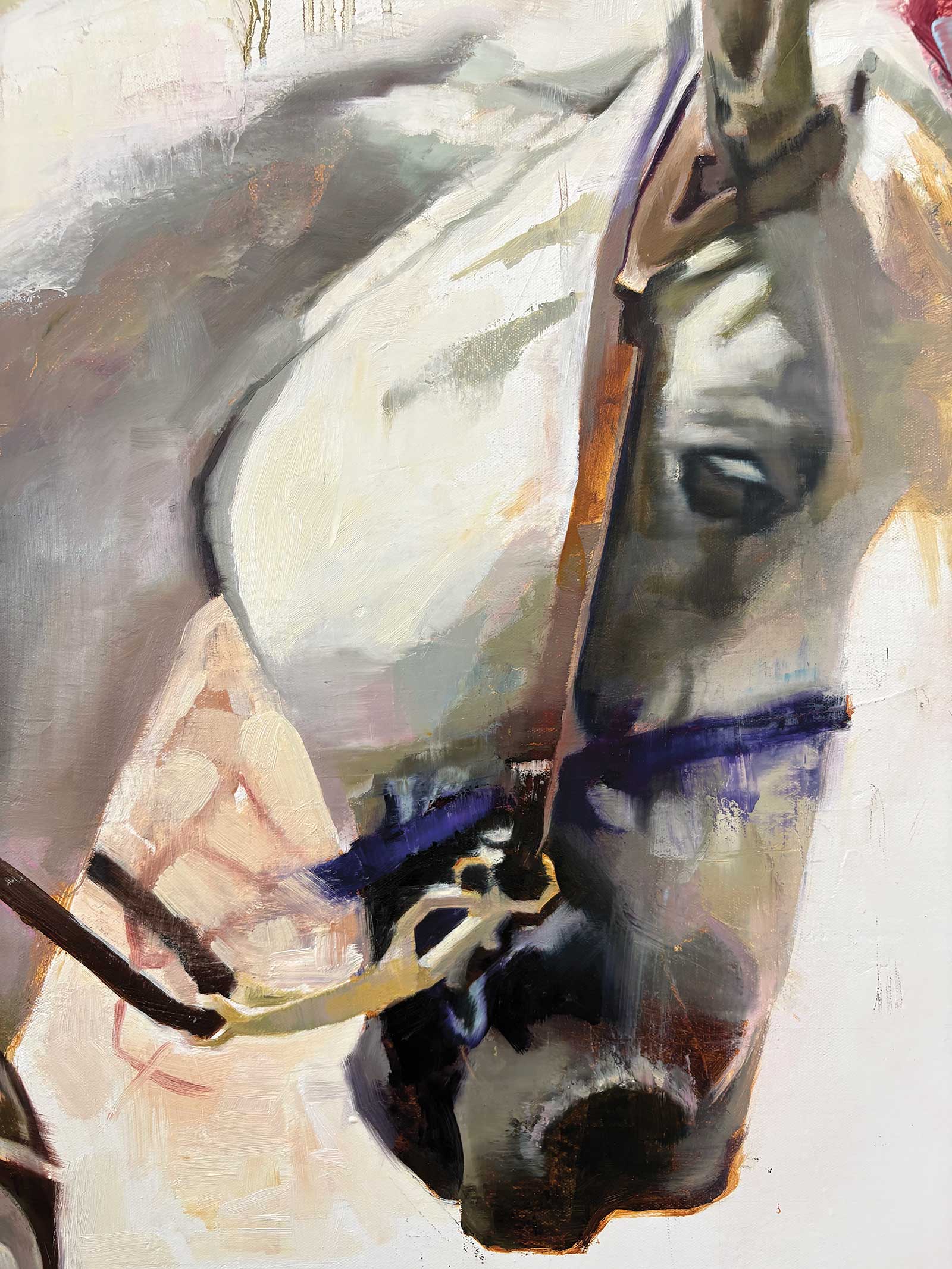
In addressing the negative space, I wanted no specific details so only used my palette knife to create energy and visual interest.
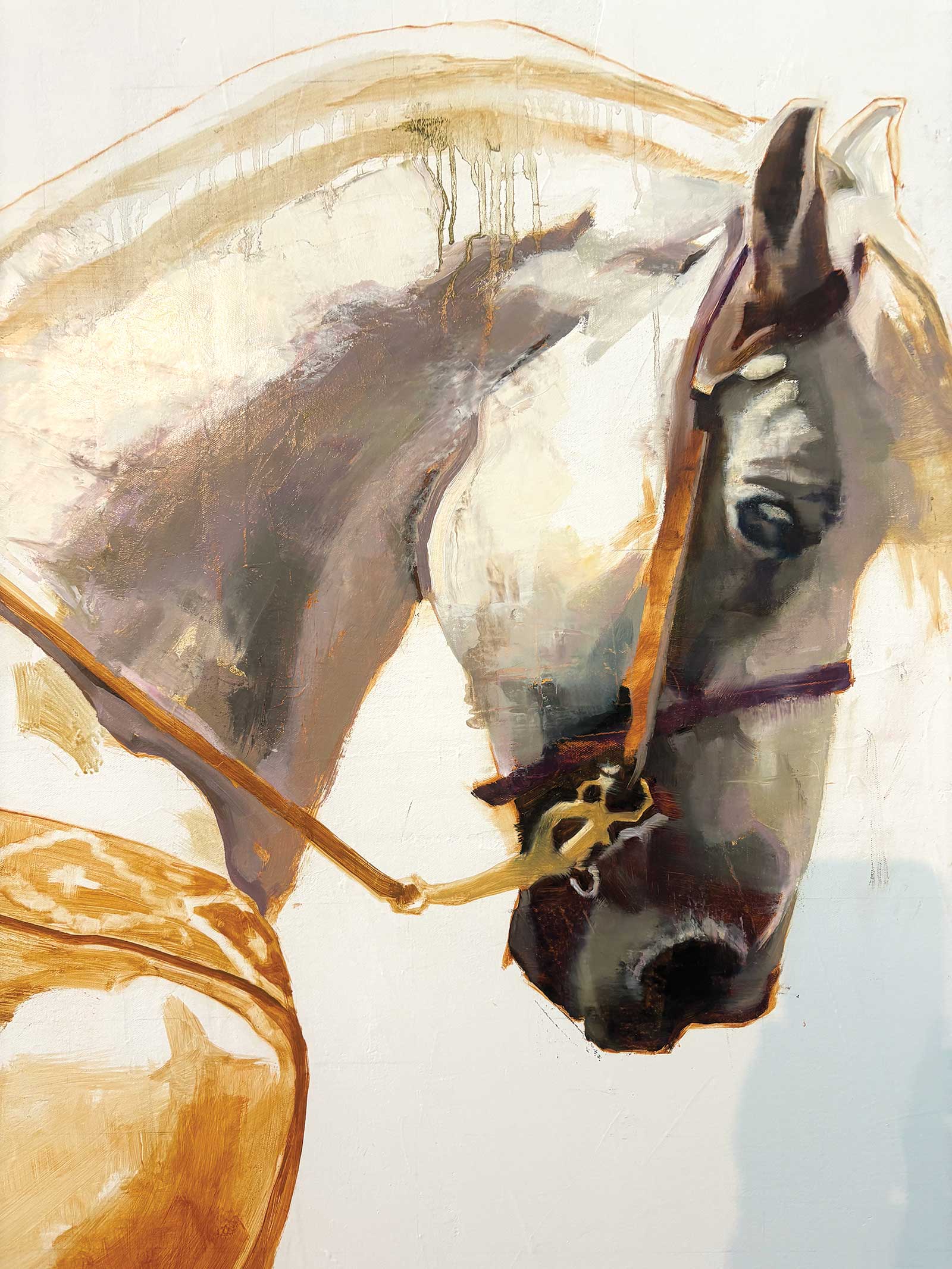
Stage 5 Neck and Face Shadows
In this image, the curve of the neck adds to the feeling of willingness, partnership and strength. It is critical to this narrative.
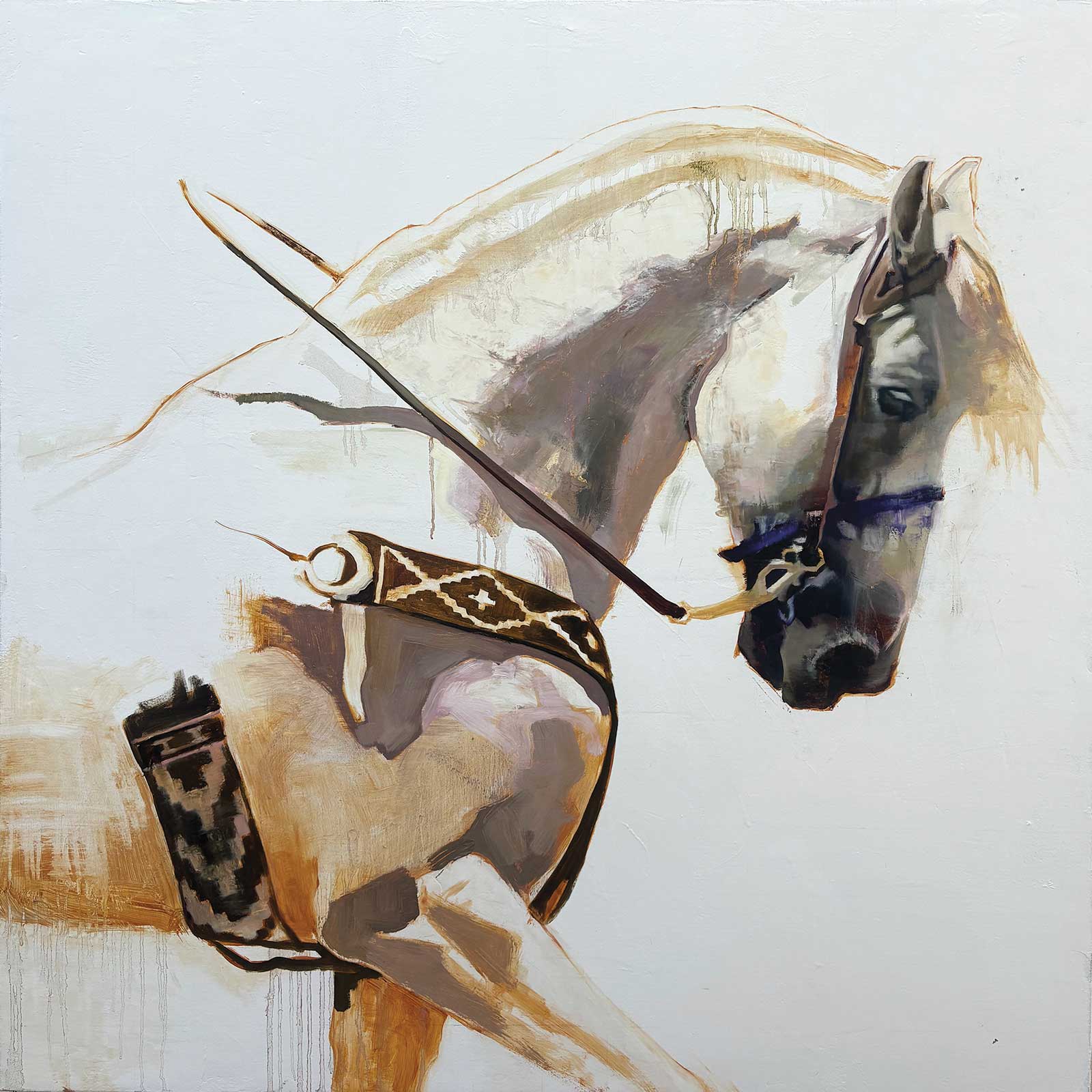
Stage 6 Adding Color to Patterns and Shadows
With each addition I make, I am looking to see how it energizes the composition.
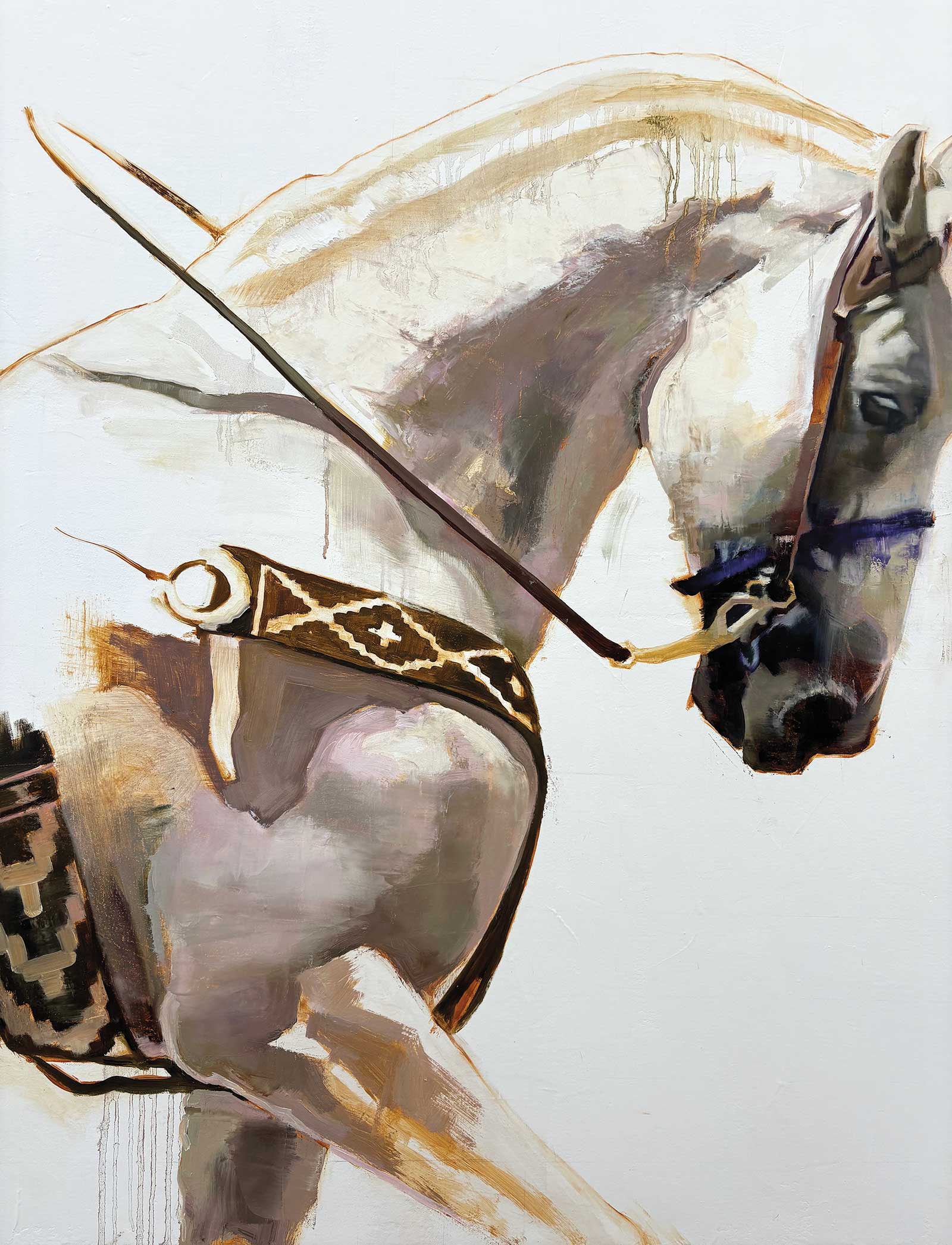
Stage 7 Harmonizing Color
Here, I am focusing on finding the color relationships that work best in all shadows.
Staying Loose
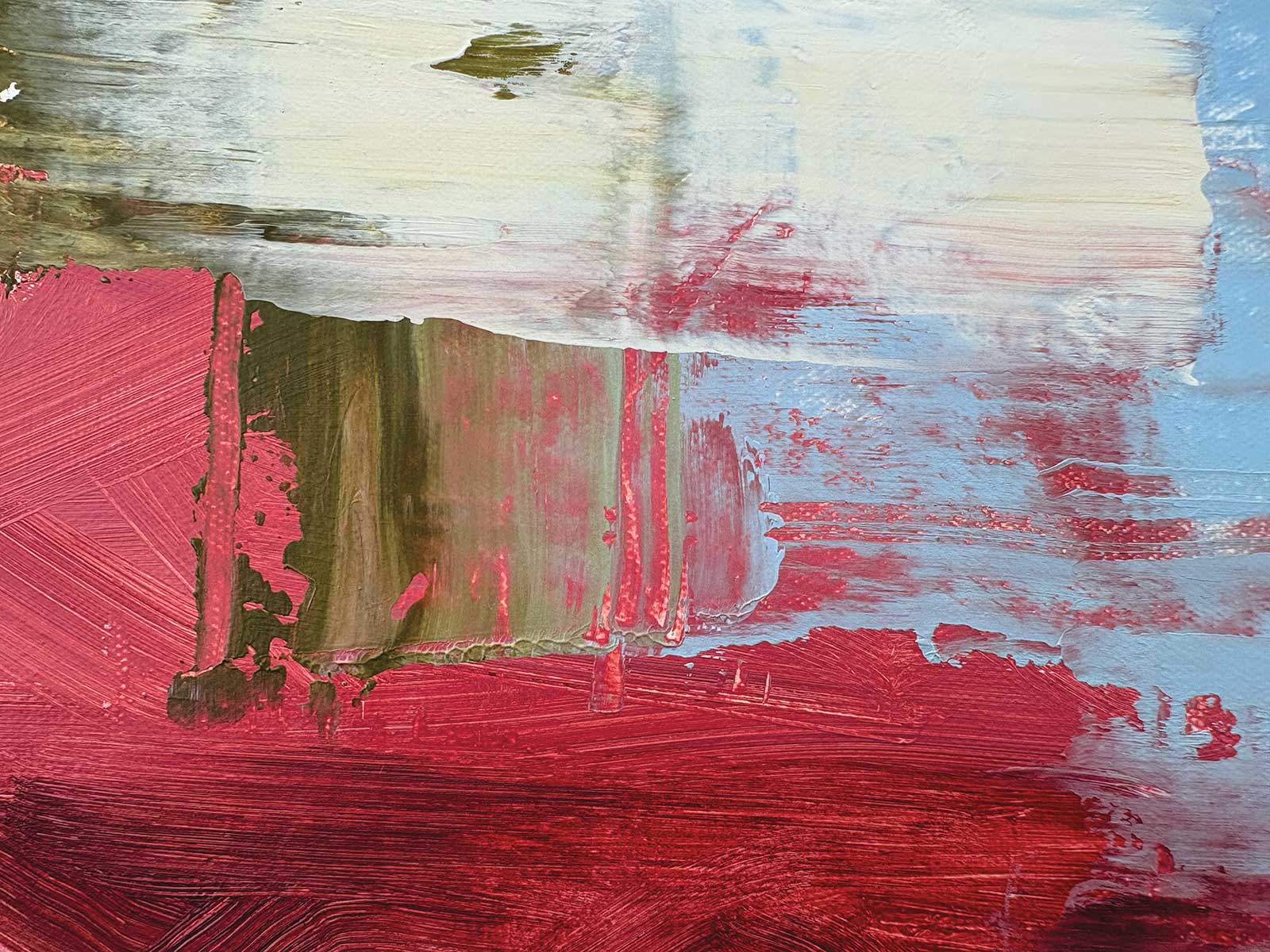
Even in areas of detail, my goal is to keep the paint loose and fresh, never overworked and tight.
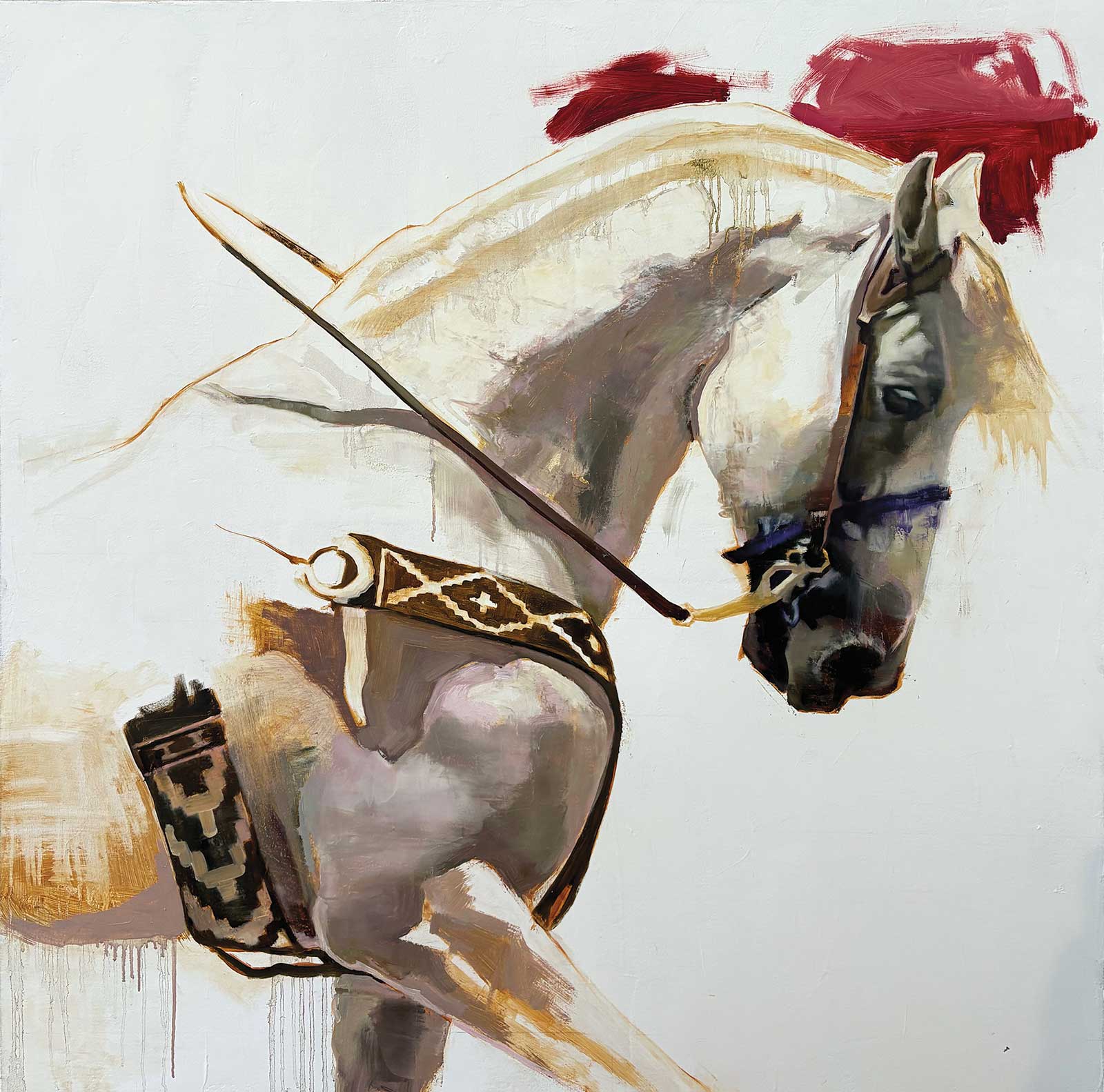
Stage 8 Adding Negative Space Color
At this stage in the painting I already know the photo reference has far more detail than I want. I begin to play with color and placement to explore how I want to handle the negative space.
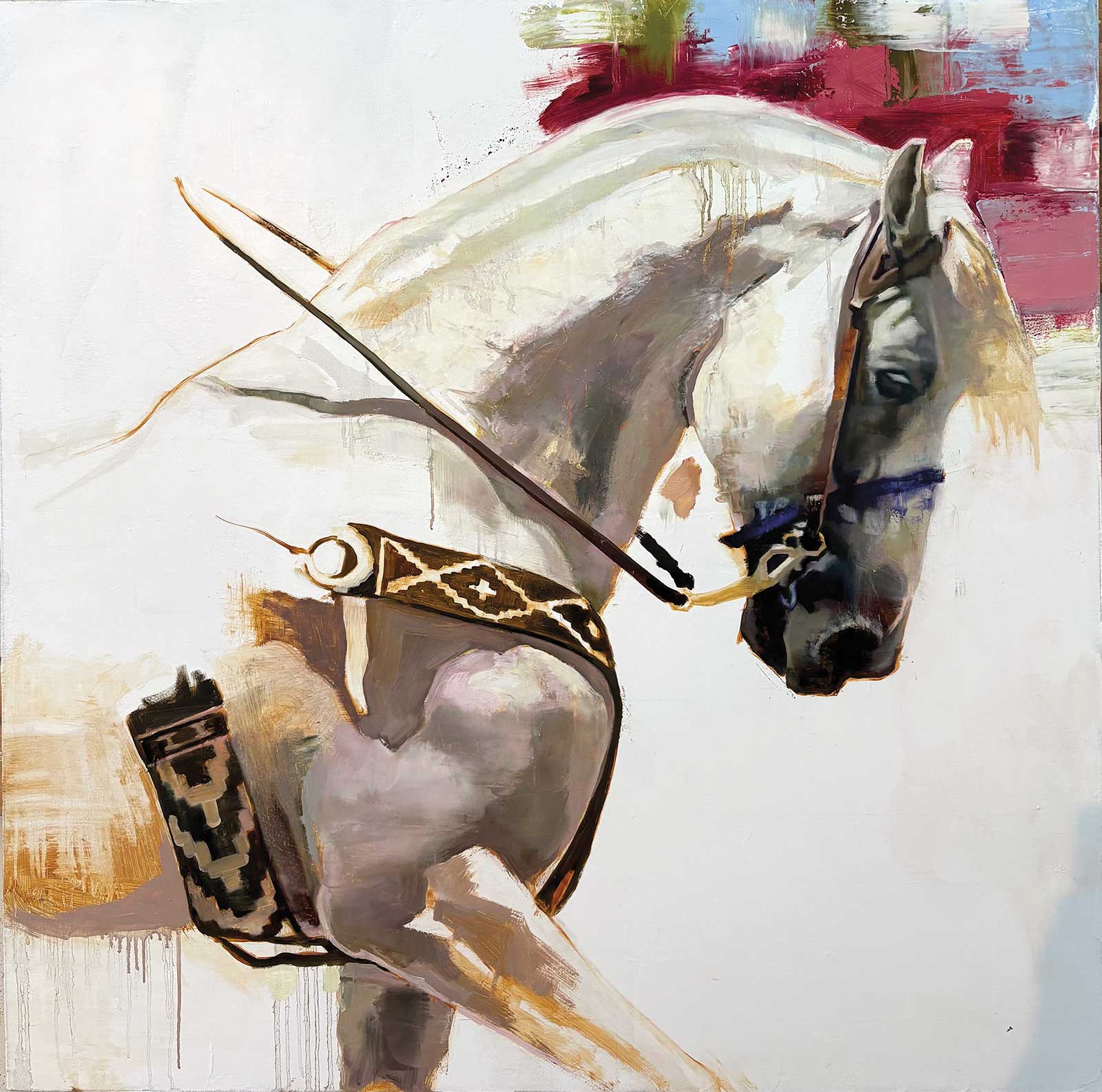
Stage 9 Negative Space Development
I know that the horse’s face is of the utmost importance, so I want to develop the space behind it to draw the viewer’s eye there. I don’t want any details, however, so I just use my palette knife to convey energy and movement.
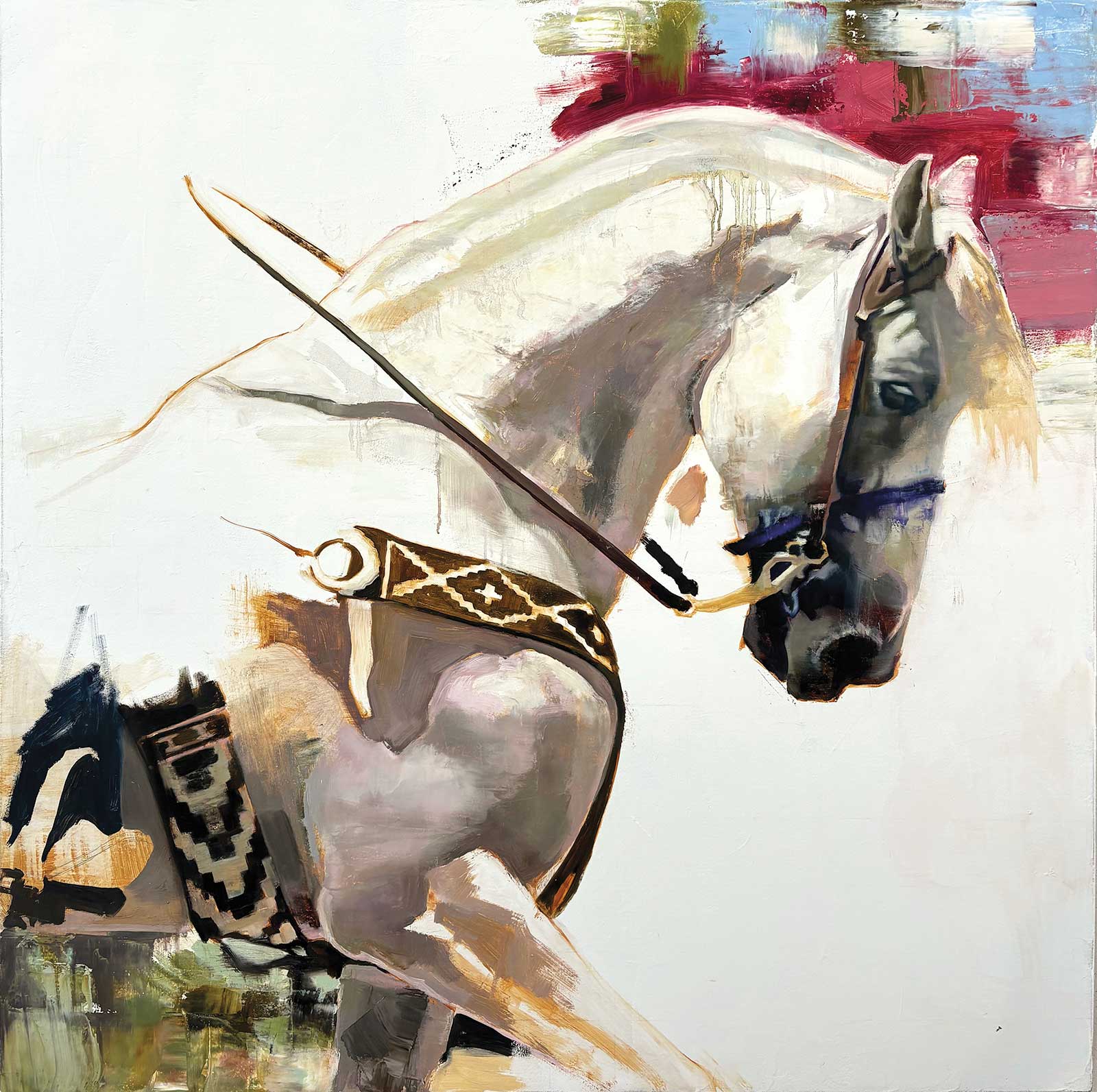
Stage 10 Balancing Negative Space
At this stage it is clear the composition is heavy in the top left, so I come down to bottom right, adding detail and color.
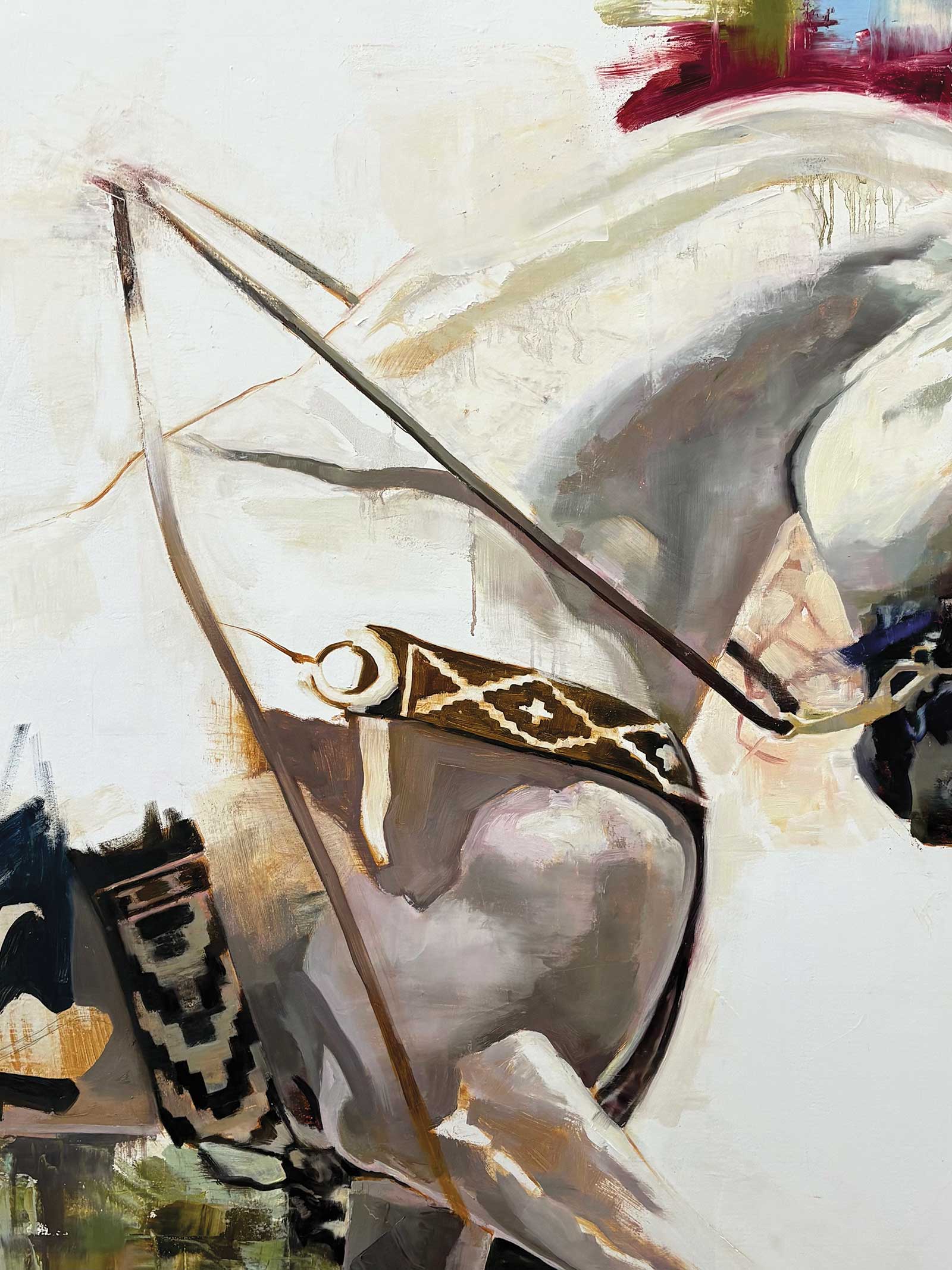
Stage 11 Final Details
At this stage I determined I wanted to add the downward drape of the rein. The bend in its shape is enough to suggest the form below it without putting in more detail. The pattern between the horse’s neck and jaw adds change of scale and visual interest to the composition.
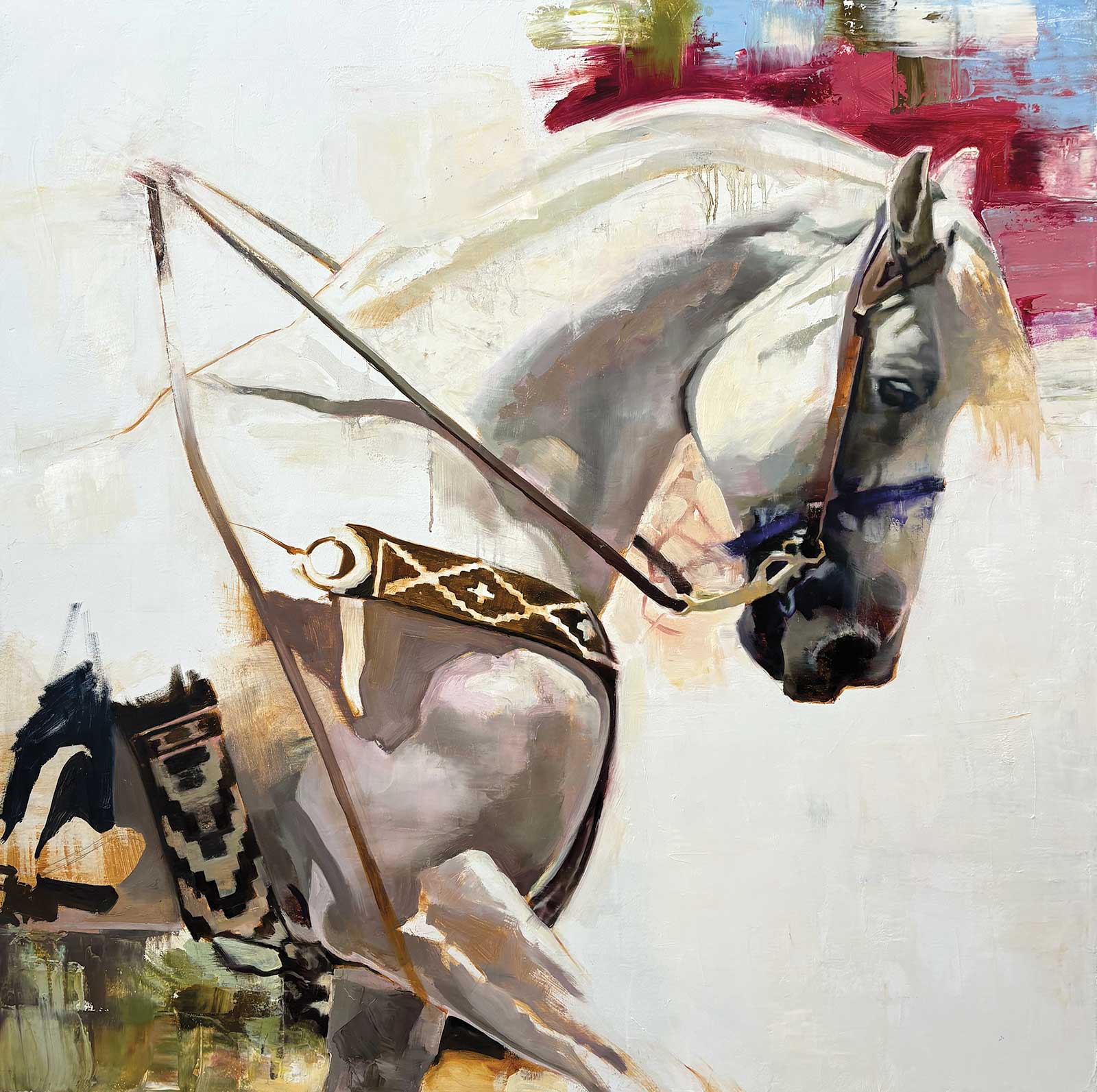
Stage 12 Finished Artwork
Fiesta, oil on canvas, 40 x 40" (101 x 101 cm)
About the artist
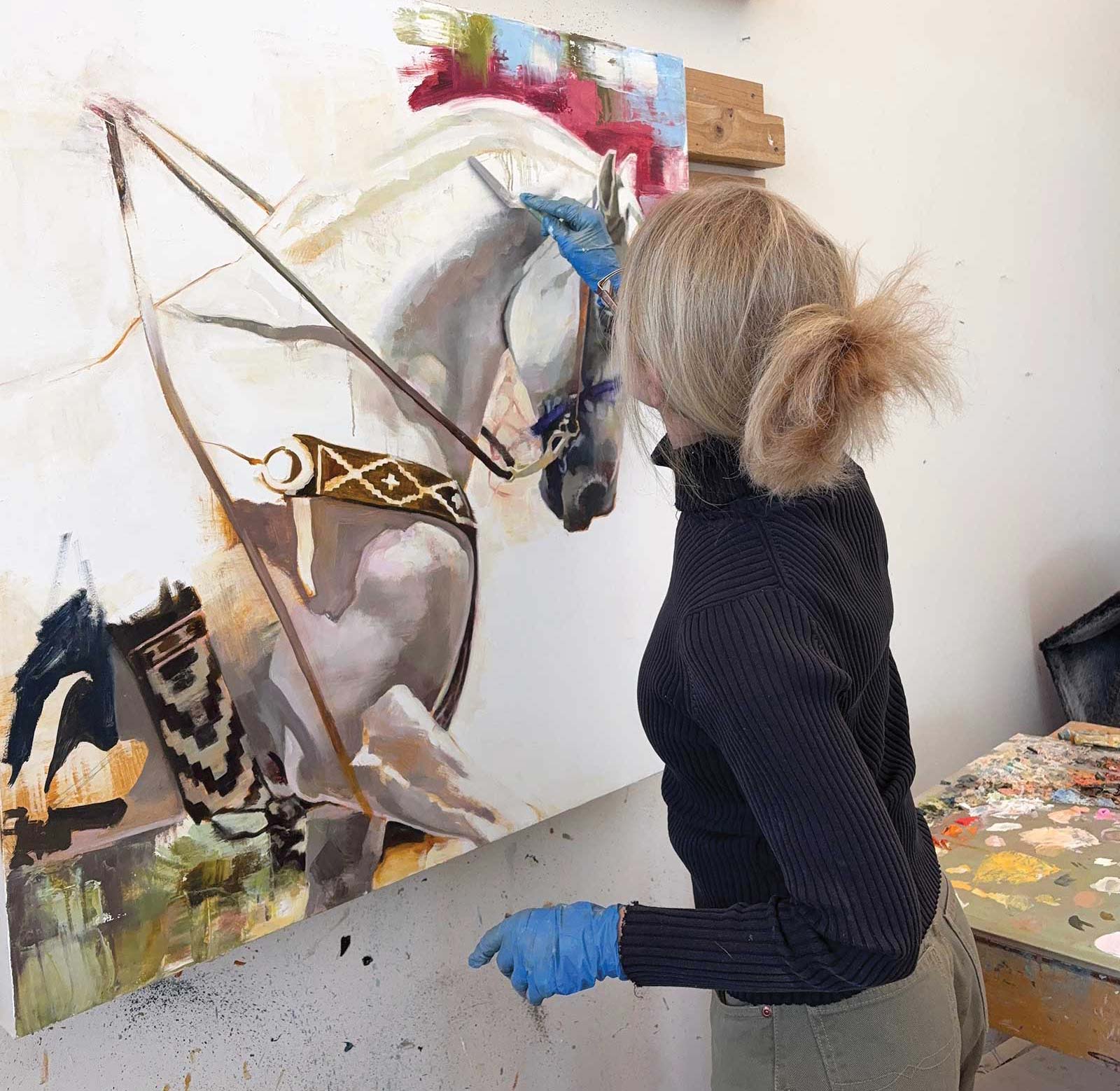 Diana Tremaine
Diana Tremaine was born in New York City, lived in Los Angeles for 14 years after getting her fine art degree at the University of California, Los Angeles, and now lives and works in Bozeman, Montana. While living in Los Angeles, she taught painting and drawing at Taft College and Chino’s Men’s State Prison. Since living in Montana, Tremaine has taught privately out of her own studio and continued her own artist education in workshops with artists Bo Bartlett and Alex Kanevsky.
Tremaine’s work has been included in numerous gallery exhibits both nationally and internationally, including New York City, Los Angeles and London. Renowned for her horse paintings, Tremaine was commissioned by Keeneland in 2018 to paint retiring race horse champion Lady Eli. The painting was completed that year during the Breeders Cup at Churchill Downs. Tremaine’s paintings are included in private and public collections in both the United States and Europe.
Represented by
Andra Norris Gallery, California, USA, andranorrisgallery.com
Cross Gate Gallery, Kentucky, USA, crossgategallery.com
Somerville Manning Gallery, Delaware, USA, somervillemanning.com
Contact at
diana@dianatremaine.com
dianatremaine.com