I’ve discovered that every moment of my life, awake or asleep, influences what I create on canvas or paper. Whether it’s the smallest scribble or a lavish stroke, my work is the result of everything I’ve experienced. I don’t hesitate to trust what comes from my reliable ever-unique brain cells. Conscious and subconscious happenings continually shape what appears from within.
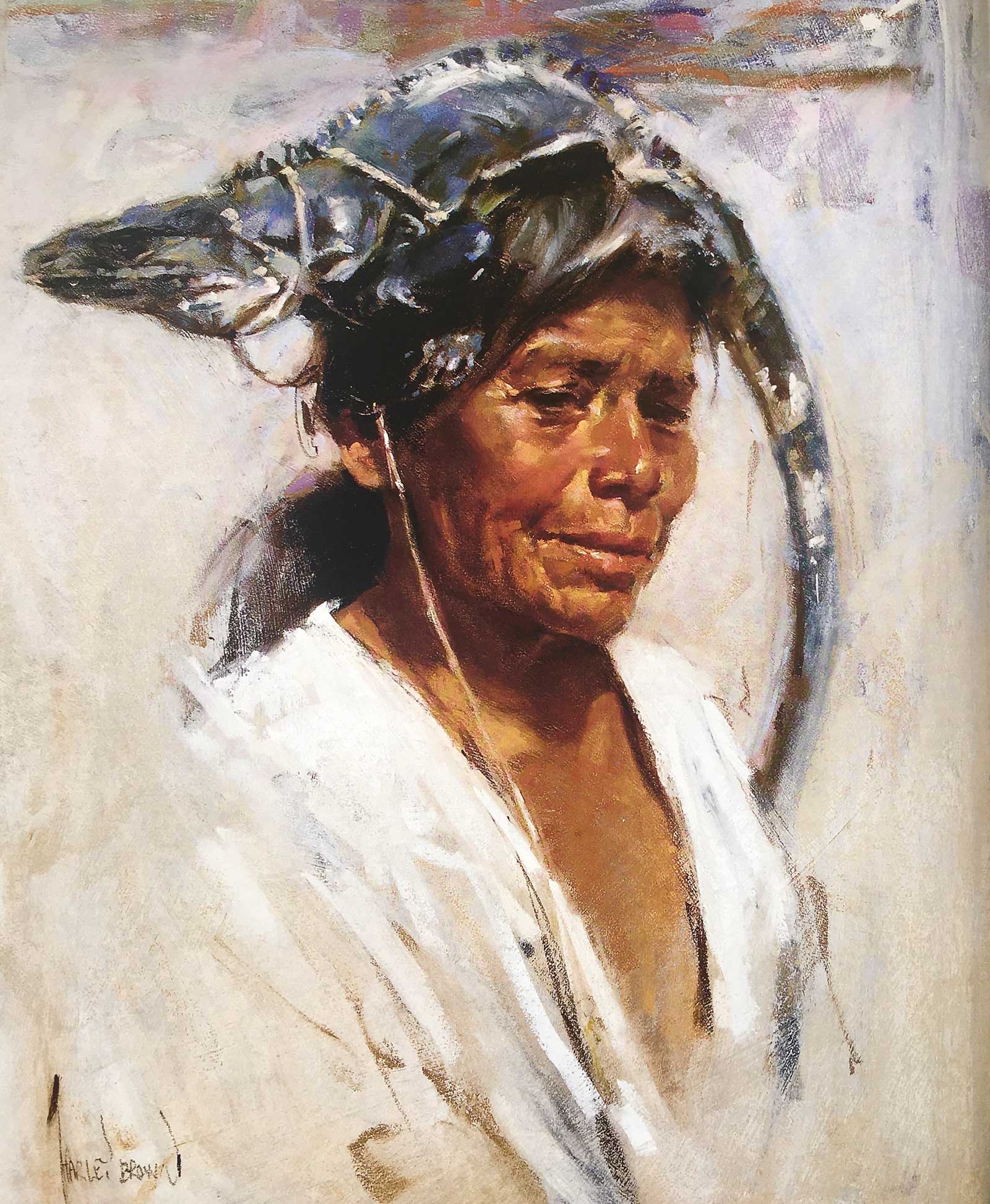
Lady with Iguana
Who would have thought that a lady with an iguana would make an interesting work of art? I sure thought that and couldn’t wait to get this art piece going. What captured me from the start was her expression. I kept it as true as possible. She was warmhearted and very curious about me. Within moments of meeting, we were honest friends. The lightness in the background next to her dark tones and the iguana make for a fascinating design. You can see the joy I had with her classic features. It was pure joy having her spirit with me.
My airplane trips, walks in the park and hours in the studio are filled with connections to a hungry mind that absorbs the surrounding world. When I speak with someone, I don’t carefully script my words; my mind knows where it’s going and I let the words flow. Painting works the same way. After all these years, I allow my experienced mind to move naturally. As I watch a subject develop before my eyes, feeding my inner spirit, the process feels as natural as commenting on something I know well. It’s the same with my piano and with these words. For most of my days, I’m simply myself.
Titling Artwork
I always take time when titling my artwork. Sometimes it’s the name of the person portrayed, other times it’s a phrase that reflects the spirit of the subject. The act feels personal, almost like naming a child who has entered our lives.
Regarding Accuracy
Accuracy is foundational in all the arts—writing, music, drama and dance. We observe what is before us and interpret it through ourselves. Each actor brings a distinct portrayal to Hamlet. A room full of artists painting the same model will produce entirely different works. Individual vision shapes the result.
My short-term memory has never been strong and my teachers recognized that early on along with my obsession with art. They opened emotional and aesthetic doors for me, and I remain grateful. I’ve never worried about my memory because my recall centers around art. The art world offers an inner awakening that carries us through difficult times and keeps a smile on my face.
Commissions
When I create a commissioned portrait, I prefer the subject to be in a comfortable environment: their home, office or a city park. I avoid stiff overly formal poses. I photograph my subjects from many angles, experimenting with lighting and expression. We collaborate especially if they have specific preferences. If they work in politics or lead a large company, I often place them in a serene setting with subtle references to their profession.
Sometimes I move in close, other times I include more background. What matters most is that nothing appears staged. The camera doesn’t know the center of interest—that’s the artist’s decision. We don’t duplicate what we see, we interpret it. Nature may present something magnificent, but it’s still up to us to shape it into art.
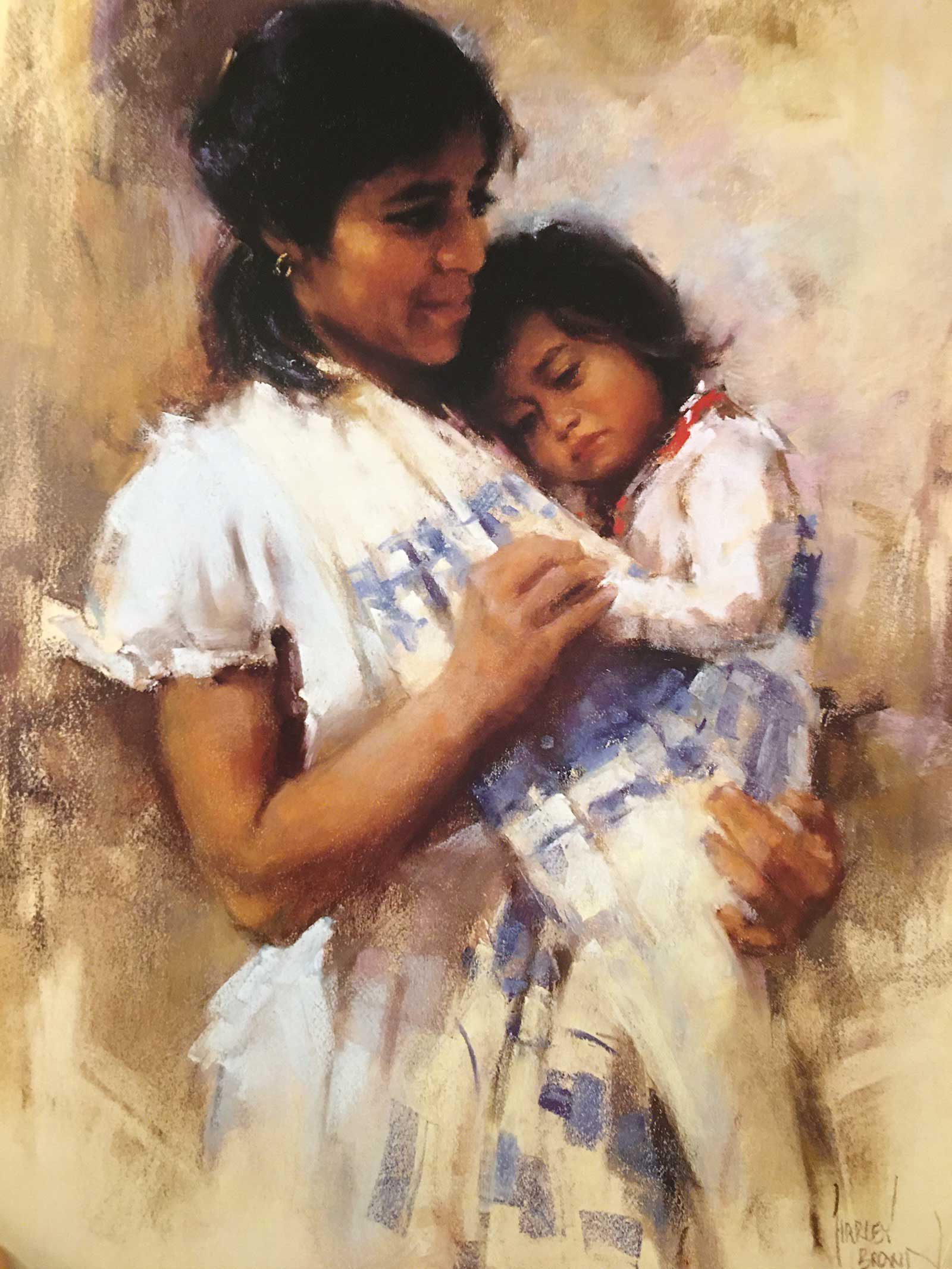
Mother and Child
Here we have the soft and detailed faces of mother and child surrounded by broad, emotional strokes. Visual movement with angled arm and shawl. Deliberate background shapes going out to the edges of the artwork. Mostly warm with those touches of blue. It’s a deep thrill going back and forth from energized to more careful strokes. Their expressions are perfect for the moment: a mother’s loving care and her child’s innocent feeling of belonging.
Choosing What’s Important
Whether working from life or a photograph, we edit. We remove elements that disrupt the composition—a tree that appears to grow from someone’s shoulder, a distracting color, a harsh wrinkle. Over time this editing becomes instinctive. Occasionally we leave in something unexpected because it adds life.
I’ve painted the same model multiple times and each piece feels fresh. Light, expression, folds of fabric, color and mood shift constantly. Just as we change from moment to moment, so does our art.
I prefer morning and late afternoon sunlight to the harshness of noon. Angled light creates artistic shadows on faces, buildings and landscapes. When I see what the sun can do, I silently applaud.
When painting women and children, especially together, I handle the faces and hands gently. Softer strokes suit youthful and feminine features while bolder strokes strengthen clothing and background. I enjoy balancing delicacy with strength in a single work.
Many people turn to art in retirement, pursuing what artists have loved all their lives. Art welcomes anyone at any age. There’s something heartening about that shared devotion. As a child, I drew constantly. This trained my eyes and hand to work together, simplifying forms while striving for accuracy. Accuracy matters especially as our personal style develops. My hand responds to what my eye observes, combining precision with individuality.
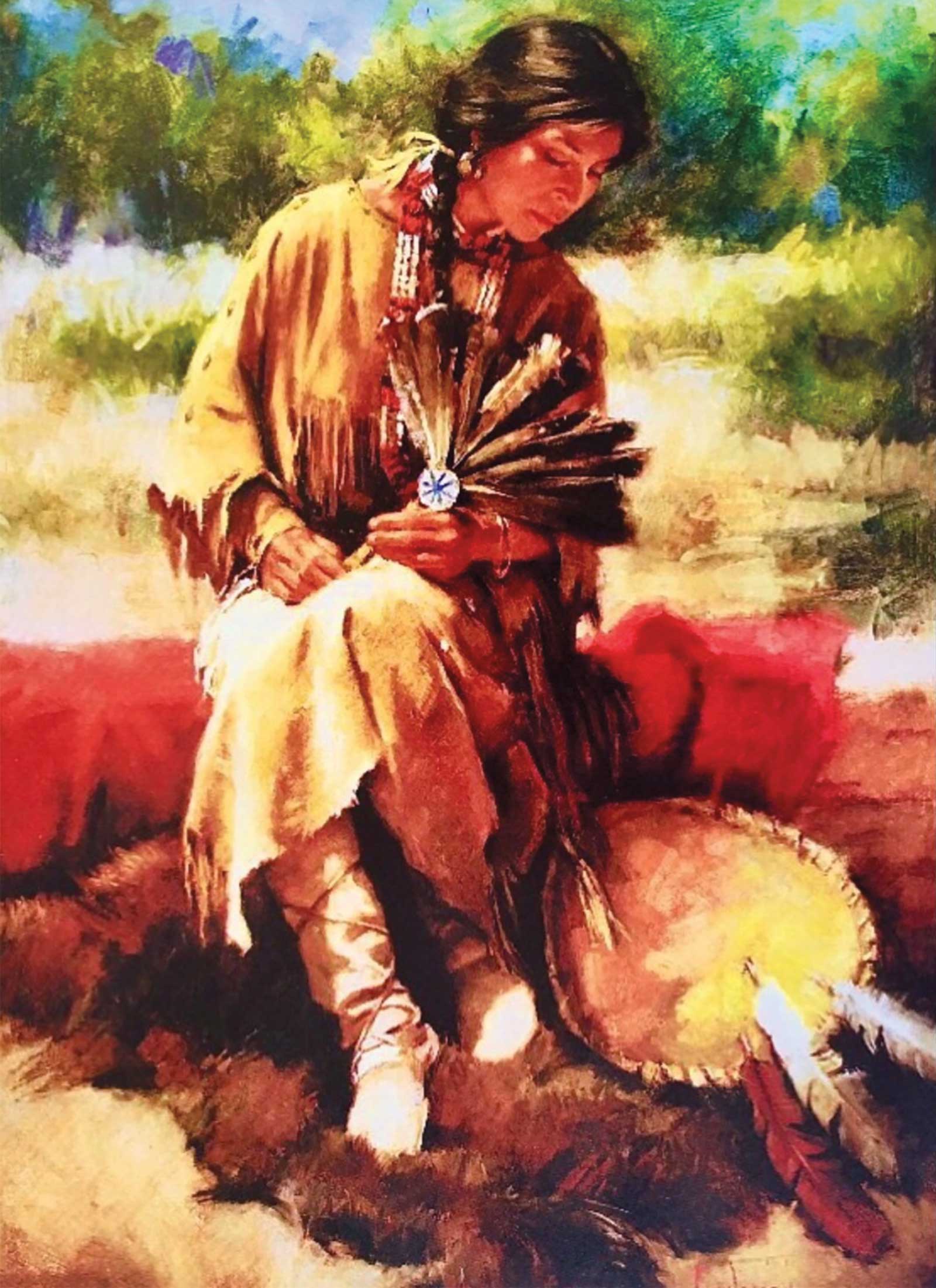
Young Lady Reflecting
This piece required more detail because the subject and her surroundings held personal significance for both of us. While certain areas are loosely rendered, I enjoyed capturing her thoughtful gaze as she held the feathers. Manipulating the light and dark shapes (and deciding where to emphasize and where to soften) was a challenge, as was limiting the small white areas and creating a few lost edges. The result is a strong, natural design, achieved because she was truly immersed in her own moment.
The Harley Oath
I live by what I call the Harley Oath: I complete at least one sketch every day. If I feel low, sketching restores me. It’s my cure. The habit keeps my mind and body engaged whether I’m in the studio or traveling.
On days when I don’t feel like working, I prepare the materials anyway. I place the paper on the easel, lay out the pastels and make a few simple marks to tone the surface. Almost without fail that small beginning pulls me forward, and the subconscious takes over.
A Common Misstep One common mistake in art is overusing highlights. They must be adjusted (softened or strengthened) to feel natural. Too many can overwhelm an otherwise strong composition. Strong colors also require restraint. Their placement, in shadows, backgrounds or secondary elements, must support the center of interest rather than compete with it.
I love every stage of creating: bold strokes, fine details, evolving design and harmonizing colors. The artistic journey can be dramatic or quiet, but it always feels alive.
Open to the Unexpected
Sometimes the best direction is unexpected. Like a film director who repeats a scene dozens of times only to discover that an unplanned take is the one that works, artists also encounter surprising turns. When a painting begins to move in an unforeseen direction and feels right, I follow it. Life and art both reward openness to the unexpected.
Pricing my artwork evolved naturally over time. I began by selling profile drawings door to door for one dollar. As demand grew, prices rose. Dealers entered the picture, commissions increased and opportunities expanded year by year. The progression felt organic, shaped by experience and advice.
Other artists I’ve known have traveled their own winding paths, learning from missteps and continuing forward. Twists and turns are inevitable in an art career, but they’re often meaningful.
There are magnificent artists working today just as there were in the so-called Golden Ages. I was raised admiring Rembrandt, Sargent and Sorolla, but greatness did not end with them. Each generation brings its own masters. The arts continue to evolve, and centuries from now there will be new names spoken with the same reverence—different in style but original and heartfelt. —
BALINOFSKI
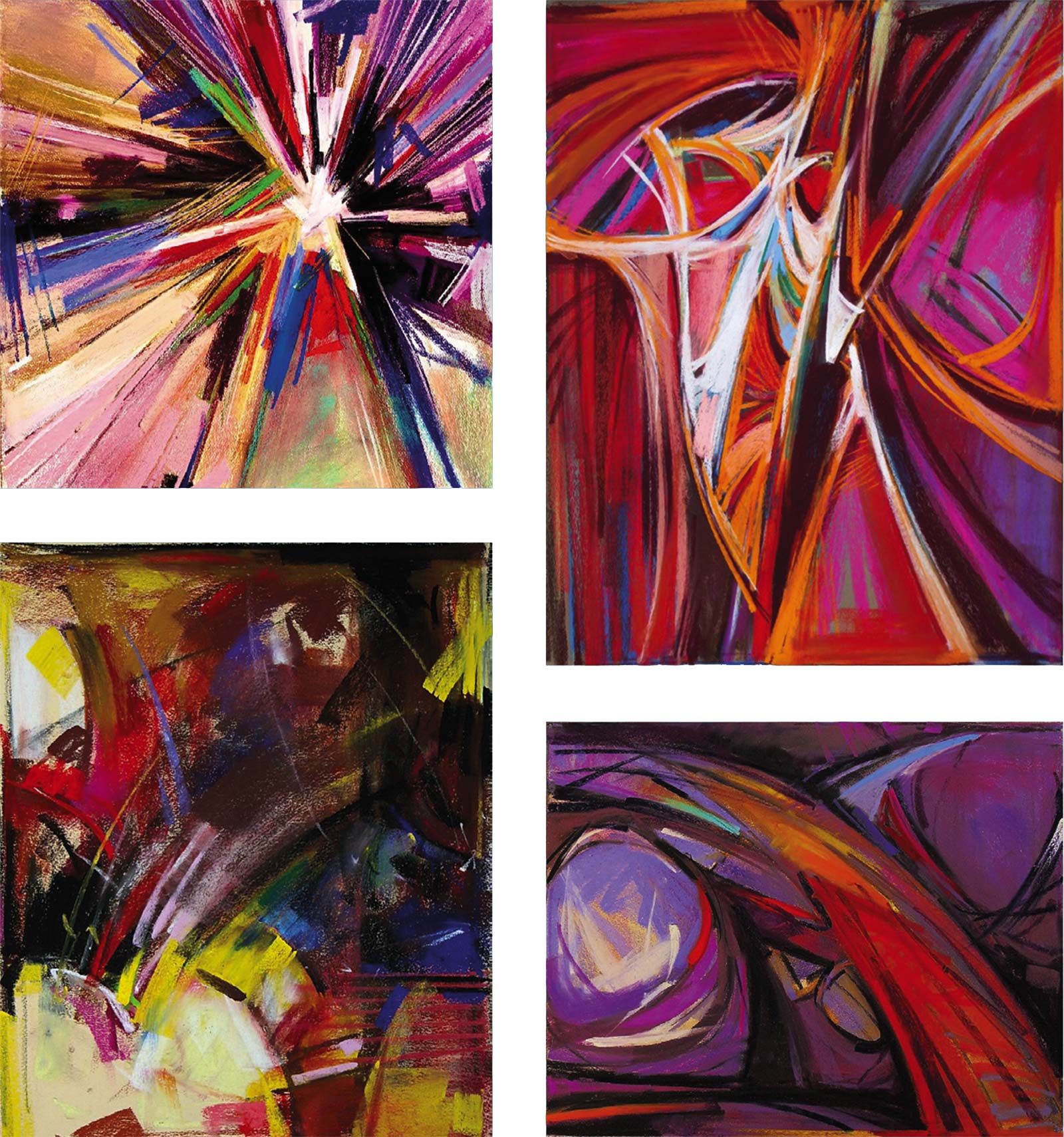
Here are four of my art pieces. I’m sharing them so you might further understand what continues moving in my mind. My belief is to continue making art no matter when or where I am. Art keeps my heart pumping and my brain cells generating inspiring images to lavish on canvas and paper. Most of the time what happens surprises me. That feeling keeps me thankful in knowing who I am. In these works you can see different parts of Balinofski revealed. Looking at them now brings me to revealing moments of why I created them.