The Portrait Society of America is thrilled to celebrate another year dedicated to portraiture during our 28th annual The Art of the Portrait conference taking place in Atlanta, Georgia from April 9 to 12, 2026. This year’s program features new and returning faculty artists who will take part in beloved events such as the opening night Face-Off demonstration, Portfolio Critique sessions, Open Drawing Studios, and the 6x9 Mystery Art Sale. Throughout the weekend, the top twenty finalists of The International, the world’s premier portrait competition, will showcase their exceptional works in pursuit of the Draper Grand Prize and a $50,000 cash award. As we prepare for this grand event, I’ve had the pleasure of speaking with several of our faculty artists, both new and returning, to discuss topics ranging from advancements in technology and its impact on artists’ work, moving beyond technique, and seeking an art education in today’s changing world. In this issue, we’ll hear insights from renowned artists, Anna Rose Bain, Kevin Chambers, Casey Childs, Chelsea Lang, Shane Wolf and Zhaoming Wu.
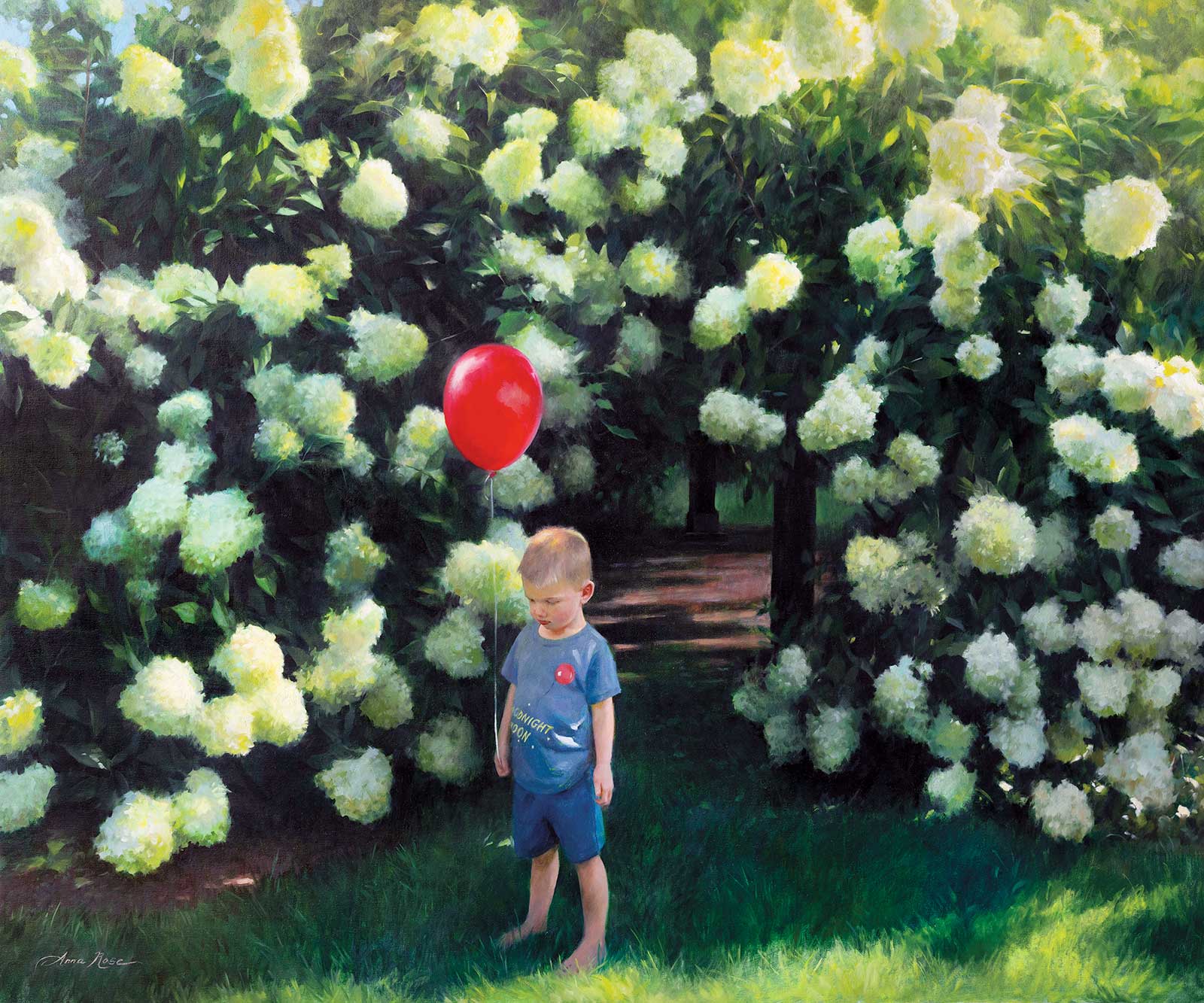
Anna Rose Bain, Red Balloon, oil on linen, 40 x 48” (101 x 121 cm)
Both Casey Childs and Anna Rose Bain credit their artistic growth to the mentors and educational experiences that shaped not only their technical skill but also their philosophy as painters. Reflecting on his own path, Childs shared, “I first took art classes at a community college in northern Wyoming near where I grew up. It was there that I met an amazing professor who inspired me to become a professional painter.” Afterward, he apprenticed with renowned portrait artist William Whitaker, an experience that he calls foundational. “Both teachers have been a huge inspiration in my development as a painter, and I wouldn’t be where I’m at today without them,” he said. Like many figurative artists, Childs believes that painting from life is essential to understanding one’s subject. “Seeing your subject with your own eyes is so important to gaining an understanding of what it is in front of you in terms of proper values and colors,” he explained. He finds that painting from life offers clarity and vibrancy that photographs can’t replicate. “From life the colors are more pure and values are more clear—it’s simply painting what you see.” When it comes to education, his advice to emerging artists is straightforward. He said, “Every artist should have some form of training. Honestly, I would recommend going out and finding an artist you like and learn from them. Then go and give it everything you have to make the best possible work you can on your own.” He emphasizes persistence and self-motivation above all. “Every great artist finds that greatness with miles and miles on the brush.”
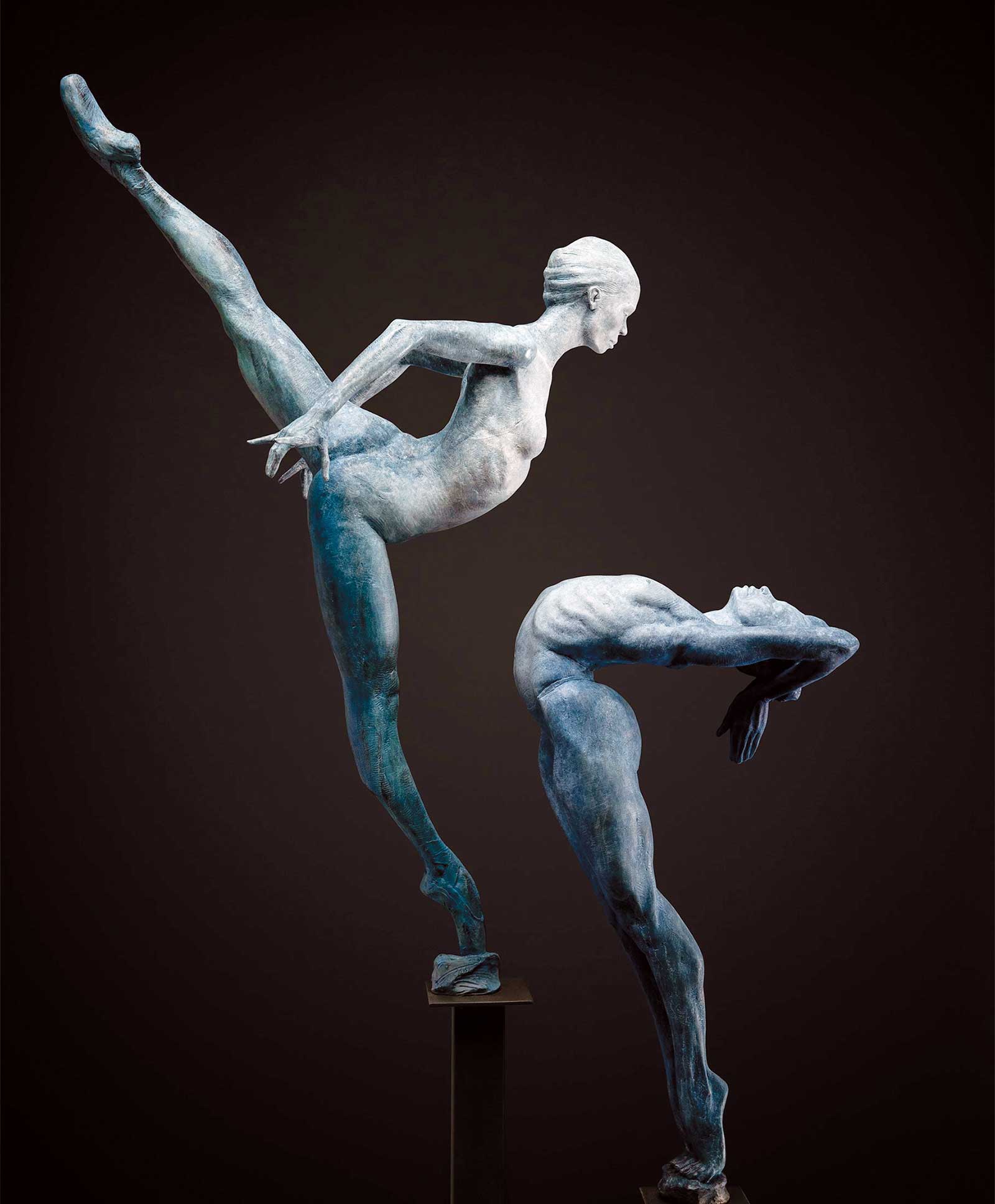
Kevin Chambers, En Pointe Equanimity Group, bronze, 24 x 18 x 10” (60 x 45 x 25 cm)
Anna Rose Bain’s artistic journey began in a different setting, but echoes many of the same values. “I earned my art degree from Hillsdale College, a small liberal arts college in Michigan,” she said. “Those four years were foundational for me, especially in learning to draw and observe from life.” Yet what truly shaped her perspective was the breadth of her studies. “My education in music, history, philosophy, and literature gave me a broader understanding of the world… that liberal arts foundation continues to shape how I think, see, and create today,” she explained. After graduation, Bain sought out workshops with artists she admired, including those influenced by the masters Sargent, Sorolla, and Zorn. “Those experiences helped me discover who I wanted to be as an artist and how I wanted to paint, but they didn’t tell me what I wanted to say with my art.” When offering advice to aspiring artists, Bain advocates for flexibility and self-awareness. “There’s no single right way to become an artist,” she noted. “It’s essential to find the right fit for your goals and personality and that starts with knowing what those goals are.” Whether through formal study, atelier training, or mentorship, she encourages discernment. “A good mentor will help you find your voice, not theirs.” Ultimately, both Bain and Childs agree that education, in whatever form it takes, should serve the artist’s growth toward authenticity, confidence, and mastery.
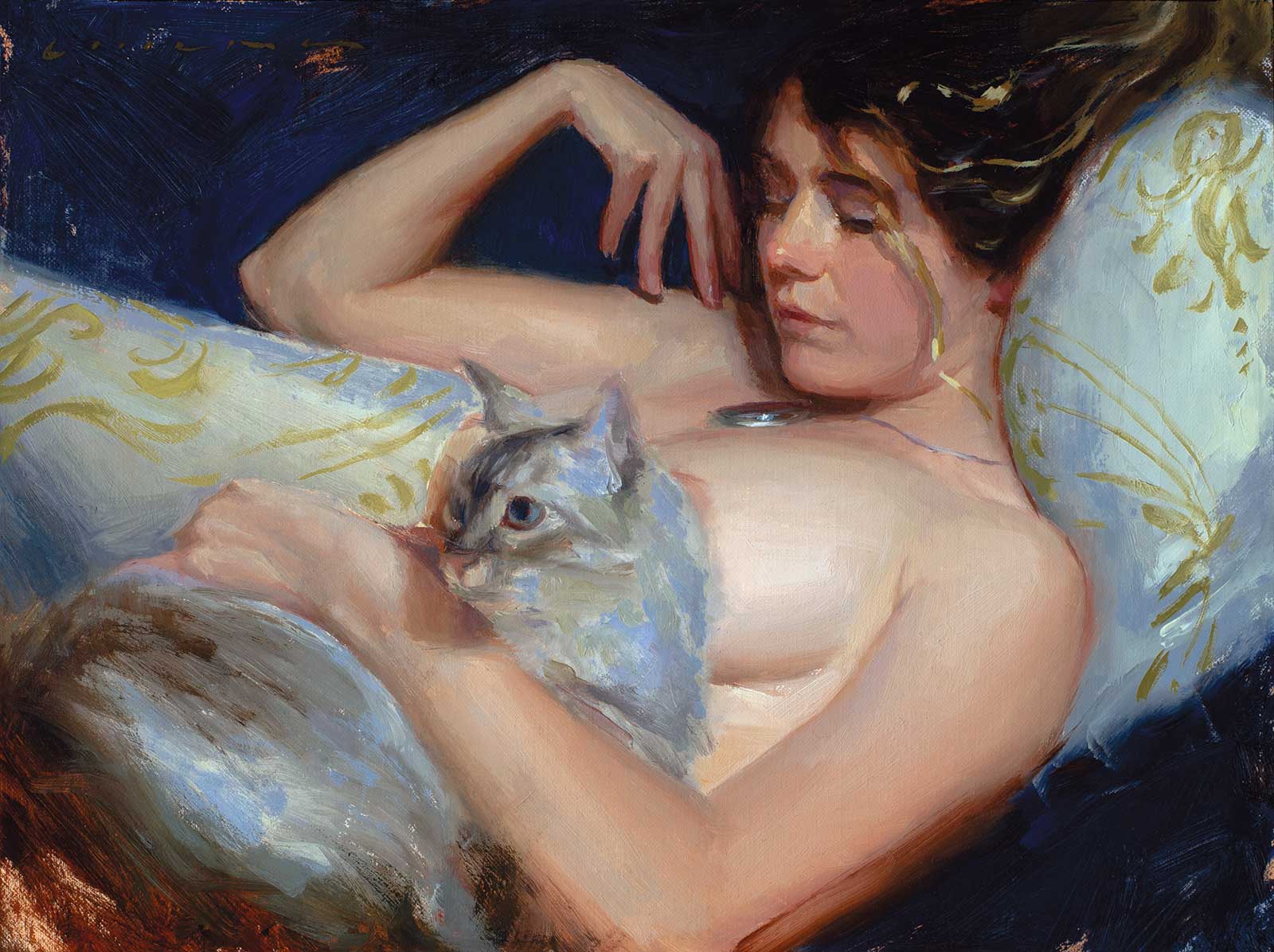
Casey Childs, Golden Slumber, oil, 9 x 12” (22 x 30 cm)
On the subject of technology and art, Shane Wolf reflects on how technology has streamlined aspects of his artistic practice, while expressing concern that digital convenience is eroding the timeless, human connection of working from life. He explained, “A technological shift that has happened that I think is now taken for granted is the shift from analog cameras to digital cameras.” For Wolf, that change has greatly facilitated the process of photographing finished artworks. He laughed about the old days of “the copy stand, slide film, and waiting for film to be developed,” saying, “I do not at all miss those time-consuming tasks.” He also praised improvements in studio lighting, noting that “though I always work under natural light in my own studio, when I travel for events, demos, and workshops, it’s nice that nowadays most places have good, simple, and not very cumbersome lighting setups.”
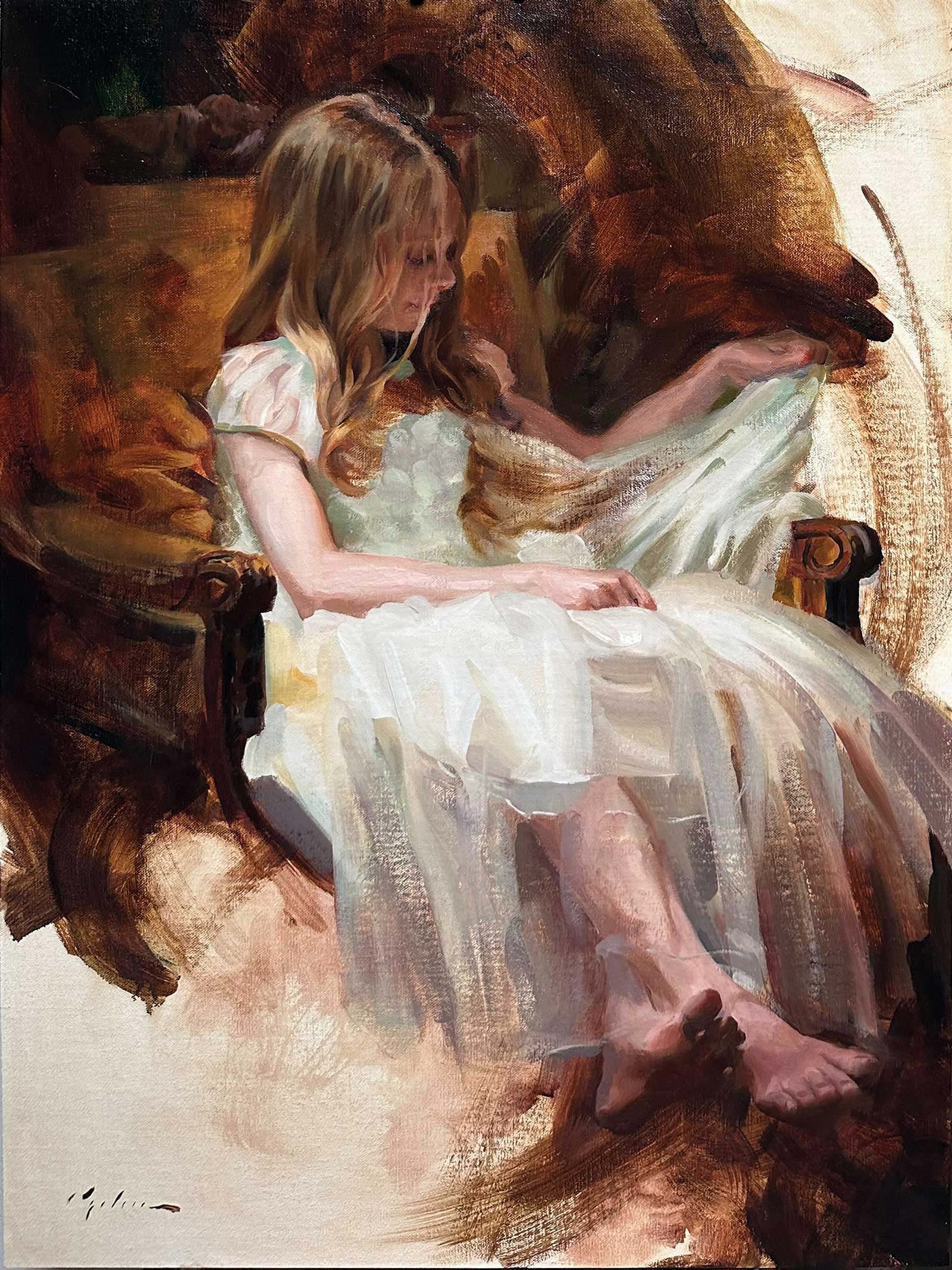
Chelsea Lang, Make Believe, oil on panel, 30 x 24” (76 x 60 cm)
However, Wolf also notes, “Clearly we are living in a paradigm shift from ‘traditional’ approaches to art making to that of tech-dominant approaches. This has a serious effect on art careers that is rarely addressed: the traditional art model as endangered species.” He explained further, “For millennia artists and models have been collaborating to create art, together, in a shared space. It is one of the precious unbroken threads of humanity and remains as pertinent today as it was in the caves of Lascaux and beyond. But today so few artists work directly from life. The facility of digital means to access imagery is rapidly ousting in-person art modelling and replacing it with digital photography and virtual posing sessions.”
Contrastingly, Kevin Chambers embraces certain advancements in digital tools to streamline his process and expand creative possibilities. “I utilize photography, digital scanning, and enlargements in my process,” he said. While he insists “there is absolutely no substitution for the live model,” he appreciates being able to “shoot high-definition photos of a model in a pose in the round and then work from those photos on an 80-inch screen in the studio.” Describing his largest project to date, he explained how he sculpted an idea for a work at 36”, had it scanned and enlarged to nine feet in foam, refined the design in clay, and then rescanned and reduced the finished piece to a 24” resin print for molding. “This is such a game changer for the sculptor,” he reflected, “and really opens up so many opportunities that were just out of reasonable reach before.”
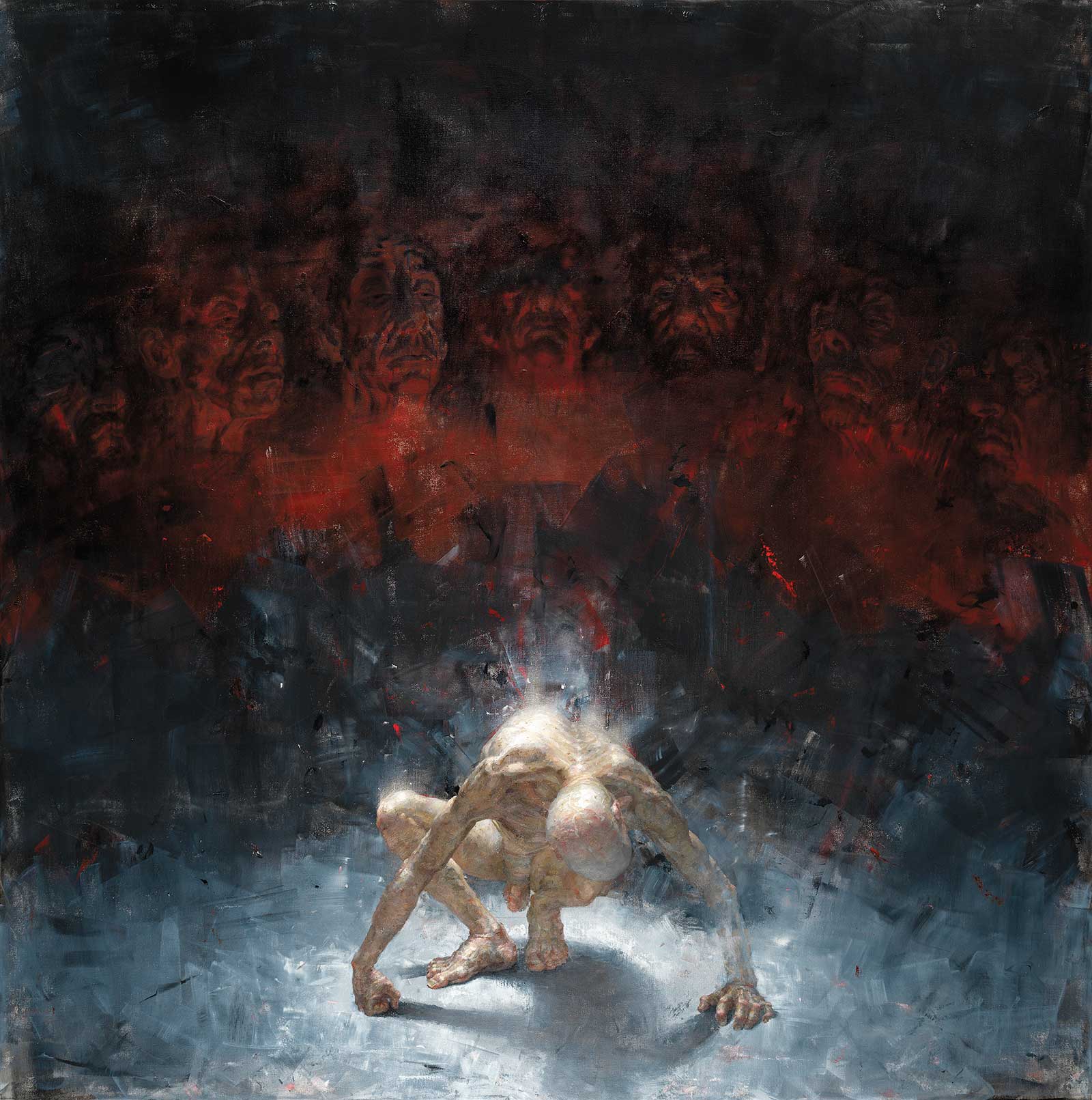
Shane Wolf, Ego Sum Abbas, oil on canvas, 118 x 118” (299 x 299 cm)
In exploring the idea of moving beyond technique, both Chelsea Lang and Zhaoming Wu reveal that their work is rooted not only in strong technical foundations but also in a deep, intuitive connection to their subjects. Lang explained, “I don’t think of myself as a narrative painter, and I rarely approach a painting with a story in mind.” Instead, she described her process as instinctive and guided by feeling. “What guides me is a simple process—I choose compositions that pull at me.” She gathers references that “spark something,” studying photographs, past works, and paintings by artists such as Sargent and Cecilia Beaux until one image “feels alive.” That intuitive pull, she says, becomes her compass. “If the finished work carries emotional weight, it’s because I trusted what I was drawn to. I’ve always been an instinctive person; feeling my way through a piece comes more naturally than reasoning through it.”
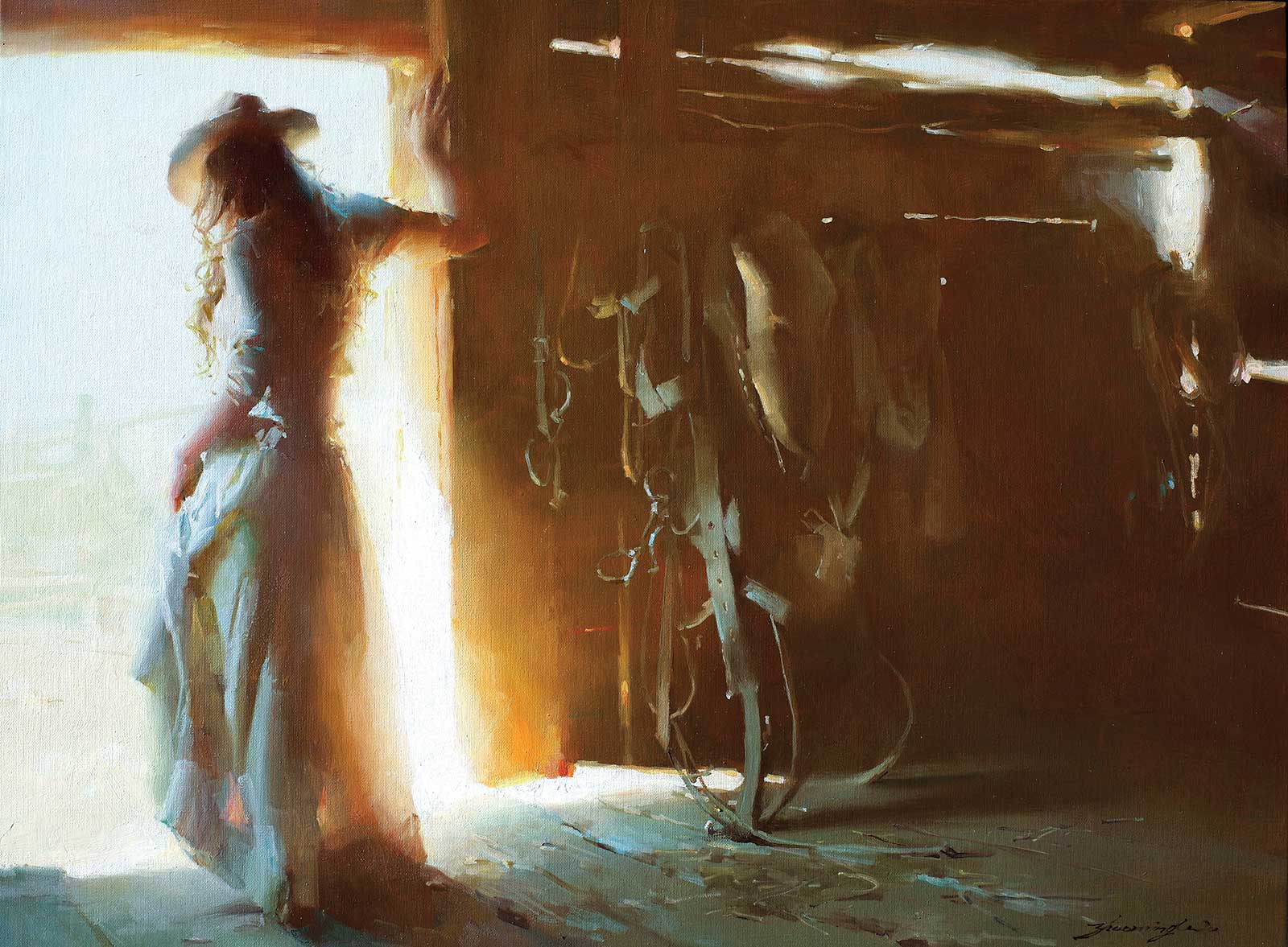
Zhaoming Wu, Sunlit Stillness, oil on linen, 18 x 24” (45 x 60 cm)
For Zhaoming Wu, he explains, “I only work with images that genuinely excite me. I begin by closely observing and analyzing the image, drawing connections to the experiences and emotions behind it. This process helps me discover a starting point and define a specific visual language. From there, I develop the concept further, shaping the visual landscape to convey a distinct mood and evoke a poetic, emotional response.” For Wu, the figure is always a source of inspiration in his art. In fact, he says, “I’m not simply painting the human form itself—I use it as a vehicle to convey emotion and to explore visual language.” By examining the relationships between different parts of the figure, Wu expresses deeper thoughts and feelings through his composition.
We hope you’ll join us in Atlanta, April 9 to 12, to hear more words of wisdom from our 2026 faculty artists. For information on registering for the conference or submitting your work to The International, visit portraitsociety.org. —