Like many other would-be artists, I spent much of my childhood daydreaming. One day I was an archaeologist uncovering forgotten treasures, the next, I was an explorer traversing the deepest reaches of space. And very often, my imaginary adventures demanded more; they called out to be given tangible form. So, I built things. A lot of them. Whether it was pirate ships made of Lego bricks or race cars from wood scraps, I was a child intent on building.
Over the years, I began to see painting as a way to experience the world—to ask questions of it and of myself, to process and to offer these reflections to others in the hope that they will find value in them too. Unsurprisingly, I eventually fell in love with 19th-century academic paintings. Their ability to vividly transport us to different worlds, both real and imagined, spoke to the same desire to dream and to build.
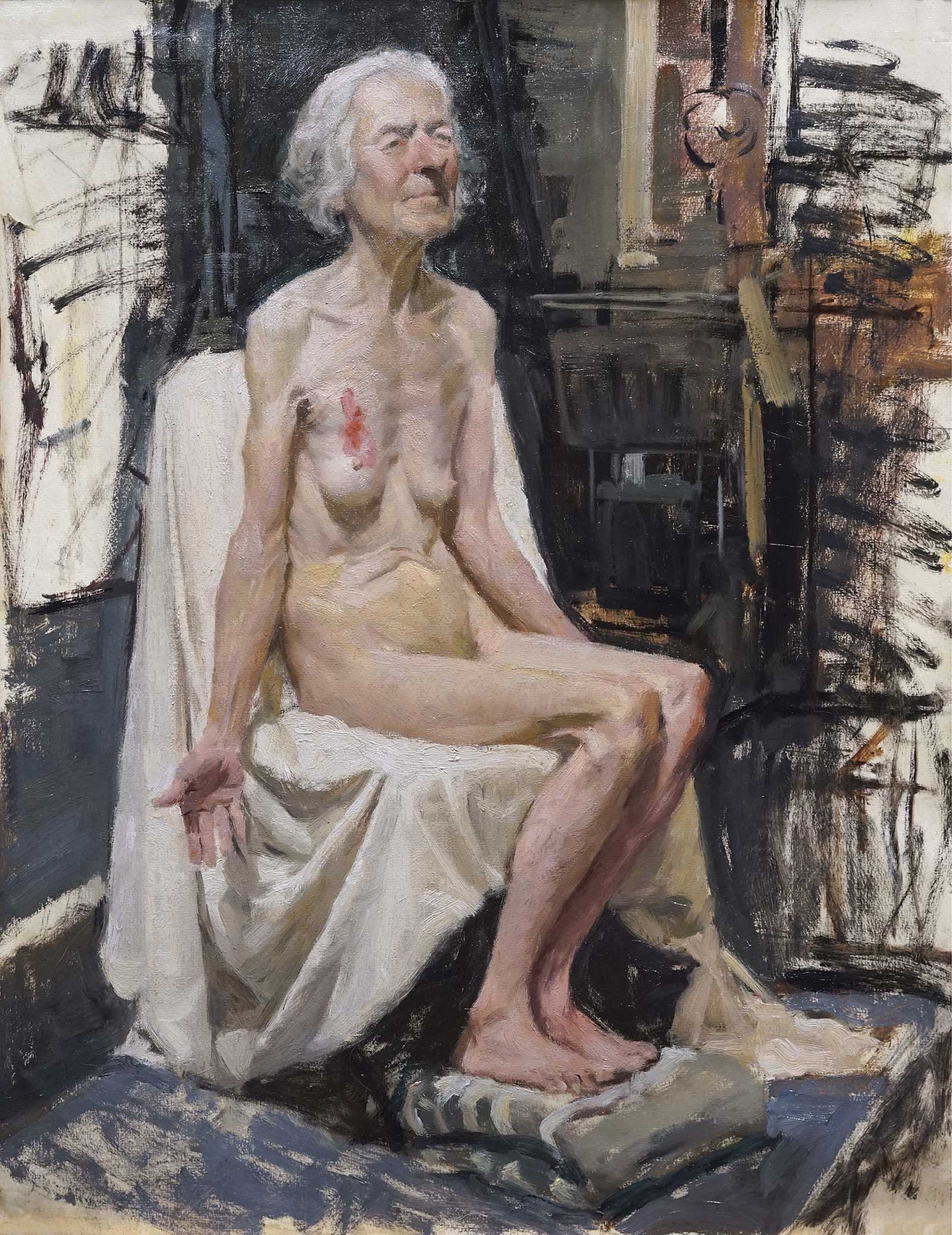
Susanna, oil on paper, 28 x 22" (71 x 55 cm)
Naturally, I researched everything I could find about academic training, especially at the École des Beaux-Arts in Paris. From palettes, to brushes, to the silliest initiation rituals, no bit of studio practice or gossip escaped my attention. As I pored through endless books, magazines, letters and diaries, I began sharing this fascination with people on Instagram, crafting funny, irreverent little stories that showed these artists not as untouchable titans but as people, yearning, failing, succeeding and learning just like the rest of us.
All of this led me to document the trials, the methods and madness of the Prix de Rome, a sort of reality TV-style talent contest that represented the pinnacle of achievement for French art students in the 19th century. Hundreds of hopefuls signed up every year, but only ten finalists were selected to produce a 4x5-foot painting of a historical or mythological subject assigned by a jury of professional artists.
And while the contest is now a thing of the past, I still felt driven to test everything I’d learned, to follow my curiosity and produce a similar painting. And naturally, when I decided to pursue this anyway, I knew that the community that had already shown me so much support had to be part of it. They voted on the subject via an Instagram poll and chose the story of Augustus Caesar visiting the tomb of Alexander the Great (thankfully, the one I was hoping for). In turn, I documented the day-to-day process of building the painting, eventually culminating in an online workshop that distilled the hundreds of hours I spent planning and working, dreaming and building, into simple, clear, reliable tools for picturemaking.
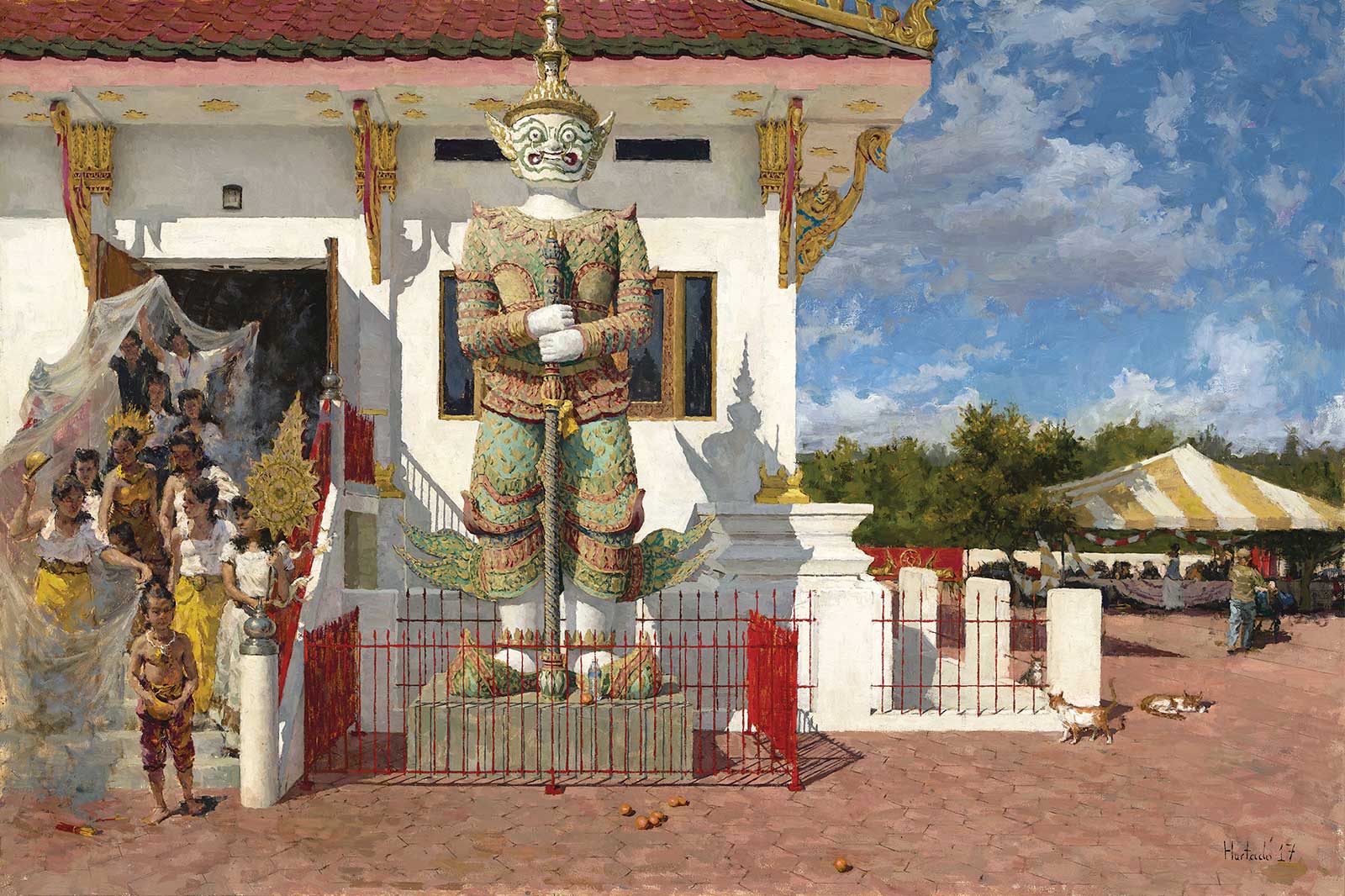
Coldwater, oil on panel, 24 x 36" (60 x 91 cm)
Now, there’s a persistent myth that artists of the past were all-knowing geniuses that conjured up fully realistic images without references, purely from imagination. However, my research showed that this was not the case at all. So, I resolved to work like they did; I worked from life, without photos, but I made extensive use of clay maquettes, mannequins and props. I spent weeks designing my own mannequin, building Roman armor and even a realistic mummy, all under the watchful (and sometimes skeptical) supervision of my cats, Meatball and Cooper. In the end, as hard work transformed duct tape, clay and glue into fully fleshed out props, my studio resembled a cross between a movie set and a haunted house.
Still, I knew that props alone wouldn’t bring this story to life, and I was lucky to count on phenomenal models. Like a film director, I had to cast each model for a particular role and explain the story that I wanted to tell: the motivation of the characters, their circumstances, their disposition. This required me to understand the story myself, but more than that, to inhabit the story, just like the dreams I’d chased in my room as a child.
I kept thinking about Augustus and the moment he faced—the anticipation as he descended into the dark tomb, the blinding yellow opulence upon entering the main chamber, a lone sarcophagus, the smell of incense, the sound of heartbeats pounding in unison. Finally, he is confronted by his childhood hero, not as an invincible conqueror, but as a shockingly mortal body, a lifeless mummy staring back at him, perhaps warning, perhaps mocking Augustus, but all the same, forcing him to make peace with his own smallness in the face of eternity, just as we all do, in our own way.
My Art in the Making: Augustus Visiting the Tomb of Alexander the Great
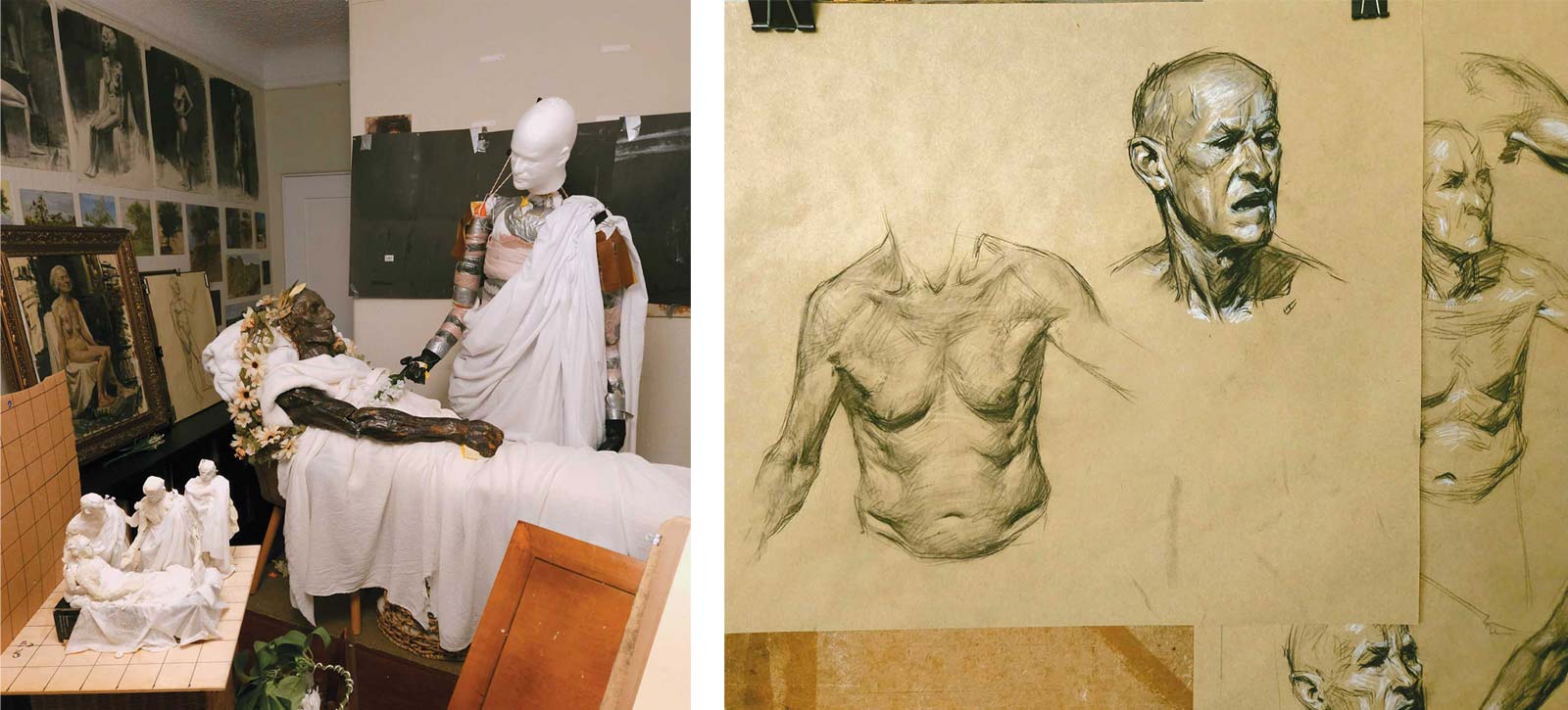
Stage 1 Props & References
The most fun and unusual aspect of creating this painting was making a poseable mannequin, as it proved invaluable for arranging drapery and character interactions (and it never gets tired). To make the scene believable, I also built a mummy, Roman armor and a clay maquette, along with the more standard studies (both drawn and painted) from live models.
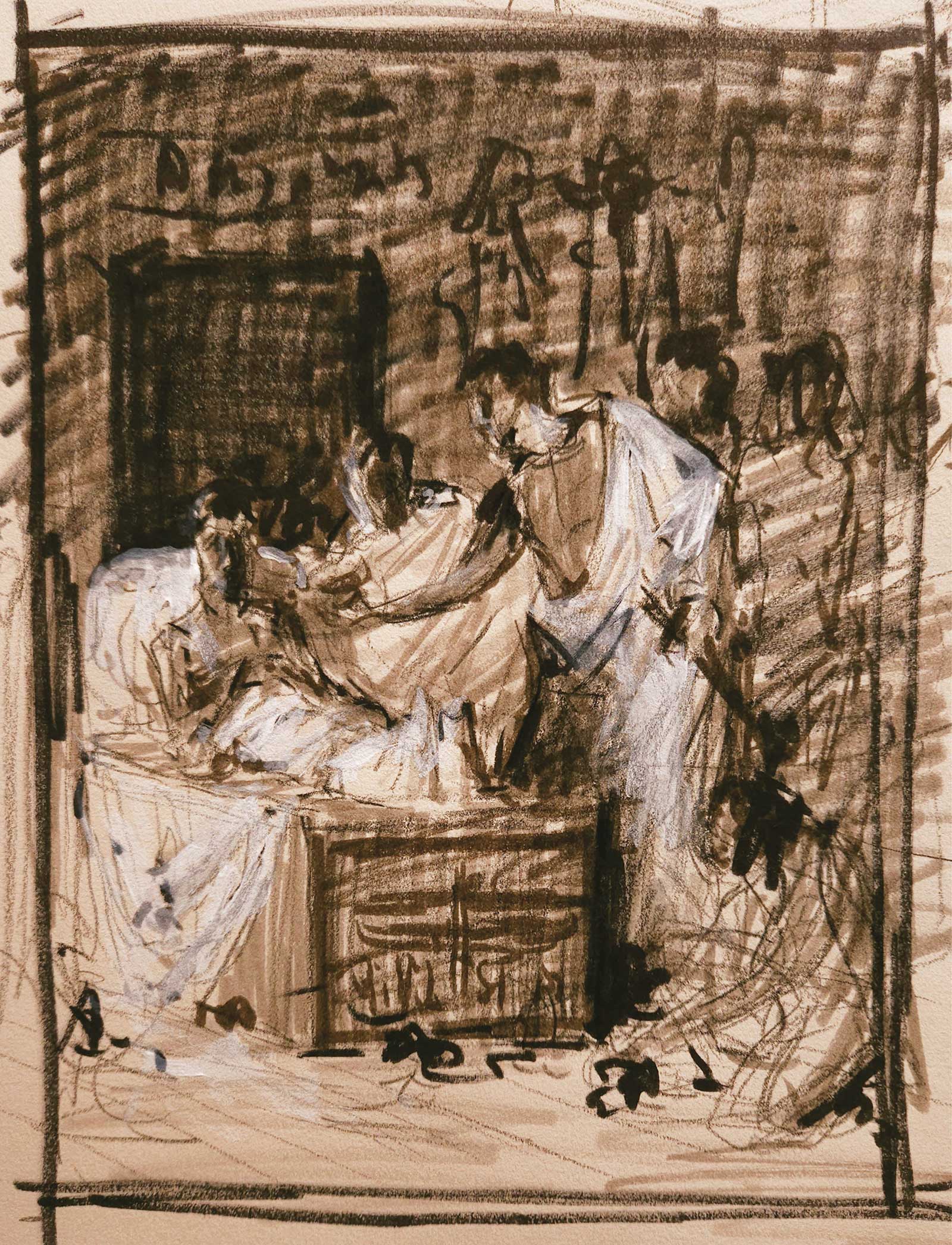
Stage 2 Composition Sketches
After reading about the story and researching Egyptian tombs and Roman garb, I did a few sketches from imagination, trying various angles and choosing the one with the most emotional resonance.
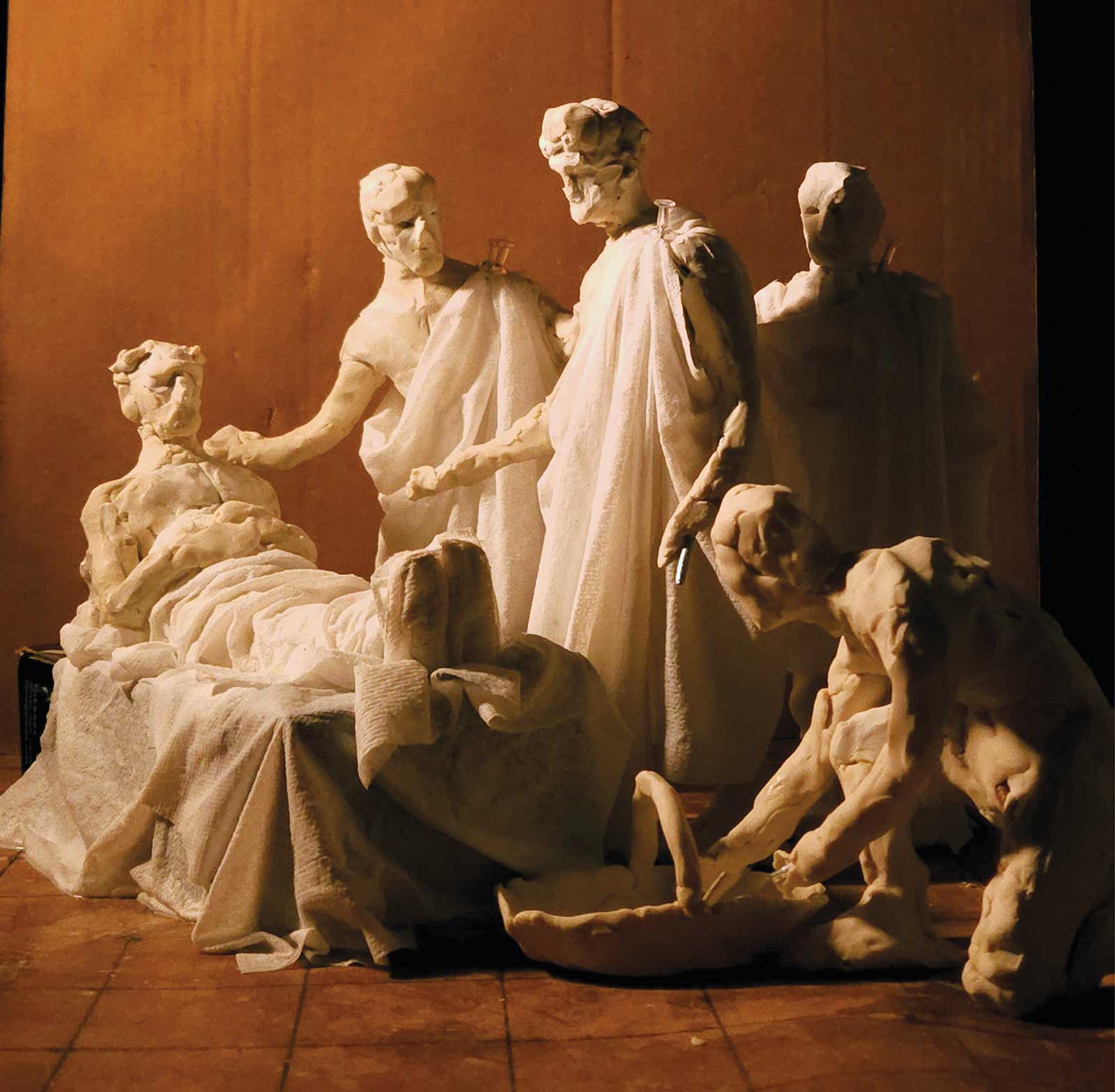
Stage 3 Maquette
When I had a sketch I liked, I made a small clay maquette, as it’s a fast, inexpensive way to figure out lighting and character interactions before hiring models. Fun fact: paper towels soaked in diluted glue can be used to simulate convincing drapery and will preserve the folds when dry!
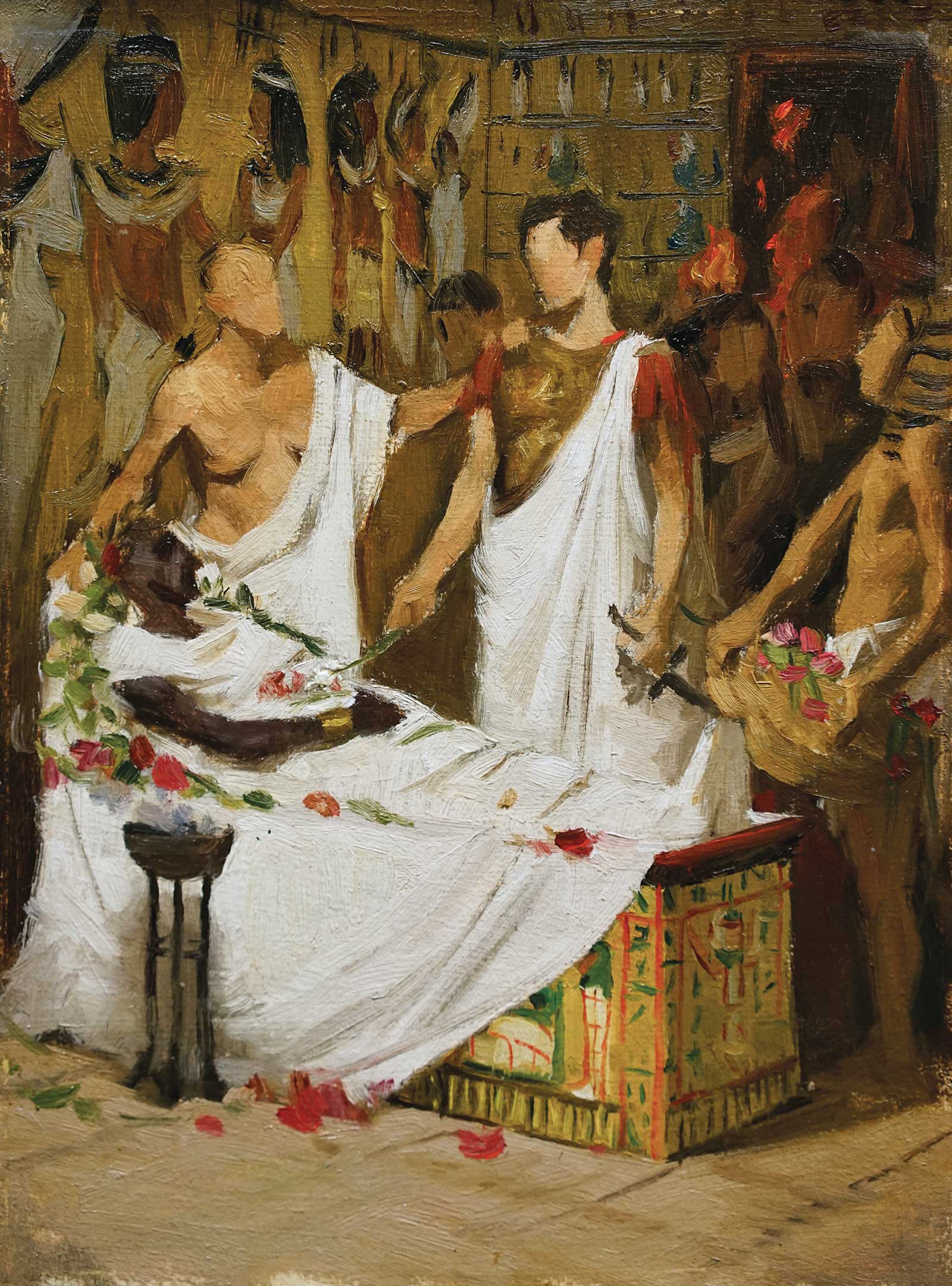
Stage 4 Color Sketch
Using the previous studies, along with drawings from live models, I reimagined the scene in a color sketch to better visualize the general direction and mood of the final painting. I changed the viewing angle to show more of the mummy’s face, emphasizing the contrast between it and the living figures around it.
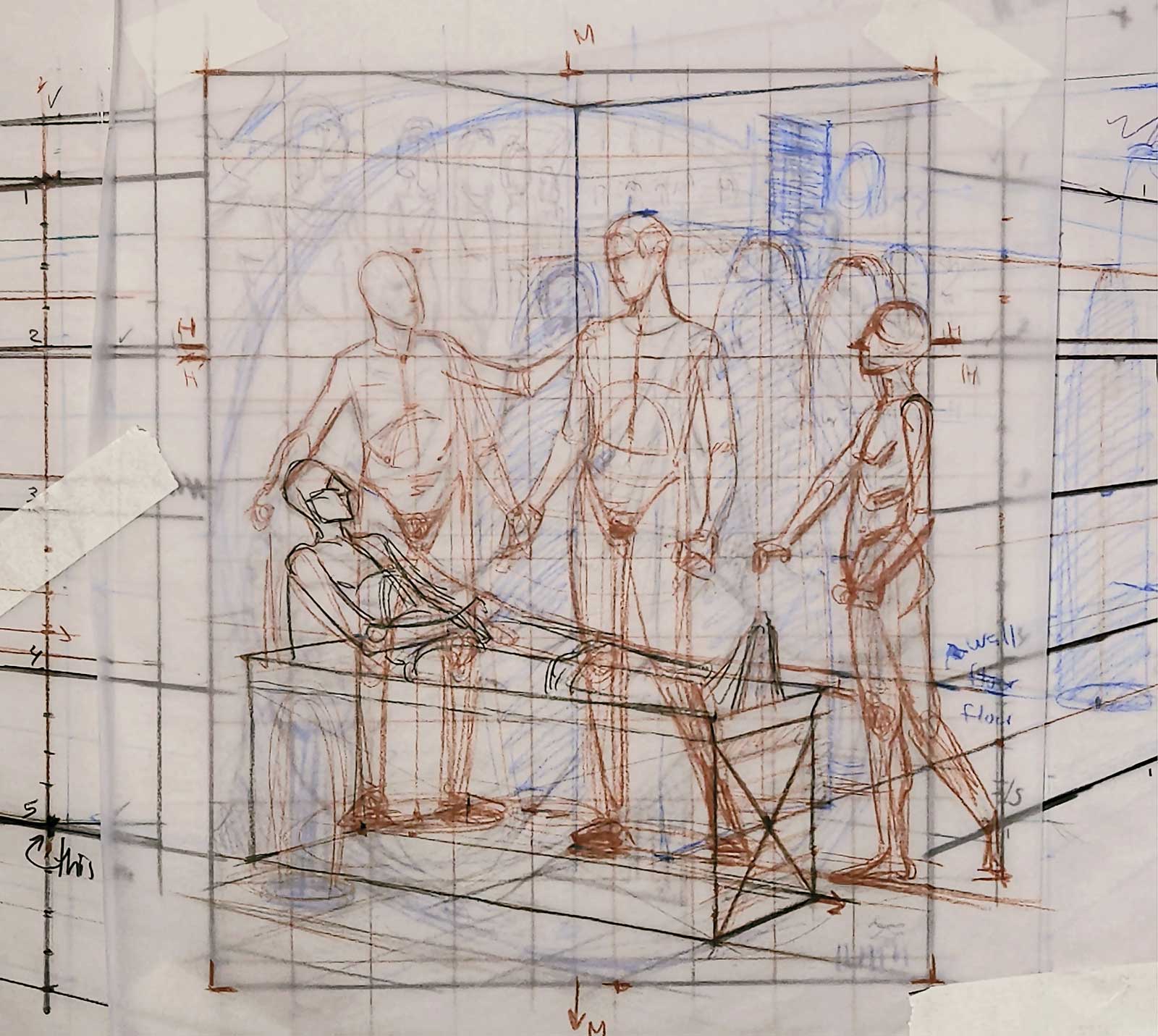
Stage 5 Perspective Check
Because this painting isn’t very architecture heavy, I could rely on the maquette and informal perspective to map out the space so far. Still, a final perspective check made sense at this stage. I used tracing paper to draw through the major elements and make sure the sizes were consistent. The goal is believability; as long as nothing looks out of place, there’s no need to obsess over every detail.
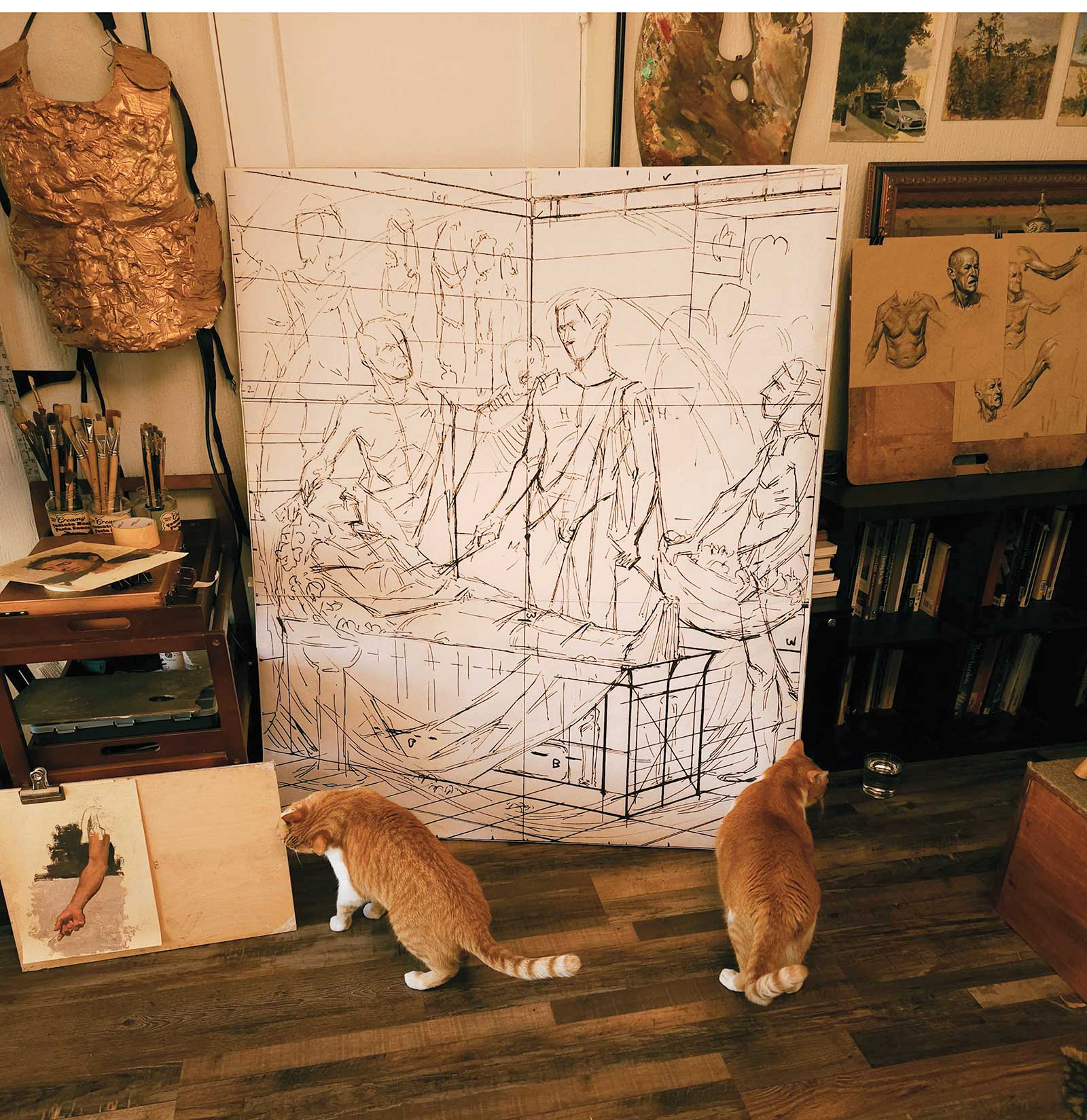
Stage 6 Transfer
The final sketch was enlarged to the final size using a poster printing service. After Meatball and Cooper gave a final feline inspection, I applied charcoal to the back of the paper and went over the main lines with a blunt pencil, transferring the image to the canvas.
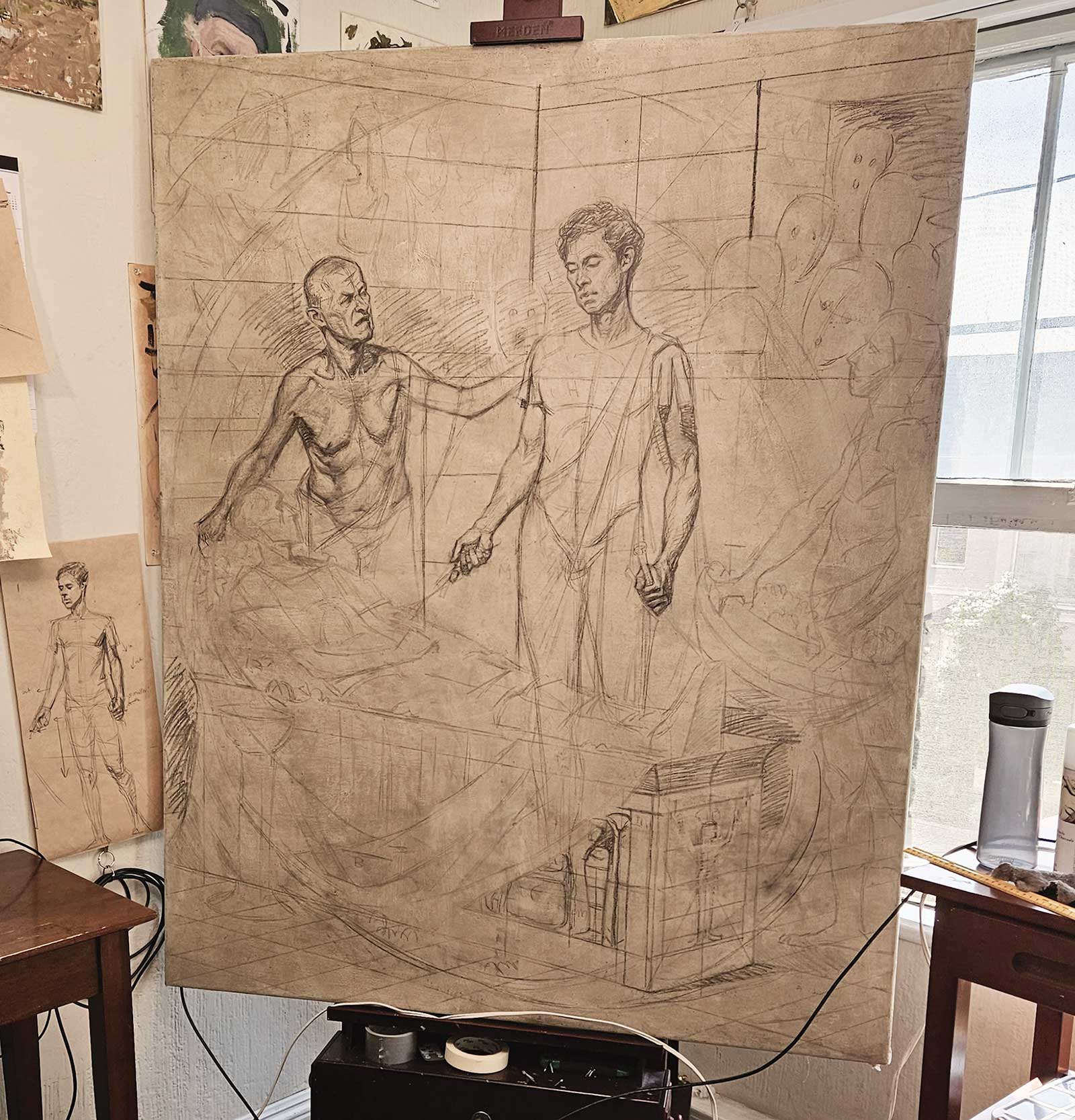
Stage 7 Reinforcing the Drawing
To keep things manageable, the transfer only consisted of the main elements, all simplified. Once that was sprayed with fixative, I used charcoal to add specific details taken from my individual studies of each model or prop.
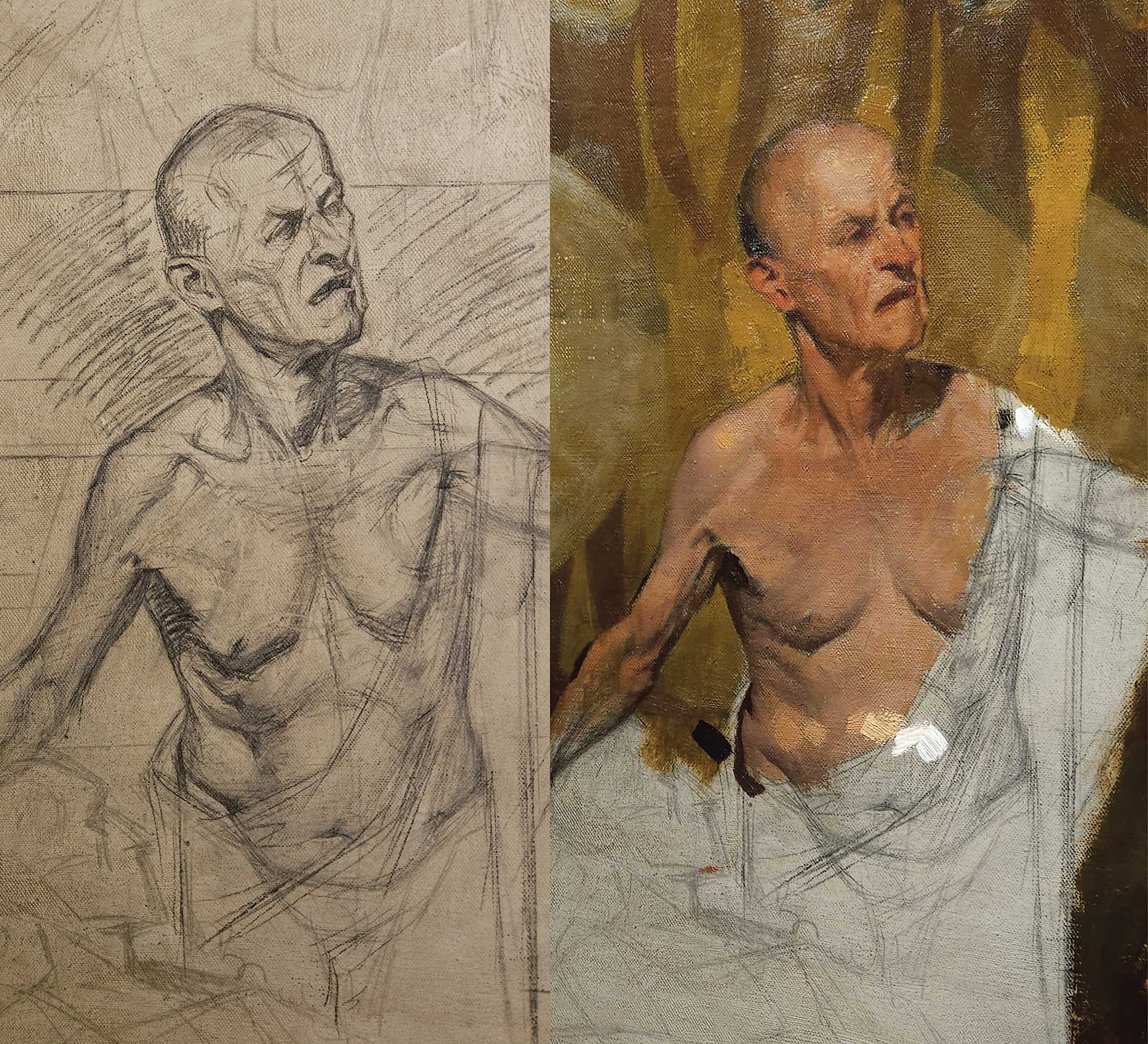
Stage 8 Starting to Paint
With the drawing fully laid in, the painting process is fairly straightforward. I primarily worked with flat bristle brushes, applying the paint opaquely, usually without medium. Although corrections are sometimes needed, I try to finish one section at a time, working directly, without any complex layering.
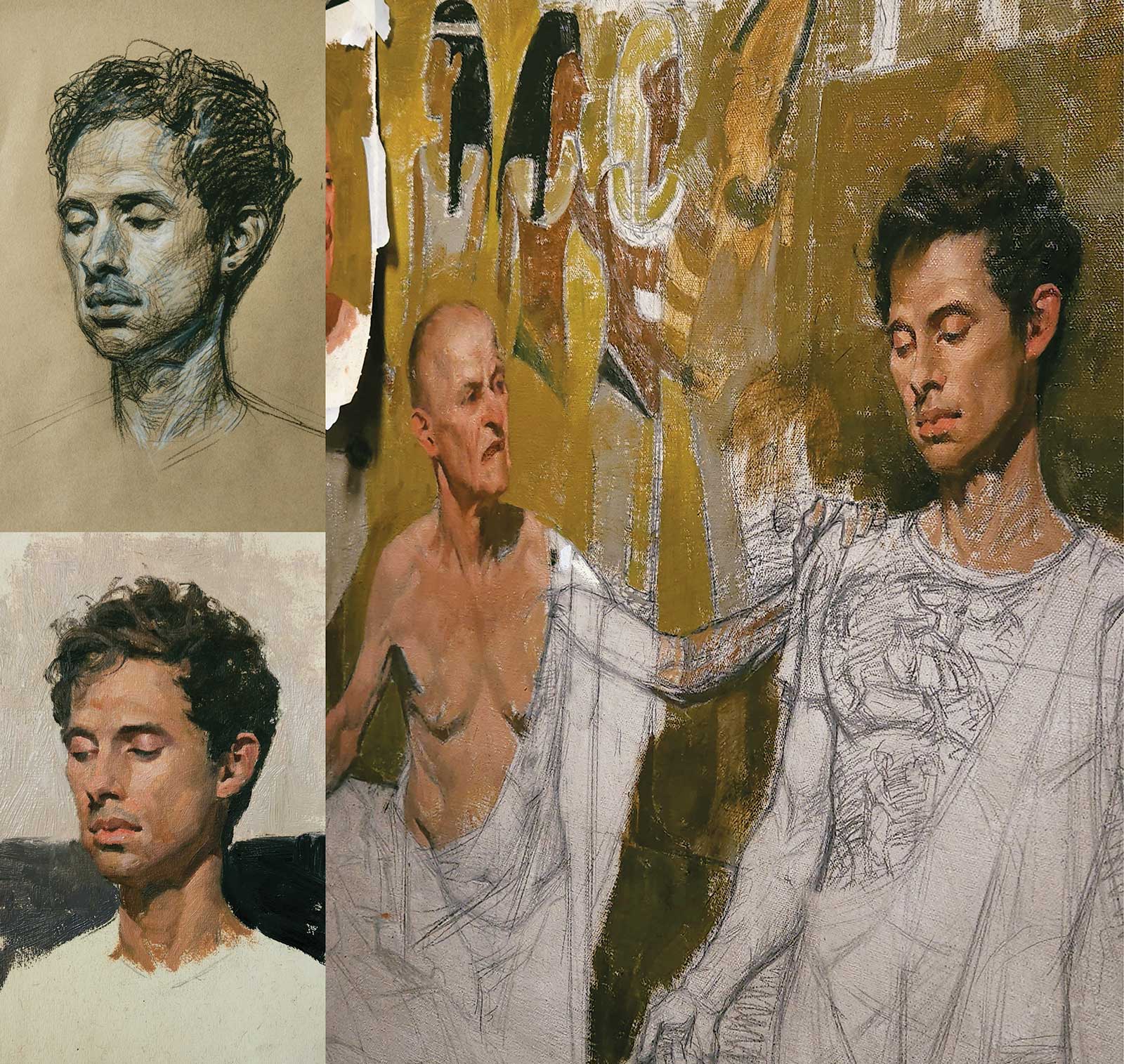
Stage 9 Working from Studies
Throughout the process, I had my studies from life handy, mixing the colors based on the painted study and sculpting the forms based on the drawn study. Working from studies allowed for greater confidence and flexibility. Instead of chasing changes on the model, I was free to focus on the final painting and omit any unnecessary details.
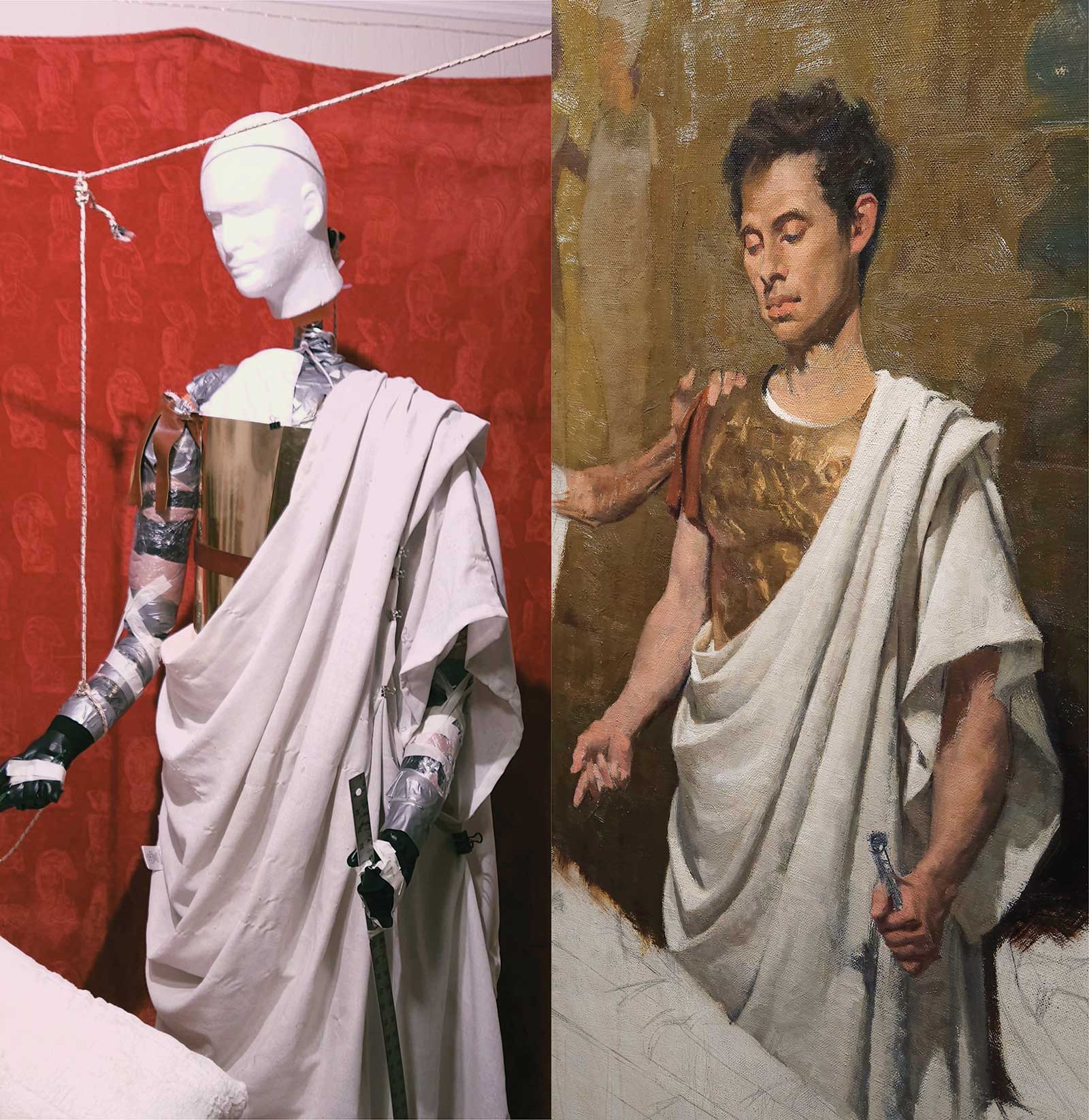
Stage 10 Drapery
Since the mannequin can pose indefinitely, the drapery was painted from direct observation, without prior studies. After spending some time arranging the folds, I added them to the figure of Augustus using the same steps as before, a charcoal drawing followed by direct painting.
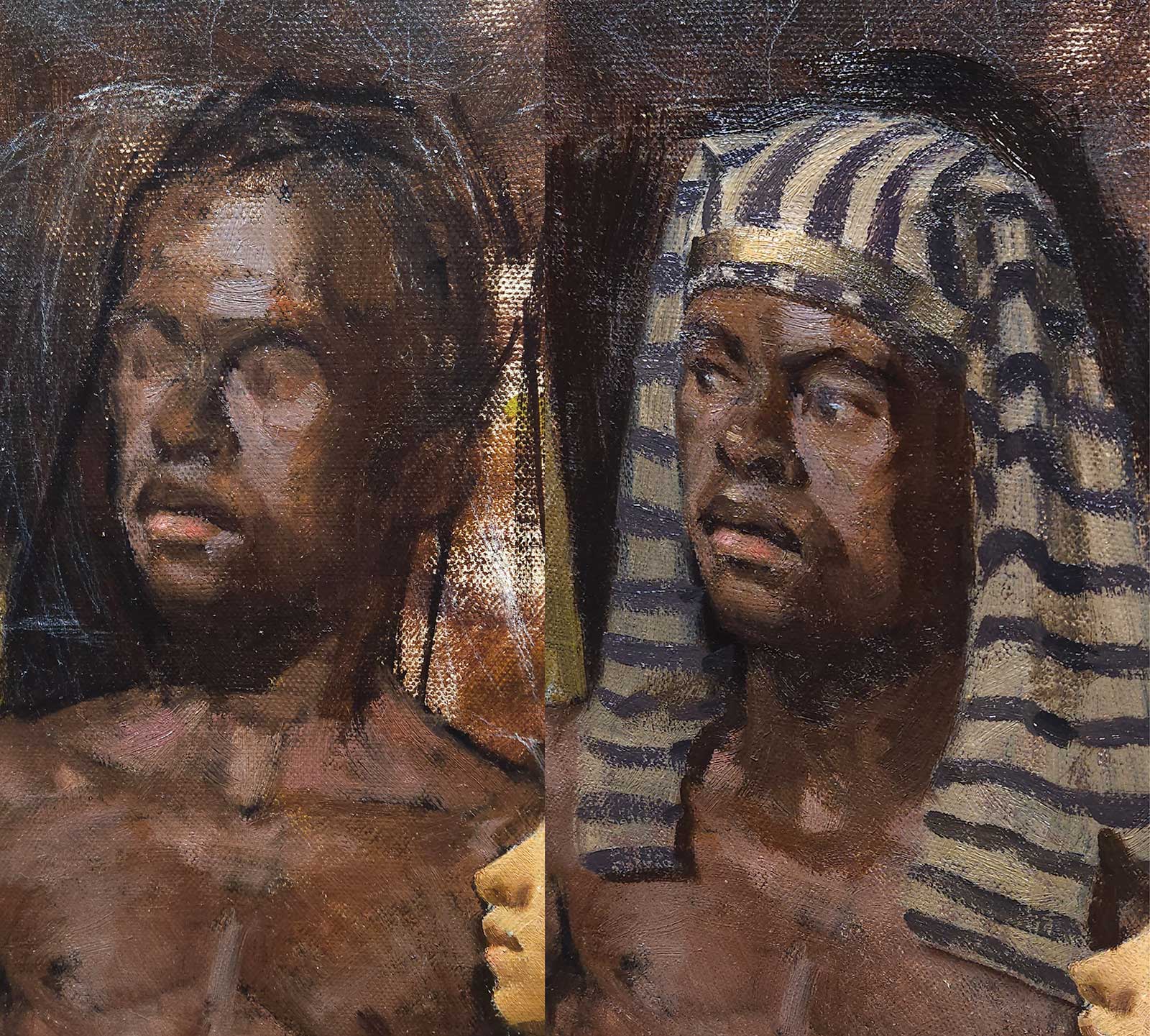
Stage 11 New Figure
This figure hadn’t been planned originally, so it wasn’t in the transfer. To add it, I sketched on the existing paint using white chalk, then painted the figure based on a study from life. This is a typical example of sculpting the largest planes and adding details like eyes afterwards. The headdress was posed on the mannequin and added afterwards.
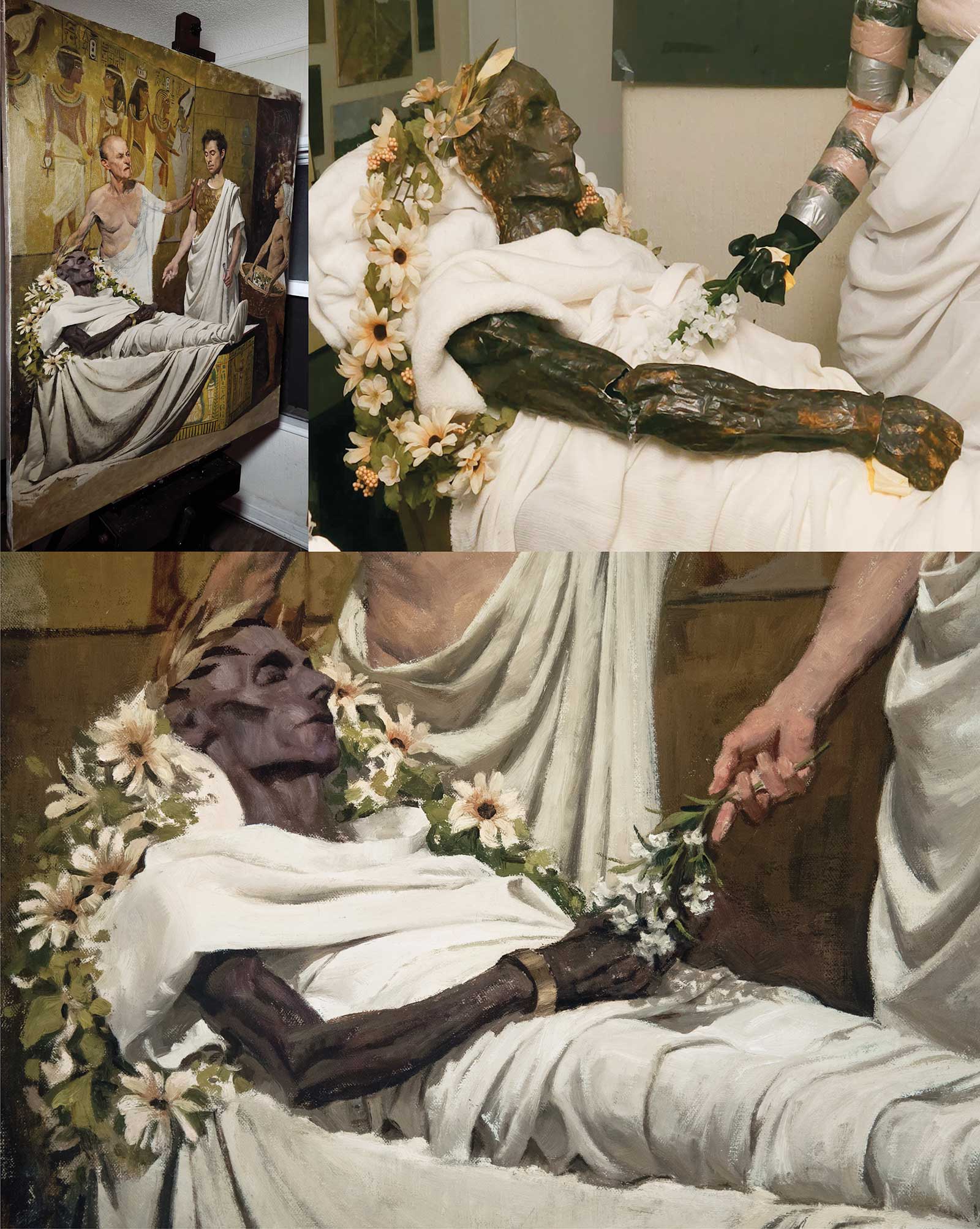
Stage 12 Finishing Up
The hardest part of making complex paintings is ensuring that all elements work together as a team, with nothing standing out more than it should. For this reason, I kept all props and models under the same light, stepped back and consulted the original color study often. The work is done when you’ve expressed the idea that initially inspired you to paint. Stick to one big idea and don’t try to do everything in one painting—that’s what the rest of your work is for!
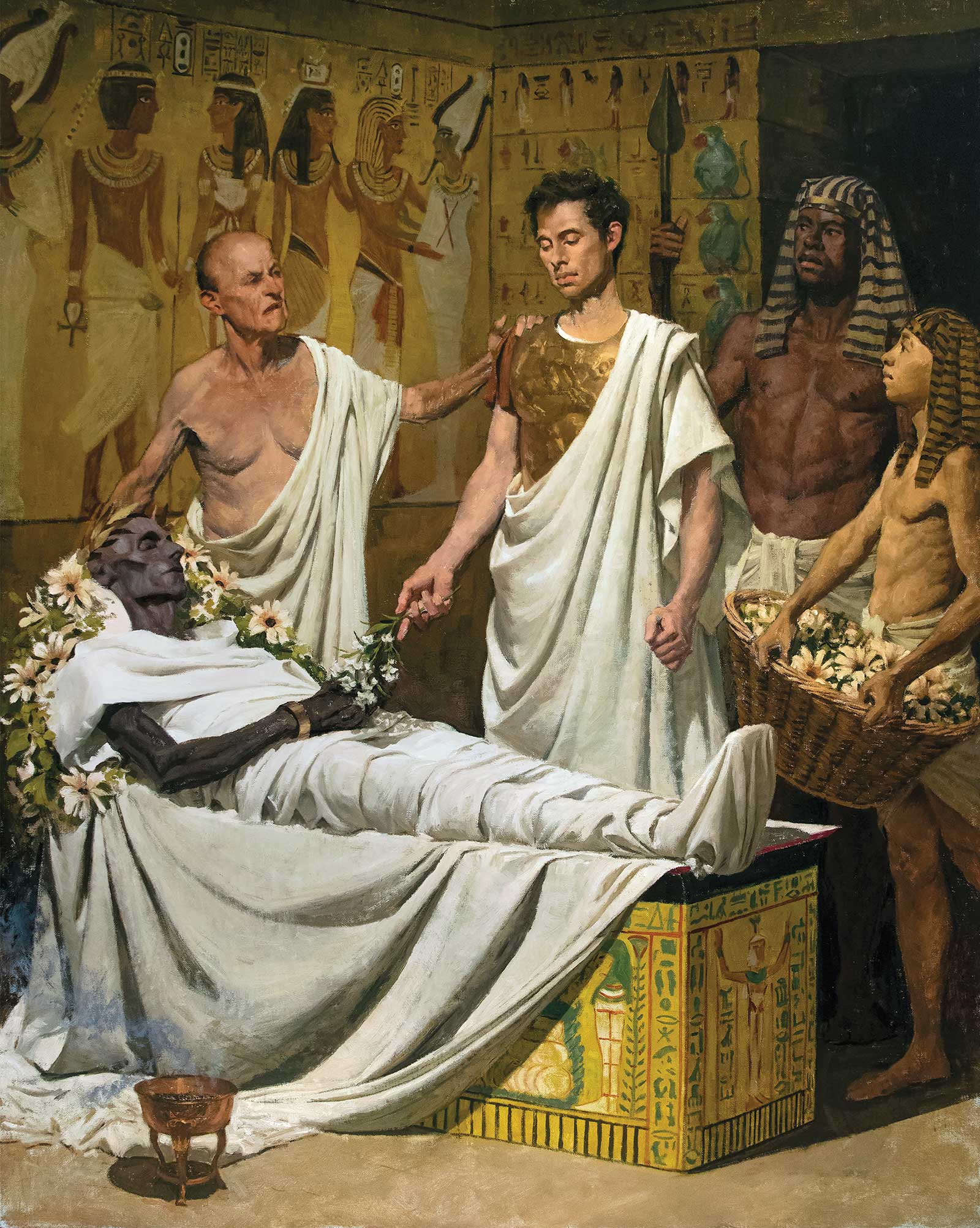
Stage 13 Finished Artwork
Augustus Visiting the Tomb of Alexander the Great, oil on linen, 60 x 48” (152 x 121 cm)
About the artist
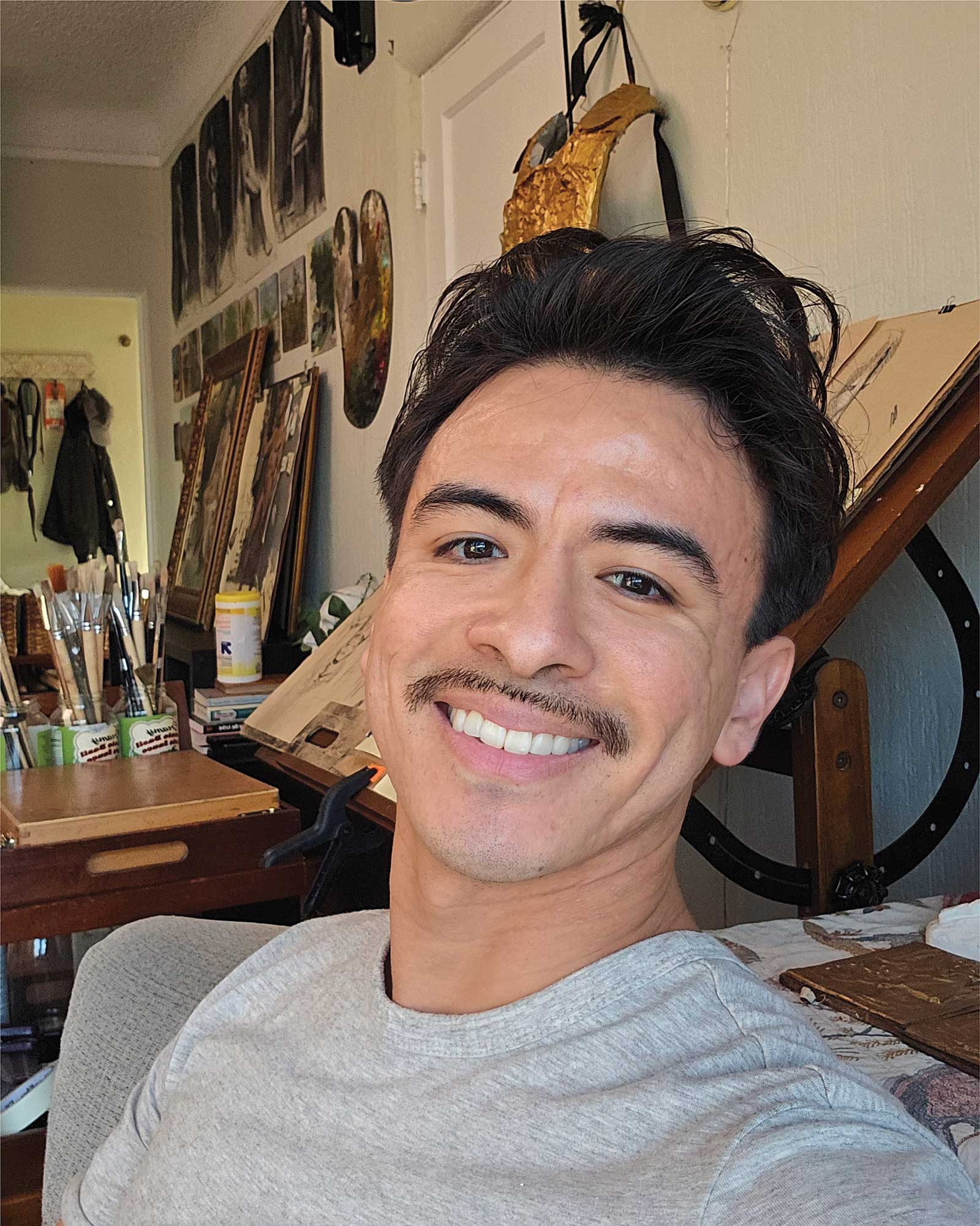 Ramón Hurtado
Ramón Hurtado is a painter and art instructor living in Los Angeles, California. His work revels in unraveling everyday mysteries, while his research and teaching focus on 19th-century French academic methodology. Hurtado’s research contributions have been published by the Getty Museum, and he’s taught and lectured at the Los Angeles Academy of Figurative Art, DreamWorks Animation, Riot Games, the Society of Illustrators, Emile Cohl Atelier, Beaux-Arts & Entertainment-Paris, the University of Lisbon- Faculty of Fine Arts, Art Center College of Design and Grand Central Atelier, among others. He currently teaches workshops in the United States, internationally and online.
Contact at
info@ramonhurtado.com
ramonhurtado.com