My painting Baroque Recycling stems from a deliberate collision between historical grandeur and contemporary urgency. Growing up in Rome, the cradle of the Baroque, the dramatic and eternal language of artists like Bernini and Caravaggio profoundly shaped my artistic vision, offering the perfect aesthetic counterpoint for creating the painting Baroque Recycling.
The core concept was simple: to take something utterly ephemeral, waste packaging papers designed for disposal, and compel it into an image of eternal beauty. I meticulously used these discarded materials to construct the elaborate, swirling, Baroque-style drapery worn by the model.
This process creates a potent visual short circuit. The ultimate “throwaway” material is thrust into the high aesthetics of the eternal. The portrait reflects our social identity in this climate-conscious era, proving that creative recycling is not just necessary, but also aesthetically potent.
The painting received the Third Place Award from the Portrait Society of America, the People’s Choice Award from the Art Renewal Center at the 17th ARC Salon, and an Honorable Mention at the most recent Modportrait.
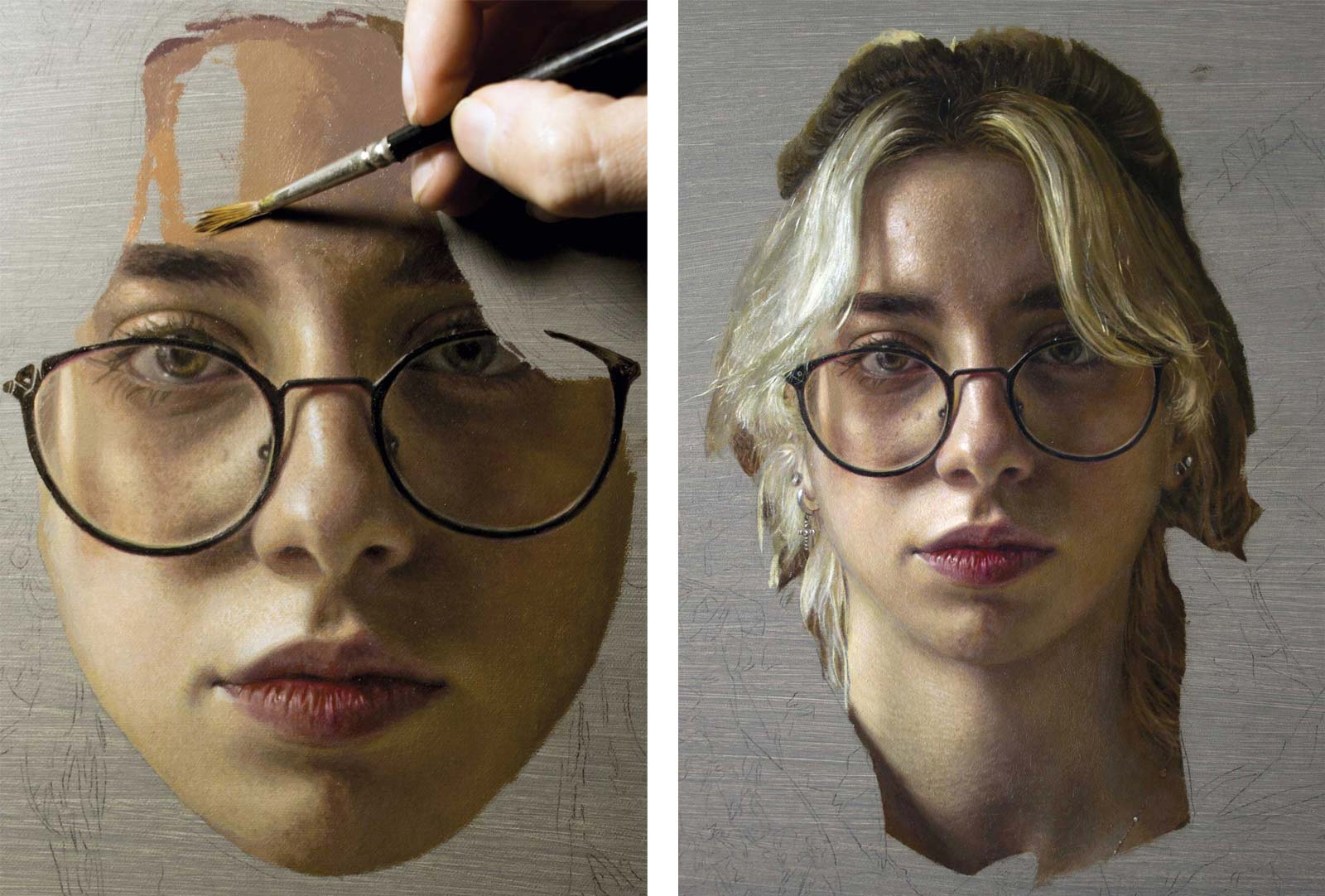
Stage 1 Preparation and Underpainting: I began by preparing the canvas with a neutral gray ground to ensure the lighter tones would stand out clearly. Given the complexity of the drapery, I meticulously drew the subject using a medium-hardness pencil. This allowed me to clearly map out the elaborate paper cloak, carefully defining all the various folds from the very beginning of the process.
Next, I immediately focused on the model’s face. I started by laying down an underpainting. This serves a dual purpose: ensuring superior color adhesion in subsequent layers and accurately establishing the fundamental colors and forms. During this crucial underpainting phase, I focused on translating the essential color masses onto the canvas, the tonal variations one perceives when viewing the subject with slightly narrowed eyes.
Stage 2 Palette and Color Technique: My palette for rendering the skin tones includes titanium white, cadmium orange, cadmium red, yellow ochre, alizarin crimson and raw umber. I typically substitute blue pigment for black to maintain color vibrancy. While the initial underpainting uses pure colors, for the second phase, I mix a small amount of linseed oil and pure amber varnish into the paint. This mixture increases the paint’s fluidity and enhances its luminosity.
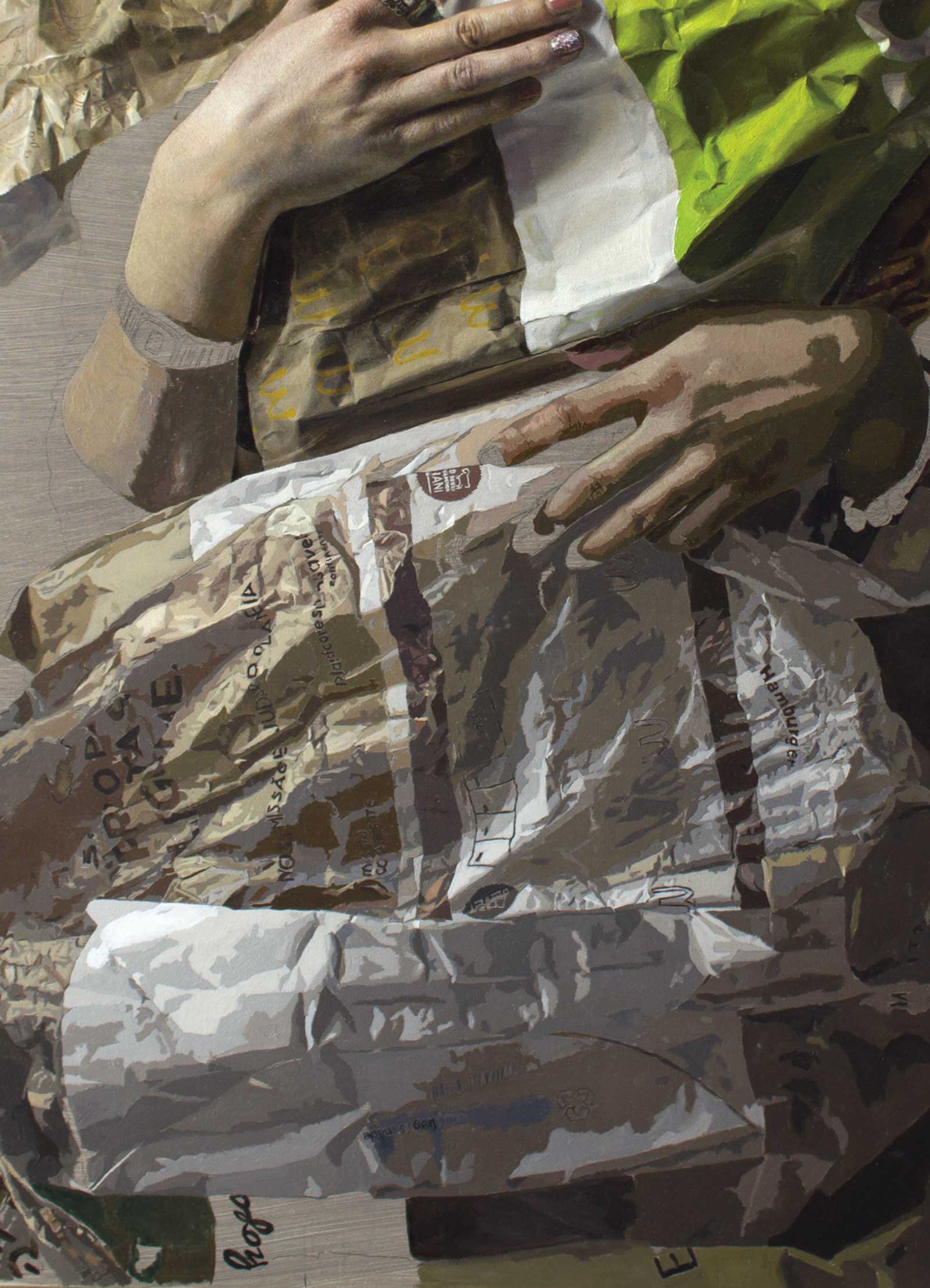
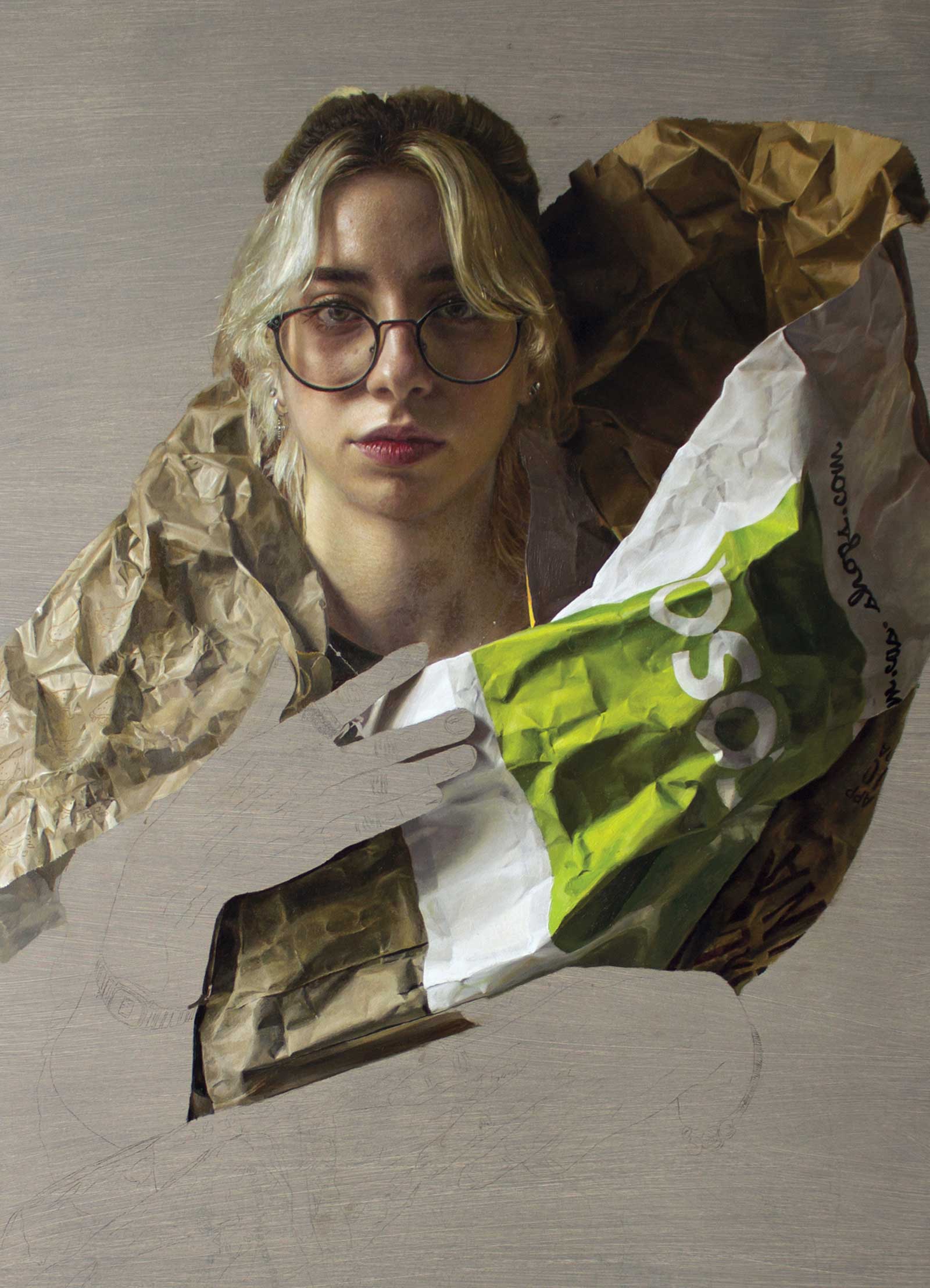
Stage 3 Depicting the Paper Drapery: Once satisfied with the face, I moved on to the most complex element: the cloak. To convey the delicate texture of crumpled paper as accurately as possible, it was critical to establish all the precise light planes during the underpainting. Crumpled paper struck by light reveals myriad subtle color gradations. I subtly indicated the lettering and graphics of the discarded packaging paper in this preparatory stage. I then executed the final layer of the cloak, applying paint that was more diluted in the background areas and utilizing a thicker impasto for the foreground planes. This contrast in paint consistency significantly enhances the illusion of three-dimensionality.
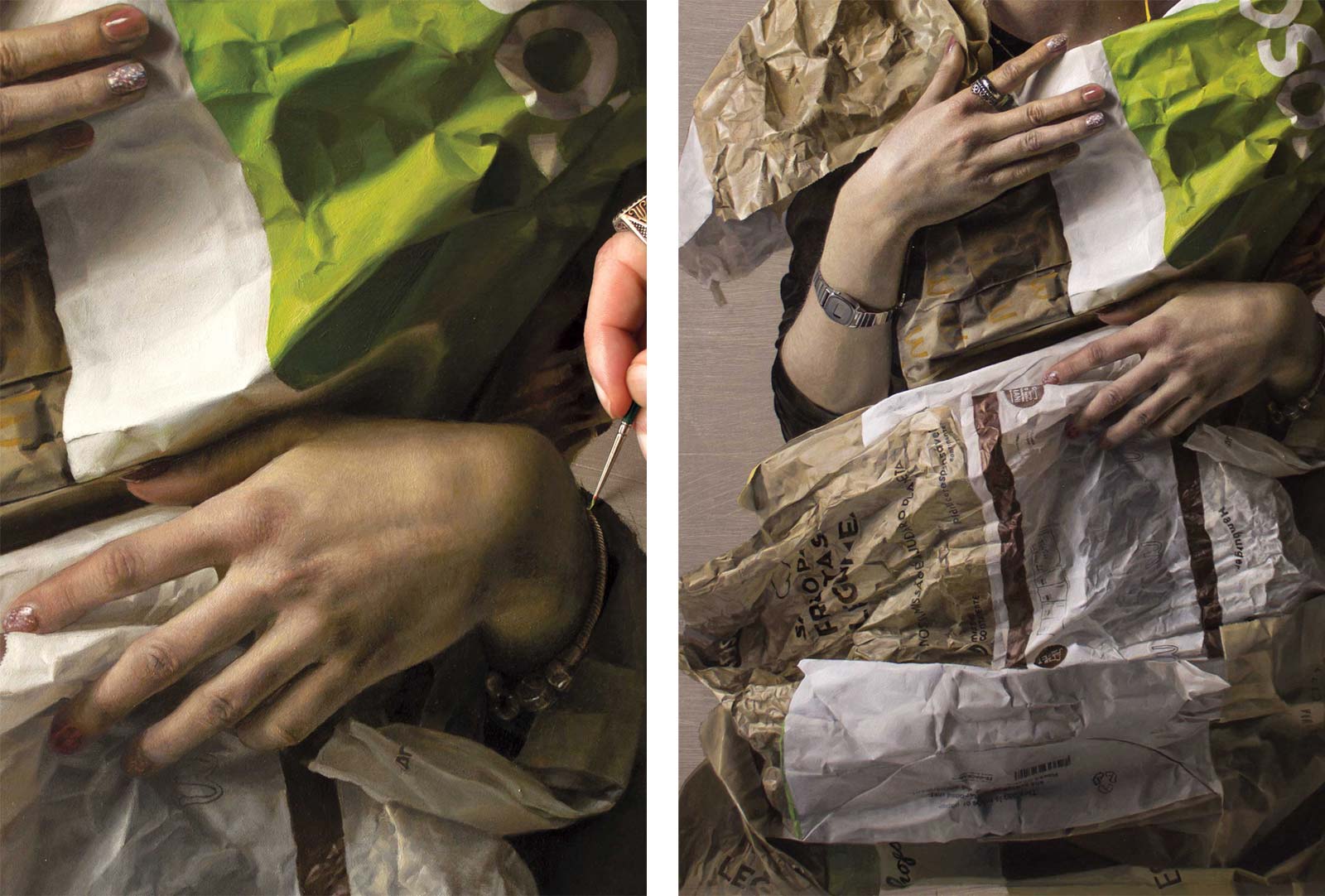
Stage 4 Zonal Approach and Background: I tackled the execution of the painting using a strictly zonal method. Instead of working on the entire canvas simultaneously, I brought each individual area (from the hands to the main figure) to near completion, sequentially applying the underpainting and the final color layer before moving to the next section. Once the figure was complete, I focused on the background, applying the paint with a heavy impasto to instill a sense of strength and dynamism into the composition.
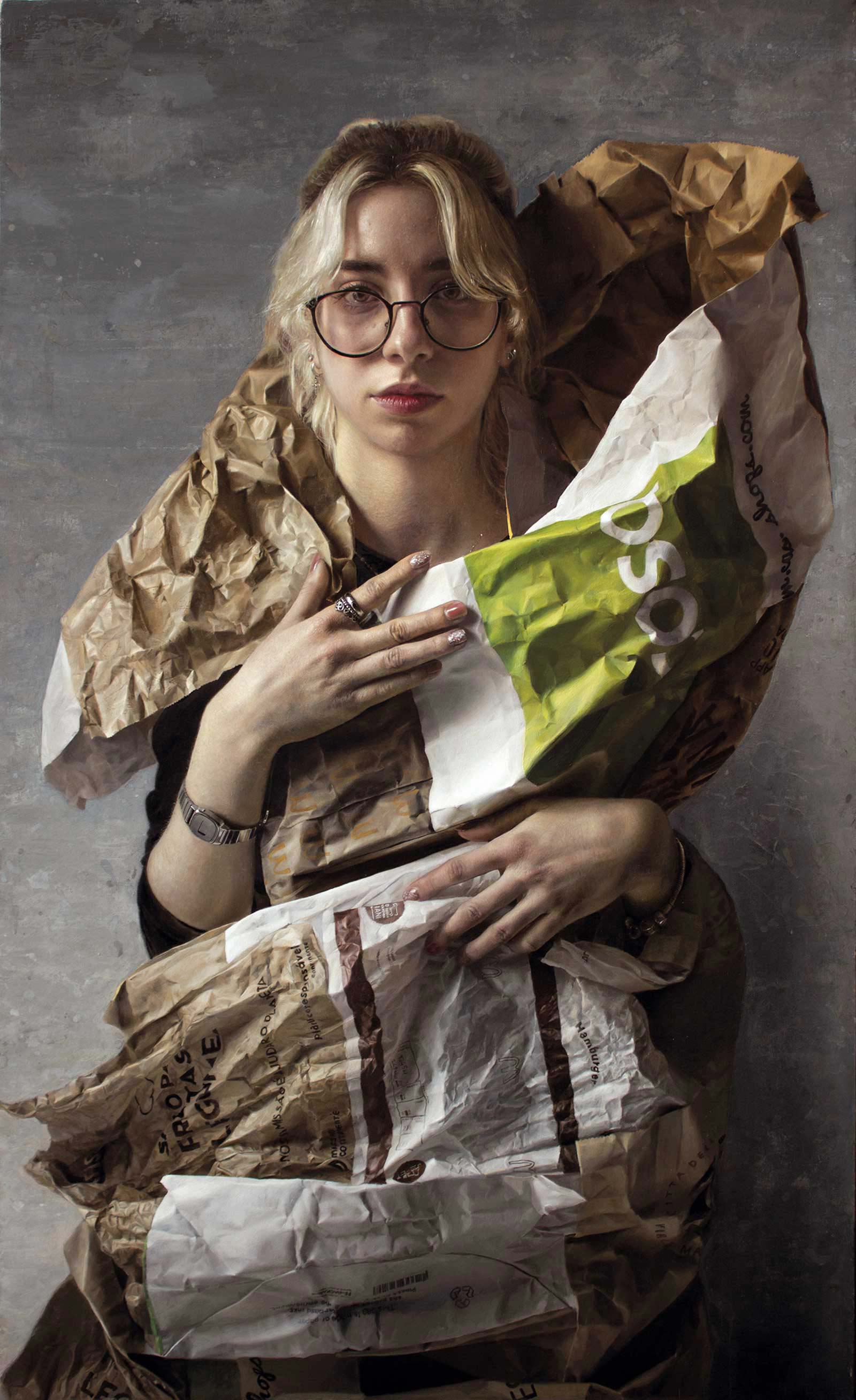
Stage 5 The Final Glaze: Finally, after the background was finished, I applied a final glaze exclusively to the figure, highly diluted with linseed oil and amber varnish. This ultimate layer was crucial for blending and softening the contours, as well as for harmonizing and deepening the shadowed areas of the figure. —
Roberto Gammone is an Italian painter whose portraits are featured in prestigious collections worldwide. An award-winning artist, Gammone has secured honors from the Portrait Society of America and Art Renewal Center (ARC). His work has been exhibited internationally at venues including the ARC Salon at Sotheby’s New York, the MEAM in Barcelona and the Rijksmuseum in Amsterdam.