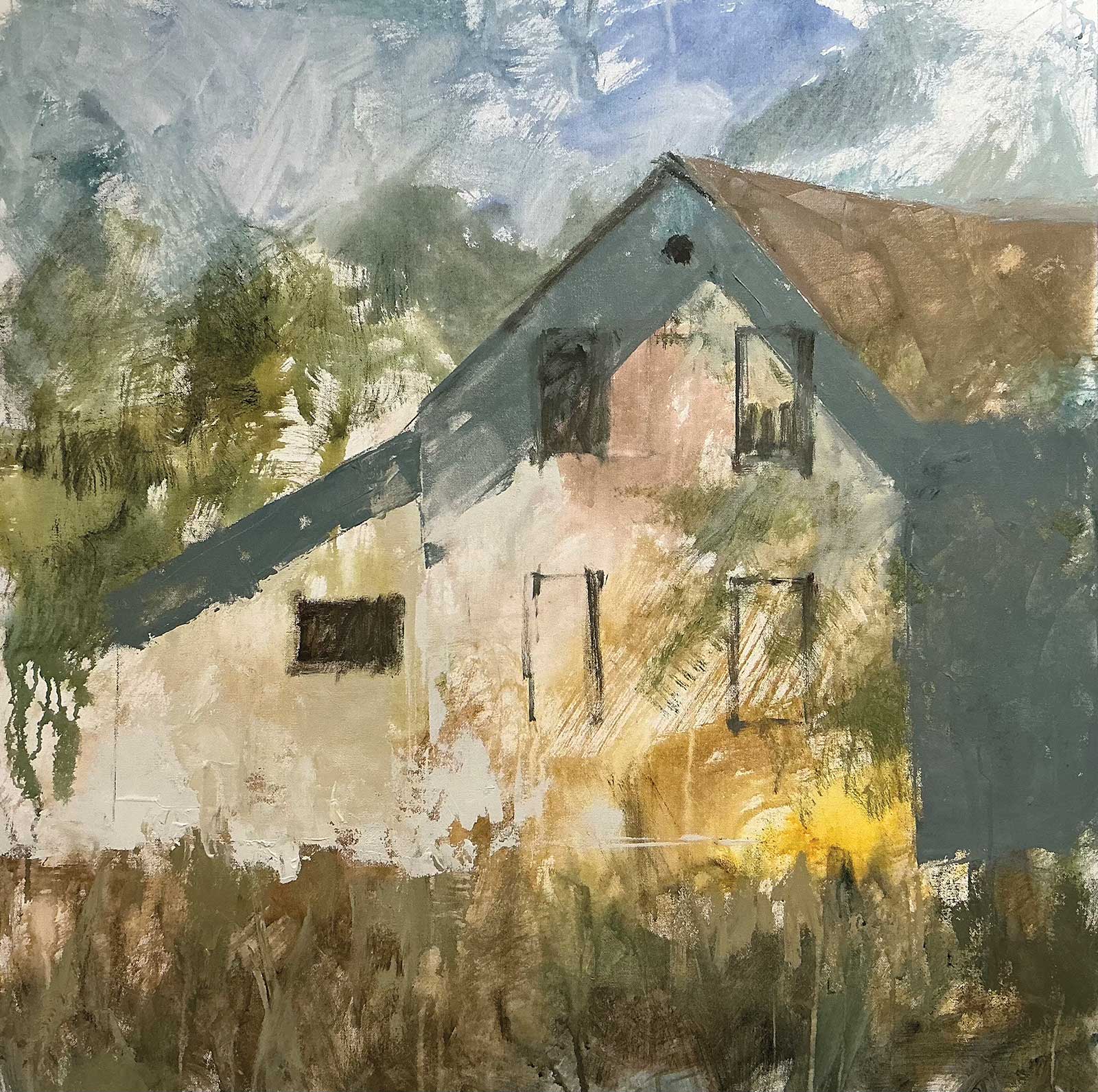
The Stories You Could Tell, the painting in this demonstration, is a prime example of my long-held fascination with timeless structures. Humble, weathered homes and barns not only appeal to my visual senses, but also pique my interest regarding the lives (past and present) that are intertwined with their existence. The wonderful old farmhouse I chose for this painting is located in one of our favorite places to visit: Port Oneida Historic Farms near the Sleeping Bear Dunes National Park in Glen Arbor, Michigan. As always, the privilege of interpreting it with paint on canvas brings a deep and meaningful connection to its history.
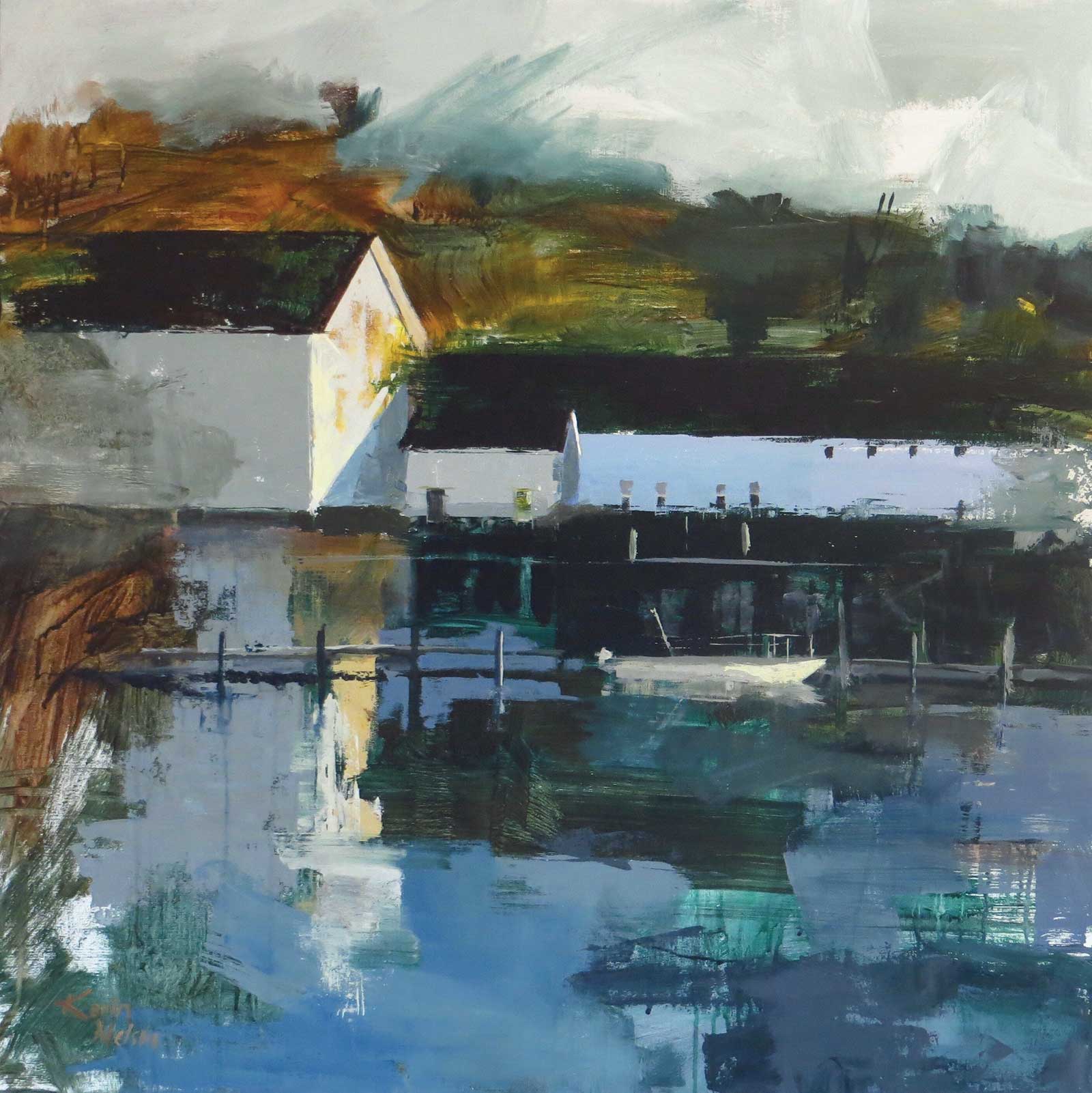
One Last Goodbye, acrylic, 36 x 36" (91 x 91 cm)
Considering my love for “old and crusty,” it’s not surprising that I prefer to paint my version of beauty and light, no matter the subject, in a rather rugged and abstract way, which leads to my choice of tools. Rarely one to pick up a synthetic brush with well-behaved bristles, I prefer instead the marks and brushstrokes attainable from (sometimes scraggly) bristle brushes, assorted palette knives and a variety of unusual tools.
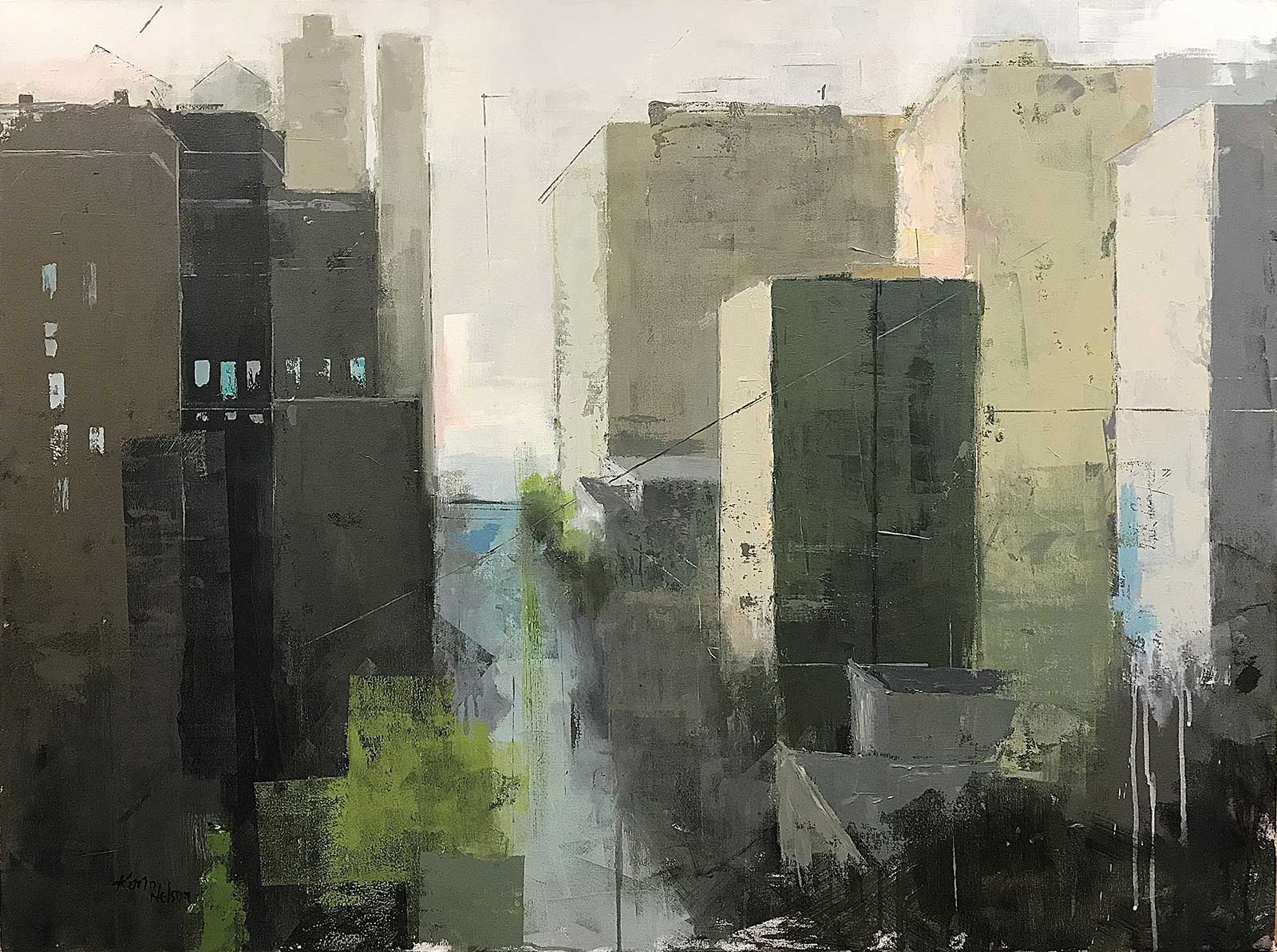
Big Chicago, acrylic, 36 x 48" (91 x 121 cm)
I’m able to skip preliminary sketches on the canvas by cropping my reference photo again and again until the basic composition is right. Then I trust my eyes and begin applying paint. If my painted angles or proportions of a structure are off, that’s when the beauty of fast-drying acrylics becomes an asset: adjustments can be quickly and easily made by painting over necessary sections, keeping some of the first layer visible whenever possible.
Walk with me now as I begin the painting process—a very high-alert, tightrope walk—balancing abandonment with restraint and squinting my eyes to stay in the zone.
My Art in the Making: The Stories You Could Tell
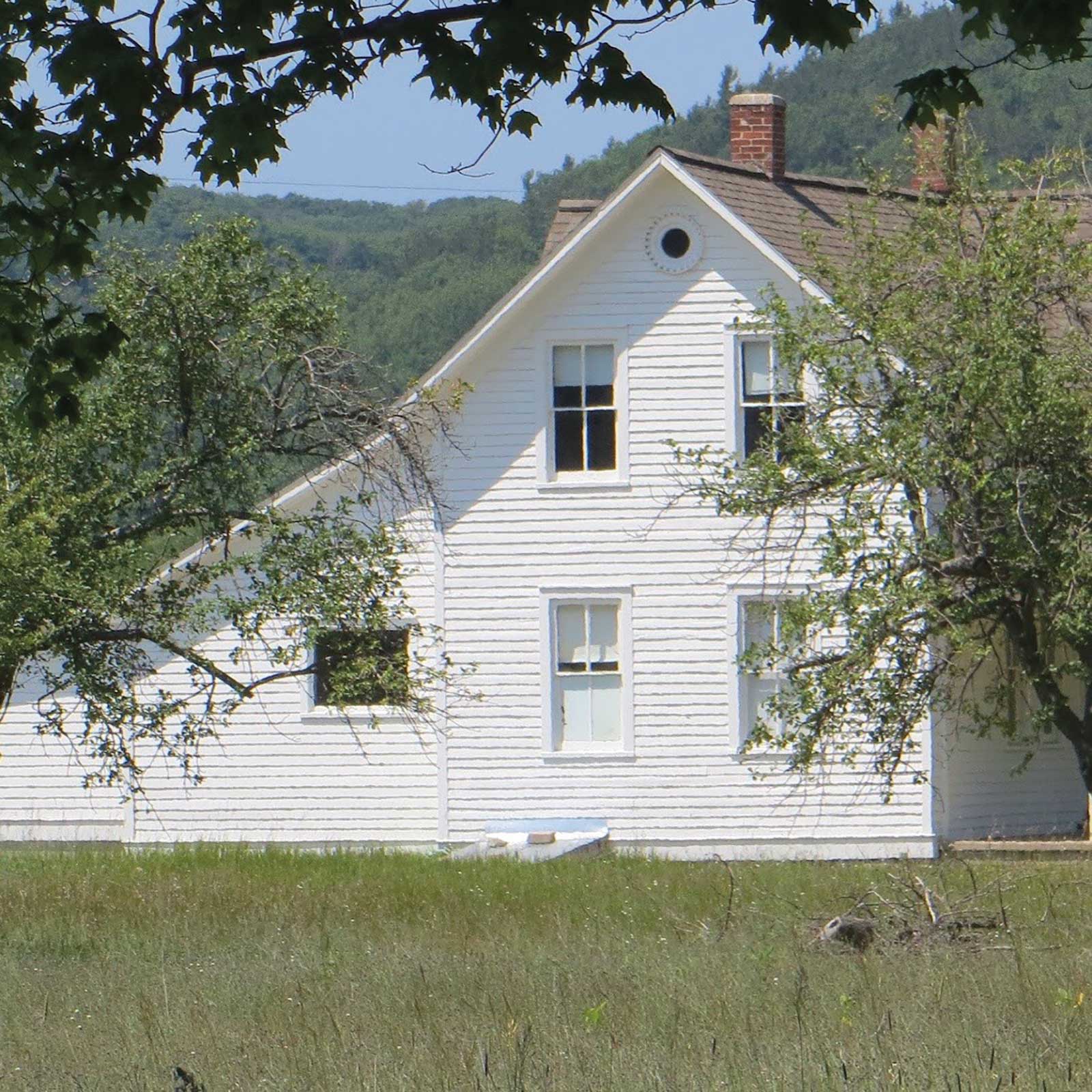
Reference Photo
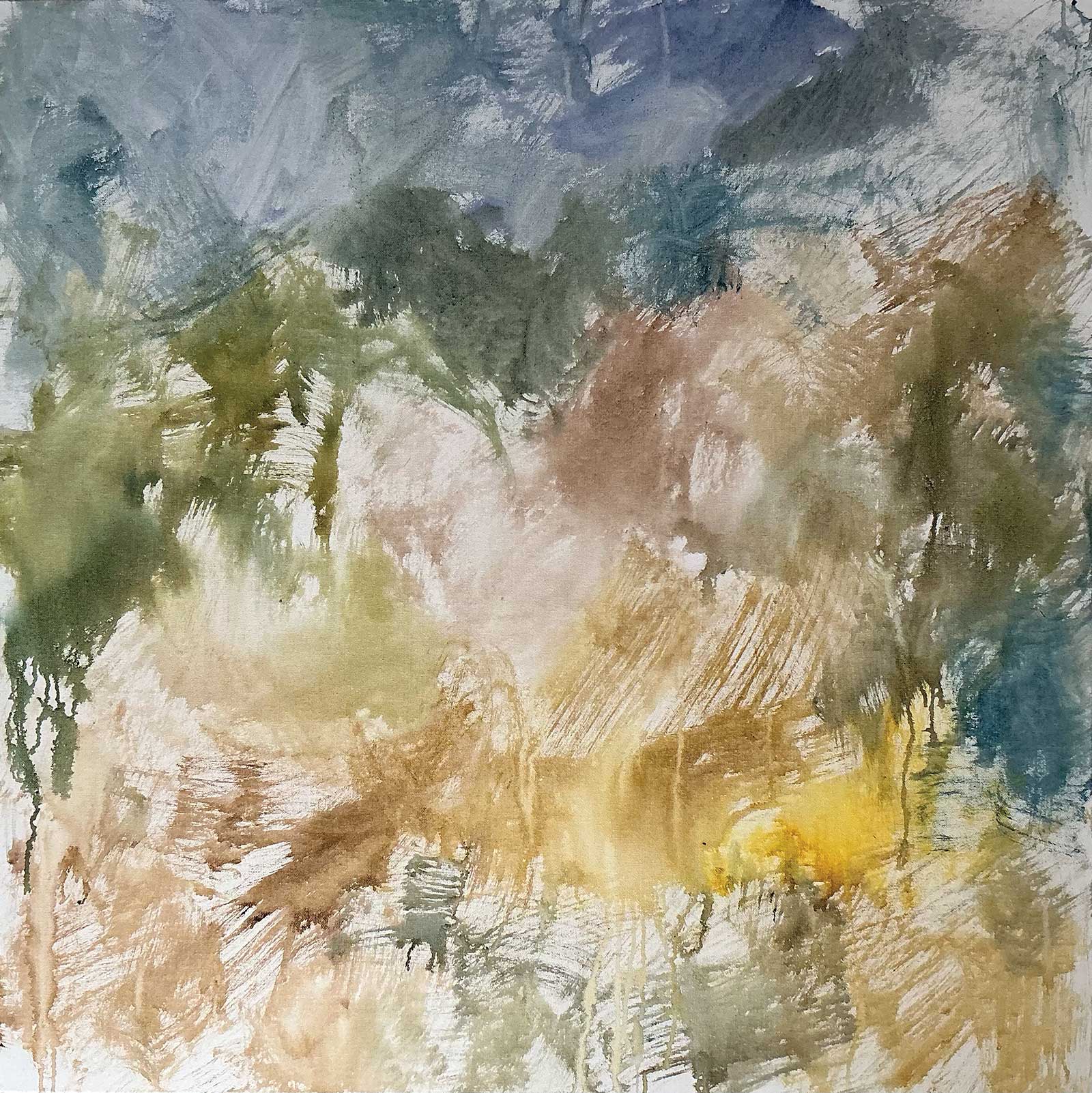
Stage 1 Foundational Layer
All the paints in my foundational layer are heavy body transparent acrylics, watered down to a very thin consistency. I use wide, scraggly bristle brushes to strategically apply foundational colors which coincide with the composition. There is always the hope that they could end up accidentally representing abstract components such as trees, grasses, clouds, etc.
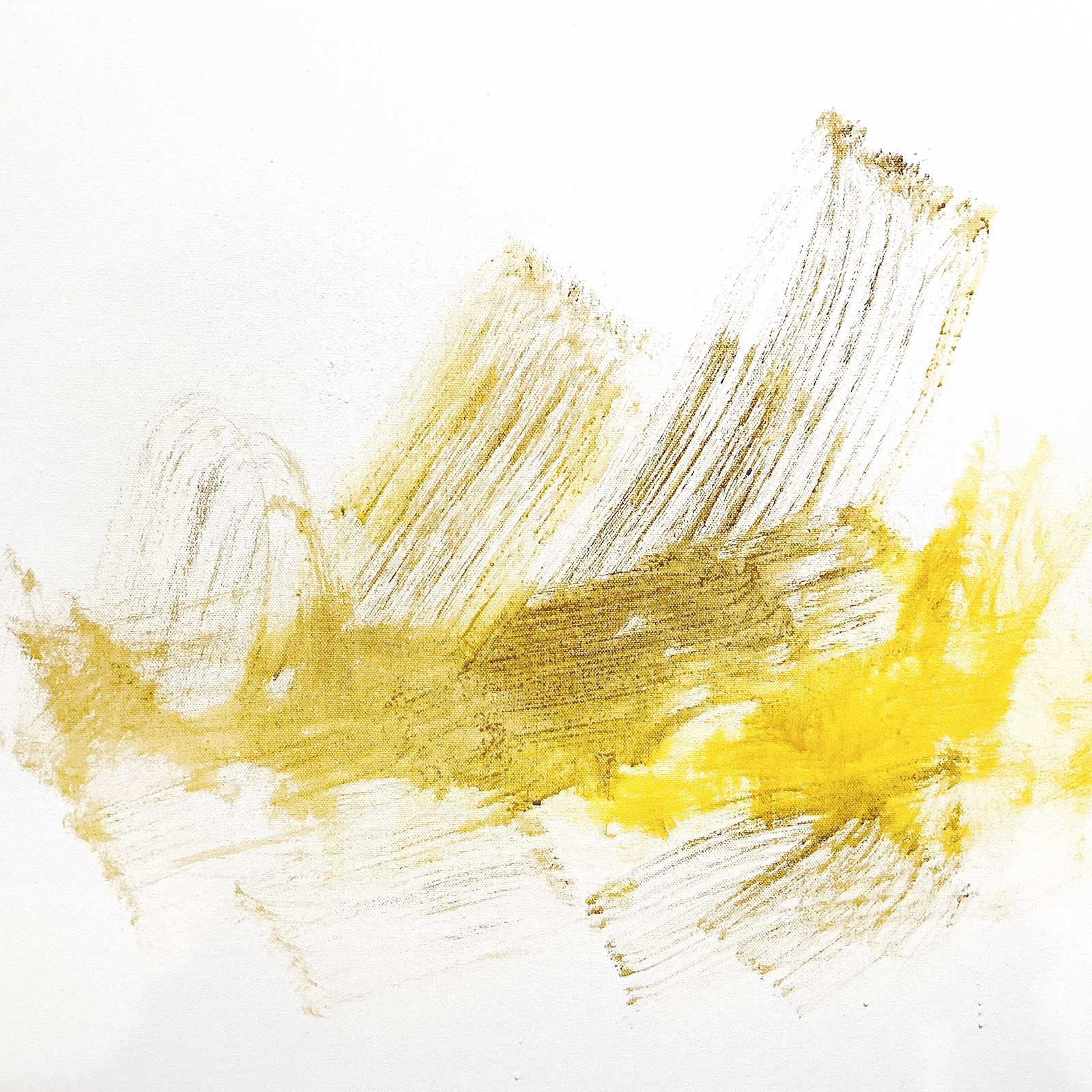
A 4" bristle brush from the hardware store was used for the entire foundational layer. Just a corner of the canvas is shown here. With scissors, I cut off 2⁄3 of the bristles so the sparsity of paint would give a wiry movement to the energetic strokes.
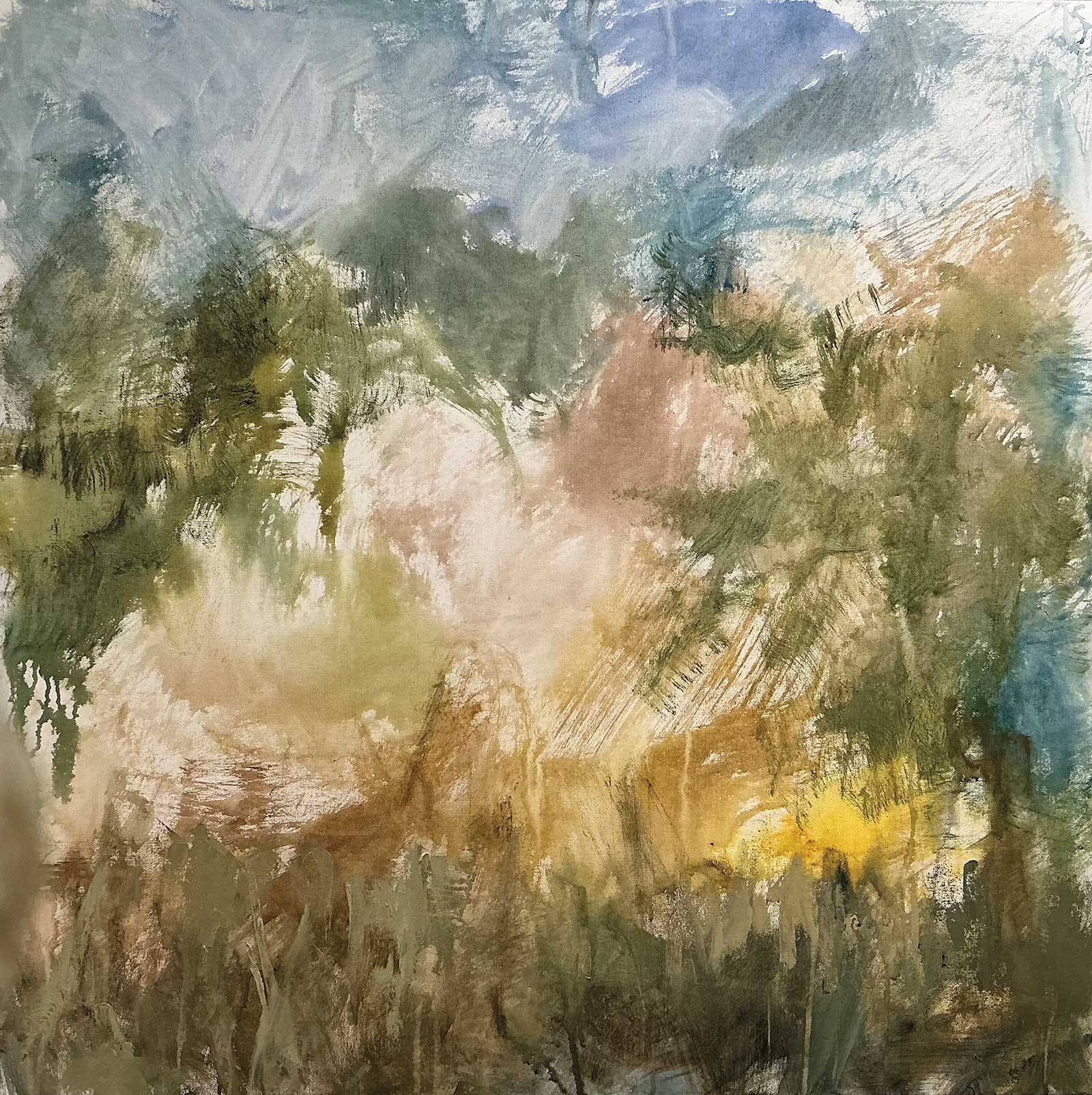
Stage 2 First Pass with Opaque Paint
The first use of opaque paint is the dark, grounding colors of the foreground, applied with a palette knife. I don’t premix paints, so I’m spontaneously mixing various colors of dried summer grasses. The canvas is already getting a voice in the conversation, and the color palette begins to reveal itself.
WHAT THE ARTIST USED
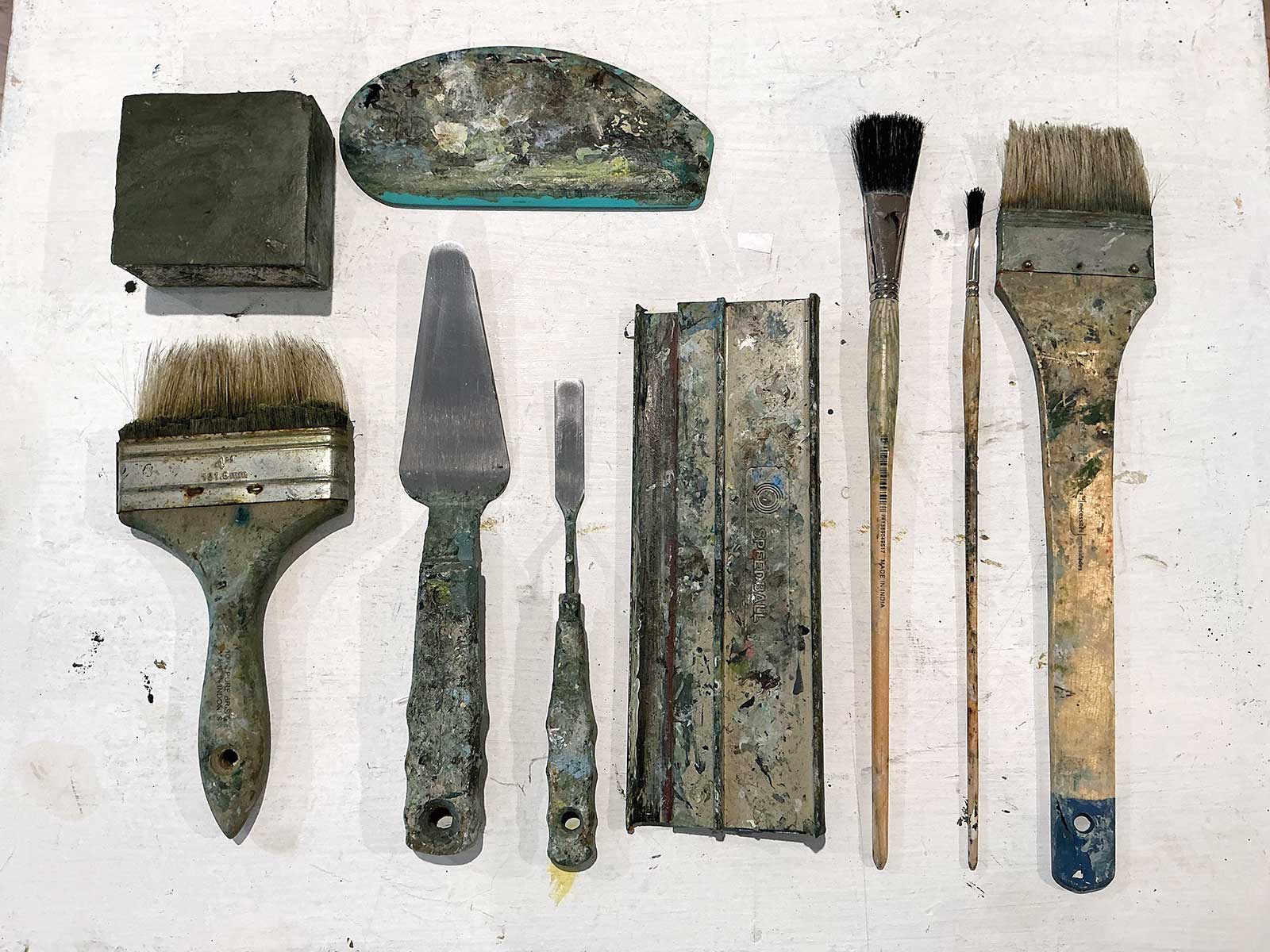
Heavy Body Acrylics
Prussian blue, Ultramarine blue, Burnt umber, Hansa yellow medium, Bronze yellow, Burnt sienna, Titanium white, Ivory black
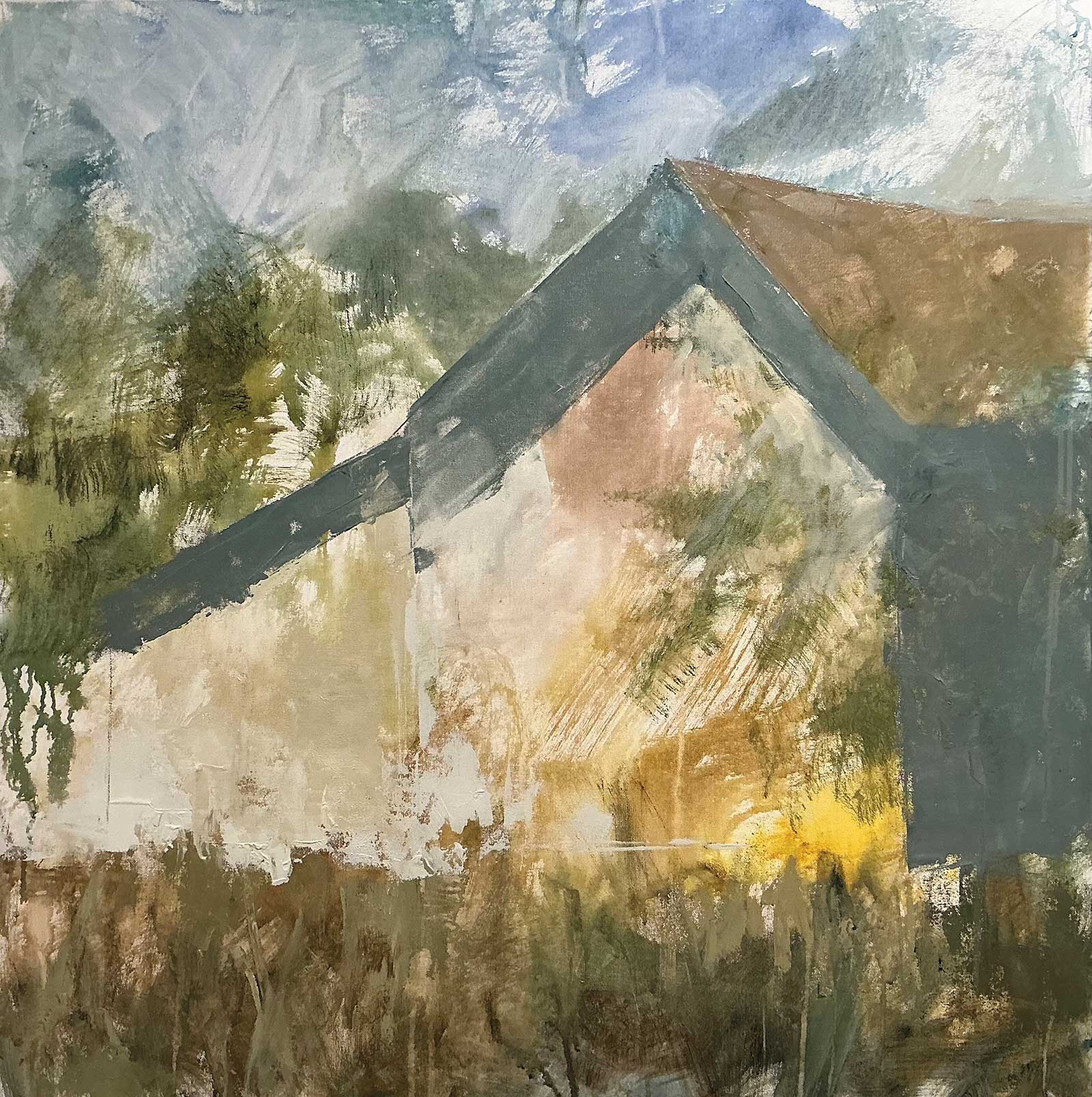
Stage 3 Texture & Character
I use a combination of knives, squeegee and brush to paint the lines and shaded areas of the house. There are lots of things to think about at one time, which include aiming for correct angles and proportion, while reminding myself to leave some of the canvas bare, all while making interesting marks. I want texture, character and a little bit of controlled mess.
Stage 4 Starting the Windows
Windows are loosely designated with the idea that they could be adjusted later. I’m definitely in the ugliest of the “ugly stage” right here, but it motivates me to press on and bring some beauty (albeit abstracted beauty) to the chaos.
Stage 5 Making Decisions
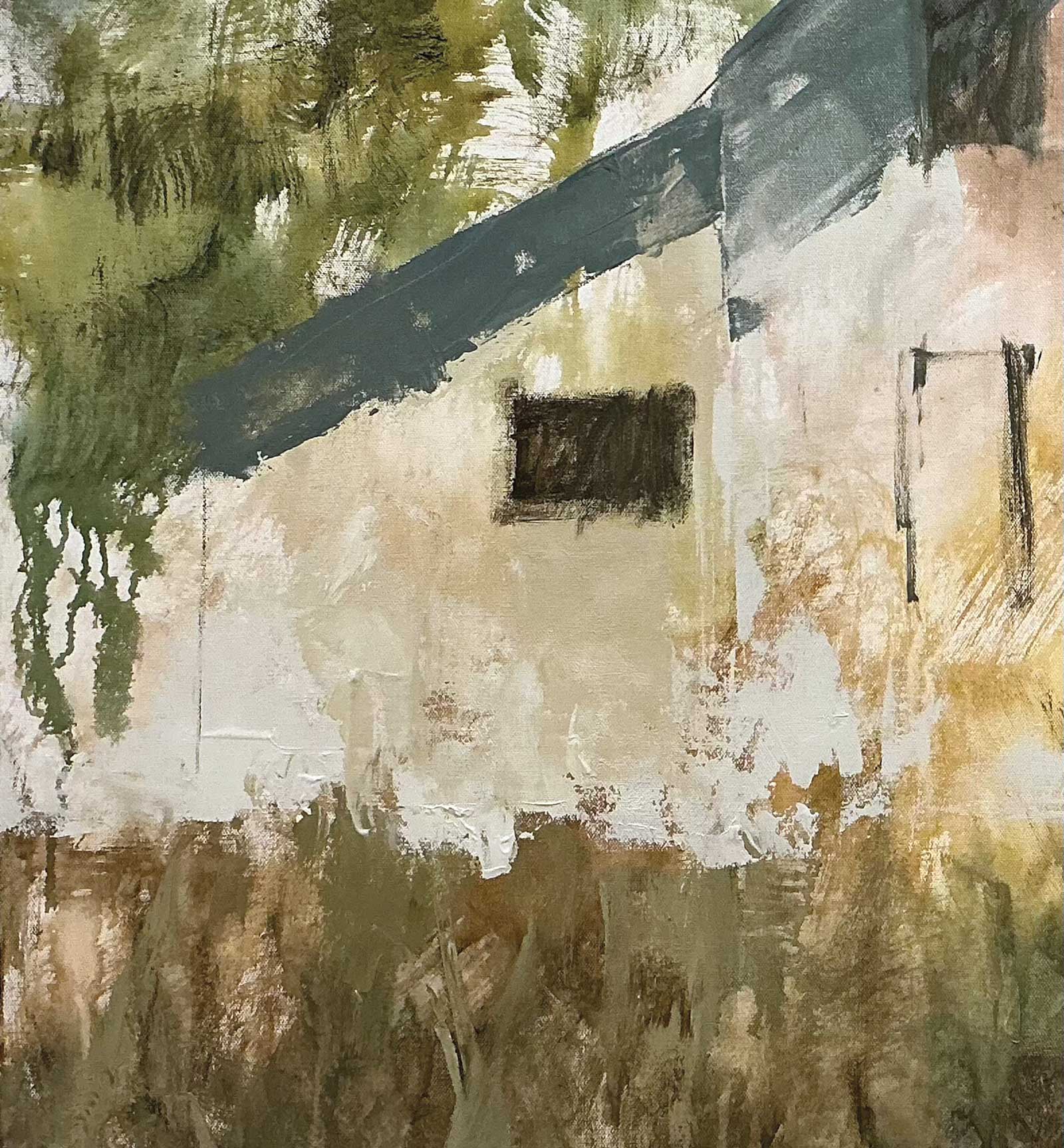
I’m torn. I want to carry the white building off the left side of the canvas, but I don’t have the guts yet to paint over those bold and sassy drips on the left. The next photo shows the compromise I find.
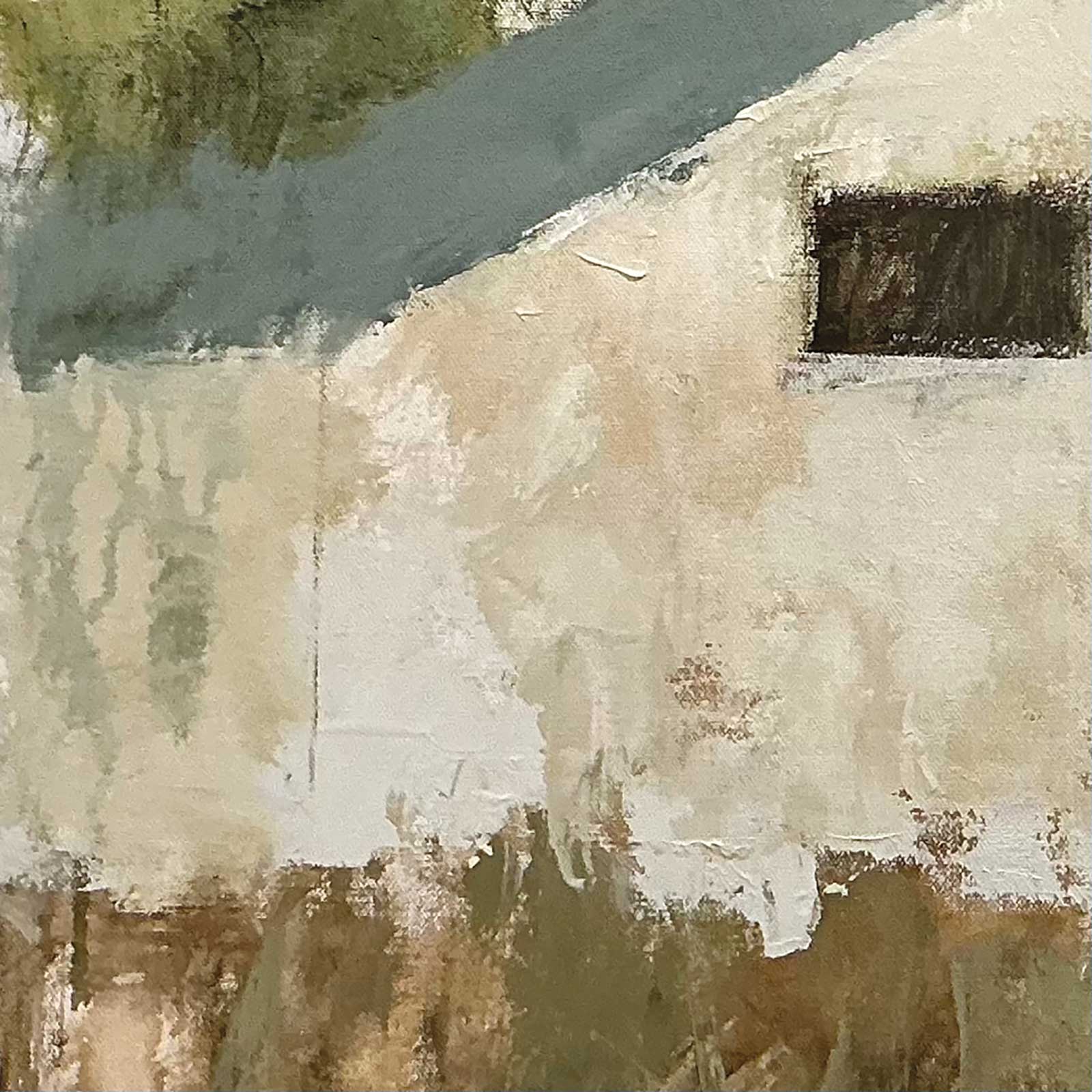
Stage 6 Solutions
Watered down opaques have been brushed over the drips. It turns out to be a win. The building vaguely appears to extend all the way to the left of the canvas, but the drips are still subtly visible.
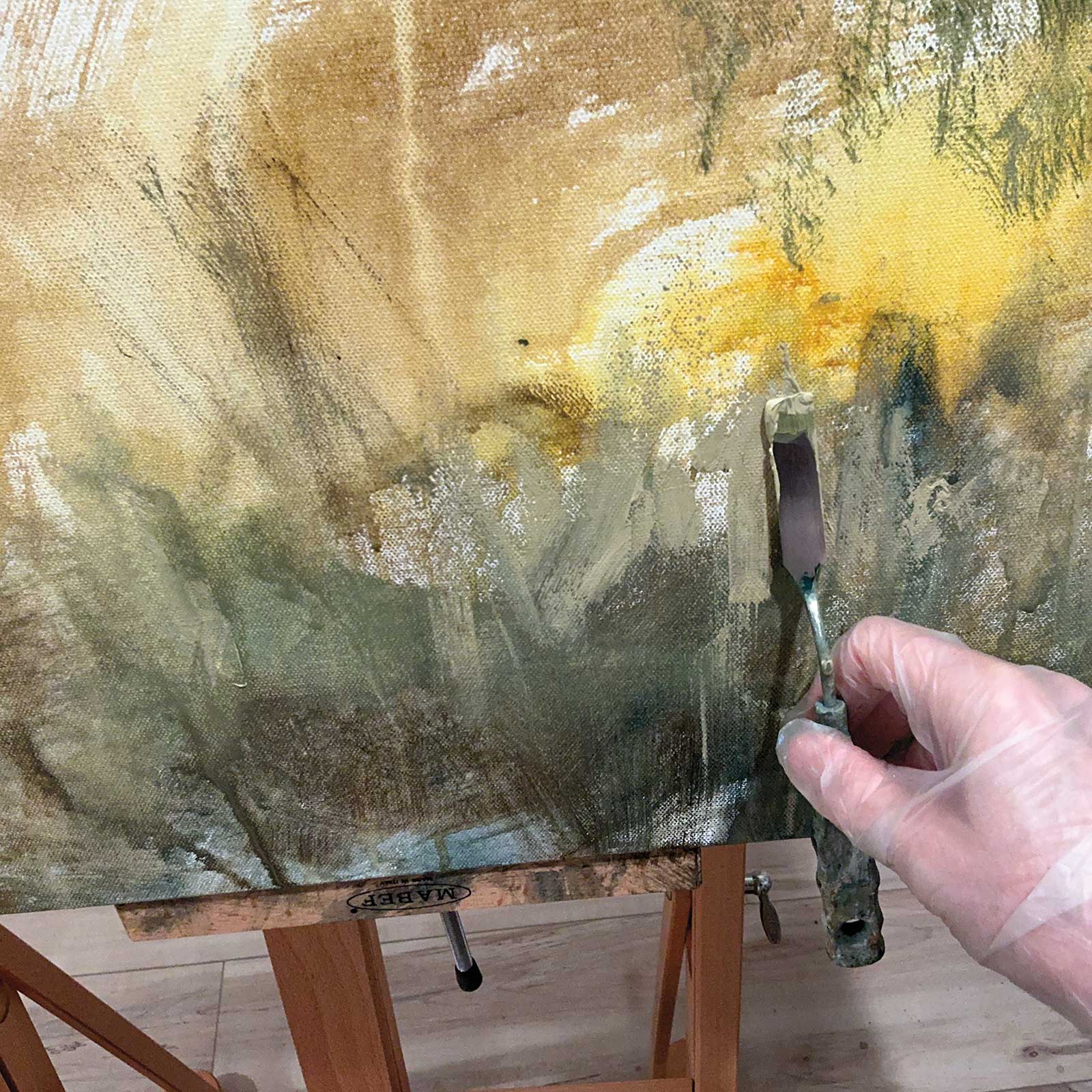
My favorite palette knife has a rectangular tip. The square edges are convenient for suggesting architectural details, like windows. Ironically, however, I favor it just as much when abstracting the fluidity of organic elements of nature like trees and grasses, such as the beginning hints here in the foreground.
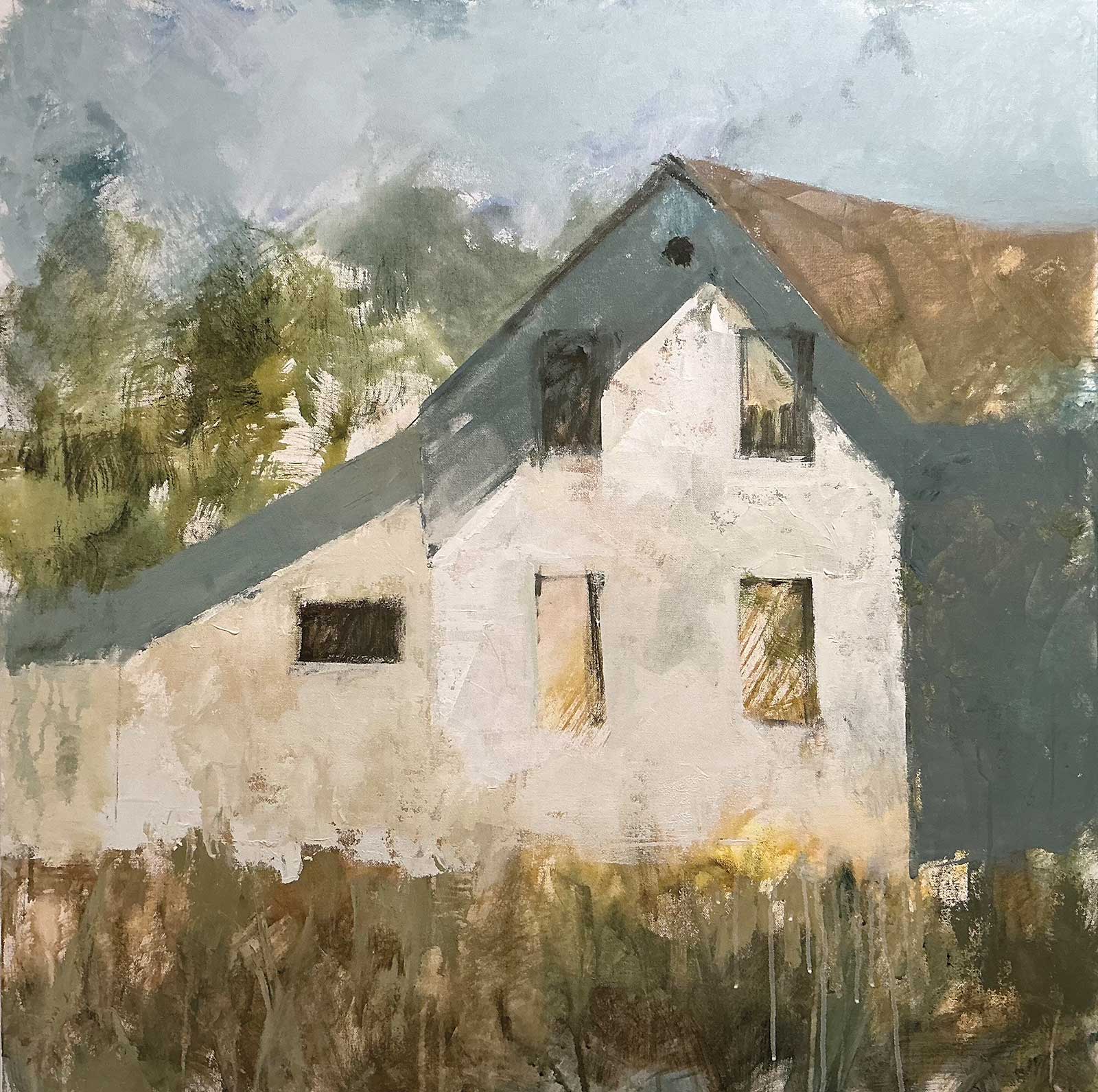
Stage 7 White Surfaces of House
Next come the white surfaces of the house. To represent the aged feeling of this historic home, various tints of whites are applied, hit and miss, with a square-tipped palette knife. The sky is undergoing some changes from its first version.
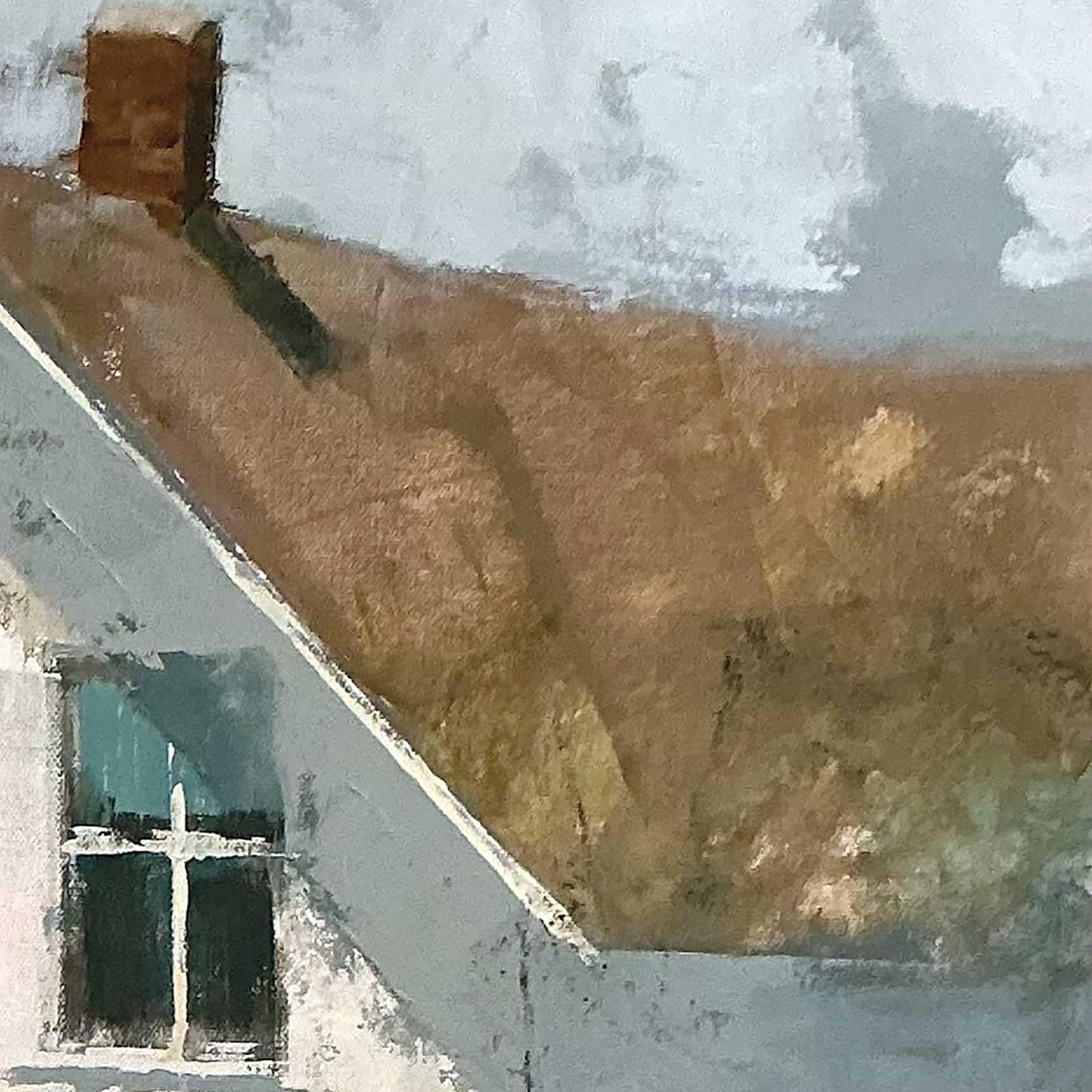
As you can hopefully discern on the roof, I used the straight edge of a large bowl scraper to randomly scrape paint around, making it thinner in some areas. This not only produces a lighter value where I scrape firmly, but also leaves edges where the scraper stops, which adds more visual texture. I often utilize this method on skies or other large areas in need of interesting marks.
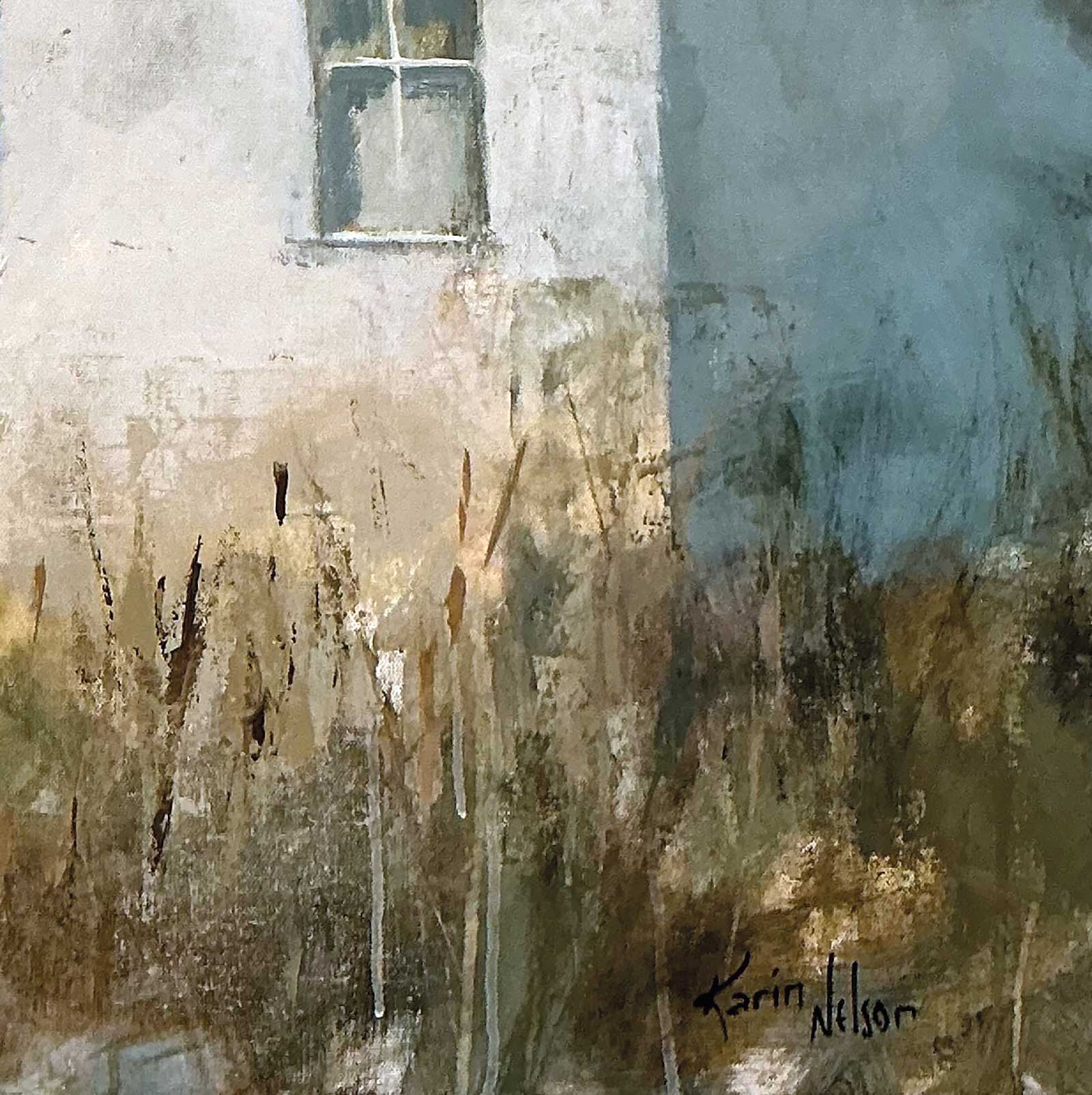
I decided that the edge between the lit and shaded sides of the house needed to be softened, so I brushed some runny paint onto my block of wood and “stamped” it on.
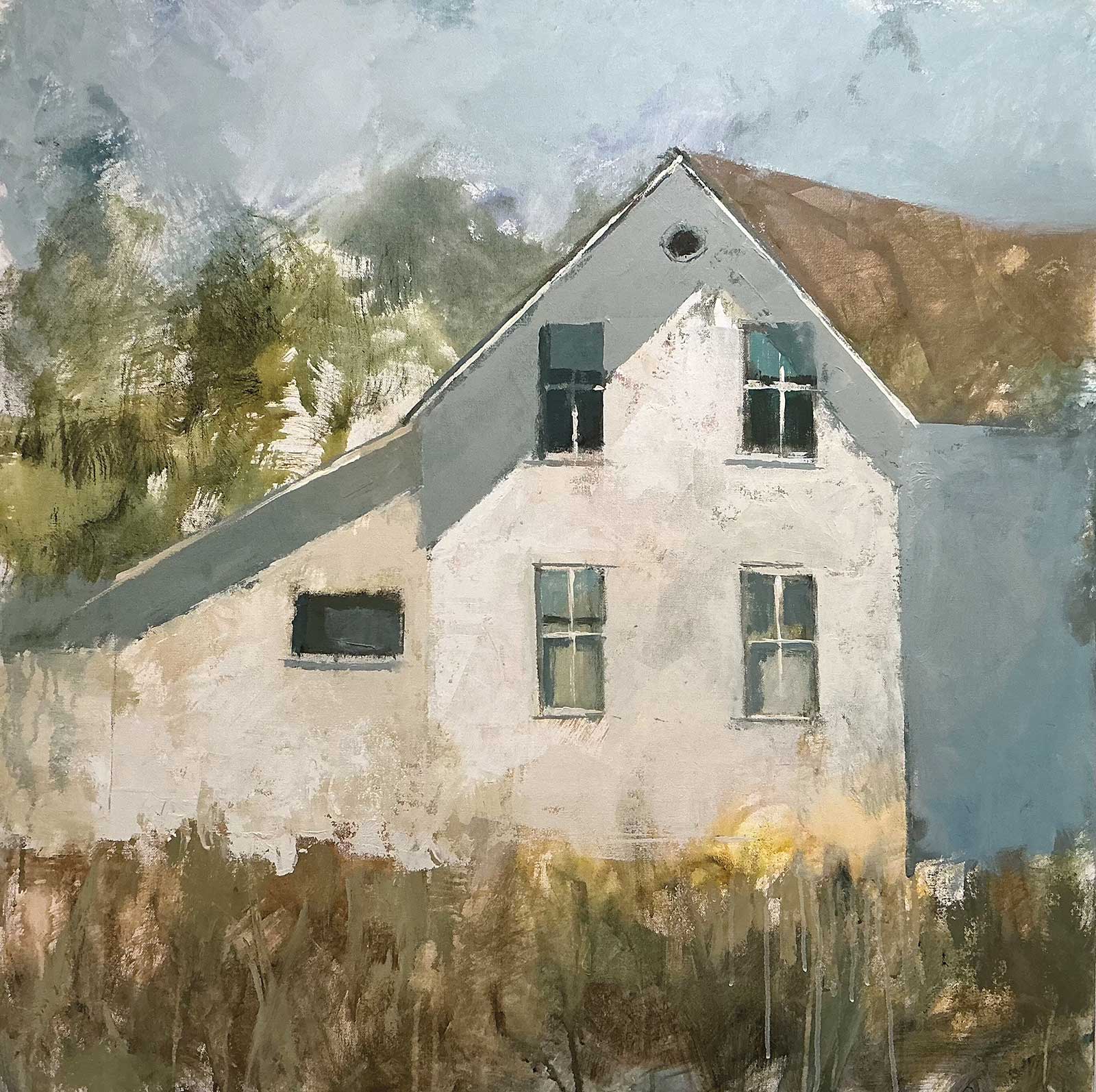
Stage 8 Lessening the Shadows
A huge visual improvement is achieved when I lighten the shadows on the house. The windows are also getting some detail. The vision is coming alive.
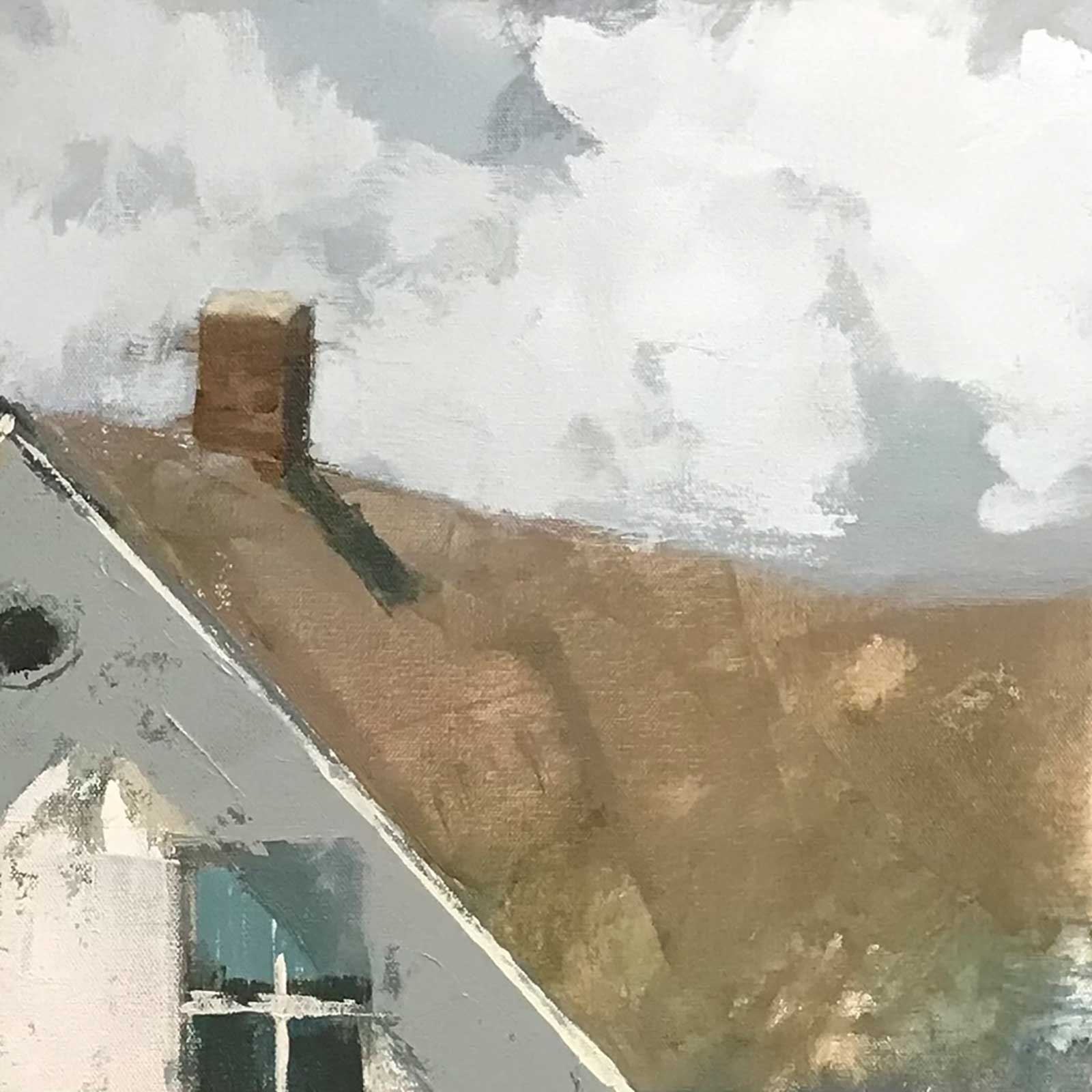
Stage 9 Chimney & White Clouds
The chimney is added, along with white clouds which bring much needed interest to this section of the sky. As you’ll see in the last two photos, I was able to preserve small sections of the sky’s original foundation.
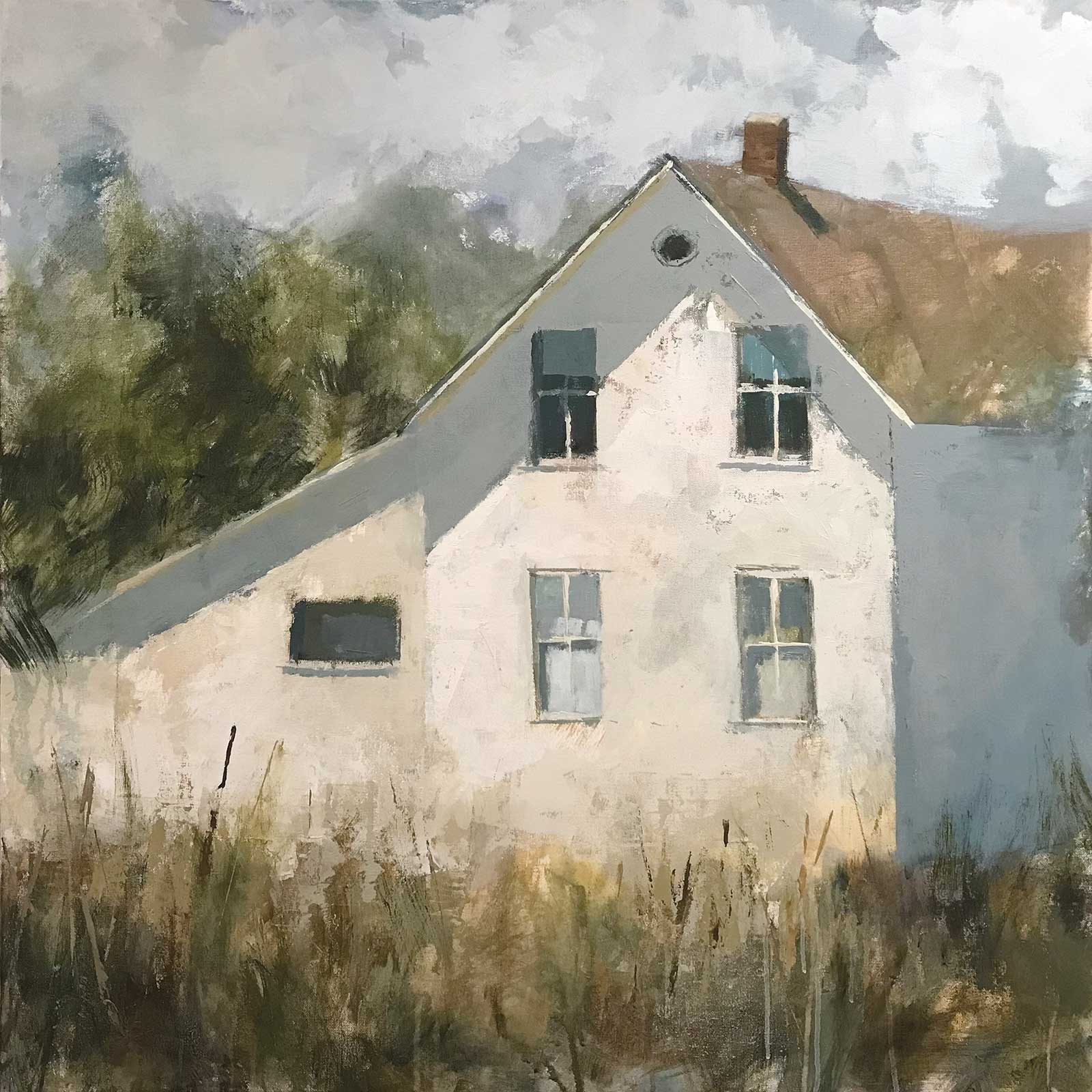
Stage 10 Adjusting Color
The grasses in the foreground needed more detail, and there was a clunky segue between the house and the grass. This required me to simultaneously bring the ground up and bring some of the house color down, while making the transition believable. I also decided to heighten the detail to the windows.
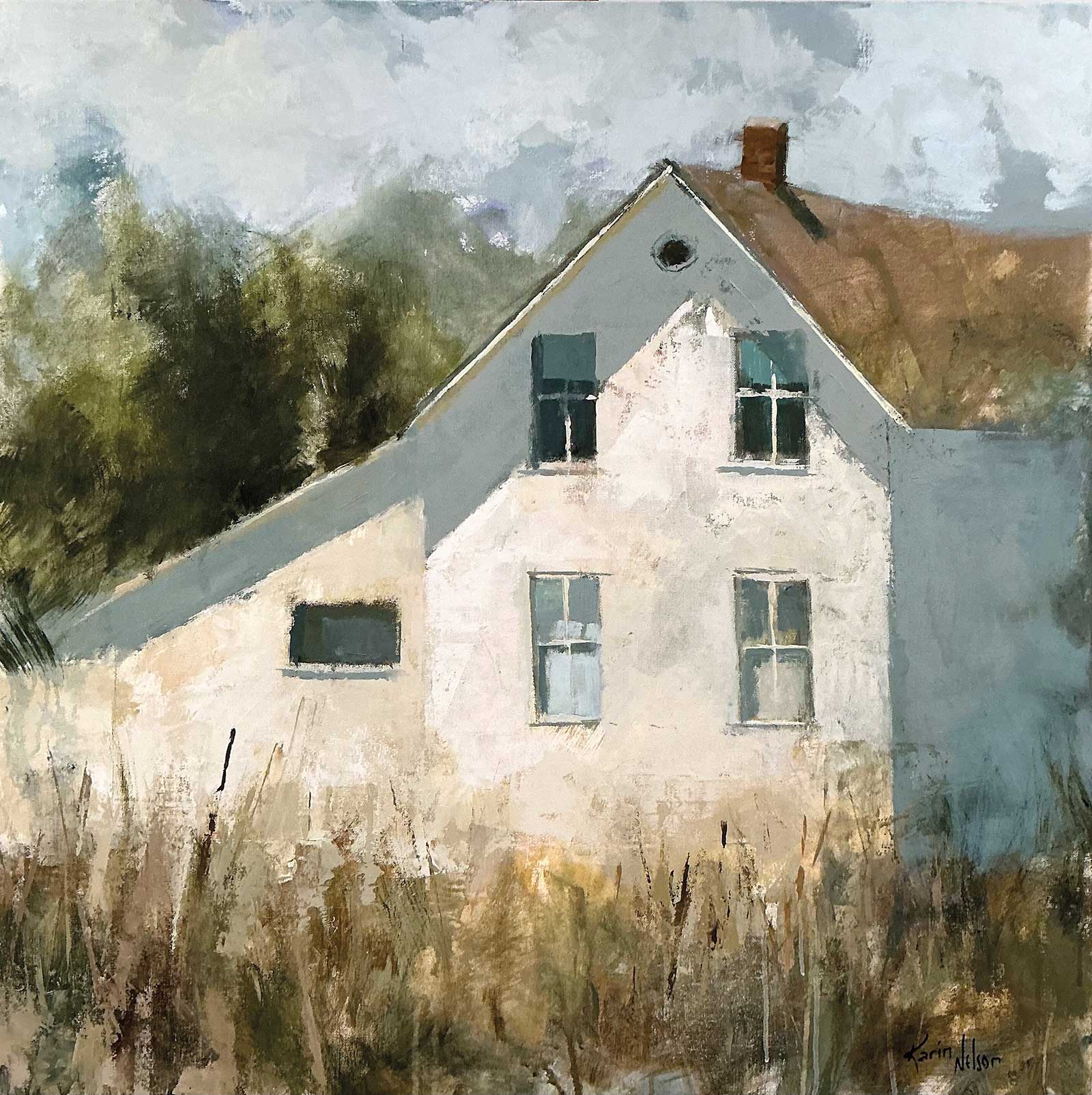 The Stories You Could Tell, acrylic, 36 x 36" (91 x 91 cm)
Stage 11 Adding Variety to the Trees
One of the last problems to resolve was that the trees behind the house were too similar looking and close in value to the foreground. I darkened the trees and made a section of them more solid looking than the busy grasses. Additionally, lighter tones were brought into the foreground. I’m pleased that the original transparent foundation survived in a good number of places. Most of all, I’m satisfied that the completed painting expresses the story I wanted to tell about this beautiful house.
About the artist
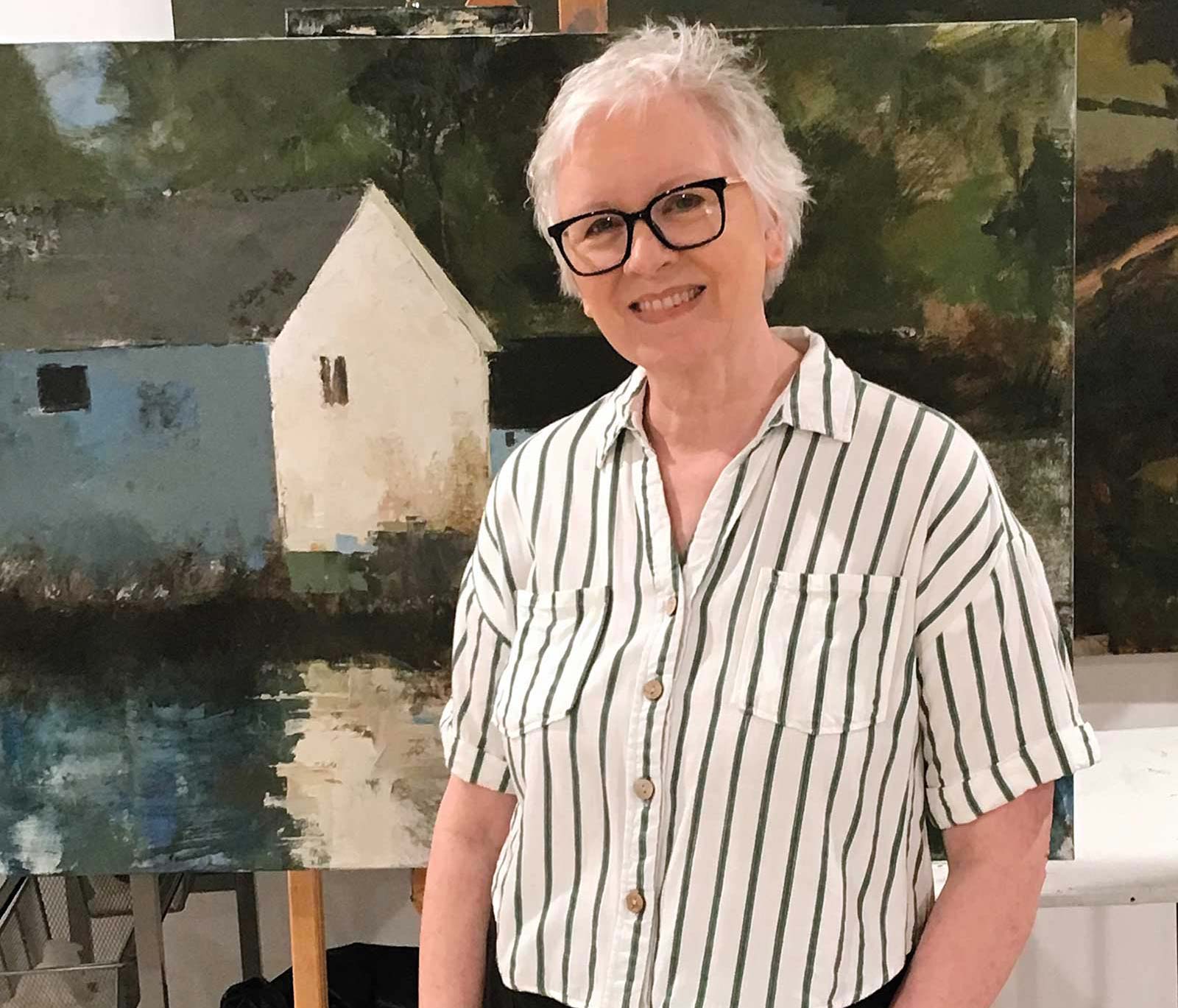 Karin Nelson
Karin Nelson’s unique and masterful handling of acrylic’s distinct properties has opened the doors to international recognition, including top awards in juried exhibitions as well as numerous appearances on television, radio and in various publications.
Nelson’s work is sought-after through many top designers and can be found in various galleries, on her website, on Instagram and on Facebook.
Living in close proximity to so many inspiring areas of beauty–Lake Michigan, farms and rural fields with vast open skies, and even the city–Nelson creates landscapes that bring repeated responses of “peaceful,” and “it stirs such memories.” The artist currently lives near Grand Rapids, Michigan, with her husband of 49 years. They have three grown children, a son-in-law and three granddaughters.
Contact at
knelsonart.com