My work explores the balance between daily life and a dreamlike perception of it. I am drawn to simple, familiar objects and try to distill their essence with precision and care. I do not follow strict rules, nor do I chase realism. My style has been shaped by years of practice. Following the daily painting movement for over a decade taught me to enhance the presence of ordinary objects and give them strong character on a small canvas. My background in architecture left me with a habit of paying close attention to detail. I combine this with memory and experience, painting what feels right in the moment. Still, I strive for a certain kind of perfection, as it gives me a sense of control over the unpredictable nature of painting.
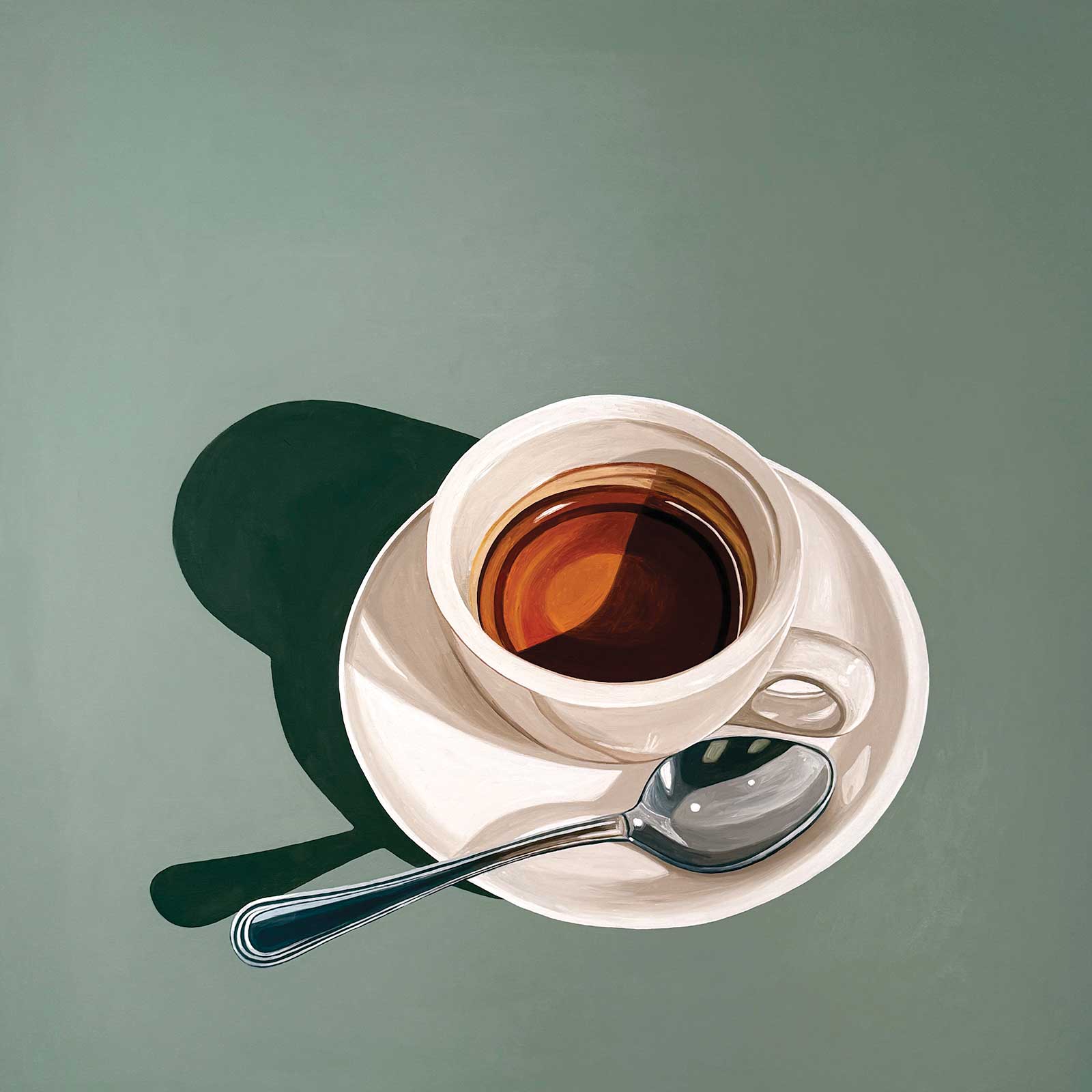 Espresso on Sage, oil on canvas, 391/3 x 391/3" (100 x 100 cm)
Everyday objects have always fascinated me because they carry both intimacy and universality. A cup of coffee, a jar of honey or a lemon can evoke immediate recognition and memories, yet through color and form they can also become vibrant protagonists. Lemons, in particular, have become a recurring presence in my practice. Their freshness, energy and sharp contrasts allow me to explore light and rhythm while creating a sense of warmth.
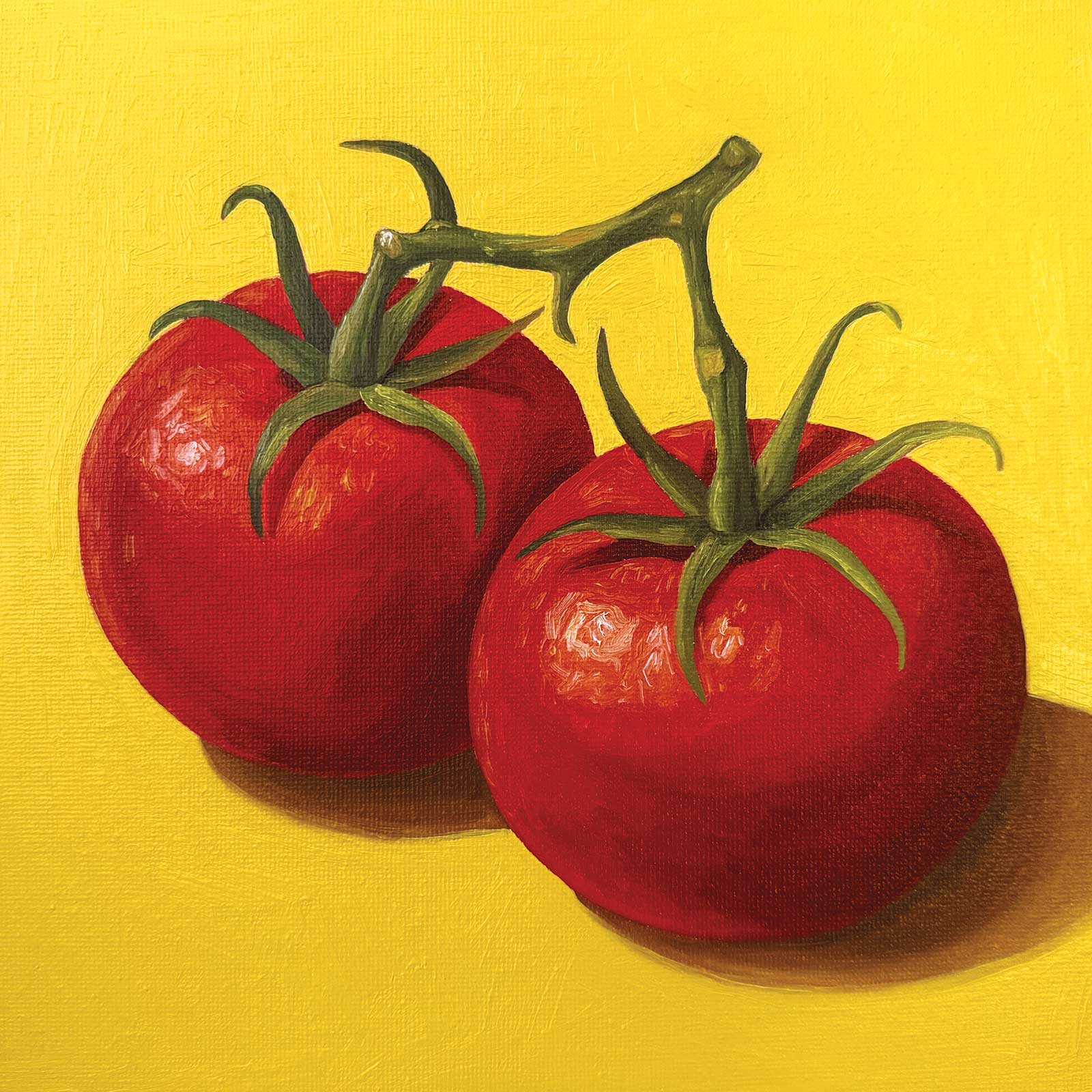
Unapologetic Tomatoes, oil on canvas board, 7¾ x 7¾" (20 x 20 cm)
In this painting, I wanted the lemons to radiate vitality, almost as if they had just rolled onto the canvas from a sunlit table. The moka pot completes the dialogue with its metallic surface and solidity. It reflects the bold blue background, binding it to the lemons and softening their relationship. It’s a playful paradox: a hard, sharp object ends up tempering the composition, creating balance in an unexpected way.
I think of painting as building a puzzle of shapes and values, as you will see in the demonstration. Planning s an important part of my practice. Once the structure is in place, my choices of color and texture are made entirely in the moment. This balance between preparation and spontaneity is what allows the work to shift from observation into something more poetic.
My Art in the Making: Sunlight Poured In Blue
Reference Photo
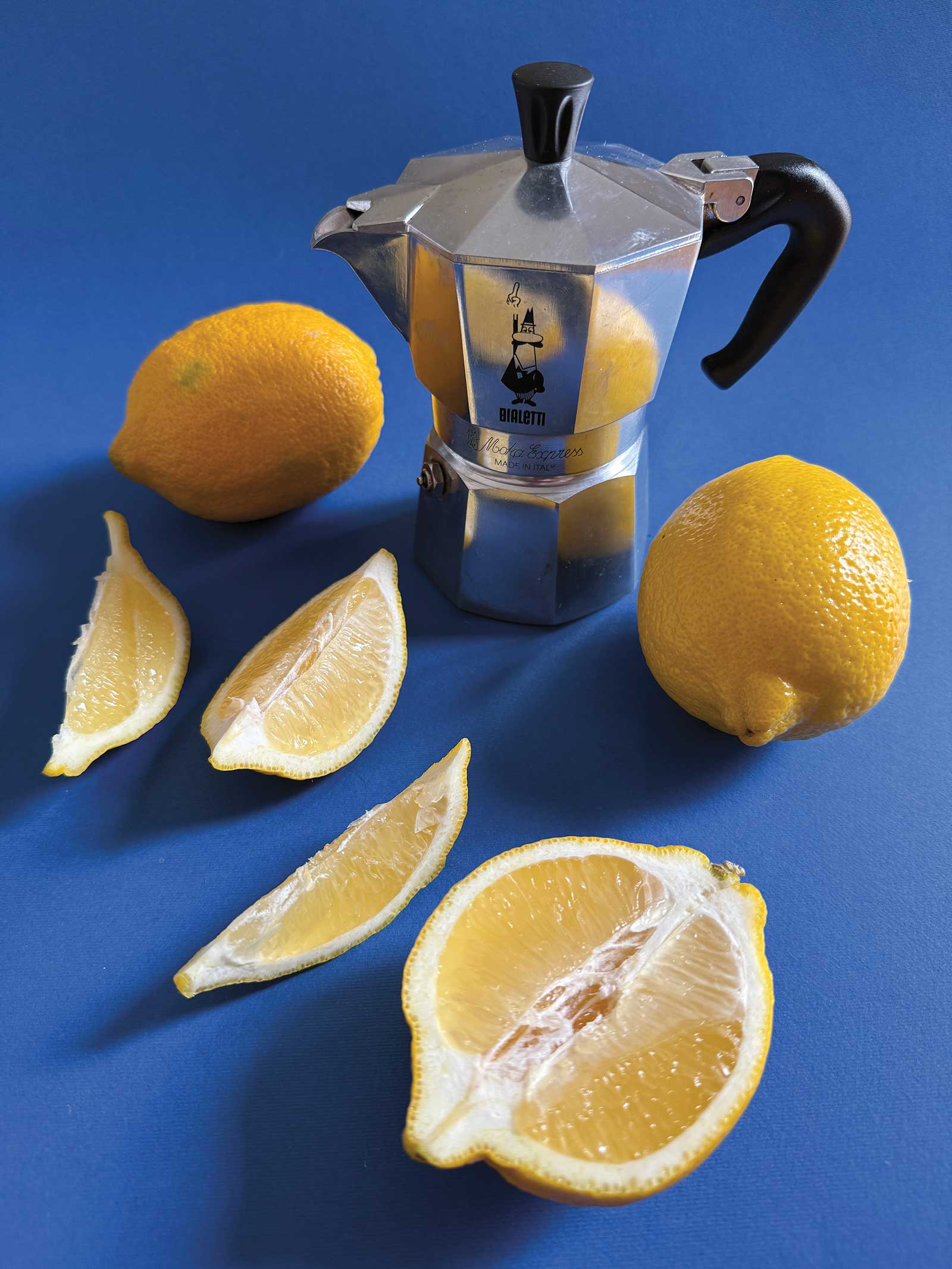
I started with taking some reference photos. In these, I combined the shiny moka pot with different objects. This version became my favorite. Simple, clean, playful. The deep blue background added a cheerful, eyecatching contrast.
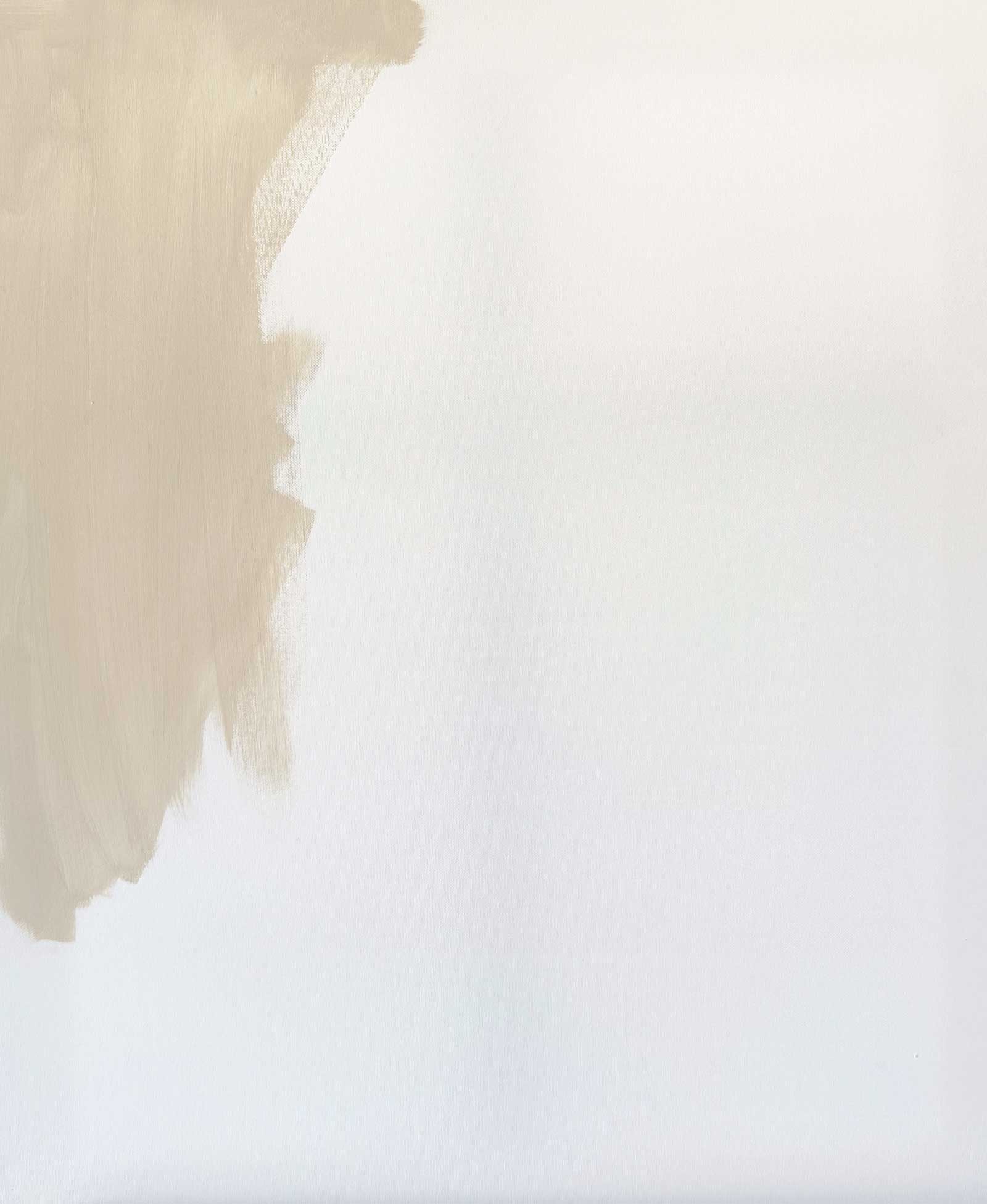
Stage 1 Canvas Prep
I start by putting a base color (acrylic paint) onto the canvas. Since I don’t make a separate color study before painting, this step helps my eye read the values better. Here I used a mix of titanium white, burnt umber and a touch of cadmium yellow.
WHAT THE ARTIST USED
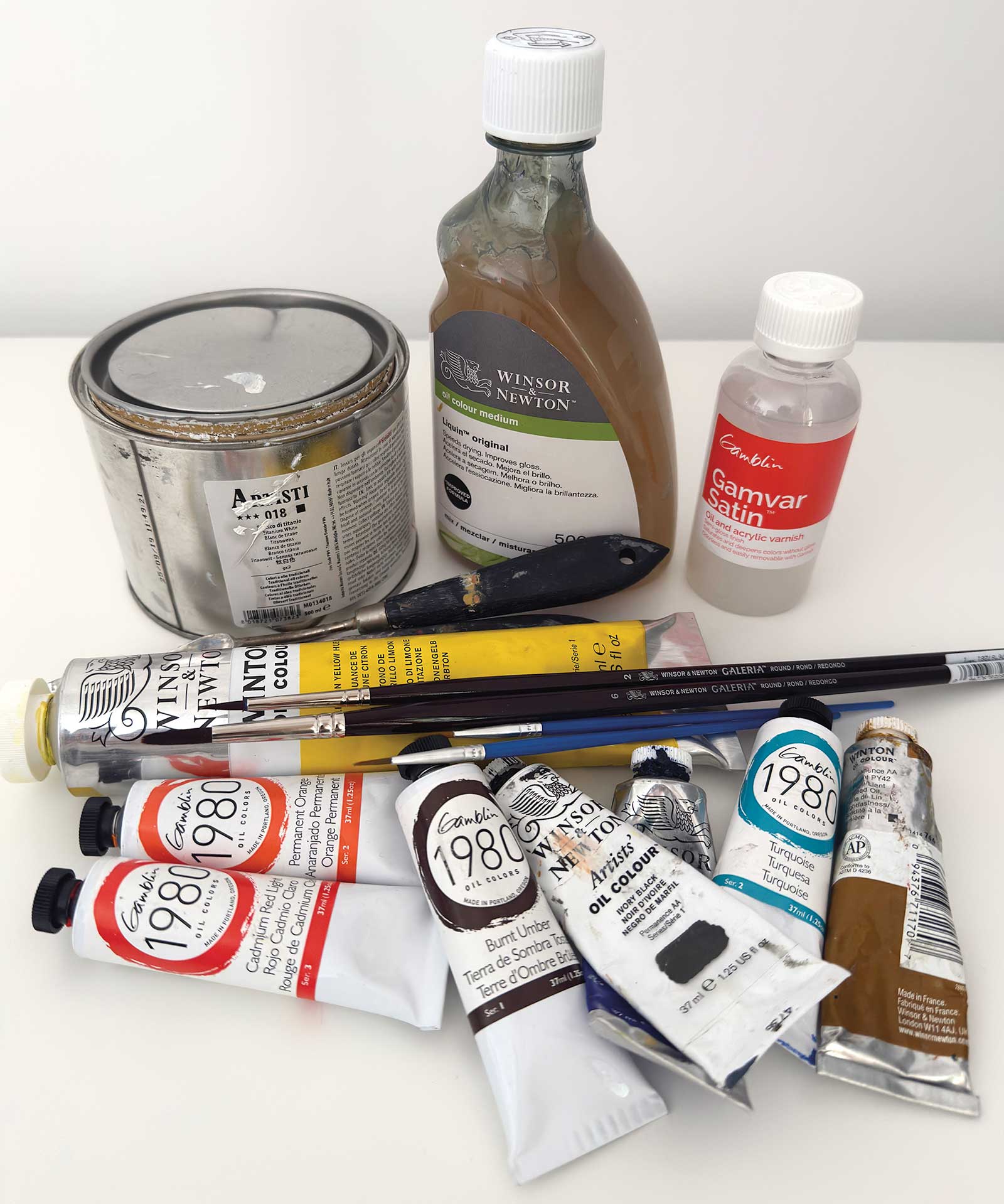
Oils
Cadmium red light, Burnt umber, Permanent orange, Turquoise, Lemon yellow, French ultramarine, Raw sienna, Ivory black, Titanium white
Brushes
Synthetic round brushes, sizes 1, 2, 6
Additional Materials
Winsor & Newton Liquin, Gamblin Gamvar Satin
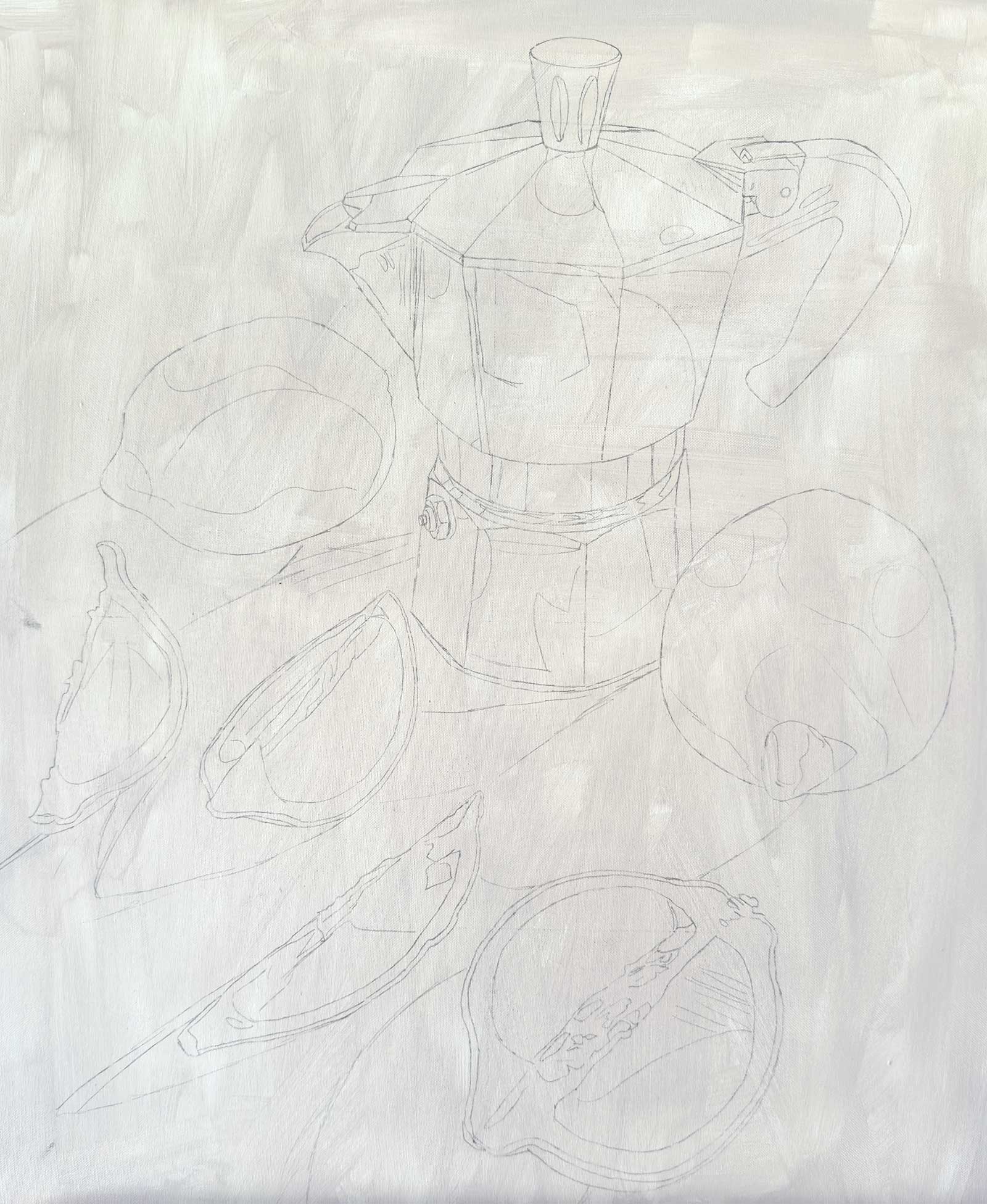
Stage 2 Sketch
Now I’m tracing the reference onto the canvas, with a catch: I enlarged the moka pot and made the two lemon pieces in the front smaller. This creates a more balanced and interesting composition. I enjoy planning carefully before painting to achieve a clean, structured look.
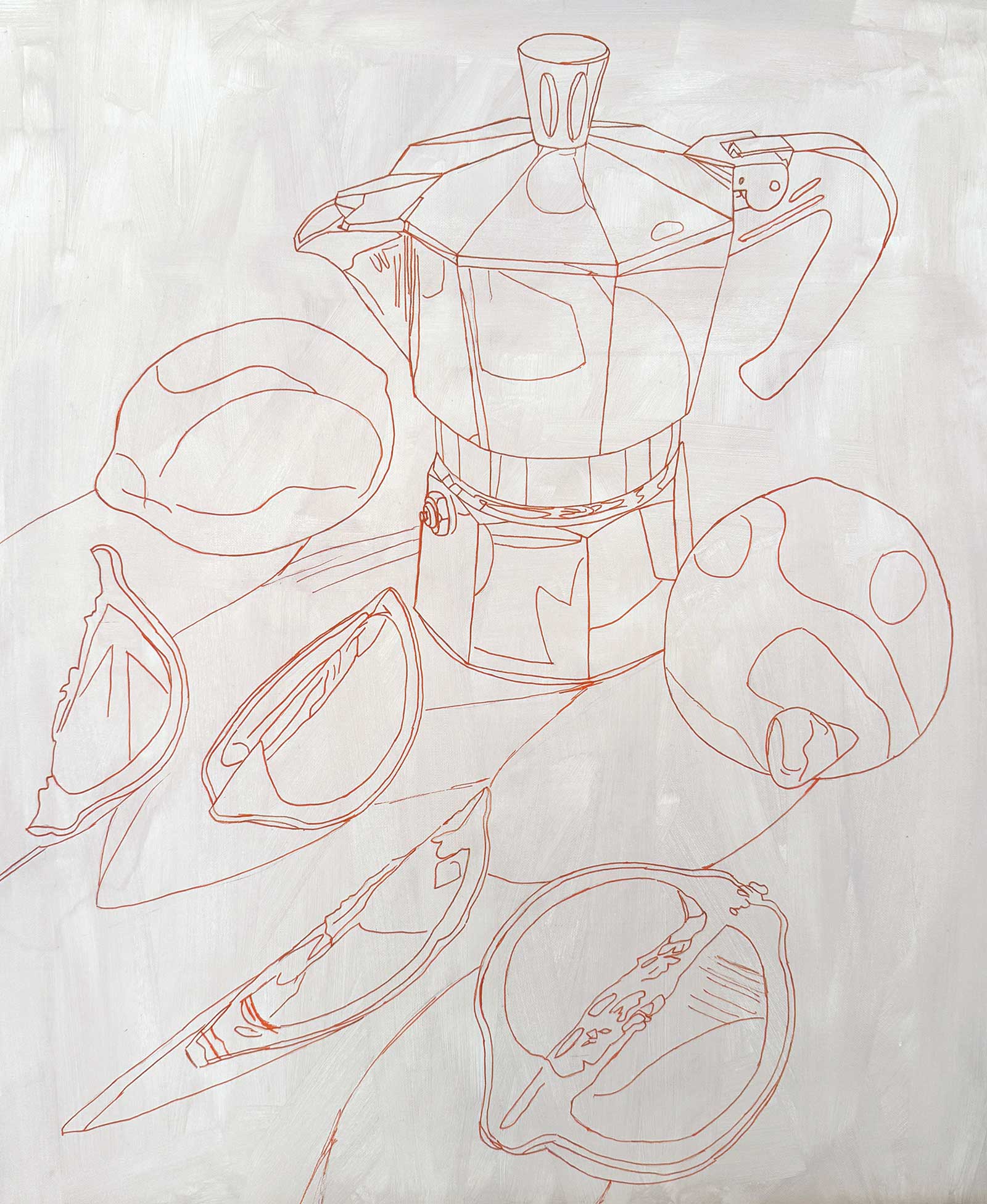
Stage 3 Final Drawing
Lastly, I redraw everything with an orange Uniposca pen. This stage allows me to check the composition one final time while also sealing the charcoal lines underneath. I also enjoy how the orange marks bring a subtle energy to the underpainting.
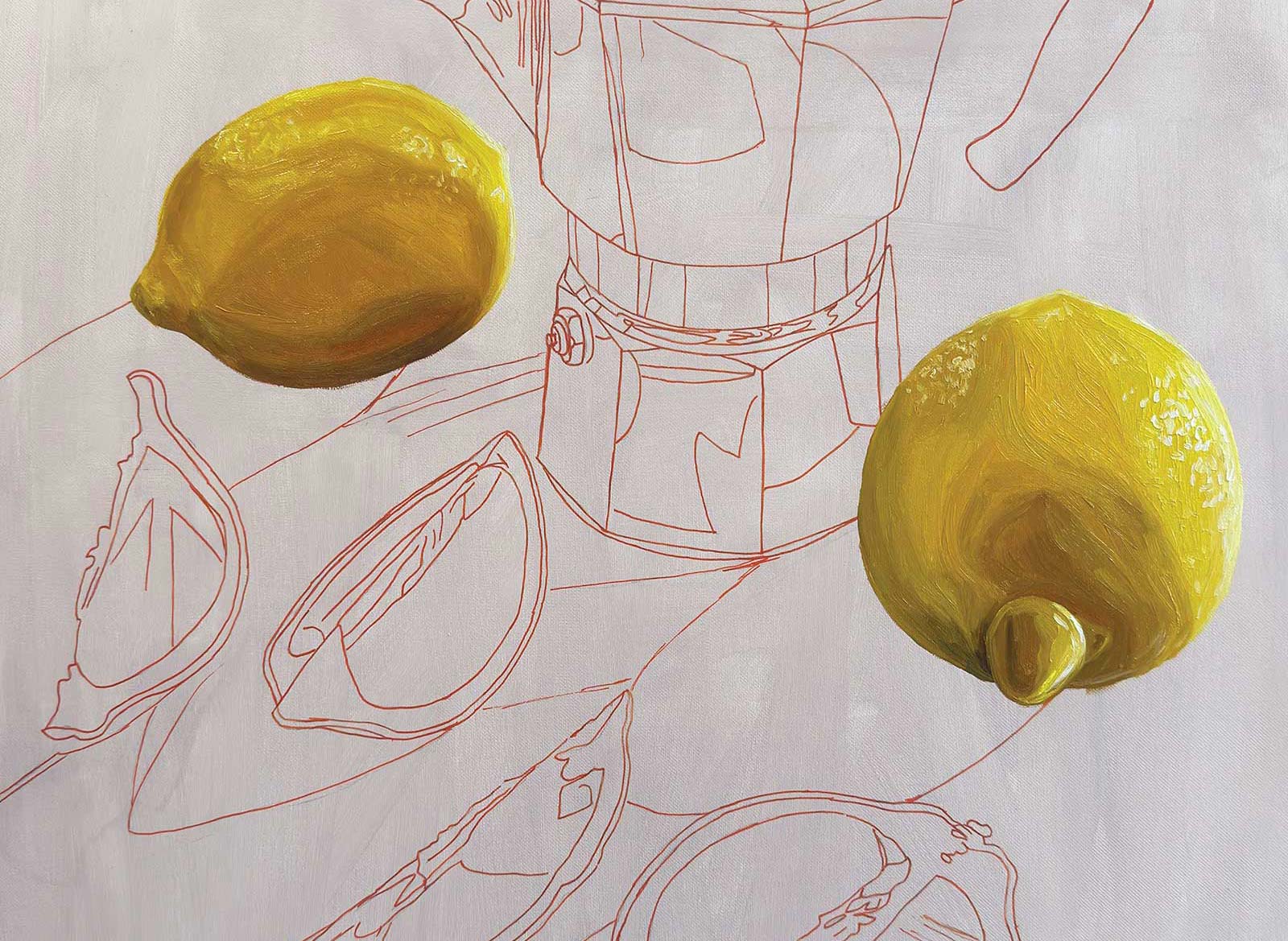
Stage 4 Starting the Lemons
I start with the least reflective objects, in this case the whole lemons, as I haven’t yet decided on the exact background color. This allows me to establish the main tones first and secure the composition before moving on to the more complex reflective surfaces.
Choosing the Right Blue
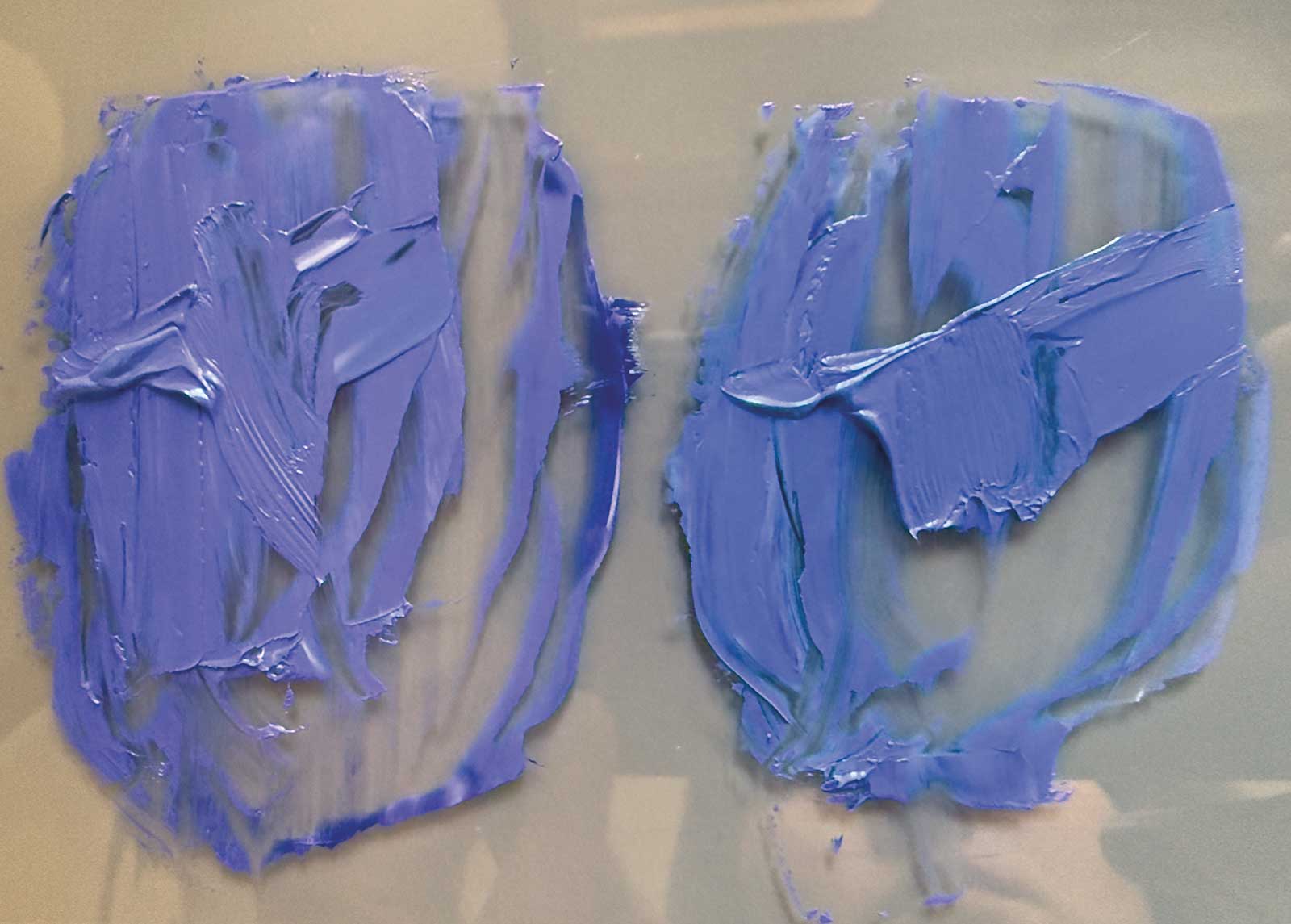
I had two shades in mind. To decide which one would fit better with the image I wanted to achieve, I mixed and tested them side by side. Colors tend to shift when placed next to others, as you can see here. They may look almost identical, but to the naked eye the difference was clear, so I chose the sharper blue. Since I paint alla prima (wet on wet), I almost always apply the background at the end, so I choose the right tone for each painting after having the darkest and lightest values on my canvas. I get so many ideas throughout the day, and once I settle on one, I like to finish it quickly before it loses the spark that first made me move.
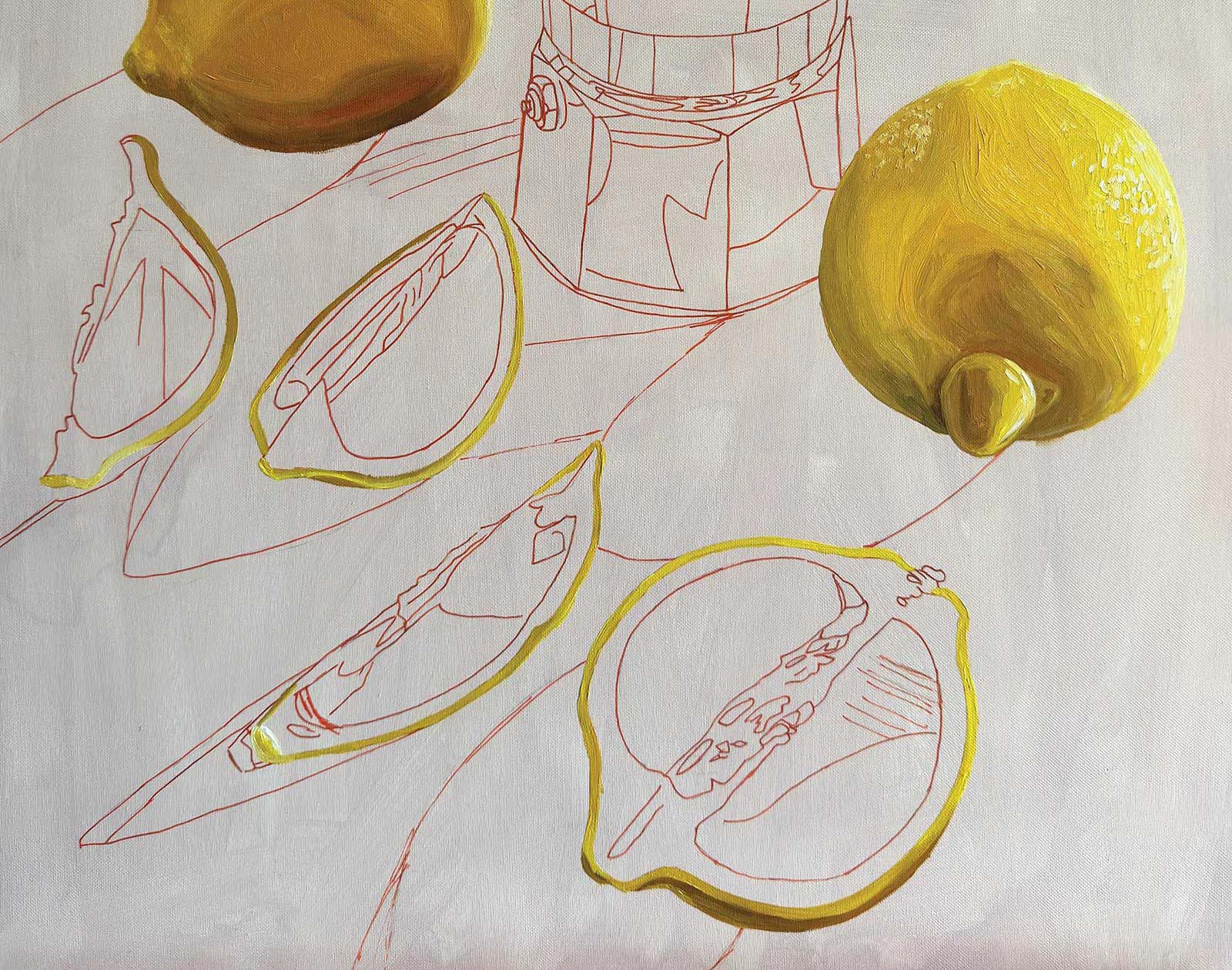
Stage 5 Continuing the Lemons
I continue with the wedges, painting either from dark to light or by following the natural shape of each slice. I mix the colors separately for every lemon so the final result is nuanced and feels more natural to the eye. This also keeps me engaged with each object individually.
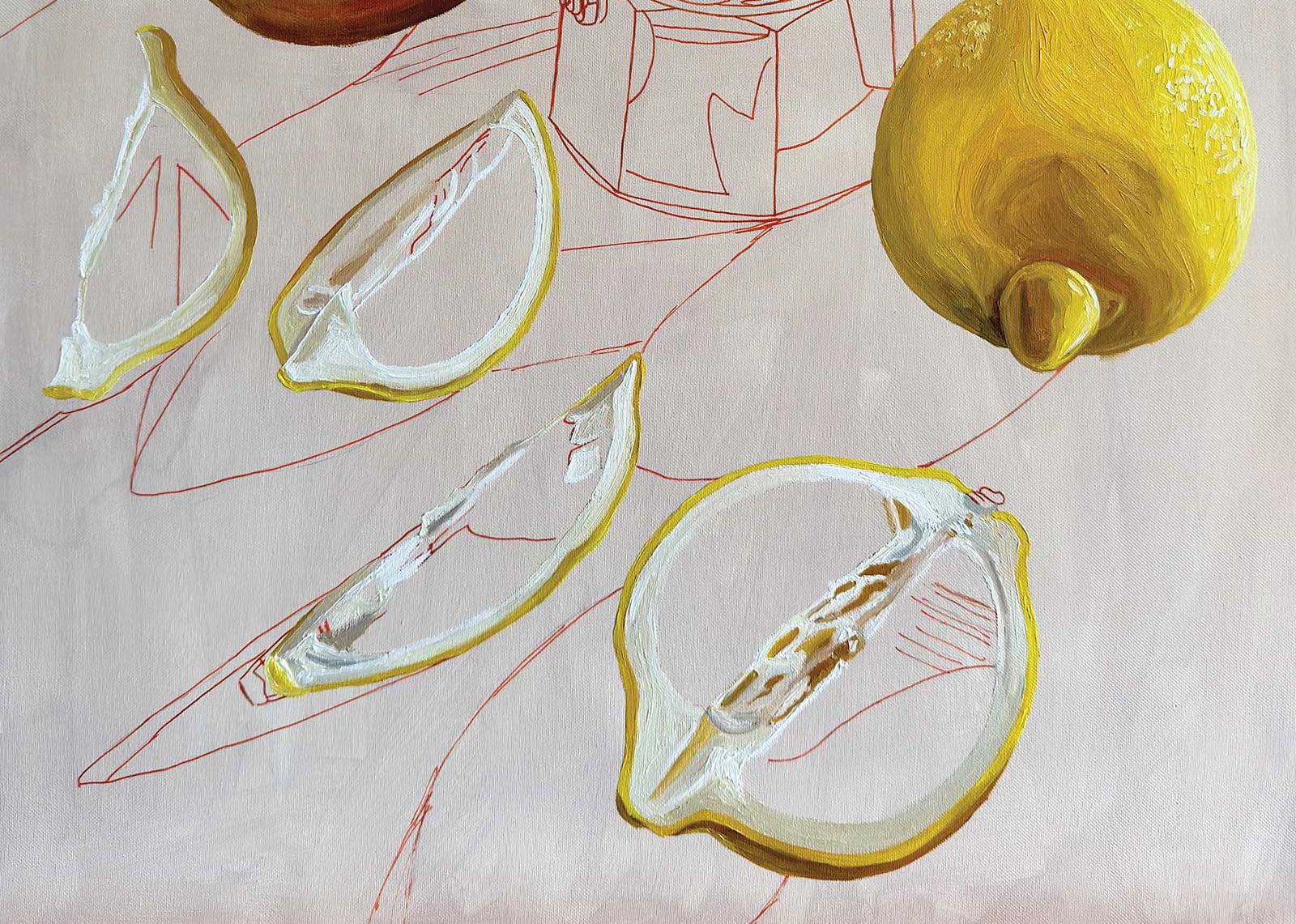
Stage 6 Establishing Highlights
At this stage I block in the lighter areas of the lemon wedges. I like to establish the highlights early, as they guide the balance of values and help me see how the composition will develop.
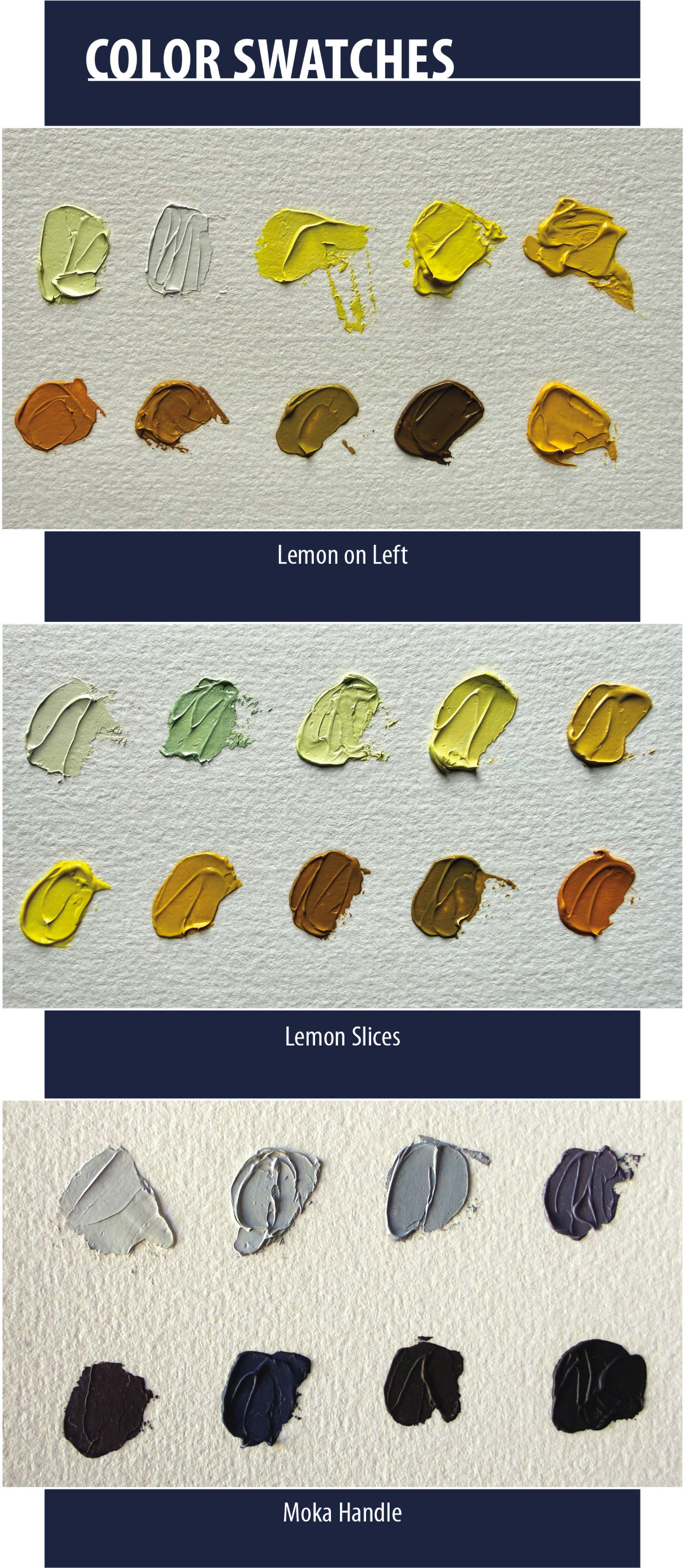
Lemon on Left
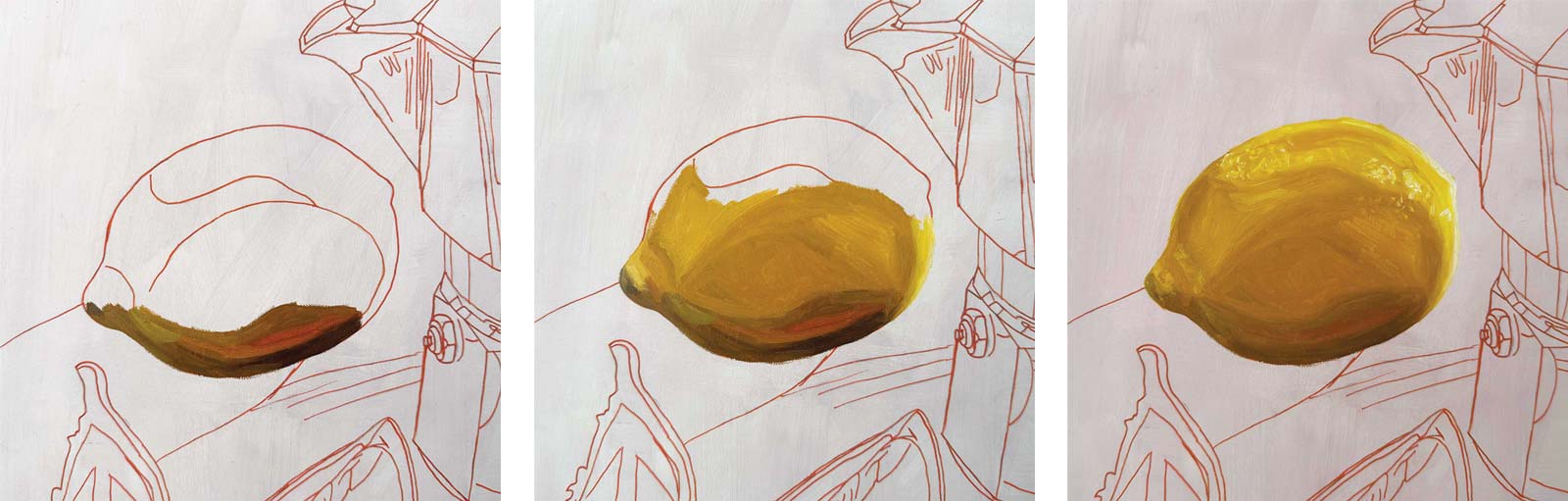
Let me explain the “color puzzle” approach on this lemon. I divided it into areas following its shape. Even if I don’t have a reference photo, this way I know where the light comes from, the value zones and the overall form. So I basically follow my own mapping. I start with the bottom since it’s the darkest area, mixing burnt umber, lemon yellow and cadmium red. I mainly use these three colors, changing their amounts as the values shift. If it’s a cooler area, I add a tiny bit of ultramarine. If it’s very warm, I add permanent orange. I don’t blend between the zones until the end. After finishing the lightest tones, I then begin to merge the zones. I respect the original shape and paint over the borders, maybe with a five-degree angle change. This is basically how I paint everything, whether it’s something I’ve painted dozens of times or for the first time. The result never fails me.
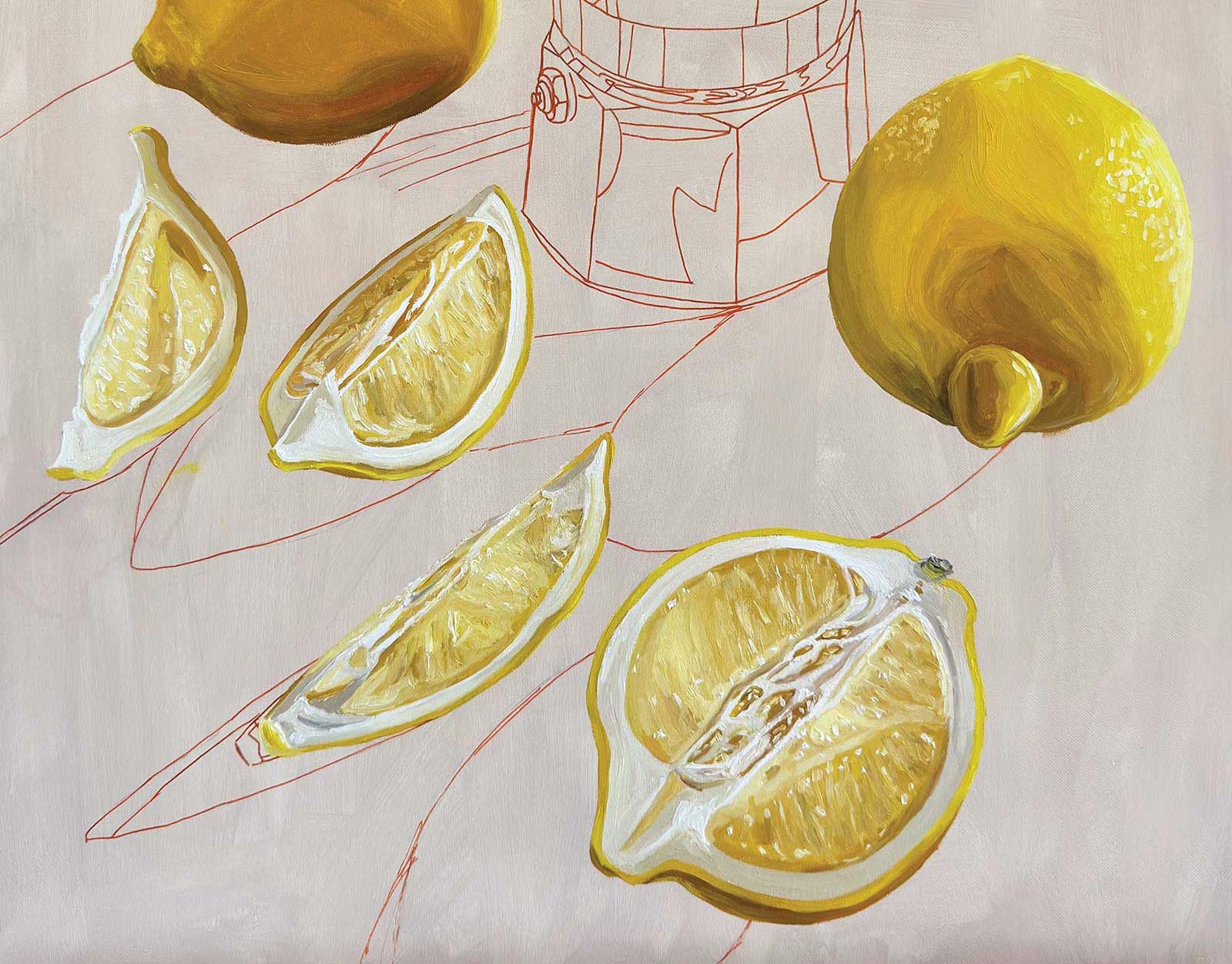
Stage 7 Texture & Translucency of Lemons
Now I work on the texture and translucency of the lemon wedges. By layering yellows and warm tones over the lighter base, they begin to look juicy and three-dimensional. I enjoy watching them come alive.
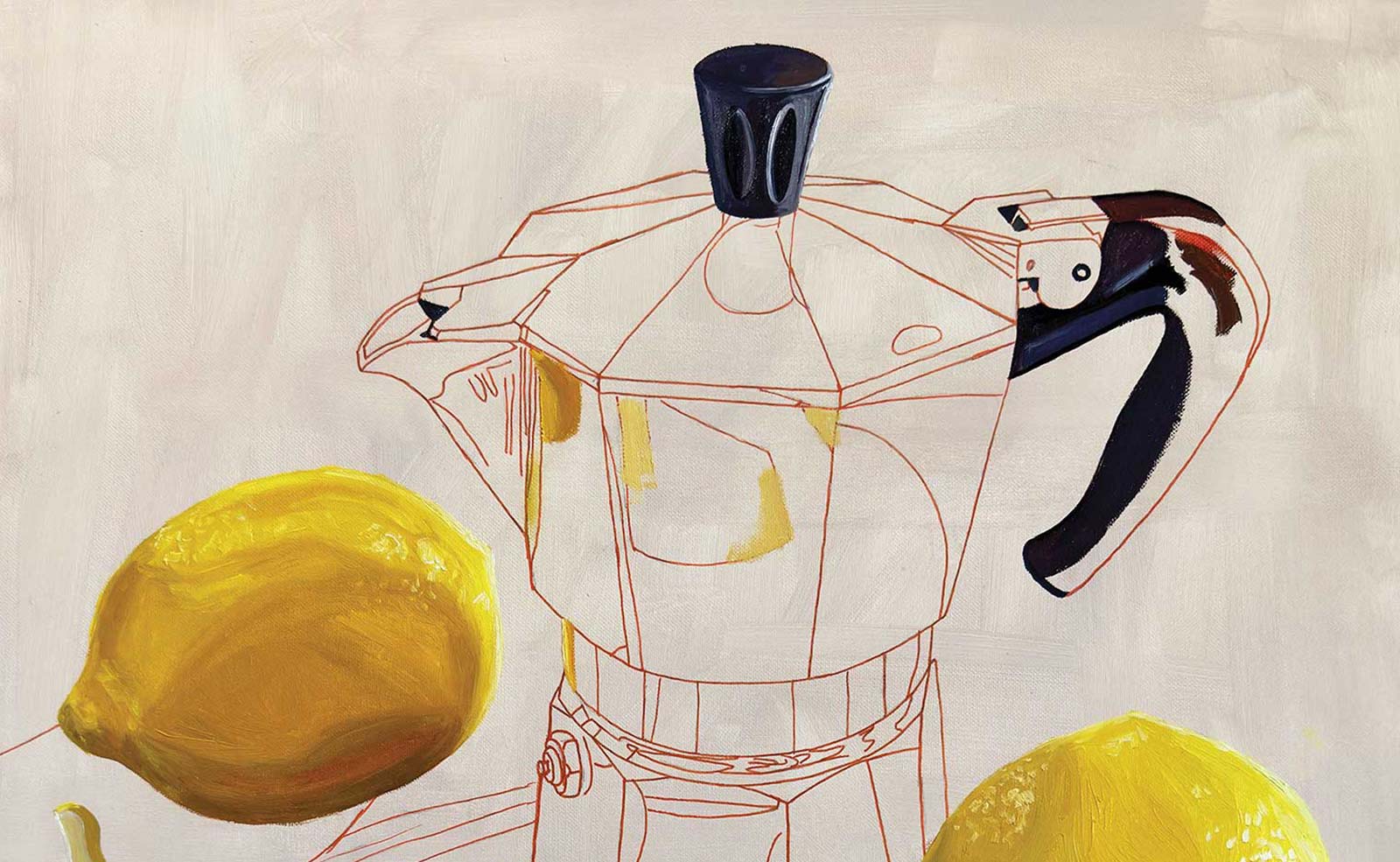
Stage 8 Moka Pot
I begin to work on the moka pot, starting with the handle and top knob. At this stage, I already have the darkest and the lightest tones in place, which helps guide my decisions for the reflective metallic areas that will follow. This contrast gives me a solid framework to build the rest of the reflections.
Lemon Slices
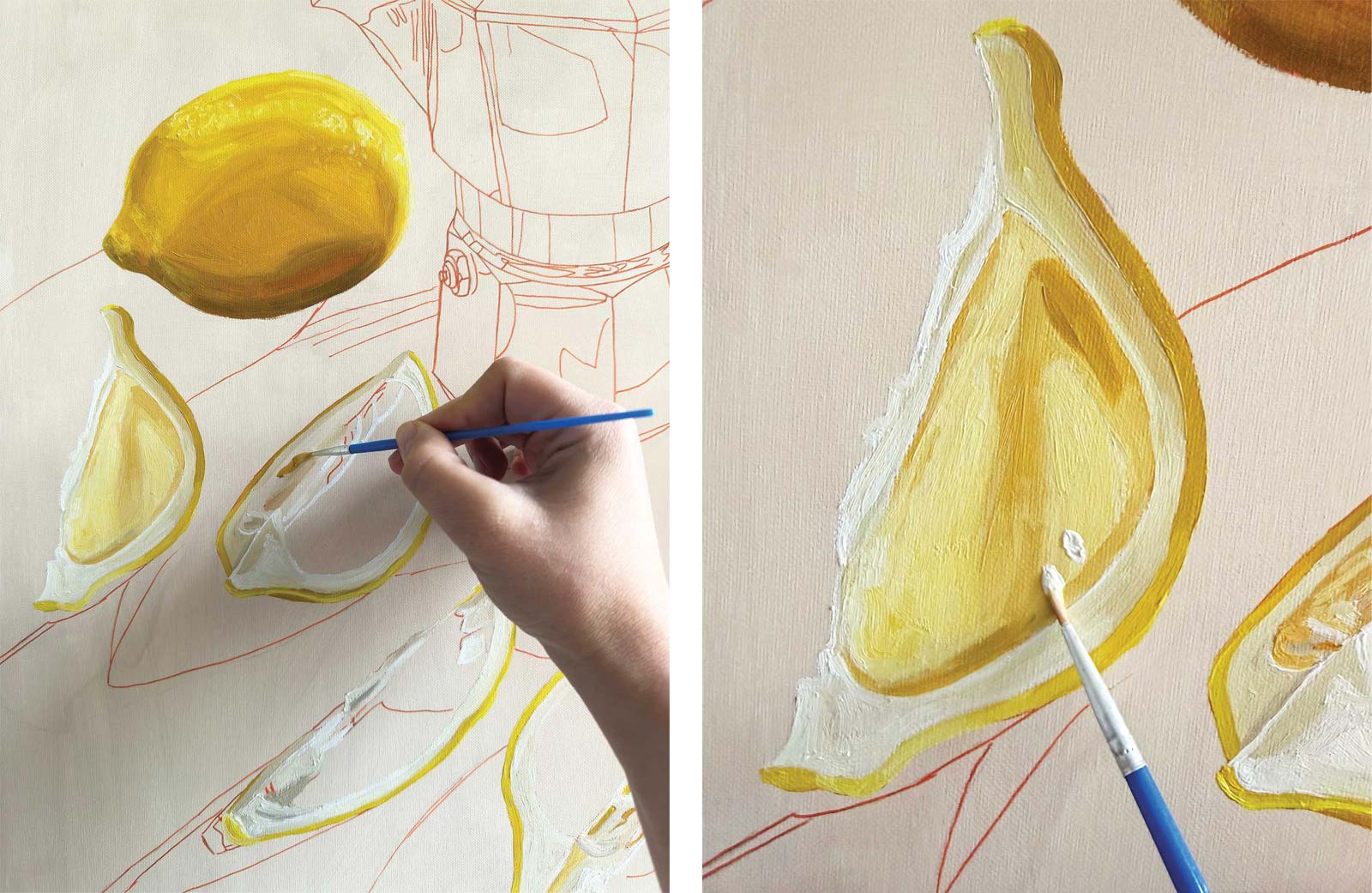
I always follow the natural shape and texture of the object. Here, the paint is applied thicker to reflect the dents and uneven surface of the lemon slices. I load my brush generously to create juicy highlights that enhance the light, and I avoid blending between layers to preserve translucency. For the white areas, I balance cool and warm tones to make them more realistic and visually engaging. The parts facing the background are cooler, while those turned toward the lemons are warmer. I use a touch of my background blue to cool the tones when needed.
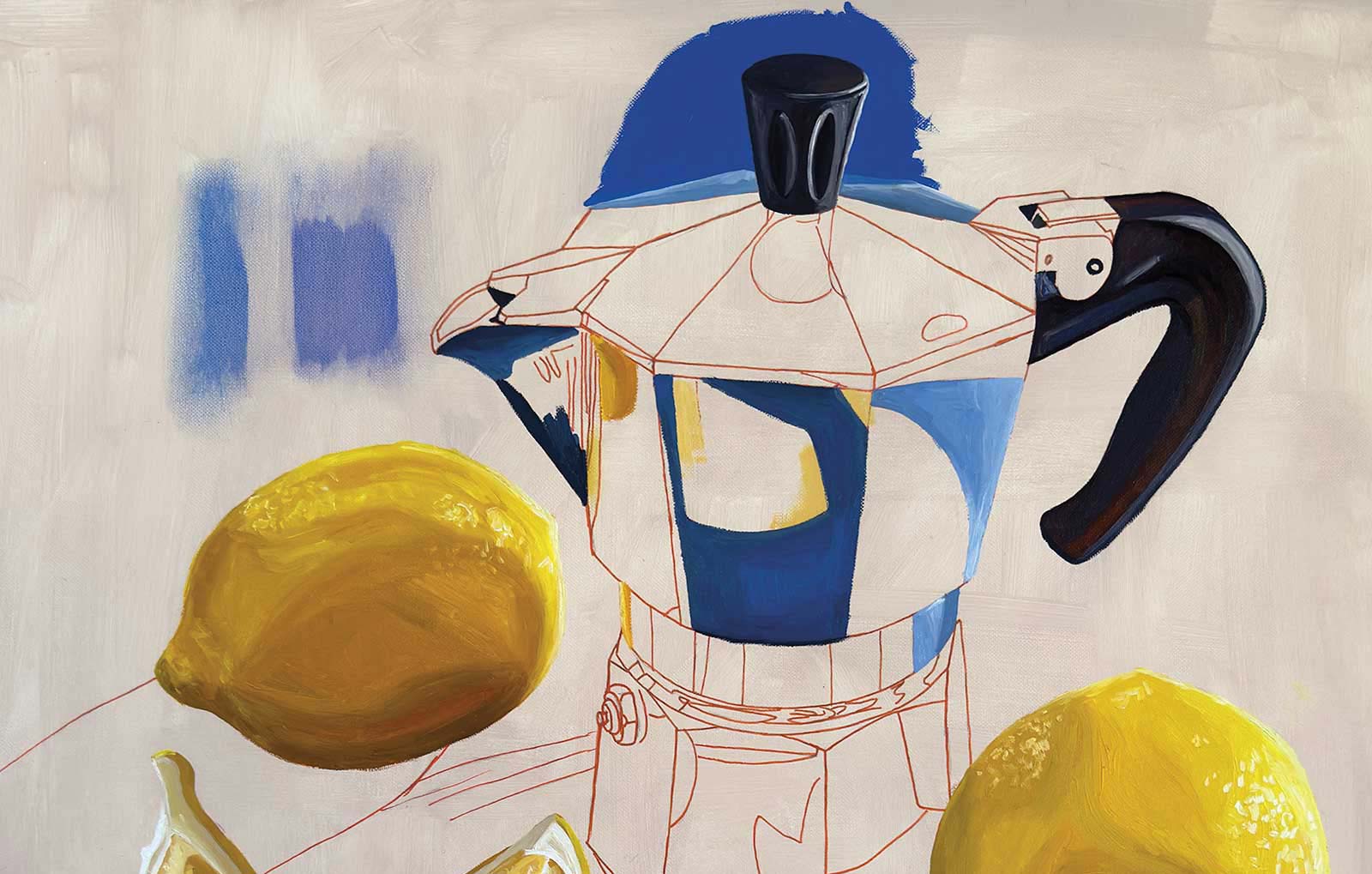
Stage 9 The Perfect Blue
After testing the two shades, I decided on this blue. It’s close to the one in my reference photo, but with more energy and vibrancy, which sets the tone for the whole painting. It also carries a Mediterranean brightness that complements the lemons perfectly.
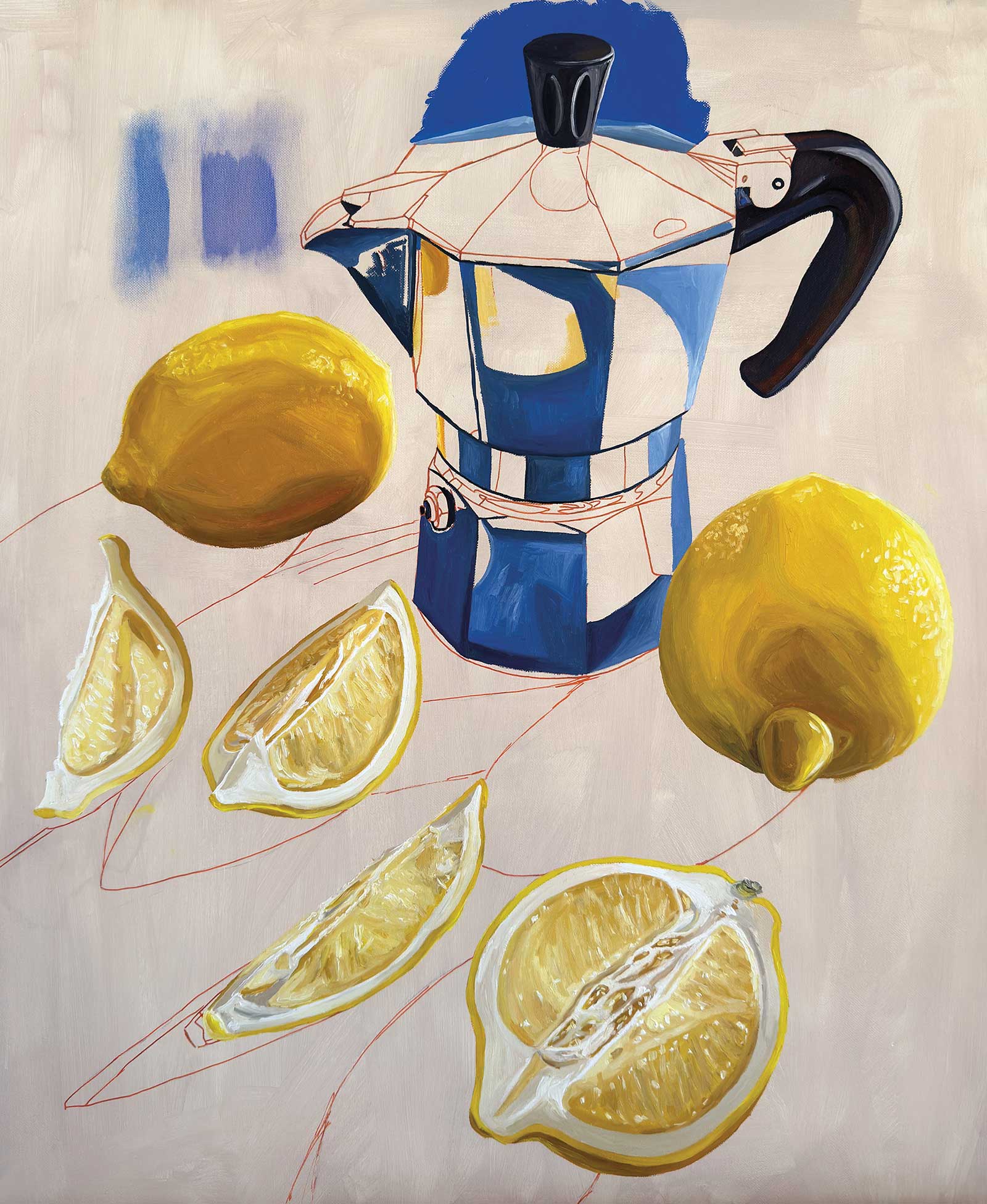
Stage 10 Finding Balance
As I build the moka pot, I keep its blues slightly different from the background. This way the pot acts as a bridge in the composition without overpowering the lemons, which remain the main source of light and energy.
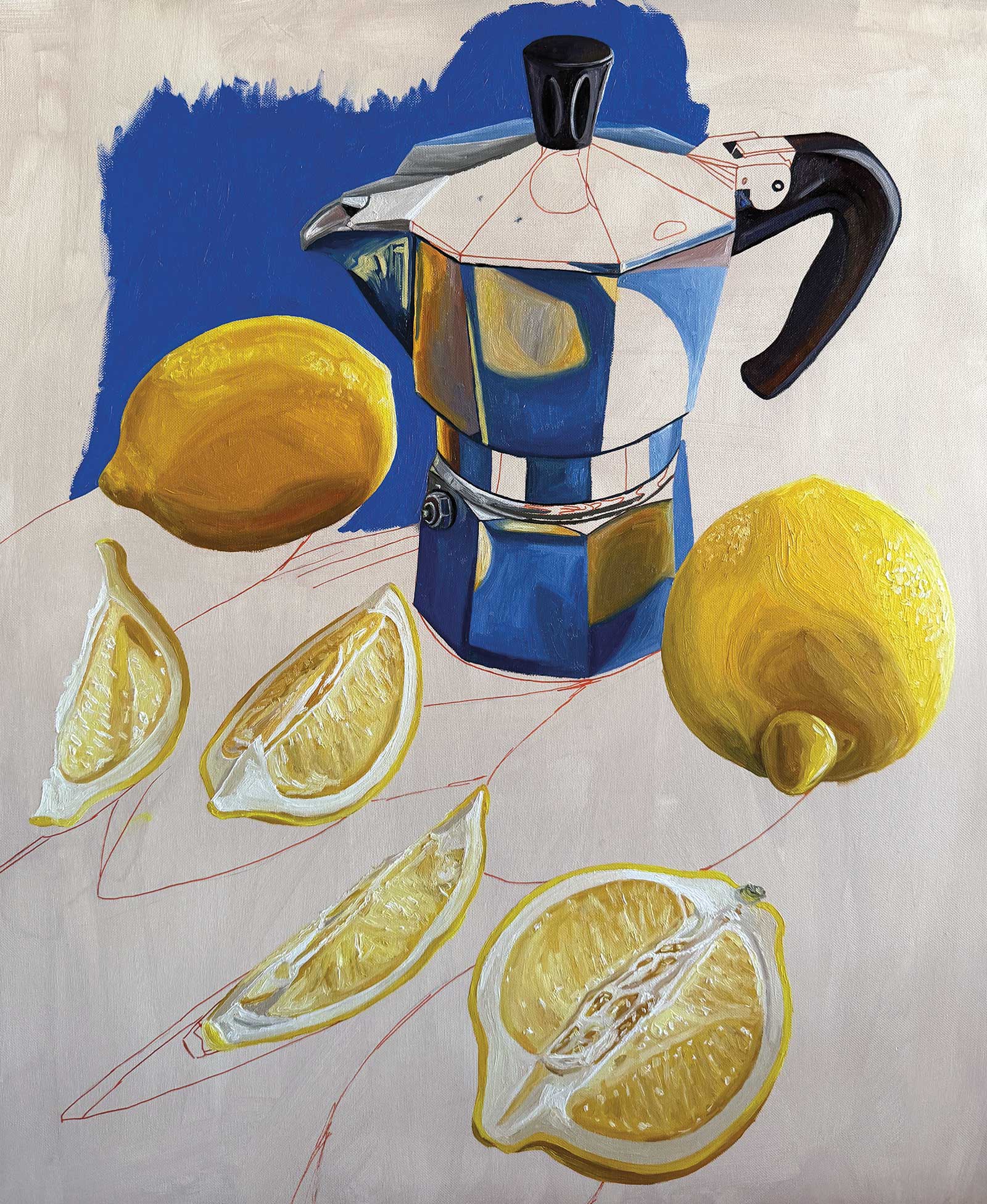
Stage 11 Adjustments
The tested area was distracting me, so I covered it. I’m not painting the moka pot in any particular order, and I’m also using the same brush. I’ll decide later whether to keep the yellow reflections subtle or enhance the lemons all the way.
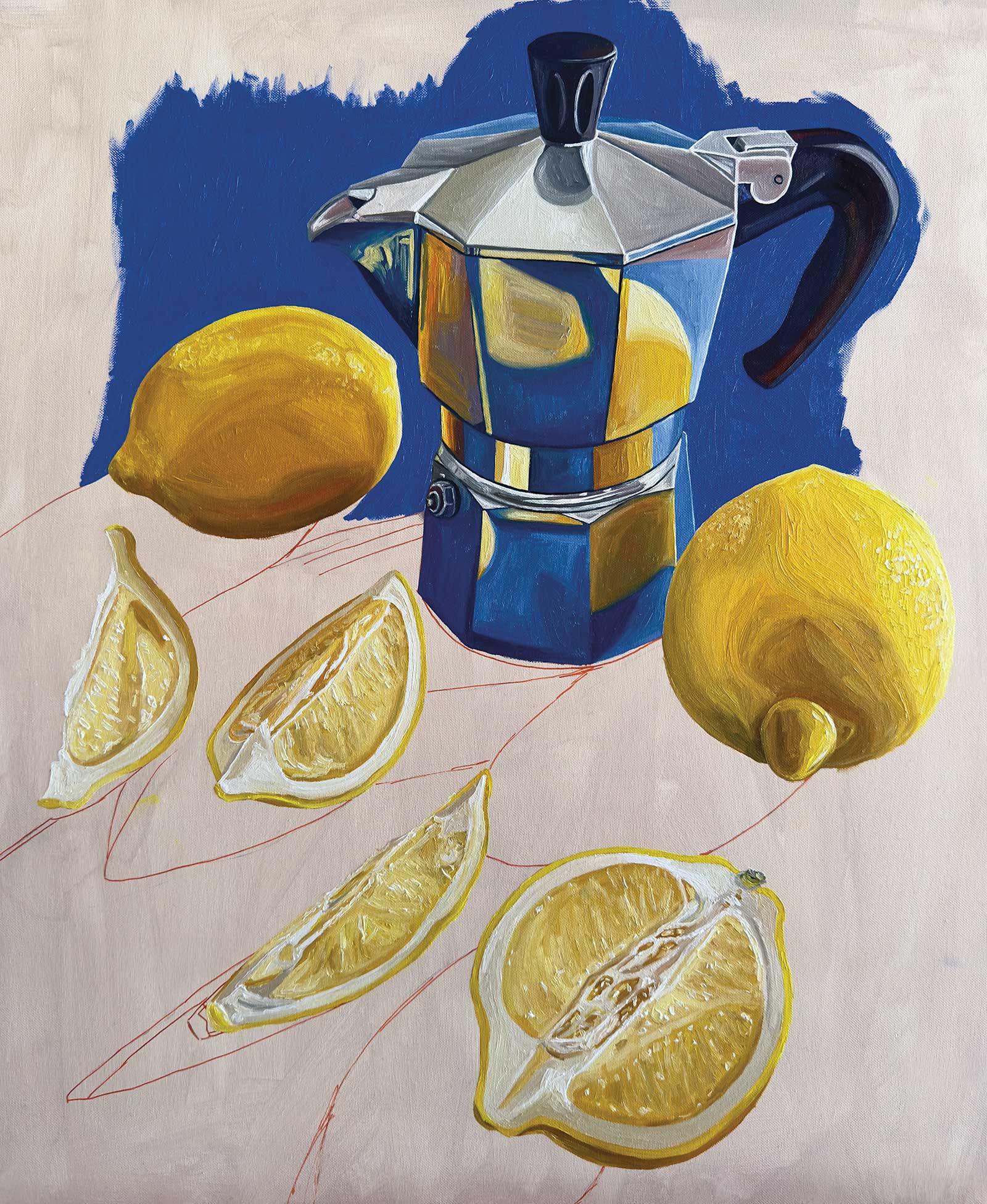
Stage 12 Finishing the Moka Pot
Although the base of the grays is ivory black and titanium white, I warm them up with some permanent orange and cadmium red, then cool them down with yellow plus a touch of background blue. These subtle shifts keep the reflections lively without feeling flat. And the moka is finished. As a final touch, I intensified the yellows with a top layer mixed with Liquin.
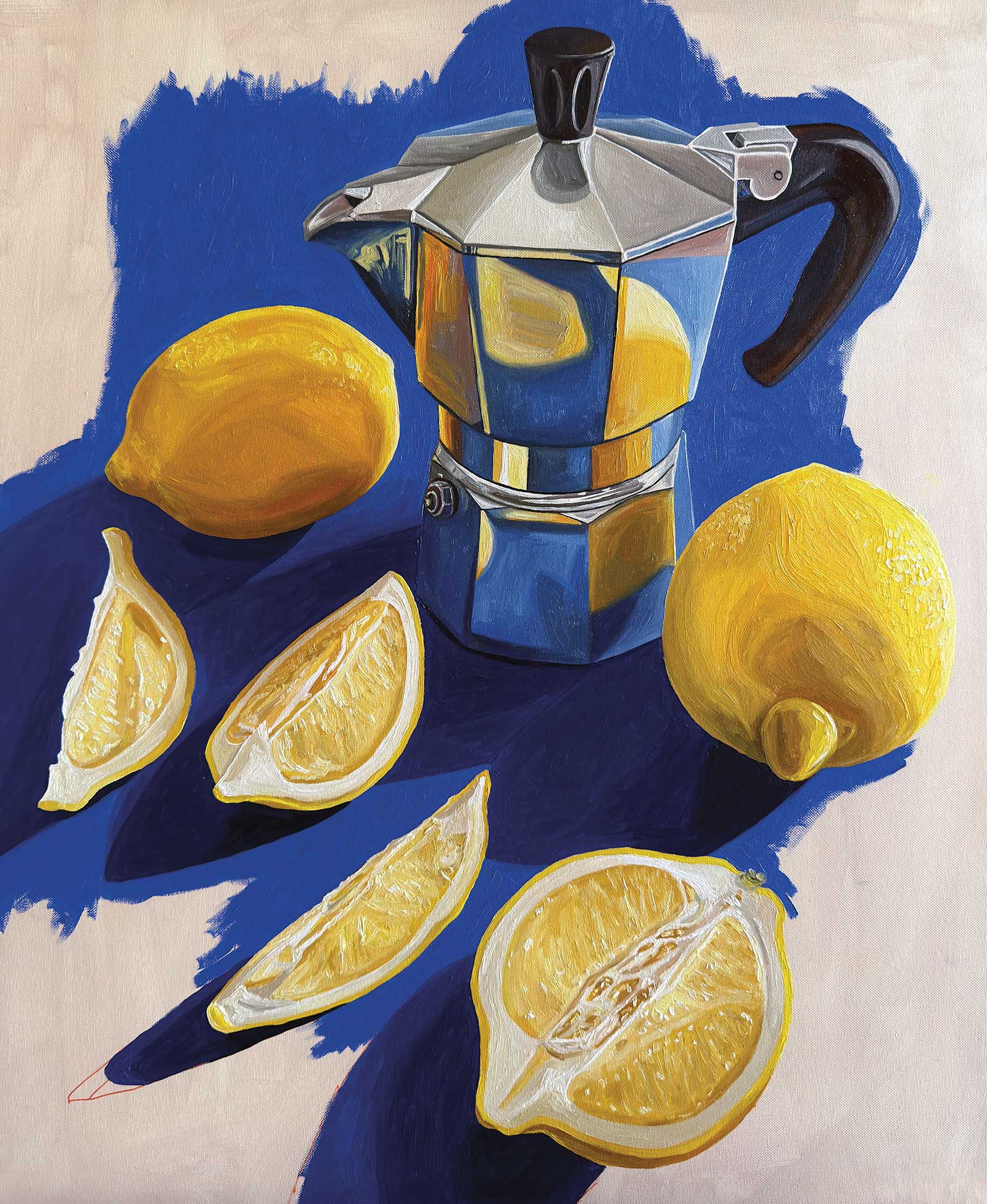
Stage 13 Shadows
Now, I’ve added the shadows. The background is a mix of French ultramarine, turquoise, titanium white and a touch of cadmium red to mute it slightly. For the shadows, I increased the ultramarine and reduced the titanium white to achieve greater depth. Surrounding the yellows with blue gave me great joy, and now the painting reminds me of Starry Night because of my palette.
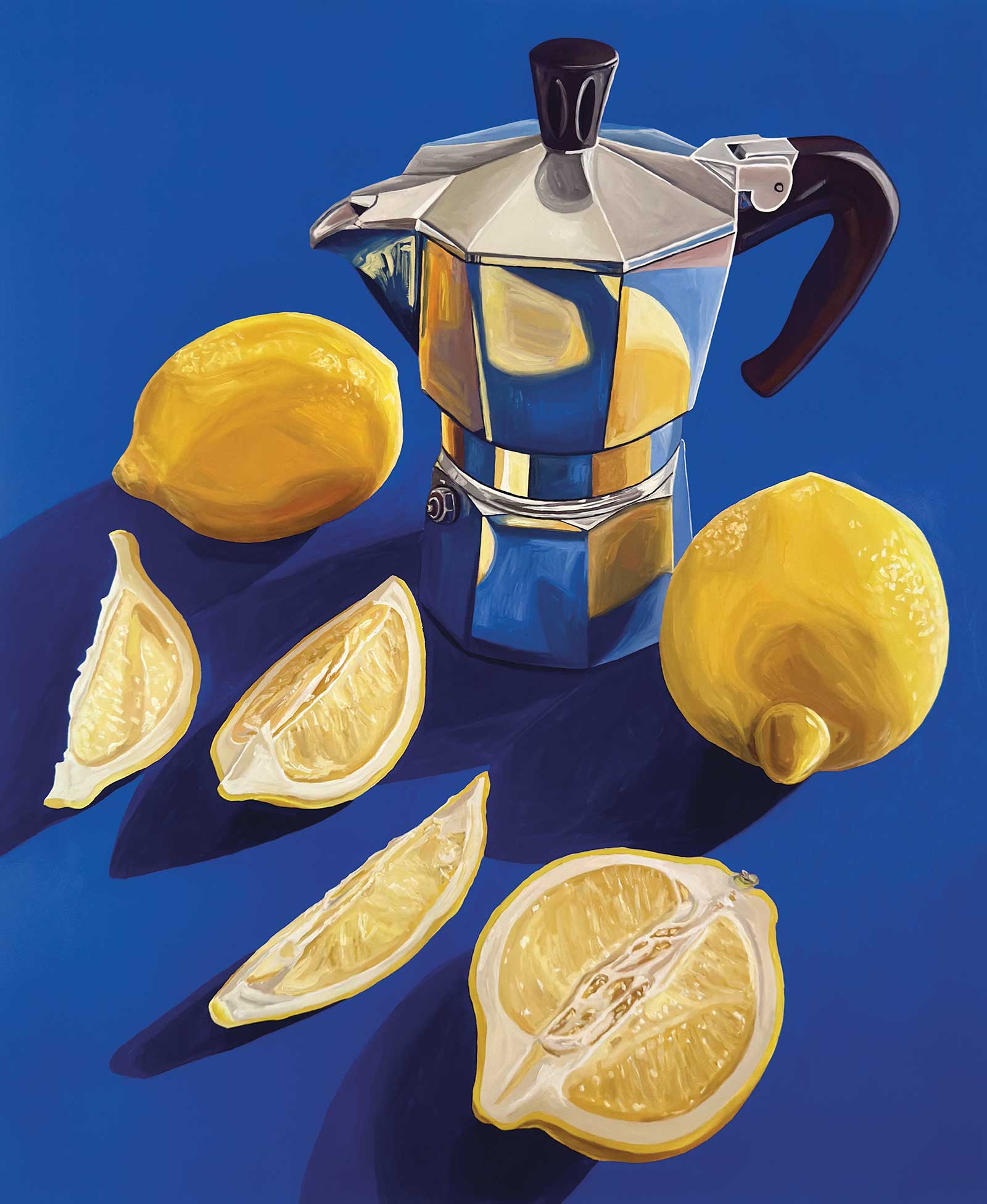 Sunlight Poured In Blue, oil on stretched canvas, 23½ x 19½” (60 x 50 cm)
Stage 14 Finished Artwork
And we’ve arrived at the finale! I usually reserve these strong backgrounds for my smaller paintings, but overall I’m very happy with this choice. It gave me exactly the energy I was aiming for: sunlight poured in blue.
About the artist
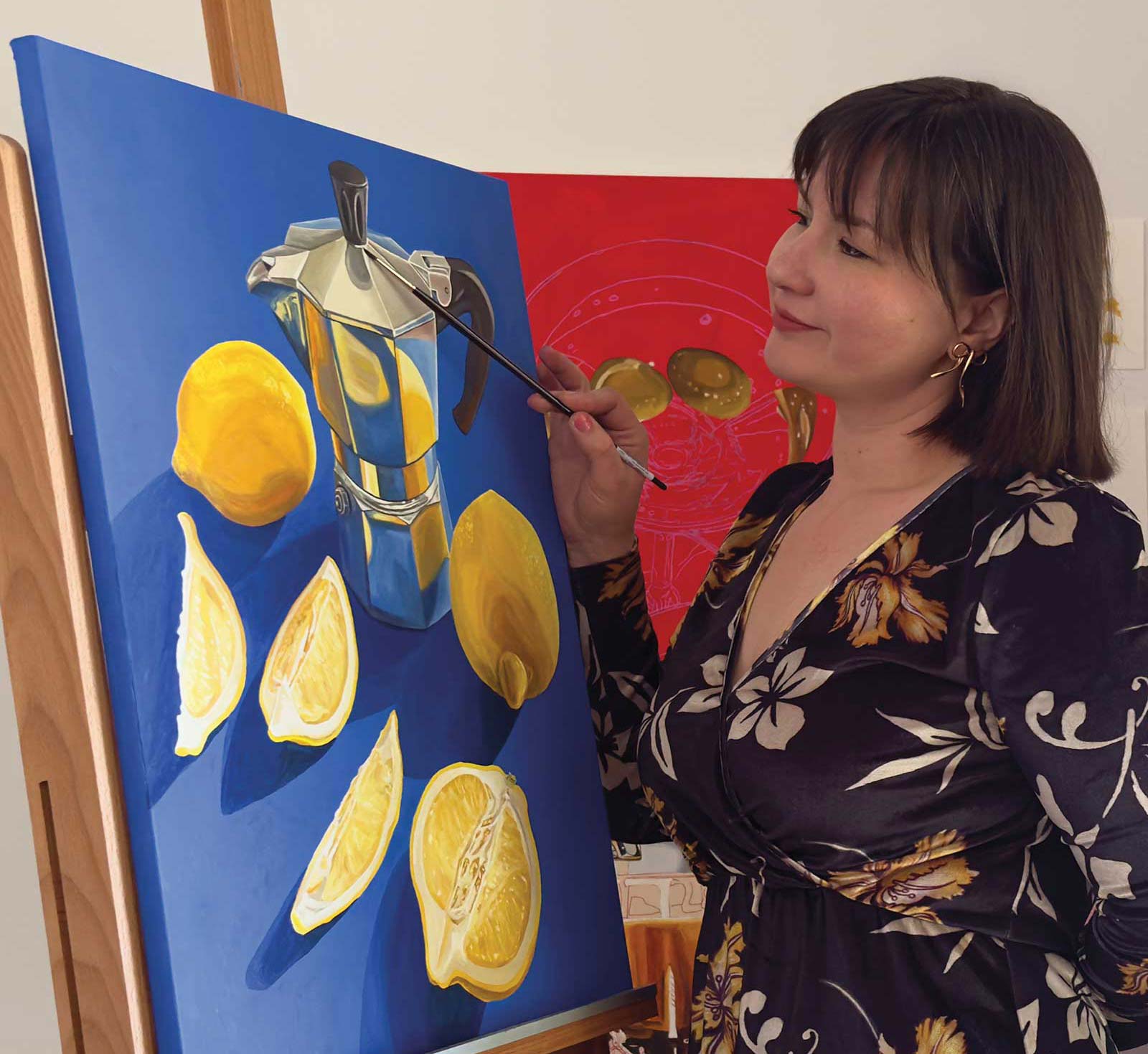 Cansu Rossi
Cansu Rossi is a Turkish-born painter based in Italy, known for her still lifes that explore the emotional resonance of everyday objects. Through bold color contrasts and precise brushwork, she transforms ordinary subjects into vivid, poetic images that bridge realism and emotion. Her work has appeared in several international productions, including original paintings created for Netflix’s Sweet Magnolias. She has also contributed to Creepshow and a Macy’s commercial. After years of following the daily painting discipline in small formats, she now expands into larger canvases with the same calm intensity, where discipline and spontaneity meet on the canvas.
Contact at
cansurossi@gmail.com
cansurossi.com