Scottsdale Artists’ School: What aspect of teaching at Scottsdale Artists’ School do you find most rewarding?
Peggi Kroll Roberts: One of the things I find so rewarding about teaching for SAS is that I have come full circle. The school is really where I got my first start into painting and teaching while transitioning from my illustration career. What I have found through teaching is being with such wonderful groups of like-minded artists. It has added so much growth and maturity to myself as an artist.
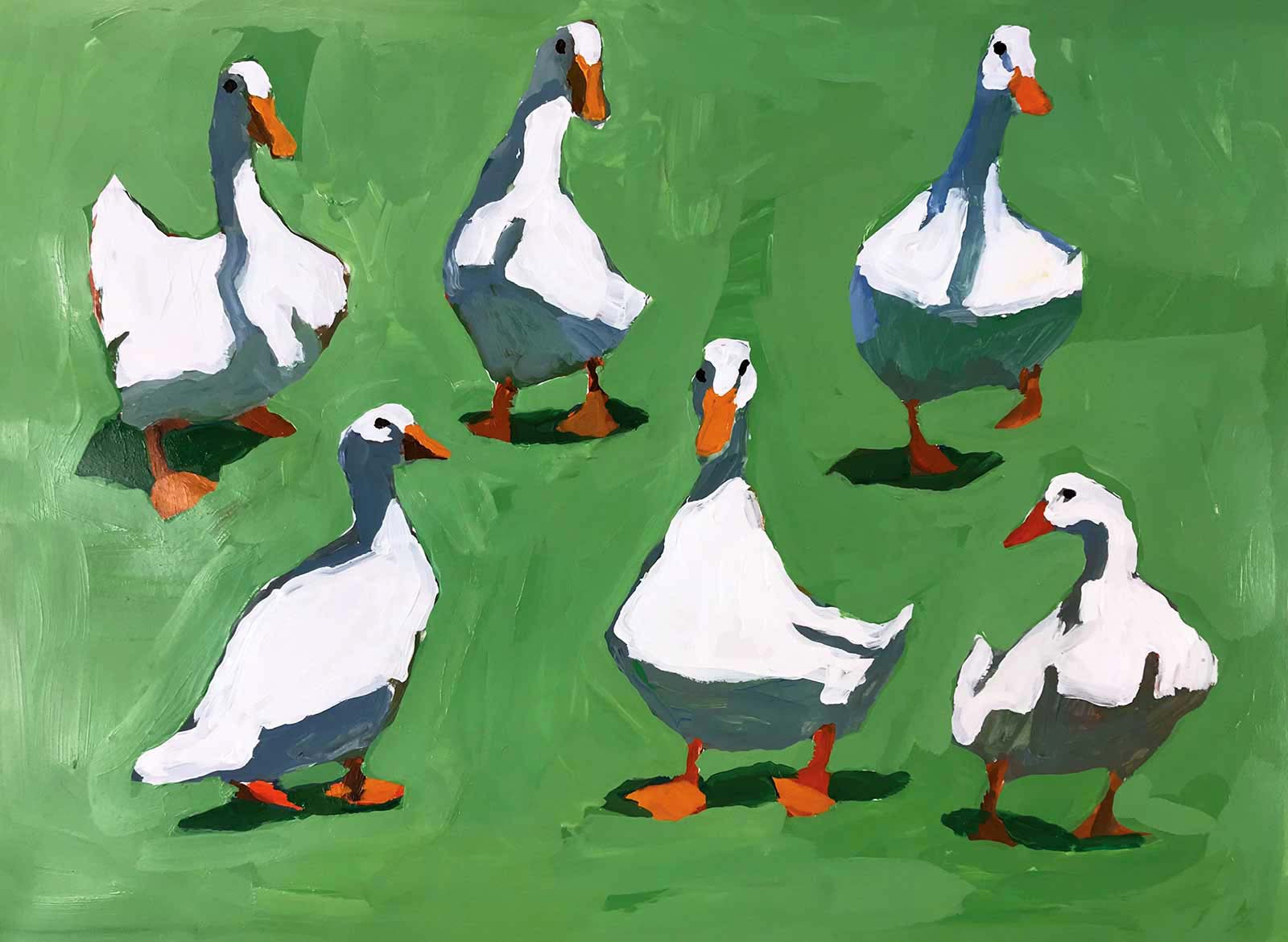
Ducks, acrylic on Bristol, 18 x 24” (45 x 60 cm)
SAS: How did the teaching opportunity begin at Scottsdale Artists’ School?
PR: My opportunity with SAS came in a bit of a serendipitous way. We have a mutual friend and colleague that we happened to be having dinner with. We were all catching up on what’s new when he started telling us about the school and showing us some work he had produced in the open studios. My husband Ray and I were so intrigued, and one thing we missed most from art school was the drawing and painting from life classes. So, we started getting a babysitter on Thursday nights and attended the sessions. It was the catalyst that changed the trajectory of our careers.
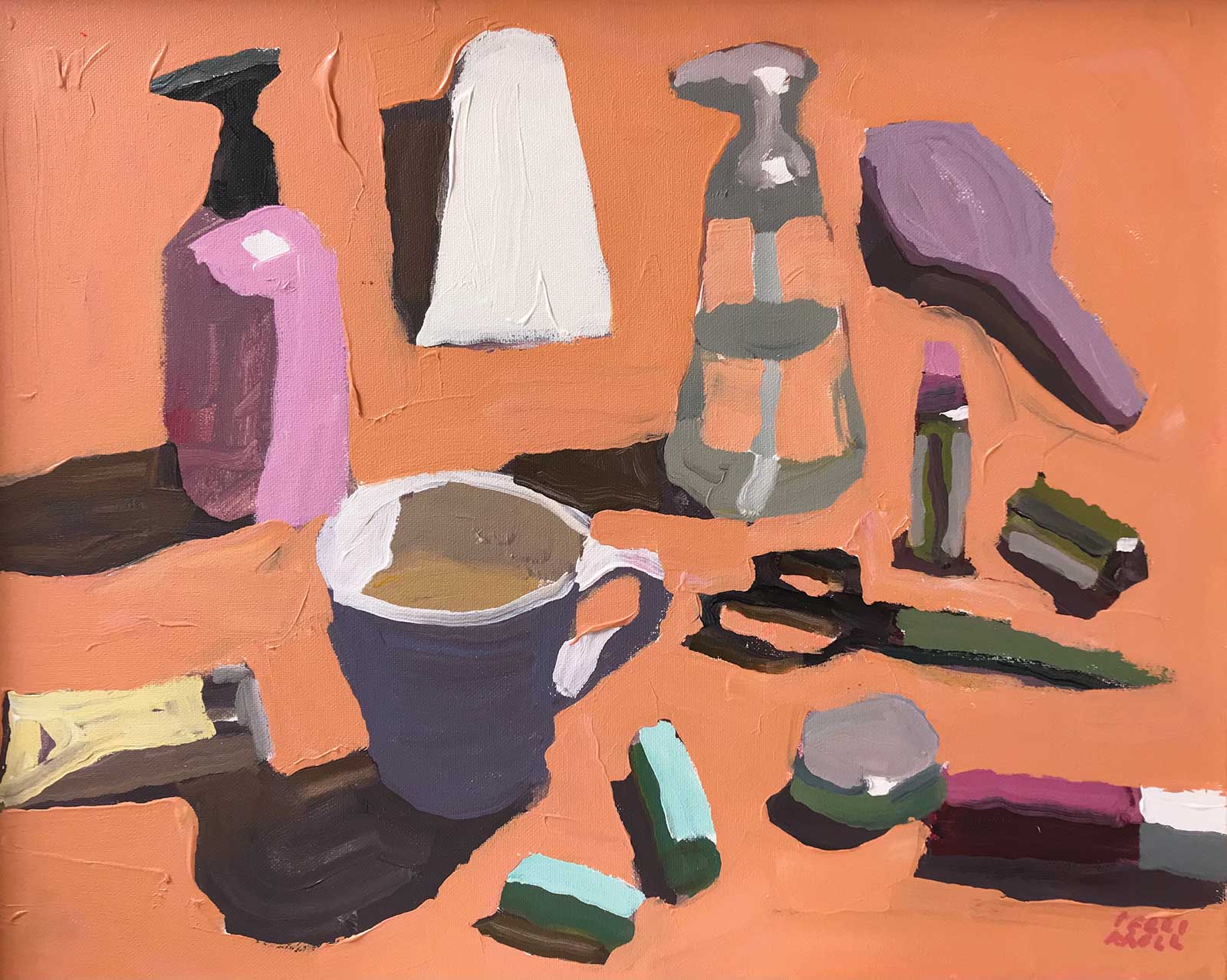
Objects on Melon, acrylic on canvas, 16 x 20” (40 x 50 cm)
SAS: Have you always wanted to become an artist?
PR: Yes. From being a young kid, I thought I might follow in my mother’s footsteps. My mother was a very in-demand fashion illustrator in the ’50s. There were a few side trips through college that I took but they didn’t last long. Then I applied to the Art Center College of Design and was accepted as an illustration major. This cemented my commitment to the arts.
SAS: Have you always gravitated towards painting figures in outdoor environments?
PR: When Ray and I decided to switch to painting careers, our first introduction was the experience of painting plein air. This was such a strong movement at the time (still is), and we committed to strictly painting from life. Ray’s direction was the landscape, and my love was always the figure. So with three young children, it was natural to use my own kids and all their friends as subjects.
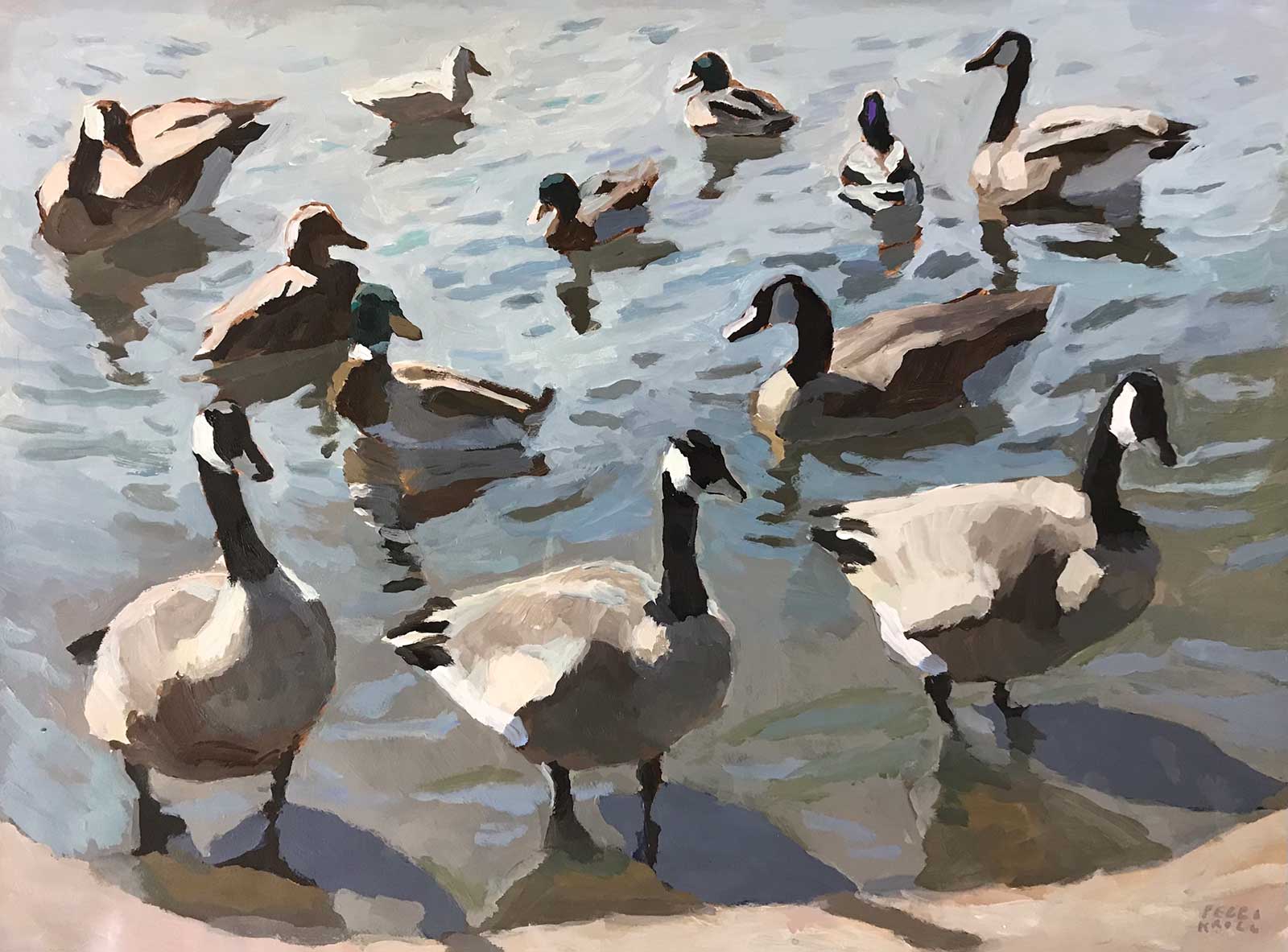
Local Residents, acrylic on Bristol, 18 x 24” (45 x 60 cm)
SAS: How much do drawing skills impact an artist’s ability to understand the relationship between color and value?
PR: I don’t think seeing color and value relationships has anything to do with drawing skills. There are too many works through art history that explain that; the abstract expressionists come to mind.
SAS: Can you give us a sneak peek of your upcoming workshop?
PR: As an instructor I like to give small exercises in the beginning. I give two or three goals to the overall objective, which can help an artist stay on track. These two or three “ingredients” stay in front of all the other decisions it takes to make a painting. I find it comforting and map-like. Then as the day progresses, I ask the artist to think of their goal or “what they want to say” through the process. For example, if I decide to create a high-value key work, I decide on the values I will choose to create that effect. Or a great exercise is “one value for everything in shadow,” and keep everything illuminated light in value. Or if an artist struggles with paint application, then we do a limited stroke exercise. The “recipes” are limitless. Art history proves this.
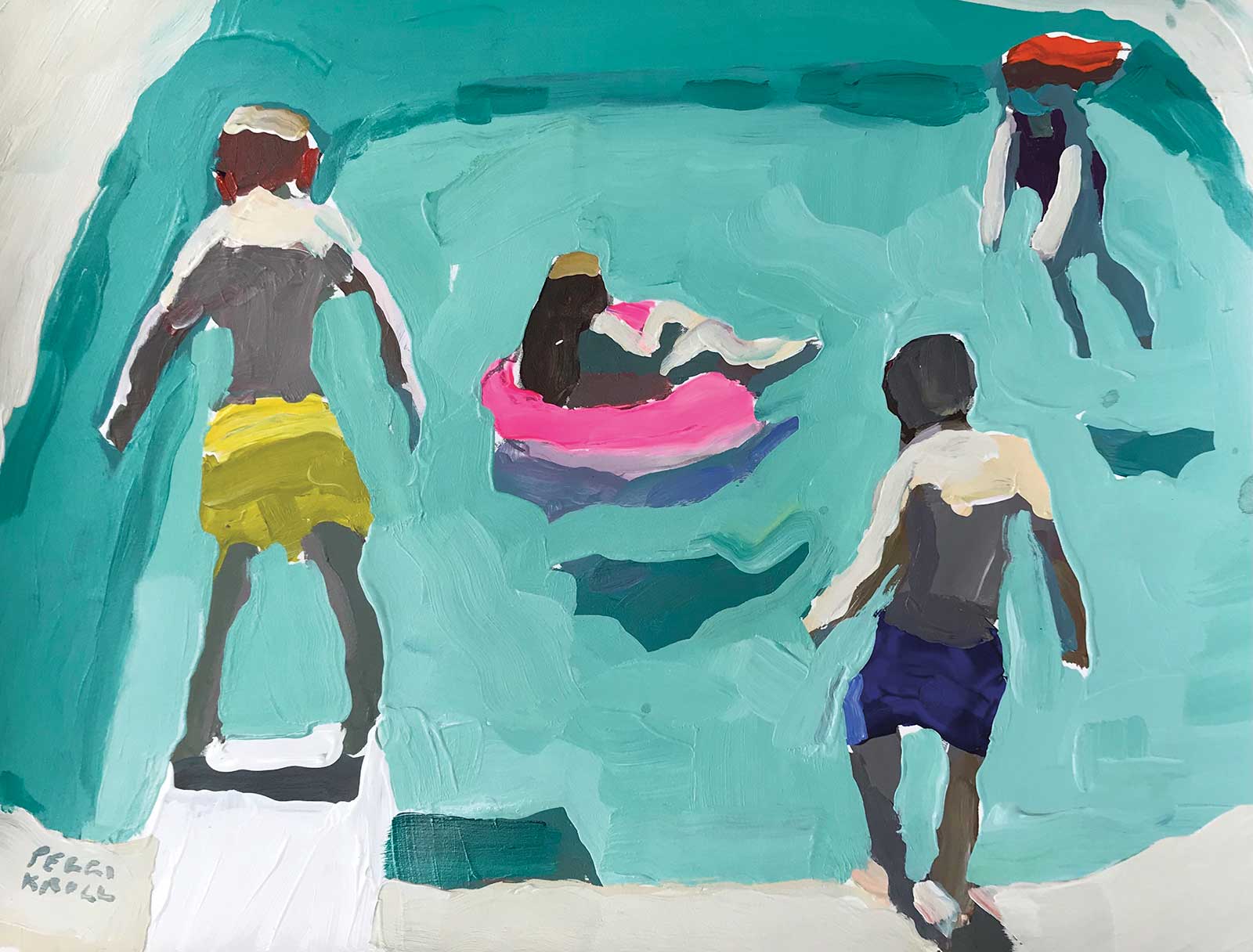
Kids and Pool, acrylic on Bristol, 9 x 12” (22 x 30 cm)
SAS: What is the biggest takeaway you hope your students will gain from your workshop?
PR: I hope students take away a feeling of confidence, and that their confusion is reduced when approaching a blank canvas or piece of paper. —
Visit scottsdaleartschool.org for more information on the school and its upcoming workshops.