
The “no talking” policy was originally established in the conservatory and atelier environments to enforce the concept that the only voice that should be heard in the classroom is the instructor’s. Over time, however, I have seen this policy transform into different meanings, given the varying expectations of the curriculum. A model should always be aware of the exact meaning this policy entails per class. Traditionally, an instructor prefers silence in the classroom to determine whether or not adjustments need to be communicated to the model. When students chime in on the adjustments or contradict the instructor, it can be distracting both for the model and the students.
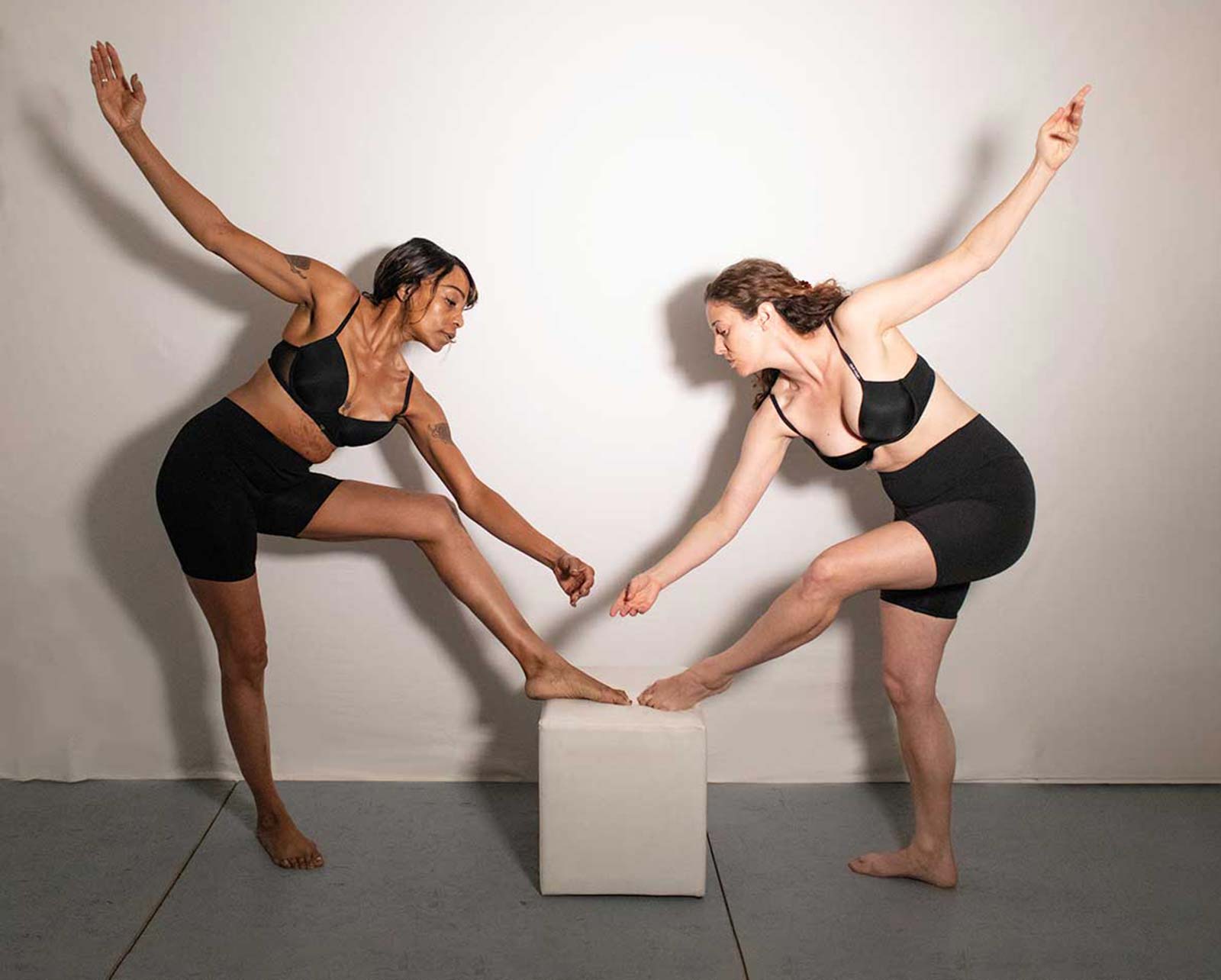
Models Athene Kelly and J. Roppolo Jacobs (Jillian) posing at Aguilar Studios. Photo by Alejandro Aguilar.
Expressions, posture and demeanor have a tendency to act as guiding posts for capturing the model’s essence, especially when there are communication restrictions that vary between different environments.
With that said, it is important to determine whether or not a studio has a no talking policy.
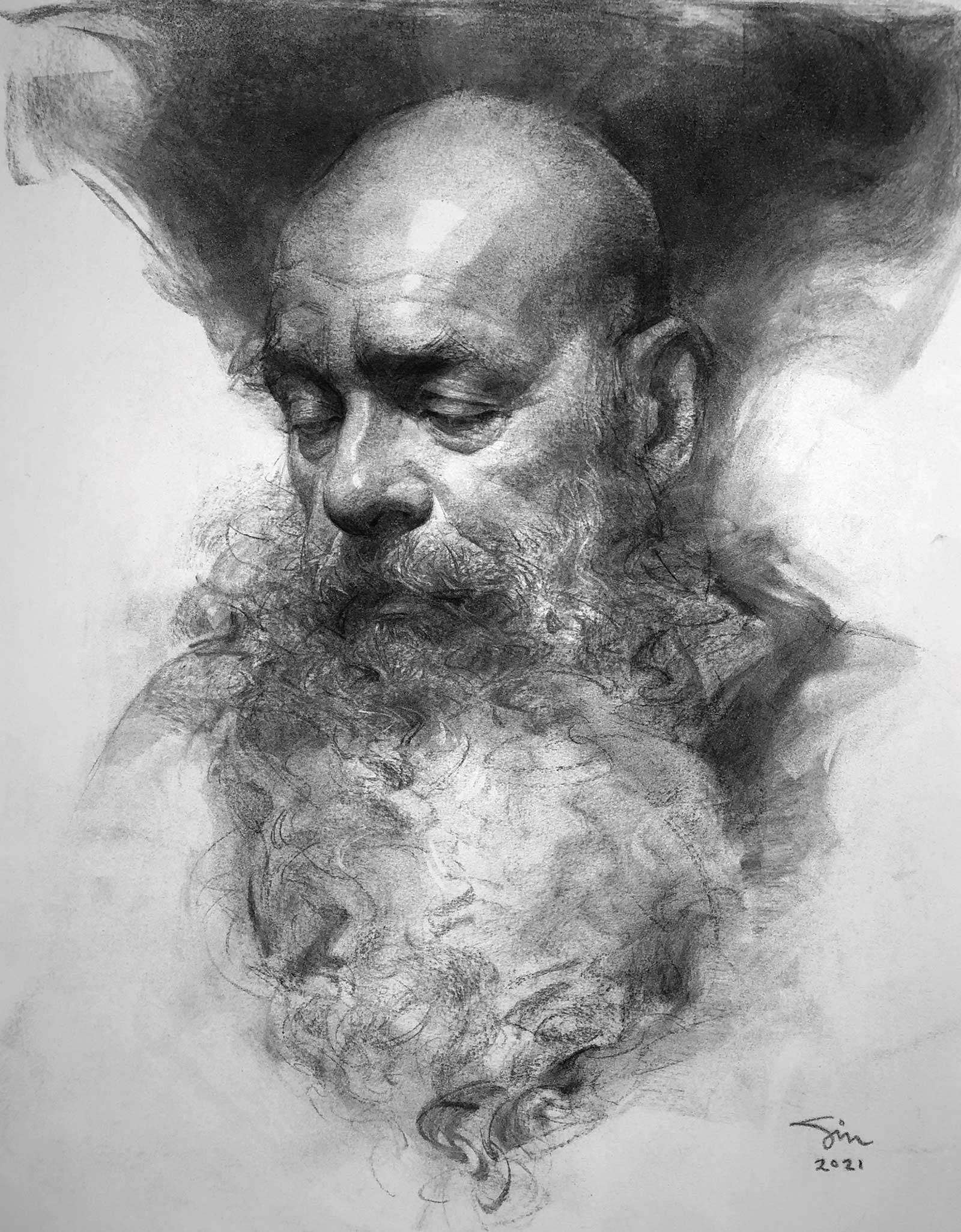
A drawing of prominent figure and portrait model John Carrasco, by Oliver Sin.
“Idle chatter can feel distracting—or even objectifying—when a model is working hard to maintain stillness and vulnerability.” - Oliver Sin, professional artist
I find no talking policies differ depending on the institution and the curriculum. My first modeling gig at a college in New York City had one of the strictest no talking policies I’ve ever come across. Not a single student was allowed to talk to me, which I must admit felt a little nerve-wracking since I genuinely love artists. At times, I felt as if I was trapped behind invisible glass every time I stepped onto the platform. Looking back, I understand why it was enforced: Classes were definitely on the larger side—a minimum of 25 students per class—and the students were mostly in their infancy of forming opinions while building their technical, observational and professional skills. It is now known to me that if everyone had said exactly what they felt at any given moment, it would have been a very noisy scene, and I’m not sure how productive that environment would have been under those distractions.
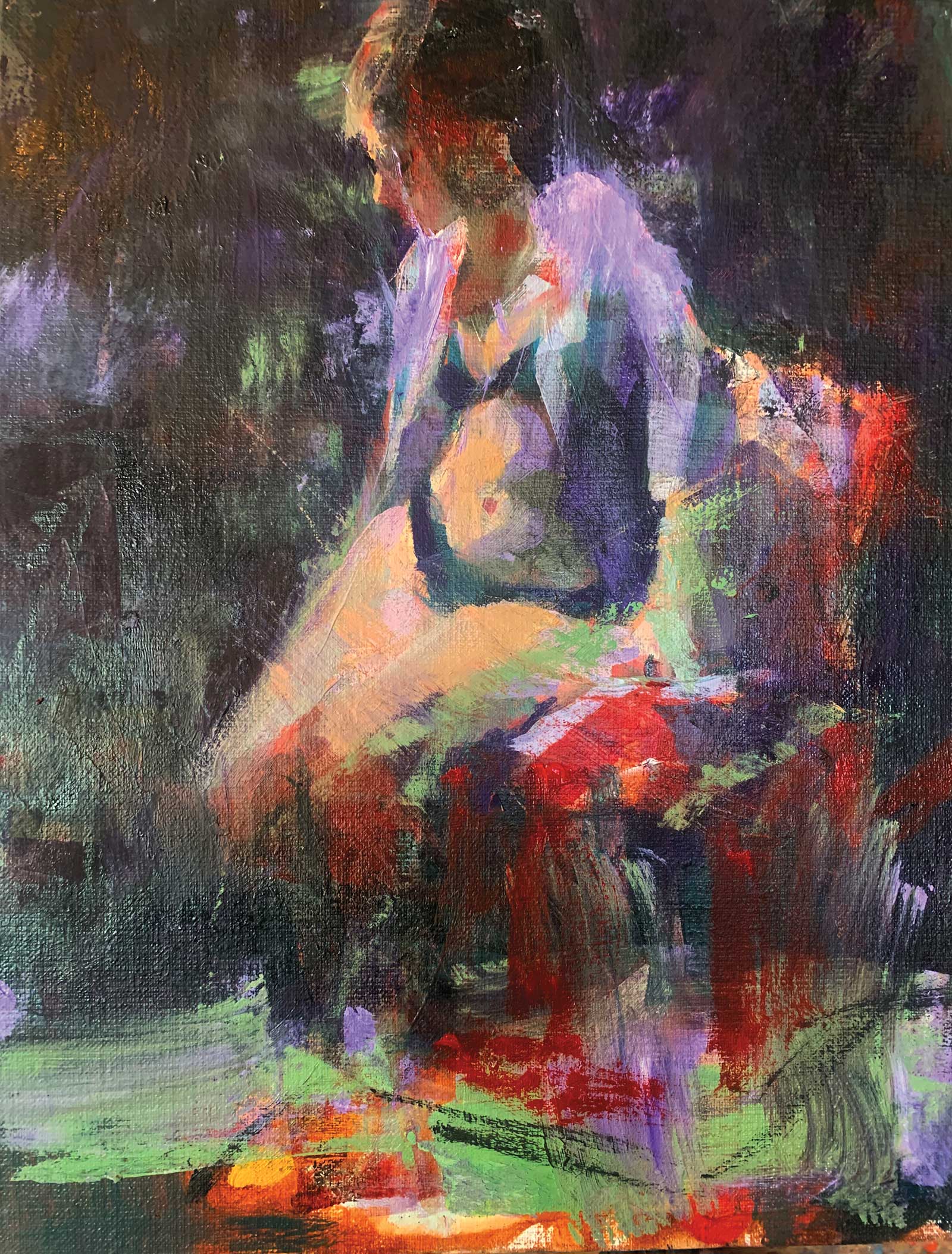
Red Striped Chair by Margaret Dyer.
“This rule is designed to help artists maintain concentration and to foster a quiet, professional atmosphere. Being aware of and respecting these policies is essential. Drawing or painting from life demands focus. Even small conversations can pull an artist out of the deep observation required to capture gesture, proportion or expression. Silence helps maintain an environment where everyone can concentrate fully on the work. Holding a pose, especially a nude pose, requires intense physical and mental effort. Silence conveys respect for the discipline and presence the model brings.” - Oliver Sin, professional artist
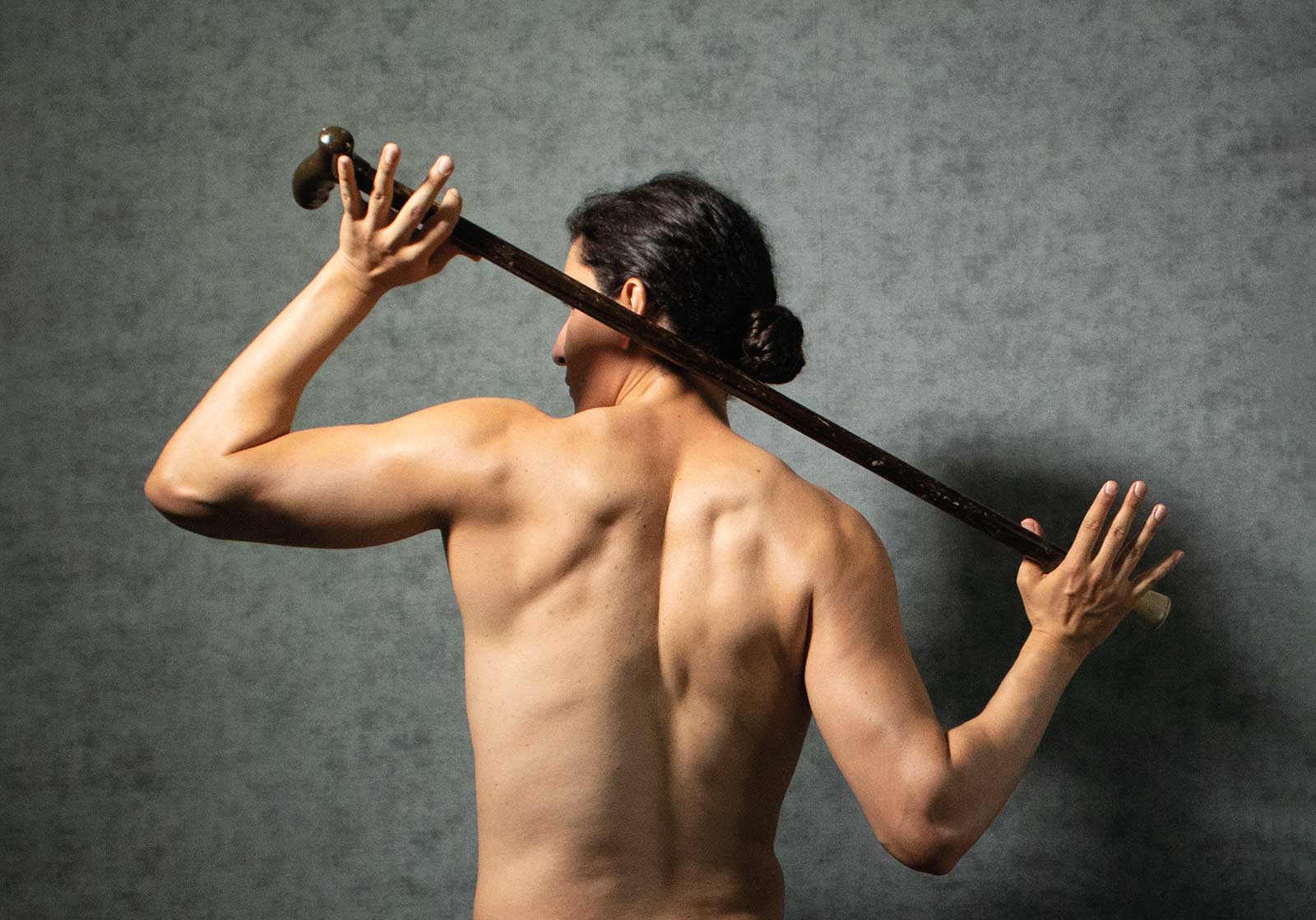
Model Alejandro Aguilar.
True story: I had accepted an assignment to model with another individual on the last day of a week-long workshop. Once we took our poses on the platform, the instructor gave us a cue to engage in a conversation in order for the students to capture us in a casual setting. It didn’t take long for a disgruntled student to approach us and exclaim, “I’d really appreciate it if you do not talk!” The instructor intervened and explained that we were doing what was asked of us. During a conversation with the modeling coordinator the following week, one of the models approached us to report to the coordinator that one of the models in that same workshop would not stop talking, and it was so disruptive that a student made a condescending remark out loud about how it would be nice if she was able to hear what the instructor was saying. Another student fired back that her remark was unacceptable, and the two students started arguing. I could almost imagine that it was the same student who got impatient when I was on the platform, and that could explain their frustration.
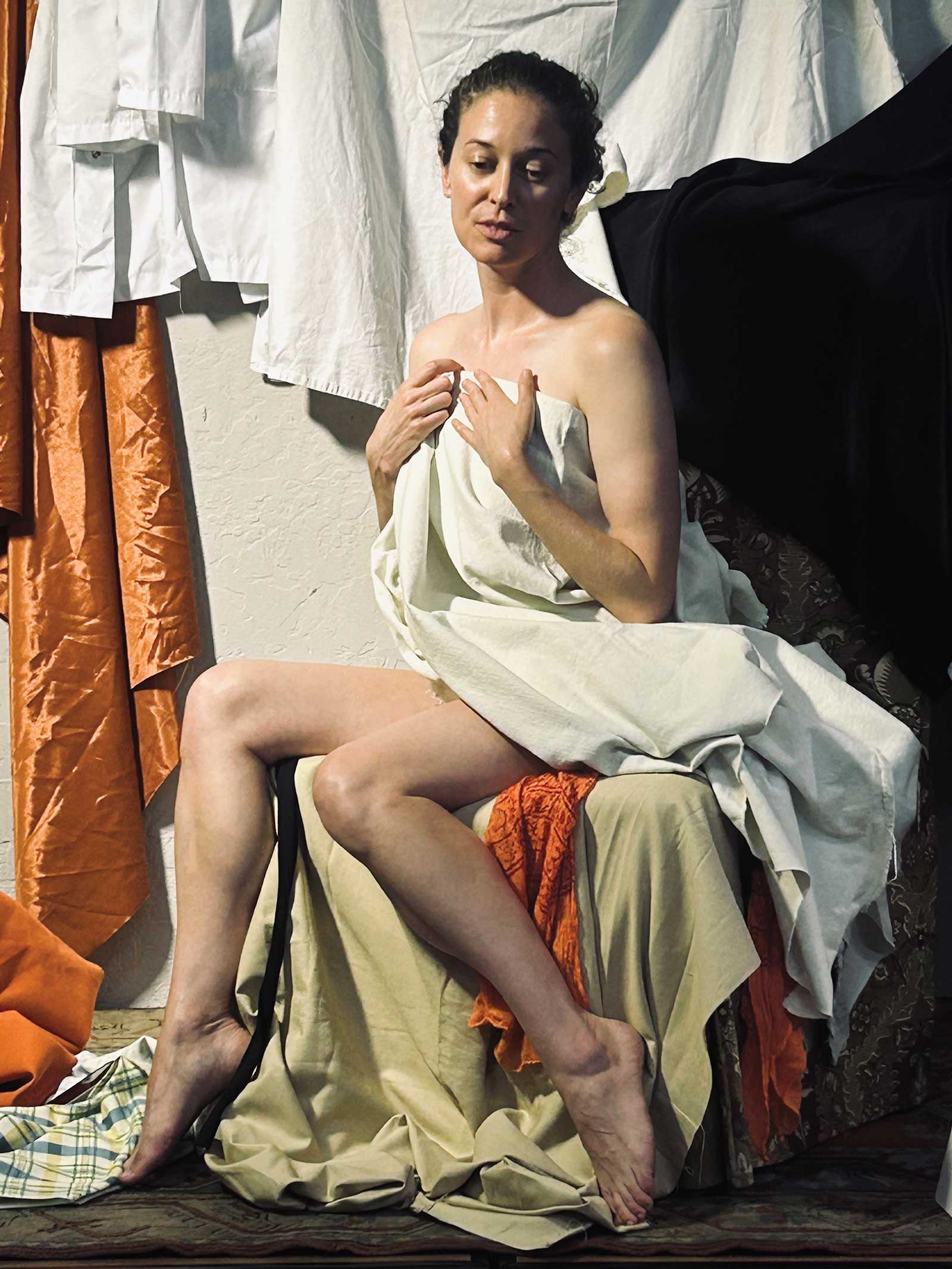
Jillian poses for a session at Scottsdale Artists’ School. Photo by SAS student Joe Borik.
Have there ever been exceptions to this rule? Yes! I was modeling at the NYC college, and it was my third week into the assignment. The hours were long, the pose was challenging, and I was picking up the vibe that everyone was feeling, as if the last five minutes of the class were starting to drag. One of the students sighed, and it caused a little bit of snickering amongst the students, and I started to withhold a giggle that so desperately wanted to come out. Then suddenly a student picked up on it and started giggling. The rest of the class started to giggle, then I couldn’t hold it in anymore and joined them. “The model is laughing!” one student announced. Then everyone completely lost it. “She’s not just posing, she is present with us!” another student managed to shout out, and the giggling continued for a little bit. Ultimately, it lightened the mood of how deliriously tired we were all feeling.
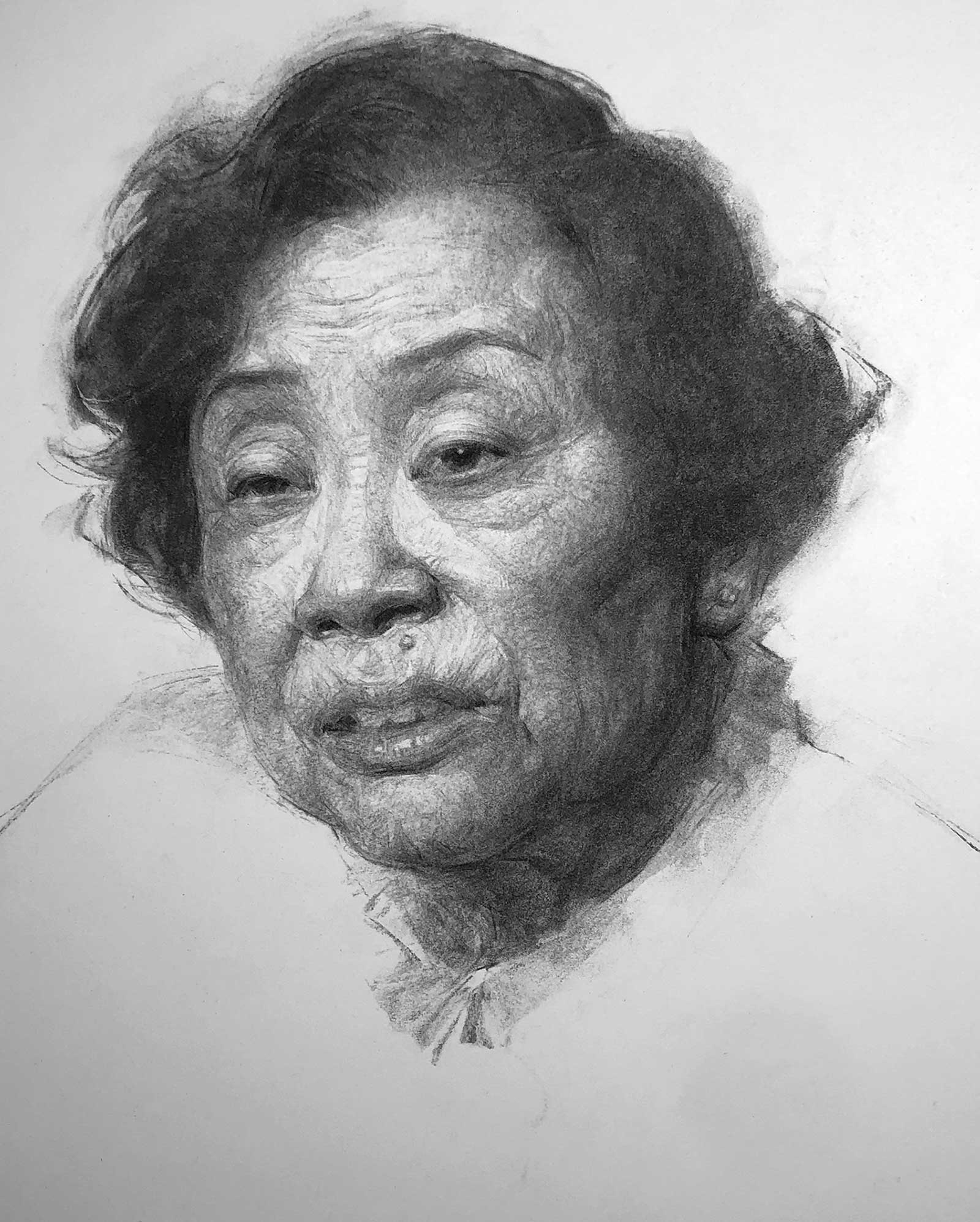
A portrait by Oliver Sin.
When I changed out of my robe, the instructor took me aside and asked if I would consider staying on as their model for the rest of the semester. “They now feel comfortable with you, and I think their work will be better because of it.” I gleefully accepted the offer, and it was the first time that an exception to the rule was made: that before class started, students were allowed to greet me upon arrival and we could end the day with saying a proper goodbye.
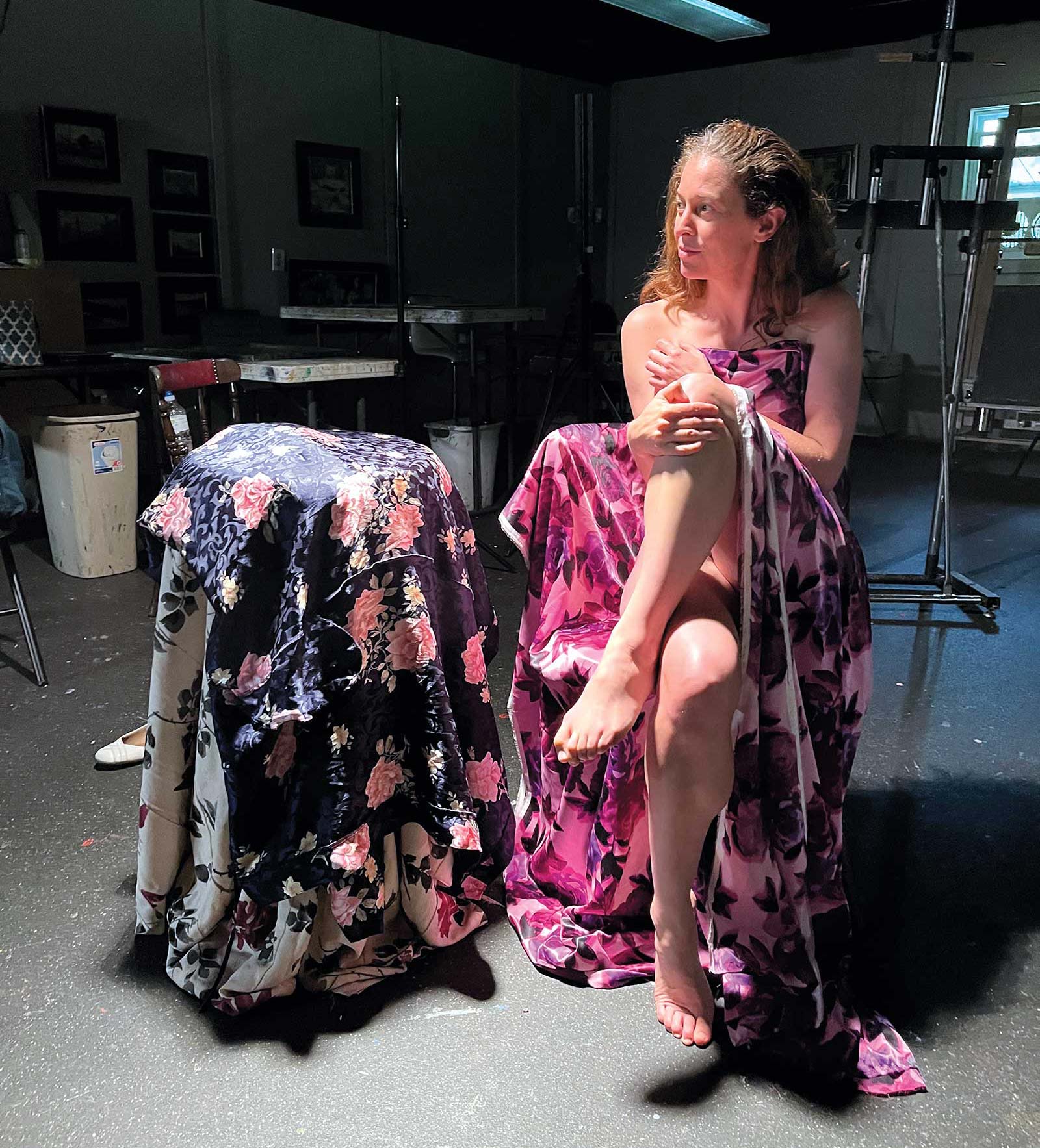
Jillian models for Margaret Dyer in the studio.
To conclude this coverage of the basics, I will circle back to what I’ve said earlier. With art school enrollment on the rise, I feel it is important to understand what it takes to create that long-lasting, healthy, supportive, working relationships between models and artists. When trust is built in an artistic space, it can have a tendency to transform it into a beacon of joy. And through that joy, the inspiration and possibilities of creating masterpieces together are infinite. —
Jillian Roppolo (known publicly as J. Roppolo Jacobs) is an award-winning atelier model with over 18 years of experience working with world-renowned artists. Her resume includes New York City’s Fashion Institute of Technology, Brooklyn College, Scottsdale Artists’ School, Phoenix Center for the Arts, Los Angeles’ Kline Academy of Fine Art, the Valley Art Workshop and Italy’s the Florence Studio. Her article “An Open Letter to Art Students” has been published in Arianna Huffington’s Thrive Global (drawing from her experience modeling for teen artists), and she currently serves as the social media coordinator for Scottsdale Artists’ School. While continuing her mission to collaborate with artists, Jillian hopes that sharing her experience will inform and empower models whether they are in the midst or at the beginning of their artistic journey.