When we’re younger, we tend to see the world in a different way—the colors seem brighter, the summers feel longer and each moment has an extra touch of something magical about it. And although that magical spark appears to fade as we grow up, it’s still there, we may just have to look a little harder to find it.
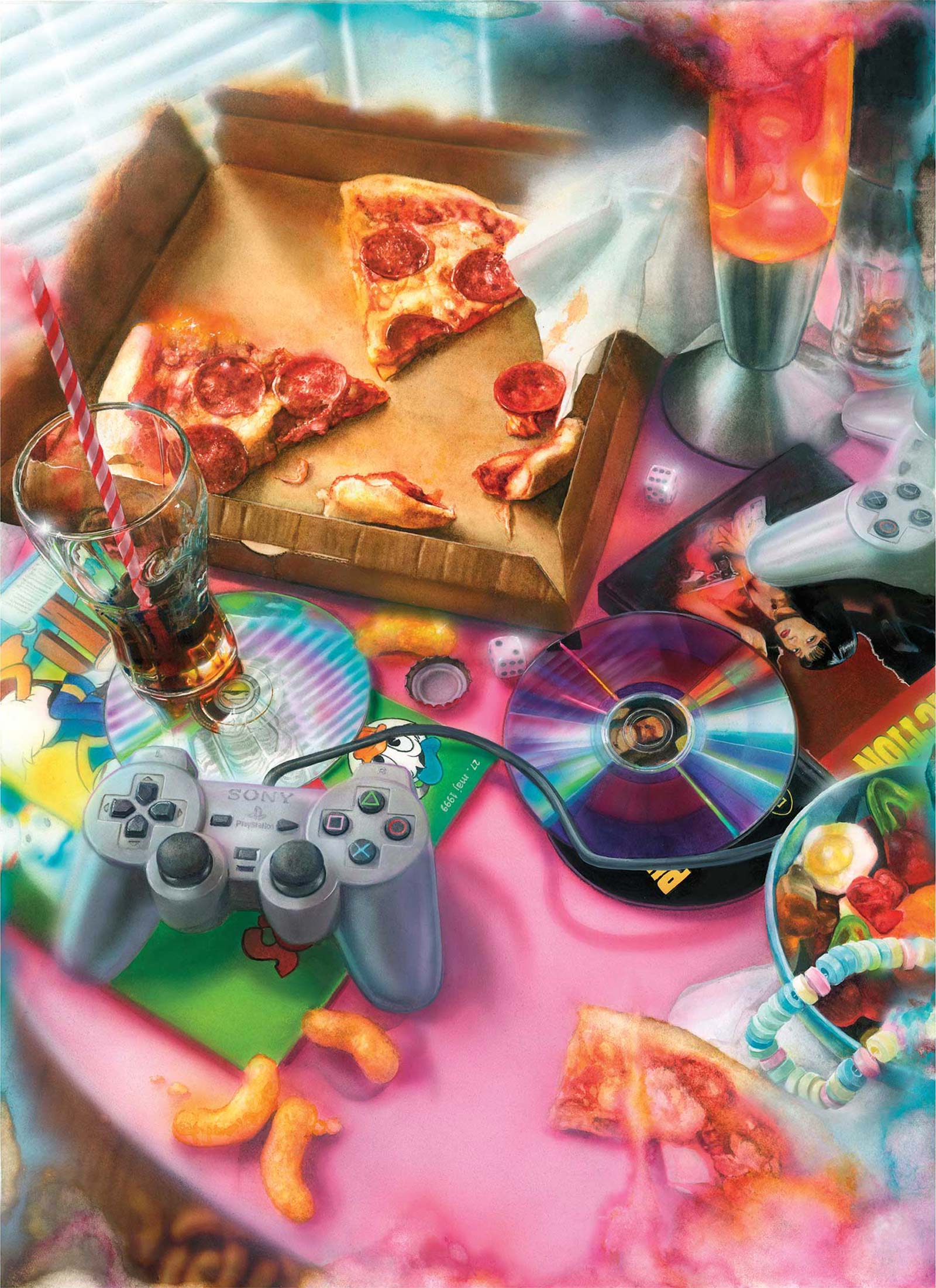
Summer of 99, watercolor, 15½ x 11" (39 x 27 cm)
I’ve always been a child at heart and find inspiration in the toys, gadgets, food and pop culture that surrounded me growing up. Food especially, has always been an immense source of inspiration for me, but it’s about more than just the food itself, it’s the storytelling. The way a certain dish or snack has the ability to transport us to a specific moment in time and how it connects us to those memories.
Through my work, I explore these connections and am continually fascinated by how, despite our individually lived experiences, we share so many of the same core emotions and values. My goal is to evoke that sense of childhood magic and nostalgia, inviting the viewer to reconnect with these moments and rediscover how colorful life can be.
My works often start with a feeling, a memory or a touch of humor, and in this case, all of the above. Though I’m not a beer drinker myself, I do enjoy game nights with friends, and this painting was in part inspired by those nights. If we take a second to revisit classic stereotypes, beer is often thought of as being a “manly” beverage. Thus, I figured it’d only be right to serve a “manly salad” to go with it. Cassettes are one of those things that make me smile every time I see them, bringing back fond memories of both listening to music and recording pretend radio shows with friends, so I’ll take any chance to include them in my work.
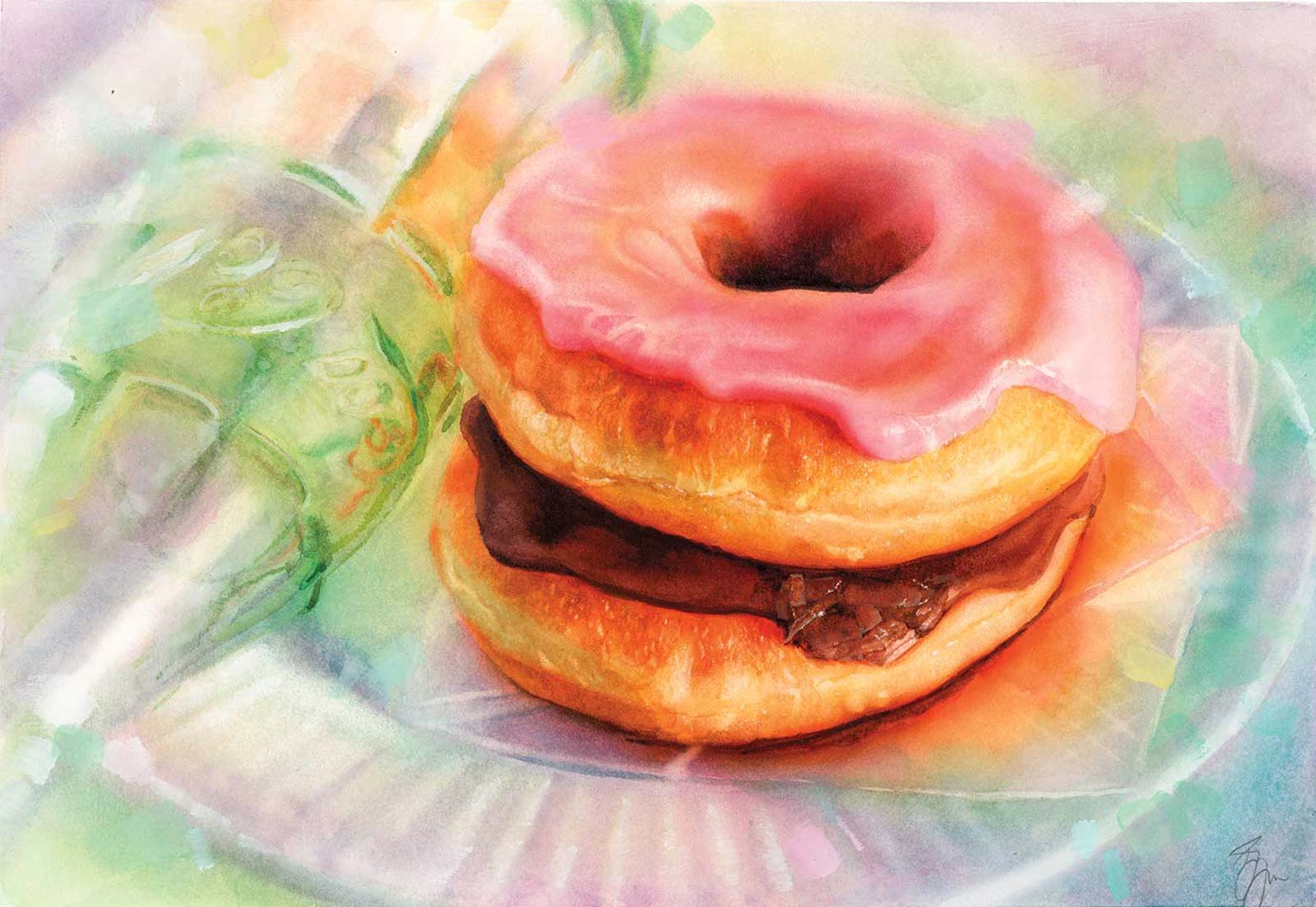
Sugar Halos, watercolor, 8¼ x 11" (20 x 27 cm)
After creating a rough thumbnail sketch, the next step is gathering the props, which is one of my favorite parts of the creative process. I frequently browse local thrift stores in search of new props, looking for specific items or simply allowing inspiration to strike. I love how each piece has a past life and a story to tell, and though I try to keep everything in the studio, I have been known to “add to” the kitchen as well, much to my boyfriend’s dismay. Once I’ve taken a few reference pictures, I cut my paper to size and tape it to a board. If starting a painting that I won’t complete within the next couple of days, I’ll typically use gummed tape to avoid it lifting from the board during the painting process.
My Art in the Making: Beer, Board Games & Salad on the Side
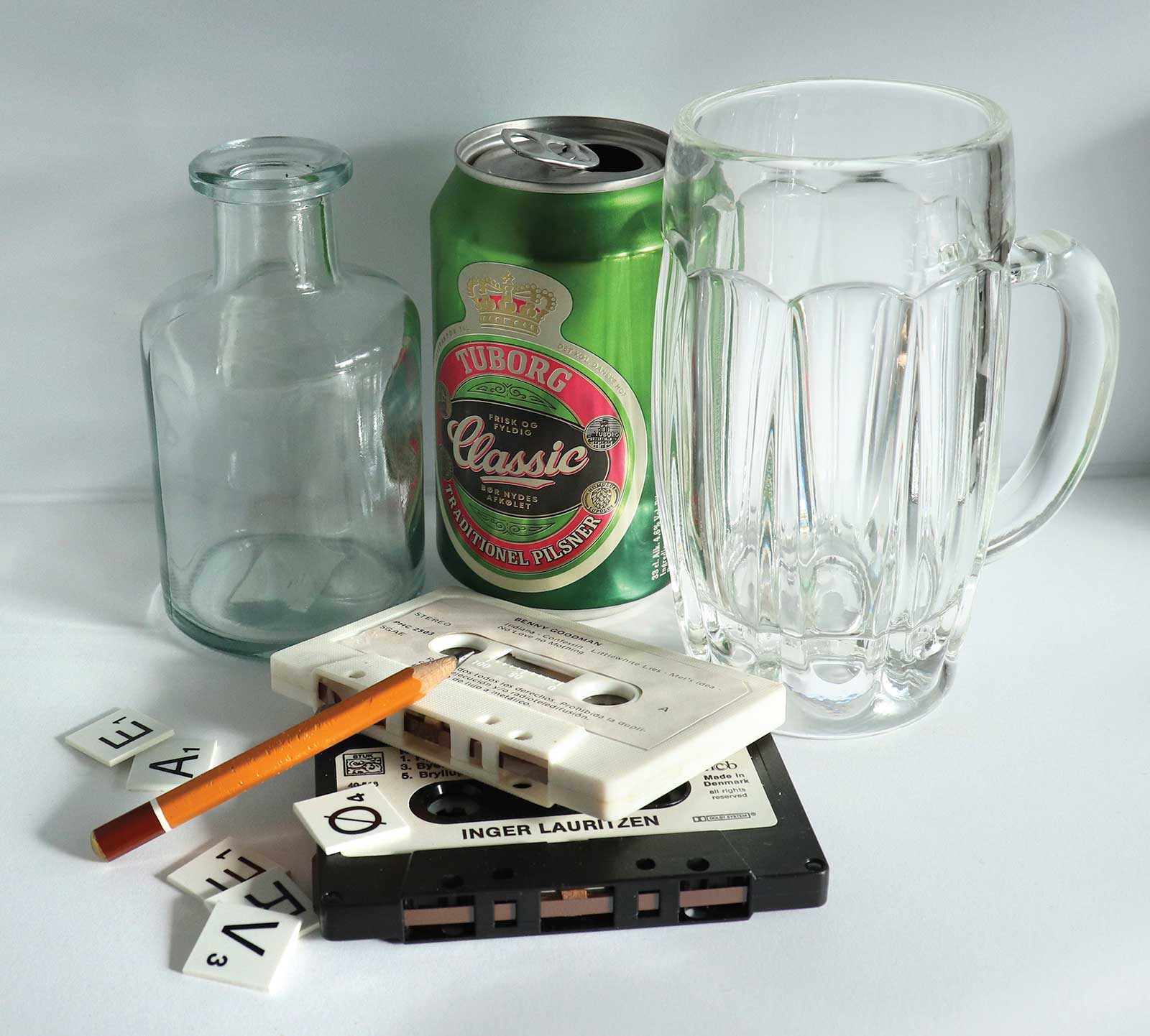
Reference Photo
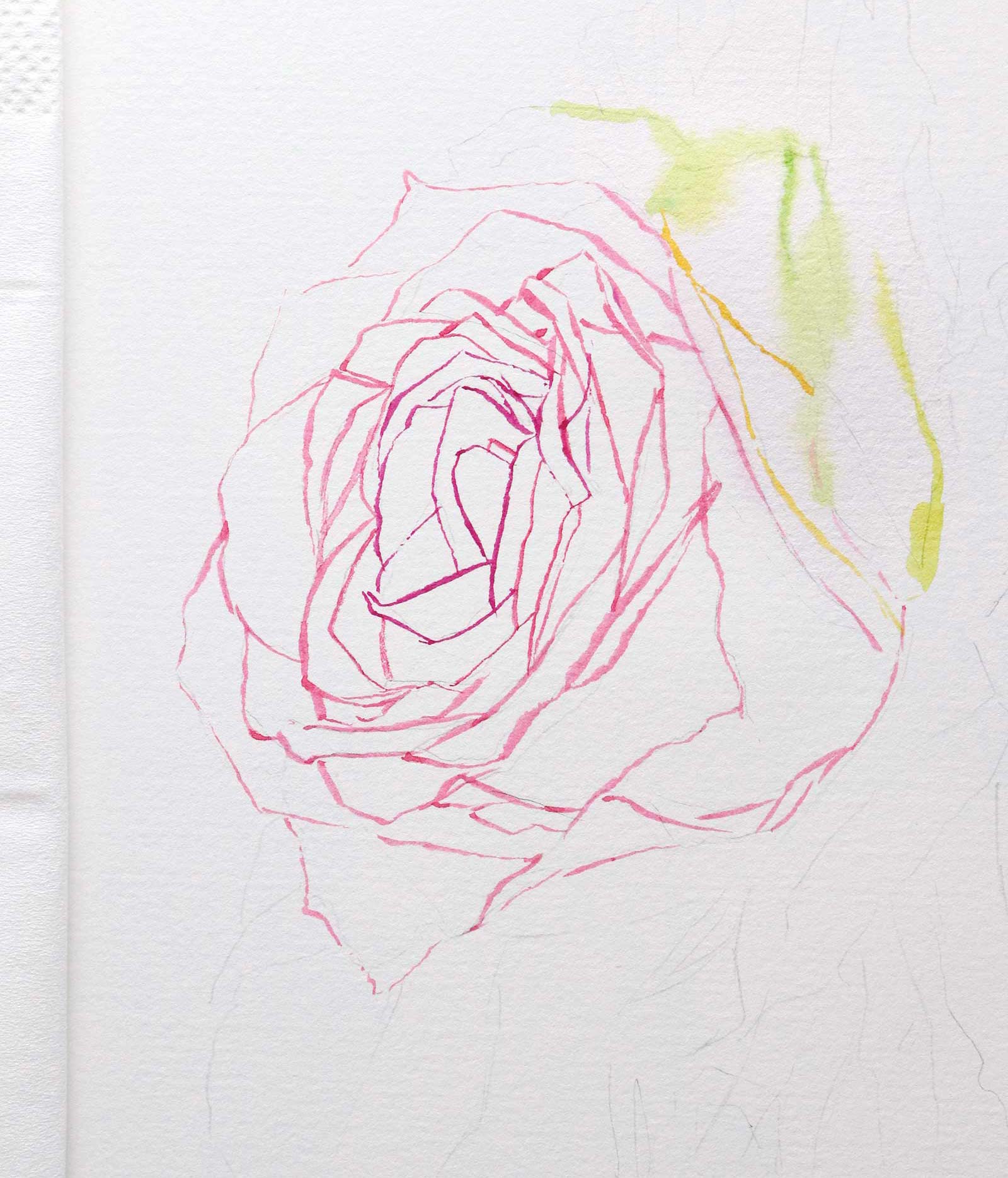
Stage 1 Sketching in Paint
I rarely add much detail to my pencil sketches and prefer to work things out with paint instead. I’m not overly concerned with complete precision, as my goal isn’t hyper realism, but because I still want the rose petals to make sense in the end, I use watercolor to create a slightly more accurate outline and add in any missing petals.
WHAT THE ARTIST USED
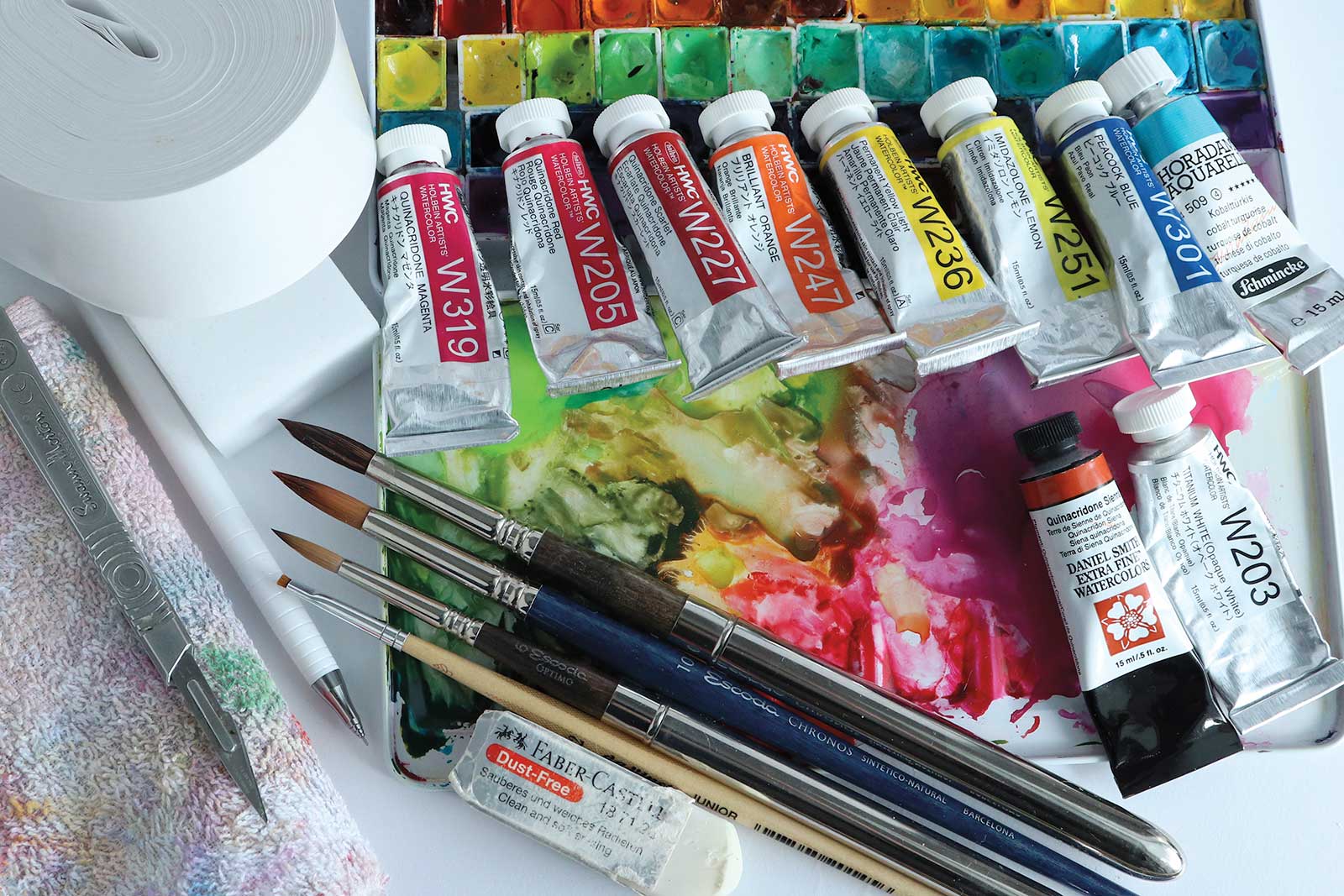
Watercolors
Quinacridone magenta (PR122), Quinacridone red (PV19), Quinacridone scarlet (PR209), Brilliant orange (PO73 + PY110), Peacock blue (PG7 + PB15), Cobalt turquoise (PG50), Imidazolone lemon (PY175), Permanent yellow light (PY74 + PY83), Quinacridone sienna (PR209 + PO48 + PY150), Titanium white (PW6)
Brushes
Da Vinci brush, size 2, cut down for highlights, Escoda Versatil, size 10, Escoda Chronos, size 10, Escoda Optimo, size 6
Additional Materials
Gummed tape, Cloth, Fabriano artistico extra white 300gsm HP cotton paper, Tracing paper, Melamine sponge, Pencil, Eraser, X-acto/scalpel
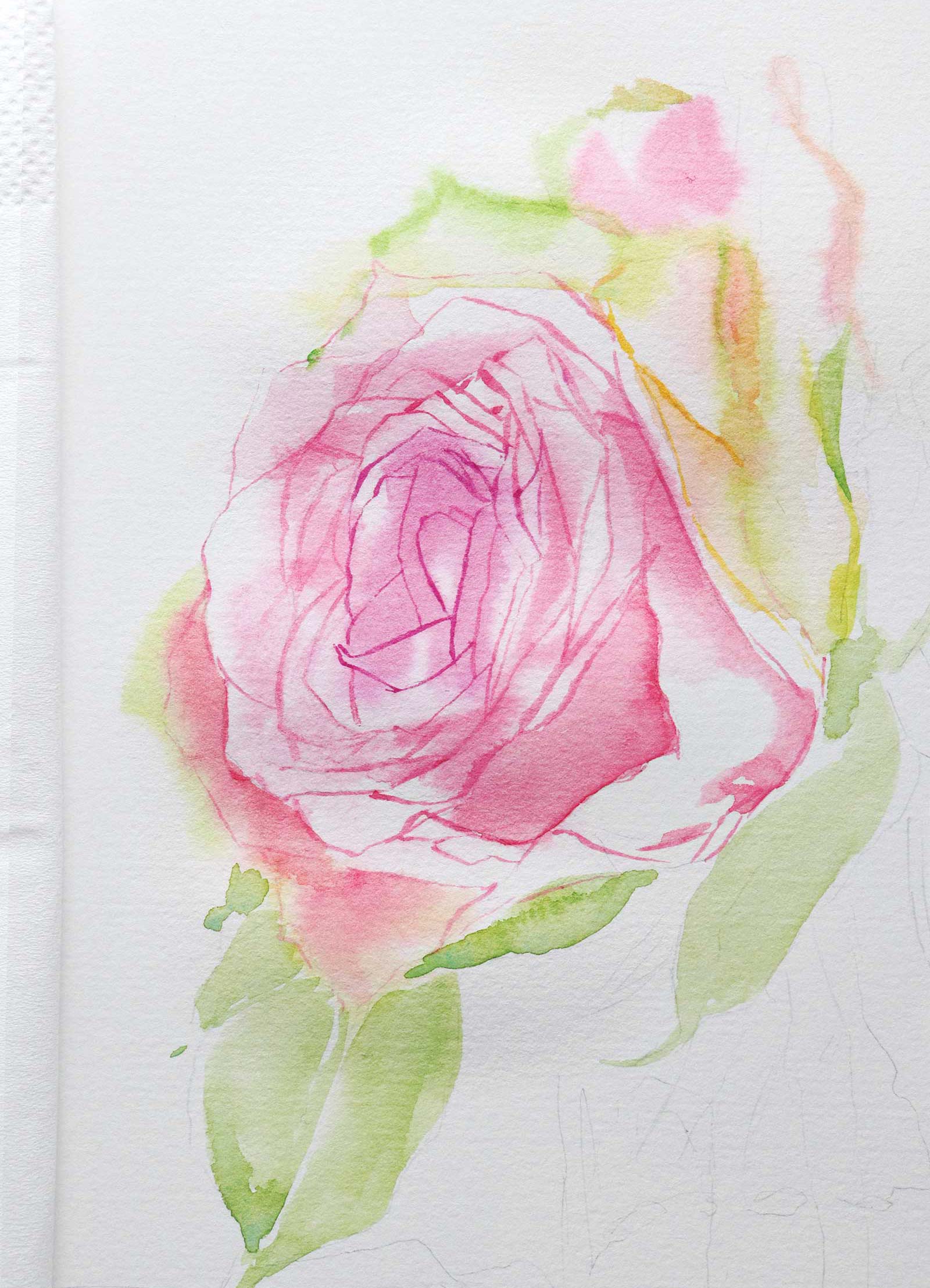
Stage 2 Establishing Hues
Working wet-in-wet, I begin with a light layer of color. Beyond establishing the approximate placement of the different hues on the paper, I think, more than anything, this step helps trick my brain into thinking I’ve completed more of the painting than I actually have.
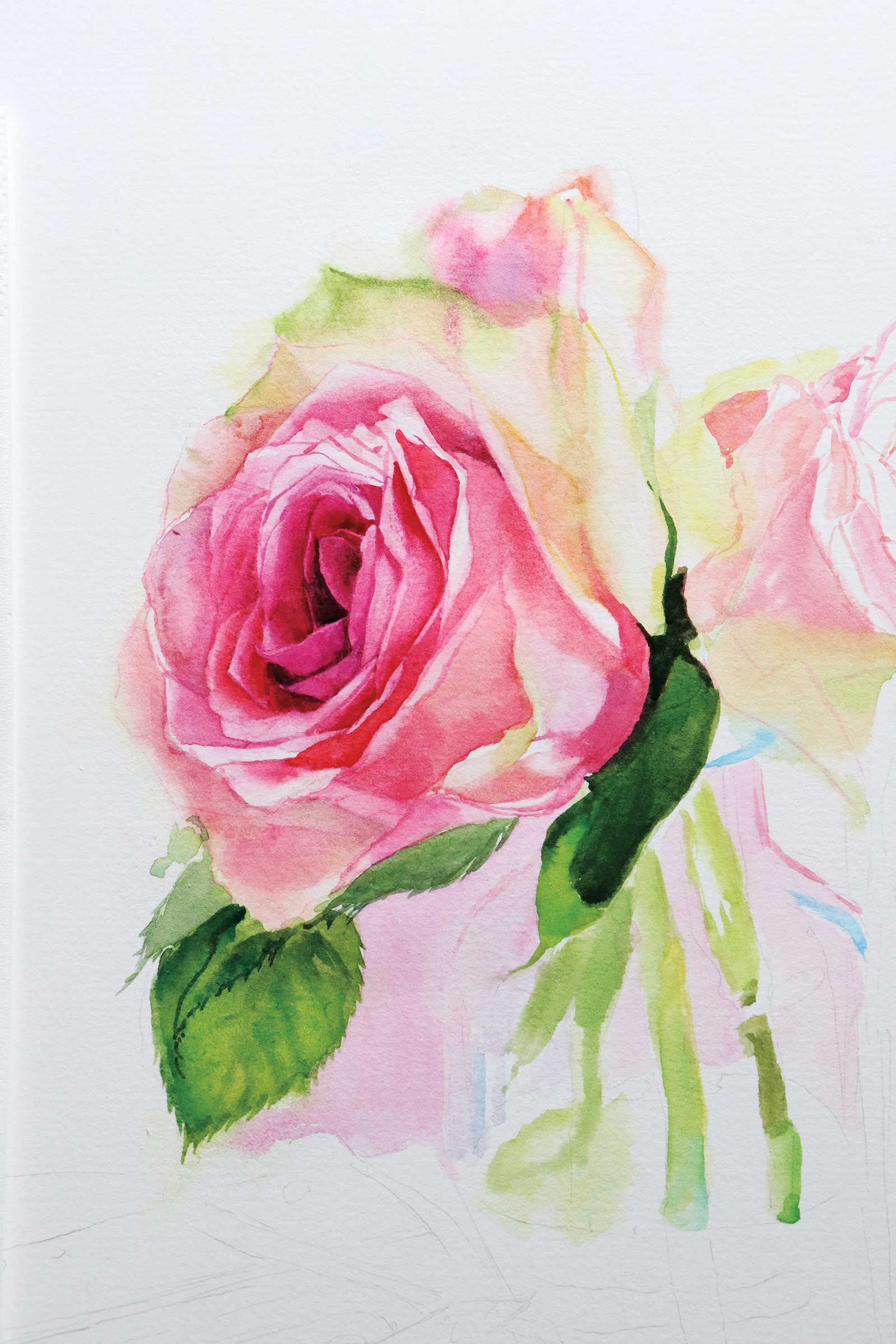
Stage 3 Additional Layers
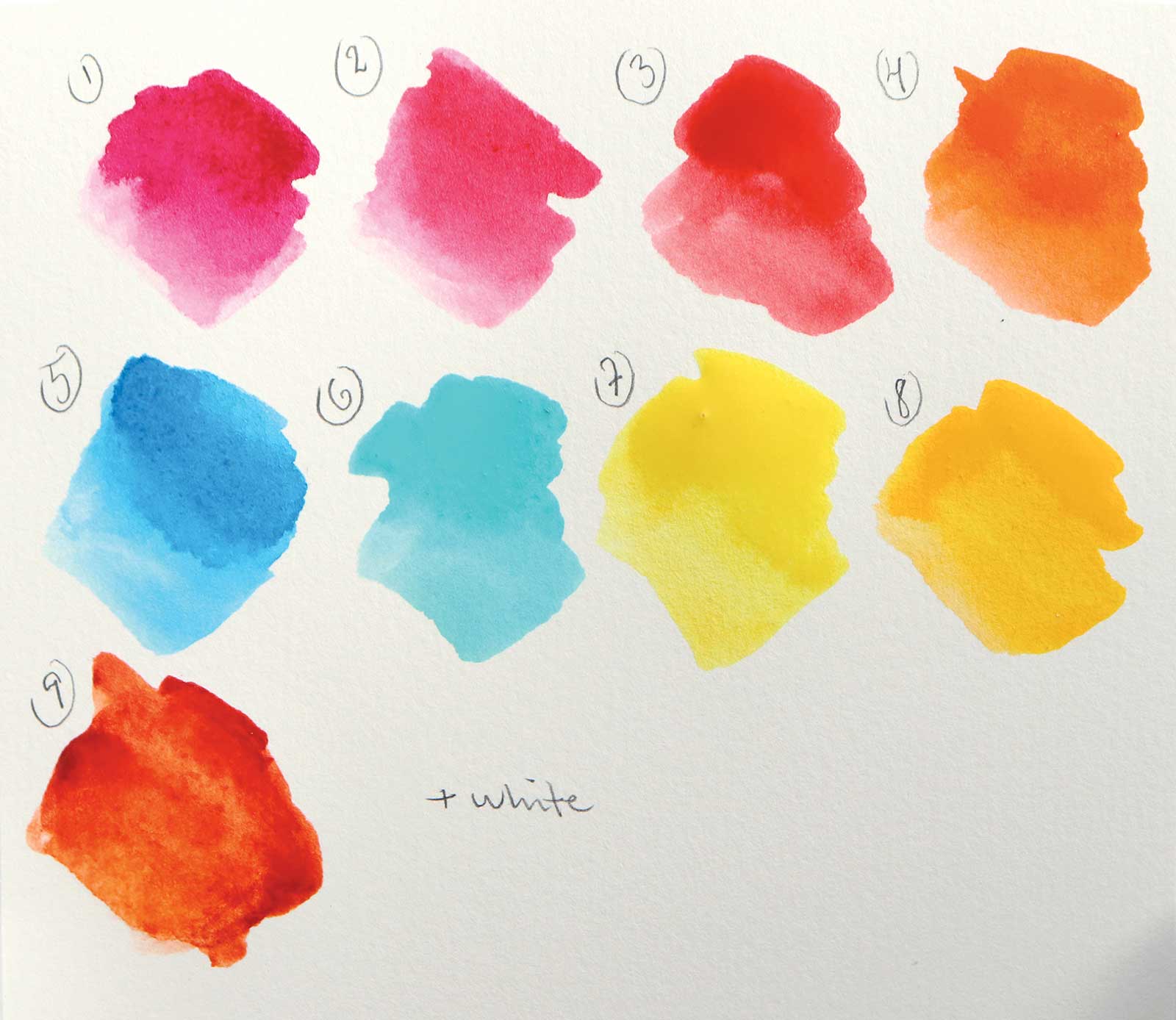
I then start building up the shading layer by layer. Quinacridone magenta is a beautiful cool-toned pink, accompanied by quinacridone red and quinacridone scarlet mixes for slightly warmer tones as I move towards the outer petals. Most of the colors I work with are quite bright. My main watercolor palette is made up of individually selected colors, each chosen for its vibrancy after comparing options across different brands. You can always mix colors to tone them down if needed, but you can’t rely on mixing to make a dull color brighter.
Color Swatches
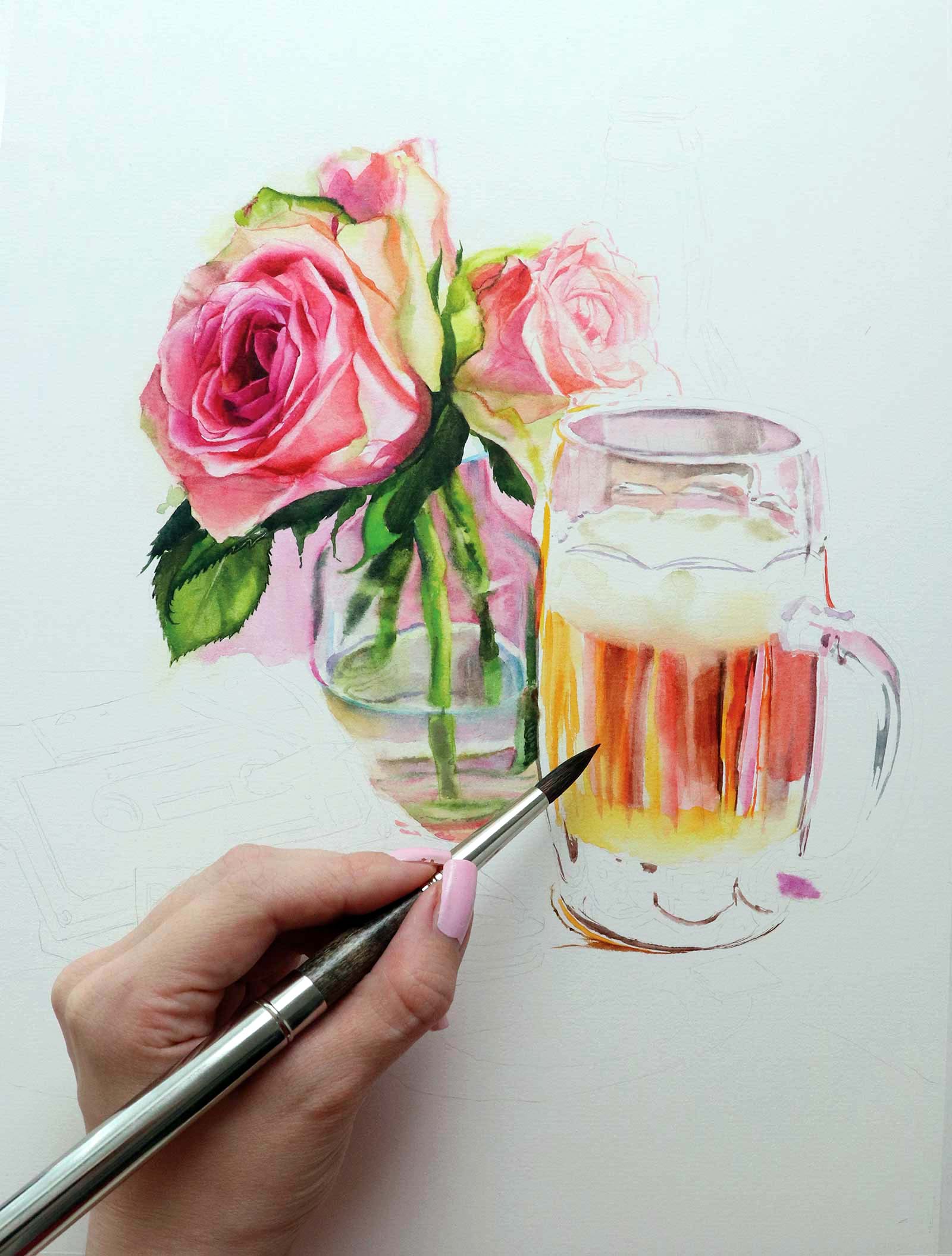
Stage 4 Establishing Relationships
To better judge the values of each component in relation to one another, I start by blocking in the colors of the beer. Colorful liquids and glass are some of my favorite subjects to paint. There’s something incredibly therapeutic about getting lost in all the subtle shapes and color shifts, and it’s so rewarding to step back and see the painting come together from a distance. I’m using quinacridone sienna, quinacridone scarlet, brilliant orange and permanent yellow light for the main color mixes of the beer, then adding peacock blue for some of the shadow tones. I’m also adding a touch of imidazolone lemon for an even brighter glow near the base of the glass, as well as in the reflection from the beer on the table.
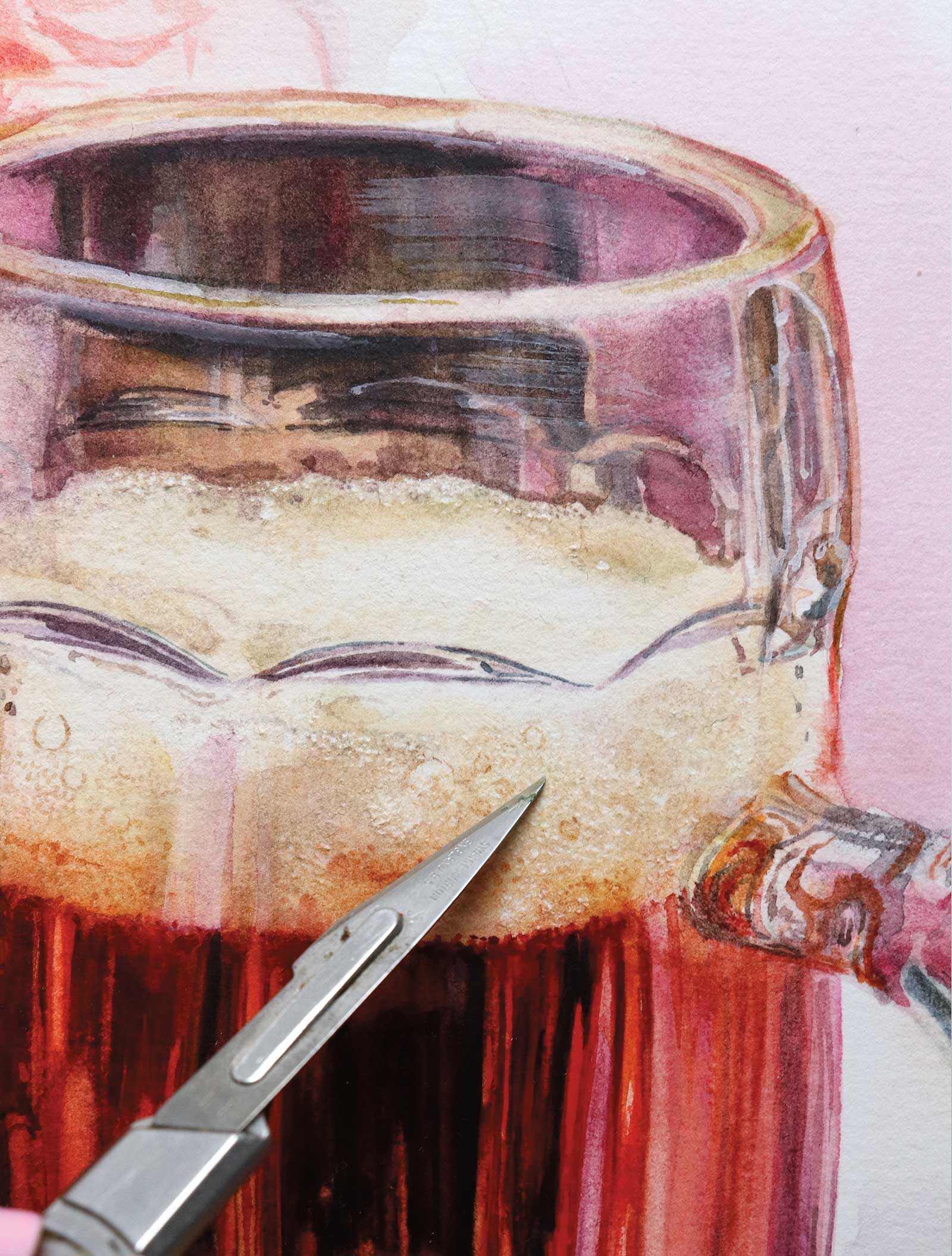
Stage 5 More Texture
For the foam I’m choosing to simplify it quite a bit and only adding a small portion of the texture. To help create some of the smaller highlights, I’m using the scalpel to remove the top layer of the paper, exposing the bright white fibers below.
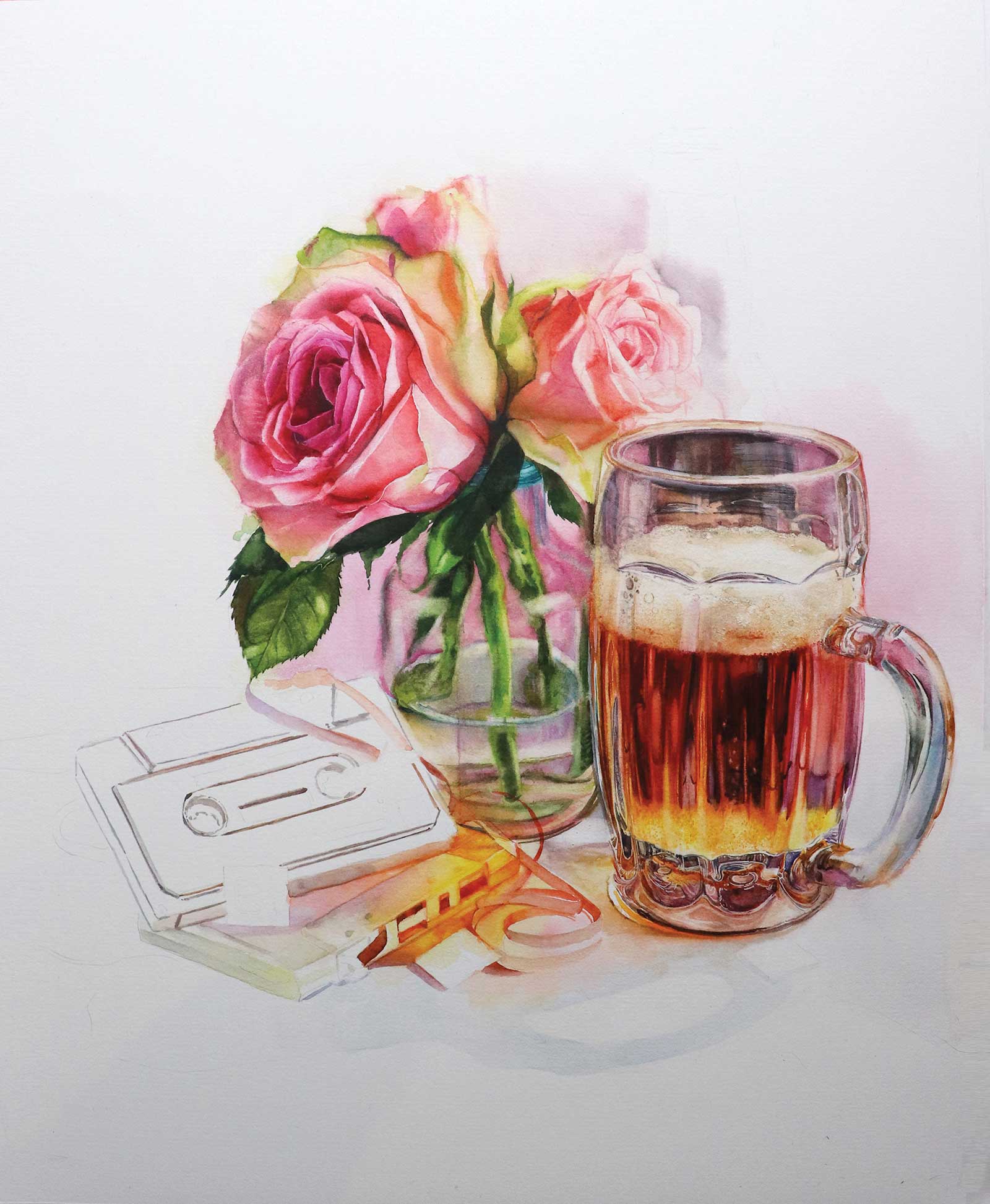
Stage 6 Make it Glow
Moving on to my favorite element of the piece and the star of the show: the salad or rather, the cassette tapes. It was important to me to highlight the film itself, since it also serves as part of the punchline so to speak, so I used the beer to cast a literal spotlight on it. I’m starting with a couple of light layers of yellow and orange mixes, which I’ll be building up throughout the rest of the process.
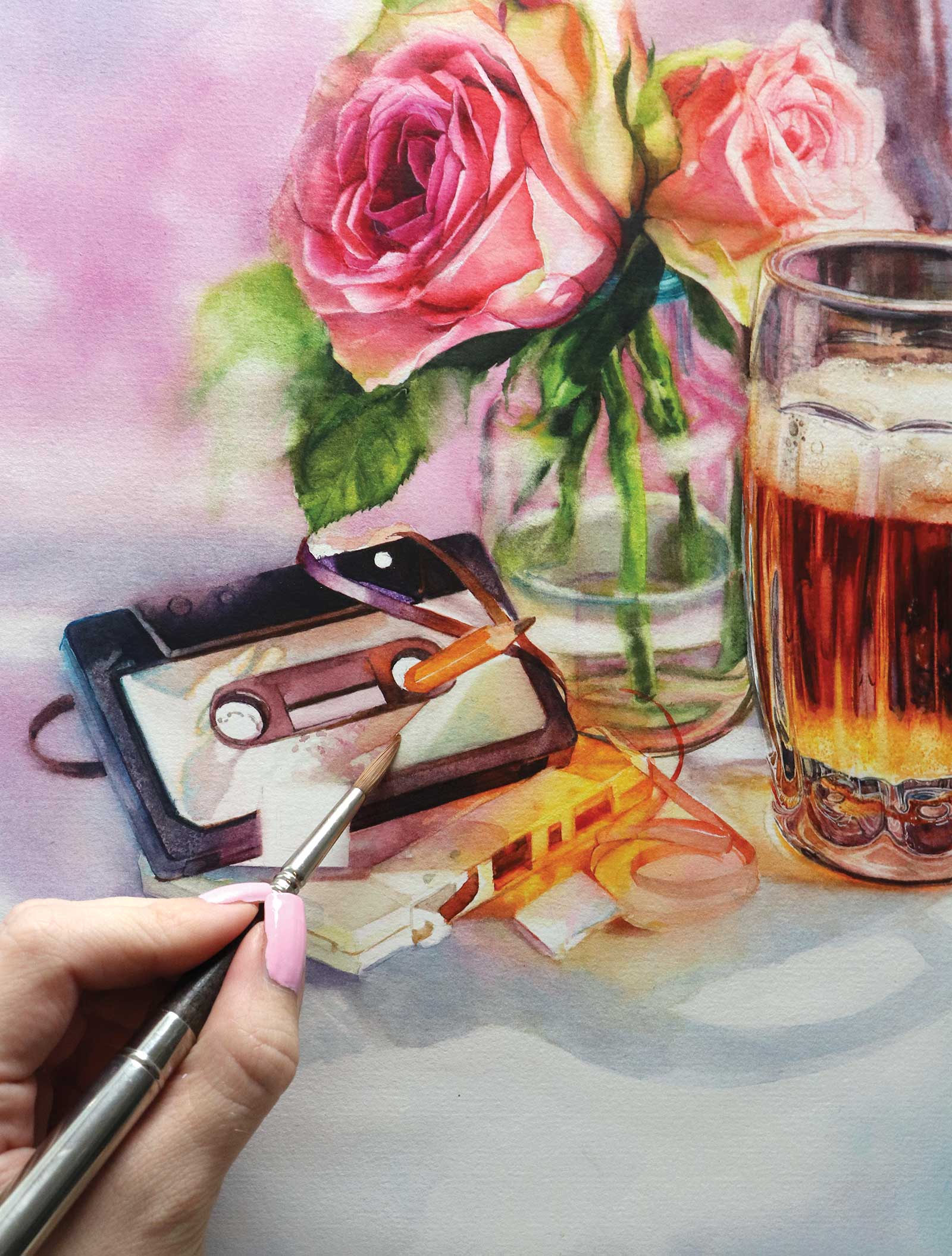
Stage 7 Destruction
While working on the cassettes, another aspect of my creative practice begins to emerge: destruction. Although the rose leaves haven’t yet been completed at this stage, I use a sponge to smudge the paint, a technique that I will apply to several areas of the painting. Sometimes, instead of planning abstraction from the start, I find joy in destroying parts of my work.
Why? We tend to be incredibly precious about the things in our lives, afraid of change or of ruining something we love. We often go to great lengths to preserve and keep things whole. But life is temporary, and even memories inevitably fade. The beautiful part, and something not everyone realizes, is that you don’t need to hold on to every single detail. Even if some pieces are lost, the important things will stay with you.
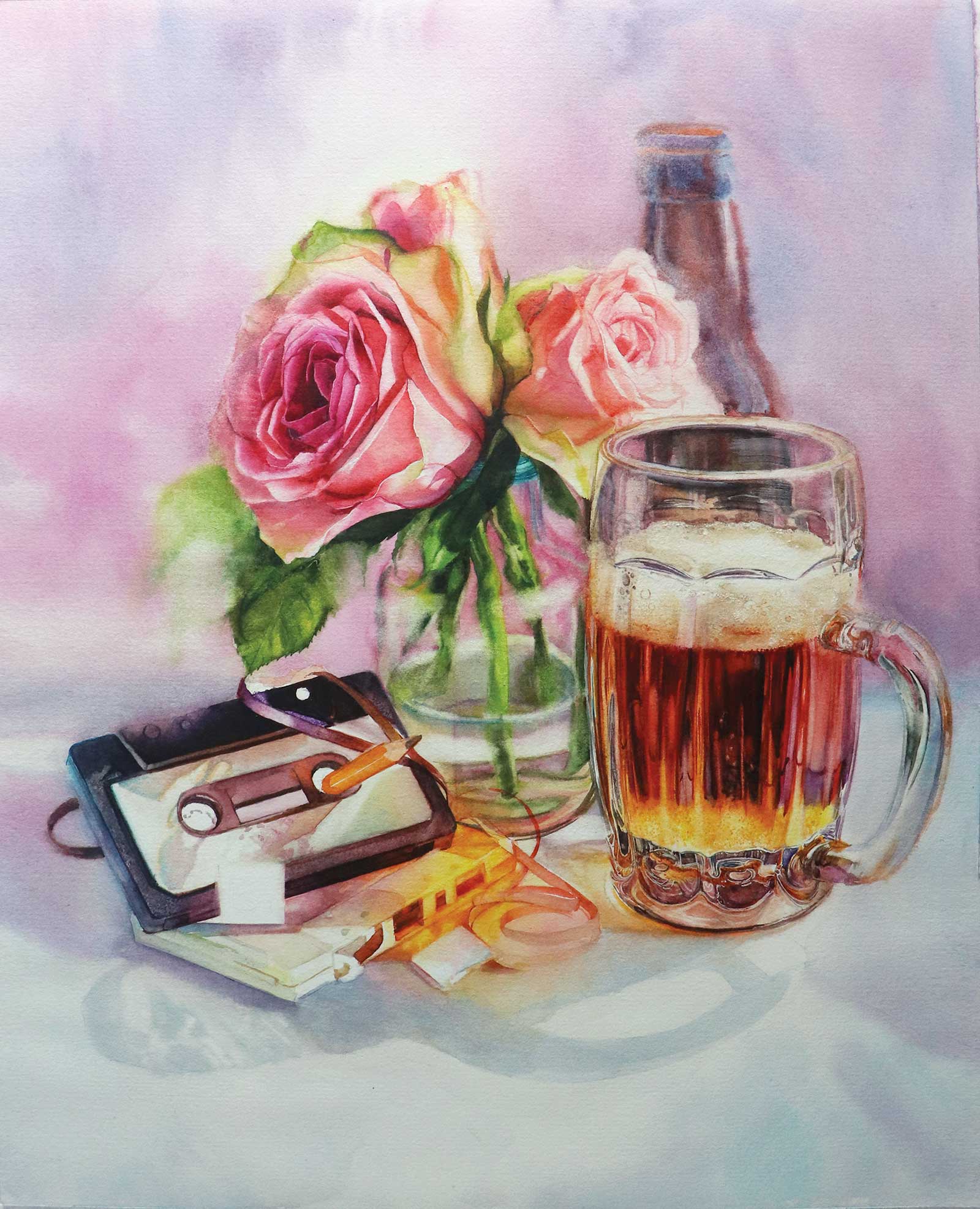
Stage 8 Evaluating & Final Touches
Approaching the last stages of the painting, I take a step back to better see where I need to go back in with more layers. The scrabble tiles, the text on the cassette as well as a few final touches to the vase. But it’s still missing something.
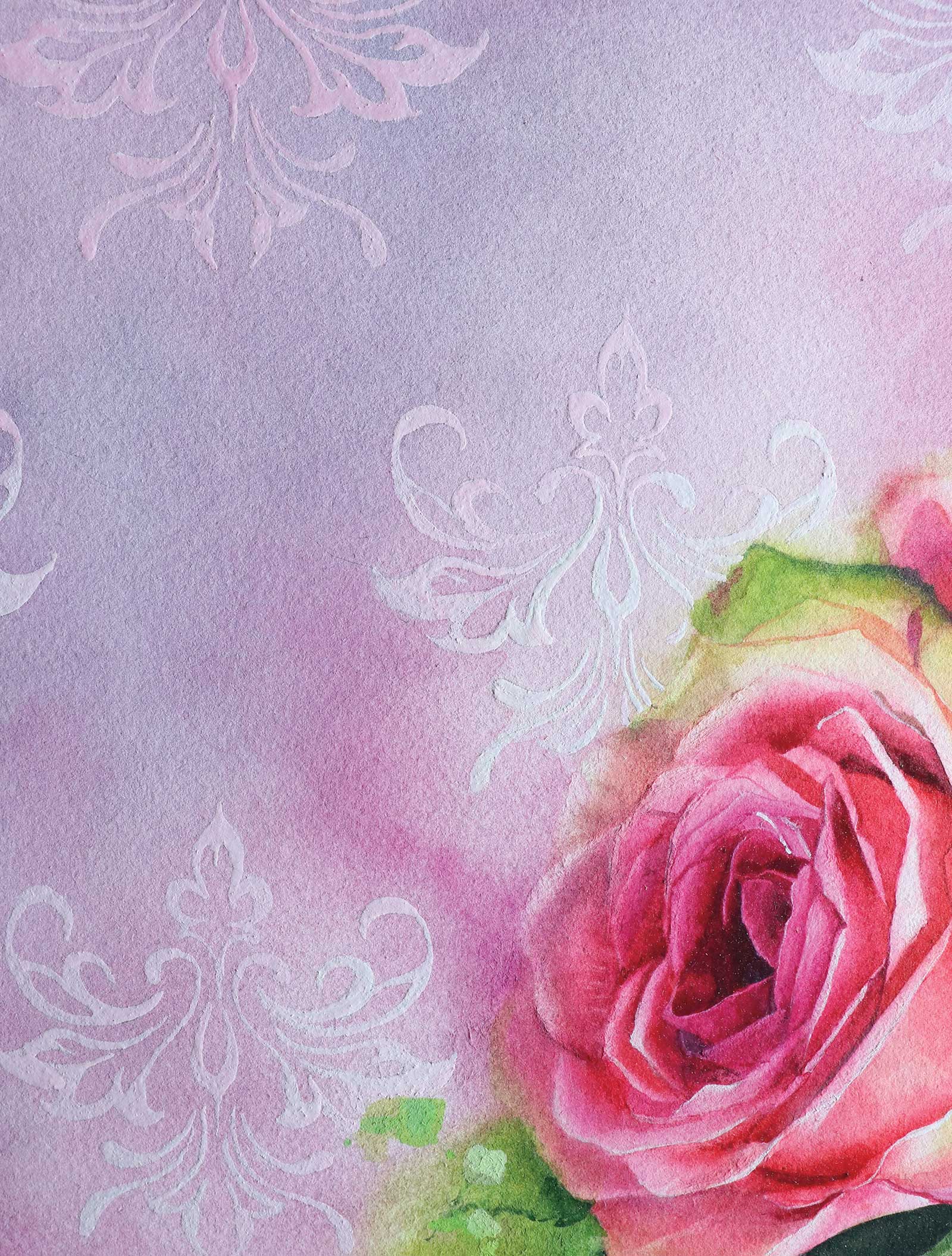
Stage 9 Something familiar
I’ve always loved those vintage and antique wallpapers with intricate patterns, and every now and then, I’ll create my own designs and incorporate them into my work. There’s something oddly familiar about them, and they seem to bring a certain warmth. While there are certainly more efficient methods, I use tracing paper to repeatedly transfer my sketch onto the background. I then mix titanium white into my colors to create a few opaque blends and use these to fill in the pattern.
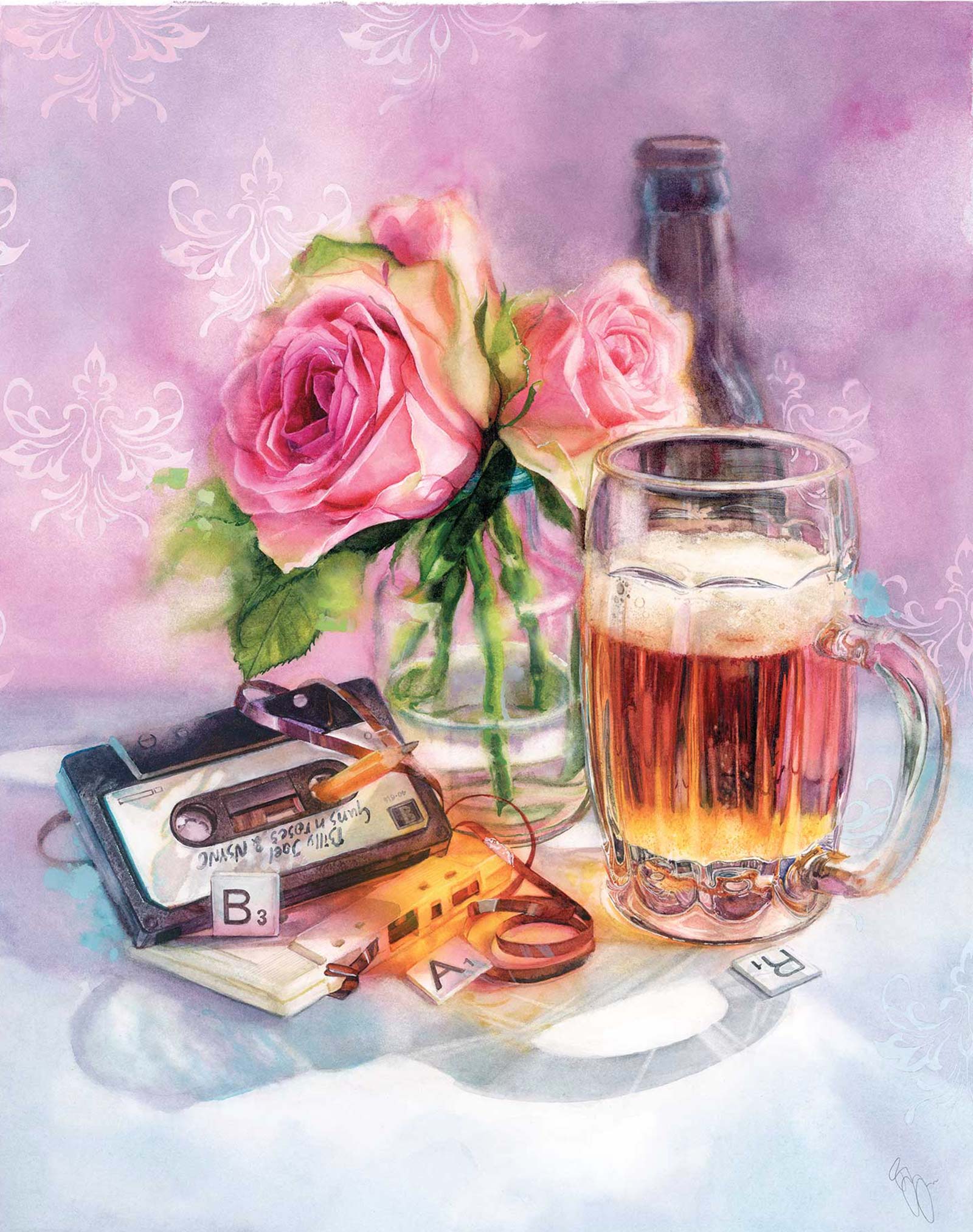
Stage 10 Finished Artwork
Beer, Board Games & Salad on the Side, watercolor, 16 x 12" (40 x 30 cm)
About the artist
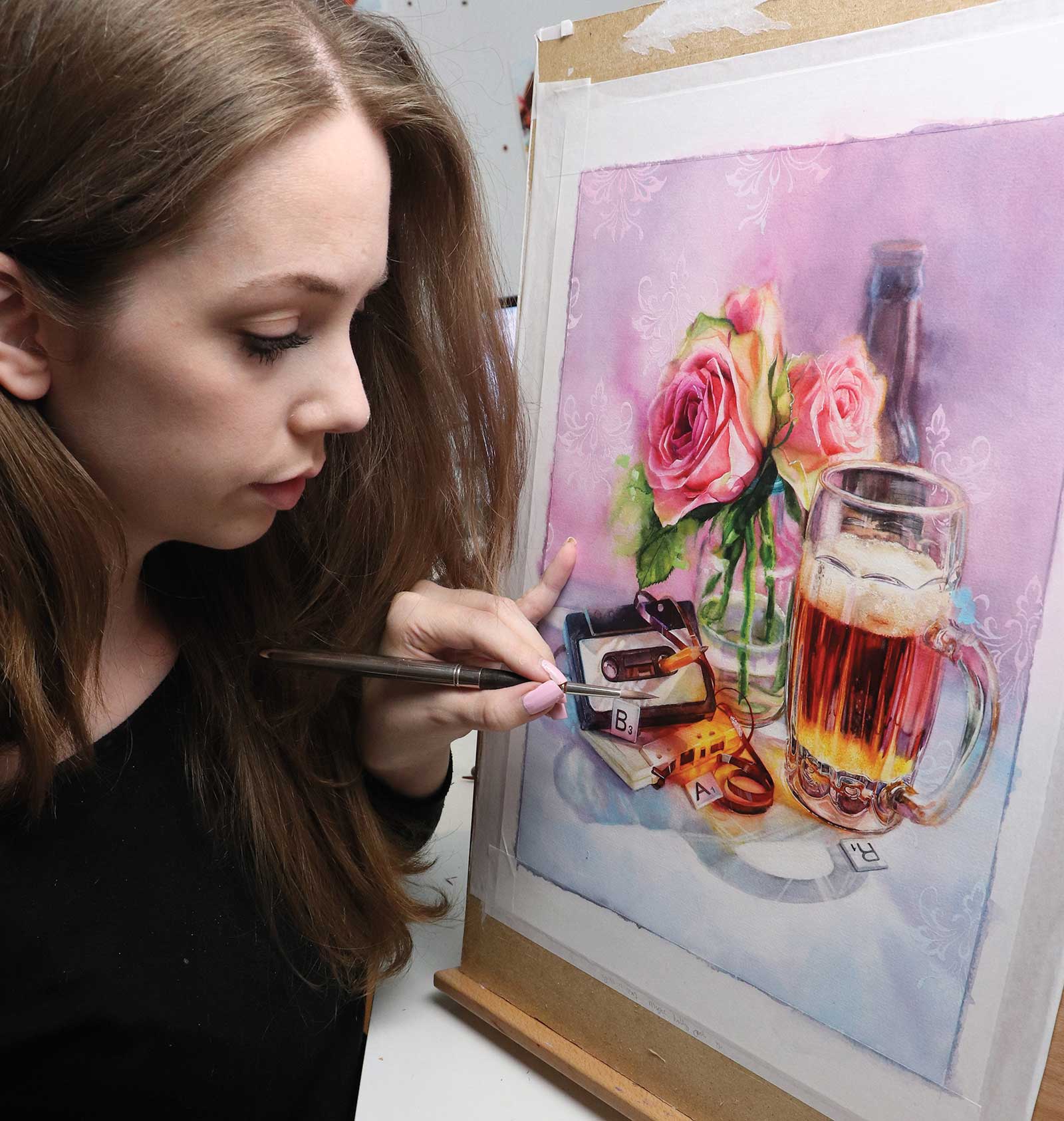 Tanja Jensen
For the past decade, Tanja Jensen has worked as a full-time artist and artisan. Having spent the majority of the time crafting miniature collectibles, her focus in recent years has returned to her first love: painting. Her work is often rooted in nostalgia and inspired by a deep appreciation for the quiet, everyday joys that make life feel full. Though her works may feature a variety of subjects that often hint at a childhood lived in the ’90s, food in particular has been an immense source of inspiration throughout her life, along with the experiences and memories surrounding it.
Contact at
tanjajensenart@gmail.com
tanjajensen.dk