“BLAST” is a shorthand term that I try to keep in mind when I’m painting. The letters stand for five principles of painting technique:
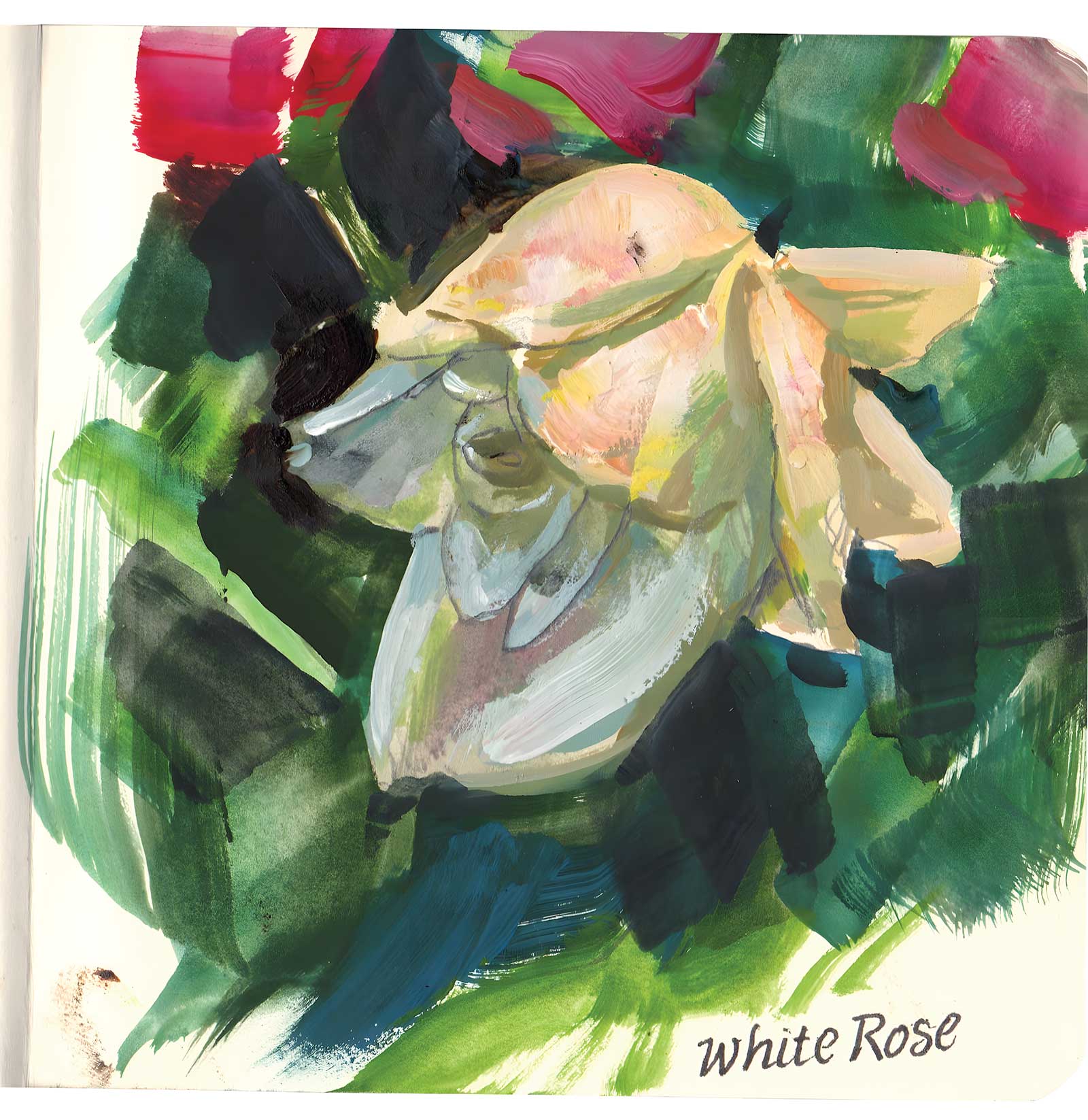
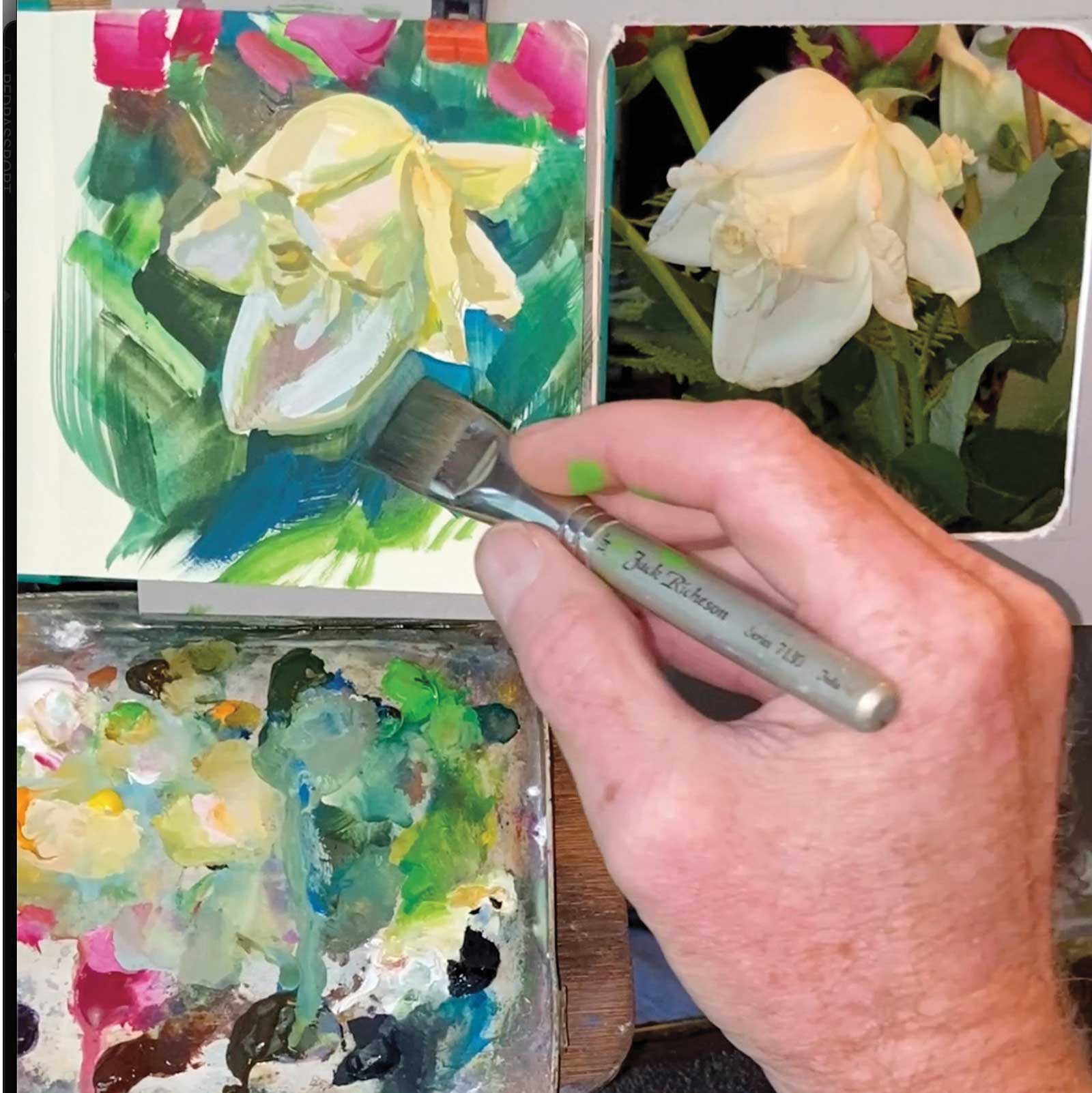
White Rose, gouache, Even though this little study is less than 5" square, I painted most of it with a ¾" flat. Flat brushes are especially versatile, capable of handling both broad planes and sharp edges.
Big Brushes
Whatever the medium, I like to begin with the largest brushes I can manage. I may switch to smaller ones later if I need to, but I always start with a brush that feels a little too big for the passage at hand. It’s not just about speed or efficiency. Large strokes help me see the subject in terms of big truths, sweeping up trivial details in the process.
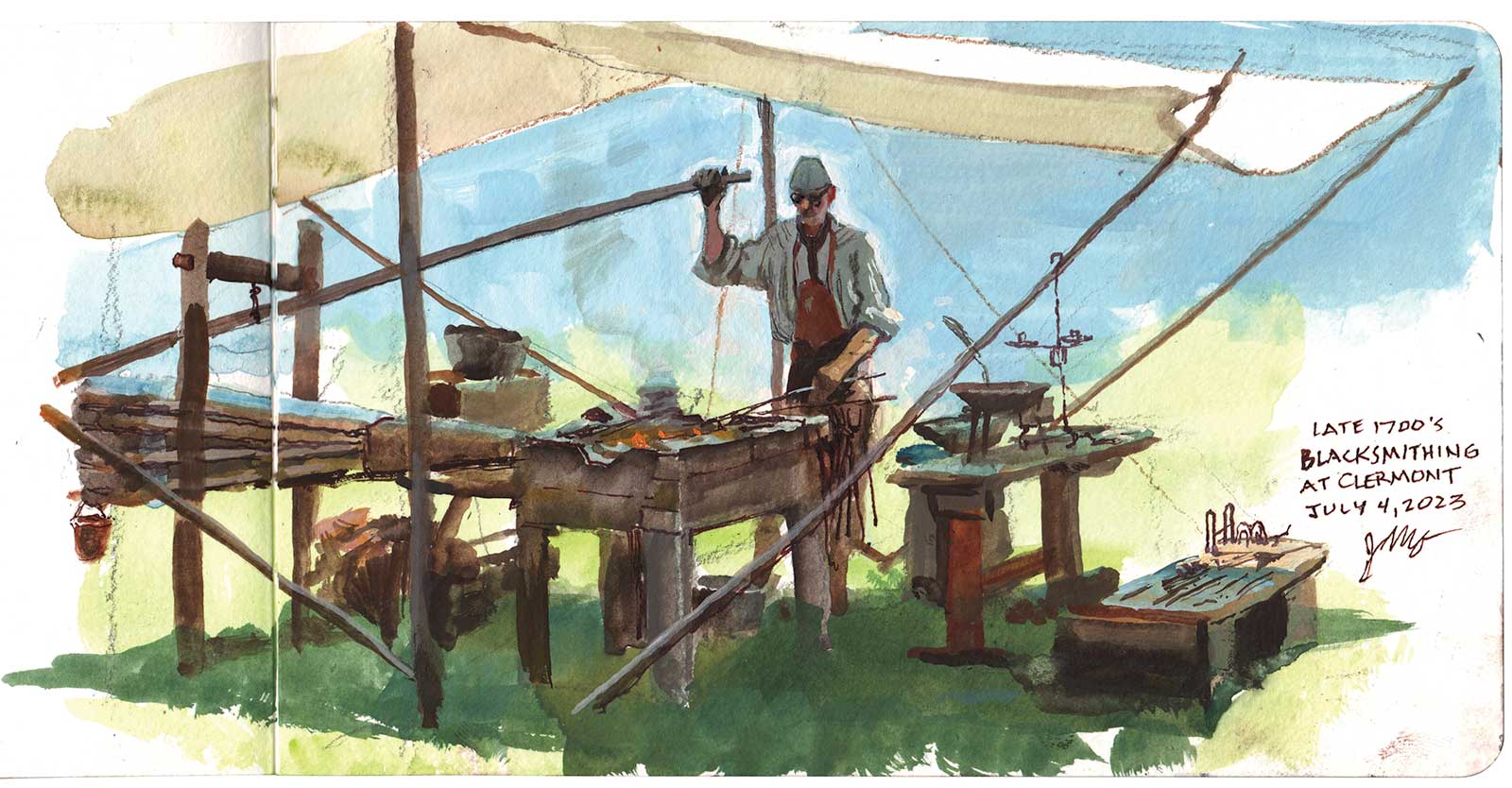
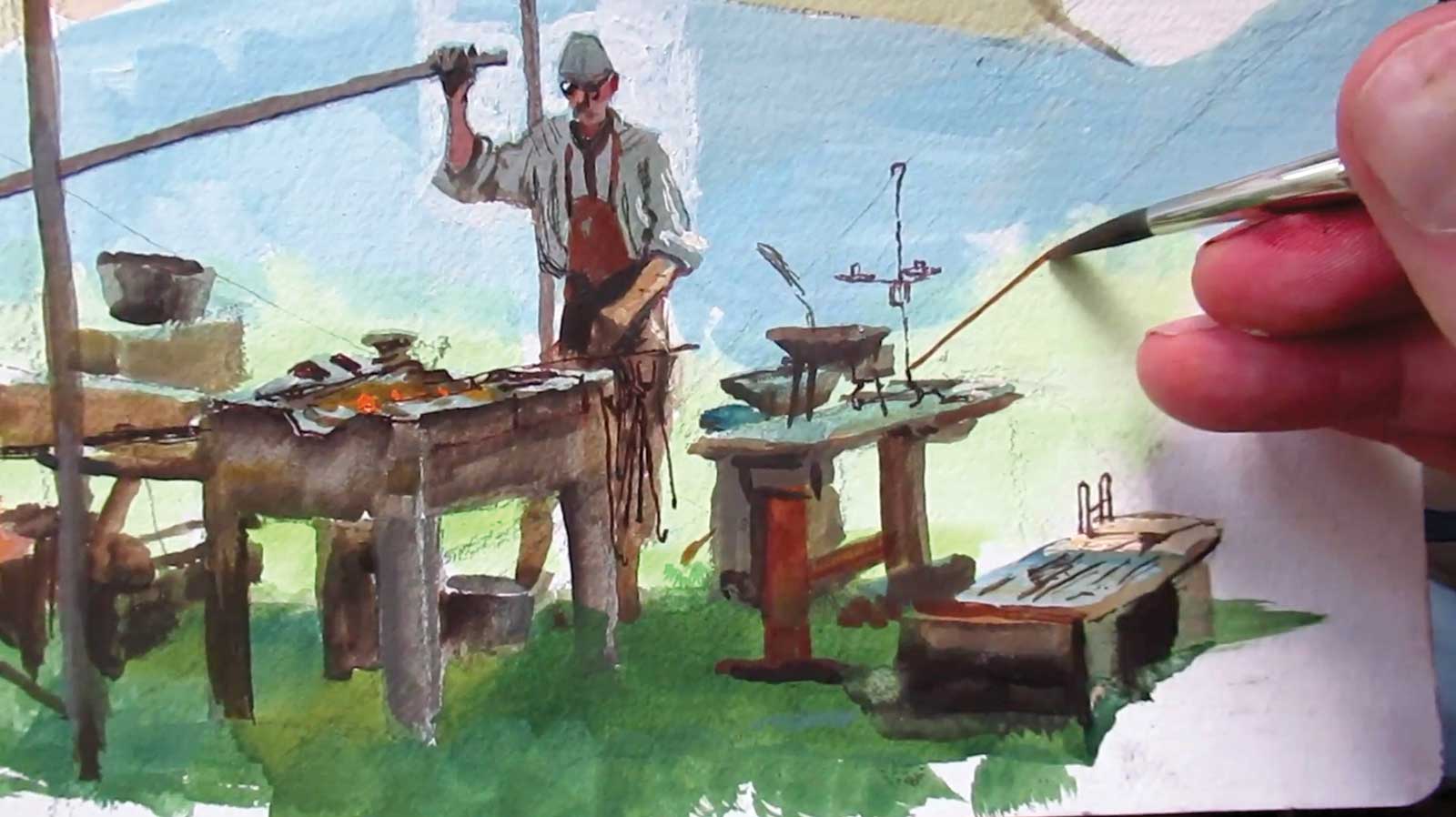
Blacksmithing, gouache: My first goal is to establish the relationship between the dark forms under the tent and the simple light background. Once that dries, I can add the tiny details.
Large to Small
Typically I aim for an overall statement right from the start, even if that statement is relatively light in value. Getting the big relationships in place first makes all later decisions easier. Once the big, simple masses are correct, I can proceed toward the smaller, more complex forms.
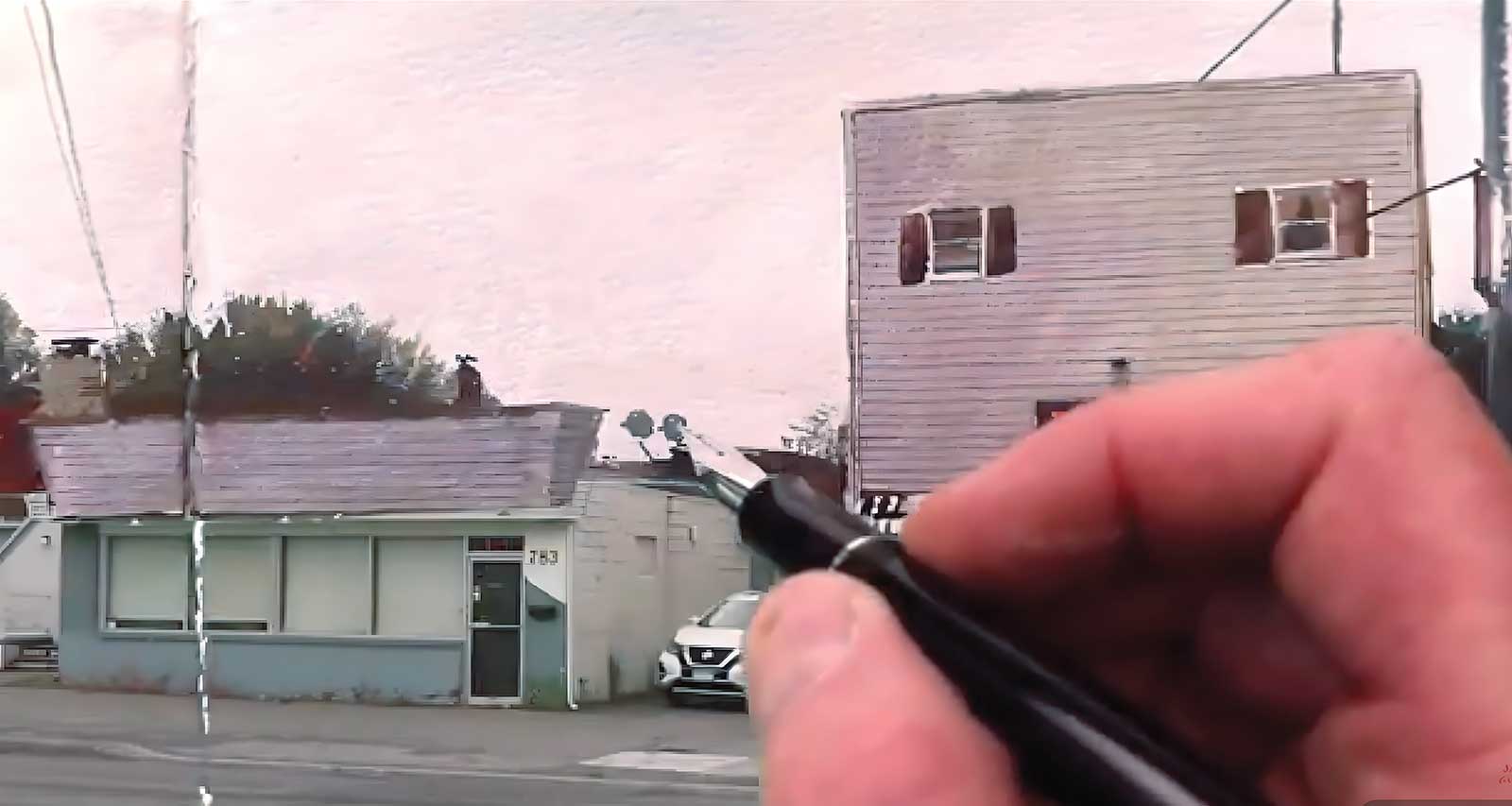
Ulster Avenue, gouache and pen: I saved the highlights on the car and the little dark accents on the windows until the end (plus threw in a surprise finish on the video).
Accents Last
Accents are the eye-catching notes: the darkest darks, brightest highlights or most saturated spots of color. They should stand apart from the rest of the picture. In oil, gouache or casein, they usually work best if saved for last. John Singer Sargent said, “If you begin with the middle-tone and work up from it toward the darks so that you deal last with your highest lights and darkest darks, you avoid false accents.”
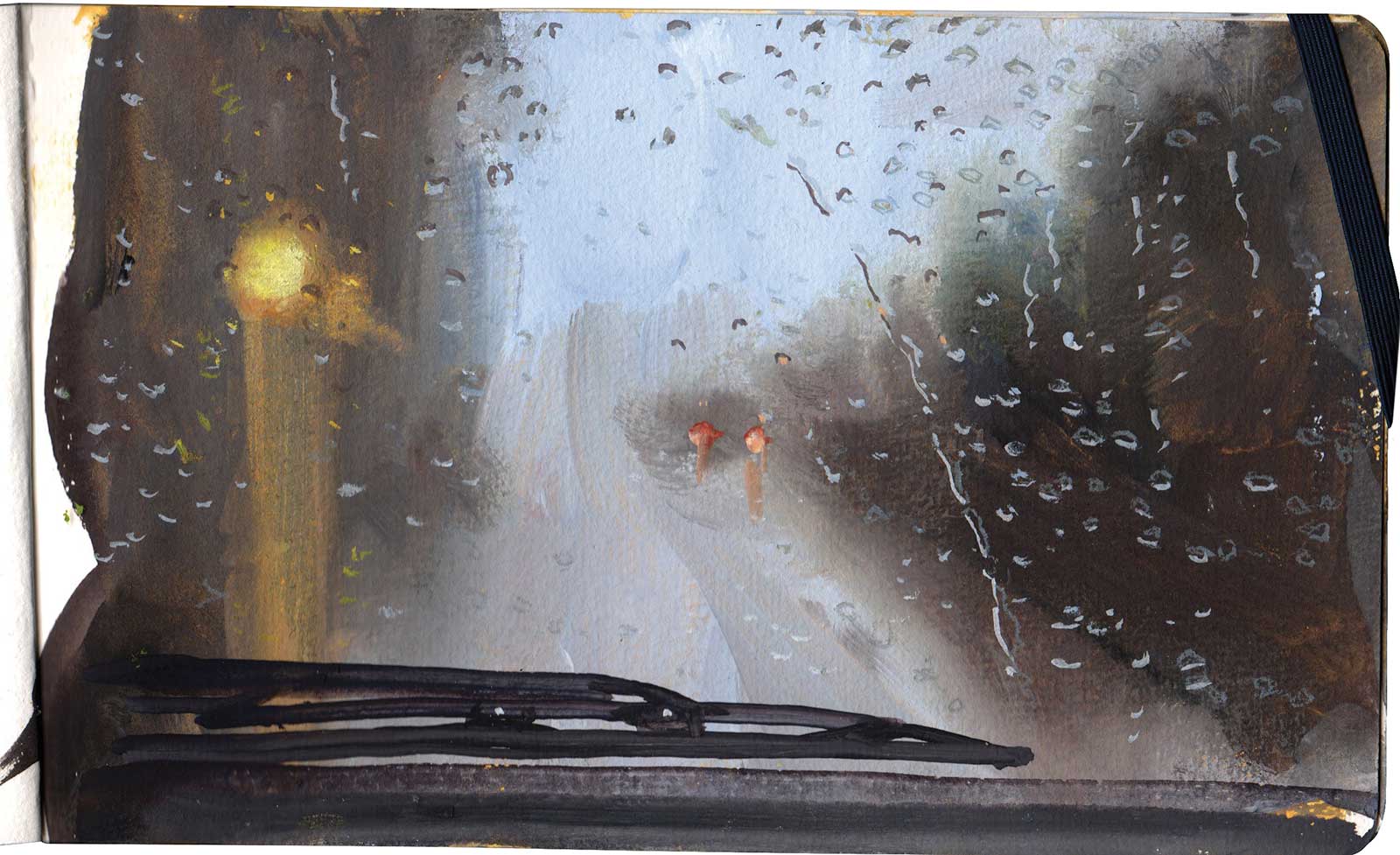
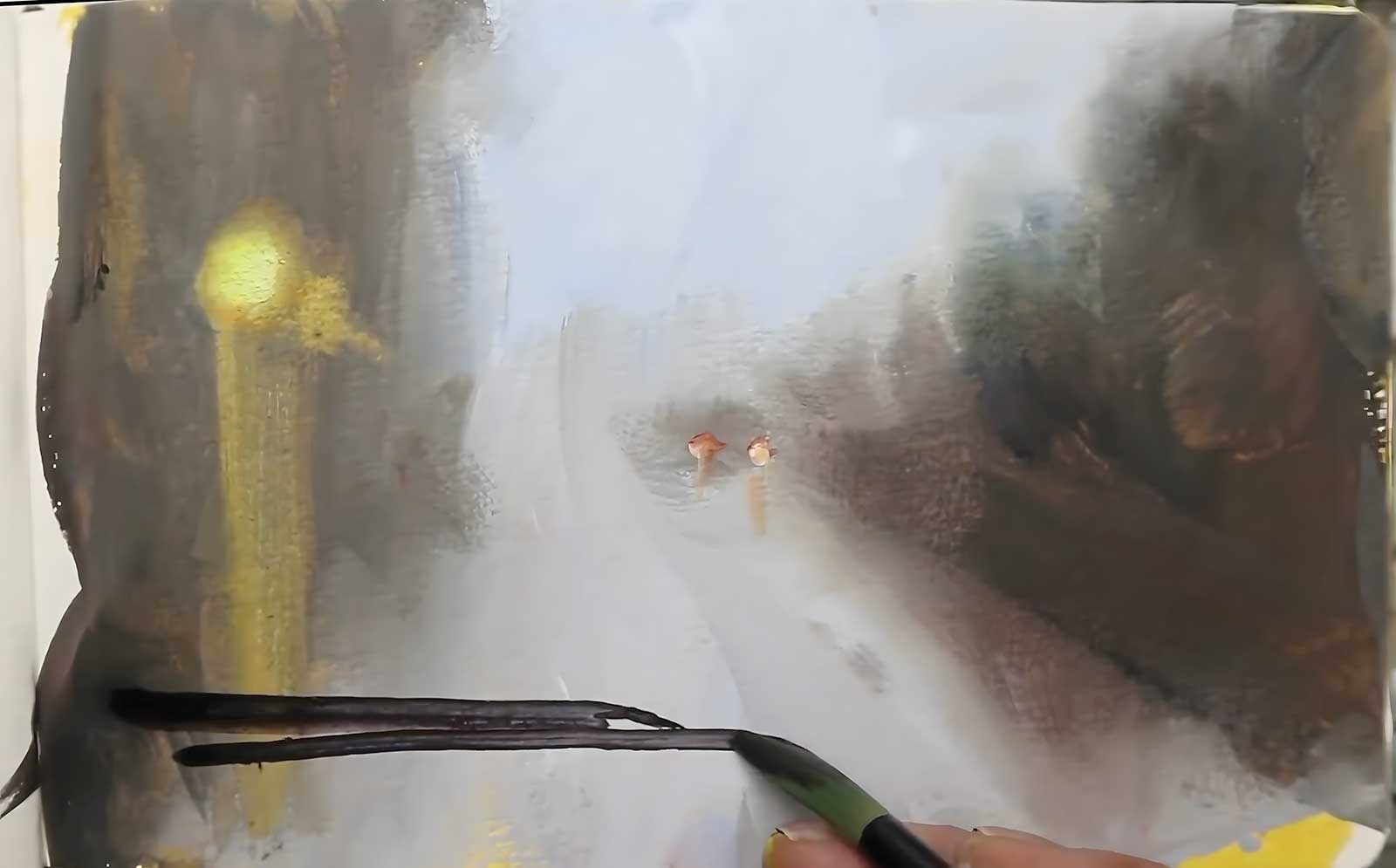
Windshield, gouache: That is especially true in this painting. I want to convey focal depth by painting the far view softly, so that the raindrops appear on a closer plane.
Soften Edges
Edges shouldn’t be all soft or all hard; variety is essential. Softness, in particular, is a mark of subtlety and professionalism—yet it’s surprisingly difficult to achieve, especially in opaque water media. Without attention, it’s easy to fall into the “cutout” look. Early in the process I consciously aim for softness—melting, merging, blurring and blending—knowing that sharper detail will naturally emerge later.
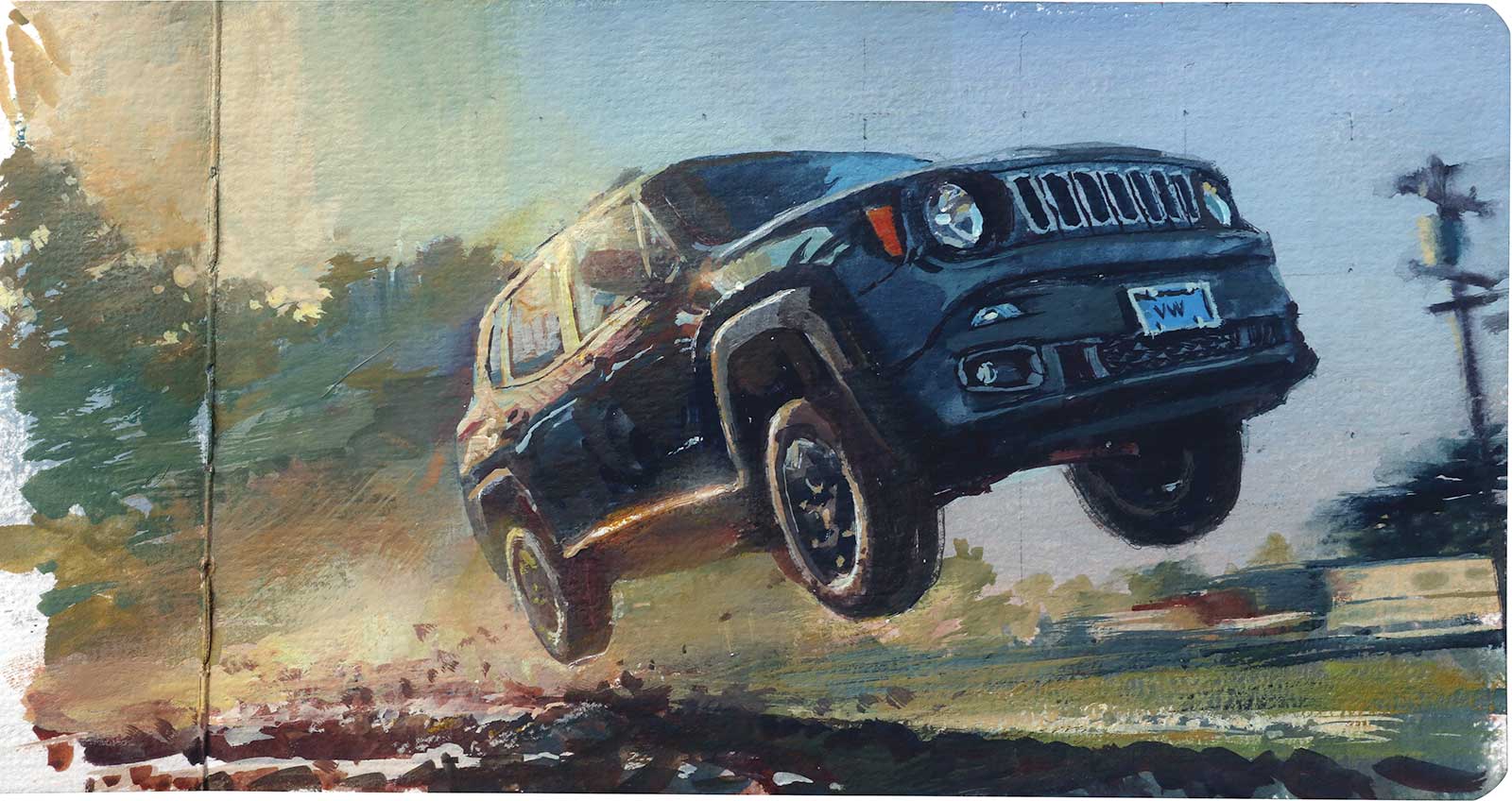
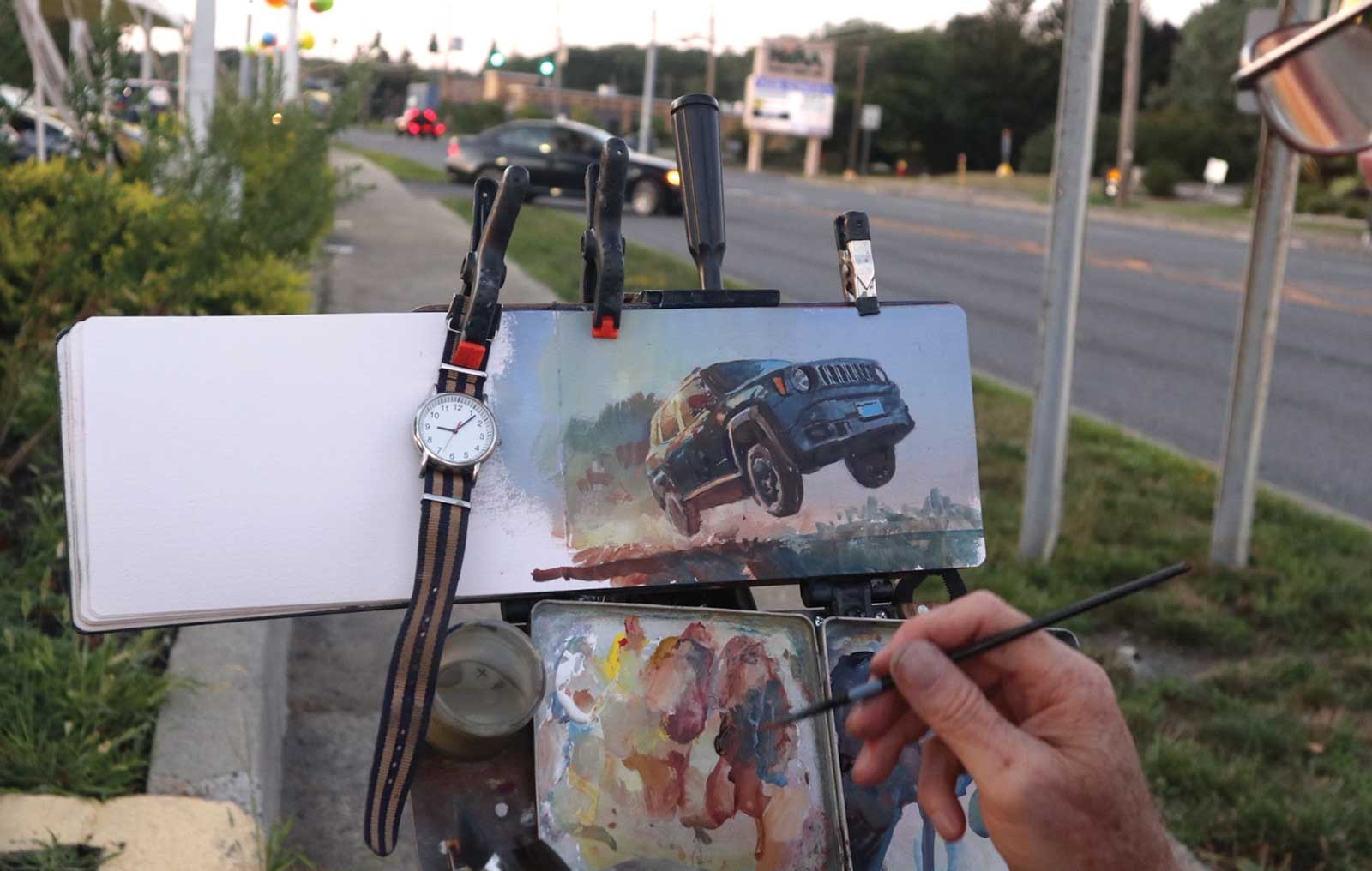
Jeep, gouache: I’m not one to dash off five quick paintings in a day. This one took two long sessions, requiring lots of concentration as I studied the car as it was propped up on a display ramp.
Take Your Time
Patience and concentration are rare commodities in today’s attention economy. Painting requires both the boldness of a lumberjack and the precision of a watchmaker. I begin with big moves, then deliberately slow down to observe nuances and tiny details. My limits are less about materials and more about my ability to focus deeply for long stretches—something that demands tuning out distractions and immersing myself fully in the image.
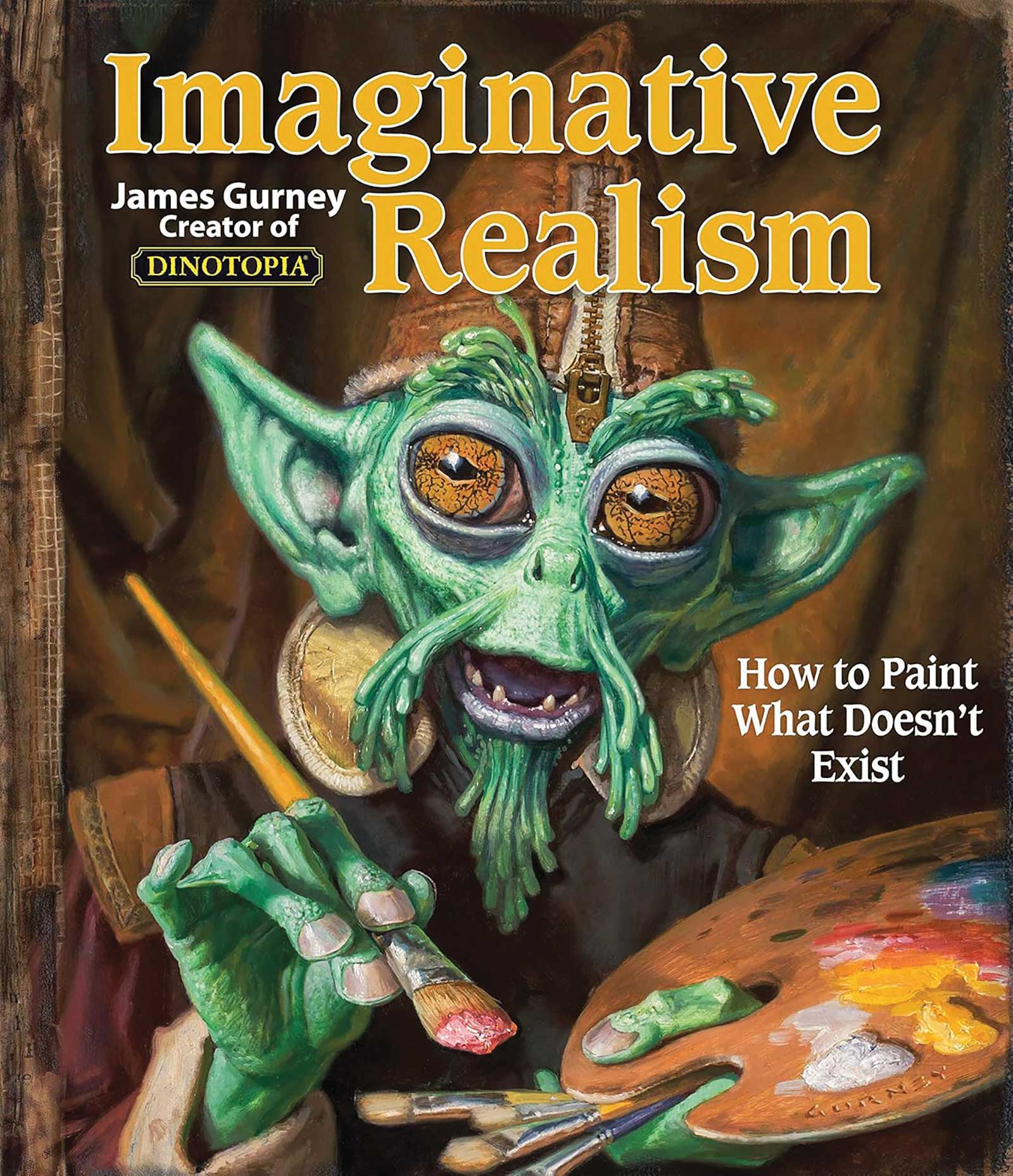
The BLAST Rule is just one of many painting strategies I explore in my book Imaginative Realism: How to Paint What Doesn’t Exist, available signed (with free shipping) at my website store.
About the Artist
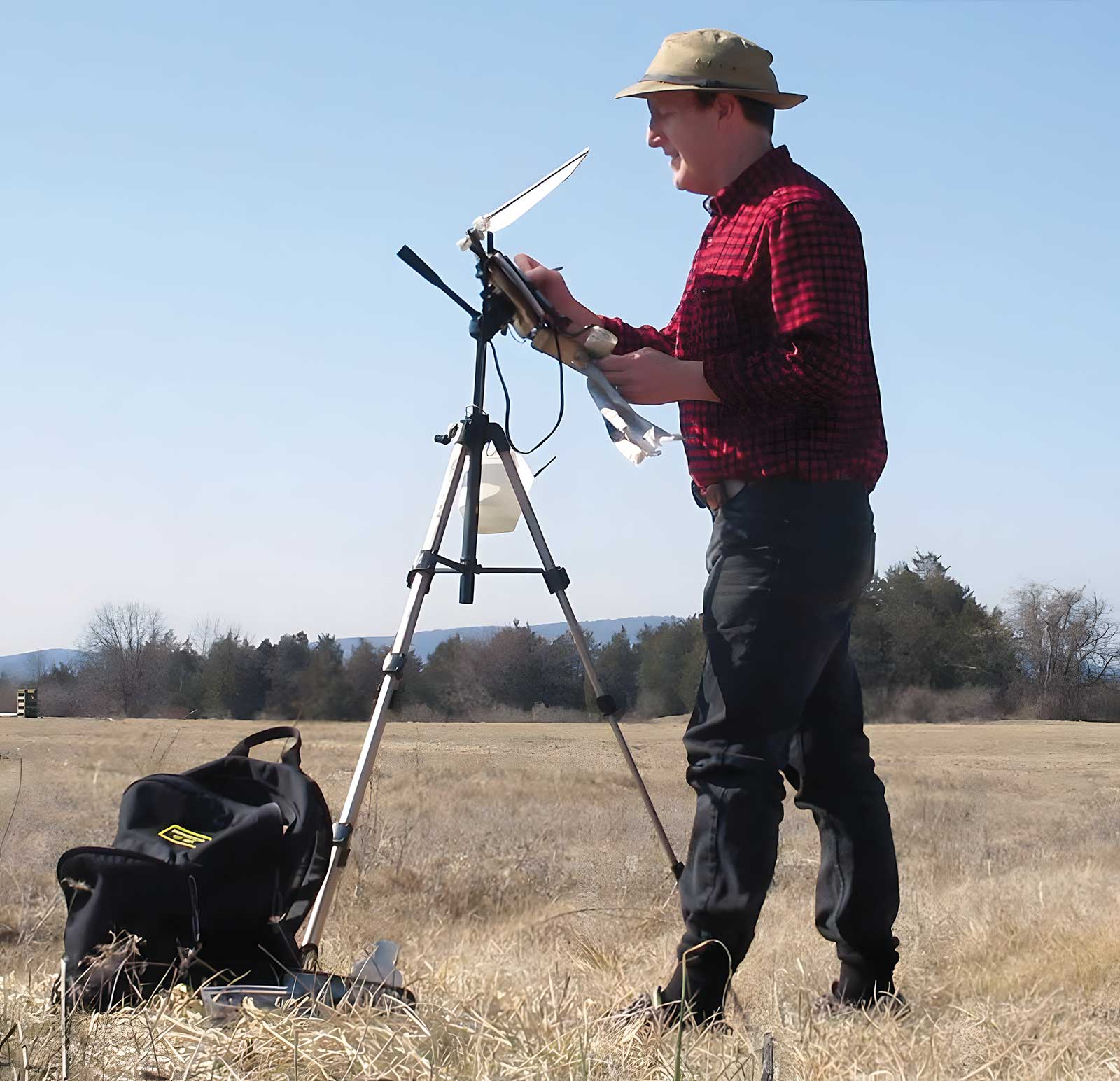 James Gurney
James Gurney dropped out of art school to ride the freight trains across America and coauthor The Artist’s Guide to Sketching. He learned to paint as a background artist for the animated film Fire and Ice. In the 1980s, he illustrated science fiction paperbacks and reconstructed ancient cities for National Geographic. That experience led to Dinotopia, a lavishly illustrated series about a utopian society where dinosaurs and humans live together in (mostly) peaceful interdependence. He pivoted back to art education with Color and Light and Imaginative Realism. His YouTube channel has over 560,000 subscribers and more than 40.8 million views. In May 2025, the Portrait Society of America awarded him their Excellence in Fine Art Education Award.