Early on, I worked mainly with oils, and then a few years later, went right over to pastels. Whatever we work with, whether pastels, watercolor or oils, generally the same artistic basics are joyfully used. Getting there can be quite different, but having the same needs in terms of color, values, shapes, design and personal accuracy.
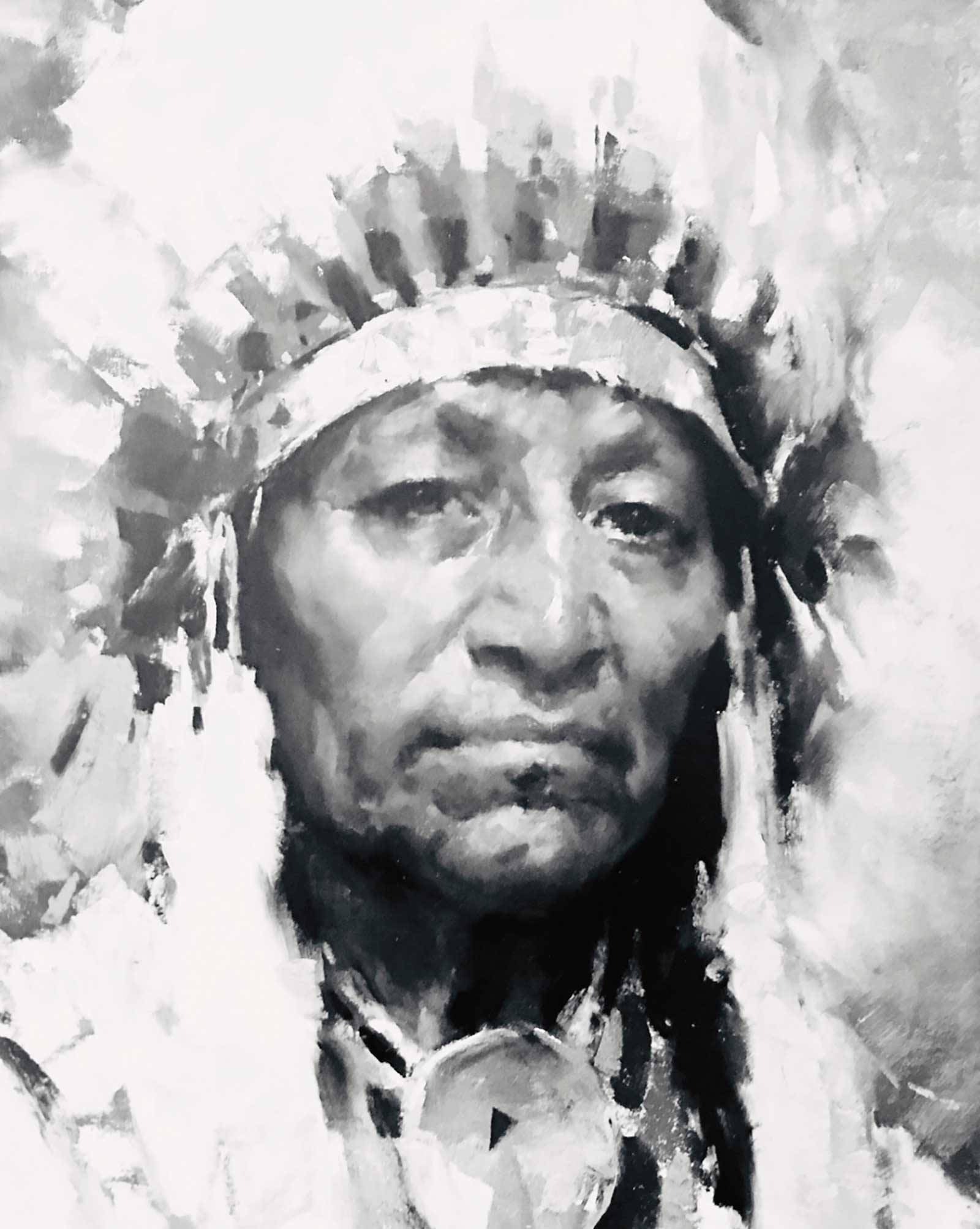 Brave
BraveWhy I Love Pastels
I have to say this because of what pastel does for me, as well as giving me a certain amount of “freedom.” The pastel sticks are laid on the tray, ready for action. All the colors I need are right there, and the strokes are clean and dry. I can apply soft and hard edges, blend together, make texture, and lay in rough and smooth areas on top of one another. Before starting a piece, I’ll rub a slightly warm color into the pastel paper just to get the feeling of pastel going. It is also useful to have a medium value in front of me to begin working with accurate lighter and darker shapes.In the middle of an artwork, I just might change parts of the color and/or design because of something that my subconscious mind insists. Yes, I do “listen” to my inner mind that has a lifetime of art experience. And it is quite often right as it guides my hand through difficult and sublime areas. My outer mind sees, and my inner mind does, like a hockey player or a doctor.
Useful Materials
I’ve always had the use of kneaded erasers. They are useful in not only erasing but also adding to the technique, texture and feel of the pastel work. I’ll add a paper towel to this. It keeps my hands clean and helps take off unwanted areas of pastel on the artwork, large and tiny. It also helps lay in larger background areas.
I’ll add here: The little finger on my drawing hand has traveled quite a ways since my first pastel piece. It wasn’t long before it knew what it was doing, gently fiddling and rubbing between pastel strokes. That tiny part of my body has been a major part of my art life.
 Left Hand
Left Hand
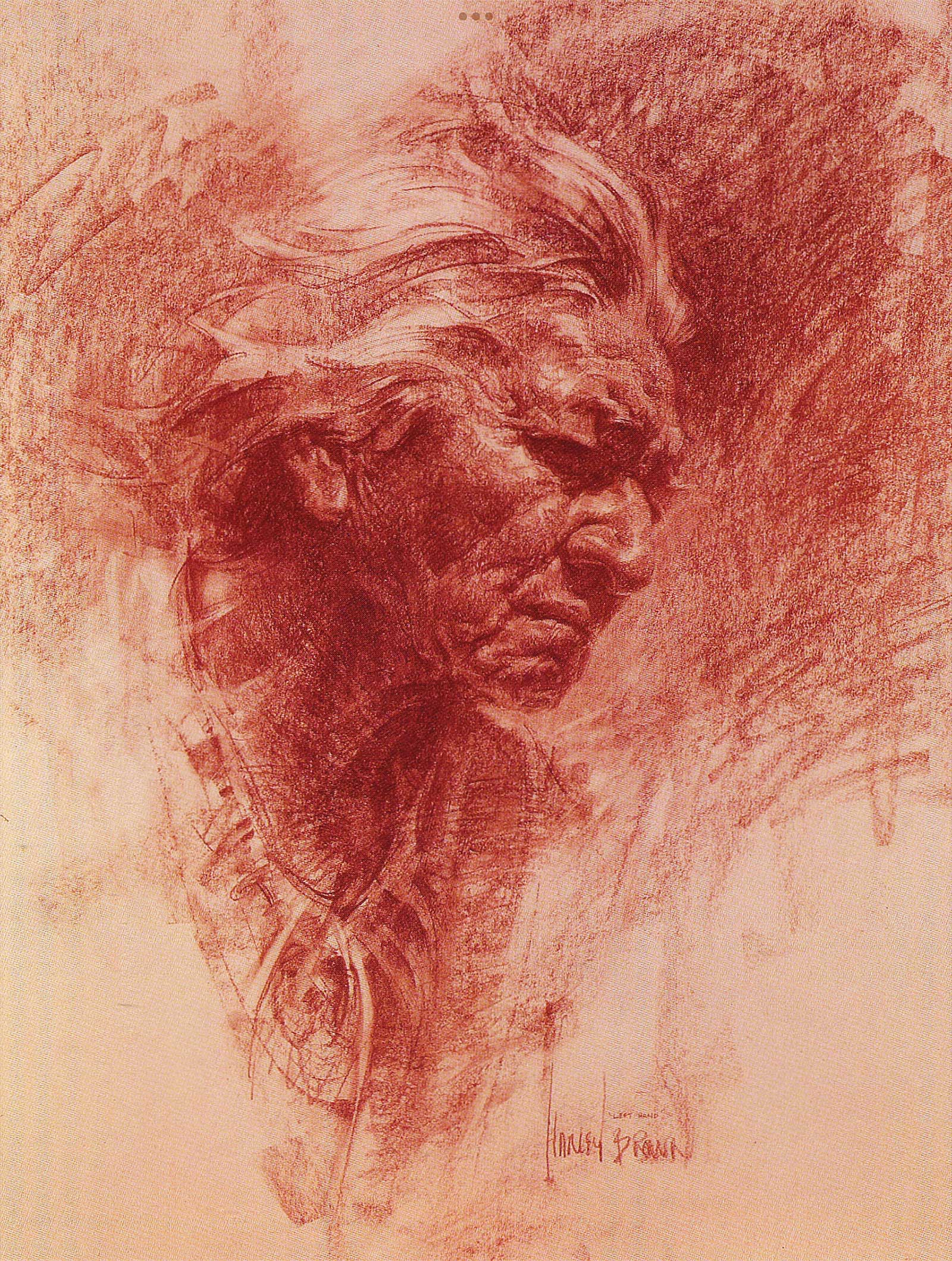
Here, I’m showing some of the intricacies I work on using acute observations and confidently laying those onto paper, using conté. This portrayal of Left Hand was first shown at a major art event half a century ago. A few important details on how I captured his likeness:
Cast shadows and form shadows done accurately; errors would pop out. Face shadows have wonderful “abstract” shapes.
Natural moment with the tip and turn of the head.
We don’t notice individual hairs, but we do notice the variable flow of hair, so we simplify the flow of his white hair. This adds immensely to hair movement passing into the background as a fair part of the total composition.
Very faint reflected light under the jaw and nose to show the jaw line and nostrils. Not lighter than what you see. What’s there says plenty.
The light that’s touching lower parts on the side of his face are slightly toned down in value because it’s further from the light source, but mostly because of the curve of the face from the direction of the light.
The outside vertical and horizontal borders of this work complement the angles and curves within this art piece.
Background done mostly at the same time as details of the face, showing the same joy as in the facial strokes.
Top right background is darker next to the lighter top of the head and hair, and lower, lighter background contrasting with the darker lower part of the head.
Edge of the neck with the necklace and shoulder are done very loosely and fade away. Not needed with the drama of his face. This portrayal needs this overall design, as you can see when squinting your eyes.
There’s no way that one can say this is like a photograph. We representational artists interpret the real world around us and are very personal in expressing ourselves.
Capturing Your Subject
In the beginning of my career, I created art almost exclusively from life, working with live subjects during art school and a few years after as well. Because of those special years, when I work from a photograph, that person in the photo comes totally to life during my moments of creating, and we’re connected throughout the entire process. What sometimes gives me anxiety is looking at a specific photo and knowing that person is no longer with us. My mind is forever involved with reality and profound imagination and never lets go of my unique, vibrant world.
When I see the portrayals I did from the past, I wonder what was going on in the mind of that subject. Maybe handsome or beautiful on the outside, but moments of intrigue on the inside. I often think of that when I see individuals painted by the masters. Let’s consider the Mona Lisa. You and I and millions of others have been so intrigued by her eternal, mystifying expression. Think of all the famous paintings over the centuries and those people who are portrayed and seem to be waiting for us to observe them, maybe visit with them for a few minutes.
While on the subject: the mood and character in each of my commissioned portraits is what I see with the subject at that moment. How she/he interacts might be interesting, but it certainly doesn’t give me reason to overly push this or that area of expression. I go for the subject’s natural, specific features. With the right lighting and angle and a relaxed atmosphere, my eyes and hands bring that person to life on paper.
If it’s not a commissioned portrait, then I might feel free to moderately push some of the features but still keep fairly close to my subject. I mention this because there are artists who claim not to paint like a photograph but want to get deep into “their subject’s soul” with their portrayals. This is why we often see a difference between the subject and the portrait of that subject. It’s an area of art called “serious art.” It’s an area I’ve never quite understood.
Stampede Chief
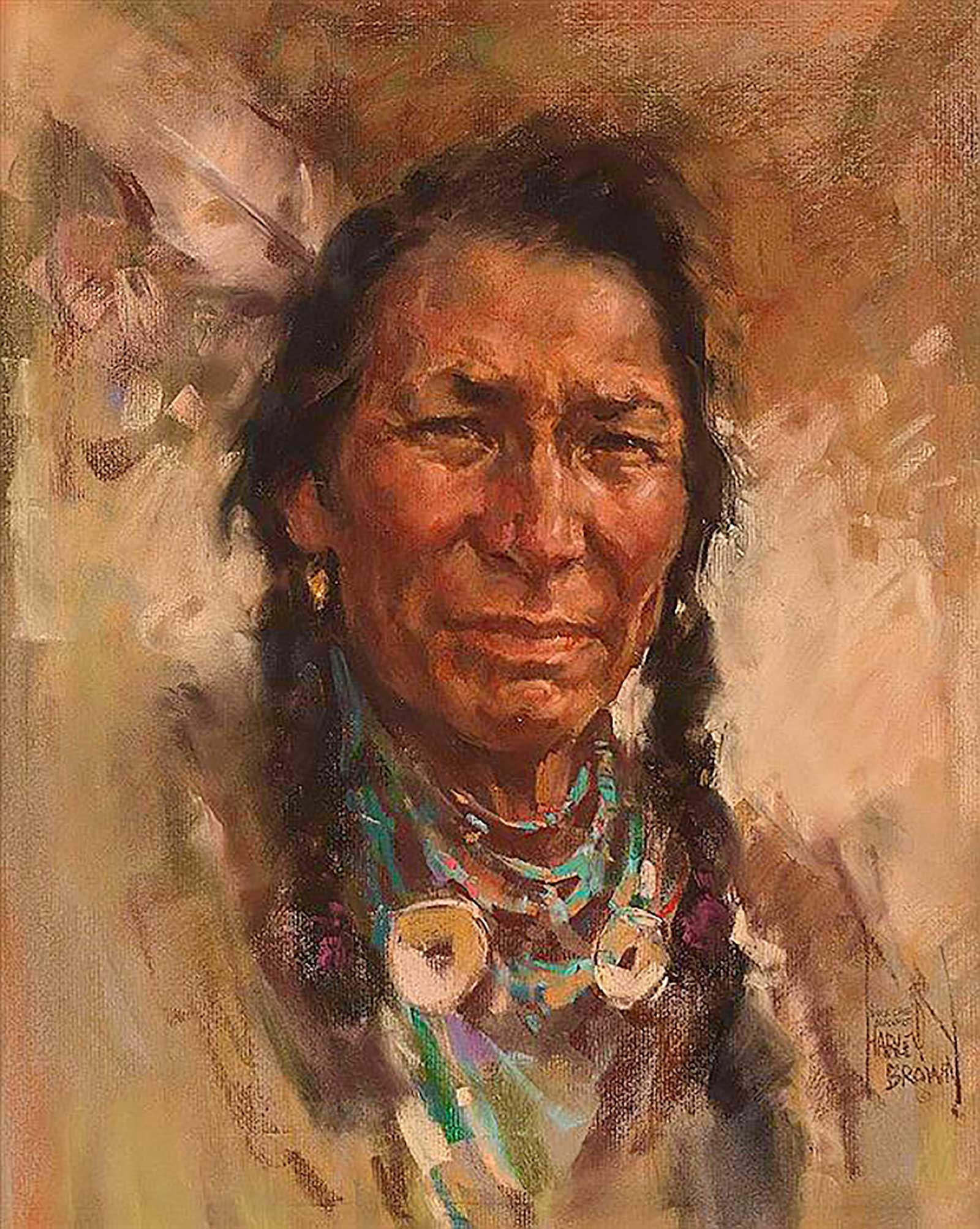
We observe this man having a grand moment at a Western gathering. The lighting brings art and life together in a memorable way. It’s brightest on his right side, with cast and form shadows finely done and flows of passion using pastels. The light on the left of his face is the reflection from a large tipi. What he wears adds marvelous drama to his portrayal, and the white areas bringing visual movement while framing his understanding expression.
More Art Thoughts
Regarding landscape painting: remember not to lay the horizon in the middle of your painting, whether it is a city scene, landscape or seascape. Regarding figures and portraits: for any artistic reason, if the face hue is cool, I like to warm its shadow parts a bit. This compensates for that coolness.
As time went on with my career in art, my days became more natural, more at ease with myself. I was comfortable with what I was doing. My energy went directly into my art because that was who I was and what I was doing, creating images that totally inspired me with nothing else in the way. And for years now, that has been my wondrous life. Me, my life and my art. Something that dreams are made of. You know exactly what I’m talking about.
Take it easy. The time will come when you look at your life in art as normal. Normal for you as teaching is for teachers, music for musicians, farming for farmers, you name it. It wasn’t long after I started out that going into my studio and creating a work of art was my version of skillfully throwing a ball into a basket.
We can make it as artists, whether self-taught or going to art school. On our own, we soon know where we’re going and also know how to get there. Whether grabbing our knowledge through periodic workshops or “how-to” magazines and books, we make it happen. For the record, I know artists who made it without going to art college. (Those workshops can be extremely helpful.)
I used to love the great masters’ art pieces. I still thoroughly like their works, but now I mostly love my own. How about you?
Each painting that I do is like a new experience. Fresh colors and strokes and design, even with the same subject having different lighting and angles. I drew over 20 poses with one model, and each time felt totally original and important.
Once in a while, I might feel down and don’t think anything will help. But every time I do, a quick 10-minute sketch erases the negatives running through my mind. Down and then up. Keep a pad and pencil ready somewhere, and I’ll keep mentioning it. For fun, when you’re finished with this article, do a 10-minute sketch of anything that is in front of you.
It’s not necessarily the subject that makes our painting interesting. It’s our overall approach in how we are going to give life to that subject. An example is Home Fields, a simple painting of a fence by John Singer Sargent. Once in a while for fun, I’ll get something simple like a pot and see what I can create with it. Simple or complex, we love to create.
Everything is Art-worthy
There was a period of time when I had to look hard to find an object to paint. Intensely looking was the basis of those stretched times. Some days I’d see nothing that I could be inspired to paint. Well, time went on, and my searching was replaced by “seeing.” Literally, I was seeing what needed to be immortalized all day long. Objects and people that totally stirred my inner creative mind. Whether I’m in a store or restaurant or walking around the backyard, everything the sun or (indoor) light touches beckons to me. Of course, I’m sometimes quick and picky when given only so much time. In a poetic way, everything and everybody is there for us to lay onto canvas or paper, from a still life on my kitchen table to that fellow at the restaurant bar, leaning over his coffee, considering his afternoon chores.
Many things that you learn from me are from things I might have had difficulty with at first, and now pass my learning on to you. —
BALINOFSKI: Here She Is
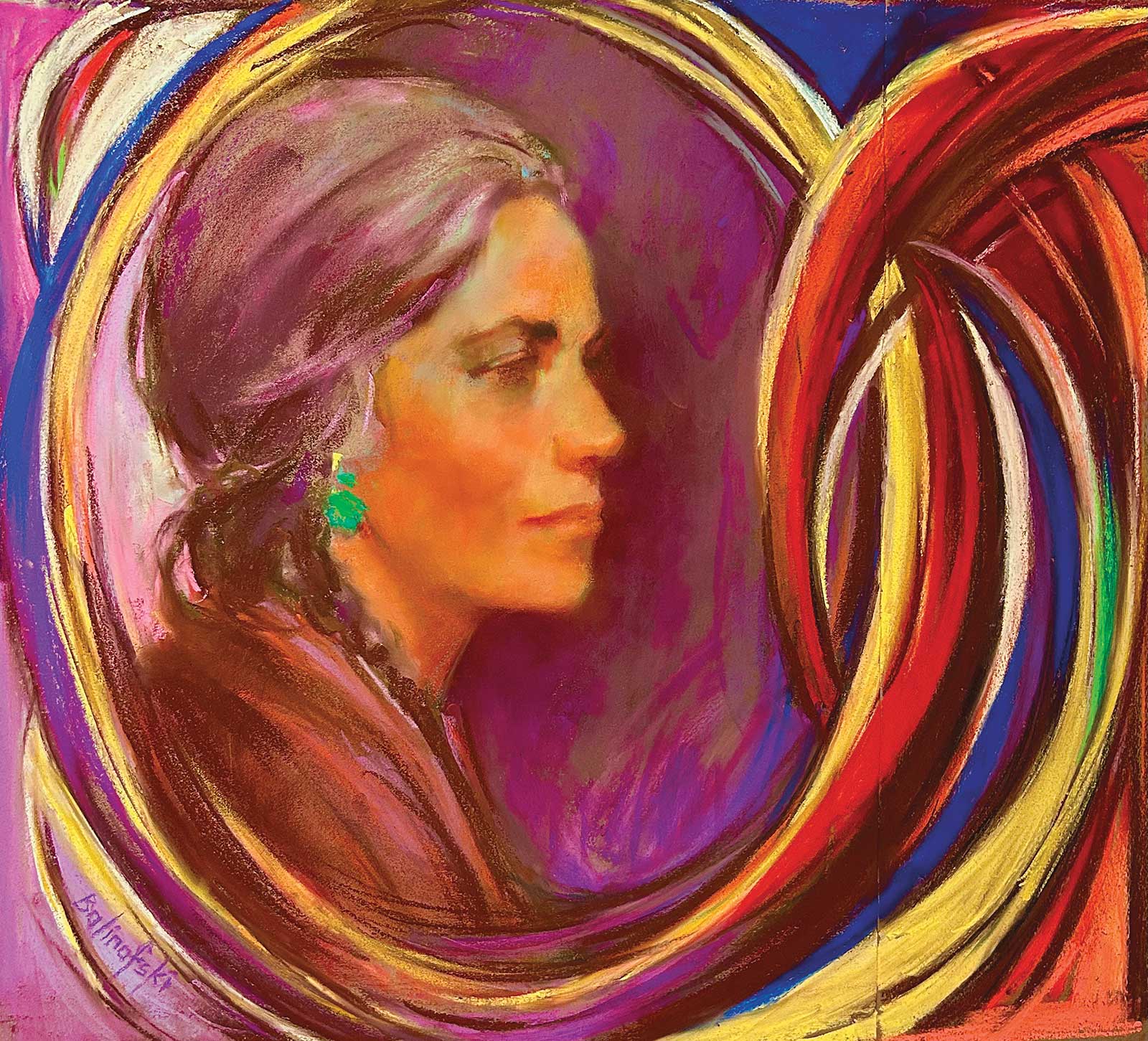
I’ve painted and drawn this lady many times, with each time being fresh and rewarding. Here she stood in front of me and decided to look out the window at the birds flying about. I immediately started laying down the strokes, carefully with her features and carefree with the swoops around her, back and forth. She didn’t move one bit. A quick break and back to creating. Incidentally, I can make mistakes, but sometimes they can be called “happy accidents.” My inner mind finished this piece, joyfully knowing exactly when to put in the final stroke. And every part of this art piece is pure Balinofski, always including a good number of “inspirational moments.”