Creating realistic wildlife art has been a journey marked by a constant search for the right medium to bring my vision to life. Over the years, I’ve experimented with a variety of techniques and materials—from oils to colored pencils—each time refining my approach and pursuing ever greater detail. Although I initially veered away from realism in my early work, my drive to add more intricate details eventually led me to embrace it fully. It was when I discovered scratchboard that I found a medium that truly resonated with me. The permanence and precision required by scratchboard, where every mark is etched into the surface, mirrored my growing appreciation for the control and depth I sought in my art.
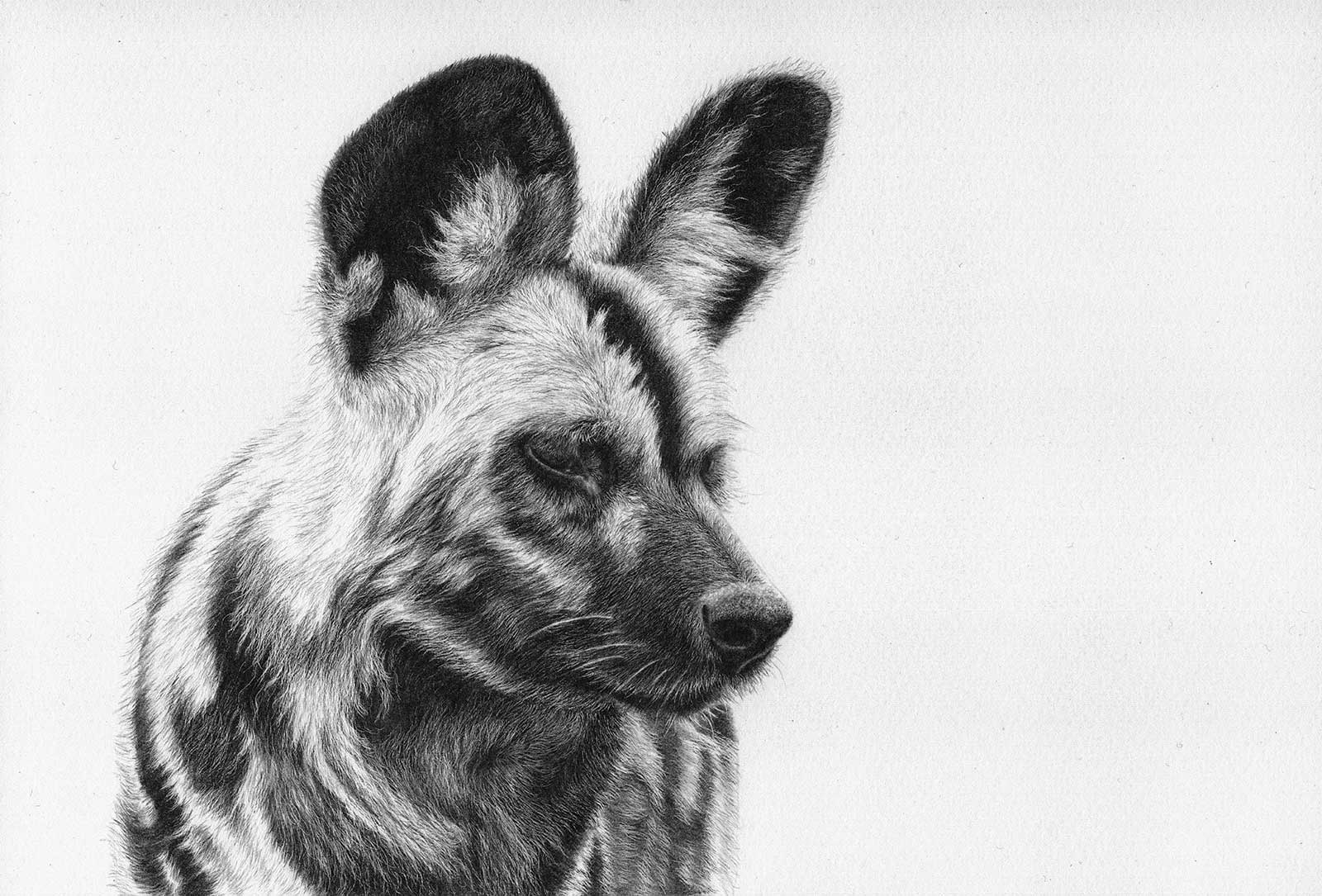
Patterns of the Pack, graphite, 7 x 9¾" (18 x 25 cm)
Now, working with graphite, I find myself drawn to the same level of precision, as the medium allows me to achieve the fine details and textures that define my wildlife pieces. Both scratchboard and the techniques I use in graphite, share a tactile quality that makes the process feel more intimate, where every mark is intentional, and every imperfection becomes part of the artwork’s story.
I’ve spent countless hours refining my techniques to capture not just the physical form of my subjects, but also the textures that make them truly unique. My focus is always on bringing those textures to life, so you can almost feel the individual fur strokes on the paper. The indenting method is key to achieving this as its precision allows me to replicate fur with a level of detail and realism that feels both captivating and true to nature.
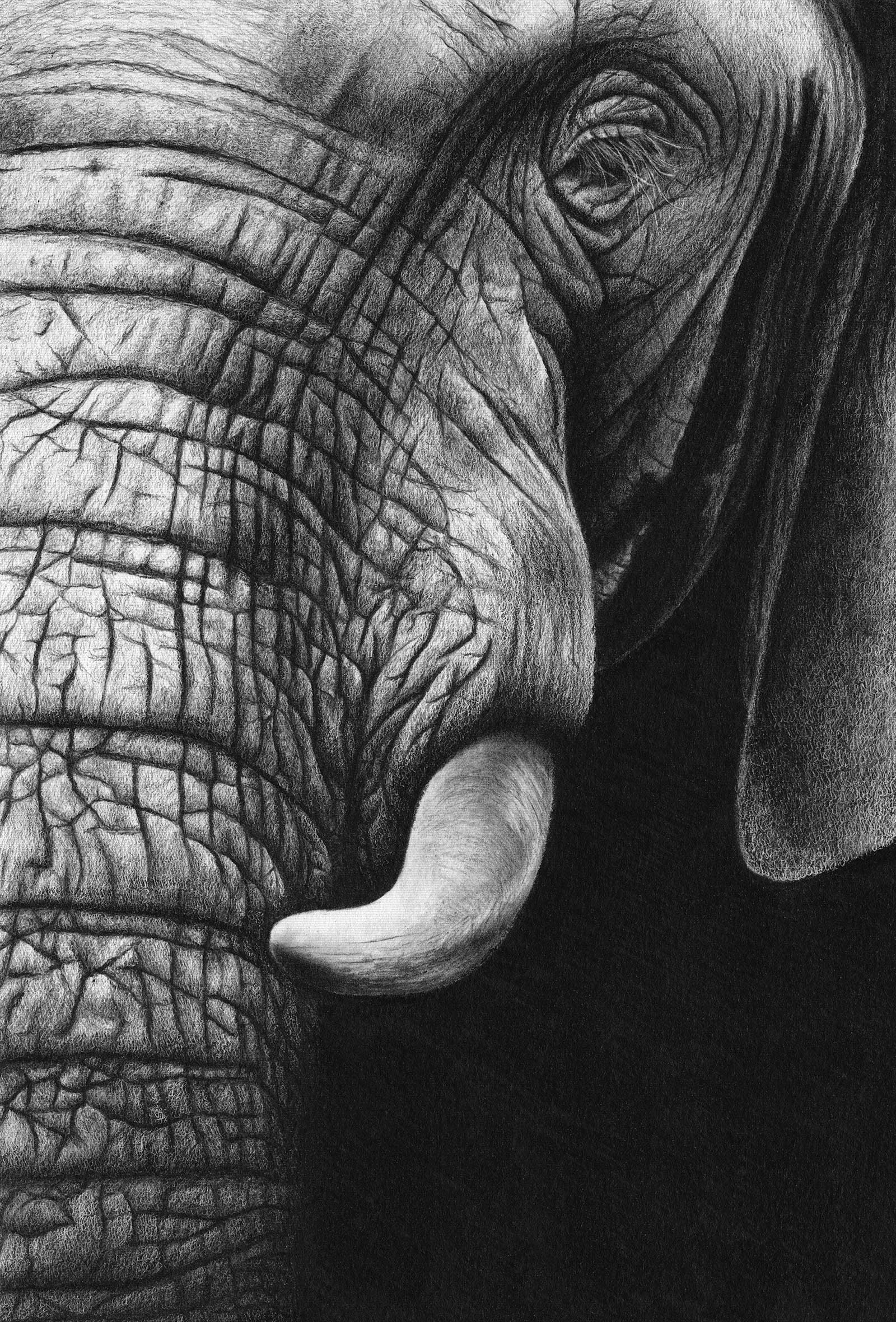
Rough Elegance, graphite, 9¾ x 7" (25 x 18 cm)
The indenting technique involves using a fine, hard tool to press lines into the surface of the paper before applying graphite over the top. These indented lines remain untouched during shading, creating crisp highlights that stand out against the darker tones. It’s an approach that not only saves time in creating fine details but also lends a natural authenticity to the finished piece.
My process begins with a carefully selected paper, typically a heavyweight, smooth surface that can hold the pressure of the indenting tool without tearing or warping. I prefer papers with a slight tooth, which provides enough texture for the graphite to adhere well, while still allowing for fine detail. For pencils, I typically rely on a range of high quality graphite with varying hardness, from 2H to 9B. The harder pencils are ideal for creating the sharp, subtle indentations, while the softer ones allow for rich, deep shading that brings out the contrasts between the indented fur strokes.
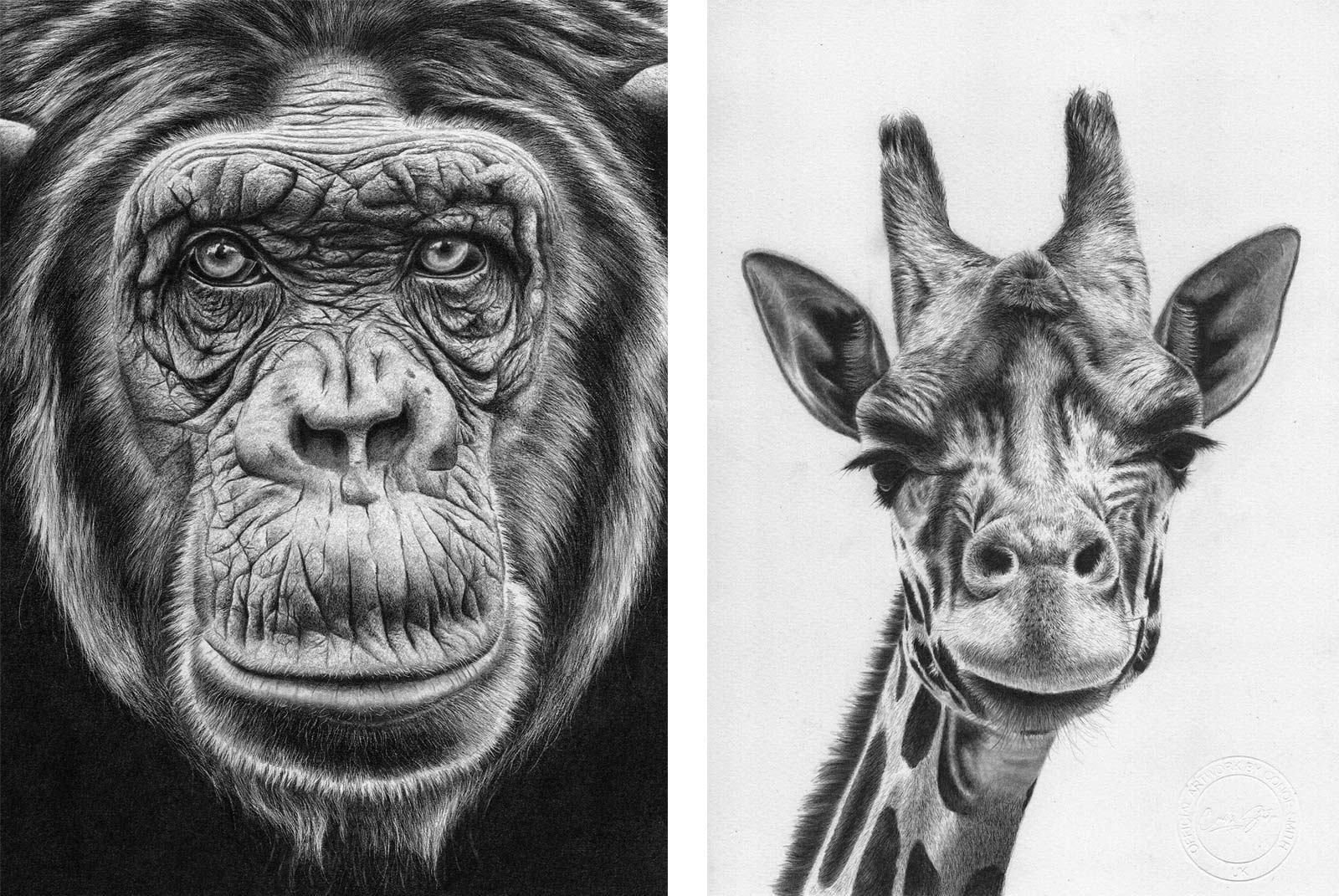
Left: Stories Untold, graphite, 14 x 11” (36 x 28 cm) Right: Face to Face, graphite, 9¾ x 7” (25 x 18 cm)
Graphite’s ability to produce fine detail makes it an ideal medium for techniques like indenting. Its responsiveness allows for subtle adjustments, ensuring every strand of fur is rendered with accuracy. Whether you’re new to wildlife art or an experienced artist, I hope this insight inspires you to explore the possibilities of graphite and the indenting technique.
My Art in the Making Young Majesty
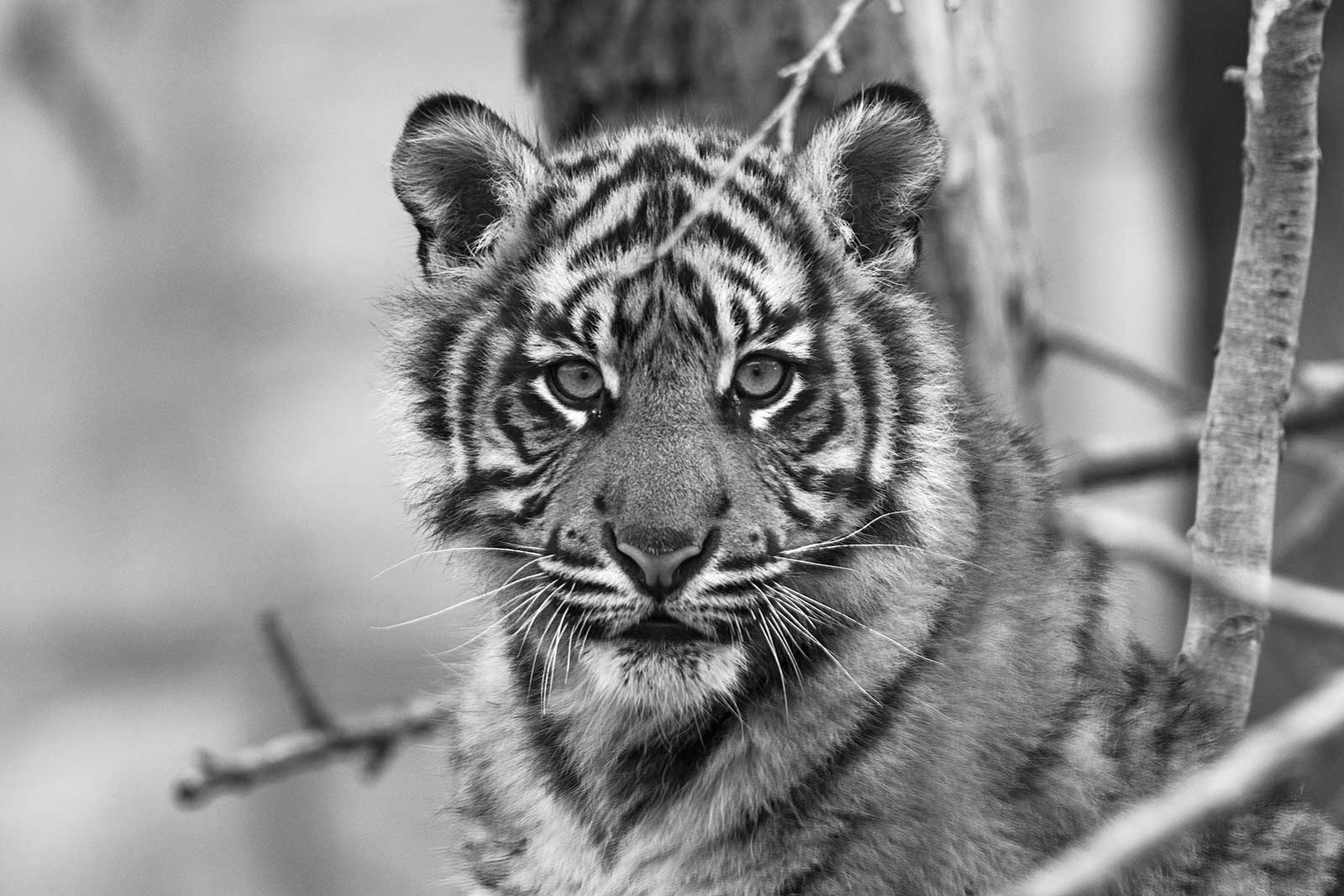
Reference Photo: Photo by Hollie Gordon
Reference Photo: Photo by Hollie Gordon
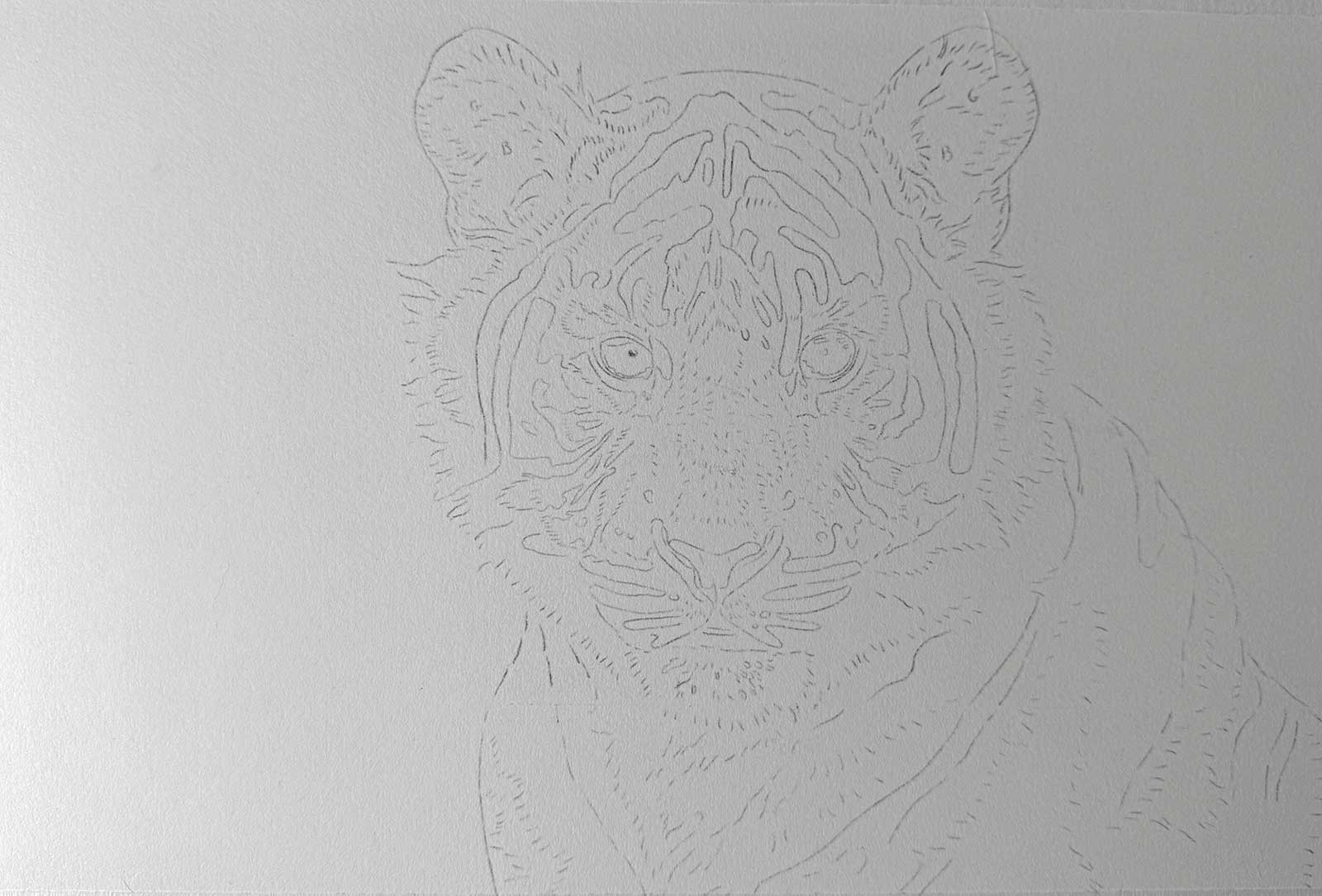
Stage 1 Drawing Up
To begin, we need to create our line art. This can be done on a separate piece of paper and transferred using graphite and pen.
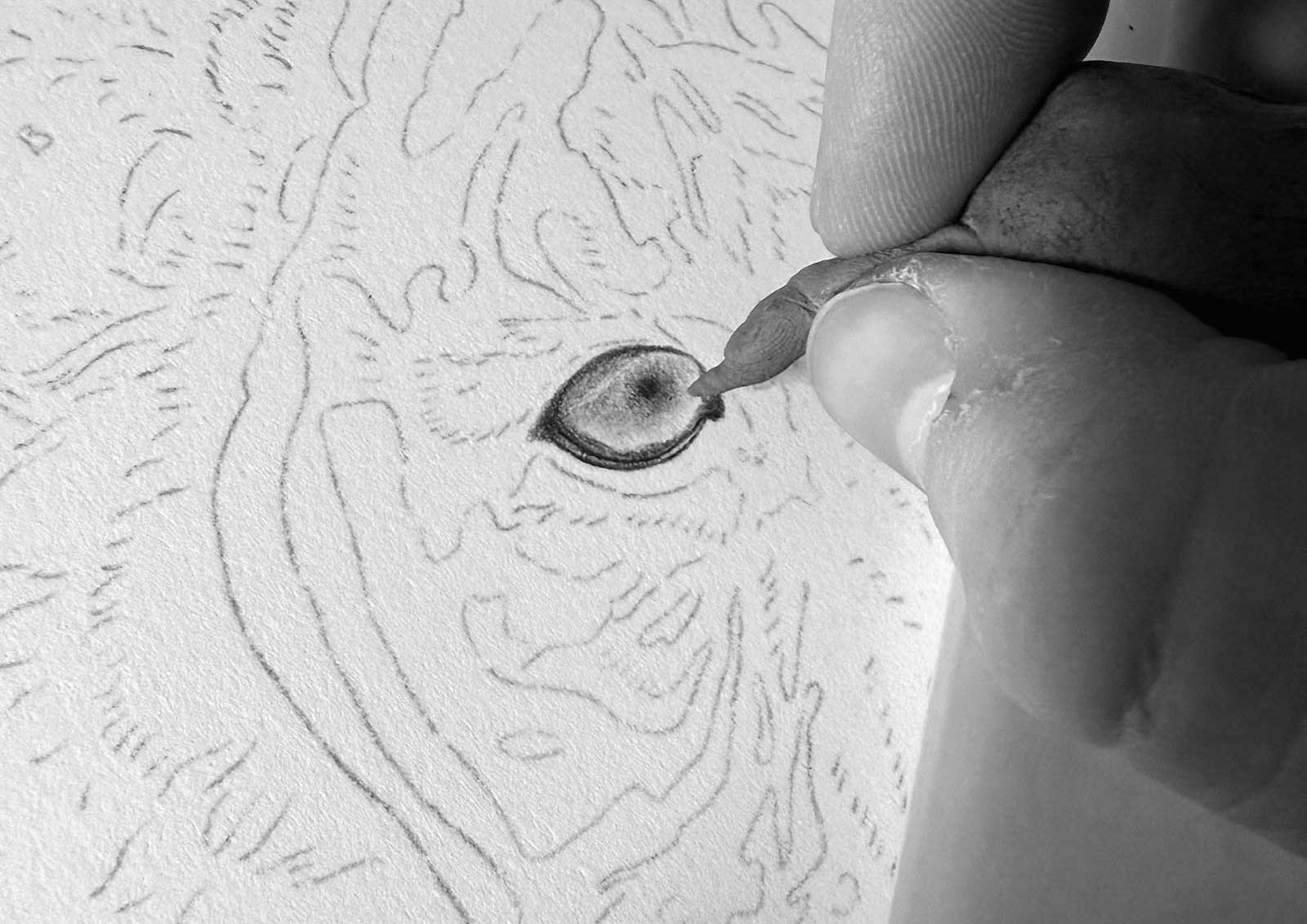
Stage 2 The Eyes
I begin almost every piece with the eyes. The eyes are often the focal point of the artwork, conveying the soul and emotion of the subject, and are key to establishing a connection between the viewer and the animal. Use a putty eraser to reestablish those highlights.
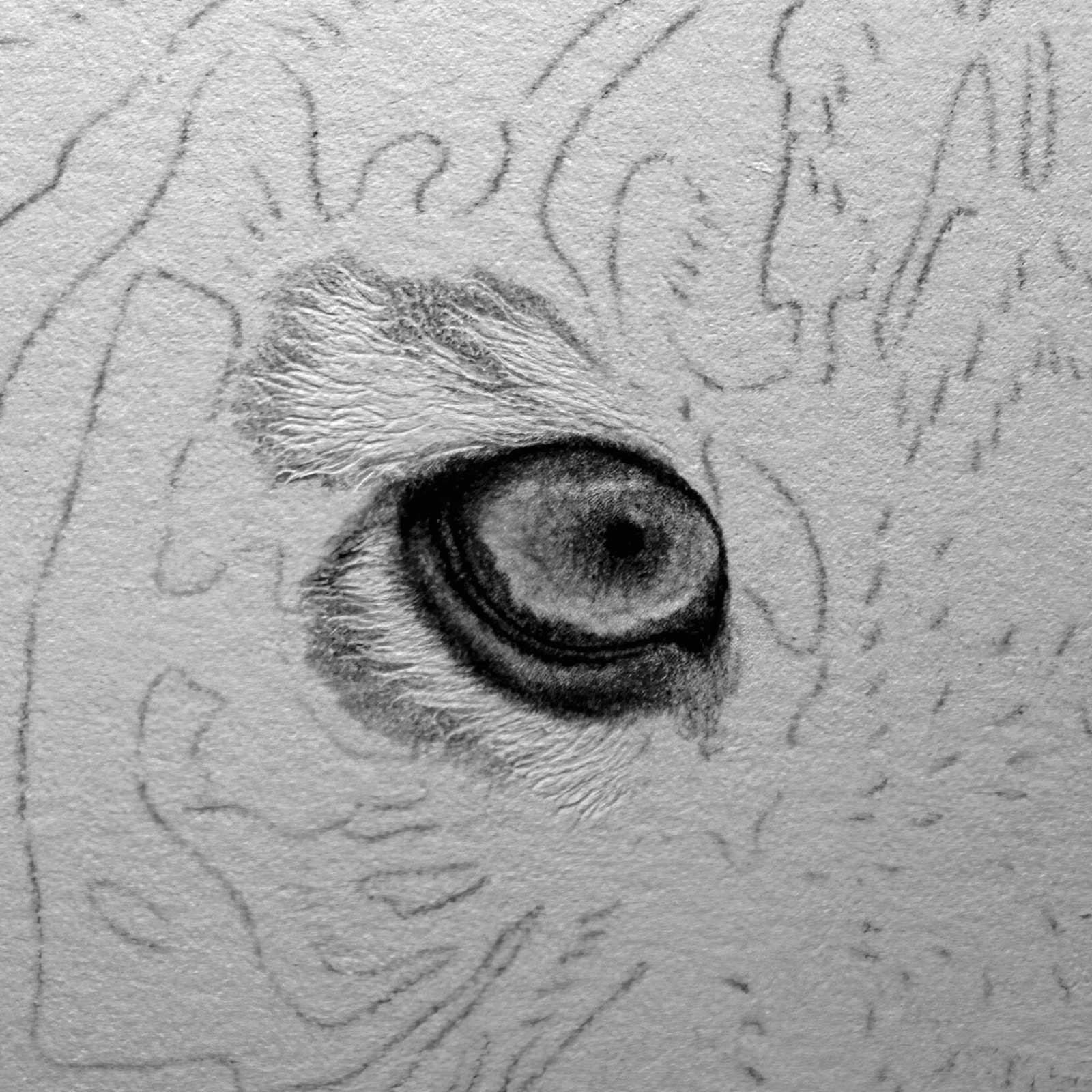
Stage 3 Bright Fur Around Eyes
Next, I work on creating those bright fur areas around the eye. You can see the indentations of the fur and how they are not uniform in shape. I use a blunt 2B pencil to ensure no graphite goes into the indentations. Tip: Keep your pencil blunt to ensure the graphite doesn’t go into the indentations.
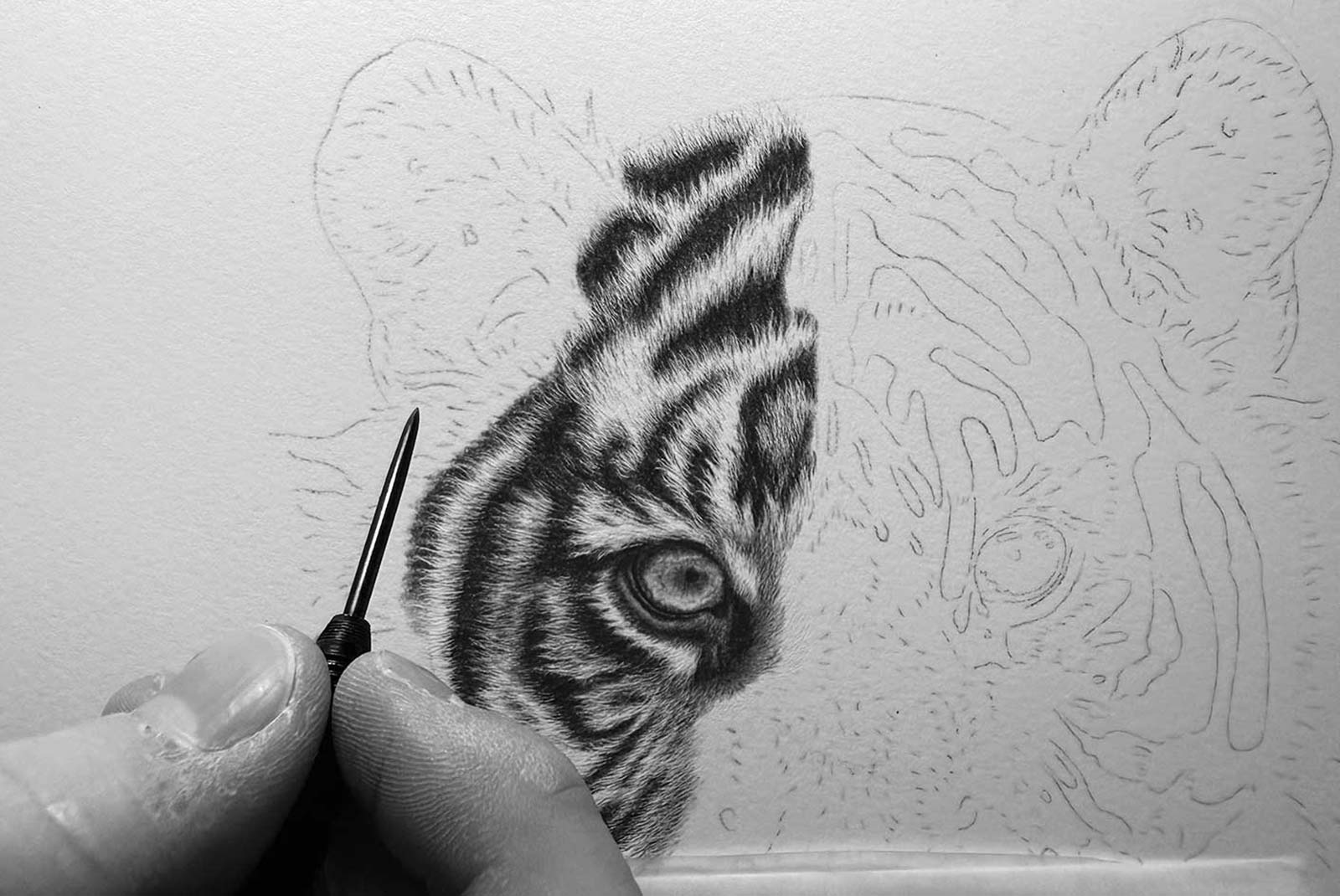
Stage 4 The Ears
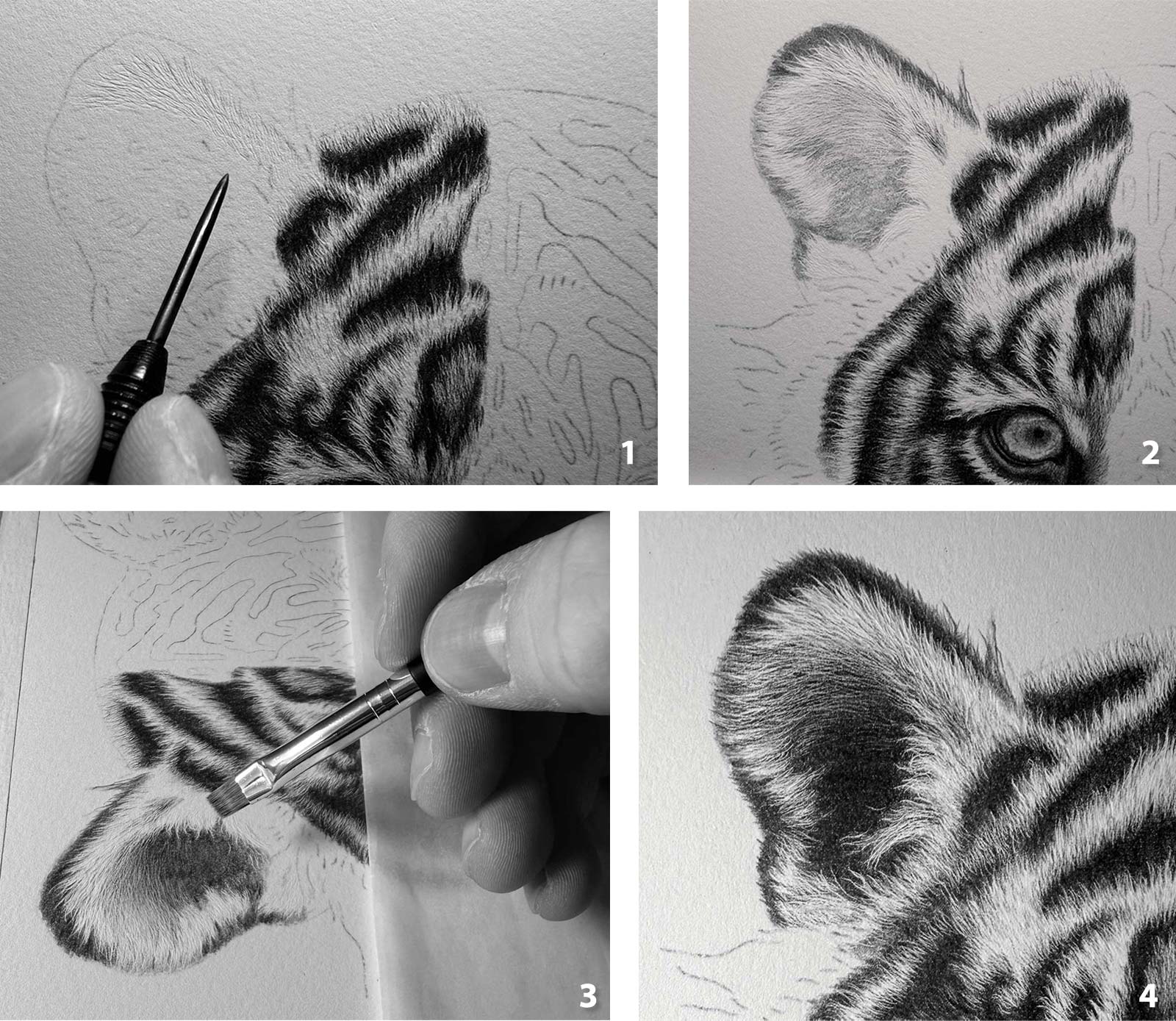
Once I feel I have worked on a certain area for too long, I will move onto an area with a different texture, for example the ears.
Stage 5 Indentation Technique
Here is a step-by-step of the indention technique in action to create the ear on this tiger piece:
1. Lay down a base layer of fur texture, making sure to follow the fur direction.
2. Add your initial layers of graphite, paying attention to the lighter and darker fur.
3. Smooth out any areas you need to by using a bending stump or makeup brush.
4. Add refinement such as stray hairs and darkening the shadows.
Tip: Blending with a makeup brush or blending stump can soften any indentations that are too sharp or too bright.
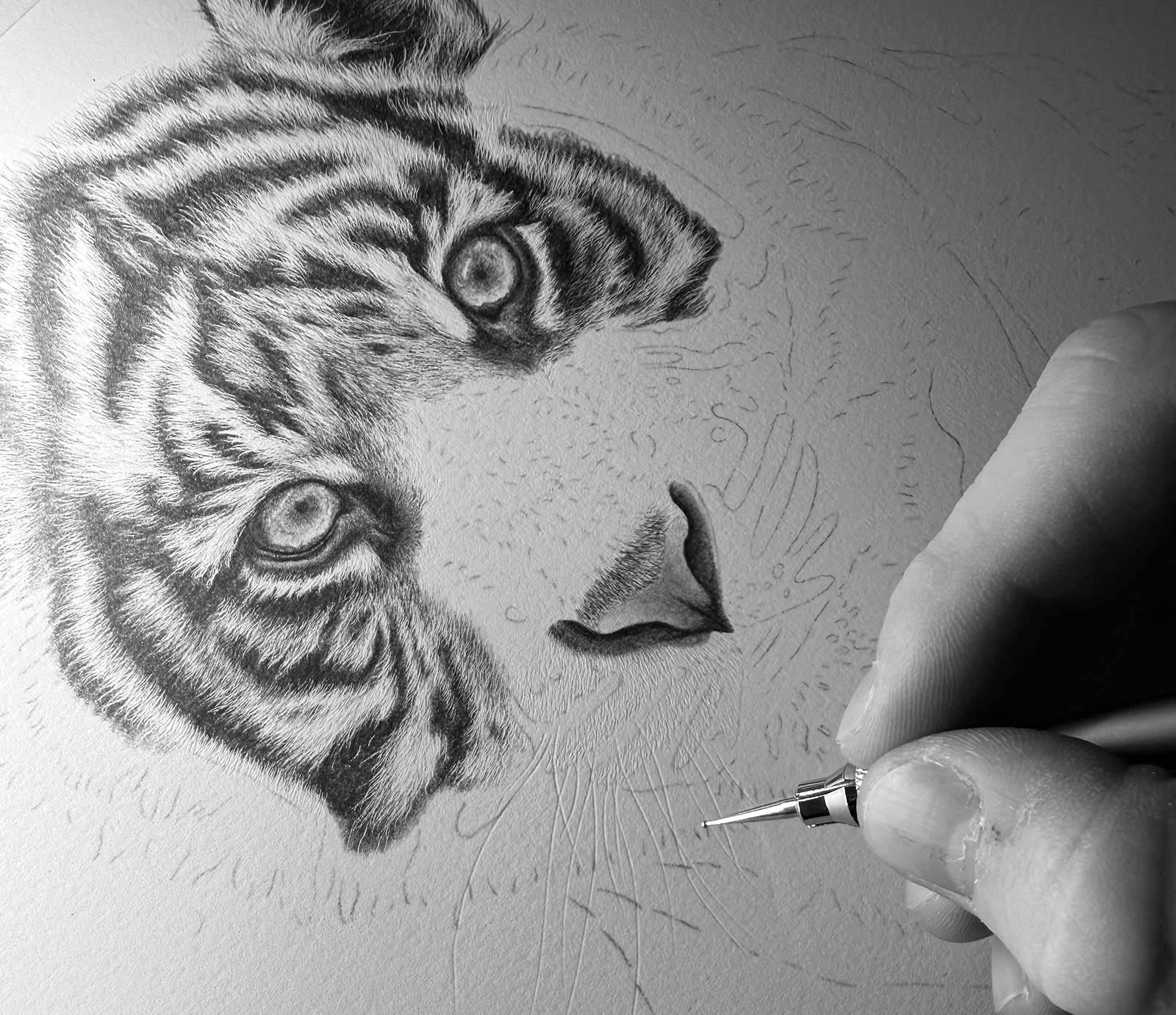
Stage 6 Whiskers
Working on the muzzle means it’s time to add in those whiskers. I use a thicker indenting tool for this.
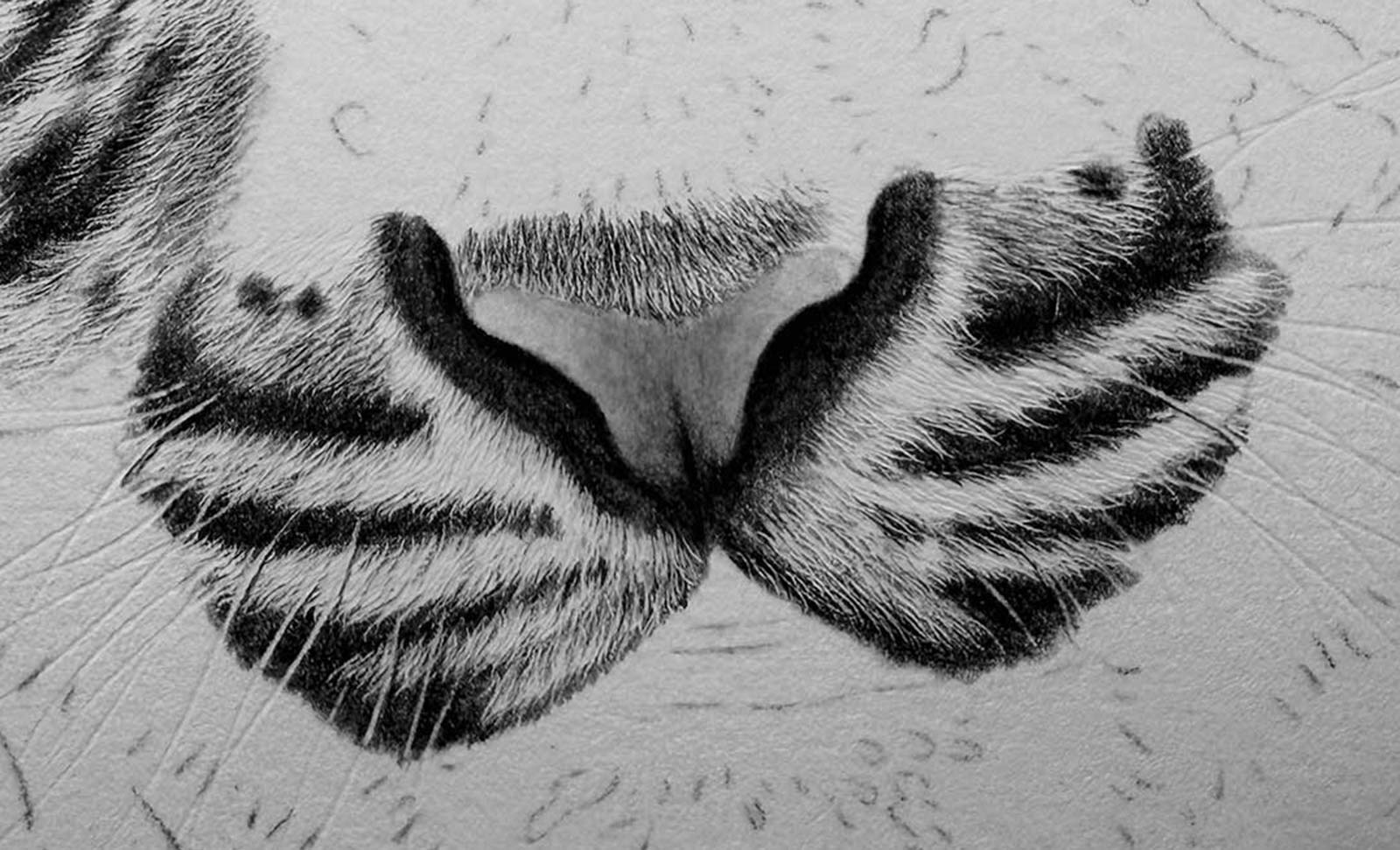
Stage 7 Muzzle and Nose Textures
I use the same techniques for the fur on the muzzle. However, for nose texture, you can use a scribbling indenting technique instead (see mini demo on final pages).
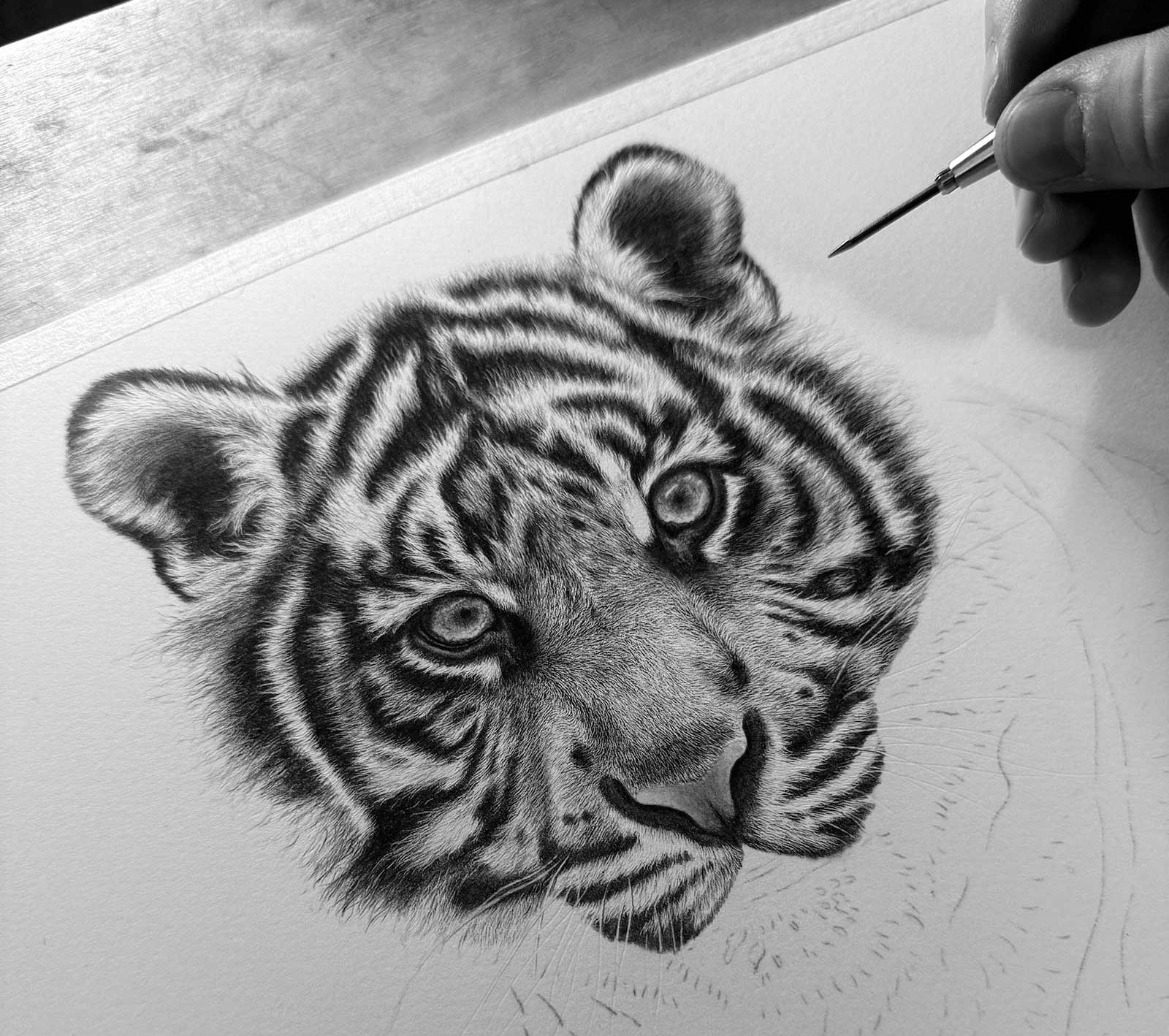
Stage 8 Bringing It All Together
I then bring all the facial elements together and refine any areas that need refining before moving onto the body.
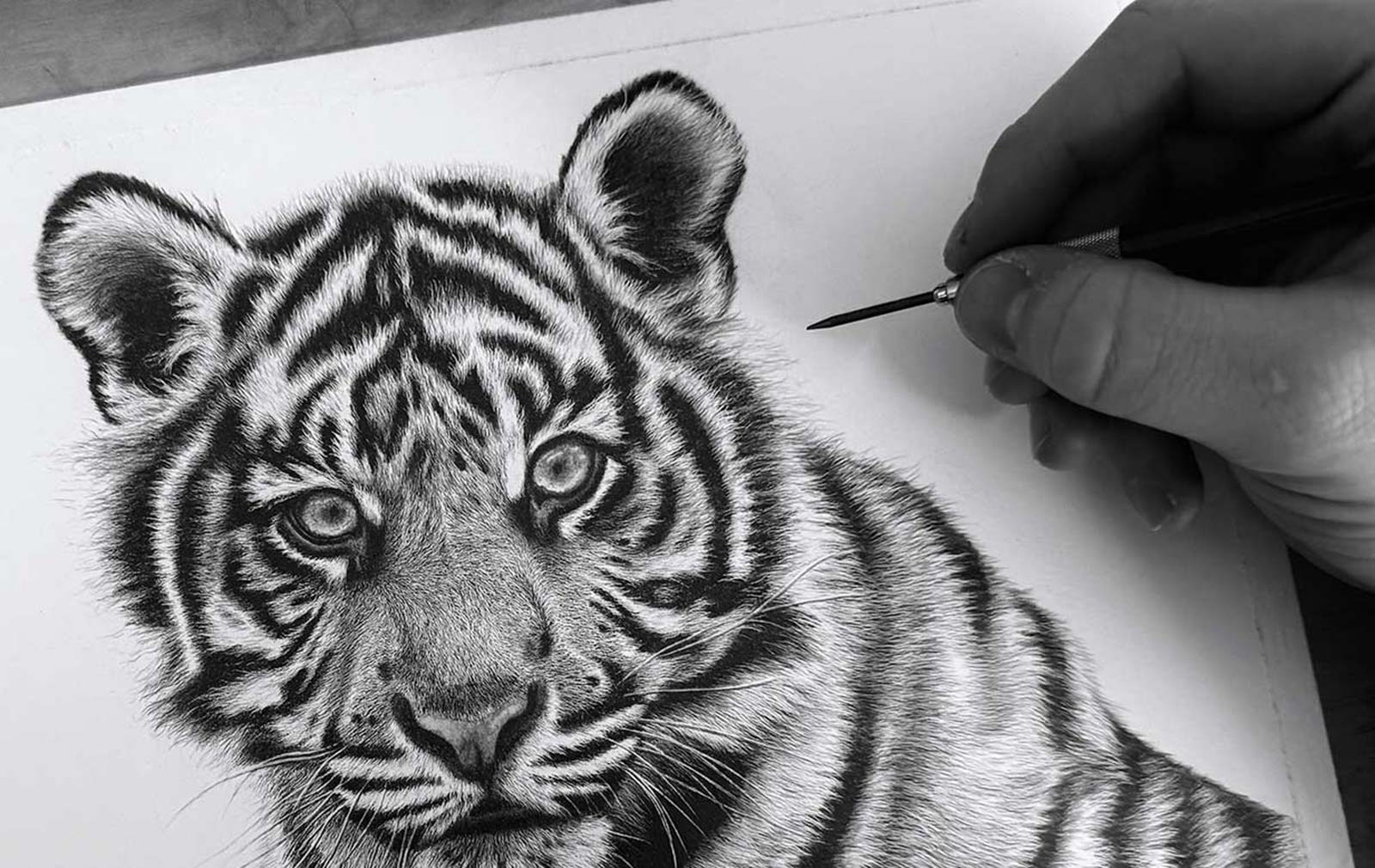
Stage 9 A Few More Adjustments
Finishing touches include adding flyaway hairs, reestablishing the whiskers and building the contrast in the darker areas, which all add to the realism of the piece.
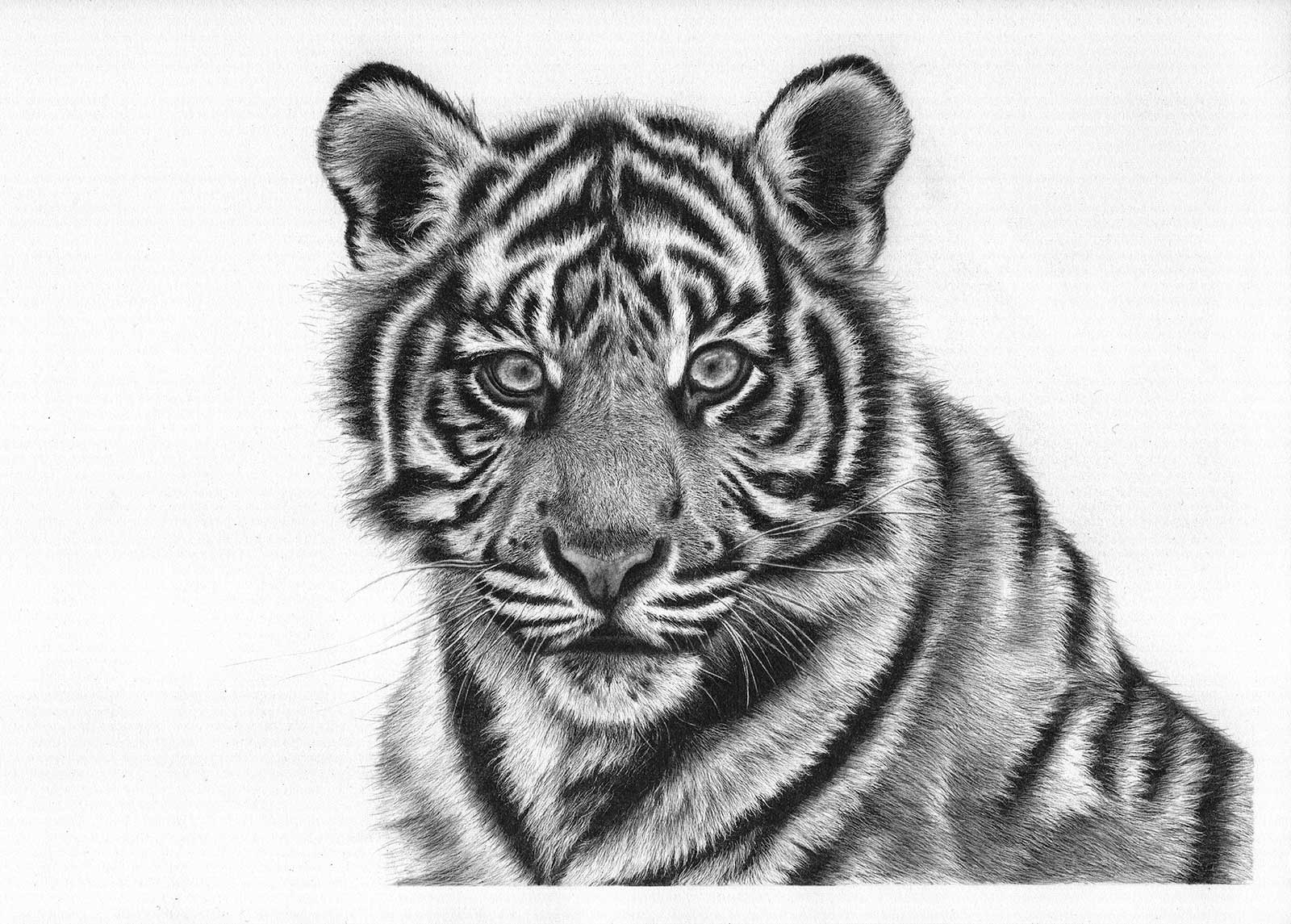
Stage 10 Finished Artwork
Young Majesty, graphite, 10¼ x 14½" (26 x 37 cm)
Bonus Demo Tiger’s Eye
I’ve created a small demonstration of a tiger’s eye to show you the indenting technique in action.
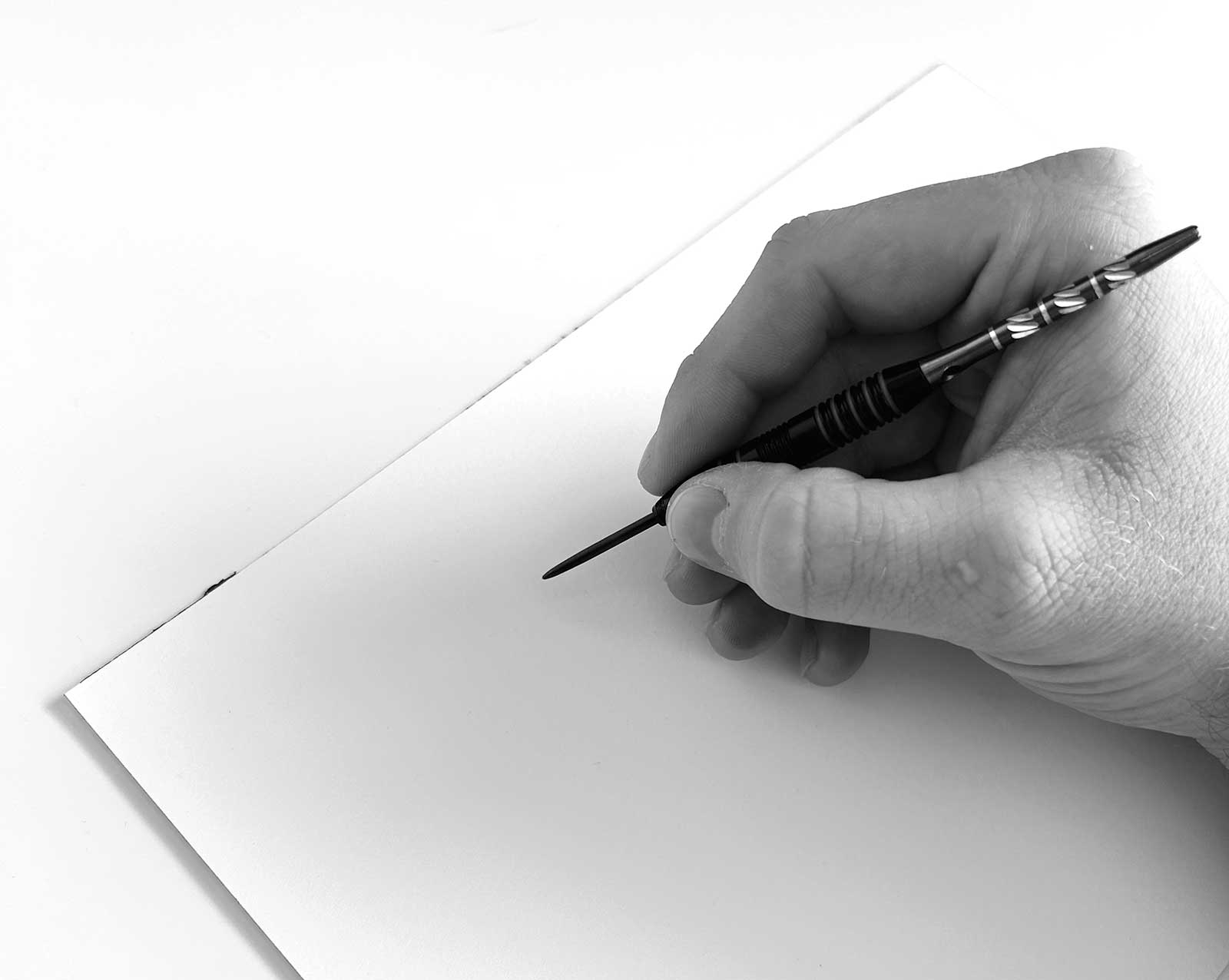
Stage 1
To create the fur strokes using the indenting technique, hold your indenting tool like any other pencil.
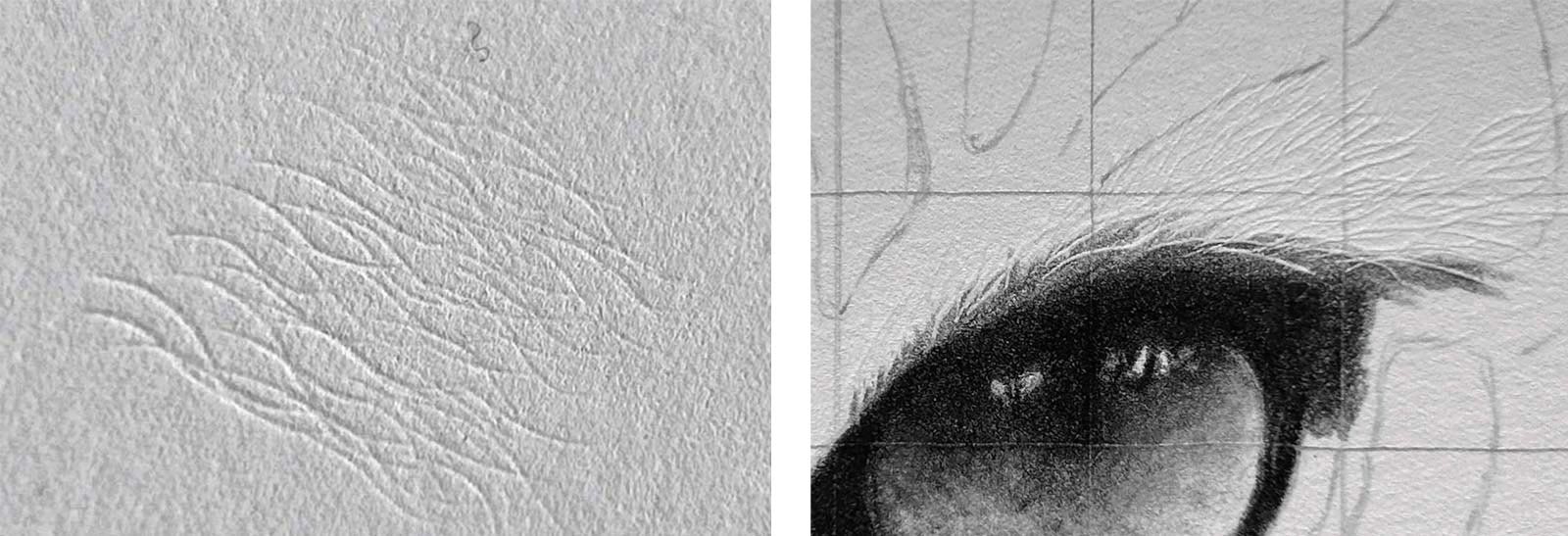
Stage 2
Pull it towards you and overlap your strokes to create fur texture. The gaps between the indentations will be the shadows between the fur.
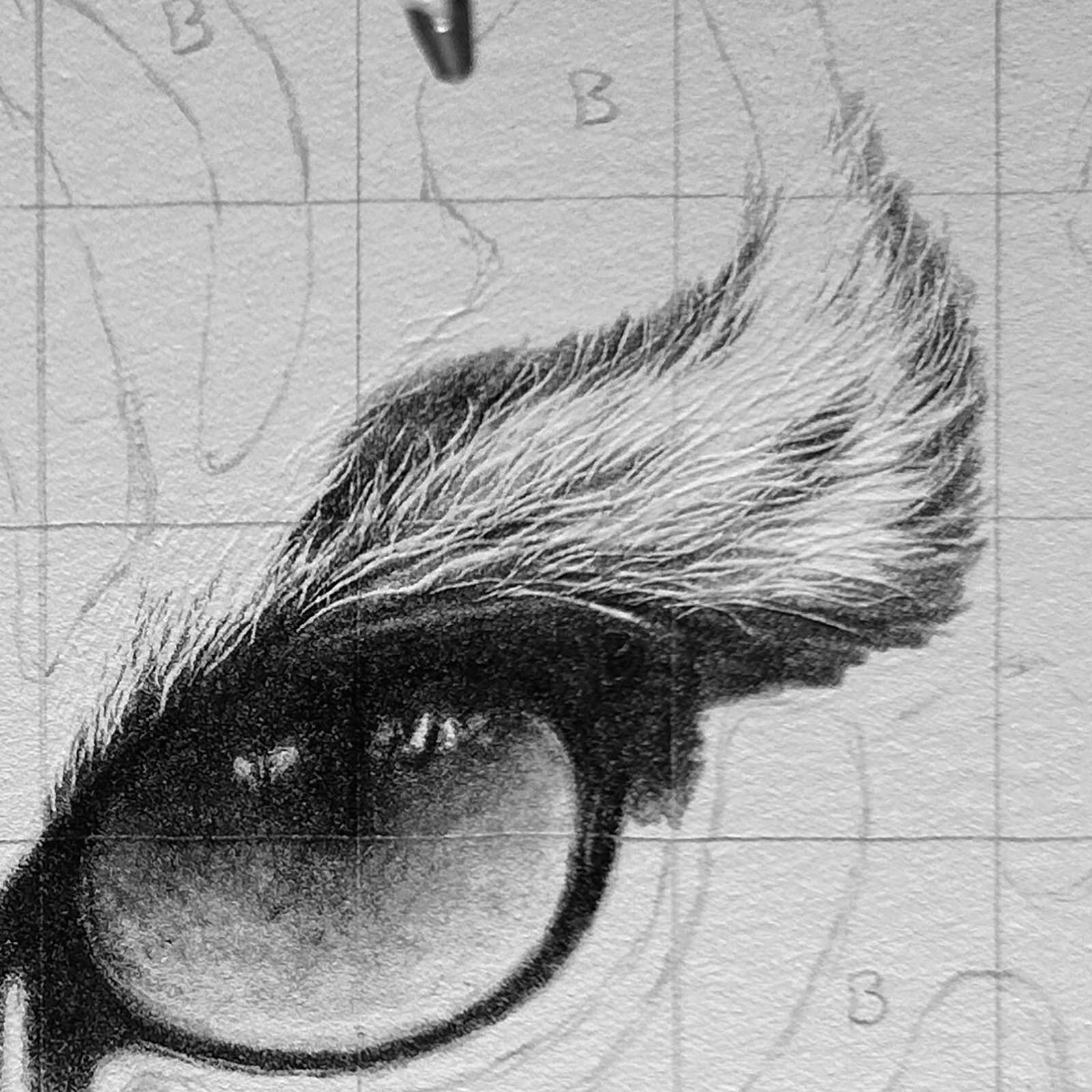
Stage 3
Next go over those same strokes with your 2B and 4B pencils, creating the variations in the shadows.
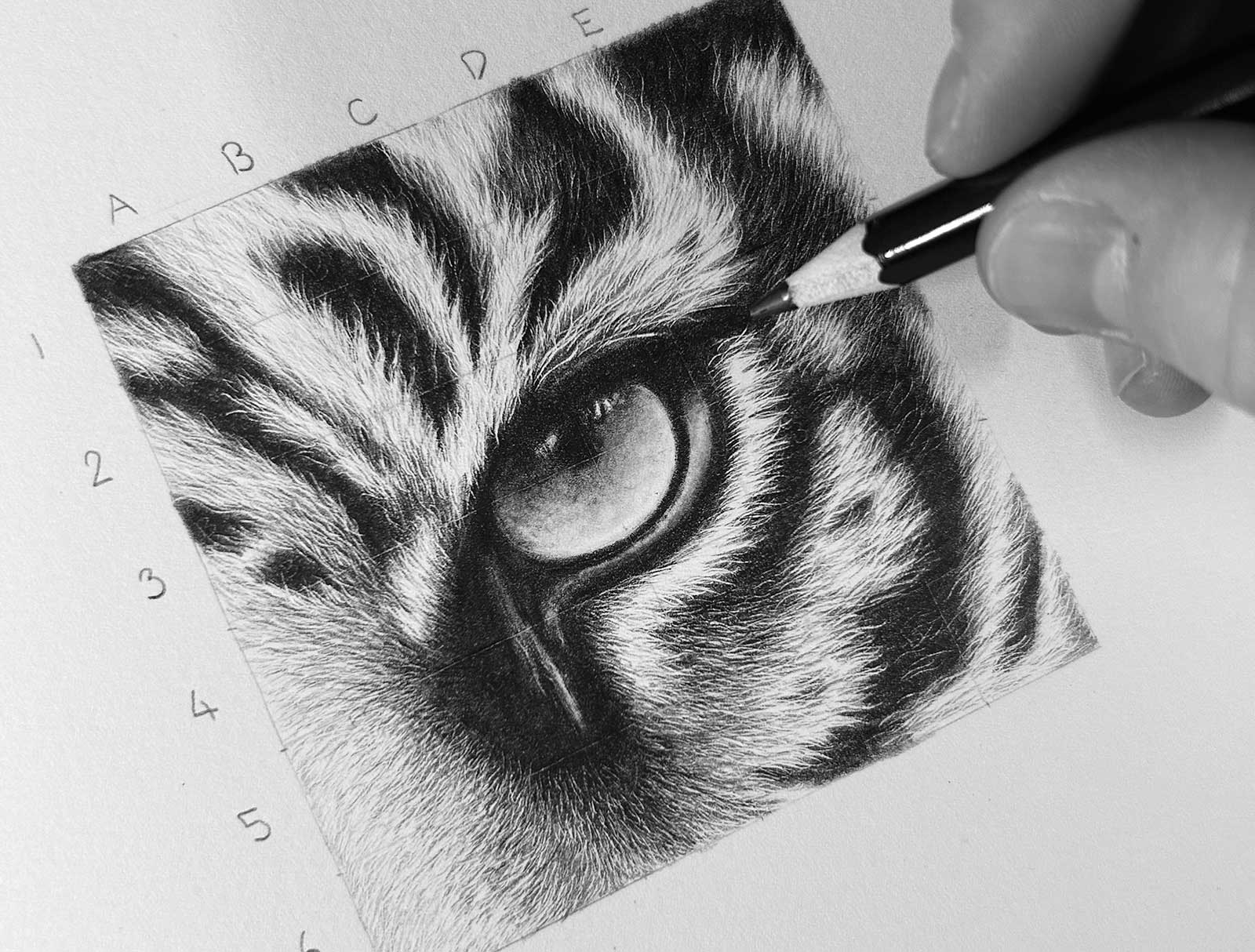
Stage 4
This will be the final result by continuing to use this technique across a whole piece such as this.
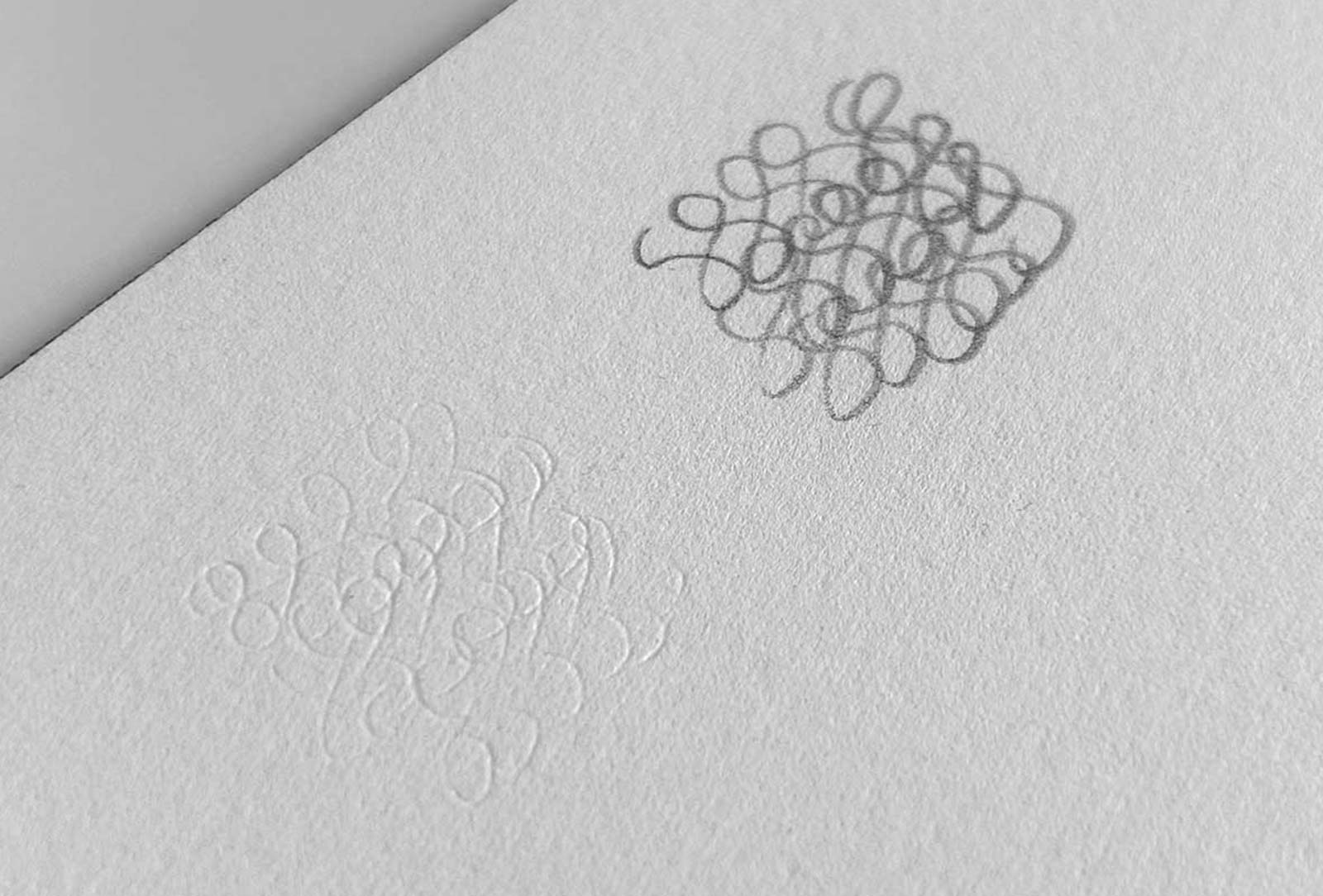
TIP
If you are using a scribbling technique, instead of creating fur strokes, create small figure-eight patterns. I have made the size here bigger so you can see the pattern clearer.
About the artist
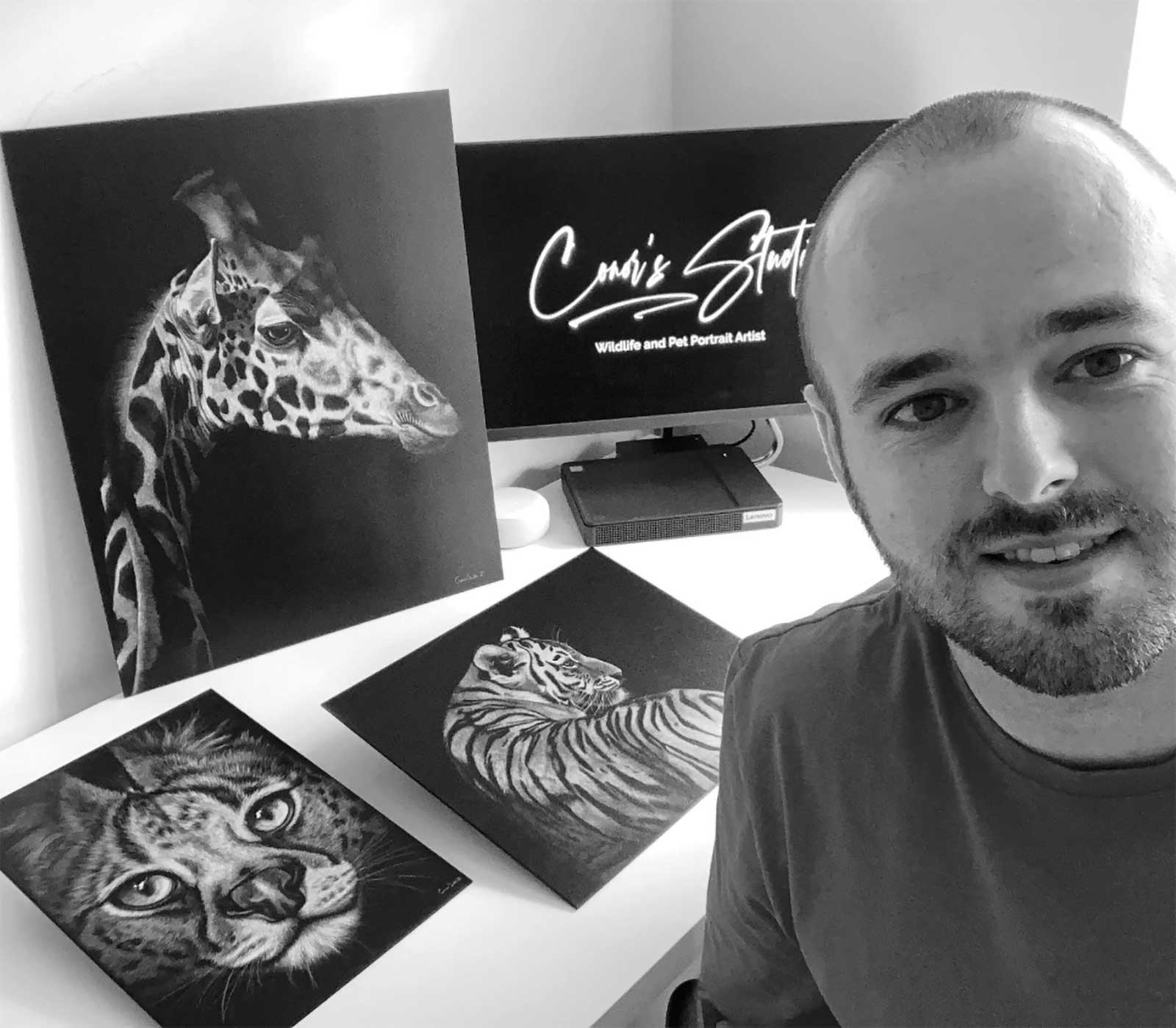 Conor Smith
Conor Smith is a 32-year-old wildlife artist based in Staffordshire, UK. He specializes in realistic wildlife artwork and has been fortunate enough to have his work featured in multiple national and international magazines. In 2023, he was a finalist for the David Shepherd Wildlife Foundation Artist of the Year competition. He is also a member of the International Society of Scratchboard Artists, where he holds Signature Status. Smith’s work is shared across platforms like Facebook, Instagram and YouTube, where he posts videos to inspire both new and experienced artists. When he’s not creating artwork, he works as a paramedic within the National Health Service in the UK. Though his work in the NHS is incredibly rewarding, it often leaves little time for his passion for art. However, Smith firmly believes in making time for what matters, so whenever he can, he picks up his tools and immerses himself in his art.
Contact at
conorsstudio@hotmail.com
conorsstudio.com