Bring your scene to life with backlighting and a powerful glowing light effect. The French call this effect “contre-jour” or “against the light,” which creates a striking and dramatic effect in landscape painting by positioning the primary light source behind the subject.
This backlighting technique results in several distinct visual characteristics:
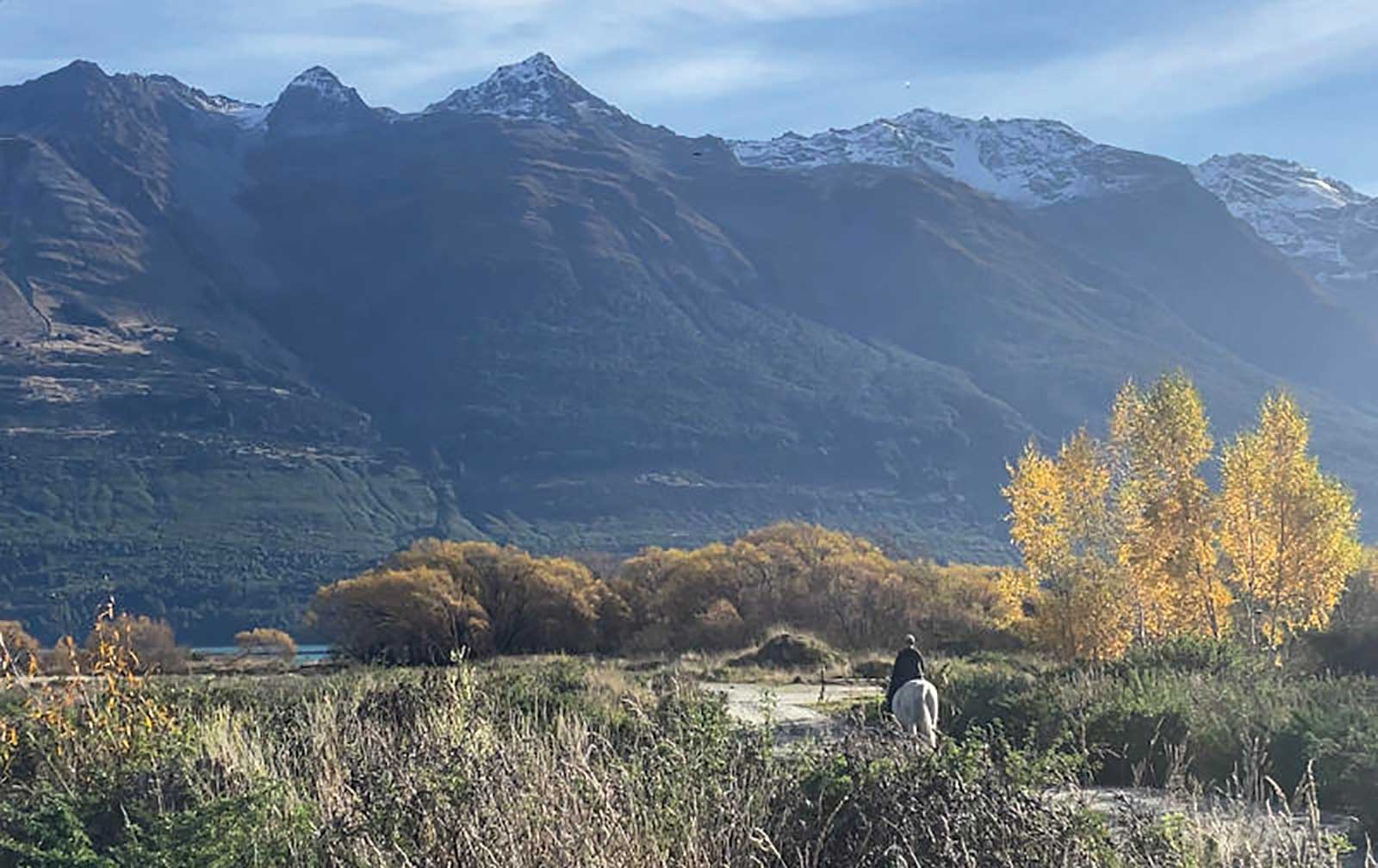
Bucklerburn River in Glenorchy, New Zealand.
Silhouettes and Strong Contrast
The subject appears as a dark shape against a luminous background, often losing midtone details while retaining a crisp or softened edge, depending on atmospheric conditions.
Glowing Highlights
The brightest areas often occur along the edges of objects, where light wraps around or diffuses through translucent elements like foliage, mist or water.
Atmospheric Depth
Backlighting enhances a sense of depth as distant elements become hazy and warm-toned due to the scattering of light, while foreground elements remain in shadow.
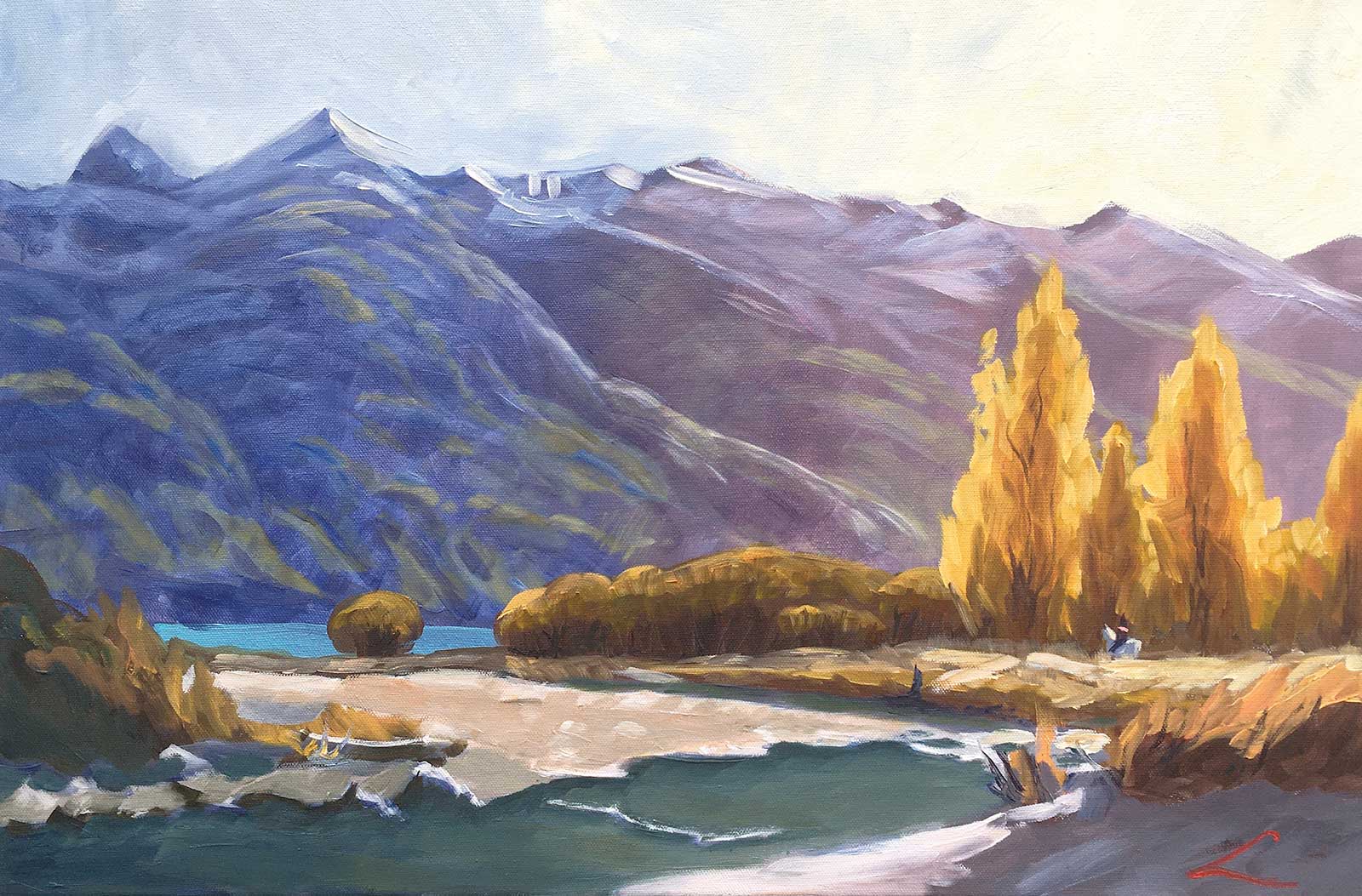
Richard Robinson, Bucklerburn Gold, oil
Color Shift and Muted Foreground
Shadows in the foreground can take on cool or unexpected hues as they reflect ambient light, while the backlit sky often appears warmer and more vibrant.
Lens Effects and Diffusion
Depending on moisture or dust in the air, contre-jour lighting can introduce a halo effect, sunbursts or soft diffusion, lending a dreamy or ethereal quality to the scene.
For painters, contre-jour compositions demand careful value control to balance the high contrast, ensuring that the dark areas retain subtle variation and the brightest areas don’t become overly harsh. It’s a powerful tool for creating mood, mystery and drama in a landscape.

Student critiques
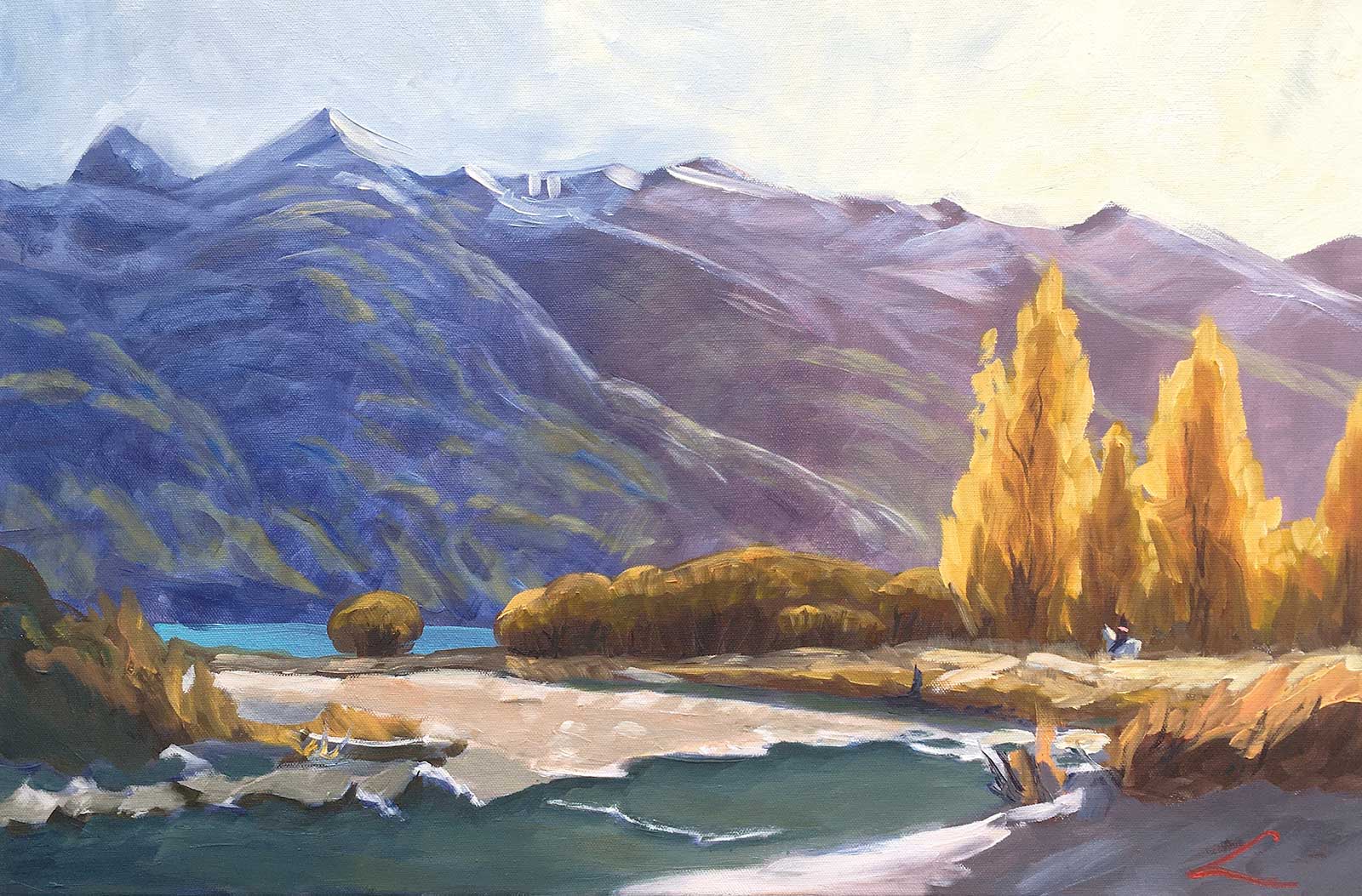
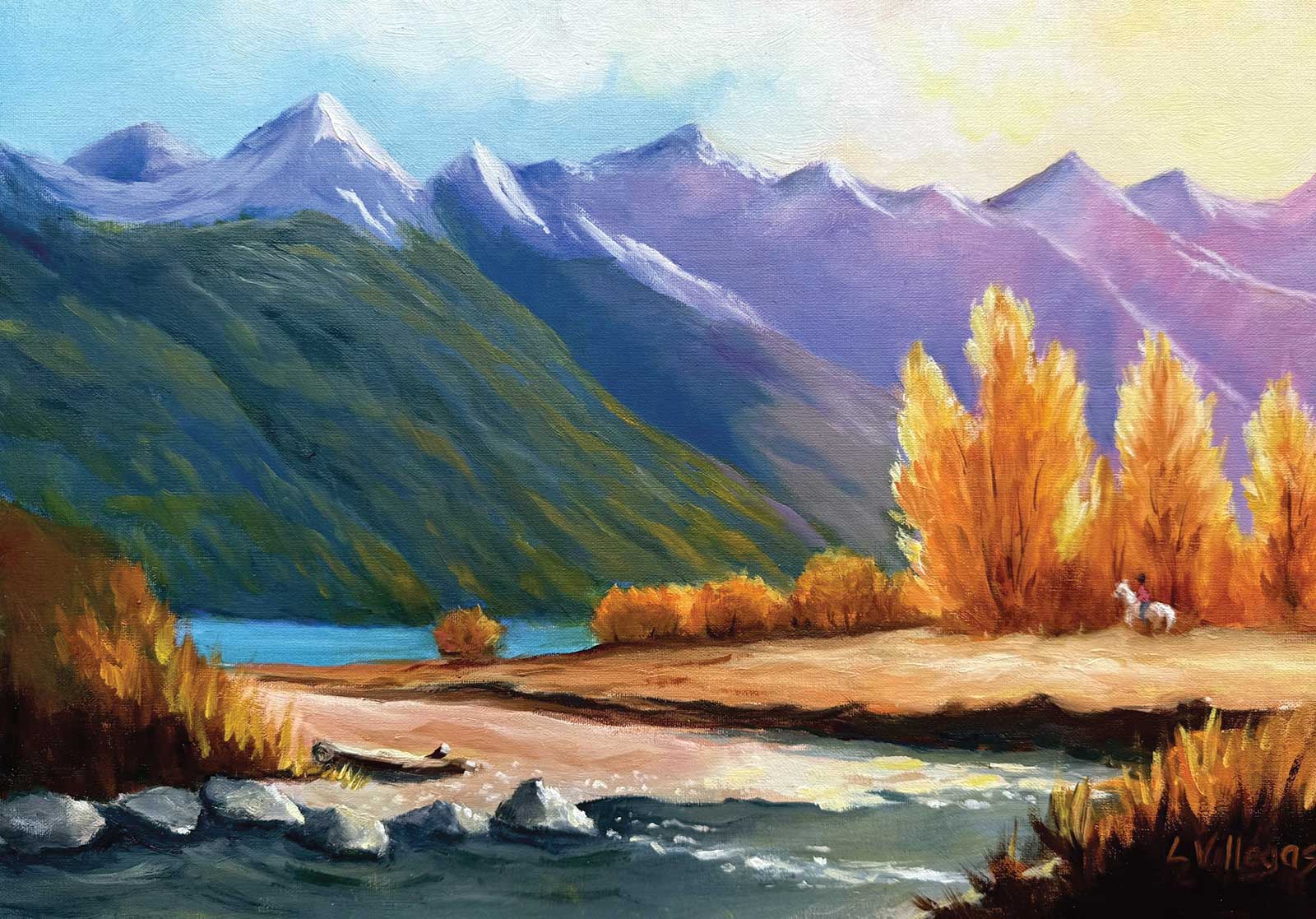 Bucklerburn, oil on linen canvas pad
Louise Villegas
Vibrant colors and simplified forms here are creating a happy vibe and storybook feel. You’ve even got the sparkles in the water! Just one thing I’d caution is to get that horizon line really straight and horizontal—oh, and avoid repeating shapes like the rocks in the foreground, which makes it look like it’s man-made. Let your horse have adventures in wild places.
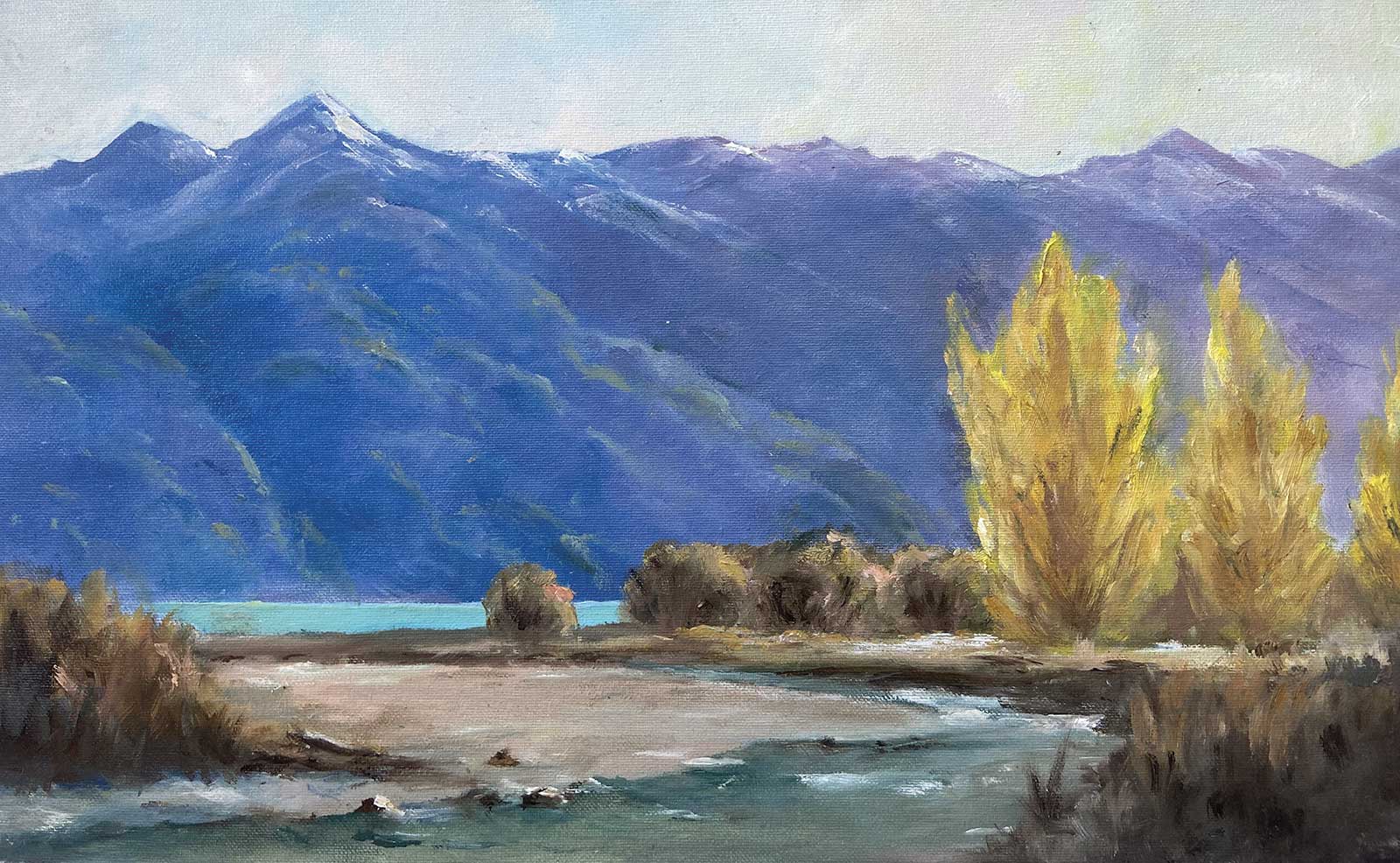
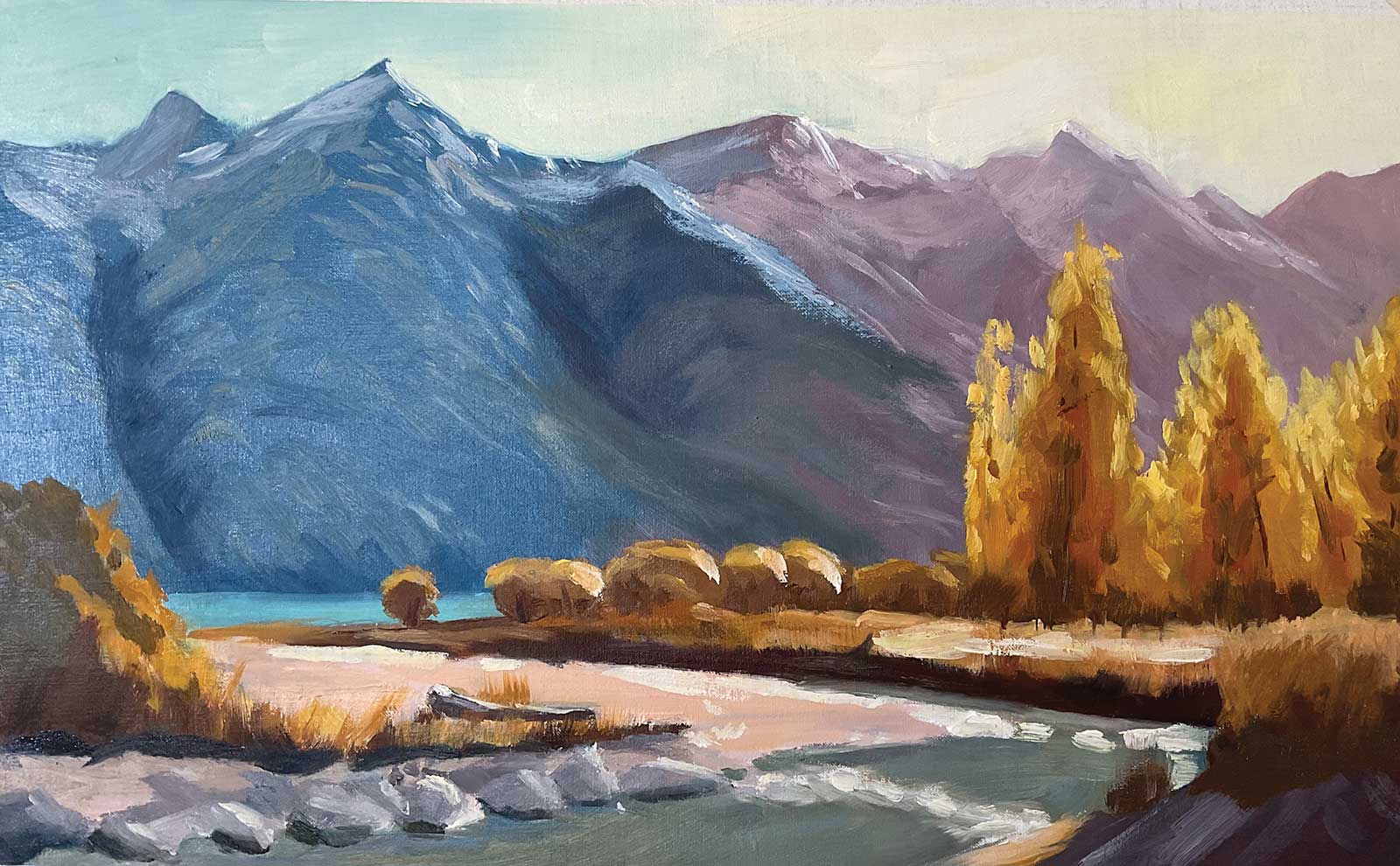 Bucklerburn, oil on linen canvas
Nancy Newton
Hey Nancy, that’s really interesting what you’ve done there. And I don’t mean that in a funny way. When I viewed that from a distance I thought, “Oh that’s interesting!” because it looks like you’ve divided the mountains into three separate color zones from blue to green to pink, which is weird, but very interesting. Zooming in larger I can see that it’s born from the struggle to create that gradation from left to right towards the sun, and it didn’t quite work out, mainly because the central green area is too dark. So, yes you could do with another attempt to get that skill nailed down, but meanwhile, on the other side of town, the foreground is great. Strong brushwork, bold contrast and interesting shapes. Nice!
 Mountain River, oil on canvas
Elena Sokolova
Beautiful work, Elena. You’ve managed that gradual transition to warmer stronger light across the whole painting and managed to keep your brushwork expressive and bold at the same time. We can really sense the warmth in that light effect, which was the whole point of this painting. Just two things I’d like you to look at. The value of the greens on the mountains could be a little lighter and also more grayed. Lighter so that all the greens there are consistently lighter than the blue gray base layer, which is intended to be the darkest dark there. Grayer so that the mountain sits further back in the scene and doesn’t argue with the foreground greens. Next, just have a look at the sharp shapes you’ve made along the river’s edge and in the white water there. You’ve oversimplified those shapes, and it looks less natural because of that. Always avoid our tendency to oversimplify and make patterns. Great job!
 Bucklerburn, oil on canvas
Fay Thomson
Nice one, Fay! Those poplars are really glowing with light, a nice color contrast against the slightly more purple mountains. Note that if you’d used slightly lighter, warmer grays in the darkest darks of the smaller trees in the midground, they too would have more of a warmer glow about them. By using the same darkest dark there as in the foreground darks, you’ve shortened that space between the foreground and the midground. Nice organic brushwork in those areas. Also nice building of form in the mountains, particularly in the snow. Some of those darker greens are darker than the blue gray base color, and that needs to be avoided as that blue gray should be the darkest value in the mountains.
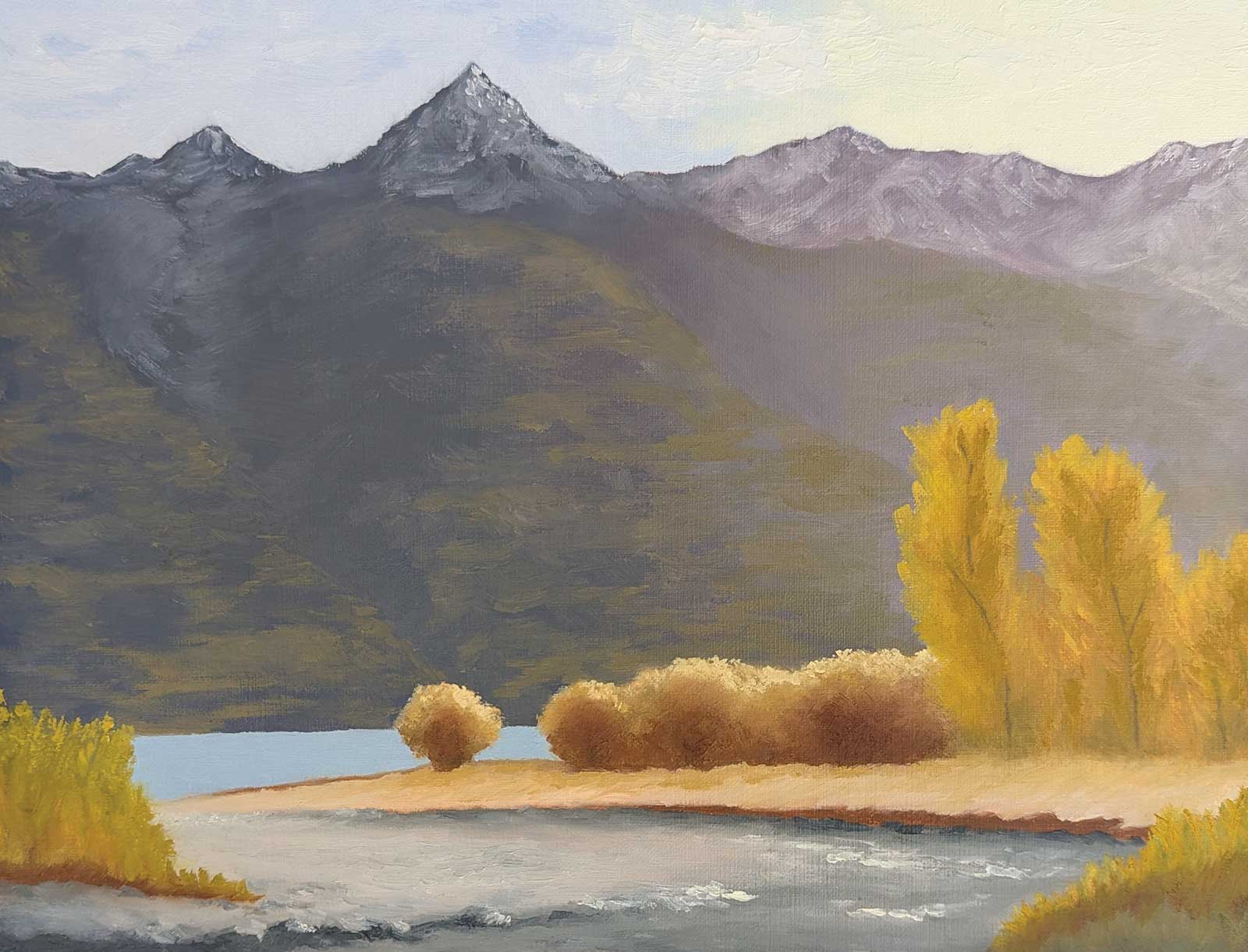 Bucklerburn, oil on canvas
 Stephanie Tompkins
Hey Stephanie, you’ve really got a nice glowing effect happening with those big trees, and I like the curvey characters you’ve given them. You’ve got big strong shapes going with enough details in their edges to avoid them being oversimplified, but within those spaces the painting will benefit from more detail and more variety. Give the viewer more information to look at, and it will keep their interest for longer, providing more value. That’s all, happy painting!
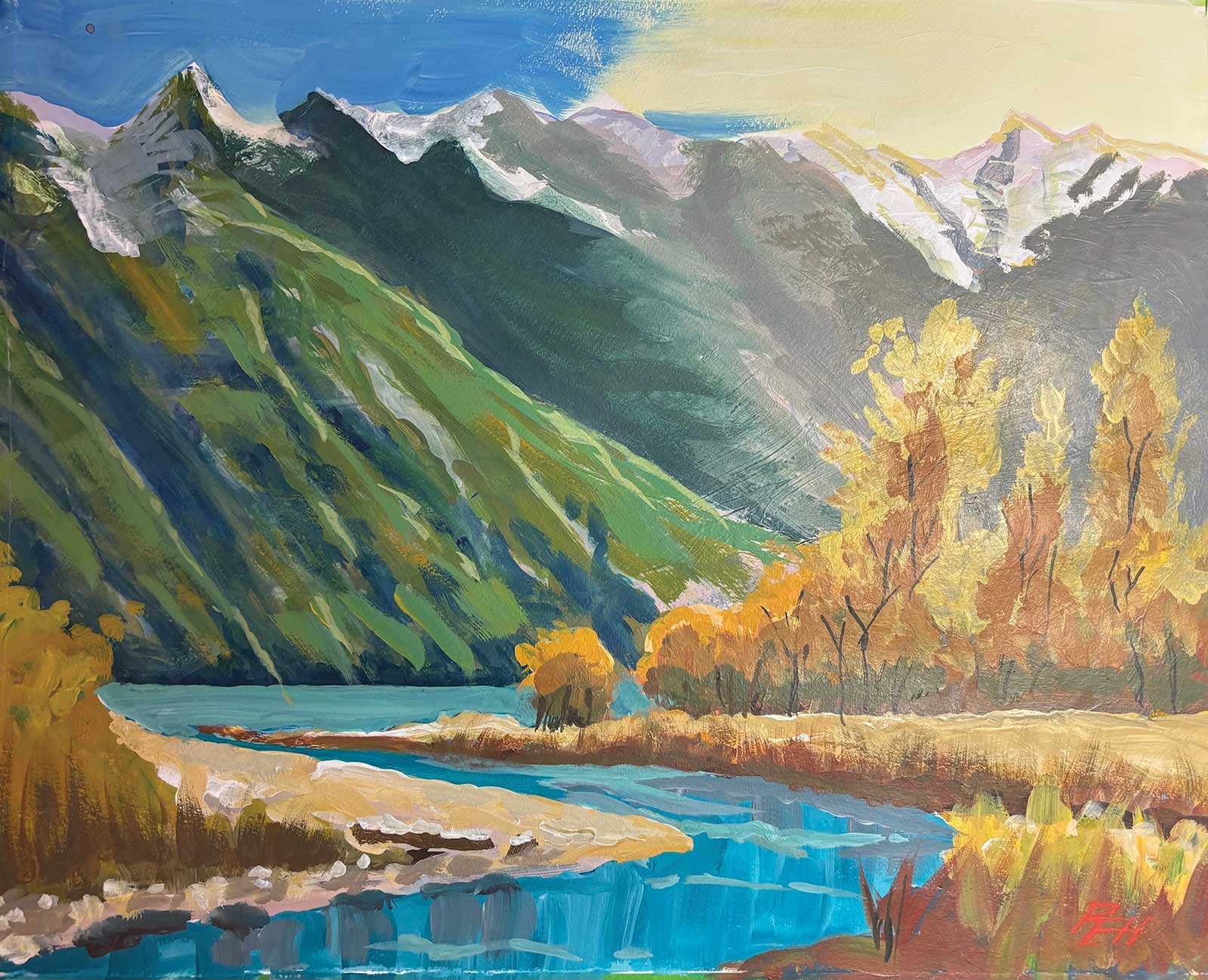 Bucklerburn in Glenorchy, NZ, acrylic
Eric Hillmer
Nice one, Eric, full of your lively style once again. Very vibrant color in this one and interesting organic shapes. Love that energetic brushwork. You made a glowing light effect, too. The price you pay for that punchy color in the mountains and the strong darks back there unfiltered by atmosphere is a loss of depth in the painting. So again, it’s all about what you want to achieve in your painting and the choices you make to get there.
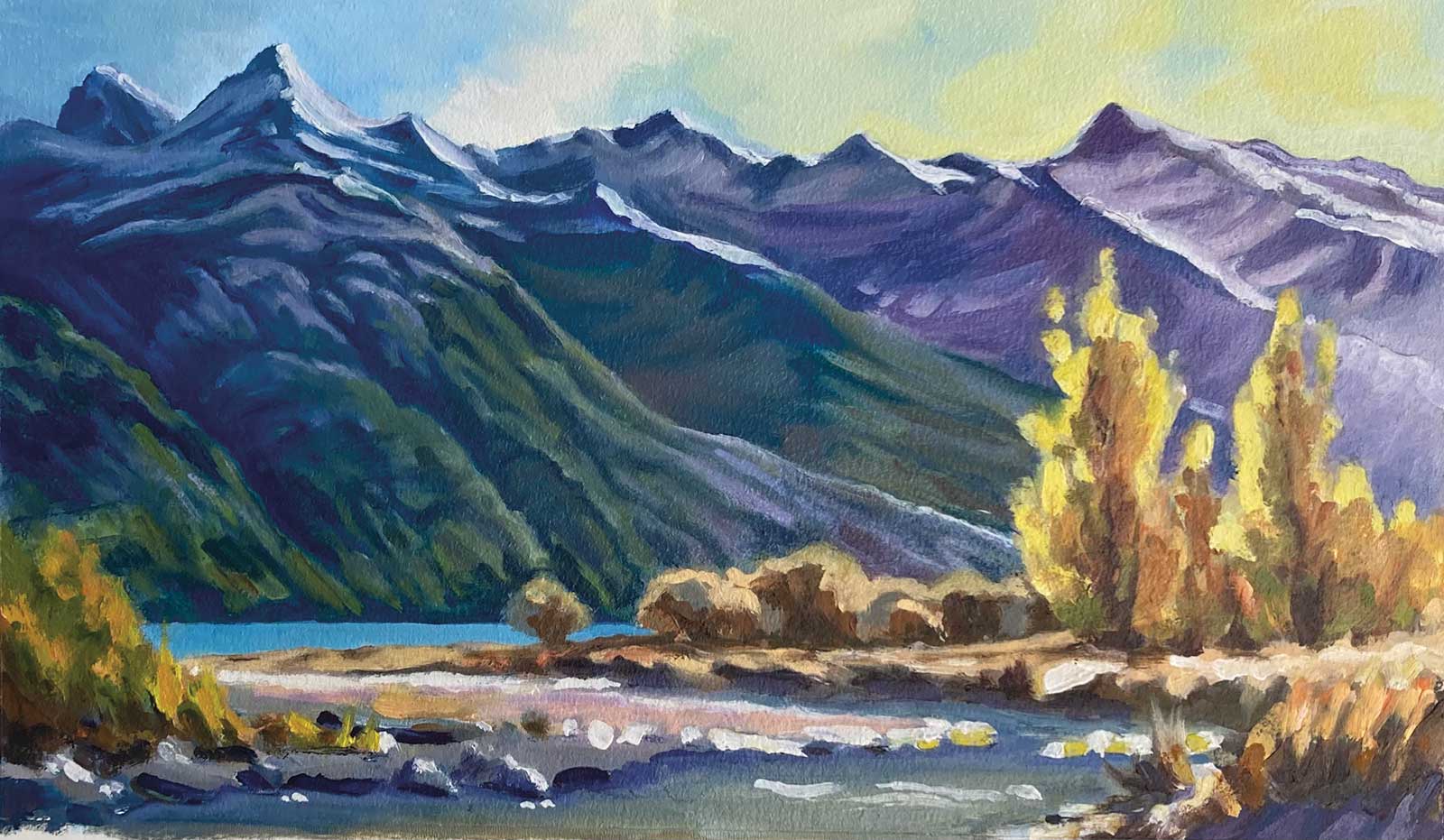 Bucklerburn, oil on paper
Geoffrey Geeson
Wow, that’s an interesting take on this, Geoffrey. With all that high value contrast and sharply defined form, it’s got a graphic feel to it that’s still organic. A beautiful cohesive style! Nicely done.
About Your Tutor
Richard Robinson is one of New Zealand’s premier outdoor painters. You can view his extensive online lessons at mypaintingclub.com.