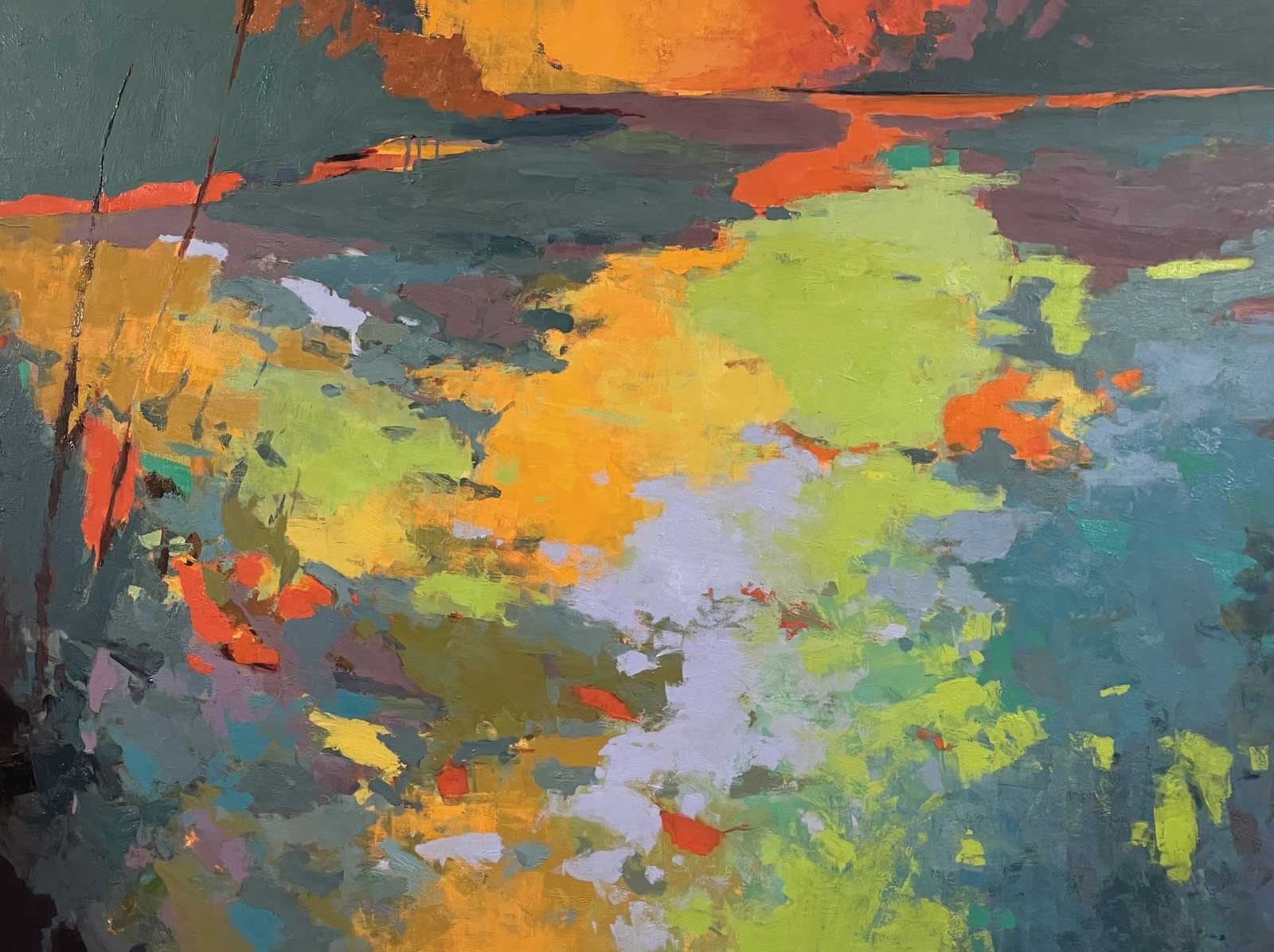
 Residing Waters, oil on panel, 36 x 48” (91 x 121 cm) Scottsdale Artists’ School: How did you first start teaching at Scottsdale Artists’ School?
Scott Gellatly: After more than 20 years in the art materials industry, I began teaching full-time in the spring of 2020. During this time, I developed a series of classes and workshops titled “Abstracting the Landscape,” which reflects my unique approach as a painter. Having previously visited and demonstrated at Scottsdale Artists’ School in another role, it was a true honor to return, this time as an instructor, to share my “Abstracting the Landscape” workshop with the SAS community.
SAS: Was there a defining moment when you realized you wanted to become an artist?
SG: I’ve felt driven to make things my entire life. I have always been interested in drawing, but music took over during my teenage years. I reconnected with drawing and painting during my final year of high school and became serious about it in college. I loved both the sense of freedom and the challenge from my studio courses in college. I knew I would dedicate my life to art-making.
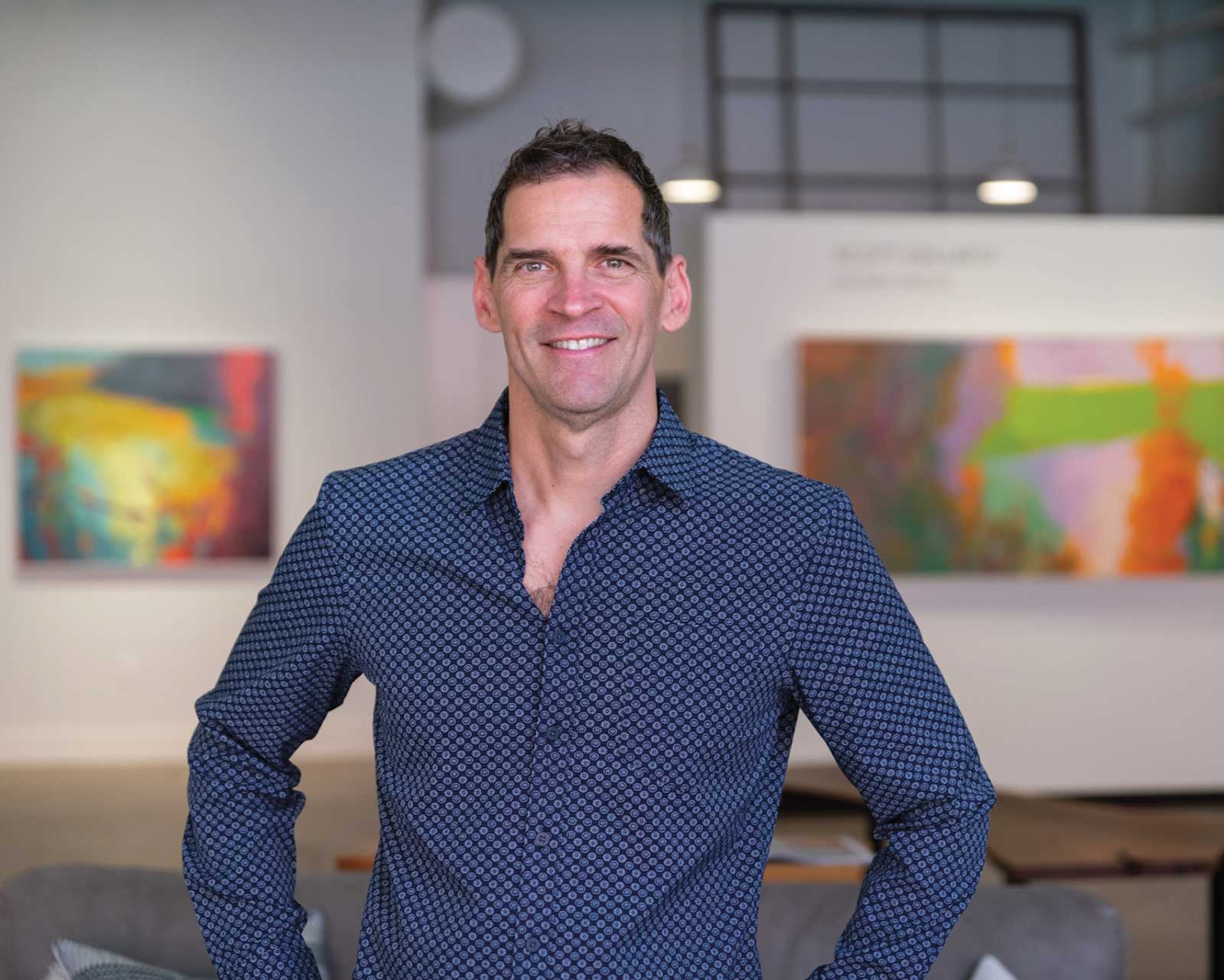 Artist and SAS instructor Scott Gellatly.
 SAS: Have landscapes always been your main source of inspiration?
SG: Yes, the landscape has been my primary source material throughout my career. However, what interests me most are the intangible qualities of the landscape rather than specific locations. These qualities include light, atmosphere and the dynamic energy of nature. Turner was an early influence on me, and my main takeaway from his work is that the tangible landscape serves as a vehicle for exploring these intangible elements.
SAS: How do you find balance between representational and abstract painting? Does one approach often inspire or influence the other?
SG: My process starts with the landscape. I stay connected to my source material through plein air painting, creating small works in a sketchbook using water-soluble materials (casein, gouache, watercolor). This is a practice that I’ve maintained with regularity for over six years. These sketchbooks become my library of reference imagery. Abstraction, to me, is the process of letting the imagery evolve and take on a new life via my studio practice. This includes refining the composition and bringing an invented color scheme to the subject matter. In my studio work, I cultivate the power of color to elevate the experiential and emotional qualities of nature rather than the descriptive qualities of specific landscapes. When this happens, the work straddles the line between representation and abstraction.
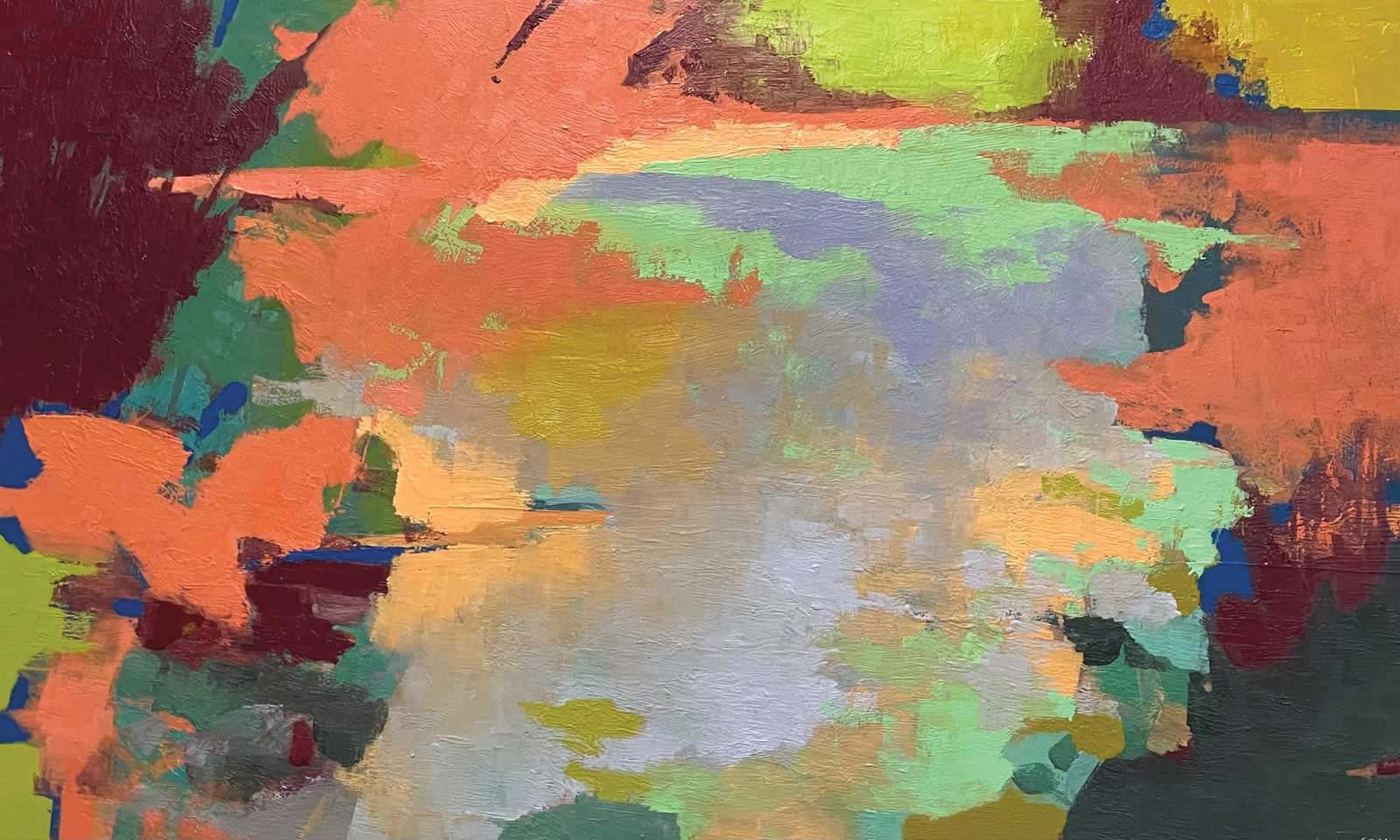 Vivid Boundaries, oil on panel, 18 x 30” (45 x 76 cm)
SAS: How do you approach and overcome obstacles as an artist?
SG: When obstacles arrive, I return to the act of creative play, experimenting with new tools or techniques, utilizing a different color palette, or anything else that allows me to step outside of myself as an artist. If I hit upon an obstacle in a larger painting, I often go back and create small compositional and/or color studies to work out issues and get unstuck. This small investment of time saves me from working out issues on the larger painting.
SAS: Can you share the story of when you sold your first painting?
SG: Shortly after college, I was traveling around Europe with my (now) wife. Sitting at a lively table during Oktoberfest in Munich, I sold a watercolor painting, done on the spot of beer steins and half-eaten pretzels. I don’t think that was my first sold painting, but it was one of the most memorable from my early years.
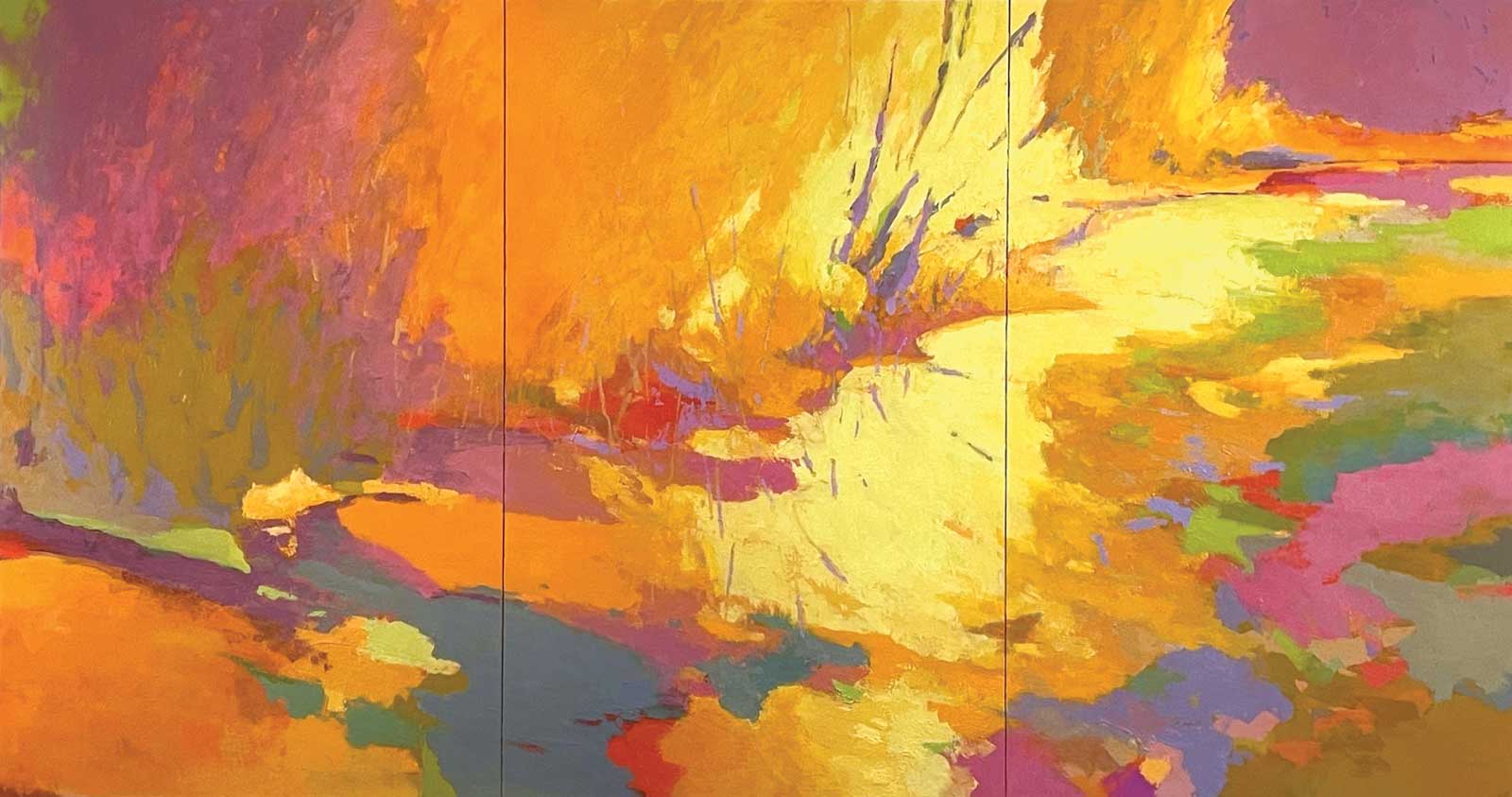
Tapestry, oil on panel, 48 x 90” (121 x 228 cm)
SAS: What do you enjoy most about teaching at Scottsdale Artists’ School?
SG: Beyond the amazing facilities and staff, I love working with students who come from across the country to take workshops at the Scottsdale Artists’ School.
SAS: What do you hope will be the most meaningful takeaway for your students in your workshops?
SG: The main takeaway that I want my students to embrace is that abstraction is a process and to allow their original, landscape-based imagery to evolve through the artistic process. —
Visit scottsdaleartschool.org for more information on the school and its upcoming workshops.