I have dedicated 17 years of my life to serving the artistic communities as an atelier model. As it so happens, the majority of my resume consists of educational institutes centered around the world of fine arts, including California, New York, Arizona, New Mexico, Georgia and even Florence, Italy. As much as I spent a great deal of the earlier years guided and nurtured by the environmental and social awarenesses that involved hard-ironed etiquette that left no room for miscommunication and questionable misconduct, I’ve been noticing a gradual shift in that sense of decorum. I’m not sure if it’s the disruption from the pandemic or the fact that the population of new students has risen so high, but it has created a subtle shift, causing a lack of structure where traditional etiquette is no longer taught or prioritized.
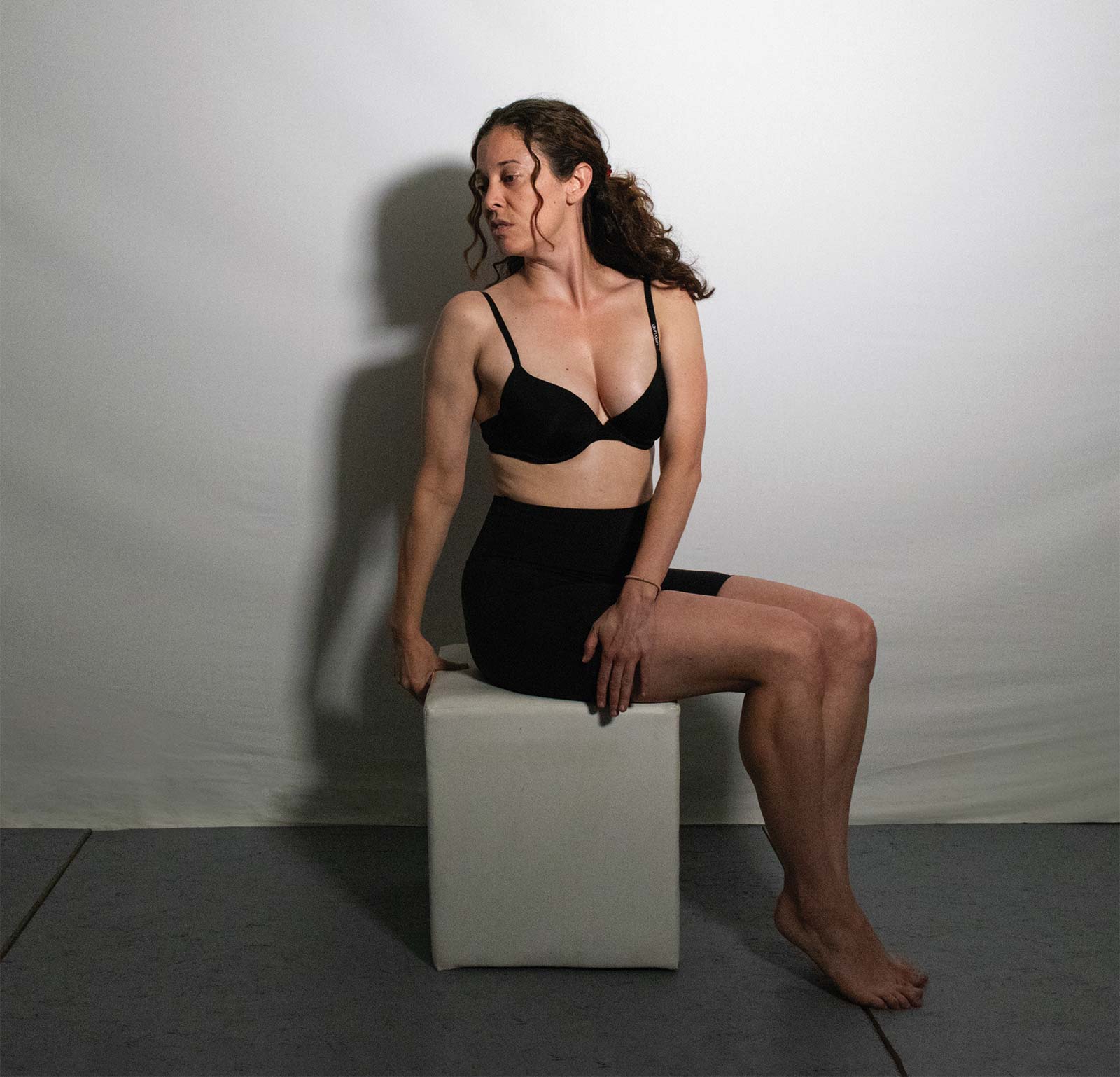
J. Roppolo Jacobs (Jillian) poses for a life drawing/painting session. Photo by Alejandro Aguilar.
“We are there to honor the life of the person we are painting through our brush.” - Michelle Dunaway, professional artist
Dare I say, “back in the day,” the following were considered common practices: No touching the model, no photography without the model’s consent, and occasionally, no talking policies depending on the program or curriculum. In part one of this article, we’ll be looking specifically at “no touching” and “no photography.”
Before I go any further, I must say that after very careful thought and consideration in addressing these matters, it was brought to my attention that I am not alone in this need to execute a refresher on the basics. And with that, I have asked some of the most successful and respected artists—Michelle Dunaway, Tina Garrett, Oliver Sin and Margaret Dyer—to join me in sharing their perspectives on why these protocols are so crucial for establishing a healthy, supportive working relationship between artists, students, instructors and models.
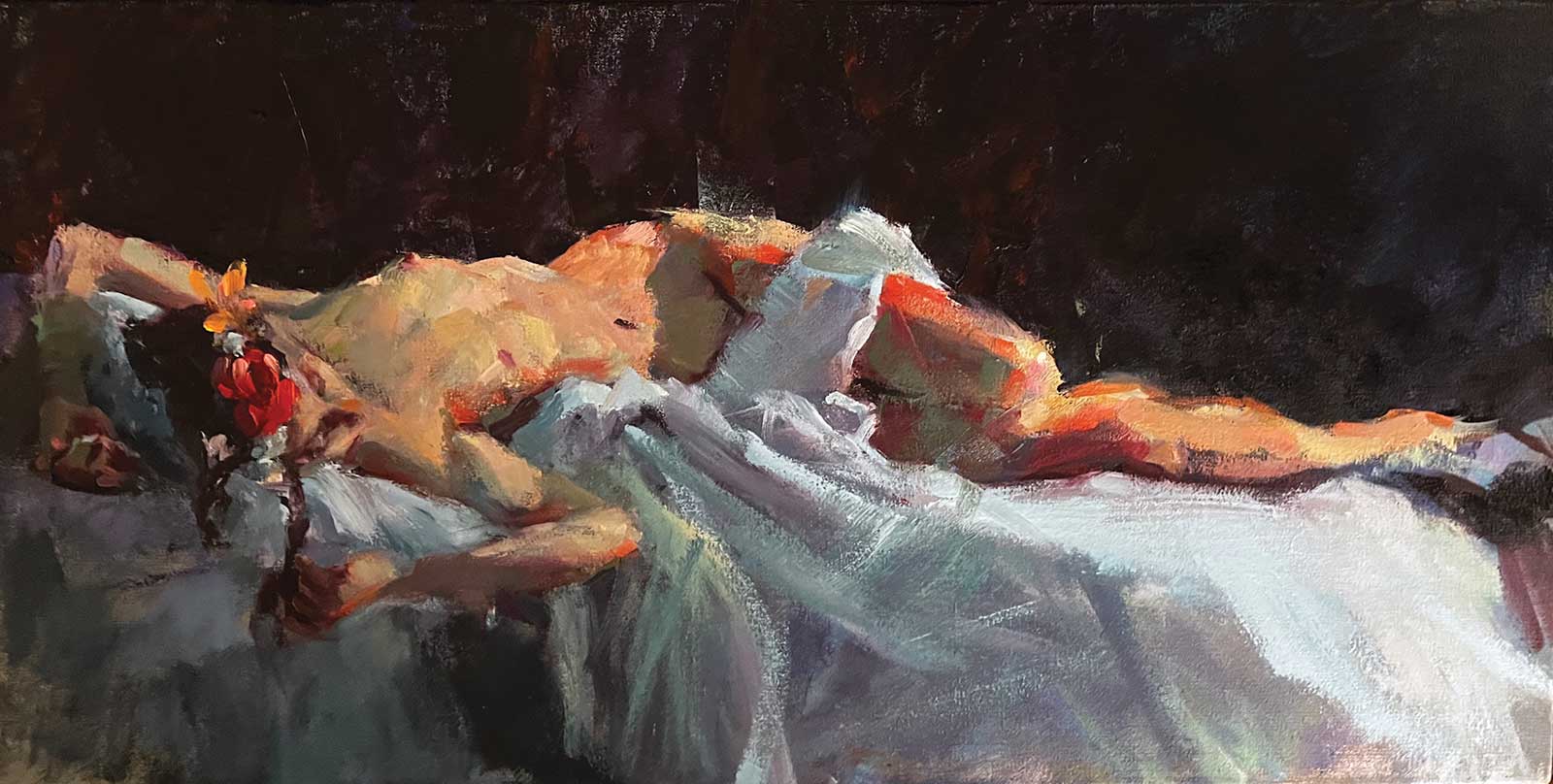
Flowers in Her Hair by Margaret Dyer.
“A successful session depends on mutual respect between artist and model. Professional courtesy goes a long way in creating an environment where both feel valued.” - Oliver Sin, professional artist
I believe Oliver’s quote best sets the tone for why “no touching the model” is a standard policy. When the pose is established between the instructor and myself, I feel it is my responsibility to bare all of my vulnerability. Even before I get on the platform, I’d prefer to have no physical contact with anyone once I’m in my robe during gesture modeling sessions. For me, the robe acts as a boundary that I must uphold to ensure I’m doing my part in maintaining the professional environment. True story: whispers on the street were beginning to circulate about an artist who began actively planting the idea into the minds of newer, inexperienced female models that it was okay for him to take off his clothes, join them on the platform and make physical contact. During one of my sessions at his open studio, it was brought to my attention that he wanted to try to do that to me while I was on the platform, in the middle of the pose. He was strongly advised by a couple of artists I’ve worked with before that committing that act without my consent was not a good idea. I’m beyond grateful that these artists took initiative in protecting me.
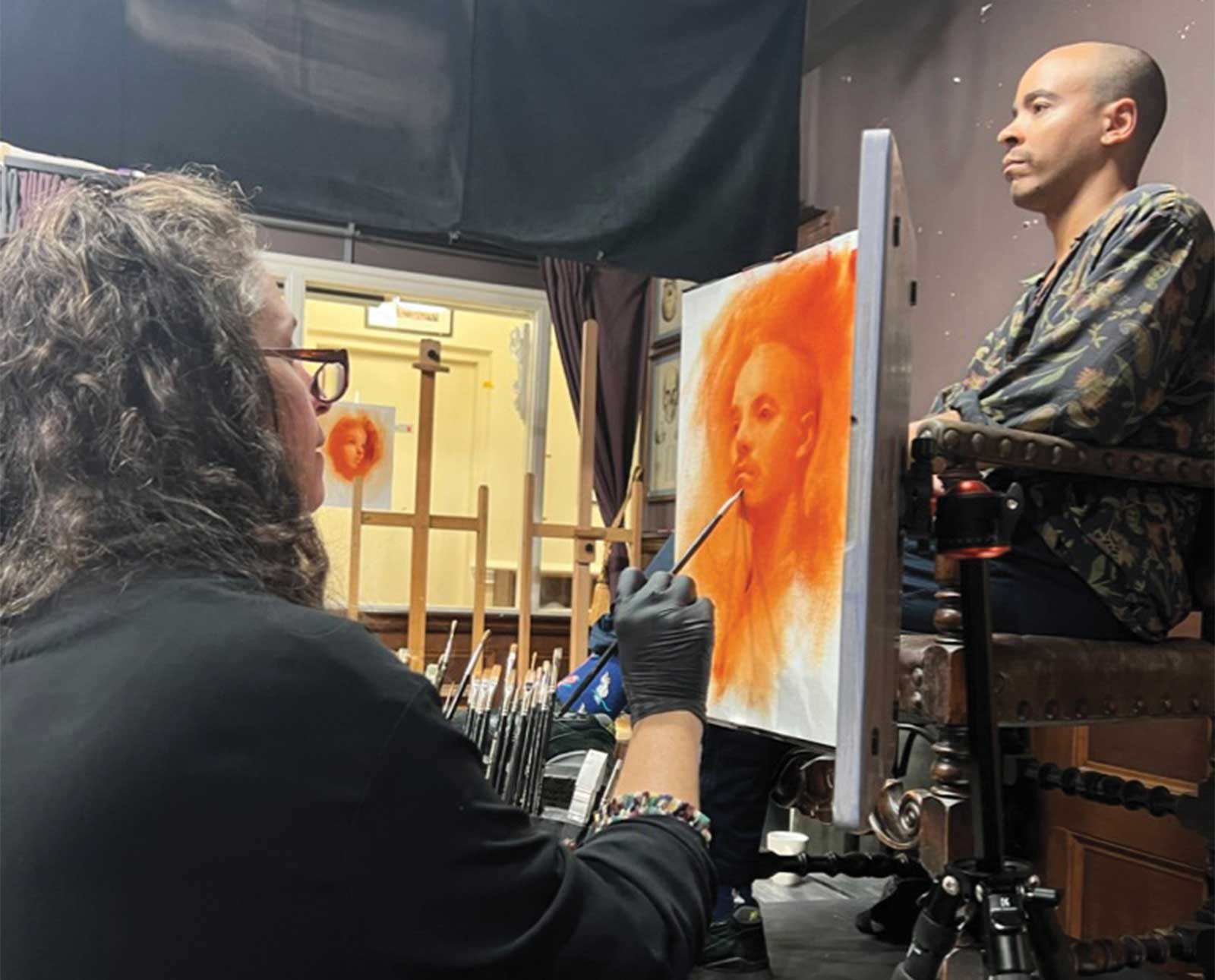
Artist Tina Garrett working with a model.
Do the same rules apply to clothed modeling like portrait or costume posing? Absolutely! An artist recently reported an incident to me that left her and the majority of the other artists mortified: as the model took her pose, an artist jumped onto the platform and said, “I don’t like your makeup!” and rubbed a wet wipe along the model’s face while she sat completely wide-eyed, frozen in shock. Awkwardness lingered for the remaining hours of the session.
Oliver Sin: Touching the model while they are in pose is never appropriate and, in most studios, strictly prohibited. Any necessary adjustments—such as repositioning a hand or adjusting a prop—should always be done verbally, never physically.
Since verbal communication is relied upon heavily when navigating through poses, how does one assure that communication remains streamlined with solid clarity through every session? This is the question I’m personally the most hesitant about answering because every artist and instructor I’ve worked with has a different approach. When in doubt, I never hesitate to ask the questions “does this pose work?” or “do I need to make any adjustments?” Especially in regards to getting back into a longer pose after breaks. If something feels off, whether it’s my hands or a full body spinal twist that suddenly feels foreign, I let the class know by announcing that I am far from perfect, please help me out, and they’re usually great about speaking up.
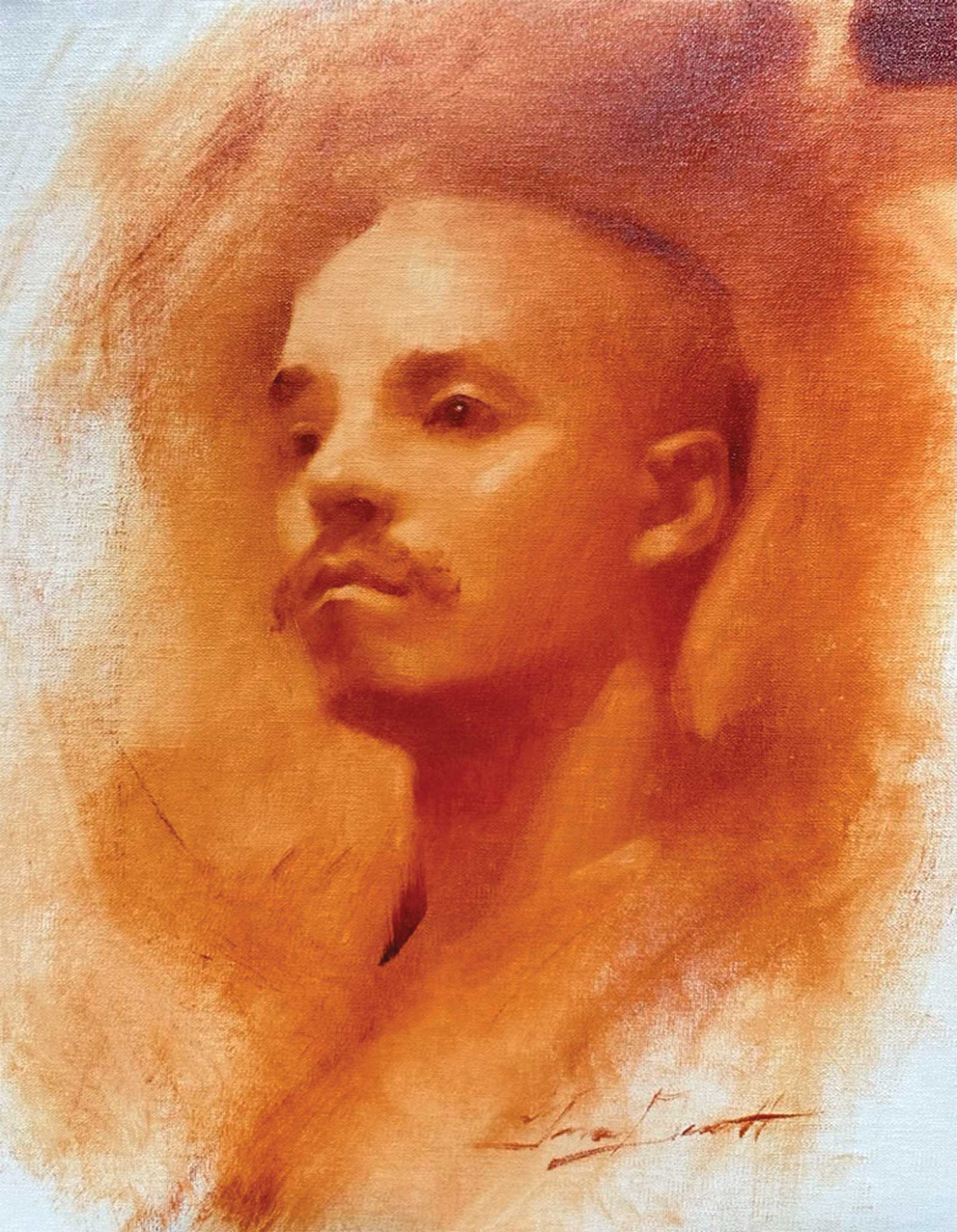
Underpainting by Tina Garrett.
Are there any preparations a model should consider before the start of the workshop? I have a steady routine of deep stretching to warm up my muscles before class. I go into every class thinking that I must be prepared to execute a dynamic pose or at least be prepared to present one. I know some models would prefer to research the artist’s work beforehand; however, I’m of the mindset not to indulge in that practice to avoid the risk of having false preconceived notions. I love the protocol of getting to know what is expected upon arrival on the first day. At the same time, I have worked with models who feel more comfortable in knowing what to expect in advance and thrive off of researching the art instructor before the start date. Like artists and instructors, every model is different.
Tina Garrett: I think there is an important note to add that it is not the model’s responsibility to develop the pose. It is the creator’s responsibility to have a firm and clear idea of the work of art that they are trying to create in their mind and to be able to communicate that well with the model and seek collaboration with them when needed in order to ensure the model’s capability of meeting that vision while retaining a reasonable level of comfort. Without a strong vision, and without the creator’s ability to articulate that to the model, often, live model poses are stiff, repetitive or derivative, resulting in uninteresting paintings with little narrative potency. There are a couple of approaches that can help mitigate this issue: firstly, interview models to ensure they are working professionals who know how to achieve the type of vision the artists have and who are willing to push themselves both physically and creatively to meet the vision of the artist; and secondly, develop the ability to see beyond the common pose and infer above and beyond what the model is doing physically, ultimately using your own creative imagination to add to the painting. A simple example of this is when a model cannot breathe through their nose and must have their mouth open but you paint the mouth closed anyway. This is a great exercise to do if you have never tried to infer beyond the model’s actual pose. This is the exact same skill set needed to help you paint what you had intended when the model cannot or is not willing to get back into the original pose due to pain or exhaustion. I once had a model in class who became ill after one hour on the stand, and my daughter, who was only 14 years old, had to put on the costume and finish the pose. In that moment, I helped the students practice the power of inference. To be able to infer beyond what is literally in front of your eyes is a very powerful skill I recommend any artist cultivate.
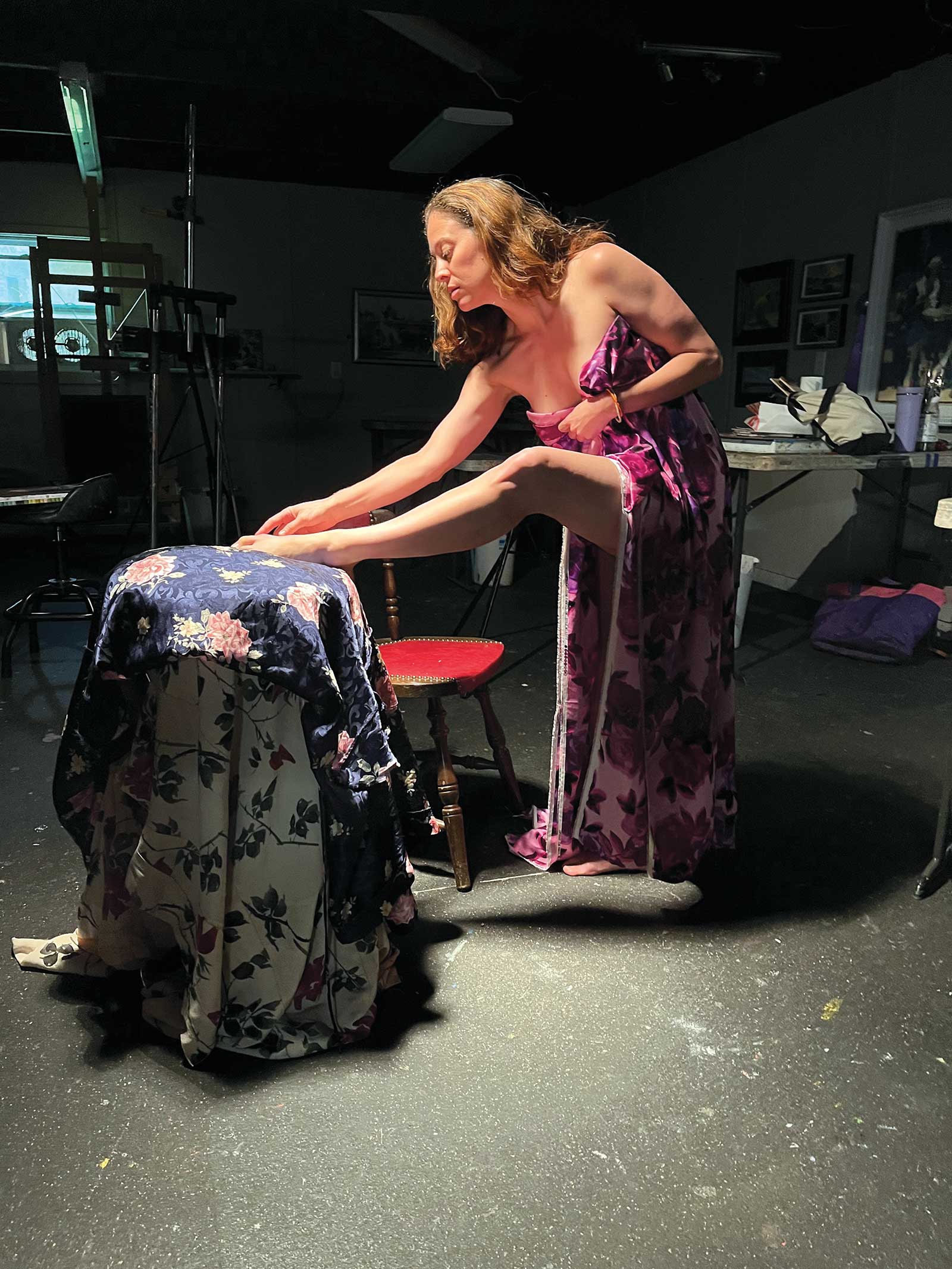
Jillian posing for artist Margaret Dyer.
Oliver Sin: I avoid giving too many directions at once. Instead, I establish the overall gesture first, then refine specific angles of the head, shoulders or hands. I often demonstrate the pose myself to make the instruction clearer. Checking in with the model to ensure the position is comfortable is equally important—an uncomfortable pose will not be sustainable and will compromise both the model’s endurance and the quality of the session.
Michelle Dunaway: I like to observe my model’s natural tendencies in movement. These subtle gestures express who they are, and I’m always after capturing the unique characteristics in movement.
Concerned about inconsistency and shifting of the pose? This is where some artists prefer to rely on photographs as references. As a model, I am open to having artists take photographs as long as I am properly compensated for the hours of work I will no longer have.
Once, I had entered an art studio to drop off new hire paperwork when an artist spotted me looking at the bulletin board. He asked if I was a new model, which I confirmed. He responded enthusiastically, “Great! I would love to paint you.” I told him thanks and shifted my focus back to the listings on the board. Suddenly, I heard a clicking sound and turned around; he was aiming his smartphone in my direction. He smiled, said “thanks!” and walked out the door. I still wonder if there is a painting out there with his photo references. Not to mention that for months I was unsettled by the idea that I might have lost out on a big payout.
Oliver Sin: Taking reference photos requires both the explicit consent of the model and the approval of the studio. This safeguards the model’s privacy and ensures that photographs are not used outside the agreed artistic context.
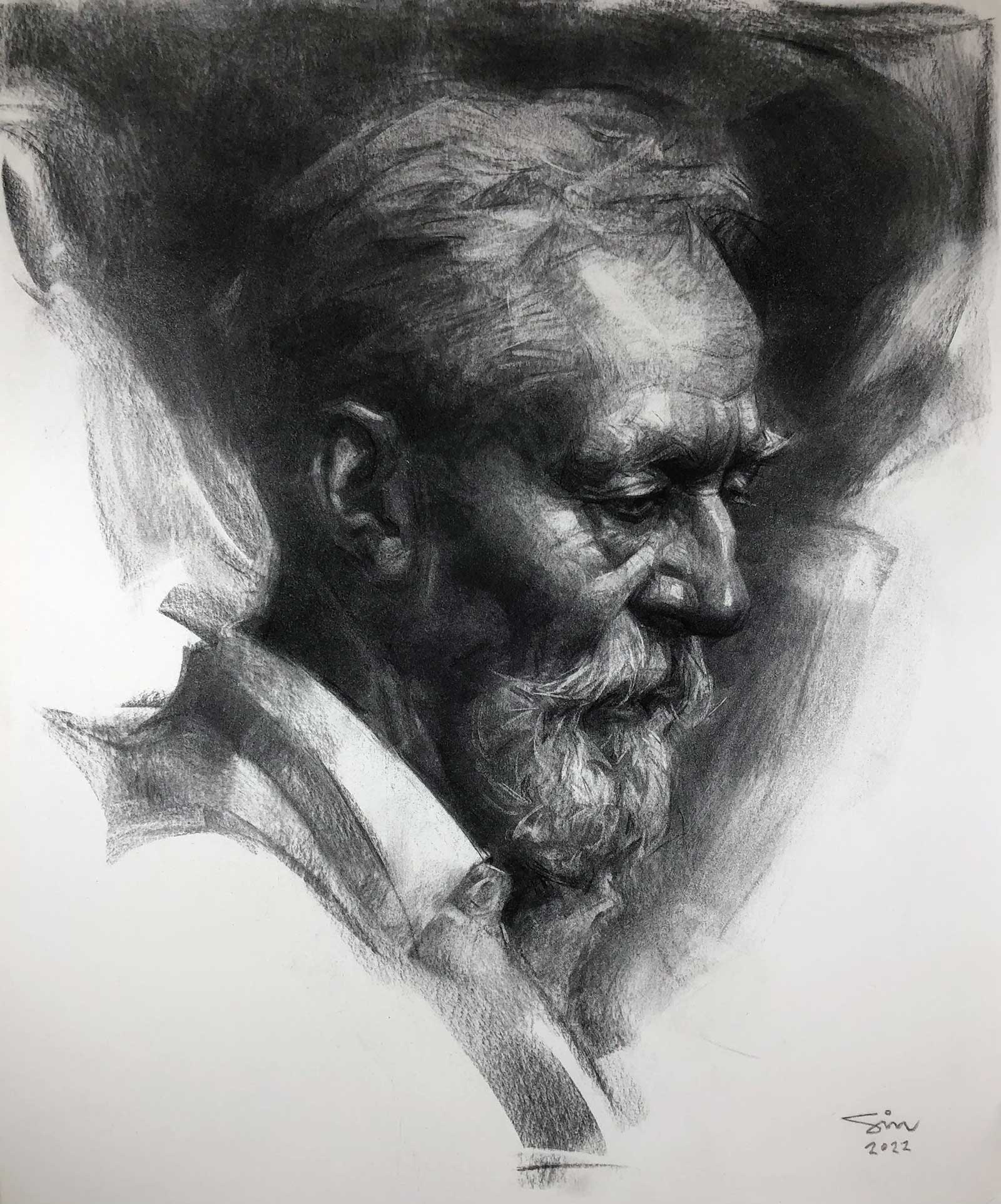
Life drawing by Oliver Sin.
Margaret Dyer: Be sure to keep in mind when you are photographing a model that with every photo you shoot, you are no longer limited to work with a pose for the day, the week, or month-long workshop. These photos can give you references to last for years. With that said, the model must be fairly compensated for these limitless possibilities you now have.
This is why I deeply appreciate the “no photography without the model’s consent” policy. Although most classes would prefer to work with a live model, I have experienced working relationships where photographs are a heavy part of the curriculum. When it comes to discussing compensation with instructors and artists, I find the most responsible and organized way to approach this sensitive topic is to start off by disclosing the hourly rate given by schools and institutions. From my experience, hourly rates differ from state to state. There’s usually a dollar or two difference between art institutes and studios, but from state to state? I’ve worked under hourly rates between $14 to $60 per hour. Full disclosure, most hourly rates under $20 tend to have tipping as a customary practice. Under this policy, I usually receive a minimum of $5 per artist per day. As for photographs, I will issue a mandatory tipping policy of $10 per photo.
Oliver Sin: If photographs are taken, especially from multiple angles to be used for several artworks, it is customary—and respectful—to tip the model. This acknowledges the extra value the artist gains from their work and helps maintain trust and fairness in the relationship.
Margaret Dyer: During my workshops, I like to capture photo references where the model is in motion. The most casual movements can create many possibilities for the next masterpieces. But it takes many photos to find those interesting, inspirational moments. That’s why I put a great deal of emphasis on compensating the model properly.
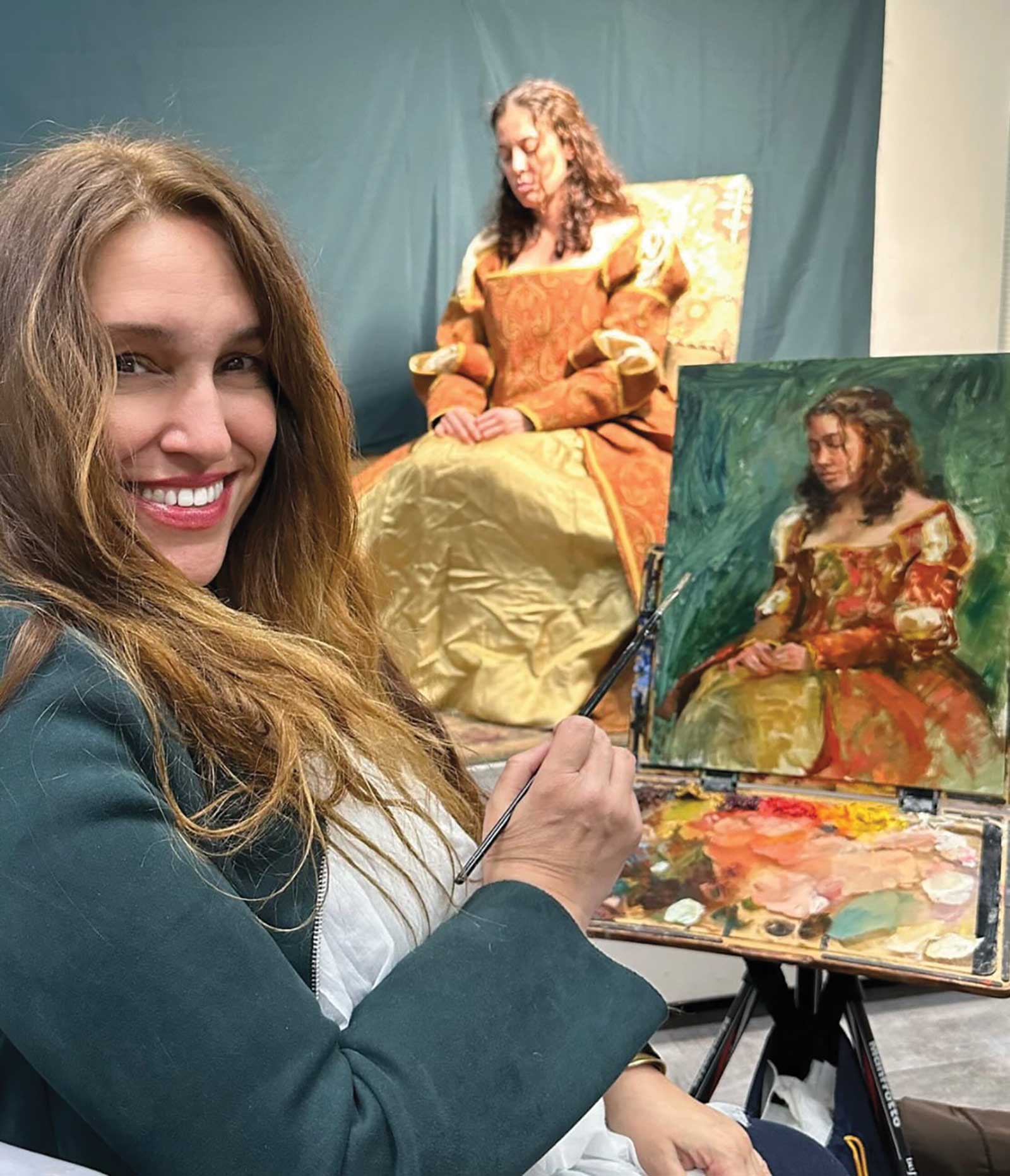
Artist Michelle Dunaway works on a figurative painting modeled by Jillian.
Tina Garrett: Many models have traveled with me abroad and followed me from school to school because of the protection I provide them, and I pay them very well in addition because I cannot do what I do without their beautiful inspiration. Unfortunately, I’ve heard many stories of models who were used at the least and abused at the worst, in the sense that their personhood has been set aside and they are treated like a bowl of fruit. I learned how to treat my models by the great Michelle Dunaway.
Michelle Dunaway: I always emphasize to my students that respecting the model is of the utmost importance. The model is not a still life to be arranged, but a living, breathing human we want to find a connection with.
Stay tuned for part two, where we’ll more closely explore the etiquette around talking during modeling sessions. —
Jillian Roppolo (known publicly as J. Roppolo Jacobs) is an award-winning atelier model with over 18 years of experience working with world-renowned artists. Her resume includes New York City’s Fashion Institute of Technology, Brooklyn College, Scottsdale Artists’ School, Phoenix Center for the Arts, Los Angeles’ Kline Academy of Fine Art, the Valley Art Workshop and Italy’s the Florence Studio. Her article “An Open Letter to Art Students” has been published in Arianna Huffington’s Thrive Global (drawing from her experience modeling for teen artists), and she currently serves as the social media coordinator for Scottsdale Artists’ School. While continuing her mission to collaborate with artists, Jillian hopes that sharing her experience will inform and empower models whether they are in the midst or at the beginning of their artistic journey.