Supporting the next generation is crucial for the future of the arts. The Portrait Society of America recently announced the First Place winner of its sixth annual The Future Generation Competition, which was established to recognize the work of emerging artists between the ages of 18 and 25 years old. The Portrait Society’s late chair, Edward Jonas, believed that early recognition in art competitions could greatly influence a young artist’s career, much like it did for John Singer Sargent. At age 23, Sargent earned Honorable Mention at the Paris Salon for his portrait of his teacher, Carolus-Duran, thus launching his portrait career. From more than 300 submissions, Olivia Arts, a young portraitist whose work exemplifies both technical mastery and profound human insight, was awarded First Place. Her winning painting, a life study of Tuscan photographer Donato Sambuco, demonstrates a commitment to classical methods while reflecting the artist’s deep sensitivity to the character of her subjects.
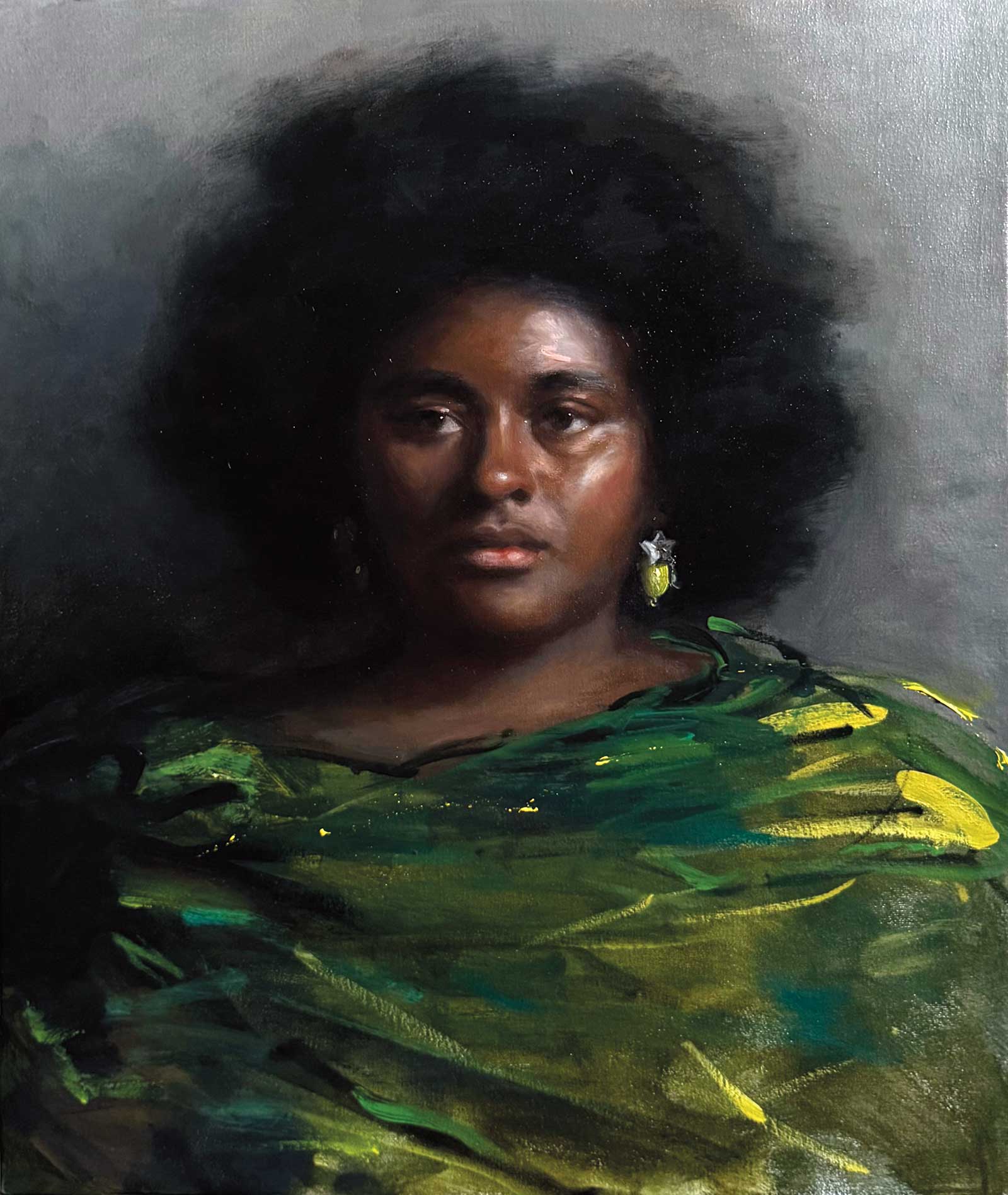
Olivia Arts, Clotilde de Rocco, oil, 25.6 x 21.6" (65 x 54 cm)
The inspiration for this celebrated piece has roots in her early days at the Charles H. Cecil Studios in Florence. Upon joining the atelier, she was immediately struck by a painting hanging on the studio wall. “It was a powerful piece that always inspired me,” she recalls. Later, she discovered that the painting was by her partner, Sam Good, created during his own student years; he now serves as the studio’s assistant director. The portrait depicted Donato Sambuco, a photographer who had passed through the atelier many years earlier. When Sambuco returned to Florence, she seized the opportunity to create her own interpretation of him, painting directly from life and embracing the intensive, human-centered process that defines the atelier.
“In our atelier in Florence, painting portraits from life is not only the most instructive way for us to hone our skills and develop our practice in the complexity of painting in oils using traditional methods,” she explains. “It is just as much a process of human interaction, meeting different personalities, spending slow and silent time with and tapping into our shared humanity. Here, portrait painters working seriously from life and the model and natural light give all the inspiration needed, and for us that is artistic validation.”
From a young age, she displayed a profound passion for drawing, nurtured in the garden of her grandmother’s home. Hours spent sketching in that intimate setting laid the foundation for a lifelong engagement with art. Early encounters with galleries and exhibitions deepened her fascination, most notably a John Singer Sargent retrospective at the National Portrait Gallery. She vividly recalls being captivated by Sargent’s portrait of Dr. Pozzi, describing it as sticking “like a stain” on her mind. “I was drawn to his portrait…although I can’t recall what it was, [it] could have been the vast field of red, or the pose. It was something I just loved. That moment sparked my deep interest in portraiture, and from then on, I knew I wanted to capture the essence of people through art.”
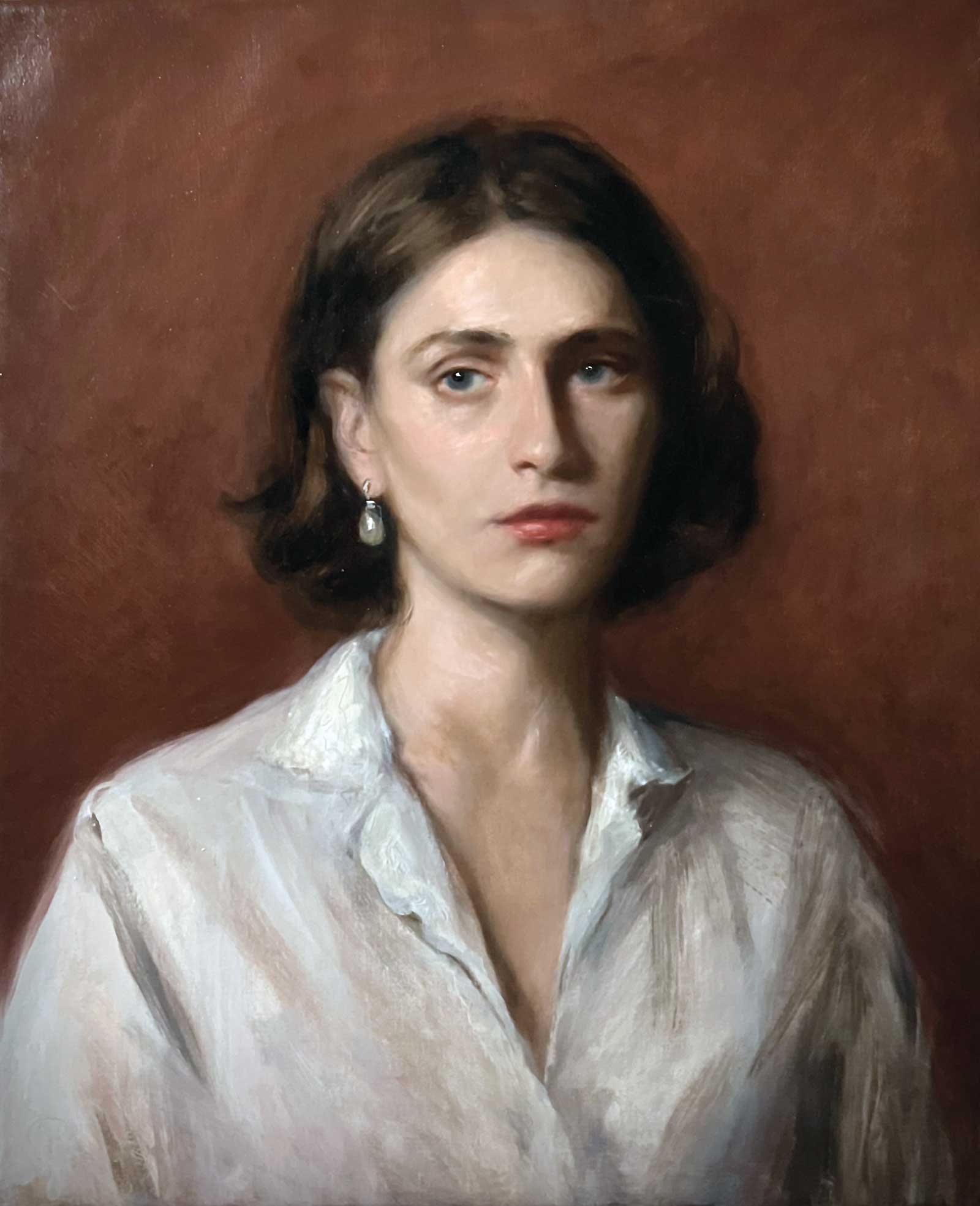
Olivia Arts, Giorgia in White, oil, 23.6 x 19.6" (60 x 49 cm)
Her artistic influences span several centuries. She draws inspiration from 17th-century masters such as Van Dyck and Velázquez, as well as 19th- and 20th-century painters including John Singer Sargent and the Boston School. “Their skill in capturing the essence of their subjects is something I deeply admire,” she says. “These artists’ techniques resonate with my own training, which is grounded in the belief of drawing and painting from life, a practice I am personally passionate about.”
Born in 2002 in Southampton, UK, Arts initially faced limited artistic education opportunities, which left her disillusioned with the art world. Everything changed when she began her formal training at the Charles H. Cecil Studios at age 18. The move to Florence in 2020 marked a turning point in her journey, immersing her in a rigorous atelier environment devoted to classical methods. Today, she serves as a principal instructor of drawing and painting at the studio, helping continue the mission of providing serious, classical training in the methods of the Old Masters. She has now been part of the atelier for five years, developing both as an artist and as a teacher.
A central pillar of her training is working from nature without relying on photography. Students are taught the sight-size method, where the subject and its image are placed side by side at a distance to perceive the whole, enabling accurate scale and proportion. The technique has been employed by masters since the seventeenth century, including Reynolds, Lawrence and Sargent, with origins in the practice of Titian, Van Dyck and Velázquez. She emphasizes that sight-size is not merely a measuring tool but a philosophy of seeing. “Rather than focusing on detail, you learn to observe the motif from a distance and convey the visual effect. Mastery of sight-size leads to qualities of characterization and handling inherent to the technique.”
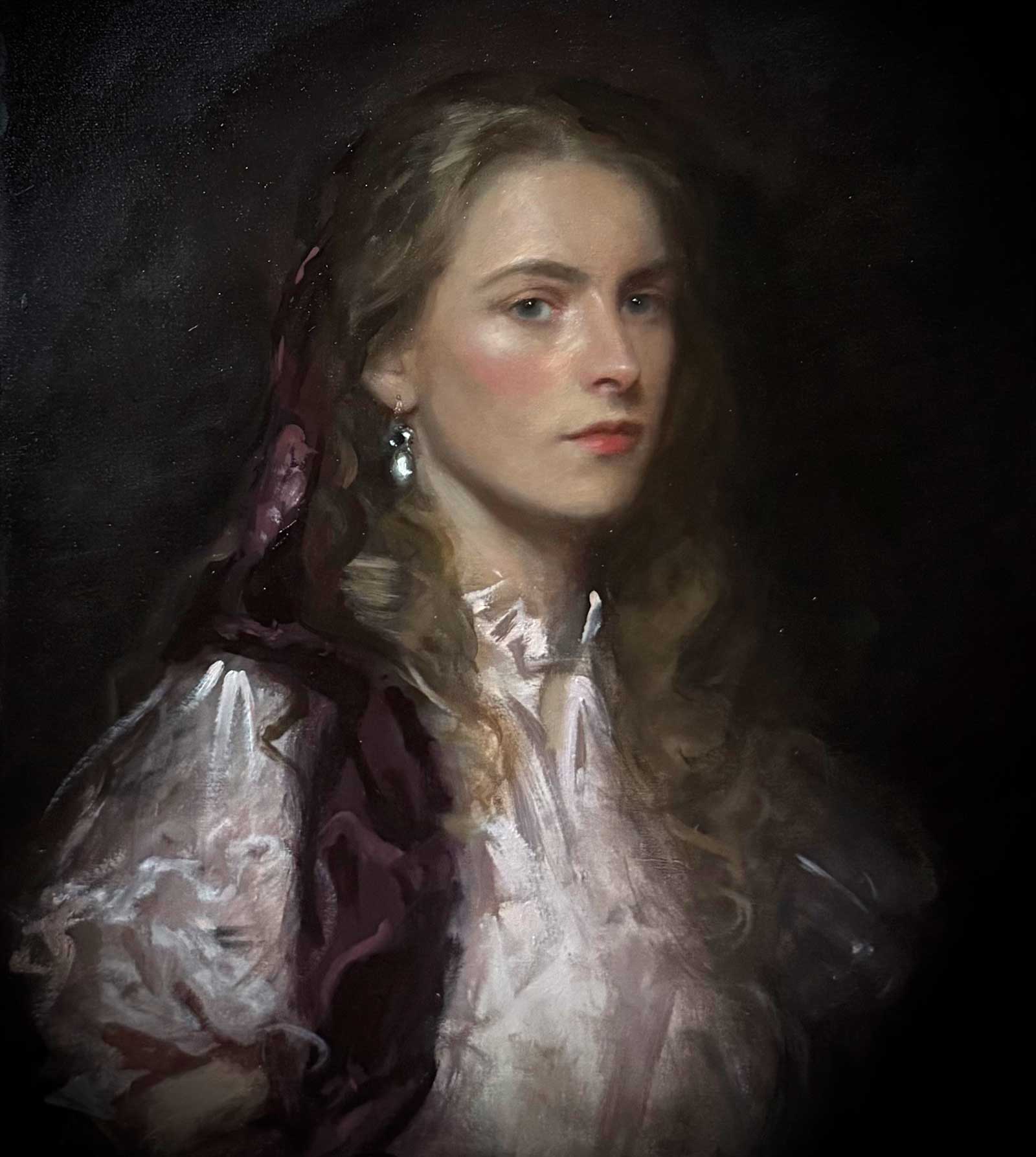
Olivia Arts, Lily, oil, 25.6 x 21.6" (65 x 54 cm)
This philosophy has allowed her to develop a fluid, direct painting process centered on capturing the visual impression. By engaging with the historic medium of oil and diving into color after a foundational year of drawing, she has been able to paint more intuitively and efficiently, relishing the real-time, responsive aspects of painting from life.
Her core focus in portraiture is to capture the character and soul of her subjects. “Each portrait is a direct response to my impression of the person I’m painting,” she explains. “By working from life with the sitter, the painting becomes a living record of my experience with them, formed by the time we spend together in the studio.” This approach underscores the human-centered philosophy at the heart of her work: each portrait is an exploration of personality and shared experience, not just a technical exercise.
She identifies a key breakthrough in her training as the realization that learning to draw and paint from life is less about mastering technique and more about training the eye. It’s about “standing back from your work, seeing your subject as a whole, and adhering to a visual philosophy,” she says. This insight has informed both her practice and her teaching, emphasizing the importance of perception and observation over mere replication.
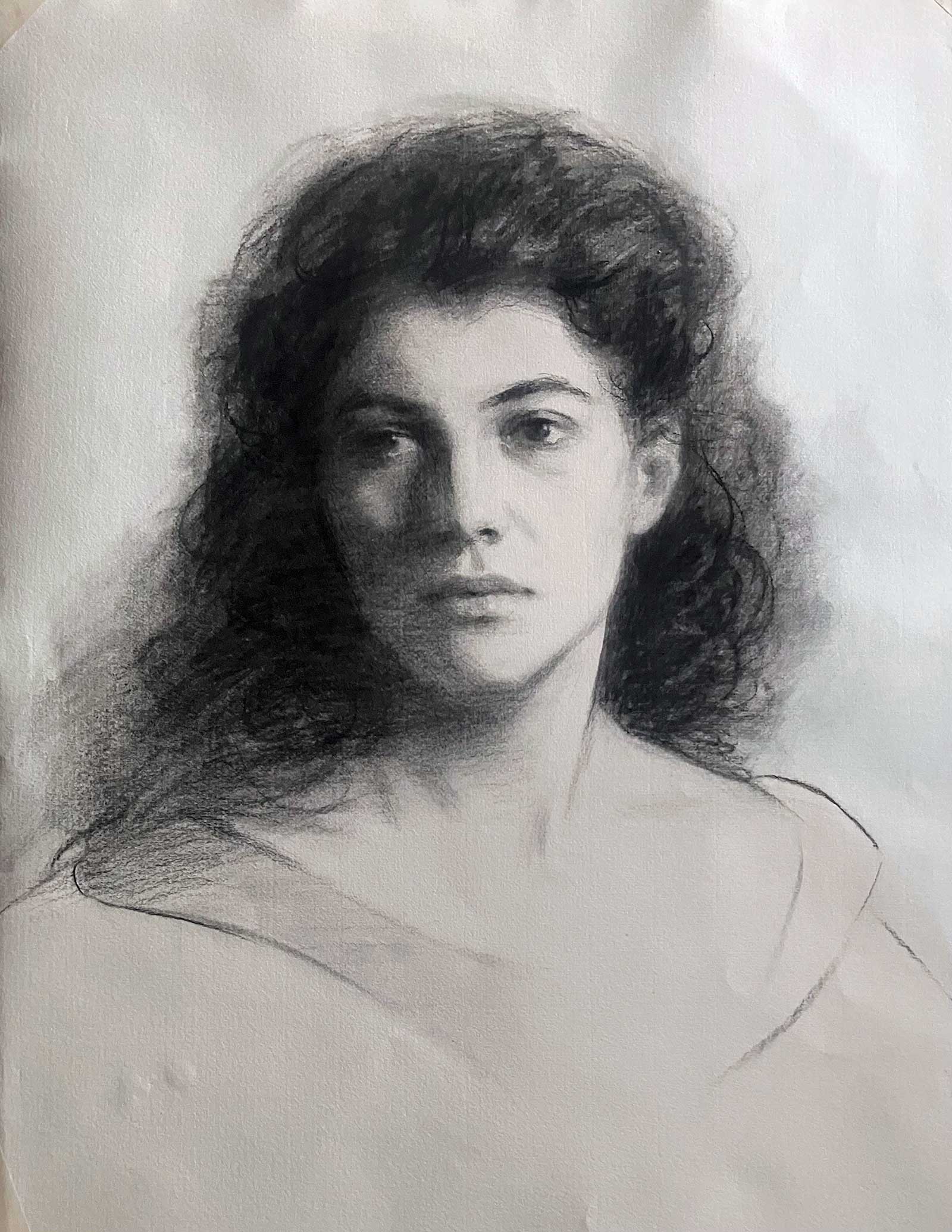
Olivia Arts, Beatrice, charcoal, 23.6 x 19.6" (60 x 49 cm)
Despite her accomplishments, Arts is acutely aware of the challenges posed by the modern world. “We’re standing on the shoulders of the Old Masters, and the objective should be to attempt to reach the standards that they set. The greatest struggle is attempting this whilst living in our digital age where we are inundated with photographs and with millions of images on screens.” Yet she remains committed to classical practice, finding fulfillment in both her art and her role as an instructor.
Looking ahead, she envisions herself continuing to live and work in Florence, pushing the tradition of portraiture while passing on her knowledge to like-minded students and colleagues. “I love teaching. This is the true atelier way—painting and practicing alongside students.”
For young artists facing discouragement, she offers practical and heartfelt advice: seek serious artistic training with instructors who have a legitimate educational lineage and prioritize working from life whenever possible. Attend life drawing sessions, surround yourself with fellow dedicated artists, and avoid seeking validation through social media.
Her journey, from sketching in her grandmother’s garden to receiving First Place in an international competition—is a testament to the enduring value of dedication, observation and connection. In a world dominated by screens and digital imagery, her work stands out for its intimacy, its humanity, and its adherence to time-honored techniques that continue to reveal the depth of character and spirit in every sitter.
As she continues to cultivate her own practice and mentor the next generation of artists, her story serves as both inspiration and guidance for those who aspire to pursue portraiture with rigor, passion and integrity. The Future Generation Competition may have recognized her exceptional talent, but it is her commitment to the craft and her dedication to human connection that truly define her art. —