As small business owners, artists are often responsible for their own marketing, advertising and creating opportunities to showcase their work. We need to develop strategies to gain new clients and present our art to a wider audience. Organizing an event or exhibition can often be expensive, time-consuming and requires significant project management. Fortunately, there are new ways to achieve this without shouldering the entire burden alone.
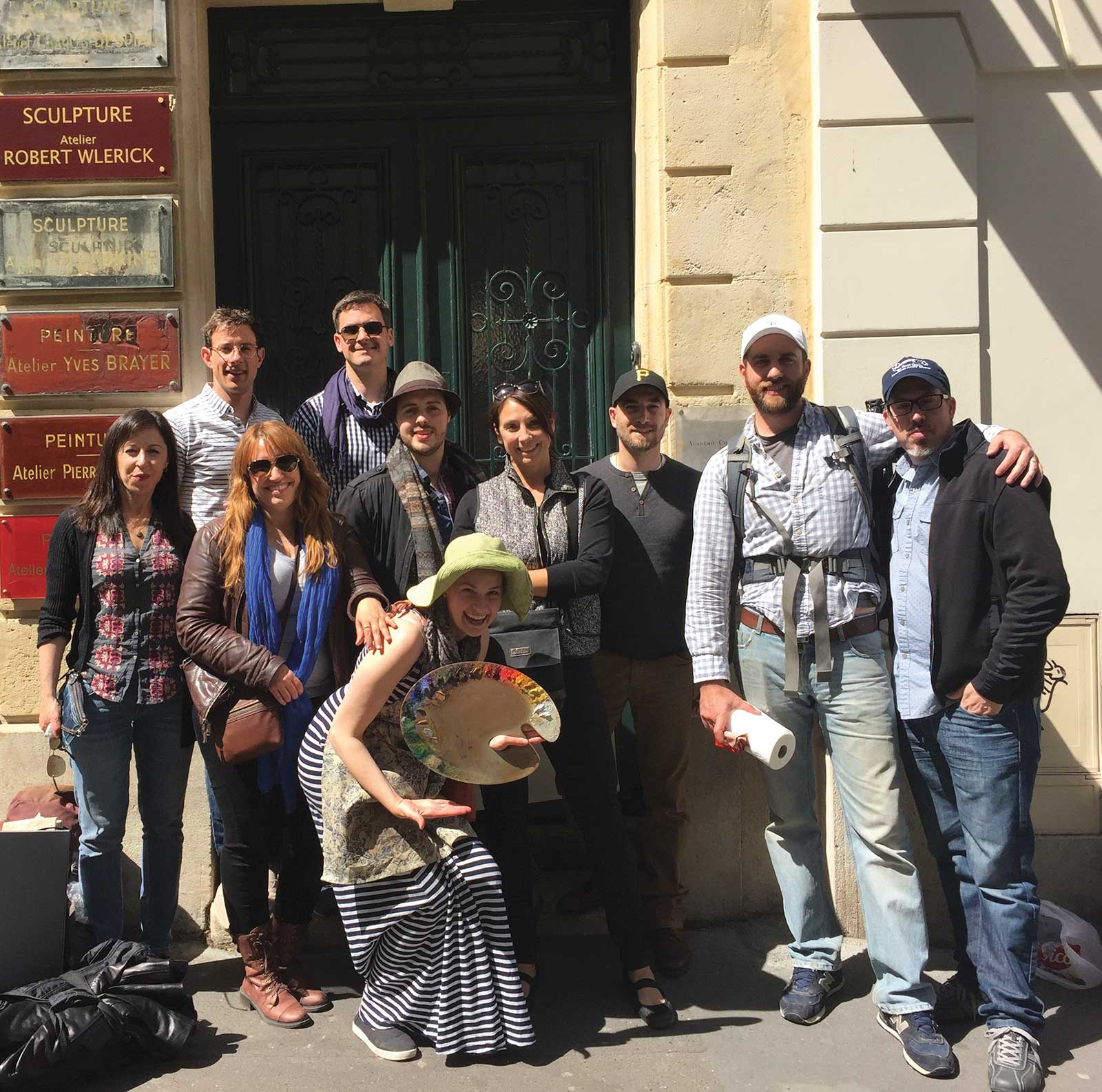
Americans in Paris 2017, a collaboration with 12 professional artists in Paris, France.
In today’s art world, the internet and social media have connected artists globally more than ever before. We no longer paint in isolation; we can easily see what others are creating at any moment. This connectivity has fostered inspiration and collaboration among artists. One popular method for exhibiting or hosting events is through “collabs,” where artists partner with other artists, galleries, event spaces, clubs, retail stores or even brands and non-art related companies. This can significantly expand your audience, encourage sales and grow your business. Here are a few types of collaborations you can pursue, along with helpful tips on how to pitch them.
Artist-to-Artist Collaborations
Many artists and musicians are engaging in collaborations today. If you know an artist with a good collection of art ready, combining your client bases for an event could be a great idea. And splitting the cost of renting a venue can make it much more affordable. One of you could handle email invitations and graphics, while the other coordinates with the venue. You could also split the cost of an advertisement in an art magazine to reach new clients. To protect individual mailing lists, each artist can send out emails to their own clients. You might also include an agreement where if one of your collectors purchases the other artist’s work at the show, you receive a percentage of the sales. Collaborating to co-host a painting workshop is another option. If both of you have a substantial number of social media followers or students, a joint workshop might fill up more easily and be more engaging. Sometimes, collaborating with diverse artists, even outside your genre, can help you reach entirely new client markets. A few years ago, I partnered with Julie Snyder, who owns the travel company Workshops in France, to co-host my Americans in Paris fine art retreat project. After an initial phone call, I created a proposal, then we combined our marketing expertise and divided out the tasks. Following three successful events, we are now preparing for our fourth collaborative art retreat with four other renowned artists this coming May 2026 in Paris and Normandy.
Collaborating with Galleries, Companies, Hotels & Other Venues
As an artist, you can approach a gallery you admire at any time to express your appreciation and explain how your work would complement their collection. You are not seeking full-time representation at this stage, but rather a one-time exhibition partnership. If you have existing clients, mention that they would likely attend and follow you to the gallery, providing an incentive for the gallery to potentially acquire new collectors through your work.
Many hotels seek exhibitions for their walls. My work has been featured in exhibitions at the Ritz-Carlton, as upscale hotels often enjoy hosting interesting events and art exhibitions for their guests. Prepare a themed collection of your work for presentation. You can find direct contact information for the marketing and PR department of the hotel. Smaller hotels and chains in artistic communities are often good fits. You can write a letter offering to help organize an exhibition or even conduct demonstrations for guests.
Artist-to-Brand Collaboration
These collaborations can be mutually beneficial for both the artist and the brand. Artists with large social media followings or strong public relations are excellent for companies looking to showcase new products and generate buzz. For the artist, becoming a brand ambassador can significantly increase exposure. Often, you can ask the company to assist with an event or collaborate on marketing efforts—a win-win situation. Don’t hesitate to create a pitch and approach companies whose products you use and appreciate.
How to Prepare a Pitch
First, assemble a portfolio of sample work. A professional website is ideal, but a PDF with a themed set of works is also effective. Ensure your bio, exhibition list and artist statement are ready. Compile a list of your social media followers and clients on your mailing list, as potential collaborators will want to understand the reach and benefits of working with you. Research the gallery, venue or hotel to demonstrate your understanding of their market. Highlight your unique selling points, the advantages of working together, what they stand to gain and how your art might resonate with their clients. If you have previous collaboration experience, provide a brief example.
Write the proposal in clear, simple language. Begin with a compelling or authentic hook, then propose a collaboration to present an event and explain why it’s a good idea. Outline the project concept and a possible timeline. Suggest business terms, such as a 50/50 split, and establish parameters like the duration and advertising methods. The more thoroughly you explain and present a plan in advance, the easier it will be for them to envision it. Suggest the initial steps required to start or execute the event. Include all your contact information and be prepared to answer any questions via email or phone.
Once an agreement is reached, proceed only with written and signed terms. Your pitch letter will serve as the foundation, with additional parameters added to the agreement. Establish clear expectations and communicate frequently. If expectations are not being met, address it early by referring to the agreement. Set deadlines and follow up. Divide tasks among partners, be flexible and always maintain positive communication.
About Vanessa Rothe
In addition to her curatorial, editorial and lecturing, Vanessa Rothe is a fine artist exhibiting the last 20 years alongside the nation’s top artists in galleries, art clubs, as well as museums. After majoring in business at USD and French literature at UCI, Rothe received classical fine art training at Laguna College of Art + Design and received honors throughout. Rothe has been working as an editor, graphic designer and artist in the publishing industry for 35 years.
Contact at
vanessarothefineart.com