The compositional structure of a painting acts as its foundation. Everything gets built on top of that, just as with a house. You may not see the foundation, but a house won’t stand without it. Paintings are the same. They need a compositional structure, an armature, to tie your image to the rectangle of your image. Then you use a few simple value masses to drive our visual engagement. This holds true for still life, landscape or figures. I’d say for non-representational paintings as well.
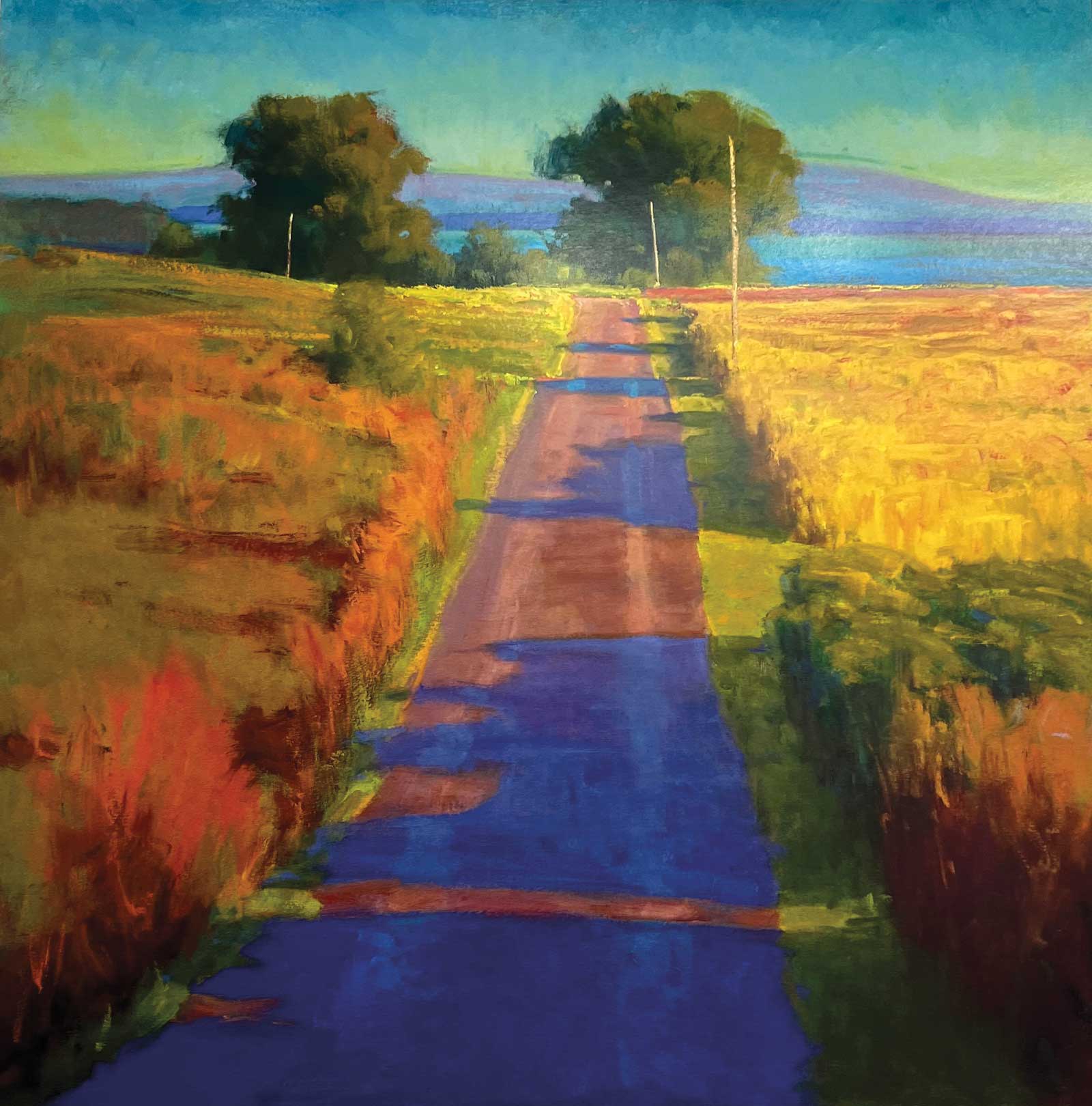
Evening, Tomales Bay, oil on canvas, 36 x 36" (91 x 91cm)
And that is why I say structure first, subject second.
It’s easy to get distracted by the subject first, a barn, a pot, whatever, and then you can find yourself buried in details, overworking and losing your way, over and over. But thinking about composition first offers a road map. When you consider the big picture first, it makes it much easier to know how to simplify. You can see what is important and what you can leave out.
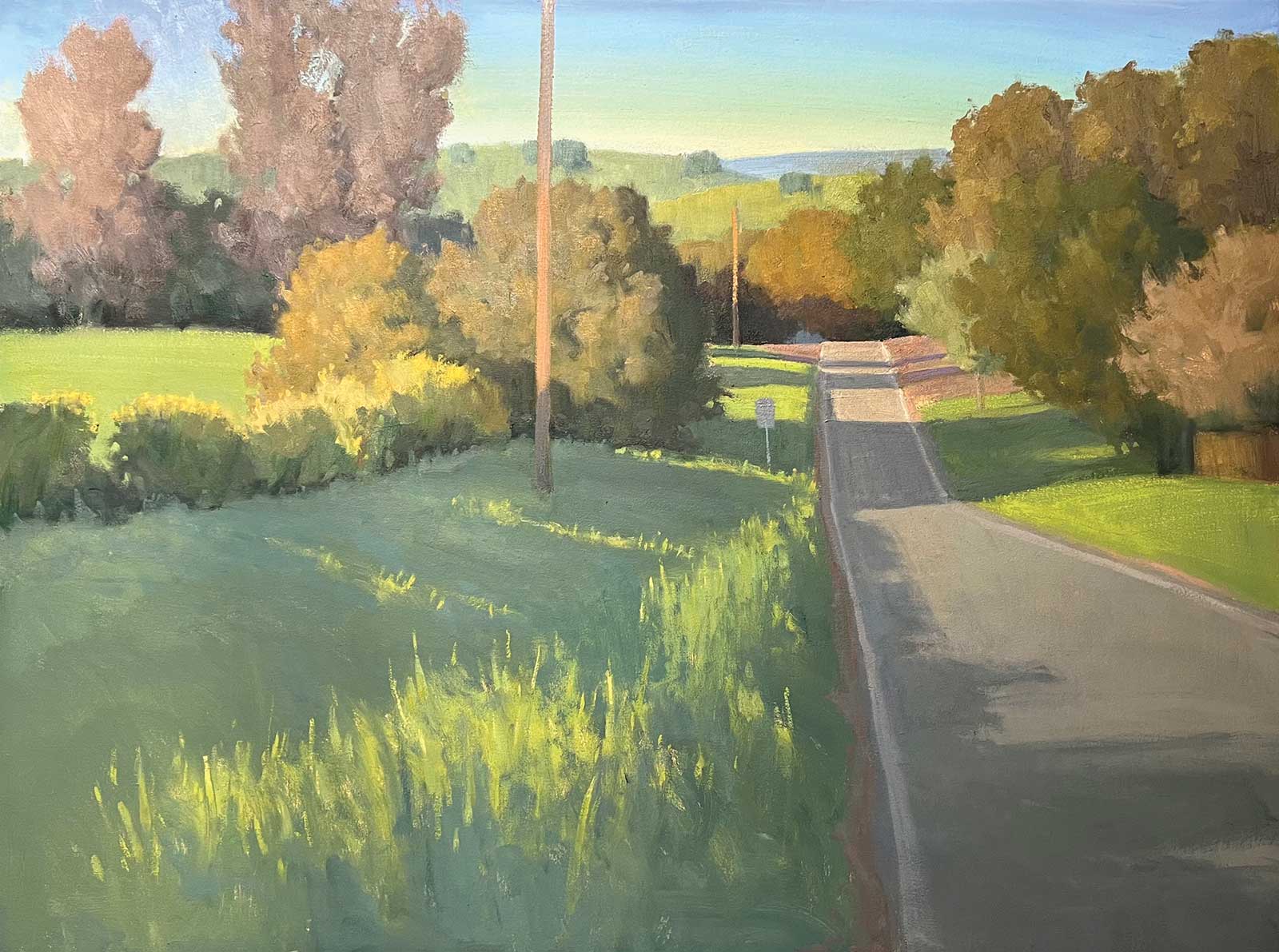
On the Road to Ballard, oil on canvas, 36 x 48" (91 x 121 cm)
As I look for something to paint I look for compositional structure first. Find that and everything that follows falls into place. Just like the role a foundation plays when you build a house. You can’t start putting up the walls of a building and think about the foundation later. Everything rests on it. So with a composition, you can’t start thinking about it half way through the painting. The whole image grows organically out of it. Right from the start.
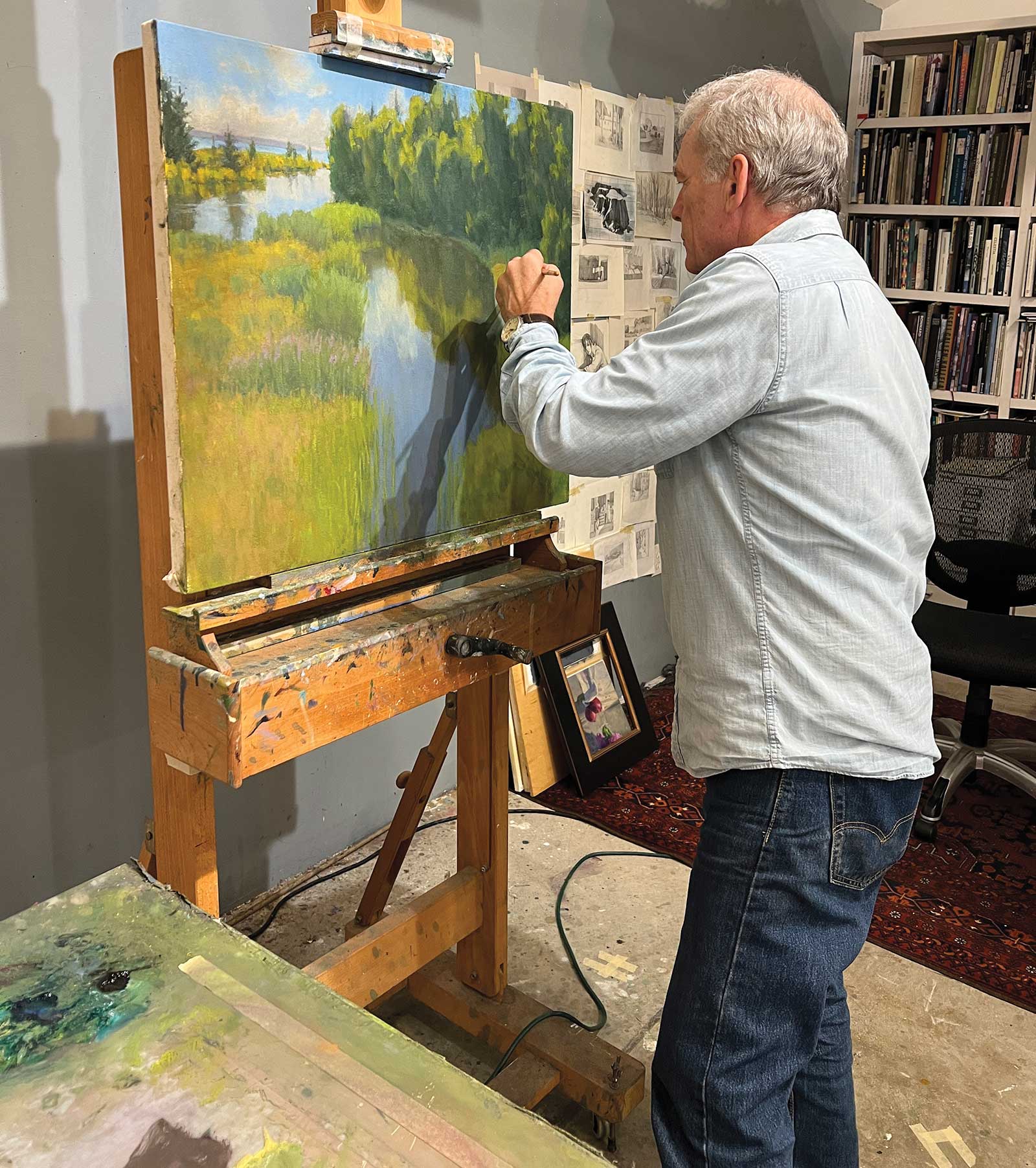
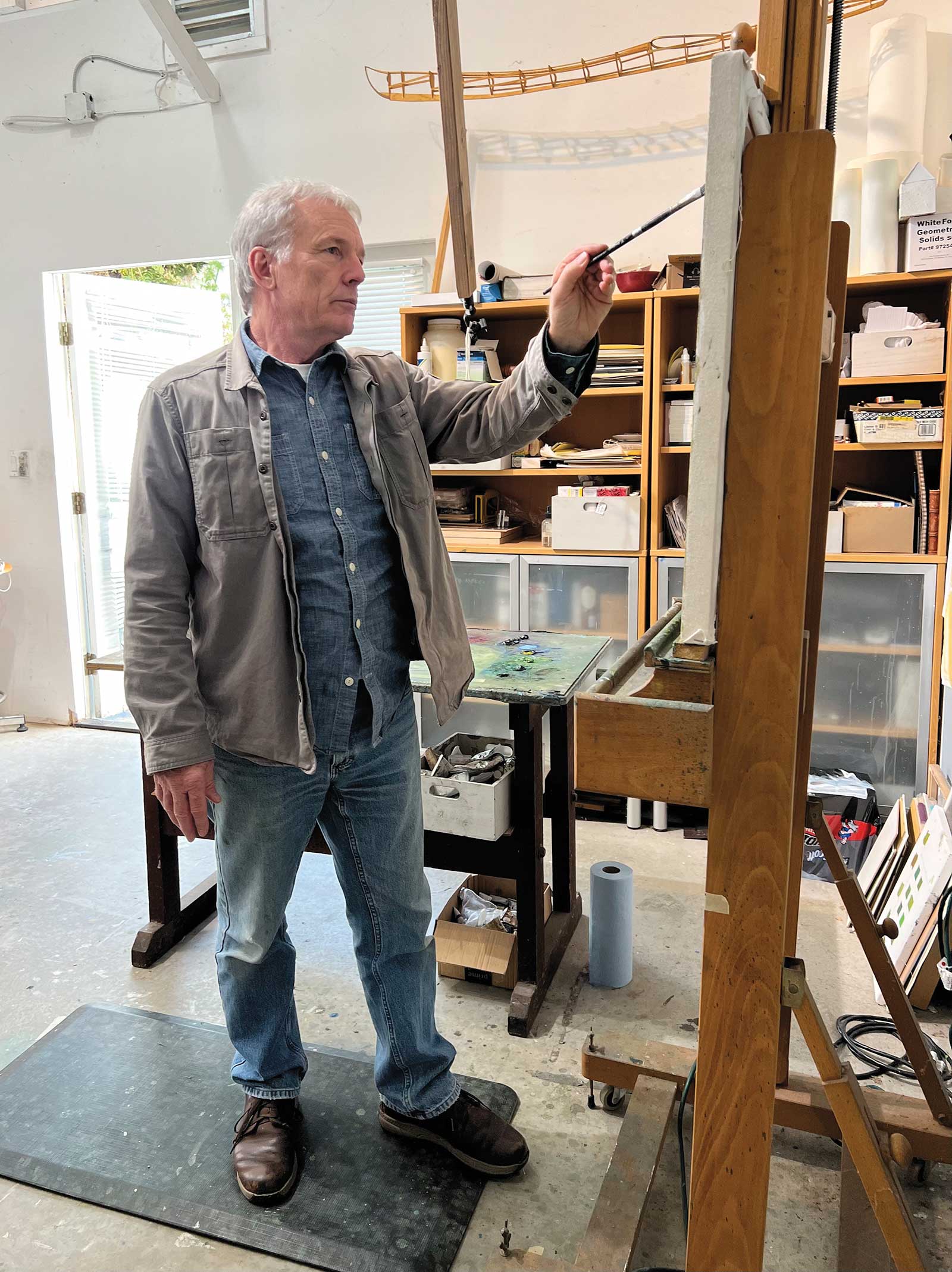
Ian Roberts painting in his studio.
When I am looking for something to paint I look for that structure, then how the main value masses, or shapes, of light and shadow are embedded in that structure. Of course I am aware of buildings and trees and so on. But they are being used for structure and design. They are not what I am looking for in themselves. For that reason I usually go out early or late in the day, if I am painting a landscape, looking for the big masses of shadow and light. I mention that because with still life and figures you often have much more control over the light than in a landscape so you can sculpt those big masses of light and dark yourself. But the trigger, the piece that says Bingo usually is the vertical. I’ll show you in this painting demonstration what I mean by that.
My Art in the Making Exploring the Gaspé
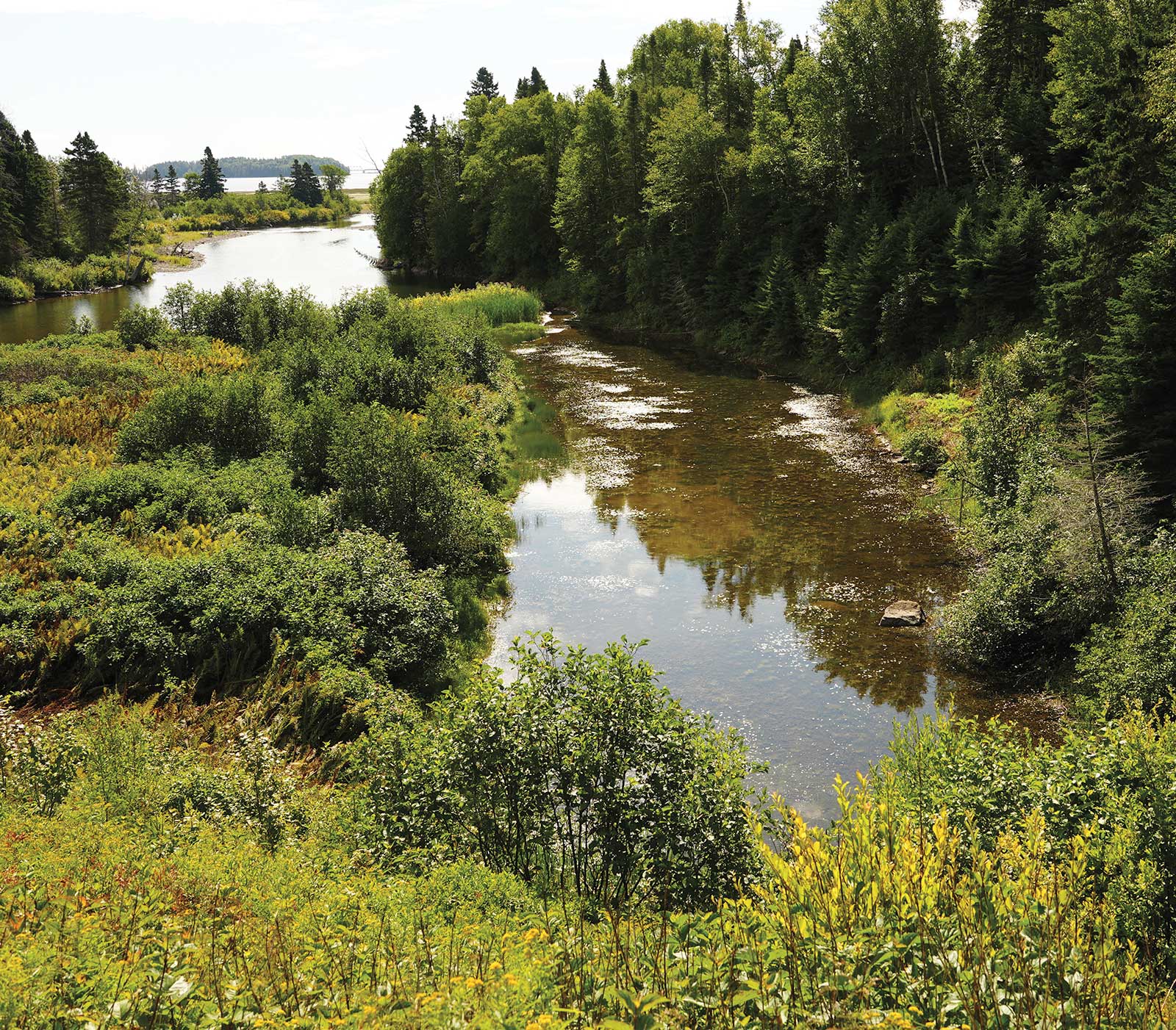 Reference Photo
Reference Photo
I took this photo last summer on a trip I took with my wife, the painter Anne Ward, to the Gaspé in Québec, Canada.
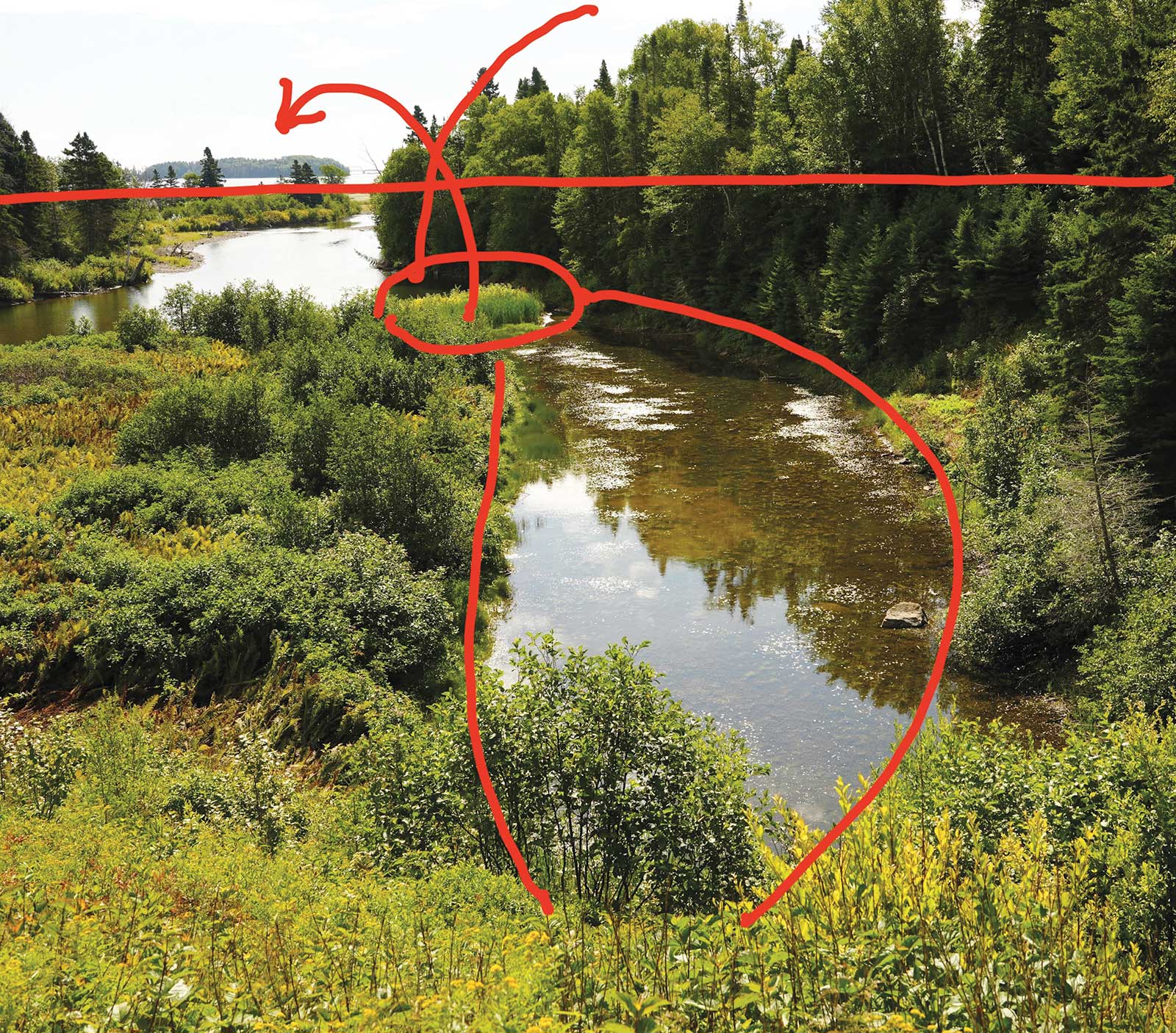 Stage 1
Stage 1 Compositional Structure
This is the structure I see forming the painting. The vertical of both sides of the pond and the trees at the top all lead us to the hit of light on the grasses against the dark trees. That is like a preliminary focal point before we jump back into the deep space of the background, top left. You can see both the vertical and the horizontal engaging the whole picture plane. Left to right, top to bottom.
WHAT THE ARTIST USED
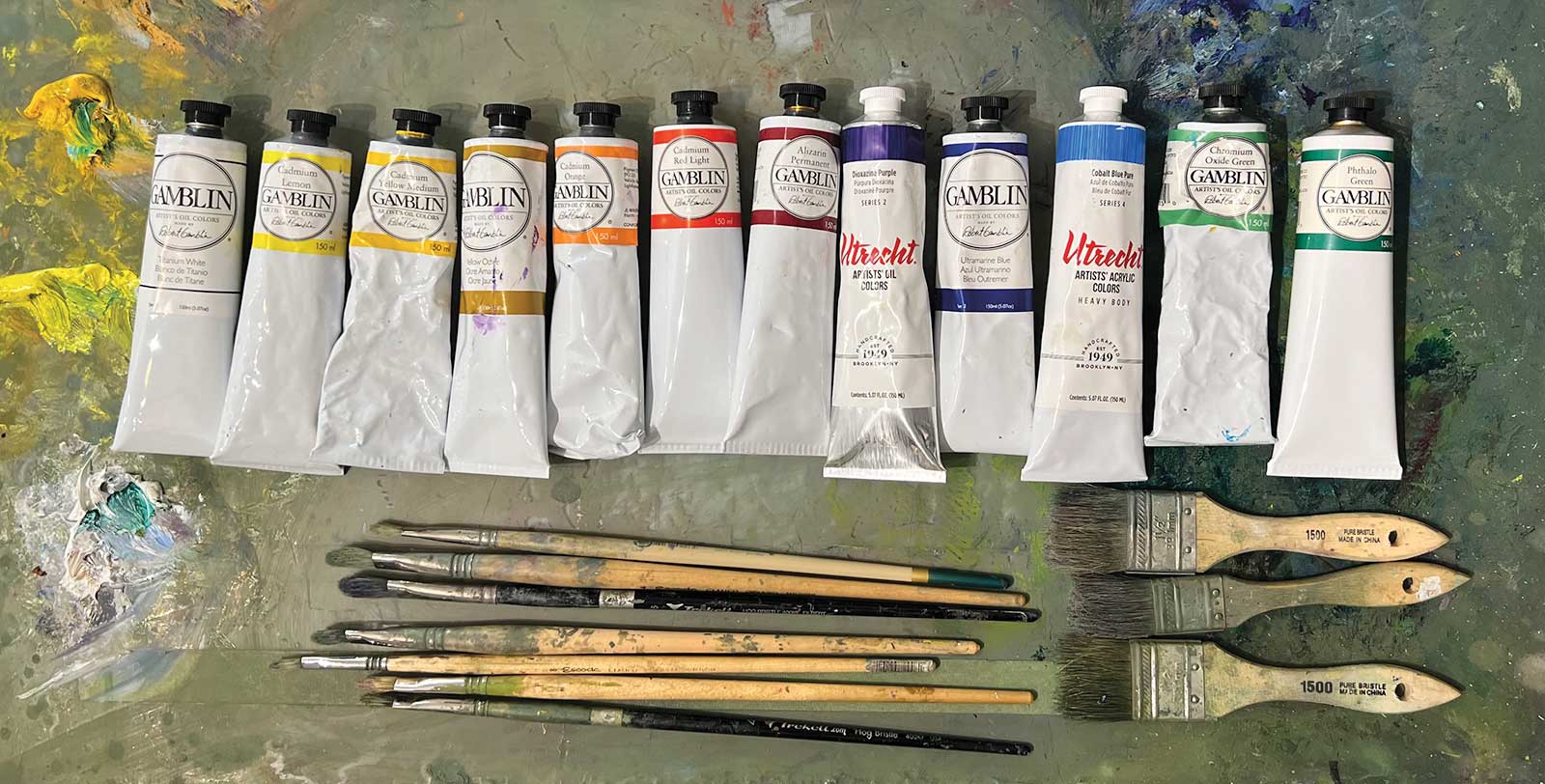
Gamblin and Utrecht Oils
Titanium white, Cadmium yellow lemon, Cadmium yellow medium, Yellow ochre, Cadmium orange, Cadmium red light, Alizarin permanent, Dioxazine purple, Ultramarine blue, Cobalt blue, Chrome oxide green, Phthalo green
Additional Materials
1" and 1 1/2" chip brushes, Hog’s hair filberts, sizes 4, 6, 8, Gamsol
Technical Tip:
I always put my colors in the same order on my palette, and always in the same order as the color wheel.
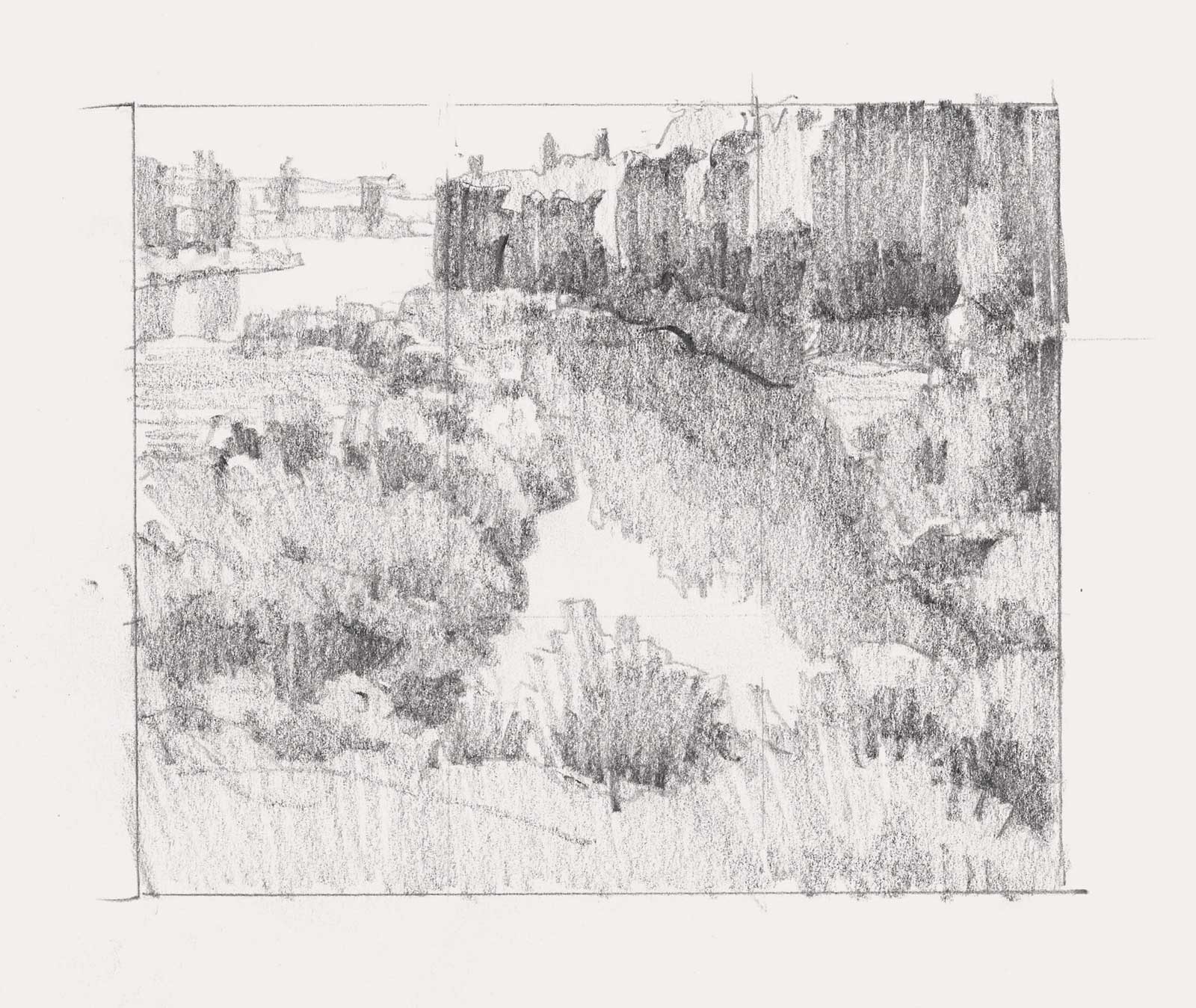 Stage 2
Stage 2 Sketch
I’ll often do a quick sketch (this was around 5 minutes) to make sure I see how all the parts are fitting together. This is more than a thumbnail and not a drawing for its own sake. Something in between.
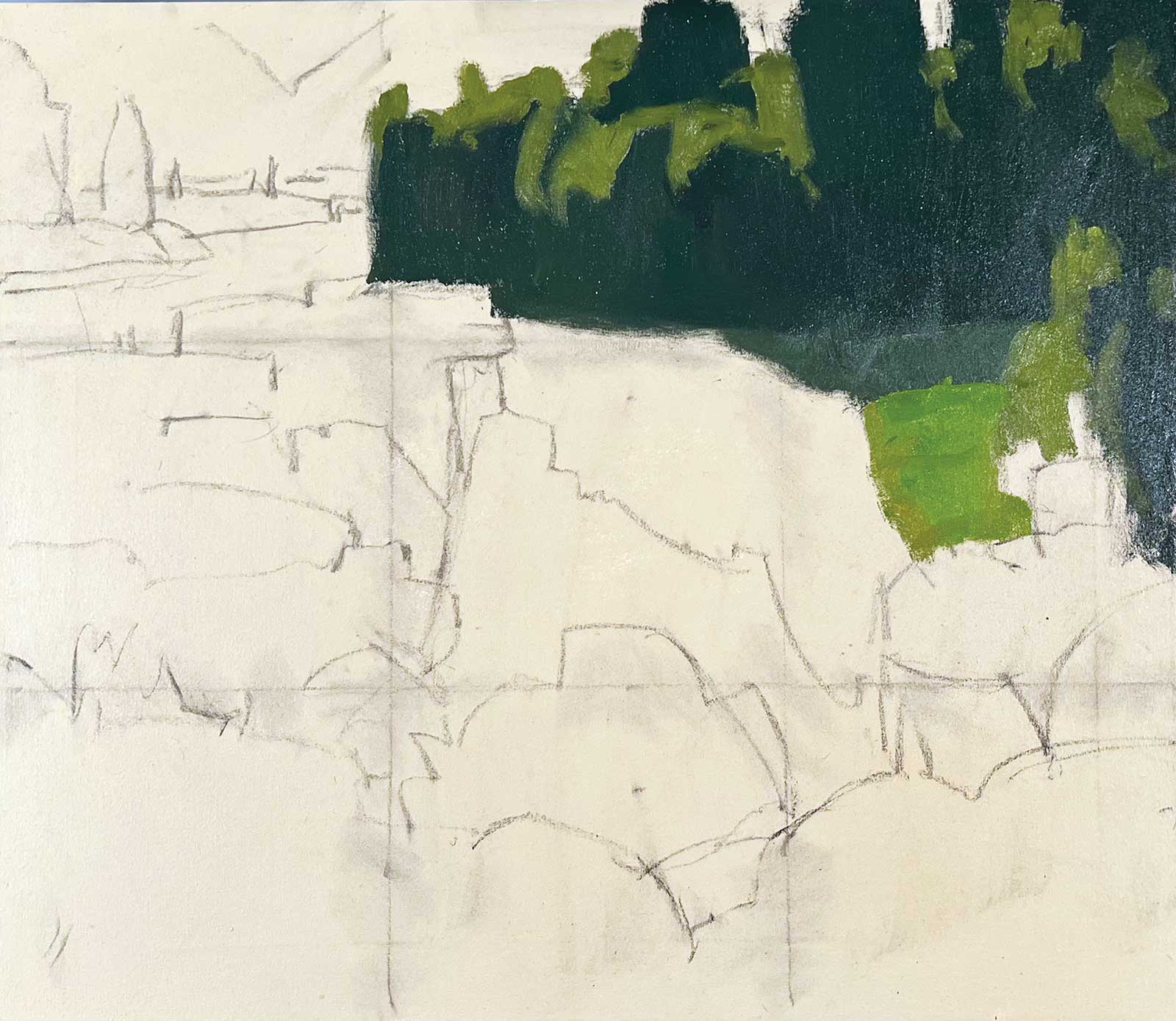 Stage 3
Stage 3 Starting to Block In
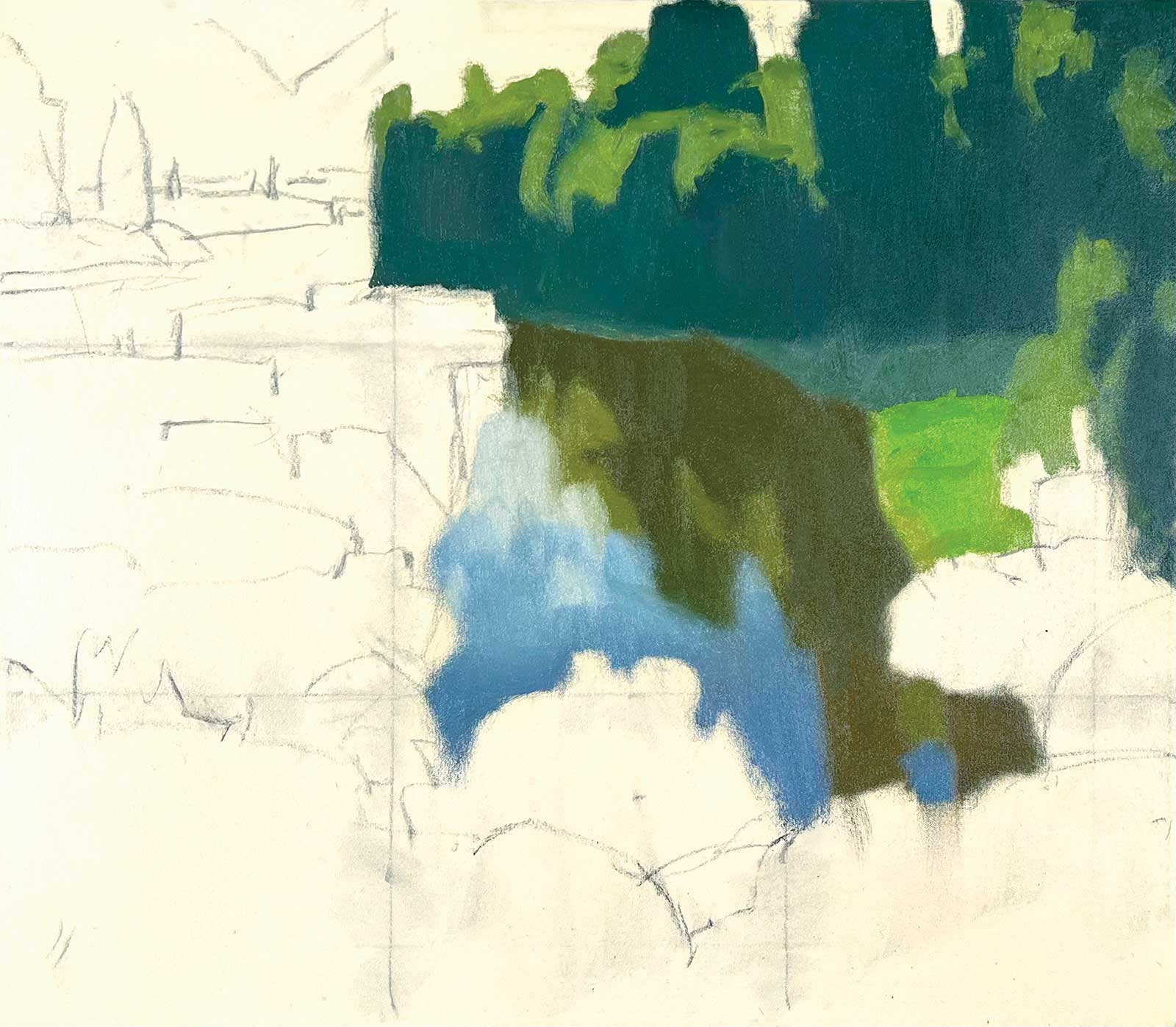
I grid the photo and the canvas in thirds so it is easy to draw the main shapes accurately. I then draw the main shapes in with charcoal, then give the canvas a light spray of workable fixative. I start painting the largest dark shape with a low intensity color. For the second color I put in the lit side of those same trees. That sets up the main value range for the painting. Notice I have four shapes and four colors now. Light and shadow for the trees, and light and shadow for the grasses on the bank below them. Same temperature and value shift for each.
The Block In
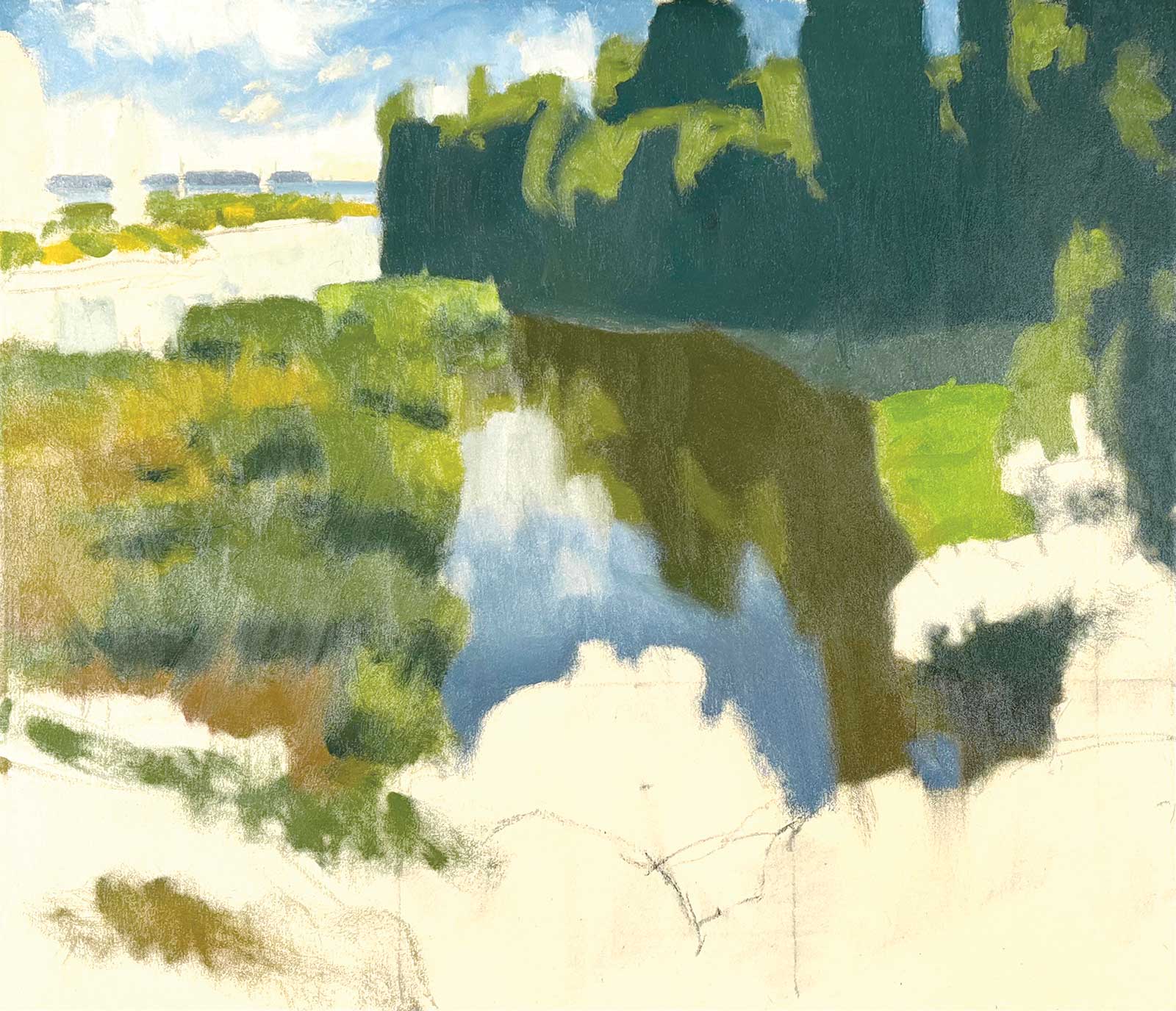
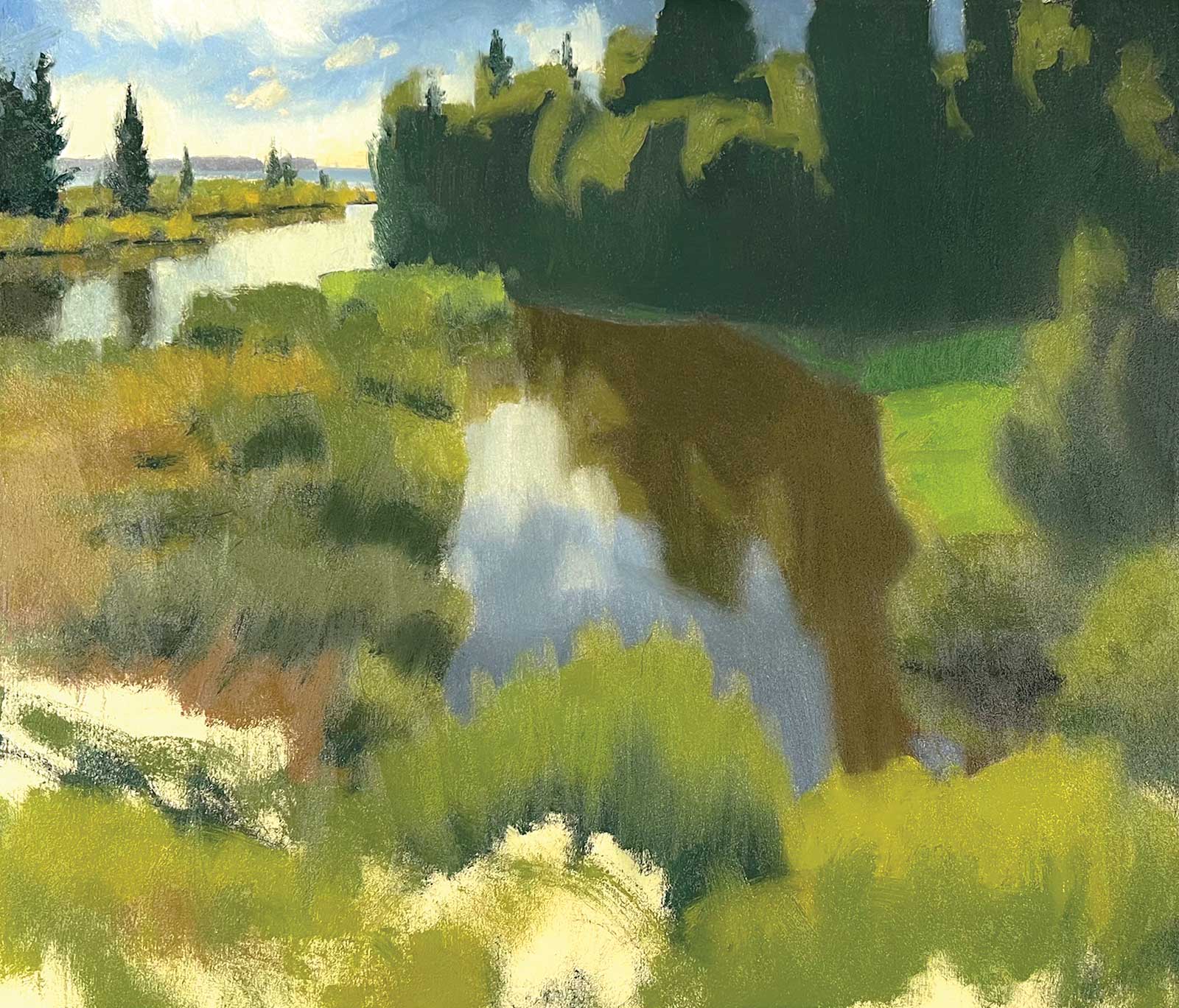
I block in my paintings quickly using a little Gamsol and a 11/2" chip brush. The whole block in, stages 3 to 6, took a bit less than an hour.
 Stage 4
Stage 4 Block In Continued
I wanted to push the difference between the water and the land so I exaggerated the brown of the reflection in the water. Notice in the photo the reflection of the sky in the water is pretty dark. That shape doesn’t jump out at us but sits embedded with everything around it.
 Stage 5
Stage 5 Block In Continued
I wanted to simplify the left side of the pond into two main masses: the bushes and the orange grasses. You’ll see I keep pushing that idea as the painting progresses. I switched to a size 6 hog’s hair filbert as I started into the background in the top left.
 Stage 6
Stage 6 Completing the Block In
I’ve almost finished the block in, but I feel I am just painting in an endless number of bushes of about the same size. I’m shifting the colors and adjusting the size a bit but now that I’m almost finished the block in, I realize all those bushes are feeling too repetitive.
 Stage 7
Stage 7 Final Touches
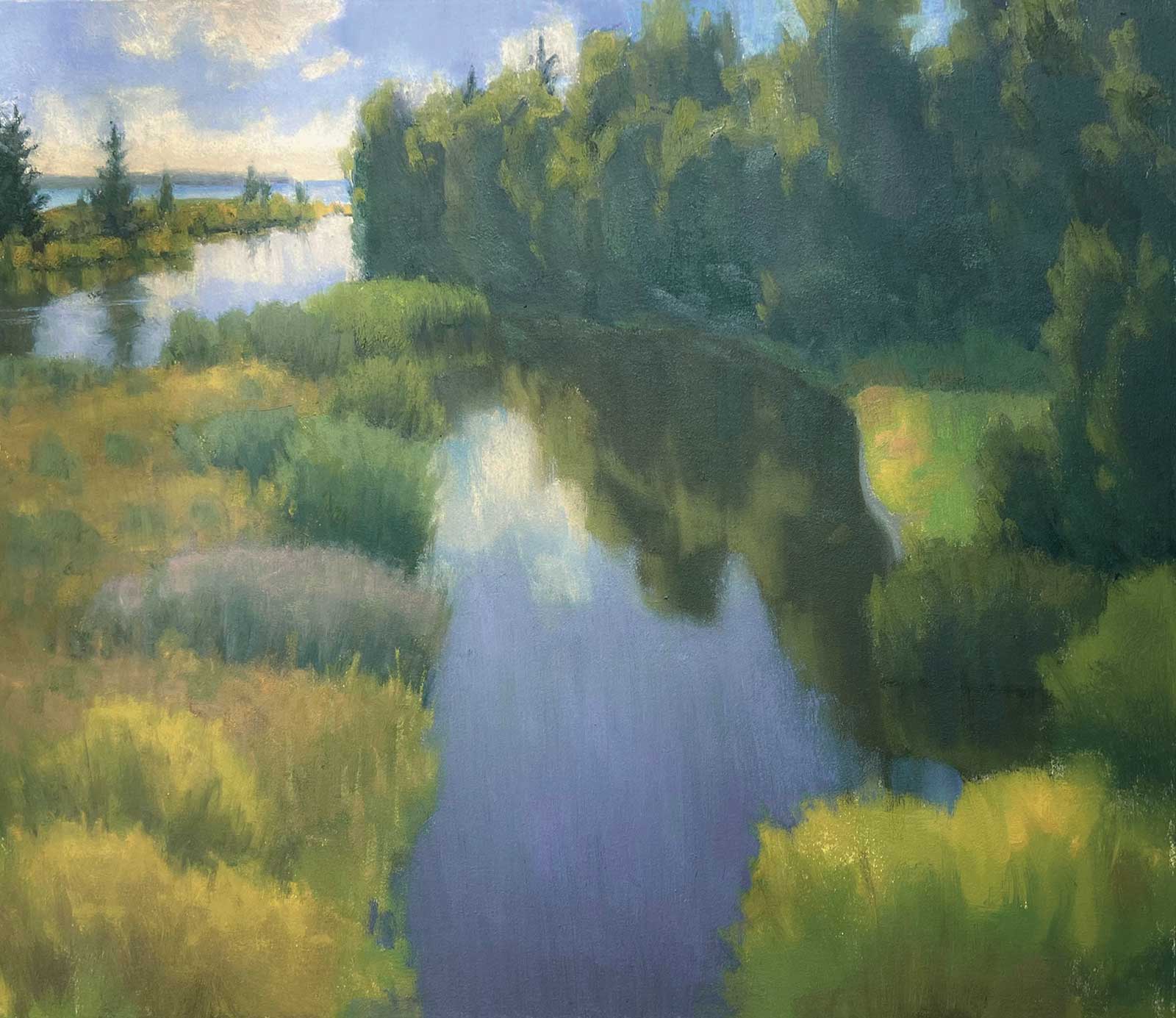
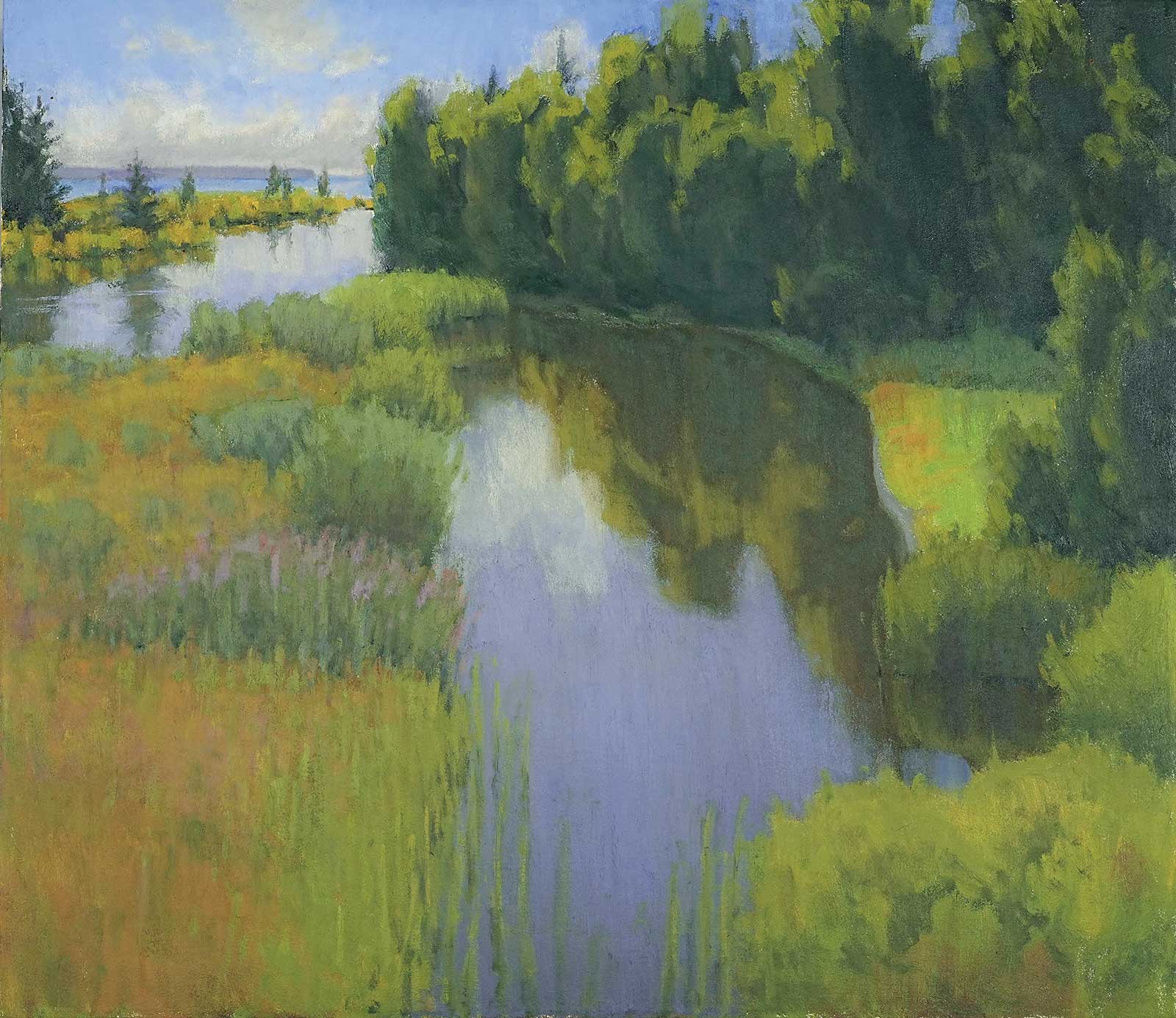
So I just took a big brush and painted out all the bushes in the foreground and brought the pond all the way down. Two things: this in fact emphasizes the vertical of the compositional structure, which I like, and gets rid of that repetitive bush problem. However, now I’ll need to soften that long line of bushes along the left side of the pond and soften that clump of bushes on the bottom right.
 Stage 8
Stage 8 Finished Artwork
Exploring the Gaspé, oil on canvas, 26 x 30" (66 x 76 cm)
I simplified and eliminated more of the bushes on the left and brought some bushes into the water in the foreground to soften the interplay of the water and land in the foreground. You can see the role the composition structure plays in the final painting. The painting grew organically out of that structure, even with the changes that I made. The changes, in fact, just emphasized the original structure more. The painting has an engaging foreground and midground, and then allows for that jump into deep space with the background.
About the artist
 Ian Roberts
Ian Roberts accompanied his father, a professional painter, out landscape painting starting when he was 11. He attended the New School of Art and the Ontario College of Art, both in Toronto. He has been painting professionally for over 40 years. His book Mastering Composition, published by Northlight Books, has sold more than 60,000 copies. His YouTube channel, Ian Roberts Mastering Composition, has more than 200,000 subscribers. He taught plein air painting in Provence, France, for 25 years, and now teaches composition in his courses online.
Represented by
Marcia Burtt Gallery, California, USA, artlacuna.com
Contact at
ianroberts.com