As a classically-trained portrait artist, I often focus on faces. In this demonstration however, I chose to focus on the hands. Often overlooked, hands are a kind of portrait in their own right and can tell stories just as powerfully. I was drawn to the challenge of rendering them in a way that communicates a narrative without relying on facial expression. My style continues to evolve as I experiment with texture and expanded color palettes. I’m especially interested in how pushing nuances of color and texture can be used not only to model form, but to guide the viewer’s eye.
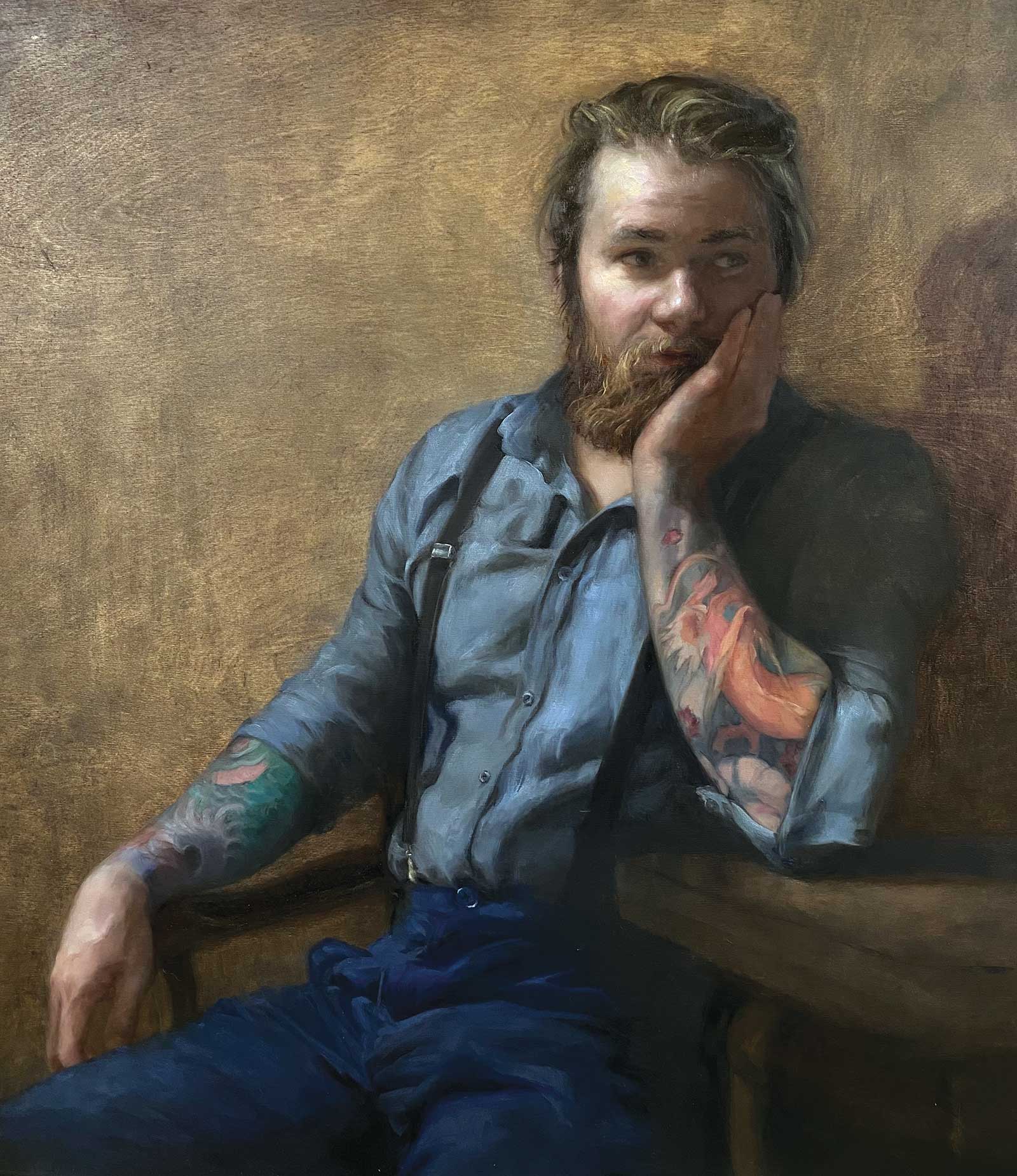
Back to Your Heart, oil on wood, 24 x 24" (60 x 60 cm)
This piece unfolded over the span of a year. It was worked on sporadically, shaped by trial, error and constant reflection. Initially, the concept was based on the myth of Persephone, the hands holding a symbolic pomegranate, but that narrative eventually felt too distant. Instead, I turned inward to a personal memory of my grandmother. Every spring, she’d joyfully announce the return of the robins—“Oh look, Mrs. Robin is out today!”—and we’d all rush to the window to see the little red-breasted bird.
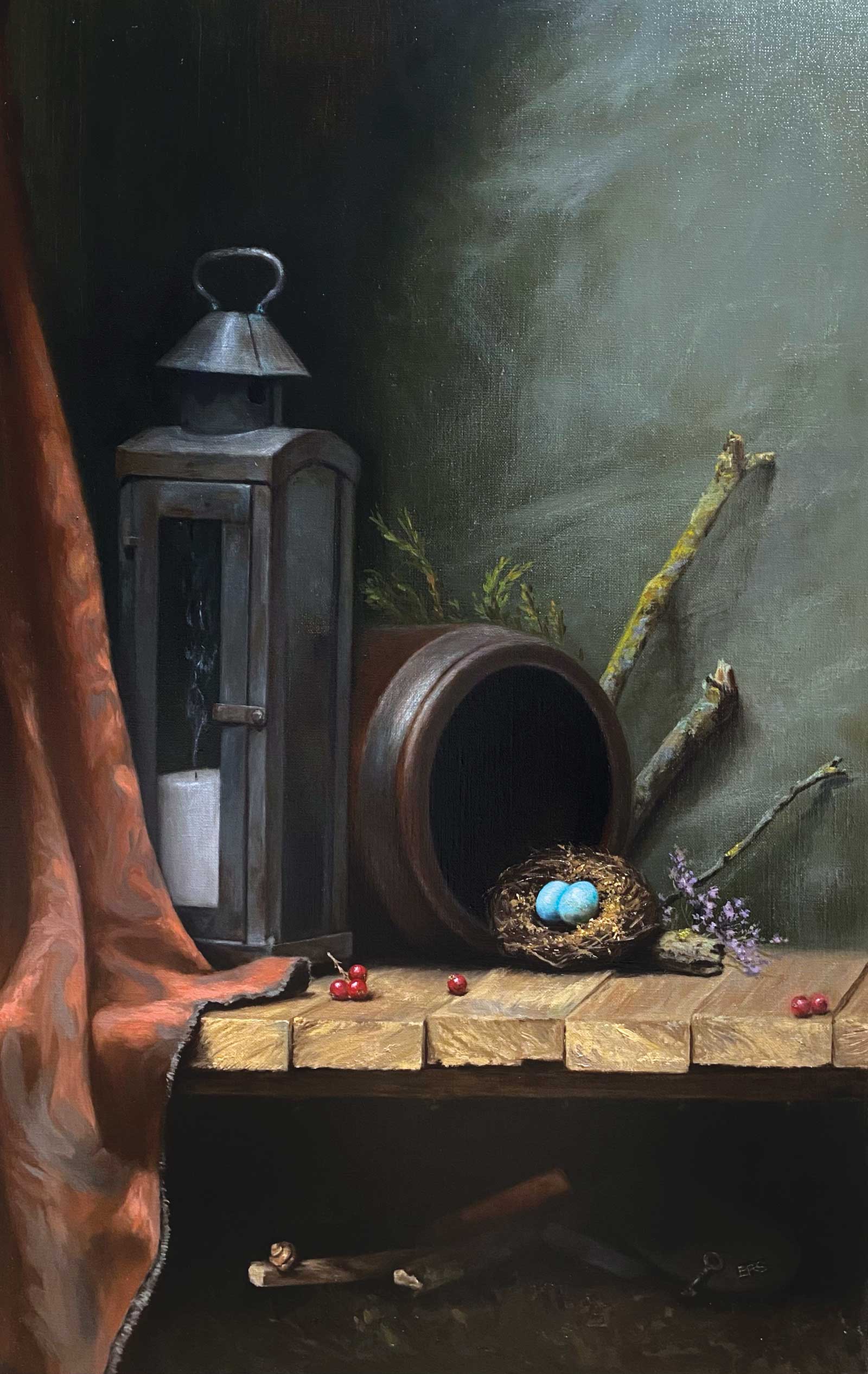
Opposite: Under the Floorboards, oil on canvas, 30 x 20" (76 x 50 cm)
In this way, the painting became not just a technical study, but an emotional one as well. It shifted from myth to memory, from universal to personal. The evolution of meaning reflects a central part of my process. I don’t always begin with a fixed idea; instead, I allow the story to unfold through the marks, revisions and hesitations that arise while painting. This work taught me to trust that the process will carry its own momentum—that intuition, more than precision, often leads to the most honest expression.
My Art in the Making Mrs. Robin
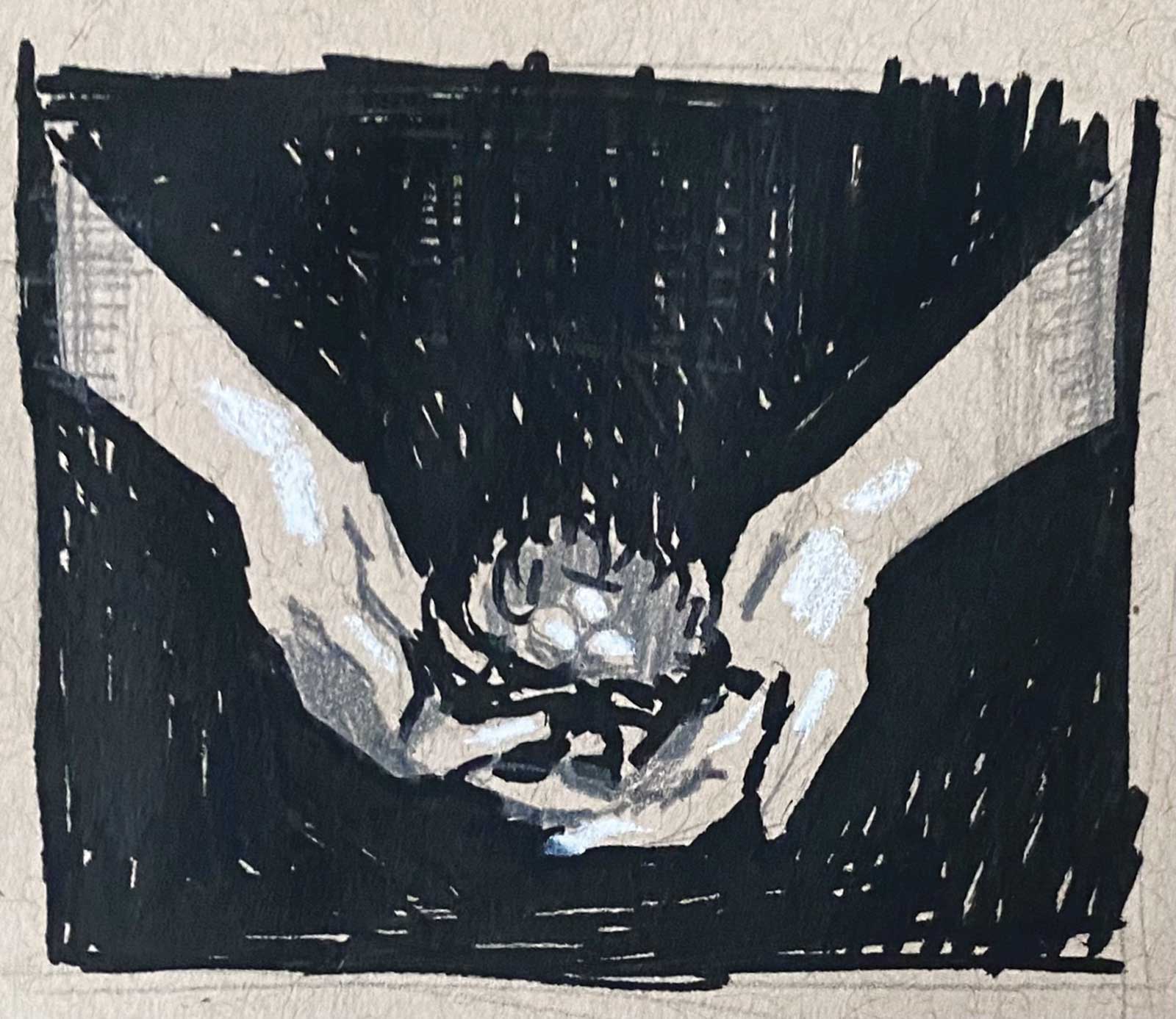 Stage 1
Stage 1 Sketches and Studies
When forming an idea for a painting, I begin with multiple sketches and exploratory studies, aiming to generate a wide range of visual possibilities and compositions. This early stage is essential for testing ideas. I often create value studies using the principles of notan, a Japanese concept that translates to “light and dark harmony.” These studies help me simplify complex scenes into clear value structures, which is crucial for planning strong compositions. My go-to materials for this process are toned paper, a black marker and white chalk. This limited toolkit allows me to quickly map out the relationships between lights and darks, giving me a solid understanding of the basic value composition before moving on to the next phase of the painting.
WHAT THE ARTIST USED
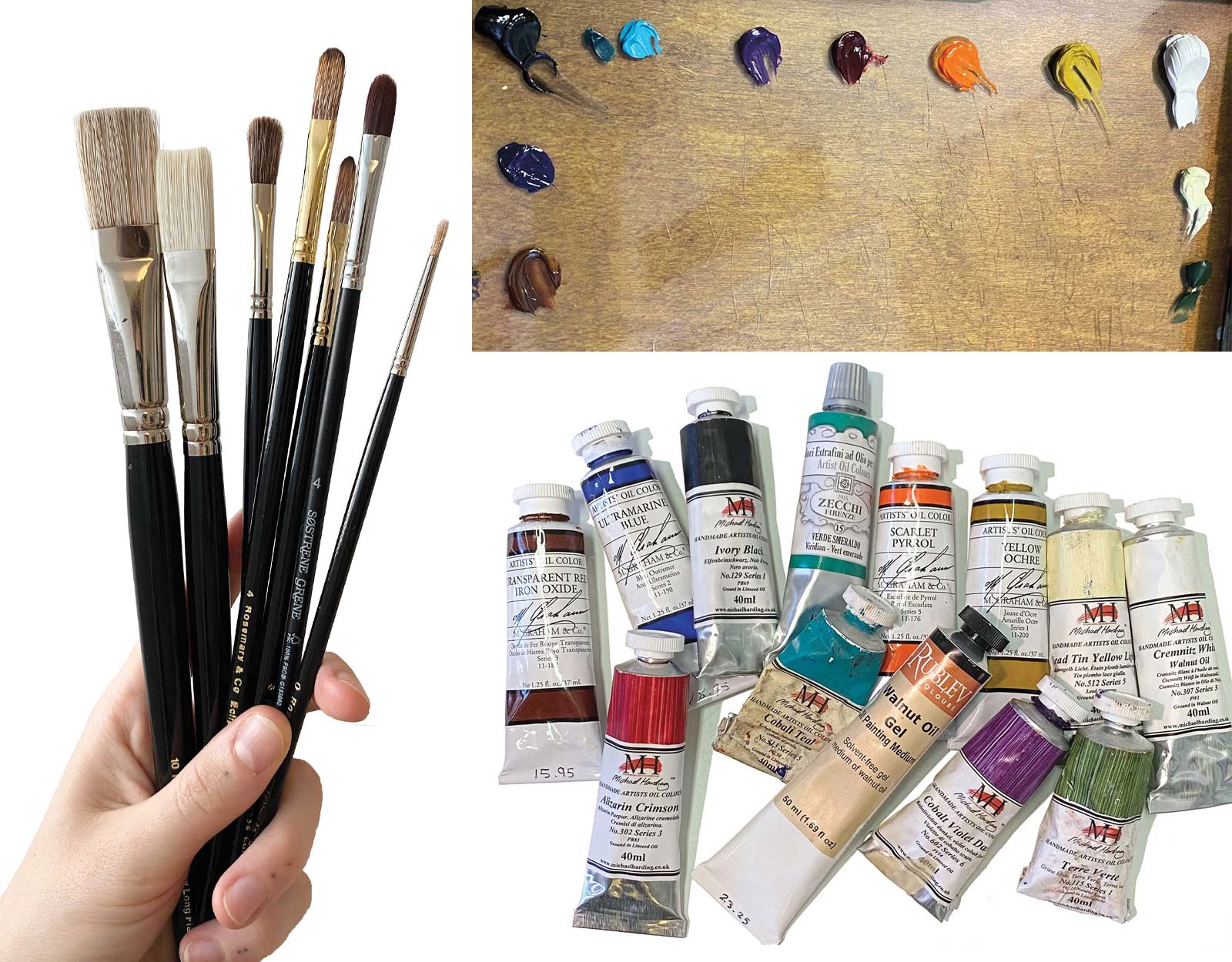
Support: I often work on aluminum panel, which I prepare myself by rolling on a lead alkyd ground from Rublev by Natural Pigments. I love this surface for its excellent archival quality and unique combination of smoothness, tooth and slight absorbency. The lead ground imparts a beautiful pearly quality that you simply don’t get with titanium white. These panels are also easy to cut to any size and are lightweight and highly portable, ideal for both studio work and travel.
Mediums: I keep mediums to a minimum and prefer working primarily with oils. I especially like walnut oil, as it’s less prone to yellowing over time. One of my favorite mediums to use is Rublev oleogel/walnut oil gel, as it maintains the body of the paint while still adding fluidity.
Brushes: I have fallen in love with Rosemary & Co., particularly the Eclipse series synthetic mongoose long filberts. I also enjoy using rounds for their spontaneity and expressive potential, and flats for blocking in larger chunky shapes and areas. I will usually start with a big flat brush to block in a painting, then work my way to smaller filberts for refining.
Colors: My palette shifts depending on the needs of each painting, but a few staple colors consistently show up: transparent red iron oxide, yellow ochre and cobalt teal, which is my absolute favorite for its vibrancy and unexpected versatility.
Other colors on my palette include: Transparent red iron oxide, Ultramarine blue, Ivory black, Viridian, Cobalt teal, Cobalt violet, Alizarin crimson, Scarlet pyrrole,
Yellow ochre, Cremnitz (lead) white, Lead tin yellow light, Terra verte
 Stage 2
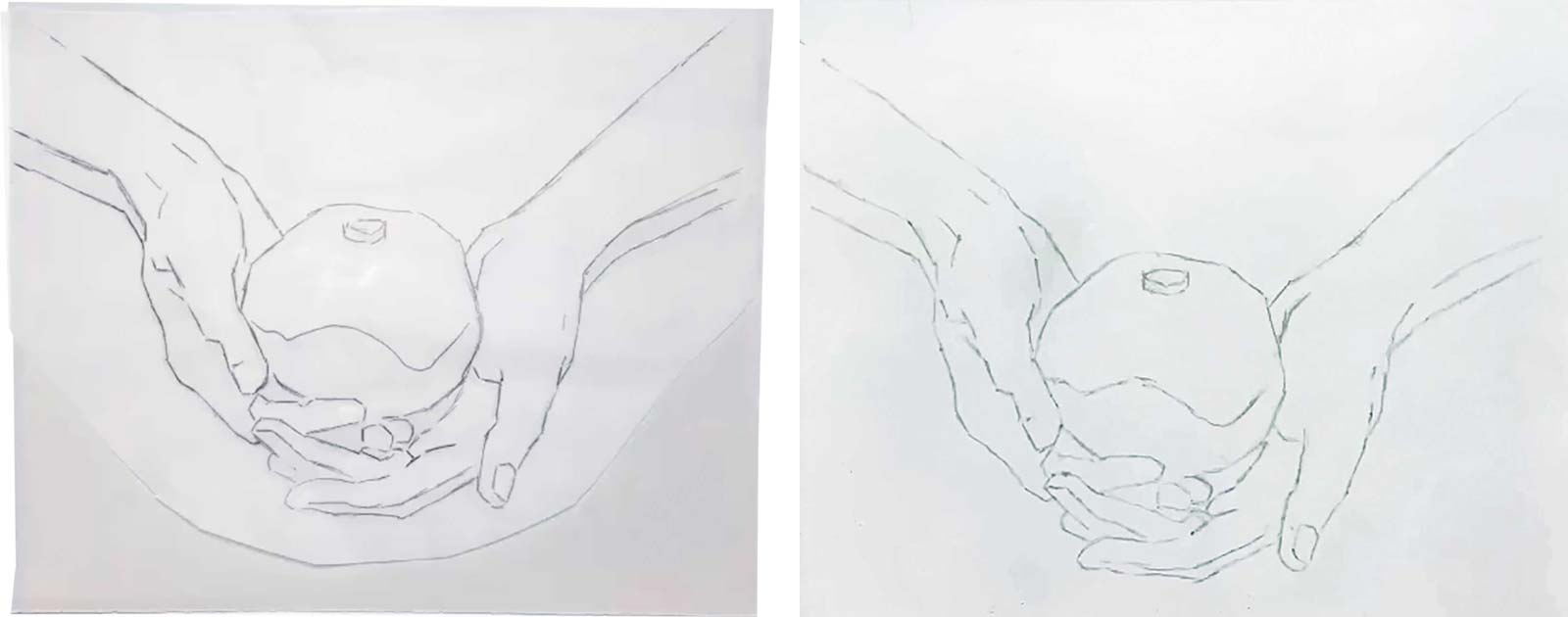
Stage 2 Drawing and Transfer
For more complex paintings I typically begin with a drawing. This stage allows me more freedom to make adjustments before starting the final piece. Once the drawing is complete, I use tracing paper to outline it. I then flip the tracing paper and apply a soft charcoal to the lines on the reverse side. After that, I flip the paper back and transfer the image onto my prepared surface by redrawing over the original lines. In this image you can see the gray-toned paper with the original drawing underneath the transparent tracing layer, ready for transfer.
 Stage 3
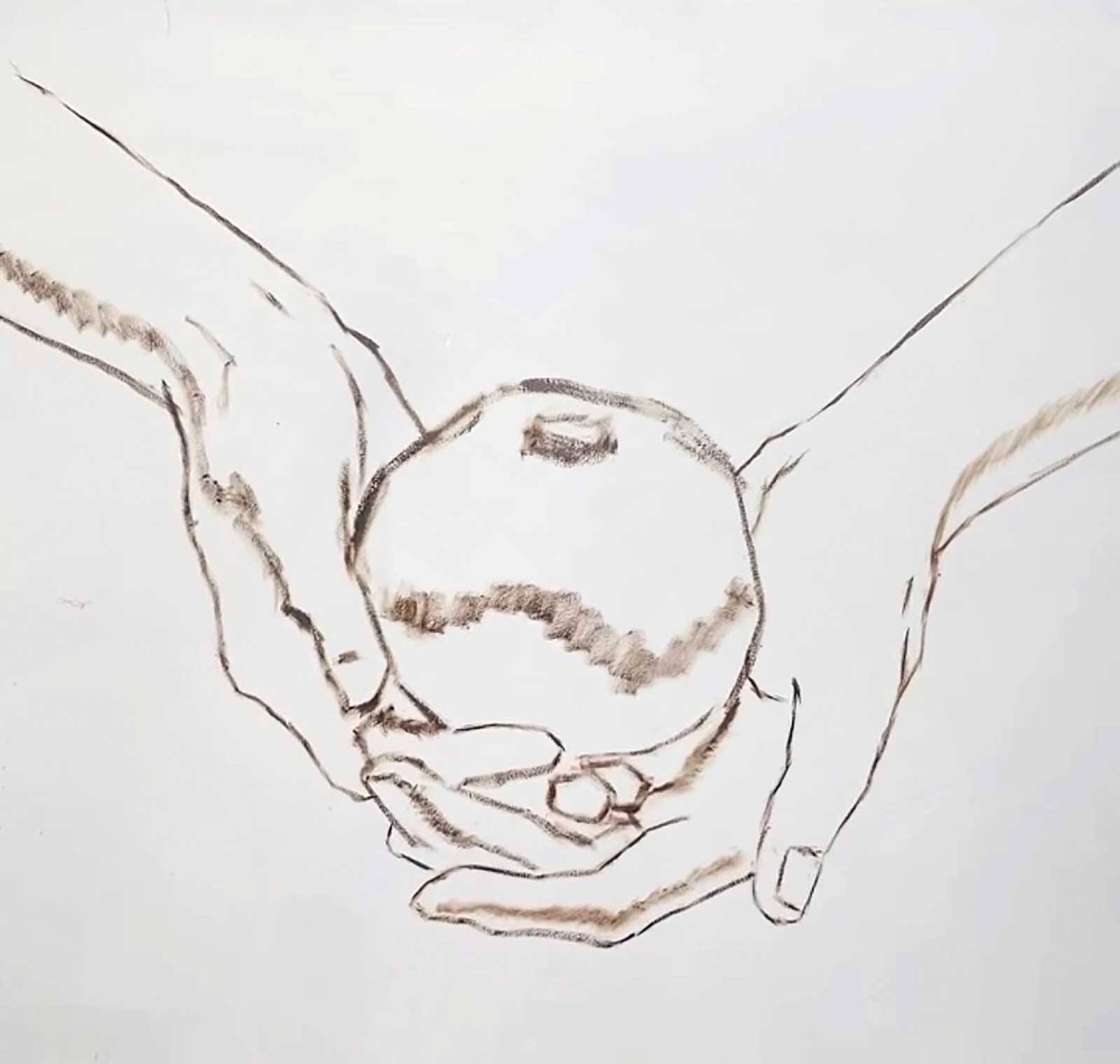
Stage 3 Reinforcing with Paint
Since the transferred charcoal image is quite soft, I usually reinforce the lines with paint to prevent them from being smudged or lost as I continue working.
 Stage 4
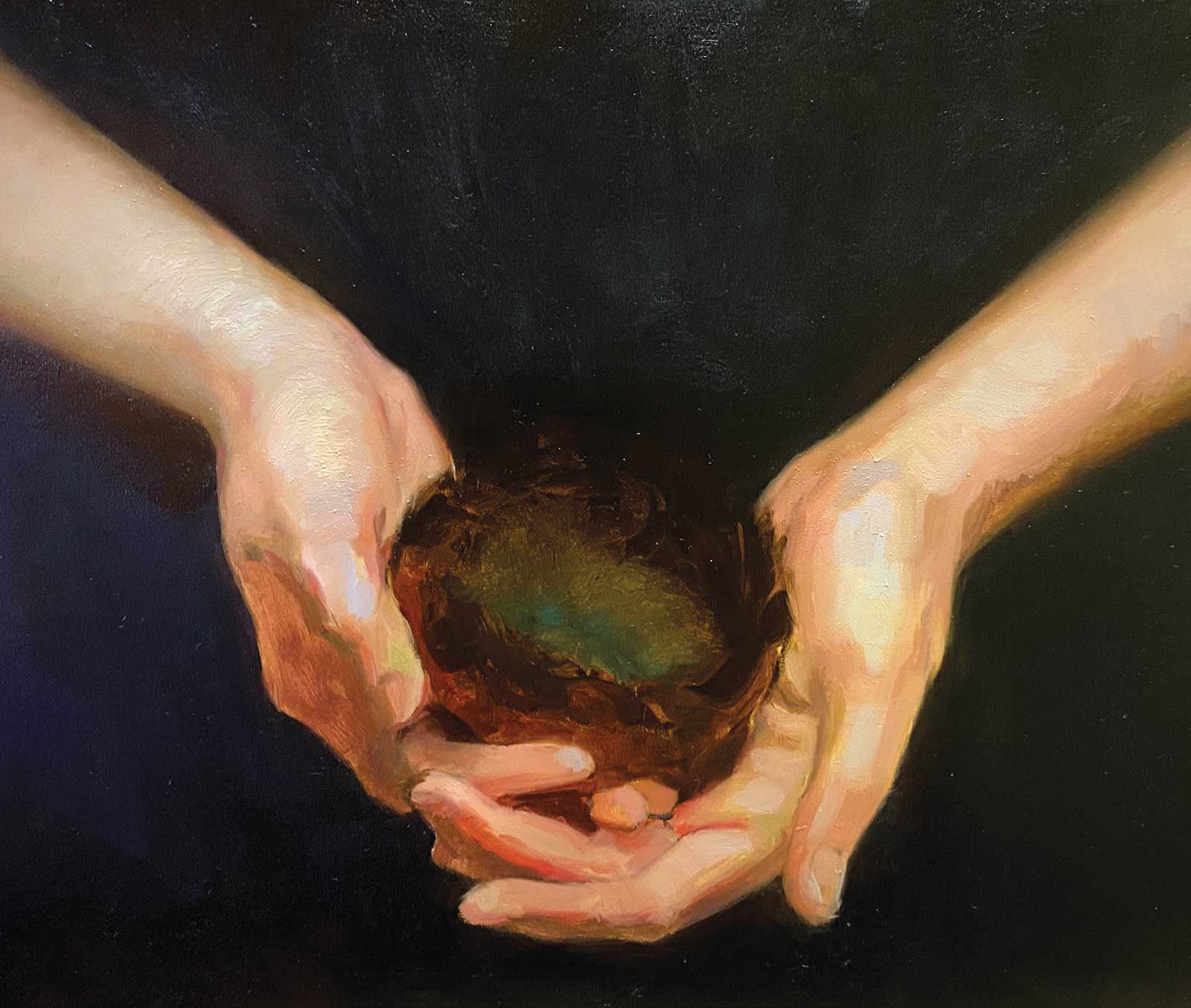
Stage 4 Jumping into Color
Sometimes I begin with an underpainting using a mix of transparent iron oxide red and ultramarine blue (which makes a nice neutral tone) to establish values, while other times I jump straight into color. For this piece, I chose to start with bolder blocks of color. Here, my compositional change from a pomegranate to a robin’s nest is established. At this stage, the left thumb remains abstract and loosely defined, allowing malleability as the painting develops.
 Stage 5
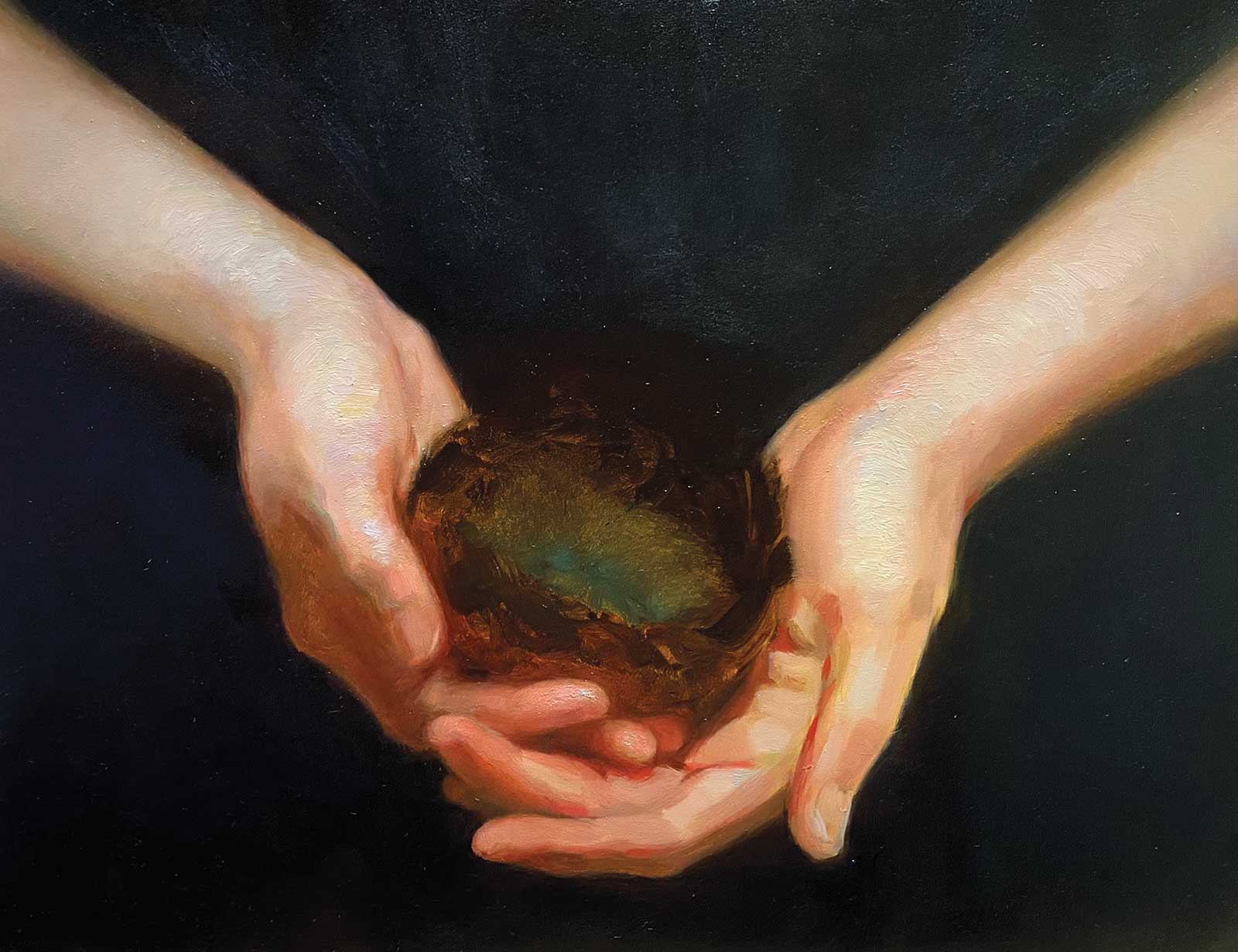
Stage 5 Getting Specific
In this stage, I’m continuing to refine the shape design, making the forms smaller and more specific. At the same time, I’m pushing texture by applying thicker paint. Every time I visit a museum, I’m reminded how much more paint I could be using, especially seeing Sargent and Rembrandt. Those rich, textured surfaces really stand out and inspire me to be more generous with paint.
Texture and Depth
I left the shadow on the left hand very flat and almost transparent in some areas, which helps to push the thicker, lighter areas forward even more.
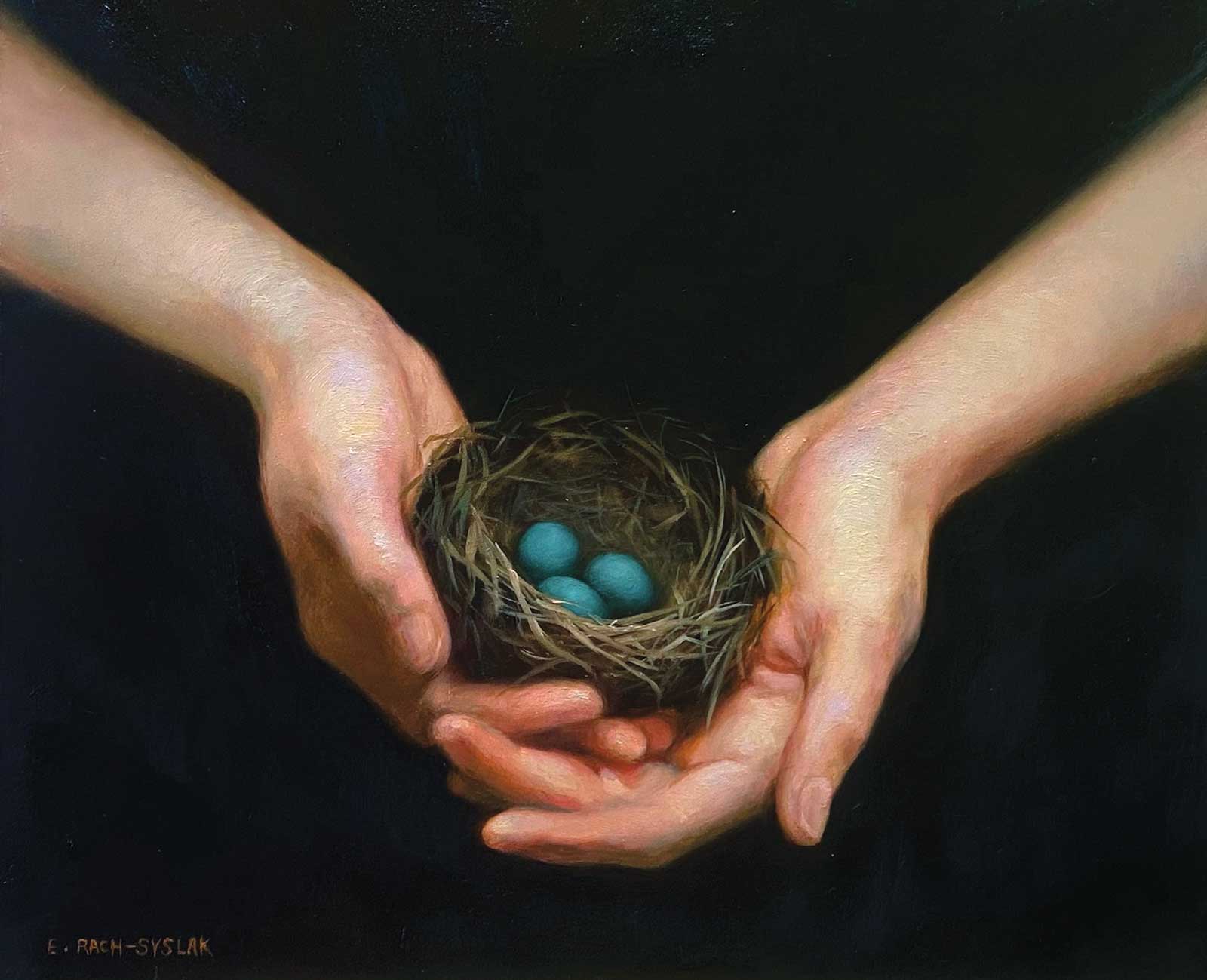 Stage 6
Stage 6 Double and Triple Checking
For this painting, I challenged myself to work with a broader range of colors. I also used a lot of lead-based paint, which helped build texture, create a soft glow, and add more body to the paint. At this final stage, I like to step away from the piece, sometimes turning it upside down or setting it aside for a week or so. Seeing the work with fresh eyes is essential. After staring at it for so long, shifting perspective helps me view it more objectively, as a viewer might. In doing so, I realized the eggs needed to be significantly brighter, and a few anatomical adjustments were necessary. This is the “tweaky” stage where I push myself the most. It’s also the most challenging, because it’s difficult to know whether you’ve refined the piece enough or gone too far. At this point, having someone else take a look can be incredibly valuable.
Cools and Warms
Skin usually displays a rainbow of colors with a fascinating interplay between warm and cool tones. In this painting, I aimed to enhance the chroma (intensity) of both the warms and cools to make the painting appear more vibrant.
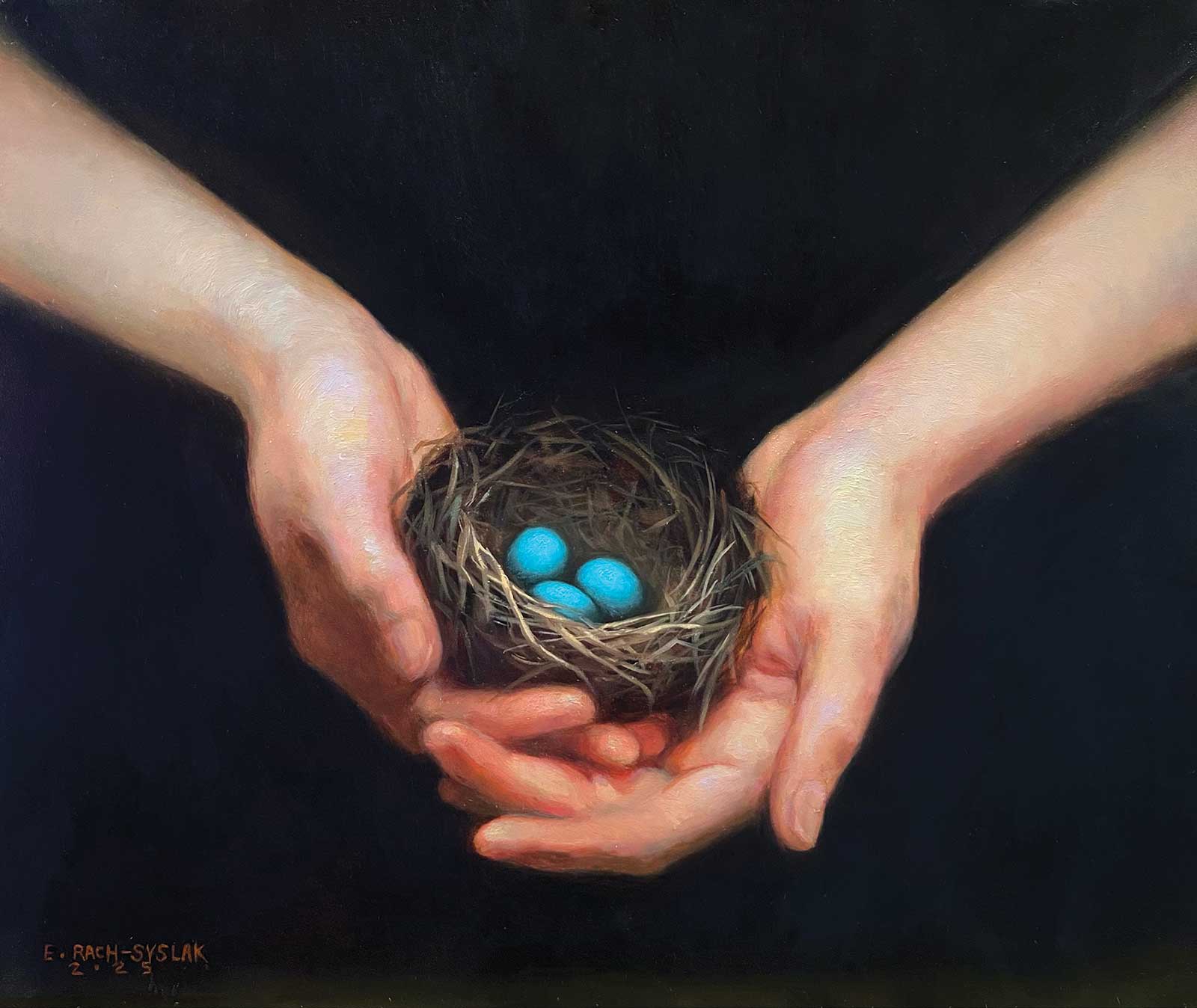 Stage 7
Stage 7 Finished Artwork
Mrs. Robin, oil on aluminum panel, 10 x 12" (25 x 30 cm)
About the artist
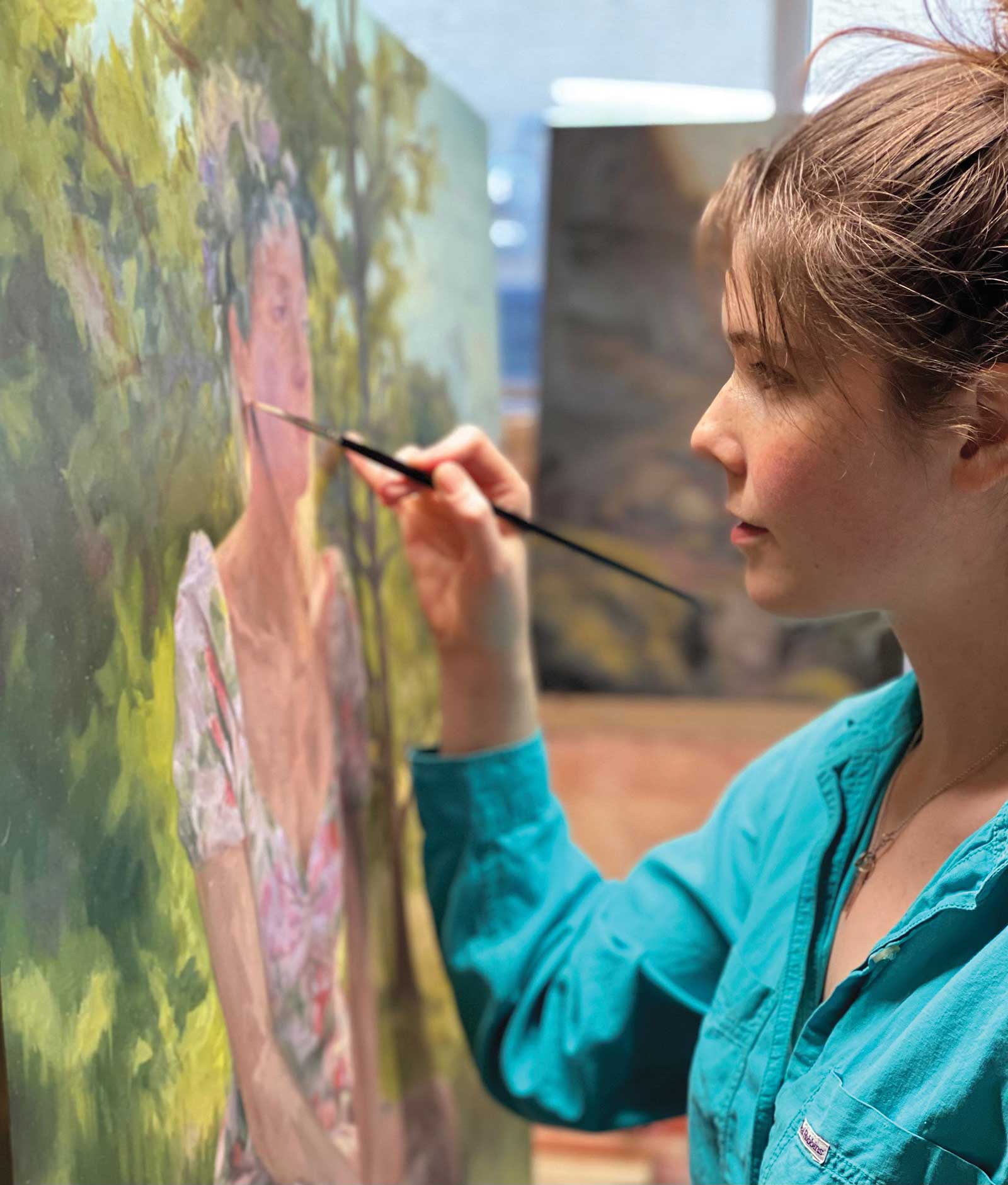 Emma Rach-Syslak
Emma Rach-Syslak is a Canadian fine artist specializing in portraiture. At 24 years old, she is a graduate of the Florence Academy of Art, and has studied under renowned artists including Cornelia Hernes, Stephen Bauman, Jordan Sokol, Amaya Gurpide and Rachel Personett, among others. Her first solo exhibition took place in Canada in 2019, and since then she has held private shows and exhibited her work in galleries worldwide. She has received multiple awards, including the Queen’s Golden Jubilee for Visual Arts in Alberta (2021), the Young Artist Award for the Royal Institute of Painters in Watercolours (2024), and the Best Portrait Award for the Canadian Portrait Society (2024).
Rach-Syslak’s paintings aim to intrigue and illuminate, exploring the connections and stories of people, places and things. She is currently honing her craft for further exhibition, teaching in Canada, and traveling the world in search of inspiration.
Contact at
emmarachsyslak.com