British painter Frances Bell has just taken home the top prize from the Portrait Society this year, and the art world is buzzing. Her win cements her spot as one of the most exciting figurative artists out there right now. Bell is known for her powerful, emotional portraits and her incredible technique—combining classical skill with a fresh, modern edge that really connects with people. As her award-winning piece continues to earn praise from critics and fans alike, we take a closer look at the artist herself, her path so far, and the creative vision that’s put her on the international stage.
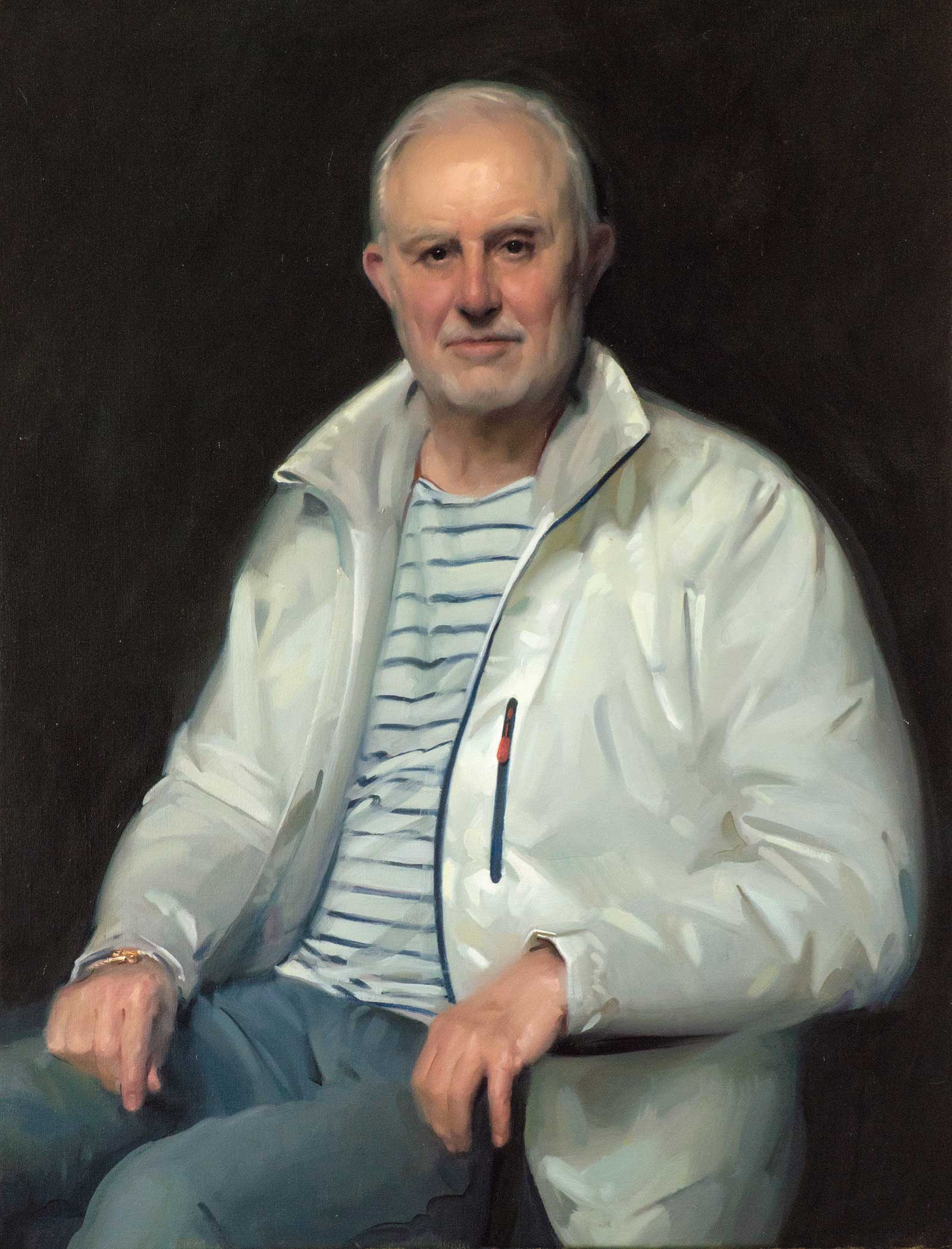
Frances Bell, Salvador, oil on canvas, 36 x 28” (91 x 71 cm)
Kimberly Azzarito: Congratulations on winning the Portrait Society’s Draper Grand Prize. Can you share the story and inspiration behind the winning portrait?
Frances Bell: The initial idea was a nascent impulse, something that required development on the canvas to fully flesh out, and since I work in a layered approach, it is possible to evolve an idea directly on the canvas. What I did know from the beginning was that I wanted black and white stripes and a strong geometry that would form the basic structure, and I wanted to keep within the monochrome range as far as I could, while not excluding the warms and cools that all paintings require. This combination of an idea forming and then completing it on the canvas is quite a common pathway for me with my process. By the time the canvas is stretched, the idea is forming into a more decisive direction, but it will have been imagined for some time before the first brush falls. I had to order the trainers and the white shirt with its lantern sleeves, then I trailed around our house looking for the light that would be side light for more contrast. I wanted to make the shading cohere with the concept, with half the face shadow and half-light, like a stripe. I finally settled on an area where I often paint in our sitting room, with cool milky light. I then had to create my striped wall, which required a bit of furniture manipulation, and we were good to go.
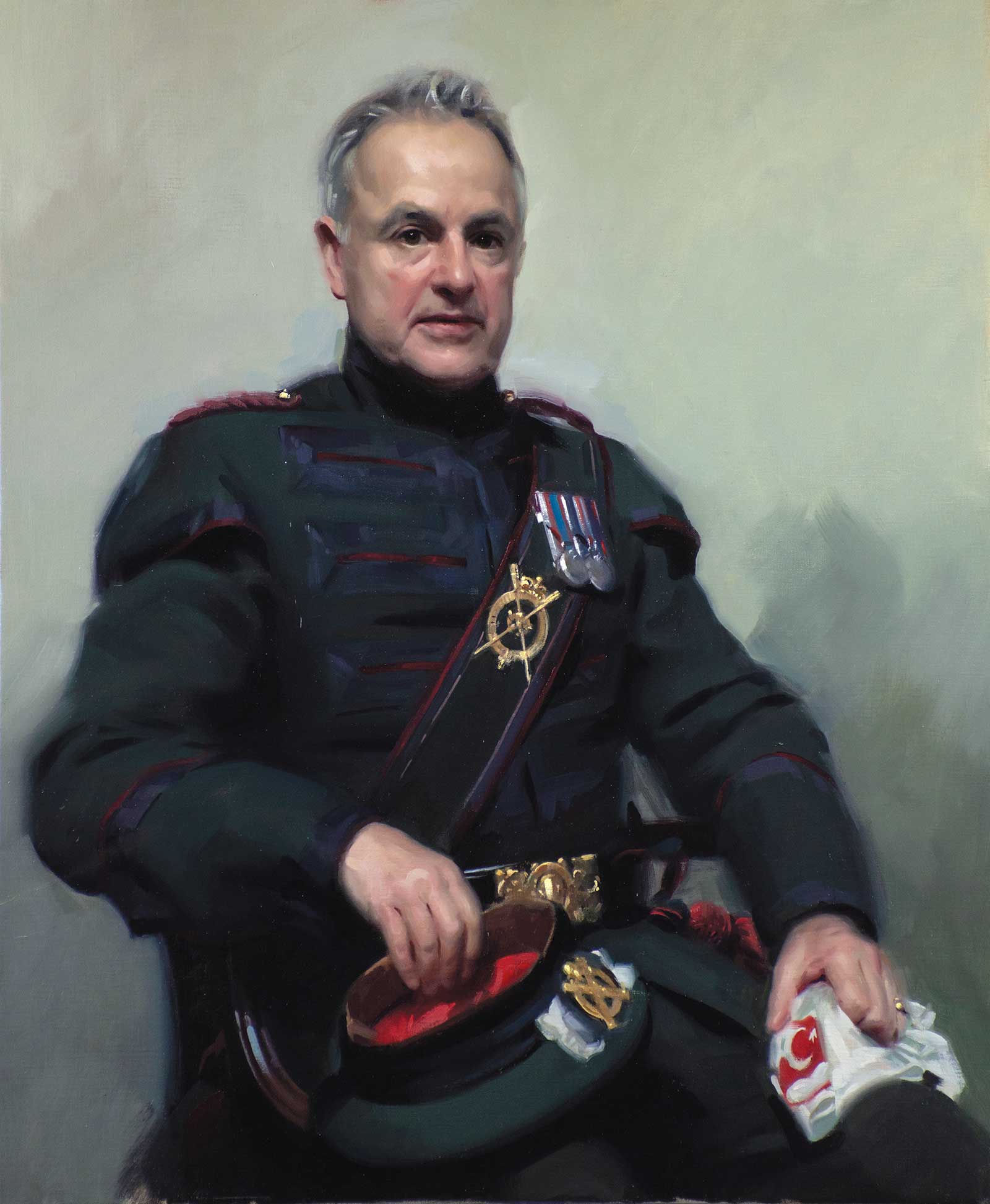
Frances Bell, Archer, oil on canvas, 36 x 28” (91 x 71 cm)
KA: Your work often captures a deep emotional resonance. What draws you to portraiture as your primary form of artistic expression?
FB: Portraits are so endlessly fascinating because of the depth they offer. We are drawn to representations of other people even though we may be separated by centuries and by every cultural difference you can imagine. An accomplished portrait can send out an emotional link, a human connection, and a painterly language that conveys the meaning beyond iconography. A portrait is a particularly resonant portal to other times, places and people. A transcendent empathy comes for us as viewers of portraits, and as a painter of portraits, one feels the weight of the genre behind you, lending you a heft to your purposes. Among the figurative arts, portraiture stands as a tried and tested favorite both to look at and make. I believe this is because it is almost infinitely capacious.
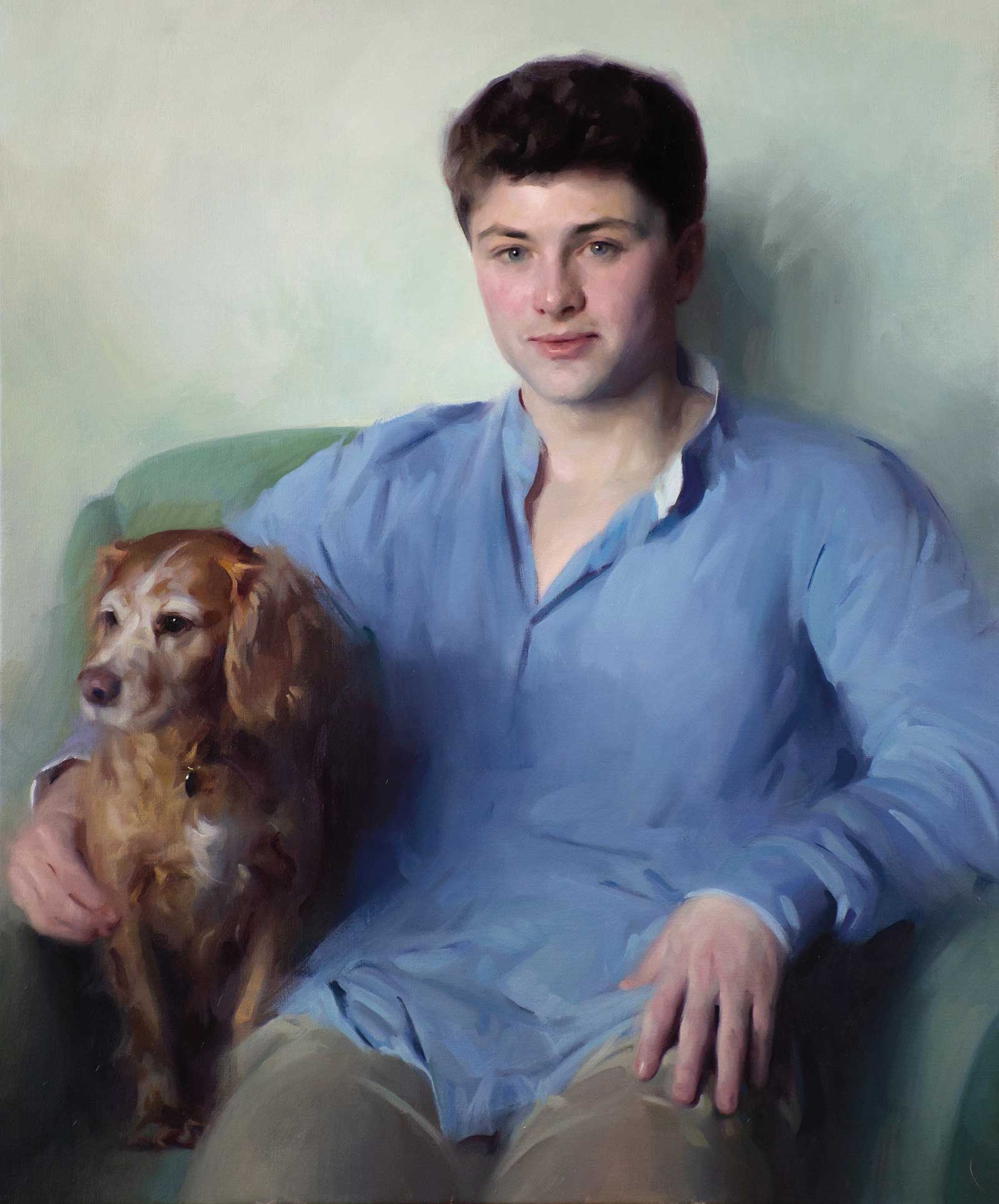
Frances Bell, A boy with his dog, oil on canvas, 36 x 28” (91 x 71 cm)
KA: How has your artistic style evolved over the years, and who or what has been your biggest influence?
FB: The development of my work over the years has taken me along many themes. I tend to be influenced by an idea for a year or so. I had a long-standing interest in dual light sources, for example, which allowed me to experiment over a period of several projects of my own. I have been influenced by so many people and the culture that I am immersed in that it’s difficult to pin down accurately why I have been nudged in specific directions, but I have always loved 19th century artists such as Zorn, Sargent and Sorolla. The 17th-century Masters like Velasquez and van Dyck always serve as north stars. I am very interested in many of my contemporaries as well, and through the interactions that I have with others’ work being produced now, I find I have absorbed many ideas from the present.
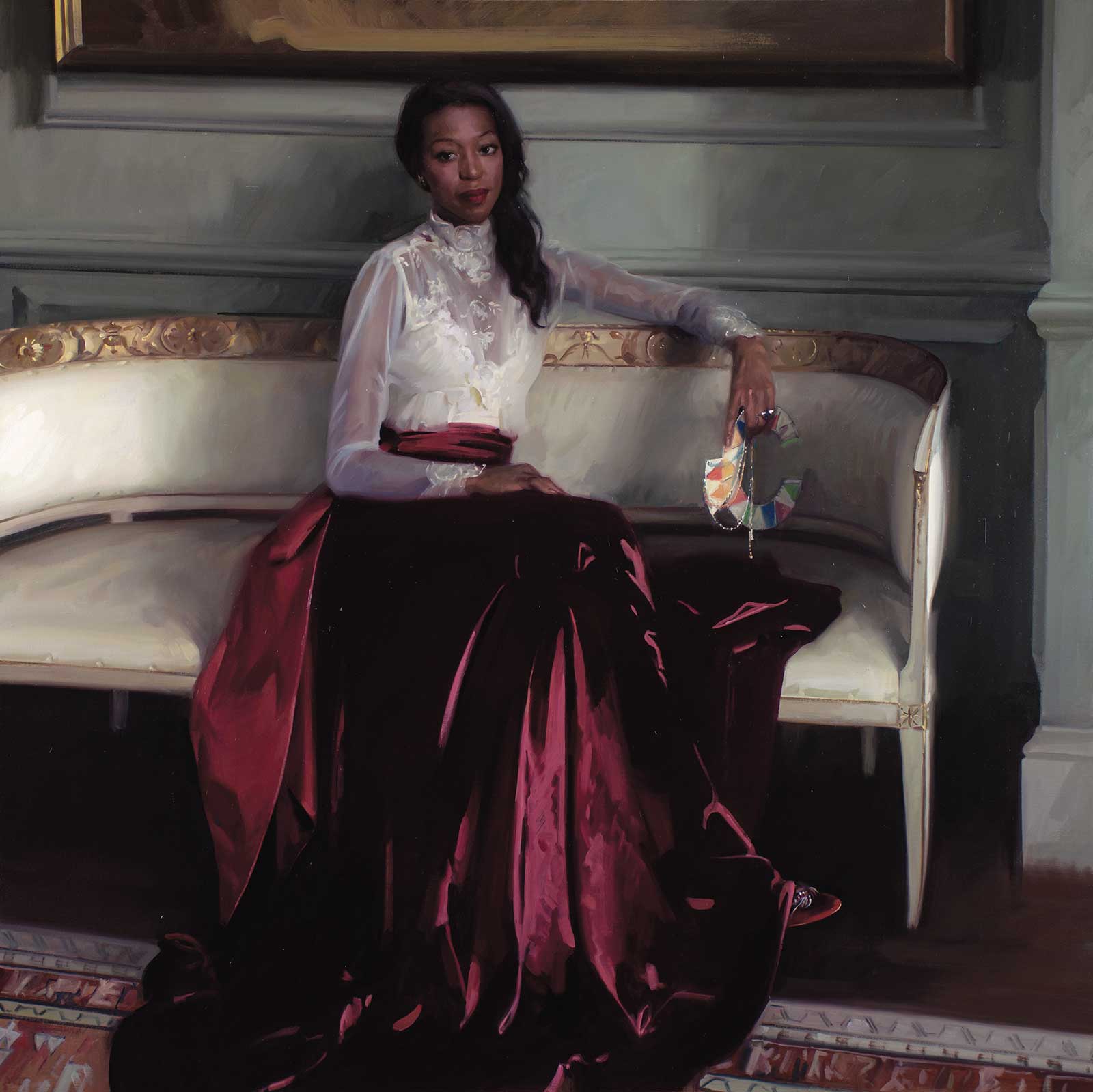
Frances Bell, Rose Hulse and the Masai Necklace, oil on canvas, 60 x 60” (152 x 152 cm)
KA: Winning a prestigious award like this can be a turning point. You’ve won an impressive number of art prizes, including the Valeria Sykes New Light Prize and the William Lock Portrait Prize. How important do you think prizes, and the patronage that comes with them, are for the future of art and for artists like yourself?
FB: I have always been an enormous advocate for prizes. I have called them “career catapults” for the sudden exciting opportunity that winning a prize opens for you. It’s just straightforward to notice that any enormous number of artists who we consider to be cornerstones of the current artistic movement came to notice via a prominent award. For this reason, it is one of the most effective methods that an organization can employ if they aspire to furnish an up-and-coming generation of artists with a genuinely bright future.
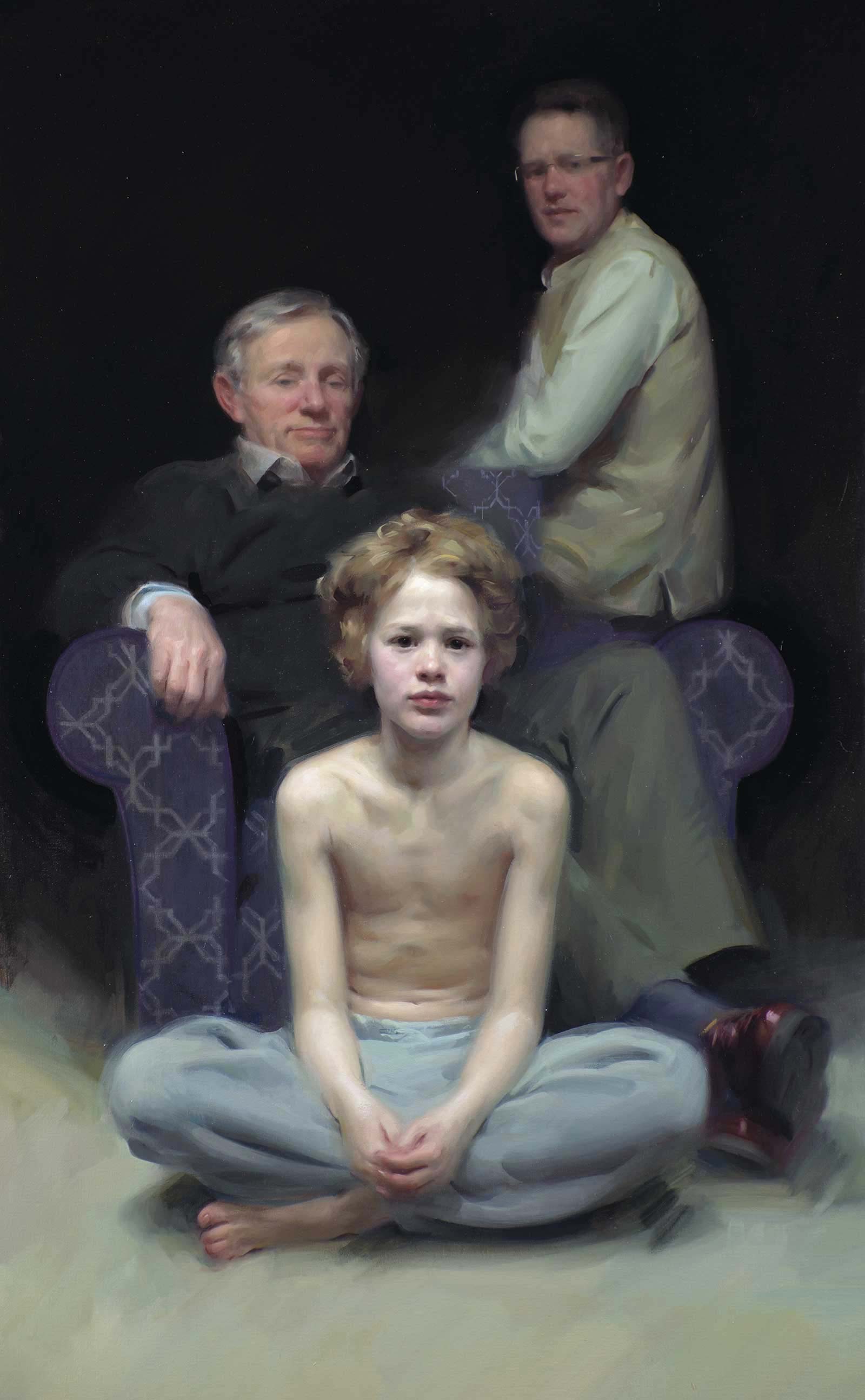
Frances Bell, Seasons: My Son, My Husband, and My Father in Law, oil on canvas, 51 x 32” (129 x 81 cm)
KA: What do you find to be the biggest advantages of working from life, and how does it influence the energy, accuracy or emotional depth of your work compared to other methods?
FB: As I’ve mentioned above and elsewhere, I very much rely on my life sittings, but I also use photographs as reference. I also tend to spend significant amounts of time without a model or a photo reference to firm up my overriding idea of where I’d like my painting to go and how I’d like it to finish up.
The thing about life sittings is that you are so proximate, so intimate with what it is you are studying. There is no filter, no flattening, and no barriers to you. In the case of portraiture, your subject is a complex human, full of movement, expressions (most of which you won’t be painting), and they change with the light, and their moods; all of this is relevant to you. If you have at least a couple of sittings, you will be better informed about that person than you could ever be via a photograph.
There are pragmatic considerations, too. Your model can’t sit for you forever and may not be able to accommodate your artistic vision fully from life. Therefore, I take photos to help me out. I think, for me, the thing to remember is that a photo is only a reference, and it’s not something that I want to copy. I use them at a distance, so they don’t become too distracting from my original idea.
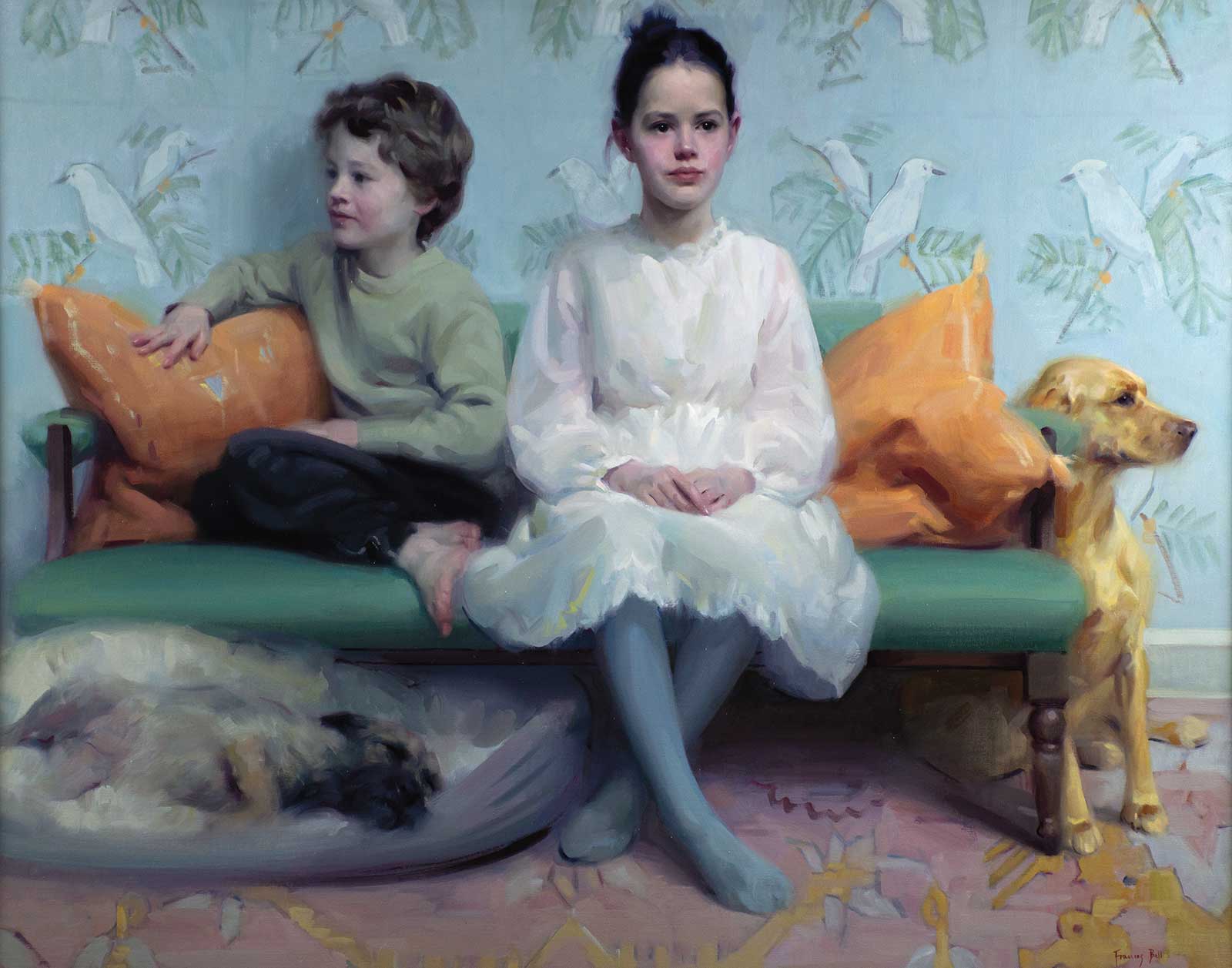
Frances Bell, Lockdown, oil on canvas, 39 x 49” (99 x 124 cm)
KA: What advice would you give to emerging artists trying to find their voice in the world of contemporary portraiture?
FB: Love the journey. I absolutely agree that end goals are important, but if you can’t relish each step you are taking in your artistic life, whether it be a frustration that you’re overcoming or a moment of achievement, then it might not be for you. Andrew Festing once told me that he tried to put young artists off as much as possible to see who still wanted in anyway after his dismal caution. While I don’t go that far, he was right about one thing: you’ll need to be absolutely obsessed with the process of producing art to make a good showing for yourself. Talent is great, but mostly success is made of discerning hard work. Also, I can offer a few other tidbits of advice:
Imitate and steal all you can, but don’t copy another’s work like an automaton. Find your voice.
Don’t be shy, ask for advice. Busy people may not have time to give it, but you’ll need advice, so just ask anyway. Be broad in your interests as you start out and try lots of media and subjects. Accept that you’ll constantly fail and that this denotes progress. Enter every good competition you can afford. Be prepared to hear a lot of “no’s,” but occasionally you’ll hear “yes.” —