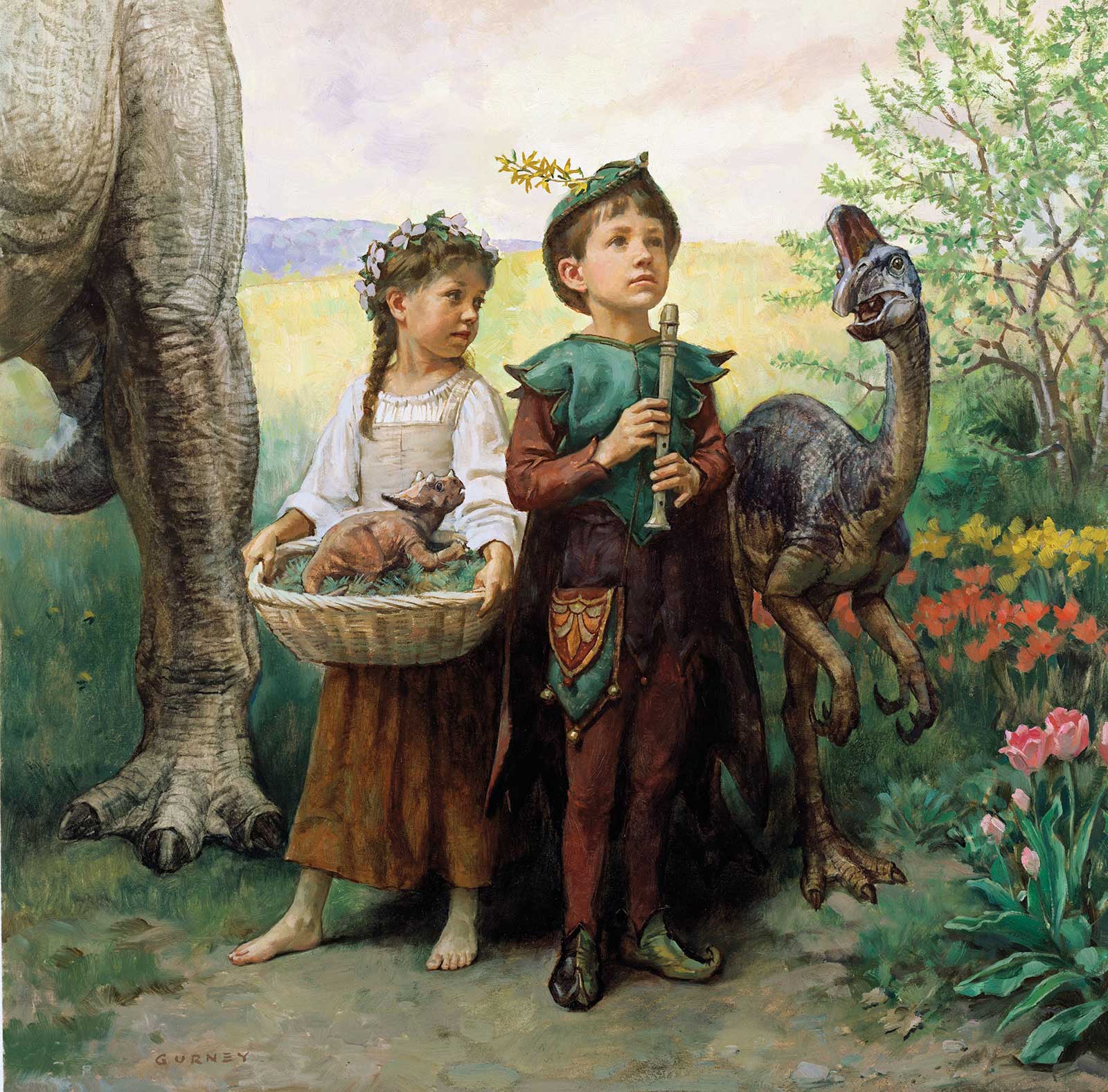
Small Wonder, oil on board, 13 x 14” (33 x 35 cm)
Embedded vs. Emergent
Every brushstroke has a personality. Sometimes it’s a quiet introvert, blending in and letting the overall effect do the talking. Other times it’s a social butterfly, dancing across the canvas.
I think of these two extremes as embedded and emergent strokes. The painting shown here is more toward the embedded end of the spectrum. The subject is children, the lighting is soft, and the medium is oil, so it seems both desirable and achievable to let my brushstrokes blend and disappear into the paint surface, especially on the figures, erasing all signs of the brush. Emergent strokes sit up on the surface, catching the light. With impressionistic oil sketches, typically each dab floats, intact, over what’s underneath.
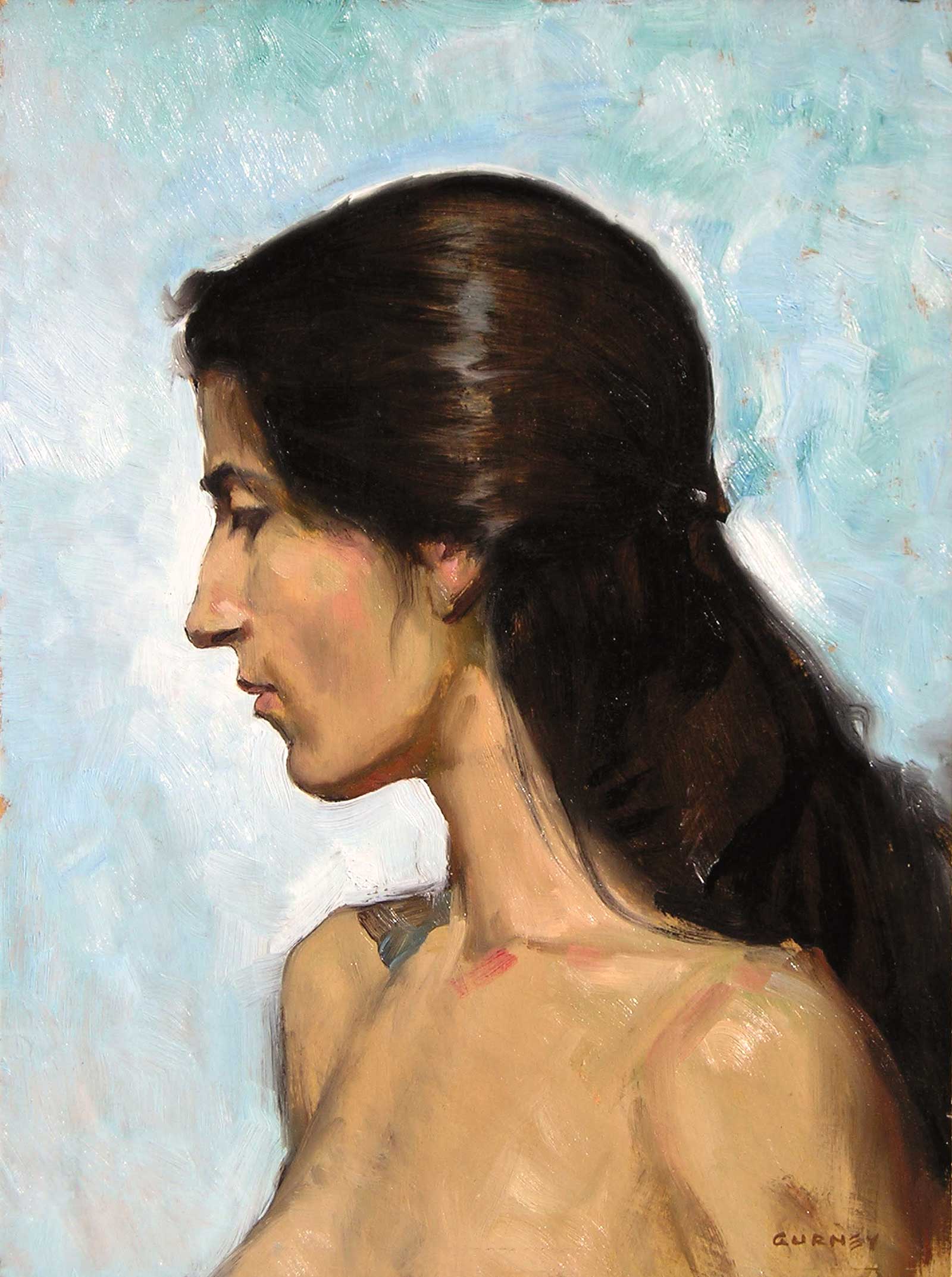
Sketch Group Model, oil on board, 12 x 9” (30 x 22 cm)
Of course, in practice it’s not a choice of one or the other. It’s more of a continuum—like “legato” and “staccato” in music. You can slide back and forth within the same painting.
When I was painting the model in a sketch group, I had to finish the study within the 45 minute session. I used the bristle filbert brushes to blend in the strokes for the hair and skin, but I let the outer silhouette edges resolve into hard-edged contours.
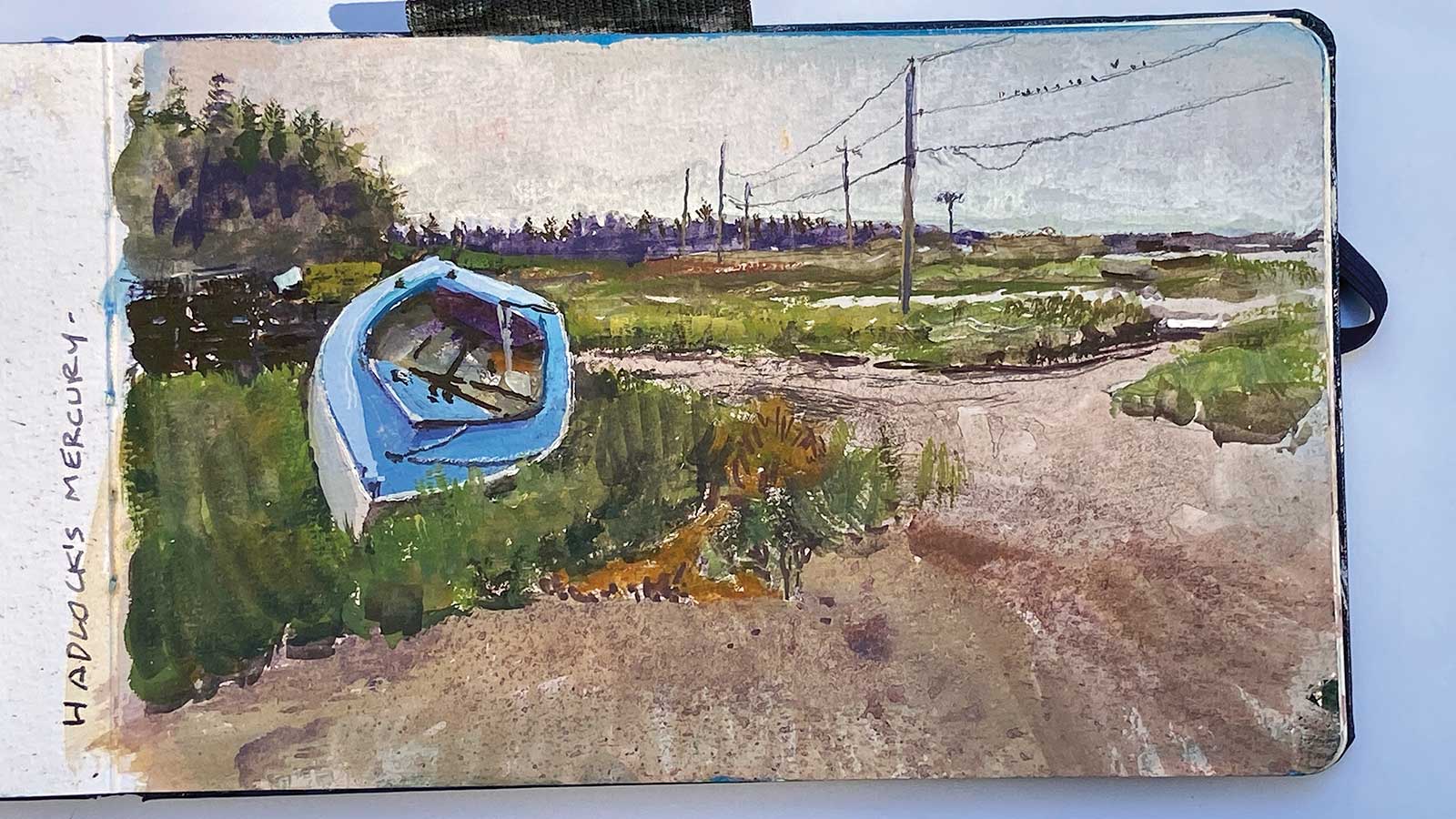
Hadlock’s Mercury, gouache over casein, 5 x 8” (12 x 20 cm)
Calligraphic Strokes
A calligraphic stroke is one that starts, travels, and ends with a kind of logic that’s satisfying to the eye. In calligraphy and sign painting, every stroke should count. It should be considered in advance, and painters who work this way often let their brush hover over the surface to rehearse the movement before committing. In actual painting practice, you can scrape, soften,or scumble a stroke laid down in this way. In the painting Hadlock’s Mercury, I used a variety of one-touch split-brush strokes for the grasses, splatter for the rock textures, and more linear strokes for the boat tackle.
Calligraphic strokes can appear in any medium, but they typically are most common in water media such as gouache, watercolor or casein. To achieve embedded strokes in these media, you have to work over a wet or damp surface, sometimes using a wide, soft brush to blend all the wet areas together right away before they start to set up.
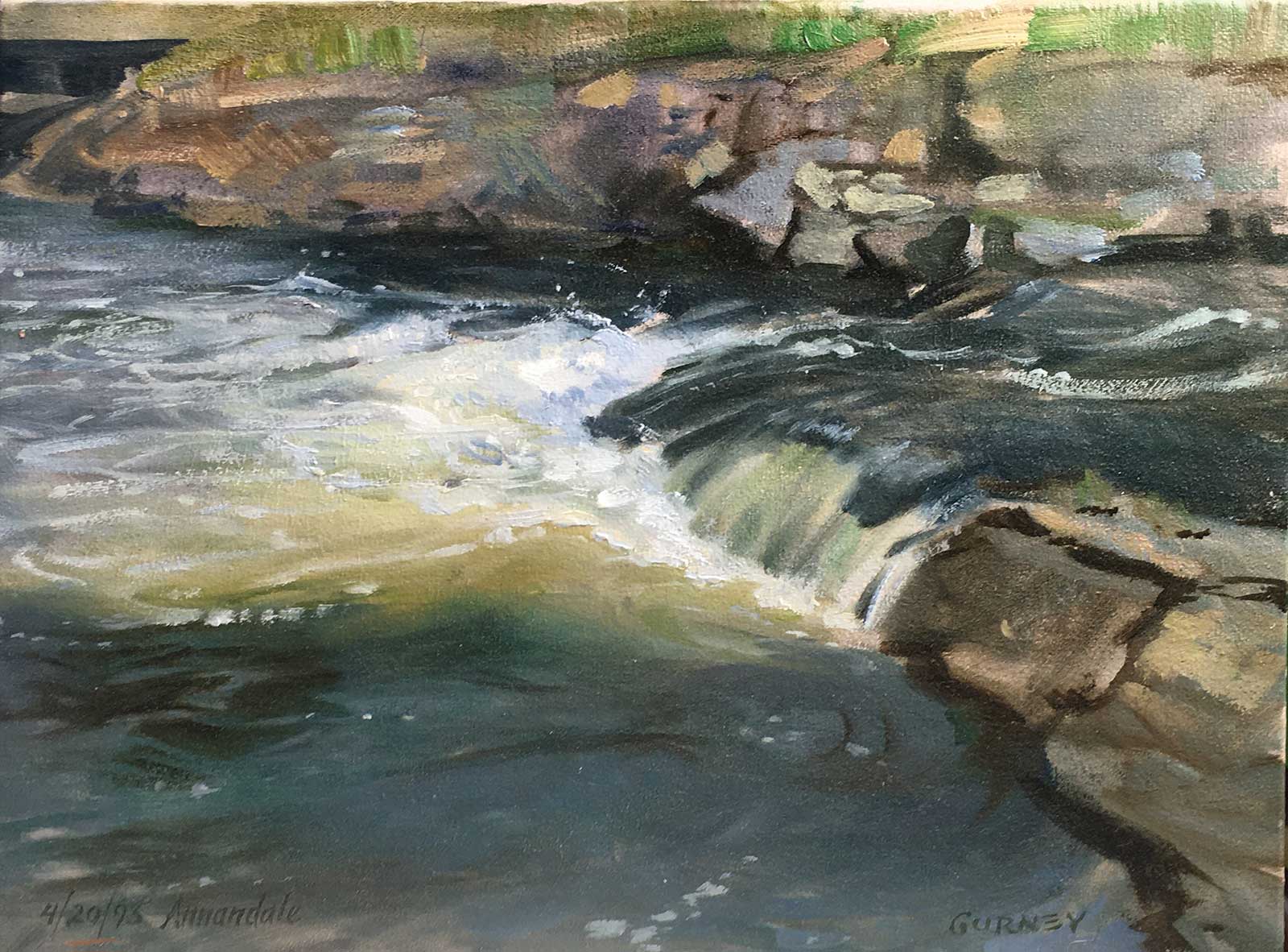
Stream Study, oil, 9 x 12” (22 x 30 cm)
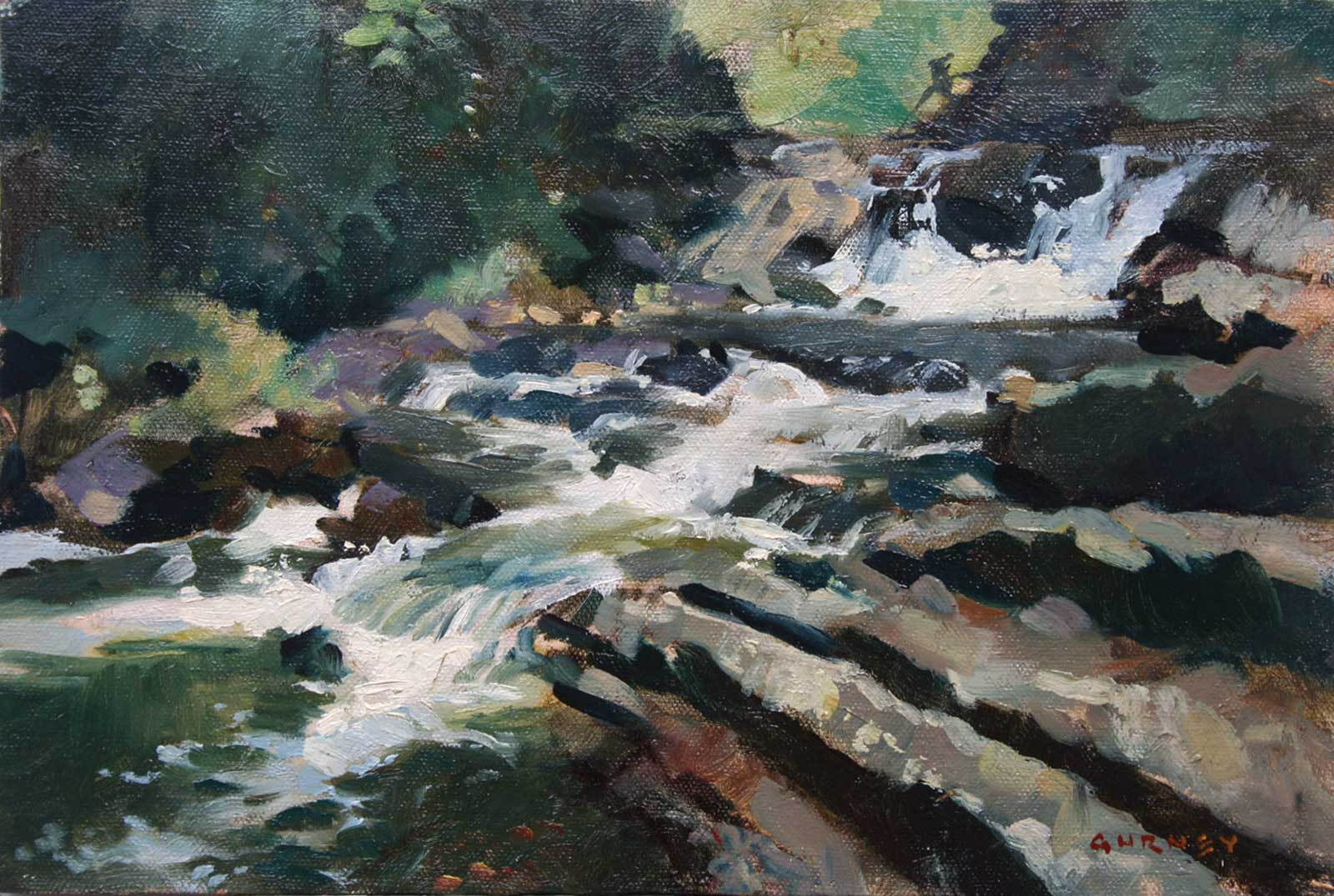
Flowing Stream, oil on canvas, 9 x 12” (22 x 30 cm)
Suggesting Movement
To paint an object that feels like it’s moving, you can use a motion blur to soften edges of strokes that are perpendicular to the line of action. In practice, this means gently softening adjacent wet edges with a soft brush following the path of movement. It’s easier to manage these strokes in a slower drying medium like oil, but it can be accomplished in water media if you move quickly during its brief open period.
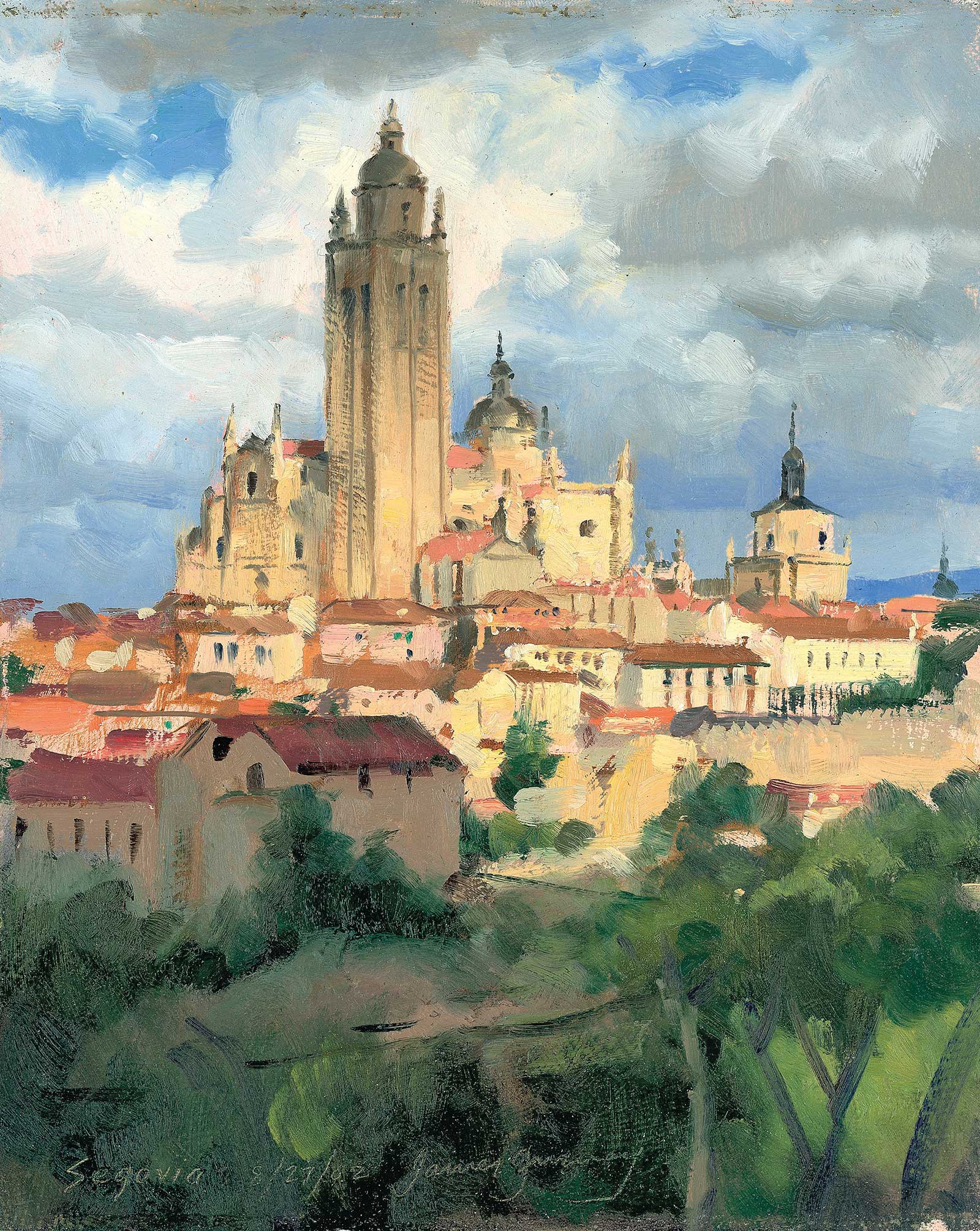
Segovia, oil, 10 x 8” (25 x 20 cm)
The Practice of Weaving
Sometimes the challenge isn’t whether to hide or show strokes—it’s how to make them get to play together. I call this weaving. If one patch of brushwork sits too independently from its neighbors, it can pop forward in an unintended way, like a singer stepping out of harmony.
Weaving means overlapping the edges of adjacent strokes so they interlock. I’ll often go back into an emergent stroke and “feather” it into the surrounding passage—not to kill it, but to anchor it in place.
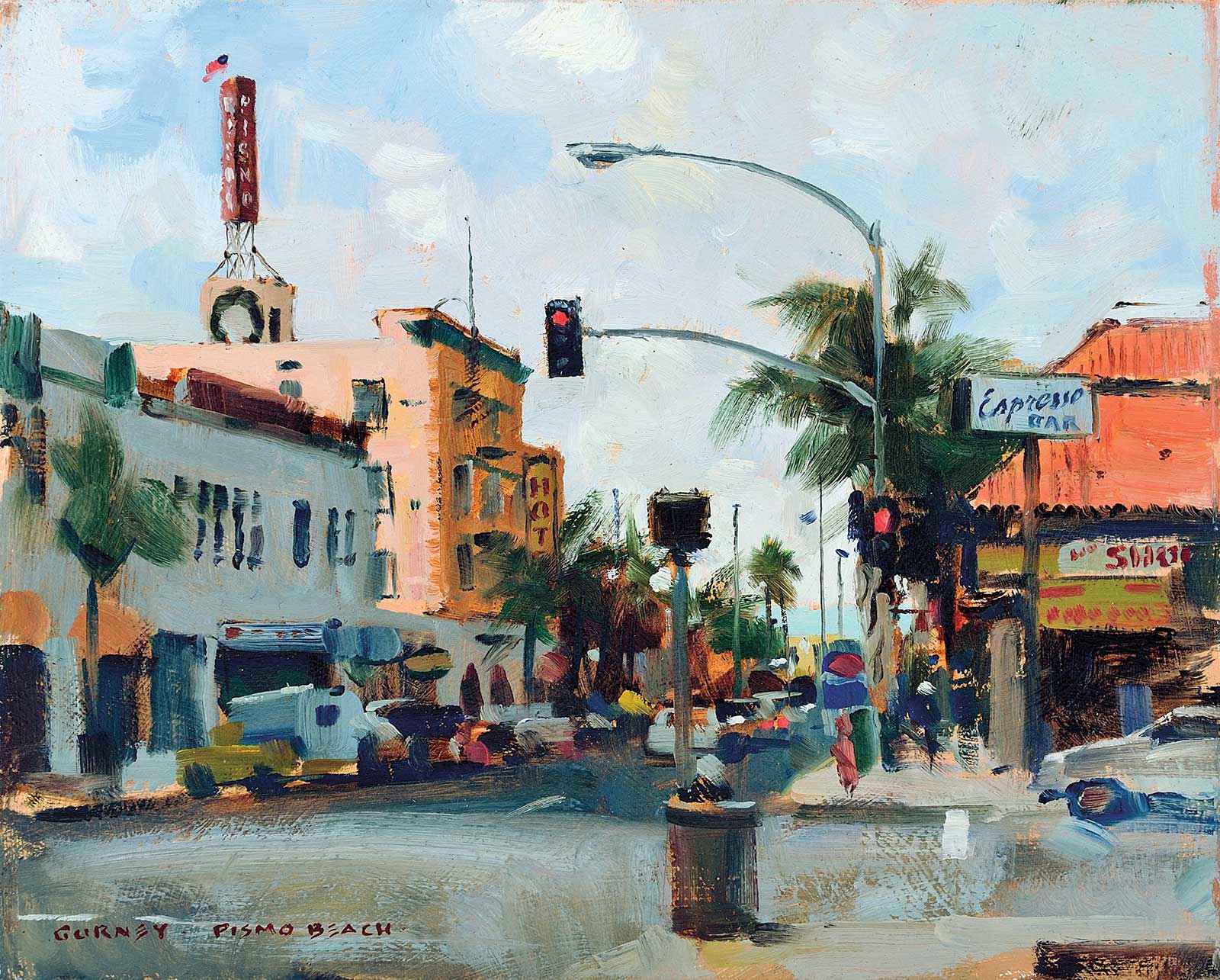
Pismo Beach, oil, 8 x 10” (20 x 25 cm)
Direct Painting
Direct painting is a technique where you apply the paint onto the panel or canvas without relying on an extensive pencil underdrawing or building up layers and layers of glazes. I painted the study Pismo Beach in Pismo Beach, California, using the direct painting technique. The strokes stand out with a lot of energy, joy, or what the Italians would call brio (spirit). When you “find it in the paint,” you overlay strokes and subdivide forms so that the scene resolves at a distance in the eye of the beholder.
One kind of direct painting is alla prima, which means the painting was carried all the way from the start to the finish in one session. The goal is to place the right color in the right place straight away, developing all aspects of the painting simultaneously. But not all direct painting is done alla prima. I did this painting in one session that lasted less than two hours. The results are illusionistic if you stand way back from the painting, but up close it dissolves into wild separate strokes. What makes it direct is that it’s all drawn with the brush and carried straight through without a lot of glazing.
Knowing When to Let Them Show
If you let every stroke jump out too much, the painting can become choppy and chaotic. If you hide all the strokes, the work can feel stifled and overworked. The sweet spot is somewhere in between, and that’s where experience—and a bit of play—come in. When I’m unsure, I’ll step back and squint. If the brushwork supports the story I want to tell, it stays. If it’s attracting attention for the wrong reasons, I try to weave in the loose ends. In the end, the visibility of your strokes should feel inevitable, as if the painting couldn’t have been made any other way. —