Is tracing from a photo cheating? What about using AI as a tool? Back in the 20th century, a painter named Konstantin Kryzhitsky (1858-1911) committed suicide when it was revealed that he copied from a photo. According to art historian Natalya Gorlenko, “It turned out that Kryzhitsky used a still [photograph] in his painting called A Whiff of Spring. Another painter, Yakov Brovar, used the same still in his piece A View in Bialowieza Forest. The resemblance in both images struck the eye, and a debate in the newspapers ensued.”
Gorlenko continues: “It became a matter of general consensus that the painter disgraced himself when resorting to photography. And yet photography was a permanent fixture in artistic activities, and painters could no longer ignore it.”
Using photography for reference may seem like old news today, but a lot of people still debate it.
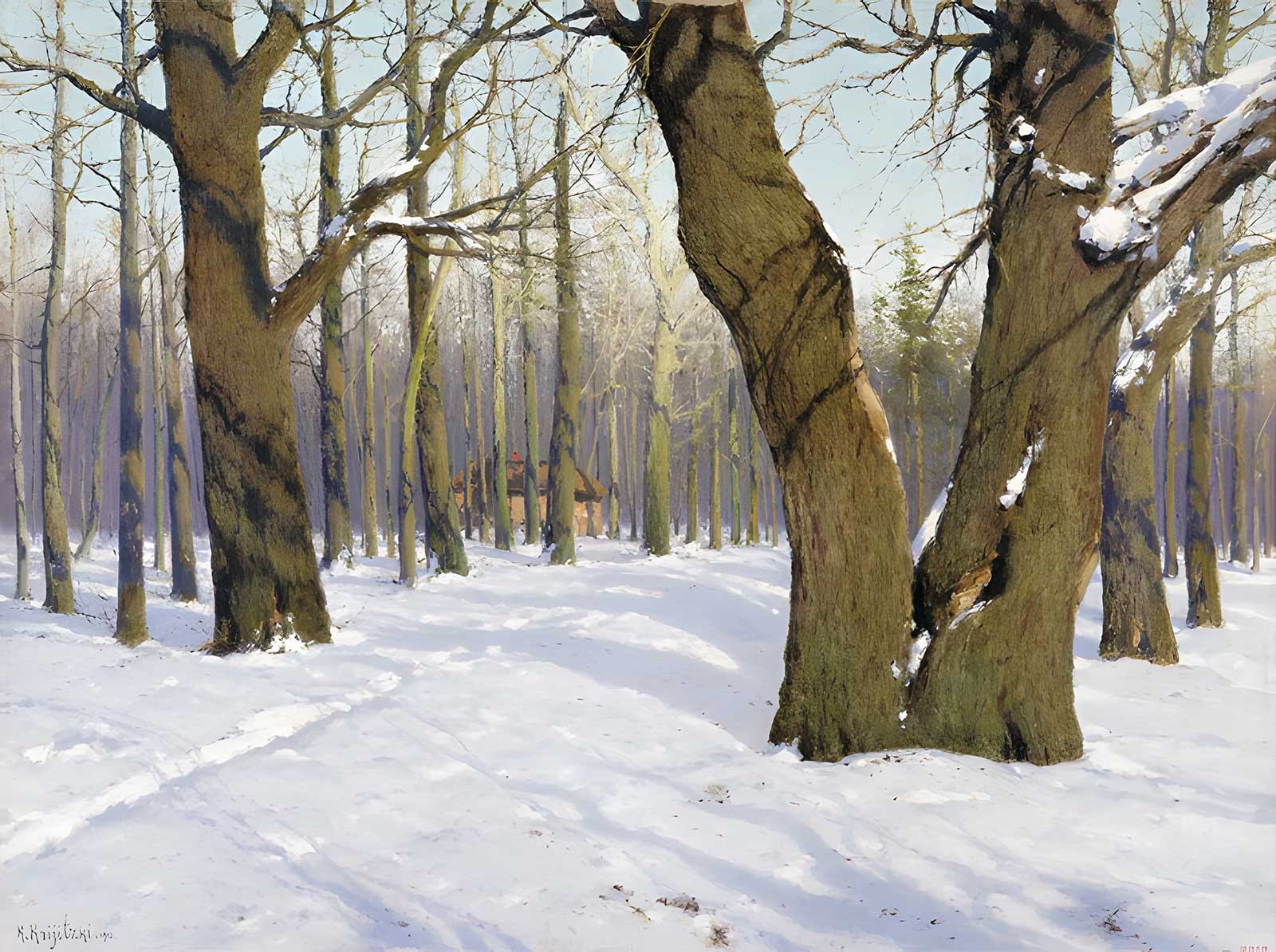
Konstantin Kryzhitsky (1858-1911), A Whiff of Spring, 1910.
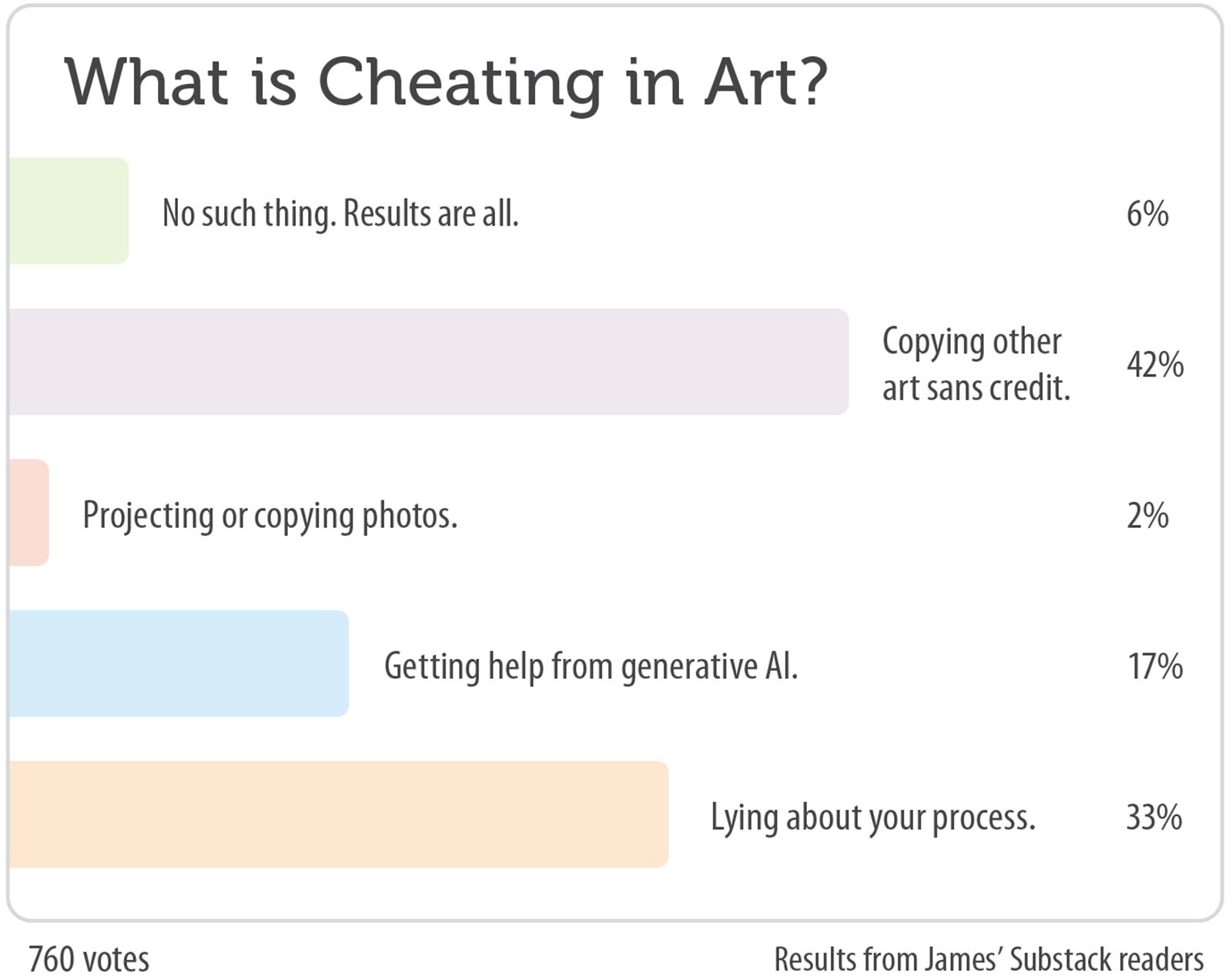
The purpose of this article is to help you figure out what’s okay and what’s not okay in the practice of art. Each of us has to decide for ourselves which tools and practices are desirable, and which are unhelpful or wrong.
Grids, Viewfinders, and Dividers
For centuries, artists have used lens-less tools such as plumb lines, sighting grids and viewfinders to help them translate the three-dimensional world into two dimensions, and those tools are almost universally approved.
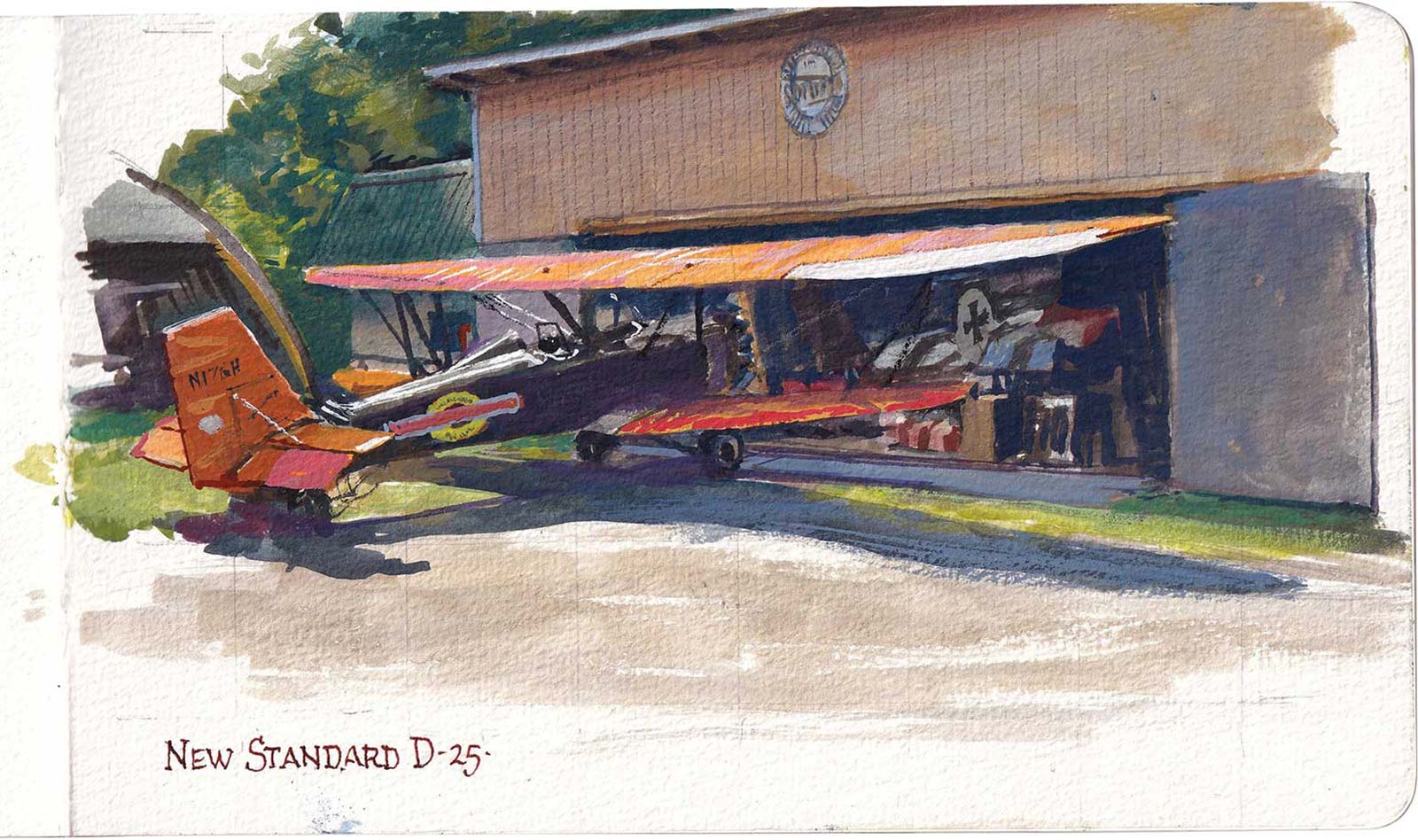
1929 New Standard Biplane, 5 x 8” (12 x 20 cm) I used to think a sighting grid was a cheat or a crutch, until I tried one. Then I realized it gave me profound new insights into perspective.
Diane V. Mulligan uses an acrylic sighting grid: “My favorite drawing aid on location is a piece of plexiglass that I hold up and ‘trace’ the composition onto the plexiglass with a wet erase marker.”
Ken Rohleder uses dividers to check his work early in the process. “I like to just draw at the penciling stage and use proportional dividers or a coarse grid to be sure everything is in the right place if the canvas is large,” he says.
Kathleen Garness, a scientific illustrator, believes the artist’s intent, their goals, matter more than the tools. After all, “artists have used aids, from grids to camera lucidas to photographic reference for hundreds of years now.”
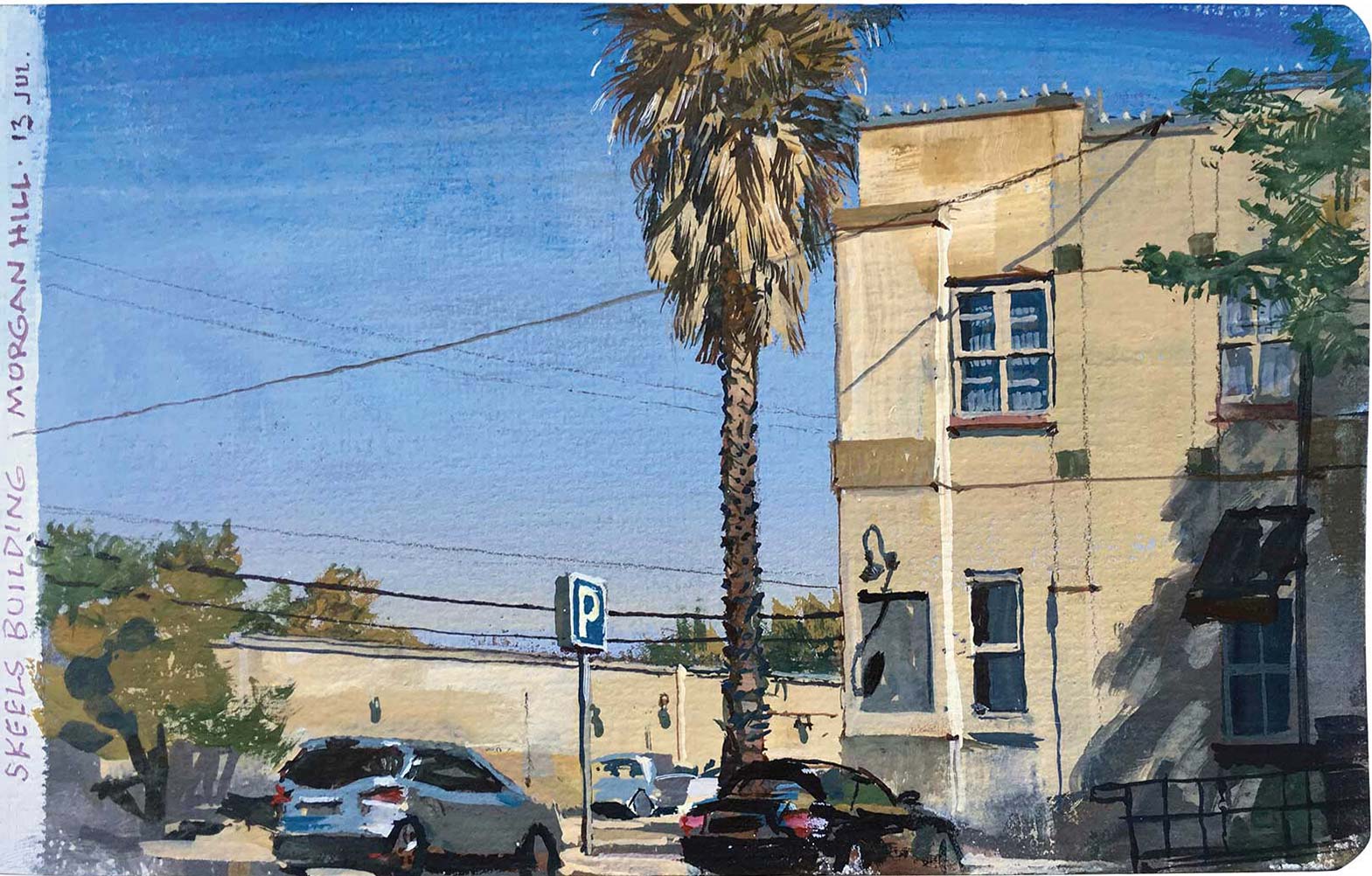
Morgan Hill, gouache, 5 x 8” (12 x 20 cm) I didn’t do this painting to sell, or to prove anything, or to teach anything. I was just trying to be a neutral recorder of the place where I found myself.
Photographic Reference
Have you used Polaroids, lucigraphs, Balopticons, slide projectors, digital projectors, screen grabs, stock photos or digital photo-bashing? Have you tried projecting or tracing a photo?
Anne Emerson Hall noticed a puzzling practice at portrait sessions with live models: “It amuses me that some artists in attendance take photos and work from their phones.”
Mary Beers, a photographer and realistic painter, asks herself when using photographic references: “Am I using them in a way that helps me grow my abilities and skills, or am I using them as a crutch to avoid working on a weak area?”
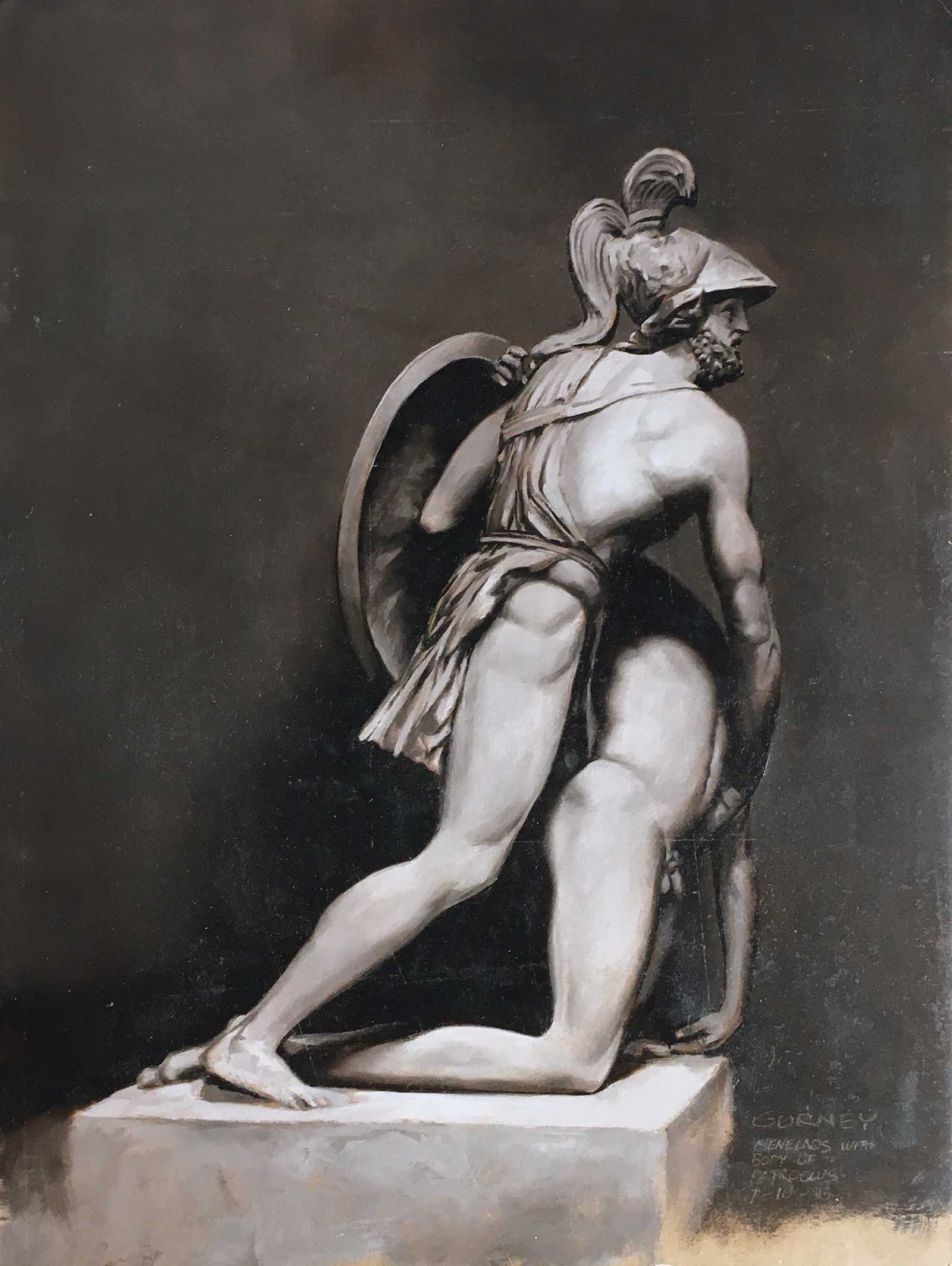
: Grisaille study, oil on panel, 13 x 17½" (33 x 44 cm) I did several studies of antique statues. The sculpture represents Menelaus carrying the body of Patroclus, based on a Roman copy of a lost Hellenistic Greek work, generally dated to around 200-150 BCE.
Cathy Johnson says, “I have worked from photos, and have used them for reference...and yep, I remember when that was a huge issue...I prefer to work from life or imagination, it’s just more satisfying to me, but sometimes...”.
Generative AI
Have you tried AI models such as Midjourney, ChatGPT or Gemini for researching, brainstorming, writing, editing or image-making? Is it okay to use generative AI images for reference?
Christine Griffin doesn’t want to see “artists copying AI-generated reference material, pretty much verbatim. The artist becomes little more than a fabricator, a Xerox machine. Any whiff of the human’s actual proclivities, creative choices, stylization, is thrown right out the window.”
Zaul is concerned that artists will lose their skills if they rely on AI too much. “It ends up compromising the artist. It’s a new kind of crutch, more powerful than any before, to be sure, but a crutch nonetheless. And it is a crutch that likely flattens the creative world, not widens it.”
EasterlyArt wants to get away from AI: “The way this technology was surgically inserted into our everyday life without any warning or approval is absolutely unacceptable.”
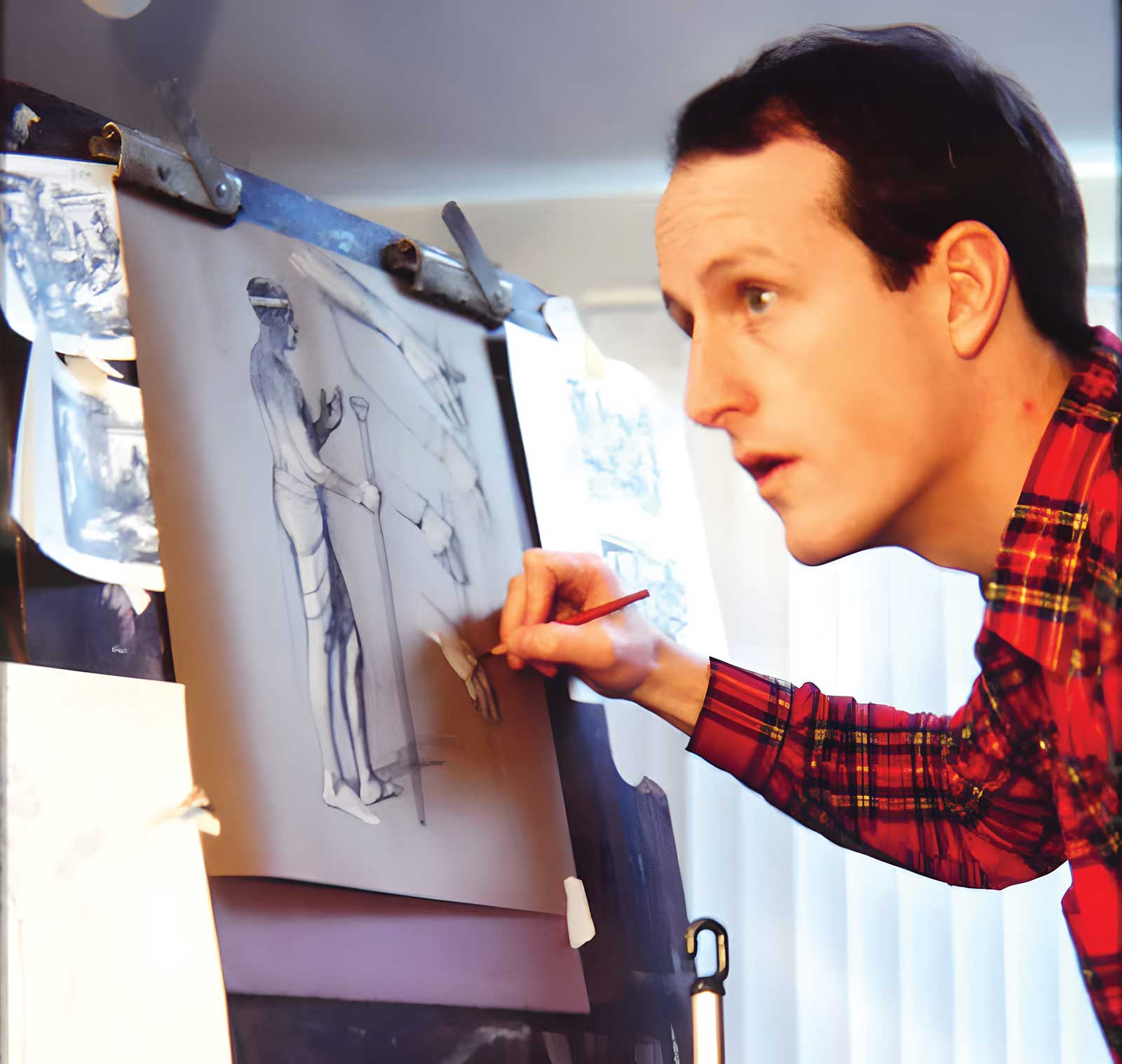
James doing a mirror study.
Copying Other Artists
Is it a good idea to copy the work of a living artist? Is copying a masterwork a valid way to learn? Should you post a master copy online? How should copyright law be brought into this? And when does copying become forgery?
Ken R. believes copying is okay with certain limitations: “Making master copies is a legitimate training exercise and they do sell well. There’s nothing wrong with selling a master copy provided the artist [that it’s based on] passed away 75 years ago or longer.”
Karima Cammell cautions that we shouldn’t let copyright law and other restrictions close down the creative commons: “I think ultimately the introduction of law and ‘protections’ has really hindered the cultural conversation. Before it was a place where call and response was alive. Now I believe a lot of art isn’t made because people are afraid of the rules and aren’t clear on what’s allowed or okay.”
Robin d’Arcy Shillcock, an academic instructor in the Netherlands, makes the case for doing things the old-fashioned way: “The old method (sketching, making studies of essential details) helps fill blanks in the mind. It is indeed time-consuming, as all learning processes are, but it is a way of building up layers of information in the brain. It makes one alert to problems that arise during the creative process and gives more assuredness when tackling new subject matter.”
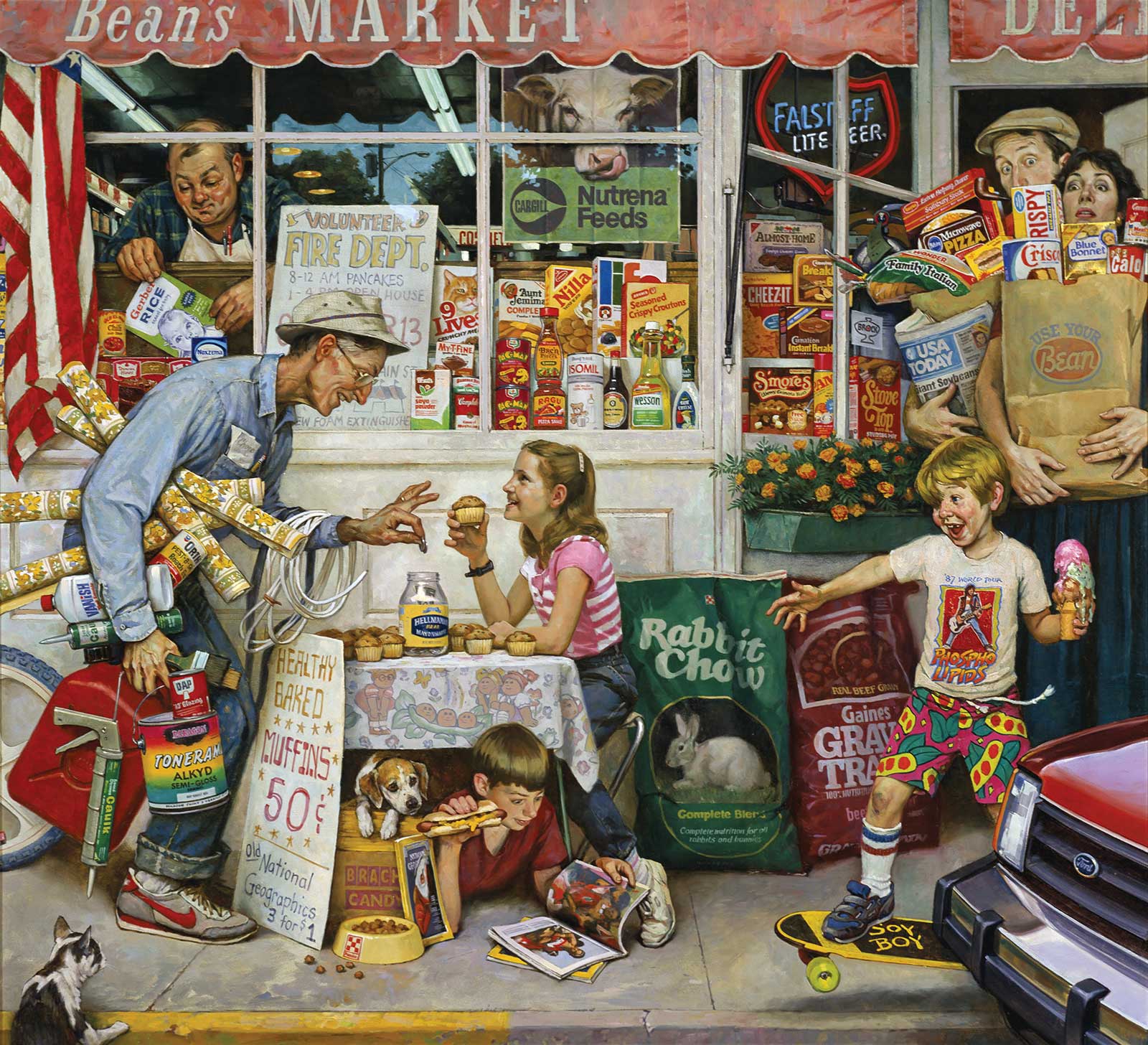
Uses of Soybeans, oil on canvas, 24½ x 27" (62 x 68 cm). Commissioned by National Geographic, 1986. All the figures are based on both reference photos and life studies, with considerable caricature. But this is the only time in my career that I’ve traced over a projected photo. That was just in the area of the products behind the shop window, because I decided I couldn’t improve on the photo’s exact transcription of the labels. Some elements, like the beer sign, are completely invented.
Crediting Sources
Have you ever worried about “lifting” or “swiping” another artist’s image or style in your work? How should you credit a work that inspired you?
Dave Crowell is less concerned with process and more worried about credit. He says, “Tracing, projecting, using photographs, grids [and] optical aids…are all valid tools to use in making art. Where cheating and ethics come in is things like copying another artist’s work without attribution.”
Lori Fontaine feels we should take responsibility for how we make our art. “I think if we create anything, we should be willing to stand with an open heart and say it’s ours, warts and all,” she says.
Sharing and Transparency
Do you guard your creative process or publish it freely? Are there times when it’s better to keep your process concealed?
Thom says he’s alright with sharing his methods, but only if people are really interested. “I don’t share my process unless someone asks, just because I don’t want to assume I’m so important that everyone should know my process.”
Christen Menken puts it this way: “The only thing I would really consider cheating in art is being misleading about your process.”
Roger Bansemer, a landscape painter, believes the artist has no obligation to share how they made something. “It’s nobody’s business,” he says. “I only discuss procedures with very close friends unless I’m teaching a course. Spilling all you do to create a painting is a great way to alienate those who might otherwise admire your work.”
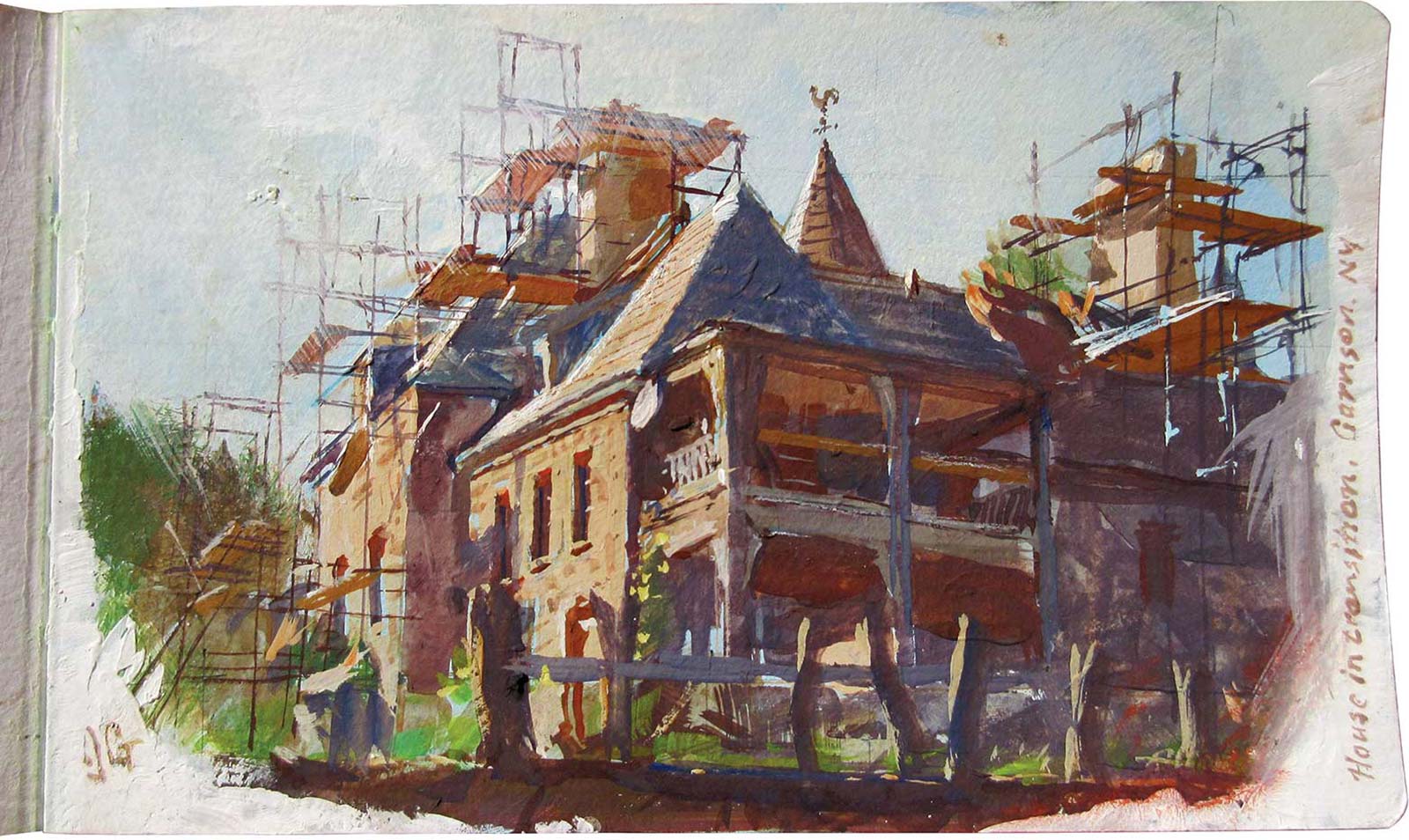
House in Transition, gouache, 5 x 8" (12 x 20 cm) I occasionally rely on a homemade sighting grid to make sure my perspective is right. It’s an idea that goes back at least to the Renaissance, and it helps translate three dimensions to two.
Should There Be Rules and Laws? While shared principles can unite a group, I remain wary of exclusive art communities with rigid rules and gatekeepers. Felix makes the case for art transgressing rules and laws: “Establishing community norms around the ethics of art production promotes a better world. But, it is also important to recognize that art itself is an instrument of cultural change. So (some) art must transgress cultural shibboleths in order to bring about change.”
Final Thoughts
I believe that art flourishes in an environment of openness, experimentation and innovation. Every artist’s journey is different, and the lines of “right” and “wrong” are often personal and fluid. It’s healthy to hold yourself to high standards, but it’s wise to extend grace to others. Instead of quick judgment or shaming, we should cultivate a climate of curiosity and transparency. Ultimately, artistic integrity isn’t about conforming to external rules, it’s about a commitment to honest practice and accepting the consequences of our ethical choices, even in our most private work. —