We all know the power of the press and the importance of getting covered by journalists and editors, which can be especially advantageous in the art world to get your work in front of collectors. So how do you go about letting them know about you and your work, and what do you send them? In this month’s Art Industry Insider I’ll be discussing how to pitch your story and your work to magazine writers and editors.
Editors are always looking for stories and content for their magazines. There are thousands of print and digital magazines out there. Some have deadlines for new content every three weeks, so we are always looking for good images and stories. An artist usually has both of those. You will need to start by making yourself a list of the right magazines or blogs that work with your style. Most important is knowing your genre and finding where your work, or your story idea, would fit best. Make sure you look through the magazine to see if your style, themes and/or story would be a good match. Yes, you will want to contact the art magazines, but you can also look beyond fine art magazines to interior design or lifestyle magazines. Many of these often have an arts and culture section where your artist story might be perfect. People are often interested in the life of an artist. Readers want to know how they got to where they are, and what they sacrificed to become an artist. They want to hear their successes and their struggles. They also enjoy beautiful, colorful imagery and often wish they could live your interesting life!
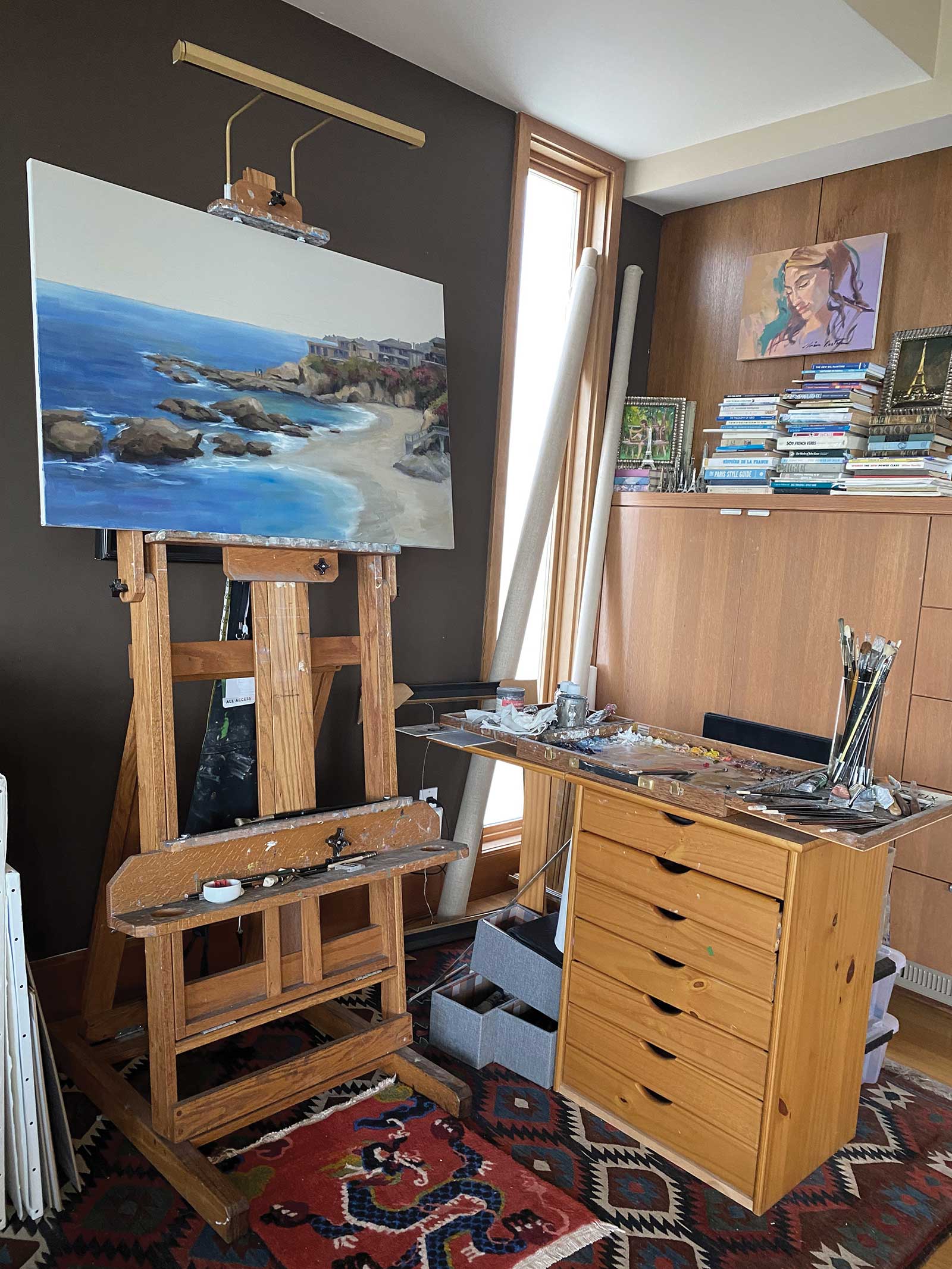 A seascape by Rothe on the easel in her studio.
Nearly every editor’s email address can be found on the magazine’s website under “Press” or “Contact,” or in the Editor’s Letter. You can also just call and ask for it, mentioning that you have an exciting story and images to pitch and whom should you send it to. A pro tip to remember is that you should send it to two or three people who work at the magazine. For instance, the editor-in-chief, the arts editor and/or the assistant editors. That way when they are in their next meeting, as one of them might overlook it, the other might bring it up and want to write about it. Your story and work will hit people differently, even within the same organization. With that in mind, it’s smart to get to know the writers and editors of the magazines you feel your work would fit well with. If you meet someone in public at an art event, ask for their card or contact information for the future.
To create a pitch, you will want to start by including all of your contact information in your email, including your name, phone number and website, as well as any social media profiles. Try to write an enticing title that captures the main idea of your article, then write a brief description of what you plan to discuss in your article and why it’s relevant for the particular publication you are pitching to. What makes this idea fresh and exciting for readers? You’ll also want to include a rough estimate of the word count, as well as your ideas for images to go along with the article. (And if you can’t think of a catchy title, don’t worry, the writers will do it for you).
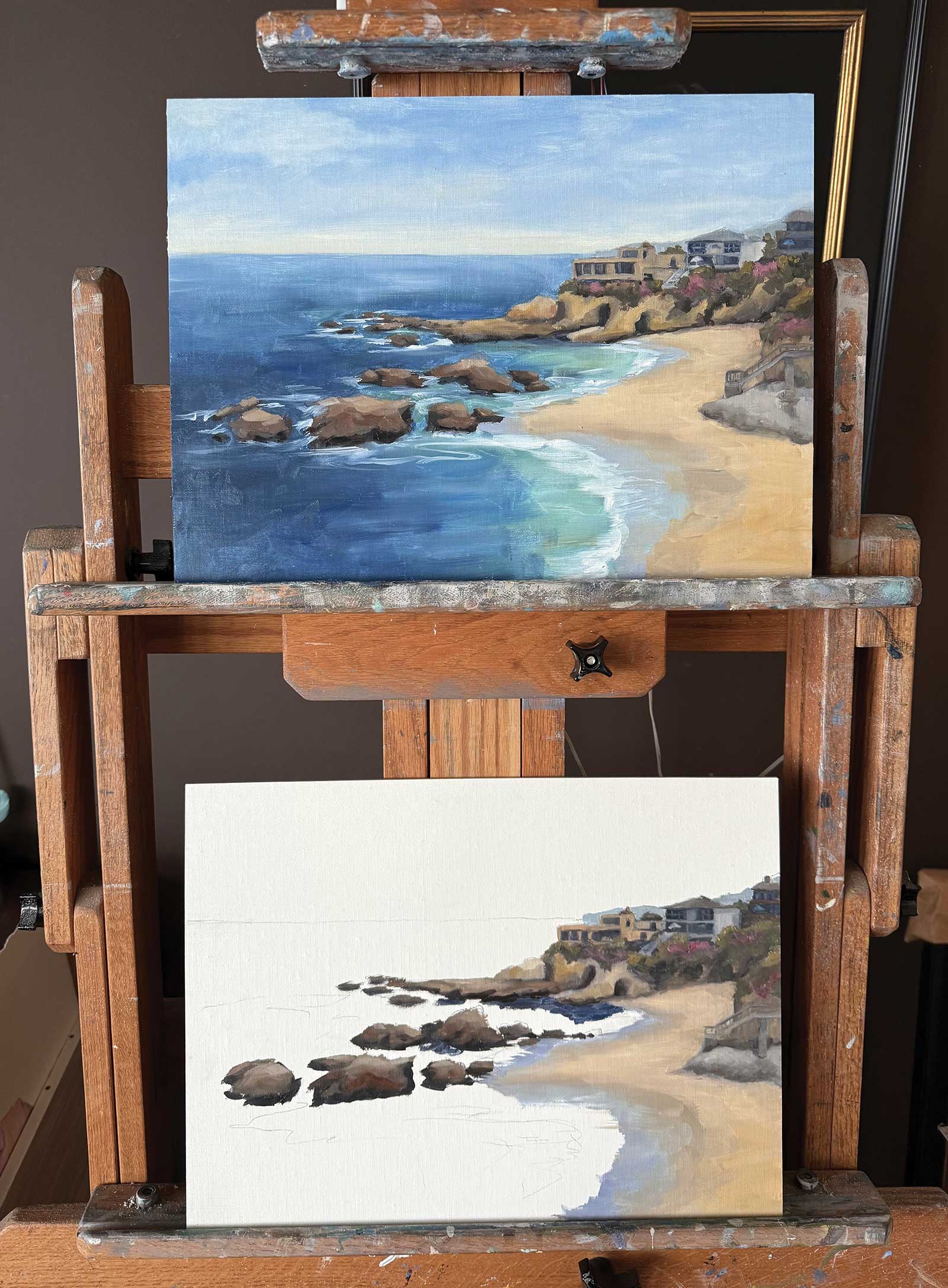
Plein air studies.
Be sure to also include your own artist biography to help editors get to know you and your credentials. In addition, if you happen to have an upcoming gallery show, indicate when and where. Is it a group show or a solo show? What was your inspiration? Include anything that might make you or your work stand out. The seascape images shown here, for example, would be great as a pitch, demonstrating how the works are created and providing an inside look at the artist’s studio. Always be sure to include images of your artwork (or a link to images) in the email so editors can immediately take a look at your work. You will want to include images of yourself in the studio, and at least five to six images of your artwork. Perhaps include a photo of you painting on location, if that is part of your method. If needed, include the phrase, “high resolution images available upon request.” Most publications need images to be at least 8-by-10” 300 dpi for print.
At the beginning or end of your email, make sure you add a sentence like this: “This story and images are all intellectual property of the artist (your name).” You can also finish by writing something like, “Thank you for your time and consideration, I look forward to hearing from you.” This gives a grateful, positive note and adds a little confidence as well.
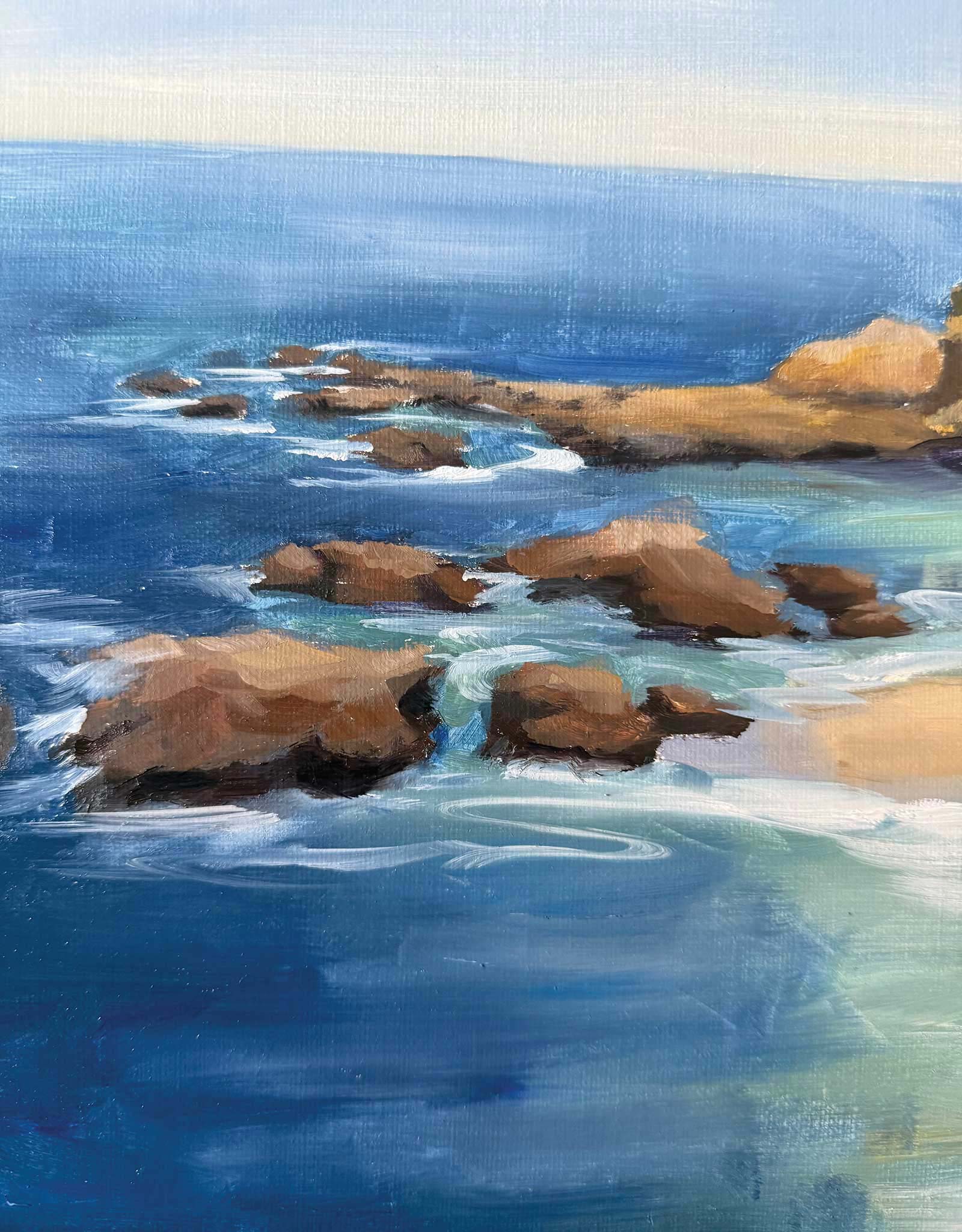
Seascape detail.
If you’re lucky enough to have an editor pick up your idea, you will need to immediately let any other publications know that someone else is “running it,” which means they intend to publish it. If two magazines wish to publish your story, be sure to change the story significantly. Write it from a different angle and tackle different subjects. You simply have to be honest and transparent. If more than one company wants to publish it, you need to let them both know.
I hope this helps you add an important marketing and advertising component to your small business success. —