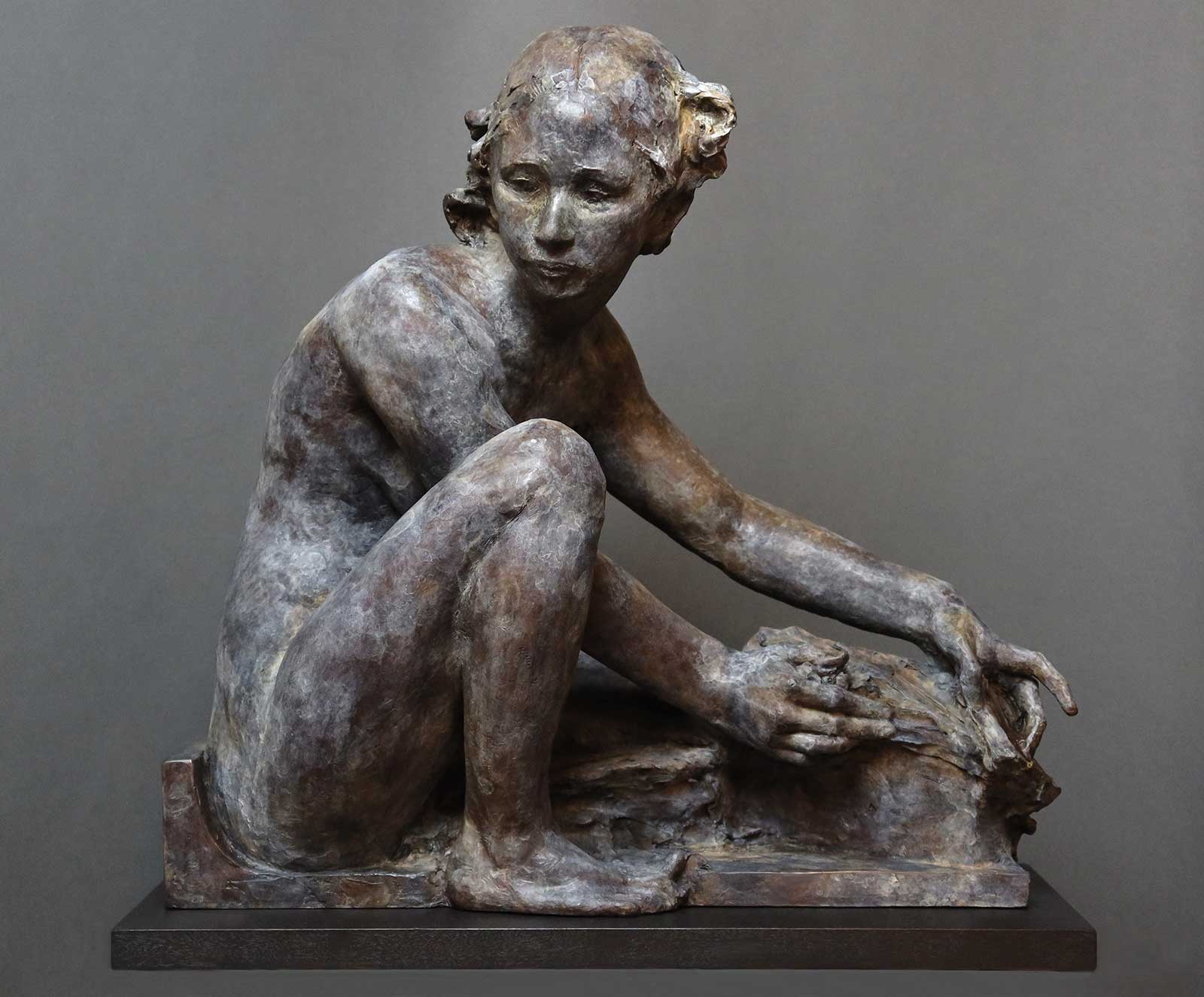
 The Builder, bronze, 18 x 18 x 6" (45 x 45 x 15 cm)
Scottsdale Artists’ School: What do you enjoy most about teaching at Scottsdale Artists’ School, both online and in person?
Alicia Ponzio: The staff at Scottsdale Artists’ School are enthusiastic and caring. It shows in the quality of the programs they offer, and the students enjoy learning at their beautiful facility. The online coordinator does a fantastic job supporting the teachers and students throughout the class to make things run smoothly.
SAS: Did you always know you wanted to become a sculptor, or was it a path you discovered over time?
AP: I always wanted to create, but I didn’t discover sculpture until my early 30s. I started out with simple pencil and paper as my favorite medium. I tried painting for a few years and learned a great deal, but when I finally tried sculpting, it was an immediate fit for me.
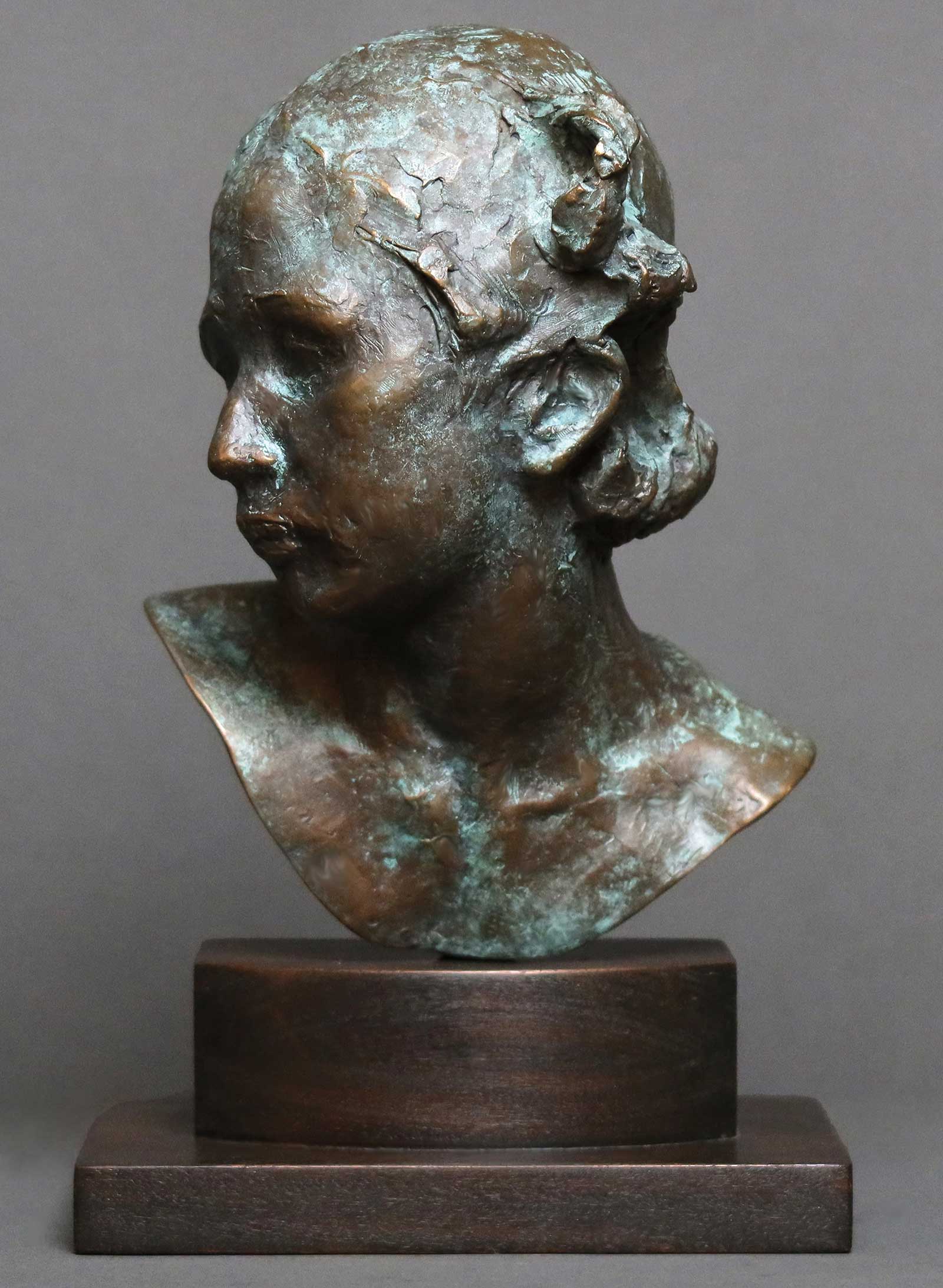
The Builder, Portrait Vignette, bronze, 11 x 7 x 5" (27 x 17 x 12 cm)
SAS: What sparked your interest in anatomy, and how has it influenced your work?
AP: My father was a medical doctor, and my mother was a nurse. I was fascinated by their anatomy textbooks as a child, particularly Dr. Frank Netter’s illustrated texts. My father took me to watch an animal dissection related to research he was doing when I was 9 years old. I stayed and watched it, and his colleagues were surprised that I was interested and comfortable watching it at that age. After high school, I went to nursing school and was a nurse in the Navy for the first few years after college. It was only fitting that when I eventually transitioned to sculpting full time, my first job in art was teaching anatomy at the Florence Academy of Art. The human form has been a fascination for as long as I can recall.
SAS: When someone views your art, what do you hope they feel or take away from the experience?
AP: I hope it moves them and makes them feel something for the subject matter or narrative. I hope the aesthetic is unique to them, that the experience will stay with them.
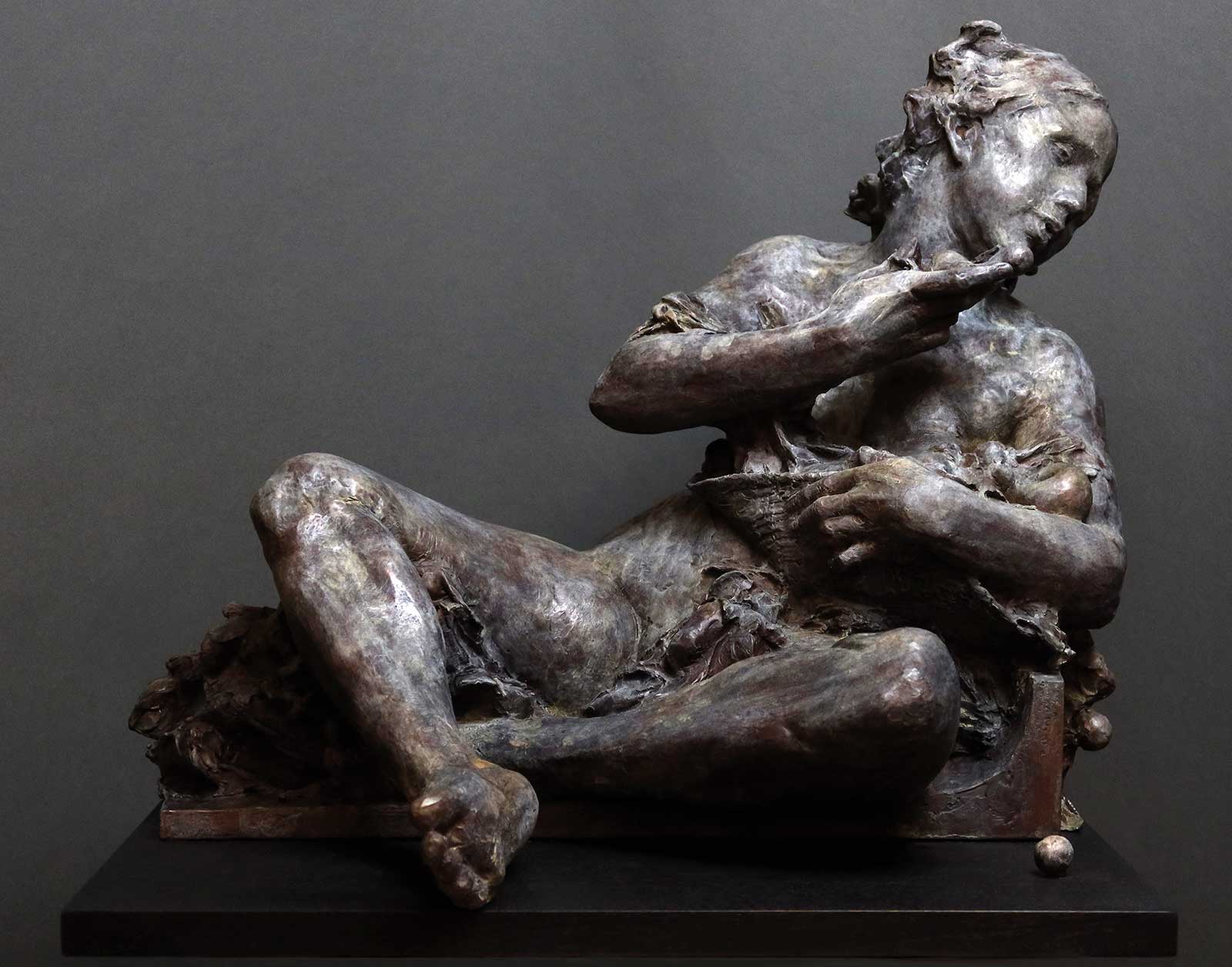
Reverie and Abundance, bronze, 18 x 20 x 20" (45 x 50 x 50 cm)
SAS: Tell us about your upcoming workshop at SAS. What can students look forward to?
AP: I like to talk about the creative part of sculpting a portrait: finding beauty, composition and expression first. And then get into the process—the nuts and bolts. I spend as much time as possible with each student, as I feel the one-on-one conversation is effective.
SAS: When working with a live model, do you usually plan poses in advance, or do you find inspiration in the moment when the model takes the platform?
AP: I’d say a little of both. For longer projects I tend to work out the pose ahead of time, though I think it’s helpful to stay open to new developments, as often the model adds something more than what I imagined, and I can improve the piece through observation. For shorter poses, I often improvise. At times, I give the model a verbal cue and ask them to respond to it. An example would be an emotion to act out “feeling elated,” or even a scenario like, “wondering if it will rain today.”
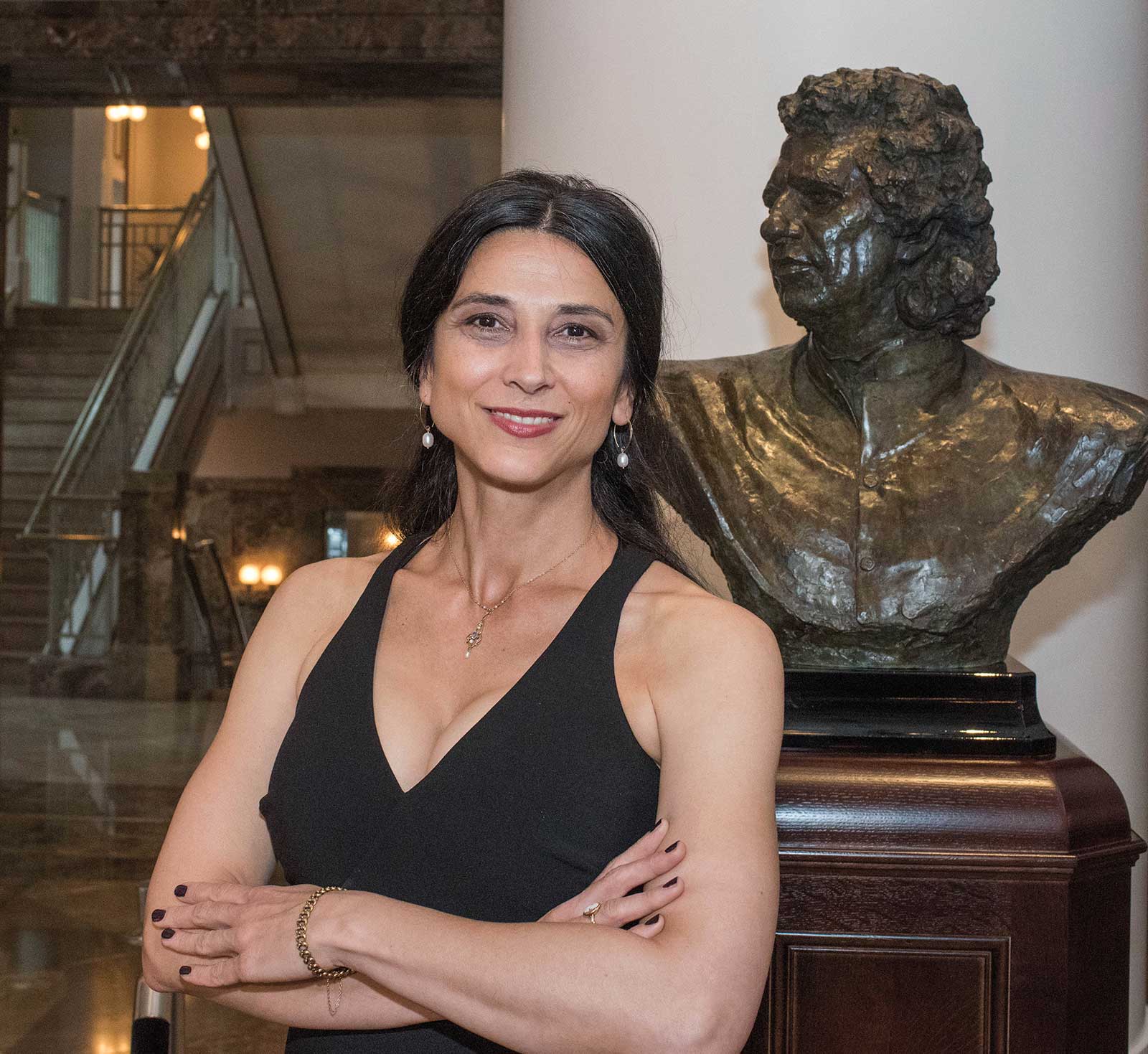
Alicia Ponzio with her bust of Maestro Guerrero. Photo by Sally Bebawy.
SAS: What do you hope your students take away from your workshop, both technically and creatively?
AP: I hope they are more in touch with their aesthetic and can verbalize what’s interesting to them. On a technical level, I want to help them develop a method they can return to when feeling lost in the process. —
Visit scottsdaleartschool.org for more information on the school and its upcoming workshops.