Bring your scene to life with backlighting and a powerful glowing light effect by joining me in a painting adventure to one of my favorite painting spots, Point Lobos, California. When I first set foot here I couldn’t quite believe my eyes—Point Lobos is really a natural wonderland, and I felt my heart wasn’t big enough to take it all in. Mother Nature is so generous in her gifts. Let’s try to pay her a little homage in thanks.
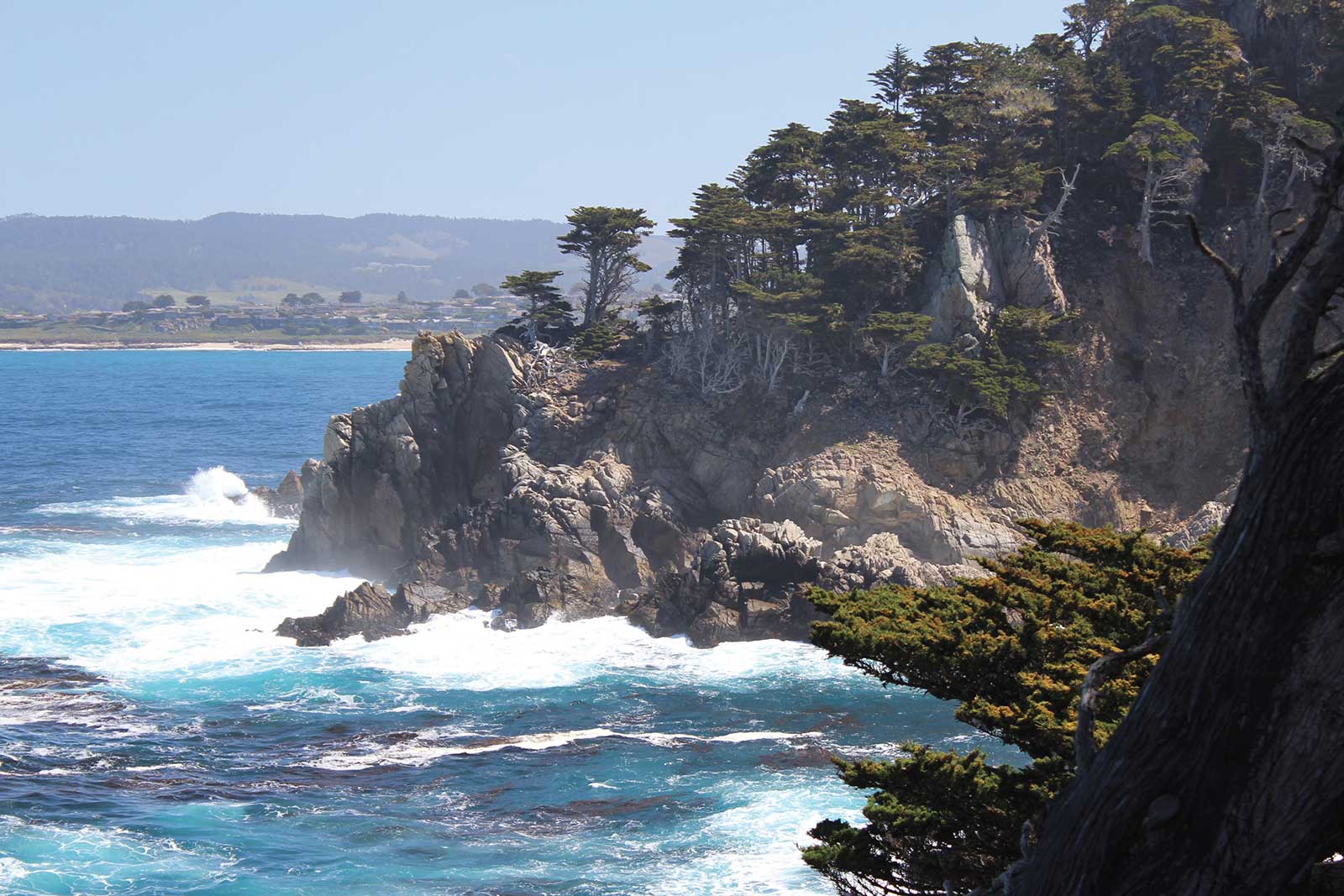
Point Lobos, California
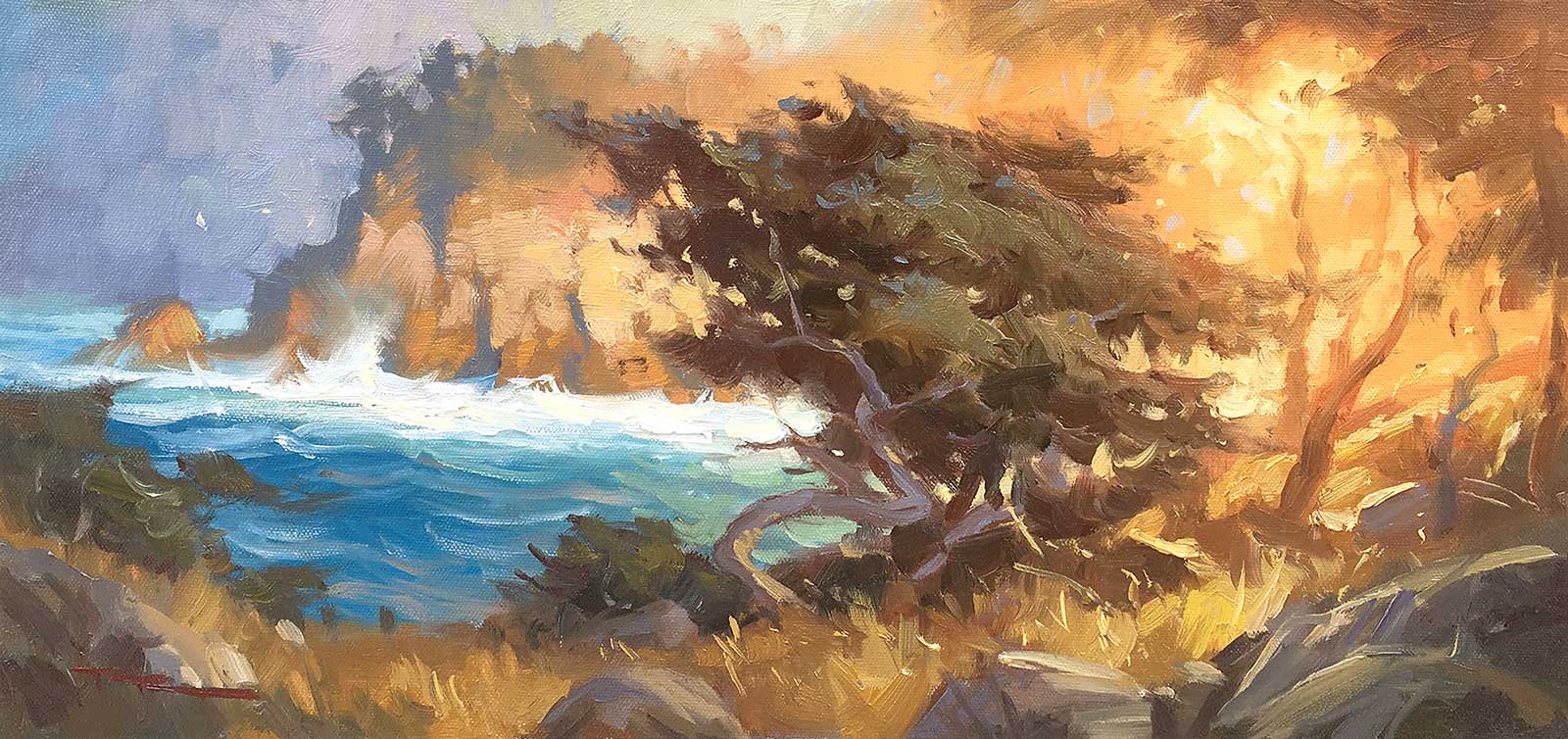
Richard Robinson, Point Lobos, oil on canvas, 15 x 18" (38 x 45 cm)
The French call this effect “contre-jour” lighting, or “against the light,” which creates a striking, dramatic effect in landscape painting by positioning the primary light source behind the subject. This backlighting technique results in several distinct visual characteristics:
Silhouettes and Strong Contrast
The subject appears as a dark shape against a luminous background, often losing midtone details while retaining a crisp or softened edge, depending on atmospheric conditions.
Glowing Highlights
The brightest areas often occur along the edges of objects, where light wraps around or diffuses through translucent elements like foliage, mist or water.
Atmospheric Depth
Backlighting enhances a sense of depth as distant elements become hazy and warm-toned due to the scattering of light, while foreground elements remain in shadow.
Color Shift and Muted Foreground
Shadows in the foreground can take on cool or unexpected hues as they reflect ambient light, while the backlit sky often appears warmer and more vibrant.
Lens Effects and Diffusion
Depending on moisture or dust in the air, contre-jour lighting can introduce a halo effect, sunbursts or soft diffusion, lending a dreamy or ethereal quality to the scene. For painters, contre-jour compositions demand careful value control to balance the high contrast, ensuring that the dark areas retain subtle variation and the brightest areas don’t become overly harsh. It’s a powerful tool for creating mood, mystery and drama in a landscape.
Student critiques
Geoffrey Geeson
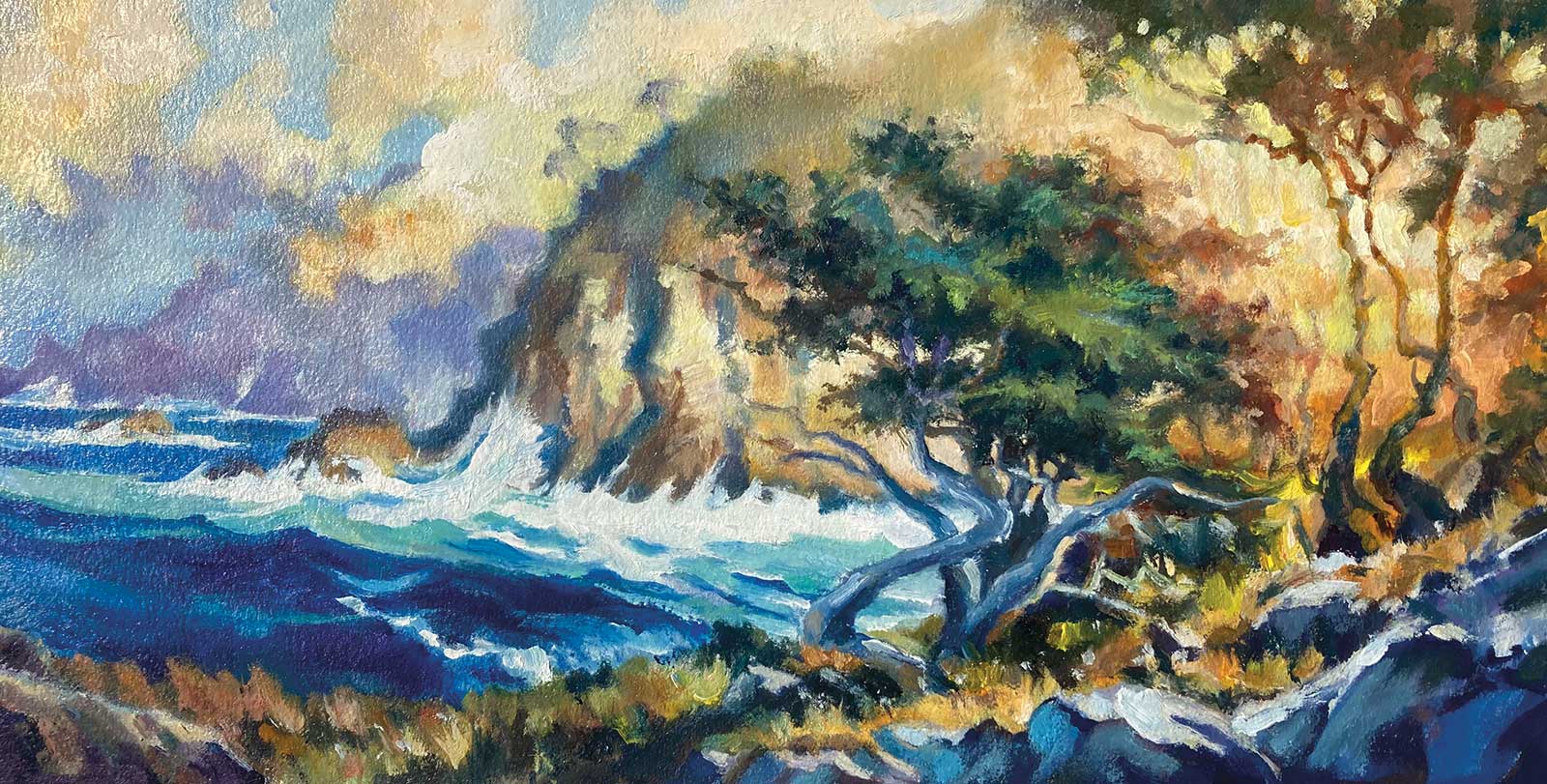
Point Lobos, oil on oil paper Great work, Geoffrey! You’ve got some beautiful organic shapes in here and a solid glowing light effect, good tonal separation between the foreground and background, and a cohesive painterly style of brushwork. I can’t see anything to tweak. Nice!
Adana Virna
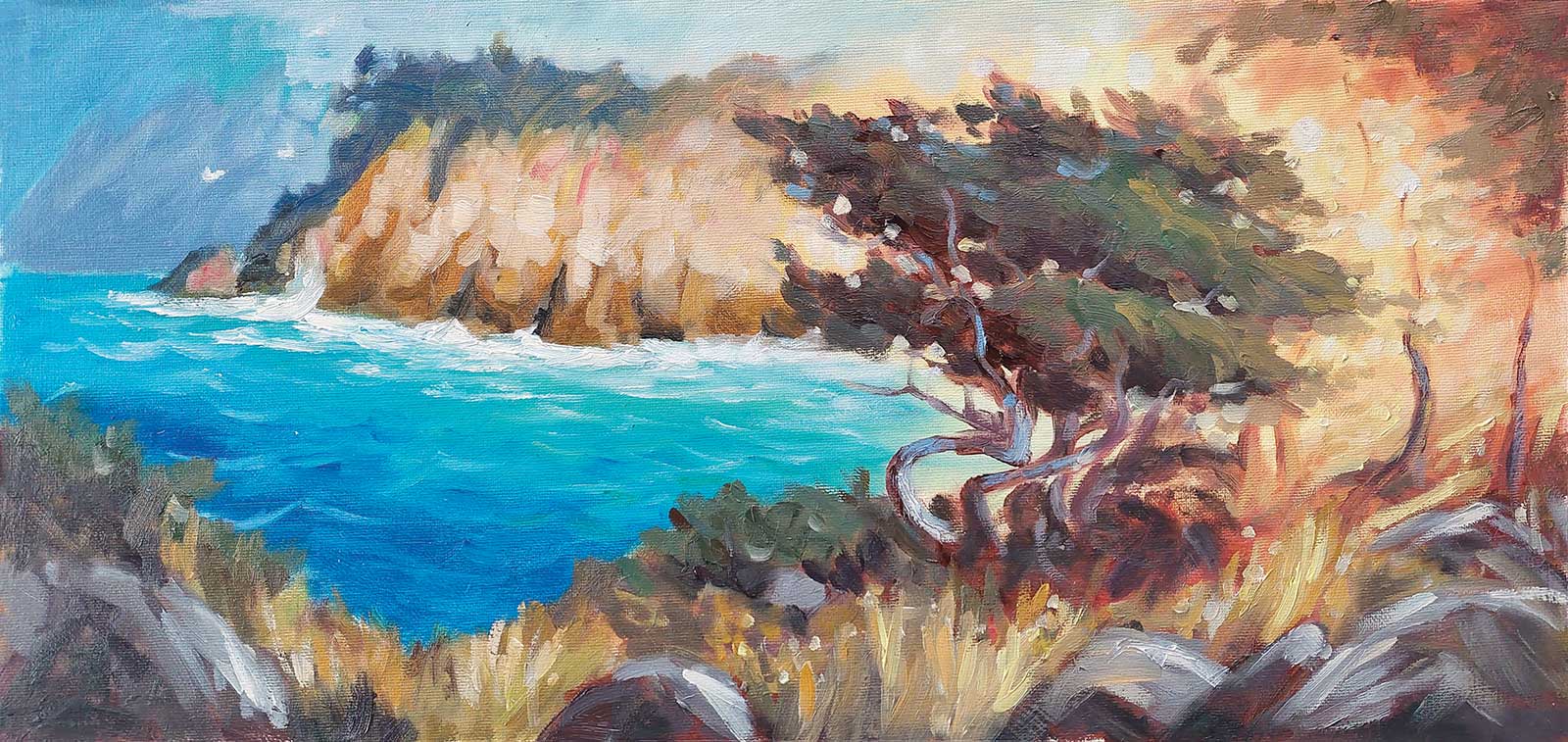
Point Lobos, oil on canvas sheet, 12 x 23½" (30 x 60 cm) Hey, Adana, nice piece! Most notably, your brushwork has something lyrical about it that’s adding movement to the whole painting. Lovely to see that. I just think your glowing area needs a little more detail in there to give it more depth, and the lights in the foreground rocks and grasses needed toning down a little into half-lights so they’re making more of a foreground frame for all the light in the background. That could be achieved by glazing it a little darker with burnt sienna, for example. The dark accents in the cliff need to be lightened a little too to create more depth between the foreground and background. I find it helpful to think of these backlit scenes in terms of value planes of depth, getting lighter as they recede.
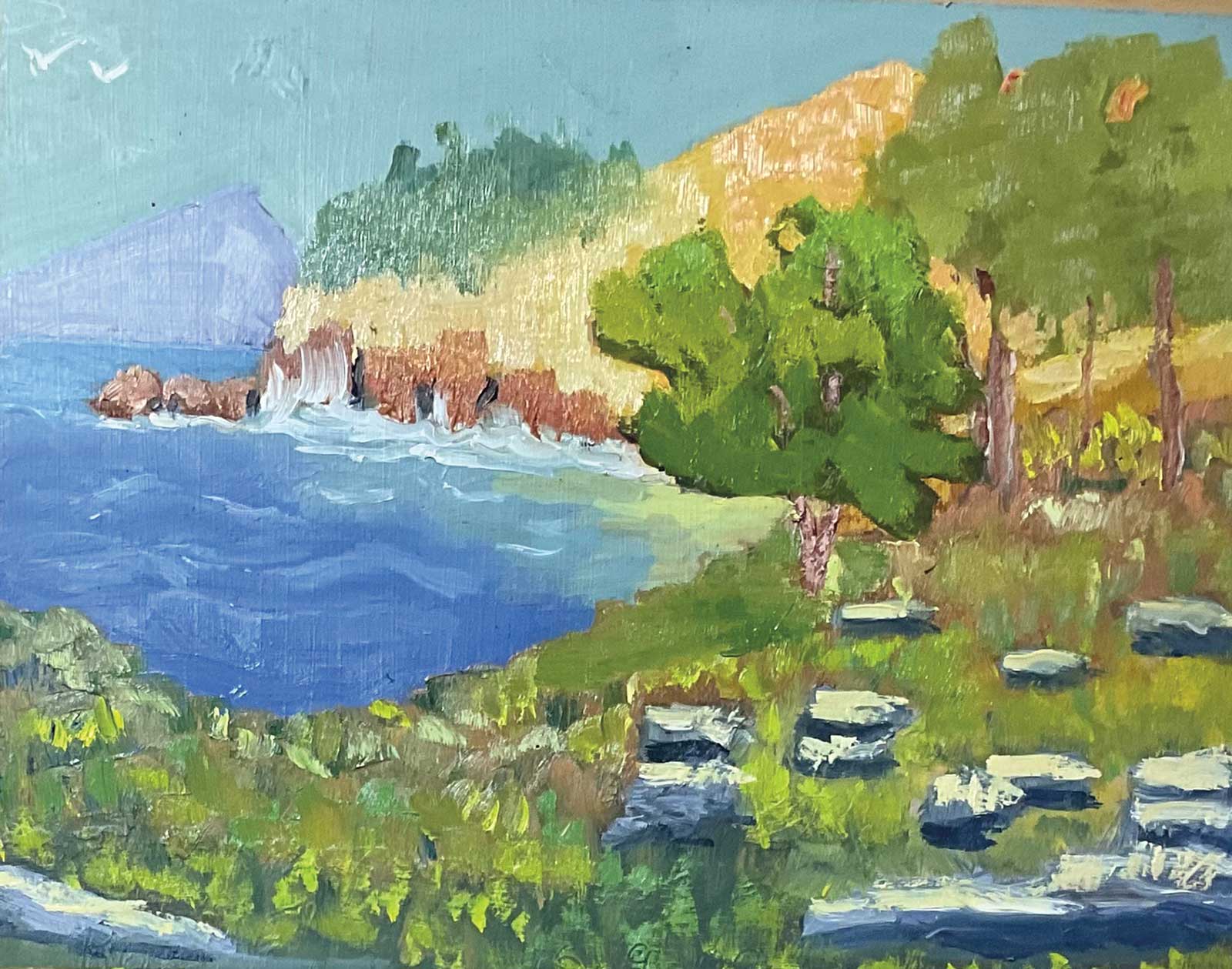
Stephen Dickens
Point Lobos Hi Stephen, looks like you’re having fun. Big bold strokes and loads of paint. Great! Looks like early days in your painting journey, so I won’t get into too much detail, but I want to encourage you to keep at it and direct you to some more learning resources that will help. Firstly, drawing is the key to good painting, so in order to focus on drawing, you can simply take away the problem of color and practice drawing or painting in black and white. Color mixing is the next step. Here is a great resource to get started with color mixing: