We learn mastery by looking at the best examples. By analyzing masterpieces through the prism of a modern view, artistic taste develops and unique ideas are born. In my new series of paintings, I creatively combined two paradoxically different styles, which helped me realize the idea of a dramatic portrait with features of realistic glamor.
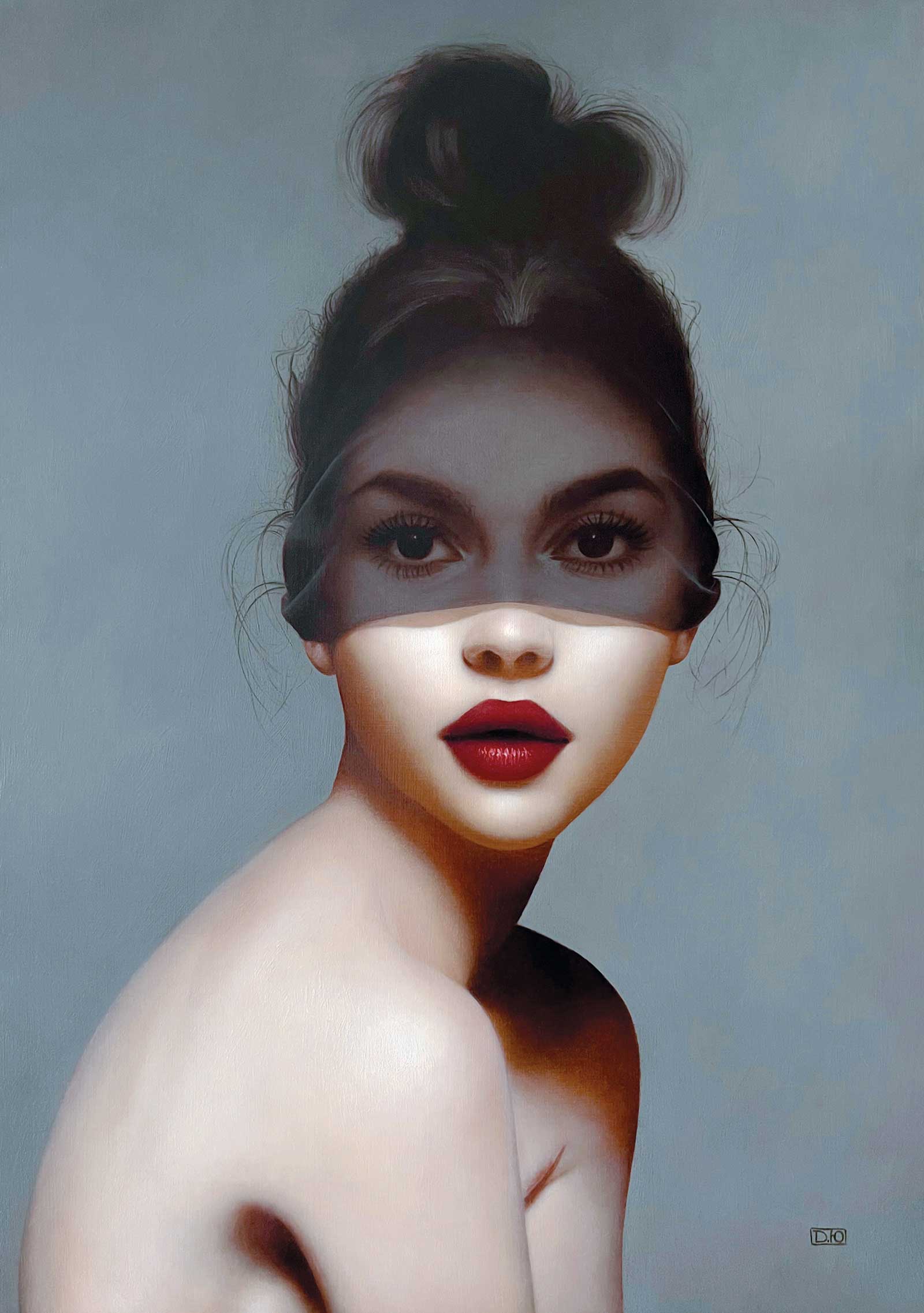
Vinous Charm, oil on wood, 19½ x 13¾” (50 x 35 cm)
When it comes to implementing projects, composition is of great importance to me. The composition of the picture affects the perception, overall impression and narrative of the work, so it is important to place the hero in the visual space as beautifully as possible, taking into account their interaction with other surrounding elements. The psychological character of the hero is also of great importance and facial expressions, gestures and poses are used to convey the truthfulness of various emotions. All this together forms the personality of the hero and allows the audience to connect with them on a deeper level.
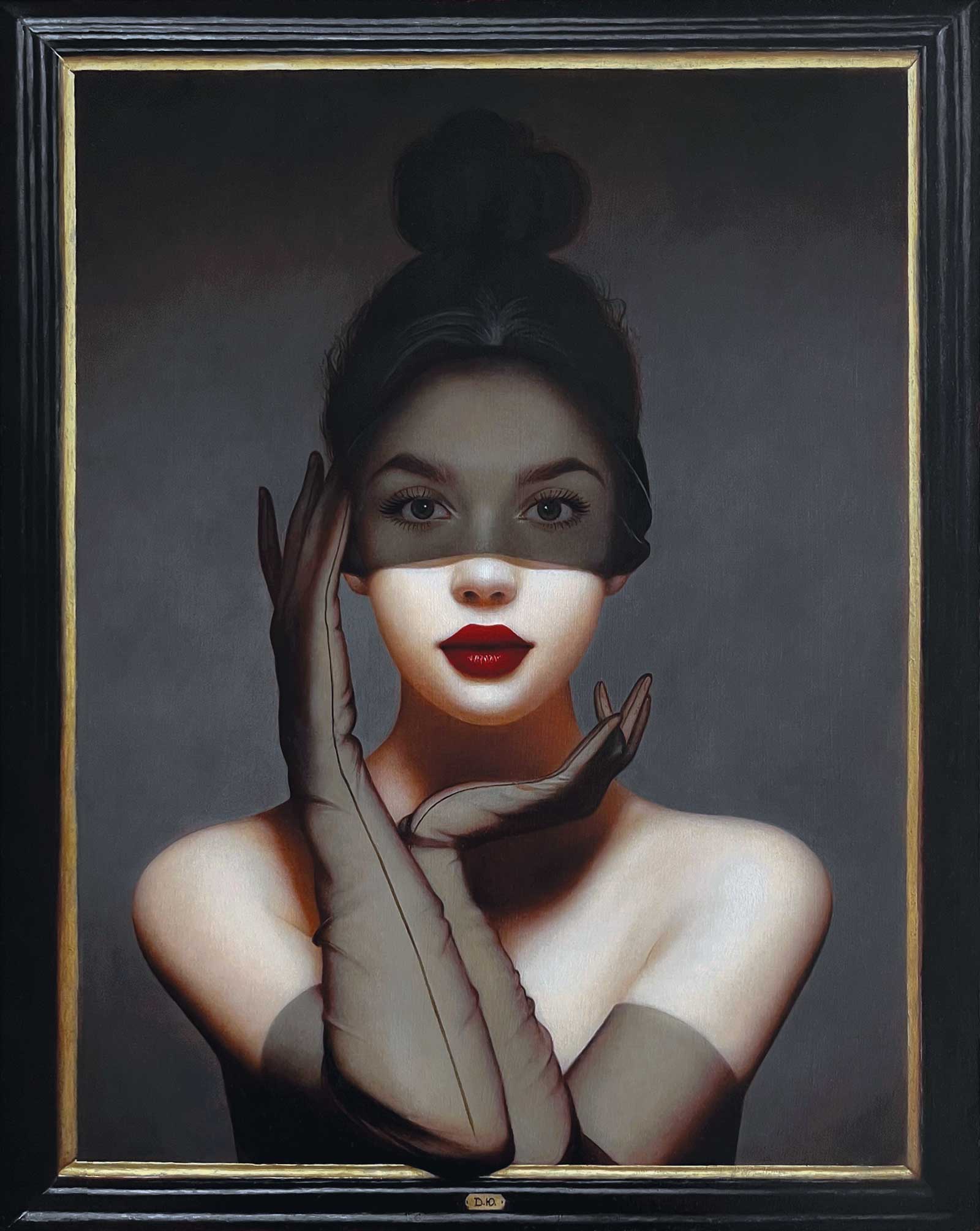
The Magic of Luxury, oil on wood, 19½ x 15¾” (50 x 40 cm)
I start my paintings with sketches that help me quickly express ideas and capture the essence of my vision in a simplified form. This stage of work serves as a tool for brainstorming and exploring creative possibilities, allowing for experimentation and refinement of the artistic concept. In the following demonstration, after the preparatory sketches, I processed the surface for painting. I primed the canvas with white acrylic primer and applied a warm coat of imprimatura from a mixture of three colors: yellow ochre, burnt sienna and natural umber. Among the paints, I chose fast and medium-drying ones, mixing them together so that the first layer of painting would be the most durable. The orange-brown color of the imprimatura enriched the color idea of the work. The warm shade of the bottom layer shines through the subsequent strokes of cool shades, which adds a special complexity to the paints and saturates the picture with the vibration of color.
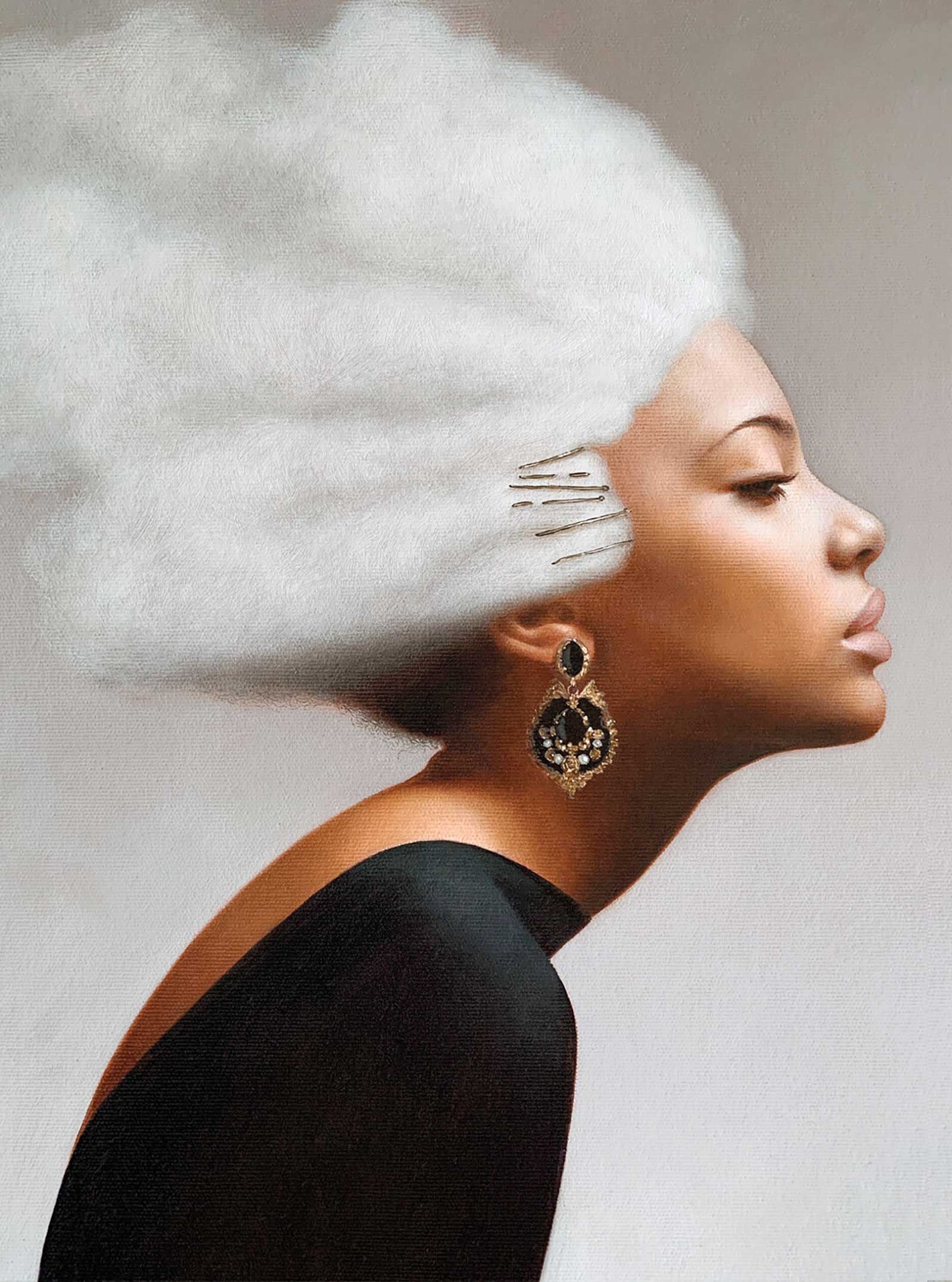
In Clouds of Glamour, oil on canvas, 19½ x 13¾” (50 x 35 cm)
In the painting process, I prefer to work in the grisaille technique, combining it with the alla prima technique for individual pieces, such as backgrounds or accessories. I like to work with a variety of paint textures and, at the grisaille stage, apply thick strokes to the shapes of the facial muscles and folds, and also add spectacular highlights to convey the shine of the metal. I use small formats for my work and like to paint on a smoother surface. A smooth surface helps the texture of the strokes to appear even more clearly, which causes layer-by-layer differences in colors and enhances the visual impact due to the protruding effect in the area of light.
My Art in the Making SHE
 Stage 1
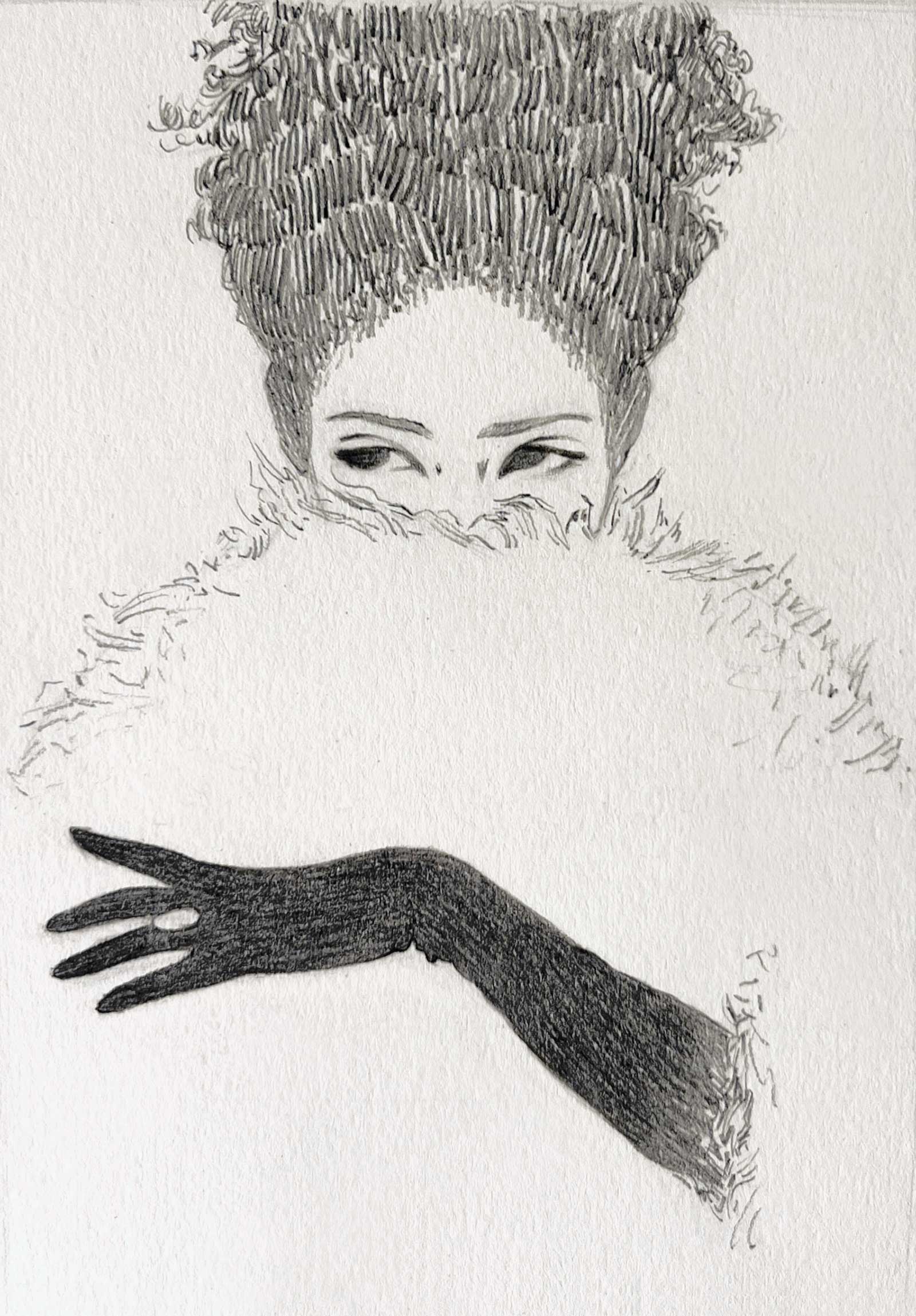
Stage 1 Linear Sketch of Composition
Using paper and a soft pencil, I worked through a sketch that helped me solidify the artistic concept. I used the varied nature of the lines and the pressure of the pencil to express the relationships of graphic contrasts.
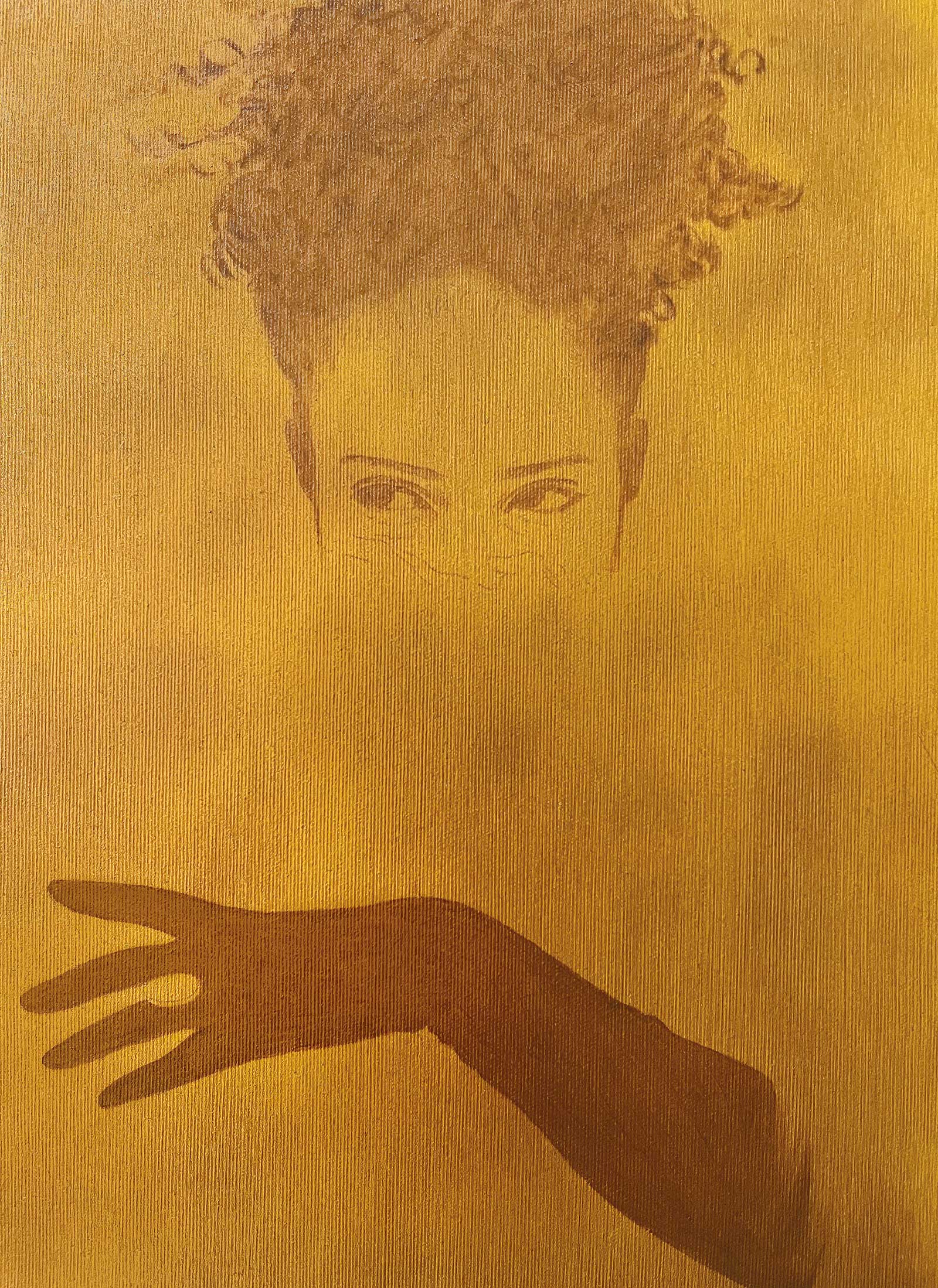 Stage 2
Stage 2 Translating Drawing to Canvas
Painting begins imprimatura: the first layer of paint. Then I transferred the prepared drawing onto this dried surface. Using a color mixture of burnt sienna, yellow ochre and natural umber, I worked on the portrait drawing in more detail. It is important to do the initial stages transparently and avoid a thick layer of paint.
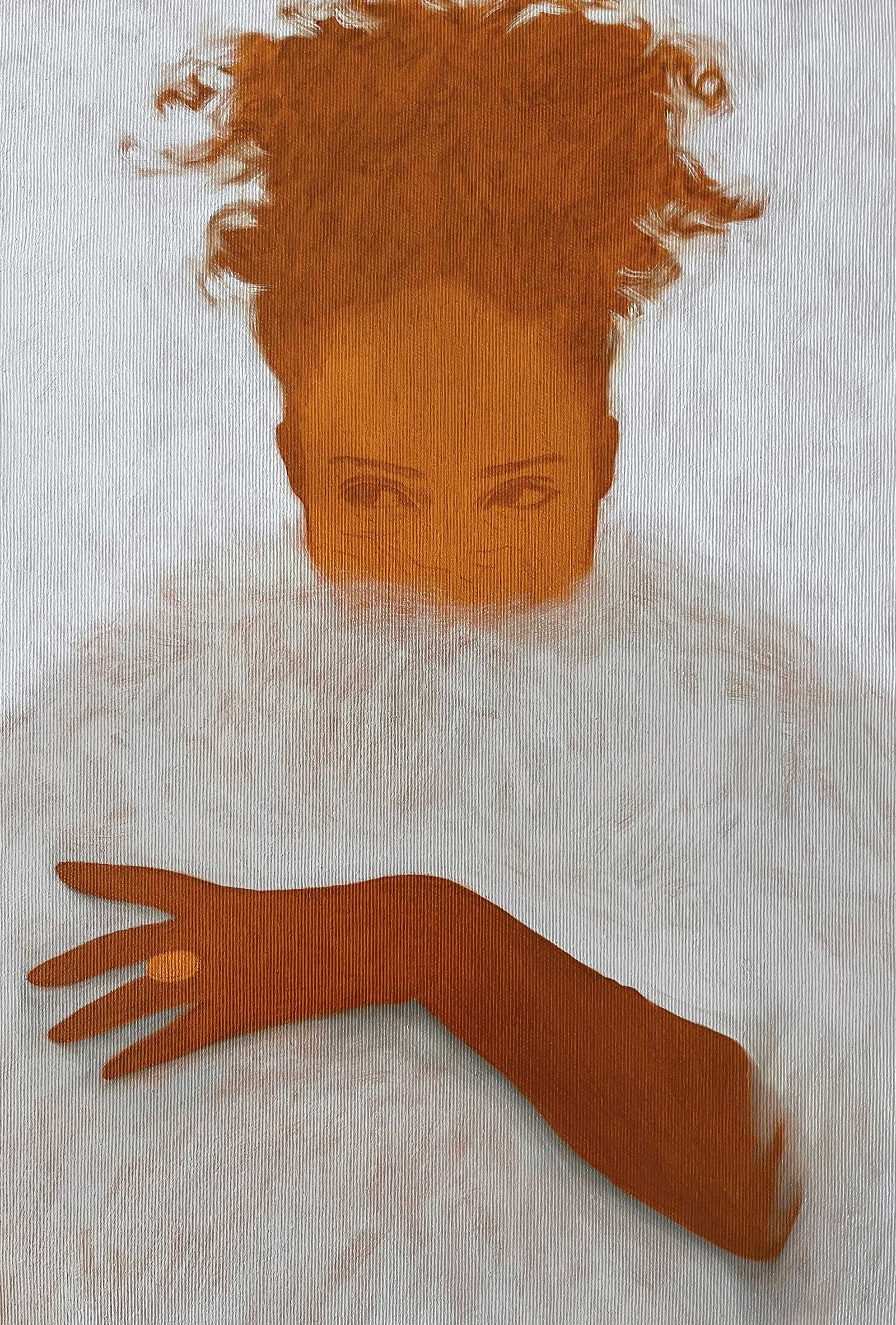 Stage 3
Stage 3 Starting to Paint
I painted over the background and fur coat using a rough brush. I don’t add a lot of linseed oil and work with the color with an almost dry brush. This helps the paints dry faster, which for the bottom layer, is the key to quality and durability.
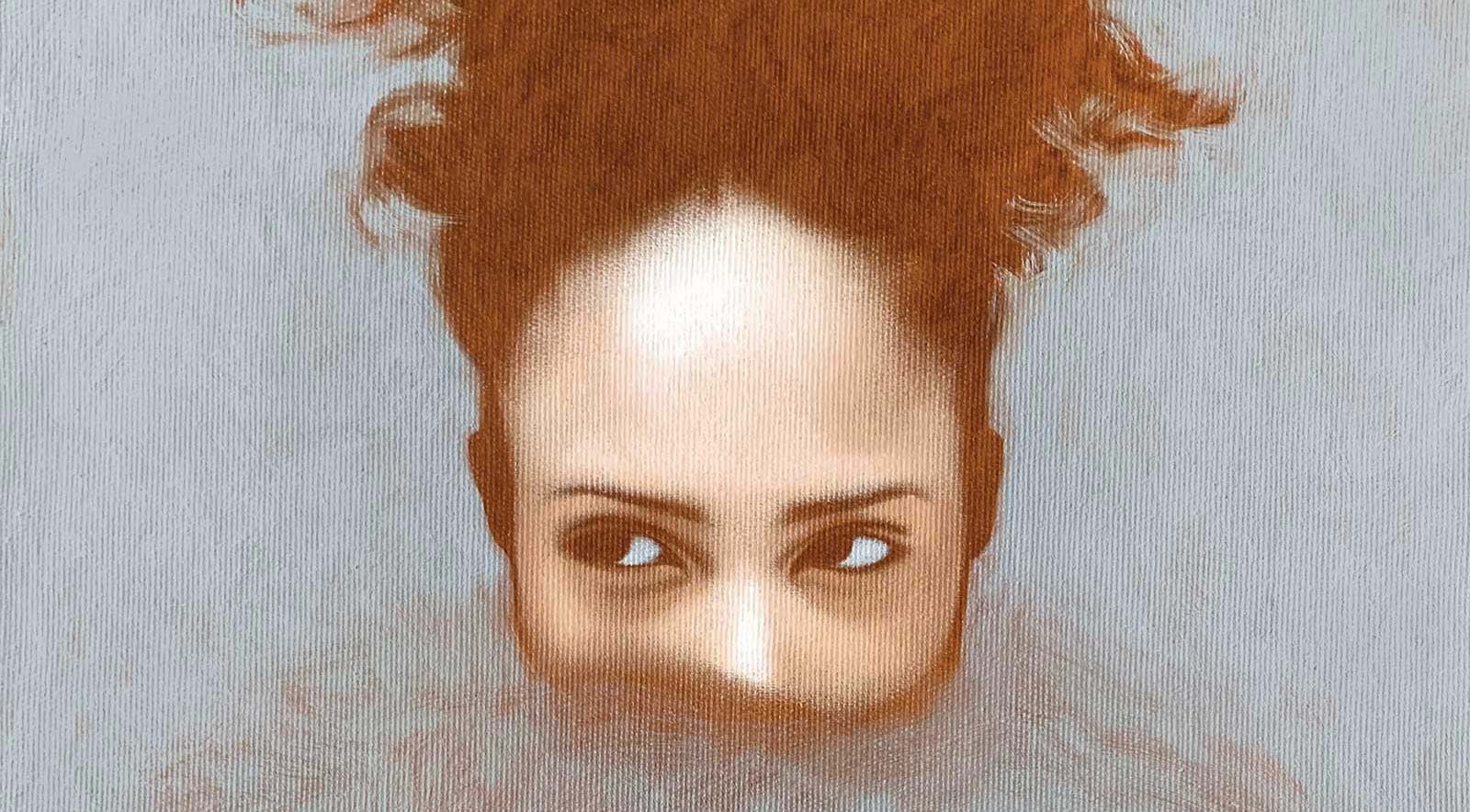 Stage 4
Stage 4 Grisaille
I made three colors and created volumes of the face by applying the thickest strokes to the light and prominent parts. In this portrait the tip of the nose is not visible, as it is hidden behind the details of the fur coat, so in the lower area of the nose I simply shaded the color downward.1
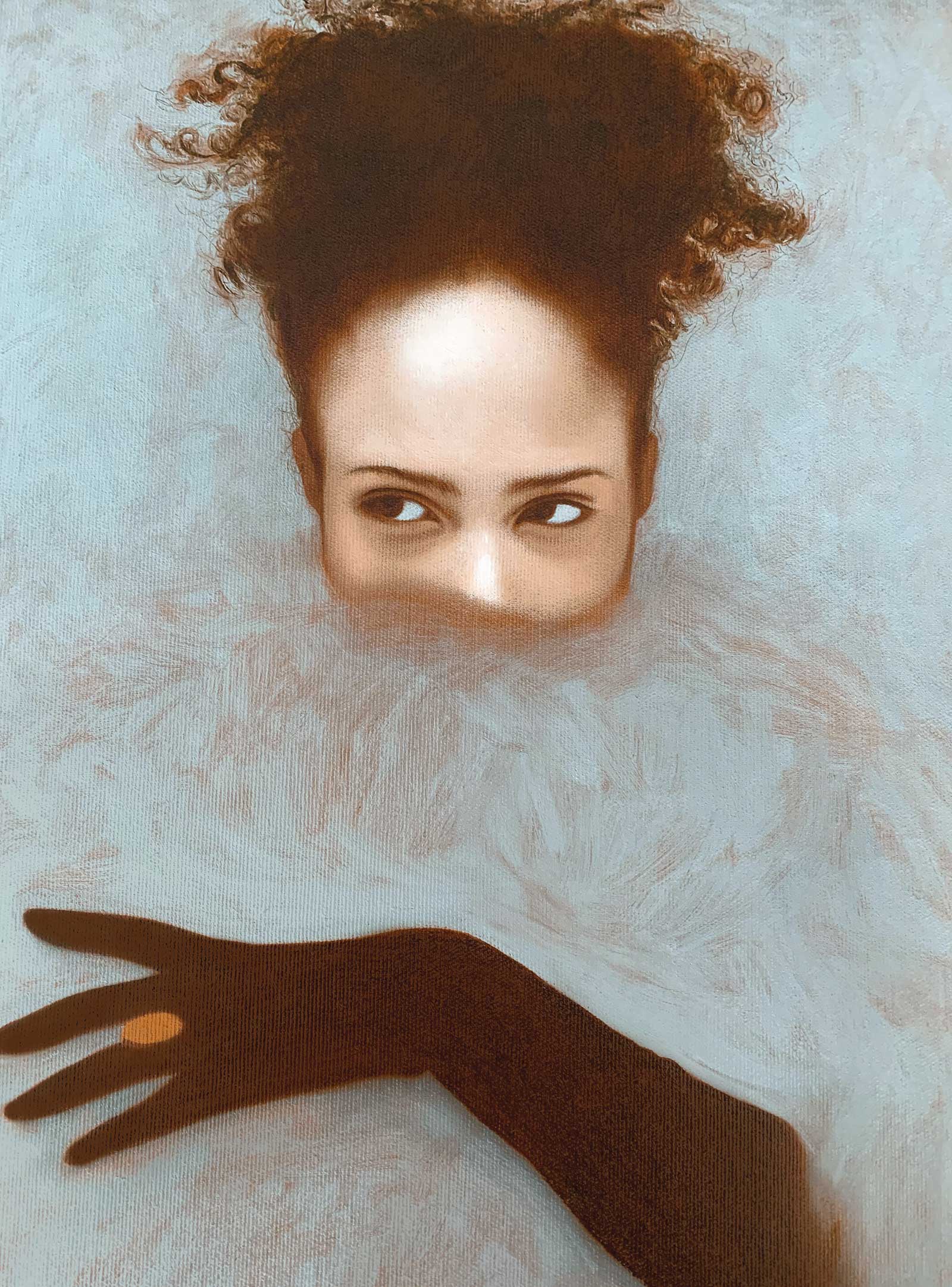 Stage 5
Stage 5 Shadow Adjustment
When the painting was dry, I degreased the surface with turpentine so that the new layer of paint would adhere well to the previous one. After that, I worked the shadows on the portrait with dark brown paint, darkened the hair and the glove.
 Stage 6
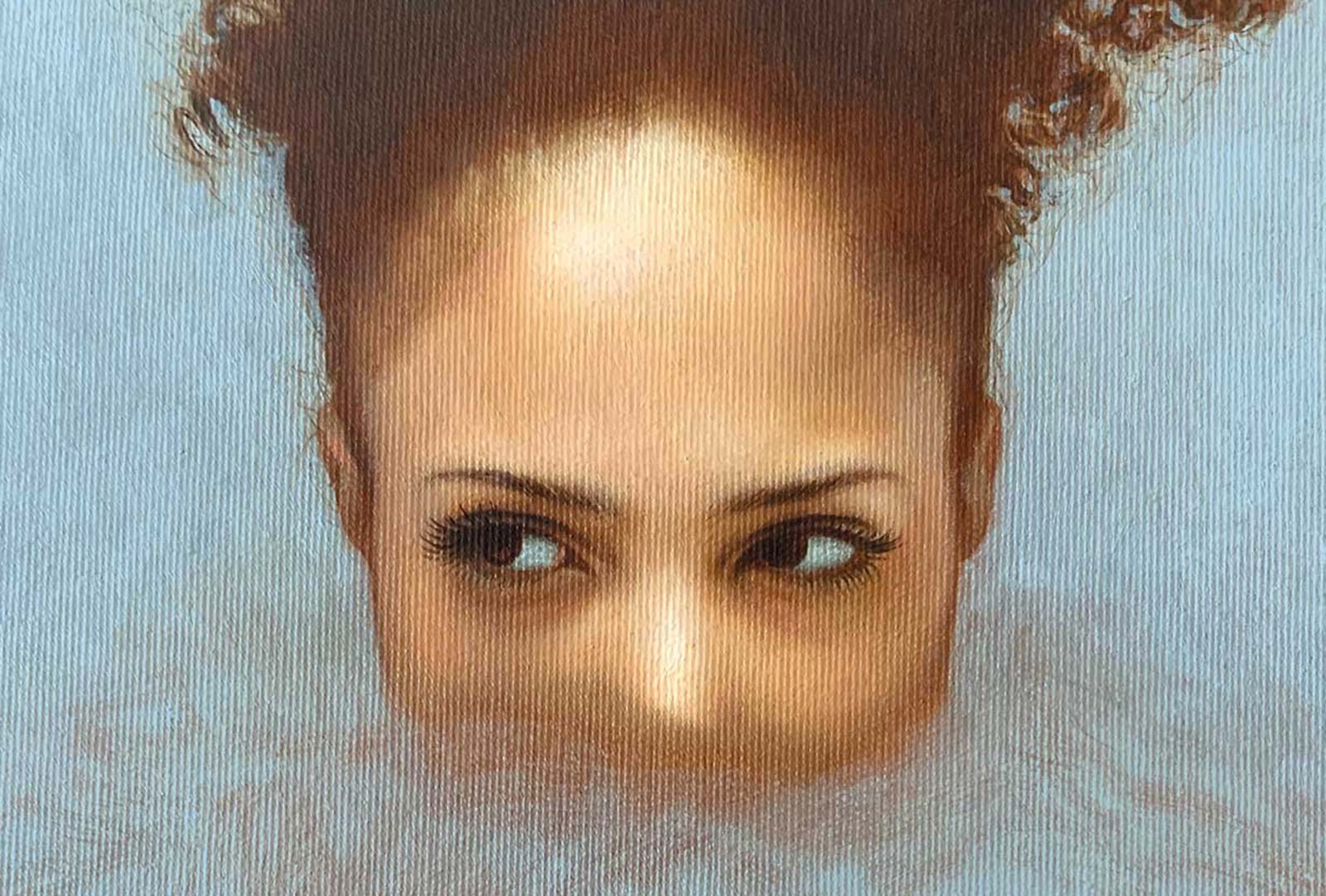
Stage 6 Painting the Face
When working with color, I do not use all colors at once. First, I made several shades of yellow and painted the portrait, clarifying the volumes. Afterwards, I adjusted the shapes with red and gray colors, but the smallest details I left for the last stage.
Strategies for Composition
- Concept development is a deeply creative journey that includes various stages. The beginning always takes inspiration. It is nourished by personal experiences, emotions, works of art, social and cultural events. Close familiarity with the subject is the key to success, therefore, after determining the main idea, the painstaking collection of information begins. Art trends, literature and works from museum collections are explored and points of contact with the project are found. It helps to consider the historical references you want to convey, the visual elements that will be used, and then mentally capture the overall idea. In the process of developing a concept, pre-existing elements are mixed, but they transform into a completely new form.
- The composition of a painting is the foundation on which a work of art is built. It shapes the viewer’s experience, conveys the artist’s message and ultimately determines the success of the painting. A well-composed composition attracts attention and makes a lasting impression, involving the viewer on an emotional and aesthetic level. By strategically placing elements, an artist can effectively convey the intended narrative and bring to life the most complex designs.
- A linear compositional sketch lays the foundation for further successful work, providing clarity, structure and direction to the creative vision. This stage develops the ability to see rhythms, identify basic lines of movement and identify large shapes.
- Tonal composition allows you to focus on the underlying tonal structure and helps plan the distribution of light and shadow, enhancing the sense of volume and form. While working on a painting, I always determine the darkest and lightest areas, comparing all other ratios with these areas. For me, it is important to find balance through the quantitative differences between dark, light and midtones. There should be less of something and more of something. In my painting SHE, the white color of the fur coat occupies a large part, and the black color of the gloves and hair is distributed in a smaller amount. For bright accents, I made the model’s face and the ring on her ring finger.
 Stage 7
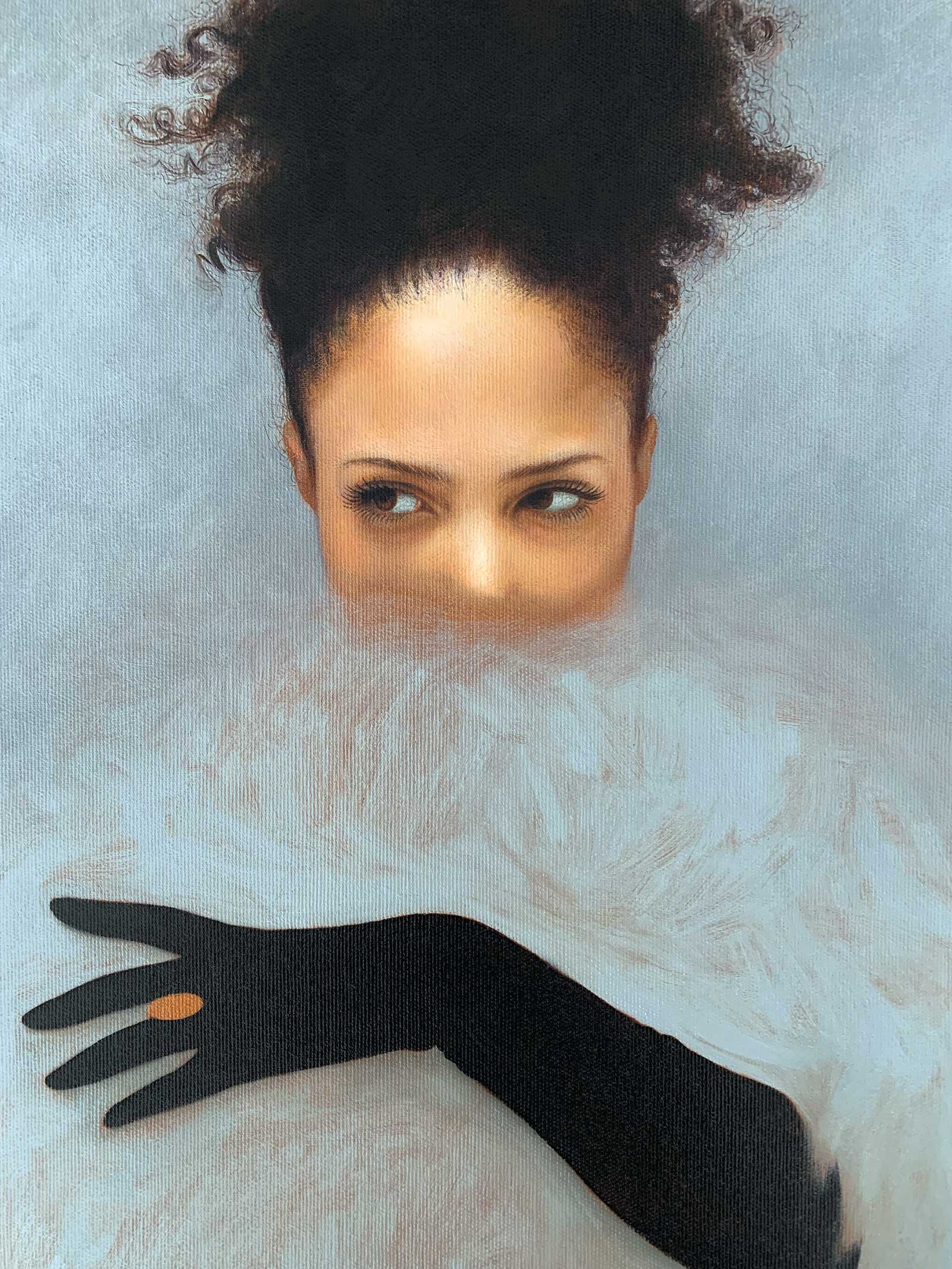
Stage 7 Glove and Hair
At this stage I complicated the background color and made it darker. Then I mixed kraplak and Prussian blue together to get a rich black color and painted the area of the glove and hair with it. This is the darkest tone in the picture, and now I will compare the tones of clothing and face with it.
 Stage 8
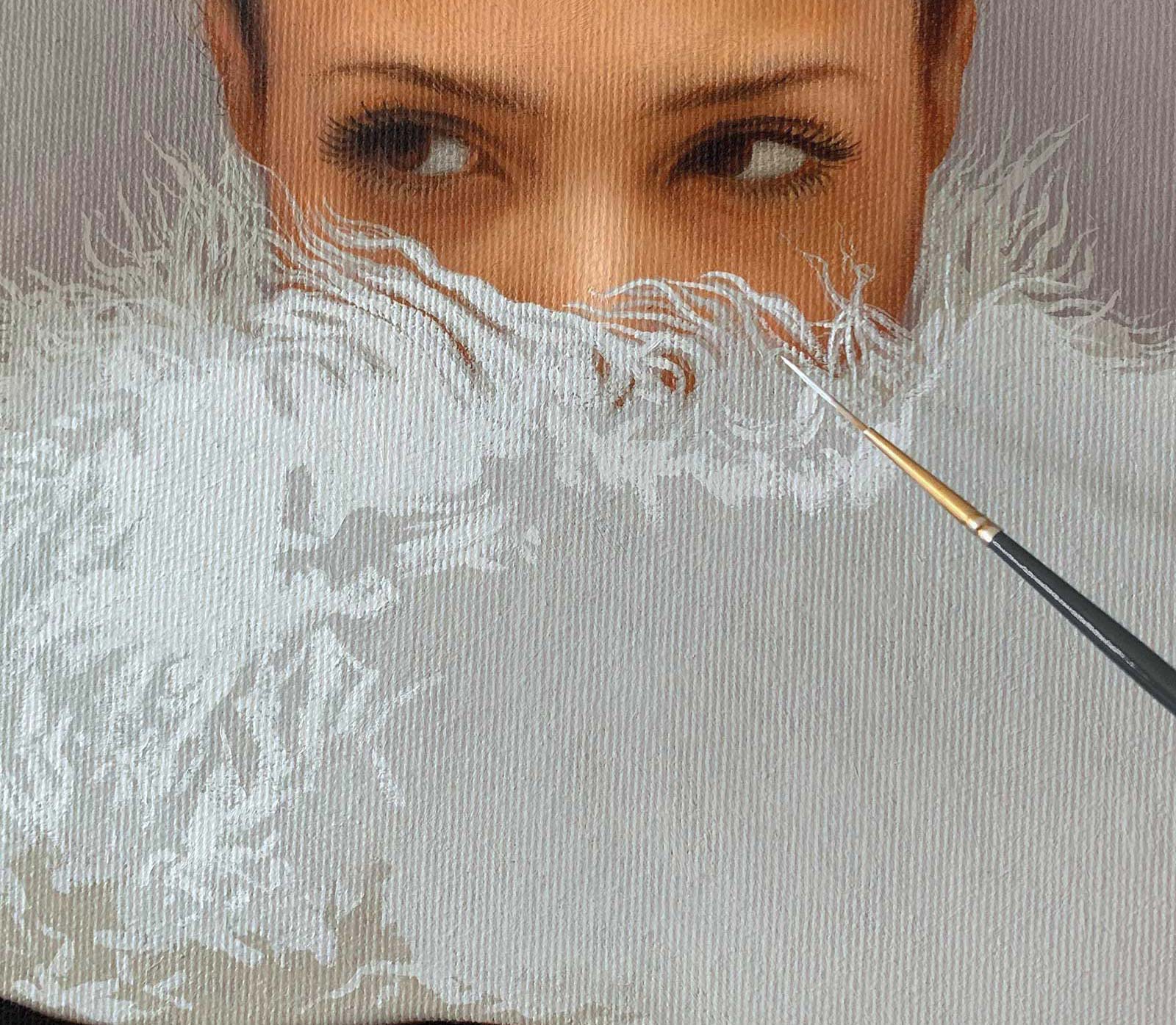
Stage 8 Fur Coat
In this painting, the most difficult piece was the fur coat, as it is very detailed and textured. I broke the difficult stage into small tasks and before starting to work on the fur coat, I drew simple outlines of light and shade and outlined the texture. I used five gray shades and applied each one in turn, starting with the darkest. This way it created something similar to a mosaic of spots, on top of which I will work on small details.
 Stage 9
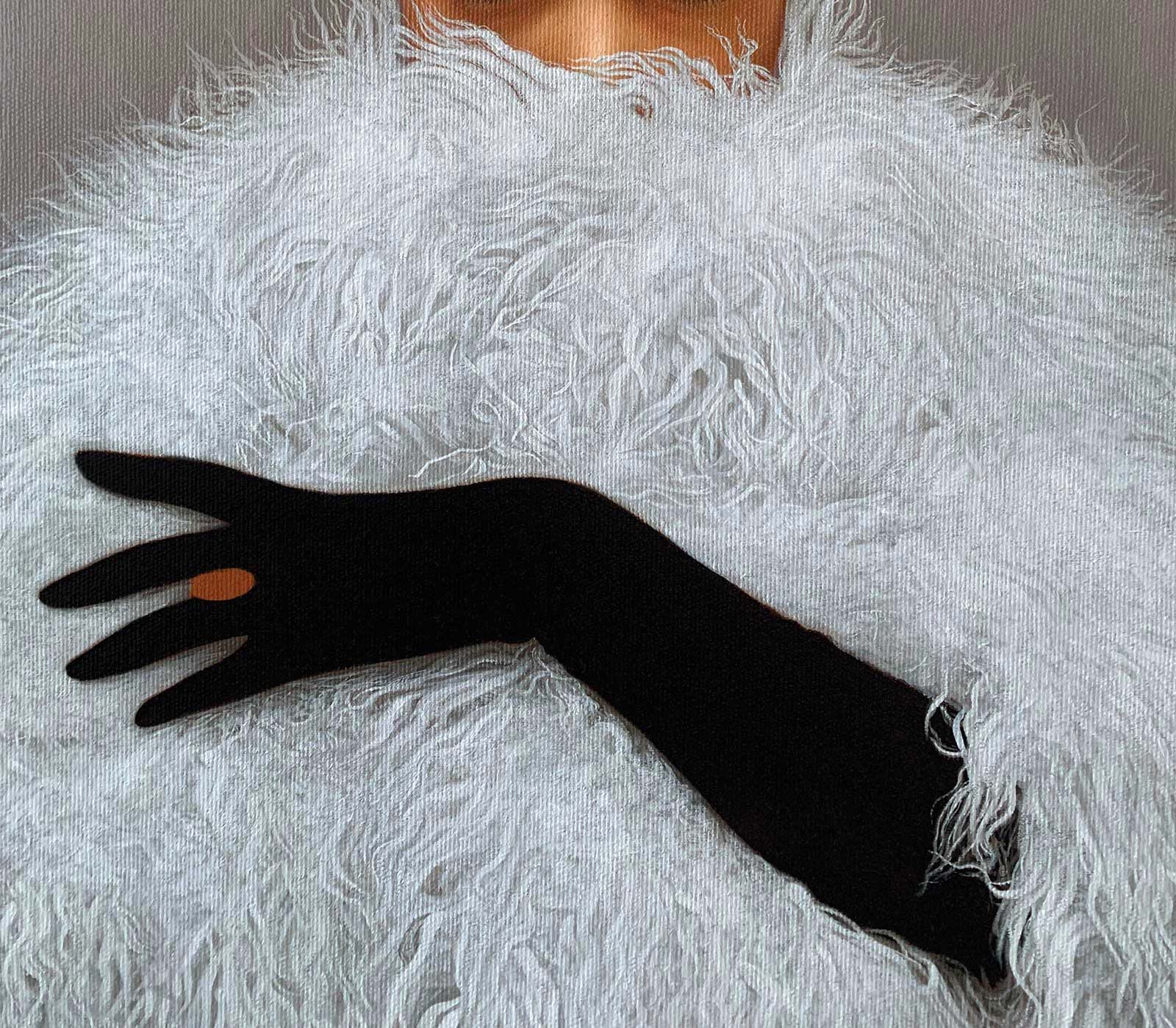
Stage 9 Details on Fur Coat
At this stage, I worked on the texture of the fur coat with titanium white. I started with a translucent layer, painting in the details in the shadows, and then applied thick white paint to the most prominent hairs. I made this layer lighter and colder than it should be in the end, so that later I could finish it with a warm glaze.
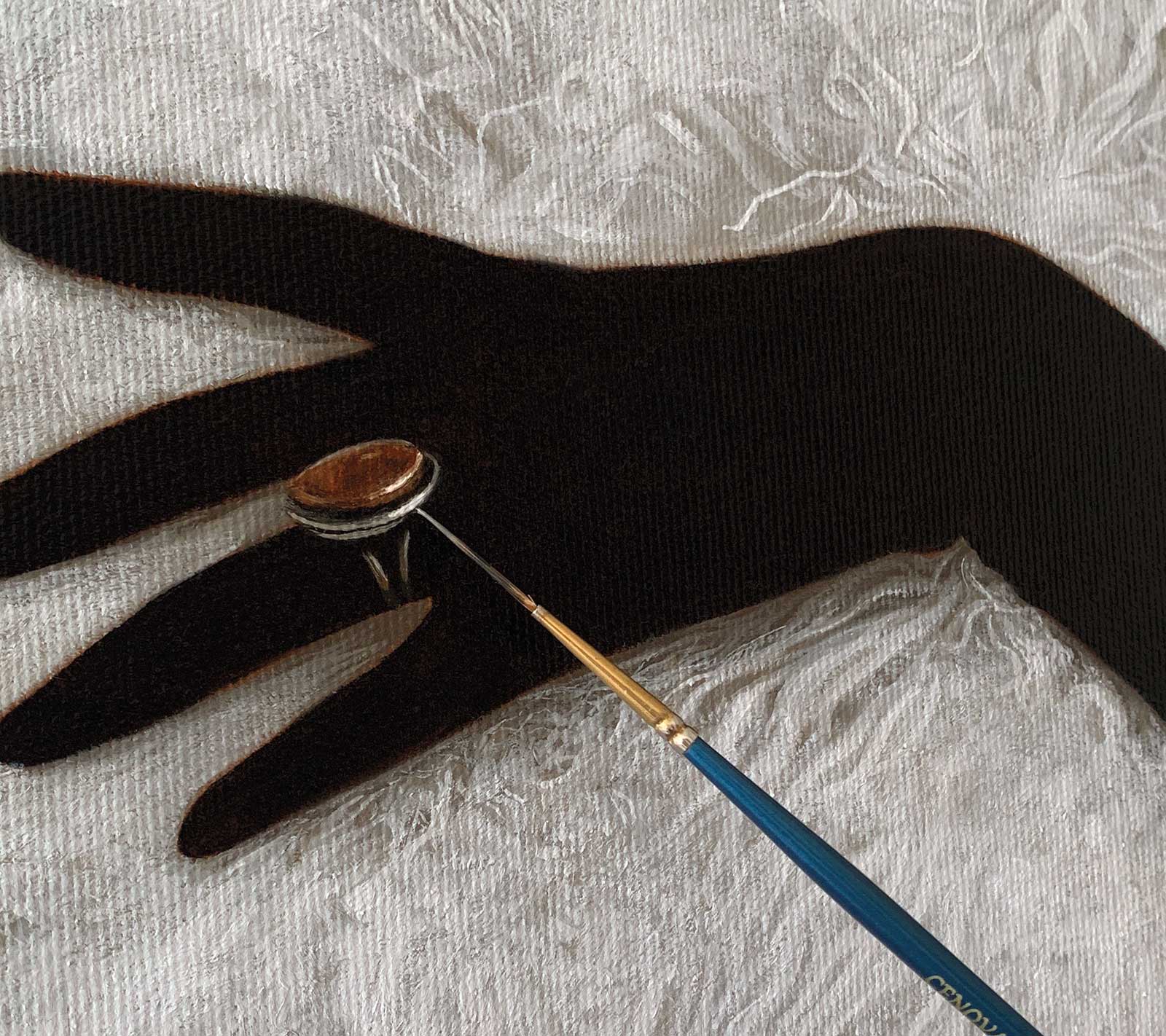 Stage 10
Stage 10 The Ring
I painted the ring using the alla prima technique (in one session). I began glazing the stone with a thin layer of burnt sienna and black paint, warming the color and adjusting the shape. Once the shape of the stone and metal was ready, I applied the highlights very thickly with white.
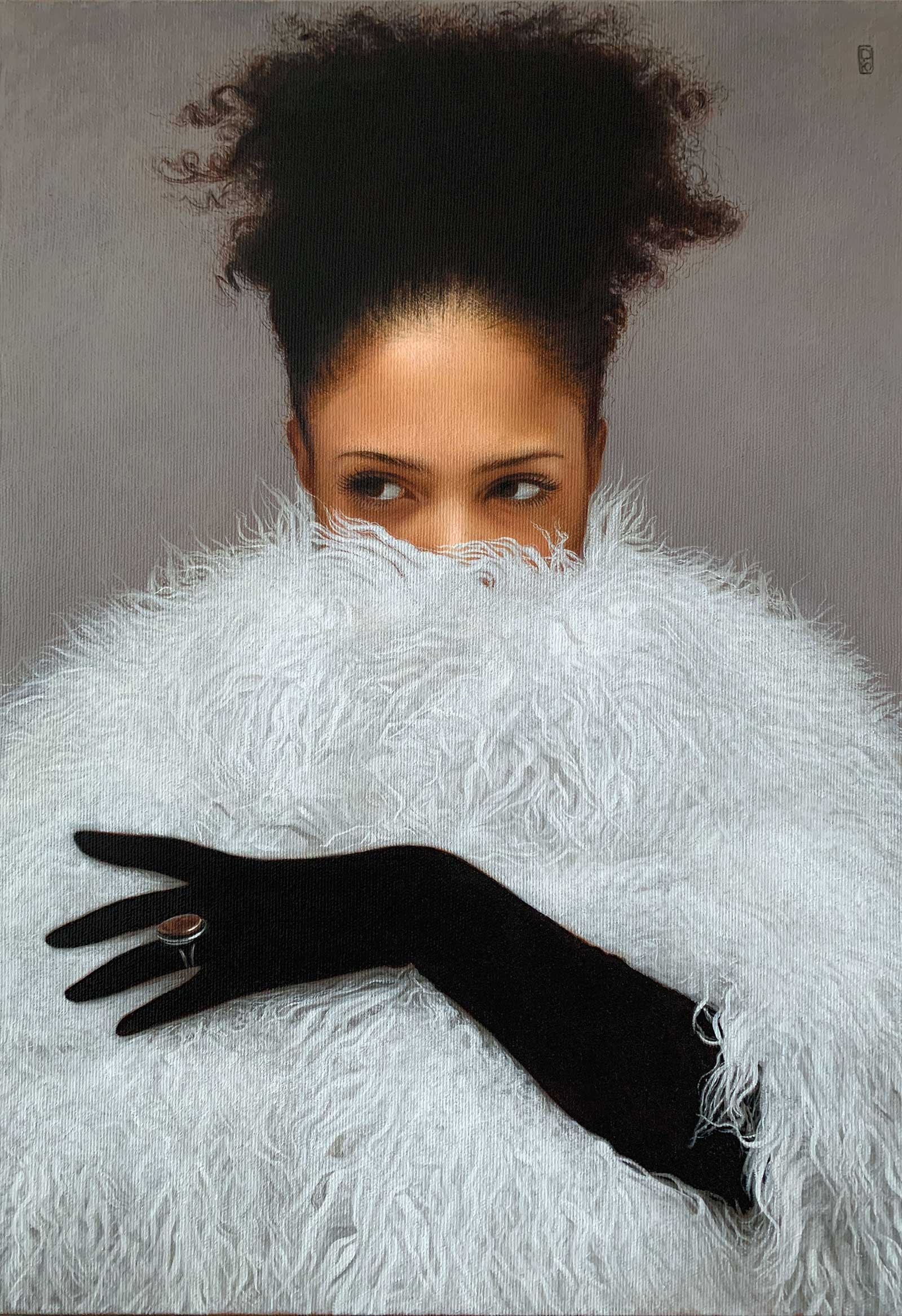 Stage 11
Stage 11 Final Details
SHE, oil on canvas, 19½ x 13¾” (50 x 35 cm)
As a final step, I adjusted the colors and shadows throughout the painting, enhancing the shadows where needed until I achieved the desired effect. I enhanced the shadows of the face and drew in more detail for the eyebrows and hair on the forehead. I also reduced the sharpness of the details of the fur coat and added a few bright, eyecatching hairs on top.
About the Artist
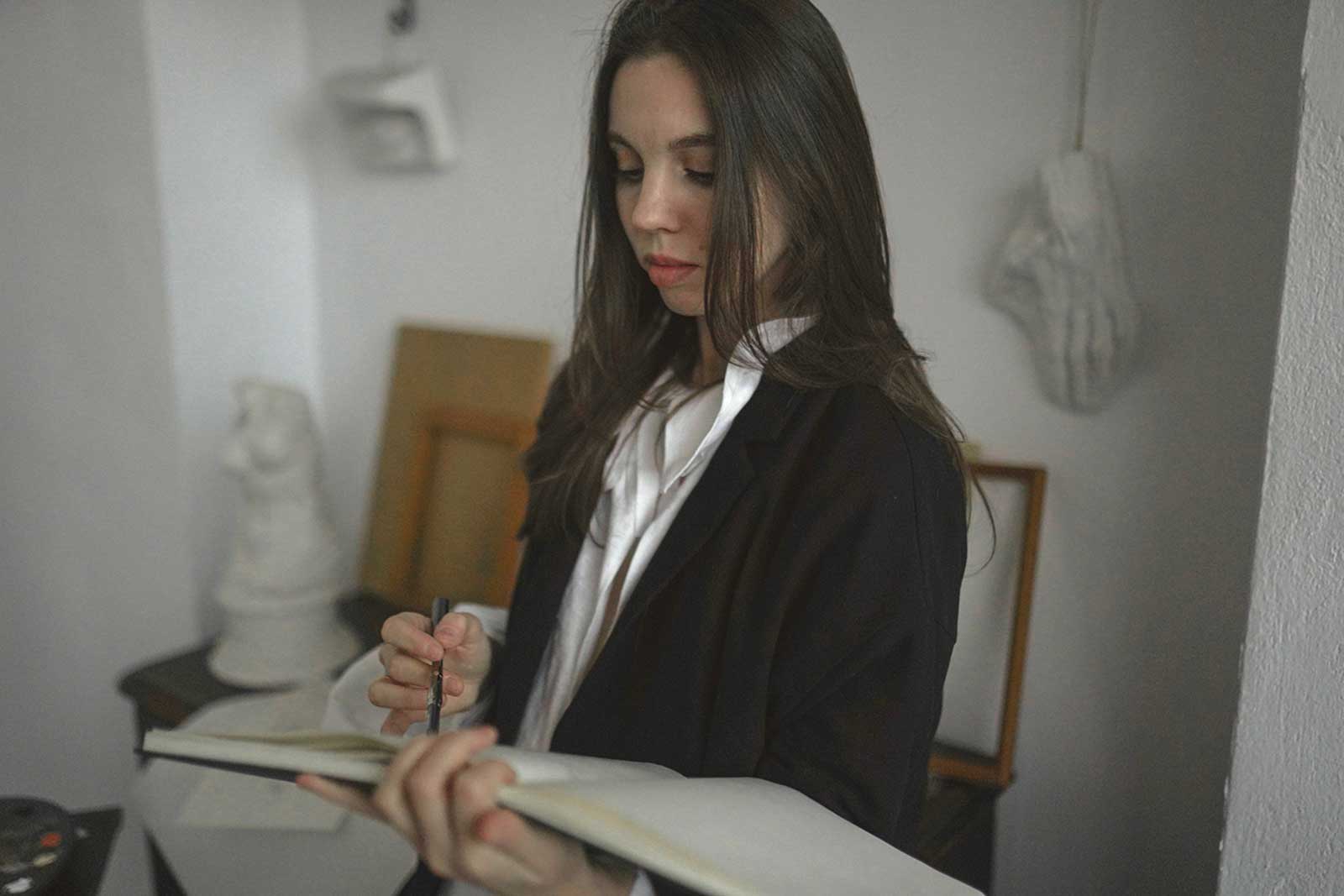 Daria Dolgareva
Daria Dolgareva is a portrait and figurative painter. Her work combines the philosophy of dramatic portraiture and elegant charisma, where skill goes hand in hand with innovative ideas. Her sitters become heroes who draw on the language of classical portraiture and the world of modern fashion. Dolgareva’s paintings have been awarded at prestigious art competitions. She was awarded the Grand Prize in the International Artist’s Favorite Subjects Challenge in 2022 and “Honorable Mention” at the Spanish ModPortrait competition. She has also been recognized at the 15th and 16th annual ARC Salon exhibitions as well as the Beautiful Bizarre Art Prize. Dolgareva’s paintings are in various private and public collections, including the collection of Museo Europeo de Arte Moderno in Barcelona, Spain. Currently the artist lives and works in the United States.