Rose Frantzen is a contemporary American painter known for her expressive and dynamic portraiture, figurative works and narrative paintings. Born and raised in Maquoketa, Iowa, she studied at the American Academy of Art in Chicago and further honed her skills under prominent artists. She gained national recognition for her project Portrait of Maquoketa, a series of 180 oil portraits of residents from her hometown, which was exhibited at the Smithsonian’s National Portrait Gallery. Rose recently agreed to share her artistic journey, process and inspiration with us:
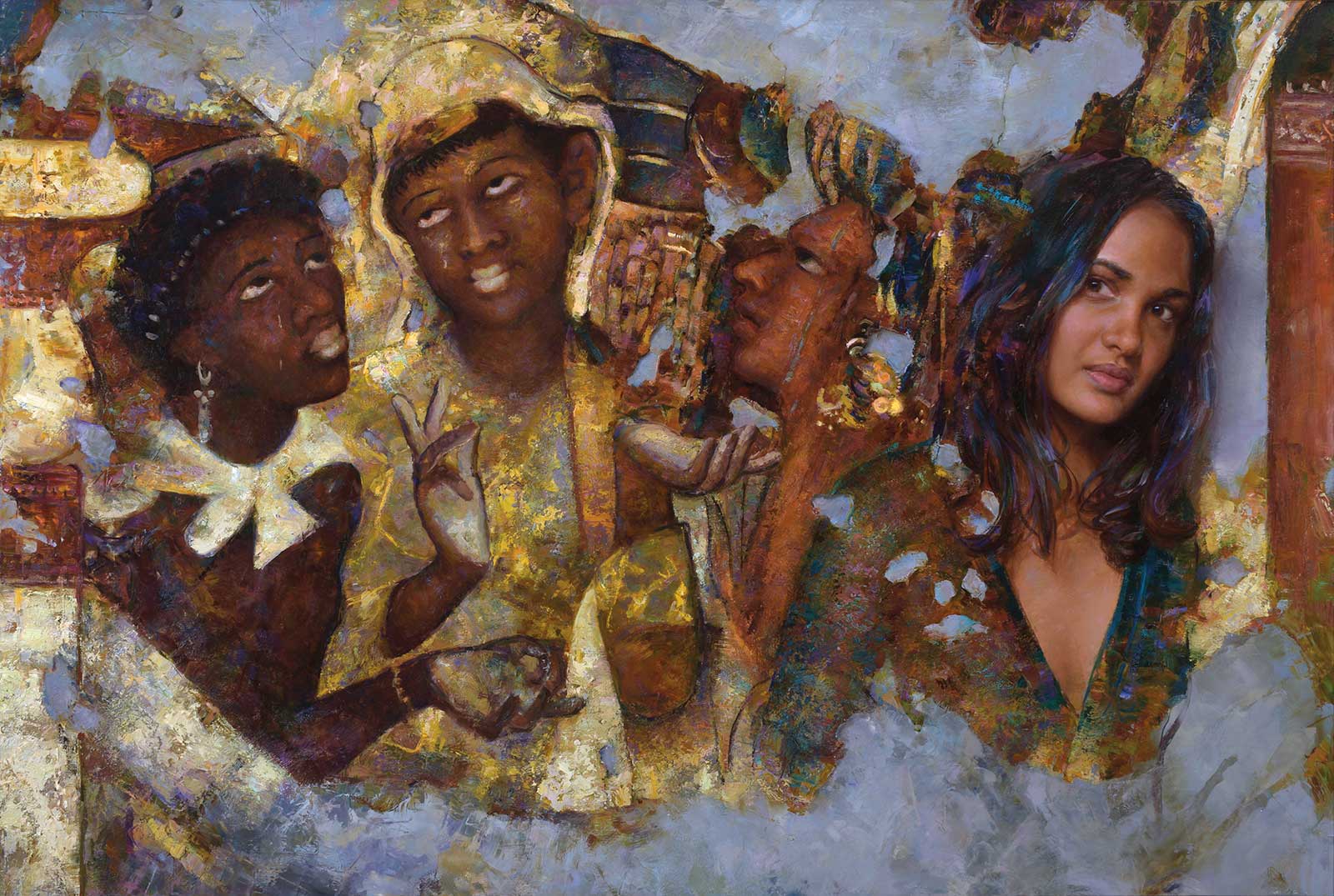
Rose Frantzen, And Then, oil on linen, 38 x 56” (96 x 142 cm)
As an artist, I’m inspired by a sentence, a narrative, a theme, and most often, by questions: questions about life, community, service, about being in the world. I am inspired by light, color, form and nature, especially when it takes form as human. I am inspired by all the forms humans take, shifting through time. I’m inspired by the forms we create, by the forms we see around us—forms we love and those we destroy, those we forget or just don’t see.
I remember clearly an early point of inspiration that led me to where I am today. In ninth grade, we were given an assignment to draw a grid on a paper larger than a proportional grid laid over a photograph. Using this method, I drew my first portrait. I was in heaven. I couldn’t believe that I could draw people like that. With this realization, I declared, “I am going to draw people for the rest of my life!”
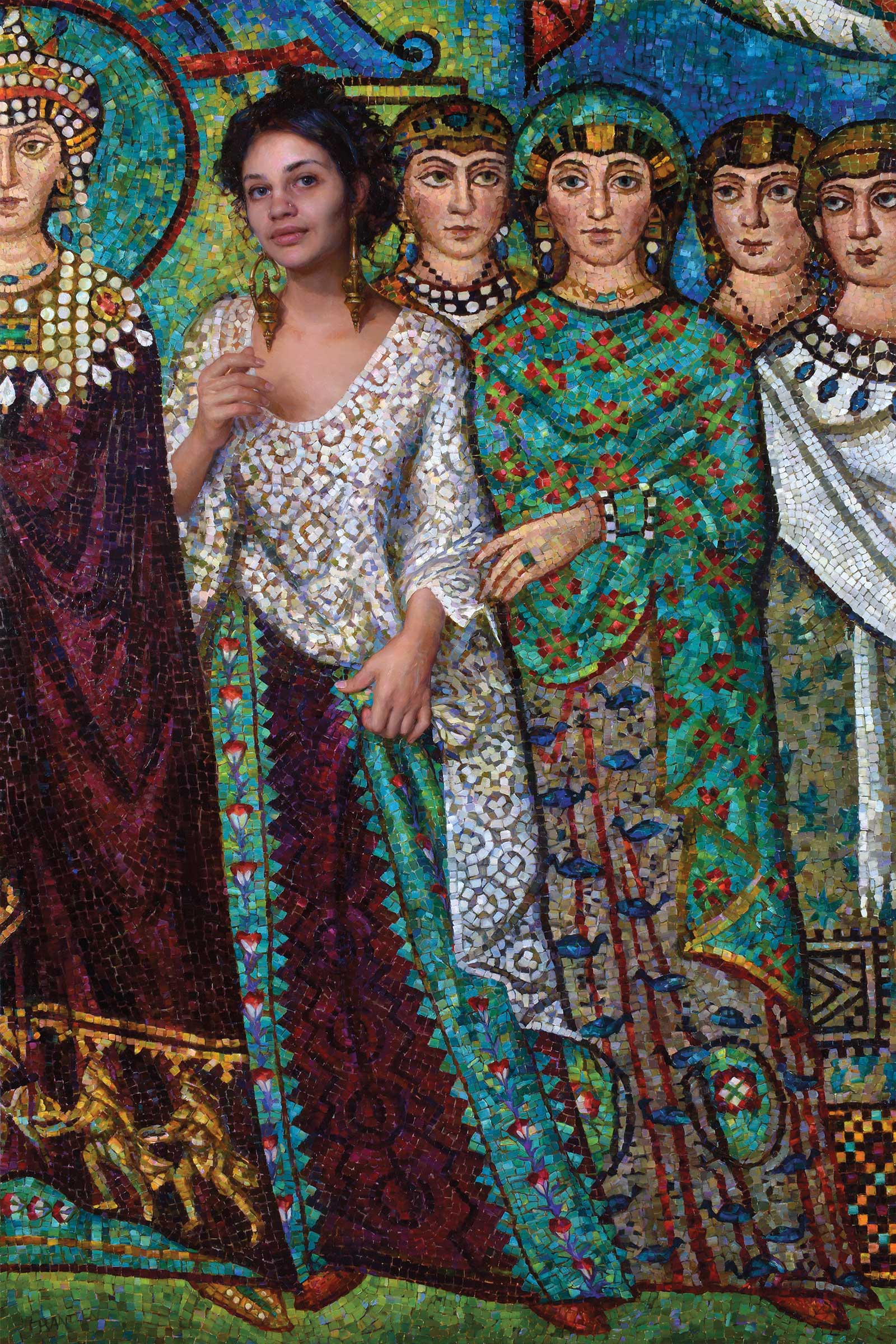
Rose Frantzen, Attending, oil on linen, 72 x 48” (182 x 121 cm)
Little did I know, I would learn that this desire to paint people for the rest of my life would mean many hundreds of hours drawing figures and quick sketches in every city that I’ve lived in or visited. It would mean hundreds of yards of canvas painting still lifes, landscapes, interiors and people, lots and lots of people. People are singular, unique, mysterious, each like an undiscovered country. So, I painted people inside, outside, in trees, on the ground, upside down, right side up, in rain, snow, sun, at dawn, in every hour of the day, at sunset, at dusk and in the middle of the night by moon light. I’ve painted people dancing, singing, crying, laughing, smiling, sleeping, waking, unhappy, sad, fearful, pensive, delighted, bored, screaming, worried, beseeching, searching, striving, hoping. I’ve painted people as young as eight days, as old as 99, in, and of, every color, celebrating them all, in whatever style I have felt the need to learn in order to express them, myself, my questions, with this or that idea.
These paintings of people are often narratives that are explored in a series. These narratives can be driven by subject matter or by technical approach, that is, how it’s painted. Often what I am striving for these days are both at once. It was in Egon Schiele’s body of work that I first realized the importance of this pairing, seeing the way he painted, elongating figures, sinewy, angular, with thin paint scratched into the canvas, paint-starved just like his figures felt starved.
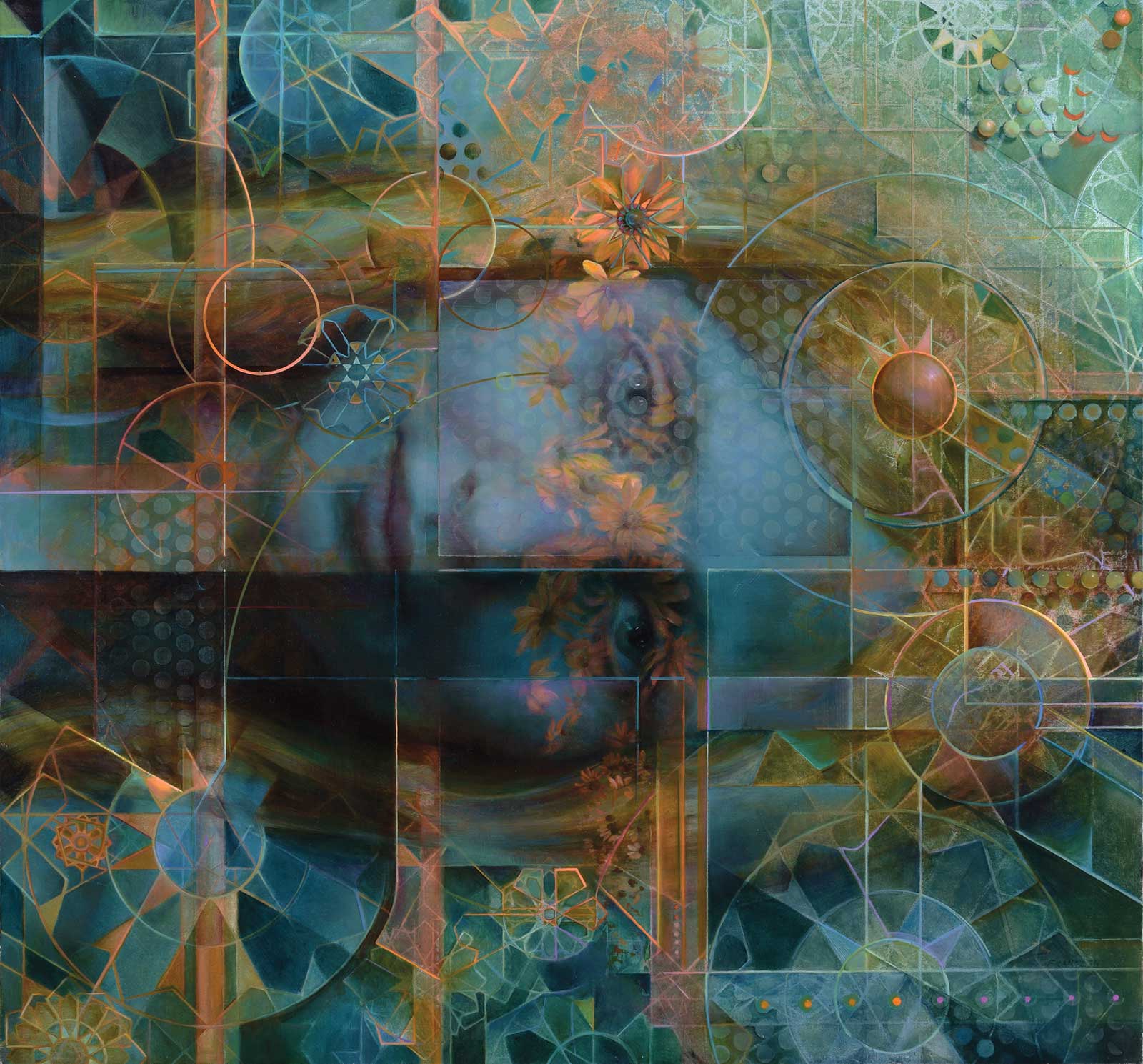
Rose Frantzen, From and To, oil on linen, 30 x 32” (76 x 81 cm)
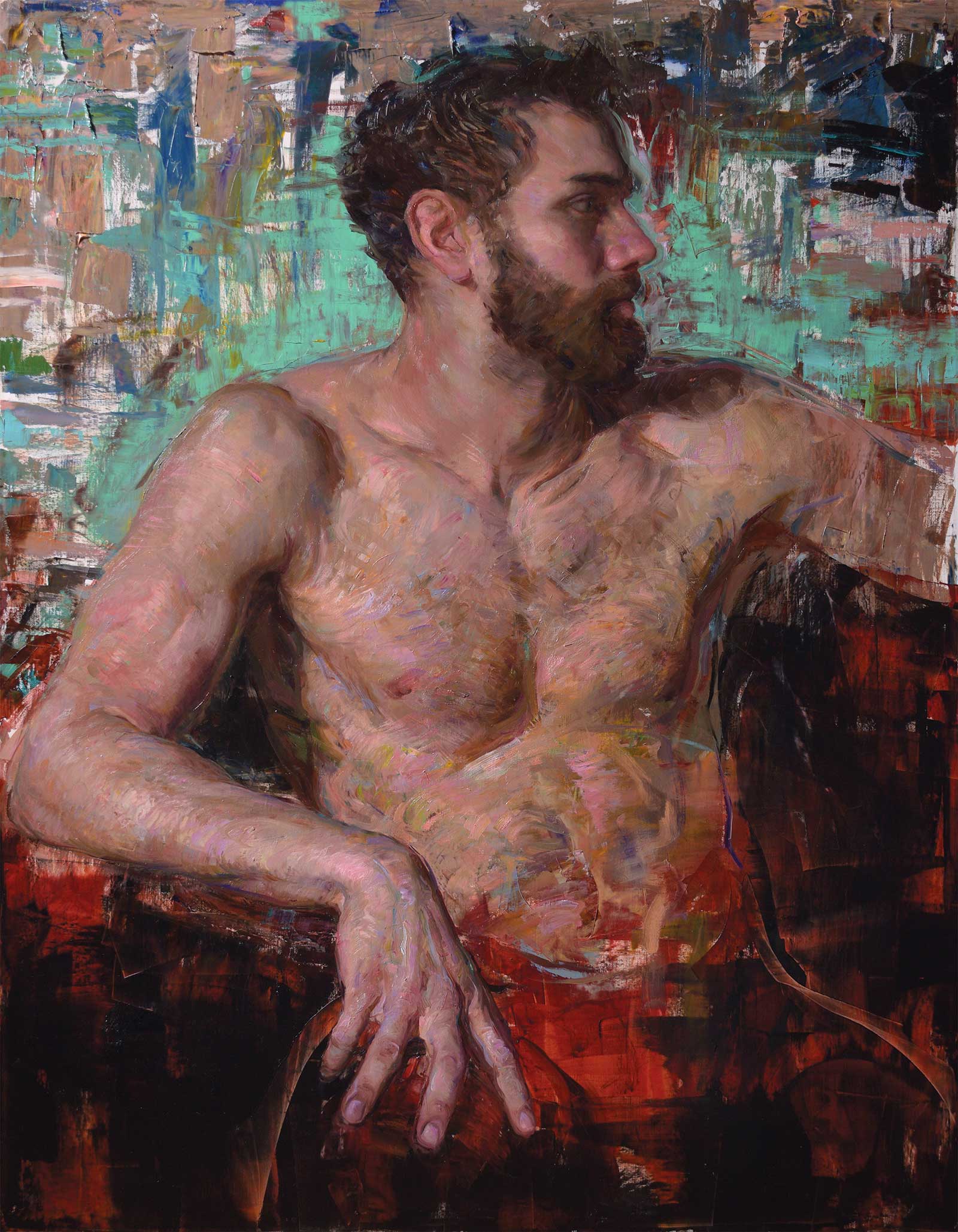
Rose Frantzen, It Was Then He Looked, oil on linen, 36 x 28” (91 x 71 cm)
Part of the difficulty in marrying one’s subject matter and one’s technical approach, when working within a more traditional method, is that the avenues for departure are less obvious. Painting from life increases the difficulty ten-fold. You are often just aiming to get certain things right, i.e., drawing/proportion, color, light on form, perspective, edges and paint quality. To my mind, it is in the departure from or in the deconstruction of any of these aims where you can exercise new possibilities in representing/suggesting your subject matter. These departures might read as more contemporary, perhaps technically enhancing a conceptual narrative. My results are mixed. I think this is why I always want to paint every painting twice: once to capture it and the second to break it free.
The challenge of getting a painting just right has been the driver of my career. If I knew clearly how this happens, I would say so, but I don’t. I can say this: what I think is my best work happens when a palpable sensation of enthusiasm in my body is accompanied by a kind of clarity that washes across my forehead, as if a heaviness is lifted. My sensation is behind my eyes, and I begin to see a painting, a series, form in my mind. Then, there is this sense of rightness that I experience, which says, “you’ve got to paint this.” My awareness of this impulse really landing in my being happened when I got the idea for the “Portrait of Maquoketa” project. The sensation created a certainty in myself; I needed to paint a large series of portraits of people in my hometown. That sensation became something I could express in words. Once discernible, I have welcomed this friend ever since. The painting Spring Corn showed up in my mind while I was attempting another composition. I almost felt like I was cheating on the original idea in order to paint it. I remember apologizing to the initial impulse, asking to “just let me paint this one first.” We’ve included in this article other paintings that declared their existence via a similar route.
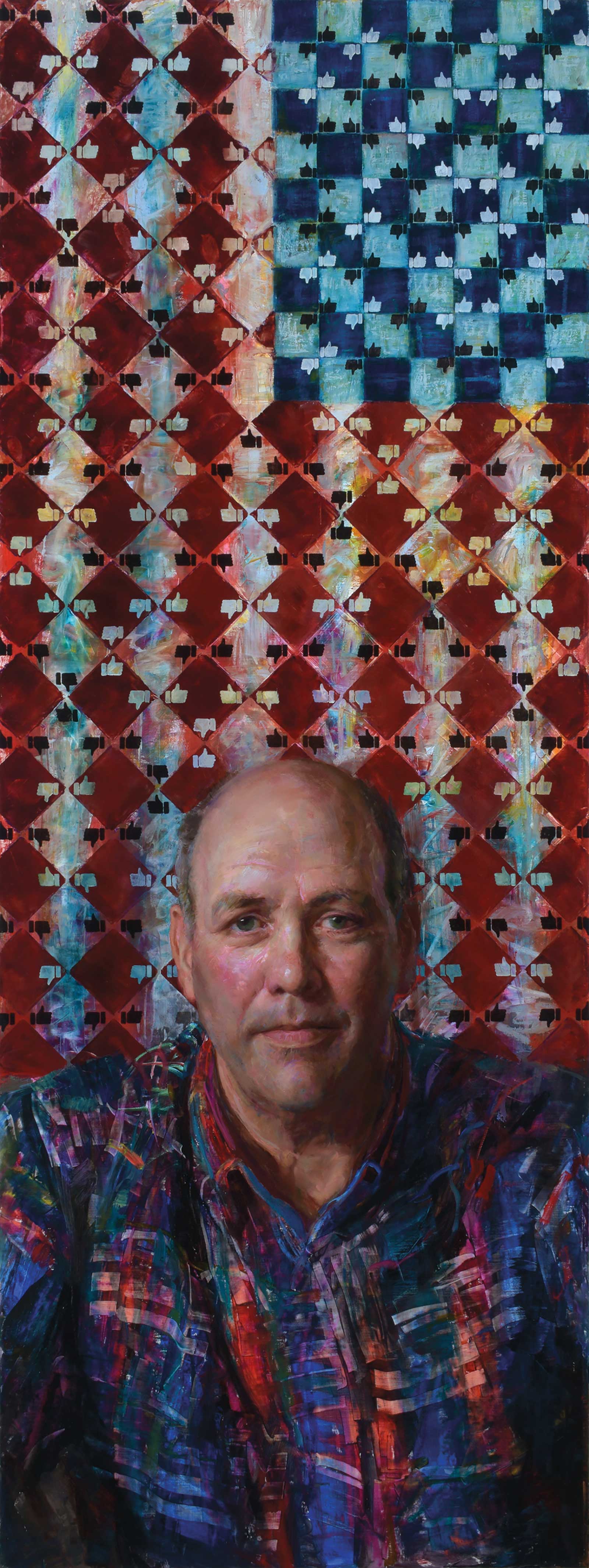
Rose Frantzen, Not Seeing the Ripple Effects, oil on linen, 44 x 18" (111 x 45 cm)
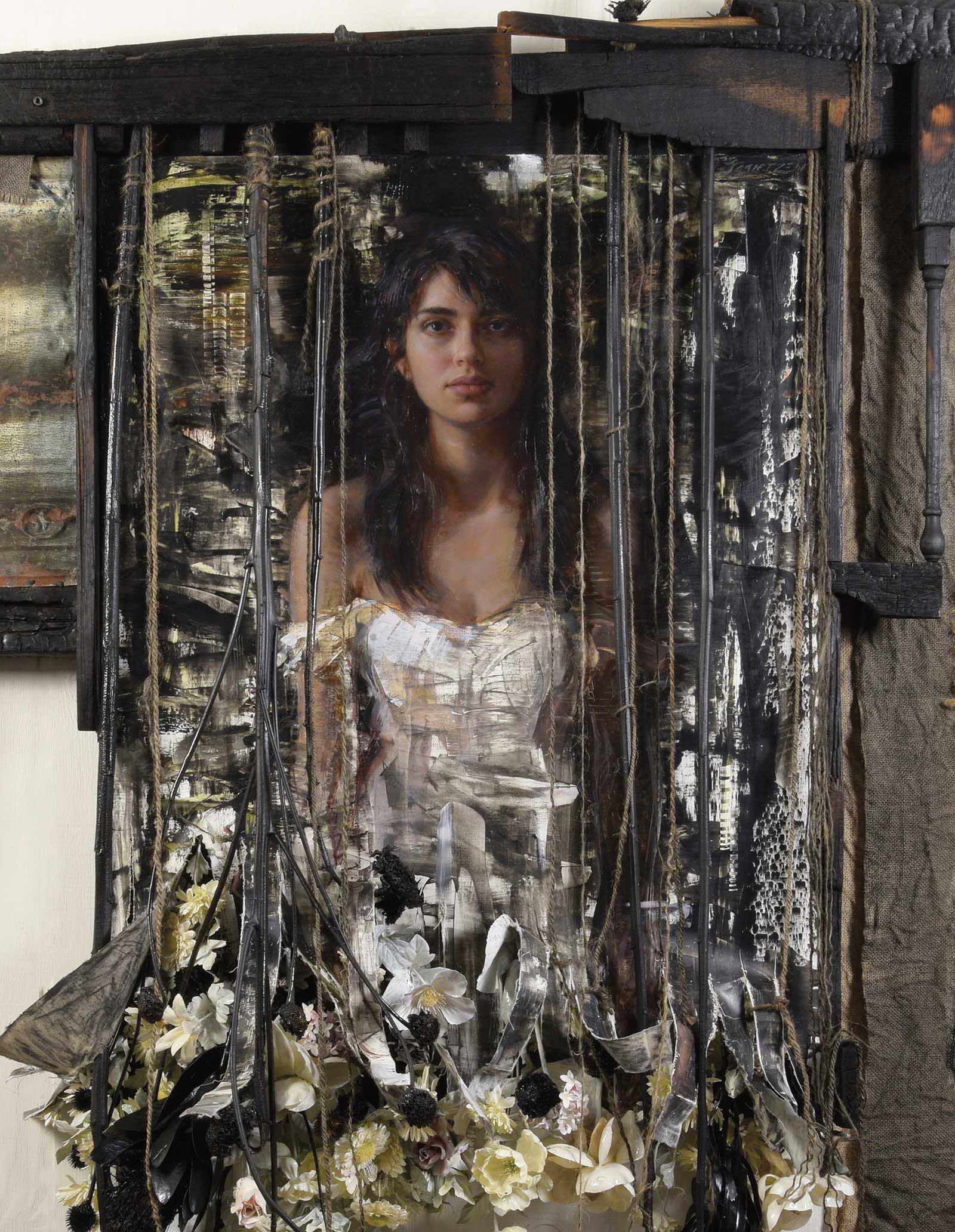
Rose Frantzen, Intimations Unframed (detail), oil and charcoal on linen with burnt wood, twine, organic matter, resin, ready-mades and tin, 62 x 57" (157 x 144 cm)
I try to tell my students to look for the feelings that accompany their desire to paint—get familiar with the conversation in your head and body. I believe it is here where one can find what you are meant to paint. It’s important to recognize that this experience arises from the groundwork of your curiosity toward life, the natural world, your life, and the human expression within it. The German poet Rilke wrote, “I can’t give you any advice but this: to go into yourself and see how deep the place is from which your life flows; at its source you will find the answer to the question of whether you must create. Accept that answer, just as it is given to you, without trying to interpret it. Perhaps you will discover that you are called to be an artist.”
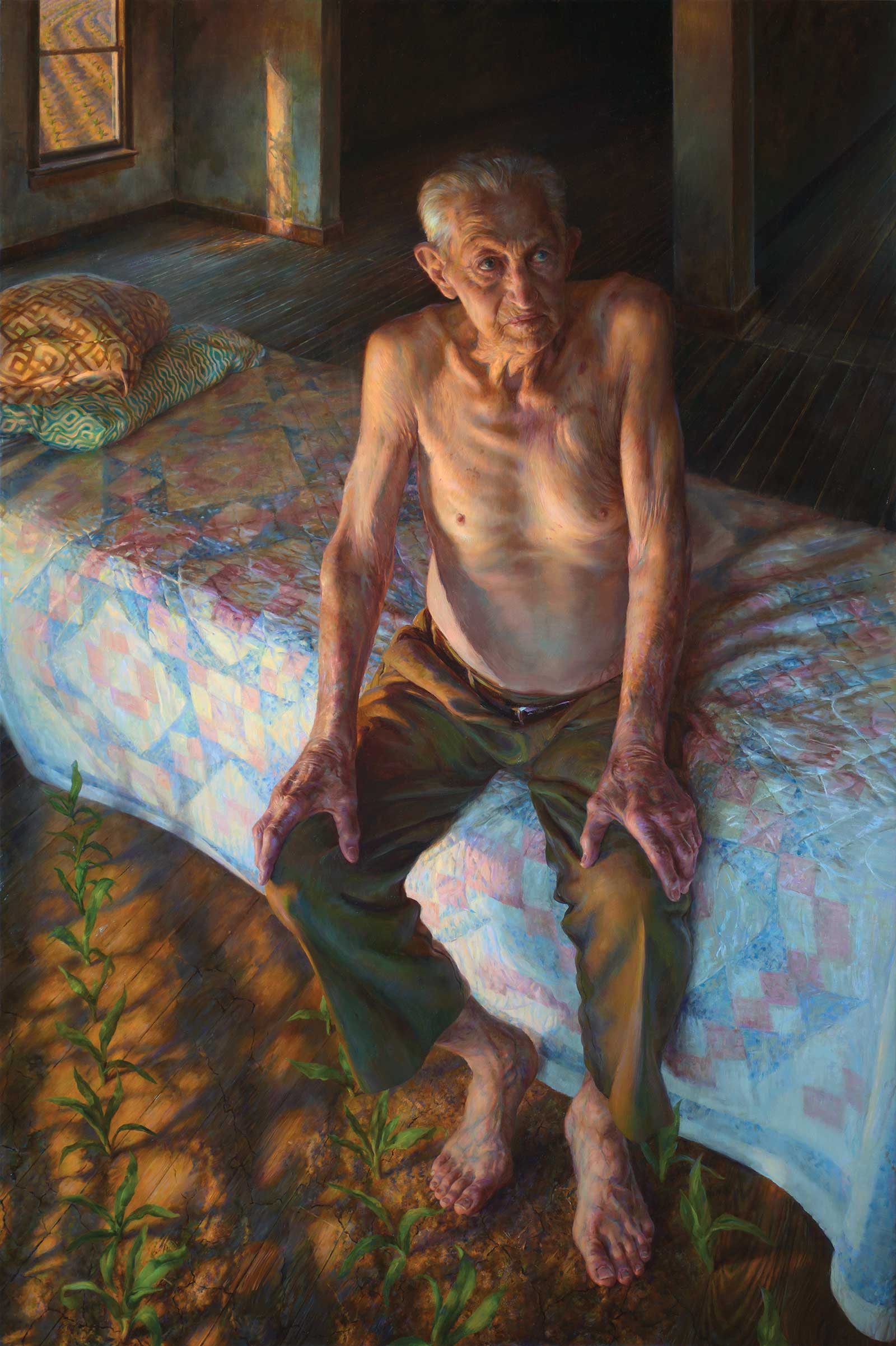
Rose Frantzen, Spring Corn, oil on linen, 72 x 48” (182 x 121 cm)
Accepting the gift of the idea that needs to be painted, one is now charged with the task of how to paint it—the technical approach. It is here where I have turned to other artists for assistance. I study everybody and look at everything. For millennia, people have been innovating and assisting in the development of the ways we can bring objects and ideas into material being. Everything is there for us to study. Fortunately, I am married to an artist/author, Chuck Morris, whose life’s work has been trying to encourage artists to believe that they can work, without mimicry, in any style, with whatever elements of artmaking they wish to employ. He believes that each known element is intuitive, inevitable and available as a tool, even if it has historically been given to a singular artist or movement by art historians. Elements of art are atemporal, and if we need to paint this painting with thousands of dots of color, one doesn’t have to be Seurat. Here’s the rub: is this the way I need to paint this subject? What way am I able to paint this painting? What way does this painting need to be painted? On Jeff Hein’s podcast, “The Undraped Artist,” many of us have noted that whatever way we try to paint, it always looks like our painting. No matter what new method I try, my paintings still look like my paintings. What causes this? Perhaps habits, the nervous system, or the subconscious of the artist tend to come through.
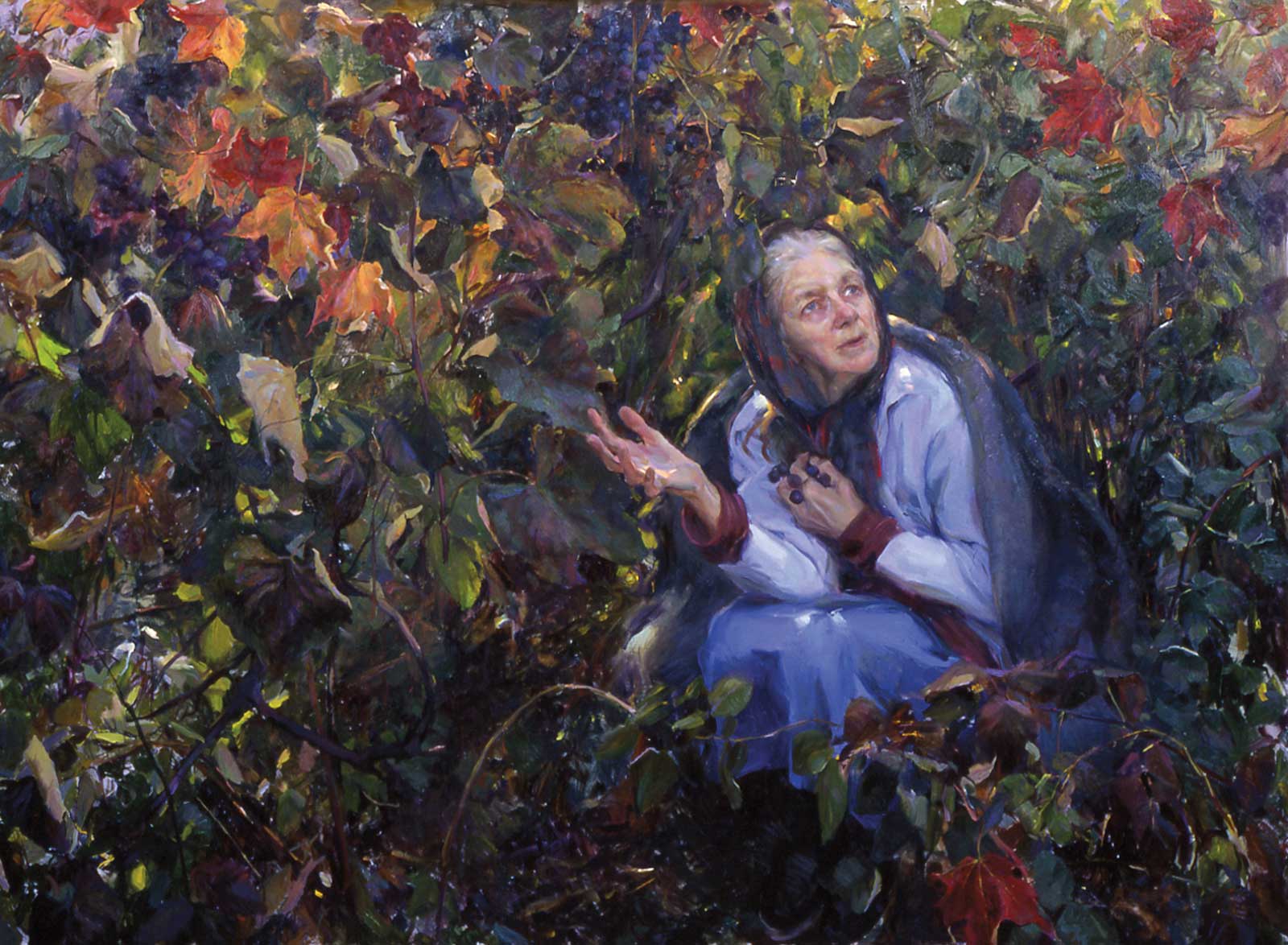
Rose Frantzen, October, oil on linen, 44 x 60" (111 x 152 cm)
I find there are always new things and new approaches I want to try. I ache to try them. I need to play with paint. I make room in my studio practice for attentive playing. I strive to let go of the familiar and trust that what I need to express will show up if I allow for it. I practice allowing, trusting that experimenting will lead to solutions to problems I’ve not anticipated. I practice patience, sometimes impatiently. I practice painting by living. I practice painting by painting. —